

https://www.lung.org/research/trends-in-lung-disease/tobacco-trends-brief/overall-tobacco-trends


https://fred.stlouisfed.org/series/UNRATE

Nebraska, Utah, Indiana, Kansas, Arkansas, Mississippi, Montana, Oklahoma and West Virginia. The Republican leaning states are “winning”. The Bureau of Labor Statistics (BLS) has been reporting state data since 1976, so this is a GREAT result.
https://www.bls.gov/news.release/laus.nr0.htm
27 states reported unemployment rates below the optimistic “full employment” level of 4%. Another 17 were in the 4.0-4.9% range. Just 6 states were burdened with unemployment rates above 5.0%, with New Mexico at 5.6% the highest.
https://www.bls.gov/web/laus/laumstrk.htm
Salt Lake City, Indianapolis, Oklahoma City and Atlanta set new records.
Geographically dispersed Nashville, Tampa, San Jose, Phoenix and Louisville are very close to setting new records.
https://fred.stlouisfed.org/series/SALT649URN
https://fred.stlouisfed.org/series/INDI918URN
https://fred.stlouisfed.org/series/OKLA440URN
https://fred.stlouisfed.org/series/ATLA013URN
As with the states, the distribution of results for the 51 metro areas with 1 million + populations is quite convincing. 8 metro areas are below the “unsustainable” 3.0% gold standard. 29 metro areas are below the 4.0% “full employment” level. 43 metro areas are below 5%. 8 areas exceed 5%. Detroit is second worst at 5.4%. Cleveland is in last place, struggling with 6.4%.
https://www.bls.gov/web/metro/laulrgma.htm
https://fred.stlouisfed.org/series/JTSJOL

https://fred.stlouisfed.org/series/PAYEMS

https://fred.stlouisfed.org/series/CIVPART
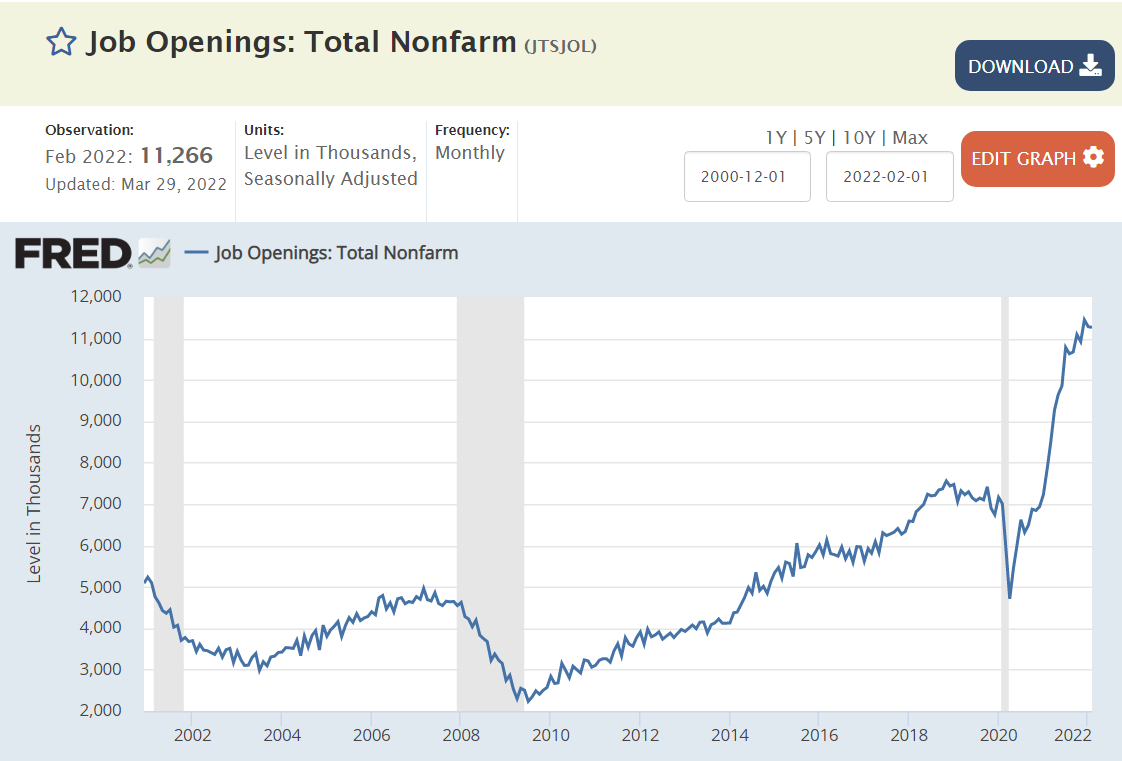
Red states have roughly returned to pre-Covid employment levels. Blue states have lagged by 3.5%. Mixed states have lagged by 2%. This can provide 3 million workers to fill some of the 11 million open jobs.

https://fred.stlouisfed.org/series/CES0500000003
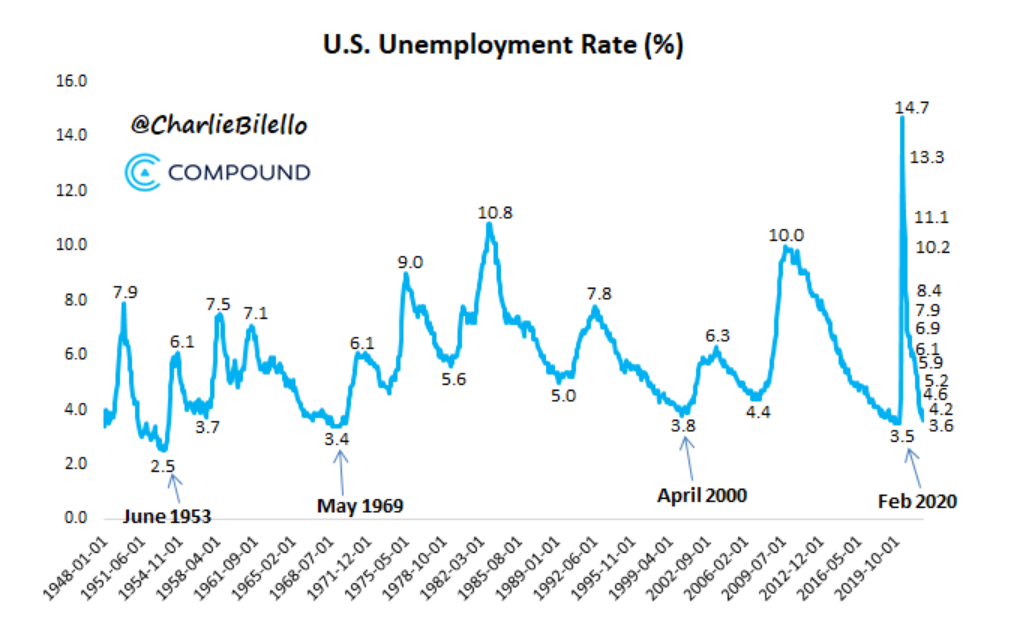
I expect the overall unemployment rate will set a 68-year record in the next 3 months. The February 2020 3.5% and May 1969 3.4% lows will be eclipsed! Unemployment will be at the lowest rate in my lifetime (Jul 1956)! This is despite the many, many issues and risks we have on both the supply and demand sides of the labor market.
IMHO, there are many factors driving this GREAT NEWS. (1) American firms are making record profits based on domestic and global demand, so they are incentivized to hire more workers, even at higher than usual wages. (2) American firms are finding that they can pay higher than historic wages and still generate incremental profits from the incremental workers (see Costco). (3) The definition of “employable” workers is clear, but employers are slowly loosening their irrational requirements (college degrees). (4) Baby Boomers have accumulated unprecedented retirement assets, so they have slowly left the labor force in a “one way” exit. (5) The “informal” labor market has been institutionalized with Uber, gig, contract and temporary worker arrangements. (6) Reduced unemployment benefits have incentivized many (older, less skilled non-unionized) unemployed workers to reduce their “reserve wage” expectations and accept new employment at lower wages than their best historical experience. (7) With less stigma for “laying off” workers, employers are more actively hiring workers to fill all economically justified positions. (8) With lower recent illegal immigration, the “reserve army” of the unemployed is lower. (9) Modern recruiting systems provide employers with so many candidates that they are assured of finding matching workers relatively quickly.
In essence, we have a much more “efficient” labor market than in years past, so the minimum unemployment rate has been reduced from 5% to perhaps as low as 2%. This too, is good news.
President Biden certainly did not drive any of the above structural factors. However, he has not disrupted these forces or pushed fiscal or monetary policy to undo the good news. Sometimes, “leave well enough alone” is all that is required.

Various global university rankings use different measures and methodologies. US universities lead the way in all major rankings, averaging 18 of the top 30 spots, good for 60% of all world leaders.
Few of us will consider attending these institutions, but they do educate many of our college professors, they educate many of our national business leaders and their research is used in most fields of endeavor.
https://www.shanghairanking.com/rankings/arwu/2021
https://www.usnews.com/education/best-global-universities/rankings
https://www.topuniversities.com/university-rankings/world-university-rankings/2022
https://roundranking.com/ranking/world-university-rankings.html#world-2021


https://www.energypolicy.columbia.edu/research/report/oil-intensity-curiously-steady-decline-oil-gdp

https://www.energypolicy.columbia.edu/research/report/oil-intensity-curiously-steady-decline-oil-gdp


https://www.energypolicy.columbia.edu/research/report/oil-intensity-curiously-steady-decline-oil-gdp
https://www.northerntrust.com/africa/insights-research/2022/weekly-economic-commentary/oil-intensity

https://www.energypolicy.columbia.edu/research/report/oil-intensity-curiously-steady-decline-oil-gdp


https://www.energypolicy.columbia.edu/research/report/oil-intensity-curiously-steady-decline-oil-gdp

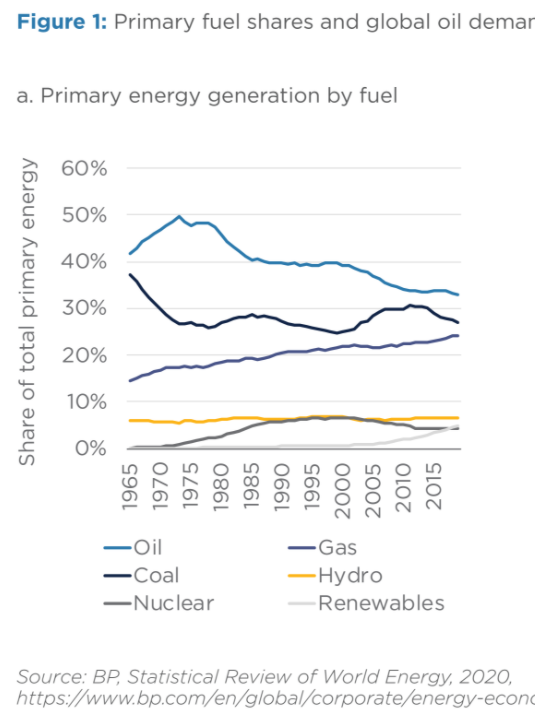
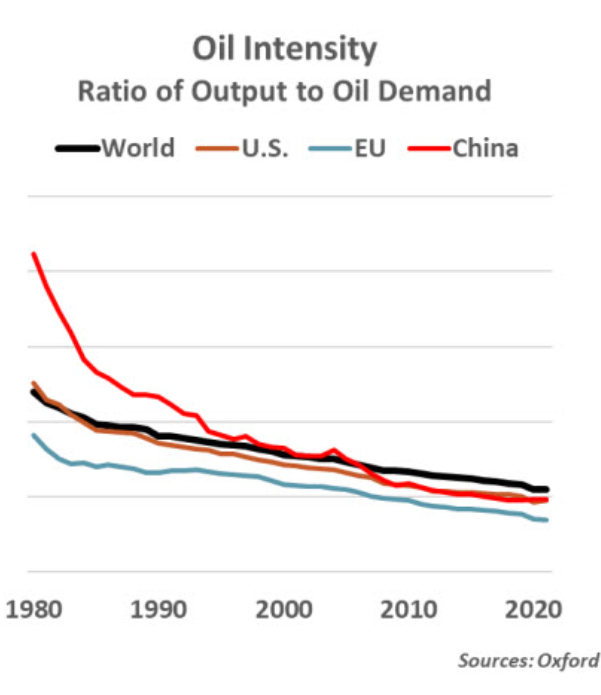
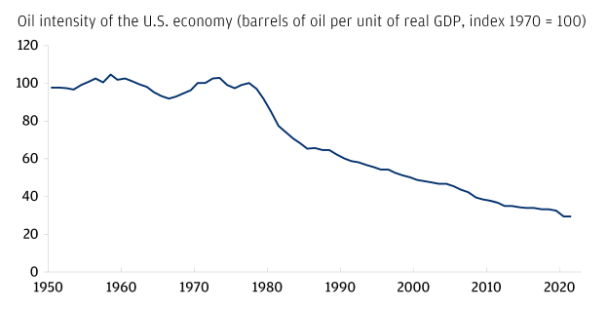
Energy intensity is down as the service economy becomes a greater share of GDP, energy efficiency improves for consumer and industrial uses, electricity power grows with its inherently higher efficiency, and renewable energy grows as a source of power.

https://www.energypolicy.columbia.edu/research/report/oil-intensity-curiously-steady-decline-oil-gdp


https://www.eia.gov/outlooks/aeo/consumption/sub-topic-03.php

https://www.eia.gov/todayinenergy/detail.php?id=42895

https://www.eia.gov/todayinenergy/detail.php?id=42895
https://www.eia.gov/outlooks/aeo/consumption/sub-topic-03.php

https://www.northerntrust.com/africa/insights-research/2022/weekly-economic-commentary/oil-intensity
US consumer price index still weights motor fuel consumption at 4%, so spikes in market prices effect consumers and politics.
The long-term downward trend in oil required per dollar of GDP slowed after 2014.

https://www.energypolicy.columbia.edu/research/report/oil-intensity-curiously-steady-decline-oil-gdp

It’s possible that ALL energy prices may increase, especially during the transition to renewable energy sources.
Finally, individual country risks still matter: Russia, Iran, Venezuela and Saudi Arabia.
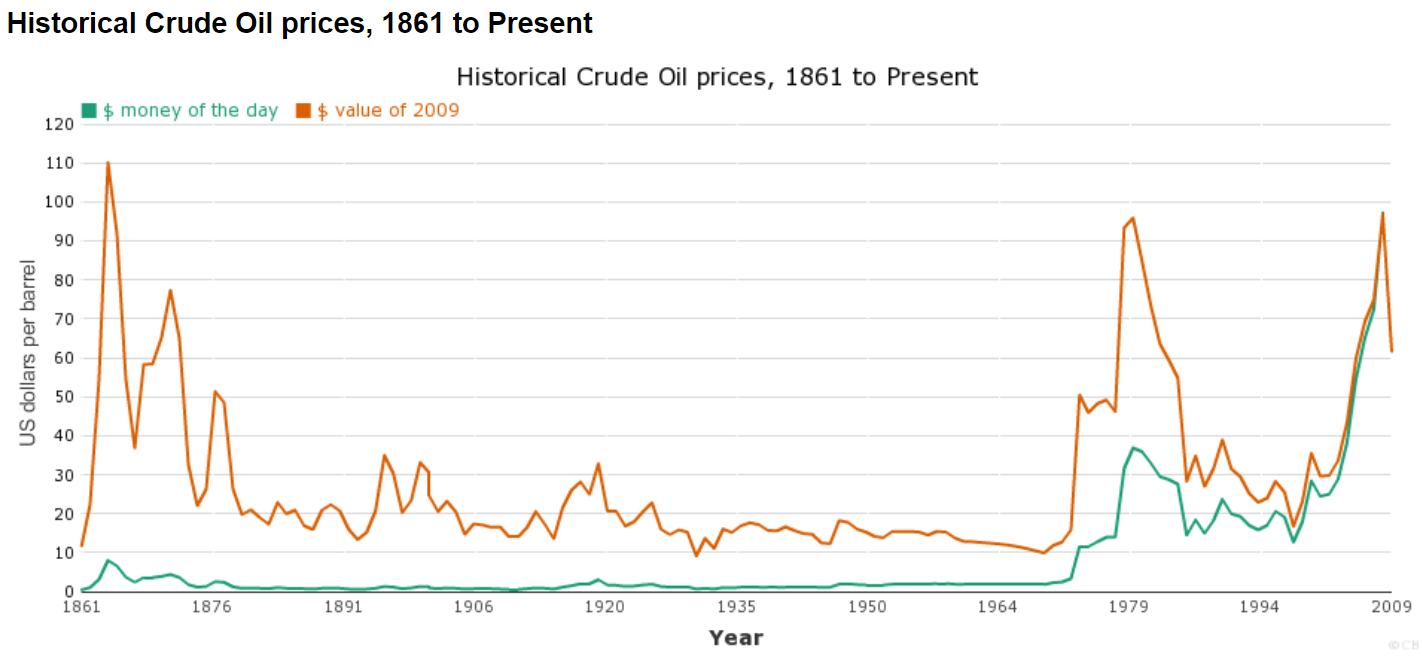
The Oil Shocks of the 1970’s were due to a drastic shift in the pricing power of the OPEC countries following 30 years of greatly accelerated global demand for oil while it was priced attractively. Demand and supply have both grown in the last 50 years. The role of oil in the global and US economies (compared with real output/GDP) has dropped by more than one-half. Increased oil prices can and will have a significant effect today, but less than one-half of that in the past. Long-run trends indicate that the role of oil as a critical resource will continue to decline, although there remain risks as the world closes coal and nuclear power plants and makes the investments required for a renewable energy world.
https://fred.stlouisfed.org/series/UNRATE
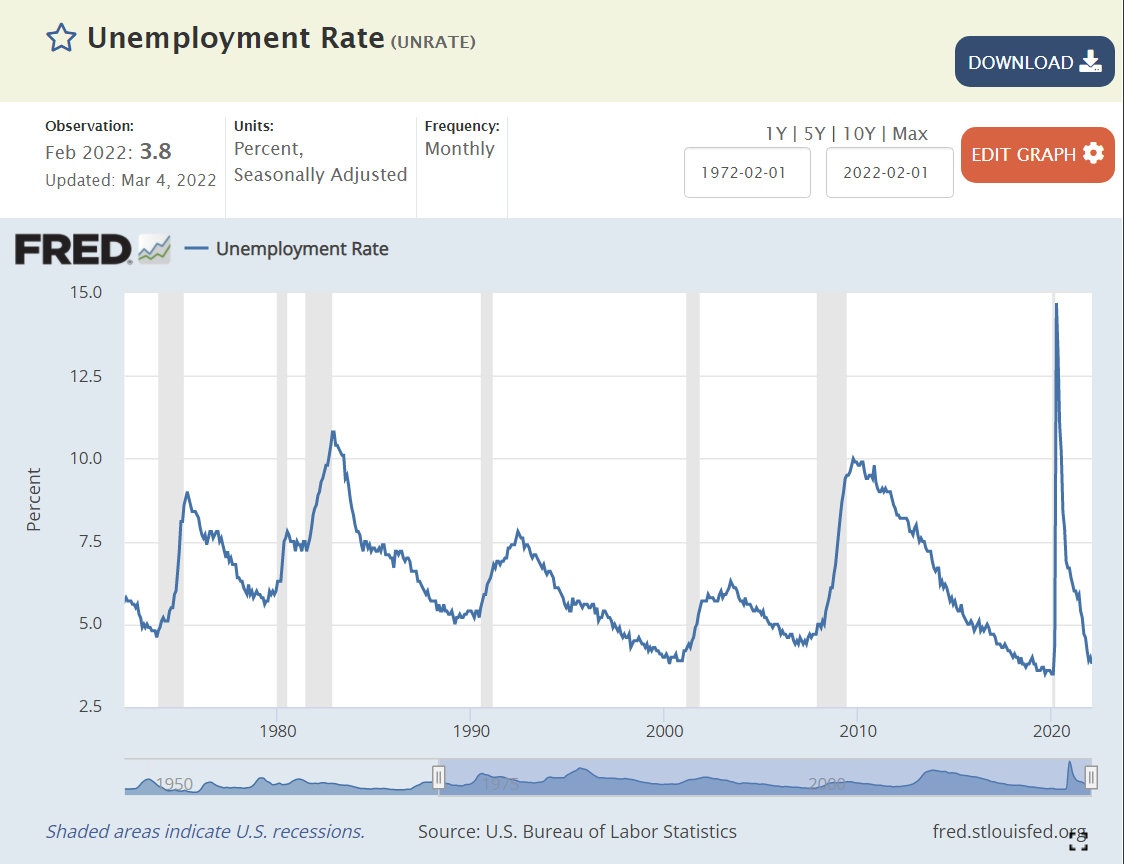
In the last 50 years, the last 600 months, the US unemployment rate has been below the current 3.8% for just 9 months (less than 2% of the time).
This is less than 2 years after the rate hit a modern HIGH of 15%.
9 states set all-time lows this month: Nebraska (2.1%), Vermont (2.1%), Indiana (2.3%), Kansas (2.5%), Montana (2.6%), Oklahoma (2.6%), Arkansas (3.1%), West Virginia (3.9%) and Mississippi (4.5%).
In February, 31 states had material decreases, while 19 had immaterial changes and NO states had material increases.
https://www.bls.gov/news.release/laus.nr0.htm
At the metropolitan area level, 50 areas sported unemployment rates of 3% or less, far below historical results.
11 areas were at crazy low 2.3% unemployment rates or lower: Lincoln, NE and Madison, Wi. Logan, Provo and Ogden UT. Elkhart, Columbus, Bloomington, Lafayette, Ft Wayne and Indianapolis, IN.
The average age of all US cars and light trucks in operation exceeded 12 years for the first time in 2021.
https://news.ihsmarkit.com/prviewer/release_only/id/4759502/

Typical vehicle age increased by one-quarter, from 9.6 to 12.1 years since 2002.
Typical vehicle age increased by more than one-half from 7.8 years in 1990.
Typical vehicle age more than doubled from just 5.3 years in 1969.
The rate of increase has remained relatively constant, with improved highways, driving, designs, quality and maintenance allowing the average age to increase by 1 year every 7-8 years.
summary table, page 60.
page 10, 1969
page 54, 1977. 1 of several somewhat different figures.
page 26, 1983.
page 104, 1990
page 78, 1995.
https://www.autodealertodaymagazine.com/366056/average-age-of-vehicles-on-the-road-increases

Public libraries serve 97% of the US.
https://www.imls.gov/research-evaluation/data-collection/public-libraries-survey
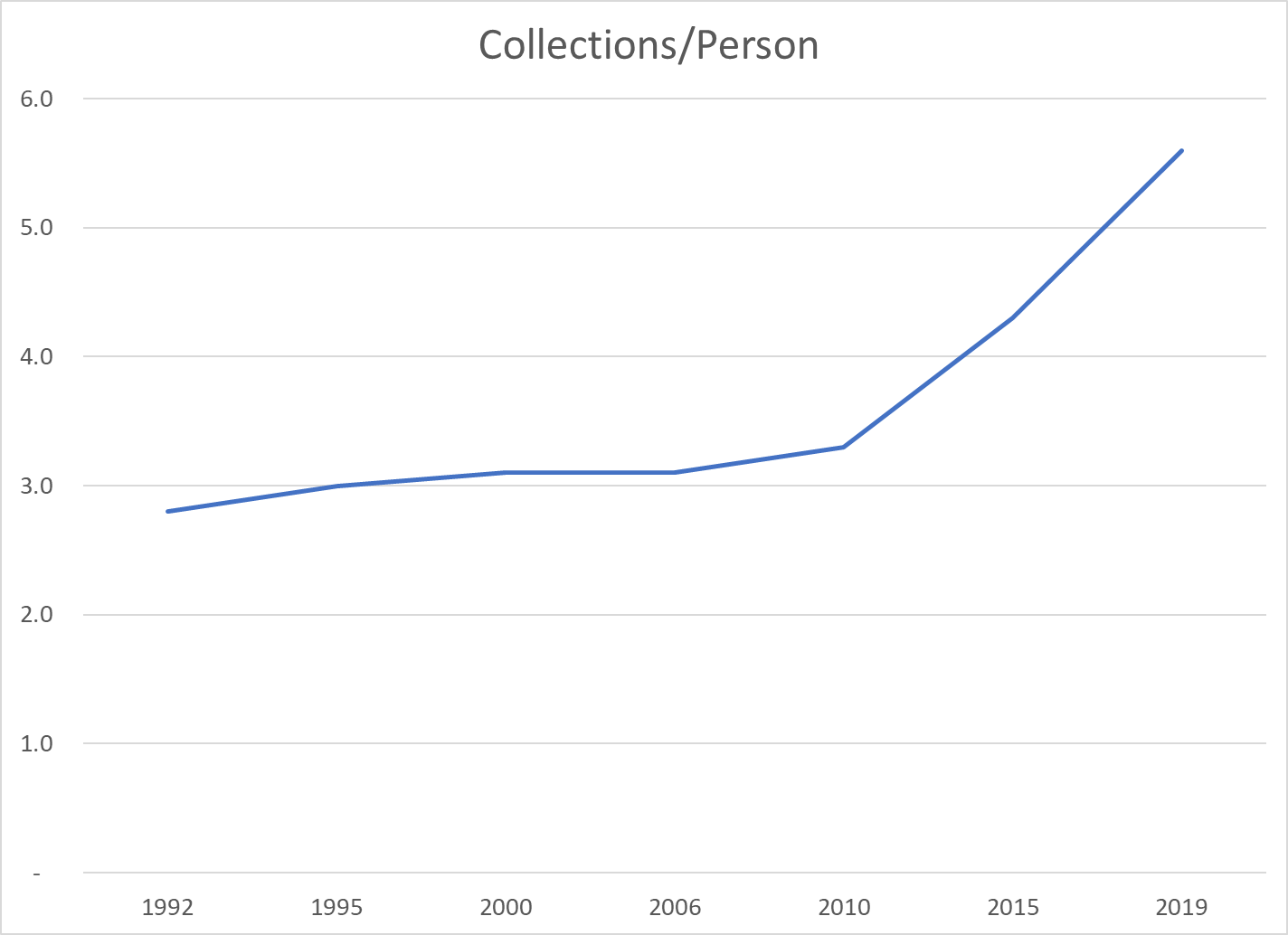
E-books have allowed libraries to nearly double their “per capita” holdings.

Printed books collections have purposefully declined by one-quarter in the last decade.

Electronic holdings have accelerated.
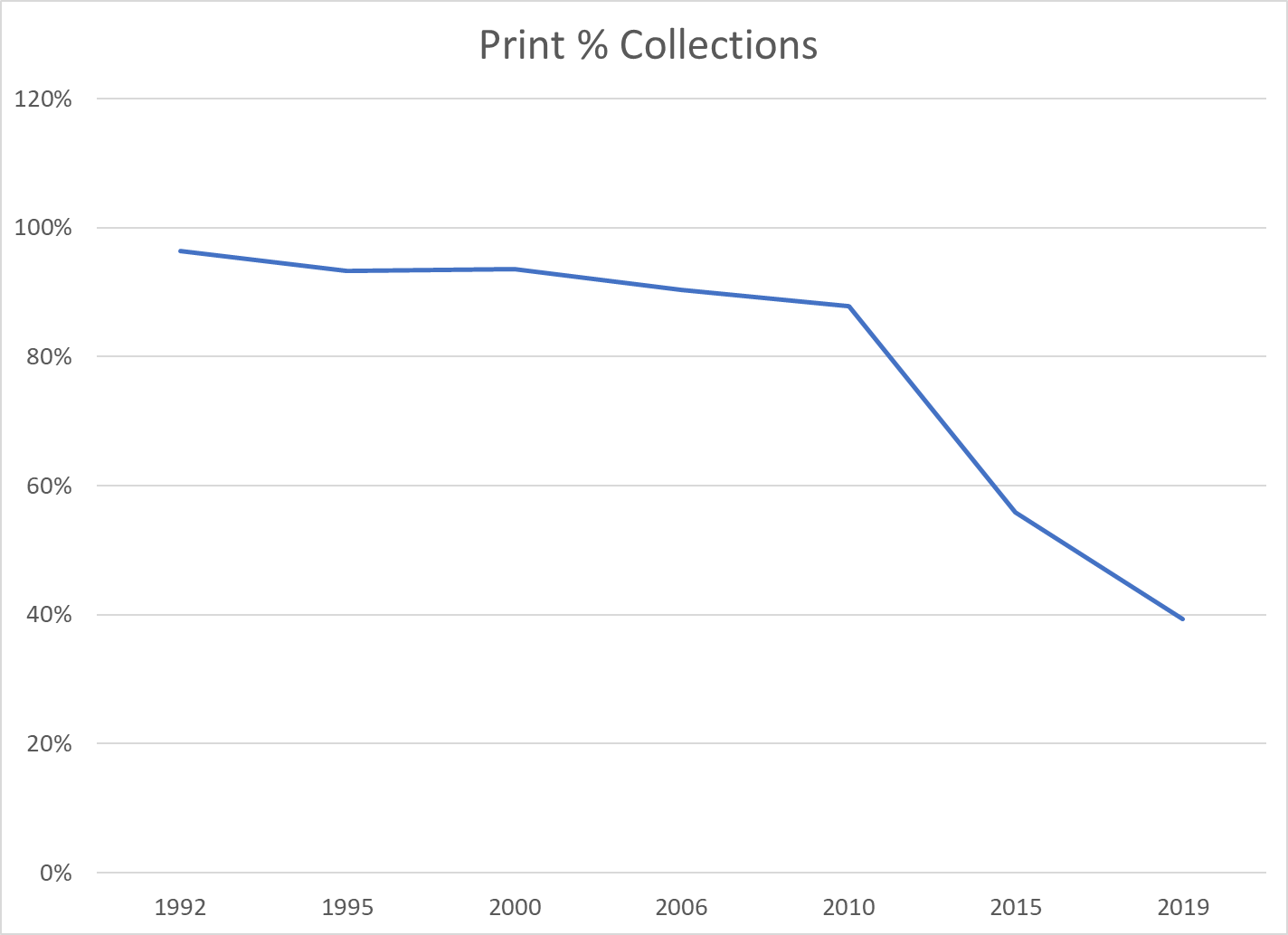
Printed materials have quickly fallen to less than half of total holdings.
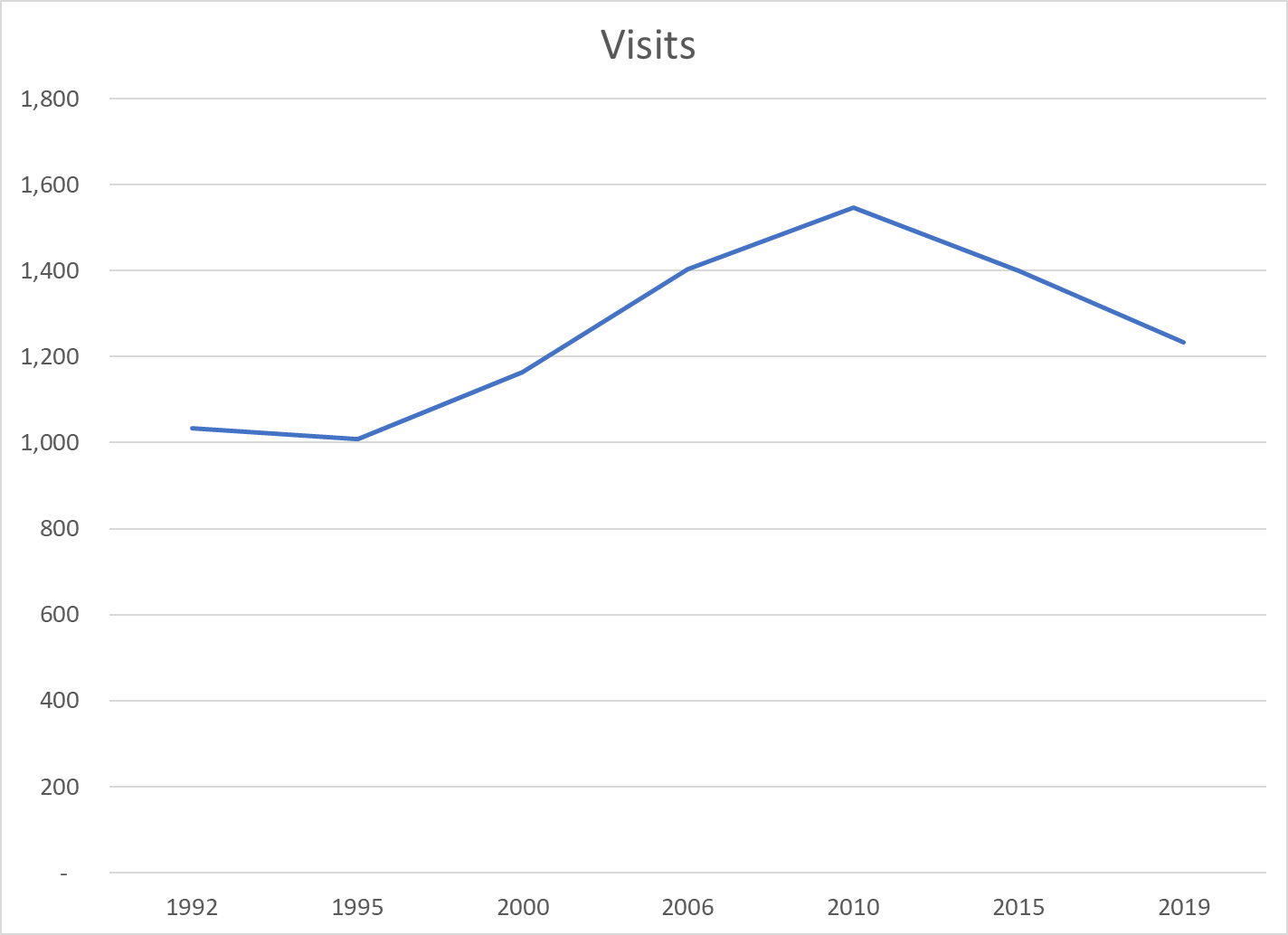
Total library visits increased from 1995-2010 before declining in the last decade.

Annual library visits remain above 4 per person.

Reference desk visits have fallen by one-quarter as the internet provides answers.
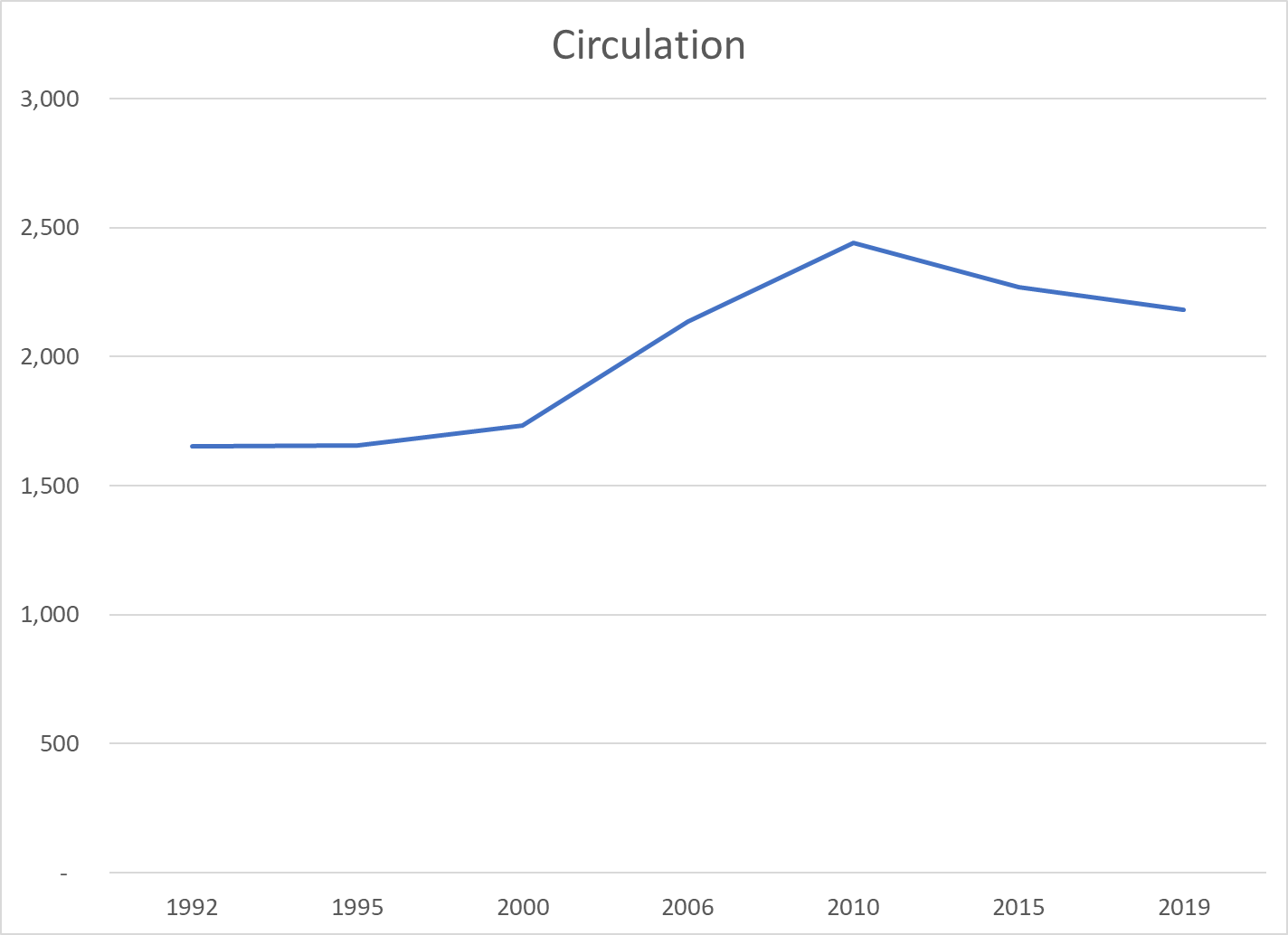
Total circulation remains above 2 billion items per year.
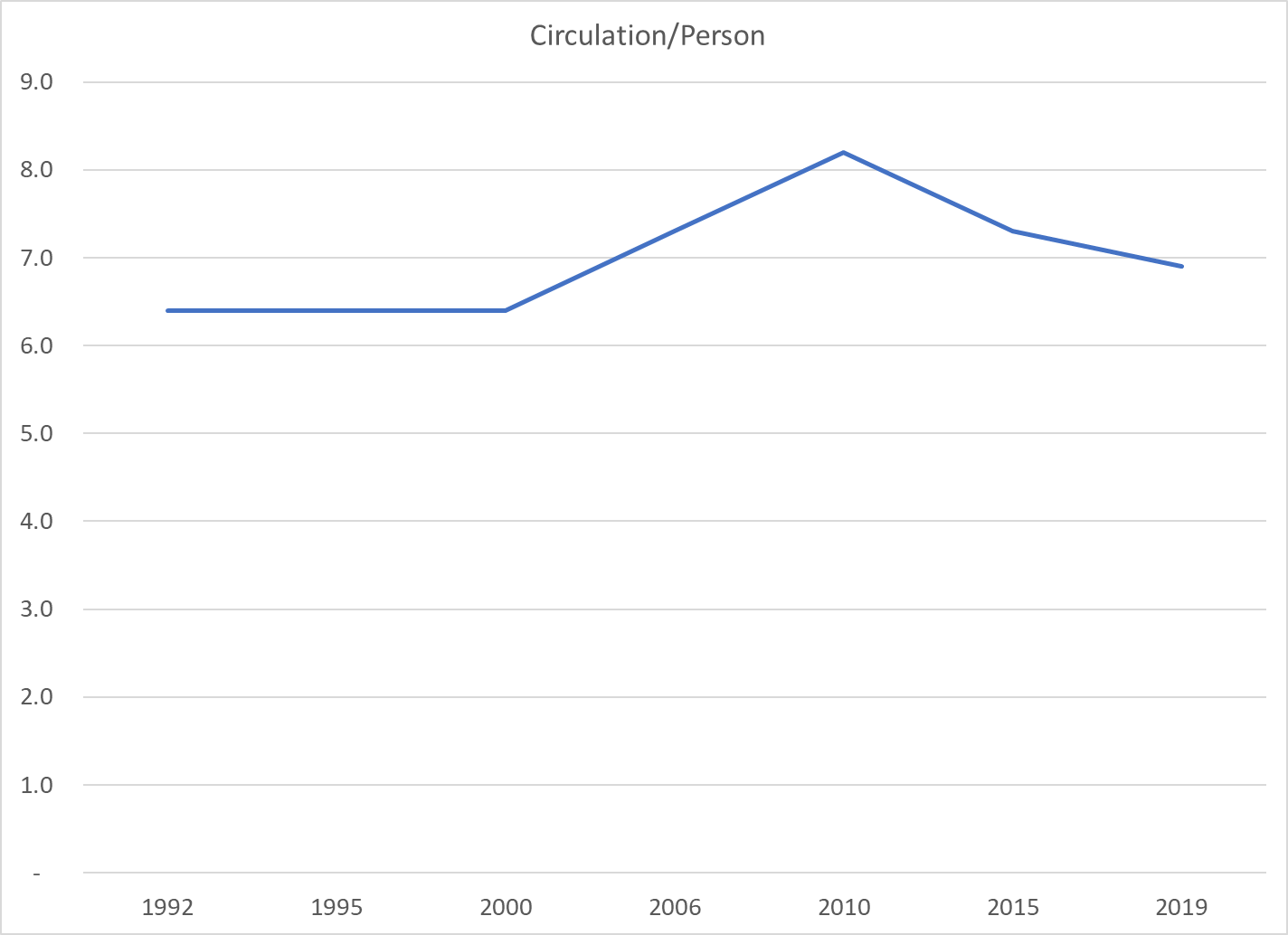
Total circulation per person remains above 7 items per year.
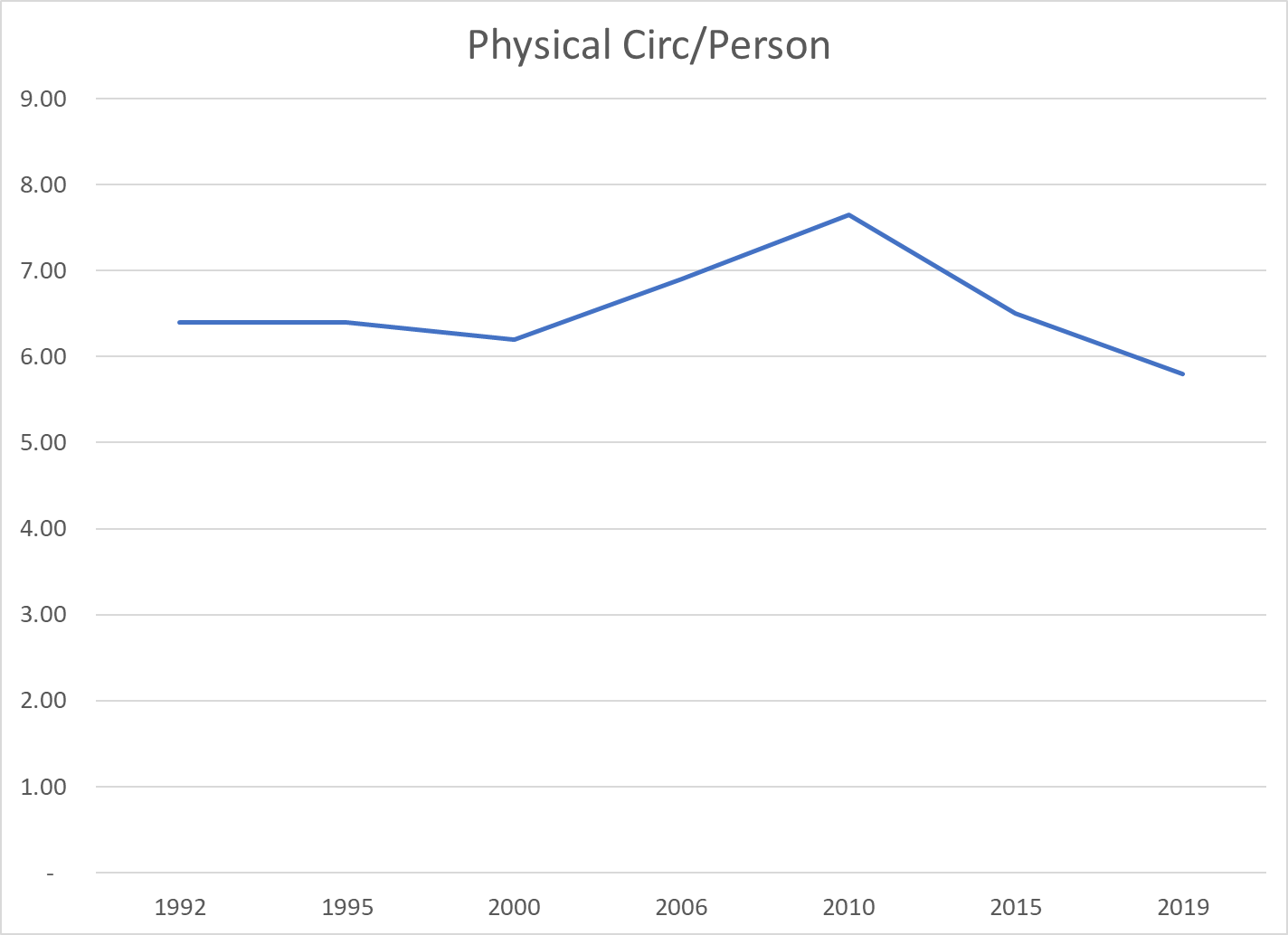
6 books per person per year are checked out of pubic libraries.
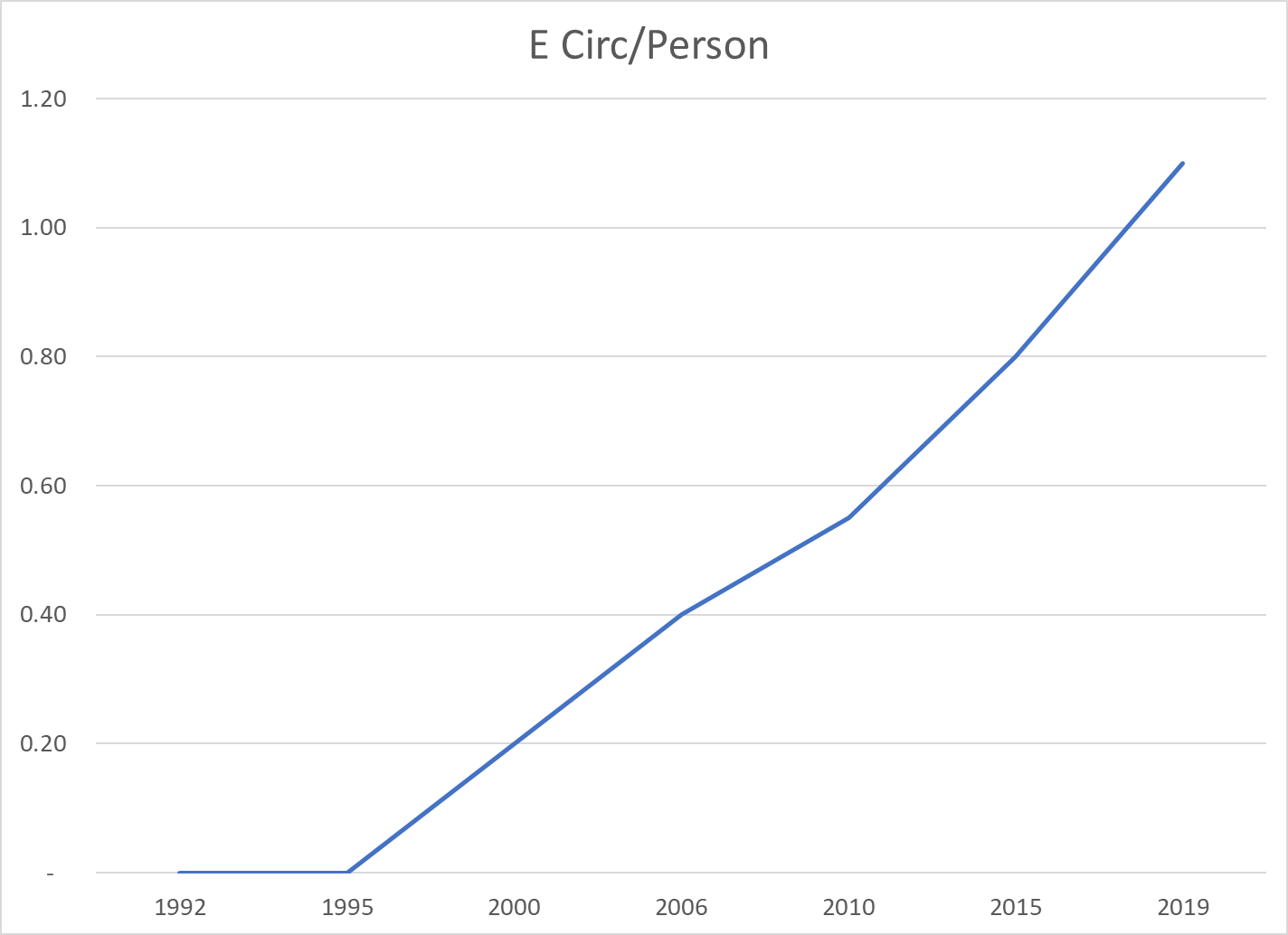
Electronic books have grown from zero to 1 title per person per year.

Libraries have doubled the number of programs they offer to the local community.

Program attendance has risen accordingly.

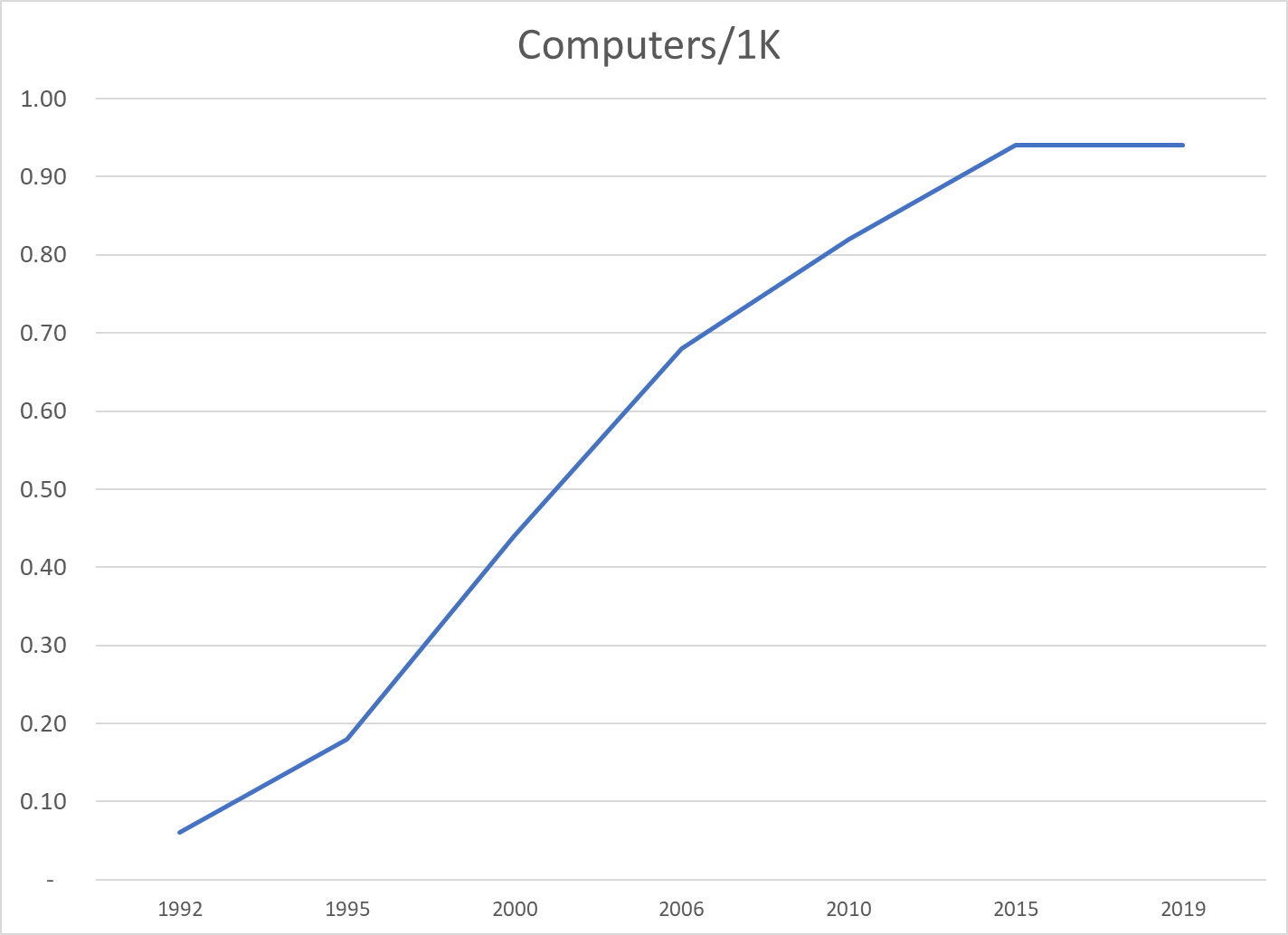
In the 1990’s and “oughts” libraries added internet accessible computers.

The number of computer sessions at the library peaked in 2010.
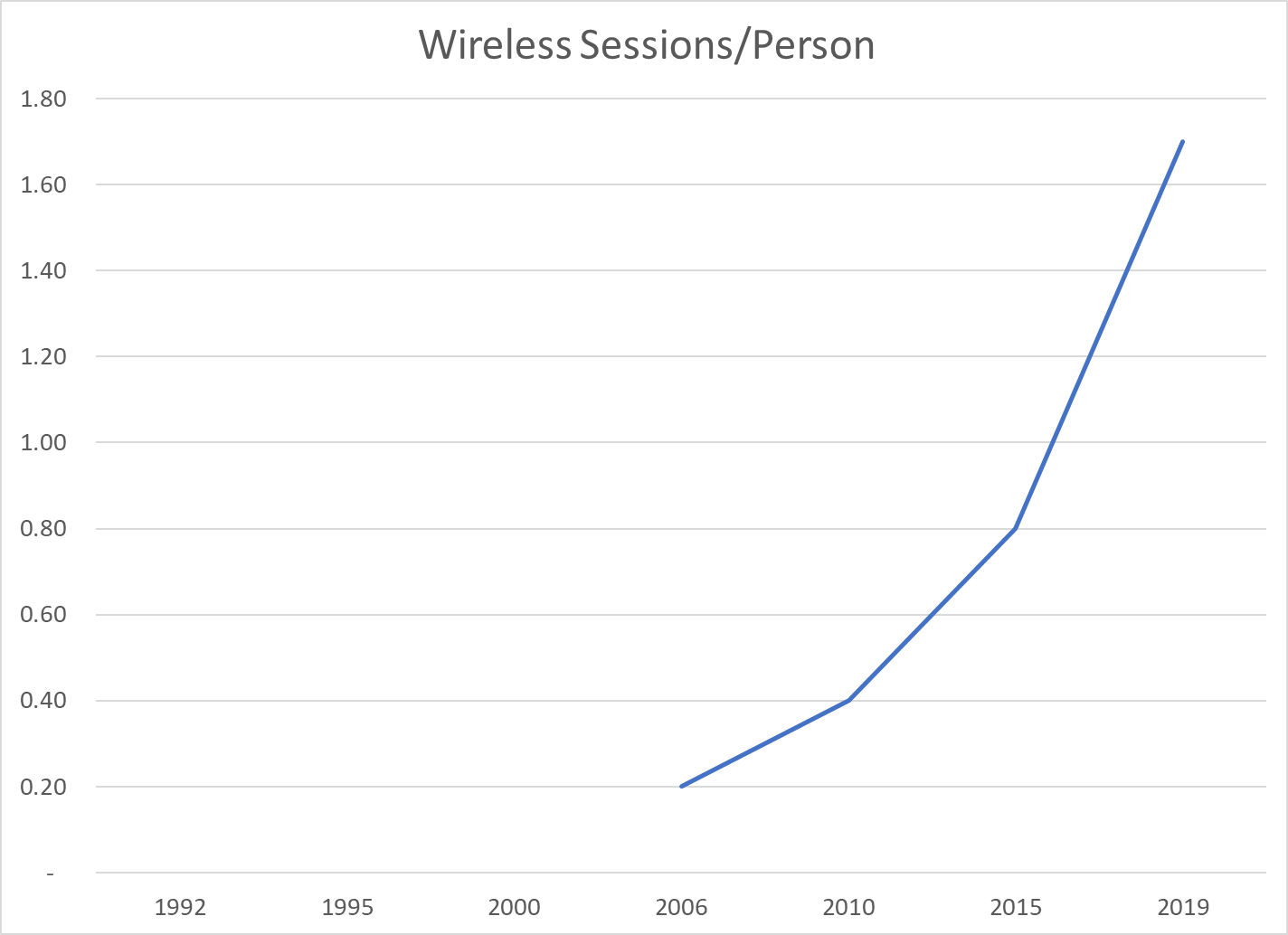
Starting in 2000, libraries provided internet access to patrons on their own computers.
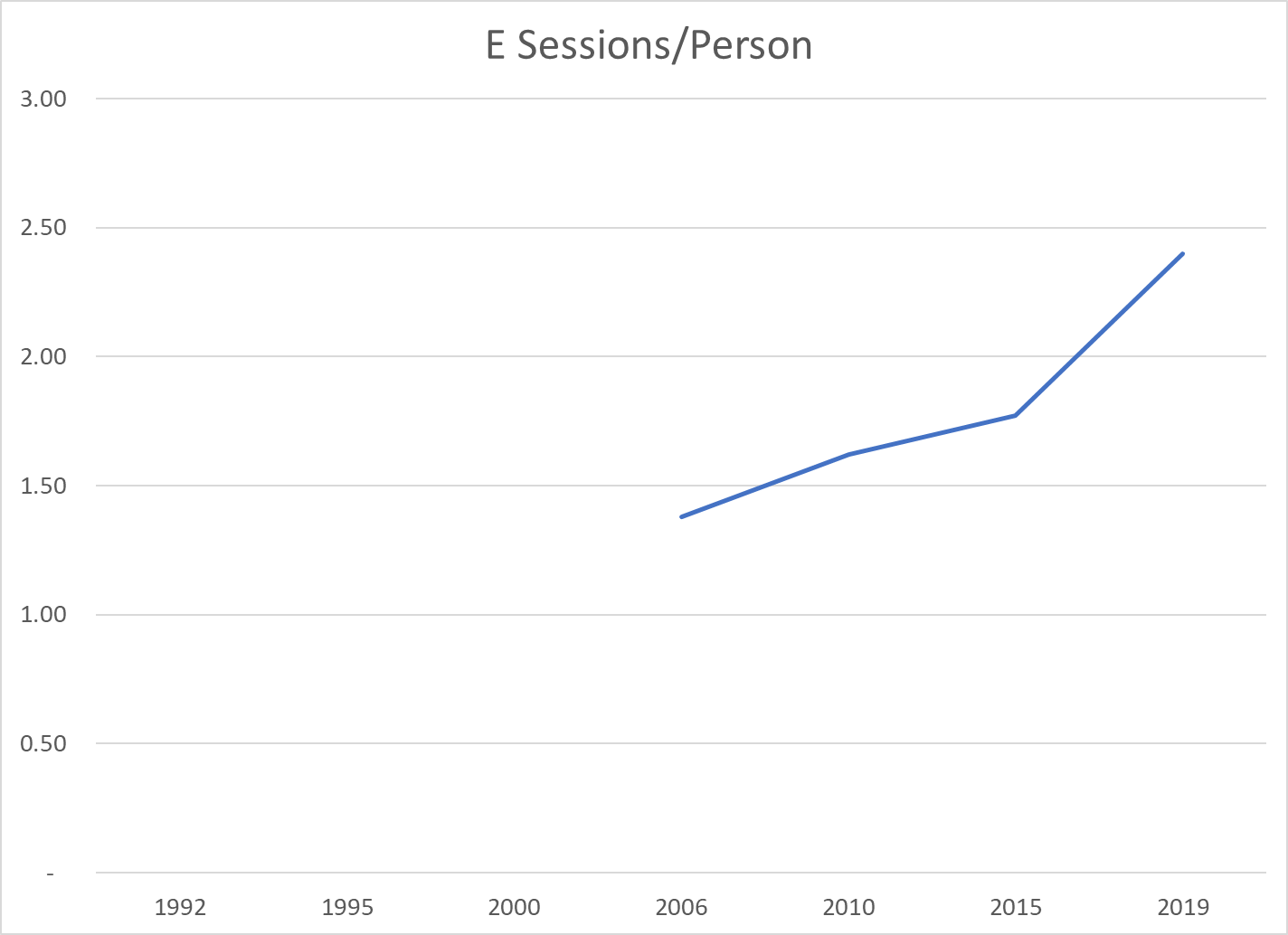
The sum of library computer plus library wi-fi access computers grows.

The real (inflation-adjusted) cost of public libraries per person has been flat for the last 20 years.
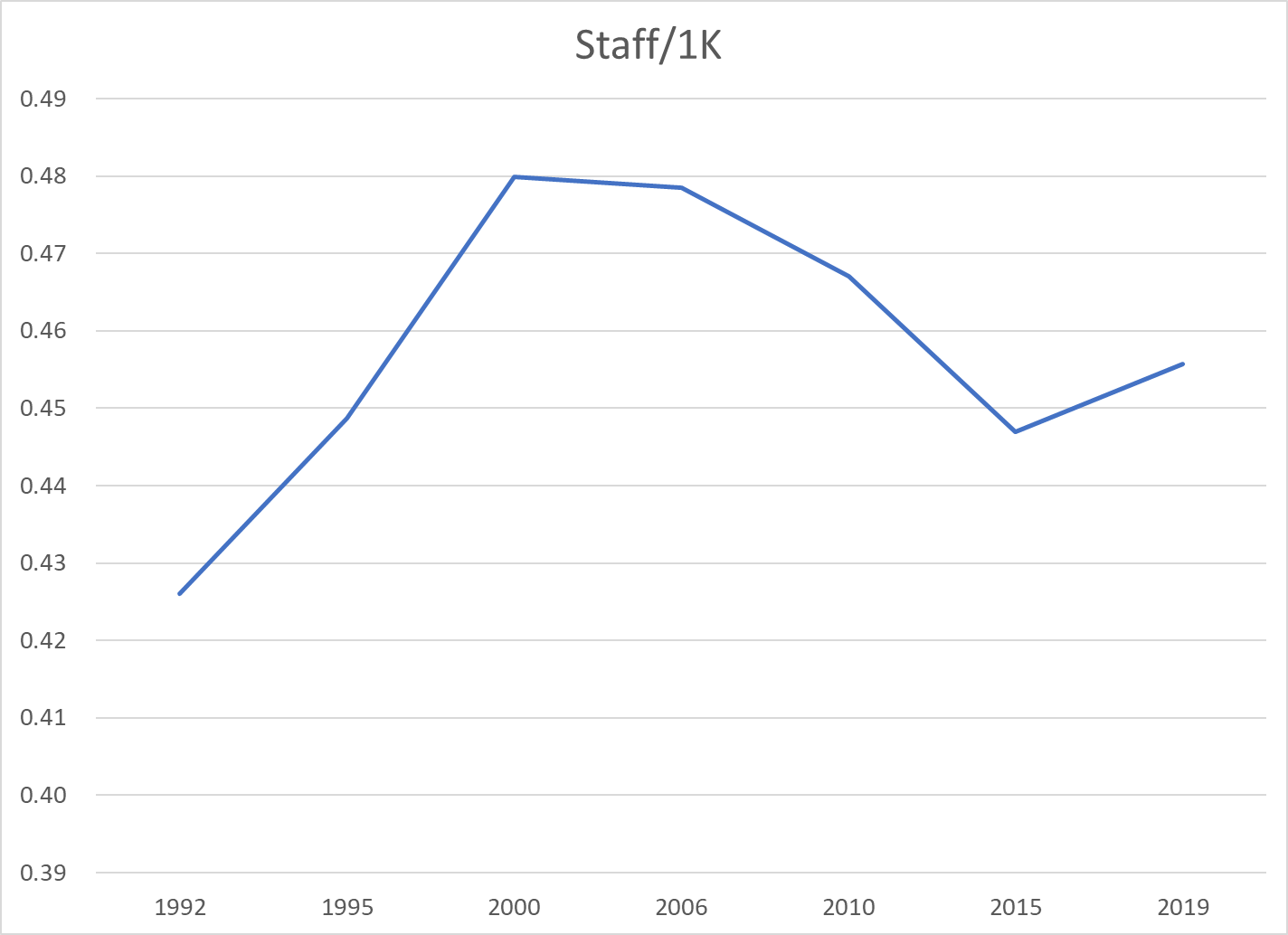
Library staffing peaked in 2000 and has declined since then.
Residential air conditioning was close to zero percent until after WWII.
https://www.smithsonianmag.com/smithsonian-institution/unexpected-history-air-conditioner-180972108/
Household AC grew to 50% by 1970 and 90% by 2017. It grew from 88% in 2011 to 91% in 2019.

http://www.freeby50.com/2011/08/percentage-of-homes-with-air.html

https://www.eia.gov/consumption/residential/reports/2009/air-conditioning.php

https://www.bloomberg.com/news/articles/2019-07-10/why-we-always-fight-over-air-conditioning
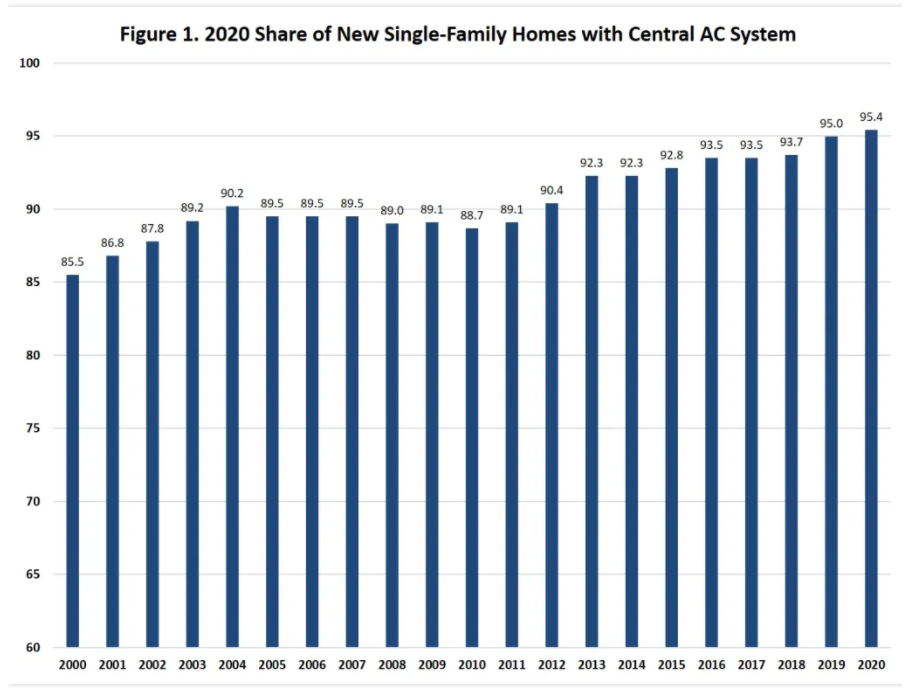
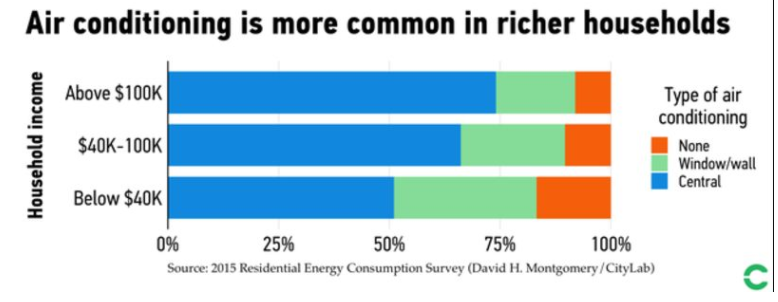
The increased level of air conditioning is largely driven by the increased level of air conditioning included in new home construction.

https://www.eia.gov/consumption/residential/reports/2009/air-conditioning.php


https://www.bloomberg.com/news/articles/2019-07-10/why-we-always-fight-over-air-conditioning
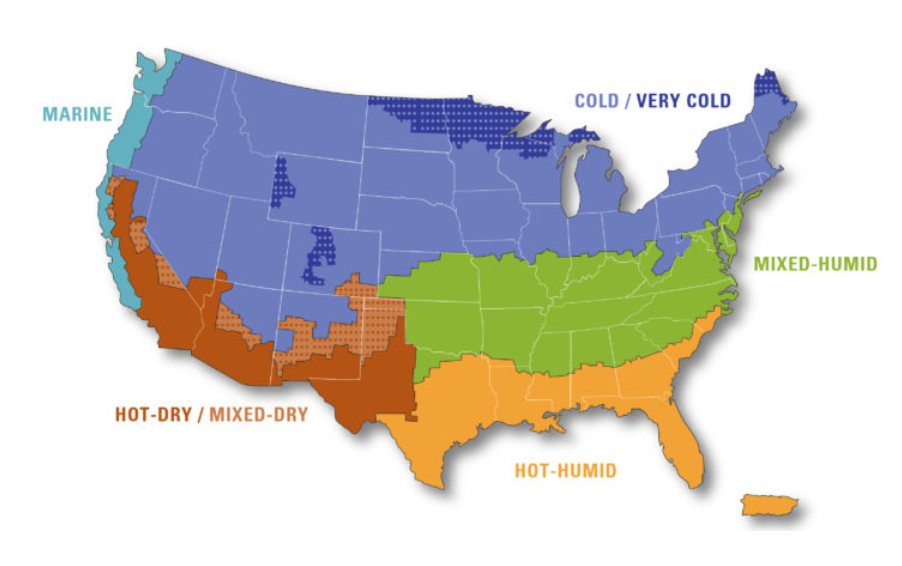
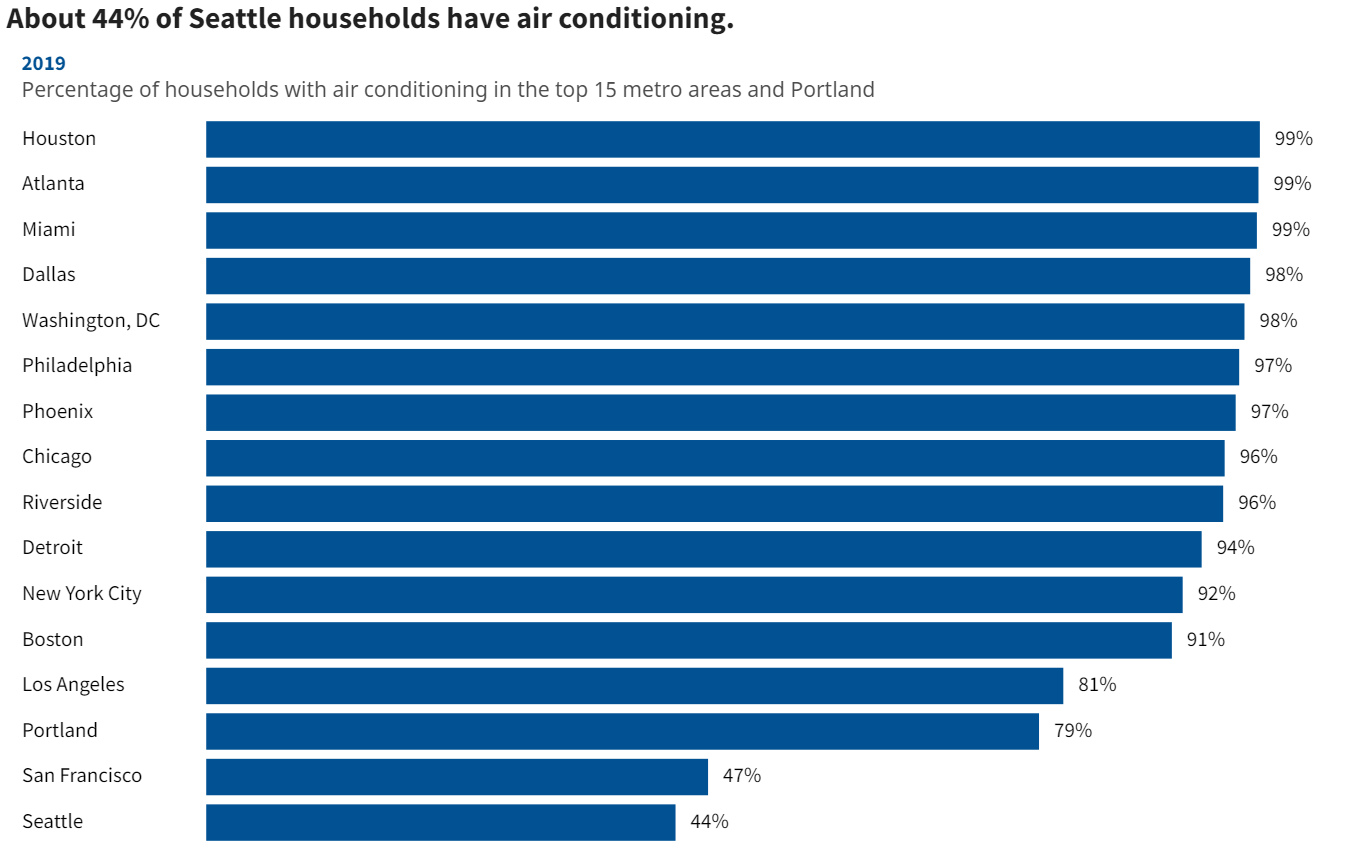
Air conditioning demand varies significantly by region/climate. AC use increased from 75-99% in the South, from 60-90% in the Midwest, from 50-85% in the northeast and from 40-60% in the West. AC demand varies based on peak temperatures, the number of days at peak temperature, the number of hours per day at peak temperature and the humidity (felt temperature). San Francisco, Portland and Seattle rarely “require” AC, even though their residents could afford this service.
https://www.bloomberg.com/news/articles/2019-07-10/why-we-always-fight-over-air-conditioning

https://howtoguide.org/europeans-can-live-without-ac/

https://www.smithsonianmag.com/smithsonian-institution/unexpected-history-air-conditioner-180972108/
The US, Japan and Korea lead the world in households with air conditioning. China and Saudi Arabia are representative of moderate-income nations with relatively high AC usage. Most other nations, including the wealthier European nations, remain at very low rates of AC adoption (10%). This is a “good news” item for personal comfort, but not so good for energy consumption.


