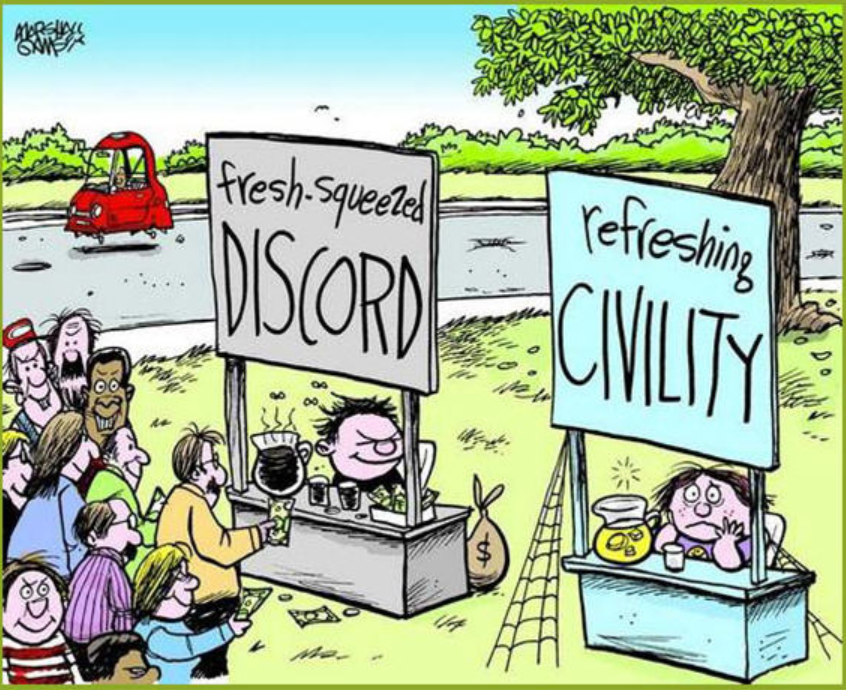
By 1992 politicians learned that black/white, good/bad, right/wrong framing of political issues was most effective. No more late-night sessions in a “smoke filled room”. No more compromises. No more earmarks or logrolling. Political parties must be philosophically consistent. No personal relations among congresspeople. No great existential threat, country, philosophy or doctrine to oppose together. Modern marketing and psychology provided the insights and tools to truly manipulate the public. Emotions are more powerful than logic. Hate and fear are stronger than hope. Compromise is immoral. Framing the discussion and providing the right language is most effective.
Republicans learned much faster than Democrats who held onto their historical successes, clung to rationality, facts and experts, embraced progressive trends, worshipped ideals above results, were slow to leverage modern political technologies, and truly believed they would prevail simply because they were right.
In hindsight, the path forward was obvious. Find issues that are emotionally charged. Define them as good versus evil. Manage the conceptual frames to make your position appear reasonable and the opponents extreme or radical. Use actions, political activity and the media to focus attention on the issues that are most favorable to your party at any point in time. The ends justify the means. “Winning is the only thing”. I have to respond to my opponents. Fight against evil doers. Enable victimhood. We have experienced 40 years of the downward spiral.
Situation
We are polarized. We have lost trust. We are skeptical and pessimistic. Does this make any sense? We live in the greatest country in the greatest time in history. Our parents and grandparents defeated fascism, nationalism, totalitarianism and communism. They learned to tame business cycles. They tripled international trade for mutual benefit. They established global alliances and organizations to solve problems and reduce the risks of conflicts. They quadrupled real output per person. They reduced global poverty by 80%. They extended human lifespans by two decades. I want to argue that the apparent political conflicts in the US today are a “grand illusion”. First, let’s outline the 5 main dimensions of politics.
The main dimensions of American politics over the last 250 years center on federal power, economic control, civil rights, foreign policy, and cultural change.
Federal Power (National vs. State)
The Debate: How much control the central government has over individual states.
Early Years: Fought over whether the nation was a loose union of states or a strong single country (culminating in the Civil War).
Modern Era: Focuses on federal laws versus state laws regarding healthcare, education, and public safety.
The Economy (Free Market vs. Government Role)
The Debate: How much the government should regulate business and help the poor.
Early Years: Promoted a mostly free market with low taxes and little regulation.
Modern Era: Includes social safety programs like Social Security and government rules for banks and corporations.
Civil Rights (Equality vs. Exclusion)
The Debate: Who gets full rights and protections under the law.
Early Years: Limited rights mostly to white, property-owning men.
Modern Era: Fought for and expanded the rights of enslaved people, women, racial minorities, and LGBTQ+ individuals.
Foreign Policy (Isolationism vs. Global Action)
The Debate: How much America should get involved in world affairs.
Early Years: Avoided permanent foreign alliances and focused on North America.
Modern Era: Led global organizations and fought in world wars and international conflicts.
Culture and Society (Tradition vs. Progress)
The Debate: How social traditions and moral values shape laws.
Early Years: Tied heavily to religious foundations and agrarian lifestyles.
Modern Era: Centers on shifting social norms, family structures, and individual freedoms.
Analysis and Hope
Conservatives have won the financial battle since LBJ’s “Great Society” proposals to increase the role of the federal government with Reagan’s election and re-election. Political battles, inertia, convenience and special interests have since increased the power of the federal government, especially the presidency. Democrats can now see the dangers of centralized federal power and cooperate with the remaining moderate Republicans to “accept” a reasonable compromise. Fiscal conservatives can join with Democrats to address the federal budget deficit and national debt.
Americans remain committed to a “mixed economy” that is primarily capitalist with relatively limited regulation compared with other “advanced” economies. Again, Republicans won this war with Reagan. They have tried to further deregulate and cut taxes with some results. However, the Trump Republican party is a populist party that mistrusts big business. This is a “tug of war” area, not an existential battle, despite it being positioned this way by both parties.
Democrats (and historical Republicans) won the civil rights war. Some elements of the Trump Republican party oppose the more extreme expression of “civil rights” application and have politically leveraged alleged Democratic overreach. As a country, we have a basic consensus of the 80%.
The struggle between isolationism and global engagement has been rekindled by Trumpian Republicans, overturning more than 50 years of Republican economic globalism. Democrats accepted this approach with the Clinton “third way” of the 1990’s. Trump has made this an emotional “us versus them” issue, conflating defense, economics and immigration. Big business and Wall Street have not fought back. Most Americans don’t want to give up the benefits of cheap imports, NATO, alliances and lower wage service, farm and construction workers. Both parties can limit the real risks of globalization.
Until recently, Democrats had “won” the so-called “culture wars”. Science, progress and secular society would grow forever. A balance with religion, tradition, community, spirituality, and local cultures was not needed. We now have a consensus that the cultural pendulum has swung too far in some ways and that we all have a need to accept a pluralistic society as we did at the nation’s founding. At that time, it was many denominations. Now it is many spiritual and cultural views. The “cultural conservative” base of the Republican Party, IMHO, has rightfully opposed the extinction of traditional cultural views. The Democratic party and its thought leaders can return to its history of both pushing for progress and embracing a diversity of views on how best to live one’s life.
Summary
Americans prefer a moderate role for the federal government. A little less than today. We are not a statist France. Delegate as much as possible to the states. Re-establish “checks and balances” and “the rule of law”.
Americans prefer a mixed economy with relatively low government control and taxes. There is no consensus for radical change.
Americans embrace civil rights for historic categories. They mostly don’t support affirmative action or expansion of categories or perspectives.
Americans prefer the benefits of global engagement AND want their country to be protected. The failure of the Trumpian win/lose approach is increasingly clear.
Americans prefer progress and embrace individual rights to choose religious and cultural beliefs and practices. Most can strongly agree on that.
There are not existential threats on any of these 5 dimensions for two-thirds of Americans. We have to reject politicians, parties and influencers who try to frame extreme conflict when it does not exist.
70% of Americans oppose the construction of large-scale data centers locally. More Democrats oppose building, but this is a rare bipartisan topic that all politicians are digesting and turning into a campaign issue. Why do so many Americans oppose this? Is the opposition well-founded? The most recent Gallup poll identified more than 25 reasons for opposition.
Negative views on AI. Government regulation of AI is inadequate versus its existential threats to humanity. Stop it locally. Like the atomic bomb, nuclear power, chemical and biological weapons, bioengineering, and GMOs people cannot assess the cost/benefit ratio or assess the threats to jobs, white collar jobs, service jobs, manufacturing jobs, health care jobs, society, democracy, working class, etc. The undefined and unlimited risk is so large it must be stopped. Is this logical? Given the lack of congressional, professional, business, university, church or high-tech deep understanding, pausing AI is reasonable. Stopping data center construction is something that local citizens and politicians can do because they don’t have confidence in national leaders. There is a Frankenstein and Godzilla dimension to this.
Excess water usage. Local government approvals should consider water usage. Data centers should be built in places with adequate water supplies. Many have been built or proposed in areas without surplus water supplies. Developers develop. That’s what they do. Local regulators must consider all factors for zoning and development deals. Citizens are not confident that politicians or regulators will make wise decisions. Data centers don’t consume large quantities of water. Local governments can require them to use closed loop system that greatly reduce water usage.
Electricity consumption increases electricity rates.Public utility regulators are charged with spreading costs across all uses. New usage should not increase rates. Regulators can force very large users, like data centers, to pay for some extra costs of start-up and operation.
Electricity consumption threatens grid reliability. States and regions plan 20-30 years in advance. The recent increase in electricity demand and the addition of greater wind/solar power sources makes grid management more challenging. Data centers are not a major threat.
Electricity consumption undermines the transition to green energy sources. Again, this is a state regulatory issue. The blend of fossil versus green energy is a power company and state regulation choice. Wind, solar, hydro, nuclear and tide sources are increasingly competitive. Natural gas is the “swing” source and coal is uncompetitive.
Data center is an imperfect local land use. From the local community perspective, land could/should be used for farming, parks, nature, community centers, higher tax value uses, greater employment uses, greater total economic value uses, etc. Again, local zoning/regulation should shape this decision. Are local politicians accountable for their decisions?
Data centers are ugly, like cell phone towers, only huge. Another local zoning issue. Does this fit within “light industrial” zoning? It looks like a huge warehouse, without all of the doors and traffic.
NIMBY. I don’t want this locally. Let someone else host it. With proper zoning, data centers don’t harm property values. After construction, traffic is minimal.
Taxpayer subsidies are too high. Probably. Press local politicians. No subsidies are required.
Data center zoning/development/subsidy deals are hidden. Increased transparency is called for today.
Data centers generate local pollution. Another regulation issue. Noise limits for AC and backup generators. This is a minor issue.
Water and electricity usage requires capital investments. Regulated utilities are empowered to set rates to all users based upon total lifetime costs. In general, utility capacity can be added at lower than legacy capacity costs through time. It cannot be grown quickly without rate increases or rate setting that penalizes new users such as data centers or that requires new users to fund/subsidize construction and rates for a while.
Summary
Data center construction is opposed because citizens have lost trust in government, regulators, bureaucrats, politicians, big business, technology, promises, experts and deals. Ouch.
Historically, leaders found ways to work “behind the scenes” to resolve, compromise or guide issues to acceptable conclusions. Perhaps not optimal, wise or representing the people, but reasonable.
We have a crisis of governance. The polarized political parties, legislative gridlock, dueling lawsuits, complex issues, undermining of experts, data and rationality have left us angry and uninterested in problem solving.
As Thomas Paine said during the American Revolution, “these are the times that try men’s souls.” Are the differences insurmountable?
Political Dimensions – Google AI 8/24/2026
The main dimensions of American politics over the last 250 years center on federal power, economic control, civil rights, foreign policy, and cultural change.
Federal Power (National vs. State)
The Debate: How much control the central government has over individual states.
Early Years: Fought over whether the nation was a loose union of states or a strong single country (culminating in the Civil War).
Modern Era: Focuses on federal laws versus state laws regarding healthcare, education, and public safety.
The Economy (Free Market vs. Government Role)
The Debate: How much the government should regulate business and help the poor.
Early Years: Promoted a mostly free market with low taxes and little regulation.
Modern Era: Includes social safety programs like Social Security and government rules for banks and corporations.
Civil Rights (Equality vs. Exclusion)
The Debate: Who gets full rights and protections under the law.
Early Years: Limited rights mostly to white, property-owning men.
Modern Era: Fought for and expanded the rights of enslaved people, women, racial minorities, and LGBTQ+ individuals.
Foreign Policy (Isolationism vs. Global Action)
The Debate: How much America should get involved in world affairs.
Early Years: Avoided permanent foreign alliances and focused on North America.
Modern Era: Led global organizations and fought in world wars and international conflicts.
Culture and Society (Tradition vs. Progress)
The Debate: How social traditions and moral values shape laws.
Early Years: Tied heavily to religious foundations and agrarian lifestyles.
Modern Era: Centers on shifting social norms, family structures, and individual freedoms.
Analysis and Hope
Our challenges today are mainly political. We, the best educated, wealthiest, most productive and knowledgeable citizens of all time, have allowed politics to be framed as existential battles. They are not. Citizens must step up to oppose the politics of demonization and division.
Conservatives have won the financial battle since LBJ’s “Great Society” proposals to increase the role of the federal government with Reagan’s election and re-election. Political battles, inertia, convenience and special interests have since increased the power of the federal government, especially the presidency. Democrats can now see the dangers of centralized federal power and cooperate with the remaining moderate Republicans to “accept” a reasonable compromise. Fiscal conservatives can join with Democrats to address the federal budget deficit and national debt.
Americans remain committed to a “mixed economy” that is primarily capitalist with relatively limited regulation compared with other “advanced” economies. Again, Republicans won this war with Reagan. They have tried to further deregulate and cut taxes with some results. However, the Trump Republican party is a populist party that mistrusts big business. This is a “tug of war” area, not an existential battle, despite it being positioned this way by both parties.
Democrats (and historical Republicans) won the civil rights war. Some elements of the Trump Republican party oppose the more extreme expression of “civil rights” application and have politically leveraged alleged Democratic overreach. As a country, we have a basic consensus of the 80%.
The struggle between isolationism and global engagement has been rekindled by Trumpian Republicans, overturning more than 50 years of Republican economic globalism. Democrats accepted this approach with the Clinton “third way” of the 1990’s. Trump has made this an emotional “us versus them” issue, conflating defense, economics and immigration. Big business and Wall Street have not fought back. Most Americans don’t want to give up the benefits of cheap imports, NATO, alliances and lower wage service, farm and construction workers. Both parties can limit the real risks of globalization.
Until recently, Democrats had “won” the so-called “culture wars”. Science, progress and secular society would grow forever. A balance with religion, tradition, community, spirituality, and local cultures was not needed. We now have a consensus that the cultural pendulum has swung too far in some ways and that we all have a need to accept a pluralistic society as we did at the nation’s founding. At that time, it was many denominations. Now it is many spiritual and cultural views. The “cultural conservative” base of the Republican Party, IMHO, has rightfully opposed the extinction of traditional cultural views. The Democratic party and its thought leaders can return to its history of both pushing for progress and embracing a diversity of views on how best to live one’s life.
Summary 2
Americans prefer a moderate role for the federal government. A little less than today.
Americans prefer a mixed economy with relatively low government control and taxes. There is no consensus for radical change.
Americans embrace civil rights for historic categories. They mostly don’t support affirmative action or expansion of categories or perspectives.
Americans prefer the benefits of global engagement AND want their country to be protected. The failure of the Trumpian win/lose approach is increasingly clear.
Americans prefer progress and embrace individual rights to choose religious and cultural beliefs and practices. Most can strongly agree on that.
There are not existential threats on any of these 5 dimensions for two-thirds of Americans. We have to reject politicians, parties and influencers who try to frame extreme conflict when it does not exist.
Capital gains are mainly earned and received by individuals in the top 1-10% of income brackets. These individuals typically have 35% marginal tax rates. The typical capital gains tax rate at these income levels is 20%. Capital earnings are taxed at a 43% discount to labor earnings! 😦
This is inequitable on a basic fairness level. Why should some individuals be taxed at a much lower rate, merely because the form of their income is different?
The fact that 90% of capital gains belong to the top 10% of income earners makes this preference even more questionable, especially to those in the middle 40th to 90th percentile income brackets who pay significant federal taxes. Those below the 40th percentile income level pay immaterial federal taxes and tax rates.
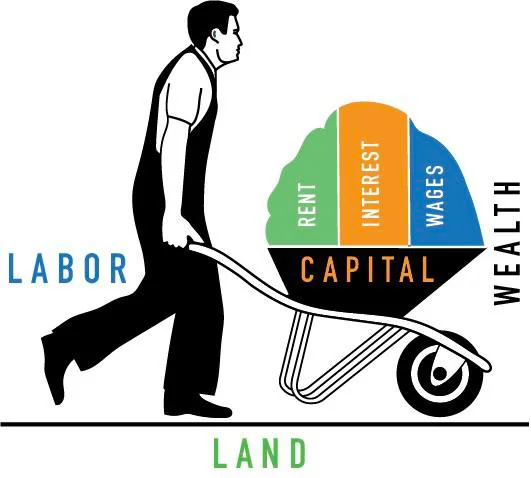
Classical economics indicates that factors of production are interchangeable, so no one factor is preferred to another (land, labor, capital and other/management/R&D/intangibles/intellectual property/entrepreneurship).
Classical economics indicates that the return to each factor of production is determined by supply and demand in each factor market. There is no reason to believe that land, labor or capital are mispriced or misallocated.
Capital gains tax receipts have averaged about $150B per year in the last 20 years, or 9% of individual taxes paid. The country is missing out on $65B per year, or 4% of individual taxes paid. 2025 individual income taxes collected amounted to $2.7T. 4% is $104B, or $775 per household!
In addition to this tax preference for capital over labor, land and intangibles, individuals do not pay capital gains taxes until they sell an asset which triggers gain/tax recognition. High income individuals have the investment flexibility to not recognize capital gains for years and decades. When an individual dies, his basis in an unsold asset is stepped up to the value when they die. All of the capital gain is untaxed by his heirs. The IRS tracks this number. The annual step up is roughly equal to the amount of capital gains taxed. Yes, 9% of the $2.7T annual tax take, $239B per year, $1,750 per household.
The total tax benefit is $340B per year, $2,500 per household.
Criticisms and Responses
Financial capital is required for physical capital investment which is the basis of all economic output. Conceptually, this is incorrect. Land, labor, capital and intangibles are co-producers of output. This is a well-agreed upon result of economics since the “marginal revolution” in the 1880’s. This is a mistaken mirror image of the “labor theory of value” that Marx appropriated from Ricardo.
Financial capital is the essential ingredient for all economic progress and growth. Again, the factors of production are co-equal. Financial markets are just as balanced as the “factors of production” markets. There is no reason to believe that financial markets require a subsidy to provide adequate finances for demanded investments. The globalization of financial markets makes this even less plausible. Savers around the world are easily able to find places to invest.
The return to capital includes inflation, which should not be taxed. Again, at theory level, financial markets balance the supply and demand for money. Market participants incorporate the expected inflation level into their calculations. Individuals invest, expecting a certain inflation rate. They know that their “real” returns will be discounted by inflation. In practical terms, the expected inflation rate has been 2% for 30 years. It has been higher for short periods of time. Critics argue that unexpected spikes in inflation should not trigger capital gains taxes. They don’t argue that unexpected decreases in inflation should drive higher capital gains taxes. In technical terms, the IRS rules could include some “adjustment” so that long-term capital gains would be reduced by the excess of inflation versus a 3% rate.
Capital gains fluctuate with the stock market, so they cannot be relied upon as a source of government income. Over time, the government will collect its fair share.
Investors will dodge any change in the capital gains rules. OK, the legal changes can go back 3-5 years as needed to capture revenues or accept that the transition will be less than ideal.
A higher marginal capital gains tax will encourage individuals to hold their assets longer, hoping to escape any taxes at their death. Yes, without reform to the death basis step-up option, the positive impact will be much less.
Individuals don’t have the liquid assets to pay taxes on the step-up basis at death. Like inheritance taxes, the capital gains tax on the step up in asset basis could be paid across 5-10 years.
Higher capital gains tax rates will reduce total taxes collected. This is the “Laffer Curve” logic. There is certainty a capital gain tax rate that will discourage investment and recognition of capital gains. This proposal is to tax capital gains at the same rate as earned labor income, about 35%. There is no solid evidence that a one-third tax rate discourages anything. 50% is somewhat different.
A higher capital gains tax rate will discourage savings and investment. GDP growth will be reduced by 0.1% annually. Macroeconomic models can allegedly “prove” this. Moving out of the 35% “sweet spot” to 50% might reduce savings and investment and GDP growth. I’m not proposing this. Even the negative impact at 50% would be small compared with the improvement in equity and increased commitment of citizens to a fairer state.
US business investment has declined through time. We need to incentivize savings and investment. US savings and investment do change through time. Many factors drive these changes. Marginal tax rates on capital gains are very minor factors. The US economy has thrived in the last 50 years. It has access to investment because it has proven its ability to deliver for investors.
Federal capital gains taxes reduce state capital gains taxes. OK, states will adapt.
I’m not proposing a widespread “mark to market” approach that requires implicit capital gains to be taxed every year for everyone. I do believe that it is possible for the IRS to define regulations to require very high-income individuals who can afford the accounting support to recognize gains on highly liquid market assets each year.
Summary
The “populist revolt” is driven by individuals who think that they don’t get a “fair shake” from our society, economy and government. One “big ticket” item is the preferential lower tax on capital gains versus earned labor income. It’s not fair. It’s not right. It’s $2,500 per household of unfair subsidy. Democrats should make this a major policy plank. The losers from this change are in the top 10% and especially in the top 1% of earners. Now that Republicans have adopted the “common man” as a major part of their political base, they will be required to respond favorably.
Our political systems are broken. The Supreme Court’s decision to make race an unconstitutional factor in determining voting districts will probably reduce racial minority representation significantly as partisan political parties are no longer legally constrained by this limit. State level gerrymandering is proceeding towards 80% to 90% of seats being captured by the larger party whenever possible. Minority representation is greatly reduced or eliminated. Polarization increases. Citizen buy-in decreases.
It may be that the American people have had enough. Some states will adopt independent commissions to draw congressional and state districts.
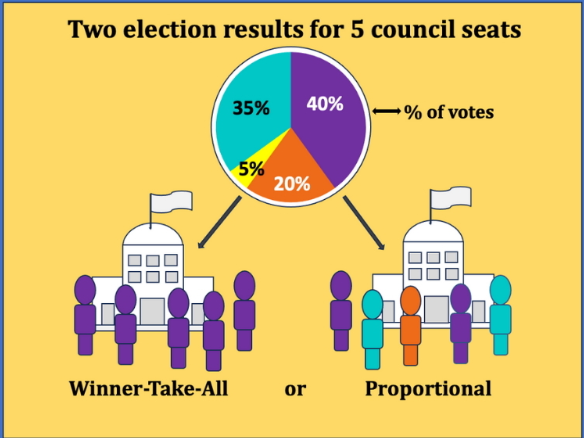
Another option is proportional representation. Define multi-member districts so that minority group, party and sub-party groups are more likely to be represented closer to their proportion of the vote.
Proportional representation requires important choices about the size of districts (typically 3-8 members is ideal) and the balance between party and candidate importance (a balanced approach is recommended).
Ranked choice voting systems can also be implemented with proportional or our existing single member districts. Ranked choice systems allow voters to express more of their preferences for candidates and parties.
A 1967 federal law requires single member congressional districts. It could be repealed by Congress to allow states to experiment with these options.
Few democracies worldwide still cling to single member/first past the post/winner take all districts. The US has historical experience with alternative member district rules.
Proportional representation is not a panacea. No voting system perfectly translates voter preferences into candidates and their subsequent votes. But proportional representation would help to reduce our polarized 2-party system, reduce the influence of money on elections and help voters to see and feel that their votes matter.
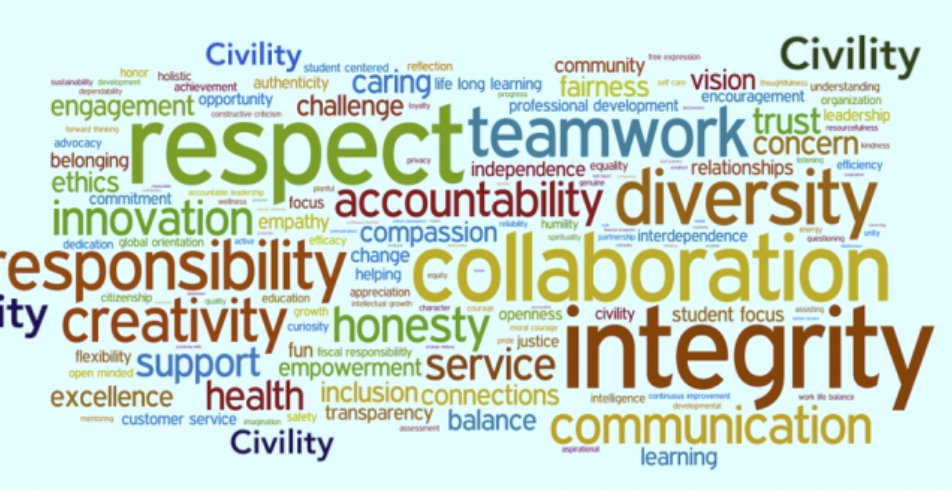
Civility faces many challenges to survive and thrive. It possesses many advantages.
Conceptually
They say I’m a dreamer, but I’m not the only one. The umbrella terms liberal and conservative are inadequate to political dimensions and individuals. Despite DEI politics, most Americans support diversity, equal opportunity and acceptance. Thought leaders realize there is no alternative to Civility for a modern society to function. We define “certainty” for science and religion. We have post-Newton insights in the last 100 years. We understand “victim” language. We can help ourselves and our friends to reject this burden.
Logically
Civility encourages us to accurately diagnose the current situation. Despite political extremism, instrumental logic and facts rule the scientific and business worlds. Civility is designed to be nonpartisan, allowing political parties to embrace this approach to effectiveness. The 7 Civility values are equally attractive to liberals and conservatives. Civility is able to promote public-spiritedness without leaning left.
Morally
The Civility behaviors are mostly consistent with human nature. The rest can be taught. In a time of advanced technologies and artificial intelligence, focusing first on human dignity is wise. While Civility focuses on behaviors and a few values, it can be driven by more emotional values. We better understand the benefits and limits of tolerance and its role as a social value. Most people see the costs of extreme individualism to themselves, family, neighbors and coworkers. By highlighting the habit of skepticism, we can greatly reduce its poisonous impact.
Progressively
The track record of modern society solving problems is very strong. Our world has an increasing experience base of finding both/and descriptions and solutions. We do have a long track record of reducing our perceptions of “the other” as a threat. We have more experience outsourcing government functions to reduce the sense of intrusion. The change is based on incremental improvements rather than heroic efforts and projects. Modern communications capabilities can effectively promote moderate, complex, less emotional positions. As Robert Putnam documents in The Upswing, we have revised our social institutions before.
Powerfully
Civility is supported by a super majority of independents, Republicans and Democrats. Corporations need Civility to operate complex organizations. They will recruit, train and reward Civility. Civility embraces a wide diversity or political and religious beliefs. Civility is supported by many churches, businesses, professions, universities and governments. Leaders of Europe’s more secular democracies strongly embrace Civility. There is no fundamental opposition to Civility by China’s leaders. Civility is strongly supported by the major religions. The 7 Civility values are supported by all major religions and philosophies. Unquestioned religion or scientism are dead. Better insights and communication are possible. The Catholic church can strongly support Civility. Protestant churches can support Civility without overemphasizing “social justice”.
Politically
Societies have always had political differences. Our differences are no greater than in history. In the American 2-party system, the center normally has extra political weight. Political parties, groupings, ideologies and polarization naturally change through time. We have 50 years of post-60’s social policy debates. We know that we will always disagree on some things. The diversity of states allows the benefits of federalism to accrue with better policies emerging. The reliance of the classical liberal political model on shared values is better recognized. The unintended consequences of politically extreme policies become obvious in time.
The impossibility of extreme political parties/factions delivering on their promises becomes apparent. Ironically, liberals have become “cultural conservatives”, promoting a 250-year-old approach. Liberals increasingly see the value of allowing states to determine social and economic policies. Some liberals see that 100% enforcement of social policies drives strong opposition for little benefit. Broadly defined insecurity has become a political priority that will generate nonpartisan solutions.
Educationally
Modern cognitive science, counselling and organizational behavior are highly effective. By defining Civility as a set of behaviors, we make it teachable, actionable and leverageable.
The Civility lessons are straightforward, allowing many to lead workshops. Solid Civility lesson plans can be developed in many places and used everywhere. We can fine-tune and package hundreds of Civility training exercises to serve everyone. Organizations and individuals can rely upon counselling, groups and training. We can greatly improve our school curriculums to teach Civility as a solution to real differences. Civility is practiced and improved in all arenas of life. Improvements are leveraged.
Virally
In a highly specialized world, there are more opportunities to apply Civility “win-win” principles. Civility is not an “all or nothing” set of behaviors. Incremental progress is normal. The more challenging Civility behaviors can be practiced in safer, local environments. Local expectations of Civility allow all individuals to apply and grow these behaviors. Civility can be practiced in any environment without permission from anyone. Civility skills, values, beliefs can be developed and applied without any approvals. The virtuous cycle of Civility applies at levels. Good behavior or feedback drives more good behavior. The practice of Civility generates “positive externalities” for others. The state should support it. The practice of Civility provides a role model for others to emulate. Social norms are very powerful. Most people learn them implicitly. Civility behaviors can become habits which then apply without thought or effort.
Beneficially
Every person can serve as a Civility ambassador, champion or “civiliteer”. High-level Civility skills are personally and professionally highly valuable. The Civility emphasis on self-awareness and values clarification can improve quality of life. Humans have much in common and can learn this. Americans have much in common. We understand “human nature” deeply, so can adjust to leverage strengths and patch weaknesses. Americans are proud of their political system and will invest in Civility to preserve it. Civility’s focus on human dignity supports the modern high importance of personal identity. As individuals seek validation of their identities, Civility can help to facilitate good conversations. Our greatly improved understanding of behavioral economics provides new policy opportunities.
Summary
The modern approach to improving and installing Civility as a major social norm is audacious, yet it has great support.
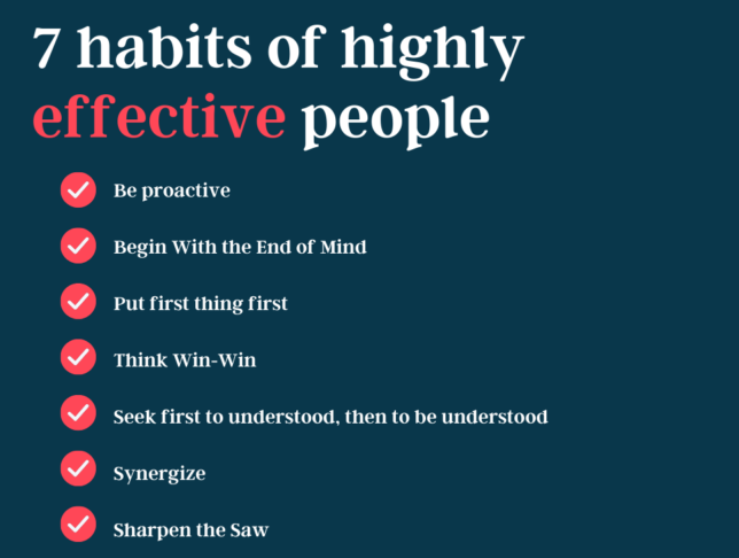
Stephen Covey’s 1989 book invented the personal development industry for modern employers and employees. It has sold more than 20 million copies and helped millions of people become “more effective”.
I’ll connect the “7 habits” to the very independently derived 7 values and 7 skills/behaviors of Civility.
Covey’s book is principle centered, focused on character development and the importance of managing perceptions.
Civility is “principle centered”, based on the 7 nonpartisan values of human dignity, respect, acceptance, responsibility, constructiveness, intentionality and public spiritedness.
Civility is based upon 7 skills/behaviors of self-awareness, self-management, social awareness, relationship management, communications, growth and problem-solving that also acknowledge the importance of a lifetime of personal development. The 6th behavior outlines how the practice of Civility leads to personal growth.
Civility emphasizes the crucial role of identifying, understanding and shaping personal perspectives, insights and world views. The 4 values of respect, acceptance, responsibility and public spiritedness require the individual to work on refining their world views. Similarly, the self-awareness and social awareness behaviors emphasize the need to clearly define and sometimes challenge real views as part of social discourse or civil dialogue.
1. Be Proactive (Google AI)
Stephen Covey’s Habit 1: “Be Proactive” relates to civility by placing the responsibility for respectful behavior on the individual rather than on external circumstances or other people’s actions. Being proactive means choosing to respond with values—such as kindness and respect—rather than reacting based on feelings, which fosters a more civil, constructive, and collaborative environment.
Choice of Response vs. Reaction: Covey argues that between a stimulus (e.g., someone being rude) and the response, there is a space to choose. Proactive individuals use this space to choose a civil, value-based response, rather than blindly reacting with anger or sarcasm, which would diminish civility.
Owning One’s Behavior: Proactive people do not blame their behavior on others or their environment (“he makes me so mad”). Instead, they act with accountability, knowing that their own conduct is a result of their own decisions.
Focus on the Circle of Influence: Proactive people focus on what they can control—their own attitude, language, and behavior. They understand that while they cannot control another person’s rudeness, they can control their own polite response, which can often improve the situation.
Proactive Language: Proactive people use language that implies choice, such as “I can,” “I will,” or “I choose”. This language is inherently more empowering and respectful than the reactive language of blame (“He makes me…”, “I have to…”).
Acting with Intention: Proactive individuals create a climate of respect, rather than waiting for others to do so. They take the initiative to communicate clearly, apologize for mistakes, and behave with kindness, which acts as a proactive driver of civility in professional and personal relationships.
By taking ownership of their behavior, proactive individuals stop blaming “out there” for their issues, thereby reducing conflict and increasing respectful interaction.
TK Summary: Strong overlap with Civility values of responsibility and intentionality, overlap with respect and constructiveness. Strong overlap with Civility behavior self-management, overlap with communication, self-awareness and social awareness. Civility is not about politeness, surface level choices, weakness or moderation. It focuses on making great choices and deeply owning those choices.
2. Begin With the End in Mind (Google AI)
Stephen Covey‘s second habit, Begin with the End in Mind, relates to civility by framing daily interactions as steps toward a long-term legacy of character and relationship quality. Instead of reacting to immediate frustrations, this principle encourages individuals to act according to their core values and the “end” they want to achieve in their personal and professional lives.
In the context of civility, this habit manifests in several ways:
Relationship Preservation as the “End”: In conflict resolution, beginning with the end in mind means visualizing a successful outcome where the relationship is preserved or strengthened, rather than just “winning” an argument.
The Eulogy Exercise: Covey famously asks people to visualize their own funeral and consider what they want friends, family, and colleagues to say about their character. If you want to be remembered as kind, respectful, and fair, you must practice those civil behaviors in the present to make that “end” a reality.
Principle-Centered Living: By centering one’s life on unchanging principles like trust and honesty, an individual can maintain civil behavior even in the face of adversity, rather than being swayed by temporary emotions or external circumstances.
Intentional Communication: This habit encourages visualizing the desired atmosphere of a conversation or meeting before it begins. This mental “first creation” allows for more deliberate, empathetic, and respectful communication.
Living by Design, Not Default: Without a clear vision of who you want to be, you may fall into reactive, uncivil patterns dictated by pre-existing habits or others’ behaviors. Intentionally choosing your “end” goal empowers you to respond with civility by design.
TK Summary: The Civility values of respect and intentionality stand out, followed by human dignity and responsibility. The Civility behaviors of relationship management and self-management are essential here, also using self-awareness and problem-solving to create this habit.
3. Put First Things First (Google AI)
Stephen Covey’s “Put First Things First” habit relates to civility by prioritizing long-term relationship building, respect, and ethical behavior over reactive, urgent, but unimportant demands. It emphasizes investing time in people and principles, ensuring that how we treat others remains a top priority rather than an afterthought sacrificed for immediate, urgent tasks.
Key connections include:
Prioritizing Relationships: By focusing on Quadrant II (important but not urgent) activities, such as relationship building and proactive communication, people cultivate a respectful and supportive environment, rather than treating interactions as interruptions.
Proactive Self-Management: It requires managing oneself to live according to values, which prevents rushing, stress-induced rudeness, and, instead, fosters a calm, thoughtful approach to interactions.
Valuing People Over Tasks: It emphasizes that people and their well-being are paramount, ensuring that interacting with others is treated as a priority rather than a “low-priority” task compared to other work.
Preventing Ethical Crises: By acting on principles before they become urgent problems, individuals are more likely to behave with integrity and maintain professional civility.
TK Summary: Here, Covey focuses on the Civility values of human dignity and acceptance, supported by respect. He emphasizes the Civility behaviors of relationship management and self-management, supported by communications and personal growth.
4. Think Win-Win (Google AI)
Stephen Covey’s “Think Win-Win” habit (Habit 4) is directly related to civility by serving as a character-based code for interaction that requires mutual respect, emotional maturity, and the balance of courage and consideration. It builds a culture of trust and collaboration, replacing competitive “win-lose” mentalities with cooperative, respectful, and mutually beneficial relationships.
Key relationships between “Think Win-Win” and civility include:
Mutual Respect and Consideration: Win-win requires valuing other people’s needs as much as your own, which is the foundation of respectful communication.
Emotional Maturity: It requires the “courage” to express your own needs and the “consideration” to listen to others, forming the basis of mature, civil dialogue.
Abundance Mentality: It assumes there is enough for everyone, promoting a cooperative mindset over scarcity-driven competition, fostering generosity rather than selfishness.
Trust Building: By aiming for solutions where everyone feels satisfied, this habit builds long-term trust, which is the cornerstone of civil interaction.
Think Win-Win isn’t simply about being “nice”; it is a framework for ensuring that interactions are respectful, fair, and beneficial for all stakeholders.
TK Summary: The Civility value of true respect is first, augmented by acceptance, responsibility, intentionality and public-spiritedness. Self-management is the primary Civility behavior, accompanied by social awareness, relationship management, communications and problem-solving.
5. Seek First to Understand, Then Be Understood (Google AI)
Stephen Covey’s habit of “Seek First to Understand, Then to Be Understood” (Habit 5) is foundational to civility because it replaces judgmental listening with empathic listening, cultivating respect and validation in interactions. By prioritizing understanding over simply being right, it promotes patience, reduces conflict, and fosters deeper human connections.
Promotes Empathy & Respect: Instead of listening to respond or judge, this habit encourages listening with the intent to truly understand another person’s perspective and emotions.
Suspends Judgment: It fosters a mindset of pausing and suspending judgment, which is essential for treating others with dignity.
Builds Trust Through Validation: When others feel heard and understood, it gives them “psychological air,” encouraging a safe, collaborative environment rather than a combative one.
Combats Dehumanization: It forces one to see the person behind an argument or avatar, preventing the rush to judgment often found in poor, uncivil discourse.
Balance of Courage and Consideration: This habit teaches that true influence is built by combining kindness (seeking to understand) with courage (being understood), facilitating Win/Win outcomes.
TK Summary: Covey highlights the first 3 Civility values of human dignity, respect and acceptance. “Others” really, really matter. He then elevates the Civility behaviors of self-management and communications (active listening), complemented by social awareness and relationship management.
6. Synergize (Google AI)
Stephen Covey’s habit of Synergize (Habit 6) relates to Civility by fostering creative cooperation through valuing differences, empathetic listening, and seeking “third alternatives” (Win/Win) rather than conflict. It transforms respectful, polite communication into synergistic collaboration, treating diverse viewpoints as assets, not threats.
Key connections between synergy and civility include:
Valuing Differences: Synergy goes beyond mere tolerance (politeness) to truly valuing mental, emotional, and psychological differences, which is the foundation of a civil, inclusive society.
Empathetic Communication: Synergizing requires seeking first to understand others, creating a safe, respectful environment where individuals feel valued.
Moving Beyond Defensiveness: It replaces defensive, protective, or legalistic communication with open and honest dialogue.
Co-creation of Solutions: It actively seeks a “third way” that is better than either party’s original idea, promoting partnership rather than win-lose confrontations.
TK Summary: The Civility values of respect and acceptance are critical supports for synergy: a belief in interactive teamwork. The Civility behaviors of modern “best practices” communications and problem solving are required for synergy to deliver the goods.
7. Sharpen the Saw (Google AI)
Stephen Covey‘s 7th Habit, Sharpen the Saw, relates to civility by focusing on the social and emotional renewal required to interact with others respectfully and effectively. This habit emphasizes that a depleted or “dull” individual is more likely to be reactive, impatient, and ineffective in their relationships.
The relationship between “Sharpening the Saw” and civility manifests in several key ways:
Emotional Regulation and Reduced Reactivity
Preventing Burnout: Without regular renewal, emotions become “raw” and the spirit becomes insensitive.
Interpersonal Resilience: Leaders who prioritize physical and emotional self-care are less reactive and better prepared to handle interpersonal challenges with composure.
The “Private Victory”: Covey argues that personal renewal (the private victory) must precede successful public interactions (the public victory). Civility is difficult to maintain when one is operating from a state of exhaustion or stress.
Social and Emotional Renewal
Empathetic Connection: Sharpening the “social saw” involves cultivating empathy and emotional intelligence, which are foundational to civil behavior.
Building the “Emotional Bank Account”: This habit encourages making “deposits” into others’ emotional bank accounts through courtesy, kindness, and honesty.
Interdependent Habits: Habit 7 makes Habits 4, 5, and 6 (Think Win-Win, Seek First to Understand, and Synergize) possible. These habits represent the core of civil and cooperative social interaction.
Principled Character Development
Alignment with Values: Renewal in the spiritual dimension involves committing to a value system that often includes integrity, kindness, and human dignity.
Civic Responsibility: By focusing on self-improvement, individuals increase their capacity to contribute positively to their community and maintain a “minimal model of a civic citizen”.
TK Summary: Covey calls out the Civility value of human dignity as essential to living a great life, followed by the importance of respect for others. This habit matches up directly with the Civility behavior of personal growth and notes the importance of self-management and social awareness in living a sustainable good life in the modern world.
Summary
Many of us lived through the “malaise” of the 1970’s and 1980’s as the US tried to digest the cultural revolution of the 1960’s, the political disappointments of Vietnam and Watergate, and the global economic revolution of the 1970’s and 1980’s. The US was no longer invincible. It was threatened on all sides. Covey’s book was a clarion call to refocus on “character”. Yet, it was not about a soft, countercultural “greening of America” or a naive return to 1950’s cultural certainties. It was about the tools required for individuals to survive and thrive in a complex, global, secular world. It was not a politically partisan approach.
His “7 habits” have stood the test of time. The crosswalk with Civility is very dense. He is focused on the individual looking for habits of successful personal development. Civility is focused on the minimal values and behaviors required to maintain Civil discourse at all levels of an interdependent society.
He strongly agrees that human dignity, respect and acceptance are required for every individual. Responsibility and intentionality are very important. Constructiveness and public-spiritedness matter.
Self-management, relationship management and effective communication skills are essential. Moderate self-awareness and social awareness are needed for success. Personal growth and problem-solving skills are also required.
We collectively have an obligation to define, teach and build Civility skills/behaviors and values for the benefit of our fellow citizens and society. The overlap with Stephen Covey’s highly successful “7 habits” tells me we’re on the right path.
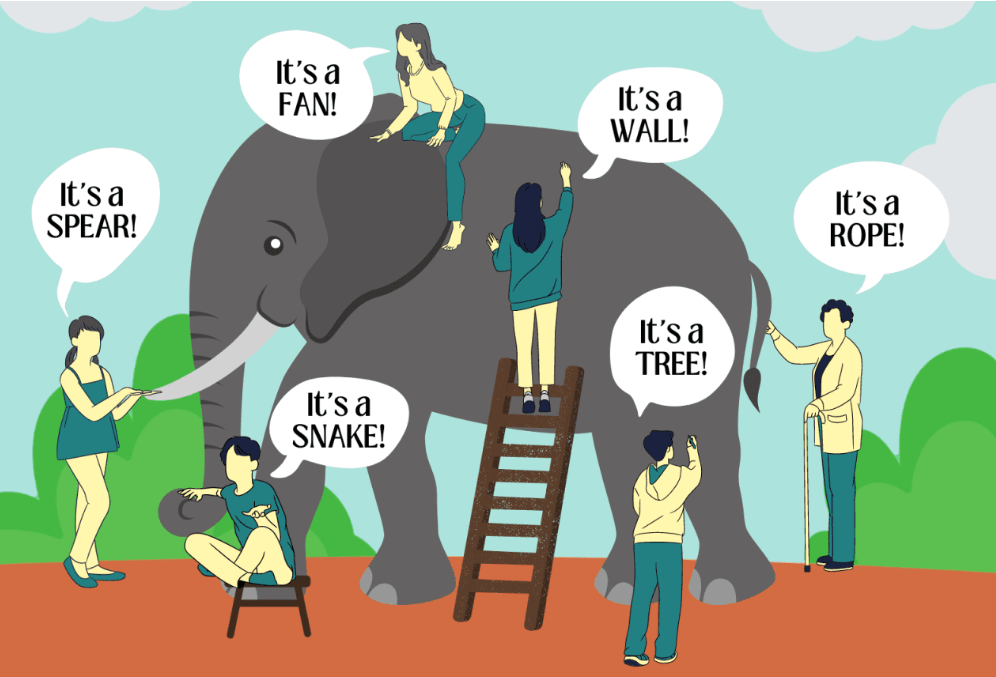
In recent times, eight older men lived in an Indiana community. Each was successfully retired and quite confident. Their neighbors loved the older men and encouraged their breakfast group meetings. Since the older men were no longer actively engaged at work, they had to imagine how things really operated. They listened carefully to stories about the active world of business, government, politics, health care, science, and leadership told to them by others.
The men were curious about many of the stories they heard, but they were most curious about Civility as a super solution to social challenges. They were told that Civility could fix politics, solve tough problems, promote personal growth, reinsert facts and logic into debate, revive trust, social relationships and institutions, and restore the balance between individuals and community.
They remembered Indiana as a very special place with great leaders. They recognized Birch and Evan Bayh, VP’s Quayle and Pence, representatives Lee Hamilton and Julia Carson, Indianapolis mayors Hudnut, Goldsmith, Petersen, Ballard and Hogsett, mayor and senator Lugar, but especially Governor Mitch Daniels. They knew that Daniels had been effective for Indiana, America and Purdue. Did Daniels believe in this Civility miracle solution?
The older men argued day and night about Civility. “Civility must be too simple,” claimed the first man. He had heard stories that it ignores real differences and big solutions.
“No, you must be wrong,” argued the second man. “Civility is complicated, combining values and habits in search of perfection. That is why people struggle to follow it.”
“You’re wrong! Civility seeks compromise, the middle ground and the golden mean. It combines the best that participants can offer,” said the third man.
“Please,” said the fourth man. “You are all mistaken. Civility grandly guarantees that it can solve all problems and conflicts! You know how people exaggerate.”
“How can you be so naïve,” exclaimed the fifth man. “Civility simply rationalizes weak, overly sensitive behaviors that avoid conflict and deny human nature.”
“Civility ignores passion and the emotions,” cried the sixth man. “It eliminates feelings, values, and intuitions by emphasizing cold rationality alone.”
“I am sure that Civility is a leftist plot,” said the seventh man. “That would explain why it emphasizes the importance and legitimacy of government.”
“On the contrary,” declared the eighth man. “Civility is a Republican scheme to return to the 1950’s with its mindless emphasis on a single culture, morality, character and values.”
Finally, the neighbors grew tired of all the arguments, and arranged for the curious men to visit the home office of Mr. Daniels to learn the truth about Civility.
When the men reached the home a half-hour ahead of schedule, they were greeted by an old friend who managed the governor’s visitors. Their friend led them to a waiting room where they watched a 10-minute video on Civility. The retired men quickly began to argue.
The first man stood up and exclaimed. “Civility is just common sense, nothing special.”
The second man misquoted the video. “Civility claims that all people can get along and all problems can be solved,” he announced.
The third man disagreed. “I was right,” he decided. “Civility is a tool of the powerful to maintain the status quo.”
The fourth man criticized Civility’s idealism. “What we have here,” he said, “is a sort of cult, invoking magical practices to reach utopian ends.”
The fifth man responded, “Civility is hopelessly weak because it asserts that strong emotions, interpersonal relations, sensitivity and hospitality can mend all fences.”
The sixth man stated, “Civility is very powerful. It allows groups and individuals to acquire and use power for their own ends, while dismissing the needs and desires of others.”
The seventh man considered the actors in the presentation. “Civility elevates individuals and personal growth above church and community, so it must favor Democrats,” he said.
The eighth man was shocked. “Why, Civility is nothing more than a way for the powerful to reassert social control through norms, taboos and shunning,” he scoffed.
The governor’s aide led his friends to the kitchen. “Sit here and rest,” he said. “I will bring you something to drink.”
While they waited, the eight men talked about Civility.
“Civility is just politeness, rules and etiquette. It is a surface level approach,” said the first man. “Surely we can finally agree on that.”
“Just politeness? Civility aims to transform men, institutions and society” answered the second man.
“Transformation? Civility focuses just on process, promotes elite values and prevents real arguments and solutions” insisted the third man.
“It’s impossible for everyone to develop such powerful skills that effectively bridge real human differences,” said the fourth man.
“Civility merely assumes that better skills, processes and values can manage differences, conflicts and human nature through the forces of goodwill,” noted the fifth man.
“Civility provides a socially approved way for individuals to emphasize form over substance. They can perform in a civil manner without really addressing the needs of others,” cautioned the sixth man.
“Socialist subjectivity and radical tolerance. There’s no doubt,” said the seventh man.
“Don’t you see?” pleaded the eighth man. “Civility is intended to keep us occupied and distracted by small issues and away from the larger issues of systematic injustice. Someone is using Civility to trick us.”
Their argument continued and their shouts grew louder and louder.
It was Purdue President emeritus Daniels, disturbed by the noisy argument.
“How can each of you be so certain you are right?” asked the former governor.
The eight men considered the question. And then, knowing the budget director to be a very wise man, they decided to say nothing at all.
“Civility combines values, skills and behaviors to solve problems and build relations,” said Mr. Daniels. “Each of you exaggerates the importance of only one part. Perhaps if you put the parts together, you will see the truth. Now, let me finish my morning in peace.”
When their friend returned with drinks, the eight men rested quietly, thinking about their leader’s advice.
“He is right,” said the first man. “To learn the truth, we must put all the parts together. Let’s discuss this on the journey home.”
The first man found his seat on the senior bus. The second man found his seat, and so on until all eight men were ready to travel together.
The decline in social Civility appears in our politics MAGNIFIED. The same factors are at work, but political actors have not just lost some Civility skills, many have rejected and opposed Civility. We’ll address the role of differences and commonality, polarization, limits of classical liberalism and current conditions.
Political, Religious and Philosophical Differences
We have evolved 6-9 “political” constructs. They are natural. Different people, personalities, political groups and cultures emphasize some more than others. There is a difference between traditional and modern/postmodern cultures. Conservatives and liberals see the world differently.
Are those who see the world differently from me Evil? Wrong? Unworthy? Shunned? Ignorant? Clueless? Selfish? Childish? Possessed? Confused? Stunted? Misguided? Immoral? Greedy? Irrational? Emotional? Small-minded? Provincial? Utopian? Idealistic? Shortsighted? Prejudiced? Reactive? Limited? Deluded? Suckers? Hubristic? Elitist?
Our current challenging social and political situation is driven by the root causes of individualism, skepticism secularism, inadequate myths, human nature and insecurity. In a word: negativity. Civility embraces constructiveness, intentionality and public-spiritedness as clearly “positive” values. It is also based upon the “positive” values of human dignity, respect and acceptance. Is it reasonable to be so positive in a time of negativity driven by politicians, the media and our fellow citizens? The answer is “yes”. We have chosen to emphasize our challenges rather than our accomplishments. Those who pursue Civility need to be aware of the reality of modern progress, conditions in all areas of life and realistic opportunities for change.
Overall Good News
Improvements in all areas of life since the 1976 bicentennial are amazing!
Civility is a social norm and a set of behaviors based upon a set of shared values. We address public morality, the 7 Civility values and their broad support from different belief systems.
Morality
Thought leaders increasingly embrace the need for some kind of commonly held public morality to replace the historical background of Christianity and Western civilization.
Respect, responsibility, honesty, compassion and fairness comprise one set of values to consider.
Rabbi Sacks provides historical context of the ideas that have led to an “I” focused culture, outlines the symptoms of a weakened “We” culture, and provides some insights as to what can be done. He combines a politically and economically moderate view with a conservative social perspective.
“We will have to rebuild families and communities and voluntary organizations. We will come to depend more on networks of kinship and friendship. And we will rapidly discover that their very existence depends on what we give as well as what we take, on our willingness to shoulder duties, responsibilities, and commitments as well as claiming freedoms and rights.”
Teddy Roosevelt: “The first duty of an American citizen, then, is that he shall work in politics; his second duty is that he shall do that work in a practical manner; and his third is that it shall be done in accord with the highest principles of honor and justice.” The citizen should be like his “man in the arena”, fully engaged in important matters.
Brooks offers 15 solutions. Live for holiness. Fight selfishness. Use your heroic capacity to struggle against external and internal challenges. Humility is the first virtue. Pride is the central vice. Struggle against sin and for virtue. Purposely build character skills, habits, experiences and preferences. Focus on the long-term, permanent attributes of life. Seek help in building character. Recognize the U-shaped pattern of falling, evaluating, feeling and accepting grace and recovering. Quiet the self enough to listen and defeat weaknesses and temptations. Aim for a practical wisdom built upon experience and history rather than a perfect ideology, theology or philosophy. Organize work around a “vocation” and do your best. Define leadership as finding “a just balance between competing values and competing goals”. Embrace the path of becoming better in your vocation and better as a person. That is the opportunity we are given.