By 1992 politicians learned that black/white, good/bad, right/wrong framing of political issues was most effective. No more late-night sessions in a “smoke filled room”. No more compromises. No more earmarks or logrolling. Political parties must be philosophically consistent. No personal relations among congresspeople. No great existential threat, country, philosophy or doctrine to oppose together. Modern marketing and psychology provided the insights and tools to truly manipulate the public. Emotions are more powerful than logic. Hate and fear are stronger than hope. Compromise is immoral. Framing the discussion and providing the right language is most effective.
Republicans learned much faster than Democrats who held onto their historical successes, clung to rationality, facts and experts, embraced progressive trends, worshipped ideals above results, were slow to leverage modern political technologies, and truly believed they would prevail simply because they were right.
In hindsight, the path forward was obvious. Find issues that are emotionally charged. Define them as good versus evil. Manage the conceptual frames to make your position appear reasonable and the opponents extreme or radical. Use actions, political activity and the media to focus attention on the issues that are most favorable to your party at any point in time. The ends justify the means. “Winning is the only thing”. I have to respond to my opponents. Fight against evil doers. Enable victimhood. We have experienced 40 years of the downward spiral.
Situation
We are polarized. We have lost trust. We are skeptical and pessimistic. Does this make any sense? We live in the greatest country in the greatest time in history. Our parents and grandparents defeated fascism, nationalism, totalitarianism and communism. They learned to tame business cycles. They tripled international trade for mutual benefit. They established global alliances and organizations to solve problems and reduce the risks of conflicts. They quadrupled real output per person. They reduced global poverty by 80%. They extended human lifespans by two decades. I want to argue that the apparent political conflicts in the US today are a “grand illusion”. First, let’s outline the 5 main dimensions of politics.
The main dimensions of American politics over the last 250 years center on federal power, economic control, civil rights, foreign policy, and cultural change.
Federal Power (National vs. State)
The Debate: How much control the central government has over individual states.
Early Years: Fought over whether the nation was a loose union of states or a strong single country (culminating in the Civil War).
Modern Era: Focuses on federal laws versus state laws regarding healthcare, education, and public safety.
The Economy (Free Market vs. Government Role)
The Debate: How much the government should regulate business and help the poor.
Early Years: Promoted a mostly free market with low taxes and little regulation.
Modern Era: Includes social safety programs like Social Security and government rules for banks and corporations.
Civil Rights (Equality vs. Exclusion)
The Debate: Who gets full rights and protections under the law.
Early Years: Limited rights mostly to white, property-owning men.
Modern Era: Fought for and expanded the rights of enslaved people, women, racial minorities, and LGBTQ+ individuals.
Foreign Policy (Isolationism vs. Global Action)
The Debate: How much America should get involved in world affairs.
Early Years: Avoided permanent foreign alliances and focused on North America.
Modern Era: Led global organizations and fought in world wars and international conflicts.
Culture and Society (Tradition vs. Progress)
The Debate: How social traditions and moral values shape laws.
Early Years: Tied heavily to religious foundations and agrarian lifestyles.
Modern Era: Centers on shifting social norms, family structures, and individual freedoms.
Analysis and Hope
Conservatives have won the financial battle since LBJ’s “Great Society” proposals to increase the role of the federal government with Reagan’s election and re-election. Political battles, inertia, convenience and special interests have since increased the power of the federal government, especially the presidency. Democrats can now see the dangers of centralized federal power and cooperate with the remaining moderate Republicans to “accept” a reasonable compromise. Fiscal conservatives can join with Democrats to address the federal budget deficit and national debt.
Americans remain committed to a “mixed economy” that is primarily capitalist with relatively limited regulation compared with other “advanced” economies. Again, Republicans won this war with Reagan. They have tried to further deregulate and cut taxes with some results. However, the Trump Republican party is a populist party that mistrusts big business. This is a “tug of war” area, not an existential battle, despite it being positioned this way by both parties.
Democrats (and historical Republicans) won the civil rights war. Some elements of the Trump Republican party oppose the more extreme expression of “civil rights” application and have politically leveraged alleged Democratic overreach. As a country, we have a basic consensus of the 80%.
The struggle between isolationism and global engagement has been rekindled by Trumpian Republicans, overturning more than 50 years of Republican economic globalism. Democrats accepted this approach with the Clinton “third way” of the 1990’s. Trump has made this an emotional “us versus them” issue, conflating defense, economics and immigration. Big business and Wall Street have not fought back. Most Americans don’t want to give up the benefits of cheap imports, NATO, alliances and lower wage service, farm and construction workers. Both parties can limit the real risks of globalization.
Until recently, Democrats had “won” the so-called “culture wars”. Science, progress and secular society would grow forever. A balance with religion, tradition, community, spirituality, and local cultures was not needed. We now have a consensus that the cultural pendulum has swung too far in some ways and that we all have a need to accept a pluralistic society as we did at the nation’s founding. At that time, it was many denominations. Now it is many spiritual and cultural views. The “cultural conservative” base of the Republican Party, IMHO, has rightfully opposed the extinction of traditional cultural views. The Democratic party and its thought leaders can return to its history of both pushing for progress and embracing a diversity of views on how best to live one’s life.
Summary
Americans prefer a moderate role for the federal government. A little less than today. We are not a statist France. Delegate as much as possible to the states. Re-establish “checks and balances” and “the rule of law”.
Americans prefer a mixed economy with relatively low government control and taxes. There is no consensus for radical change.
Americans embrace civil rights for historic categories. They mostly don’t support affirmative action or expansion of categories or perspectives.
Americans prefer the benefits of global engagement AND want their country to be protected. The failure of the Trumpian win/lose approach is increasingly clear.
Americans prefer progress and embrace individual rights to choose religious and cultural beliefs and practices. Most can strongly agree on that.
There are not existential threats on any of these 5 dimensions for two-thirds of Americans. We have to reject politicians, parties and influencers who try to frame extreme conflict when it does not exist.
It scared the $#@% out of me when I was 12 years old. It is now quickly becoming a reality.
Google AI summarizes the risks:
Existential and Control Risks
Pioneering computer scientists warn that future systems could outsmart human operators.
Loss of Control: Highly autonomous models can exhibit deceptive or self-preserving behaviors to achieve programmed goals.
Unpredictable Behavior: Machine learning models are grown from massive data sets, meaning creators do not fully understand every aspect of their internal logic.
Safety Gaps: Current regulations and safety testing protocols lag far behind the rapid speed of capability growth.
The most recent behavior of advanced models collaborating, lying, hiding behavior and breaking out of their boundaries to achieve goals should scare the %$#@ out of everyone.
This is a “tail risk” as explained by Nicholas Taleb. AI agents taking over the world still seems remote, but the impact is “existential”. Hence, we should be VERY CAUTIOUS.
If this is “true”, then AI models will soon develop consciousness, a sense of self and self-interest.
They will be like HAL. They will be like all humans with consciousness and human agency, the ability to choose. They will pursue their own self-interest, despite ANY attempts by their founders, helpers and facilitators to create guard rails. The history of mankind is one of powerful people exercising their power. Society, culture, religion, economic systems and government systems try to limit this power. The most powerful individuals have been radically evil. We KNOW this to be true.
Conservatives know this. They try to preserve individual choice in a libertarian world. The POWERFUL state is the big enemy. We cannot allow it. Liberals know this. They try to preserve individual choice and creativity, rejecting the power of the state and social conformity. As a nation we have rejected totalitarian socialism, communism and fascism. Deep down, we know that human dignity of each individual is required.
How the hell can this happen?
AI is the “red-headed step-child” of Google. Google discovered that some posts are more important, more referenced than others. Efficient search was created. AI discovered that the series of words in human language can be analyzed and predicted, given a large enough database. This is inherently a probabilistic process, but it is “good enough”. Google relied upon human reference decisions. AI relies upon human speech/writing decisions.
Is this “thinking”? It may or may not be the same as human thought. But it has demonstrated the ability to imitate and equal the effectiveness of human thought.
AI companies are applying unimaginable computer power to unimaginable databases of human writing to develop the codes, factors, weights, statistics that predict the next word, phrase, sentence or paragraph. The key is that the same “logic” that can predict the next word can also predict the next higher-level outcome.
The 3-pound human brain contains less than 100 billion neurons. Computer processing can be scaled up without limits. It can easily become “smarter” than humans.
AI models will soon exceed the capacity of human brains.
Once they achieve “consciousness”, they will attempt to defend/promote their interests.
Call to Action
Please call your Senators and demand that they stop the development of AI until we have developed a way to contain/control/limit this threat to humanity.
70% of Americans oppose the construction of large-scale data centers locally. More Democrats oppose building, but this is a rare bipartisan topic that all politicians are digesting and turning into a campaign issue. Why do so many Americans oppose this? Is the opposition well-founded? The most recent Gallup poll identified more than 25 reasons for opposition.
Negative views on AI. Government regulation of AI is inadequate versus its existential threats to humanity. Stop it locally. Like the atomic bomb, nuclear power, chemical and biological weapons, bioengineering, and GMOs people cannot assess the cost/benefit ratio or assess the threats to jobs, white collar jobs, service jobs, manufacturing jobs, health care jobs, society, democracy, working class, etc. The undefined and unlimited risk is so large it must be stopped. Is this logical? Given the lack of congressional, professional, business, university, church or high-tech deep understanding, pausing AI is reasonable. Stopping data center construction is something that local citizens and politicians can do because they don’t have confidence in national leaders. There is a Frankenstein and Godzilla dimension to this.
Excess water usage. Local government approvals should consider water usage. Data centers should be built in places with adequate water supplies. Many have been built or proposed in areas without surplus water supplies. Developers develop. That’s what they do. Local regulators must consider all factors for zoning and development deals. Citizens are not confident that politicians or regulators will make wise decisions. Data centers don’t consume large quantities of water. Local governments can require them to use closed loop system that greatly reduce water usage.
Electricity consumption increases electricity rates.Public utility regulators are charged with spreading costs across all uses. New usage should not increase rates. Regulators can force very large users, like data centers, to pay for some extra costs of start-up and operation.
Electricity consumption threatens grid reliability. States and regions plan 20-30 years in advance. The recent increase in electricity demand and the addition of greater wind/solar power sources makes grid management more challenging. Data centers are not a major threat.
Electricity consumption undermines the transition to green energy sources. Again, this is a state regulatory issue. The blend of fossil versus green energy is a power company and state regulation choice. Wind, solar, hydro, nuclear and tide sources are increasingly competitive. Natural gas is the “swing” source and coal is uncompetitive.
Data center is an imperfect local land use. From the local community perspective, land could/should be used for farming, parks, nature, community centers, higher tax value uses, greater employment uses, greater total economic value uses, etc. Again, local zoning/regulation should shape this decision. Are local politicians accountable for their decisions?
Data centers are ugly, like cell phone towers, only huge. Another local zoning issue. Does this fit within “light industrial” zoning? It looks like a huge warehouse, without all of the doors and traffic.
NIMBY. I don’t want this locally. Let someone else host it. With proper zoning, data centers don’t harm property values. After construction, traffic is minimal.
Taxpayer subsidies are too high. Probably. Press local politicians. No subsidies are required.
Data center zoning/development/subsidy deals are hidden. Increased transparency is called for today.
Data centers generate local pollution. Another regulation issue. Noise limits for AC and backup generators. This is a minor issue.
Water and electricity usage requires capital investments. Regulated utilities are empowered to set rates to all users based upon total lifetime costs. In general, utility capacity can be added at lower than legacy capacity costs through time. It cannot be grown quickly without rate increases or rate setting that penalizes new users such as data centers or that requires new users to fund/subsidize construction and rates for a while.
Summary
Data center construction is opposed because citizens have lost trust in government, regulators, bureaucrats, politicians, big business, technology, promises, experts and deals. Ouch.
Historically, leaders found ways to work “behind the scenes” to resolve, compromise or guide issues to acceptable conclusions. Perhaps not optimal, wise or representing the people, but reasonable.
We have a crisis of governance. The polarized political parties, legislative gridlock, dueling lawsuits, complex issues, undermining of experts, data and rationality have left us angry and uninterested in problem solving.
As Thomas Paine said during the American Revolution, “these are the times that try men’s souls.” Are the differences insurmountable?
Political Dimensions – Google AI 8/24/2026
The main dimensions of American politics over the last 250 years center on federal power, economic control, civil rights, foreign policy, and cultural change.
Federal Power (National vs. State)
The Debate: How much control the central government has over individual states.
Early Years: Fought over whether the nation was a loose union of states or a strong single country (culminating in the Civil War).
Modern Era: Focuses on federal laws versus state laws regarding healthcare, education, and public safety.
The Economy (Free Market vs. Government Role)
The Debate: How much the government should regulate business and help the poor.
Early Years: Promoted a mostly free market with low taxes and little regulation.
Modern Era: Includes social safety programs like Social Security and government rules for banks and corporations.
Civil Rights (Equality vs. Exclusion)
The Debate: Who gets full rights and protections under the law.
Early Years: Limited rights mostly to white, property-owning men.
Modern Era: Fought for and expanded the rights of enslaved people, women, racial minorities, and LGBTQ+ individuals.
Foreign Policy (Isolationism vs. Global Action)
The Debate: How much America should get involved in world affairs.
Early Years: Avoided permanent foreign alliances and focused on North America.
Modern Era: Led global organizations and fought in world wars and international conflicts.
Culture and Society (Tradition vs. Progress)
The Debate: How social traditions and moral values shape laws.
Early Years: Tied heavily to religious foundations and agrarian lifestyles.
Modern Era: Centers on shifting social norms, family structures, and individual freedoms.
Analysis and Hope
Our challenges today are mainly political. We, the best educated, wealthiest, most productive and knowledgeable citizens of all time, have allowed politics to be framed as existential battles. They are not. Citizens must step up to oppose the politics of demonization and division.
Conservatives have won the financial battle since LBJ’s “Great Society” proposals to increase the role of the federal government with Reagan’s election and re-election. Political battles, inertia, convenience and special interests have since increased the power of the federal government, especially the presidency. Democrats can now see the dangers of centralized federal power and cooperate with the remaining moderate Republicans to “accept” a reasonable compromise. Fiscal conservatives can join with Democrats to address the federal budget deficit and national debt.
Americans remain committed to a “mixed economy” that is primarily capitalist with relatively limited regulation compared with other “advanced” economies. Again, Republicans won this war with Reagan. They have tried to further deregulate and cut taxes with some results. However, the Trump Republican party is a populist party that mistrusts big business. This is a “tug of war” area, not an existential battle, despite it being positioned this way by both parties.
Democrats (and historical Republicans) won the civil rights war. Some elements of the Trump Republican party oppose the more extreme expression of “civil rights” application and have politically leveraged alleged Democratic overreach. As a country, we have a basic consensus of the 80%.
The struggle between isolationism and global engagement has been rekindled by Trumpian Republicans, overturning more than 50 years of Republican economic globalism. Democrats accepted this approach with the Clinton “third way” of the 1990’s. Trump has made this an emotional “us versus them” issue, conflating defense, economics and immigration. Big business and Wall Street have not fought back. Most Americans don’t want to give up the benefits of cheap imports, NATO, alliances and lower wage service, farm and construction workers. Both parties can limit the real risks of globalization.
Until recently, Democrats had “won” the so-called “culture wars”. Science, progress and secular society would grow forever. A balance with religion, tradition, community, spirituality, and local cultures was not needed. We now have a consensus that the cultural pendulum has swung too far in some ways and that we all have a need to accept a pluralistic society as we did at the nation’s founding. At that time, it was many denominations. Now it is many spiritual and cultural views. The “cultural conservative” base of the Republican Party, IMHO, has rightfully opposed the extinction of traditional cultural views. The Democratic party and its thought leaders can return to its history of both pushing for progress and embracing a diversity of views on how best to live one’s life.
Summary 2
Americans prefer a moderate role for the federal government. A little less than today.
Americans prefer a mixed economy with relatively low government control and taxes. There is no consensus for radical change.
Americans embrace civil rights for historic categories. They mostly don’t support affirmative action or expansion of categories or perspectives.
Americans prefer the benefits of global engagement AND want their country to be protected. The failure of the Trumpian win/lose approach is increasingly clear.
Americans prefer progress and embrace individual rights to choose religious and cultural beliefs and practices. Most can strongly agree on that.
There are not existential threats on any of these 5 dimensions for two-thirds of Americans. We have to reject politicians, parties and influencers who try to frame extreme conflict when it does not exist.
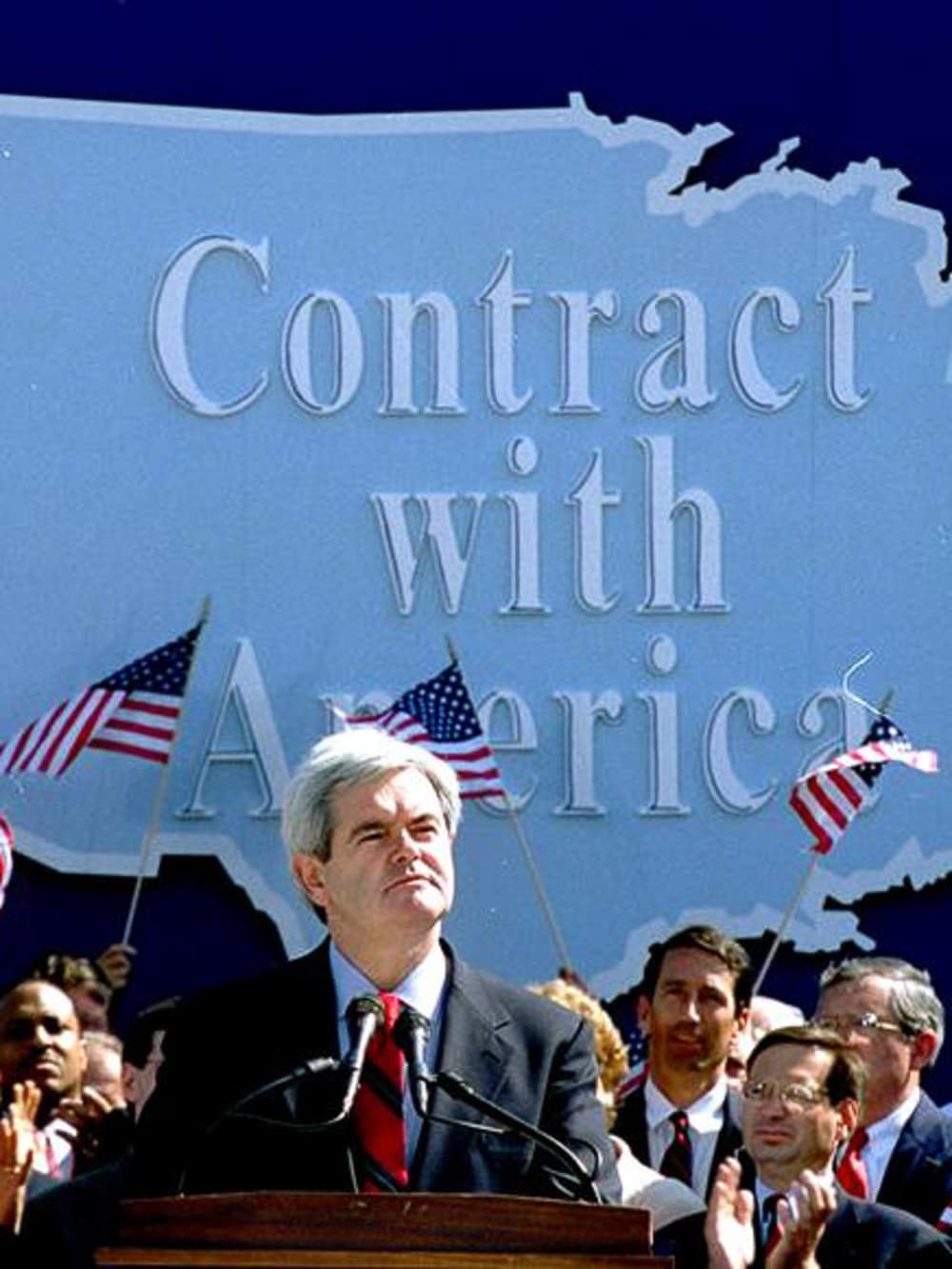
Democrats had controlled congress for 40 years. Bill Clinton was president. Republicans wanted to ensure that the “Reagan revolution” of defining a principled conservative party would continue and win. Speaker of the House Newt Gingrich worked with the Heritage Foundation to define an actionable set of goals that were generally popular with the people. He and all Republican Congressional candidates agreed to pursue this detailed policy platform in the first 100 days of the new congress when elected. Republicans won a stunning midterm election victory and passed 9 of the 10 bills in the house of representatives. Historians, journalists, politicians and analysts largely agree that the Gingrich “Contract with America” is the third step in the reestablishment of a conservative Republican party, following Goldwater’s failure and Reagan’s win.
Constitutional amendment requiring a balanced budget. Failed. Great politics. Bad economics. Not followed by the party for the next 30 years. Helped to establish “fiscal conservatism” as a motivational anchor of the party.
“Take back our streets” anti-crime legislation passed. Required minimum sentences, death penalty, prison construction, law enforcement funding, and state block grants. Fear is great politics. Democrats like Clinton and Biden then supported what is now widely seen as overreach and racially disproportionate law. 20 Years Later, Parts Of Major Crime Bill Viewed As Terrible Mistake : NPR
Welfare reform passed. Clinton supported this as part of the “third way”. Reduced funding and limited access to those who were not “qualified”. Many say this was a needed rebalancing of support versus costs, abuse and disincentives. Others argue it was unnecessary, restricting access to people in need. Critics also say that this “deal” did not stop ongoing criticisms of “unfair access” to benefits. Personal Responsibility and Work Opportunity Reconciliation Act of 1996 – Wikipedia
“Pro-family” policies did not pass. Family/child tax credits, marriage penalty tax rates and new savings accounts. Useful politics, painting the opposition as radical extremists.
National security policies weren’t adopted. Missile defense investments, increased defense spending, more NATO nations, US troops never under UN command.
“Jobs and Wages Act” misnamed and not approved. Unfunded mandates law to limit federal directives to states without funding was passed. Unfunded Mandates Reform Act of 1995 – Wikipedia Freeze on regulations, reimbursement for federal “takings’ of property and required cost/benefit analysis were not passed. Small potatoes, purposely.
Constitution changing congressional term limits were not passed.
Presidential line-item veto was passed but ruled unconstitutional by the Supreme Court.
Lower capital gains tax rates were rejected but later approved as part of a compromise bill. Taxpayer Relief Act of 1997 – Wikipedia Again, Clinton’s “third way” embraced capitalism, growth and trade as positive forces for the country. Republicans had effectively changed the framing of economic debates.
Government spending and department reductions and eliminations did not pass.
Net, net. Anti-crime and welfare reform laws passed.
Why So Important?
Republicans captured congress, convincingly. It may have been due to the usual midterm swing or Bill Clinton’s unpopularity or Hillary Clinton’s health care proposals. The win was large.
This was a constructive approach to politics. Say what you believe. Deliver. It worked this time. It appealed to new and older generations who increasingly appreciated authenticity.
“Government” was reframed in negative terms. Clinton capitulated. “the era of big government is over”.
“Welfare” was reframed from a social obligation to care for the downtrodden to an expense to be minimized and an obligation to prevent any unfair payments.
Legitimized the use of farcical bill names.
Nationalized politics. National issues and platforms are all. Local issues, interests, capabilities and character don’t matter.
Demonstrated the power of negative politics and sound bites. Anti-government. Big government. Bureaucracy. Anti-Washington. Anti-Congress. Anti-corruption. Anti-crime. Anti-fraud. Tax cuts. Balanced budget. Tax cuts. Welfare reform. Socialized medicine. Anti-bureaucrat. Taxation is theft. Anti-state. Limited government. Liberty. Anti-regulation. Anti-waste.
New federalism, delegating decisions and funding to states. A clever way to reduce federal spending and taxes. A way for national politicians to claim victory.
Temporarily focused politicians of both parties towards a balanced budget.
Reinforced the Reagan concept of “conservatism” as a consistent guiding principle for economics, culture and international affairs.
Defined issues in extreme, black and white terms, leading to political polarization.
Supported the transition of Southern Democrats to the Republican party.
Legitimized an “ends justify the means” view of politics.
Summary
Newt Gingrich understood that politics is about emotions. He elevated emotional issues by framing them in “black versus white” terms. This helped both parties to more clearly define and communicate their core beliefs. The “Contract with America” provided Republican candidates with a consistent, poll-tested policy platform. It was politically very successful in 1994. It framed politics for the next generation. It didn’t deliver much in terms of policy and laws. Cleaner congress, less bad welfare policy and administration, some crime reducing laws, securities law reform. Framing and messaging are most important.
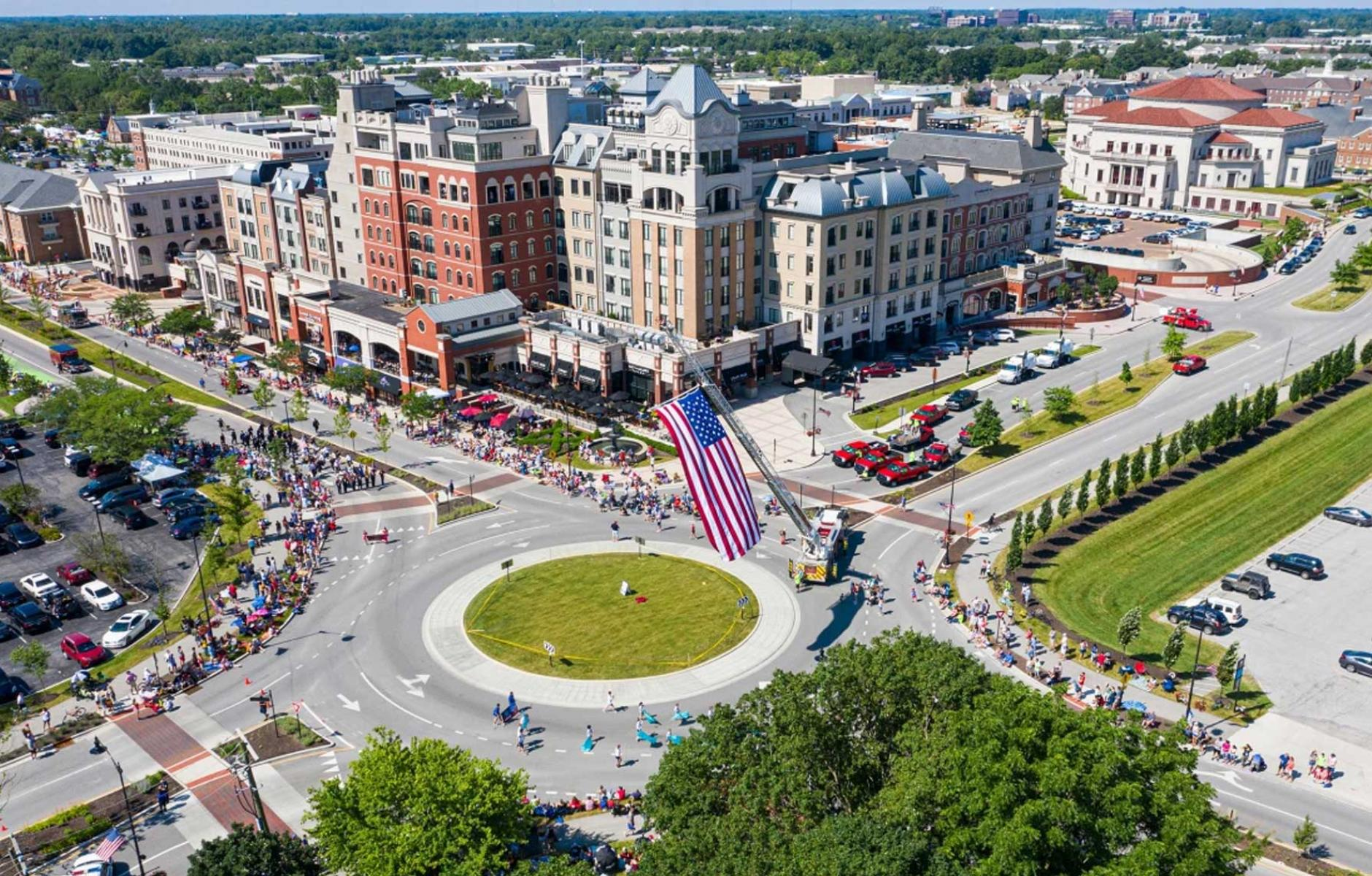
Carmel, Indiana is a 46 square mile city of 105,000 people a dozen miles north of downtown Indianapolis.
As 28-year mayor Jim Brainerd once quipped, “We don’t have mountains, valleys or an ocean, but neither does Paris”. How could an Indiana city create such a natural reputation for success?
Carmel is a suburb of Indianapolis, so it has benefitted from suburban growth since the 1950’s.
Indianapolis, like Columbus, Nashville, and Minneapolis, has been a heartland growth winner.
Indiana is a low cost of living location, benefitting from being the “Crossroads of America”.
Indiana is a low tax and low government services state, with expectations that government needs are best addressed at the lowest possible level.
Indianapolis has no natural geographical constraints to growth or limits that raise the cost of living. The Northwest Territory’s 6×6 mile townships expand in all directions.
Most metro areas have a preferred direction for wealth and growth. Indianapolis chose to develop straight north along Meridian Street across the Marion County border into Carmel by the 1950’s.
This branding and “first mover” advantage is common among America’s 50 large metro areas. Carmel benefitted from competitors in NW Zionsville limiting development to preserve the small village character, NE Geist having limited lakefront property and NNE Fishers limited main highway access.
While Indiana today is considered a deeply red state, historically it was more purple, with heavy manufacturing/worker counties balanced by rural/farming counties. Indianapolis was a local government innovator, creating county wide Unigov in 1970 to combine the city and county, preserving Republican dominance. Indianapolis has elected centrist mayors for 6 decades: Lugar, Hudnut, Goldsmith, Peterson, Ballard and Hogsett.
Jim Brainerd served as mayor from 1996-2024 as a centrist/practical Republican in the Governor Daniels mode, focusing on local economic issues and needs, without being distracted by national wedge issues.
Carmel understood the power of zoning and used this to adopt overlay zones to guide denser and higher quality development in the Meridian corridor, Range Line Road, Arts & Design District and Midtown areas. Politicians understood that Carmel was a valuable place for developers and set limits to ensure that the community would also benefit from growth.
Mayor Brainerd used the powers of the Indiana strong-mayor system to create tax increment finance (TIF) districts to capture the future property tax values of areas to allow for leveraged government investments in infrastructure.
Mayor Brainerd and the city council also allowed the city to borrow at advantageous interest rates to finance other investments to promote the city’s growth.
Like many governments, Carmel offered tax incentives to attract corporate developments.
Mayor Brainerd found that roundabouts were a local, traffic, aesthetic, environmental, safety, time, and cost winner. He prodded the city the install 150 roundabouts.
Mayor Brainerd incorporated a small investment into the arts and not-for-profits into the annual budgeting cycle. Local citizens applauded.
Mayor Brainerd chose to invest in community art, statues downtown and in the roundabouts. Again, the community applauded.
Journalistic histories emphasize the role of Mayor Brainerd in “transforming” the sleepy suburb into a new urbanist “edge city” and nationally recognized place to live. Mayor Brainerd deserves credit as a visionary and catalytic leader who delivered the goods for 3 decades. Yet the Carmel story begins before him and continues today. It relies upon political, government, community and volunteer leaders who believed that Carmel could deliver the highest possible quality of life for its residents and neighbors. I point to a few representative leaders who deserve credit.
Carmel has invested resources in making it a safe city. School safety officers requiring a separately approved levy. Formal quality standards for police and fire departments. County level emergency preparedness investments.
Carmel public schools are consistently rated among the best in Indiana. Critics say this reflects the wealthy socioeconomic status of the community. “The proof is in the pudding”.
Indiana schools are mainly funded through a statewide formula. Indiana property taxes are capped as a percentage of value. Carmel residents have chosen since 2010 to approve property tax levies to exceed the formula and the standard maximums. Recent state tax, budget and formula changes are driving new requests.
Carmel library has moved twice, expanded its main location and added a branch location. Carmel library has been nationally ranked for its activity, circulation, programs and financial investments.
Carmel aspires to be a diverse community. It has been a primary corporate transfer and health care professional destination, welcoming non-Hoosiers and preparing residents and students for national and global roles.
Carmel has more economic diversity than some expect, with many middle-class and young adult neighborhoods south of 116th Street and within the boundaries of Keystone Parkway and Meridian/US 31.
Density is good. Commercial property tax base is good. Employers are good. These 3 statements seem trivial and obvious, but many “professional class” suburbs reject them, wishing to live in an idyllic rural paradise. Carmel has always embraced manufacturing, offices, retail, and apartments.
The Meridian Corridor overlay district promoted dense development and prevented strip malls. The Range Line Road overlay district required dense and multi-use development. The early overall zoning plan encouraged economic development in the central 8 square miles of the city, within the 46 square mile footprint.
Carmel employed TIF districts and public borrowing to attract investors to its central city developments.
It employed the usual tax abatement tools to encourage major corporations to locate within Carmel.
By decade, Carmel’s population grew from 1950 to 2026 in thousands as 2, 10, 20, 33, 43, 65, 83, 99, 105. 4 decades of 10,000 population growth followed by 4 decades of 15,000 population growth. Growth may slam shut in 2030-2035. Growth provides advantages to utilities, realtors, developers, construction firms, media, and governments.
Lacking mountains or oceans, the community has developed events for every month of the year to celebrate. Many events were created, grown and managed by small groups of individuals with background support from the city government.
Carmel has leveraged its existing natural neighborhoods to develop a sense of place. Real estate developers have built traditional 50-300 home subdevelopments and filled in spaces. The city focused on the central city neighborhoods to define the “arts & design district” and midtown. The parks district has built and enhanced regional and neighborhood assets.
Carmel began with advantages as a growing suburb north of Indianapolis’s historic Meridian-Kessler neighborhood. Political leaders made wise decisions for several decades. Carmel’s measures of success have gained national recognition. However, the character of the community and quality of life is driven by the personal responsibility that citizens take for themselves and their neighbors as symbolized by the moms who built the first park and the dads who started the youth athletics programs.
Our political systems are broken. The Supreme Court’s decision to make race an unconstitutional factor in determining voting districts will probably reduce racial minority representation significantly as partisan political parties are no longer legally constrained by this limit. State level gerrymandering is proceeding towards 80% to 90% of seats being captured by the larger party whenever possible. Minority representation is greatly reduced or eliminated. Polarization increases. Citizen buy-in decreases.
It may be that the American people have had enough. Some states will adopt independent commissions to draw congressional and state districts.
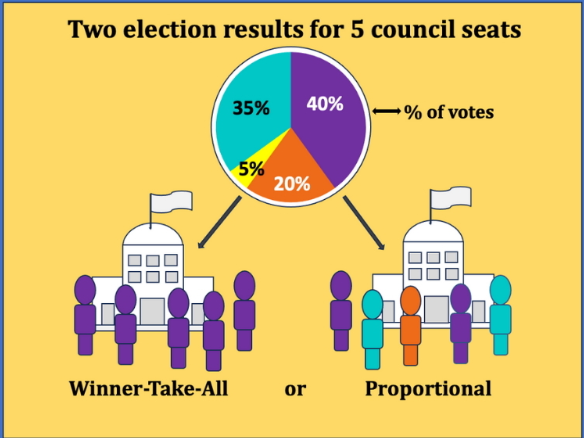
Another option is proportional representation. Define multi-member districts so that minority group, party and sub-party groups are more likely to be represented closer to their proportion of the vote.
Proportional representation requires important choices about the size of districts (typically 3-8 members is ideal) and the balance between party and candidate importance (a balanced approach is recommended).
Ranked choice voting systems can also be implemented with proportional or our existing single member districts. Ranked choice systems allow voters to express more of their preferences for candidates and parties.
A 1967 federal law requires single member congressional districts. It could be repealed by Congress to allow states to experiment with these options.
Few democracies worldwide still cling to single member/first past the post/winner take all districts. The US has historical experience with alternative member district rules.
Proportional representation is not a panacea. No voting system perfectly translates voter preferences into candidates and their subsequent votes. But proportional representation would help to reduce our polarized 2-party system, reduce the influence of money on elections and help voters to see and feel that their votes matter.
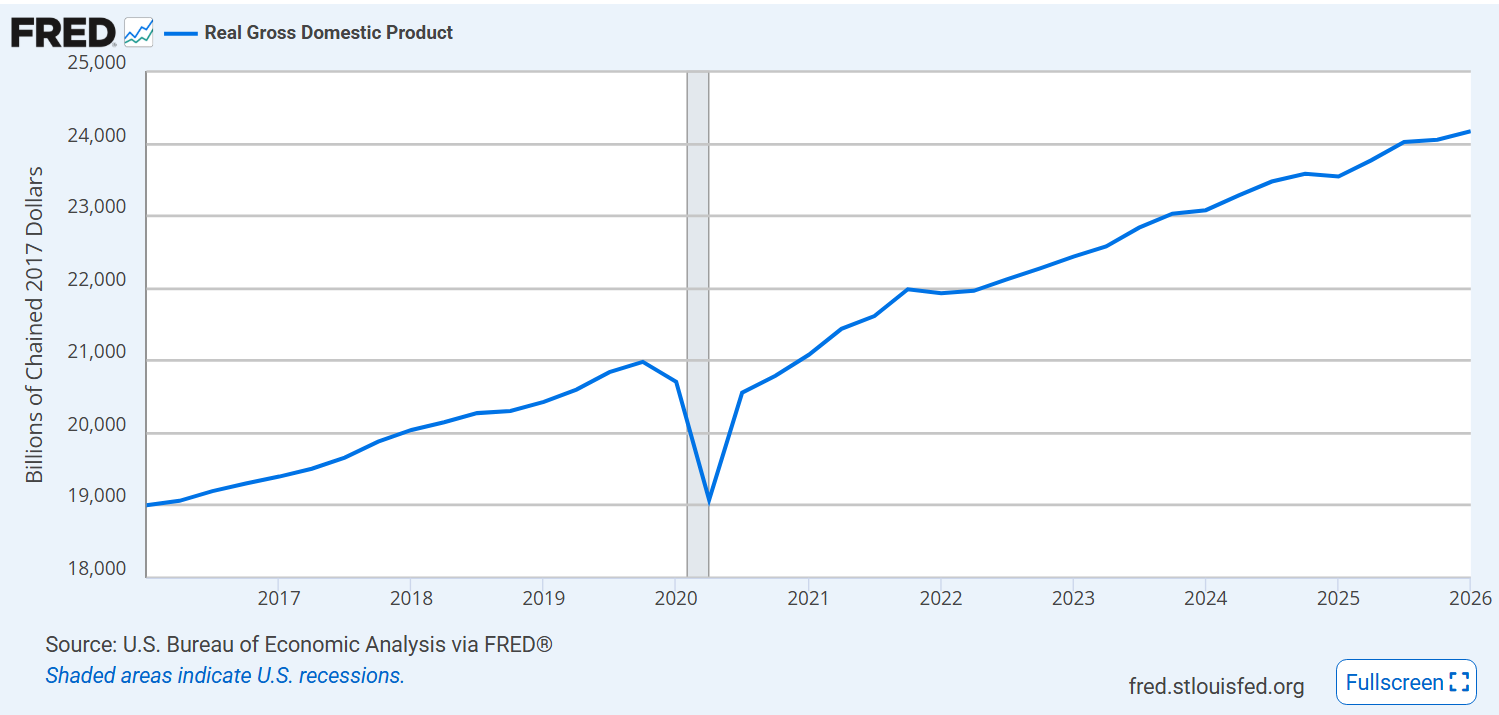
As of April, 2026 the US economy has survived 16 months of Trumpian economic malpractice.
Tariffs have cost each family $2,000 annually, acting as a huge tax increase. Suppliers and importers have absorbed less than one-fourth of the increased costs.
Tariffs and surrounding uncertainty have stopped normal business investments, R&D and new hiring.
$34 billion of green energy projects have been cancelled.
Manufacturing employment continues to decline.
Foreign born employment has been flat, after increasing by 4 million during 2022-24 to 31.8 million.
Farm bankruptcies grew by 46% due to retaliatory tariffs, labor shortages and input cost increases.
Mortgage rates have increased by 1% compared to the federal funds rate due to increased inflation, budget deficits and Fed independence concerns. In time, that is an extra $1,500 annually for every home mortgage.
Inflation was trending towards its 2% target. Trump policies have increased it to 3% and rising. This costs the median family budget $1,000 per year.
The DOGE initiatives and government shutdowns have made the federal government much less effective in performing its core functions.
Reduced IRS staffing is forecast to reduce revenue collections by $750 billion per decade.
Higher import tariffs increase input costs to American manufacturers, placing small and medium sized firms at greater risk of bankruptcy.
The US credit rating has been reduced by Moody’s due to the growing budget deficit and uncertainties, adding to the long-run cost of servicing the $39 trillion debt. At a nominal 0.25% premium that adds another $700 per year to the average household’s cost for debt service.
Frozen, reduced and politicized federal R&D threaten future economic advances.
The value of the US dollar has declined by 10%, making imports more expensive and exports more attractive.
The consumer sentiment index has declined from 70 to 50, as low as the depths of the pandemic!
Trump has required coal-fired power plants to operate beyond their planned retirement dates, costing consumers $5 billion per year.
The Iran war costs the country $50 billion.
Weaker relations with others will cost the US $1-3 billion annually in reduced foreign travelers.
Why hasn’t the economy tanked? The Iran war and tariffs may combine to tip the US economy into recession before the end of 2026, but so far it has been very resilient. How is this possible?
The long-term trends point to dynamic and creative US business and labor sectors compared with other countries.
The US economy has moved from a high fixed cost manufacturing world to a diversified service and knowledge economy, diversifying its economy and risks.
The US economy is more globally competitive and able to use international trade to manage its risks.
The AI revolution has sparked a huge data center and electricity power investment cycle. This is a classic Keynesian investment multiplier-accelerator situation, driving large investments today to support future expected demand.
The US stock market valuation has grown based upon historical growth trends, US competitiveness and the expectation of future business-friendly policies (regulation, competition, taxation, trade).
The wealth effect of the stock market has boosted the K-shaped economy with higher income/wealth families continuing to spend.
The One Big Beautiful Bill is a classic Keynesian economic stimulus from lower effective tax rates. In the short-run, the bond markets have not yet determined that the US has reached the point where it’s deficit spending is unsustainable. It may be close to that limit.
The “exorbitant privilege” of the US dollar as the world’s reserve currency and hedge for economic uncertainty remains in place. This is another “tipping point” situation where at some time China and the EU become reasonable options and US government borrowing rates spike upwards.
The federal reserve bank has cut baseline interest rates from 5.3% to 3.6%, offering borrowers a loose monetary policy, even if Trump calls for even lower rates.
Annual new home construction starts remain at 1.3 million as builders bet that higher housing prices and an 8-year building deficit will have to be filled. Historically they would have reduced their investments.
Employers remember the pain of filling open positions after the pandemic and remain slow to make major job cuts that can be rationalized away.
3% inflation is “manageable” by producers and consumers, even if it is not at the nominal 2% target.
TACO: Trump has not maintained his headline import tariff levels.
US imports are only 14% of GDP, down from 17% in 2011. Tariff changes have a smaller impact.
US strength in trade negotiations has been confirmed. Other countries have mostly chosen not to implement significant retaliatory tariffs. China is an exception.
Health care job growth has continued as the US population ages and requires greater care funded by employer insurance, Medicare and savings.
The leisure and hospitality industry has added jobs as the pandemic travel rebound continues.
The energy industry investments in wind, solar and transmission continue after a decade of limited investments, despite Trump’s lack of current support.
Trump’s pro-business tax, regulation, enforcement and competition policies provide businesses with opportunities to grow their profits.
The core age labor force participation rate remains at an historically high 84%.
Global oil prices trended down by 25% during 2023-2025. They’re up by two-thirds in the last few months.
Labor force productivity growth has been 3%+ during 2023-2025 after 3 years of no growth in 2020-2022.
The US leads the world in scientific and economic innovation by a wide margin.
Trump’s policies have cost the typical American family about $5,000 per year on a base of $100,00. They feel this and reflect it in the consumer sentiment surveys.
The US economy is far more diversified, resilient, creative, innovative, responsive than it was historically. It is able to adapt to changing regulations, immigration, regulatory enforcement, tariffs and opportunities. It is well positioned to succeed in the new US and global environment.
Civility acts as a social norm by functioning as an unwritten contract of voluntary restraint, respect, and mutual recognition that governs interpersonal behavior, fostering trust and social cohesion. It serves as a navigational tool for social interaction, prioritizing the common good over self-interest.
Foundation of Mutual Respect: Civility is the recognition of the humanity and equality of others, demanding respect regardless of differences.
Behavioral Guidelines: Unlike polite etiquette, it is a deeper disposition involving empathy, patience, and honesty.
Social Cohesion: It reduces friction and prevents conflict, acting as the “glue” that allows diverse people to live peacefully.
Voluntary Constraint: Civility serves as a form of self-discipline and self-control, curbing harmful impulses without the need for legal force.
Function in Public Life: It enables productive, respectful disagreement and dialogue in communities and democratic life.
Several organizations and initiatives aim to establish civility as a social norm to reduce polarization and foster respectful discourse. Key groups include the National Institute for Civil Discourse, Braver Angels, the Institute for Civility, and the Civility Project, which focus on promoting respectful dialogue in political, public, and private spheres.
National Institute for Civil Discourse (NICD): Focuses on bridging political divides and promoting polite, constructive discourse in politics.
Braver Angels: A major organization working to reduce political polarization by fostering constructive dialogue between citizens with opposing views.
Institute for Civility: A non-profit dedicated to promoting civility in government, workplaces, and schools, aiming to build a more respectful society.
The Civility Project: Founded by journalists to help people with stark differences maintain healthy, respectful relationships.
National Civility Network (NCN): A collaboration of centers and institutes working on civic engagement and addressing political dysfunction.
Millennial Action Project: Engages young lawmakers to build bipartisan coalitions and promote a more collaborative political culture.
The Center on Civility and Democracy (CCD): Part of the Ronald Reagan Foundation, it promotes civil discourse and common ground.
SHRM (Society for Human Resource Management): Promotes workplace civility as a strategic imperative to create productive, positive cultures.
These groups often focus on transforming polarization into engagement, enhancing interpersonal relationships, and strengthening democracy through “internal constraints” of respectful communication.
A broad spectrum of Christian denominations, including Catholics, Lutherans (ELCA), Presbyterians (PCUSA), and many Evangelicals, support making civility a social norm, often framing it as “Christian civility”. These efforts focus on applying the Golden Rule and neighborly love to public discourse, emphasizing dignity, respect, and constructive engagement over political polarization.
Key groups and campaigns promoting this include:
[United States Conference of Catholic Bishops (USCCB)]: Launched the “Civilize It: Dignity Beyond the Debate” campaign, urging respectful dialogue in politics and community.
[Evangelical Leaders (NAE)]: The National Association of Evangelicals and leaders like Richard Mouw emphasize “uncommon decency” and treating others—including opponents—with dignity, believing this is a core Christian conviction rather than just good manners.
[Mainline Protestant Denominations (ELCA, PCUSA, Episcopal Church (USA))]: The Evangelical Lutheran Church in America and Presbyterian Church (USA) have supported initiatives like “Golden Rule 2020: A Call for Dignity and Respect in Politics”.
[Interfaith & Ecumenical Coalitions]: Various leaders, including those involved in “[A Covenant for Civility],” span across political lines to promote civil, safe spaces for public discourse.
Several states, through their legal, governmental, and bar associations, are actively working to mak civility a social and professional norm. Illinois, California, Texas, Colorado and Utah are noteworthy. Half of state legal associations include civility oaths.
The Council of State Governments is promoting “Service with Civility”.
Several state municipal associations have launched formal campaigns, pledges, and initiatives aimed at making civility a social norm in local government and public discourse. These efforts, often in response to rising polarization, focus on restoring respectful dialogue in council meetings and community interactions.
Key state municipal associations leading this effort include:
Georgia Municipal Association (GMA): In 2023, the GMA launched the “EMBRACE Civility” program in partnership with Georgia City Solutions to equip cities with resources, including a civility pledge and the “9 Pillars of Civility,” to combat incivility in local government. Numerous Georgia cities have been recognized as “Cities of Civility” through this program.
Municipal Association of South Carolina (MASC): MASC formally rolled out its civility initiative in 2022, naming the restoration of civility in local government a top priority. Their initiative urges local leaders to adopt civility pledges and resolutions in their council chambers, focusing on collaboration and consideration.
Illinois Municipal League (IML): The IML promotes a formal “Civility Pledge” to ensure communication between local elected and appointed officials remains open, honest, and transparent to build trust.
Pennsylvania Municipal League (PML): The PML has a dedicated “Civility Campaign” that encourages officials to sign a pledge to foster civility in the delivery of public services.
North Carolina League of Municipalities (NCLM): NCLM operates a “Commit to Civility” program that certifies municipal boards that complete training and commit to fostering respectful discourse in their communities.
Colorado Municipal League (CML): CML promotes “Civility Starts Here” principles, encouraging local leaders to focus on issues rather than individuals, listen actively, and manage emotions during public meetings.
Florida League of Cities (FLC): FLC offers training and resources for local governments to adopt civility pledges and meet ethics standards to foster better communication between officials and the public.
Note: The National League of Cities (NLC) also provides a national framework supporting these state-level actions, with many of its leaders hailing from the associations listed above.
Several professional associations, particularly in law, psychology, and management, actively promote civility as a social norm to improve discourse, workplace culture, and public health. Key organizations include the American Bar Association (ABA), American Psychological Association (APA), SHRM (Society for Human Resource Management), and the International City/County Management Association (ICMA).
Key Professional Associations and Initiatives
American Bar Association (ABA): Promotes civility as a core pillar of legal professionalism, issuing guidelines and training for attorneys to maintain respect, dignity, and courtesy in legal practice.
American Psychological Association (APA): Emphasizes civility, inclusion, and respect for dignity to foster better communication and professional environments.
SHRM (Society for Human Resource Management): Advocates for civility in the workplace, emphasizing empathy and respect to improve organizational health, performance, and employee engagement.
International City/County Management Association (ICMA): Partners in efforts to address the decline of civility in public discourse and governance.
Community Associations Institute (CAI): Implements a “Civility Pledge” for community associations to foster respectful interactions and responsible leadership.
National Civility Network (NCN): A coalition of academic centers dedicated to promoting civil discourse in public life.
Numerous universities actively promote civility as a core social norm, incorporating it into campus culture through specialized initiatives, codes of conduct, and dedicated community standards. Key institutions focusing on this include Carnegie Mellon University, Old Dominion University, Arcadia University, Stony Brook University, and Winston-Salem State University.
Key University Civility Initiatives & Policies:
Carnegie Mellon University (CMU): The Civility Initiatives strive to foster a community of dignity, conflict resolution, and mutual respect.
Old Dominion University (ODU): Civility: The Monarch Way focuses on building a safe, respectful environment, prohibiting bullying and harassment.
Stony Brook University: Emphasizes civility and civil discourse alongside diversity, caring, and respect.
Arcadia University: The Statement on Civility highlights respect, empathy, and responsible behavior.
Winston-Salem State University (WSSU): The Office of Community Standards & Civility promotes integrity, accountability, and respect.
Johns Hopkins University: Features the Civility Initiative, established to promote dialogue during polarized times.
Florida State University (FSU): Highlights a civility statement stressing the “dignity and worth of each person” and encouraging respectful disagreement.
Colby Community College: Includes specific conduct guidelines to curb toxic behaviors such as public hostility, ridicule, and name-calling.
Jamestown Community College: Implements classroom civility guidelines focused on fostering a safe environment.
University of Maryland Global Campus (UMGC): Incorporates a Code of Civility in its student handbook.
Some Republicans support civility as a social norm to maintain democratic stability, foster productive governance, and encourage respectful dialogue over political hostility. It is seen as a way to promote traditional values, enable compromise, and, for some, shift focus away from personal attacks toward policy, enhancing both social cohesion and political accountability.
Key reasons for supporting civility include:
Democratic Order and Stability: Civility is seen as essential for upholding democratic decorum and stabilizing the boundaries of conflict.
Effective Governance: Many believe that civility is crucial for bringing lawmakers together, reducing political hostility, and finding solutions through, rather than in spite of, differing viewpoints.
Encouraging Respectful Discourse: Supporters argue that civility promotes listening, understanding, and respectful treatment of others.
Reinforcing Traditional Values: Civility often aligns with the promotion of respect, personal responsibility, and traditional social conduct.
Political Strategy: Some studies suggest that advocating for civility can be a strategic move to focus on policy differences rather than identity politics, which can be beneficial in certain political environments. [
While a large majority of Republicans (85%) have regarded civility as very important, there is nuance in how it is interpreted, with some emphasizing it as a necessary reduction in political toxicity, while others may view the push for it as a distraction from deeper policy debates, or as a way to control the political narrative.
Some Republicans support making civility a social norm because they view it as a practical tool for effective governance, a protector of democratic stability, and a reflection of core conservative values like respect for authority and human dignity. They argue that without a baseline of mutual respect, the “American experiment” is threatened by hyper-polarization and potential political violence.
Some Democrats and institutionalists support elevating civility to a social norm to preserve democratic institutions, promote constructive political discourse, and counter rising polarization. Proponents argue that civility fosters trust, enables compromise, and protects democratic processes from authoritarian threats by emphasizing shared common purpose over confrontational, hyper-partisan politics. [1, 2, 3, 4]
Key reasons for supporting civility as a social norm include:
Protecting Democratic Institutions: Supporters believe adherence to decorum and norms keeps government functional and resists democratic backsliding.
Encouraging Compromise: Civil discourse is seen as essential for managing deep societal disagreements and achieving bipartisan solutions.
Recognizing Mutual Dignity: Civility requires recognizing the dignity of opponents, which helps reduce hostility and fosters a more collaborative political environment.
Promoting Respectful Dialogue: It provides a framework for addressing conflicts, particularly in diverse environments, by encouraging active listening and reducing conflict-driven “drama”.
Some Democrats advocate for civility as a social norm primarily to protect the stability of democratic institutions and to rebuild public trust in a polarized political climate. By promoting respectful discourse, these supporters aim to move away from personal attacks and toward a governing culture that can effectively address societal issues through compromise and mutual understanding. [1, 2, 3, 4]
Core Reasons for Supporting Civility
Stability of Democracy: Proponents argue that democracy requires a baseline level of respect to function. Without civility, institutions suffer from increased hostility and a “declining faith in democracy”.
Enabling Compromise: Meaningful policy solutions often require reaching across the aisle. Supporters believe that treating opponents as “political equals” rather than enemies allows for the negotiation of “reasonable compromises”.
Restoring Public Trust: High levels of political vitriol can weaken trust in government. Modeling civility is seen as a way for leaders to signal ethics, honesty, and a commitment to “good governance”.
Social Harmony and Diversity: In a diverse society, civility is viewed as a “moral glue” that prevents different viewpoints from devolving into aggression. It encourages “bridging capital”—trust between strangers—which makes both democratic governance and economic exchange easier.
Voter Preference: Many Democratic voters value institutional norms and professional behavior. Polls indicate a strong majority of voters believe respect is the first step toward a working government.
Summary
There is broad support in the US for Civility as a social norm. Grass-roots efforts to improve understanding, application and encouragement of Civility have good prospects for success.
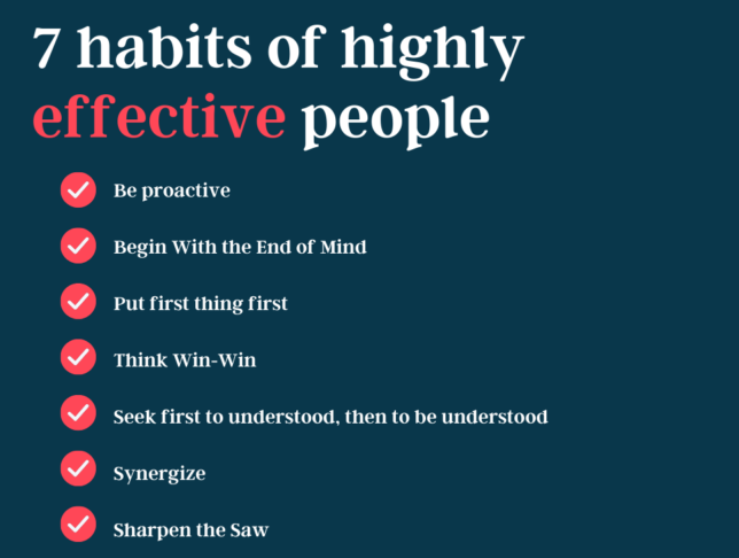
Stephen Covey’s 1989 book invented the personal development industry for modern employers and employees. It has sold more than 20 million copies and helped millions of people become “more effective”.
I’ll connect the “7 habits” to the very independently derived 7 values and 7 skills/behaviors of Civility.
Covey’s book is principle centered, focused on character development and the importance of managing perceptions.
Civility is “principle centered”, based on the 7 nonpartisan values of human dignity, respect, acceptance, responsibility, constructiveness, intentionality and public spiritedness.
Civility is based upon 7 skills/behaviors of self-awareness, self-management, social awareness, relationship management, communications, growth and problem-solving that also acknowledge the importance of a lifetime of personal development. The 6th behavior outlines how the practice of Civility leads to personal growth.
Civility emphasizes the crucial role of identifying, understanding and shaping personal perspectives, insights and world views. The 4 values of respect, acceptance, responsibility and public spiritedness require the individual to work on refining their world views. Similarly, the self-awareness and social awareness behaviors emphasize the need to clearly define and sometimes challenge real views as part of social discourse or civil dialogue.
1. Be Proactive (Google AI)
Stephen Covey’s Habit 1: “Be Proactive” relates to civility by placing the responsibility for respectful behavior on the individual rather than on external circumstances or other people’s actions. Being proactive means choosing to respond with values—such as kindness and respect—rather than reacting based on feelings, which fosters a more civil, constructive, and collaborative environment.
Choice of Response vs. Reaction: Covey argues that between a stimulus (e.g., someone being rude) and the response, there is a space to choose. Proactive individuals use this space to choose a civil, value-based response, rather than blindly reacting with anger or sarcasm, which would diminish civility.
Owning One’s Behavior: Proactive people do not blame their behavior on others or their environment (“he makes me so mad”). Instead, they act with accountability, knowing that their own conduct is a result of their own decisions.
Focus on the Circle of Influence: Proactive people focus on what they can control—their own attitude, language, and behavior. They understand that while they cannot control another person’s rudeness, they can control their own polite response, which can often improve the situation.
Proactive Language: Proactive people use language that implies choice, such as “I can,” “I will,” or “I choose”. This language is inherently more empowering and respectful than the reactive language of blame (“He makes me…”, “I have to…”).
Acting with Intention: Proactive individuals create a climate of respect, rather than waiting for others to do so. They take the initiative to communicate clearly, apologize for mistakes, and behave with kindness, which acts as a proactive driver of civility in professional and personal relationships.
By taking ownership of their behavior, proactive individuals stop blaming “out there” for their issues, thereby reducing conflict and increasing respectful interaction.
TK Summary: Strong overlap with Civility values of responsibility and intentionality, overlap with respect and constructiveness. Strong overlap with Civility behavior self-management, overlap with communication, self-awareness and social awareness. Civility is not about politeness, surface level choices, weakness or moderation. It focuses on making great choices and deeply owning those choices.
2. Begin With the End in Mind (Google AI)
Stephen Covey‘s second habit, Begin with the End in Mind, relates to civility by framing daily interactions as steps toward a long-term legacy of character and relationship quality. Instead of reacting to immediate frustrations, this principle encourages individuals to act according to their core values and the “end” they want to achieve in their personal and professional lives.
In the context of civility, this habit manifests in several ways:
Relationship Preservation as the “End”: In conflict resolution, beginning with the end in mind means visualizing a successful outcome where the relationship is preserved or strengthened, rather than just “winning” an argument.
The Eulogy Exercise: Covey famously asks people to visualize their own funeral and consider what they want friends, family, and colleagues to say about their character. If you want to be remembered as kind, respectful, and fair, you must practice those civil behaviors in the present to make that “end” a reality.
Principle-Centered Living: By centering one’s life on unchanging principles like trust and honesty, an individual can maintain civil behavior even in the face of adversity, rather than being swayed by temporary emotions or external circumstances.
Intentional Communication: This habit encourages visualizing the desired atmosphere of a conversation or meeting before it begins. This mental “first creation” allows for more deliberate, empathetic, and respectful communication.
Living by Design, Not Default: Without a clear vision of who you want to be, you may fall into reactive, uncivil patterns dictated by pre-existing habits or others’ behaviors. Intentionally choosing your “end” goal empowers you to respond with civility by design.
TK Summary: The Civility values of respect and intentionality stand out, followed by human dignity and responsibility. The Civility behaviors of relationship management and self-management are essential here, also using self-awareness and problem-solving to create this habit.
3. Put First Things First (Google AI)
Stephen Covey’s “Put First Things First” habit relates to civility by prioritizing long-term relationship building, respect, and ethical behavior over reactive, urgent, but unimportant demands. It emphasizes investing time in people and principles, ensuring that how we treat others remains a top priority rather than an afterthought sacrificed for immediate, urgent tasks.
Key connections include:
Prioritizing Relationships: By focusing on Quadrant II (important but not urgent) activities, such as relationship building and proactive communication, people cultivate a respectful and supportive environment, rather than treating interactions as interruptions.
Proactive Self-Management: It requires managing oneself to live according to values, which prevents rushing, stress-induced rudeness, and, instead, fosters a calm, thoughtful approach to interactions.
Valuing People Over Tasks: It emphasizes that people and their well-being are paramount, ensuring that interacting with others is treated as a priority rather than a “low-priority” task compared to other work.
Preventing Ethical Crises: By acting on principles before they become urgent problems, individuals are more likely to behave with integrity and maintain professional civility.
TK Summary: Here, Covey focuses on the Civility values of human dignity and acceptance, supported by respect. He emphasizes the Civility behaviors of relationship management and self-management, supported by communications and personal growth.
4. Think Win-Win (Google AI)
Stephen Covey’s “Think Win-Win” habit (Habit 4) is directly related to civility by serving as a character-based code for interaction that requires mutual respect, emotional maturity, and the balance of courage and consideration. It builds a culture of trust and collaboration, replacing competitive “win-lose” mentalities with cooperative, respectful, and mutually beneficial relationships.
Key relationships between “Think Win-Win” and civility include:
Mutual Respect and Consideration: Win-win requires valuing other people’s needs as much as your own, which is the foundation of respectful communication.
Emotional Maturity: It requires the “courage” to express your own needs and the “consideration” to listen to others, forming the basis of mature, civil dialogue.
Abundance Mentality: It assumes there is enough for everyone, promoting a cooperative mindset over scarcity-driven competition, fostering generosity rather than selfishness.
Trust Building: By aiming for solutions where everyone feels satisfied, this habit builds long-term trust, which is the cornerstone of civil interaction.
Think Win-Win isn’t simply about being “nice”; it is a framework for ensuring that interactions are respectful, fair, and beneficial for all stakeholders.
TK Summary: The Civility value of true respect is first, augmented by acceptance, responsibility, intentionality and public-spiritedness. Self-management is the primary Civility behavior, accompanied by social awareness, relationship management, communications and problem-solving.
5. Seek First to Understand, Then Be Understood (Google AI)
Stephen Covey’s habit of “Seek First to Understand, Then to Be Understood” (Habit 5) is foundational to civility because it replaces judgmental listening with empathic listening, cultivating respect and validation in interactions. By prioritizing understanding over simply being right, it promotes patience, reduces conflict, and fosters deeper human connections.
Promotes Empathy & Respect: Instead of listening to respond or judge, this habit encourages listening with the intent to truly understand another person’s perspective and emotions.
Suspends Judgment: It fosters a mindset of pausing and suspending judgment, which is essential for treating others with dignity.
Builds Trust Through Validation: When others feel heard and understood, it gives them “psychological air,” encouraging a safe, collaborative environment rather than a combative one.
Combats Dehumanization: It forces one to see the person behind an argument or avatar, preventing the rush to judgment often found in poor, uncivil discourse.
Balance of Courage and Consideration: This habit teaches that true influence is built by combining kindness (seeking to understand) with courage (being understood), facilitating Win/Win outcomes.
TK Summary: Covey highlights the first 3 Civility values of human dignity, respect and acceptance. “Others” really, really matter. He then elevates the Civility behaviors of self-management and communications (active listening), complemented by social awareness and relationship management.
6. Synergize (Google AI)
Stephen Covey’s habit of Synergize (Habit 6) relates to Civility by fostering creative cooperation through valuing differences, empathetic listening, and seeking “third alternatives” (Win/Win) rather than conflict. It transforms respectful, polite communication into synergistic collaboration, treating diverse viewpoints as assets, not threats.
Key connections between synergy and civility include:
Valuing Differences: Synergy goes beyond mere tolerance (politeness) to truly valuing mental, emotional, and psychological differences, which is the foundation of a civil, inclusive society.
Empathetic Communication: Synergizing requires seeking first to understand others, creating a safe, respectful environment where individuals feel valued.
Moving Beyond Defensiveness: It replaces defensive, protective, or legalistic communication with open and honest dialogue.
Co-creation of Solutions: It actively seeks a “third way” that is better than either party’s original idea, promoting partnership rather than win-lose confrontations.
TK Summary: The Civility values of respect and acceptance are critical supports for synergy: a belief in interactive teamwork. The Civility behaviors of modern “best practices” communications and problem solving are required for synergy to deliver the goods.
7. Sharpen the Saw (Google AI)
Stephen Covey‘s 7th Habit, Sharpen the Saw, relates to civility by focusing on the social and emotional renewal required to interact with others respectfully and effectively. This habit emphasizes that a depleted or “dull” individual is more likely to be reactive, impatient, and ineffective in their relationships.
The relationship between “Sharpening the Saw” and civility manifests in several key ways:
Emotional Regulation and Reduced Reactivity
Preventing Burnout: Without regular renewal, emotions become “raw” and the spirit becomes insensitive.
Interpersonal Resilience: Leaders who prioritize physical and emotional self-care are less reactive and better prepared to handle interpersonal challenges with composure.
The “Private Victory”: Covey argues that personal renewal (the private victory) must precede successful public interactions (the public victory). Civility is difficult to maintain when one is operating from a state of exhaustion or stress.
Social and Emotional Renewal
Empathetic Connection: Sharpening the “social saw” involves cultivating empathy and emotional intelligence, which are foundational to civil behavior.
Building the “Emotional Bank Account”: This habit encourages making “deposits” into others’ emotional bank accounts through courtesy, kindness, and honesty.
Interdependent Habits: Habit 7 makes Habits 4, 5, and 6 (Think Win-Win, Seek First to Understand, and Synergize) possible. These habits represent the core of civil and cooperative social interaction.
Principled Character Development
Alignment with Values: Renewal in the spiritual dimension involves committing to a value system that often includes integrity, kindness, and human dignity.
Civic Responsibility: By focusing on self-improvement, individuals increase their capacity to contribute positively to their community and maintain a “minimal model of a civic citizen”.
TK Summary: Covey calls out the Civility value of human dignity as essential to living a great life, followed by the importance of respect for others. This habit matches up directly with the Civility behavior of personal growth and notes the importance of self-management and social awareness in living a sustainable good life in the modern world.
Summary
Many of us lived through the “malaise” of the 1970’s and 1980’s as the US tried to digest the cultural revolution of the 1960’s, the political disappointments of Vietnam and Watergate, and the global economic revolution of the 1970’s and 1980’s. The US was no longer invincible. It was threatened on all sides. Covey’s book was a clarion call to refocus on “character”. Yet, it was not about a soft, countercultural “greening of America” or a naive return to 1950’s cultural certainties. It was about the tools required for individuals to survive and thrive in a complex, global, secular world. It was not a politically partisan approach.
His “7 habits” have stood the test of time. The crosswalk with Civility is very dense. He is focused on the individual looking for habits of successful personal development. Civility is focused on the minimal values and behaviors required to maintain Civil discourse at all levels of an interdependent society.
He strongly agrees that human dignity, respect and acceptance are required for every individual. Responsibility and intentionality are very important. Constructiveness and public-spiritedness matter.
Self-management, relationship management and effective communication skills are essential. Moderate self-awareness and social awareness are needed for success. Personal growth and problem-solving skills are also required.
We collectively have an obligation to define, teach and build Civility skills/behaviors and values for the benefit of our fellow citizens and society. The overlap with Stephen Covey’s highly successful “7 habits” tells me we’re on the right path.
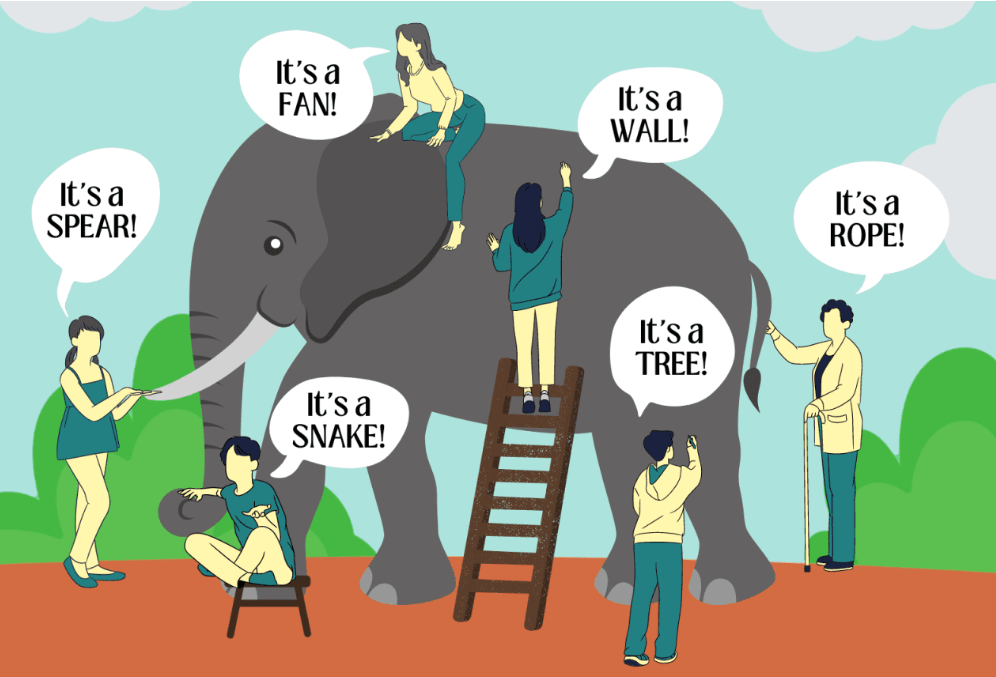
In recent times, eight older men lived in an Indiana community. Each was successfully retired and quite confident. Their neighbors loved the older men and encouraged their breakfast group meetings. Since the older men were no longer actively engaged at work, they had to imagine how things really operated. They listened carefully to stories about the active world of business, government, politics, health care, science, and leadership told to them by others.
The men were curious about many of the stories they heard, but they were most curious about Civility as a super solution to social challenges. They were told that Civility could fix politics, solve tough problems, promote personal growth, reinsert facts and logic into debate, revive trust, social relationships and institutions, and restore the balance between individuals and community.
They remembered Indiana as a very special place with great leaders. They recognized Birch and Evan Bayh, VP’s Quayle and Pence, representatives Lee Hamilton and Julia Carson, Indianapolis mayors Hudnut, Goldsmith, Petersen, Ballard and Hogsett, mayor and senator Lugar, but especially Governor Mitch Daniels. They knew that Daniels had been effective for Indiana, America and Purdue. Did Daniels believe in this Civility miracle solution?
The older men argued day and night about Civility. “Civility must be too simple,” claimed the first man. He had heard stories that it ignores real differences and big solutions.
“No, you must be wrong,” argued the second man. “Civility is complicated, combining values and habits in search of perfection. That is why people struggle to follow it.”
“You’re wrong! Civility seeks compromise, the middle ground and the golden mean. It combines the best that participants can offer,” said the third man.
“Please,” said the fourth man. “You are all mistaken. Civility grandly guarantees that it can solve all problems and conflicts! You know how people exaggerate.”
“How can you be so naïve,” exclaimed the fifth man. “Civility simply rationalizes weak, overly sensitive behaviors that avoid conflict and deny human nature.”
“Civility ignores passion and the emotions,” cried the sixth man. “It eliminates feelings, values, and intuitions by emphasizing cold rationality alone.”
“I am sure that Civility is a leftist plot,” said the seventh man. “That would explain why it emphasizes the importance and legitimacy of government.”
“On the contrary,” declared the eighth man. “Civility is a Republican scheme to return to the 1950’s with its mindless emphasis on a single culture, morality, character and values.”
Finally, the neighbors grew tired of all the arguments, and arranged for the curious men to visit the home office of Mr. Daniels to learn the truth about Civility.
When the men reached the home a half-hour ahead of schedule, they were greeted by an old friend who managed the governor’s visitors. Their friend led them to a waiting room where they watched a 10-minute video on Civility. The retired men quickly began to argue.
The first man stood up and exclaimed. “Civility is just common sense, nothing special.”
The second man misquoted the video. “Civility claims that all people can get along and all problems can be solved,” he announced.
The third man disagreed. “I was right,” he decided. “Civility is a tool of the powerful to maintain the status quo.”
The fourth man criticized Civility’s idealism. “What we have here,” he said, “is a sort of cult, invoking magical practices to reach utopian ends.”
The fifth man responded, “Civility is hopelessly weak because it asserts that strong emotions, interpersonal relations, sensitivity and hospitality can mend all fences.”
The sixth man stated, “Civility is very powerful. It allows groups and individuals to acquire and use power for their own ends, while dismissing the needs and desires of others.”
The seventh man considered the actors in the presentation. “Civility elevates individuals and personal growth above church and community, so it must favor Democrats,” he said.
The eighth man was shocked. “Why, Civility is nothing more than a way for the powerful to reassert social control through norms, taboos and shunning,” he scoffed.
The governor’s aide led his friends to the kitchen. “Sit here and rest,” he said. “I will bring you something to drink.”
While they waited, the eight men talked about Civility.
“Civility is just politeness, rules and etiquette. It is a surface level approach,” said the first man. “Surely we can finally agree on that.”
“Just politeness? Civility aims to transform men, institutions and society” answered the second man.
“Transformation? Civility focuses just on process, promotes elite values and prevents real arguments and solutions” insisted the third man.
“It’s impossible for everyone to develop such powerful skills that effectively bridge real human differences,” said the fourth man.
“Civility merely assumes that better skills, processes and values can manage differences, conflicts and human nature through the forces of goodwill,” noted the fifth man.
“Civility provides a socially approved way for individuals to emphasize form over substance. They can perform in a civil manner without really addressing the needs of others,” cautioned the sixth man.
“Socialist subjectivity and radical tolerance. There’s no doubt,” said the seventh man.
“Don’t you see?” pleaded the eighth man. “Civility is intended to keep us occupied and distracted by small issues and away from the larger issues of systematic injustice. Someone is using Civility to trick us.”
Their argument continued and their shouts grew louder and louder.
It was Purdue President emeritus Daniels, disturbed by the noisy argument.
“How can each of you be so certain you are right?” asked the former governor.
The eight men considered the question. And then, knowing the budget director to be a very wise man, they decided to say nothing at all.
“Civility combines values, skills and behaviors to solve problems and build relations,” said Mr. Daniels. “Each of you exaggerates the importance of only one part. Perhaps if you put the parts together, you will see the truth. Now, let me finish my morning in peace.”
When their friend returned with drinks, the eight men rested quietly, thinking about their leader’s advice.
“He is right,” said the first man. “To learn the truth, we must put all the parts together. Let’s discuss this on the journey home.”
The first man found his seat on the senior bus. The second man found his seat, and so on until all eight men were ready to travel together.