Dock Workers Strike, 1887
The Fairport 1887 strike was a labor dispute in Fairport Harbor, Ohio, where Finnish and German dockworkers and ore handlers struck for a wage increase to $\$2$ a day (20 cents an hour). The strike turned violent, prompting the Lake County Sheriff to call the Ohio Militia to quell the unrest. [1, 2, 3]
Key Details of the Event:
- Date: The strike began on December 15, 1887.
- Cause: The workers demanded a wage increase to $\$2.00$ per day to meet the rising costs of living and match prevailing regional wages.
- Escalation: Strikers utilized open violence and threats against strikebreakers to stop work on the docks, stalling the unloading of vital freight and iron ore.
- Militia Deployment: Due to the severity of the standoff, Ohio Governor Joseph B. Foraker deployed troops to Fairport to restore order and protect the property of the dock operators.
- Aftermath: On December 9, a regiment arrived from Cleveland and arrested ten of the primary strike leaders, effectively breaking the industrial strike.
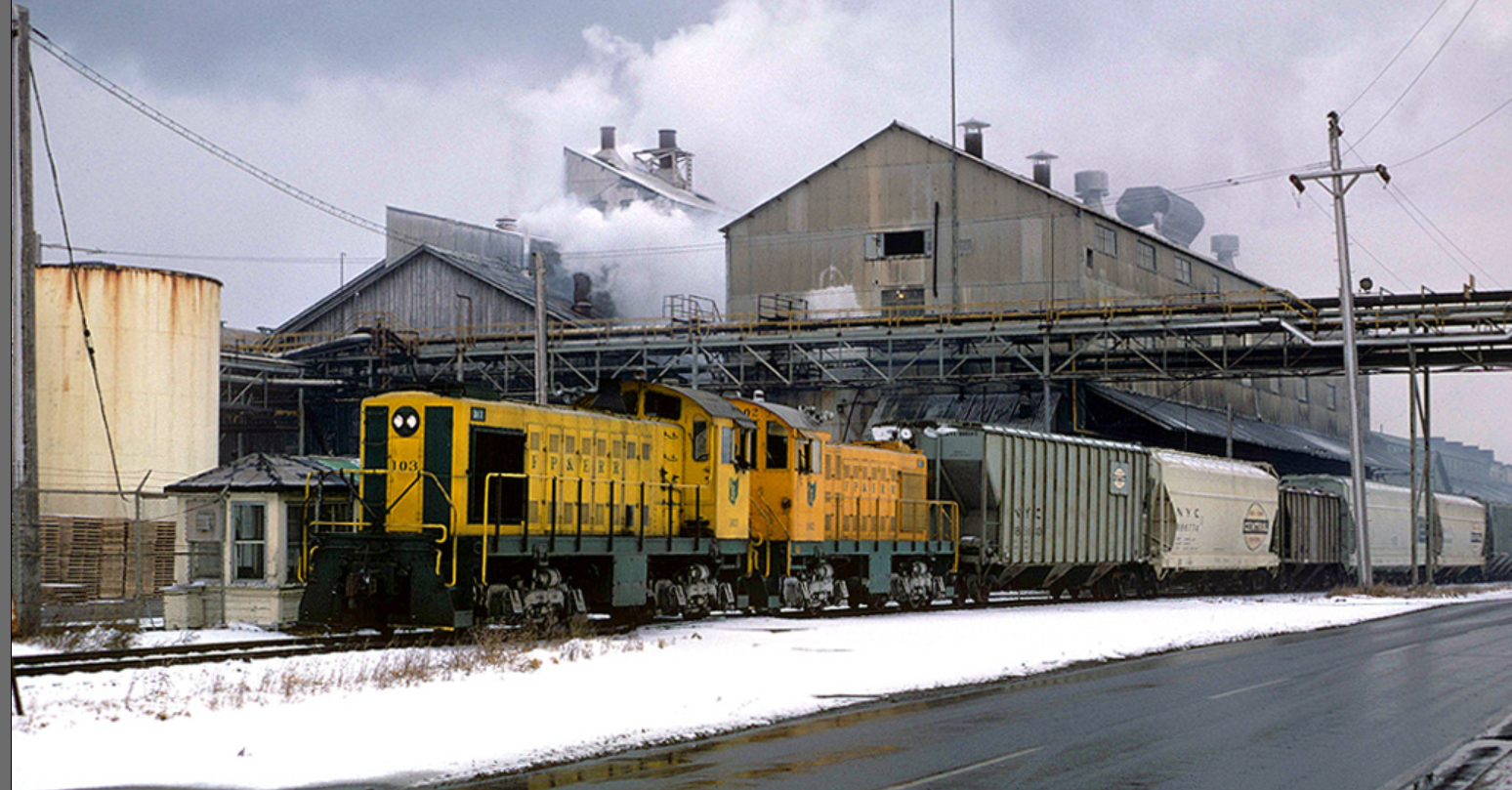
FP&E Railroad Government Takeover, 1942
Industrialists in Olive Drab: The Emergency Operation of Private Industries During World War II
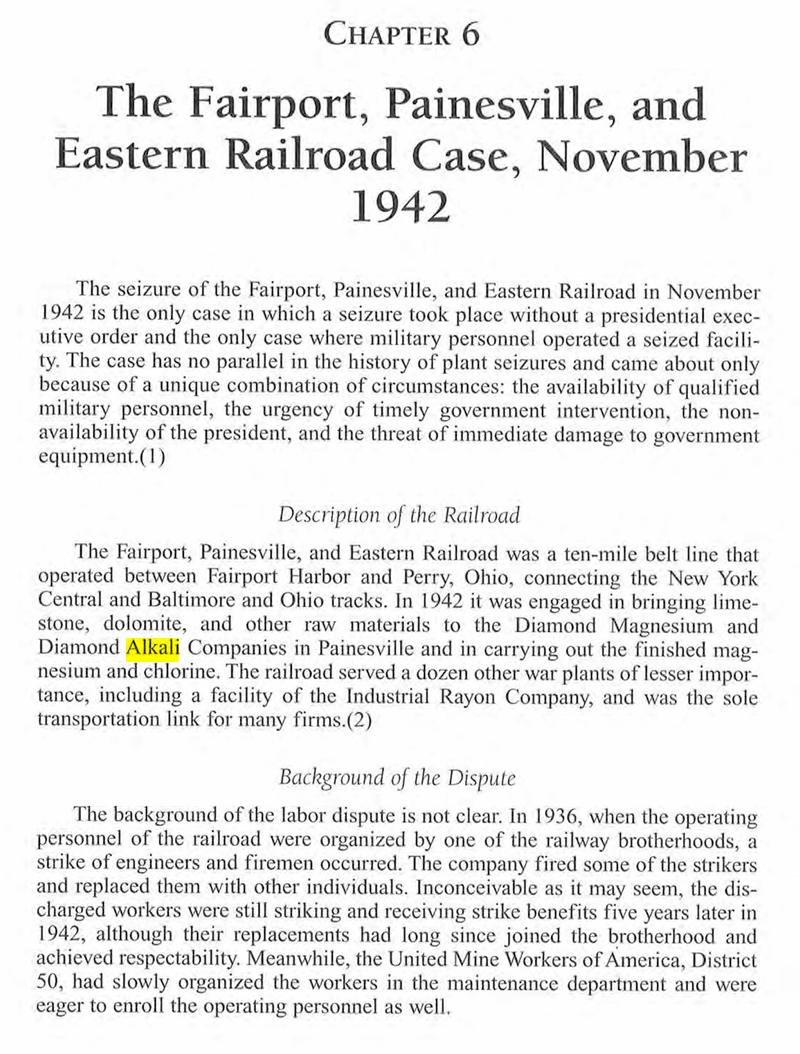
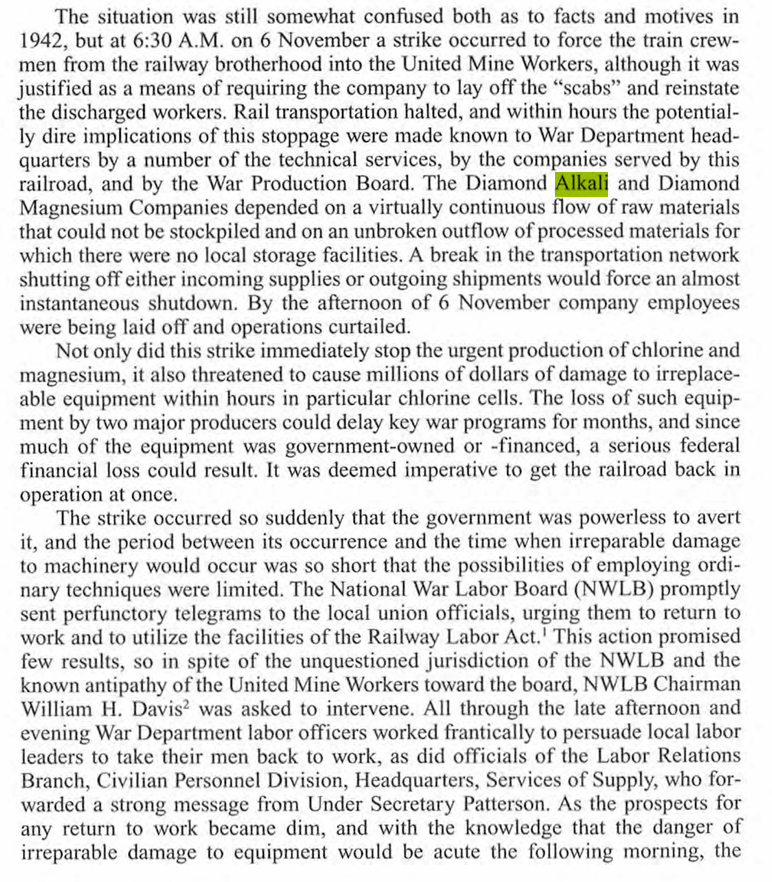
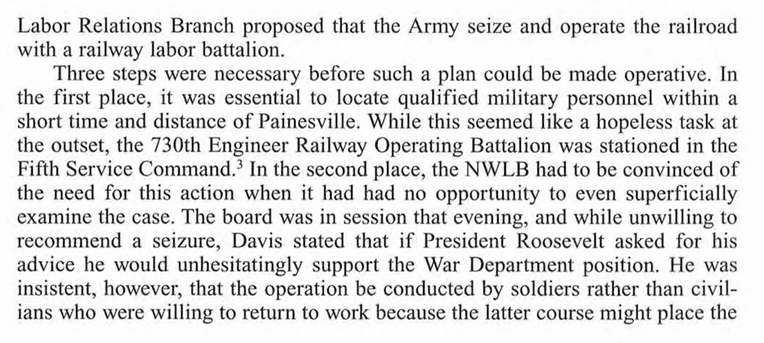
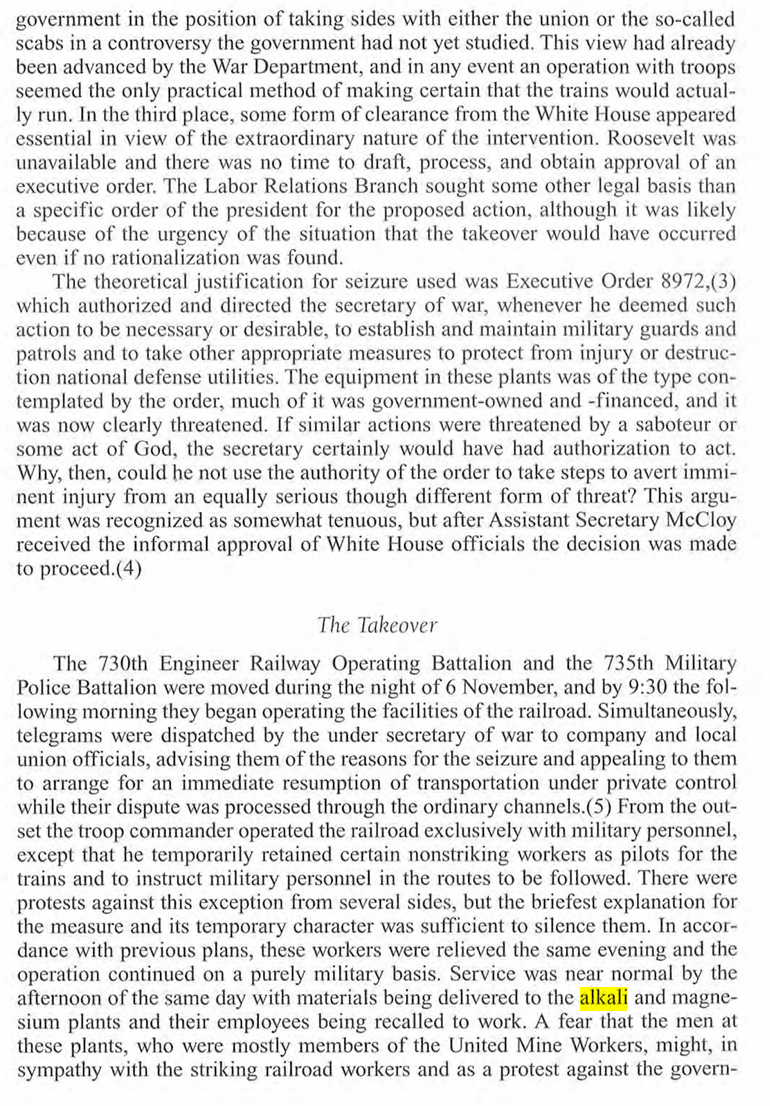
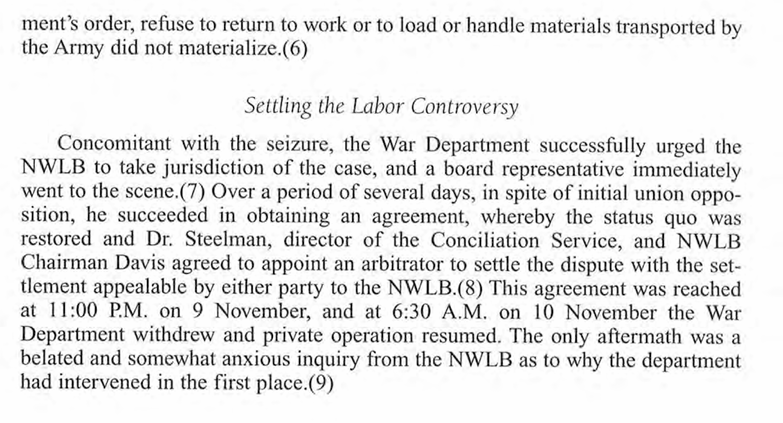
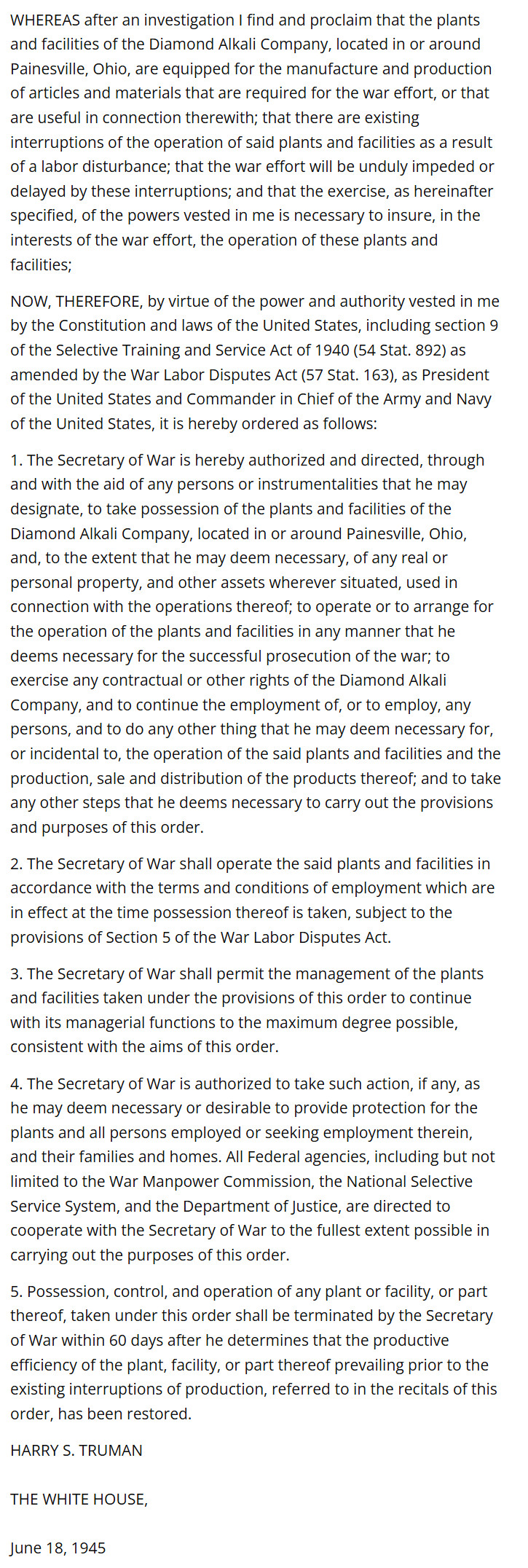
Government Takeover of Diamond Alkali, 1945
Baking Soda National Disruption, 1950
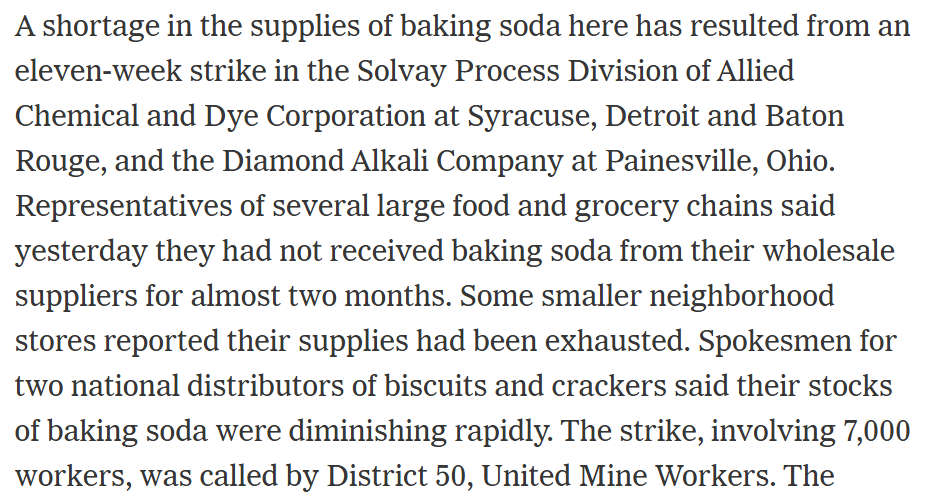
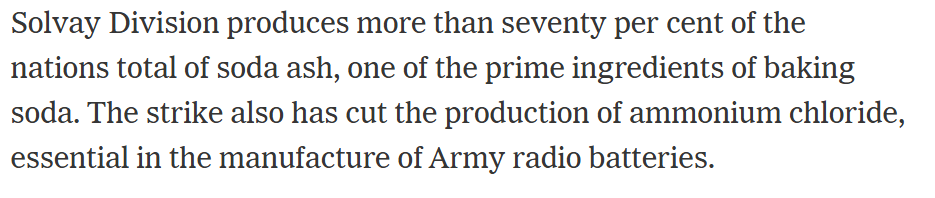
BAKING SODA STOCKS DOWN; Strike in Soda Ash Plants Affects Stores, Bakers – The New York Times
IRC Fibers / The Rayon – Labor Actions and Union Representation
Industrial Rayon Corporation- Celebrating a Special Workplace : The Cleveland Memory Project
Industrial Rayon Corporation in Cleveland manufactured rayon yarn, the world’s first synthetic fiber, which found use in items ranging from undergarments to tires. Rayon production using an innovative continuous spinning process at the West Boulevard plant and the Painesville plant reached high levels during WWII. The company weathered the Depression, labor strikes and environmental complaints, but in post-war years demand for rayon fell.
The Textile Workers Union of America (TWUA) historically represented production workers at the Industrial Rayon Corporation (IRC Fibers) plant in Painesville, Ohio. The plant was formerly the second-largest employer in Lake County before permanently closing in August 1980. [1, 2, 3]
Key Labor Union Details for the Painesville Plant:
- Bargaining Unit: The Congress of Industrial Organizations (CIO)
, specifically through the TWUA
, won the initial bargaining elections at the Painesville and Cleveland facilities in May 1942. - Operating Engineers: Powerhouse and maintenance personnel were often represented by Local 600 of the International Union of Operating Engineers (IUOE).
- Plant History: Located on a 630-acre site on Bacon Road, the facility produced polyester yarn and was a major synthetic-fiber producer. The operation ceased in 1980 due to a decline in demand for tire yarns.
- Historical Records: Archival records concerning the plant’s unionization and operations can be explored via the Cleveland Memory Project
curated by Cleveland State University.
[1] http://www.clevelandmemory.org/irc/articles/19800806close.html
[2] https://web.ulib.csuohio.edu/irc/articles/19420515cio.html
[3] https://www.news-herald.com/2005/03/01/edith-carroll/
Steel Workers Union at Coe Manufacturing
Historically, the primary union representing workers at Coe Manufacturing (known for its engineered wood and forestry equipment) was the United Steelworkers (USW), specifically Local 12833 at the former Painesville, Ohio plant. [1, 2, 3]
Here are the specific details regarding Coe Manufacturing and labor unions:
- Painesville Plant Closure: The union-represented plant in Ohio, which manufactured heavy machinery for the forest products industry, was permanently closed by its parent company (USNR) in February 2010.
- Labor Relations: The facility’s collective bargaining agreements primarily fell under USW District 1. Prior to the plant’s closure, the union engaged in “effects bargaining” and assisted displaced workers with securing federal Trade Readjustment Allowances.
- USW Resources: If you are a former member, a current employee under the USNR/Coe umbrella, or need general representation, you can find information and regional contact details directly through the United Steelworkers Official Website
.
[1] https://www.supremecourt.ohio.gov/rod/docs/pdf/11/2003/2003-Ohio-1395.pdf
[8] https://www.news-herald.com/2010/02/26/coe-employees-left-to-wonder-whats-next/
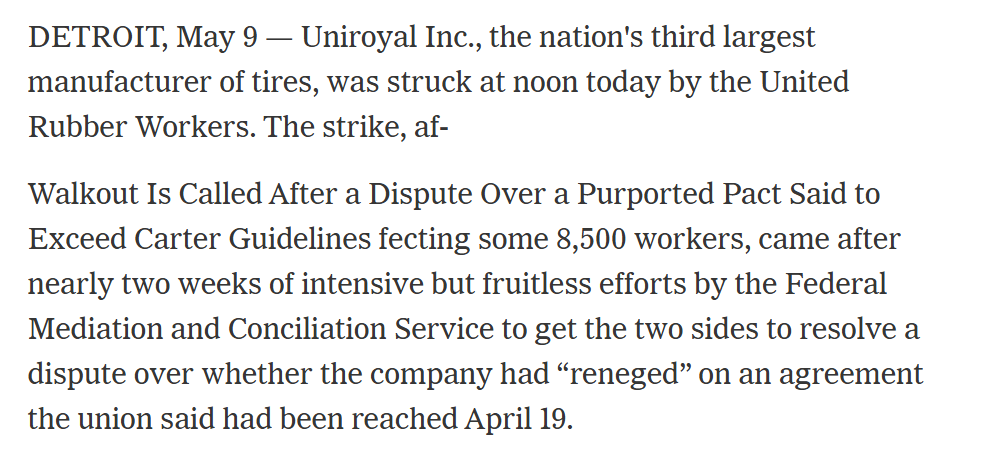
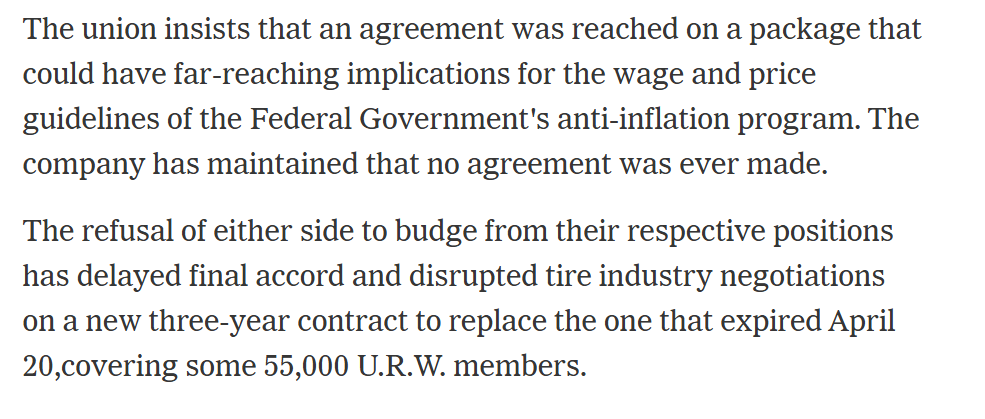
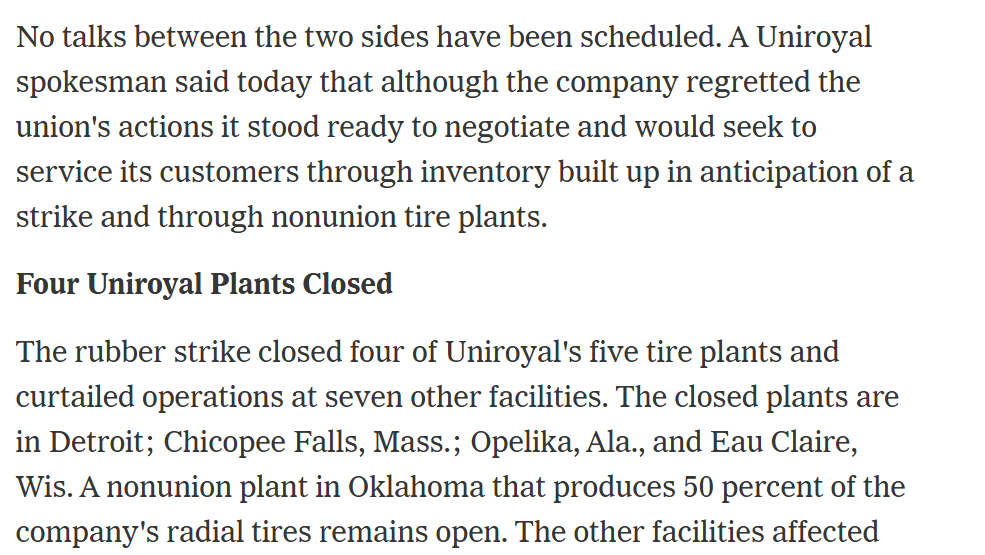
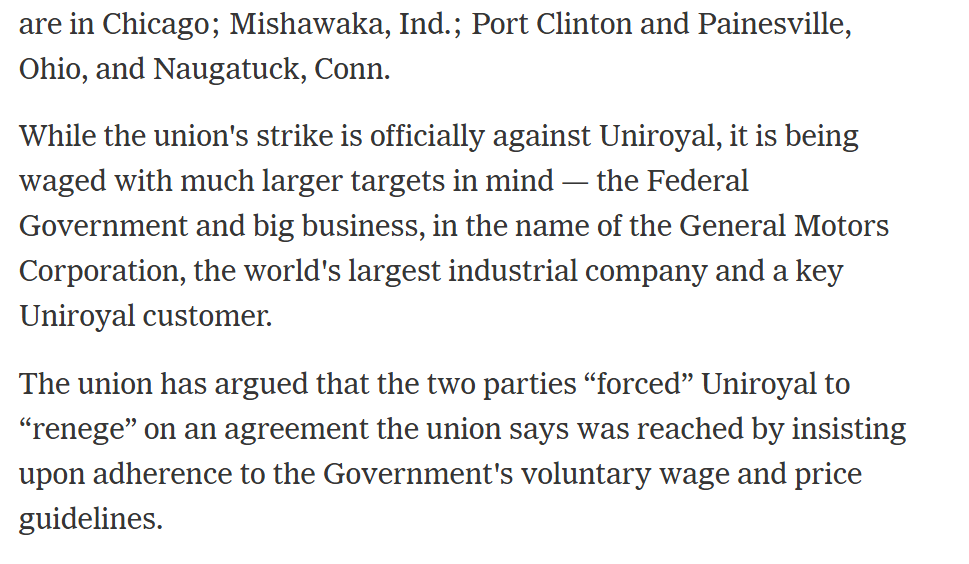
Uniroyal Strike, 1979
Diamond Magnesium Represented by Steelworkers Union
The Diamond Magnesium Company was an aluminum and magnesium processing facility that operated a large plant in Painesville, Ohio, during the 1940s and 1950s under contract to the federal government. The workforce was organized under the Congress of Industrial Organizations (CIO), with labor representation by the United Steelworkers
.Labor & Historical Context
- Union Representation: The United Steelworkers
(USW) was actively involved in representing workers and securing early collective bargaining agreements and wage concessions at the Painesville facility during World War II. - Atomic Legacy: The Painesville plant is historically recognized under the Energy Employees Occupational Illness Compensation Program Act
(EEOICPA) as a former contractor for the Atomic Energy Commission (AEC) and Manhattan Engineer District. Workers who handled radioactive materials or scrap steel on-site may qualify for benefits through the U.S. Department of Labor’s EEOICPA Program.. - Current Status: The original site was closed in the late 1950s and has since undergone environmental remediation as part of the FUSRAP Program
(Formerly Utilized Sites Remedial Action Program) managed by the U.S. Army Corps of Engineers.
Fairport Teachers are Unionized
Painesville Teachers are Unionized
Collective Bargaining Agreement – Ohio Public Sector
Collective Bargaining Agreement – Ohio Public Sector
Morton Salt Represented by the Steelworkers
The Morton Salt facility in Painesville, Ohio (often associated with the Fairport Harbor mine beneath Lake Erie) is represented by the United Steelworkers (USW). Specifically, workers at the operation are members of USW Local 12606, which covers hundreds of union members. [1, 2, 3]
Key Details & Background
- Location: 570 Headlands Rd, Painesville, OH 44077
- Union Affiliation: USW represents the mine laborers, mechanics, and processing operators who produce water softening salt, ice melt, and industrial salt products.
- History: The Painesville/Fairport site is one of the oldest active salt mines in the country. While it occasionally faces negotiations, workforce adjustments, and shifting production schedules, the USW maintains a strong, decades-long presence at the site.
[1] https://www.facebook.com/Fox8NewsCleveland/videos/morton-salt-mines/652119061850528/
[2] https://www.indeed.com/cmp/Morton-Salt/faq/is-morton-salt-a-union-company?quid=1c54cknquakdudlk
[3] https://www.facebook.com/steelworkers/photos/a.10150225828646195/10153161083006195/?type=3
Painesville Police are Unionized
Collective Bargaining Agreement – Ohio Public Sector
County Clerk of Courts Unionization
Lake County Clerk of Court employees seek to unionize | wkyc.com
Strong Skilled Trades Unions
Lake County, Ohio offers robust pathways into the skilled trades through local union chapters and state-certified “earn-while-you-learn” apprenticeship programs. These organizations combine paid, on-the-job training with classroom instruction, allowing you to build a debt-free career in construction, manufacturing, or service industries. [1, 2, 3, 4]
The region is represented by a few key umbrella councils and several localized union chapters. [5]
Union Umbrella Organizations
- Cleveland Building & Construction Trades Council: The overarching federation for over 29 affiliated local unions in Greater Cleveland. You can explore detailed trades and application resources via the Cleveland Building & Construction Trades Council or ACT Ohio
. - North Shore AFL-CIO: Provides comprehensive listings and contact information for local union affiliates operating in Lake County. View local options through the North Shore AFL-CIO Apprenticeships Directory. [5, 6, 7, 8]
Specific Trades & Local Chapters in Lake County
- Electrical Workers (IBEW Local 673): Services electrical workers throughout Lake, Geauga, and Ashtabula counties. The Lake County Joint Apprenticeship Training Committee (JATC) offers 5-year Inside Wireman and 4-year Telecommunication programs. Contact them and view program details via IBEW Local 673 or the Lake County JATC.
- Laborers (Local 860): Covers heavy highway, pipeline, and utility construction across Lake, Cuyahoga, and Geauga counties. Members also benefit from statewide training at the Drexel J. Thrash Training Center. Learn more at Laborers Local Union 860.
- Painters & Allied Trades (District Council 6): Actively recruits apprentices and experienced tradespeople for industrial/commercial painting, drywall finishing, and glazing. Find out how to join via IUPAT DC 6 Membership.
- Bricklayers (Local 16): Maintains a regional presence specifically in Mentor, OH. [2, 5, 9, 10, 11, 12]
[1] https://unionizecle.org/apprenticeship/
[2] https://iupat-dc6.org/become-a-member/
[3] https://www.local894.com/apprenticeship-program
[4] https://nationalmechanicalinstitute.com/
[5] https://northshoreaflcio.org/apprenticeships
[7] https://www.eventbrite.com/cc/oh-counselor-training-construction-apprenticeship-3592099
[8] https://unionizecle.org/apprenticeship/
[10] https://lakecountyjatc.org/
[11] https://www.laborers860.com/about-us/
[12] https://oltc.org/
Summary
Lake County has been a major manufacturing center for more than a century. Unions have represented workers at major employers during this time. Lake County’s state leading incomes were driven by union efforts.