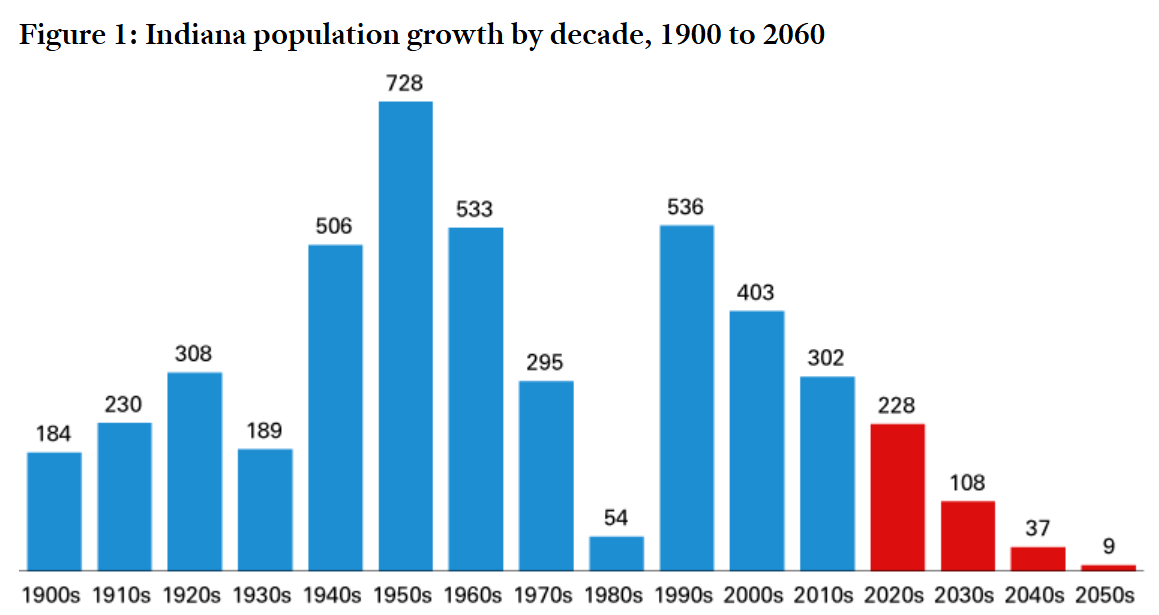
After the two dismal decades of the 1970’s and 1980’s, Indiana recovered with respectable growth for the next 30 years. Based on demographic trends, that growth will be done by the end of the current decade.
Slow-growth drives “win-lose” politics in most times and places.
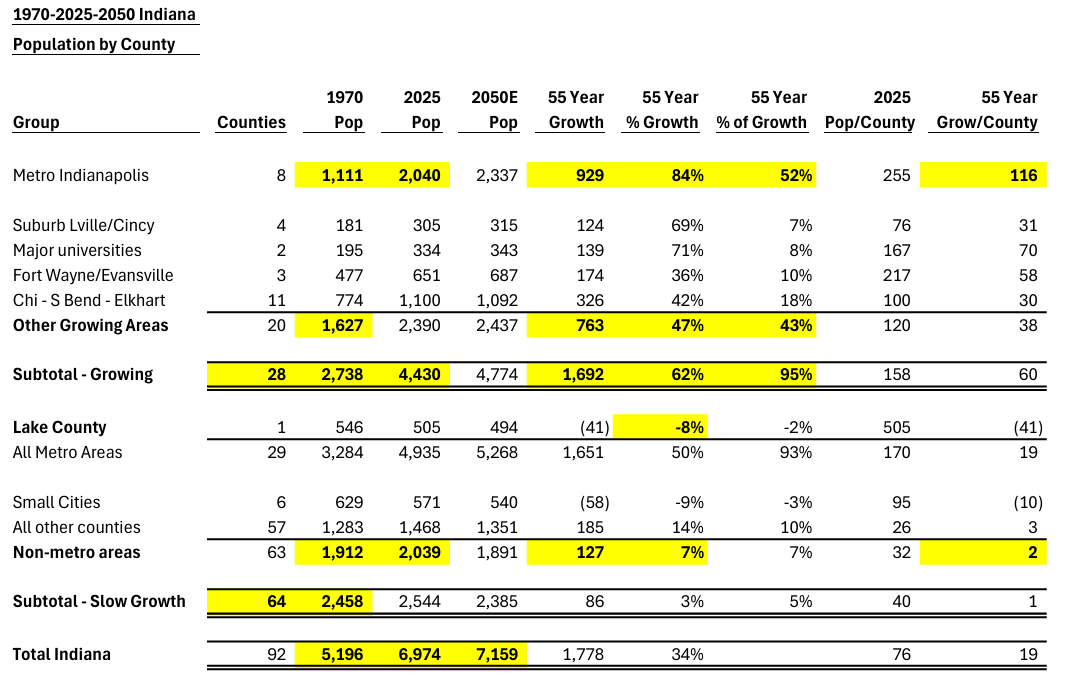
In the last 55 years, about one-third of Indiana counties registered growth and two-thirds did not. In the next 25 years, only 20 counties are forecast to grow. 16 of are part of the 28 in areas that showed growth from 1970-2025. The remaining 4 (Bartholomew, Adams, Daviess and Wells) belong to the group of 64 that saw losses or slow growth across 55 years. In general, the growing areas will show small growth, Metro Indy will grow decently and the rest will decline. Let’s look at the data in chart form.
Data
Analysis
Indiana grew by 1.8 million people between 1970 and 2025, from 5.2M to 7.0M; a gain of 34%.
The 8 counties in Metro Indianapolis accounted for slightly more than half of the total growth.
20 other counties grew, adding 763,000 people. They included Fort Wayne, Evansville, suburban Louisville, suburban Cincinnati, Monroe (IU), Tippecanoe (Purdue) and 11 counties in the Chicagoland “region”, excluding Lake County while including South Bend, Elkhart and Plymouth. Combined, these 28 counties added 1.7M people, while the other 64 counties combined added less than 100,000 people!
The growing counties added 60,000 people per county. They grew by 62%.
The non-growing counties added 1,000 people per county. They grew by 3%.
The contrast is stark and surely drives political views.
In 2025, the 8 metro Indy counties averaged 255,000 people each. The 57 rural counties averaged 26,000; just one-tenth the size.
Lake County (Gary) is set aside as a special case. Part of the Chicago region, but losing a significant 41,000 people; so, grouped with the non-growing counties.
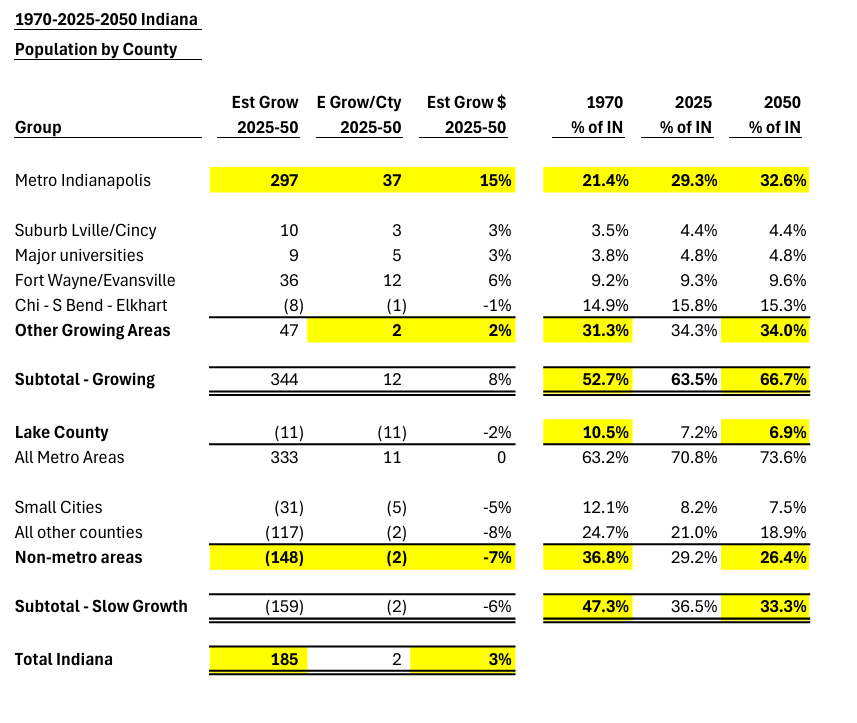
For the next 25 years, metro Indy adds 300,000 people, growing by 15% and a much slower 37,000 people per county compared with the 116,000 people per county in the prior 55 years.
The other 20 historically growing counties add 47,000 people combined by 2050, a small fraction of the 763,000 they added before 2025. The growth rate declines from 43% to 2%. Growth per county drops from 38,000 to just 2,000.
The remaining 64 counties LOSE 159,000 people; 6% of their 2025 populations, 2-3,000 people per county. Sixty (60) of the 64 counties are forecast to lose population across 25 years.
Across the full 80 years, the metro Indy area grows from 21% to 33% of the state population. The Previously growing areas edge up from 31% to 34%. The non-growing counties fall from 47% in 1970 to 37% in 2025 to 33% in 2050.
The 8 metro Indy counties will have the same population and political power as the 64 non-growing counties by 2050. Indiana’s Republican controlled house, senate and governor face a challenging future as its rural base declines further and the urban (blue, purple and red) area grows.
Hamilton County moved up to a tie for 14th place among the country’s 3,100 counties with 62% of its adults holding bachelor’s degrees as of 2023.
Ahead of Hamilton County are 8 Washington, DC area counties, New York County (Manhattan), 19,000 person Los Alamos County, NM, 17,000 person Pitkin, CO (Aspen), 26,000 person San Miguel County, CO (Telluride), and 329,000 person Denver suburb Boulder County.
387,000 person Hamilton County is tied with 272,000 person Williamson County, TN south of Nashville and 153,000 person Orange County, NC west of Raleigh-Durham.
In 2015, the Fishers Rotary Club created a quarter acre vegetable garden on the Fishers Christ the Savior Lutheran Church property. It’s members and the church drilled wells, installed sprinkler systems, built a shed, acquired equipment, installed access paths, established relations with local partners and food pantries to grow and distribute more than 4,000 pounds of fresh produce each year. Praise be to God!
In 2023 the Hamilton County Master Gardeners Association assumed the lead role for this community garden. The group has expanded to serving 5 local food pantries. It works with Volunteer Fishers to provide opportunities for citizens to help. The group delivers more than 3,000 pounds of produce to the food pantries. It raises $3,000 from supporters and $3,000 from HCMGA to fund expenses. It employs 2,000 volunteer hours annually. It serves the food pantries for the 6 months of May through October. The group plants 60 different crops each year in 3 planting cycles. It plants a half-dozen companion crops/flowers, rotates its 9 gardens and plants 3 cover crops each year. The group supports bee hives, hosts open houses and employs scout volunteers.
One-quarter acre is 120 18-foot long, 4-foot wide rows of 1-2-3-4 plantings.
3-4,000 pounds of fresh produce serves 8-10,000 people/servings. The retail value is roughly $15,000.
Why bother?
30 recurring volunteers have an opportunity to serve their neighbors.
20 “random” youth and community volunteers visit once, contribute and serve their community.
3-4 organizations invest $3,000 with a 5X return to serve their community.
400 local “master gardeners” have an opportunity to learn about vegetable gardening.
5 food pantries have dependable supporters for their valuable work.
Most importantly, food pantry clients have fresh, organic produce as part of their weekly visit. They greatly value fresh produce. They know that the local community invested time, talent and treasurer to make this happen. They are welcomed, truly welcomed into our community.
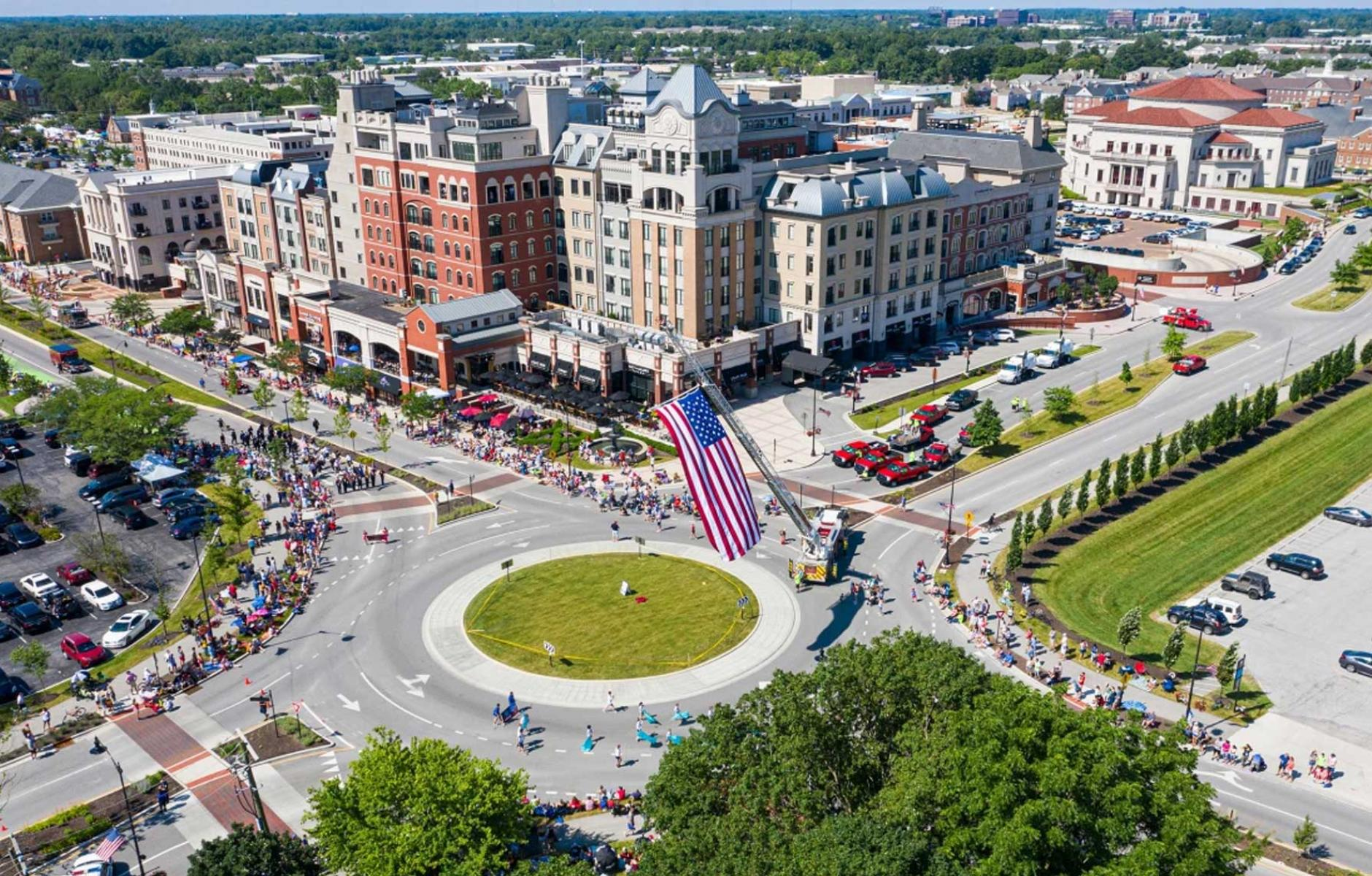
Carmel, Indiana is a 46 square mile city of 105,000 people a dozen miles north of downtown Indianapolis.
As 28-year mayor Jim Brainerd once quipped, “We don’t have mountains, valleys or an ocean, but neither does Paris”. How could an Indiana city create such a natural reputation for success?
Carmel is a suburb of Indianapolis, so it has benefitted from suburban growth since the 1950’s.
Indianapolis, like Columbus, Nashville, and Minneapolis, has been a heartland growth winner.
Indiana is a low cost of living location, benefitting from being the “Crossroads of America”.
Indiana is a low tax and low government services state, with expectations that government needs are best addressed at the lowest possible level.
Indianapolis has no natural geographical constraints to growth or limits that raise the cost of living. The Northwest Territory’s 6×6 mile townships expand in all directions.
Most metro areas have a preferred direction for wealth and growth. Indianapolis chose to develop straight north along Meridian Street across the Marion County border into Carmel by the 1950’s.
This branding and “first mover” advantage is common among America’s 50 large metro areas. Carmel benefitted from competitors in NW Zionsville limiting development to preserve the small village character, NE Geist having limited lakefront property and NNE Fishers limited main highway access.
While Indiana today is considered a deeply red state, historically it was more purple, with heavy manufacturing/worker counties balanced by rural/farming counties. Indianapolis was a local government innovator, creating county wide Unigov in 1970 to combine the city and county, preserving Republican dominance. Indianapolis has elected centrist mayors for 6 decades: Lugar, Hudnut, Goldsmith, Peterson, Ballard and Hogsett.
Jim Brainerd served as mayor from 1996-2024 as a centrist/practical Republican in the Governor Daniels mode, focusing on local economic issues and needs, without being distracted by national wedge issues.
Carmel understood the power of zoning and used this to adopt overlay zones to guide denser and higher quality development in the Meridian corridor, Range Line Road, Arts & Design District and Midtown areas. Politicians understood that Carmel was a valuable place for developers and set limits to ensure that the community would also benefit from growth.
Mayor Brainerd used the powers of the Indiana strong-mayor system to create tax increment finance (TIF) districts to capture the future property tax values of areas to allow for leveraged government investments in infrastructure.
Mayor Brainerd and the city council also allowed the city to borrow at advantageous interest rates to finance other investments to promote the city’s growth.
Like many governments, Carmel offered tax incentives to attract corporate developments.
Mayor Brainerd found that roundabouts were a local, traffic, aesthetic, environmental, safety, time, and cost winner. He prodded the city the install 150 roundabouts.
Mayor Brainerd incorporated a small investment into the arts and not-for-profits into the annual budgeting cycle. Local citizens applauded.
Mayor Brainerd chose to invest in community art, statues downtown and in the roundabouts. Again, the community applauded.
Journalistic histories emphasize the role of Mayor Brainerd in “transforming” the sleepy suburb into a new urbanist “edge city” and nationally recognized place to live. Mayor Brainerd deserves credit as a visionary and catalytic leader who delivered the goods for 3 decades. Yet the Carmel story begins before him and continues today. It relies upon political, government, community and volunteer leaders who believed that Carmel could deliver the highest possible quality of life for its residents and neighbors. I point to a few representative leaders who deserve credit.
Carmel has invested resources in making it a safe city. School safety officers requiring a separately approved levy. Formal quality standards for police and fire departments. County level emergency preparedness investments.
Carmel public schools are consistently rated among the best in Indiana. Critics say this reflects the wealthy socioeconomic status of the community. “The proof is in the pudding”.
Indiana schools are mainly funded through a statewide formula. Indiana property taxes are capped as a percentage of value. Carmel residents have chosen since 2010 to approve property tax levies to exceed the formula and the standard maximums. Recent state tax, budget and formula changes are driving new requests.
Carmel library has moved twice, expanded its main location and added a branch location. Carmel library has been nationally ranked for its activity, circulation, programs and financial investments.
Carmel aspires to be a diverse community. It has been a primary corporate transfer and health care professional destination, welcoming non-Hoosiers and preparing residents and students for national and global roles.
Carmel has more economic diversity than some expect, with many middle-class and young adult neighborhoods south of 116th Street and within the boundaries of Keystone Parkway and Meridian/US 31.
Density is good. Commercial property tax base is good. Employers are good. These 3 statements seem trivial and obvious, but many “professional class” suburbs reject them, wishing to live in an idyllic rural paradise. Carmel has always embraced manufacturing, offices, retail, and apartments.
The Meridian Corridor overlay district promoted dense development and prevented strip malls. The Range Line Road overlay district required dense and multi-use development. The early overall zoning plan encouraged economic development in the central 8 square miles of the city, within the 46 square mile footprint.
Carmel employed TIF districts and public borrowing to attract investors to its central city developments.
It employed the usual tax abatement tools to encourage major corporations to locate within Carmel.
By decade, Carmel’s population grew from 1950 to 2026 in thousands as 2, 10, 20, 33, 43, 65, 83, 99, 105. 4 decades of 10,000 population growth followed by 4 decades of 15,000 population growth. Growth may slam shut in 2030-2035. Growth provides advantages to utilities, realtors, developers, construction firms, media, and governments.
Lacking mountains or oceans, the community has developed events for every month of the year to celebrate. Many events were created, grown and managed by small groups of individuals with background support from the city government.
Carmel has leveraged its existing natural neighborhoods to develop a sense of place. Real estate developers have built traditional 50-300 home subdevelopments and filled in spaces. The city focused on the central city neighborhoods to define the “arts & design district” and midtown. The parks district has built and enhanced regional and neighborhood assets.
Carmel began with advantages as a growing suburb north of Indianapolis’s historic Meridian-Kessler neighborhood. Political leaders made wise decisions for several decades. Carmel’s measures of success have gained national recognition. However, the character of the community and quality of life is driven by the personal responsibility that citizens take for themselves and their neighbors as symbolized by the moms who built the first park and the dads who started the youth athletics programs.
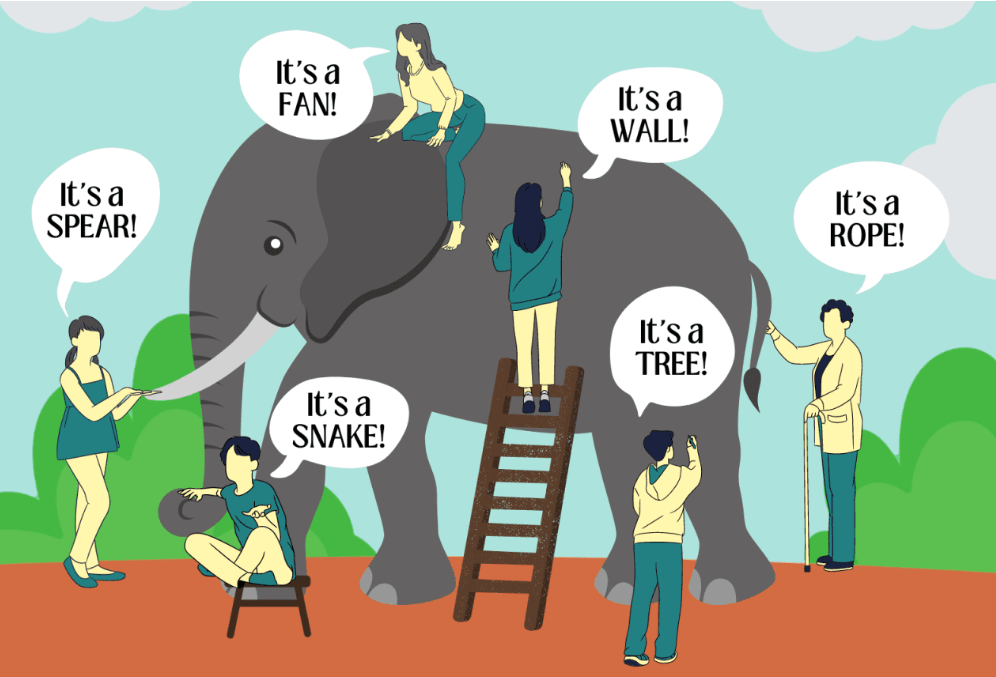
In recent times, eight older men lived in an Indiana community. Each was successfully retired and quite confident. Their neighbors loved the older men and encouraged their breakfast group meetings. Since the older men were no longer actively engaged at work, they had to imagine how things really operated. They listened carefully to stories about the active world of business, government, politics, health care, science, and leadership told to them by others.
The men were curious about many of the stories they heard, but they were most curious about Civility as a super solution to social challenges. They were told that Civility could fix politics, solve tough problems, promote personal growth, reinsert facts and logic into debate, revive trust, social relationships and institutions, and restore the balance between individuals and community.
They remembered Indiana as a very special place with great leaders. They recognized Birch and Evan Bayh, VP’s Quayle and Pence, representatives Lee Hamilton and Julia Carson, Indianapolis mayors Hudnut, Goldsmith, Petersen, Ballard and Hogsett, mayor and senator Lugar, but especially Governor Mitch Daniels. They knew that Daniels had been effective for Indiana, America and Purdue. Did Daniels believe in this Civility miracle solution?
The older men argued day and night about Civility. “Civility must be too simple,” claimed the first man. He had heard stories that it ignores real differences and big solutions.
“No, you must be wrong,” argued the second man. “Civility is complicated, combining values and habits in search of perfection. That is why people struggle to follow it.”
“You’re wrong! Civility seeks compromise, the middle ground and the golden mean. It combines the best that participants can offer,” said the third man.
“Please,” said the fourth man. “You are all mistaken. Civility grandly guarantees that it can solve all problems and conflicts! You know how people exaggerate.”
“How can you be so naïve,” exclaimed the fifth man. “Civility simply rationalizes weak, overly sensitive behaviors that avoid conflict and deny human nature.”
“Civility ignores passion and the emotions,” cried the sixth man. “It eliminates feelings, values, and intuitions by emphasizing cold rationality alone.”
“I am sure that Civility is a leftist plot,” said the seventh man. “That would explain why it emphasizes the importance and legitimacy of government.”
“On the contrary,” declared the eighth man. “Civility is a Republican scheme to return to the 1950’s with its mindless emphasis on a single culture, morality, character and values.”
Finally, the neighbors grew tired of all the arguments, and arranged for the curious men to visit the home office of Mr. Daniels to learn the truth about Civility.
When the men reached the home a half-hour ahead of schedule, they were greeted by an old friend who managed the governor’s visitors. Their friend led them to a waiting room where they watched a 10-minute video on Civility. The retired men quickly began to argue.
The first man stood up and exclaimed. “Civility is just common sense, nothing special.”
The second man misquoted the video. “Civility claims that all people can get along and all problems can be solved,” he announced.
The third man disagreed. “I was right,” he decided. “Civility is a tool of the powerful to maintain the status quo.”
The fourth man criticized Civility’s idealism. “What we have here,” he said, “is a sort of cult, invoking magical practices to reach utopian ends.”
The fifth man responded, “Civility is hopelessly weak because it asserts that strong emotions, interpersonal relations, sensitivity and hospitality can mend all fences.”
The sixth man stated, “Civility is very powerful. It allows groups and individuals to acquire and use power for their own ends, while dismissing the needs and desires of others.”
The seventh man considered the actors in the presentation. “Civility elevates individuals and personal growth above church and community, so it must favor Democrats,” he said.
The eighth man was shocked. “Why, Civility is nothing more than a way for the powerful to reassert social control through norms, taboos and shunning,” he scoffed.
The governor’s aide led his friends to the kitchen. “Sit here and rest,” he said. “I will bring you something to drink.”
While they waited, the eight men talked about Civility.
“Civility is just politeness, rules and etiquette. It is a surface level approach,” said the first man. “Surely we can finally agree on that.”
“Just politeness? Civility aims to transform men, institutions and society” answered the second man.
“Transformation? Civility focuses just on process, promotes elite values and prevents real arguments and solutions” insisted the third man.
“It’s impossible for everyone to develop such powerful skills that effectively bridge real human differences,” said the fourth man.
“Civility merely assumes that better skills, processes and values can manage differences, conflicts and human nature through the forces of goodwill,” noted the fifth man.
“Civility provides a socially approved way for individuals to emphasize form over substance. They can perform in a civil manner without really addressing the needs of others,” cautioned the sixth man.
“Socialist subjectivity and radical tolerance. There’s no doubt,” said the seventh man.
“Don’t you see?” pleaded the eighth man. “Civility is intended to keep us occupied and distracted by small issues and away from the larger issues of systematic injustice. Someone is using Civility to trick us.”
Their argument continued and their shouts grew louder and louder.
It was Purdue President emeritus Daniels, disturbed by the noisy argument.
“How can each of you be so certain you are right?” asked the former governor.
The eight men considered the question. And then, knowing the budget director to be a very wise man, they decided to say nothing at all.
“Civility combines values, skills and behaviors to solve problems and build relations,” said Mr. Daniels. “Each of you exaggerates the importance of only one part. Perhaps if you put the parts together, you will see the truth. Now, let me finish my morning in peace.”
When their friend returned with drinks, the eight men rested quietly, thinking about their leader’s advice.
“He is right,” said the first man. “To learn the truth, we must put all the parts together. Let’s discuss this on the journey home.”
The first man found his seat on the senior bus. The second man found his seat, and so on until all eight men were ready to travel together.
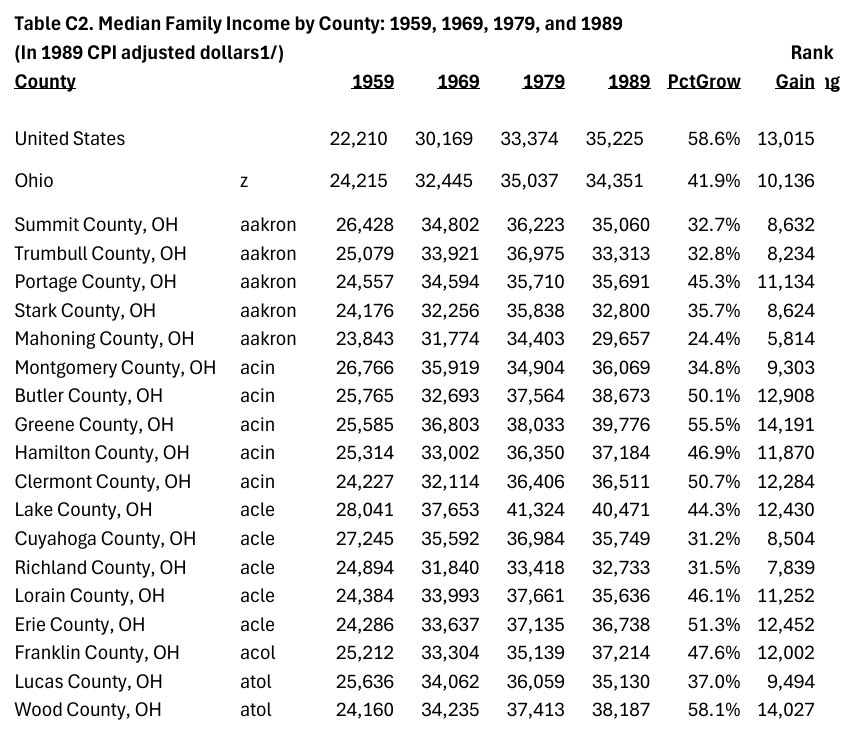
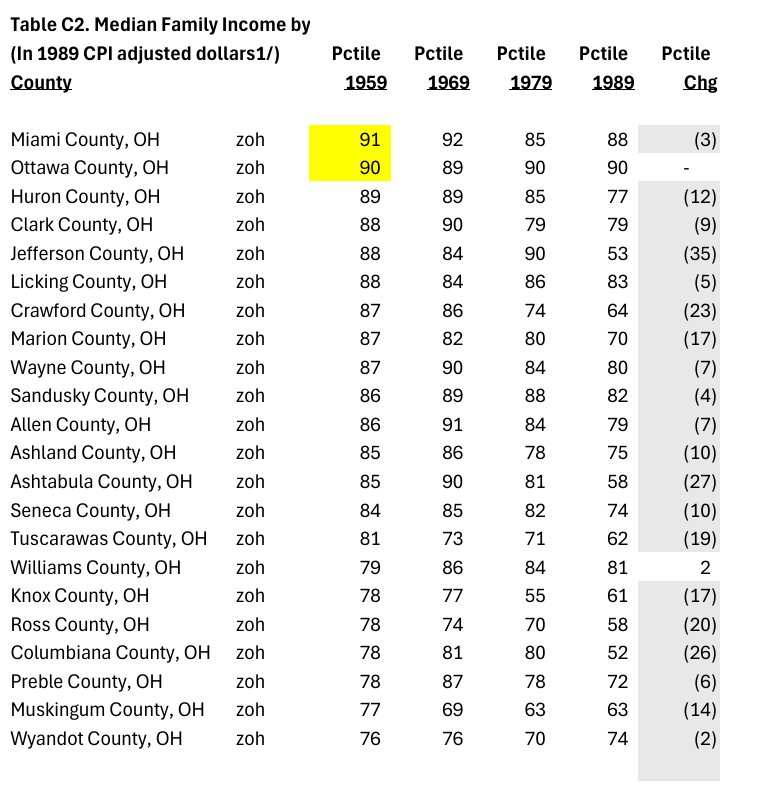
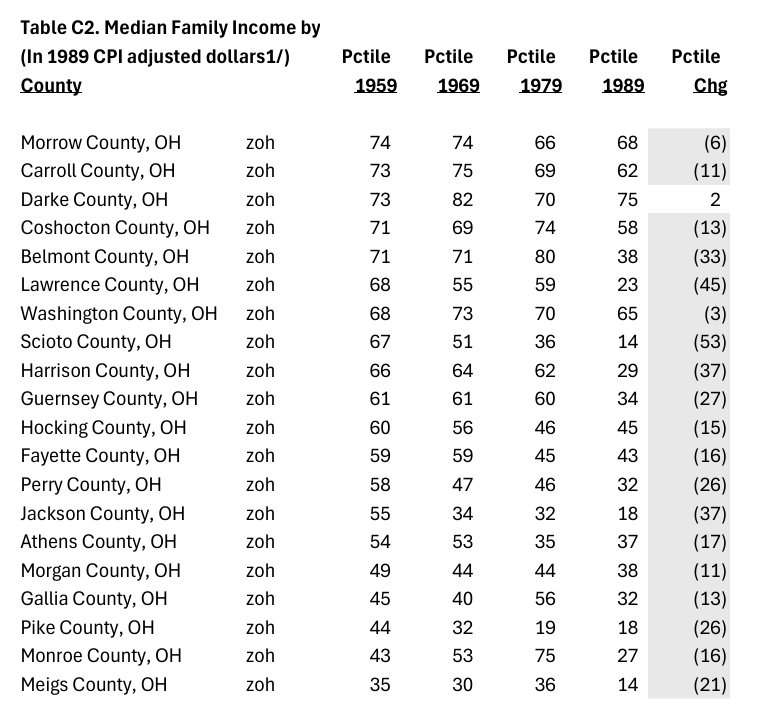
I was born in northeast Ohio in 1956, left for Dallas from 1984-87, returned and then moved to Indianapolis in 1988. I pulled the data on median family incomes to try to explain the impact of the shutdown of factories between 1960 and 1990 on the Ohio economy at the county level.
88 Ohio Counties
Context and Analysis
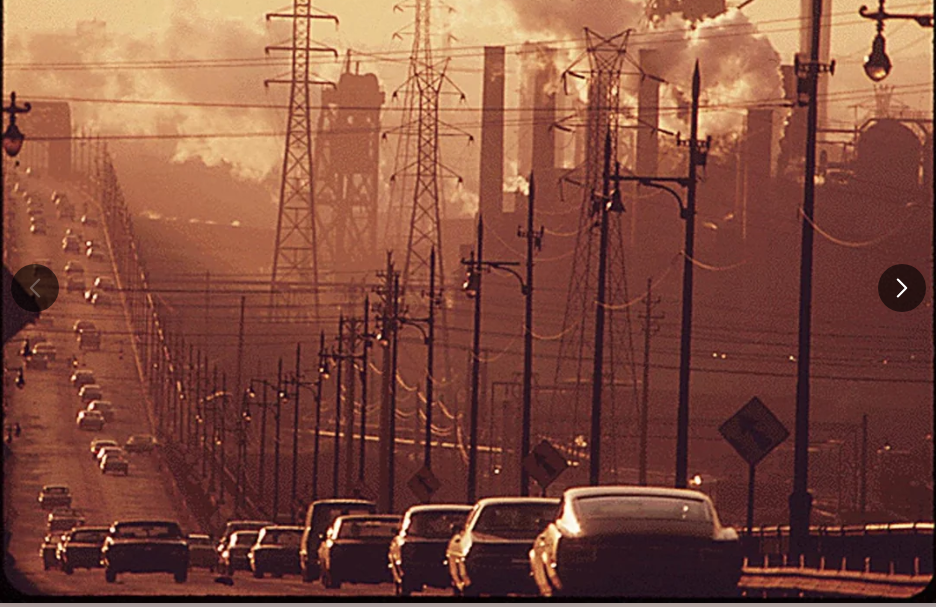
I was born in “the best location in the nation” according to the Cleveland Electric Illuminating Company (CEI). Cleveland was the source of the oil-based energy revolution and home of John D. Rockefeller. It was a major steel-making hub ideally situated to combine coal, iron ore and limestone. It had translated this advantage into providing metal machining services for all industries. The Cleveland metro area had been in the top 10 by population nationally and home to great sports teams. It was an innovator in paints, chemicals, electricity, science and broadcasting. It was home to a Federal Reserve Bank, a “Big 8” accounting firm and many Fortune 500 headquarters. It was a distribution hub within 500 miles of a large share of the US population and GDP. Its cultural assets were world class. It was situated on the Lake Shore rail line between New York City and Chicago. It was served by many interstate highways, 2 airports, the Great Lakes and the St. Lawrence Seaway. It leaned Republican but had strong Democratic cities. It was a powerful state, deemed the “mother of presidents” with 8 serving the nation. I attended McKinley ES and Harding HS. Cleveland leaned towards New England culturally as descendants of the Connecticut New Western Reserve for Revolutionary War soldiers.
Cleveland’s manufacturing prowess was repurposed during WWII to support the “arsenal of democracy”. It expanded in the post-war boom period to support the US and European recoveries. Unfortunately, Cleveland firms, owners and banks generally missed the transition to value added services and modern manufacturing between 1960 and 1990. The same story played out throughout the Midwest. The very best manufacturing firms improved their processes, developed new products and outsourced routine production in order to survive.
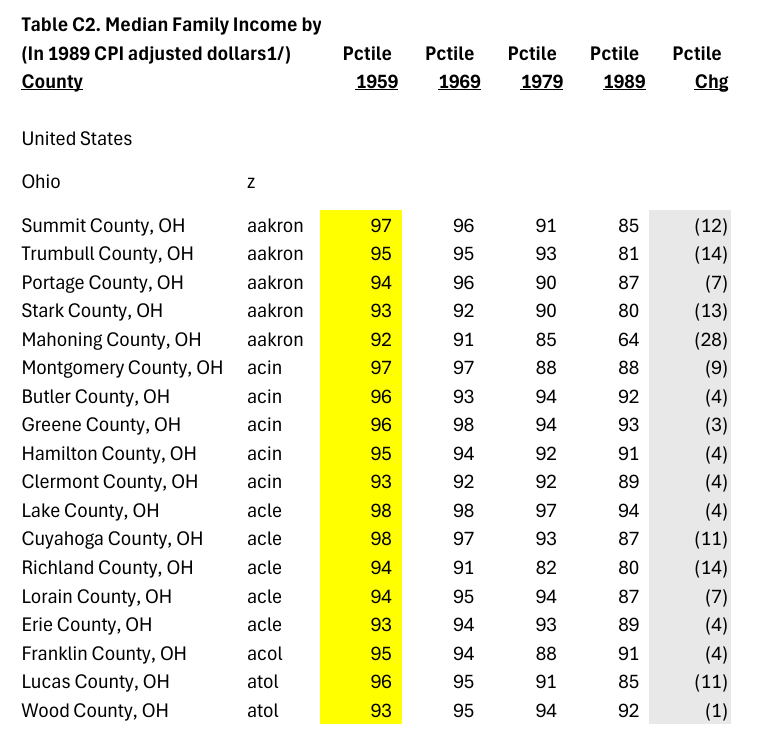
Ohio incomes were 10% above the national average in 1959 but below the average by 1989. The state was loaded with 18 large manufacturing counties that provided world class output and incomes above the 90th percentile for the 3,100 American counties. Cleveland, Akron/Canton/Youngstown, Columbus and Cincinnati/Dayton were global manufacturing leaders in 1959.
Real incomes grew by 59% between 1959 and 1989 for the nation as a whole. Ohio incomes grew by just 42% as the manufacturing economy faced global competition. The 18 major manufacturing counties grew by the same $11,000 as the state, 10% less than the national $13,000. These proud counties fell from the 95th to the 86th percentile of incomes in these 3 decades.
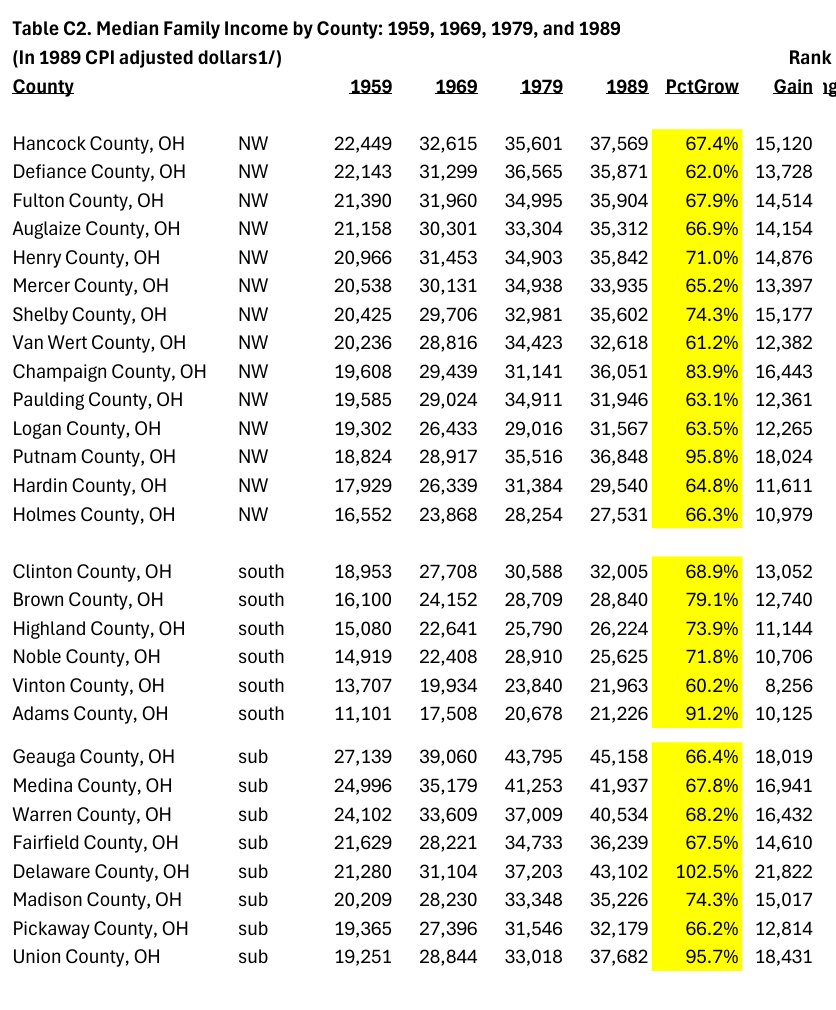
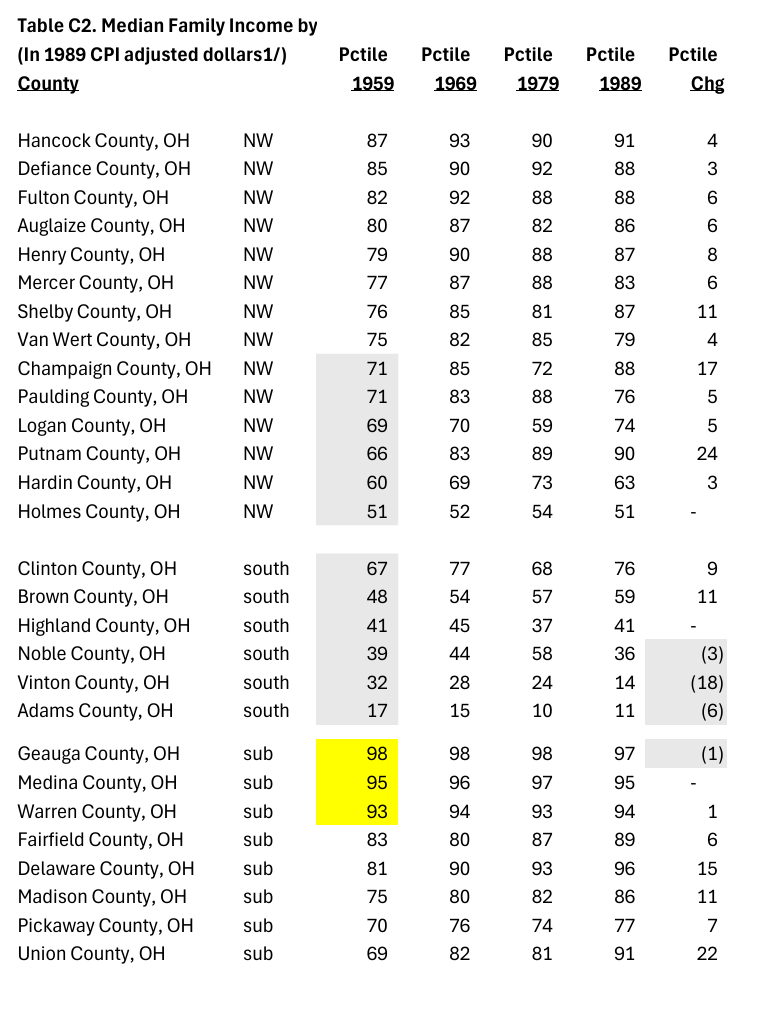
Ohio had some offsetting growth during this period. 14 northwestern counties were able to leverage their globally competitive agricultural assets to boost incomes by 70%, raising their percentile level from 74% to 81%. 6 very low-income southern counties experienced 74% income growth as they maintained their 40th percentile income level. 8 suburban counties booked 76% income growth, moving from 83rd to 91st percentile incomes.
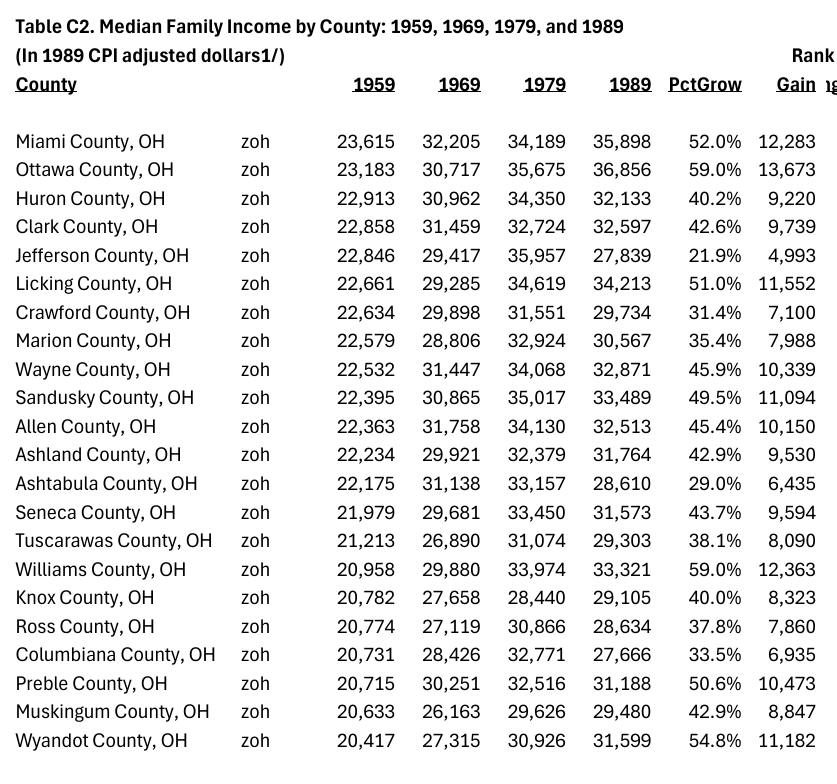
The remaining 42 countries celebrated $9,000 worth of improved income compared with the national average of $13,000. They declined from the 72nd to the 56th income percentile.
Overall, proud Ohio could only claim 23 income percentile gains amongst its 88 counties across these 3 decades (1/4th). 15 in the rich Maumee River valley farmlands and 6 in suburban counties.
Summary
Ohio did not keep up with the global competition from 1959 to 1989. It managed to retain a disproportionate 25 Fortune 500 firms and their benefits to the local economy. Schumpeter’s theory of competitive destruction applies here. Prior success is a possible base for future success (industry and talent clusters) but not a guarantee. Ohio has experienced falling real incomes in both its metro and rural counties in the subsequent decades leading to a populist political environment.
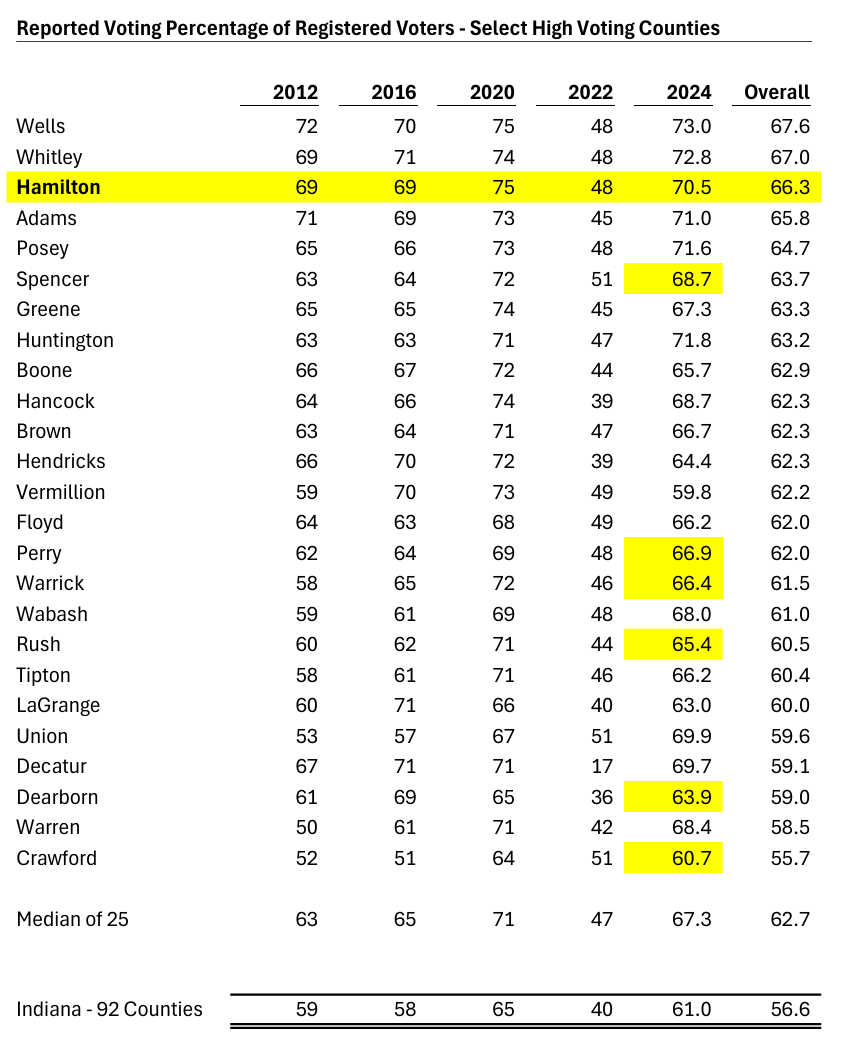
Hamilton County has the 3rd highest average voting rate of Indiana’s 92 counties in the last 12 years. It was tied for 3rd highest in 2012. It was tied for 7th highest in 2016. It was first in 2020. It was tied for 6th highest in 2022. It was 6th highest in 2024.
Hamilton County’s 2024 population is estimated to be 378,000. The 2020 US Census indicates that the non-voting age population is 25%. The resulting voting age population is 283,000. This exactly matches the registered voter population!!! It is very unlikely that every voting eligible person in Hamilton County is registered to vote. Based on national figures, 90% voter registration is the maximum level. If the valid voter registration number was 10% lower than the reported 283,200 level, it would be 254,900 making the voting percentage 78%, far above all other Indiana counties.
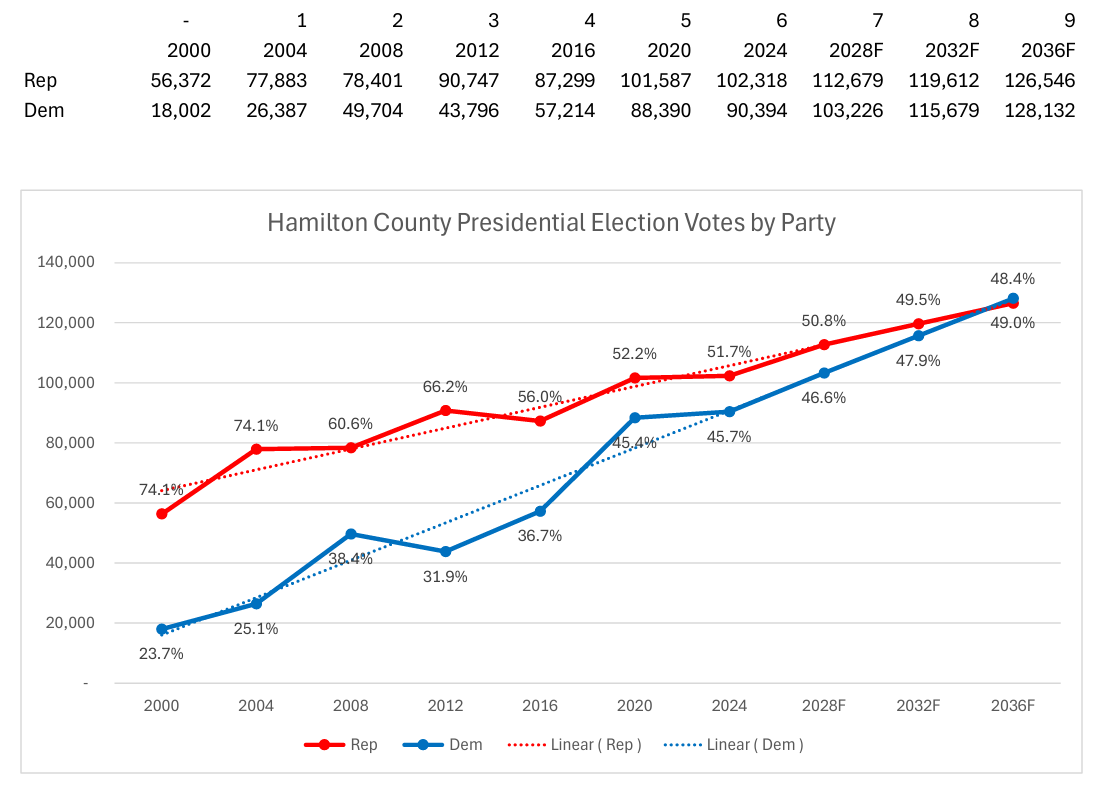
Hamilton County moved from a 30,000 vote Republican advantage in the 2016 presidential election to just 13,000 votes in 2020. Political gurus near and far watched the 2024 race closely to see if the squeeze would continue. It did not. Trump won Hamilton County by 12,000 votes in 2024, just a statistically insignificant shade below 2020.
The long-run trend indicates very competitive political races for the next 3 presidential election cycles.