What does American retail and business strategy have to offer the declining Mainline religions? First, an undifferentiated strategy of serving “everyone” is doomed to failure. Kmart, Sears and JC Penney could not create a differentiated strategy. They died.
Marshall Field had a better approach.
Second, the mavens of corporate strategy offer a simple framework for addressing the “needs” today. Michael Porter is the king of corporate strategy.
Kaplan and Norton delivered insights on how to link strategy to operations.
Treacy and Wiersema consolidated this into just 3 dimensions.
A successful, disciplined organization must choose. It cannot be “all things to all people”. It must choose one of 3 general strategies. It must choose a subset of customers, not everyone.
Businesses are very highly motivated to find the most effective strategies and tactics.
One effective strategy is “operational excellence”. Be so cost effective at delivering your goods and services that you can charge the lowest price and still make a great profit. For a church, this would mean:
Low contributions, donations, tithing and specific opportunity funding.
Low price of entry. No creed. No adult baptism.
Low ongoing commitments. Low church attendance. Low volunteering. Low service. Low small group engagement. Limited liability.
Low constraints. No confession. No evaluation. Low prayer.
This is a critical dimension. Do you want to retain nominal members? There is a possibility that they will become engaged.
Do you wish to offer “cheap grace”? Lower the bar to entry, but higher the bar to membership?
Product innovation is a second winning strategy. Define a religious perspective that is different from those of others.
More liberal versus conservative.
Emphasize thinking, feeling or doing.
Emphasize modern prophets and interpreters or older ones.
Internal belief versus social response and participation.
Earthly life or eternal salvation.
Mysticism.
Community.
Love.
Deliver specific services: children, adults, poor, immigrant, counseling, small groups. adult education.
Full service.
Large or small. Known or invisible.
Third, an organization can emphasize “customer intimacy”. We know what you want and will deliver it in personalized portions.
For a church, this can mean:
Smaller congregations.
More “congregational care” staffing and volunteers.
Greater emphasis on small groups and frequent volunteer participation.
More “intrusive” style of reaching out.
Different services for different life cycle ages.
Treacy and Wiersema really emphasized the second and third strategic dimension. They argued that you should “choose” your primary customer base. Like the failed retailers, a central, “all of the above” strategy is doomed to failure. Choose a customer group and organize your products and services to exactly, precisely meet their needs. Customer groups could be defined and served:
by age, life cycle.
geography.
class, income, profession.
active or passive religious participants.
historical religious background or skeptics, secularists.
long-timers or newcomers.
religious views. close fit or searching. liberal or conservative.
activity or engagement level.
Is this segment growing or shrinking?
Does it greatly need church services or is it apparently self-sufficient?
Do the existing assets and programs of the church meet the group’s needs?
In the corporate world, the trick was to identify and serve the groups that could buy the most and deliver the greatest profit for existing and adjacent products and services. In the religious world, the key is to realistically determine what an existing congregation and denomination can offer to a world that expects its needs to be met.
Human progress is based on 4 things, IMHO. We are able to abstract and generalize. We accumulate our lessons learned. We innovate. We combine our structured, accumulated knowledge with innovations. Creativity and innovation get most of the attention. Yet, the accumulation of our practical and theoretical experience in language, books, records and equations may be equally important. The ability to switch “back and forth” between a fixed structure, history, religion and culture and new innovations may be the most important aspect of all. We have divergent and convergent thinking abilities. We use inductive and deductive reasoning. We intuitively prefer “either/or” but can manage “both/and” logic. The modern history of mankind’s progress points towards the importance of creativity and “both/and” logic.
Abstraction is a relatively recent phenomenon. Democritus imagined atoms, smaller and smaller particles. Heraclitus imagined all as change. The Greeks imagined earth, water, air, and fire beneath everything. Pythagoras and Euclid provided geometric proofs and ideal figures. Aristotle offered a powerful version of formal logic. Plato defined the “forms” and the ideal realm that stands above our experienced reality. Descartes defined mind versus body and the Cartesian coordinate system. Newton rationalized the universe in terms of algebraically defined laws. Kant defined pure logic and the limits to pure logic. The great appeal of abstract rules and an implicit mechanical universe remains to this day. The “Enlightenment” produced new politics, economics, culture, science and religion based upon these powerful insights.
The accumulation of knowledge has occurred in a surprisingly wide variety of forms. Life in DNA. Sexual reproduction. Man’s biological memory. Human consciousness. Spoken language. Music. Myths. Written language. Culture. Laws. Accounting systems and records. Religious practices. Architecture. Books. Libraries. Scribes. Printing. Histories. Universities. Experimental science. Prophets. Peer-reviewed journals. Scientific societies. Mass media. Recordings. Radio. Video. Internet. Wikipedia. Zoom.
The history of innovation is well known. I want to highlight the general trend away from simple, atomistic, “either/or”, static views to more complex, multi-level, “both/and”, dynamic, organic views that provide much better insights into our real experience.
Physics has moved from statics to dynamics. Classical mechanics has been replaced by complex, probabilistic quantum mechanics. The fixed, static, deterministic perspective has been replaced by Einstein’s relativity. In general, deterministic views are replaced by probabilistic views. The solid atoms have been replaced by waves and fields. Light exhibits both wave and particle behaviors. Heisenberg says we cannot measure everything. The background framework of an “ether” is no longer required. The mathematics required to describe physics has moved from algebra to multi-variate calculus to string theory. Only a handful of people truly understand the frontiers of physics in the last 100 years.
Mathematics has advanced wonderfully in the last 500 years. Newton and Leibniz invented the calculus. Man could now measure, describe, imagine and control changes through time. There is an equation underlying all activities that can, in theory, predict the future and explain the past. Dynamics can be described. Three-dimensional Euclidean geometry was superseded by multiple-dimensional geometry, Riemann curved space and fractals. Probability theory was developed to clearly describe apparently random activities, providing a solid basis for evaluating the results of experiments. Set theory evolved to encompass all of mathematics and logic, including various conceptions of infinities. Goedel’s 1931 “incompleteness theorem” undercut Russel’s attempt to define a single, bottoms-up, certain, powerful mathematics.
Biology evolved from collecting, illustrating and categorizing specimens to Lamarck’s deterministic evolution to Darwin’s evolutionary survival of the fittest perspective. Society increasingly adopted a biological, process, systems theory perspective in place of a physics, mechanical, materialistic perspective. Nature versus nurture became nature and nurture. The details of genetics is better understood as a very complex process involving multiple genes and other structures.
In philosophy, Hegel defined his dynamic thesis, antithesis, synthesis model. History now ruled. Eternal universals were much less likely. Multiple perspectives were elevated. Certainty was less likely. Marx tried to use Hegel’s general framework combined with an economic, materialist determinism but he failed.
In practical technology, we have seen the rapid accumulation of knowledge. We have also witnessed the great importance of “both/and” solutions. For example, ships and automobiles required the invention of a clutch that provided both solid propulsion and slippage. Powered vehicles first required rails but were turned loose as motor carriages. Wheels evolved from steel to rubber to accommodate shocks, turns and rough roads. Vehicles added suspension systems.
In economics, we advanced from mercantilism to comparative advantage and free trade. We left behind land, labor or capital as the only sources of value with the insights of the marginal productivity economists. We moved from static to dynamic perspectives and focused on the determinants of growth in advanced and developing nations. Keynes demonstrated that national economies were more than the sum of individual markets and that self-regulating equilibriums were not inherent in a market system.
Computer systems have evolved from fully defined linear and logical systems to massively parallel systems capable of artificial intelligence and spoken interaction with humans.
Businesses have replaced assembly lines and Taylor’s experiments with a deeper understanding of individual tasks in probability terms and the sequence of events in any process. Firms have embraced Japanese style process management and improvement, delivering constantly improving results. Supply chains span the globe. Project management is now “agile”. Strategic planning is no longer deterministic, but focused on mission, vision, values, strengths, weaknesses, opportunities, threats and culture. Investments are considered within the framework of portfolios of risks and returns. Entrepreneurs and leaders are valued above technical and professional experts.
For many, religion has evolved from a legal, literal, deterministic perspective to one that emphasizes the principles, insights, opportunities, feelings, experiences and possibilities of a given creed, despite the loss of absolute certainty in a “Secular Age”.
As humans we prefer a simpler, more deterministic view of the world. Yet the world shows us that it is more complex and that we will never fully understand it.
It’s 1991, heavyweight Oxford philosopher Charles Taylor is gaining popular recognition for his pathbreaking 1989 work “Sources of the Self”, a bold attempt to describe the current “self” and where it came from. He was invited to deliver the Massey Lecture in his home nation Canada, which he titled “The Malaise of Modernity”. The Berlin Wall fell at the end of 1989, ending the cold war. Ronald Reagan (1981-89) and Margaret Thatcher had abruptly ended the expansion of the state and the possibility of a counterculture; or had they?
Taylor argues that the “logic” of technology, science, economics and bureaucracy, which he terms “instrumental reason”, continues to grow in influence; larger national state or not. He argues that a historically radical “individualism” has grown throughout the post-war years, generally unexamined. Finally, he notes that these two trends combine to threaten Western representative democracy.
At the time, popular culture, reflected in TV shows like Dallas and “Lifestyles of the Rich and Famous”, celebrated the victory of the “neo-liberal” center-right and looked forward to a glorious future. In 1992, Francis Fukuyama proclaimed “the end of history”, with Western style liberal democracy and mixed market capitalism extinguishing the threats from fascism and communism. Taylor was quite pessimistic about the cultural challenges of the present, but optimistic about the long-term possibilities.
Taylor is often grouped within the diverse “communitarian” collection of philosophers and social scientists who argue that “classical liberalism” is inherently too oriented towards the individual and neglects the community dimension of life and philosophy.
Life is good, but social critics still complain. What ails the public? What “losses” or threats are being felt by the sensitive? First, the counterculture may have been buried in 1969 or 1972 but one dimension continued to revolutionize the Western world. Individuals were not giving up on “free choice” in any dimension. Speech, career, lifestyle, college, city, religion, politics, media, language, dress, etiquette, travel, leisure, gender, marriage, and child rearing choices. Twenty years of freedom had resulted in a new cultural norm of tolerance for individual choices. Nietzsche may have declared that “God is dead” in 1882, but it took a century to percolate through to large numbers of Western citizens. The post-war period witnessed a conservative cultural and religious rebound, but it was not sustained.
Taylor contrasts this radically new moral freedom with the prior 20 centuries. There are certainly advantages to freedom, especially removing the restraints of political, religious, social and economic institutions from individuals. Few people want to turn back the clock and re-install the static, hierarchical, controlling, prejudiced society. Yet, the individualistic transformation through the Renaissance, Enlightenment, Protestant Revolution, Scientific Revolution, American Revolution, French Revolution, and Russian Revolution had not been a uniform march of progress. Individuals had lost their well-defined place in an orderly, meaningful universe.
The new individualism, deeply rooted in Jean-Jacques Rousseau, attempted to rebuild this secure place by returning to the allegedly positive state of man before society had corrupted the individual. The individual was invited to look within to discover their innate goodness and role in society. By 1991 the post-war “therapeutic culture” was very well advanced. Individuals had “discovered themselves” and they liked this new freedom. They looked to counselors and educators to help with their personal growth. Many critics responded to this new approach quite negatively, calling it mere self-centeredness.
The growth of size, scale, trade, complexity, science, process, dynamics, technology, computers, finance, capitalism, business, machinery, industrialization, urbanization, law, and transportation in the 20th century greatly elevated the role of “instrumental reason”. The technical control of nature. New production methods. Cost/benefit ratios. Scientific finance. Optimization. Operations research. New technologies. Processes. Systems. Re-engineering. Social sciences. Experimental psychology. Communications. Every dimension of life can be rationalized and improved.
The scientific, urban and industrial revolutions were met by the Romantic reaction in the 19th century. Nationalism, art, music, nature, anthropology, modern poetry and literature, history, culture, language, and customs. Hegel, Marx, Freud and Jung. Methodist, Baptist and Pentecostal religious options. In the 18th century Kant asserted that man must be an end, not merely a means to an end. Humanity reacted strongly against the threats to its inherent human dignity.
Like many philosophers and social critics since 1850, Taylor worries that the market, bureaucracy and technology will become dominant over human and moral dimensions. The methodologies are highly effective and widely applied. They are continually improved. The market and bureaucracy have direct political power and influence. Mostly, Taylor worries that the ubiquitous use of these tools elevates them to become the ENDs of society. Cost/benefit. Optimized processes. GDP. GDP growth. Scientific progress. New patents. Life expectancies. Controlled risks. Optimum portfolios. He also worries that only quantitative factors that fit into the formulas will matter. Morality has to work very hard to even be considered in this world.
The widespread use of instrumental reason in markets and bureaucracies leads to a limited range of choices for individuals, employees, bureaucrats, politicians and voters. Most people can only think in terms of rational control of inputs to produce outputs. The consideration of the most valuable outputs is undermined. The scale of the political process undermines the incentives for participation. The “individualist” mindset removes citizens from political participation. Instrumental reason demonstrates effective “cause and effect”, but political participation does not produce such direct returns. Individuals lose faith in the political process.
II. The Inarticulate Debate
In 1991, without any public debate, we now live in a world that prioritizes each individual’s search for his own unique inner purpose, meaning, ends, talents, insights, creativity, feelings, intuition, identity, possibilities, strengths, and opportunities.
Each person should be true to themselves. Per Maslow they should aim for self-actualization. This is a subjective world. Each person is empowered to pursue their own goals. Others must not interfere with this choice. Tolerance is elevated to a very important social value.
Social scientists explain the increased individualism as part of economic, scientific, urban and industrial changes. They avoid moral discussions.
Taylor wants to elevate moral considerations. What does a radical individualism mean for morality? Is moral subjectivism valid, in any way? Can the individual be moral apart from his relations with individuals? Can the individual be moral apart from his relations with society? Truly radical individualism cannot be moral in Taylor’s view. The individual cannot make significant others merely tools, nor can he ignore the moral preferences of others.
Is moral relativism consistent with other values? Taylor says “no”. Choose any basis for a moral world view. Relativism cannot be supported.
III. Sources of Authenticity
Rousseau is most important. The individual is inherently good. He is altered by society. He has an opportunity to become aware of the influences of society and overcome them. This is the extreme, utopian, positive individualistic view. The individual makes choices without regard to any external influence. The individual guards against the influence of external factors.
Descartes assumed away everything except disengaged reason. No body. No society. No feelings. No actions. No relationships. No history. No art. No future. Hobbes and Locke created a world in which the individual rationally participates in the political.
Taylor notes that the “inward turn” is not inherently solipsistic. St. Augustine described his internal turn which resulted in a connection with God and the eternal.
Herder emphasized the original or unique dimension of each individual.
IV. Inescapable Horizons
Taylor applies the usual logic against pure subjectivity, relativism and tolerance. You can have no true moral view unless you prioritize one view versus another or one set of values versus another. The pursuit of individual meaning and authenticity does not require that all final, considered moral views are equal. The individual’s moral views are inescapably influenced or determined by the views of others. We cannot develop moral views in isolation, we must have dialogues with others.
There is a logical fallacy widely used. Choice is good. Diversity is good. Difference is good. Each option is good. These are merely assertions. They do not follow from any logical or values-based structure.
The individual’s process of discovery, creation and choosing is raised up to become a self-evident axiom of highest value. Taylor argues it is not self-evident and is not clearly supported by some other set of values. He says that it “could be” a highly valued part of life, but that position must be supported by some values that are defined outside the self, by the community or significant others or religion or philosophy, all outside of the narrow self.
V. The Need for Recognition
In this world of “finding yourself”, the individual also looks to others for validation and confirmation that their discovery, results, values, roles and identity are “good”. The individual cannot confirm his own journey or results but must turn to others. Self-discovery may be a highly valued good in our society, but it must be based upon something other than the self alone. The individual claims that universal human dignity supports his call for respect and affirmation. The postmodernists apply this logic to oppressed minority groups as well, claiming that they must be recognized.
Taylor dismisses the completely self-centered approach to self-discovery that rejects any need for external links to others, community, nature or God as logically incoherent. Just as Kant said that humans must be ends and not merely means, Taylor argues that external entities must also be ends and not merely instrumental means for the self.
Taylor identifies two ethical standards that are often asserted by promoters of personal growth. Each person has a right to pursue their own journey, so there is a need to limit that journey so as to not infringe upon the journeys of others. Intimate relationships are required to pursue an in-depth exploration of an individual’s inner self, capacity, resources, feelings and potential. Hence, respect for significant others is required.
Taylor returns to the “choice creates value” and “difference creates value” assertions. Some proponents of individualism argue that the fact that different people choose different “ways of being” directly makes them valuable and worthy of respect, reinforcing a universal tolerance. Taylor reminds the reader that there is no logical support for this view. Similar, some argue that men and women are equal or sexual orientations are equal because they are freely chosen. Taylor rejects this and requires that the argument return to a logical or moral basis for support.
He extensively quotes Gail Sheehy’s “Passages” to illustrate the extreme individualistic view, “You can’t take everything with you when you leave on the midlife journey. You are moving away. Away from institutional claims and other people’s agenda. Away from external valuations and accreditations. You are moving out of the roles and into the self … For each of us there is the opportunity to emerge reborn, authentically unique, with an enlarged capacity to love ourselves and embrace others … The delights of self-discovery are always available.”
VI. The Slide to Subjectivism
Taylor admits that many pursue the narcissistic version of extreme individualism directly. They don’t need to rationalize or justify it. Self-fulfilment is a self-evident moral and ethical ideal for them. Once this version of “the good life” is seen, some will adopt it as is. This worldview makes life straightforward, no need to balance the self and others or the self and community or the self and pesky demands of external moral standards.
The more extreme versions are also promoted by social situations. The individualistic culture has many threads. The market and consumerism are individual oriented. Large organizations prioritize instrumental reasoning to reach individual goals. A market economy emphasizes transactions and contracts between individuals. Many religions have individualistic perspectives today. Science, technology and instrumental reasoning focus on spare logic and atomistic views rather than organic, natural, process, dynamic and artistic ones. Individualists treat community, friendship and religious connections as instruments of their world rather than more complex, transforming, multiway relationships. Mobility undercuts personal ties. Urban living promotes impersonal interactions. One can live a very individualistic life today.
Postmodernism, the descendant of Nietzsche, seeks to undermine or deconstruct all objective values or categories as mere tools of entrenched power groups. All values are merely created as tools. Why not create “freedom” as the main value and enjoy your role as the superman; creator of values, language and life?
Taylor emphasizes the mixture of the Romantics and Nietzsche in the emergence of the self-creating artist as hero in the last century. This runs in parallel with the authenticity of personal self-discovery. Each person is unique. They pursue their special gifts through creativity and artistic production, experimentation, action and discovery. They do not imitate nature or copy existing models but create new languages, viewpoints, art, relationships, pottery, feelings, experiences, music, drama, travel, sport, etc. Expressive individualism is well described. Taylor supports this creative process, its outputs and the expansion of human capabilities.
He doesn’t support postmodernism when it only emphasizes the creative process but ignores any ties to moral values or philosophy based outside of the self alone. He disputes the need for the creative individual to automatically reject and fight against all existing forms of morality held by others or communities. He insists that the creative individual must be in dialogue with significant others and society in order to provide meaning and goals for the journey and to validate the journey. Taylor rejects the totally isolated individual model.
Taylor recognizes that the aesthetic perspective offers its own truth, beauty and satisfaction separate from the moral perspective. He sees this too as another opportunity for modern man to live an enriched life. He accepts that some individuals may prioritize the aesthetic perspective above the moral perspective but does not recommend it. He notes that authenticity is often proclaimed as its own goal by fiat or assumption. It is alleged to be a self-evident truth, goal and value not requiring a moral foundation, just like beauty. Authenticity and art become intertwined as forms of self-expression.
Taylor ends this chapter noting that an individual who truly buys into self-expression and self-creation can find a form of meaning and satisfaction in the journey and the sense of freedom and power which it provides. His complaint is that it logically cannot be isolated from other people and morality. When this is done there is no meaning remaining. There is only the self, an atom among an infinite and cold universe. The individual makes choice after choice after choice, but the choices have no meaning. The world becomes flat.
VII. The Struggle Continues
Taylor notes that critics such as Bloom, Bell and Lasch are correct to attack the extreme forms of egotistical self-fulfillment. He argues that attacking the overall expansion of individual self-exploration and growth is counterproductive. There can be no logically coherent merely individualistic philosophy. It must link to other individuals and some moral principles. The individualist genie cannot be put back in the bottle. Society as a whole, especially its thought leaders, must find a way to ensure that this connection of the individual to the community and logic occurs.
Taylor asserts that everyone, even the critics, must acknowledge that we live in a world where self-development, human potential and fulfilment are accepted goals and practices with value to individuals and society. The exact forms are not perfectly developed, but very few people are going to reject this approach to life.
He more positively notes that this path of development does provide opportunities for self-development and for social contributions. Individuals are encouraged to explore, create and live a fuller life. In an ironic way, the truly authentic journey requires greatly increased self-responsibility and self-control. The opportunities are so great. The responsibility to make wise choices, to interact with others, to consider moral frameworks, to link the individual and community, to combine freedom with commitment, to balance the claims on life is higher in a self-aware modern life.
The upside potential is great. The downside risk of a simple egoism is great. The tension between the higher and lower versions of this new path of life is great. Taylor argues that we are stuck with this situation, should not by gloomy, but should work to define the tensions, guide and encourage individuals on the high road.
VIII. Subtler Languages
Taylor returns to the journey of personal self-discovery and creation in parallel with the journey of the modern artist. The modern artist by 1800 had lost the common background of known and assumed literature, religion, culture and society. The artist was tasked with developing their own language, background, symbols, characters, plots and conclusions. The artist could not rely upon the reader, listener or observer to share a common understanding of the artistic background. The artist was forced to rely upon his own vision and experience, and then communicate that in precise ways so that the content and feeling would resonate with the consumer. This changed art into a very individual to individual format. The subject matter also often focused on the individual, BUT not necessarily so. Much great art continues to be about nature, the universe, community, the relation of the individual to others or the community.
The same contrast applies to the authentic journey of self-discovery. The manner of the journey is clearly subjective revolving around the individual. BUT the individual can find his relation to the community, nature, eternity, God, a larger order, neighbors, science, history, family, etc. The individual can find that the most important lessons are only secondarily about the self.
IX. An Iron Cage?
Taylor argues that instrumental reason/technology can be viewed as above. There is a long history of technology, science, economics and bureaucratic forms growing more complex, effective and controlling. They are supported because they work. The risk is that they replace the end goals of individuals, firms and society. Application of the decision-making forms becomes the end goal because they are, well, so efficient and effective. What other goal could there be?
Economic rationality, markets and bureaucracies, science and technology have become second nature, a background assumption in modern society. Individuals use their methods each day. This familiarity shapes our thinking in all realms. Yet, there has been a gut-level suspicion and opposition throughout the last 500 years. Analog, superstitious, grounded, habitual, traditional, organized, historical, religious creatures have resisted the creation of abstract forces that replace their familiar ways. The Luddites, Marxists, Utopian Socialists, Farmer-Labor party, romantics, science fiction writers and greens have all opposed the unchecked advance of technology.
Taylor outlines the extensive influence of instrumental reasoning as a background assumption in our society. He encourages us to look at the underlying moral frameworks that have supported technological progress and to consider this reasoning as merely a tool. He notes that disembodied reasoning in mathematics and computers is given a privileged place in our thinking but there is no good case for this view which was really just assumed one day by Rene Descartes.
“This is grounded in a moral ideal, that of a self-responsible, self-controlling reasoning. There is an idea of rationality here, which is at the same time an idea of freedom, of autonomous, self-generating thought”. Technology can be placed within the context of other moral principles such as benevolence and caring. The application of instrumental reasoning impacts real flesh and blood people, so this moral context matters.
X. Against Fragmentation
Radical individualism and dominating technology both threaten well-functioning democracies. The first simply ignores the need for community and political participation. The second makes impersonal forces appear so strong as to make political participation irrational. There is a vicious/virtuous cycle dimension. Lower participation results in worse results … More effective participation results in better results …
Finding a more effective middle ground of improved self-responsibility can help the individual, the community and politics. Finding a more effective middle ground regarding the unwarranted expansion of technology can help to re-establish moral and political principles as drivers of political debate and results. Taylor calls for a balance among the 5 competing areas of markets, government, social welfare, individual rights and democratic effectiveness. He argues that this is more effectively done at smaller scales, so decentralization is a key tool. He notes that success at any level can help to improve politics at other levels. Taylor is concerned that social trends can overwhelm institutions. Yet, he believes that intellectuals can help to clarify the role of ideas in shaping politics and culture. Better ideas can compete against simplistic models and slogans that don’t work for society. There is an unavoidable tension, a give and take, in society and politics. We have the ability to shape these debates for the common good.
This is a valuable book for assessing the current state of the American and Western European communities. Rabbi Sacks provides historical context of the ideas that have led to an “I” focused culture, outlines the symptoms of a weakened “We” culture, and provides some insights as to what can be done. He combines a politically and economically moderate view with a conservative social perspective. I’ve rearranged the chapters to make the summary flow better.
Introduction
The 1990 “end of history” celebrating the victory of mixed economy capitalism and liberal democracy was an illusion. Societies are based on a 3-legged stool of economic, political, and moral systems. The West’s moral system has been threatened by individualism since the Reformation and Enlightenment, but the threats accelerated and started to really bite with changes in the 1960’s. Political systems, social results, income inequality and fundamental rights of free speech, liberty and freedom are threatened today by this deterioration.
Morality: “concern for the welfare of others, an active commitment to justice and compassion, a willingness to ask not just what is good for me but what is good for ‘all of us together’.” Inner voice, conscience, superego, custom and tradition, natural law, religion. “To be a member of a society was to be socialized, to internalize the norms of those around you, to act for the good of others, not just yourself.” Morality makes politics, economics and communities work by emphasizing trust and persuasion instead of transactions and political power. As social norms are internalized, transaction costs are minimized.
“A FREE SOCIETY is a moral achievement.” Liberal democratic systems depend upon moral citizens. “If we care for the future of democracy, we must recover that sense of shared morality that binds us to one another in a bond of mutual compassion and care. There is no liberty without morality, no freedom without responsibility, no viable “I” without the sustaining ‘We’.”
Sacks argues that the movement from “We” to “I” was driven by five factors. The intellectual appeal of existentialism and emotivism that reject an objective moral order and rely instead upon subjective individual choices. Social exhaustion after the Great Depression and 2 world wars leading to the postwar counterculture, sexual revolution and therapeutic society focused on self-actualizing individuals alone. The “liberal” political decision to exclude morality, religion and social norms from legitimate political debate and laws, emphasizing only rights. The Reagan/Thatcher political/economic victory which limits state influence on the economy. Technological changes which undercut “face to face” interactions.
The social results reflect Durkheim’s concept of “anomie”: rootlessness, anxiety, uncertainty, and fear. Loss of social capital, breakdown of family and marriage, loss of trust in institutions, increased crime and drug usage and lower trust and civility. In a Western world with much higher real economic standards, individual happiness and confidence have not grown.
The loss of morality and trust has undercut political processes and people. Inequality, conflicting values, privileged elites, and poor government results have led to populist demands from left and right for strong leaders to “solve the problem”. The weakening of society level groups and growth of minority groups (and reactive native majority groups) and immigration have increased the focus on identity politics, polarizing and coarsening political debates. The loss of objective moral, scientific and communications standards has encouraged a post-truth political environment.
Income and wealth inequality continue to increase in a global economic system. With the loss of moral pressures and Milton Friedman’s view that business should only optimize profits, not address social, environmental, and other stakeholder goals, many firms have truly pursued maximum wealth without considering any other factors, relying on the government and society to underwrite their inevitable losses.
Many universities and other leading institutions have embraced postmodernism’s assertions that everything is about power and that the only moral choice is to support the exploited minority groups and oppose the powerful elites. Freedom of speech, religion, assembly, and press are merely tools of the powerful and can/should be overthrown in this view. Individuals fear expressing themselves in this intolerant atmosphere.
Sacks emphasizes the intellectual confusion of “outsourcing” which can deliver benefits for the economy and perhaps the political sector, but which does not apply to the moral, community, society dimension. The market economy offers many choices and implicitly encourages individuals to believe that they “ought” to be able to choose whatever they wish, while moral choices involve trade-offs and sometimes absolute goods and bads. The political sector is tasked with the “outsourced” consequences of bad individual, economic and political choices. It must regulate, insure, and provide services. Morality cannot be outsourced to the state, elites, religious leaders, social media influencers or other groups of “pet sitters”, “athletic trainers” or “management coaches”. It requires the “hands-on” involvement of all citizens.
He argues that these moral issues, risks, costs, and opportunities are becoming clearer to leaders and citizens. Younger citizens and language usage show an increased interest in morality. Human and natural systems can repair and improve themselves.
‘5. From “We” to “I”
Sacks outlines the “intellectual” history that has led to an overemphasis on “I” and the loss of “We”. Early steps in Greek philosophy and the Bible included increased roles for individuals. The Italian Renaissance saw greater personal self-awareness. Luther focused on the individual’s direct encounter with God, unmediated by the Church. The “absolute individual” was now considered completely outside of his social roles. The radical skeptic Rene Descartes re-established independent philosophy based on the individual and his doubts alone. “I think; therefore, I am” contrasted with God’s answer to Moses that “I am that I am”. Hobbes and other social contract theorists based a legitimate government on freely choosing citizens. Kant elevated individual reason as the basis for philosophy and serves as a transitional figure. He focused on universality, humans as ends, the golden rule, intentions, and the mind/soul but he too began with the individual and his choices rather than society, God, community, revelation, or history.
Unlike many modern commentators, Sacks skips over Jean-Jacques Rousseau and his “natural man is good” approach to government, education, and morality. He next highlights Kierkegaard’s contrast between the “aesthetic” life of the senses and the ethical life of righteousness and duty. There is no obvious basis for choosing either option, so the individual must make a “leap of faith” to embrace one or the other. Nietzsche continues the existentialist investigation of options and proclaims that “God is Dead”, biblical religion is “slave morality”, the best men need to recover their superpowers and choose their own morality, decisions, and actions, irrespective of the consequences for society. Then and now, very few really embrace Nietzsche’s extreme position, but it opened the door to considering a life based on individual choice, a romantic/nationalist perspective and a fully subjective morality, language, and power as described by some existentialists and many postmodernists. The self-aware person knows that his existence and experience are more real than any socially imposed rules or universal, ideal concepts and can either accept the external constraints in “bad faith” or face the challenges of “existence” bravely. Not a superman but a vaguely heroic honest man. The American option termed “emotivism” shares the subjective, feelings-based nature of individual choices. Authenticity or expressive individualism become the supreme virtues. The self-aware individual is everything.
Sacks shares that everyone’s favorite observer of early America, Alexis de Tocqueville, worried in 1830 that the fledgling country could be harmed by “individualism”, “a feeling which disposes each citizen to isolate himself from the mass of his fellows so that, having created a small company for its use, he willingly leaves society at large to itself”. He ends with sociologist Emile Durkheim’s 1890 emphasis on anomie, where a loss of a shared code can destroy society through suicide, deviancy, crime, and disengagement. “Anomie, it seems to me, aptly describes the state we inhabit today: a world of relativism, nonjudgmentalism, subjectivity, autonomy, individual rights and self-esteem … An individualistic universe may be free, but it is fraught with loneliness, isolation, vulnerability, and nihilism, a prevailing sense of the ultimate meaninglessness of life … Human society has evolved to a stage where the rights of the individual, particularly those with wealth, power, and status, supersede all other rights and responsibilities.”
‘9. Identity Politics
The author outlines a history of swings between individualism and “groupishness” as context for explaining and rejecting modern identity politics. We are social animals, emotionally invested in our individual and group identities, illustrated by our passion for sports teams. The individual chooses which group identities to wear or is given them in the postmodernist view. This attachment can form the basis for a moral community. Group loyalty is a powerful force, binding individuals to the group and committing them against conflicting “others”. Historically, religion, ethnicity, nation, class, income, and education/trade have all competed for group attention.
Although they were named only in the second half of the 20th century, identity and identity politics have long histories. “I am a Greek”, “I am a Roman”, “I am a Christian”, “I am a British citizen” make the point. Religion was the leading identity for most of the last 2,000 years in the West, with social, political, and economic roles bound into a single system. The protracted European religious wars made a simple return to the “ancient regime” impossible. The Enlightenment thinkers elevated rationalism and individualism to create a universalist viewpoint that tried to downplay specific group identities. Newton provided universal science. The social contract theorists offered universal political systems and principles. Descartes, Montaigne, and Kant offered universal philosophies.
These ideas changed the world and then generated a backlash. Too universal, too timeless, too abstract, too mechanical, too technical, too legal, too commercial, too heartless, too static, too disruptive, too progressive, too … Moving from an integrated social, religious, political, and economic system to something altogether different created pushback. Haidt’s WEIRD versus traditional societies is at the heart of these difficulties. Certainty is slowly eroded with more new ideas, religious denominations, political models, industries, trade, professions, science, technology, and transportation. This is discomforting, even for the “winners”. Sacks describes this rational Age as noble, utopian, and unsustainable.
We then get the Counter-Enlightenment, Romanticism, irrational forces, and new shades of religion. Nationalism becomes a newly attractive group identity, combining language, culture, geography, tradition, practically lived experience and history. Race becomes more important due to global experiences, colonialism, the end of slavery, geology, biology, social Darwinism, anthropology, and psychology. The scientific study of man leads to eugenics and Naziism. Economic class is raised up by Marx in his “scientific” and historic studies of man leading to communist regimes. “All three movements offered a strong sense of belonging in place of the abstract, identity-less, human-being-as-such that was the human person as understood by eighteenth-century rationalism … In place of the universal came a new sense of the particular … thinkers started to focus on what makes us different.” This pursuit of group identity had terrible consequences in the 20th century.
In the postwar era, we have swung back towards the individual. As described above, there was a long-term preparation for making the individual the sole focus of life, leaving behind the community, moral and cultural perspective. Science supplanted religion leading to a Secular Age, where the default worldview is mechanical and “this worldly”. The accumulated influence of the existentialist, pragmatist, analytical, skeptical, and postmodern schools of philosophy shaped the intellectual class to neglect religion, morality, and community. The Romantic Age, underpinned by Rousseau’s good person and supporting the creative artist as a model reinforced the individualistic tendencies even as it tried to define an organic alternative. The failures of nation, race and class worked against any “new” community approach. The success of religions, national patriotism, economic development, liberal democracy and professional and not for profit communities did not have a strong “public relations” department compared with the promises of their modern competitors.
Sacks criticizes the re-grounding of “liberal” democracies on the “thin” morality of Locke, “built on the premise of the individual as the bearer of rights, and of autonomy as the supreme value of the social order … key theoreticians were … John Rawls and Robert Nozick … Essentially, you could do anything you liked so long as it was legal, fair, and involved no harm to others.” He notes that communitarians like MacIntyre, Sandel, Walzer, Taylor, and Bellah provided alternatives.
Within this extreme version of “classic liberal democracy”, political groups and society were asked to be “tolerant” and not impose their views. Multiculturalism arose, especially in Europe, emphasizing differences and reducing the commitment to integrate new groups into national and local societies. Together with the “contemporary left” and postmodernism’s emphasis on oppressed minorities, modern identity politics was born. This is a new group identity, oriented towards the group rather than the individual. It encourages very strong group loyalty. Like Marxism, it believes in the eventual victory of the collection of oppressed groups.
Sacks like none of this. “There is a real danger here of the splitting of society into self-segregating, noncommunicating ghettos. One of its axioms is that ‘only a member of my group can understand my pain’ …Over three hundred years the West has, with some success, developed an ethic of tolerance and respect for difference, and in a liberal society the prejudice and discrimination that undoubtedly still exist are to be fought wherever they occur … This reaction … will end in tragedy. It turns difference into exclusion and suspicion. It builds walls, not bridges … It encourages a mindset of victimhood and oppression. It abandons the idea of the common ground and the common good.”
Community leader Sacks shares his experience with ecumenical groups to promote national British community while maintaining their distinctive approaches. He encourages us to be laser focused on the potentially cooperative, win-win society in contrast with the state where competitive power politics is unavoidable. He contrasts (good) patriotism with (bad) nationalism. He quotes Orwell’s definition of patriotism, “devotion to a particular place and a particular way of life which one believes to be the best in the world but has no wish to force on other people.” Without a shared moral community, the political and economic dimensions will fail.
’11. Post-truth
Nietzsche “set the table” back in 1870 on this issue. “When people gave up their faith in religion, it would not be religion alone that they would lose. They would lose morality, and with it a concern for truth, and then even science would lose its authority.” Nietzsche – “Nothing is needed more than truth, and in relation to it, everything else has only second-rate value”. People have always considered truth versus self-interest. If there is no objective truth, religious dogma, or social conventions, why bother with truth?
“The hermeneutics of suspicion” plays a role here. Language is used as a tool by the powerful to deceive. Always look for the real meaning. Applied radical skepticism. Marx blamed the capitalists. Nietzsche saw a conspiracy among the weak. Freud blamed subconscious drives. The postmodernists formalized this to blame the power controlling elites. Political, economic, and social systems conspire through their institutions, structures, language, and norms to preserve the standing of the elites. Objective truth, religion, morality, science, and religion are just clever tools of oppression. Global cultural awareness, a diversity of religions, scientific changes, the philosophy of science, the philosophy of religion, political tolerance, social tolerance, literary and artistic interpretations, revisionist history, geological and biological history and Einstein’s relativity all contribute to the general cultural skepticism about objective truth.
Modern social media and the internet have now provided the facts and interpretations “at a glance” to reinforce this idea of subjective truth. “Without truth, no trust; without trust, no society.”
’17. Human Dignity
The ancient Greeks defined and honored human dignity in various ways: heroes, truth and wisdom loving philosophers or simply as qualitatively superior to the animals. The Hebrew Bible describes a God who creates man in his own image for the purpose of living a moral life. Man is given “free choice” and this freedom defines his life, politics, family, community and theology. “We have dignity because we can choose. Dignity is inseparable from morality and our role as choosing, responsible, moral agents.” Kant agrees that mankind, in as much as it can make moral choices, has earned its dignity. Human dignity played a large role in Western societies for two millenia.
Yet, once again, man’s intellectual progress poses a threat to our moral civilization. This is mainly the story of “science versus religion” in the popular imagination. Copernicus removed man and earth from the center of the universe. Newton’s physical laws removed the “need” for God’s continuous support, even though Newton thought it was still required. Modern geology expanded time to make 2,000 years just a “flash” of time. Spinoza argued that as physical beings we are subject to the laws of the physical world and not free, after all. Marx claimed we are determined by economic laws of production at the Hegelian level of history. Freud claimed we are driven by subconscious drives and without true choice. Darwin made man an animal, like any other and established a mindless, probabilistic motor for history. Neo-Darwinians outlined how altruism too is just part of genetic natural selection. At a popular level, each of the pillars supporting human dignity, man as something special, was undermined. Human dignity is merely an illusion.
The author takes a few shots at the “science alone” worldview. Man in small space and time does not eliminate dignity, free will, choice, freedom, or religion. No evidence or logic forces us to embrace the skeptical worldviews, which are also based upon uncertain foundations. Science is incapable of addressing humanity’s imagination, conceptualization, deep communication, cooperation, feelings, love, awe, appreciation and creation of beauty. Science cannot evaluate the critical role of cultural limits in the form of “thou shalt not”, sacredness, justice, and judges. Science assumes away human freedom with its assumption that causality shapes everything.
In the 500 years since the Italian Renaissance, man has done tremendous things intellectually, scientifically, technically, politically, economically, and socially. Human rights and human dignity are embedded in our modern political constitutions. The “special individual” view of the world has driven a dozen modern philosophical outlooks that shape our world. However, the radical “science only” view of the world has a strong hold on the modern imagination leading to Charles Taylor’s Secular Age where we all naturally start with the assumption or worldview that excludes the transcendent dimension in all of life.
Sacks rejects the modern neuroscientists who claim that “free will” is an illusion and criticizes the “total freedom” view of the expressive individualism crowd. He argues that the “just right” middle view of man as a moral animal best describes our situation. We have self-consciousness. We can see the world as an impartial observer outside of our own personal perspective. We are aware of our own drives and desires but can override them to some extent. We have a sense of responsibility for our thoughts and deeds. We have immortal longings. We reach for the transcendent. We have religious experiences. We are essentially moral agents.
’19. Why Morality?
“A society of individualists is unsustainable. We are built for cooperation, not just competition. In the end, with the market and state but no substantive society to link us to our fellow citizens in the bonds of collective responsibility, trust and truth erode, economics becomes inequitable, and politics becomes unbearable.”
In 1831 Alexis de Tocqueville visited America to check on its progress as a democratic society. He learned that the separation of church and state had unexpectedly created robust churches despite its lack of government support and that these churches thrived in their social role of supporting families, local communities, providing education and services. Despite its support by the citizens, the churches and their pastors played minimal roles in politics. He also noted the country’s propensity for creating associations for addressing problems and opportunities aside from the market or government. Hence, the society dimension was very strong alongside the “rugged individualists”. Competition and cooperation both played important roles.
In 1831 Charles Darwin wrestled with one of the inconsistencies in his theory of natural selection. Human societies everywhere exhibited altruism. Altruistic individuals should not exist under a “survival of the fittest” model. Darwin suggested that “group selection” could explain the development and preservation of altruistic behavior. A group of loyal, supportive, cooperative members might outperform one composed of only selfish individuals. Cooperation can play an important role in a competitive process.
Subsequent research indicates that altruism has developed in 3 waves. First, various animal groups exhibit “kin selection” where close relative cooperation delivers more descendants. Group selection in human groups is based on the ability to establish trust. Game theory demonstrates that repeated opportunities to support a teammate can be enforced without a major free rider problem when individuals use the “trust but retaliate” “tit for tat” strategy. Humans had the communications, thinking and memory abilities to be more effective in cooperative small groups as large as 100-150 members.
On a larger scale, the “one on one” cooperation strategy breaks down. The incentive to cheat and free ride without being caught and punished rises. Trust between group members is disrupted. Cultural group level selection employs other tools to enforce group discipline: myths, rituals, sacred times and places, temples, and priests. Early religious communities were able to bind groups together for their common advantage. Monotheistic religions further emphasized the role of the community in preserving order and avoiding chaos or disaster.
Human societies are highly experienced in employing competition and cooperation in their proper roles. Cooperation, trust, loyalty, and morality are mutually reinforcing in civil society. They provide the basis for effective economic and political institutions. Sacks again criticizes the “liberal” shift in the 1960’s to rely solely upon a “thin” morality of a political system based upon safeguarding individual rights and showing tolerance. “Something that had never been managed successfully before: namely, sustaining a society not held together by certain predominant ideas, not bound by a shared moral code, not committed to substantive ethical ideas held in common. How can there be a society in the absence of anything to bind its members in shared moral belief?”
’21. Religion
The author quotes Washington, de Tocqueville, Kennedy, and Durant on the need for morality as the basis of society and its economic and political institutions. Religious belief and participation are falling in the West generation by generation. Community and morality can be supported by kin selection, reciprocal altruism, human empathy, and familiarity with the “Golden Rule”, but this is insufficient on a large scale due to the “free rider” problem. There is an incentive to act out of self-interest and fake participation in society.
Sacks covers again the widespread emergence of formal religious groups in human history using rituals, priests, temples, calendars, and myths to bind individuals to the group. The fear of disorder plays a role. The search for meaning plays a role. The fear of punishment from an all-knowing God plays a role. When “everyone else is doing it”, cultural norms become an unspoken background. The most effective religious societies enjoyed the best results taking advantage of cooperation, reducing inner conflicts, and defending the group against nature and enemies.
Monotheism consecrated the social structure and the individual. In the Abrahamic faiths there is an intimate relationship between God and each individual. Morality includes justice and love. These religions expect more than compliance, they require moral performance. Will and choice are elevated above fixed character and fate. The moral life is more important than the physical life. This vote of confidence in the individual’s nature, freedom and choices allows for some flexibility in social choices like the form of government and earthly political decisions. History allows for progress and regress; it is not determined or inherently cyclical.
This heritage honors history and tradition, but equally honors debate, pesky prophets, and the separation of earthly powers. Combined, many argue that this “paved the way” for our modern individual based liberal democracy and mixed capitalist systems. Religion effectively creates community within the church and by building habits in practicing members, also in adjacent and broader communities. Sacks highlights additional research that focuses on the practical effect that religions or surveillance states have when individuals believe they are being watched and will be punished for bad behavior. Religion provides a longer-term perspective that is required for making some political decisions such as those about climate change.
“Religion … builds communities. It aids law-abidingness. And it helps us to think long term. Most simply, the religious mindset awakens us to transcendence. It redeems our solitude.”
‘1. Loneliness
“Morality, at its core, is about strengthening the bonds between us, helping others, engaging in reciprocal altruism, and understanding the demands of group loyalty, which are the price of group belonging.” “Marriage, parenthood, membership in a community, or citizenship in a nation” all require this moral commitment by the individual to make a binding covenant with the group. There is a strong transactional commitment, but much more. The individual adopts the group perspective, seeks the good of the group and is personally transformed into a new “I” by the experience. The gain in the “I” perspective and the loss of the “We” perspective has had a negative synergy effect. “We” experience makes more “We” interaction easier. Its absence makes any “We” engagement more difficult.
The change in perspective can be measured and its negative impacts clearly seen. Language studies document the shift. Analysts such as Robert Putnam in Bowling Alone document the large reduction in community participation of all kinds, the reduced rate and success of marriages and the loss of shared family life. These changes make organizations and institutions less effective. They reduce trust in institutions and other people. Fewer and less positive group experiences reduce the incentive to invest in other group experiences. Once again, there is a negative “ripple effect”.
“So, individualism comes at a high cost: the breakdown of marriage, the fragility of families, the strength of communities, the sense of the identity that comes with both of these things, and the equally important sense that we are part of something that preceded us and will continue long after we are no longer here.”
Collectively this leads to physical and social isolation, loneliness, and anxiety. Relationships become increasingly transactional, we expect less from others, we give less in return, Martin Buber’s I-Thou framework is lost. The data confirms these results. Individuals feel more alone, have fewer friends, trust less and worry more. This loneliness shows up in measures of suicide, alcoholism, drug abuse and longevity.
Groups were first formed to share food, defend against enemies, and perform as groups. As the moral sense declines and mutual responsibility is experienced less often, groups become less effective. Historically, strong groups have been a mutual insurance policy against the risks of life. In a complex and challenging world, many groups are less effective in this role.
“One significant contribution of religion today is that it preserves what society as a whole has begun to lose: that strong sense of being there for one another, of being ready to exercise mutual aid, to help people in need, to comfort the distressed and bereaved, to welcome the lonely, to share in other people’s sadnesses and celebrations”.
“We can do things that our ancestors could hardly dream, but what they found simple we find extremely hard. Getting married. Staying married. Being part of a community. Having a strong sense of identity. Feeling continuity with the past before we were born and the future after we are no longer here.”
‘2. The Limits of Self-Help
Morality turns us outward. “The pursuit of the right and the good is not about the self but about the process of unselfing, of seeing the world for what it is, not for what we feel or fear it to be and responding to it appropriately. Morality is precisely un-self-help. It is about strengthening our relationships with others, responding to their needs, listening to them, not insisting they listen to us, and about being open to others.” Humans are given the ability to do second-order evaluations, stepping outside and viewing themselves as an object, considering their own thoughts and decisions in a broader framework, choosing which desires to satisfy. Morality begins with but does not end with the individual.
Morality is based on high quality relationships, not self-awareness or self-esteem. Personal growth is mostly stimulated by others who support, uplift, listen, advise, counsel, and challenge us. With high quality relationships we are open to transformation. Sacks cites literature, management guides, Viktor Frankl, Iris Murdoch, Adam Smith, and Plato in support of his view. Transformation and growth come from the outside, not from internal contemplation.
Philip Rieff’s 1966 “The Triumph of the Therapeutic” is referenced as one of the first critics of the self-help movement, observing “individuals” aided by therapists as the replacement for religion and pastors. The individual is capable, almost solely by himself, of managing his life. Rieff notes that the “therapist-patient” relationship replaced the “individual-community” relationship. Sacks notes 2 reviews of the self-help literature that concluded that the field has been a failure, delivering narcissism, self-obsession, aggression, materialism, indifference, shallow values, and anti-social attitudes. He notes that even Abraham Maslow and Carl Rogers eventually questioned self-esteem as a worthy goal to pursue.
Sacks argues that morality, purpose, and the good life are derived from relationships and community. The individual cannot reverse the sequence and individually pursue self-esteem, self-actualization, and happiness. They can only be achieved as a byproduct of morally engaging in community and pursuing a calling or vocation. Achievement can drive self-esteem, but not vice versa.
‘4. The Fragile Family
Rabbi Sacks has strong views in this chapter. He notes that civilizations have used various family structures but concludes that “The family – man, woman, and child – is not one lifestyle choice among many”. Humans are one of a few mammal species with children that require years of attention, so “pair bonding” was required for our success. Families are biologically natural. In many early human cultures polygamy developed as powerful alpha males leveraged their dominance. He quotes James Q. Wilson, “in virtually every society into which historians or anthropologists have enquired, one finds people living together on the basis of kinship ties and having responsibility for raising children”. The Hebrew culture promoted monogamy as every person had been created in the image of God and had an equal right to marriage and children.
This religion also stressed the love of God and man, man and neighbor, man and stranger, and man and wife. The relationship was a moral bond, a covenant, something more than reciprocal altruism. It is described as “faithfulness, fidelity, loyalty, steadfastness, not walking away even when the going gets tough, trusting the other, and honoring the other’s trust in us.” Sacks notes that the Jewish people have survived due to their faith, family, and community. Marriage, like faith, is a sacred moral virtue. He notes Martin Buber’s insight that “truth, beauty, goodness, and life itself do not exist in any one person or entity but in the “between”.
Marriage provides an opportunity for two equal individuals to be transformed into one and experience transcendence. This experience helps to further develop moral capabilities. It provides an opportunity for “bride and groom” love equal to “God and man” love. It gives individuals an opportunity to frequently think outside of themselves, to give and receive counsel. It provides an opportunity to manage desire and submit to a higher value. It gives the opportunity to have children, provide for them, educate them, and raise them within the community, offering an identity and transmitting culture through generations. “One of the great achievements of the West … the single most humanizing institution in history.”
Sacks decries the notion of “free love” that began in the 1960’s. It breaks apart the elements that marriage knits together. Sex from love. Love from commitment. Marriage from having children. Having children from being responsible for their care. We see sex without responsibility, fatherhood without commitment, marriage as a mere formality. The breakdown of the traditional family has been quite significant. Fewer and later marriages. More divorces. More births outside of marriage. More children living without one or both parents. The author notes that these trends have stabilized and that research by Robert Putnam in “Our Kids” shows that the top socioeconomic “one-third” of society remains committed to marriage, family, career, religion, and community. However, the bottom “one-third” has very low rates of marriage and two-parent families and most births without the benefit of married parents. This lack of investment in children has very negative consequences: poverty, health, security, safety, education, opportunity, mental health, crime, drugs, alcohol abuse, teen pregnancy, etc. Society invests in mitigating these “social ills”, but marriage and a secure family appear to be a critical base for child development that cannot be replaced by programs.
’10. Time and Consequence
The market, state and society all struggle to balance short-term and long-term costs and benefits. Each is guilty of overemphasizing short-term effects and ignoring long-term effects. Investors and financial markets roughly limit time trade-offs through interest rates and security prices even though major mispricing across time is common. Separation of powers, different legislative roles, young voters, and political party self-interest attempt to inject some balance in politics. Morality can play the key role in determining social attitudes, norms, and laws. It is the most critical factor of all.
Morality has historically played a conservative role in slowing social changes. Religions and conservative political parties emphasize relying on what has worked historically versus what might work or might fail due to the “law of unintended consequences”. Sacks points to modern chaos theory as proving that deterministic reasoning is incapable of predicting the effects of changes in complex systems like society, so it is best to be very cautious.
Sacks focuses again on the 1960’s when “classic liberal” political leaders chose to prioritize John Stuart Mill’s view that “the only purpose for which our power can be rightfully exercised over any member of the civilized community, against his will, is to prevent harm to others. His good, either physical or moral, is not a sufficient warrant”. Political and social leaders also tacitly embraced the expanded use of marijuana and drugs as part of “freedom of choice”. Sacks points to the economic, individual, spiritual, and societal costs of drug use today as proof that this was a very bad decision.
Sacks criticizes Utilitarianism, allied with classical liberalism’s optimism about rationality, education, and human progress, as being overly simplistic and inadequate for considering individual or public policy choices. How does utilitarianism manage costs, benefits and consequences that extend through time? For how long? How probable? Intended? Foreseeable? He argues that decision makers must accept that they have a limited ability to see the future and should make changes slowly, incrementally and with a concern for if they can be reversed if needed later.
Sacks is especially critical of modern society’s “rationalistic hubris” and “fatal conceit” when applied to moral norms and institutions. He argues that society has learned through time that it requires a system of deeply embedded “thou shalt not” rules to offset the weaknesses in human character. They may be religious, cultural, or secular norms, but they must be widely held, taught, and reinforced.
‘3. Unsocial Media
The author sees the proliferation of electronic communication and social media as a revolution with as large of an impact as the printing press, some good but much very bad. This seductive technology has captured 7 ½ hours per day of screen time on average. Individuals become addicted, are seldom fully present, struggle to focus, promote themselves, worry about comparisons with others, become short-term and shallow thinkers, lose sleep, become anxious and depressed, lose trust, have more contacts and fewer friends, and fail to build face to face social and moral skills.
Sacks worries most about the loss of time to build social and moral skills. He argues that impersonal electronic communication simply cannot substitute for being in the presence of another person, reading their analog verbal and non-verbal communications, listening, valuing them as people, moving back and forth, empathizing, investigating, managing the tone of a conversation, injecting humor, trying seriousness, changing subjects, summarizing, refocusing, doing the human and communications dance. He references Martin Buber’s “I-thou” relationship and Emmanuel Levinas’ encounter with the face of the other.
“Bonding, friendship, trust, discipleship: these emerge from face-to-face conversation and the subtle clues that accompany it and that shape the contours of human interaction … Morality is born when I focus on you, not me; when I discover that you, too, have emotions, desires, aspirations, and fears. I learn this by being present to you and allowing you to be present to me … [on social media] character is trivialized into personality, ‘likes’ take the place of genuine respect, and the presentation of self takes the place of engagement with others … Most fundamentally it leaves us morally underdeveloped, addicted to a search for popularity that has little to do with character, virtue, or anything else, and that is the worst possible training for resilience or happiness in the real world of real people and real relationships.”
’12. Safe Space
Professor Sacks has a very high view of the role of the university. A moral community of scholars collaborating in the pursuit of truth and managing the intellectual heritage of mankind. Historically this institution has had its own values, norms, objectives, and practices. Truth is the goal. Truth requires a community, free speech, listening, being listened to, considering diverse thoughts, criticism, civility, respect, debate, rational argument, and evidence.
Twentieth century philosophy that denies any type of objective values leads to morality as merely emotional language. Postmodernism agrees that there is no objective truth other than the domination and oppression of minority groups and the obligation to work against the powerful elites. There are only “interpretations” of morality, history, language, and institutions. Universities are not exempt from this analysis and provide an opportunity to actively pursue these ends through political means. Hence, we get the cancellation of free speech, the ambiguous concept of microaggression, safe spaces versus non-safe spaces and no-platforming to ban threatening speech.
The university migrates from being a social institution in pursuit of truth and morality into a merely market-based trainer and a ground for political action. Within this context, political activists can leverage grievances, threats, and intimidation to capture the university. The non-university doesn’t believe in truth, morality, community, or its role as a social institution. It loses free speech, listening, diversity, interaction, civility, and reasoned argument. The faculty and institution cannot advance knowledge outside of technical specialties.
Students are deprived of the active learning community that makes them life-time learners and prepared for life’s mental, social, and moral challenges. Students fail to learn critical thinking and effective psychological skills. The university becomes part of the polarized political system, actively devoted to pursuit of a single political agenda, and strongly opposed to any other. Oppressed minorities are praised, while other supposedly “privileged” groups are criticized, shunned, and attacked. The university becomes an active player in opposing any moral order other than the postmodernist order.
’15. The Return of Public Shaming
Social media has provided an opportunity for individuals who feel that they or their worldview has been wronged to immediately seek redress from perpetrators in the court of public opinion. In some cases, this has led to low power, status or resource individuals gaining support for their legitimate claims in a manner that was not available before social media times.
In other situations, it has led to “public shaming” of individuals perceived to have offended deeply held moral views of some individual or group. “Political correctness” has gained an enforcement mechanism. “The problem with vigilante justice is that it follows no legal norms. There is no due process”. It reinforces polarization. Shaming, like revenge, is a personal response to a perceived threat to the honor of a group.
Western culture has mostly adopted impersonal responses to offenses through its justice systems. Religiously, penance and retribution have been used to atone for the offenses. The individual maintains his moral agency, separated from the sin or the action. Public shaming is a non-constructive tool of justice.
’16. The Death of Civility
“Loss of shared moral community means that we find it difficult to reason together. Truth gives way to power … people start defining themselves as victims. Public shaming takes the place of judicial establishment of guilt. Civility – especially respect for people who oppose you – begins to die. The public conversation slowly gives way to a shouting match in which integrity counts for little and noise for much.”
“Civility is more than good manners. It is a recognition that violent speech leads to violent deeds; that listening respectfully to your opponents is a necessary part of politics in a free society; and that liberal democracy, predicated as it is on the dignity of diversity must keep the peace between contending groups by honoring us all equally in both our diversity and our commonalities … it is an affirmation that the problems of some are the problems of all, that a good society presupposes collective responsibility, that there is a moral dimension to being part of this nation, this people, this place.”
The “team of rivals” was “never less than respectful, they spoke about issues not personalities, and what united them was more than good manners. It was a conviction they shared about politics: that it exists to reconcile the conflicting desires and aspirations of people within a polity, and to do so without violence, through reasoned and respectful debate. Listening to, while not agreeing with, opposing views, and trying as far as possible to serve the common good.”
The loss of civility is driven by individualism overshadowing community and morality, the internet providing effective tools for consuming only one’s own viewpoints and anonymously attacking others, and the divide between the “somewhere’s” and the “anywhere’s” in a global, competitive, meritocratic society. There are large differences between the lived experiences, perspectives, and politics of the mostly highly educated, mobile, globally informed professionals and their counterparts who have less education, broad experience, income, opportunities, and options. Modern politics is adjusting to this underlying change in the human landscape. The philosophical loss of broad community, shared values and values combined with technologies that help to divide makes addressing these differences in a civil manner a large challenge.
Sacks provides three insights from the Old Testament. “For there to be justice, all sides must be heard … all truth on earth represents [one of multiple] perspectives … the alternative to argument is violence.”
‘6. Markets Without Morals
Sacks supports capitalism and global trade, noting that they have raised incomes for all, reduced poverty, engaged staff, encouraged innovation, and knit nations together to oppose war. Unfortunately, markets do not inherently deliver a “fair” distribution of wealth and income. They do not self-regulate against “bad actors”. They promote a materialist, consumerist set of values. Public morality is required to work against human greed. He cites the individual corporate failures and fraud at the turn of the century and the broader failure of the banking industry in “outsourcing risk”, ignoring long-term factors, engaging in fraud and self-enrichment leading to the Great Recession.
Adam Smith and other leaders of the Enlightenment assumed a background of shared morality as they developed economic and political institutions to replace those of kings, nobles, and bishops. The decline of that morality and the social pressures to comply, together with libertarian philosophies that justify focusing on the individual/firm alone rather than all stakeholders, has resulted in firms and individuals pursuing their self-interest using all possible means, including ethical gray areas, short-termism, and outsourcing risk to others.
The “greed is good” aura of successful business leaders and mass media coverage encourages others to pursue the paths to riches and evaluate their lives and others based upon wealth alone, discounting things like character, honesty, integrity, and service to others. Once again, the decline in shared morality has negative feedback loops that prioritize the pursuit of wealth and power while undermining morality, character and the common good.
‘7. Consuming Happiness
The Greek and Judeo-Christian traditions ideally emphasized doing good, seeking meaning, and leading the moral life as the route to happiness. Developing virtues such as nobility, courage, temperance, wisdom, justice, righteousness, harmony, balance, and alignment with God/reality would lead to a transcendent, ongoing, resilient satisfaction. Pursuing community-based joy in work (calling), family and simple pleasures was a wise and universally available approach.
During the Enlightenment a more direct route to individual happiness was proposed. The feelings associated with pain and pleasure could be managed to produce happiness in the Utilitarian view. Although some Greeks had adopted the hedonic (pleasure seeking) philosophy, this was uncommon.
In the last 500 years the West has achieved incredible standards of living, with higher wealth, comfort, security, health, choice, communications, knowledge, entertainment, and leisure. Yet, once modest standards of living were achieved, happiness did not continue to grow. Today, it is falling for many teens, and we see “deaths of despair” reducing lifespans. Unconstrained, humans appear to have no limits to the pleasures they seek from consuming goods, services, and experiences. They highly value relative wealth and consumption. Firms use targeted advertising to make sure that consumers are never satisfied. Individuals flaunt their wealth and consumption. Consumption provides fleeting rather than lasting satisfaction, so the cycle continues without producing lasting happiness. An addictive pattern and habits are established. Moral values are “crowded out”.
Sacks points to the effective role that an institution like “the Sabbath” can have in setting aside market, consumer values on a repeated basis to allow individuals to engage with moral values and community activity.
‘8. Democracy in Danger
In the West citizens are increasingly unhappy with their political representatives and systems. Trust, political participation, hope and belief in liberal democracy are down. The center-left and center-right parties face greater competition from populist parties at both ends of the political spectrum. Citizens see their representatives as unresponsive, out of touch and ineffective. Citizens are angry, increasingly willing to give up structural protections to gain results.
Sacks identifies a primary cause for this change as the slow shift from an American-style political system of limited government, individual liberty, inalienable rights, and a strong civil sector of family, community, and associations to a French-style system of centralized government, “the general will”, state provided services and minimal space for civil society to operate. He points to the 1948 UN Declaration of Human Rights as a transition point where citizens moved from protecting their inalienable rights from government to demanding that government protect their human rights and deliver services. Both systems highlight “rights and liberty”, but the definitions, philosophies, and priorities are distinct. The US style is individualistic at its core to limit the state’s role and preserve civil society, community, and morality. The French style is national/group at its core to guarantee certain individual legal rights and services.
Sacks argues that the American-style system can protect individuals from the state and preserve the community building role of families, churches, and associations at the local level. He argues that the French model overpromises. Formally, it promises to only identify the “general will” and deliver relevant protections and services, without “absolute” protections of individual rights. Individuals have different perceptions of the “general will”, so they are consistently disappointed by the results of politics which invariably do not exactly match their views. Citizens pay taxes and obey the laws. They develop a sense of entitlement to the services, programs, regulations, courts, and other state institutions. The demand for services grows while the willingness to fund programs lags. The state is an inherently impersonal actor and cannot deliver the local experience of working together to serve neighbors. Citizens are especially disappointed by the historically dominant moderate parties and turn to others for new and better solutions.
The author is no fan of populist parties which overpromise even more, sometimes addressing specific issues effectively, but being incapable of solving the inherent tension between unrealistic expectations and limited resources. They tend to become authoritarian, employ communication tricks, remove structural safeguards, buy and sell assets, mortgage the future, start wars, debase the currency, start trade wars, identify and demonize scapegoats, reinvent truth, etc. The specter of a negative feedback loop destroying civil society and the political system looms.
’13. Two Ways of Arguing
Sacks calls for a “pox on both your houses”, criticizing the woke postmodernist new left and the populist extreme right for failing to participate in the “search for truth” or to recognize their shared interests and humanity. This chapter is mostly focused on the caustic, one-sided attacks on social media by younger citizens. He quotes President Obama’s advice to work “hands-on” as an activist to persuade others and notes that successful activists offer the same advice.
Political issues are inherently complex, messy, divisive, principled, and multi-faceted. Most are not primarily matters of “right and wrong”. Practical politics is like making sausage, requiring compromises, and best done only by those with strong stomachs. Demonizing the “other” increases polarization and starts a negative feedback loop. Trade-offs are required in all negotiations and require innovative ways for all parties to believe that they have benefitted regarding their most important goals while giving up just a little. Solutions may leave some issues for the future, ambiguous or delegated to administrators.
The law of contradictions does not always apply to political or religious arguments. Two apparently opposite approaches may BOTH be right, in different times, places or situations. Universal ideals are important but very difficult to implement as laws.
Sacks points to the Old Testament and Jewish experience for advice. Arguments abound. Between scholars, prophets, schools, and sages. Between God and man. Between angels. The process of debate is deemed to be good. Dissent is constructive. Arguing for the sake of heaven, truth and healing is good. One view may be recorded as the enforceable law, but many are deemed valuable. Arguments for the sake of victory and power alone, ignoring the truth, are rejected. While Sacks holds many conservative cultural positions he is consistently in the classic liberal camp in support of the value of reasoned communications, criticism, and debate.
He encourages activists and citizens to recognize their shared situation and common interests as neighbors, coworkers, teachers, coaches, volunteers, taxpayers, consumers, sports supporters, parents, retirees, citizens, travelers, seekers, humans, believers and inheritors of history, morality, and society.
’14. Victimhood
Suffering, betrayal, injustice, oppression, inequality, and exclusion exist in all societies. Individuals who experience unfair treatment have two basic choices. They can choose to look backwards as the objects of mistreatment and embrace a sense of victimhood. Or they can look forward as free choosing moral agents and move on with their lives.
Sacks points to Abraham and holocaust survivors as positive role models who take the latter route. They look forward, take constructive steps to rebuild their lives and use their experience to teach others. They don’t relinquish choice, complain, remain angry and bitter, stew in victimhood, or seek retribution. They focus on the actions which they can control which can deliver future happiness.
The author outlines how a victimhood culture has developed in the post-war West. The “triumph of the therapeutic” described by Rieff explains how a feeling-based individualism pursuing self-esteem and self-actualization set the stage for a departure from historical norms of personal responsibility. The fight for individual rights for racial minorities and women evolved into a demand for group-based recognition, proper regard, and self-esteem. Minimal state protection of individuals became group rights to “equal” status and recognition.
This was driven by the neo-Marxist postmodernist philosophy that sees everything as a matter of power and oppression. All minority groups and intersectionalities are directly and indirectly oppressed by all the tools of the ruling society: language, politics, economics, education, entertainment, religion, and culture. As seen by the existentialists, the individual members of an oppressed group often don’t even know they are living an inauthentic life and must be liberated to see that they are victims of oppression. Conflict between groups is necessary. History must be rewritten from the victim’s correct viewpoint. Overthrowing the oppressors is an ideal, existential goal rather than just negotiable politics. The oppressor group is morally wrong (blamed) and any opposition to victory must be shamed (cancelled).
This requires the state to intervene to protect these essential “rights” of the groups and individuals. These rights become politicized rather than promoted by individuals and civil society. Political conflict is unavoidable when one group blames another group. Sacks notes the progress of Western politics and society in the last century in expanding and protecting individual rights and the ongoing responsibility of individuals and society to address all moral wrongs. He fears that making these issues purely political will not change human nature but will result in group conflict and polarization without an easy exit path.
Sacks once again contrasts Greek and Judeo-Christian cultures. The Greek culture emphasizes fate, the impersonal role of external forces, individual impotence, a tragic view of life and the need for individuals to always consider the community’s views to avoid shame, from which there is no good path of recovery. The biblical culture emphasizes the individual relationship between man and God, free will, responsibility, internal guilt in the face of an all-knowing God, a path of penitence and forgiveness and ultimate hope. He emphasizes that victimhood and shaming belong to a tragic culture, so are inconsistent with modern Western views.
Individuals who choose to adopt the “victim” perspective harm themselves. They cannot change the past, but they can recycle emotional pain and block future opportunities for personal, character, family, social and economic growth.
“Victim” groups have an even larger negative impact on society. They push individuals to assume the “victim persona”. They undercut individual and civil society steps to improve conditions for mistreated individuals and groups. They encourage a revolutionary “us” versus “them” context resulting in continued group conflict and preventing incremental political solutions. They encourage individuals to adopt unrealistically ideal views of themselves (pure) and others (bad), engage in virtue signaling and critic shaming. They fundamentally undercut the individual based rights and responsibility perspective. They replace truth with power and victory as the supreme value.
’18. Meaning
Rabbi Sacks begins with, “Philosophers have traditionally identified the search for a meaningful life with service to a moral cause, a community, a country, or God.” Unfortunately, with the shift from “We” to “I” Western citizens and students prioritize financial well-being over learning, helping, and developing a meaningful philosophy of life. The intellectual/artistic class, in the shadow of postmodernism, is left adrift, with only subjective values, unlimited freedoms, no rudder for guidance, resulting in a bleak nihilism.
Sacks considers the life and critics of David Foster Wallace as representative of the modern intellectual milieu which “favored highly intellectualized, complex and aestheticized principles instead of embracing simplicity.” Wallace suffered from mental illness and committed suicide. He produced acclaimed literary works but saw widespread cultural discontent, lostness and a lack of inherited meaningful moral values amongst his peers. Sacks dismisses easily finding adequate meaning in simplicity or mundane activities but notes that highly experienced mystics have taken this path.
The modern view that privileges the role of isolated, autonomous agents and dismisses God seems just as destined to failure today as it was in the times of radical skeptics Pascal and Nietzsche. Some say that “God is dead” while others say, “we’re not listening”. By assuming away God, objectivity and meaning we remain in a world described by the title of Sarte’s 1944 play “No Exit”. Sacks rejects the option of polytheistic pursuit of peak experiences through the arts and sports as ultimately unfulfilling distractions.
Sacks notes that meaning is defined by fate in pagan worlds, faith in Abrahamic religions and fiction by postmodernism. Moderns argue that fiction may have meaning for a single individual but cannot have ultimate meaning. Sacks contrasts science and religion and their complementary cognitive modes, embracing the integrative forces of narrative as equal to the scientific method in its truth claims. Sacks argues that the “redemption narrative” where an individual faces difficulties, suffers, but still moves forward in hope to finally reach a goal that serves others is a possible source of meaning even in a skeptical context. He does not directly tie this to Christianity, Taylor’s Secular Age, religion, or myths. He emphasizes that humans are “story telling” beings that can gain stability in the present (achieve meaning?) by considering the past and aiming towards the future.
’20. Which Morality?
We have a solid understanding of the various moralities or moral systems practiced today and in the past. Moralities start as “thick” combinations of religion, ethics, customs, rituals, taboos, manners, protocols, and etiquette based on a single time and place. They may evolve into more focused “thin” theological systems with more universal applicability. Haidt identifies avoidance of harm, justice as fairness, loyalty, reverence, and respect as common moral dimensions. Cultures can be organized around the goal of their ethics: civic/service to the local government, duty to a hierarchical system, honor in a military or courtly world, or love-based morality. Different cultures tend to produce different kinds of individuals, oriented towards tradition, inner thoughts, or external influence.
Sacks argues that our awareness, analysis, and appreciation of many cultures does not absolve us of the need to choose a culture, community, ethics, and morality. To pursue a meaningful life, we must choose a moral community and engage our thoughts, feelings, and actions.
“A mature understanding of the many ways there are of organizing a society and a life may make us more tolerant of people unlike us, but it does not preclude the knowledge that, if we are to find meaning, depth, and resonance in life, we must choose a language of deeds as we choose a language of words.”
’22. Morality Matters
Human nature is unchanged, and people wish to be moral. Telecommunications makes us more aware of the needs and sufferings of individuals and the actions that could help. We have more resources to address those needs. The latest generation shows an increased sense of moral responsibility. Since the Reagan/Thatcher period, the state has been a smaller actor in areas where civil society can address social needs. The basic moral rules are very widely held by actual communities (as opposed to philosophers): “help your family, help your group, return favors, be brave, defer to superiors, divide resources fairly, and respect other people’s property.”
The state and market cannot improve our moral situation. Individuals can change their behavior to think, decide and act better and thereby influence others to join them. Improved morality does not require an overarching plan and program. It can be built by one act of kindness at a time.
Our current situation has been driven by lower religious participation, the conflicts of multiple cultures living side by side, and philosophical ideas that prioritize the individual over the community and claim that moral judgments are often simply fronts for political power. Sacks emphasizes that the state has “crowded out” the institutions of civil society, making them less effective, removing individual morality building experiences and responsibility, inserting political considerations, and interrupting the “law of natural consequences” between bad moral decisions and personal responsibility.
“We will have to rebuild families and communities and voluntary organizations. We will come to depend more on networks of kinship and friendship. And we will rapidly discover that their very existence depends on what we give as well as what we take, on our willingness to shoulder duties, responsibilities, and commitments as well as claiming freedoms and rights.”
’23. From “I” to “We”
We have experienced a shift from “I” to “We” in the US in the 1830’s and 1930’s and in the UK in the 1850’s. Cultures can be changed through new ideas, institutions, and leadership. Humans naturally wish to “do good”. These actions provide physical and mental health benefits. In a wealthy society, incremental time and resources invested in service provide a greater return than extra consumption.
“In a covenant, two or more individuals, each respecting the dignity and integrity of the other, come together in a bond of love and trust, to share their interests, sometimes even share their lives, by pledging their faithfulness to one another, to do together what neither can do alone … A covenant is a relationship … about identity … [and transforms] … A covenant creates a moral community. It binds people together in a bond of mutual responsibility and care.”
Business leaders, economists, thought leaders and professional employees are using covenant like thinking to reform corporations to consider the interests of all stakeholders once again, leaving behind Milton Friedman’s advice to maximize profit alone.
The US Declaration of Independence established the country in covenant terms, and these were renewed by President Lincoln during the Civil War. “Covenant politics … is about ‘We, the people’, bound by a sense of shared belonging and collective responsibility, about strong local communities, active citizens, and the devolution of responsibility. It is about reminding those who have more than they need of their responsibilities to those who have less than they need. It is about ensuring that everyone has a fair chance to make the most of their capacities and their lives.”
This Indian story helps us to understand that the “whole” is different than the “sum of the parts”. “Everybody wants to rule the world” is another way to express this paradox. We each have a perspective. We errantly “know” that our perspective is right.
Each of the blind men mistakenly “knows” that his perspective is “right” and dominant. In society, we experience this across the various professions and industries who also “know” that they are THE “most important, valuable and insightful”.
Rulers, politicians, judges, and bureaucrats
Advisors, consultants, lawyers, and lobbyists
Entertainers, artists, media, journalists, travel and leisure
Military
Public safety, police and fire
Priests, ministers, rabbis
Intellectuals, philosophers
Educators
Engineers and scientists
Builders, architects, construction staff
Farmers, foresters, fishers, miners
Owners, capitalists, executives, bankers
Managers, administrators, business professionals
Traders, wholesalers, retailers
Skilled trades, essential workers
Health care professionals
Care givers, counselors, psychologists, and social workers
17 distinct groups by my accounting. Each group can put forth arguments for why they are the “most important”, adding the most value now and in the future, at the critical location, taking the highest view, most essential, largest, oldest, most appreciated, best paid, driven by leaders, lifesavers, building the future, leading the way, preserving and organizing society.
Historically, the rulers, advisors, priests and owners conspired to actually run society and collectively justify their leadership. In the last 500 years the historical rulers have been challenged by each of the other groups.
spin doctors, social media influencers, investment bankers
political pundits and commentators
the secretary of defense, the military-industrial complex, neo-conservatives, coups
public safety unions, associations and political influence
ecumenical associations, direct and national political influence
freedom of speech, tenure, existentialism, postmodernism, poststructuralism
unions, PACs, professional rights, the therapeutic society
STEM, analysts everywhere
infrastructure, ratings
farm bill, political influence
Davos, consolidation of income and wealth, political influence
Professional class, suburbs, UMC, elites, educated
globalization, luxury goods, Amazon, Walmart, Dollar General, Costco
unions, tea party, occupy Wall Street, pandemic support
AMA, med school enrollment limits, health care % of GDP, big pharma, big insurance, hospital system monopolies
the therapeutic society, hugs
Everybody wants to rule the world. The world is bigger. More people. More wealth. More assets. More potential. More productivity. More ideas. More perspectives. More art, entertainment and leisure. More education. More scientific understanding. More resources. More nature. More opportunities. More class perspectives. More minority groups. More voluntary associations. More nations. More globalism. More trade. More religious views. More communications and information channels.
There is no single reason why our society remains knitted together. There are many forces that drive it apart. I am hopeful that the various interest groups can perceive “the elephant”. Our political, social and economic society is the greatest ever known, but it is threatened by decay from all sides.
The individual and God. The individual and the community. The individual and nature. The individual and eternity. The individual and everything else. A component. A part. Connected. Independent. Alone. Integrated. Organic. Holistic. Mystical. In control. Suffering. Where is the individual in our universe?
Historically, nearly all cultures emphasized the group, the community and God, not the individual. Achieving “community” is a very challenging task. Individuals have always been selfish, wishing to gain the many benefits of community while not committing to, investing in, or being loyal to the community. The “free rider” problem endures into modern society and its many groups.
Our US culture is dominated by individualistic philosophies. How did we arrive at such an unbalanced result?
“The ideas of economists and political philosophers, both when they are right and when they are wrong, are more powerful than is commonly understood. Indeed, the world is ruled by little else. Practical men, who believe themselves to be quite exempt from any intellectual influences, are usually the slaves of some defunct economist. Madmen in authority, who hear voices in the air, are distilling their frenzy from some academic scribbler of a few years back …” John Maynard Keynes
Plato, Socrates and Aristotle raised up the idea of a single man, a philosopher, as worthy of praise and honor, in contrast to only the received wisdom and traditions.
The Council of Nicaea (325) consolidated early Christian thinking, defining Christ’s life as fully God/fully man and embracing the trinity of Father, Son and Holy Ghost. This conception addressed both the individual and community/God dimensions, emphasizing the “community of believers” which was to be led by the pope in Rome. This “balanced” view dominated the world for more than 1,000 years.
St. Augustine (b 354) provides a very personal, individual perspective on faith in his “Confessions”, as he embraces and the community of faith and city of God.
The Renaissance promoted the idea of individual agency through art, science, craftsmanship and politics (Machiavelli) without directly challenging the existing community and religious views. A humanistic perspective was restarted as Greek and Roman works were studied once again.
Luther (b 1483) elevated the individual above the Church for the purposes of faith, criticizing some Church decisions, but embracing the community of faith.
Edmund Burke (b 1729) outlined the rationale for a conservative, community and history based political philosophy at a time when others were promoting progressive, idealistic, individualist views.
Newton (b 1642) was perhaps the greatest thinker of all time. He emphasized universal, eternal, mathematical truths, but he was also a legendary individual figure in his time.
“Nature and nature’s laws lay hid in night: God said, Let Newton be! and all was light” – Alexander Pope
Jean-Jacques Rousseau (b. 1712) promoted the “individualist” perspective, claiming that man in his original nature was good. Society had corrupted man. Modern man needed to break free from society and find his deep, true self as the basis for a great life.
The French Revolution (1789) – Anything is possible. Individual versus the community. Tradition versus modern. Aristocrats versus the people. Idealism versus realism. Abstract versus concrete. Individual man versus history. Religion versus secular state. Hope versus fear.
Romanticism (1800-50) was a reaction against the scientific revolution, progress, technology, urbanization, trade and the emerging mechanical, commercial, rational worldview in Europe. It celebrated the heroic individual, art, nature, emotions, literature, experiences and creativity. While it elevated the individual it also pointed to those dimensions of life that are beyond reductionistic materialism, including the community, music and culture.
European Nationalism (1848 – 1917) – Individuals sought to be represented by their nations. The nations were often portrayed in the ideal forms suggested by Hegel.
Darwin (b 1809) provided an earth-shaking intellectual perspective, changing how we see history, the universe and God. The individual matters, but the forces of competitive nature are much more important.
Kierkegaard (b 1813) started the existentialist world view, challenging everything. Objective certainty was difficult to fully believe. Conventional society was unserious about eternal matters. A “leap of faith” by the individual was needed to embrace the potential certainty of God.
Charles Pierce (b 1839) and the pragmatists lost faith in an objective world view. They said, “just look at the results”. This could be viewed at a general level, but was mostly seen as an individual, skeptical philosophy.
Sigmund Freud (b 1856) developed the scientific study of psychology, creating psychoanalysis, the unconscious, the ego, id and superego. His work influenced the social sciences, philosophy and culture. His work mainly focused on the individual and secondarily on his interaction with society.
John Dewey (b 1859) guided the creation of public education in the US on a broadly pragmatic, modern, liberal basis. Society has a responsibility to shape citizens and prepare them for a commercial and productive society.
Maria Montessori (b 1870) developed a “stages” theory of child development and education programs taking advantage of individual initiative. Rousseau’s “man is naturally good” philosophy influenced public education throughout the twentieth century, underpinning the “therapeutic society”.
John-Paul Sartre (b 1905) defined and shared the ideas of existentialism with the public. The individual lives a life of “existence” rather than “idealism”. He is alone with his freedom and faces very difficult choices (suicide, despair, anxiety). He might turn to higher values such as “authenticity” for guidance. Many saw existentialism as a brutally negative worldview, unworthy of man, while others accepted at least part of the diagnosis and moved forward with life anyway.
Post WW II critics of the West. Existentialists, postmodernists, post structuralists, neo-Marxists, anti-colonialists, critical theorists and “the new left” developed philosophical, psychological, cultural, literary, educational and political works that opposed the predominant culture and institutions, beginning with an analysis of the individual’s situation, but highlighting the negative influences of society, once again reflecting Rousseau.
Post WW II supporters of Western capitalism, democracy and culture.
Joseph Schumpeter (b 1883) wrestled with the big picture dimensions of economics: macroeconomics, global trade, institutions, political choices, equilibrium, dynamic systems, change, financial systems and entrepreneurs. Although his work is solidly within the scientific study of economic systems, his greatest impact was in elevating the role of entrepreneurs and creative destruction to make capitalism actually work.
Friedrich Hayek (b 1899) was also a mainstream economist devoted to technical analysis of business cycles and complex systems but is most noted for his “Road to Serfdom” which promotes a limited state role in the economy because of the risks of the state becoming larger and more powerful, eventually eliminating the free economic and political choices of western democracies.
Milton Friedman (b 1912) developed the economic school labelled monetarism that emphasized the monetary basis of business cycles as an alternative to the Keynesian emphasis on aggregate demand and the potential role of the state to “manage” the economy. Friedman also emphasized the centrality of liberty.
Ronald Reagan (b 1911) consolidated the political strands of conservatism into a winning formula deemed neo-liberalism, ending the dominance of the center-left begun with FDR. This pro-“free market” stance is sometimes criticized for elevating economic rights above other conservative social values or for being too aligned with elite economic and political interests. Neo-liberalism emphasizes the individual’s property rights, liberty and freedom, but also supports traditional community oriented social, cultural, religious and nationalist views.
The “therapeutic society” developed in the second half of the twentieth century as Rousseau’s positive views of man and human potential became more widely accepted and integrated into education, psychology, child-rearing and self-help materials, institutions and popular thought.
Carl Rogers (b 1902) developed positive person-centered psychotherapy.
In general, we have a 500-year parade towards pure individualism.
Religion has resisted, preserving some strong communities with reformations, counter-reformations, revivals, social gospel movements, revolutionary theology, evangelism, fundamentalism, new denominations and ecumenicism.
Yet, we clearly live in “A Secular Age”, where the default assumption is that religious belief is difficult to support.
The Romantic era pushed back on the Enlightenment, rejecting mechanical, materialistic, detached life and favoring the maintenance of social ties and emphasizing non-rational aspects of life. Romanticism has a longer tail in the arts and literature than in economic, political or social life (small is beautiful, utopian socialism).
Nationalism has inspired the creation of new states, encouraged loyalty during difficult periods, but lost much of its attraction in advanced Western countries due to the mixed results of war, populism and fascism and the countervailing attractions of international and regional groups.
Hegel outlined the march of world history, providing a new basis for global community. Marx adapted this view, but the practical application in communism failed. The postmodernist perspective elevates the importance of social identity groups and the benefits from belonging.
Social conservatives, beginning with Edmund Burke, have outlined the benefits of preserving tradition, culture, history, neighborhoods, institutions, trust and social capital. These views are reflected in some national, state and local laws.
The classical sociologists and modern communitarians support this emphasis on encouraging a stronger community dimension, but the practical impact has been limited.
Robert Putnam has documented the innovative progressive era creation of new social institutions plus the post-WW II growth of participation in community organizations and its subsequent decline.
The “community” dimension of life survives in our society, but it is weaker than it has been during most of history.
The result of history remains the liberal state linked to a market economy as he claimed in 1992.
Yet liberal democracies face 3 inherent threats to their legitimacy. Thymos, the need for individuals to feel that their dignity is respected. Isothymia, the demand to be respected on an equal basis. Megalothymia, the desire to be recognized as superior. These demands don’t melt away with progress or modernity. They can be interpreted at the individual or group level. Individuals, especially those in less successful groups, can deeply feel their lack of respect by the government, economy, institutions, media, and culture. The superiority craving folks can reach their desires through accomplishments but can also lead populist political movements. Relatively equal treatment of citizens is a strength of many modern liberal states.
Liberal democracies with market economies surged during the last quarter of the 20th century, but have struggled in the 21st century due to economic crises, China’s rise and consolidation into an authoritarian state, resurgent nationalist and religious demands, and the difficulties of building and sustaining a liberal democracy aligned with the modern international order.
“Demand for recognition of one’s identity is a master concept that unifies much of what is going on in world politics today”. Universal recognition of human dignity is challenged by partial recognition based on nation, religion, sect, race, ethnicity, and gender. Threats arise from the left and right.
‘1. The Politics of Dignity
Twentieth century politics was largely a left (equality) versus right (freedom) battle. Politics today is more often based on identity. The left focuses more on protecting the group rights of marginal communities: blacks, immigrants, women, Hispanics, LGBTQ, refugees, and workers. The right focuses more on protecting the group rights of other traditional, rural, religious, national, racial and ethnic communities. The “classic liberal” emphasis on abstract, universal, individual human rights supported by both the center-left and the center-right has been overshadowed.
Strength of the Soviet and Chinese models, weak Western response to 9/11, growth of terrorist groups, inherent EU tensions, the Great Recession and Euro crisis (Greece), growing inequality and the disruptions caused by rapid globalization have all contributed to a reassessment of the former consensus on the best way to organize politics and economics.
Underlying these changes is the concept of “identity”. An individual’s “identity” is his perception of his true inner self, often in contrast with the rules and norms of society. Starting with Jean-Jacques Rousseau, individuals and intellectuals have largely embraced a view of human nature as being intrinsically good, fighting against the constraints of society. Modern individuals seek to become aware of and develop their true identity based upon introspection and feelings. Making this identity central to their lives, individuals also demand respect for the inherent dignity of their individual and group identities from society.
Fukuyama describes Putin, Jinping, Trump, Brexit, Terrorists, Orban, Black Lives Matter and Me Too within this framework of respecting identities. Respect for identity can be a tool for constructive change or for victimization, populism, and authoritarianism.
‘2. The Third Part of the Soul
Humans are not driven by utility maximization as proposed by economists. Fukuyama prefers Plato’s view in The Republic. Individuals are driven by desire and reason, but also by thymos/spirit, the seat of judgement about worth. Individuals want to feel good about themselves. They care about their inner worth and dignity. They want to be respected by society. Hence, many social and cultural issues become hotly debated political wedge issues. Abortion is not about minor public policy opinion differences or varied religious perspectives or framing communications as pro-life versus pro-choice, but a judgment about me and my perspective, my community, my essential values that must not be challenged! It is a personal issue that demands respect. Individuals who do not receive respect naturally become resentful.
‘3. Inside and Outside
Martin Luther developed the insight of an inner self distinct from an outer or social self. Faith takes place only in the inner self, independent of the roles and influences of society, priests, and the Church. With this shift in perspective began “a whole series of social changes in which the individual believer was prioritized over prevailing social structures”. In traditional human societies social roles were fully defined. No individual choice was required. No conflict between “the individual” and society could be imagined. [Fukuyama does not explore the earlier steps towards awareness of individual identity seen in the Renaissance].
Jean-Jacques Rousseau expanded this gap between the individual and society. The individual is inherently good and largely misshaped by society. Religious faith was only one dimension of the choices that need to be made. The depth of the individual’s true nature was hidden and required significant work to explore. “Original sin” was incorrect. Most “sins” were created by the demands of society. Individualism existed before communities. The real individual could be created. The “individual” was now deeper, broader, and evolving. He quotes Charles Taylor, “This is part of the massive subjective turn of modern culture, a new form of inwardness in which we come to think of ourselves as beings with inner depths.”
‘4. From Dignity to Democracy
Christianity emphasizes the central role of humans as agents capable of making moral choices, despite being hindered by original sin. Hence, there is universal dignity for men. Immanuel Kant also argued that humans can make moral choices and that human will is worthy of respect. GWF Hegel agreed that this capacity for moral choice was praiseworthy. He argued that human history was shaped by the struggle for recognition and that it was natural that political structures that recognized this need would evolve and be passionately adopted. The stage was set for liberal democracies, the American Revolution, and the French Revolution.
‘5. Revolutions of Dignity
The Arab Spring and color revolutions in Georgia and Ukraine reflect the strong desire of ordinary people for the basics of liberal democracy. Not a duplication of Europe and the U.S., but a state that recognizes “human agency, the ability to exercise a share of power through active participation in self-government”. Voting, free speech, free assembly, equal dignity, moral agency as a member of a democratic political community.
“Successful democracy depends not on optimization of its ideals, but balance: a balance between individual freedom and political equality, and between a capable state exercising legitimate power and the institutions of law and accountability that seek to constrain it. Authoritarian governments, by contrast, fail to recognize the equal dignity of their citizens.”
‘6. Expressive Individualism
The “classic liberal” tradition of individualistic identity has 3 sources. Luther broke the individual free from the collective in order to better relate to God and follow his law. Kant located the individual as a free moral agent capable of making choices following abstract laws of reason like the categorical imperative or logical golden rule. Hobbes, Locke, and Mill expanded the universe of freedoms and placed them within a social contract system of political rights such as “life, liberty and the pursuit of happiness”.
Rousseau changed the game completely. The individual is now clearly first, ahead of society and the traditional God. The individual is inherently good, but often corrupted by society. The individual can find that good self by looking inward, deeply and with feeling. The individual has a moral obligation to find and express that good inner self. This autonomy applies in all dimensions. Creative powers become more important. The garden of Eden story is directly challenged.
The shared moral view of the Christian church was challenged from many other directions: religious wars following the reformation and counter-reformation, the rise of the artist’s creative powers, romanticism and naturalism, the conflicts with the enlightenment and scientific revolution, and Friedrich Nietzsche who declared “God is dead” and that the individualistic superman can now define his own moral values. The individual expanded to consider faith, rights, politics, values, religion, science, facts, meaning and reality.
“The problem with this understanding of autonomy is that shared values serve the important function of making social life possible. If we do not agree on a minimum common culture, we cannot cooperate on shared tasks and will not regard the same institutions as legitimate; indeed, we will not even be able to communicate with each other absent a common language with mutually understood meanings”. Many individuals don’t hear or respond to the call for in-depth exploration, creative expression, and superiority. They honestly prefer to conform to social norms and interact with their neighbors based on the existing society.
Individual rights were much more widely recognized across the nineteenth century. Collective identity, in the form of nationalism and politicized religion also began to grow with unfortunate consequences.
‘7. Nationalism and Religion
Luther, Rousseau, Kant, Locke, and Hegel set the stage for an individualistic and universal form of identity. The equal dignity of all human beings was obvious, worthy of political protection and the basis for individual moral development (at a minimum). Together with the scientific revolution, Adam Smith, urbanization, and industrialization, it promoted the modern capitalist market economy. Free trade, free exchange, private property, limited government interference. More growth, trade, investment, urbanization, profit, industrialization, government support, secularization, experimentation, and science. Rinse, repeat. Rinse, repeat. The growing economy created pressure for standardized education, languages, units of measures and national laws to make trade and investment more effective. The growing capitalist, trade, citizen, bureaucrat and bourgeoise powers competed against the traditional religious, economic, political, and social powers.
Johann Herder in the late 18th century began a movement against these universalizing views. The individual local nation, region, city-state, culture, geography, traditions, customs, food, festivals, saints, music, and religion have a role to play. Humans mostly live in their smaller communities. They provide individual and social values which should not be discarded. They are as real, authentic, and valuable as any newly discovered rights, science, trade, or philosophy. In a world of overlapping dimensions, nationalism was born. Nationalism emphasizes a collective identity, a set of rights and demands for respect. It fights against smaller (US states rights) and larger political groups (EU). It inspires passion and loyalty. It often focuses on the collective, organic “will of the people” rather than arbitrary political results. Nations are subject to capture by business, military, church, and political elites.
The migration from traditional, agricultural societies with integrated community, social, political, economic, and religious norms, values, and beliefs to secular, urbanized, industrialized, multicultural, individual, separated values societies has played out for 500 years. Rural to urban in Europe for centuries. Rural to urban in the US for 150 years. Immigrants to the US for 150 years. Immigrants to Europe for 75 years. Rural to urban migration across the world for 75 years. In each case, there are strong conflicts between the integrated set of community oriented traditional values and the more diverse set of individual oriented values. Sociologists decry the breakdown of traditional societies and the anomie or anxiety created. Some individuals and families make the transition into the new world, while others struggle to adapt.
Passionate and sometimes violent nationalist, religious and populist reactions take place. Individuals and groups who feel that they, their groups, and identities are out of place, react negatively towards the society that does not embrace them. “Deplorables”. “The Beverly Hillbillies, Green Acres”. “Hang on to their guns and religion”. “You didn’t build that”. Nationalism, radical Islam, and U.S. populism share these roots. “Radical Islam by contrast offers them community, acceptance and dignity”. Fukuyama closes the chapter with the proviso that these groups clearly also represent other dimensions of political, social, economic, and religious life.
‘8. The Wrong Address
The 20th century was dominated by a single left versus right political spectrum. The far left (communism) and far right (fascism) were discredited by the end of the cold war and the results of WW II. The center-left and center-right mostly competed on the same left versus right dimension focused on economic issues. Equality, redistribution, fairness, labor, safety nets, and the welfare state versus economic opportunity, growth, property rights, innovation, entrepreneurship, capital, and freedom.
In the US and Europe, income and wealth inequality have risen back to 1875 robber baron/laissez faire levels after contracting in the post-WW II era. Yet, the center-left and populist economic left politicians have not benefitted from the reduced relative status of the working and middle classes. The global financial crisis in 2007-10 sparked by the reckonings of unconstrained greed throughout the US banking and mortgage system did not benefit the political left, which was seen as complicit in globalization and “the third way”.
Fukuyama doesn’t delve into the political details. Instead, he simply refers to the growing political dimension of “identity”. Nationalist, populist leaders have been able to position these situations and others as part of the disenfranchisement of “the people” by unelected, self-appointed elites. Nationalist leaders in India, Japan, Hungary, Turkey, Poland, and the US have capitalized on these concerns. [Fukuyama fails to highlight either the “traditional to secular transition conflict” outlined above or the bewildering complexity of modern life described by Robert Kegan in “In Over Our Heads”]
‘9. Invisible Man
It’s not “the economy, stupid” as claimed by James Carville. It’s my dignity. [Fukuyama does not emphasize the possibility that once a society reaches a certain level of economic success, that it might then turn to non-economic dimensions as being much more important]. Relative status, qualitatively, matters to everyone. No one wants to be Ralph Ellison’s “invisible man”. The loss of status, like the loss on investments, has a strong negative emotional effect. This matters to the middle class and the working class. The loss of relative status is very painful. Immigration becomes a major issue because immigrants can be viewed as the cause of a loss in status/economic position.
“The nationalist can translate loss of relative economic position into loss of identity and status; you have always been a core member of our great nation, but foreigners, immigrants, and your own elite compatriots have been conspiring to hold you down; your country is no longer your own, and you are not respected in your own land. Similarly, the religious partisan can say something almost identical: You are a member of a great community of believers who have been traduced by nonbelievers; this betrayal has led not just to your impoverishment but is a crime against God himself. You may be invisible to your fellow citizens, but you are not invisible to God”.
’10. The Democratization of Dignity
Modern liberal democracies in North America and Europe were founded on the individualist view of identity. Through time they expanded the set of citizens whose rights would be honored, thereby fulfilling their early idealistic promises about universal rights.
In the second half of the 20th century, the “therapeutic society” emerged in the West, championing Rousseau’s ideas. “Philip Rieff … argued that the decline of a shared moral horizon defined by religion had left a huge void that was being filled by psychologists preaching a new religion of psychotherapy. Traditional culture, according to Rief, ‘is another name for a design of motive directing the self outward, toward those whose communal purposes in which alone the self can be satisfied’. As such it played a therapeutic role, giving purpose to individuals, connecting them to others, and teaching them their place in the universe. But that outer culture had been denounced as an iron cage imprisoning the inner self; people were told to liberate their inner selves, to be ‘authentic’ and ‘committed’, but without being told to what they should be committed.”
“The affirmation of the inner identity depended, in the final analysis, on the truth of Rousseau’s assertion that human beings were fundamentally good; that their inner selves were sources of limitless potential.” “Ideas that ultimately trace back to Rousseau: that each of us has an inner self buried deep within; that it is unique and a source of creativity; that the self residing in each individual has an equal value to that of others; that the self is expressed not through reason but through feelings; and finally that this inner self is the basis of … human dignity”.
The author shares the work of the 1990 California Task Force to Promote Self-Esteem and Personal Social Responsibility, noting the inherent contradictions. “The effort to raise everyone’s self-esteem without being able to define what is estimable, and without being able to discriminate between better and worse forms of behavior, appeared to many people to be an impossible – indeed, an absurd – task”.
The author notes some results of the adoption of a “therapeutic society” worldview: rise of narcissism described by Christopher Lasch, growth of counseling industry at large and in schools, successful therapeutic versions of religion catering to those seeking personal growth, an expansion of the desired role of government from managing the infrastructure to directly ensuring the growth of self-esteem and recognition for all citizens, a diminished role for personal responsibility since many personal outcomes are primarily driven by social structures, and universities embracing the individualistic ethos.
“The therapeutic model arose directly from modern understandings of identity. It held that we have deep interior spaces whose potentials are not being realized, and that external society through its rules, roles, and expectations is responsible for holding us back … The therapist was not particularly interested in the substantive content of what was inside us, nor in the abstract question of whether the surrounding society was just or unjust. The therapist is simply interested in making his or her patient feel better about themselves, which required raising their sense of self-worth … The rise of the therapeutic model midwifed the birth of modern identity politics … everywhere a struggle for the recognition of dignity”.
’11. From Identity to Identities
Social movements in support of various “rights” exploded in the 1960’s: civil, feminist, sexual, environmental, disability, indigenous, immigrant and gender identity. They began as new waves in the expansion of individual rights within the “classic liberal” political model. In each case there were activists who promoted the importance of group rights as being even more important than equal individual rights. “Equal individual rights” was deemed an inadequate goal. Previously invisible and disrespected groups needed to be respected as groups specifically because of their differences. The “lived experiences” of exploited group members were to be relished even though the majority population might not be able to understand their experience and perspective.
Multiculturalism evolved from a high level political need to protect the basic rights of large minority populations to the goal of uplifting the superior distinctive cultures of previously disenfranchised groups. The number of identity groups and intersectionality’s grew exponentially. Much of this change in viewpoint was driven by a relatively small number of intellectuals and activists within the broad “new left” umbrella, but within a therapeutic society, support for this kind of identity-based perspective grew over time.
Fukuyama argues that left-leaning political parties shifted their focus from the working class and economic issues to identity groups for several reasons. Marxism and communism were discredited. The center-left pursuit of a growing social welfare state had lost popular support due to its fiscal costs. Some activists argued that the historical center-left approaches were too closely aligned with the “power structure” of politics, economics, patriarchy, science, religion, objectivity, elites, Western values and globalization and ought to be abandoned. A cultural transformation could be done more easily through the educational, information and entertainment industries than via the difficult work of practical politics. Postmodernism and deconstruction slowly increased their influence on Western societies after 1968.
The author notes the advantages of narrowly focusing on the “lived experience” of oppressed groups to make their suffering real and press for meaningful legal and cultural changes. He also outlines some disadvantages. Minority groups are not uniformly morally superior in principle or in all their actions. Identity politics draws attention away from rising inequality of income and wealth. The white working class loses support from the political left since it is not as obviously oppressed as other groups. Attempts to address the common concerns of the broad working and middle classes are undercut. Identity politics can conflict with historical views of a strong right of free speech, even when it offends the feelings of others. The assembly, coordination, and maintenance of a coalition of identity groups is inherently difficult. Identity group politics can clash with historic center-left views.
Identity politics on the left has since led to identity politics on the right. Once groups decided that their rights, feelings, insights, and experiences were sacred and not subject to criticism from the outside, they adopted beliefs, norms and communications standards that can rightly be called “politically correct”. We are right because we know we are right. Everyone else is wrong and looked down upon. The general population, members of majority groups, individualists, traditionalists, and others soon took offense.
Politicians on the right have leveraged both polarization and populist feelings and then used the left’s framing and language to construct new coalitions that realign politics from a primarily economic to a primarily cultural axis. My religion is right. My race is right. My traditional view is right. My America is right. American isolationism is right. American nativism is right. As many commentators have indicated, Trump took advantage of pre-existing concerns within the American public to redefine the Republican Party based on identity first.
Fukuyama highlights several issues with identity politics. The number of groups proliferates. Identity claims are often nonnegotiable, so trade-offs and negotiations are blocked. Identity politics works against the need to achieve common goals via deliberation and consensus. Communication and collective action are more difficult.
’12. We the People
“Political order both at home and internationally will depend on the continuing existence of liberal democracies with the right kind of inclusive national identities”.
Countries without a clear national identity, such as Syria, tend to fall apart. Nations can be formed based on geography, ethnicity, race, religion, culture, language, or ideas. “National identity begins with a shared belief in the legitimacy of the country’s political system.” Identity can be reinforced through institutions, education, culture, and values. Diversity provides benefits to nations but can also bring challenges. National identity can be misused for political and military purposes.
“National identity can be built around liberal and democratic political values, and the common experiences that provide the connective tissue around which diverse communities can thrive.” An effective national identity helps to provide security, good government, economic development, trust and social capital, social security, and the basis for liberal democracy.
“A liberal democracy is an implicit contract between citizens and their government, and among the citizens themselves, under which they give up certain rights in order that the government protects other rights that are more basic and important.” Democracies also require a supportive culture, deliberation and debate, acceptance of outcomes, tolerance, and some degree of mutual respect. Democracies require broad and deep support for constitutional government and human equality.
International governments cannot replace national governments. They require shared norms, perspectives and cultures that are simply too varied at the global level.
’13. Stories of Peoplehood
National identities are insecure. Regional and global institutions make conflicting claims upon citizen loyalties at a higher level. Group identities in multicultural societies pull against the national forces. Immigration and refugees add group identities, which often contrast with traditional national cultures, and raise issues of citizenship, loyalty, and nationhood.
“The policies that do the most to shape national identity are rules regarding citizenship and residency, laws on immigration and refugees, and the curricula used in the public education system to teach children about the nation’s past.” Stories of peoplehood have a large impact as well.
The European Union created a supra-national government without investing in citizenship, symbols, or political legitimacy. Even though the EU has added functions and members through time and lightly shaped common values and institutions, it has not prepared well for any true common nationhood. Brexit should not have been such a big surprise. Anti-EU populism should not be a surprise either.
Immigration and refugees became a large real and political problem because the EU has complicated matters through its open borders agreements, the volume increased, many immigrants were from Muslim, Arab and African origins, many countries maintain descendant based rules and many countries had little experience building multicultural societies. The rise of group identity politics changed the pressures for and against successful integration.
’14. What is to be Done?
Address the real issues that trigger the need for a deep-felt group identity to demand special rights. Promote greater appreciation for the multiple identities that each person holds. Promote the creedal national identities that can effectively include many groups. Invest in integrating immigrants into society. Re-emphasize common economic, cultural, and political interests of the broad working and middle classes. Revise the EU citizenship, immigration, and political structures to make them a more effective and politically legitimate body. Eliminate laws that discourage naturalization of non-descendants. Share the long-term progress in extending rights to a broader set of people within classic liberal democracies despite the history of slavery, colonialism, and inequality. Adopt compromise laws on immigration that secure borders and enforce state control over who becomes a citizen on what basis. Clarify dual citizenship and citizen versus resident rights to promote the benefits of citizenship. Increase service requirements to boost national loyalty.
Citizens today face a large, complex, dynamic environment with the requirement to make good personal, social, political, economic, and moral choices. Citizens and society are impacted by the quality of these choices.
The American public must invest in our students and citizens to offer an educational curriculum that covers all the relevant topics with enough depth and applicability to make them lifetime tools. Modern science has much to offer. Advanced nations and economies have developed institutions and cultures that effectively perform the key functions of successful societies. At the same time, the rapid technological changes, increased complexity, and huge scale of our world pose challenges. The tension between secular and religious worldviews and across various political views is high and our skills at resolving these tensions or integrating individuals and communities have lagged behind the challenges.
A modern curriculum outlines the dimensions, structures, and challenges of our shared lives in all dimensions. It highlights the successes that have been achieved in history and the failures. It offers the various cultural, religious, social, political, and economic worldviews that have guided humans. It critically assesses their strengths and weaknesses, contributions, and relevance today.
It raises the critical questions that are faced today. It helps students understand how institutions, culture and politics all shape our world. It outlines political and religious worldviews. It encourages students to assume personal responsibility for their lives and participate in shaping our society at all levels. The curriculum focuses on the role of the individual and the role of the community in each dimension of life. An effective society requires voluntary engagement from its citizens. This curriculum motivates individuals to participate and succeed.
These courses cover a great deal of material at a high level and provide time for an applications perspective. They are courses for the citizen, not for those who expect to major in the relevant disciplines.
Ideally, the nation would adopt a single broad “model curriculum” outline and delegate the details of setting course content and standards to the states or regional educational accreditation agencies.
This proposal has 8 courses for high school students and 9 courses for university students. It includes capstone courses on “My Future” and “Our Future” to integrate the courses in a meaningful way. The university courses are designed to encourage states to offer them to all citizens at a nominal tuition rate through their state universities and community colleges.
101 American History
Full year course at the high school level. Less biography and dates. More about the major transformations of typical American life as the nation grew in size, expanded across the continent, invested in trade and infrastructure, transformed the land for changing waves of agriculture, adopted new technologies, embraced economic change, wrestled with manufacturing and urbanization, addressed racial, religious, ethnic and class differences, developed political parties, institutions and state versus federal roles, the role of communities and not-for-profits, the impact of religious diversity, economic theories of history, business cycles and panics, US expansion, conflicts, wars, empire, growing global role. Major political parties and issues through time. The role of communications technologies. The expanded role of government. The development of new institutions. The expansion of individual rights and roles for women. Government regulations. Limits on laissez faire capitalism. Taxation. The self-sufficient man and the rugged individualist. Immigrants. Native Americans. Relations with Mexico and Latin America. Isolationism. Globalism and trade. The scale, social and economic nature of the country in 1800, 1850, 1900, 1950 and today.
The US has a dynamic history of success in adapting its culture and institutions to meet the needs of the day. It has a history of extending individual rights to more individuals and groups through time, despite opposition from some citizens. Students can understand how existing beliefs, habits, laws, and institutions interact with technological, military, trade, economic, social, political, and religious innovations. Change is slower than some desire. Change is opposed on principle and because it has costs to some groups and individuals. Some changes are reversed because they don’t work in practice, or they have unintended consequences. The US has been relatively effective at maintaining individual rights and implementing changes on a decentralized basis. This context is essential for understanding current issues and political differences.
Theories of history. Evolution. Adaptation. Economic determinism. Regional differences. Western civilization. Land, labor, and capital. Economic, social, and political power. Cultural power. Shining city on a hill. Manifest destiny. American exceptionalism.
102 Society / Sociology
The individual and the group, community, society. Fundamental tensions. Haidt and evolutionary psychology. Empathy, language, trust, loyalty, free rider, game theory. One on one. Small groups. Groups of 150. Hunter-gatherers. Agriculture. Cities. Leaders. Power. Religion. Anthropological perspective. Modern historical perspective. Political theory perspective. Contract theory.
Interactions of power, status, wealth, and salvation/eternity.
Social capital. Trust. Institutions: family, neighborhoods, religious, professional, industrial, labor, intellectual, educational, economic, political, social services, libraries, ethnic. Innovations through time.
Role of technological and economic change on social and political institutions.
Change, migration, stress, war, disruption, rootlessness, divorce, unemployment, bankruptcy, anomie.
Economic basis of power through history. Labor theory of value. Marx. Existentialism. Post-modernism. Groups. Class, gender, race, religion, ethnicity, nationality as potential victim groups. Role of “others”. Criminals and mental health.
Functions of large organizations. Political. Economic. Military. Role of leadership. Innovations through time. Attraction, retention, and engagement.
Special roles: opinion leaders, market influencers, pop culture examples, fashion influencers, media influencers, intellectual influencers, journalism and media influencers, social media influencers, literature, movie, and tv works, teachers, parents, ministers, and coaches.
Power of social norms and influence. Desire for belonging and social acceptance.
High, medium, and low commitment communities.
Rise of nationalism. Rise of global and supra-national groups.
How groups and communities are different from the sum of their parts.
Man is made to reside in community.
103 Economics
70% Microeconomics, 20% Macroeconomics, 10% International Economics.
Labor markets. Product markets. Competitive markets. Rationale for government oversight.
Reinforce the American History overview. Provide framework for Personal Finance, Business/Organizational Behavior and Globalization. Outline one key model before Critical Thinking and Applied Decision Making. Provide background for Political Thought and Shaping Our Future.
104 Civics / American Government
Historical and philosophical context for the US constitution. Articles of Confederation. Bill of Rights. Checks and balances. Rights of Englishmen. Jefferson’s small farmer. Hamilton’s trader. The Federalist papers. Federal and state roles through time. US within European interests. Supreme Court role defined. Increasing role of government in the 19th and 20th centuries. US and advanced economies. Washington setting presidential roles. Political parties. Jefferson-Jackson support for farmers and small businesses. Pre-civil war politics. Civil war. Reconstruction. Post-reconstruction. Isolationism. Laissez-faire capitalism. Political machines. Progressivism. Farmer-labor populism. Nativist populism. Socialism and radical unionism not. Supreme Court as a conservative limit on progressive laws. Local government reforms. Income taxes. Prohibition and its reversal. New England and Middle Atlantic rule. Midwest gains influence. Democratic party in the South. Southern Democrat political power in Congress. Food safety regulation. Regulating trusts and monopolies. The Depression. FDR and Democrats gain. Reagan and the neoliberal revolution.
Political parties. House and Senate. Supreme Court. Electoral College. Legislation and budgets/funding. Role of constitution versus congressional rules. Presidential veto. Line-item veto. Independent agencies. OMB. Federal Reserve Bank. International treaties. United Nations. Election funding. Gerrymandering. Lobbyists. Military ruled by government. DOJ. FBI. Rule of law. Separation of church and state. Filibuster. Speaker of the House. Majority leader of the Senate. Voting rights, rules, and restrictions. Presidential versus parliamentary system. Two-party versus multi-party systems. Simple versus ranked choice voting systems. Third parties. Direct election of Senators. Direct election of presidential candidates. Political parties as a moderating influence. Sunset laws. Zero-based budgeting. Legislation versus appropriation. Debt ceiling constraint. Role of earmarks. Economics of politics: public choice theory. Role of politicians. Representative or delegate. Role of parties to simplify voting. Role of character. Recalls. Citizen initiatives. Role of political ideology. Special interest groups.
105 Psychology
Standard introductory course. Link back to evolutionary psychology in the society/sociology course. Make clear that the simplified utilitarian model assumed by economists (maximize pleasure, minimize pain) is inadequate. Address psychological views of religion, behavior, experience, and motivation. Describe the overlap of social psychology with sociology and organizational behavior. Describe the history of intelligence testing as a basis for critical thinking and multiple intelligences. Clearly define personality profiles and talents so that these results can be used in the capstone course. Describe the basic risk-averse nature of people that drives the risk/reward basis of financial markets. Provide a basic outline of how experimental psychology performs experiments. Outline the background for the fundamental challenge of organizations to align the interests of individuals and the organization.
106 Personal Finance
Economic specialization. Profession. Industry. Human capital. Education. Talents. Multiple intelligences. Income and wealth. Retirement. Saving. Investing. Risks. Insurance. Rent versus own. Investing in education. Accounting model of assets, liabilities, net equity, revenues, and expenses. Risk versus reward. Banks. Checking and savings accounts. Tax sheltered investments. Capital gains taxes. Strategies for saving. Financial advisors. Insurance agents. Real estate choices. Financial tracking tools. Grocery shopping. Clothes shopping. Appliance shopping. Medical services and insurance plans. Personal services. Home/construction services. Car shopping. Car buying versus leasing. Just 15% more. Buying status. Using financial leverage. Cost of borrowing: paycheck loans, credit cards, pawn shops. Student loans and payment options. The millionaire next door. Negotiating employment. Franchises. Owning a business. Side-gigs.
107 Critical Thinking
General process and factors. Individual or team. Diverse sources, perspectives, models, contributors. Inductive and deductive logic approaches. Analogies. Open-mindedness, active listening. Identify and evaluate assumptions. Evaluate relevance and weight of evidence. Evaluate data. Is the goal proof, optimization, meets standards, or ranking? Adequate research. Meta-analysis of the decision process. Likely errors. Lessons learned. Devil’s advocate. Expert review.
Tools. 6 thinking hats. Brainstorming. Flowcharts. Tables and graphs. Descriptive statistics. Hypothesis testing. Formal logic. Scientific method. Math proof types. Pattern identification. Probabilities. Expected value. Legal logic. Best practices. Industry or discipline specific models. Simulations. Troubleshooting. The rational financial decision-making model.
Pitfalls. Probabilities, infinity, compounding, orders of magnitude, paradoxes. Logical fallacies. Portfolio effect; sum greater than parts. Correlation and causation. “Either/or” or “both/and” situation? Is versus ought factors. Objective and subjective factors. Outliers. Black swans. Individual biases. Thinking fast and slow. Jump to conclusion. Confirmation bias. Anchoring. Politics. Personality. Talents. Experience. False patterns. Attribution error. Abstract or applied. Analog or digital. Sales, marketing, legal and communications tricks. Source biases. We don’t get fooled again!
108 Shaping My Future
My personality, talents, and values.
Education, profession, industry.
Prioritizing and balancing competing claims. Time and task management skills.
My advisors, mentors, coaches, and counselors. Thanks for the feedback.
My dating and relationship goals, limits, options, tactics, hopes, tools, beliefs, opportunities, advisors, and dreams. Total commitment.
My community and service preferences.
My religious explorations and commitments.
Living a good life. Building character and virtues.
Bucket list. On my death bed. Eulogy virtues.
Rights and responsibilities. Victimhood. Choices. Investing in me.
Setting goals. Delivering results.
301 World History, Cultures and Governments
Standard year-long high school or college textbook. Some grounding in pre-historic development of humans. Tools, iron, agriculture, leaders, religion. Links to anthropology reinforcing the parallel development of similar social answers to universal questions. Notion of “civilization”. The individual and the community. Free rider problem. Role of language. Central issues of cohesiveness within a society, power, and external threats. Role of changing technologies. Role of religion and institutions. Role of military power. Role of trade. Role of changing economic assets. Role of changing political and philosophical ideas. Community and individual oriented societies. Conflicts between traditional and modern views. Nationalism, regionalism, and globalism. Empires. Maintaining power. Prevalence of war and violence. Individual rights, human rights, community rights. The appeals of Marxism, capitalism, religion, democracy, and populism. The tension between self-interest and larger groups at the individual, local government, organization, and nation-state level. Religion, race, ethnicity, class, and ideals as ways to make a society cohere.
302 Applied Decision-Making
Rational financial calculation. Cost/benefit analysis. Strategic planning process. Risk versus reward. Managing a portfolio of investments or projects. Task/project management. Critical path. Time management: Getting Things Done (Allen). Decision flow charts. Process perspective. Urgent versus important (Covey). Expected value. Financial modeling, sensitivity analysis, what if. Simulations. Scenario analysis. Worst case scenario. Committed versus flexible resources, undo. Inquiry versus advocacy framework. 6 thinking hats (de Bono). Brainstorming techniques. Mission, vision, values framework. Pareto analysis, prioritization. Root cause analysis, 5 why’s. Mind mapping, visualization (Buzan). Cause and effect diagrams. Force field analysis. Expert Delphi groups. T-account, “pros and cons”. Game theory. Mini-max. Stable or unstable. Data scrubbing. Rule out some options to simplify. Personal risk of recommendation.
Behavioral economics. How we really decide. Thinking, fast and slow (Kahneman). Biases. Satisficing versus optimizing (Simon). Habits. Heuristics. Rules of thumb. Fewer options. First option. Anchoring. Framing. Managing uncertainty. Overconfidence. Loss-aversion. Mental buckets. Nudges. Limited information. To a hammer every problem looks like a nail. Follow the herd. Social acceptance. Confirmation bias.
303 Business / Organizational Behavior
Standard introductory course. Firms, capitalism, productivity, competition. Government, industrial policy, trade policy, taxes, regulations, property, infrastructure, education, contracts, courts. Ethics, stakeholders, social responsibility. Comparative advantage, competitive strategy, international business, outsourcing. Business forms, joint ventures, growth, corporations, business life cycle, creative destruction, entrepreneurs. Returns to factors of production. Strategy, leadership, management, specialized labor. Departments, divisions, structures, matrix, project management, teams, agency. Operations, quality, processes, planning. HR, recruiting, engagement, motivation, retention, compensation, innovation, unions. Customer wants and needs, marketing, products, product life cycle, services. Distribution channels, physical distribution, logistics, suppliers. Social media, e-business, IT, ERP, CRM, WMS, etc. Accounting, planning, analysis and control systems, financing.
304 Political Thought
Standard university course often labelled “Western Political Theory”, covering both the historical and topical aspects of political, philosophical, theological, economic, and sociological views of how government level politics functions. Greek and Roman experience, city-states, Cicero, Socrates, Plato, and Aristotle. Christian views: Augustine, Aquinas, Luther, and Calvin. Pragmatism: Machiavelli, realpolitik, Nietzsche, Bismark, Kissinger. The Individualistic Enlightenment: contract theory, Hobbes, Locke, Kant, Montesquieu, Rousseau, separation of powers, Jefferson, de Tocqueville. Classical liberalism, utilitarianism, economics, Bentham, Mill, Smith, Spencer. The organic state, nationalism, Hegel, Marx, Lenin, Gramsci, totalitarianism, fascism, Orwell, Arendt. Modern liberalism, progressivism, socialism, welfare state, FDR, Dewey, Popper, Rawls. Romanticism, historicism, utopianism, environmentalism, greens, spiritualism, art. Conservatism, Burke, Hayek, Friedman, Rand, Nozick, Reagan, Thatcher, “neo-liberalism”. Post-modernism, post-structuralism, existentialists, Foucault, Marcuse, new left.
Topics. Politics, economics, culture, philosophy, and religion all shape society and compete for influence. Integrated cultures focused on the community have strongly dominated through time. The individualistic upheaval of the reformation, enlightenment and scientific revolution impacted political, philosophical, religious, economic, and social views. Haidt’s 6 flavors of morality and politics remain in competition today. Role of economic resources, systems, and theories upon politics. Impact of religion on politics. Separation of church and state. Religion, community, and politics in a secular age (Taylor). Expansion of individual and human rights. Populism, anti-elite views in a meritocracy. Attraction of authority figures. Power. The classic liberal state’s rights, Rousseau’s view of human potential and the success of mixed capitalist economies creates a very individual oriented world for politics with high expectations for respect, fulfilment, results, and identity affirmation. Communitarian critiques of a “flat” classic liberal government model. The scale of society and international complexity has grown, undercutting personal connections, social capital, and trust. Rational, scientific, technical methods deliver results, but have limits for humans, politics, political structures, and organizations. Evolution of Christian denominations, fundamentalism, and social conservativism. Conspiracy theories. Filtering institutions, experts, and parties in a complex world. Centralized versus decentralized political structures. Individuals seek a wide variety of results from political systems: identity, ideology, justice, rights, respect, opportunity, freedom, interests, wealth, status. Citizenship duties. International relations, trade, empires, global organizations, peace, and war. Institutional characteristics that make governments succeed. The End of History (Fukuyama)?
This is a very challenging outline for “everyman”. Yet, most thinkers’ key contributions can be summarized in a paragraph or two. This course prepares the student for the “Religion in a Secular Age”, “Moral Lives” and “Living Our Future” courses. Politics, philosophy, and religion overlap. They are essential for modern citizens to understand our society and make choices.
305 Interpersonal and Communication Skills
The volume, diversity, complexity, and impact of interpersonal communications have continued to grow. We use these skills at work, in teams, transacting, playing, influencing, negotiating, buying, selling, searching, researching, and building networks and brands.
Social psychology, talents, personalities, groups, forming, storming, norming and performing, trust, social capital. Haidt’s 6 moral flavors, free riders, game theory, exit, voice, loyalty.
Persuasion, influencing, negotiating, leading, managing, preconceptions, crucial conversations, shared goals, resources, languages, prejudices, thinking fast and slow, rider and elephant, get what you negotiate, everyone is selling, power as an asset, personality, gender, and culture differences.
Sales and marketing, universal customer wants, brands, products, win/win, features and benefits, lifestyle, identity, price, belonging, social aspects, trust, expectations, long-run, techniques, closing, disarming, overcoming objections, styles, human wants, status, power, winning, achieving, affiliation. We won’t get fooled again.
Mass media, internet, social media, targeting, biases, economic models, personal information, cookies, search tools, trails, pausing, sites visited, demographics, click bait, different media, influencers, belonging, shared interests, identity, feelings, logic, digital assistant, effective search techniques and evaluating results.
306 Religion in a Secular Age
Religious history, anthropology, evolutionary psychology, sociology. Integrated society, religion, economics, and politics. Religious beliefs, drivers, varieties of religious experience, goals, benefits, purposes. The individual and the community, nature, and God. Thinking, feeling, and doing aspects of religion.
Scientific developments: Copernicus, Galileo, Newton, scientific method, geology, Darwin, Einstein, and quantum physics. Church responses, new denominations, feelings, logic, liberal Protestantism, social gospel, spirit, born again, fundamentalism.
Social, political and philosophical developments: Luther, individual religious choice, challenges to church, state and society, individual rights and political influence, classic liberal political model separates church and state, church shortcomings, religious wars, problem of evil, best of all worlds, historical criticism, Pascal’s wager, secular humanism, deism, growth of universities, Kierkegaard’s leap of faith, Nietzsche’s end of God, Marx’s opiate of the masses, Freud’s unconscious wish fulfilment, pragmatism, nationalism, world wars, welfare state, the secular age (Taylor).
Relations between science and religion. Conflict, independence, dialogue, integration. Only religion. Only science. Faith in God. Faith in Science. Material world. Spiritual world. Basis for truth. Philosophy of science, scientific method, assumptions, simplicity, beauty, math, laws, research methods, logical limits, is/ought gap, models, paradigms, humans. Theology, literal, principles, laws, rules, reforming, prophets, causes, moral focus, creation, nature, power, ends, methods, logic, holy scripture, priests, practices, sin, salvation, God.
Topics: big bang, creation, physics parameters, cosmology, sources of life, planets with life, quantum physics, attempts to unify physics, probability everywhere, wave/particle duality, complexity, dark matter and energy, miracles, supernatural, active God, challenges to Darwin’s evolution, intelligent design, intelligibility of nature, ecology and processes, genetics, human genome, mind, consciousness, neuroscience.
In a secular age. Classic liberal political state leaves religion, morality, and community to individual and organizational choice. Capitalist economy promotes worldly individualism, merit, and commercialism. Reduced religious belief and participation. Reduced trust and social capital. Less social pressure for religious participation or moral judgments. Default philosophy is now individualistic, Rousseau style” man is good” and journey of self-actualization. Secular humanist, agnostic, naturalistic, atheistic, ecumenical and world religion options all exist. Individual choice of religion is not required. Individualist spirituality outside of organized religion is an option. Religion can be a limited liability membership among others. Religious choices are independent of other life choices and experiences. Religious mentors are less common. Individuals buffered from death, accidents, disease, hunger, crime, exploitation, heavy work, and family demands can live an “adequate” life without considering religious questions.
For most of human history, religion was deeply integrated into each civilization’s world view and daily life. This began to change in Europe after 1500. By 1900, the educated classes could consider both religious and secular options. By 1950, the religious age was over, replaced by the secular age, where most individuals assumed away the spiritual dimension and viewed the world through a scientific, materialistic, deterministic, and commercial lens. From practical, scientific, and philosophical perspectives this capitulation is quite suspect.
307 Globalization
Components of international economics, economic development, and “global issues” college courses.
Globalization: defined. Economic, political, cultural, and environmental dimensions.
Goals: Economic, Happiness, Fairness, Justice, Human Rights, Equal Rights, Respect, Economic Equality, Opportunity, Liberty, Poverty, Exploitation, Security and Power.
History of ideas, institutions, policies, actions, and results for all 4 dimensions.
Economic markets, capitalism, welfare economics, government regulation, taxation, mixed economies.
International economics: absolute advantage, comparative advantage, intra-industry trade, relative resources, economies of scale, first mover advantage, regional clusters, industrial policy, rationales for trade protection, trade policies, industry transitions, middle income challenge, drivers of economic market power, barriers to entry, dynamic competitive advantage, patents, regulations, licenses, relationships, resource ownership.
Financial capital, access, operating leverage, financial leverage, industry assets for lending, credit systems, insurance, leasing, legal protections, early-stage equity capital, industry variability.
Development economics: comparative advantage, industrial policy, economic institutions, taxation, regulation, financial markets, education, infrastructure, property rights, labor force participation, trade policy, labor markets, product markets, public health, fiscal policy, monetary policy, exchange rate and capital controls policy.
Political systems: nation-state, republics, democracy, individual rights, centralized power, decision-making, elections, rule of law, human rights, courts, bankruptcy.
Corruption, property rights, crime, terrorism, bureaucracies, political machines, organized crime, political spoils, good government, professional government staff, checks and balances, independent judiciary, military controlled.
Trade agreements, treaties, regional groups, trade alliances, military alliances, colonies, empires, shared currencies, travel, immigration, Bretton Woods, GATT, IMF, World Bank, UN, international law, UN agencies, NGO’s, development banks, international relations.
Policies: institutions, trade, industry, economic development, international organizations, human rights, fiscal, monetary, exchange, welfare state.
Environmental: resources, limits, population growth, food security, ag technology, sustainable agriculture, extraction, transportation and production, waste, pollution, water access, common resources, recycling, energy sources, chemical risks, global warming, species habitat and preservation, desertification, invasive species, labor safety, monocrops, biological diversity.
Human impact of accelerated globalization: the world is flat, abstract ideas, digital services, money, technology, markets, speed, compressed space, media volume, simultaneous communications, always on, standardization, processes, tools, language, business, production, units of measure, brands, connectedness, networks, transactions, global considerations, global markets, global sources, mobility, migration, remittances, travel, mixed global and local culture, traditional versus secular, multicultural experiences, risks, contagion, business, pandemics, war, technology, AI, climate, experts, terror, identity threatened, productive role, imposter syndrome, meritocracy, rat race, trust, social capital, change, professional insecurity, irrelevance, respect, humanness.
The “Establishment View” is that capitalism, relatively free trade, infrastructure focused development and representative democracy combine to provide an environment that drives economic growth for most countries and promotes the other goals as well. Statistics from 1945-2020 generally support this claim.
Critics disparage this view and label it “neo-liberalism”. The critics have become increasingly vocal and influential since 1992 when Francis Fukuyama proclaimed the victory of the establishment view and the “end of history”.
Communists criticize the capitalist base and promote the value of a single party and government ideally directing the economics, politics, culture, and environment for the common good.
Postmodernists view “neo-liberalism” as just the latest charade by the powerful to exploit the people and focus on highlighting the disenfranchised minorities. Human rights, equality and diversity are elevated as the path to success.
While many examples of post-war economic, political, and cultural development progress can be highlighted and global growth and poverty reduction cannot be disputed, critics can still point to the inequality of results around the world. Latin America, much of Asia, the Middle East and Africa have not benefited significantly from the overall gains. Income and wealth inequality within nations has increased. The “system” does not automatically serve everyone, and political leaders have not generally developed policies to better “share the wealth”.
Many traditional leftists accept the capitalist system, but struggle with the government’s inability to offset its growing powers and capture of disproportionate profits and power. Globalization increases both the scale and “winner takes all” tendencies while reducing governments’ power to properly regulate.
Greens note the damage and risks posed by capitalist systems is expanded through international trade. The damage is real and difficult to govern away. They highlight the interconnectedness of natural systems and the threats posed by actors that view nature as merely a resource. Romantic greens emphasize the inherent value of nature. Scientific greens emphasize the detailed risks of chemicals and complex systems.
Citizens also note the “winner takes all” nature of larger economic systems. The “global elites” who manage corporations and governments clearly win. The meritocratic technical and managerial elite (STEM) also win. Large corporations, their employees and owners also win. Regular citizens will be relatively poorer and unprotected. They see that governments have struggled to devise policies to meaningfully help those who are harmed by changes.
Citizens also see the cultural impact of accelerated globalization. The world becomes a large, complex, uncontrollable, technical, digital, economic machine. Individuals are cogs in the machine. They lose their humanity. Political and cultural leaders have not yet offered policies or solutions which truly address this threat.
Neo-liberal globalization tends to emphasize only individual and economic values. This threatens traditional values and cultures. Meritocracy and commercialism combine to lure citizens into a rat race. They lose identity, community, family, balance and meaning. Traditionalists, religious people, artists, communitarians, and sensitive people all oppose this threat.
Globalization is a major issue for our world. Capitalist democracies and free trade have driven real progress for 75 years. However, the progress has been uneven, and the cultural challenges have not been addressed. Citizens have a responsibility to understand these complex issues and pressure political leaders for reasonable policies to take advantage of the opportunities of globalization while offsetting the side effects.
Globalization is a critical topic for all citizens because we live in a global world with large shares of international trade. It is a hotly contested local topic. Citizens need to understand the potential benefits, costs and risks of international trade policies.
308 Moral Lives
Morality, ethics, virtues, and values defined, principles, characteristics, and goals. The essence is the relationship of the self to others.
History and current context: secular, individual, therapeutic, multicultural, meritocracy, neo-liberal, polarized (Sacks).
Many social roles, rights, duties, and responsibilities.
Society requires morality. Individuals benefit from defining moral views and behavior.
Inherent challenges: multiple interests, priorities, application, complexity, situation dependent, conflicts, uncertainty, not derived from science, structure cannot be fully rationalized, absolute commitment.
Human nature: person, more than material, dignity, mind, consciousness, free will, nature vs. nurture, language, meaning, communication, community, religious dimension, growing, imperfect, honest, good, sinful, desires, selfish, partial control, intuitive, feeling, self-aware, analog and spiritual, abstract and concrete. Every person thinks (knows) that they are “right” in their moral views. Haidt’s “elephant and rider” analogy. Moral life and material life.
Tensions of morality with the other dimensions of life.
Sources of morality: culture, history, art, science, religion, philosophy, and politics.
Science, evolutionary psychology, Haidt’s 6 moral foundations.
Philosophical insights: intent and results, duties, objective or subjective, relative or absolute, moral, immoral, skeptical, power, human rights, intuition, feeling, theology.
Religious ethics: God centered, universe and community before the individual, person as a moral agent, good versus evil, choices have consequences, alignment with reality, natural law, belief, sacred/holy, moral lives, human dignity, love, nonmaterialist/spiritual dimension exists, role of revelation, authority, tradition, holy works, all activities matter, commitments, covenants, commandments, orderly, absolute features, judging, forgiving. Thinking, feeling, and doing as religious dimensions.
Virtues ethics. Aristotle. Sample virtues and vices. Modern virtues ethics (MacIntyre). Risk of making a single virtue supreme. Virtues to address our current situation. Brooks’ “resume versus eulogy” virtues.
Personal ethics: adopt, DIY, or blended. Degrees of engagement and general approaches. Golden rule, golden mean, pay it forward, common core Tao (CS Lewis), love God and neighbor. Moral journey: resources, organizations, practices, insights, feedback, advisors. Interacting across differences.
Applied ethics, 4 of many topics: economic justice/equality, discrimination/equal rights, human sexuality, feminist views.
Community ethics: shaped by many sources. Politicized today. Role of personal identity. Multiple cultures. Urban/suburban/rural. Class. Race. Religion. Immigrants. Is a common core possible?
Not an “ethics” course for philosophy majors. Society requires some form of shared ethical beliefs to function. Our individualistic society and political system don’t provide answers. Secular and religious perspectives for modern citizens.
309 Shaping Our Future
We collectively own our future. Political, economic, social, and religious institutions are shaped by men and women.
We live in a collective society. Note the key role of institutions and social norms, laws, and politics. Much greater specialization and trade. Producing and consuming. Benefits of living in society. Myth of the self-made man. Costs and risks of living in society. Newborn individuals do not get to choose.
Responsibilities of citizenship: voting, informed, producing, following laws and regulations, paying taxes, service, and loyalty.
Goals of government and politics: safety, security, protect property, life, liberty, pursuit of happiness, human rights, opportunities, justice, moral laws, promote the common good, economic well-being, economic security, manage public goods, public investments, business and banking infrastructure, rights of speech, press and religion, protect minority interests, mutual insurance, avoid catastrophes, and international relations.
Six clusters of priority issues (Pew/Gallup): Economy, inflation, jobs. Budget, government, health care funding, social security, energy. War, international relations, aid, terrorism, immigration. Morality, crime, gun rights, abortion limits, education results and rights. Education quality and access, poverty, hunger, labor, race, environment, gun control, climate change, abortion rights, human rights. Campaign financing, election rules, rule of law, trust, polarization.
Context since WWII. Economy. Labor force participation. Income and wealth inequality. Median quality of life, after transfers, product quality, choices, and public goods. Federal government share of economy and employment. Budget deficits. Business cycles. Poverty. Health care quality and costs. Economic opportunities. Social capital and trust. Religious participation. Crime rates. Military costs, wars, and threats. International trade, imports, and exports. Technological change. Education results. Race, religion, ethnicity, sex, gender, disability access. Environment. Voting, political processes, polarization. Global alliances, democracy, and capitalist countries. Mostly “good news”.
The triumph of Western representative democracy and the mixed capitalist economy. Fukuyama’s 1992 claim of the “end of history”. Communism, fascism, totalitarianism. The elements and benefits of a classic liberal political system. Criticisms from neo-liberals, social conservatives, communitarians, progressive liberals. The elements and benefits of a classic liberal economic system. Criticisms from neo-liberals, labor, greens, mainstream Democrats, progressive liberals. Churchill – “democracy is the worst form of government – except for all the others that have been tried”.
Political system today. Two parties equally matched. Low voter participation. Minority of motivated voters can rule. Polarized parties. Extreme policies, positioning, and platforms. “Winner takes all” mentality. Cooperation is not rewarded. High fundraising costs to compete. Gerrymandering. Sorting of rural versus urban. Polarized media options. Special interests veto power. Problem solving is not rewarded. Perceived single left versus right political dimension. Importance of political identity/team. No limits to political tactics. The “Rule of law” is threatened.
Voters. Party, character, policies, wedge issues, messages, ideology, special interests, transactions, protest. Incentives to participate. Limits: priorities, free rider, doesn’t matter, information costs.
Politicians. Public choice theory, work for self-interest, respond to incentives. Emotions, communications, simple issues, teams and brands, gerrymandering, voting rules, extreme positions, terminology, framing, blaming, attacks, straw man positions, own facts, stories, no costs or tradeoffs required, Overton window shifts, identity, exaggeration, end of universe, fear of low probability events, what people want to hear. Great salespeople use messaging to connect buyers and sellers.
Parties. Win elections, define issues, coordinate brand and messaging, field candidates, raise funds, allocate funds, choose candidates, build and maintain coalitions, set priorities, influence officials to support the party, define boundaries, craft legislation, manage special interests, define districts, maintain unity, manage conflicts between candidates or party wings. Parties are weaker today due to better communications technologies, direct fundraising and “direct democracy” laws.
Political subgroups. Conservative, socialist, labor, green, mainline Democrat, libertarian, nationalist, populist, social conservative, Main Street Republican, business Republican, neo-liberal, progressive Democrat. A higher share identifies as “independent” today, but a higher percentage lean left or right. Subgroups vary in their priorities and policies for economic, traditional social, business, government, international, social justice, and environment dimensions. They vary in their participation, moral bases, and willingness to compromise.
The Civil Rights Act of 1964 realigned parties on a left versus right axis and Ronald Reagan consolidated the varieties of “conservatives” solidly into the Republican Party. The Democrats also adapted. Various attempts to summarize the essence of “left versus right”: sensitivity to risk/loss, nature of man good or fallen, realism versus idealism, tradition versus progress, authority versus independence, liberty versus state, proven versus progressive, local versus global, religious versus secular, Haidt’s 6 moral foundations. Many individuals and subgroups do not align cleanly on this single dimension. They oppose the simplistic, polarizing approach and argue that it works to prevent progress and gives undue power to extreme positions.
Changes in political subgroups since WWII. Southern Democrats migrated to Republican Party. Moderate Republicans migrated to Democratic Party. Labor, working class whites migrated to Republican Party. Mainstream white Democrats a smaller share of Democrats. Minorities a larger share of Democrats. Progressives a larger share of Democrats. International relations less important, but still Republican hawks and Democratic doves. Social conservatives a larger share of Republicans. Urban Democrats and rural Republicans are clustered. Big business Republicans a smaller share of the party. Democrats focused on the coasts and just 500 of 3,000 counties. Republicans fill the middle and the Sunbelt. Libertarians mostly support the Republican Party. The young lean towards Democrats, but Republicans benefit from aging. The Republican Party’s average income and education advantages have fallen. Democrats once believed that demographic benefits of more minorities, urbanization, immigrants, and education would ensure a new “permanent majority”, but offsetting changes among working- and middle-class whites as well as minority voters challenge this projection. Urban clustering, partisan gerrymandering and the constitutional rules for the Senate and electoral college provide Republicans with a 3-5% structural advantage in national politics.
Possible solutions for polarization and loss of political power by the center. Public funding of elections, nonpartisan district drawing, political parties retain one-third of primary delegates, council of elders, ranked choice voting, new centrist party, Democrats move to center, Republican party splits and moderate Republicans attract moderate Democrats, centrist organization with approval power over candidates, compromise legislation to take wedge issues out of the mix, media legislation to separate news and opinion functions, larger Supreme Court with term/age limits and some non-political appointments, agreement among billionaires and major corporations to not fund extreme candidates, non-extremist rating by a nonpartisan group like League of Women Voters, congressional agreement to delegate more issues to the states, Congress in session 14 days on, 14 days off, return of earmarks for use in persuasion of swing representatives, fundraising limits for special interest groups, Bill of Responsibilities for citizens and representatives.
Populism. Long history in the U.S. Anti-banking, anti-city, anti-elites. Farmer-labor party. Unions within Democratic Party. Disconnect between politicians, journalists, and intellectuals and the average person’s lived experience. Democracy promises that “the people” will be represented. Some political issues are abstract and remote. Some political options contrast “lived experience” with ideas and ideals. Economic changes, threats and disruptions can drive populism. Social, residential, religious, and cultural changes can drive increased populist demands for solutions. A larger, global, more complex economy undercuts security. A meritocratic economy with greater spread of economic returns coupled with a weak “safety net” drives anxiety. An economically focused society undercuts the non-economic tools used to ensure that all citizens feel respected and needed. Both parties teach their children that they can achieve whatever they seek. Working class social capital and trust are weak (Putnam).
Challenges. Citizens/voters are imperfect, treat democracy as another consumer good rather than a duty, are suspicious of “others”, have unlimited wants and focus on most recent rewards. Our political system requires tolerance, respect, trust, and compromise, but intolerance has grown. The lag between decisions and results makes political feedback imperfect. The rewards and incentives for compromise are weak. Our political system leaves morality, values and community to individuals and organizations, yet relies upon some degree of shared commitment. The decline in social capital, trust, and trust in institutions, especially among the working class, undermines the commitment of citizens to the system.
Many political choices are inherently values based and contentious. Political choices often involve limited resources and require trade-offs. Capitalist systems drive consolidation of income and wealth. The income and wealth in the US are so high at the top that the incentive to preserve them through politics is very high. The ad revenue and click based media system reinforce extremist tendencies in politics. The single left-right, red-blue team basis for politics overlaps with many dimensions of personal identity and is self-reinforcing.
Hope for the future. The U.S. economy continues to grow, providing jobs, wages, choices, goods and services, tax revenues, low unemployment, and a weakened business cycle. Growth buffers political conflicts and demands. Resources address the budget deficit and allow for the investments to offset the side-effects of globalization, improve job security, offer respect to all workers and cap inequality.
The U.S. has an encouraging history of political leadership and social progress (Meachem), innovations in social institutions and progress in science and management science, allowing organizations to better meet their needs. The U.S. has world leading organizations that innovate to meet changing and conflicting needs. There are thousands of great leaders in U.S. organizations. States, government agencies, the military, universities, and large not-for-profits demonstrate winning ways for politics and program delivery. Some states have adopted “good government” initiatives and found ways to cooperate in addressing the pandemic. More and more countries around the world are successfully adopting the classic liberal model of representative democracy plus mixed capitalist economies, lending credibility to their overall effectiveness despite their shortcomings.
The very top economic elite have an incentive to make our political model function and maintain credibility and support despite contradictory incentives to maximize their share of income. The US, Europe and China collectively have an incentive to define a new world order that preserves the benefits globalization, prevents war, and addresses global challenges like climate change. The professional and managerial class in the U.S. has a strong incentive to maintain a system in which they thrive, even if they must give up some income, embrace compromises and oppose their chosen political party from time to time.
Our political system has built-in “checks and balances” and protections for self-preservation. The failures of polarization may drive some political parties, first at the state level, to change their approaches. Interparty conflicts may disrupt the simplistic liberal versus conservative axis and encourage individual policy voting once again. One party or the other may lose so much from its extreme postures that it will be forced to move towards the center.
If national politics remains severely partisan and dysfunctional, a nonpartisan movement may push to restrict the scope of national politics. Our federal system is built to delegate topics to the states. Technocratic organizations like the OMB and Federal Reserve Board have demonstrated basic competence. Other functions could be moved outside of direct politics. The U.S. has a strong religion, not-for-profit and volunteer sector that could grow, especially given the number of retired people.
Generational politics is growing. The elderly want to protect their retirement benefits and home values. Young adults are struggling with housing costs, student loans, health costs, social security funding, budget deficits and climate change. The cycle of new generations might produce individuals with greater interest in compromise and results. An aging population might provide more voters with a wiser long-term perspective. Overall, these generations could change the way we look at politics.
The newer generations might provide a greater sense of community versus individualism. American pride might be tapped to rise above partisan differences and re-establish a government that works for the people. A modern religious revival could promote key values, trust and community required for better politics. The suburban professional class’s secular values could become standard for the nation, re-establishing the shared community values needed as a basis for aspirational politics. Objective news is already available if citizens would choose it. “Good news” sources that provide expert, historic and cross-national perspective are also available to guide well-meaning voters with open minds. Multicultural examples of success are available in several U.S. states and provide a model for how the historically dominant culture can thrive alongside others as it loses its political advantage.
Fukuyama defends “classical liberalism” as a political structure. Not US “liberals” or UK “liberal democrats” or neo-liberals. It was born in the 18th century, child of the enlightenment and religious wars, emphasizing the individual over the group, the equality of individuals, the human species rather than any subset, and practical political structures that provide reasonable results. Individual rights, rationality, human dignity, the rule of law, institutions, compromise and tolerance. Typically connected with objectivity, the scientific method and free trade versions of capitalism. The mixed economic and political systems that he celebrated in 1992 as the “end of history” when fascism and communism were defeated.
“Classical liberalism” is threatened from the right and the left. First, from the right with Reagan/Thatcher neoliberalism which elevates economic property rights as a super-value, undercutting other political and social values. Second, from populist, authoritarian leaders who are actively “illiberal”, campaigning against “free trade”, international bodies, immigration, elites and various “others”, discounting the value of institutions and the “rule of law”. Third, from the left as the progressive, new, radical left has adopted the postmodernist views that elevate “power” as the central political value/insight and claim that powerful elites always control society unless they are opposed by “marginalized” groups to lead a revolution against the dominant groups.
Fukuyama criticizes neoliberalism for being too extreme, opposing the role of government even where it is needed per elite opinion: some regulations, public investments, income redistribution, fiscal and monetary policy, international trade and development, public utilities, environmental externalities, etc. He challenges the notion that property rights are significantly more important than other “rights”. He agrees that the intellectual foundations for “classical liberalism” tend to result in a “thin” basis for morality and community, but argues that neoliberalism makes this even worse, ignoring the moral and community dimensions. He recommends that voters and politicians focus on improving the “quality” of necessary government services.
“Classical liberalism” was developed within a Christian religious and moral worldview, which provided the required moral and community dimension for their 18th century societies. However, Luther’s Protestant Reformation was radically individualistic, downplaying the church as an institution and elevating the individual’s reading of the Bible and personal relationship with God. Philosophers like Rousseau further elevated the role of the individual and criticized the potentially corrosive role of society. Philosophers like Kant developed frameworks that were independent of history and culture, using reason alone to develop morality. Fukuyama notes that a full-fledged individualistic society really grew after WWII, in the shadow of Darwin, Freud and Marx. He notes that John Rawls’ 1971 “Theory of Justice” provides an overly abstract approach to morality and politics, further eliminating the role of “community”. Fukuyama doesn’t have a simple solution to the individualistic imbalance in society.
Fukuyama invests two chapters outlining the development of the post-modernist philosophical and political worldview. 19th century philosophers like Nietzche declared that “God is dead” and that objectivity is dead. They tried to find a “subjective” basis for philosophy, rejecting the core tenants of “classical liberalism” and prior objective, idealistic models. Objectivity, causation and the scientific method were shaky foundations. Dynamic, organic, artistic, natural, revolutionary, evolving worldviews were proposed. After WWII this coalesced into the post-modernist approach. Post-modernism provided a new home for those who supported communism. The elites and power structure oppress the marginalized communities because “they can”. The intellectuals have the role of ensuring that the oppressed understand their abused role and work to overthrow the repressors. The parallel with Marxism is strong. Fukuyama admits that “power” is really important and that powerful people and institutions have used and sometimes abused their power. Yet, he points to the progress of “classical liberal” societies in providing economic success, making life better for poor and minority communities, expanding individual rights, providing a framework for progress, a forum for participation and safeguards against extreme policies or leaders, etc. Philosophically, he cannot support the singular emphasis on power or the subjective worldview. He claims that the “burden of proof” for overthrowing the “classical liberal” model remains on the critics.
Fukuyama leaves us with 10 principles: quality of government, inequality matters, federalism can help, freedom of speech is critical, privacy matters, the scientific method and rational problem-solving work, individual rights have a solid intellectual and historical basis, while group rights do not, the individual and group/morality both matter, civic participation matters and moderation is a virtue.



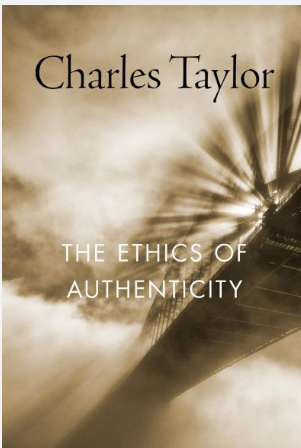

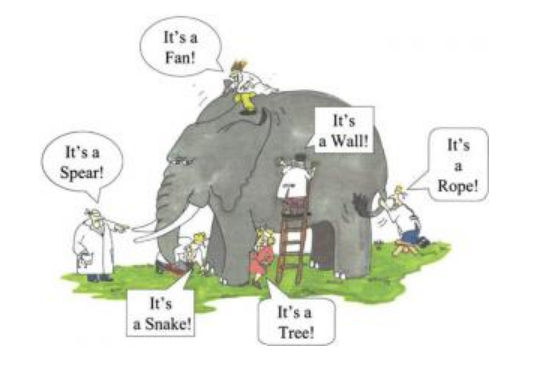

.jpg)