Causes of Increased Political Polarization

Political polarization is one of the main causes of the decline in civility. There are structural and historical causes for the tremendous decline in civility from 1960 to 2025.

High Level Changes

  1. The Civil Rights Act of 1964 obliterated the Democratic party and provided the Republican party with a growth strategy.
  2. The “cultural revolution” of the 1960’s contrasted traditional social practices with a tolerance or embrace of “anything goes” behavior. Politicians have continued to exploit these deeply felt divisions.
  3. Political parties embraced a single, simple right versus left, conservative versus liberal, framework as Ronald Reagan skillfully knit together the various “conservative” factions between 1968 and 1980. Republicans began to embrace the virtues of a “big tent” through the end of the century.
  4. The Republican party embraced fundamentalist Christians, and religion was merged with politics. Democrats increasingly became home for the secular, agnostic and “none of the above” religious affiliations.
  5. Ideology based parties are inherently more righteous, adopting right/wrong, good/evil views of the world.
  6. The American economy has continued to grow throughout the post WWII era, greatly increasing the value of politics for those with economic interests to protect.
  7. Americans have increasingly sorted by “rural versus urban” and “left versus right” residences. The rural counties are right, the urban counties are left, the suburban counties are mixed.
  8. The rise of individual expression as the premier life goal highlight’s individual identity. Political views reflect a person’s identity. There is pressure to “be” left or right.
  9. Structural changes like gerrymandering or restrictive changes in voting rules are used to control political power at the state level.
  10. Political parties have lost power. Historically, they were able to filter out extreme or risky candidates or issues. Voters, candidates and special interest groups have more power today.
  11. Our two-party system incentivizes extreme candidates, supporters and views on issues. This is a self-reinforcing tendency.
  12. Once individuals see the world as political, in a single ideological dimension, as right versus wrong, human nature reinforces the polarized views. Dislike of the other party becomes highly motivating. In-group biases grow. Fear of the “other” grows. Perceived harmful, unfair, disloyal, unspeakable, sacrilegious actions by the “other” party assume mythic evil status. This is also a self-reinforcing tendency.
  13. Experience with civil, constructive, problem-solving politicians and parties has declined, lowering expectations. This is also a self-reinforcing tendency.
  14. Polarization is in the interests of some politicians and the industries supported by political spending. It acts as an ethical and communications skills barrier to entry.

Media Changes

  1. Technological changes allowed journalism and opinion expression to be economically viable at the part-time individual level, down from financially stable organizations of at least 100 people.
  2. The “Fairness Doctrine” of 1949 was effectively ended in 1987, allowing political media to flourish.
  3. The merger of individual identity with politics and religion with politics created greater demand for political journalism.
  4. With television, perceptions of “presidential”, powerful, honest, effective, charismatic, leadership, common sense, relatability, etc. made media image more important than content, knowledge, experience or character.
  5. The internet allowed previously fringe groups to effectively organize and communicate.
  6. Cable TV and the internet created hundreds and thousands of broadcasting options, encouraging individuals to find exactly the content that they desire.
  7. Highly partisan commentators/entertainers began to provide the people with what they want. A simple reinforcement of their existing beliefs.
  8. The internet and social media provided the tools for content providers to find and feed their customers, even at very small scales.
  9. The loss of classified ads to the internet undermined local newspapers and radio. They lost their ability to effectively cover local news. This reinforced the trend to embracing partisan sources for all news and opinion.
  10. The growth of effective communications sources allowed national politicians to move the “center of gravity” in politics from “state and local” to the national level. All issues are now seen through the lens of ideological national politics.
  11. The increased number of channels on cable TV provided room for outlets that appealed to small fractions of the viewing audience. There was room for partisanship. There was room for sensationalism.
  12. Television and radio networks found ways to attract, reinforce and monetize polarization.
  13. In a world of hundreds or thousands of news and opinion sources, clear, consistent, emotional, effective branding became necessary for survival. Everyone is competing for clicks and eyeballs. Only the winners survive. Sources increasingly cater to the “least common denominator” of human interests.
  14. The internet and social media provide confidential cover for individuals to share their most negative thoughts without fear of being held accountable.
  15. The internet and social media avoid any filters for accuracy or legitimacy. Fake news spreads quickly.
  16. The “viral” nature of the internet and social media undercut traditional sources and views of objective, scientific, professional, mainstream legitimacy. Every fact becomes an opinion.
  17. Trust in objective journalism is undermined by the politically informed options, even as bias evaluators improve their effectiveness.
  18. The repeated claim of “fake news” undermines trust in any objective journalism.
  19. In a highly competitive media market, sensationalism wins. In-depth stories, human interest stories, good news, analysis and education lose.
  20. https://sites.bu.edu/pardeeatlas/research-and-policy/back2school/how-the-american-media-landscape-is-polarizing-the-country/#:~:text=The%20divisive%20tone%20of%20cable,in%20a%20less%20outrageous%20manner
  21. https://tomkapostasy.com/2023/07/15/one-page-why-were-polarized-klein-2020/
  22. https://tomkapostasy.com/2023/04/10/why-were-polarized-2020/

The Republican Party Moved Far Right

  1. Reagan provided “conservative” as a respectable term for a variety of political subgroups, ranging from moderate to extreme.
  2. Fundamentalist Christians, southerners and rural residents joined the party, angry about social and cultural changes.
  3. Buckley and Goldwater legitimized philosophical conservatives, including the extreme versions.
  4. Economic libertarians found a home in the party, as Austrian and supply side economics were adopted. Innovations like the Laffer Curve, monetarism and “rational expectations” were digested.
  5. “Free market” economics, descended from laissez faire, is intrinsically extreme, elevating markets as morally “good” and any opposition as “bad”. Analysis, judgment and compromise are discouraged.
  6. Economic growth is good. “Small is beautiful” is mere virtue signalling.
  7. Taxation is theft. Drown the government in a bathtub.
  8. Gun rights, taking your guns, weak on crime.
  9. Woke mob, cancel culture, fake news.
  10. Global warming is “fake news”; drill baby, drill.
  11. Communist, pink, socialist agenda, radical left.
  12. Christian nationalism; not separation of church and state.
  13. Anti-race, nationality, immigrant, religion, sexual orientation.
  14. Racial “dog whistles”, crime, security, welfare queens.
  15. Gingrich strategy of polarization, extreme positioning, framing, ends justifies the means.
  16. Patriotism, national purity, open borders, rapists and muggers, terrorists.
  17. RINO’s ejected from the party.
  18. Funding for more “conservative” candidates to challenge incumbents in primaries.
  19. Acceptance of extremist, militant, subversive, racist, conspiracist, radical supporters.

The Democratic Party Responded and Became Righteous

  1. Per Johnathan Haidt, only care and fairness matter to Democratic politicians. They disregard or criticize loyalty, authority, purity and liberty. Ouch.
  2. https://righteousmind.com/liberals-are-weirder-than-conservatives/
  3. Western culture is imperfect, maybe oppressive. Pure secularism is best.
  4. Religion is the opiate of the masses. Religious organizations are politically suspect.
  5. Affirmative action is more important than individual rights.
  6. Abortion rights are basic; no limits or compromises.
  7. Sexual orientation is personally defined aside from biological or cultural influences.
  8. Free speech is not as important as protecting feelings. Cancel culture.
  9. Environmental goals and policies disregard cost/benefit analyses.
  10. “Defund the police” because they are an illegitimate institution.
  11. Government employees, teachers, professors, media and artists leaned further left and lost the ability and interest to transmit neutral, broadly held social values.
  12. Extreme positions on free speech, assembly, press, religion, human rights and globalism.
  13. Oppressed group interests are primary. Not equal opportunity, safety net, fair taxes.
  14. Complete individual choice in consumption, production, expression, and relations.
  15. Opposition to school vouchers as an inherently unfair threat to public education.
  16. Reparations for historical injustices.
  17. Strictly global solutions without respect for national interests.
  18. Global warming is an immediate threat to the survival of humanity.
  19. Disregard of the “deplorables”.
  20. Loyalty oaths to institutional values.
  21. Virtue signaling as an art form.
  22. Postmodernist elevation of “powerful oppressors” as the only framework.
  23. Pure, certain support of John Rawls’ theory of justice, economic redistribution.
  24. Library rights to all books and programs for all ages.
  25. Superiority of abstract, global principles versus local interests.
  26. Individual creative expression as the supreme value; and tolerance; except for some views!
  27. Superiority of coastal culture, economics and politics versus sunbelt or “flyover country”.
  28. Protection of upper middle-class housing, education, safety, travel, professional, tax, networking, investment, trust, and administrative interests.
  29. Welcoming socialists, globalists, and intolerant interest groups in the party.
  30. The centrist pragmatism of FDR, Truman, Kennedy, LBJ, Clinton and Obama are dominated by the “far left” in the Democratic Party at the national level today. Partly by party programs and presidential positions (Biden), but mostly by “safe seat” politicians and the university, media and cultural influencers and thought leaders.
  31. These extreme left positions serve some Democratic politicians, their Republican opponents, and the globally dominant metro areas.
  32. Even though a majority of Democrats and Democratic leaning independents don’t support these “far left” positions or the caricatures wisely promoted by Republicans, the support by some Democrats and clever Republicans helps to position the Democratic party as much further left in the public mind. This reinforces the idea of a single ideological dimension for all issues and polarized yes/no, right/wrong. good/evil, win/loss positions by both parties.
  33. “The Squad” of far-left congresswomen is a convenient foil for the Republicans. https://en.wikipedia.org/wiki/Squad_(U.S._Congress)
  34. The lack of highly effective Democratic national leadership for 50 years has encouraged leftward leaning Gen X, millennials and Gen Z to adopt further left positions because the center-left version is apparently ineffective..

Summary

  1. A single ideological “left versus right” politics frame emerged after 1964.
  2. In 1995 Gingrich demonstrated that polarization is effective and good for incumbent politicians.
  3. Polarization is a self-reinforcing process. Consider the Irish Troubles or the Middle East.
  4. Politics, media and society also interact to grow polarization.
  5. Religion and identity have merged with politics, making it more ideological and polarized.
  6. The historical countervailing forces of the mainstream media, self-interested political parties, regional elites, the responsibility of noblesse oblige, business elites, religious elites, intellectuals, thought leaders, university presidents, military leaders, state leaders, global leaders, local politicians, civic group leaders, teachers’ unions, League of Women Voters, ABA and scouts have not found their moderating voice in the current media environment.
  7. The media facilitates polarization for profit.
  8. The Republican party moved right and then further right.
  9. The Democratic party “occupied the center” with Clinton and Obama, but this did not satisfy its further left supporters, and it convinced many Republicans that all Democrats are really “radical socialists”. The party has not found a new framework to effectively compete with Trump’s hybrid conservative/populist frame and policies.
  10. A wide variety of groups have attempted to reframe the center as a good political place to live. None have yet succeeded. Perhaps the Carmel civility project will win. https://www.projectcivility.com/

Reasons for Hope

https://www.projectcivility.com/

https://en.wikipedia.org/wiki/The_Better_Angels_of_Our_Nature

https://www.jimmycartertribute.org/index.html

https://en.wikipedia.org/wiki/Learned_optimism
https://www.amazon.com/The-Rational-Optimist-audiobook/dp/B003MY7RGG/?encoding=UTF8&pd_rd_w=lrR8k&content-id=amzn1.sym.a7785aa2-ac28-4769-b3eb-cff7b9738627&pf_rd_p=a7785aa2-ac28-4769-b3eb-cff7b9738627&pf_rd_r=140-0488079-4728935&pd_rd_wg=wdYs0&pd_rd_r=daf5c4ba-0e70-4878-9189-99eec5a73f79&ref=aufs_ap_sc_dsk

Modern History Index

257 items pulled from all arenas of life. Technology dominates, especially in the last century.

Grouping events into 40-year blocks shows 1940-79 as twice as dynamic as other eras.

1450 – 1779 20

1780 – 1819 12

1820 – 1859 16

1860 – 1899 31

1900 – 1939 47

1940 – 1979 99

1980 – 2025 32

Modern History: Biology and Life

1676 – Microscopic World

https://en.wikipedia.org/wiki/Antonie_van_Leeuwenhoek

1846 – Anesthesia / Modern Surgery

https://en.wikipedia.org/wiki/Anesthesia

https://en.wikipedia.org/wiki/Surgery

1859 – Darwin’s Theory of Evolution

https://en.wikipedia.org/wiki/On_the_Origin_of_Species

1865 – Germ Theory of Disease / Public Health

https://en.wikipedia.org/wiki/Germ_theory_of_disease

https://en.wikipedia.org/wiki/Louis_Pasteur

1896 – Psychoanalysis

https://en.wikipedia.org/wiki/Louis_Pasteur

1918 – Spanish Flu

https://en.wikipedia.org/wiki/Spanish_flu

1928 – Penicillin

https://en.wikipedia.org/wiki/Penicillin

1943 – Modern Drug Development

https://en.wikipedia.org/wiki/Streptomycin

1953 – Structure of DNA – Watson & Crick

https://en.wikipedia.org/wiki/History_of_molecular_biology

1956 – https://en.wikipedia.org/wiki/Chemotherapy

1959 – Horizontal Gene Transfer described as complement to evolution

https://en.wikipedia.org/wiki/Horizontal_gene_transfer

1959 – Modern Synthesis of Evolution and Genetics – Mayr

https://en.wikipedia.org/wiki/Modern_synthesis_(20th_century)

1960 – Oral Contraceptive Pill

https://en.wikipedia.org/wiki/Oral_contraceptive_pill

1961 – Antibiotic Resistant Bacteria – public health concern

https://en.wikipedia.org/wiki/Methicillin-resistant_Staphylococcus_aureus

https://en.wikipedia.org/wiki/Antimicrobial_resistance

1963 – Mood Altering Drugs (legal)

https://en.wikipedia.org/wiki/Diazepam

1965 – Medicare Program

https://en.wikipedia.org/wiki/Medicare_(United_States)

1965 – US Life Expectancy Reaches 70

https://www.ssa.gov/OACT/TR/TR02/lr5A3-h.html

1967 – Heart Transplant

https://en.wikipedia.org/wiki/Heart_transplantation

1970 – Magnetic Resonance Imaging Scanner

https://en.wikipedia.org/wiki/Magnetic_resonance_imaging

1973 – Biotechnology / Recombinant DNA

https://en.wikipedia.org/wiki/Recombinant_DNA

1978 – IVF conception

https://en.wikipedia.org/wiki/In_vitro_fertilisation

1980 – Smallpox Eradicated

https://en.wikipedia.org/wiki/Smallpox

1981 – HIV/AIDS new disease and treatments

https://en.wikipedia.org/wiki/HIV/AIDS

1996 – Cloned Mammal

https://en.wikipedia.org/wiki/Dolly_(sheep)

1997 – Global Warming

https://en.wikipedia.org/wiki/Kyoto_Protocol

2003 – Human Genome Project

https://en.wikipedia.org/wiki/Human_Genome_Project

2010 – Affordable Care Act

https://en.wikipedia.org/wiki/Affordable_Care_Act

2012 – Designer Genes Possible

https://en.wikipedia.org/wiki/CRISPR_gene_editing

2019 – Covid Pandemic

https://en.wikipedia.org/wiki/COVID-19_pandemic

Summary

Microbiology, DNA, biochemistry. Miracles.

Modern History: Communications and Computers

1455 – Printing Press

https://en.wikipedia.org/wiki/Printing_press

1826 – Camera and Photography

https://en.wikipedia.org/wiki/History_of_the_camera

1844 – Telegraph and Morse Code

https://en.wikipedia.org/wiki/Telegraphy

1876 – Telephone

https://en.wikipedia.org/wiki/History_of_the_telephone

1886 – Radio Waves

https://en.wikipedia.org/wiki/Radio_wave

1896 – Motion Pictures

https://en.wikipedia.org/wiki/History_of_film

1920 – Commercial Radio Broadcasting

https://en.wikipedia.org/wiki/Radio_broadcasting

1936 – Universal Computing Machine

https://en.wikipedia.org/wiki/Turing_machine

1939 – Commercial Television Broadcasting

https://en.wikipedia.org/wiki/History_of_television

1945 – Programmable Computer

https://en.wikipedia.org/wiki/ENIAC

1947 – Transistor

https://en.wikipedia.org/wiki/Transistor

1948 – Communications Theory – Shannon

https://en.wikipedia.org/wiki/Communication_theory

1951 – Commercial Computer

https://en.wikipedia.org/wiki/UNIVAC

1954 – Personal Entertainment Device

https://en.wikipedia.org/wiki/Transistor_radio

https://en.wikipedia.org/wiki/Walkman

https://en.wikipedia.org/wiki/Handheld_game_console

1959 – Integrated Circuit

https://en.wikipedia.org/wiki/Integrated_circuit

1962 – Communications Satellite

https://en.wikipedia.org/wiki/Telstar

1965 – Computer Hardware Costs Decline

https://en.wikipedia.org/wiki/Moore%27s_law

1970 – Email

https://en.wikipedia.org/wiki/Email

1971 – Microprocessor

https://en.wikipedia.org/wiki/Microprocessor

1973 – Cellular Phone

https://en.wikipedia.org/wiki/Mobile_phone

1974 – Internet

https://en.wikipedia.org/wiki/Internet

1974 – Personal Computer

https://en.wikipedia.org/wiki/Personal_computer

1977 – PC User Interface

https://en.wikipedia.org/wiki/Apple_II

1979 – Spreadsheet Killer App VisiCalc

https://en.wikipedia.org/wiki/Spreadsheet

1981 – MS DOS operating system for IBM compatible microcomputers

https://en.wikipedia.org/wiki/MS-DOS

1981 – Microsoft Windows

https://en.wikipedia.org/wiki/Microsoft_Windows

1990 – Web Browser

https://en.wikipedia.org/wiki/Web_browser

1998 – Search Engine

https://en.wikipedia.org/wiki/Google_Search

2004 – Social Media

https://en.wikipedia.org/wiki/Facebook

https://en.wikipedia.org/wiki/Social_media

2007 – Smart Phone

https://en.wikipedia.org/wiki/IPhone

2022 – Artificial Intelligence

https://en.wikipedia.org/wiki/ChatGPT

Summary

Electronic, semiconductors and digital. Networked. Integrated. Powerful. Personal.

Modern History: Technology

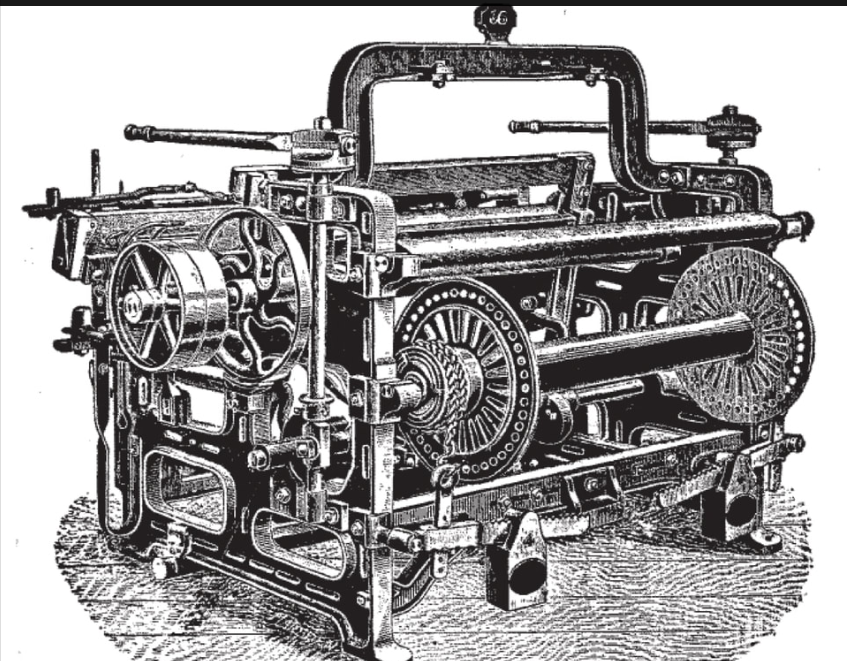
1760 – Industrial Revolution – Power Loom

https://en.wikipedia.org/wiki/Industrial_Revolution

https://en.wikipedia.org/wiki/Power_loom

1765 – Watt’s Steam Engine

https://en.wikipedia.org/wiki/Steam_engine

1800 – Second Agricultural Revolution

https://en.wikipedia.org/wiki/British_Agricultural_Revolution

1802 – Steam-powered Locomotive

https://en.wikipedia.org/wiki/Steam_locomotive

1821 – Electromagnetic induction – Electric Motor

https://en.wikipedia.org/wiki/Electric_motor

1859 – Pennsylvania Oil Rush

https://en.wikipedia.org/wiki/Pennsylvania_oil_rush

1869 – Transcontinental Railroad

https://en.wikipedia.org/wiki/First_transcontinental_railroad

1869 – Suez Canal

https://en.wikipedia.org/wiki/Suez_Canal

1879 – Edison’s Practical Electric Light Bulb

https://en.wikipedia.org/wiki/Electric_light

1882 – Commercial Electricity Generation and Distribution

https://en.wikipedia.org/wiki/Electricity_generation

1886 – Alternating Current Distribution and Motors

https://en.wikipedia.org/wiki/Alternating_current

1886 – Internal Combustion Engine – Benz

https://en.wikipedia.org/wiki/Internal_combustion_engine

1902 – Air Conditioning – Carrier

https://en.wikipedia.org/wiki/Air_conditioning

1903 – Wright Brothers’ Airplane

https://en.wikipedia.org/wiki/Wright_brothers

1905 – Electric Home Appliances

https://en.wikipedia.org/wiki/Home_appliance

1907 – Synthetic Plastics / Bakelite

https://en.wikipedia.org/wiki/Plastic

1914 – Panama Canal

https://en.wikipedia.org/wiki/Panama_Canal

1915 – Home Refrigerators

https://en.wikipedia.org/wiki/Refrigerator

1927 – Nonstop Transatlantic Flight

https://en.wikipedia.org/wiki/Transatlantic_flight

1935 – Commercial Air Travel

https://en.wikipedia.org/wiki/Douglas_DC-3

1956 – Interstate Highway System

https://en.wikipedia.org/wiki/Interstate_Highway_System

1958 – Commercial Nuclear Power

https://en.wikipedia.org/wiki/Nuclear_power_in_the_United_States

1960 – Laser

https://en.wikipedia.org/wiki/Laser

1960 – Third Agricultural Revolution (Green)

https://en.wikipedia.org/wiki/Green_Revolution

1961 – Manned Space Flight

https://en.wikipedia.org/wiki/Yuri_Gagarin

1968 – Boeing 747

https://en.wikipedia.org/wiki/Boeing_747

1969 – Moon Landing

https://en.wikipedia.org/wiki/Apollo_11

https://en.wikipedia.org/wiki/Space_Race

2012 – Wind Energy – largest US new power source

https://en.wikipedia.org/wiki/Wind_power

2020 – Solar Energy – cheapest power source

https://en.wikipedia.org/wiki/Solar_energy

Summary

Energy, transportation and manufacturing continue to advance. See separate posts for communication, computers and biology.

Good News: The Business Cycle is Done

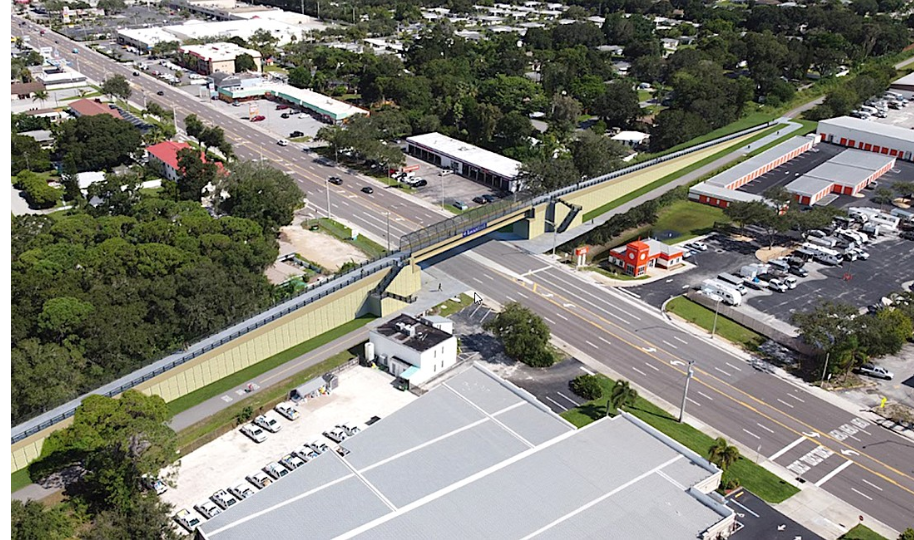
https://www.yourobserver.com/news/2023/dec/01/construction-begins-legacy-trail-overpasses/

From 1945 through 1985 the US economy regularly accelerated its growth, reached a peak, fell back and then recovered. Businesses, economists, politicians and the public expected that this 3-5 year business cycle would continue forever.

Looking back, it seems like the business cycle was broken by 1985. All of the subsequent downturns have been prompted by extraneous, outside of the system, shocks. In 1990 a second global oil shortage shock.

https://en.wikipedia.org/wiki/Early_1990s_recession_in_the_United_States

In 2000-2001, a stock market bubble popped.

https://en.wikipedia.org/wiki/Early_2000s_recession#:~:text=A%20combination%20of%20the%20Dot,Inverted%20yields%20in%20early%202001.

In 2007, a mortgage lending bubble popped.

https://en.wikipedia.org/wiki/Great_Recession

In 2020, a pandemic driven recession, followed by a very unexpected rapid recovery.

https://en.wikipedia.org/wiki/COVID-19_recession

40 years without a classic business cycle recession is long enough to claim victory.

How could this happen? The independent Federal Reserve Bank has maintained a neutral monetary policy. We have not “shot ourselves in the foot” and we have implemented reasonable policies to offset external shocks. The federal government budget deficit has generally returned towards zero following depression periods. Automatic stabilizers and congressional action have addressed recessionary periods with enough stimulus to stop economic decline and restart recovery.

More importantly, the structure of the US economy has changed. The share of high fixed cost manufacturing has declined as “services” has increased as a share of the total economy. The share of international trade (imports and exports) less directly connected to the domestic economy alone, has increased. The power of labor (unionized or not) has fallen, allowing firms to reduce hours and real wages during a downturn. In most recent times, firms better recognize the cost of attracting and developing highly skilled labor in a complex production world, so they retain key staff even during downturns. Vertical integration has been reduced, allowing firms to respond to minor demand changes more effectively. Based upon the quality revolution, major firms have reset their capacity utilization targets to 80% rather than 95%, providing firms with greater flexibility in managing variable demand and not reaching the point where internal costs increase and the need to increase prices occurs.

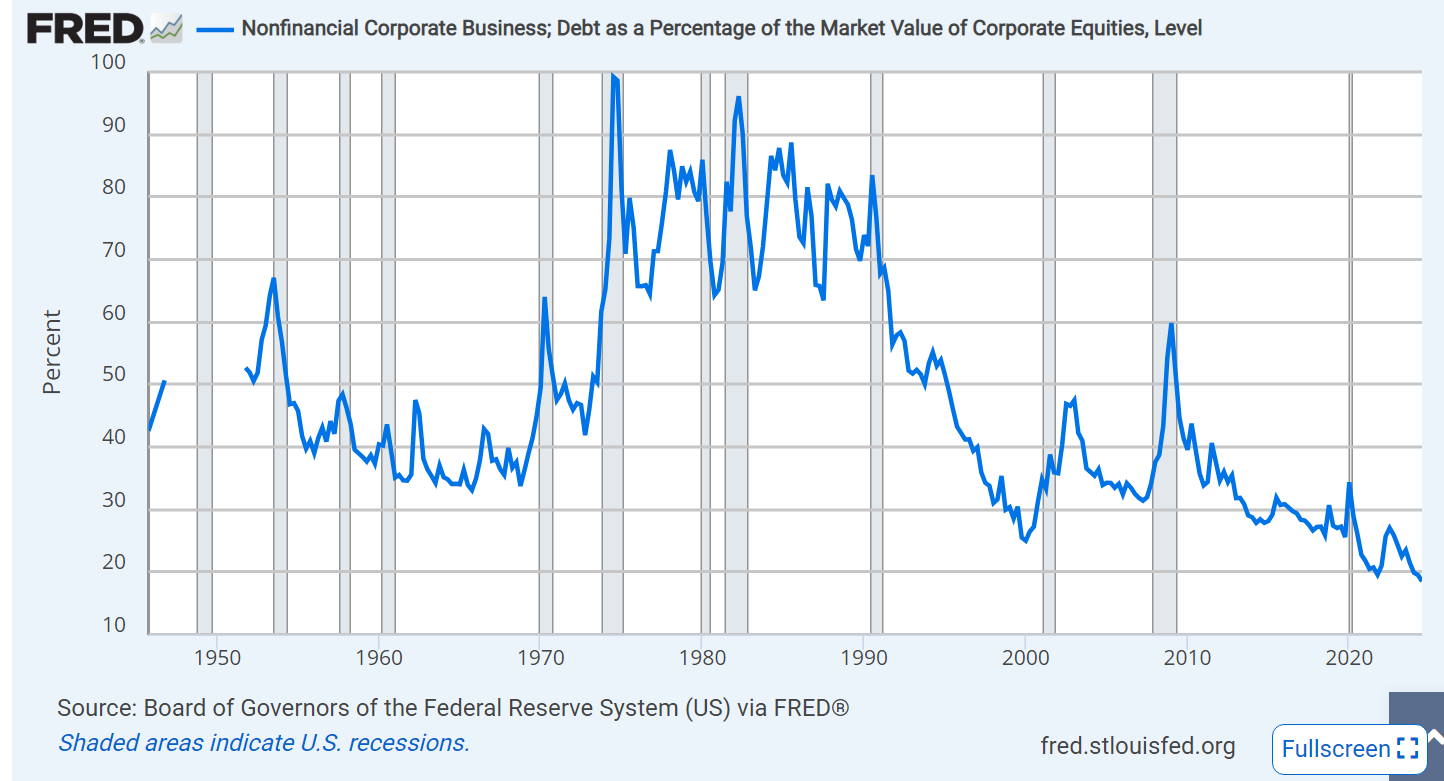
Financial leverage has also decreased. US firms have access to deep bond markets so are they able to incur only necessary levels of indebtedness.

Even with a much greater level of imported goods, retailers hold lower levels of inventory, allowing them to not overreact to changes in demand. Firms have more effective supply chain management processes.

The unemployment rate also shows this structural change. When it was pushed below 5% in the 1960’s, inflation increased and was not permanently checked for 20 years. By 2000 the economy was able to expand and keep unemployment below 5% for extended periods of time without triggering “cost-push” inflation. Unemployment still increases during an economic downturn, but low unemployment does not seem to trigger a recession.

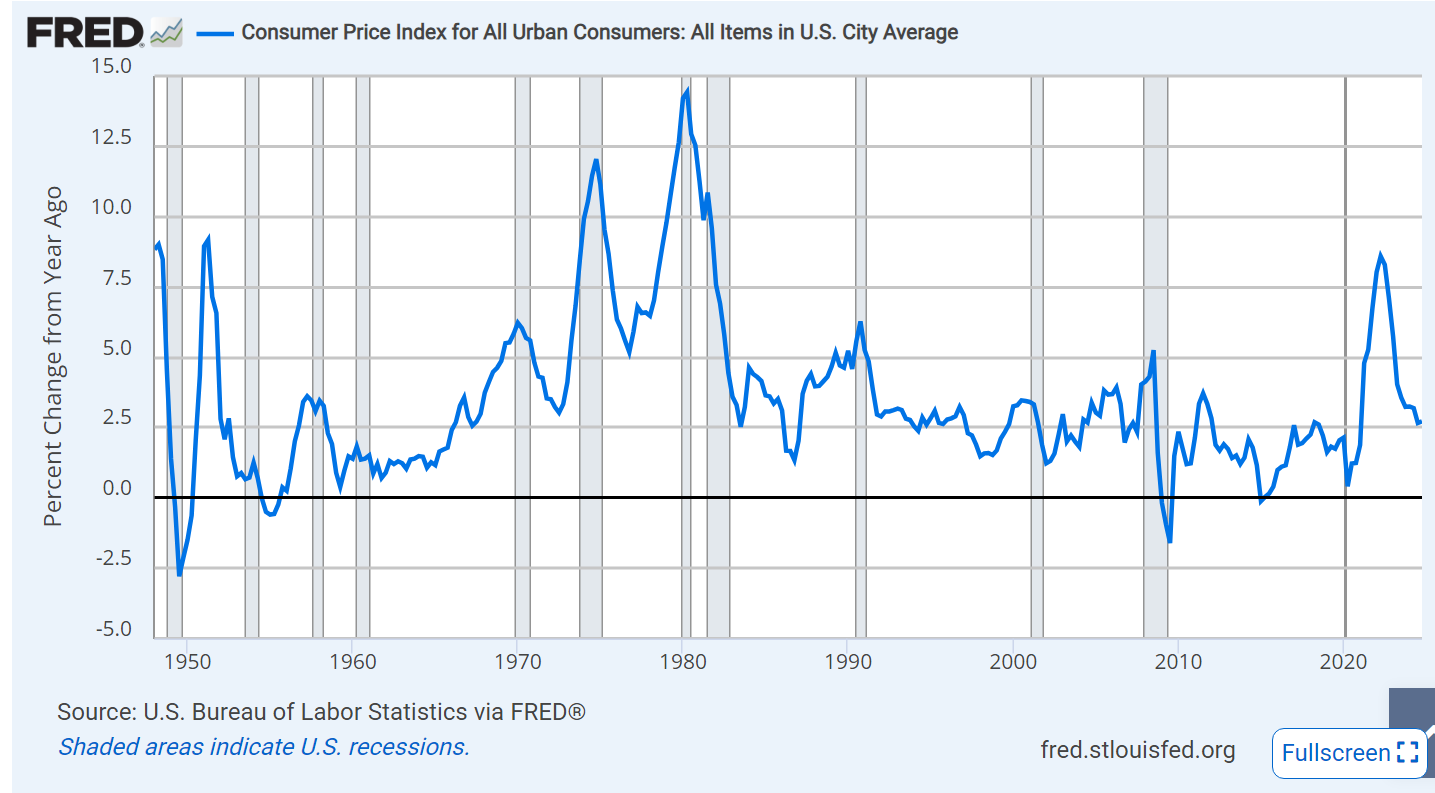
From the 1950’s through the 1980’s inflation tended to increase as the economy overheated before a reduction in credit availability would slow the overall economy. Aside from the Covid pandemic shortages, we no longer see major inflation increases.

Impact

The business cycle caused firms to underinvest because the best available forecast was always that the boom period would be interrupted in 1-5 years. Sales, margins and profits could not be assumed to increase forever.

The business cycle caused firms to follow a stop-start pattern for capital investment projects, process improvement, research & development, new product introduction, new markets, new channels and mergers & acquisitions. Seeing a downturn, firms would cancel existing initiatives, even at a significant cost, in order to conserve cash and signal to stakeholders that management was actively managing the business. Projects would slowly resume after it was clear that the business cycle recovery was under way 2 years later.

For individuals, the “last hired, first fired” cycle applied. Firms froze open position hiring. They released interns and summer workers. They prohibited overtime. They cancel contracts with temporary labor firms. Less experienced workers and minority groups suffered. Labor intensive industries, especially construction, were hard hit. Smaller firms closed. The hiring cycle would resume 2 years later.

Historically, stock market values also followed the pattern of the business cycle closely. Stock market declines were seen as an “early warning” indicator by forecasters. Since stock market values are theoretically determined by a risk-adjusted discount rate, the reduction of business cycle variability allows investors to use a lower interest/discount rate and value future earnings at a higher net present value.

Summary

The business cycle appears to be gone. The modern economy does not have the same high fixed costs it once had. Firms are able to increase their sales, profits and capacities in tandem without greatly overshooting the mark. Our national institutions help to keep growth at a sustainable level. Workers, firms, investors and society all benefit from this great advance, even if it is not publicly celebrated.

What’s the Root Cause of Our Problems?: Human Nature

We have lost control of our political system and confidence in our institutions. I offer some root cause reasons for this situation in a series of posts. Second post in the series.

https://news.gallup.com/poll/647303/confidence-institutions-mostly-flat-police.aspx

Non-stop Growth of Economic Prosperity

Real, inflation adjusted, gross domestic product (GDP) is up 4 and 1/2 times since WWII when the American economy was the savior of Western Civilization and about to invest in the recovery of Europe and Japan. In this long-term perspective, growth is very constant. Critics can point to the capture of a greater share by the wealthy. Optimists can point to the radical improvement in quality not captured by GDP, increased consumer choices available and a larger share of retirees in the population.

Economic Satisfaction Stagnates

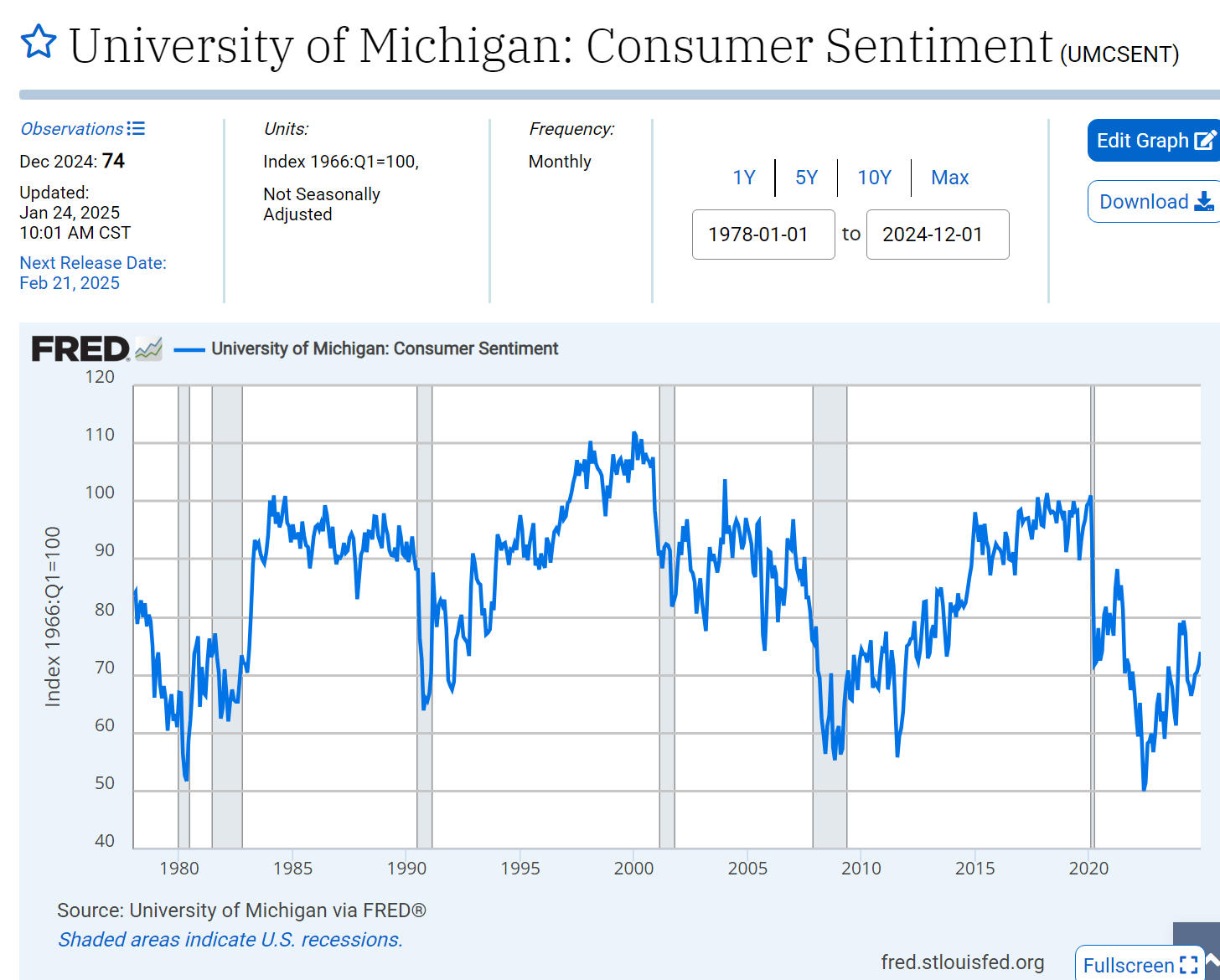
Consumer confidence rises with the economy and declines with recessions and polarized politics, but it has no upward trend to match real incomes!

Unlimited Wants, Limited Satisfactions

Economists assume that people have unlimited wants. Most research and common-sense experience show that this is true.

http://www2.harpercollege.edu/mhealy/eco211/lectures/microch1-17.htm

Post-war economists have persistently claimed that Americans “now” have everything they need materially to be happy, but they have been persistently wrong.

https://en.wikipedia.org/wiki/The_Affluent_Society

Other research shows that beyond a certain level of income, more money doesn’t make people happier.

https://penntoday.upenn.edu/news/does-more-money-correlate-greater-happiness-Penn-Princeton-research

Real people, at all levels of income, report that they would be happy, satisfied and secure if they only earned 50% more.

Behavioral Economists Say That Human Nature is at Fault

Our happiness often is based on our perceptions of comparative social and economic status. There is always someone with more.

https://www.neuroscienceof.com/human-nature-blog/social-comparison-social-media-status-wealth-happiness-psychology

We focus on our most recent experience rather than seeing the big picture.

https://en.wikipedia.org/wiki/Recency_bias

Once we have an idea in mind, we tend to consume information that confirms the idea and avoid or deny challenges. Positive, constructive people will be optimists. Others will be pessimists and follow the bad news media.

https://en.wikipedia.org/wiki/Confirmation_bias

When we do try to rationally assess our current situation, we compare it with something obvious. It’s usually something prominent, recent, large, and shiny. We compare today with our best ever experience or situation. We reset our expectations to compare with something prominent in our experience. We don’t plot graphs of our real annual earnings, wealth and leisure. Our expectations are anchored in our best experiences. Current expectations tend to move back to a neutral evaluation.

https://en.wikipedia.org/wiki/Anchoring_effect

Summary

Humans want more. We are rarely satisfied. That means we are easily distracted in the modern world by marketers, influencers, journalists, bloggers and politicians. Human nature has not changed. Our true economic condition has improved with little impact. Our access to information, education, knowledge and wisdom has increased with minor impact. The ability of communicators to influence our perceptions of the world has greatly increased and we have generally not improved our defenses. “We have much, much work to do today” – Mr. Thoburn Dunlap, 1970, Fairport Harbor, Ohio high school teacher.

P.S. Focus on how the media works.

P.S.S. Positive view of economic and social progress.

Community Articles Index

https://ylcube.com/c/blogs/broadly-speaking-community-interests-vs-individuality/

Summary

I think that we have inadvertently prioritized only the individual and completely discounted the role of “community” in American life. We desperately need to rebalance.

Here you’ll find

6 “good news” posts on American trends

7 “good news” posts on Hamilton County, Indiana

2 posts on the Indianapolis metro area

3 posts on the religious dimension of community

An overview on Our American Community and links to Our Kids, Why We’re Polarized and Little Pink Houses.

Solutions such as community assets (Janesville Plan), school curriculum, civility pledges and candidate approval boards.

Historical overview of the critical role of community, how we have more in common, the role of morality and the conflict between “only the individual” and the community.

We Have More in Common Than You Think

Just Clicks and Eyeballs?

Journalists, artists, pundits, entertainers and politicians all scheme for our attention. Once upon a time … we briefly thought that the internet and social media might usher in a new age of information, selection, objectivity, useful filtering, wisdom and cooperation!!!! Unfortunately, we are now deluged by “least common denominator” communications skillfully targeted to lure us into a non-stop cycle of clicking on marketable links. These communications very effectively use every trick and technique to appeal to our emotions, prejudices, weak attention, surface thinking, fears, hopes, exaggerations, etc.

Politicians of all flavors have conspired to convince us that the whole world is comprised of “good versus evil” people, politicians, parties, religions, states, policies and institutions. Everything is “win/lose”. Disagreement is motivated by bad ideas and motives rather than differences of opinion or interests. Compromise is a sign of weakness. Every political actor is purely motivated by self-interest.

We each have a moral, political, social, religious and personal responsibility to evaluate these “conclusions”. Let’s start with overturning the idea that we have nothing in common, that we must rely upon politicians to define opposing policies, parties and philosophies and fight to the death for one or the other to finally win.

Human Nature

Biologically we are all the same.

We intuitively and rationally combine thinking, feeling and doing; conscious and unconscious drives.

We each think that we are “right”. As in Lake Wobegon, we are all “above average”. We struggle to maintain self-awareness, to consider the needs of others, to even pursue our own goals consistently and effectively. We are functionally and morally imperfect.

We have a variety of needs and desires that cannot be fully met. Safety, acceptance, achievement, agency, transcendence, control, familiarity, influence, consistency, love, health, growth, expression, authenticity, loyalty.

We are primarily “analog” beings.

Human Experience

We face death, evil, suffering, disappointments, violations, violence and pain. Random, irrational, unavoidable experiences. We often respond with fear, anxiety, cautiousness, anger and victimhood. We search for ways to “manage”.

We experience life through time, learning, relationships, lessons, goals, planning, dreams, hope, commitments, doing, feeling, thinking, feedback, taking risks, managing risks and opportunities, engaging, disengaging, focusing, relaxing, looking outward, looking inward. The journey is complex and the perspective changes.

We balance and prioritize. Limited resources. Unlimited desires. Personal, family, social, community, religious, financial, and health dimensions compete. At best, we fight the many demands to a “draw”.

We struggle to keep up in a world that becomes more complex every decade: personal choices, goods and services available, information available, technical complexity, political complexity, social choices, religious choices, communications options, philosophical choices, scientific results, business complexity, international options, cultural options. More options, more choices, greater expectations.

We live in a culture that prioritizes the economic dimension of production and consumption. We have embraced a meritocracy that offers great rewards to the winners and a modest “safety net” to those who are not winning. Economic and status anxiety are very high in the most economically successful nation in history. We promote an extreme personal responsibility that undermines those who don’t always achieve and sustain their highest goals.

We live in a world that has been labelled the “therapeutic society” or the world of “expressive individualism”, summarized by the US Army slogan of “Be all that you can be”. The individual is responsible for living and achieving a great life of personal expression reflecting their talents and possibilities. The individual has many coaches, advisors, mentors and therapists, but is alone in choosing their “destiny”. They cannot rely upon tradition, religion, culture, nation, village, parents, personality profiles, or skills assessments. This radical secular humanism view places the responsibility for identifying and achieving a “world changing” destiny upon each person. Wise individuals find some way to “balance” this personal responsibility with other influences, refusing to adopt a godlike stance. They avoid becoming like Icarus and flying too close to the sun.

We live in a world that highlights the individual above nature, community, culture or religion. Complete individual liberty, freedom and opportunity are desired. No trade-offs with the other dimensions of life. “Natural consequences” frustrate those who embrace this libertarian ideal.

Life is hard. So many advances in society, business, education and technology. The challenges to “living a good life” are greater than ever. The progressive promise is undermined. All individuals must now make choices that were once reserved for kings, priests, princes, monks, scientists, philosophers, artists, governors, generals, financiers, industrialists, explorers, entrepreneurs, and presidents.

Culture

We digest the beliefs, norms and values of our culture subconsciously. The legacy of Christian Western Civilization continues. The legacy of secular humanism continues. We live in a “secular age” where deep faith and unskeptical religious commitment is unusual for the highly educated one-third. We’re “neither fish nor fowl”. Culture really matters but is today a blend of two streams like “oil and vinegar”. There is much in common. There are some big differences. We generally share the political, economic, social, religious, scientific and literary history of Western Europe, even though parts of the intellectual community have promoted disturbing alternate views for almost 200 years.

Despite living in a “secular age” and an “individualistic age”, we all need to be connected to various communities. Although community participation frequency, manner and depth vary greatly across the decades, humans always need to be connected.

We share a legacy and currency of art, media, design, architecture, music and entertainment. High-brow and low-brow. Mass market and specialized. Push versus pull connectivity. We are connected.

The US remains an unusual Western society where the not-for-profit, religious, social, volunteer world performs major social welfare functions. We share our experiences of funding, volunteering, leading and consuming from these organizations. The individual and community experience of managing these organizations shapes our world view. Our individualistic bias combines with our social/religious obligations to create and support these organizations.

We share our experiences in pre-K, elementary, high school and college education. Mainly public schools. The content shapes our perspectives.

We have moved from 6 to 4 to 3 to 2 to 1.X children per family. We invest like never before in the growth, education, experiences, guidance, mentoring, support and direction of our children. Helicopter parents. Summer programs. Internships. International experiences. The youth orientation reigns supreme.

We continue to value the “social esteem” provided by others. We comply with social norms in every dimension of life. We seek approval. We consume good and services to signal our social status. We achieve, perform and consume based on social influences.

We adopt “tolerance” as a supreme moral value. We don’t advise, influence or interfere with others, even when we strongly disagree.

We continue to struggle with the idea of a “class structure” in America despite the obvious growth in economic, social and political influence of the wealthy (top 1%) and the professional class (top 10%).

Communications

We share the American “English language”. It dominates the whole world.

We share the mass media, local newspapers, industry and professional journals, scientific and academic journals, the entertainment industry, social media platforms, community forums and the internet.

We share modern communications and information technology. A “smart-phone” is in every pocket, instantly accessing the cumulative knowledge and information of mankind.

Religion

Americans are much more “religious” than “Europeans”. We mostly believe in God and spirituality and Christianity. We have seen that shared cultural/religious beliefs can be maintained in a religiously pluralistic society. We believe in objective “right and wrong”. We intuitively accept “the golden rule”. We see “America” as part of God’s plan and history. A place for the pilgrims. A land of religious diversity. The overturning of slavery. American victories in the 2 world wars and the cold war. The moral dimension of life matters.

Economy

We still live in the world that Adam Smith described in 1776. The degree of specialization is only limited by the extent of the market. Our world is extremely specialized. A bewildering variety of products are available. Outsourcing of many functions. Regional, national and international sourcing.

We all specialize in our most productive functions today. Profession, sub-profession and industry. We all have talents. There are most highly rewarded in their professional roles.

We are producers and consumers, investors and suppliers, professionals and managers, entrepreneurs and directors. We are deeply engaged in the financial system, markets for labor, money, trade, property, goods and services. We sometimes elevate this role to be “everything”, to our detriment.

We are interdependent. We rely upon “essential workers”, universities, governments, builders, contractors, consultants, bankers, utilities, media, lobbyists, politicians, unions, secondary markets, employment firms, lawyers, engineers, IT and communications folks, etc.

We rely upon the US macroeconomy. Budget deficits. Fiscal policy. The Federal Reserve Bank. Monetary policy. Federal banking and industry regulators. The bond markets. The credit rating agencies. Animal spirits. Wall Street. Mutual funds. Municipal bonds. Mortgage bonds.

We rely upon our commitment to the capitalist, free market, free enterprise system. Laissez faire. Limited government regulation. There are specific situations and metrics that warrant government intervention, but we lean towards allowing the natural incentives of the market to police the behavior of great firms.

We believe that economic growth provides the opportunity for the political system to effectively “redistribute income”, ensuring that the economic value added by scientific and business innovation through time does not all accrue to the owners.

Globe

The benefits from international trade are well understood and have been demonstrated for 75 years.

There are opportunities to engage all nations to manage diseases, food supplies, hunger, human rights, refugees, public health, travel, immigrants, trade, communications, and ocean resources.

There are global threats that must be managed: climate change, nuclear war, chemical and biological weapons, computer hacking, artificial intelligence, species loss, food production, energy production.

Philosophy

An objective physical reality exists. An objective moral reality exists.

The individual really, really matters. Human rights.

The scientific method applied to technical issues is great. It is not everything.

Instrumental logic is a tremendous asset for science, business and life.

Pragmatism is always worth considering. “Show me the money”. Does this theory produce measurable results?

We reject anarchy, atheism, pure commercialism, communism, fascism, necessary progress, libertarianism, national socialism, racism, sexism, totalitarianism, utopian socialism, white nationalism, Christian nationalism. In essence, we reject extreme views. We’re comfortable with a “checks and balances” political system that slows changes until they’re embraced by a solid majority.

Politics

The US is a world of skeptical politics. Less is more. Trust no one. Engage the local community to find a solution. Accept the individual bias in economic and social laws. America is a special place, worthy of patriotic respect.

Political participation is a sacred duty.

Despite the structural constraints on change, the US has generally been a positive, constructive, progressive supporter of political changes through time.

Americans are willing to sacrifice for the good of the nation.

The US constitution is framed by the rationalist enlightenment. We deeply believe in “the rule of law”.

Differences can be resolved, technically, rationally, politically.

We are comfortable with “suboptimal” results from our political system. We accept that the federal, bicameral, functionally divided system is designed to prevent the “worst case” outcomes of raw democracy or concentrated power.

In general, we strongly support our government institutions, especially at the state and local levels. Judges do their jobs. Political parties hold each other accountable. Citizens participate in the democratic process as voters, poll workers, jurors, donors, and volunteers.

Summary

We live as individuals in a complex, interdependent world. We have more opportunities but less authoritative guidance for our lives. We worry about our freedom and liberty. We make many choices. We do the best that we can. We agree on many things yet disagree on many others.

Today, we understand the world better than ever. We also understand ourselves better, our strengths and weaknesses, our possibilities and limits. We manage complex technology and institutions very effectively. We know that some political and economic options don’t work or pose unacceptable risks or threats. The U.S. and Europe developed “limited government” systems apart from religious authority because disagreements were inevitable. We need to relearn those lessons today. We’re going to have a “mixed” capitalist/government economic system. We’re not going to empower any religious denomination or secular group to impose its views on society. We can delegate issues to the states and learn from their experiences. We can compromise. We can “agree to disagree”. Ideally, we can accept that there are some intractable political differences in our society and focus on those areas where we can find agreement.