Facing Our Political Situation: How Do You Solve a Problem Like Maria?

BERTHE:
She climbs a tree
And scrapes her knee
Her dress has got a tear.

SOPHIA:
She waltzes on her way to mass
And whistles on the stair.

BERTHE:
And underneath her wimpole
She has curlers in her hair!

SOPHIA:
I ever hear her singing in the abbey.

BERTHE:
She’s always late for chapel,

MARGARETTA:
But her penitence is real.

BERTHE:
She’s always late for everything,
Except for every meal.

MOTHER ABBESS:
I hate to have to say it
But I very firmly feel

BERTHE AND SOPHIA:
Maria’s not an asset to the abbey!

MARGARETTA:
I’d like to say a word in her behalf.
Maria makes me laugh!

SOPHIA:
How do you solve a problem like Maria?

MOTHER ABBESS:
How do you catch a cloud and pin it down?

MARGARETTA:
How do you find a word that means Maria?

BERTHE:
A flibberti gibbet!

SOPHIA:
A willo’ the wisp!

MARGARETTA:
A clown!

MOTHER ABBESS:
Many a thing you know you’d like to tell her,
Many a thing she ought to understand.

MARGARETTA:
But how do you make her stay
And listen to all you say,

MOTHER ABBESS:
How do you keep a wave upon the sand?

MARGARETTA:
Oh, how do you solve a problem like Maria?

MOTHER ABBESS:
How do you hold a moonbeam in your hand?

MARGARETTA:
When I’m with her I’m confused,
Out of focus and bemused,
And I never know exactly where I am.

SOPHIA:
Unpredictable as weather,
She’s as flighty as a feather,

MARGARETTA:
She’s a darling,

BERTHE:
She’s a demon,

MARGARETTA:
She’s a lamb.

SOPHIA:
She’d out-pester any pest,
Drive a hornet from his nest,

BERTHE:
She can throw a whirling dervish
Out of whirl.

MARGARETTA:
She is gentle,
She is wild,

SOPHIA:
She’s a riddle.

MARGARETTA:
She’s a child.

BERTHE:
She’s a headache!

MARGARETTA:
She’s an angel!

MOTHER ABBESS:
She’s a girl.

ALL NUNS:
How do you solve a problem like Maria?
How do you catch a clown and pin it down?
How do you find a word that means Maria?
A flibberti gibbet!
A willo’ the wisp!
A clown!
Many a thing you know you’d like to tell her,
Many a thing she ought to understand.
But how do you make her say,
And listen to all you say?
How do you keep a wave upon the sand?
Oh, how do you solve a problem like Maria?
How do you hold a moonbeam in your hand?

Context

Our polarized political situation is just the tip of the iceberg. We have similar challenges with our communities, economics and philosophies. We have well-meaning groups of individuals with apparently incompatible views without obvious ways to build bridges. We are facing a self-reinforcing cycle of increasing polarization, threatening modern civilization.

I’ve been focusing on the “root causes” of our situation recently and concluded that there are 6 interacting features that must be understood and addressed.

  1. Radical individualism, which undermines “community” and self-awareness.
  2. Human nature. We are psychologically and morally imperfect. Largely analog creatures wrestling with a much more complex world of choices.
  3. Skepticism. We are good at criticizing, undermining and doubting. Not as good at problem solving, problem resolution, creativity, empathy and communication.
  4. Living in a Secular Age. The default, background, unchallenged Christian worldview is gone. Individuals know they must make conscious choices.
  5. Imperfect Myths. Religion, science, progress, romanticism, personal growth, libertarianism, populism, classic liberalism, conservatism, capitalism, postmodernism … None of the individual views or clusters of worldviews is fully adequate for many people.
  6. Insecurity. Science, technology, business, international trade, specialization, computers, communications, and information all grow and become more complex. We are insecure in our “selves”, our roles and our economic situations.

In each case, the simple “left versus right” analysis or viewpoints are inadequate, misleading and ineffective.

  1. Conservatives promote economic individualism. Liberals promote social and “human rights” individualism. We have jointly lost sight of the essential role played by community in all dimensions of life.
  2. Conservatives tend to emphasize the negative, limited, sinful nature of man while liberals focus on the goodness and potential. Scientists conclude that we are both. Politicians and analysts tend to use overly simple models of man when seeking to understand or improve our situation.
  3. Conservatives are skeptical about progress, change, risks and high ideals. Liberals are skeptical about power, wealth, interests, structure, and large organizations. Healthy skepticism has its place.
  4. Conservatives fight the coming of a “Secular Age” with no cultural consensus on important questions. Liberals tend to welcome continued change towards a purely secular, scientific world where religion and philosophy disappear. We seem to be “stuck” needing a hybrid situation.
  5. Conservatives tend to embrace “well-defined” philosophies, theologies and myths. Liberals tend to like more complex, dynamic, evolving, individually fine-tuned world views. Theologians, philosophers, politicians, scientists and real people have been unable to outline life paradigms that are “obviously true” to everyone. We have different views, and it looks like there is no single final answer that everyone welcomes.

6. Conservatives emphasize a return to a culture with fixed answers on all dimensions thereby eliminating the difficult questions and uncertainties. Liberals emphasize a larger role for the state to buffer the real and mental anxieties of the modern world. Rather than finding a blended approach, the two groups shout louder and louder. Conservative means to liberal ends? More choice and more government options?

Analysis

What do we see in common here? There is no simple solution that is going to be embraced by everyone. The moral, social, political world does not work like the science and business world. We don’t see cumulative progress and increasing consensus. We struggle to find new or revised solutions to our old and new challenges of living a good life within community.

We know more about reality today on each of these 6 dimensions. We can rule out some bad ideas. We better understand trade-offs. We understand where religious and political views inherently cause disagreements. Our challenge is to use this better understanding to find better solutions.

We appear to have many unavoidable trade-offs and paired perspectives. The individual and community. Individual choice and shared community understanding. Analog and spiritual nature. Nature, nurture, chance and other. Certainty and doubt. Idealism and pragmatism. Logic and stories. Individual and universal/eternal. Either/or vs. both/and. Win/lose or win/win.

We have a deep need for certainty, understanding and purpose. We tend to press this too far and expect too much. The progress of science, technology, business and practical areas is so great. Our personal experiences of getting what we want is so common. We are unwilling to accept messy, imperfect, complex, fuzzy answers to important questions. We embrace the general progress of society, politics, science, business, human rights, medicine … and conclude that everything works this way. We look at Newton, classical physics, the scientific method, the ancient Greek model of the atom/materialism and Plato’s ideal “forms” and conclude that a very well-defined world is our birthright.

It’s time for a “revolution of expectations”. We can work with existing philosophies, theologies, worldviews, politics and social institutions and make them more effective. We can learn to embrace paradigms/myths that are imperfect. We can adjust our views and institutions to better support us in this new world.

In general, we need to become more comfortable with “both/and” solutions without falling into the trap of radical skepticism, relativity and subjectivity. We must look more deeply at the scientific method, science and the philosophy of science and understand how they are also imperfectly certain. Even mathematics is not perfectly certain. This is OK. Our political, cultural, social and religious views don’t need to be perfectly certain. We can embrace Kierkegaard’s “leap of faith” as a gift, an insight, an experience rather than a curse.

How Do You Solve a Problem Like Maria?

It’s 1965. Maria means well. She can’t easily fit into a classical religious organization. She is too human, too dynamic, too modern. The cat is out of the bag. The horse is out of the barn. The genie is out of the bottle. “How do you hold a moonbeam in your hand?” Like the sisters, we need to embrace the tension, complexity, mystery, and potential of individuals, organizations and life. The classical answers are inadequate to the modern (or postmodern) situation. We have to understand our situation. We need to embrace the positive features. We should be optimistic and idealistic. We must work together on practical changes to make life better at all levels. This is not easy or trivial. We want simple answers. We want “either/or” style certainty. We want definitive rules and laws. We are “all in this together”. We can make progress. We can have a society with enough in common to work together and enough individual freedom to largely make our own choices.

High Level Solutions Strategy

First, we need to recognize where we are. We’re truly stuck “on the horns of a dilemma”. The historical conservative options of Christendom, nationalism, theocracy, libertarianism, laissez faire capitalism and totalitarianism ignore 500 years of Western culture and society. The liberal options of secular humanism, communism, progress, scientific materialism, romanticism, environmentalism, globalism, existentialism and postmodernism have not found broad public support [because they don’t fully meet human needs].

We seem to be “stuck in the middle” with a “classical liberal” form of representative government, a mixed market plus government form of capitalism and a mixed form of nationalism plus some internationalism for trade, defense and global issues. Our challenge is to refine, communicate and optimize the options and choices within the broad range of options here in the “middle”. We need to collectively reject the extreme views, so they don’t influence our debates. We need to define the essential elements of our middle view, wrap them in a story and constantly promote them as the key to historical, current and future success. The American “founding fathers” stories need to be updated for current use.

We need to address the 6 root causes of our current polarization and anxiety. We need to overhaul our political system to reflect what we have learned in 250 years. A brief outline of what is needed for each of the 6 root causes follows.

1. Radical Individualism and Community

We need leaders on the left and right to recognize the need for both the individual and community dimensions of life. First, limit the “rights” of individuals from becoming super values or God. Second, recognize and promote the critical roles of various communities in raising children, forming citizens, building trust, supporting institutions, trade, education and living a great life.

Our political, legal, educational and institutional systems must effectively support this balanced “both/and” view. We need to find ways to encourage and support “community” without allowing groups to impinge on individual liberties. Political parties must become refocused on their end-goals rather than “perfect” policies and means. Democrats need to provide more room for churches to express their views when it does not impact others. They need to embrace religious programs that deliver on Democratic ends. Republicans need to pursue cost reduction and earned benefits as separate policies aside from the core question of tax rates and zero taxes. Republicans need to find ways to reconcile the individualism of commercial capitalism with the community dimension of religion, family and institutions.

We need to review our tax and legal codes to promote not-for-profit organizations, political participation, volunteering and civility. Within the broad umbrella of “Western Culture” we have much in common that can be used to find solutions with broad public support.

2. Human Nature

We need leading social scientists to prepare a curriculum that helps everyone to understand what we really known about human nature. The extreme philosophical and political views are not supported. It’s not simple nature or nurture. We’re not simply good or bad. We’re not purely materialistic creatures. Personal growth is essential and critical, but not the only thing. We are social and moral beings. We have limited abilities to be fully focused and fully rational. All of us. We need to embrace our natures, build upon them and use them to our fullest advantage. The challenges of living in modern society with so many important choices require this. This should not be a political issue. Everyone can benefit.

Personality dimensions, flexibility, self-awareness, problem solving, creativity, multiple intelligences, behavioral economics, counseling, leadership, management, mentoring, stages of development, education, evolutionary psychology, cognitive behavioral therapy, influence, communications. We have the knowledge. We must share it.

3. Skepticism

Skepticism is a self-made trap. President Lincoln said “most folks are as happy as they make up their minds to be”. Individuals can choose to be happy, positive, optimistic. Keep a diary, volunteer, join a group, engage in a task, use your talents, believe in something, reject negativity, speak with a friend, have fun, speak with a counselor.

Try recommendations from the other 5 root causes. Find your communities. Build positive habits. Look at the long-run progress of civilization. Try one of the major religions or worldviews on for size. Refuse to be a victim.

Take control of your information diet. Social media. News media. Distinguish news from opinion. Choose high quality sources.

Choose hope over fear. Be self-confident. Dream.

4. Embrace the Secular Age

We need some help understanding our history. It’s often presented as a linear movement forward, all progress, renaissance, scientific revolution, enlightenment, modernity and then OUCH postmodernity.
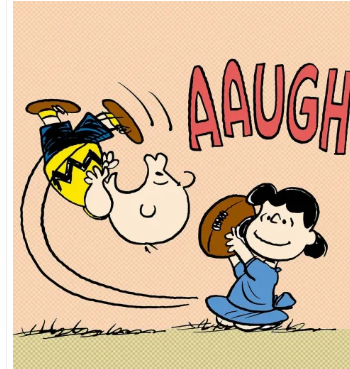
By 1875, Nietzsche, Darwin, Marx and Freud had proven that “God is dead”. Somehow, we have managed to hold on for another 150 years. We need to teach real history in secondary school, college and continuing education. The history needs to include religion, philosophy and politics.

We have learned to be tolerant of “other” people, religions and nations. We have opportunities to improve, but Protestants and Catholics no longer fight wars against each other. We practice a basic common morality even as we fight about politics.

We need help dealing with uncertainty. See root cause 6 for solutions. It is human nature to crave certainty. But we get to define certainty. We can reject Euclidean geometry, Aristotelian logic, materialistic physics and self-proving mathematics. We can reject a perfection standard for religion, philosophy and worldviews. Reject the tyranny of “either/or”. “Science and religion” is supported by the best scholars. Uncertainty is not the same as pure subjectivity or relativity.

We need help moving from skepticism to idealism. We need a new concept of idealism that cannot be undercut by radical skepticism. Existentialism, pragmatism, postmodernism and logical positivism are inadequate.

Invest time learning about the major competing world views. Great courses, Ted talks, college courses, church classes. Choose one and engage with others. Live it. Share it. Challenge it. Apply a variant of “Pascal’s Wager”. If radical skepticism is true and there is nothing but meaninglessness, what must you do? If skepticism is wrong and you believed it, what did you lose?

5. Better Myths, Paradigms, Philosophies, Theologies

We need leaders, thinkers, believers and communicators to do a better job of describing their world views. Especially within the context of our skeptical, uncertain secular age. What claims do they make? Why? Time for real apologetics. How do they apply today? How do we face death? Find a purpose beyond ourselves? Be deeply affirmed? Live in community?

Skepticism has won its battle. We can no longer be certain in a way we once thought was our due. How do we think about assurances, confidence, probability, weights, multiple dimensions, history, clarity, beauty, consistency, levels of meaning, unexpected results, effectiveness, feelings, insights, intuitions and faith as replacements for certainty? As with science and the scientific method, we have lost “absolute certainty”. How do we replace this and still feel great?

We need education on the role of paradigms/myths in history, science and cultures. We need to see how things fit together. We need them to fit together to have a society. Men have considered many religions and philosophies. We have built effective institutions. We once believed that some myth or paradigm would solve everything for us, now, perfectly. We elevated this to become a new God. We cannot give up hope. We have to step back and see our true history and progress. We have the knowledge, teachers and tools to provide the needed context.

Our paradigms need to recognize where they are weak, somewhat inconsistent, inadequate, fuzzy, unavoidably irreducible. There is no meta-paradigm for evaluating the paradigms. No paradigm is self-validating.

6. Personal Security

The other 5 “root cause” solutions can help. You are a member of many supportive communities. Join other communities and support others. Note that we are imperfect, complex, mysterious and still fully adequate. Reject victimhood. Be positive and constructive. Embrace your strengths and talents. Replace “absolute certainty” with OK and “good enough”. Choose and live a worldview that supports you as a person.

Take control of your life. Simplify. Set reasonable goals. Under promise and overperform. Learn about psychology, life skills, personal finance, careers, and government programs. Note that people usually “find a way” and that we do make economic and leisure progress through time. Save, hold assets, use insurance, limit debt. Engage in the political process. Make your voice heard.

Adopt some practical stoicism. Lynn Anderson – “I beg your pardon, I never promised you a rose garden”.

Summary

In order to solve our political problems, we need to face and solve the 6 underlying root causes. They are interconnected. They can be addressed mostly outside of the political process. This is cause for great hope and optimism.
Our Political Differences are NOT Going Away; And That’s OK

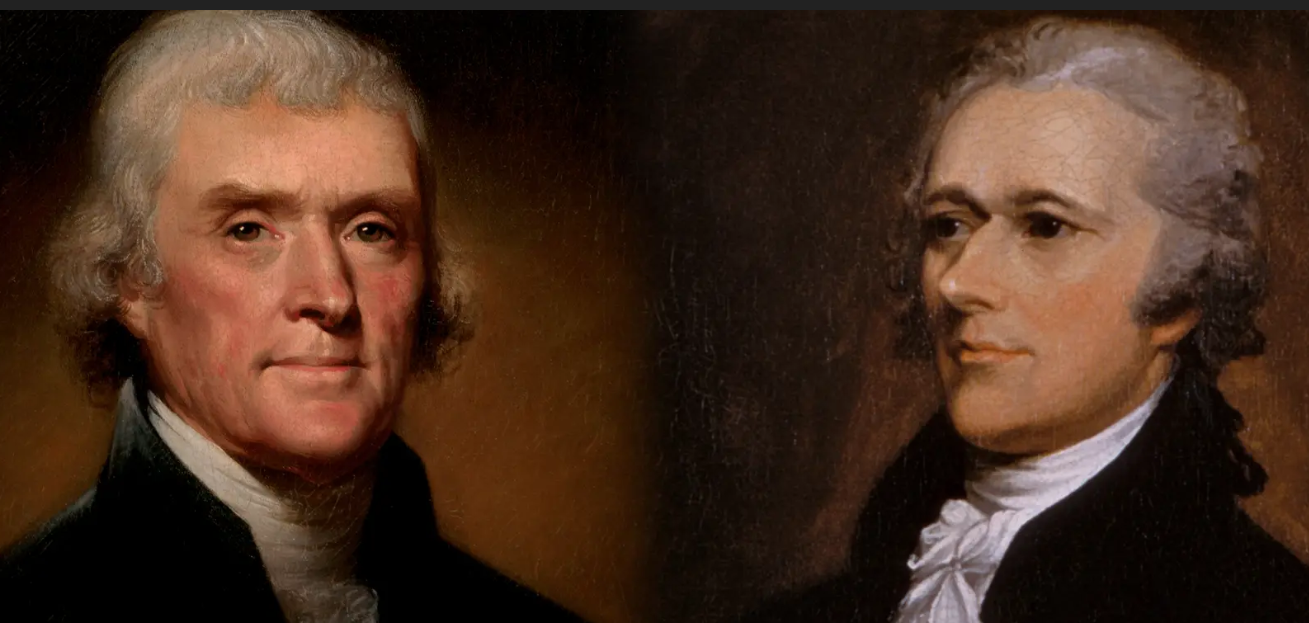
https://www.history.com/news/whose-vision-of-america-won-out-hamiltons-or-jeffersons

  1. Jonathan Haidt’s “moral foundations” appear to be deeply rooted in human evolution. Democrats mostly embrace care, fairness and equality. Republicans emphasize the broader menu of loyalty, authority, purity, proportionality, honor, liberty, and ownership. Policy differences are unavoidable.

2. Citizens have differing interests/views in all 4 broad domains of international relations, economics, politics and culture.

3. The basic left/liberal/progressive versus right/conservative/traditional divide has endured for 2 centuries.

4. Social scientists agree that some form of the psychological dimension of “openness” is an important driver of left versus right political views. Individuals who are more intuitive (N)/abstract/open on the second Meyers-Briggs dimension tend to take liberal views. Those with more concrete/specific/applied views tend to be conservatives. Similarly, those who are more Judging rather than Perceiving on the 4th dimension tend to be conservatives, seeing the world in an orderly, structured manner. Meyers-Briggs (T)hinkers tend to be conservative, and (F)eelers tend to be liberal, but this is a weaker statistical link.

https://personalityjunkie.com/08/personality-politics-liberals-conservatives-myers-briggs-big-five/

5. Philosophers and social scientists have worked intently for 2 centuries to find a “scientific”, objective, rational, modern view of how politics “ought” to be. Classical liberals, including Immanuel Kant and John Rawls, have proposed neutral, allegedly “value free” systems, but they have not been widely adopted.

6. Religious supporters have watched for a new “great awakening” or signs of the “end times” without success.

7. The progressive era of 1880-1920 overturned some of the political machines of the time and replaced them with scientific management style city managers and opposing political forces. “Good government” folks have since proposed and implemented city managers, commissions, outsourcing, sunset laws, zero based budgeting, process improvements and referendums but this has not removed politics from governing.

8. Philosophers have considered and combined pre-Socratic, Socratic, Neo-Platonian, Aristotelian, Augustinian, Aquinian, scholastic and modern views. They have discounted many views but not reached any true consensus on the important questions. We remain at a stalemate about the critical questions of the individual vs. community, objective vs. subjective reality, ideal/essential vs. existential/empirical world, natural and/or supernatural world, and a logical/designed vs. random/evolving world.

9. Philosophers and social scientists mostly agree that values, morality and character are inherently subjective. Some religious oriented people, philosophers and social scientists agree that a subset of core values is widely seen and shared, but this view has not gathered followers in the last half-century.

10. Classical liberals argue that the US system of democracy and representative government with “checks and balances” is fully adequate to guide society in making solid public choices. This group argues that the citizens can embrace the underlying required pluralistic political values without having to make further choices about broader cultural values. Conservatives and a growing number of moderates and liberals today complain that this approach offers a morality that is too “thin” to support a culture or a political system in the long run.

11. Perceived scarcity is not going to disappear soon, even with continued economic growth and 70 years’ worth of such predictions. Everyone remains interested in getting their fair share of the growing pie.

https://en.wikipedia.org/wiki/The_Affluent_Society

12. Class interests have not been destroyed. If anything, the life experiences between the top 1%, 10%, 20% and the middle 60% or the bottom 20% have diverged even further apart in the last 75 years. Although we don’t discuss “class” as an organizing principle for politics in the US, it has grown to become more important.

https://en.wikipedia.org/wiki/Capital_in_the_Twenty-First_Century

13. Social scientists have a much better understanding of “human nature”. We are imperfect. We have personality preferences. We can flex and learn but only so much. Nature and nurture. Tremendous potential. Education and experience are insufficient to create “perfect” citizens who can easily overcome our inherent political differences.

Summary

Despite the great progress of Western Civilization, we do not have and are very unlikely to find a single solution to our political differences. As individuals we have deeply experienced, considered and felt views of how our community should best operate. They are mutually inconsistent. We can work together to resolve some differences and agree to compromise on others. The apparently valid and opposing views don’t have an obvious resolution. I recommend that we constructively work together to find reasonable, decent compromise solutions and at the same time accept our inability to find an ideal solution without allowing that to discourage us.

What’s the Root Cause of Our Problems?: Insecurity

We have lost control of our political system and confidence in our institutions. I offer some root cause reasons for this situation in a series of posts. Sixth and final post in the series.

https://news.gallup.com/poll/647303/confidence-institutions-mostly-flat-police.aspx

In 1943, Abraham Maslow outlined a theory of human motivation that argued that some factors are so important that they must be “satisfied” in order for individuals to pursue other human needs. “Safety and security” was the second layer, just above meeting physiological needs. When I review my first five attempts to get at the “root cause” of our challenging current situation and my remaining list of important factors, I conclude that insecurity may be THE root cause. If we are truly insecure, we will do “whatever it takes” to find security.

https://en.wikipedia.org/wiki/Maslow%27s_hierarchy_of_needs

Let’s start at the highest level. Following the “progress” of the last 500 years, we are now expected to make important and consequential choices for ourselves in all areas of life: religion, politics, career, retirement, investing, insurance, health, recreation, leisure, marriage, parenting, sexuality, personal finance, consumption, travel, experiences, education, goals, personal expression, arts, branding, friends, community, communications, entertainment, media, social networks, privacy, tolerance, philosophy, clothing, transportation, food, hobbies, housing, banking, OMG! Today, we also have many more options within each category. We have better information and tools, but conflicting priority perspectives and uncertainty about how to find shortcuts. In total, we’re overwhelmed with no solution in sight [maybe AI]. This ongoing situation undercuts any basis for feeling deep security.

Science

Think of science as an expanding sphere or globe. The more we know, the more there is to add to our knowledge. By 1800, we had reached the limit of any man or woman “knowing everything”.

https://www.eoht.info/page/Last%20person%20to%20know%20everything

This does not trouble most people directly. Scientific advances since 1800 are estimated to have doubled every 15 years. That’s 15 more doublings or 32,768 times more knowledge since we first reached the limits of human understanding! Implicitly, this must trouble most people greatly. We are overwhelmed by a complex world that we cannot comprehend.

https://www.nature.com/articles/s41599-021-00903-w

So … science provides us with better understanding and tools. It provides structure and some certainty. It also provides unexpected uncertainty. Modern science bears little resemblance to Newtonian classical mechanics. It is all probability, complexity, and unavoidable uncertainty. About one-third of high school students complete a basic physics course. Perhaps 5% of Americans complete a single college physics course. We tend to think of the world in simple, materialist terms, but scientists since Einstein’s 1910 results do not support this world view. We want certainty, but scientists no longer provide it.

Global Level Threats

War, pandemics, plague, nuclear war, food shortages, water pollution, air pollution, food processing contamination, cancer, thalidomide, vaccines, hexavalent chromium, sarin gas, fluoride, extinctions, global warming, sea level rise, climate extremes, solar flares, electrical outages, runaway thermonuclear reactions, ozone layer thinning, acid rain, global government agencies, multinational corporations, non-governmental organizations. So many threats, highlighted by the media and various interest groups. Great uncertainty for all.

Economic Life

Economic scale grows. Specialization increases. Everyone must engage with the system. We all become cogs in the machine. We are dehumanized.

Economic stability is weak. Greater economic competition and change. International competition. Loss of large company support for employees. Increased technological changes and disruptions. Administrative, engineering, process and legal changes. Regulatory changes.

Corporate competition. Mergers & acquisitions. Outsourcing. Work automation and obsolescence. Job insecurity.

Weakened effective safety net from government.

Meritocracy focuses the minds of parents, children and adults on careers only. We worry.

Consolidation of income and wealth leading to further power consolidation through economic, social and political channels.

Increased financial leverage through availability of credit. More individuals have high fixed payment requirements and the risk of bankruptcy in hard times.

Capitalism continues to offer diverse goods and services to meet every need and desire. The commercial mindset pervades society.

Technological innovation offers an unlimited supply of new goods and services.

Personal Life

We have generally embraced Rousseau’s perspective on life. Each individual is born with infinite potential. Our job is to help each child achieve their potential and destiny, leveraging their talents. They have the capacity to “be, all that you can be”. Unfortunately, the individual needs to be validated by someone. They don’t have direct access to a transcendent religion or philosophy or community. Hence, they have to reach out to “society” for validation. They create a personal brand. They gain clicks. It is never enough. They are insecure.

Philosophy

We live in a secular age where all belief is insecure.

Skepticism rules.

Our attempts to find a single, clear, direct, omnipotent, omniscient, perfect solution beyond religion have failed. Nationalism, fascism, socialism, romanticism, pragmatism, rationalism, utilitarianism, unitarianism, Deism, communism, globalism, environmentalism, existentialism, postmodernism, conservatism, liberalism, neo-liberalism.

We have a great diversity of theological and experiential religious perspectives. This helps some and undermines faith for many others.

Western society has considered “progress” as a substitute for religion for 4 centuries. The economic, political, scientific, and communications advances provide a background for the belief that there is a “pattern” to history and it is inevitably heading in the right direction. The backlash in the 20th century has been strong based upon the world wars, Great Depression and the horrors of totalitarianism and technology.

We experienced some return to faith in progress in the post – WW II period and at the end of the Cold War. However, “the end of history” marked by the permanent victory of democracy, capitalism and globalism was very short-lived.

Politics

Our political parties are fluid. The civil rights act of 1964 shattered the Democratic party. The Vietnam War, riots, the counterculture and Kent State shootings reoriented the parties. By 1981 Reagan consolidated conservatives of national, Main Street, Wall Street, philosophy. libertarianism, religious, cultural, and international flavors to form a new enduring majority to replace the previous FDR majority. By 1994 Newt Gingrich installed an oppositional view against President Clinton. The polarization of politics grew from there. A black and white, right versus wrong, good versus evil view grew upon the singular yardstick of left versus right, conservative versus liberal. The mass media splintered into politicized pundits. Politicians embraced a world where perception is reality. The ends soon justified the means. A simple “red versus blue” perspective was promoted and adopted. Civility, trust, consensus, reason, fairness, tradition, and the American way declined. The 2008 mortgage debt meltdown created the populist “tea party”. The Republican party absorbed this populist group and revised its policies, accelerating towards populist and nationalist views with candidate Trump in 2016. Some citizens find security in their political party, but a vast majority decry the polarized situation.

Culture

The majority of cultures through time and around the world have been “traditional”. European civilization since 1700 is the outlier, deemed WEIRD by Johnathan Haidt. Western, educated, industrialized, rich and democratic. Traditional cultures emphasize group-oriented loyalty, authority and sanctity more than the individual-oriented care and fairness factors.

https://en.wikipedia.org/wiki/Moral_foundations_theory#:~:text=Adult%20members%20of%20so%2Dcalled,morality%20and%20violations%20of%20convention.

During the 18th, 19th and first half of the 20th centuries, the common Christian cultural background allowed European and American societies to explore and embrace this individualistic dimension without abandoning the group-oriented values, traditions or Christianity. After WWII and especially after the countercultural 1960’s, the loose consensus on culture has been shattered. Many historical norms have been challenged or overturned in the areas of marriage, sexuality, gender, race, parenting, government authority, male authority, church authority, institutional authority, music, art, drugs, religious belief, history, tolerance, human rights, life, relativism, subjectivism and objective morality. The cultural changes were broad, deep and disorienting. They have been celebrated, accepted or opposed. Culture, religion and politics have become aligned in a secular versus religious, liberal versus conservative, traditional versus modern/postmodern way.

We have multiple cultures based on this major split, but also based upon age, social/professional class, and geography (rural/urban/suburban) (coastal, Midwest, Sunbelt). Some people find security in their smaller culture. Many are disoriented by the multiple options and the conflicts between the cultures. Modern media capabilities allow us to live in isolated ways or to engage in fighting to promote our culture and oppose other cultures.

The changes since WWII have reduced our participation in communities of all types while increasing our focus on the individual. Many people no longer have the support of meaningful community ties.

Summary

Modern man is surrounded by uncertainty as he is forced to make more decisions in more areas with more choices than ever before. Most of us try to ignore the surrounding forces and live our lives day to day as best as we can. We implicitly adopt some kind of philosophy of life. We stay busy. We pursue goals. We consider the changes in our worlds. But the underlying tensions make life difficult. Economic and personal striving are a cultural norm. Polarized politics is hard to avoid. It’s difficult to relax, center and fully engage in life. We treasurer peace and certainty. We’re still looking for answers that work well in a world filled with options and choices.

The US is a Very Low Trade Nation

https://www.ship-technology.com/features/the-top-10-largest-container-ships-in-the-world/?cf-view

The US imports and exports about 1/8th (12%) of its Gross Domestic Product. Argentina, Brazil and Pakistan have a similar level of trade to GDP. China and Russia are closer to 1/5th (20%). The world imports and exports 30% of it’s GDP. European countries import and export 45% of GDP. The US is the most self-sufficient country in the world. It imports select commodities, labor intensive goods and luxury products. It exports high value-added goods and services supported by its high value-added and compensated workforce. As the US president threatens the large benefits of global trade to the US and the world, it’s very important to place the US within this context. U.S. trade may be less advantageous than someone’s vision of ideal, but based on size alone, international trade is clearly not a first-class priority for the country, its firms or citizens.

https://data.worldbank.org/indicator/NE.TRD.GNFS.ZS

What’s The Root Cause of Our Problems?: Skepticism

https://www.theguardian.com/books/2010/oct/24/hemlock-cup-bettany-hughes-review

We have lost control of our political system and confidence in our institutions. I offer some root cause reasons for this situation in a series of posts. Fourth post in the series.

https://news.gallup.com/poll/647303/confidence-institutions-mostly-flat-police.aspx

Positive Historical Ideals

Greek democracy, citizenship, virtue

Roman empire, law, stability, character, citizenship, the state

Christendom, stability, salvation, order, community, tradition

Renaissance, enlightenment, Protestant revolution, individual liberty, human rights, progress

Scientific revolution, understanding, technical control, economic progress

Classic liberal state, individual rights, liberty, freedom, fairness, justice

No era of human history has been perfect but “Western civilization” experienced net cumulative progress in its self-understanding, capabilities, confidence, positivity, justice and use of effective institutions for several centuries.

History Undermining Total Confidence in Any Single, Simple Cultural, Religious or Political Worldview

Natural disasters, plagues, wars, evil and oppression.

Religious conflicts, denominations, global religions, secular humanism, Deism, institutional failures.

Promise and obvious experienced shortcomings of utopian solutions such as socialism, communism, fascism, globalism, romanticism, environmentalism, and eugenics.

Rise of the modern nation state as an effective context for community, government, commerce, loyalty and security, followed by its totalitarian abuse, demonization of others and splintering into smaller geographic, religious and ethnic states.

The amazing, sustained progress of science and technology to “solve” all problems, followed by the realization that it cannot solve moral, political and social problems and that it creates many new ethical, commercial, and political challenges.

The sustained global economic progress driven by urbanization, industrialization, finance, administration, capitalism, government regulation and trade raising living standards, offering opportunity, improving health and reducing poverty, without reaching a clear consensus on how to capture the benefits of economic progress without being overwhelmed by the exploitative, unequal, monopolistic, political capture, environmental and cultural downsides.

The shock of the Great Depression and the 2 world wars to the popular, business and elite confidence that economic, social, global, military, political, educational, scientific and cultural progress was inevitable. The global successes of the post-war era and the collapse of the Soviet Union provided a very brief renewal in faith in progress and “the end of history”.

Philosophy worked very hard to keep up with the progress of science but has ultimately failed. Most of philosophy has been absorbed by science and social science. It provided some support for modern religion, science, arts and politics in the early modern period. It also offered deep skepticism about religion, objectivity, causality, and language. It didn’t solve “nature versus nurture”. It didn’t resolve idealism, essentialism, rationalism versus empiricism, pragmatism, existentialism. It provided us with several flavors of individualism, including Rousseau’s positive view of man outside of society. It served up Hegel’s historical/dynamic view, Marx’s insights and nonsense, Nietzsche’s replacement of God with Superman and the final retreat to logical positivism, materialism and postmodernism.

The expansion of individual rights has been a signature strength of the last 500 years. The true essential equality of individuals is broadly embraced. Race, gender, ethnicity, religion, class, social status, wealth, property, profession, sexuality, customs, appearance, and education are generally respected. Yet, we humans discriminate and prejudge upon such categories. Efforts by idealistic and minority groups to offset such shortcomings are hotly contested.

Major Options Today

Religious belief. The default secular worldview limits this approach to understanding the world and making important choices. Fundamentalist right to progressive left.

Personal growth. Design your life and your children’s lives to “be all that you can be”. You will have to look outside for validation of your progress. You may not find guidance by looking inward. You may find that you need community and links to eternity and the universe.

Libertarianism. Free market capitalism. Anti-government. Liberty. Freedom. Ayn Rand, Milton Friedman, Friedrich Hayek, and Ludwig von Mises developed a positive version of this worldview. It is embraced by a large share of the Republican party today. It is fundamentally anti-community and anti-religion. It elevates a single dimension of philosophy and morality above all others: economic liberty.

Populism. The “little guy” is exploited by “the elites”. A victim perspective. Farmers, peasants, factory workers, and small business owners take this perspective. In our individualistic, opportunistic, competitive, meritocratic, commercial, secular world all people need to justify their progress. We all “know” that we are “above average”, like the inhabitants of Garrison Keillor’s Lake Wobegon. If we don’t reach our goals, someone or something else must be to blame.

Authoritarianism. The world is too complex. We need a “great leader”.

Postmodernism. The powerful use every possible tool to oppress others. All minority groups are victims of the “ruling class”. Most modern philosophies, institutions and language are tools. Enlightened professors in the humanities and social sciences are waiting to lead the next revolution.

The Center Remains Missing

The Republican party has moved far right, embracing libertarianism, free markets, cultural conservatism and populism. The Democratic party and other cultural elites have been tempted by postmodernism, expected demographic trends and special interest groups. They have failed to provide a compelling mainstream alternative to the Republican party since Reagan and Gingrich. Socialists like Bernie Sanders, Elizabeth Warren and Alexandria Ocasio-Cortez win headlines. Democrats have consistently lost the framing battle, competing on shifting terms favorable to Republicans. They have failed to find a positive core message like opportunity, progress, pluralism, balance, rule of law, will of the people, decency, justice, reasonable fairness, shared winnings, sustained growth, win/win, security, or mutual interests.

I would also argue that a simple proposal to maintain the benefits of our historical political systems could be compelling and adequate for a supermajority of citizens and voters.

I return to Jonathan Haidt’s work on the moral foundations of politics and religion. The BIG change in human history is from a broad portfolio of factors in most historical and global societies to the WEIRD perspectives supported in part of the Western world: care, fairness and equality alone. “Liberals” now mostly ignore loyalty, authority, purity, proportionality, liberty, honor and ownership while “conservatives” wisely appeal to all of these moral flavors.

Summary

Western civilization has embraced rationality, science, and individualism. It has gone too far, forgetting about community and eternity/universality. Skepticism has grown as we have learned that no single, simple perspective is adequate to explain our world. There is now a risk that we reject all structured knowledge. There is also a risk that we embrace intuitive world views and leave rationality and criticism behind. The Republican party has managed to keep the various flavors of conservatism aligned in a far-right view. Democrats are unable to offer a compelling alternative to the general public.

Community Really Matters: Index

https://en.wikipedia.org/wiki/West_Side_Market

I believe that “community” really matters in our modern world. Ten articles promoting my view. Just like the neighbors who have visited the Cleveland “West Side Market” for 175 years.

Automobiles: Once Too Hard to Handle

Humans have a deep-seated preference for simplicity, directness and logic. We are analog creatures built to manage the variability of the real world, yet whenever we think abstractly, we strongly desire straightforward tools and concepts. Greek atomism, materialism, Euclidean geometry, the whole is the sum of the parts, fixed Bible language and meaning, mechanical leverage, Aristotelian formal logic, Cartesian coordinates, Newtonian physics not crazy quantum mechanics, light as wave or particle but not both, the ether as background of space, simple Mendelian laws of genetics, fixed, detailed laws, train tracks, binary computer logic, simple voting rules, etc.

We struggle with grey, indeterminacy, probability, uncertainty, tension, and dynamics. I think the success of Newton and science; the whole Enlightenment and scientific method have reinforced this bias. We seek objective reality, science and morals and instinctively back away from relativity and subjectivity. We really like Jesus when he reduces the moral law to “love God, love neighbor” but struggle with the mystery of the trinity, the paradox of fully man/fully God and riddles like “Again I tell you, it is easier for a camel to pass through the eye of a needle than for a rich man to enter the kingdom of God.”

My academic, career and personal background align with the deterministic view of the world. Degrees in economics, math and finance. Two professional accounting certifications. Presbyterian. Adjunct professor. Meyers-Briggs INTJ. Really strong thinking and judging. Moderate center-left politics. Library board member. Career experience in IT, quality control, process engineering, manufacturing, distribution, supply chain management, and logistics. Numbers guy. Back office.

According to F. Scott Fitzgerald, “the test of a first-rate intelligence is the ability to hold two opposed ideas in mind at the same time and still retain the ability to function.” I read this circa 1977 and “knew” it was pompous BS. I read Marx and his descriptions of “organic wholes” and “knew” they were simply a poor substitute for reason.

I have this same deep desire for order, clarity, directness, transparency, logic, understanding and control. Unfortunately, or fortunately, I have learned that the universe really doesn’t work like that. I’ve learned that God does not give us direct access to infinity or eternity or specific promises. I have learned that scientists, mathematicians and philosophers don’t believe in a deterministic world. I’ve learned that businesses leverage probability, processes, portfolios, projects, culture and flows that can’t be controlled.

I share this topic because I believe that most Americans unknowingly subscribe to a linear, direct, numerical, objective, deterministic, realistic view of the world. I think that politicians, advertisers, managers, preachers, teachers, counselors, neighbors and leaders share this view and reinforce it without knowing that there is an alternate view. The very best thinkers and doers embrace a world that allows for multiple views, multiple dimensions, uncertainty, grey, win/win, possibilities, art, music, religion, spirituality, love, community and neighbors to be real.

We have mostly embraced the single dimension, simplistic, polarized, right versus wrong, Manichean version of politics sold to us since 1990, to our combined detriment, IMHO.

My National FFA Organization colleague, Bill Stagg, advised me to always use automobile analogies when communicating complex ideas like this. Here we go!

Modern automobiles evolved from horse drawn carts, steamships and trains. Cars don’t look much like the trains or interurbans that dominated the US from 1900-40. They aren’t confined to predefined tracks! They have wheels that allow them to follow many roads. They have rubber tires, not wooden or steel wheels. This absorbs shocks, grips the road, and steers with slippage in dry and wet conditions. They have shock absorbers between the wheels and carriages. They have steering. The [power] steering has room to allow for “play”. They have bumpers. They have multiple gears for different speeds. They have clutches to buffer the force of the engine. They have differentials to buffer the power to each wheel. They have coiled springs in their seats. The brakes gently squeeze a metal plate. Windshield wipers are made of rubber to grip, but not too tightly. Engines are lubricated with oil. Transmissions are lubricated similarly. Braking systems are based on liquid pressure rather than mechanical devices.

This is aside from anti-lock braking, collision avoidance/lane warnings, air bags, cruise control, fuel systems, braking energy capture, etc.

The modern automobile uses buffers everywhere because they are most effective in the real world.

We should all follow this example. The very best “systems” provide for some slippage, buffering, shock absorbing, uncertainty, gearing, flexibility, gripping, and lubrication. They are never fully “direct”.

This principle applies to all systems, even our political system. The US political system is indirect. Checks and balances. House and Senate. Federalist. Electoral college. The “flexibility” is a planned feature, it is not a bug.

Happy motoring!

Trump Index

https://kids.nationalgeographic.com/history/article/donald-trump

Who Will Defend Democracy?

Many sources claim that President Trump threatens democracy.

https://www.washingtonpost.com/opinions/2025/01/28/trump-first-week-liberalism-democracy/

https://www.thenation.com/article/politics/trump-assault-american-democracy

https://odi.org/en/insights/can-american-democracy-withstand-trump/

https://www.theguardian.com/commentisfree/article/2024/jun/20/trump-threat-democracy-precedents

https://zeteo.com/p/this-week-in-democracy-week-2-chaos-trump

https://www.vox.com/on-the-right-newsletter/397120/trump-federal-spending-grant-pause-cutoff-democracy

https://thehill.com/homenews/senate/5111241-murphy-trump-executive-actions-democracy/

https://www.nytimes.com/2024/10/30/briefing/trump-democracy-2024-election.html

https://carnegieendowment.org/emissary/2024/11/trump-authoritarian-strongman-govern-signs?lang=en

https://www.bbc.com/news/articles/c5yveml59jlo

https://www.washingtonpost.com/politics/2024/12/18/majority-americans-oppose-trumps-proposals-test-democracys-limits/

Some of the commentary is merely “sour grapes” after losing the election. For some articles, you can “consider the source” and disregard them. However, it is very clear, IMHO that President Trump, this time, is going to fulfill his election promises, including implementing the whole Project 2025 agenda, retribution on his “enemies”, and a complete disregard for legal and political “checks and balances”. He views the election as a mandate and believes he has the right to implement all of his policies as if he won victory in a “winner takes all” parliamentary system. President Trump does not support our historical system of government that greatly limits the impact of any one actor, even one who earned just 49.8% of the votes and just 31.6% of eligible voters. Non-voters won the race with a 36.6% share. Vice president Harris came in third with 30.7%.

https://www.cookpolitical.com/vote-tracker/2024/electoral-college

https://www.usnews.com/news/national-news/articles/2024-11-15/how-many-people-didnt-vote-in-the-2024-election

Federal Government Institutions

Military generals, career civil service, FBI, DOJ, inspector generals, independent agencies. These agencies have a distinguished track record of fighting for their independent roles. The first month indicates that Trump understands they are a formidable opponent to be undermined.

Federal Judiciary

Lawyers belong to a proud and left-leaning profession. Federal judges belong to a two-century legacy of judicial independence. Most “conservative” judges use the originalist theory to limit the application of laws that restrict the free market or traditional cultural actions. Many of President Trump’s initiatives fall outside of these two areas. Federal judges may use their powers to retain the commonsense version of existing laws and reinforce the principle of maintaining precedents.

Supreme Court

https://www.axios.com/2019/06/01/supreme-court-justices-ideology

https://www.politico.com/news/magazine/2024/06/02/supreme-court-justice-math-00152188

Brett Cavanaugh is less conservative than he is perceived to be. Supreme Court justices treasure their independence. Chief Justice John Roberts is relatively neutral and strongly supports the independence of the court and his legacy.

Congress

https://www.washingtonexaminer.com/news/house/3220665/house-republicans-kept-seats-biden-districts/

https://ballotpedia.org/U.S._House_districts_represented_by_a_Republican_in_2024_and_won_by_Joe_Biden_in_2020

There are two dozen congressional seats held by Republicans in districts where they have a real chance of facing a competitive Democratic opponent. These individuals face strong pressures from Trump, national, state and local Republicans to fully support the president on all matters. They can have their funding cut off, lose congressional assignments and lose party staff support, but they don’t have to worry much about being “primaried” from the right.

Senate

Louisiana senator Bill Cassidy, Alaska senator Lisa Murkowski and Maine senator Susan Collins voted to impeach Trump. The other 4 Republican senators who did so are no longer in the Senate (Romney, Sasse, Burr and Toomey). Pennsylvania senator Dave McCormack and Wisconsin senator Ron Johnson join Collins as representing states with mixed party senators. In addition to Murkowski, 5 senators have a history of bipartisan activities: John Cornyn (TX), Jerry Moran (KS), Todd Young (IN), (the ageless) Chuck Grassley (IA), and Shelley Capito (WV). That makes 10 Republican senators who are more likely to consider the good of the country than their own or their party’s if “push comes to shove” on preserving our democracy. Mitch McConnell would never undermine the power of the Republican Party that he built over 4 decades, but he will not tolerate foolishness from President Trump. The U.S. Senate also has a long tradition of independence from the other branches of government. Each senator sees themselves as a base of power, representing their state, their party and the nation. Senators face political pressure to conform to their party and their party’s President, but they face elections only every 6 years and have a long history of personal support in their states.

.https://mccourt.georgetown.edu/news/bipartisan-index-2023-118th-congress/

https://www.npr.org/sections/trump-impeachment-trial-live-updates/2021/02/15/967878039/7-gop-senators-voted-to-convict-trump-only-1-faces-voters-next-year

https://en.wikipedia.org/wiki/Red_states_and_blue_states

https://en.wikipedia.org/wiki/List_of_current_United_States_senators

A Single Congressional Voice

Sometimes a speech, a question, an op-ed, a campaign slogan, a court brief, a story, an analogy can change the frame of reference for public opinion. When Joe McCarthy was asked “Have you no sense of decency?” he was finished.

https://www.history.com/this-day-in-history/joseph-mccarthy-meets-his-match

Sovereign Nations

Canada, Mexico and the EU are not going to accept Trump’s unilateral threats. They will respond strategically, irrationally, emotionally, patriotically, politically, even at a net economic cost to their people in order to protect their sovereignty. This will provide political pressure on Trump from his domestic supporters.

Big Business

American business has done very well for the last 75 years with free trade, globalization, international institutions and American dominance through alliances. Trump’s promise of lower taxes and regulation and threats of intervention for non-supporters will lead many to accept his approach, but some corporations and industries will be devastated by his trade wars. These corporations and others may see that the threat to the whole system is too large to ignore.

Governors

5 of 27 Republican governors have strong reasons to oppose any overreach by President Trump. Brian Kemp (GA), Kelly Ayotte (NH), Mike DeWine (OH), Phil Scott (VT) and Glenn Youngkin (VA). 7 of the 23 Democratic governors have national aspirations and will use their powers to aggressively thwart anti-democratic measures. Gavin Newsom (CA), Jared Polis (CO), Andy Beshear (KY), Wes Moore (MD), Gretchen Whitmer (MI), Kathy Hochul (NY), and Josh Shapiro (PA).

https://en.wikipedia.org/wiki/List_of_current_United_States_governors

Mainstream and Independent Media

Trump was good for business in his first term. He will be great for business in his second term. Journalists and media firms have lost their interest in providing “balanced” coverage and stretching to find a way to interpret Trump policies, actions and statements within traditional frameworks. They are more willing to directly and repeatedly say that he is lying, that his actions break the law and norms, that his actions are inconsistent with American history. They more quickly fact check and place his actions within the context of US and global history. They challenge his wording and stories. They attempt to prioritize the news of the day and not become distracted by all of his noise.

Churches

Evangelical Christians have supported President Trump because he has delivered on his promise to appoint judges who oppose abortion and support socially conservative positions. They have rationalized that his imperfect personal character is a case of God using him for good purposes. Younger and idealistic people are leaving these churches because of this strange alliance. Some leaders now speak out against Trump. Trump has “punted” on national abortion policies, arguing that they should be resolved in each state. Actions which threaten historical American norms on politics may be “the straw which breaks the camel’s back”. Liberal churches have chosen to stay out of national politics for many decades. Trump’s cold-hearted approach to issues may lead them to oppose him from the pulpit. Protestant churches generally agree to “Render unto Caesar the things that are Caesar’s, and unto God the things that are God’s”, but the generally unchallenged German Nazi situation remains as a stain on their conscience. Churches are much less influential than they once were, but certain transgressions may spring them into action.

https://www.newsweek.com/trump-christians-evangelicals-refugees-immigration-migrants-2021716

https://nationalcouncilofchurches.us/

https://en.wikipedia.org/wiki/Barmen_Declaration

The American People

Although we are polarized politically, there is a large middle one-third of Americans that consider themselves “independent”. They may lean left or right, but they pride themselves on being pragmatic and not buying into the unfounded claims of politicians on either side. The American people, even most diehard Republicans, will not accept actions that undermine our government or society. Trump is expendable. There is a Republican vice president who can take his place, as necessary.

Summary

President Trump’s first 2 weeks indicate that he will test the limits of our democracy. He strongly believes that his personal views are right, and that the country has provided him with a mandate to implement them quickly and permanently. Our political system provides the president with well-defined limited powers. He will “cross the line”. There are a dozen institutions that can and will push back.

Liberal Concerns; Community Solutions

https://webcommchest.org/

Context: Individualism Drives Out Community

I believe that our society has adopted a radically individualist perspective without being aware that “it” has made these choices and transmitted its choices though our culture. Historically, conservatives have been the main promoters of the “community” complement to individualism, but I don’t see any possibility for our current conservative party to effectively fulfill this role in its populist, nationalist, xenophobic, capitalist, commercialist, elitist, authoritarian, transactional state. Liberals have not been exceptionally strong promoters of “community” or community organizations other than the central state historically, but I will argue that 6 core liberal objectives require strong communities and community organizations for success. I have broached this subject in 3 other recent articles.

(1) Abuse of Economic Power

Strong economic agents often have the ability to misuse their economic resources in all dimensions. They can shape political, governmental, judicial and administrative choices. They can use their power to obtain greater than market returns/rates from labor, suppliers, competitors, lenders, investors, partners, universities, not for profits, professional, managerial and executive staff, nations, non-governmental organizations, immigrants, children, minorities, women, disabled and other low power groups. Strong players can treat other agents purely as means and ignore their humanity. Strong players can shape products, product markets, delivery channels, advertising, marketing and communications to take advantage of human weaknesses in making economic decisions. Radical liberals argue that these abuses are inherent and extreme. Most liberals point to the evidence of historical abuses to support their concerns about concentrated power and advocate for controls, laws, checks and balances, counterweights, information, regulation, expectations, legal opportunities, etc.

Community plays a major role in politics through political parties, unions, community organizations, interest groups, industry associations, professional organizations, government employee organizations, journalist associations, media associations, universities, teachers’ organizations, PTO’s, legal associations, social services organizations, community foundations, churches, civic organizations, social organizations, veterans’ organizations, etc. Individuals who have experience as members, volunteers, funders, leaders and beneficiaries of organizations are likelier to participate in other organizations and believe that organizations make a difference in the political process at all levels.

Community organizations and select industries also play a crucial role in shaping the implicit political, economic, social and moral beliefs of our society. Capitalism, free markets, democracy, liberty, progress, America, opportunity, God, federalism, government, regulation, rule of law, entrepreneurship, free trade, unions, populism, presidential power; the list of concepts and their proper roles is long. Education, university education, churches and religion, mainstream media, other media, entertainment industry, arts, music, professions, industries, youth and college organizations, political communications, etc. The list of influencers is long. Groups, organizations and community matter.

Most importantly, community experience shapes our beliefs regarding the relationship between the individual and the community. We currently emphasize the economic, social, personal development and political rights of individuals. We de-emphasize the rights of communities and organizations and the responsibilities of individuals who “belong” to these organizations. We emphasize individual choice, tolerance, rights and “limited liability” commitments.

The modern right has embraced the “pure” capitalist system as the primary defender of all individual rights, liberties and freedoms. Natural “laissez faire”. Social Darwinism. Anti-communism. Anti-totalitarianism. Anti-government. Anti-regulation. Anti-centralization. Entrepreneurship. Road to Serfdom. Job creators. Greed is good. Wealth is good. Lives of the rich and famous. Horatio Alger. These stories, ideologies, politics, myths, principles, policies, science, and beliefs are centrally important to individuals adopting a view of the role, risks and control of economic power.

Liberals tend to point towards the universal, abstract dimension. The nation. Global humanity. The rational view points towards the highest level as the most effective way to outline or solve problems. The national community is suspect because of fascist risks. Perhaps a proper national community could be used to support liberal views. Lincoln, FDR and Kennedy embraced the nation. The global community may be useful for religious or abstract politics, but it is seen as highly important by only a very small slice of our citizens.

Communities of interest are more important. These organizations shape both political activity and the underlying views of the people.

(2) Abuse of Political or Cultural Power

“Liberals” have mostly discounted the risks of state power, even after the many examples of totalitarian atrocities on the left and right. Yet philosophically this concern was at the heart of “classical liberalism”, which created the relatively low power American national government (even on the second try). The power of the state, the military, the draft board, the DOJ, the FBI, the police, the courts, the national guard and the imperial president were major concerns for liberals in the 1960’s. The power of “the state” to monitor the activities of ordinary citizens was also an issue in the 1960’s and 1970’s as the actions of the CIA and Nixon’s government were revealed. In the second Trump administration many liberals are once again wisely worried about centralized political power.

The use of community organizations in politics is critical as noted above.

Liberals are generally much more concerned about the role that culture can play in indoctrinating individuals to support and comply with a single view of citizenship, politics, religion, culture, law and life. The 1950’s (!) and 1960’s cultural revolution or counterculture was largely about protecting the individual from the forces of conformity to the nation, big business, commercial society, small towns, and religion.

Following Rousseau, liberals believe that individuals have great potential for personal growth and creativity. This expression of individual potential holds a mystical, infinite, divine quality. Forces that constrain this journey should be opposed. Those who support the use of human possibilities must be supported.

I think this is a critical point to reconsider. Government, religion and cultural institutions do have the power to overreach in favor of the views of the powerful actors in society. They can support pure capitalism, nationalism, populism, elitism, religious conformity, commercialism, pragmatism, materialism, etc. They can also support the liberal world view: balance, true individual rights, justice, opportunity, equality, peace, diversity, global community, progress, improvement, human rights. Community, organizations and institutions are tools. They can be used by any political, moral, economic, pragmatic, interest or social group to advance their interests.

As noted in the prior section, organizations are essential to the political process. There is a risk that political and cultural organizations will align to support conservative political views, even the most extreme, fundamentalist, literalist, constraining, oppressive, unequal, static, wasteful, impersonal ones that liberals oppose.

Undermining the role of “community”, of local organizations, of communities of interest, does not help to oppose the ongoing march of conservatives towards a highly structured system that supports the rule by the successful over the rest. The existence of a wide variety of healthy organizations is essential to provide a counterbalance against a single worldview becoming dominant and oppressive.

Historically, philosophical conservatives were MOST concerned about society, the nation, God, tradition, community, family, race, history, avoiding disaster, etc. They wanted to preserve the positive aspects of the inherited society. The individualist, rationalist views of the “Enlightenment” were not embraced. … Until it became clear that the kings, church, nobility, and landed aristocracy were going to be replaced by the new elites of capitalism, trade, ownership, law, university, and denominations. Then, the conservatives “changed horses” to the new winners in modern society. The individualistic strain of economic life in capitalism became supreme. The true “community” dimension of religion, local community, guild, union, charity, service, parish, precinct, tradition, protection, festivals, saints, colleagues, heroes, handicrafts, debt forgiveness, tithes, noblesse oblige, leadership, extended family, common law, music, art, food, dress, language, etc. became much less important. Daniel Bell argued that the “cultural contradictions of capitalism” made it impossible for any society based on pure capitalism to survive or thrive.

https://www.goodreads.com/en/book/show/734077.The_Cultural_Contradictions_of_Capitalism

There is an inherent conflict between social and economic conservatism. The first elevates community. The second elevates the individual. Ronald Reagan was able to combine both strands into a single loosely defined worldview. He argued that traditional American social values are consistent with “free market” economics. Republicans through Trump have managed to maintain the same conglomeration of incompatible views.

Republicans have managed to win the political wars. Democrats have managed to win the culture wars. The Republican cultural counteroffensive is alive today. Anti-trans rights. Public choice education. Anti-mainstream media. Anti-elite. Anti-university. White nationalism. So-called Christian nationalism.

Cultural values are transmitted through communities, organizations, government, laws, businesses, work experience, political experience, family, friends, and colleagues. Democrats would be wise to invest resources in developing and communicating community supporting world views.

Liberals worry about the ability of conservatives to use “human nature” to manipulate citizens. Consider Jonathan Haidt’s moral foundations theory. Humans inherently respond to moral, political and religious calls based on loyalty, authority, purity, honor and ownership. Liberals highlight care, fairness, and equality and some degree of liberty and proportionality. They believe that Western civilization has moved beyond the other 5 values and that politicians who appeal to citizens on these dimensions are merely hucksters. They worry about the framing of issues, groupthink, victimhood, low education, low information, selfish citizens.

Liberals worry about a “least common denominator” world view, and its use by politicians. Fundamentalist, legalistic, fixed religion. Simple slogans. Survival. No change. Polarization. Unthinking either/or. Local/provincial. Commercial. Conventional. Bourgeoisie. Selfish. Self-interested. Unquestioning. Following. Cheering. Uncritical. Short-term. Blindly following “experts” or leaders. Blindly individualistic. Elevating history and personal experience. Family, clan and tribe. They believe that every individual is capable of personal growth and seeing a broader, more abstract perspective of life. Rousseau once again. Infinite possibilities for all. Individuals who do not pursue the great possibilities of life are seen as living a false consciousness. This is most explicit in Marxism and postmodernism but part of mainstream liberal thought.

Liberals tend to embrace the abstract, idealistic views of Plato, Descartes, Locke, Rousseau, Spinoza, Hegel, Marx and Kant. They believe that a single well-defined worldview must be right. They struggle with the messy applied views of Aristotle, Jesus, Hume and Dewey. Normal humans are nearly all on the applied, analog, pragmatic, complex, unfinished, uncertain end of the spectrum.

In all of these areas, culture is transmitted through community. A very small share of people study, or even sample philosophy, theology, sociology, economics or political science. Fewer yet study literature, history, art or the humanities.

“Cultural conservatives” have highlighted the importance of community organizations in transmitting culture. Now, they want to politicize previously neutral or secular institutions. Public schools, libraries, judges, FBI, DOJ, BMV, sheriffs, public health, emergency preparedness and response, private schools, election boards and officials. Moderates and liberals must evaluate and respond to these initiatives. How do we preserve important institutions as truly neutral? What political effort is needed for those that must be politicized?

Until Trump-times, liberals did not need to worry about the basic structure of the American government. The rule of law. Political norms. Objectivity. Facts. Logic. Conscience. Character. Historical traditions. Bipartisan American foreign policy. Voting rights. Civil rights. Freedom of the press. Freedom of religion. Checks and balances. Pride of the Senate. Independent judiciary. Protected federal workers. Nonpartisan military. Independent agencies like Federal Reserve Board. American commitment to allies. American commitment to treaties. In a flash, Trump has used the skepticism of Descartes, Hume, Nietzsche, the existentialists and postmodernists to propose a truly radical world of only “might makes right” without any constraints. Hegel to the infinite power. A portion of the electorate and one party and that party’s leadership and key supporters have embraced this worldview, perhaps without understanding everything that it implies.

We have important cultural beliefs to consider. Strong, dynamic, engaged, tense, battle tested, creative, robust, forward-thinking groups of citizens are needed to formulate alternative views and oppose these challenges to the progress of modernity, Western civilization and classical liberalism.

(3) A Broken Political System

Our government does not deliver its core services. Government is not efficient or effective compared with private sector firms and industries. Government fails to reflect the will of the people, even when it is strong and clear. The political system has been captured by politicians who have structured the rules to highlight politicians’ re-election and power. The political system has been captured by influential interest groups. Political competition is based on communications rather that content. The political system does not encourage or reward participation by the people. Political parties seek their own best interests rather than the nation’s best interests. The political system strongly favors the status quo. The political system strongly favors the interests of the powerful, wealthy and well organized versus the popular will. Strong forces are able to shape administrative implementation of laws.

Our two-party system is broken. Our media system is broken. Trust in the government at all levels and in all functions has been systematically undermined as a deliberate strategy by one political party.

Community institutions are required to overcome this situation. Political parties, interest groups, churches, community organizations, social welfare organizations, not for profits, professional organizations, industry organizations, states, counties, metro areas, global organizations, environmental organizations, patriotic organizations, veterans’ organizations, civil rights organizations, lifestyle organizations, local charities and United Ways, children’s organizations, youth organizations, fraternities, sororities, civic organizations …

Western civilization improved the opportunities and results for its citizens and the whole world from 1500 through 1914. The world wars, fascism, communism, totalitarianism and the great depression undermined public and intellectual confidence in “progress”. The post-WWII era recovered confidence in slow, sustained global progress based on the “western consensus” of mixed-market capitalism, democracy and international trade. The 9/11 terrorist attacks, the market failure based great recession, the rise of China’s state-oriented system, political polarization, mixed lessons from a global pandemic, rogue Russia, Iran and North Korea, global warming/climate change threats, and BREXIT withdrawal from the European dream have once again undermined our sense of progress. We face challenges, big challenges. Is our political system up to the challenge?

Historically, America has responded to global or conceptual challenges with revised political structures. We seem to be stuck in a trap. Only community organizations that aim to recover the principle of the government reflecting the general will of the people can lead the way. As Americans, we believe in manifest destiny and American exceptionalism. We can do whatever it takes to succeed. That is our history and our calling.

(4) Loss of Human Dignity

Our culture today focuses on personal growth, development, creativity and possibilities. Yet all individuals have an intense need to be validated for both their performance and their selves. Our society provides many ways to support the results of personal growth but only a few that embrace the individual directly.

A market economy requires us to fill the role of economic man as a specialized producer, employee, investor, property owner, trader and consumer. The economic value of the role is recognized. Only for those in the “creative class” is the individual even partially seen as a human being rather than merely “human capital”. Consistent compliance with the various economic roles is required, so they tend to “crowd out” other ways of thinking.

The market determines the “value” of all things in purely economic terms. The meritocracy funnels us into the highest “value added” activities which don’t often match our talents, personalities or interests. We set aside those other dimensions of ourselves. We start to view all choices as economic choices, pushing aside personal, social, political or spiritual factors.

We practice instrumental rationality in our decision making in business, science and law. We seek of optimize means for given ends. We balance costs and benefits, risks and rewards, short-term and long-term. This habitual way of thinking is reinforced through our “personal productivity” tools. We optimize our writing, data, reports, calendars, projects, processes, teams and schedules. We adopt this optimizing efficiency and effectiveness perspective. We become more like our computers and machines.

We face challenges of scale. Huge bureaucracies in business, government, and nonprofit organizations. They are large and process driven. Most have systematized, automated and optimized their “user interfaces” to the point where connecting with another human is nearly impossible. Some organizations do invest in making “self-service” easier, but the net effect is that we become “cogs in the machine” in order to transact our required daily activities. This is not new, but the pervasiveness, complexity and lack of options accumulates.

Organizations struggle to make individual choices with individual customers, employees, partners or suppliers. In general, a standard process is more effective, less risky and approved by the legal department. A decision-tree outlines all possibilities. Front-line employees, even highly paid professionals, are less empowered to make “business decisions” based upon all factors. This undercuts both the former decision makers and their partners.

Our meritocratic culture highlights the best, the winners, the exceptional, the superb, the most creative or unusual, the leaders, those who have overcome adversity. The focus is mainly on the end results of the few, rather than the common human experience of all. The demands of the meritocracy cause all human activities to be evaluated for resume and career building. No time for the person, the spirit, community, friends, art, health or fun.

We measure everything. What gets measured gets done. Helpful human measures are rare.

Our culture provides very weak philosophical answers. A secular age. Pure materialism. Skepticism, agnosticism, atheism. Pure subjectivism and radical tolerance. Utilitarian, calculating measures of pleasure and pain. Mainly scientific, instrumental, transactional psychologies. Anxiety revealing existentialism and postmodernism. Universities and public intellectuals that have undermined religion.

Our politics has devolved into simple red versus blue tribe allegiances, discouraging efforts at innovation, finding common ground, understanding, empathizing, communicating, or cooperating. Many feel their identities as men or women, whites or blacks, rich or poor as being imposed upon them rather than being chosen.

That’s pretty depressing. Fortunately, we humans are tough. We find some community and validation at home, school, work and other organizations. We use our tools. We squeeze in “real life”. We “check out” from the structures. Overall, we don’t get as much affirmation as we desire, especially in a word focused on personal growth.

There are solutions to address our situation. Legislation and social pressures for human, labor, consumer and patient rights. Traditional and experiential education on community, decision making, spirituality, consumer economics, personal finance, team building, leadership, multiple intelligences, talents, wisdom, creativity, goal setting, planning, leadership, boundaries. A more complex, structured, incentive slanted world requires individuals to understand their situation and what they can do to survive and thrive.

These are classic “liberal” priorities. Protected and well-educated individuals are best positioned to combat the intrusion of external forces that impinge on their humanity. Improved forms of community are needed to support a political party that is focused on the needs of all individuals. New forms of community education and experience are required for the “lifelong learning” needed to build so many competencies, frameworks, tools, insights and wisdom.

I believe that most demographic, class, philosophy and interest groups within the conservative tent have these same experiences with modern life. They hope for a return to an earlier age when the existing institutions were better prepared to help with this most important dimension of human life. I think most really understand that there is no “going back” to the 1950’s exactly as it was. We need to upgrade our institutions and communities to make life better. This is an area where creative bipartisan efforts can deliver great value.

(5) A Feeling of Weakened Security and Opportunity

The classical liberal emphasis on human rights, from the “bill of rights” through the recognition of minority rights in the last century is at risk. The “rule of law”, independent judiciary, political norms, civil service, career service, military, agencies, property and other structural components of our political system are at risk in a society that has lost the memory of the wars against fascism and communism. Modern “liberals” allowed “conservatives” to ensure that schools, civic clubs, youth organizations and editorialists would reinforce this critical component. Today, we need a “coalition of the willing” from both parties to protect these guardians of our security.

Post-Reagan America grudgingly accepts a government funded patchwork social safety net. Since 1981, the economy has become more dynamic, specialized, competitive and international. Employees have lost their informal “rights” to lifelong employment, fixed benefit pensions, stakeholder influence, seniority, respect for tribal knowledge, camaraderie, etc. Firms, factories, offices, roles and contracts “come and go”. Firms outsource, import and contract as required. Americans approved the “Reagan Revolution” two generations ago. The social safety net has not been adjusted to match the reality of employment insecurity today. Community organizations that once provided important parts of the “safety net” now play a much smaller part. All employees feel insecure. George W. Bush opened the door for both parties to embrace conservative means to liberal ends with the outline of “compassionate conservatism”. Liberals might find this compromise solution more effective than the current political stalemate that creates a widening gap between personal insecurity and social solutions.

Overall, our economy continues to provide opportunities for employment and ownership. Political parties argue about equal opportunity for different groups, changes in opportunities and the right degree of opportunities.

Our culture offers mixed messages about opportunity. We highlight those who succeed from all backgrounds. We celebrate innovation, creativity, output and entrepreneurship. We support change management as a required part of a dynamic economy. We celebrate American exceptionalism and the growth of opportunity, liberty, and prosperity. We tell our children that they can become anything that they want to be. We have been a confident society.

The politics of equal opportunity has highlighted the real challenges for those who possess less economic, family, neighborhood, education, language, confidence, communications or cultural assets in a competitive world. Slower economic growth for the bottom and middle thirds of the economy for 50 years has dented confidence. Polarized politics makes the economy and other national contexts more negative when the other party is in power. The replacement of a religious culture with a secular culture makes the economy the dominant or only factor in assessing the future. There is a “victimhood” strand within our culture that disconnects many fellow citizens when they experience difficult times. Our media driven world highlights the negative, simple and exceptional stories, overshadowing the long-term progress that continues to be made in most areas of life. The post-1960’s, Vietnam, Watergate mind is ironic and skeptical. We find it difficult to “believe” in progress, institutions or trust. The increased scale of society leads some individuals to doubt that they have any agency whatsoever. Some individuals find cultural, political and business support for “diversity” a threat to their personal opportunities.

Liberal leaders enjoy taking the critic’s role. In this case, we need to define, promote, communicate, implement and sustain a renewed confidence in our society, politics, economy and personal lives. Liberals need to be advocates and promoters. The message has to be based on reality and believable. We have strengths in our society and can develop new ones. This core socialization function is naturally provided through universities, opinion leaders, media, schools, civic organizations, churches, youth organizations, neighborhoods and local governments.

(6) Destroying the Great Vampire Squid of Unbridled Capitalism

The power and influence of a truly “laissez faire” capitalist system is the root cause of the 5 liberal issues above. (1) Unconstrained economic agents use and abuse their power. Competitive markets are strong forces. Large firms are stronger, smarter, more creative and enduring. (2) The individualist, commercial “free enterprise” system inherently undermines “community” as a force to conserve culture. (3) Economic interests tend to capture the political system and eventually undermine its basic operations. (4) The mature technological economic system undermines our humanity. (5) The fully empowered economic system threatens human rights, security and opportunity.

The root cause of these problems is that a pure market system, unconstrained by law, politics, regulators, religion, culture, history, options, unions, cooperatives grows too strong. There is no limit to corporate size and rewards but the incentives for growth remain. There is no limit to market share without anti-trust laws and enforcement. There are no limits to opportunities from political capture without spending and lobbying regulations. There are no limits to judicial and election manipulation. There are no limits to supplier, labor and customer squeezes. There are no feedback mechanisms to constrain the beast once it has overcome political and cultural/social limits.

There are even more negative consequences that we see today.

The economic system becomes so dominant that it simply excludes all competitors. We see a “race to the bottom” of countries, states and municipalities lining up to incentivize powerful firms to do business by cutting taxes and regulations, reducing labor and environmental burdens and offering subsidies. Employees lose union rights and then even basic employee rights as they become reclassified as contractors. Firms squeeze suppliers down to marginal cost pricing. They collect fees for the “right” to do business with them.

The large scale integrated economic system becomes so dominant that alternatives are eliminated. Everyone must use the banking system. Small scale firms must use the main economic system for supplies, services, logistics, and distribution. Only a small number of suppliers remain for each product or service. Individuals find it difficult to disconnect from the grid.

The system also comes to dominate the culture philosophically. Individualism and commercialism undermine institutions and community. Instrumental, scientific, objective cost-benefit reasoning comes to dominate thinking and become the default way of seeing the world. Utilitarianism, libertarianism, materialism, pragmatism, existentialism and atheism become attractive philosophies. Philosophical conservativism is replaced by winning.

The threat of losing in a meritocratic system with weak safety nets and the need for public affirmation of winners leads to lives devoted to economic success and the exclusion of all else.

Extreme views like “social Darwinism” return. Greed is good. A “winners are good, losers are bad and deserve to lose” view becomes socially acceptable. “Every man for himself” is considered wisdom. All relations become transactional. The pursuit of self-interest is honored. “The end justifies the means” is accepted as valid in all spheres of life. The “great man” theory of history and leadership is adopted. All relations are considered win/lose, even when win/win options are obvious. “Might makes right” is seen as self-evident in all arenas.

In 1992 Francis Fukuyama confidently proclaimed the “end of history” and the permanent victory of Western capitalism and democracy. In the last 30 years Western capitalism has continued to grow, manage technical revolutions and dominate the global economy while other nations have also grown significantly, driving the greatest reduction of poverty in human history. We have not seen the “end of history”. The powerful economic system systematically undermines those who confront it and usually wins. The results for society are mixed, unacceptable and unstable.

https://en.wikipedia.org/wiki/The_End_of_History_and_the_Last_Man

I don’t believe that the powerful interests of unchecked capitalism can be overcome by political tactics or specific reforms alone. I think that they can only be offset when a majority of Americans understand, in some fashion, the threat which this radical ideology and extreme, revolutionary political force poses to our nation and society. It requires a credible political alternative. It requires a groundswell of support for rule by the people interpreted as a solid majority of 60%. It requires idealistic liberals to embrace this centrist bias for the good of society.

We live in the greatest economic society in history. We have the ability to grow, trade, solve global problems and provide greater economic opportunities for all and a more effective safety net without reducing the incentives that drive the economic machine.

To reach these goals, we need to gain broad consensus on the need for balance in our politics. We have 6 political camps in the US: far left, center-left, center, center-right, far right and undecided. We can turn this into dozens by looking at economic, cultural, military, international and philosophical dimensions. We’re not going to get 60% to the left or to the right in the US, even by its relatively conservative political standards compared with other developed countries. We are stuck with each other. We are blessed to live in the first country that embraced the “classical liberal” political system with its “checks and balances” approach. This is an inherently cautious, socially and economically conservative system, but it allows for change when it must occur.

We are at one of those times in history. We must find another “New Deal” that preserves the economic goose that lays the golden eggs, while taming the goose so that she does not become the golden goddess. To do this, we need leadership. We need conversations and interaction. We need trust. We need “liberals” to embrace community and culture as important and valid shapers of public opinion. We need to agree on a revised political system. We need to support community institutions that shape, reinforce and reward cultural beliefs. Laws and education are not enough. Real people learn by experience, examples, stories, friends, neighbors and community leaders who they trust. There is no great leader, communications, tagline, brand, flag, music, framing, research, program or legal shortcut.

Summary

I think that radical individualism is the curse of our time. “A pox on both your houses”. Liberals have over promoted social individualism while conservatives have over promoted economic individualism. Unbridled capitalism is the root cause of many of our society’s challenges. I encourage liberals to overcome their historical suspicion of “community” as merely an agent of the Church, priests, kings, lords, landlords, capitalists and merchants. The “classic liberal” political model only supports a “thin” set of moral values promoting the state, separation of church and state and tolerance. That is not enough to offset the power of wealth in the modern capitalist economic system. The financial stakes are much too high in a $27 Trillion economy with 20 million millionaires. Large financial interests will always win and expand to infinity … unless we have some kind of broader agreed upon framework. I believe we can embrace such a framework only if we leverage communities to send, consider and support such a message.

Historically, liberals have welcomed change, considered new ideas, experimented, innovated, broken idols, destroyed sacred cows, valued reason and confidently believed in a better future. Finding a way to make “community” a central part of our politics, economics and society is a new opportunity to apply those values.