
Month: September 2024
Hoosier Demography Posts Index
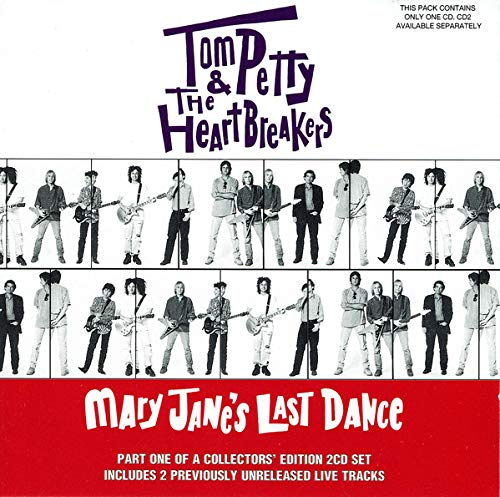
She grew up in an Indiana town … with them Indiana boys on an Indiana night.
https://en.wikipedia.org/wiki/Mary_Jane%27s_Last_Dance
Indiana wants me, Lord I can’t go back there.
https://en.wikipedia.org/wiki/Indiana_Wants_Me
Oh, the moonlight’s fair tonight along the Wabash
https://en.wikipedia.org/wiki/On_the_Banks_of_the_Wabash,_Far_Away
A little ditty about Jack and Diane
Two American kids growin’ up in the heartland
https://en.wikipedia.org/wiki/Jack_%26_Diane
I grew up in Greater Cleveland as a proud buckeye in “the best location in the nation” 1956 – 74. Learned about demography in my first 1974 quarter at New College in Sarasota from Dr. Peter Hruschka. Transferred to Indy in 1988. Remained ever since. Slowly became a “Hoosier”. Started documenting the Hoosier population in 2009, including the exceptional growth of our suburban Hamilton County.
The urban counties have tripled in growth. The others remain flat.
Urban counties will grow.
Indy has found a growth solution. Cleveland has not.
Urban growth, rural stagnation nationally.
Indy metro and a few suburban or university counties grew, others declined.
Long-term stagnation outside of Indy and a dozen counties.
Indy metro area is increasingly dominant.
Metro Indy stands out as a growth leader in the Midwest.
Rural America was behind in 1960. It was much further behind in 1980. The gap has continued to grow. This has huge political implications. George Wallace, Spiro Agnew and Richard Nixon deeply understood this in 1968. Not sure my Democratic party has yet caught on.
Metro areas thrived. Suburbs thrived even more.
The components of Hamilton County’s 50 years of growth.
Hamilton County breakout by suburb.
Net in-migration continues.
Population growth drives job growth.
More diverse …
Older …
An Indianapolis suburb can compete for “best place to live” in the US!
Yet I get an Indiana kick out of you.
https://en.wikipedia.org/wiki/I_Get_a_Kick_Out_of_You
The Spirit in the Sky: 1960/70’s Music
How Is It (We Are Here) (youtube.com)
John Legend – Green Light (Official Video) ft. André 3000 (youtube.com)
Spirit In The Sky – Norman Greenbaum (Official Lyric Video) (youtube.com)
Billy Preston – My Sweet Lord (Live) (youtube.com)
Larry Norman – Why Should The Devil Have All The Good Music? – [Lyrics] (youtube.com)
Peace in the Valley – Elvis Presley (youtube.com)
Elvis Presley – Amazing Grace (Official Audio) (youtube.com)
Andrea Bocelli – Amazing Grace: Music For Hope (Live From Duomo di Milano) (youtube.com)
Simon & Garfunkel – Bridge Over Troubled Water (Audio) (youtube.com)
The Weight – The Band (lyrics) – YouTube
Eric Clapton, Steve Winwood – Presence of the Lord (youtube.com)
JESUS CHRIST SUPERSTAR ( Superstar – Carl Anderson – 1973 ) HD (youtube.com)
Oh Happy Day – The Edwin Hawkins Singers (youtube.com)
NEW * Put Your Hand In The Hand – Ocean {Stereo} 1971 (youtube.com)
Speak to the Sky – Rick Springfield (youtube.com)
Jesus Christ Superstar (’73) I don’t know how to love him (youtube.com)
Jesus is Just Alright – Doobie Brothers (youtube.com)
Talking Heads – Take me to the River 1980 (youtube.com)
Go Up Moses (2021 Remaster) (youtube.com)
Argent – God Gave Rock And Roll To You (youtube.com)
Led Zeppelin – Stairway To Heaven (Live at Earls Court 1975) [Official Video] (youtube.com)
Bob Dylan – Highway 61 Revisited (Official Audio) (youtube.com)
The Devil Went Down to Georgia (youtube.com)
Blind Faith ~ Can’t Find My Way Home ~ (Original Acoustic Version) HQ Audio (youtube.com)
Young Rascals – How Can I Be Sure (1967) (youtube.com)
The Who – Won’t Get Fooled Again (Shepperton Studios / 1978) (youtube.com)
Cabaret (1972) – Willkommen (youtube.com)
Peggy Lee — Is That All There Is? 1969 (youtube.com)
Are You Experienced? (youtube.com)
Todd Rundgren – International Feel [Single Version] (youtube.com)
The Byrds – Turn! Turn! Turn! (To Everything There Is A Season) (Audio) (youtube.com)
The Lovin’ Spoonful – Do You Believe in Magic (Audio) (youtube.com)
I Am A Man Of Constant Sorrow (With Band) (youtube.com)
The Who – Who Are You (Promo Video) (youtube.com)
Prince & The Revolution – Let’s Go Crazy (Official Music Video) (youtube.com)
Richard Harris MacArthur Park Original 1968 (youtube.com)
Three Dog Night “Easy to be Hard” OnTV (youtube.com)
Presbyterian Church Decline and Recovery
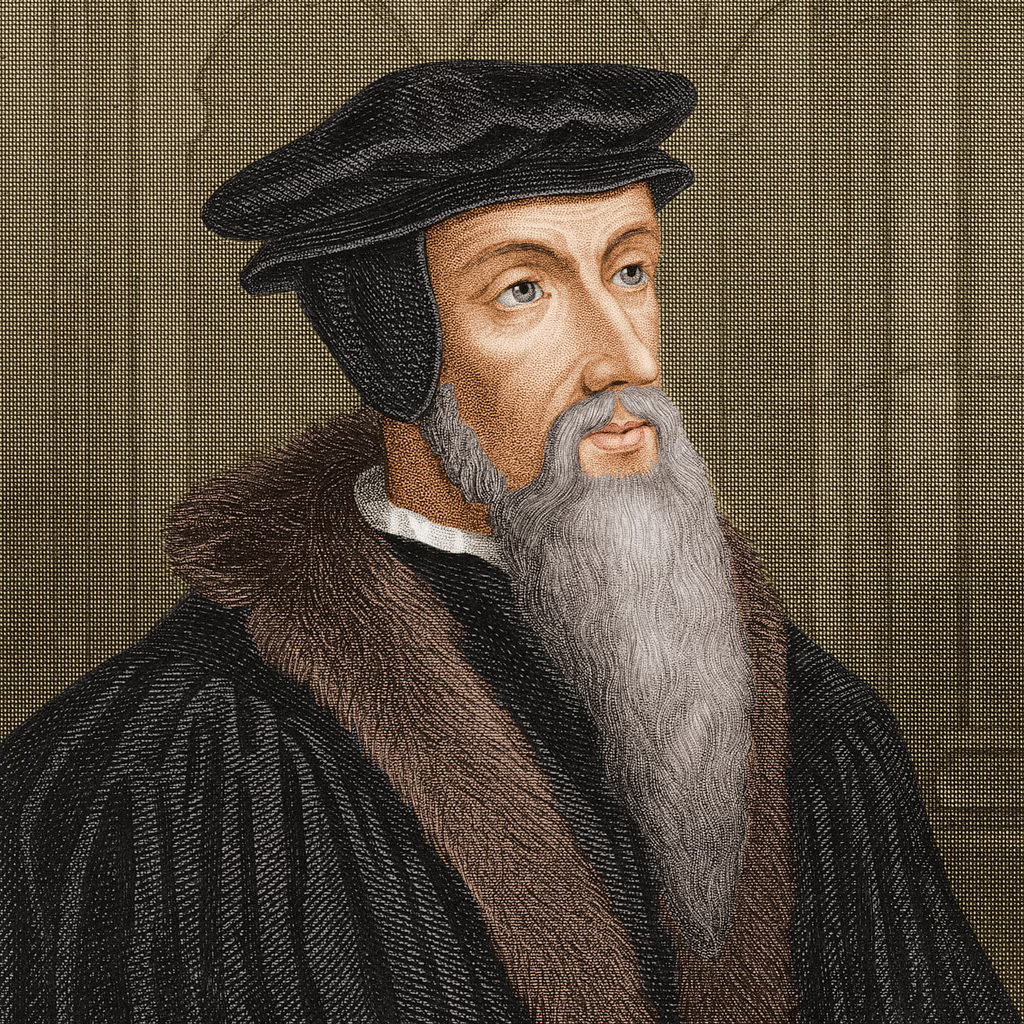
This leading mainline protestant denomination lost one-half of its membership between 2000 and 2022 following a slightly smaller decline in the previous 20 years.
Congregational Strategy: Presbyterian Church (USA) Membership – Good News (tomkapostasy.com)
Such a large decline has many drivers.
- The cultural revolution of the 1960’s undermined the social benefits of membership.
- The ongoing transition to “A Secular Age” made nonbelief a possibility for new and old generations.
How (NOT) to be Secular: Reading Charles Taylor – Good News (tomkapostasy.com)
- The university, media, entertainment elite followed the “new left” political views from existentialism to postmodernism, making nonbelief a socially acceptable or even preferred position for the growing college educated professional class.
- The mainline seminaries generally embraced the individualism, idealism, social justice, subjectivism, ecumenicism, personal growth, literary criticism, logical positivism and other trends of the post-WW II era.
- Prosperity, social security, and longer lives combined to make people more self-sufficient, able to (temporarily) ignore the usual claims of mortality.
- Expanded government services replaced the role of the church in education, health care, counselling, youth activities and social services.
- The “Reagan Revolution” and neo-liberalism rebuilt a rationale for unfettered “laissez faire” capitalism and undercut the moral authority of the liberal church and liberal politics. Radical individualism, commercialism and libertarianism reestablished their credibility in a tolerant world.
- The “liberal” positions on civil rights, women’s rights, social security/welfare, gender identity, differently abled, immigrants, ecumenism, globalism, and environmentalism prevailed. Presbyterian churches generally supported these social changes. These cultural changes generated a backlash with polarizing political consequences. Congregations lost members because they were either “too liberal” or “too conservative”.
- Alternatives to mainline Protestant creedal denominations grew. Southern, rural and northern reactions to racial integration, busing and affirmative action generated white, socially traditional churches and schools.
- Non-denominational, non-creedal churches built upon racial, cultural and political factors, including fundamentalism and the prosperity gospel.
- The Roman Catholic church became more liberal intellectually, allowing some individuals to join or retain their membership even when they had significant disagreements.
- Entrepreneurial megachurches evolved to provide “full services” to a transactional culture without the constraints of denominational creeds, seminaries or hierarchies. They leveraged technology, marketing, evangelizing, contemporary music, culture, individualism and economies of scale very effectively while mainline churches disdainfully called them merely “attractional”.
- Previously “alternative” religions such as Pentecostalism, Mormonism and Asian religions became familiar and real options.
- The polarization of religious and political views deepened beginning with the 1973 “Roe vs. Wade” Supreme Court abortion ruling and accelerated with Newt Gingrich’s leadership of the Republican Party in 1992. Individuals moved left or right, leaving the conservative theology plus liberal social justice combination in many Presbyterian churches as a strange combination, a duckbilled platypus option.
- Like most mainline churches, PCUSA congregations mostly “doubled down” on their historical success and turned inward in the face of adversity. They reinforced their decisions on worship, social issues, congregational care, mission, and outreach. They did more of the same.
- PCUSA churches turned to their historical strengths in thinking, theology, rational steps as the world discounted this dimension and increasingly turned towards feelings and action.
- PCUSA churches doubled down on the “field of dreams” strategy. Build it and they will come. Preach it … Market it … Program it … Modernize it … Serve it … Outreach it … Church planting had some success, but existing churches, aside from a minority of very large ones, found that economically rational investments were inadequate or insufficient to stem the tide of the “megatrends” changing society, especially among the younger generations.
- PCUSA churches invested in contemporary worship services, modernized and inspirational youth programs, partnerships, service projects, retreats, and mission strategies without major gains in membership or active church participation.
- PCUSA churches maintained their commitments to national and international mission projects, social justice and missionaries, including a commitment to mission programs as a significant part of the church budget.
- PCUSA churches maintained their collaborative governance model where congregational elders share power with the senior pastor and the Presbytery. This provided an inherent status quo bias to decision-making, preserving historical programs, retaining donors and limiting any major changes or experimentation.
- After the 1960’s, the US continued to move towards a radical individualism with less community participation and trust in institutions.
Our Kids: The American Dream in Crisis (2015) – Good News (tomkapostasy.com)
Community Attachment in Mass Society on JSTOR
- The growing partnership between evangelical, fundamentalist Christian churches and the Republican Party further aligned the political and religious dimensions of life. Young adults increasingly bought into a “left versus right” perspective on political and religious views.
- PCUSA churches, national leadership and seminaries embraced ecumenicism within Christianity and across faith communities, softening the distinctions between denominations in an increasingly brand sensitive world.
- PCUSA churches, national leadership and seminaries failed to address the threats of existentialism, new left, postmodernism, skepticism, subjectivism, relativism, scientism, atheism, agnosticism, libertarianism, commercialism, secularism, scientism, logical positivism, utopianism, and radical environmentalism. A faith in “progress” remained.
- PCUSA churches remained focused on their middle class and professional class congregations. Sometimes partnering with inner city churches and neighborhoods or immigrants. Sometimes sponsoring and supporting new ethnic churches.
- PCUSA churches and national leadership generally took modestly “liberal” positions on cultural issues. Human rights, civil/racial rights, LGBTQ rights, women’s rights, abortion choice, gay marriage. Conservative members left.
- PCUSA churches preserved membership numbers by not requiring financial, worship, volunteer, service, participation or other active engagement.
- PCUSA churches have continued to discount the value of marketing, branding, strategy, stewardship, technology, business, process, administration as inherently less valuable than the ordained ministry program functions.
Recovery Strategies
- Remain welcoming and open to former members or others who have a limited social need to be affiliated with a church for key life moments.
- Develop and promote a “Christian Social Teaching” in parallel with “Catholic Social Teaching” to address the core issues of capitalism and power.
- Invest in organizational “best practices” for strategy, marketing, technology, human resources, stewardship, finance and administration.
- Outline key functional areas. Prioritize investments based upon expected cost/benefit ratios. Triage. Eliminate non-value-added programs and initiatives. Measure results. Hold staff, elders and volunteers accountable for results.
- Invest in marketing directly and indirectly through service and outreach activities.
- Consider minimal sustainable program sizes and economies of scale. Eliminate unsustainable programs. Partner with other churches.
- Take clear moderate positions on social issues and communicate them. Welcome diverse opinions on issues that are not essential faith issues.
- Clarify the role of individual creeds as definitive/determining or inspirational. Invest in deep understanding and commitment to the essential ones.
- Reconsider historical distinctions within Christianity. Evaluate doctrinal precision/scholasticism versus effectiveness in attracting, retaining and engaging church members. What do Catholicism/liturgical, Pentecostal/spiritual and Fundamentalist/practical/local have to offer?
- Strategically prioritize the resource investments in worship, spiritual growth, mission/service, outreach/evangelism, congregational care and stewardship.
- Actively invest in programs and missions to oppose atheism.
- Promote representative democracy and civility.
- Actively create and promote Christian church partnerships
- Outline and communicate the concept, benefits and requirements of the “missional church”.
- Offer programs, small groups and pastoral care to emphasize the critical role of discipleship for supporting the church, it’s members and missions.
- Reach out to struggling churches to provide services and transition assistance.
- Ruthlessly review all communications to make them accessible and welcoming to individuals with no church background.
- Review and revise all programs and ministries to first meet the needs of young adults.
- Review and revise all programs and ministries to ensure they meet the needs of all other diversity dimensions.
- Invest in outreach forums that allow individuals to learn about the church in a neutral environment.
- Actively address the shortcomings of radical individualism in worship, activities and communications.
- Review and adjust governance structures to ensure that strategies and programs can be defined, and their success measured.
- Consider the impact on worship, growth, care, service, outreach and stewardship for each decision.
- Communicate God’s eternal purpose and promise for men in terms that all can understand.
- Emphasize the collective, community nature of the congregation as the only way to prepare for heaven.
- Invest in Christian apologetics in “A Secular Age”. The alternate world view is now much clearer. Hold it accountable.
- Invest in strategic planning facilitation, including the translation of mission, vision and values into strategic priorities and programs amongst worship, care, service, spiritual growth, outreach and stewardship.
- Invest in program and project planning.
- Invest in measurement systems to evaluate performance.
 Good News