The US averaged 35,000 annual cases of polio in the 1940’s. The disease was eradicated in the US by 1979.
Global cases were 350,000 in 1988. Concerted efforts by governments, health care professionals, philanthropists and civic organizations (Rotary) eliminated polio from 5 continents by 2020. The last African case was reported in Nigeria in 2016.
Active cases were reported in only Afghanistan and Pakistan last year.
Soon, this will be the second ever human infecting disease to be eliminated (after smallpox).
The Indy Metro Area is comprised of Marion County plus the 7 surrounding “donut” counties. Marion has grown throughout the half-century, adding 175,000 people (22%). Rural Morgan and Shelby counties have not grown much. Hancock, Boone and Johnson counties have doubled their populations. Hendricks has grown from 50,000 to 175,000. Hamilton has grown exponentially from 50,000 to 350,000. This relatively rapid growth has made the metro area grow from 21% to 28% of the state total, adding state senators and representatives and causing increasing tensions between the one large, growing area and the slower growing, largely rural, rest of the state. There are suburban Chicago, Louisville and Cincinnati counties that have shown decent percentage growth, but they are a small share of the state. Lake County (Gary) is a special case, declining in population decade after decade.
The Indy Metro counties started 1970 with slightly higher per capita personal incomes, so the share of the state total was 24%, a bit above the 21% population share. By 2020, the Indy Metro area had captured one-third of the state’s personal income (34%), much higher than its 28% share of the population. Per capita incomes and population had both grown in the capital region.
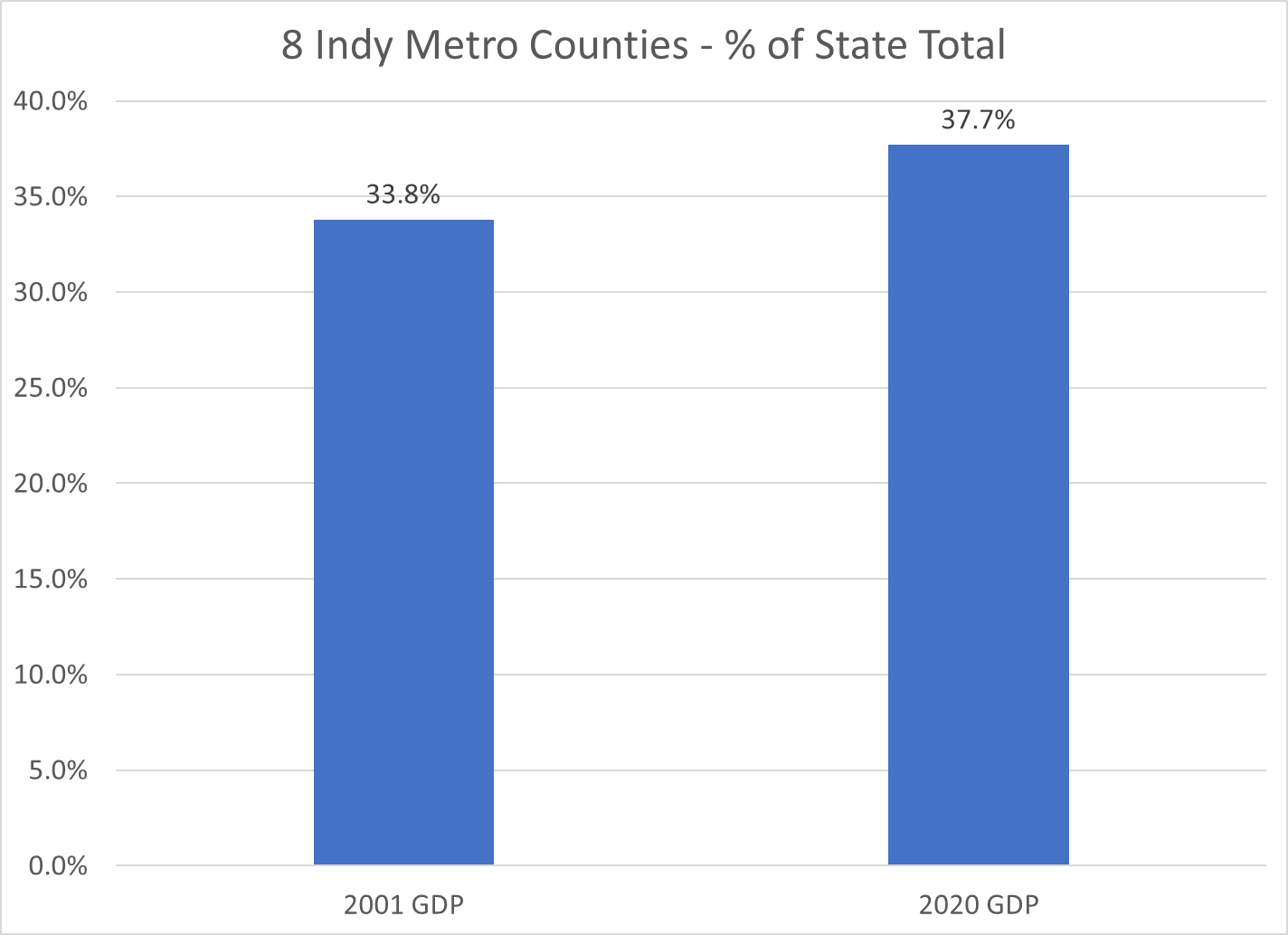
Gross Domestic Product, the value of goods and services produced in Metro Indy, was one-third of the state total in 2001, the first year of available statistics. This measure increased to 38% by 2020. Nearly 2 out of every 5 dollars of statewide value-added output was generated by the Indy Metro area in 2020.
Indiana is a mostly rural state with Indy, a dozen small cities, a cluster of northern Indiana manufacturing counties, Gary (Lake County), Ft. Wayne (Allen) and Evansville (Vanderburgh). The Indy Metro Region has 9 times the density of people, income and production as the most rural counties. For example, it takes the 67 lowest population counties to equal the 1.9 million people living in the Indy Metro area.
The Indianapolis Metro area grew by a respectable 72% during this period, above the national average of 63%. The other Indiana counties grew by only 19%, about one-fourth as fast.
The Indy Metro area added 900,000 people, the same growth as the rest of the state.
With population and per capita income gains, the Indy Metro area’s real personal income grew almost four-fold, while the rest of the state grew by roughly 150%.
Indy Metro per capita income was 15% above the rest of the state in 1970 and twice as high (30%) by 2020.
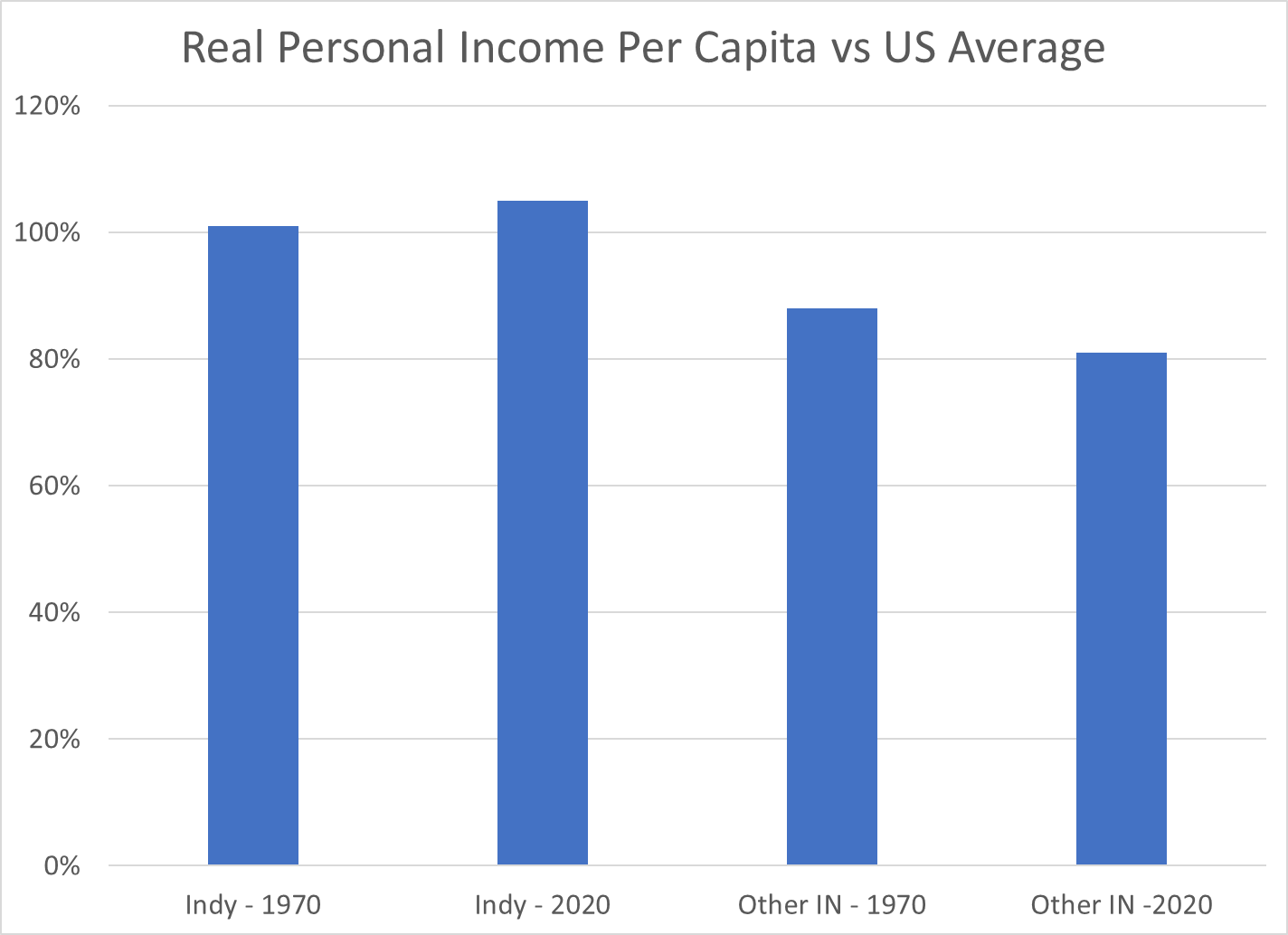
The Indy Metro area has improved its per capita income versus the US average by 4 points, from 101 to 105. The other-Indiana counties have declined from 88% to 81% of the national average.
While the per capita income in the Indy Metro area is 30% higher than the rest of the state, the value of goods and services produced (GDP) per person is more than 50% higher than the rest of the state.
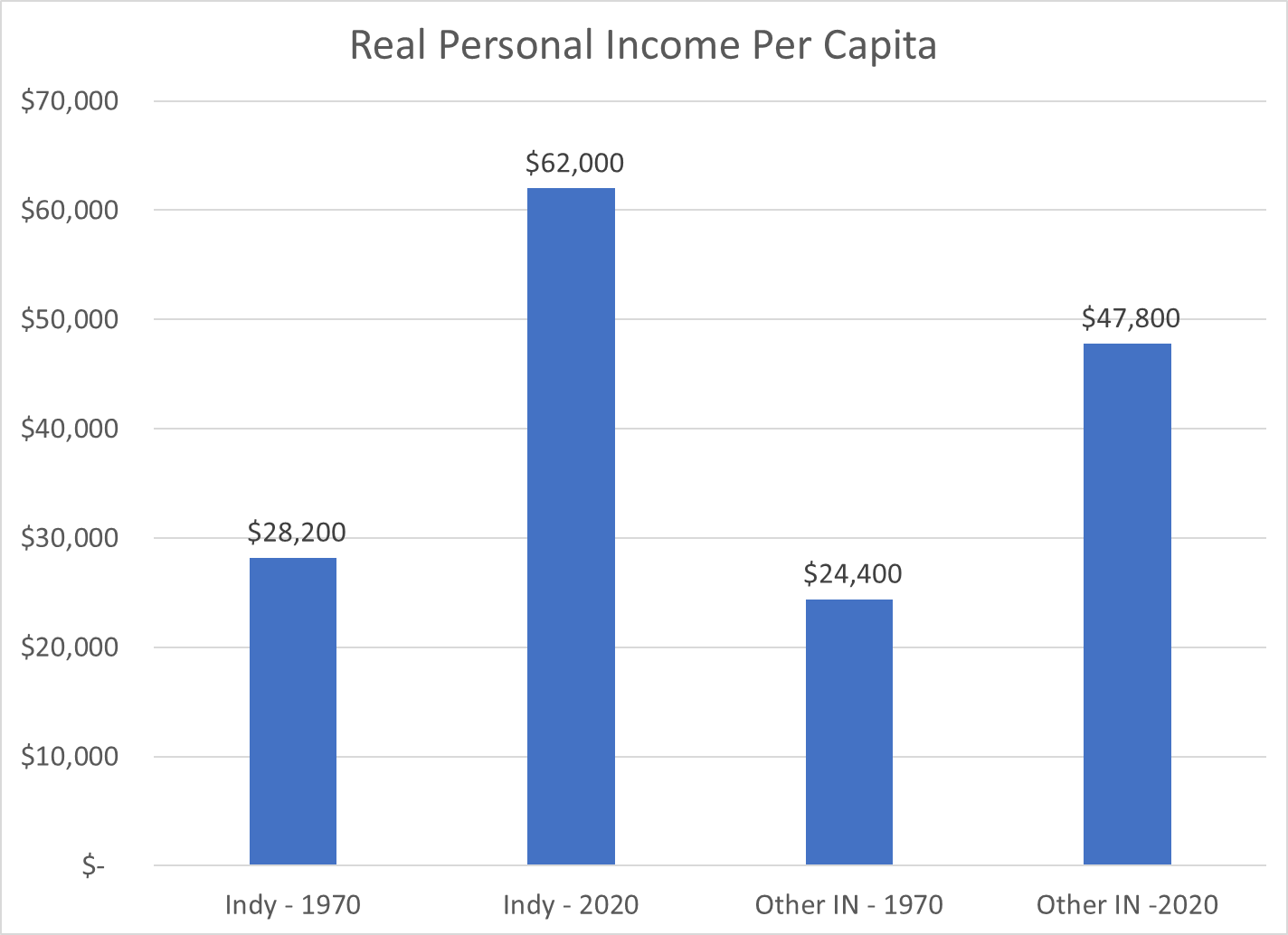
These wide, and growing, disparities in economic results may lead to increasing tensions between the relatively prosperous center and the largely “left behind” periphery. Fortunately, the real personal income per capita in the “other” counties did increase by 95%, from 24 to 48K during these 5 decades, even though the Indy folk’s income grew by 120%, from 28 to 62K.
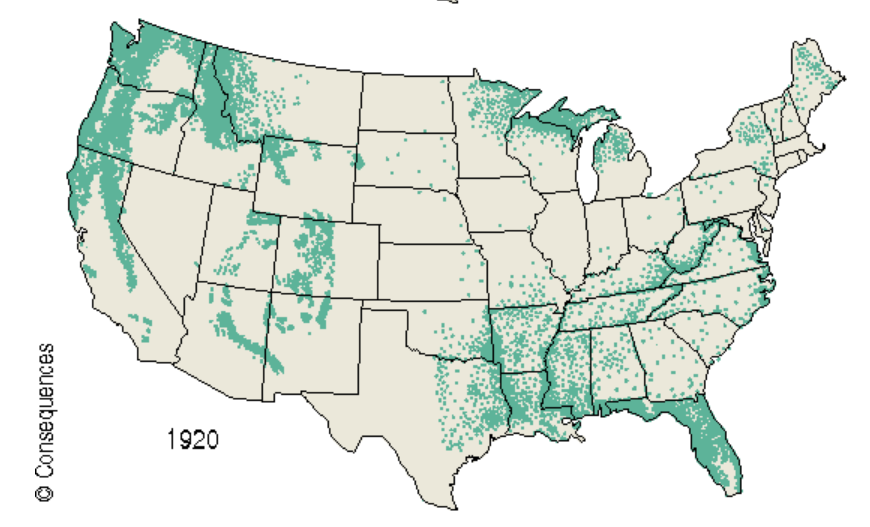
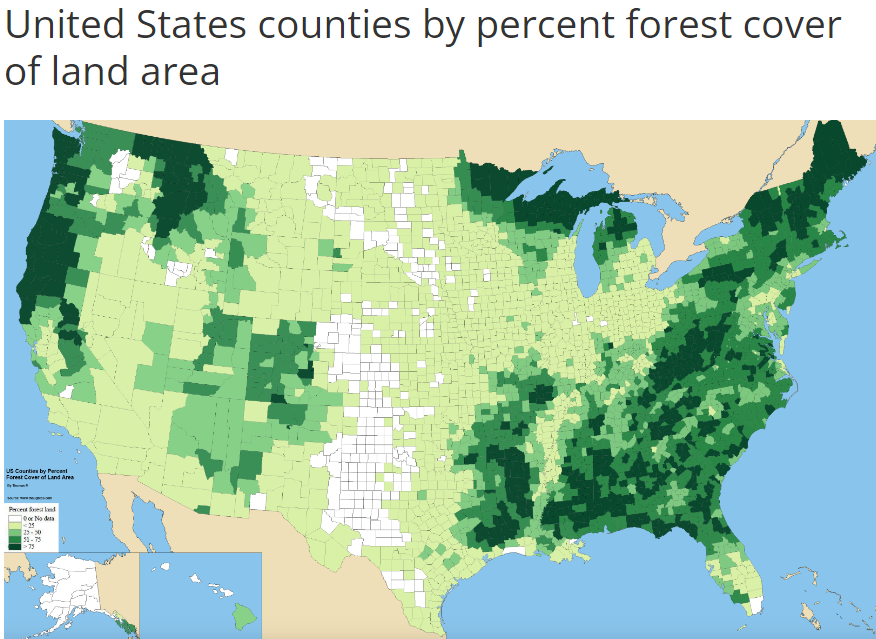
“Many challenges are associated with drought, wildfire, invasive species, and outbreaks of insects and disease—all made worse by climate change. Warming temperatures mean more energy in the atmosphere, which is consistent with severe weather events, such as floods, tornadoes, blizzards, ice storms, and hurricanes.”
I’ve lived in the Indy suburbs for 34 years, 80 miles away from Johnny Cougar Mellencamp’s hometown of Seymour, IN. These songs were published in 1983 and 1985, VERY early warning signs of the rapidly growing gap between rural and urban America.
Let’s take a look at 2020 per capita income levels for the 92 counties in Indiana.
Indiana per capita income was $51,900, now just 87% of the US average of $59,500.
In 1970, Indiana per capita income was indistinguishable from the national average: $3,020 versus $3,119 (nominal/current dollars). Indiana was the 18th highest rated state, leveraging its manufacturing prowess, highly productive agriculture, central logistics location, proximity to Chicago and ports on the Great Lakes and the Ohio River.
In 2020, just 5 Indiana counties had per capita incomes above the US average. 87 had lower levels. In just 2 generations, nearly the whole state had moved from a proud “average American” level to well below average.
In 2020, only 11 of Indiana’s 92 counties earned 90% of the national average. Just 41 of 92 Indiana counties earned even 80% of the national average.
The distribution of per capita income levels within Indiana expanded. In 2020, just 13 of 92 counties were “above average” compared with the Indiana average, which was already 13% below the national average.
Indianapolis suburban counties Hamilton and Boone averaged $80,000 of per capita income in 2020, far above the US and Indiana averages. No other Indiana counties averaged as much as 80% of this level. Just 4 others reached 70% of this aspirational level: $56,300. Only 11 of 92 counties earned two-thirds of the wealthy suburban level at $53,600. 39 of 92 Indiana counties had per capita incomes above 60% of the suburban winners.
Income distribution matters within counties and across counties. The increasing disparity in incomes is driving American politics.
56% believe in God as described in the Bible. Another 23% have a less literal belief in God. Of the 20% who answer “no”, fully one-half believe in some kind of higher power or spiritual force. Only 10%, in 2017, fully rejected any supreme being/force/concept.
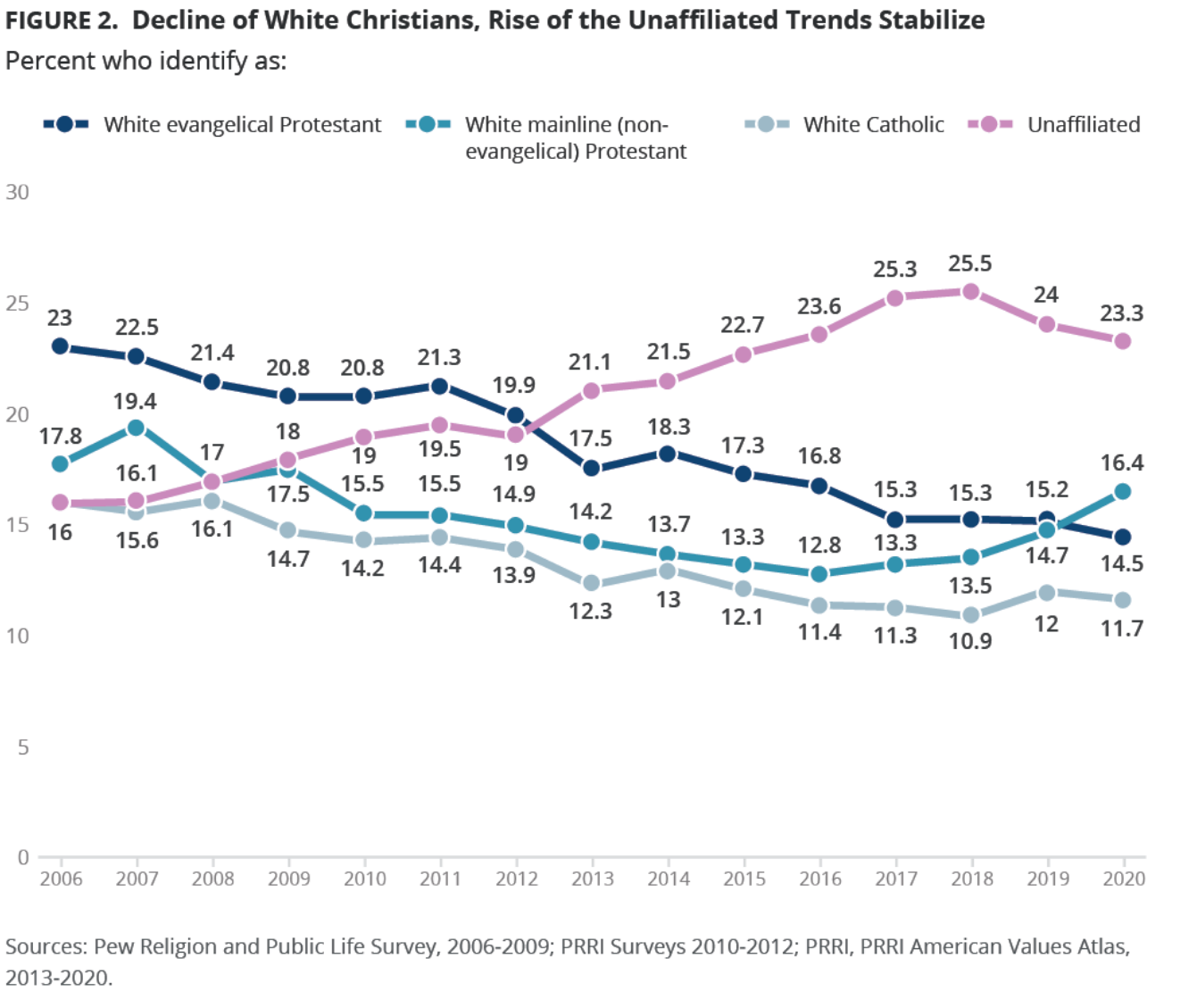
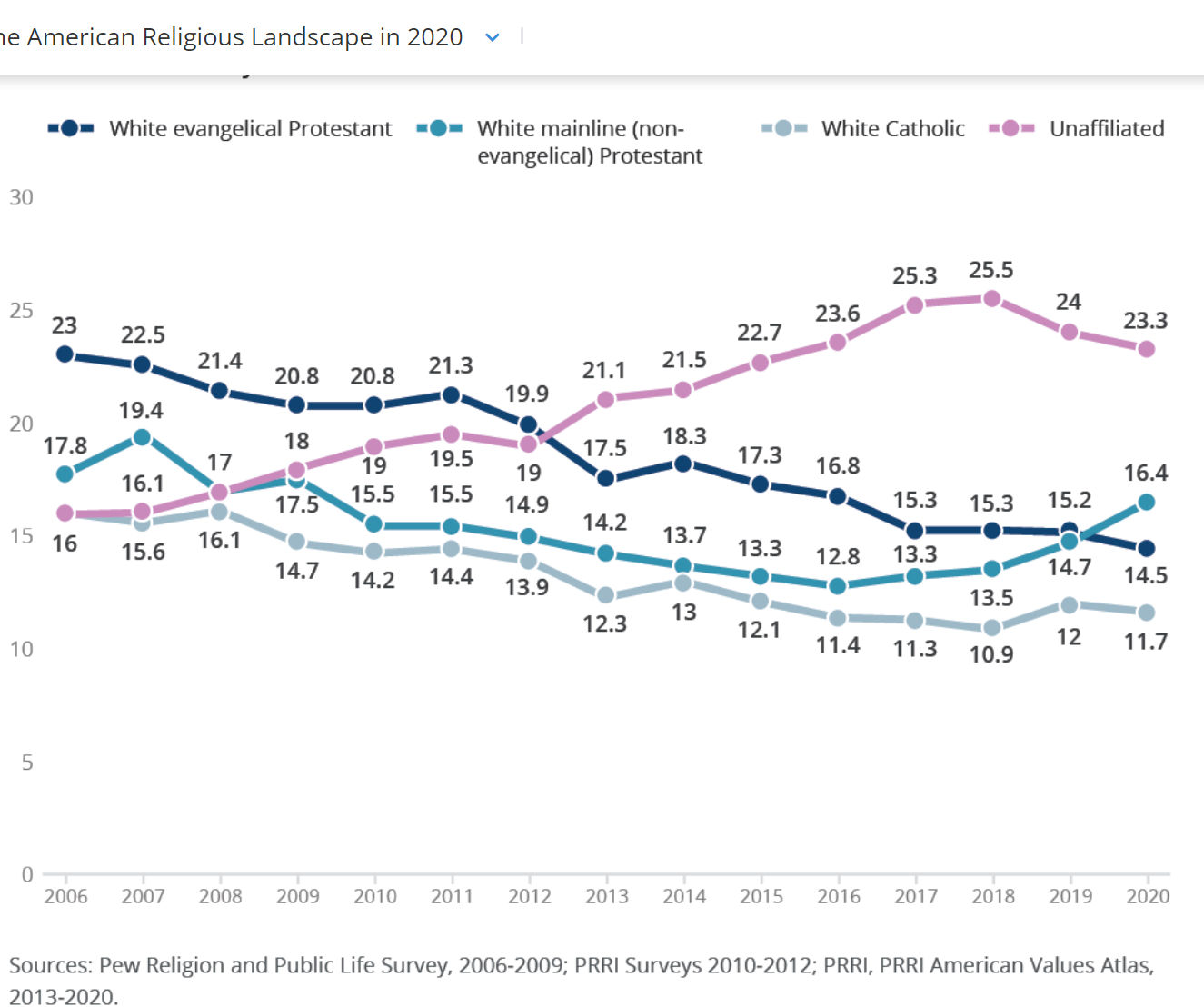
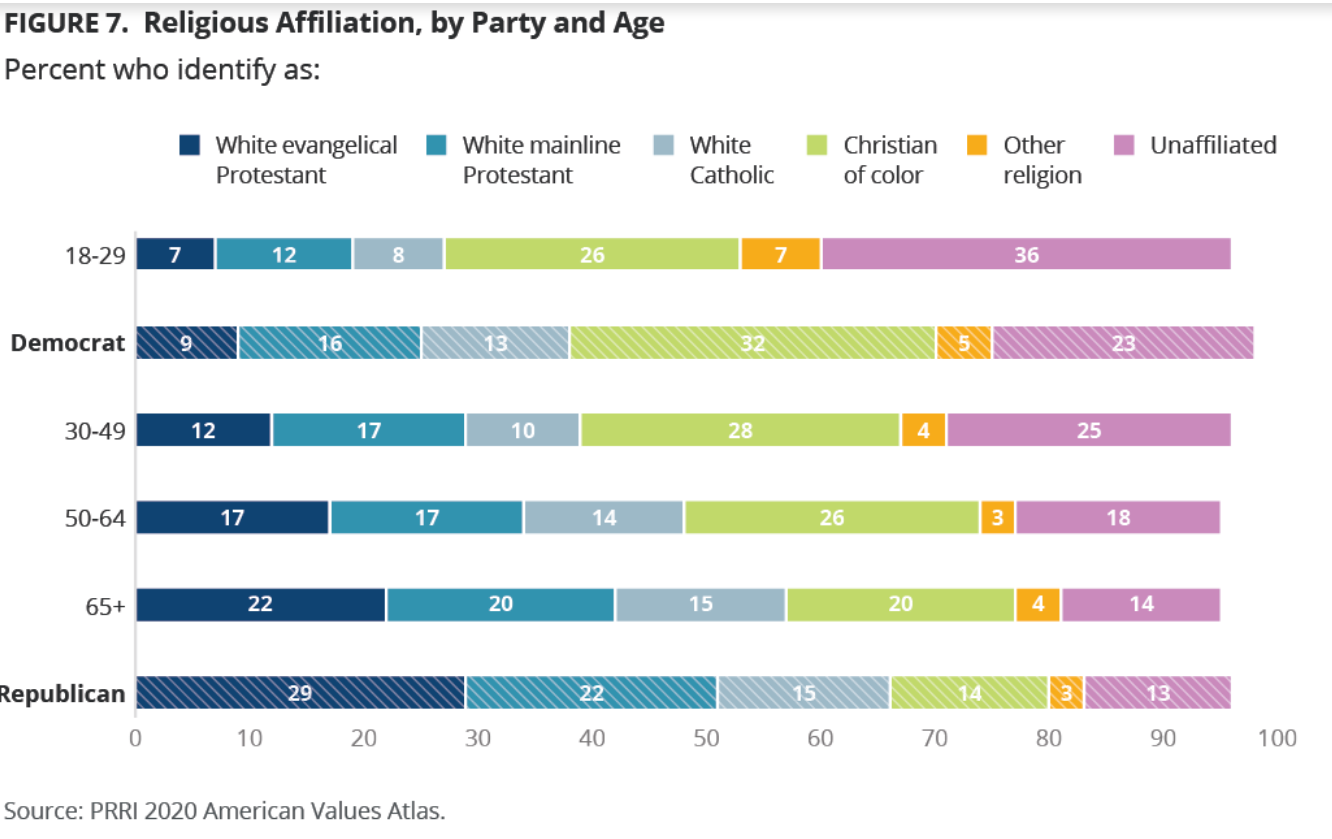
US citizens belief in God remains strong, between 80-90%. Church affiliation has declined to 70%. Mainline (liberal-centrist) Protestant believers have declined dramatically, but recently stabilized. Evangelical Protestant believers increased in the 1980’s and 1990’s, but have declined somewhat since then. Catholic membership has remained roughly constant, with Hispanics replacing Whites.
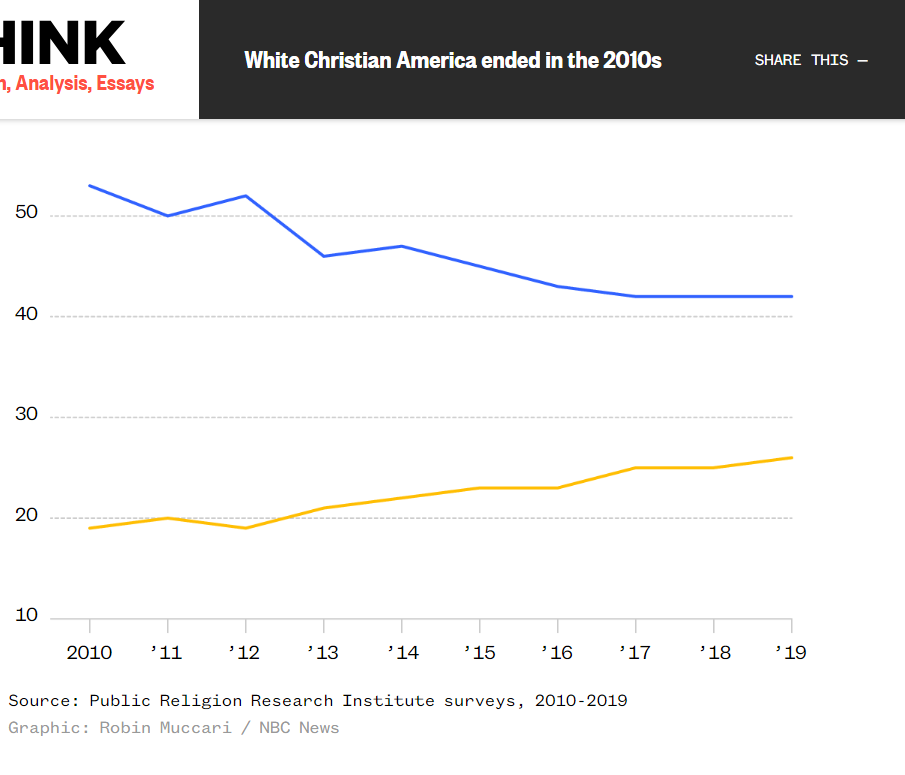
The decline in Whites as a percentage of the US population, combined with the increase in non/other believers has lead to headlines proclaiming the end of a majority White Christian America. This is true statistically, with politicians attempting to take advantage of the situation.
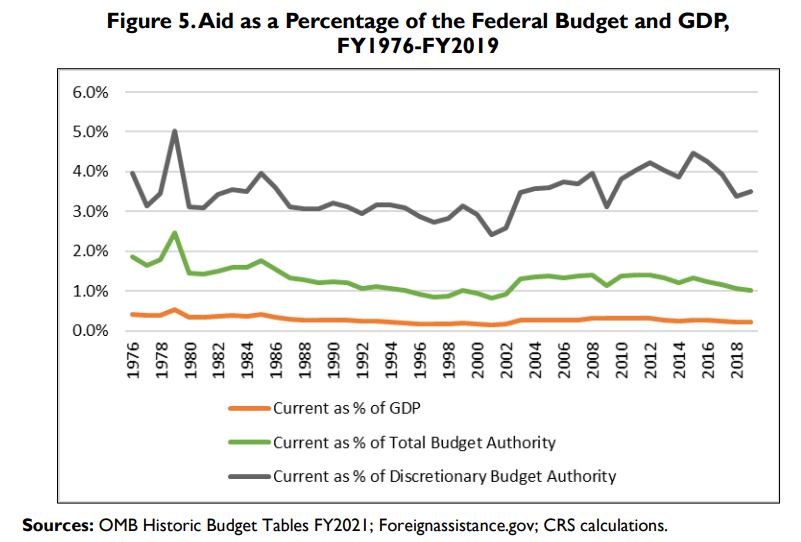
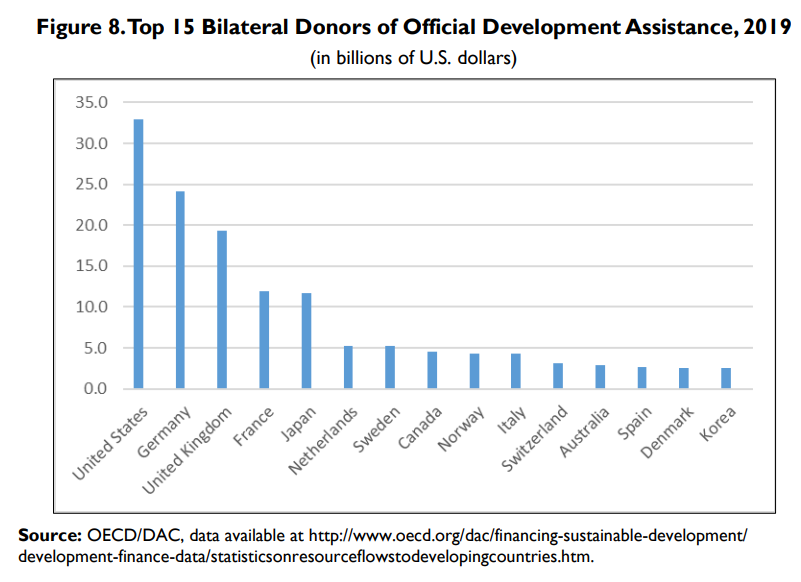
Africa 25%. Middle East 25%. Afghanistan $5B, Israel $3B, Jordan $2B, Egypt, Iraq, Ethiopia, Yemen, Colombia, Nigeria, Lebanon $1B each. Top 10 $16B, one-third of total.
Criticisms of Foreign Aid
Limited evidence that specific country investments provide political returns
Limited evidence of anti-terrorism campaign effectiveness (counterexamples)
Weak administrative structure and oversight at all levels
Direct evidence of individual country economic growth due to aid is limited
Some autocratic governments have benefitted from aid
Some aid is diverted to corrupt governments and individuals
Specific high priority countries have provided weak returns (Egypt, Pakistan, Afghanistan, Iraq)
Higher returns could be gained from investing in Western Hemisphere, Eastern Europe.
Health measures, disease rates, lifespans. Global health. Economic development results globally and in individual countries. US trade benefits from developing trade lanes. Global education. Increased number of democracies, commitment to mixed capitalist economies. Lower cost of defense. Terrorism activities thwarted. Improved strength of US alliances. Improved flow through NGOs, multilateral organizations improves effectiveness. Dollar allocation provides US policy leverage.





























 Good News
