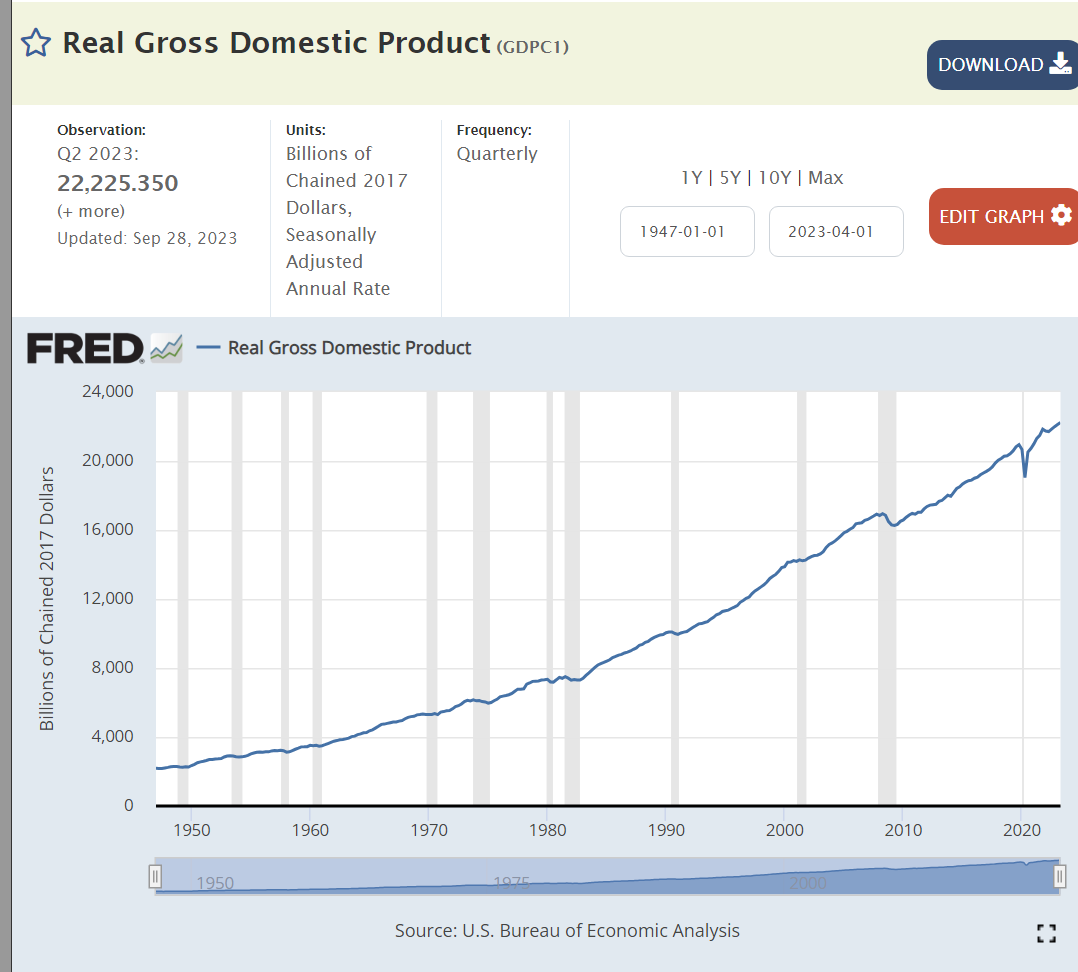
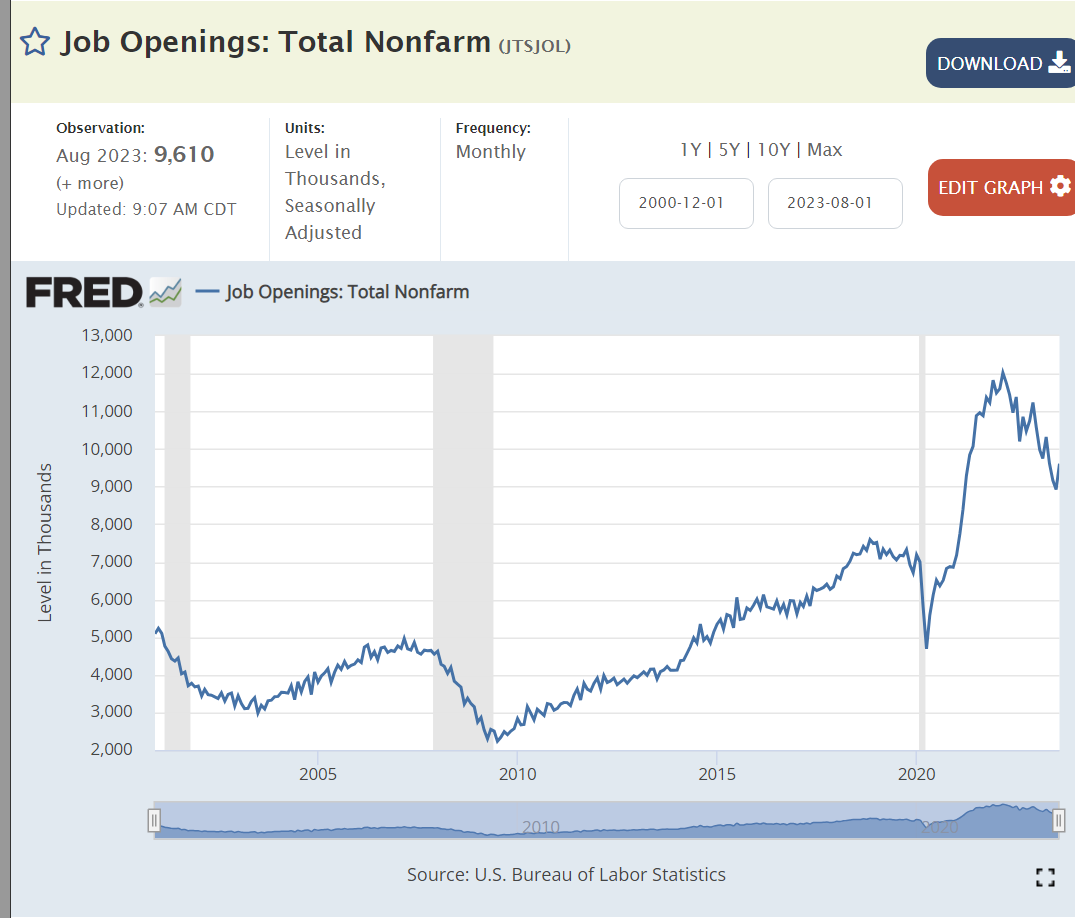
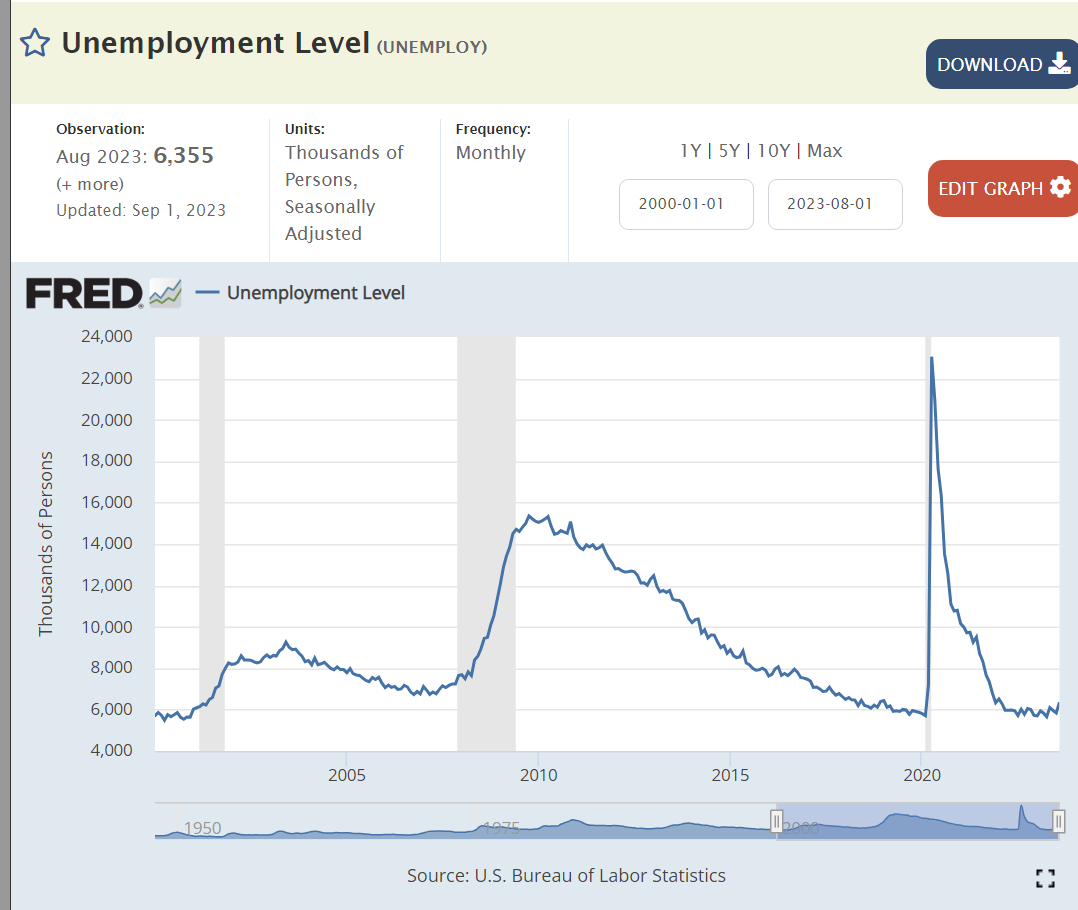
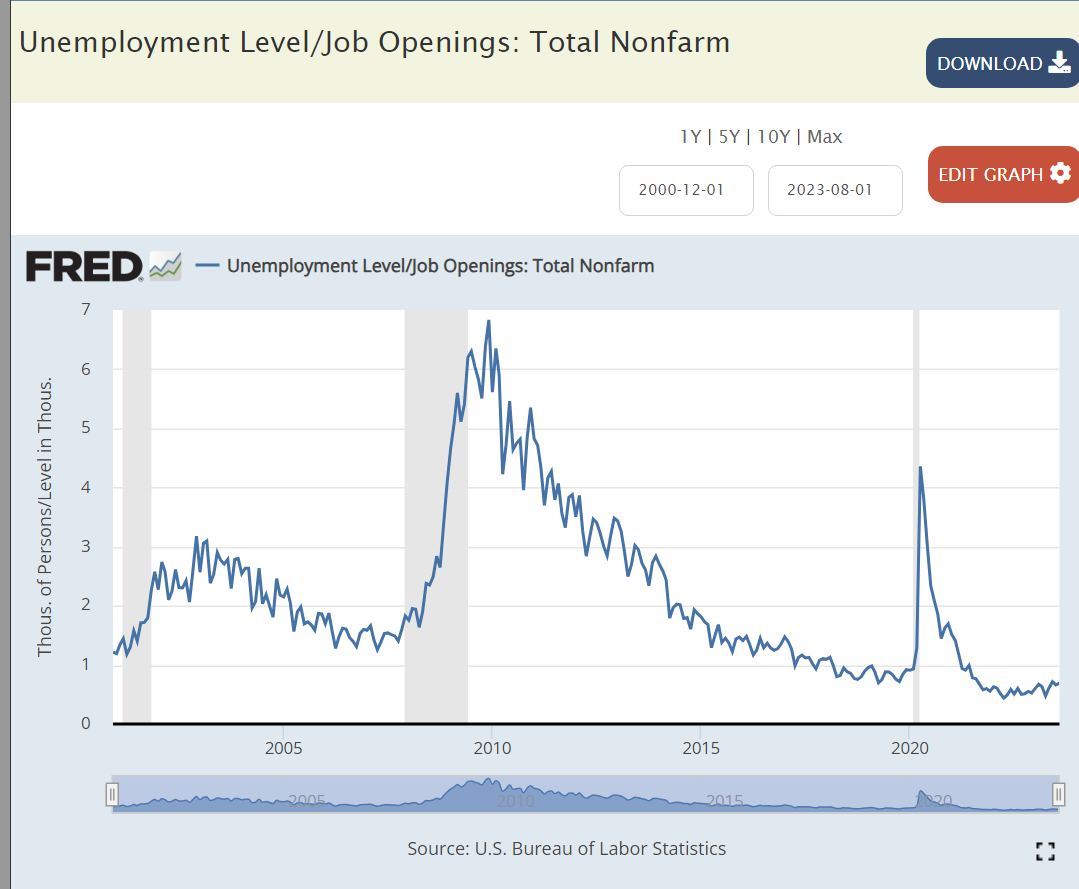
This 1967 lesson in “The Graduate” remains relevant today. A rising tide lifts all boats.
Live a Great Life
Establish your priorities for life. What is negotiable or non-negotiable? How much is incremental income, wealth and financial security worth to you and your family?
Invest
The opportunity to own your own firm is greater today than ever before. Entrepreneurship is a high risk/high reward option. It requires a financial investment. Internet partners are ready to provide most support services. Licensing and franchising provide other options. Niche products and services have a global market.
Trade-offs
How many hours? Physical risks? Work the firm’s top priority every minute? Firm risks – seasonality, stability, leverage, industry risk, start-up. Serve as a representative for a group? Grey ethics, whatever it takes? Consultant, gig worker, cross-team, project member.
Profession
Degree(s), time, cost, intern, resident, trainee, junior, dues, investment, licensed, certified, valued, next best option for firms, international outsourcing, AI outsourcing.
Talent
The very best of the best. Creative, sports, intellectual, selling, persuading, appearance, arts, counselling, investing. Ability to leverage business wins. Ability to monetize output broadly.
Managing
Managing the conflicts between people and tasks. Great managers are well compensated for buffering between these contrasting forces. Adequate managers “get by” or are demoted in competitive industries.
Analysis
STEM skills applied are highly valued today. Specialized “analyst” skills. Technocracy. Problem-solving in unstructured situations. Choosing the right tool to structure the situation so that a decision is clear. Analysis applied to large value deals, decisions, contracts and acquisitions. Strategic choices, competitive advantage, sustainable moats, value extraction.
Sales
Customers have choices. They value quality, speed, flexibility, features, price, ease of doing business, risk reduction and personal relationships (QSFVIP). Great salespeople are well compensated for connecting a firm’s value proposition to customers in a sticky fashion. They play the game in 3 dimensions: firm, customer and salesperson. Commissioned sales and agent models. New business acquisition.
Influence/Politics
Communications skills. Relationship skills. Influence skills. Negotiating skills. Political relationships applied – internally and externally.
“Rent” from Specific Skills, Knowledge, or Relations
Industry, firm, profession, language, international, expert, technical, customer, regulator, supplier, or consultant knowledge, understanding, influence. A combination of skills required for a role. Holding a position in the firm.
Responsibility
Raise your hand. Manager. Project manager. Project member. Value added leader for new products, customer markets, structures and processes. Line manager in a measurable success role. Resource manager for broadly defined suppliers, customers or staff resources. Second level or higher management role responsible for results largely beyond your control.
Leadership
A mythical beast. Charisma. IQ. Confidence. Elite education and experience. Progressive successful role. General management ability to lead multiple functions, teams, divisions, geographies, product lines without being an expert. Social status and ease.
Summary
We live in a complex world of many firms, products and services competing for the attention of consumers. Firms employ people to make sales and profits. Firms employ people who they believe provide them with the greatest “marginal product of labor”, the greatest value added. Firms pay as little as they can. Their interest is to employ labor for less than their marginal value added and capture the difference. Set your moral limits. Work on your own. Determine the best path to be a value-added resource. Pick an industry. Pick a profession. Exploit your own extreme talents, sales, influence, specific knowledge, analysis, responsibility or general management abilities. No one has ALL of these skills. You have some talents. Leverage your talents.
I started writing this article thinking about the ratio of incomes of large firm CEOs to shop floor/outsourced workers. It has risen from 20X to 300X to 2,000X through time. Beginning with “essential workers” as the baseline, somewhere between the effective $10/hour minimum wage, and the $20/hour median income, others earn incomes in the US many times above the median. What incremental value do they provide to their firms or to society? in “order of magnitude” terms, I think that hours and flexibility are worth 50%. Professional, management, analysis, sales, influence and specific knowledge add 100% each, or 250% in combination. “Higher level” responsibility and leadership skills add another 200-300% of added value, reaching a combined 500-600% premium above median incomes (IMHO).
Historian Will Durant emphasized the need for all civilizations to incentivize their most talented individuals to engage in the work that coheres and advances their lives. First, political unity, commitment and loyalty. Second, material progress. Our society must be attractive and deeply engage the top 20%, 10%, 5%, and 1%. Does this require a 5X income advantage? 20X? 200X? 2,000X?
We currently live in a “winner takes all” society that is comfortable with 1,000X discrepancies between the winners and the workers. Is this required to incentivize the “best and the brightest” to work hard to provide incremental value for society? I think not. This is a political choice we have accepted since Reagan. Our society is incredibly productive because it is comprised of productive and highly educated individuals. The political choice of how much the most successful people retain is a separate issue.
This Indian story helps us to understand that the “whole” is different than the “sum of the parts”. “Everybody wants to rule the world” is another way to express this paradox. We each have a perspective. We errantly “know” that our perspective is right.
Each of the blind men mistakenly “knows” that his perspective is “right” and dominant. In society, we experience this across the various professions and industries who also “know” that they are THE “most important, valuable and insightful”.
Rulers, politicians, judges, and bureaucrats
Advisors, consultants, lawyers, and lobbyists
Entertainers, artists, media, journalists, travel and leisure
Military
Public safety, police and fire
Priests, ministers, rabbis
Intellectuals, philosophers
Educators
Engineers and scientists
Builders, architects, construction staff
Farmers, foresters, fishers, miners
Owners, capitalists, executives, bankers
Managers, administrators, business professionals
Traders, wholesalers, retailers
Skilled trades, essential workers
Health care professionals
Care givers, counselors, psychologists, and social workers
17 distinct groups by my accounting. Each group can put forth arguments for why they are the “most important”, adding the most value now and in the future, at the critical location, taking the highest view, most essential, largest, oldest, most appreciated, best paid, driven by leaders, lifesavers, building the future, leading the way, preserving and organizing society.
Historically, the rulers, advisors, priests and owners conspired to actually run society and collectively justify their leadership. In the last 500 years the historical rulers have been challenged by each of the other groups.
spin doctors, social media influencers, investment bankers
political pundits and commentators
the secretary of defense, the military-industrial complex, neo-conservatives, coups
public safety unions, associations and political influence
ecumenical associations, direct and national political influence
freedom of speech, tenure, existentialism, postmodernism, poststructuralism
unions, PACs, professional rights, the therapeutic society
STEM, analysts everywhere
infrastructure, ratings
farm bill, political influence
Davos, consolidation of income and wealth, political influence
Professional class, suburbs, UMC, elites, educated
globalization, luxury goods, Amazon, Walmart, Dollar General, Costco
unions, tea party, occupy Wall Street, pandemic support
AMA, med school enrollment limits, health care % of GDP, big pharma, big insurance, hospital system monopolies
the therapeutic society, hugs
Everybody wants to rule the world. The world is bigger. More people. More wealth. More assets. More potential. More productivity. More ideas. More perspectives. More art, entertainment and leisure. More education. More scientific understanding. More resources. More nature. More opportunities. More class perspectives. More minority groups. More voluntary associations. More nations. More globalism. More trade. More religious views. More communications and information channels.
There is no single reason why our society remains knitted together. There are many forces that drive it apart. I am hopeful that the various interest groups can perceive “the elephant”. Our political, social and economic society is the greatest ever known, but it is threatened by decay from all sides.
The individual and God. The individual and the community. The individual and nature. The individual and eternity. The individual and everything else. A component. A part. Connected. Independent. Alone. Integrated. Organic. Holistic. Mystical. In control. Suffering. Where is the individual in our universe?
Historically, nearly all cultures emphasized the group, the community and God, not the individual. Achieving “community” is a very challenging task. Individuals have always been selfish, wishing to gain the many benefits of community while not committing to, investing in, or being loyal to the community. The “free rider” problem endures into modern society and its many groups.
Our US culture is dominated by individualistic philosophies. How did we arrive at such an unbalanced result?
“The ideas of economists and political philosophers, both when they are right and when they are wrong, are more powerful than is commonly understood. Indeed, the world is ruled by little else. Practical men, who believe themselves to be quite exempt from any intellectual influences, are usually the slaves of some defunct economist. Madmen in authority, who hear voices in the air, are distilling their frenzy from some academic scribbler of a few years back …” John Maynard Keynes
Plato, Socrates and Aristotle raised up the idea of a single man, a philosopher, as worthy of praise and honor, in contrast to only the received wisdom and traditions.
The Council of Nicaea (325) consolidated early Christian thinking, defining Christ’s life as fully God/fully man and embracing the trinity of Father, Son and Holy Ghost. This conception addressed both the individual and community/God dimensions, emphasizing the “community of believers” which was to be led by the pope in Rome. This “balanced” view dominated the world for more than 1,000 years.
St. Augustine (b 354) provides a very personal, individual perspective on faith in his “Confessions”, as he embraces and the community of faith and city of God.
The Renaissance promoted the idea of individual agency through art, science, craftsmanship and politics (Machiavelli) without directly challenging the existing community and religious views. A humanistic perspective was restarted as Greek and Roman works were studied once again.
Luther (b 1483) elevated the individual above the Church for the purposes of faith, criticizing some Church decisions, but embracing the community of faith.
Edmund Burke (b 1729) outlined the rationale for a conservative, community and history based political philosophy at a time when others were promoting progressive, idealistic, individualist views.
Newton (b 1642) was perhaps the greatest thinker of all time. He emphasized universal, eternal, mathematical truths, but he was also a legendary individual figure in his time.
“Nature and nature’s laws lay hid in night: God said, Let Newton be! and all was light” – Alexander Pope
Jean-Jacques Rousseau (b. 1712) promoted the “individualist” perspective, claiming that man in his original nature was good. Society had corrupted man. Modern man needed to break free from society and find his deep, true self as the basis for a great life.
The French Revolution (1789) – Anything is possible. Individual versus the community. Tradition versus modern. Aristocrats versus the people. Idealism versus realism. Abstract versus concrete. Individual man versus history. Religion versus secular state. Hope versus fear.
Romanticism (1800-50) was a reaction against the scientific revolution, progress, technology, urbanization, trade and the emerging mechanical, commercial, rational worldview in Europe. It celebrated the heroic individual, art, nature, emotions, literature, experiences and creativity. While it elevated the individual it also pointed to those dimensions of life that are beyond reductionistic materialism, including the community, music and culture.
European Nationalism (1848 – 1917) – Individuals sought to be represented by their nations. The nations were often portrayed in the ideal forms suggested by Hegel.
Darwin (b 1809) provided an earth-shaking intellectual perspective, changing how we see history, the universe and God. The individual matters, but the forces of competitive nature are much more important.
Kierkegaard (b 1813) started the existentialist world view, challenging everything. Objective certainty was difficult to fully believe. Conventional society was unserious about eternal matters. A “leap of faith” by the individual was needed to embrace the potential certainty of God.
Charles Pierce (b 1839) and the pragmatists lost faith in an objective world view. They said, “just look at the results”. This could be viewed at a general level, but was mostly seen as an individual, skeptical philosophy.
Sigmund Freud (b 1856) developed the scientific study of psychology, creating psychoanalysis, the unconscious, the ego, id and superego. His work influenced the social sciences, philosophy and culture. His work mainly focused on the individual and secondarily on his interaction with society.
John Dewey (b 1859) guided the creation of public education in the US on a broadly pragmatic, modern, liberal basis. Society has a responsibility to shape citizens and prepare them for a commercial and productive society.
Maria Montessori (b 1870) developed a “stages” theory of child development and education programs taking advantage of individual initiative. Rousseau’s “man is naturally good” philosophy influenced public education throughout the twentieth century, underpinning the “therapeutic society”.
John-Paul Sartre (b 1905) defined and shared the ideas of existentialism with the public. The individual lives a life of “existence” rather than “idealism”. He is alone with his freedom and faces very difficult choices (suicide, despair, anxiety). He might turn to higher values such as “authenticity” for guidance. Many saw existentialism as a brutally negative worldview, unworthy of man, while others accepted at least part of the diagnosis and moved forward with life anyway.
Post WW II critics of the West. Existentialists, postmodernists, post structuralists, neo-Marxists, anti-colonialists, critical theorists and “the new left” developed philosophical, psychological, cultural, literary, educational and political works that opposed the predominant culture and institutions, beginning with an analysis of the individual’s situation, but highlighting the negative influences of society, once again reflecting Rousseau.
Post WW II supporters of Western capitalism, democracy and culture.
Joseph Schumpeter (b 1883) wrestled with the big picture dimensions of economics: macroeconomics, global trade, institutions, political choices, equilibrium, dynamic systems, change, financial systems and entrepreneurs. Although his work is solidly within the scientific study of economic systems, his greatest impact was in elevating the role of entrepreneurs and creative destruction to make capitalism actually work.
Friedrich Hayek (b 1899) was also a mainstream economist devoted to technical analysis of business cycles and complex systems but is most noted for his “Road to Serfdom” which promotes a limited state role in the economy because of the risks of the state becoming larger and more powerful, eventually eliminating the free economic and political choices of western democracies.
Milton Friedman (b 1912) developed the economic school labelled monetarism that emphasized the monetary basis of business cycles as an alternative to the Keynesian emphasis on aggregate demand and the potential role of the state to “manage” the economy. Friedman also emphasized the centrality of liberty.
Ronald Reagan (b 1911) consolidated the political strands of conservatism into a winning formula deemed neo-liberalism, ending the dominance of the center-left begun with FDR. This pro-“free market” stance is sometimes criticized for elevating economic rights above other conservative social values or for being too aligned with elite economic and political interests. Neo-liberalism emphasizes the individual’s property rights, liberty and freedom, but also supports traditional community oriented social, cultural, religious and nationalist views.
The “therapeutic society” developed in the second half of the twentieth century as Rousseau’s positive views of man and human potential became more widely accepted and integrated into education, psychology, child-rearing and self-help materials, institutions and popular thought.
Carl Rogers (b 1902) developed positive person-centered psychotherapy.
In general, we have a 500-year parade towards pure individualism.
Religion has resisted, preserving some strong communities with reformations, counter-reformations, revivals, social gospel movements, revolutionary theology, evangelism, fundamentalism, new denominations and ecumenicism.
Yet, we clearly live in “A Secular Age”, where the default assumption is that religious belief is difficult to support.
The Romantic era pushed back on the Enlightenment, rejecting mechanical, materialistic, detached life and favoring the maintenance of social ties and emphasizing non-rational aspects of life. Romanticism has a longer tail in the arts and literature than in economic, political or social life (small is beautiful, utopian socialism).
Nationalism has inspired the creation of new states, encouraged loyalty during difficult periods, but lost much of its attraction in advanced Western countries due to the mixed results of war, populism and fascism and the countervailing attractions of international and regional groups.
Hegel outlined the march of world history, providing a new basis for global community. Marx adapted this view, but the practical application in communism failed. The postmodernist perspective elevates the importance of social identity groups and the benefits from belonging.
Social conservatives, beginning with Edmund Burke, have outlined the benefits of preserving tradition, culture, history, neighborhoods, institutions, trust and social capital. These views are reflected in some national, state and local laws.
The classical sociologists and modern communitarians support this emphasis on encouraging a stronger community dimension, but the practical impact has been limited.
Robert Putnam has documented the innovative progressive era creation of new social institutions plus the post-WW II growth of participation in community organizations and its subsequent decline.
The “community” dimension of life survives in our society, but it is weaker than it has been during most of history.
The result of history remains the liberal state linked to a market economy as he claimed in 1992.
Yet liberal democracies face 3 inherent threats to their legitimacy. Thymos, the need for individuals to feel that their dignity is respected. Isothymia, the demand to be respected on an equal basis. Megalothymia, the desire to be recognized as superior. These demands don’t melt away with progress or modernity. They can be interpreted at the individual or group level. Individuals, especially those in less successful groups, can deeply feel their lack of respect by the government, economy, institutions, media, and culture. The superiority craving folks can reach their desires through accomplishments but can also lead populist political movements. Relatively equal treatment of citizens is a strength of many modern liberal states.
Liberal democracies with market economies surged during the last quarter of the 20th century, but have struggled in the 21st century due to economic crises, China’s rise and consolidation into an authoritarian state, resurgent nationalist and religious demands, and the difficulties of building and sustaining a liberal democracy aligned with the modern international order.
“Demand for recognition of one’s identity is a master concept that unifies much of what is going on in world politics today”. Universal recognition of human dignity is challenged by partial recognition based on nation, religion, sect, race, ethnicity, and gender. Threats arise from the left and right.
‘1. The Politics of Dignity
Twentieth century politics was largely a left (equality) versus right (freedom) battle. Politics today is more often based on identity. The left focuses more on protecting the group rights of marginal communities: blacks, immigrants, women, Hispanics, LGBTQ, refugees, and workers. The right focuses more on protecting the group rights of other traditional, rural, religious, national, racial and ethnic communities. The “classic liberal” emphasis on abstract, universal, individual human rights supported by both the center-left and the center-right has been overshadowed.
Strength of the Soviet and Chinese models, weak Western response to 9/11, growth of terrorist groups, inherent EU tensions, the Great Recession and Euro crisis (Greece), growing inequality and the disruptions caused by rapid globalization have all contributed to a reassessment of the former consensus on the best way to organize politics and economics.
Underlying these changes is the concept of “identity”. An individual’s “identity” is his perception of his true inner self, often in contrast with the rules and norms of society. Starting with Jean-Jacques Rousseau, individuals and intellectuals have largely embraced a view of human nature as being intrinsically good, fighting against the constraints of society. Modern individuals seek to become aware of and develop their true identity based upon introspection and feelings. Making this identity central to their lives, individuals also demand respect for the inherent dignity of their individual and group identities from society.
Fukuyama describes Putin, Jinping, Trump, Brexit, Terrorists, Orban, Black Lives Matter and Me Too within this framework of respecting identities. Respect for identity can be a tool for constructive change or for victimization, populism, and authoritarianism.
‘2. The Third Part of the Soul
Humans are not driven by utility maximization as proposed by economists. Fukuyama prefers Plato’s view in The Republic. Individuals are driven by desire and reason, but also by thymos/spirit, the seat of judgement about worth. Individuals want to feel good about themselves. They care about their inner worth and dignity. They want to be respected by society. Hence, many social and cultural issues become hotly debated political wedge issues. Abortion is not about minor public policy opinion differences or varied religious perspectives or framing communications as pro-life versus pro-choice, but a judgment about me and my perspective, my community, my essential values that must not be challenged! It is a personal issue that demands respect. Individuals who do not receive respect naturally become resentful.
‘3. Inside and Outside
Martin Luther developed the insight of an inner self distinct from an outer or social self. Faith takes place only in the inner self, independent of the roles and influences of society, priests, and the Church. With this shift in perspective began “a whole series of social changes in which the individual believer was prioritized over prevailing social structures”. In traditional human societies social roles were fully defined. No individual choice was required. No conflict between “the individual” and society could be imagined. [Fukuyama does not explore the earlier steps towards awareness of individual identity seen in the Renaissance].
Jean-Jacques Rousseau expanded this gap between the individual and society. The individual is inherently good and largely misshaped by society. Religious faith was only one dimension of the choices that need to be made. The depth of the individual’s true nature was hidden and required significant work to explore. “Original sin” was incorrect. Most “sins” were created by the demands of society. Individualism existed before communities. The real individual could be created. The “individual” was now deeper, broader, and evolving. He quotes Charles Taylor, “This is part of the massive subjective turn of modern culture, a new form of inwardness in which we come to think of ourselves as beings with inner depths.”
‘4. From Dignity to Democracy
Christianity emphasizes the central role of humans as agents capable of making moral choices, despite being hindered by original sin. Hence, there is universal dignity for men. Immanuel Kant also argued that humans can make moral choices and that human will is worthy of respect. GWF Hegel agreed that this capacity for moral choice was praiseworthy. He argued that human history was shaped by the struggle for recognition and that it was natural that political structures that recognized this need would evolve and be passionately adopted. The stage was set for liberal democracies, the American Revolution, and the French Revolution.
‘5. Revolutions of Dignity
The Arab Spring and color revolutions in Georgia and Ukraine reflect the strong desire of ordinary people for the basics of liberal democracy. Not a duplication of Europe and the U.S., but a state that recognizes “human agency, the ability to exercise a share of power through active participation in self-government”. Voting, free speech, free assembly, equal dignity, moral agency as a member of a democratic political community.
“Successful democracy depends not on optimization of its ideals, but balance: a balance between individual freedom and political equality, and between a capable state exercising legitimate power and the institutions of law and accountability that seek to constrain it. Authoritarian governments, by contrast, fail to recognize the equal dignity of their citizens.”
‘6. Expressive Individualism
The “classic liberal” tradition of individualistic identity has 3 sources. Luther broke the individual free from the collective in order to better relate to God and follow his law. Kant located the individual as a free moral agent capable of making choices following abstract laws of reason like the categorical imperative or logical golden rule. Hobbes, Locke, and Mill expanded the universe of freedoms and placed them within a social contract system of political rights such as “life, liberty and the pursuit of happiness”.
Rousseau changed the game completely. The individual is now clearly first, ahead of society and the traditional God. The individual is inherently good, but often corrupted by society. The individual can find that good self by looking inward, deeply and with feeling. The individual has a moral obligation to find and express that good inner self. This autonomy applies in all dimensions. Creative powers become more important. The garden of Eden story is directly challenged.
The shared moral view of the Christian church was challenged from many other directions: religious wars following the reformation and counter-reformation, the rise of the artist’s creative powers, romanticism and naturalism, the conflicts with the enlightenment and scientific revolution, and Friedrich Nietzsche who declared “God is dead” and that the individualistic superman can now define his own moral values. The individual expanded to consider faith, rights, politics, values, religion, science, facts, meaning and reality.
“The problem with this understanding of autonomy is that shared values serve the important function of making social life possible. If we do not agree on a minimum common culture, we cannot cooperate on shared tasks and will not regard the same institutions as legitimate; indeed, we will not even be able to communicate with each other absent a common language with mutually understood meanings”. Many individuals don’t hear or respond to the call for in-depth exploration, creative expression, and superiority. They honestly prefer to conform to social norms and interact with their neighbors based on the existing society.
Individual rights were much more widely recognized across the nineteenth century. Collective identity, in the form of nationalism and politicized religion also began to grow with unfortunate consequences.
‘7. Nationalism and Religion
Luther, Rousseau, Kant, Locke, and Hegel set the stage for an individualistic and universal form of identity. The equal dignity of all human beings was obvious, worthy of political protection and the basis for individual moral development (at a minimum). Together with the scientific revolution, Adam Smith, urbanization, and industrialization, it promoted the modern capitalist market economy. Free trade, free exchange, private property, limited government interference. More growth, trade, investment, urbanization, profit, industrialization, government support, secularization, experimentation, and science. Rinse, repeat. Rinse, repeat. The growing economy created pressure for standardized education, languages, units of measures and national laws to make trade and investment more effective. The growing capitalist, trade, citizen, bureaucrat and bourgeoise powers competed against the traditional religious, economic, political, and social powers.
Johann Herder in the late 18th century began a movement against these universalizing views. The individual local nation, region, city-state, culture, geography, traditions, customs, food, festivals, saints, music, and religion have a role to play. Humans mostly live in their smaller communities. They provide individual and social values which should not be discarded. They are as real, authentic, and valuable as any newly discovered rights, science, trade, or philosophy. In a world of overlapping dimensions, nationalism was born. Nationalism emphasizes a collective identity, a set of rights and demands for respect. It fights against smaller (US states rights) and larger political groups (EU). It inspires passion and loyalty. It often focuses on the collective, organic “will of the people” rather than arbitrary political results. Nations are subject to capture by business, military, church, and political elites.
The migration from traditional, agricultural societies with integrated community, social, political, economic, and religious norms, values, and beliefs to secular, urbanized, industrialized, multicultural, individual, separated values societies has played out for 500 years. Rural to urban in Europe for centuries. Rural to urban in the US for 150 years. Immigrants to the US for 150 years. Immigrants to Europe for 75 years. Rural to urban migration across the world for 75 years. In each case, there are strong conflicts between the integrated set of community oriented traditional values and the more diverse set of individual oriented values. Sociologists decry the breakdown of traditional societies and the anomie or anxiety created. Some individuals and families make the transition into the new world, while others struggle to adapt.
Passionate and sometimes violent nationalist, religious and populist reactions take place. Individuals and groups who feel that they, their groups, and identities are out of place, react negatively towards the society that does not embrace them. “Deplorables”. “The Beverly Hillbillies, Green Acres”. “Hang on to their guns and religion”. “You didn’t build that”. Nationalism, radical Islam, and U.S. populism share these roots. “Radical Islam by contrast offers them community, acceptance and dignity”. Fukuyama closes the chapter with the proviso that these groups clearly also represent other dimensions of political, social, economic, and religious life.
‘8. The Wrong Address
The 20th century was dominated by a single left versus right political spectrum. The far left (communism) and far right (fascism) were discredited by the end of the cold war and the results of WW II. The center-left and center-right mostly competed on the same left versus right dimension focused on economic issues. Equality, redistribution, fairness, labor, safety nets, and the welfare state versus economic opportunity, growth, property rights, innovation, entrepreneurship, capital, and freedom.
In the US and Europe, income and wealth inequality have risen back to 1875 robber baron/laissez faire levels after contracting in the post-WW II era. Yet, the center-left and populist economic left politicians have not benefitted from the reduced relative status of the working and middle classes. The global financial crisis in 2007-10 sparked by the reckonings of unconstrained greed throughout the US banking and mortgage system did not benefit the political left, which was seen as complicit in globalization and “the third way”.
Fukuyama doesn’t delve into the political details. Instead, he simply refers to the growing political dimension of “identity”. Nationalist, populist leaders have been able to position these situations and others as part of the disenfranchisement of “the people” by unelected, self-appointed elites. Nationalist leaders in India, Japan, Hungary, Turkey, Poland, and the US have capitalized on these concerns. [Fukuyama fails to highlight either the “traditional to secular transition conflict” outlined above or the bewildering complexity of modern life described by Robert Kegan in “In Over Our Heads”]
‘9. Invisible Man
It’s not “the economy, stupid” as claimed by James Carville. It’s my dignity. [Fukuyama does not emphasize the possibility that once a society reaches a certain level of economic success, that it might then turn to non-economic dimensions as being much more important]. Relative status, qualitatively, matters to everyone. No one wants to be Ralph Ellison’s “invisible man”. The loss of status, like the loss on investments, has a strong negative emotional effect. This matters to the middle class and the working class. The loss of relative status is very painful. Immigration becomes a major issue because immigrants can be viewed as the cause of a loss in status/economic position.
“The nationalist can translate loss of relative economic position into loss of identity and status; you have always been a core member of our great nation, but foreigners, immigrants, and your own elite compatriots have been conspiring to hold you down; your country is no longer your own, and you are not respected in your own land. Similarly, the religious partisan can say something almost identical: You are a member of a great community of believers who have been traduced by nonbelievers; this betrayal has led not just to your impoverishment but is a crime against God himself. You may be invisible to your fellow citizens, but you are not invisible to God”.
’10. The Democratization of Dignity
Modern liberal democracies in North America and Europe were founded on the individualist view of identity. Through time they expanded the set of citizens whose rights would be honored, thereby fulfilling their early idealistic promises about universal rights.
In the second half of the 20th century, the “therapeutic society” emerged in the West, championing Rousseau’s ideas. “Philip Rieff … argued that the decline of a shared moral horizon defined by religion had left a huge void that was being filled by psychologists preaching a new religion of psychotherapy. Traditional culture, according to Rief, ‘is another name for a design of motive directing the self outward, toward those whose communal purposes in which alone the self can be satisfied’. As such it played a therapeutic role, giving purpose to individuals, connecting them to others, and teaching them their place in the universe. But that outer culture had been denounced as an iron cage imprisoning the inner self; people were told to liberate their inner selves, to be ‘authentic’ and ‘committed’, but without being told to what they should be committed.”
“The affirmation of the inner identity depended, in the final analysis, on the truth of Rousseau’s assertion that human beings were fundamentally good; that their inner selves were sources of limitless potential.” “Ideas that ultimately trace back to Rousseau: that each of us has an inner self buried deep within; that it is unique and a source of creativity; that the self residing in each individual has an equal value to that of others; that the self is expressed not through reason but through feelings; and finally that this inner self is the basis of … human dignity”.
The author shares the work of the 1990 California Task Force to Promote Self-Esteem and Personal Social Responsibility, noting the inherent contradictions. “The effort to raise everyone’s self-esteem without being able to define what is estimable, and without being able to discriminate between better and worse forms of behavior, appeared to many people to be an impossible – indeed, an absurd – task”.
The author notes some results of the adoption of a “therapeutic society” worldview: rise of narcissism described by Christopher Lasch, growth of counseling industry at large and in schools, successful therapeutic versions of religion catering to those seeking personal growth, an expansion of the desired role of government from managing the infrastructure to directly ensuring the growth of self-esteem and recognition for all citizens, a diminished role for personal responsibility since many personal outcomes are primarily driven by social structures, and universities embracing the individualistic ethos.
“The therapeutic model arose directly from modern understandings of identity. It held that we have deep interior spaces whose potentials are not being realized, and that external society through its rules, roles, and expectations is responsible for holding us back … The therapist was not particularly interested in the substantive content of what was inside us, nor in the abstract question of whether the surrounding society was just or unjust. The therapist is simply interested in making his or her patient feel better about themselves, which required raising their sense of self-worth … The rise of the therapeutic model midwifed the birth of modern identity politics … everywhere a struggle for the recognition of dignity”.
’11. From Identity to Identities
Social movements in support of various “rights” exploded in the 1960’s: civil, feminist, sexual, environmental, disability, indigenous, immigrant and gender identity. They began as new waves in the expansion of individual rights within the “classic liberal” political model. In each case there were activists who promoted the importance of group rights as being even more important than equal individual rights. “Equal individual rights” was deemed an inadequate goal. Previously invisible and disrespected groups needed to be respected as groups specifically because of their differences. The “lived experiences” of exploited group members were to be relished even though the majority population might not be able to understand their experience and perspective.
Multiculturalism evolved from a high level political need to protect the basic rights of large minority populations to the goal of uplifting the superior distinctive cultures of previously disenfranchised groups. The number of identity groups and intersectionality’s grew exponentially. Much of this change in viewpoint was driven by a relatively small number of intellectuals and activists within the broad “new left” umbrella, but within a therapeutic society, support for this kind of identity-based perspective grew over time.
Fukuyama argues that left-leaning political parties shifted their focus from the working class and economic issues to identity groups for several reasons. Marxism and communism were discredited. The center-left pursuit of a growing social welfare state had lost popular support due to its fiscal costs. Some activists argued that the historical center-left approaches were too closely aligned with the “power structure” of politics, economics, patriarchy, science, religion, objectivity, elites, Western values and globalization and ought to be abandoned. A cultural transformation could be done more easily through the educational, information and entertainment industries than via the difficult work of practical politics. Postmodernism and deconstruction slowly increased their influence on Western societies after 1968.
The author notes the advantages of narrowly focusing on the “lived experience” of oppressed groups to make their suffering real and press for meaningful legal and cultural changes. He also outlines some disadvantages. Minority groups are not uniformly morally superior in principle or in all their actions. Identity politics draws attention away from rising inequality of income and wealth. The white working class loses support from the political left since it is not as obviously oppressed as other groups. Attempts to address the common concerns of the broad working and middle classes are undercut. Identity politics can conflict with historical views of a strong right of free speech, even when it offends the feelings of others. The assembly, coordination, and maintenance of a coalition of identity groups is inherently difficult. Identity group politics can clash with historic center-left views.
Identity politics on the left has since led to identity politics on the right. Once groups decided that their rights, feelings, insights, and experiences were sacred and not subject to criticism from the outside, they adopted beliefs, norms and communications standards that can rightly be called “politically correct”. We are right because we know we are right. Everyone else is wrong and looked down upon. The general population, members of majority groups, individualists, traditionalists, and others soon took offense.
Politicians on the right have leveraged both polarization and populist feelings and then used the left’s framing and language to construct new coalitions that realign politics from a primarily economic to a primarily cultural axis. My religion is right. My race is right. My traditional view is right. My America is right. American isolationism is right. American nativism is right. As many commentators have indicated, Trump took advantage of pre-existing concerns within the American public to redefine the Republican Party based on identity first.
Fukuyama highlights several issues with identity politics. The number of groups proliferates. Identity claims are often nonnegotiable, so trade-offs and negotiations are blocked. Identity politics works against the need to achieve common goals via deliberation and consensus. Communication and collective action are more difficult.
’12. We the People
“Political order both at home and internationally will depend on the continuing existence of liberal democracies with the right kind of inclusive national identities”.
Countries without a clear national identity, such as Syria, tend to fall apart. Nations can be formed based on geography, ethnicity, race, religion, culture, language, or ideas. “National identity begins with a shared belief in the legitimacy of the country’s political system.” Identity can be reinforced through institutions, education, culture, and values. Diversity provides benefits to nations but can also bring challenges. National identity can be misused for political and military purposes.
“National identity can be built around liberal and democratic political values, and the common experiences that provide the connective tissue around which diverse communities can thrive.” An effective national identity helps to provide security, good government, economic development, trust and social capital, social security, and the basis for liberal democracy.
“A liberal democracy is an implicit contract between citizens and their government, and among the citizens themselves, under which they give up certain rights in order that the government protects other rights that are more basic and important.” Democracies also require a supportive culture, deliberation and debate, acceptance of outcomes, tolerance, and some degree of mutual respect. Democracies require broad and deep support for constitutional government and human equality.
International governments cannot replace national governments. They require shared norms, perspectives and cultures that are simply too varied at the global level.
’13. Stories of Peoplehood
National identities are insecure. Regional and global institutions make conflicting claims upon citizen loyalties at a higher level. Group identities in multicultural societies pull against the national forces. Immigration and refugees add group identities, which often contrast with traditional national cultures, and raise issues of citizenship, loyalty, and nationhood.
“The policies that do the most to shape national identity are rules regarding citizenship and residency, laws on immigration and refugees, and the curricula used in the public education system to teach children about the nation’s past.” Stories of peoplehood have a large impact as well.
The European Union created a supra-national government without investing in citizenship, symbols, or political legitimacy. Even though the EU has added functions and members through time and lightly shaped common values and institutions, it has not prepared well for any true common nationhood. Brexit should not have been such a big surprise. Anti-EU populism should not be a surprise either.
Immigration and refugees became a large real and political problem because the EU has complicated matters through its open borders agreements, the volume increased, many immigrants were from Muslim, Arab and African origins, many countries maintain descendant based rules and many countries had little experience building multicultural societies. The rise of group identity politics changed the pressures for and against successful integration.
’14. What is to be Done?
Address the real issues that trigger the need for a deep-felt group identity to demand special rights. Promote greater appreciation for the multiple identities that each person holds. Promote the creedal national identities that can effectively include many groups. Invest in integrating immigrants into society. Re-emphasize common economic, cultural, and political interests of the broad working and middle classes. Revise the EU citizenship, immigration, and political structures to make them a more effective and politically legitimate body. Eliminate laws that discourage naturalization of non-descendants. Share the long-term progress in extending rights to a broader set of people within classic liberal democracies despite the history of slavery, colonialism, and inequality. Adopt compromise laws on immigration that secure borders and enforce state control over who becomes a citizen on what basis. Clarify dual citizenship and citizen versus resident rights to promote the benefits of citizenship. Increase service requirements to boost national loyalty.
Citizens today face a large, complex, dynamic environment with the requirement to make good personal, social, political, economic, and moral choices. Citizens and society are impacted by the quality of these choices.
The American public must invest in our students and citizens to offer an educational curriculum that covers all the relevant topics with enough depth and applicability to make them lifetime tools. Modern science has much to offer. Advanced nations and economies have developed institutions and cultures that effectively perform the key functions of successful societies. At the same time, the rapid technological changes, increased complexity, and huge scale of our world pose challenges. The tension between secular and religious worldviews and across various political views is high and our skills at resolving these tensions or integrating individuals and communities have lagged behind the challenges.
A modern curriculum outlines the dimensions, structures, and challenges of our shared lives in all dimensions. It highlights the successes that have been achieved in history and the failures. It offers the various cultural, religious, social, political, and economic worldviews that have guided humans. It critically assesses their strengths and weaknesses, contributions, and relevance today.
It raises the critical questions that are faced today. It helps students understand how institutions, culture and politics all shape our world. It outlines political and religious worldviews. It encourages students to assume personal responsibility for their lives and participate in shaping our society at all levels. The curriculum focuses on the role of the individual and the role of the community in each dimension of life. An effective society requires voluntary engagement from its citizens. This curriculum motivates individuals to participate and succeed.
These courses cover a great deal of material at a high level and provide time for an applications perspective. They are courses for the citizen, not for those who expect to major in the relevant disciplines.
Ideally, the nation would adopt a single broad “model curriculum” outline and delegate the details of setting course content and standards to the states or regional educational accreditation agencies.
This proposal has 8 courses for high school students and 9 courses for university students. It includes capstone courses on “My Future” and “Our Future” to integrate the courses in a meaningful way. The university courses are designed to encourage states to offer them to all citizens at a nominal tuition rate through their state universities and community colleges.
101 American History
Full year course at the high school level. Less biography and dates. More about the major transformations of typical American life as the nation grew in size, expanded across the continent, invested in trade and infrastructure, transformed the land for changing waves of agriculture, adopted new technologies, embraced economic change, wrestled with manufacturing and urbanization, addressed racial, religious, ethnic and class differences, developed political parties, institutions and state versus federal roles, the role of communities and not-for-profits, the impact of religious diversity, economic theories of history, business cycles and panics, US expansion, conflicts, wars, empire, growing global role. Major political parties and issues through time. The role of communications technologies. The expanded role of government. The development of new institutions. The expansion of individual rights and roles for women. Government regulations. Limits on laissez faire capitalism. Taxation. The self-sufficient man and the rugged individualist. Immigrants. Native Americans. Relations with Mexico and Latin America. Isolationism. Globalism and trade. The scale, social and economic nature of the country in 1800, 1850, 1900, 1950 and today.
The US has a dynamic history of success in adapting its culture and institutions to meet the needs of the day. It has a history of extending individual rights to more individuals and groups through time, despite opposition from some citizens. Students can understand how existing beliefs, habits, laws, and institutions interact with technological, military, trade, economic, social, political, and religious innovations. Change is slower than some desire. Change is opposed on principle and because it has costs to some groups and individuals. Some changes are reversed because they don’t work in practice, or they have unintended consequences. The US has been relatively effective at maintaining individual rights and implementing changes on a decentralized basis. This context is essential for understanding current issues and political differences.
Theories of history. Evolution. Adaptation. Economic determinism. Regional differences. Western civilization. Land, labor, and capital. Economic, social, and political power. Cultural power. Shining city on a hill. Manifest destiny. American exceptionalism.
102 Society / Sociology
The individual and the group, community, society. Fundamental tensions. Haidt and evolutionary psychology. Empathy, language, trust, loyalty, free rider, game theory. One on one. Small groups. Groups of 150. Hunter-gatherers. Agriculture. Cities. Leaders. Power. Religion. Anthropological perspective. Modern historical perspective. Political theory perspective. Contract theory.
Interactions of power, status, wealth, and salvation/eternity.
Social capital. Trust. Institutions: family, neighborhoods, religious, professional, industrial, labor, intellectual, educational, economic, political, social services, libraries, ethnic. Innovations through time.
Role of technological and economic change on social and political institutions.
Change, migration, stress, war, disruption, rootlessness, divorce, unemployment, bankruptcy, anomie.
Economic basis of power through history. Labor theory of value. Marx. Existentialism. Post-modernism. Groups. Class, gender, race, religion, ethnicity, nationality as potential victim groups. Role of “others”. Criminals and mental health.
Functions of large organizations. Political. Economic. Military. Role of leadership. Innovations through time. Attraction, retention, and engagement.
Special roles: opinion leaders, market influencers, pop culture examples, fashion influencers, media influencers, intellectual influencers, journalism and media influencers, social media influencers, literature, movie, and tv works, teachers, parents, ministers, and coaches.
Power of social norms and influence. Desire for belonging and social acceptance.
High, medium, and low commitment communities.
Rise of nationalism. Rise of global and supra-national groups.
How groups and communities are different from the sum of their parts.
Man is made to reside in community.
103 Economics
70% Microeconomics, 20% Macroeconomics, 10% International Economics.
Labor markets. Product markets. Competitive markets. Rationale for government oversight.
Reinforce the American History overview. Provide framework for Personal Finance, Business/Organizational Behavior and Globalization. Outline one key model before Critical Thinking and Applied Decision Making. Provide background for Political Thought and Shaping Our Future.
104 Civics / American Government
Historical and philosophical context for the US constitution. Articles of Confederation. Bill of Rights. Checks and balances. Rights of Englishmen. Jefferson’s small farmer. Hamilton’s trader. The Federalist papers. Federal and state roles through time. US within European interests. Supreme Court role defined. Increasing role of government in the 19th and 20th centuries. US and advanced economies. Washington setting presidential roles. Political parties. Jefferson-Jackson support for farmers and small businesses. Pre-civil war politics. Civil war. Reconstruction. Post-reconstruction. Isolationism. Laissez-faire capitalism. Political machines. Progressivism. Farmer-labor populism. Nativist populism. Socialism and radical unionism not. Supreme Court as a conservative limit on progressive laws. Local government reforms. Income taxes. Prohibition and its reversal. New England and Middle Atlantic rule. Midwest gains influence. Democratic party in the South. Southern Democrat political power in Congress. Food safety regulation. Regulating trusts and monopolies. The Depression. FDR and Democrats gain. Reagan and the neoliberal revolution.
Political parties. House and Senate. Supreme Court. Electoral College. Legislation and budgets/funding. Role of constitution versus congressional rules. Presidential veto. Line-item veto. Independent agencies. OMB. Federal Reserve Bank. International treaties. United Nations. Election funding. Gerrymandering. Lobbyists. Military ruled by government. DOJ. FBI. Rule of law. Separation of church and state. Filibuster. Speaker of the House. Majority leader of the Senate. Voting rights, rules, and restrictions. Presidential versus parliamentary system. Two-party versus multi-party systems. Simple versus ranked choice voting systems. Third parties. Direct election of Senators. Direct election of presidential candidates. Political parties as a moderating influence. Sunset laws. Zero-based budgeting. Legislation versus appropriation. Debt ceiling constraint. Role of earmarks. Economics of politics: public choice theory. Role of politicians. Representative or delegate. Role of parties to simplify voting. Role of character. Recalls. Citizen initiatives. Role of political ideology. Special interest groups.
105 Psychology
Standard introductory course. Link back to evolutionary psychology in the society/sociology course. Make clear that the simplified utilitarian model assumed by economists (maximize pleasure, minimize pain) is inadequate. Address psychological views of religion, behavior, experience, and motivation. Describe the overlap of social psychology with sociology and organizational behavior. Describe the history of intelligence testing as a basis for critical thinking and multiple intelligences. Clearly define personality profiles and talents so that these results can be used in the capstone course. Describe the basic risk-averse nature of people that drives the risk/reward basis of financial markets. Provide a basic outline of how experimental psychology performs experiments. Outline the background for the fundamental challenge of organizations to align the interests of individuals and the organization.
106 Personal Finance
Economic specialization. Profession. Industry. Human capital. Education. Talents. Multiple intelligences. Income and wealth. Retirement. Saving. Investing. Risks. Insurance. Rent versus own. Investing in education. Accounting model of assets, liabilities, net equity, revenues, and expenses. Risk versus reward. Banks. Checking and savings accounts. Tax sheltered investments. Capital gains taxes. Strategies for saving. Financial advisors. Insurance agents. Real estate choices. Financial tracking tools. Grocery shopping. Clothes shopping. Appliance shopping. Medical services and insurance plans. Personal services. Home/construction services. Car shopping. Car buying versus leasing. Just 15% more. Buying status. Using financial leverage. Cost of borrowing: paycheck loans, credit cards, pawn shops. Student loans and payment options. The millionaire next door. Negotiating employment. Franchises. Owning a business. Side-gigs.
107 Critical Thinking
General process and factors. Individual or team. Diverse sources, perspectives, models, contributors. Inductive and deductive logic approaches. Analogies. Open-mindedness, active listening. Identify and evaluate assumptions. Evaluate relevance and weight of evidence. Evaluate data. Is the goal proof, optimization, meets standards, or ranking? Adequate research. Meta-analysis of the decision process. Likely errors. Lessons learned. Devil’s advocate. Expert review.
Tools. 6 thinking hats. Brainstorming. Flowcharts. Tables and graphs. Descriptive statistics. Hypothesis testing. Formal logic. Scientific method. Math proof types. Pattern identification. Probabilities. Expected value. Legal logic. Best practices. Industry or discipline specific models. Simulations. Troubleshooting. The rational financial decision-making model.
Pitfalls. Probabilities, infinity, compounding, orders of magnitude, paradoxes. Logical fallacies. Portfolio effect; sum greater than parts. Correlation and causation. “Either/or” or “both/and” situation? Is versus ought factors. Objective and subjective factors. Outliers. Black swans. Individual biases. Thinking fast and slow. Jump to conclusion. Confirmation bias. Anchoring. Politics. Personality. Talents. Experience. False patterns. Attribution error. Abstract or applied. Analog or digital. Sales, marketing, legal and communications tricks. Source biases. We don’t get fooled again!
108 Shaping My Future
My personality, talents, and values.
Education, profession, industry.
Prioritizing and balancing competing claims. Time and task management skills.
My advisors, mentors, coaches, and counselors. Thanks for the feedback.
My dating and relationship goals, limits, options, tactics, hopes, tools, beliefs, opportunities, advisors, and dreams. Total commitment.
My community and service preferences.
My religious explorations and commitments.
Living a good life. Building character and virtues.
Bucket list. On my death bed. Eulogy virtues.
Rights and responsibilities. Victimhood. Choices. Investing in me.
Setting goals. Delivering results.
301 World History, Cultures and Governments
Standard year-long high school or college textbook. Some grounding in pre-historic development of humans. Tools, iron, agriculture, leaders, religion. Links to anthropology reinforcing the parallel development of similar social answers to universal questions. Notion of “civilization”. The individual and the community. Free rider problem. Role of language. Central issues of cohesiveness within a society, power, and external threats. Role of changing technologies. Role of religion and institutions. Role of military power. Role of trade. Role of changing economic assets. Role of changing political and philosophical ideas. Community and individual oriented societies. Conflicts between traditional and modern views. Nationalism, regionalism, and globalism. Empires. Maintaining power. Prevalence of war and violence. Individual rights, human rights, community rights. The appeals of Marxism, capitalism, religion, democracy, and populism. The tension between self-interest and larger groups at the individual, local government, organization, and nation-state level. Religion, race, ethnicity, class, and ideals as ways to make a society cohere.
302 Applied Decision-Making
Rational financial calculation. Cost/benefit analysis. Strategic planning process. Risk versus reward. Managing a portfolio of investments or projects. Task/project management. Critical path. Time management: Getting Things Done (Allen). Decision flow charts. Process perspective. Urgent versus important (Covey). Expected value. Financial modeling, sensitivity analysis, what if. Simulations. Scenario analysis. Worst case scenario. Committed versus flexible resources, undo. Inquiry versus advocacy framework. 6 thinking hats (de Bono). Brainstorming techniques. Mission, vision, values framework. Pareto analysis, prioritization. Root cause analysis, 5 why’s. Mind mapping, visualization (Buzan). Cause and effect diagrams. Force field analysis. Expert Delphi groups. T-account, “pros and cons”. Game theory. Mini-max. Stable or unstable. Data scrubbing. Rule out some options to simplify. Personal risk of recommendation.
Behavioral economics. How we really decide. Thinking, fast and slow (Kahneman). Biases. Satisficing versus optimizing (Simon). Habits. Heuristics. Rules of thumb. Fewer options. First option. Anchoring. Framing. Managing uncertainty. Overconfidence. Loss-aversion. Mental buckets. Nudges. Limited information. To a hammer every problem looks like a nail. Follow the herd. Social acceptance. Confirmation bias.
303 Business / Organizational Behavior
Standard introductory course. Firms, capitalism, productivity, competition. Government, industrial policy, trade policy, taxes, regulations, property, infrastructure, education, contracts, courts. Ethics, stakeholders, social responsibility. Comparative advantage, competitive strategy, international business, outsourcing. Business forms, joint ventures, growth, corporations, business life cycle, creative destruction, entrepreneurs. Returns to factors of production. Strategy, leadership, management, specialized labor. Departments, divisions, structures, matrix, project management, teams, agency. Operations, quality, processes, planning. HR, recruiting, engagement, motivation, retention, compensation, innovation, unions. Customer wants and needs, marketing, products, product life cycle, services. Distribution channels, physical distribution, logistics, suppliers. Social media, e-business, IT, ERP, CRM, WMS, etc. Accounting, planning, analysis and control systems, financing.
304 Political Thought
Standard university course often labelled “Western Political Theory”, covering both the historical and topical aspects of political, philosophical, theological, economic, and sociological views of how government level politics functions. Greek and Roman experience, city-states, Cicero, Socrates, Plato, and Aristotle. Christian views: Augustine, Aquinas, Luther, and Calvin. Pragmatism: Machiavelli, realpolitik, Nietzsche, Bismark, Kissinger. The Individualistic Enlightenment: contract theory, Hobbes, Locke, Kant, Montesquieu, Rousseau, separation of powers, Jefferson, de Tocqueville. Classical liberalism, utilitarianism, economics, Bentham, Mill, Smith, Spencer. The organic state, nationalism, Hegel, Marx, Lenin, Gramsci, totalitarianism, fascism, Orwell, Arendt. Modern liberalism, progressivism, socialism, welfare state, FDR, Dewey, Popper, Rawls. Romanticism, historicism, utopianism, environmentalism, greens, spiritualism, art. Conservatism, Burke, Hayek, Friedman, Rand, Nozick, Reagan, Thatcher, “neo-liberalism”. Post-modernism, post-structuralism, existentialists, Foucault, Marcuse, new left.
Topics. Politics, economics, culture, philosophy, and religion all shape society and compete for influence. Integrated cultures focused on the community have strongly dominated through time. The individualistic upheaval of the reformation, enlightenment and scientific revolution impacted political, philosophical, religious, economic, and social views. Haidt’s 6 flavors of morality and politics remain in competition today. Role of economic resources, systems, and theories upon politics. Impact of religion on politics. Separation of church and state. Religion, community, and politics in a secular age (Taylor). Expansion of individual and human rights. Populism, anti-elite views in a meritocracy. Attraction of authority figures. Power. The classic liberal state’s rights, Rousseau’s view of human potential and the success of mixed capitalist economies creates a very individual oriented world for politics with high expectations for respect, fulfilment, results, and identity affirmation. Communitarian critiques of a “flat” classic liberal government model. The scale of society and international complexity has grown, undercutting personal connections, social capital, and trust. Rational, scientific, technical methods deliver results, but have limits for humans, politics, political structures, and organizations. Evolution of Christian denominations, fundamentalism, and social conservativism. Conspiracy theories. Filtering institutions, experts, and parties in a complex world. Centralized versus decentralized political structures. Individuals seek a wide variety of results from political systems: identity, ideology, justice, rights, respect, opportunity, freedom, interests, wealth, status. Citizenship duties. International relations, trade, empires, global organizations, peace, and war. Institutional characteristics that make governments succeed. The End of History (Fukuyama)?
This is a very challenging outline for “everyman”. Yet, most thinkers’ key contributions can be summarized in a paragraph or two. This course prepares the student for the “Religion in a Secular Age”, “Moral Lives” and “Living Our Future” courses. Politics, philosophy, and religion overlap. They are essential for modern citizens to understand our society and make choices.
305 Interpersonal and Communication Skills
The volume, diversity, complexity, and impact of interpersonal communications have continued to grow. We use these skills at work, in teams, transacting, playing, influencing, negotiating, buying, selling, searching, researching, and building networks and brands.
Social psychology, talents, personalities, groups, forming, storming, norming and performing, trust, social capital. Haidt’s 6 moral flavors, free riders, game theory, exit, voice, loyalty.
Persuasion, influencing, negotiating, leading, managing, preconceptions, crucial conversations, shared goals, resources, languages, prejudices, thinking fast and slow, rider and elephant, get what you negotiate, everyone is selling, power as an asset, personality, gender, and culture differences.
Sales and marketing, universal customer wants, brands, products, win/win, features and benefits, lifestyle, identity, price, belonging, social aspects, trust, expectations, long-run, techniques, closing, disarming, overcoming objections, styles, human wants, status, power, winning, achieving, affiliation. We won’t get fooled again.
Mass media, internet, social media, targeting, biases, economic models, personal information, cookies, search tools, trails, pausing, sites visited, demographics, click bait, different media, influencers, belonging, shared interests, identity, feelings, logic, digital assistant, effective search techniques and evaluating results.
306 Religion in a Secular Age
Religious history, anthropology, evolutionary psychology, sociology. Integrated society, religion, economics, and politics. Religious beliefs, drivers, varieties of religious experience, goals, benefits, purposes. The individual and the community, nature, and God. Thinking, feeling, and doing aspects of religion.
Scientific developments: Copernicus, Galileo, Newton, scientific method, geology, Darwin, Einstein, and quantum physics. Church responses, new denominations, feelings, logic, liberal Protestantism, social gospel, spirit, born again, fundamentalism.
Social, political and philosophical developments: Luther, individual religious choice, challenges to church, state and society, individual rights and political influence, classic liberal political model separates church and state, church shortcomings, religious wars, problem of evil, best of all worlds, historical criticism, Pascal’s wager, secular humanism, deism, growth of universities, Kierkegaard’s leap of faith, Nietzsche’s end of God, Marx’s opiate of the masses, Freud’s unconscious wish fulfilment, pragmatism, nationalism, world wars, welfare state, the secular age (Taylor).
Relations between science and religion. Conflict, independence, dialogue, integration. Only religion. Only science. Faith in God. Faith in Science. Material world. Spiritual world. Basis for truth. Philosophy of science, scientific method, assumptions, simplicity, beauty, math, laws, research methods, logical limits, is/ought gap, models, paradigms, humans. Theology, literal, principles, laws, rules, reforming, prophets, causes, moral focus, creation, nature, power, ends, methods, logic, holy scripture, priests, practices, sin, salvation, God.
Topics: big bang, creation, physics parameters, cosmology, sources of life, planets with life, quantum physics, attempts to unify physics, probability everywhere, wave/particle duality, complexity, dark matter and energy, miracles, supernatural, active God, challenges to Darwin’s evolution, intelligent design, intelligibility of nature, ecology and processes, genetics, human genome, mind, consciousness, neuroscience.
In a secular age. Classic liberal political state leaves religion, morality, and community to individual and organizational choice. Capitalist economy promotes worldly individualism, merit, and commercialism. Reduced religious belief and participation. Reduced trust and social capital. Less social pressure for religious participation or moral judgments. Default philosophy is now individualistic, Rousseau style” man is good” and journey of self-actualization. Secular humanist, agnostic, naturalistic, atheistic, ecumenical and world religion options all exist. Individual choice of religion is not required. Individualist spirituality outside of organized religion is an option. Religion can be a limited liability membership among others. Religious choices are independent of other life choices and experiences. Religious mentors are less common. Individuals buffered from death, accidents, disease, hunger, crime, exploitation, heavy work, and family demands can live an “adequate” life without considering religious questions.
For most of human history, religion was deeply integrated into each civilization’s world view and daily life. This began to change in Europe after 1500. By 1900, the educated classes could consider both religious and secular options. By 1950, the religious age was over, replaced by the secular age, where most individuals assumed away the spiritual dimension and viewed the world through a scientific, materialistic, deterministic, and commercial lens. From practical, scientific, and philosophical perspectives this capitulation is quite suspect.
307 Globalization
Components of international economics, economic development, and “global issues” college courses.
Globalization: defined. Economic, political, cultural, and environmental dimensions.
Goals: Economic, Happiness, Fairness, Justice, Human Rights, Equal Rights, Respect, Economic Equality, Opportunity, Liberty, Poverty, Exploitation, Security and Power.
History of ideas, institutions, policies, actions, and results for all 4 dimensions.
Economic markets, capitalism, welfare economics, government regulation, taxation, mixed economies.
International economics: absolute advantage, comparative advantage, intra-industry trade, relative resources, economies of scale, first mover advantage, regional clusters, industrial policy, rationales for trade protection, trade policies, industry transitions, middle income challenge, drivers of economic market power, barriers to entry, dynamic competitive advantage, patents, regulations, licenses, relationships, resource ownership.
Financial capital, access, operating leverage, financial leverage, industry assets for lending, credit systems, insurance, leasing, legal protections, early-stage equity capital, industry variability.
Development economics: comparative advantage, industrial policy, economic institutions, taxation, regulation, financial markets, education, infrastructure, property rights, labor force participation, trade policy, labor markets, product markets, public health, fiscal policy, monetary policy, exchange rate and capital controls policy.
Political systems: nation-state, republics, democracy, individual rights, centralized power, decision-making, elections, rule of law, human rights, courts, bankruptcy.
Corruption, property rights, crime, terrorism, bureaucracies, political machines, organized crime, political spoils, good government, professional government staff, checks and balances, independent judiciary, military controlled.
Trade agreements, treaties, regional groups, trade alliances, military alliances, colonies, empires, shared currencies, travel, immigration, Bretton Woods, GATT, IMF, World Bank, UN, international law, UN agencies, NGO’s, development banks, international relations.
Policies: institutions, trade, industry, economic development, international organizations, human rights, fiscal, monetary, exchange, welfare state.
Environmental: resources, limits, population growth, food security, ag technology, sustainable agriculture, extraction, transportation and production, waste, pollution, water access, common resources, recycling, energy sources, chemical risks, global warming, species habitat and preservation, desertification, invasive species, labor safety, monocrops, biological diversity.
Human impact of accelerated globalization: the world is flat, abstract ideas, digital services, money, technology, markets, speed, compressed space, media volume, simultaneous communications, always on, standardization, processes, tools, language, business, production, units of measure, brands, connectedness, networks, transactions, global considerations, global markets, global sources, mobility, migration, remittances, travel, mixed global and local culture, traditional versus secular, multicultural experiences, risks, contagion, business, pandemics, war, technology, AI, climate, experts, terror, identity threatened, productive role, imposter syndrome, meritocracy, rat race, trust, social capital, change, professional insecurity, irrelevance, respect, humanness.
The “Establishment View” is that capitalism, relatively free trade, infrastructure focused development and representative democracy combine to provide an environment that drives economic growth for most countries and promotes the other goals as well. Statistics from 1945-2020 generally support this claim.
Critics disparage this view and label it “neo-liberalism”. The critics have become increasingly vocal and influential since 1992 when Francis Fukuyama proclaimed the victory of the establishment view and the “end of history”.
Communists criticize the capitalist base and promote the value of a single party and government ideally directing the economics, politics, culture, and environment for the common good.
Postmodernists view “neo-liberalism” as just the latest charade by the powerful to exploit the people and focus on highlighting the disenfranchised minorities. Human rights, equality and diversity are elevated as the path to success.
While many examples of post-war economic, political, and cultural development progress can be highlighted and global growth and poverty reduction cannot be disputed, critics can still point to the inequality of results around the world. Latin America, much of Asia, the Middle East and Africa have not benefited significantly from the overall gains. Income and wealth inequality within nations has increased. The “system” does not automatically serve everyone, and political leaders have not generally developed policies to better “share the wealth”.
Many traditional leftists accept the capitalist system, but struggle with the government’s inability to offset its growing powers and capture of disproportionate profits and power. Globalization increases both the scale and “winner takes all” tendencies while reducing governments’ power to properly regulate.
Greens note the damage and risks posed by capitalist systems is expanded through international trade. The damage is real and difficult to govern away. They highlight the interconnectedness of natural systems and the threats posed by actors that view nature as merely a resource. Romantic greens emphasize the inherent value of nature. Scientific greens emphasize the detailed risks of chemicals and complex systems.
Citizens also note the “winner takes all” nature of larger economic systems. The “global elites” who manage corporations and governments clearly win. The meritocratic technical and managerial elite (STEM) also win. Large corporations, their employees and owners also win. Regular citizens will be relatively poorer and unprotected. They see that governments have struggled to devise policies to meaningfully help those who are harmed by changes.
Citizens also see the cultural impact of accelerated globalization. The world becomes a large, complex, uncontrollable, technical, digital, economic machine. Individuals are cogs in the machine. They lose their humanity. Political and cultural leaders have not yet offered policies or solutions which truly address this threat.
Neo-liberal globalization tends to emphasize only individual and economic values. This threatens traditional values and cultures. Meritocracy and commercialism combine to lure citizens into a rat race. They lose identity, community, family, balance and meaning. Traditionalists, religious people, artists, communitarians, and sensitive people all oppose this threat.
Globalization is a major issue for our world. Capitalist democracies and free trade have driven real progress for 75 years. However, the progress has been uneven, and the cultural challenges have not been addressed. Citizens have a responsibility to understand these complex issues and pressure political leaders for reasonable policies to take advantage of the opportunities of globalization while offsetting the side effects.
Globalization is a critical topic for all citizens because we live in a global world with large shares of international trade. It is a hotly contested local topic. Citizens need to understand the potential benefits, costs and risks of international trade policies.
308 Moral Lives
Morality, ethics, virtues, and values defined, principles, characteristics, and goals. The essence is the relationship of the self to others.
History and current context: secular, individual, therapeutic, multicultural, meritocracy, neo-liberal, polarized (Sacks).
Many social roles, rights, duties, and responsibilities.
Society requires morality. Individuals benefit from defining moral views and behavior.
Inherent challenges: multiple interests, priorities, application, complexity, situation dependent, conflicts, uncertainty, not derived from science, structure cannot be fully rationalized, absolute commitment.
Human nature: person, more than material, dignity, mind, consciousness, free will, nature vs. nurture, language, meaning, communication, community, religious dimension, growing, imperfect, honest, good, sinful, desires, selfish, partial control, intuitive, feeling, self-aware, analog and spiritual, abstract and concrete. Every person thinks (knows) that they are “right” in their moral views. Haidt’s “elephant and rider” analogy. Moral life and material life.
Tensions of morality with the other dimensions of life.
Sources of morality: culture, history, art, science, religion, philosophy, and politics.
Science, evolutionary psychology, Haidt’s 6 moral foundations.
Philosophical insights: intent and results, duties, objective or subjective, relative or absolute, moral, immoral, skeptical, power, human rights, intuition, feeling, theology.
Religious ethics: God centered, universe and community before the individual, person as a moral agent, good versus evil, choices have consequences, alignment with reality, natural law, belief, sacred/holy, moral lives, human dignity, love, nonmaterialist/spiritual dimension exists, role of revelation, authority, tradition, holy works, all activities matter, commitments, covenants, commandments, orderly, absolute features, judging, forgiving. Thinking, feeling, and doing as religious dimensions.
Virtues ethics. Aristotle. Sample virtues and vices. Modern virtues ethics (MacIntyre). Risk of making a single virtue supreme. Virtues to address our current situation. Brooks’ “resume versus eulogy” virtues.
Personal ethics: adopt, DIY, or blended. Degrees of engagement and general approaches. Golden rule, golden mean, pay it forward, common core Tao (CS Lewis), love God and neighbor. Moral journey: resources, organizations, practices, insights, feedback, advisors. Interacting across differences.
Applied ethics, 4 of many topics: economic justice/equality, discrimination/equal rights, human sexuality, feminist views.
Community ethics: shaped by many sources. Politicized today. Role of personal identity. Multiple cultures. Urban/suburban/rural. Class. Race. Religion. Immigrants. Is a common core possible?
Not an “ethics” course for philosophy majors. Society requires some form of shared ethical beliefs to function. Our individualistic society and political system don’t provide answers. Secular and religious perspectives for modern citizens.
309 Shaping Our Future
We collectively own our future. Political, economic, social, and religious institutions are shaped by men and women.
We live in a collective society. Note the key role of institutions and social norms, laws, and politics. Much greater specialization and trade. Producing and consuming. Benefits of living in society. Myth of the self-made man. Costs and risks of living in society. Newborn individuals do not get to choose.
Responsibilities of citizenship: voting, informed, producing, following laws and regulations, paying taxes, service, and loyalty.
Goals of government and politics: safety, security, protect property, life, liberty, pursuit of happiness, human rights, opportunities, justice, moral laws, promote the common good, economic well-being, economic security, manage public goods, public investments, business and banking infrastructure, rights of speech, press and religion, protect minority interests, mutual insurance, avoid catastrophes, and international relations.
Six clusters of priority issues (Pew/Gallup): Economy, inflation, jobs. Budget, government, health care funding, social security, energy. War, international relations, aid, terrorism, immigration. Morality, crime, gun rights, abortion limits, education results and rights. Education quality and access, poverty, hunger, labor, race, environment, gun control, climate change, abortion rights, human rights. Campaign financing, election rules, rule of law, trust, polarization.
Context since WWII. Economy. Labor force participation. Income and wealth inequality. Median quality of life, after transfers, product quality, choices, and public goods. Federal government share of economy and employment. Budget deficits. Business cycles. Poverty. Health care quality and costs. Economic opportunities. Social capital and trust. Religious participation. Crime rates. Military costs, wars, and threats. International trade, imports, and exports. Technological change. Education results. Race, religion, ethnicity, sex, gender, disability access. Environment. Voting, political processes, polarization. Global alliances, democracy, and capitalist countries. Mostly “good news”.
The triumph of Western representative democracy and the mixed capitalist economy. Fukuyama’s 1992 claim of the “end of history”. Communism, fascism, totalitarianism. The elements and benefits of a classic liberal political system. Criticisms from neo-liberals, social conservatives, communitarians, progressive liberals. The elements and benefits of a classic liberal economic system. Criticisms from neo-liberals, labor, greens, mainstream Democrats, progressive liberals. Churchill – “democracy is the worst form of government – except for all the others that have been tried”.
Political system today. Two parties equally matched. Low voter participation. Minority of motivated voters can rule. Polarized parties. Extreme policies, positioning, and platforms. “Winner takes all” mentality. Cooperation is not rewarded. High fundraising costs to compete. Gerrymandering. Sorting of rural versus urban. Polarized media options. Special interests veto power. Problem solving is not rewarded. Perceived single left versus right political dimension. Importance of political identity/team. No limits to political tactics. The “Rule of law” is threatened.
Voters. Party, character, policies, wedge issues, messages, ideology, special interests, transactions, protest. Incentives to participate. Limits: priorities, free rider, doesn’t matter, information costs.
Politicians. Public choice theory, work for self-interest, respond to incentives. Emotions, communications, simple issues, teams and brands, gerrymandering, voting rules, extreme positions, terminology, framing, blaming, attacks, straw man positions, own facts, stories, no costs or tradeoffs required, Overton window shifts, identity, exaggeration, end of universe, fear of low probability events, what people want to hear. Great salespeople use messaging to connect buyers and sellers.
Parties. Win elections, define issues, coordinate brand and messaging, field candidates, raise funds, allocate funds, choose candidates, build and maintain coalitions, set priorities, influence officials to support the party, define boundaries, craft legislation, manage special interests, define districts, maintain unity, manage conflicts between candidates or party wings. Parties are weaker today due to better communications technologies, direct fundraising and “direct democracy” laws.
Political subgroups. Conservative, socialist, labor, green, mainline Democrat, libertarian, nationalist, populist, social conservative, Main Street Republican, business Republican, neo-liberal, progressive Democrat. A higher share identifies as “independent” today, but a higher percentage lean left or right. Subgroups vary in their priorities and policies for economic, traditional social, business, government, international, social justice, and environment dimensions. They vary in their participation, moral bases, and willingness to compromise.
The Civil Rights Act of 1964 realigned parties on a left versus right axis and Ronald Reagan consolidated the varieties of “conservatives” solidly into the Republican Party. The Democrats also adapted. Various attempts to summarize the essence of “left versus right”: sensitivity to risk/loss, nature of man good or fallen, realism versus idealism, tradition versus progress, authority versus independence, liberty versus state, proven versus progressive, local versus global, religious versus secular, Haidt’s 6 moral foundations. Many individuals and subgroups do not align cleanly on this single dimension. They oppose the simplistic, polarizing approach and argue that it works to prevent progress and gives undue power to extreme positions.
Changes in political subgroups since WWII. Southern Democrats migrated to Republican Party. Moderate Republicans migrated to Democratic Party. Labor, working class whites migrated to Republican Party. Mainstream white Democrats a smaller share of Democrats. Minorities a larger share of Democrats. Progressives a larger share of Democrats. International relations less important, but still Republican hawks and Democratic doves. Social conservatives a larger share of Republicans. Urban Democrats and rural Republicans are clustered. Big business Republicans a smaller share of the party. Democrats focused on the coasts and just 500 of 3,000 counties. Republicans fill the middle and the Sunbelt. Libertarians mostly support the Republican Party. The young lean towards Democrats, but Republicans benefit from aging. The Republican Party’s average income and education advantages have fallen. Democrats once believed that demographic benefits of more minorities, urbanization, immigrants, and education would ensure a new “permanent majority”, but offsetting changes among working- and middle-class whites as well as minority voters challenge this projection. Urban clustering, partisan gerrymandering and the constitutional rules for the Senate and electoral college provide Republicans with a 3-5% structural advantage in national politics.
Possible solutions for polarization and loss of political power by the center. Public funding of elections, nonpartisan district drawing, political parties retain one-third of primary delegates, council of elders, ranked choice voting, new centrist party, Democrats move to center, Republican party splits and moderate Republicans attract moderate Democrats, centrist organization with approval power over candidates, compromise legislation to take wedge issues out of the mix, media legislation to separate news and opinion functions, larger Supreme Court with term/age limits and some non-political appointments, agreement among billionaires and major corporations to not fund extreme candidates, non-extremist rating by a nonpartisan group like League of Women Voters, congressional agreement to delegate more issues to the states, Congress in session 14 days on, 14 days off, return of earmarks for use in persuasion of swing representatives, fundraising limits for special interest groups, Bill of Responsibilities for citizens and representatives.
Populism. Long history in the U.S. Anti-banking, anti-city, anti-elites. Farmer-labor party. Unions within Democratic Party. Disconnect between politicians, journalists, and intellectuals and the average person’s lived experience. Democracy promises that “the people” will be represented. Some political issues are abstract and remote. Some political options contrast “lived experience” with ideas and ideals. Economic changes, threats and disruptions can drive populism. Social, residential, religious, and cultural changes can drive increased populist demands for solutions. A larger, global, more complex economy undercuts security. A meritocratic economy with greater spread of economic returns coupled with a weak “safety net” drives anxiety. An economically focused society undercuts the non-economic tools used to ensure that all citizens feel respected and needed. Both parties teach their children that they can achieve whatever they seek. Working class social capital and trust are weak (Putnam).
Challenges. Citizens/voters are imperfect, treat democracy as another consumer good rather than a duty, are suspicious of “others”, have unlimited wants and focus on most recent rewards. Our political system requires tolerance, respect, trust, and compromise, but intolerance has grown. The lag between decisions and results makes political feedback imperfect. The rewards and incentives for compromise are weak. Our political system leaves morality, values and community to individuals and organizations, yet relies upon some degree of shared commitment. The decline in social capital, trust, and trust in institutions, especially among the working class, undermines the commitment of citizens to the system.
Many political choices are inherently values based and contentious. Political choices often involve limited resources and require trade-offs. Capitalist systems drive consolidation of income and wealth. The income and wealth in the US are so high at the top that the incentive to preserve them through politics is very high. The ad revenue and click based media system reinforce extremist tendencies in politics. The single left-right, red-blue team basis for politics overlaps with many dimensions of personal identity and is self-reinforcing.
Hope for the future. The U.S. economy continues to grow, providing jobs, wages, choices, goods and services, tax revenues, low unemployment, and a weakened business cycle. Growth buffers political conflicts and demands. Resources address the budget deficit and allow for the investments to offset the side-effects of globalization, improve job security, offer respect to all workers and cap inequality.
The U.S. has an encouraging history of political leadership and social progress (Meachem), innovations in social institutions and progress in science and management science, allowing organizations to better meet their needs. The U.S. has world leading organizations that innovate to meet changing and conflicting needs. There are thousands of great leaders in U.S. organizations. States, government agencies, the military, universities, and large not-for-profits demonstrate winning ways for politics and program delivery. Some states have adopted “good government” initiatives and found ways to cooperate in addressing the pandemic. More and more countries around the world are successfully adopting the classic liberal model of representative democracy plus mixed capitalist economies, lending credibility to their overall effectiveness despite their shortcomings.
The very top economic elite have an incentive to make our political model function and maintain credibility and support despite contradictory incentives to maximize their share of income. The US, Europe and China collectively have an incentive to define a new world order that preserves the benefits globalization, prevents war, and addresses global challenges like climate change. The professional and managerial class in the U.S. has a strong incentive to maintain a system in which they thrive, even if they must give up some income, embrace compromises and oppose their chosen political party from time to time.
Our political system has built-in “checks and balances” and protections for self-preservation. The failures of polarization may drive some political parties, first at the state level, to change their approaches. Interparty conflicts may disrupt the simplistic liberal versus conservative axis and encourage individual policy voting once again. One party or the other may lose so much from its extreme postures that it will be forced to move towards the center.
If national politics remains severely partisan and dysfunctional, a nonpartisan movement may push to restrict the scope of national politics. Our federal system is built to delegate topics to the states. Technocratic organizations like the OMB and Federal Reserve Board have demonstrated basic competence. Other functions could be moved outside of direct politics. The U.S. has a strong religion, not-for-profit and volunteer sector that could grow, especially given the number of retired people.
Generational politics is growing. The elderly want to protect their retirement benefits and home values. Young adults are struggling with housing costs, student loans, health costs, social security funding, budget deficits and climate change. The cycle of new generations might produce individuals with greater interest in compromise and results. An aging population might provide more voters with a wiser long-term perspective. Overall, these generations could change the way we look at politics.
The newer generations might provide a greater sense of community versus individualism. American pride might be tapped to rise above partisan differences and re-establish a government that works for the people. A modern religious revival could promote key values, trust and community required for better politics. The suburban professional class’s secular values could become standard for the nation, re-establishing the shared community values needed as a basis for aspirational politics. Objective news is already available if citizens would choose it. “Good news” sources that provide expert, historic and cross-national perspective are also available to guide well-meaning voters with open minds. Multicultural examples of success are available in several U.S. states and provide a model for how the historically dominant culture can thrive alongside others as it loses its political advantage.
One of the “control centers” at MISO Energy in Hamilton County.
Hamilton County’s unemployment rate has averaged 3.1% since 1990, a little more than one-half of the nation’s 5.8% average. The Indy metro area has averaged 4.6%. In the last decade, Hamilton County has still averaged 2.0% lower than the national average of 5.3%.
The US population has grown from 2.5 million in 1776 to 76.3 million in 1900 to 158.8 million in 1950 to 329.5 million in 2020. More than a 100-fold increase, 2+ orders of magnitude.
28 individual metro areas today EACH have a population (2020) equal to or greater than the WHOLE USA in 1776. Pittsburgh, Portland, San Antonio, Austin and Sacramento each have the same 2.5 million residents. Charlotte, Orlando, Baltimore and St. Louis each have a slightly greater 2.8 million citizens. 19 other metro areas today have a significantly larger population.
Declining Rural Population
The US began as 100% rural. By 1900, cities (2,500+) accounted for 40% of the total population. By 1950, city populations were the majority at 60%. In 2020, cities contained 80% of the US population.
Urbanization
In 1776, the US had 5 cities of 10,000 people, led by Philadelphia with 30,000.
By 1900 the nation had 11 major cities with a half-million people or more, led by New York with 5 million and Chicago, Philadelphia and Boston near 2 million. Baltimore on the east coast and San Francisco on the west coast were joined by the Midwest cities of Pittsburgh, St. Louis, Cleveland, Cincinnati and Buffalo to round out this group of early leaders. These 11 exceptions to the still largely rural landscape accounted for one-half of the urban population, 20% of the national population.
By 1950 there were 15 metro areas with a million people or more, up from just 5 in 1900. San Francisco, St. Louis, Cleveland, Baltimore and Buffalo exceeded 1 million as did newcomers to the major city list: Los Angeles (4.4M), Detroit (3.0M), DC, Seattle and Dallas-Ft. Worth. Kansas City, Minneapolis-St. Paul and Houston joined Cincinnati as “major cities” defined as greater than 750K residents. These 19 metro areas contained 50 million people, 31% of the nation’s total and a little more than half of all urban residents. Led by New York’s 13M, the east coast metros totaled 22 million people. Led by Chicago’s 5M, the Midwest metros were close behind with 18 million people. The 3 west coast cities combined for 8 million while the Sunbelt’s 3 cities amounted to just 2.5 million people.
For 2020, we use 2 million as the minimum size for a major metropolitan area. New York (20M), Los Angeles (12M) and Chicago (9M) led the way. Dallas-Fort Worth, Houston, Washington, DC, Philadelphia, Atlanta and Miami all had at least 5 million citizens. 15 new metro areas joined the list, beginning with 6 on the west coast: Phoenix, Riverside-San Bernardino, San Diego, Portland, Sacramento and Las Vegas. The others are widely distributed across the country: Tampa, Orlando, San Antonio, Austin, Columbus, Indianapolis, Charlotte, Nashville and Denver. These 35 metro areas account for nearly one-half of the country’s total population of 330 million. The 4 major regions were relatively evenly balanced: east coast (40M), Midwest (37M), west coast (45M) and sunbelt (43M).
One-half of Americans now live in one of the 35 major metropolitan areas, amounting to 162 million people. That compares with 50 million people in 19 areas in 1950 and 15 million people in 11 areas in 1900. The character of American life has shifted from rural to urban to metropolitan.
The White, non-Hispanic population has typically been 80-89% of the total. It has fallen rapidly to 58% as Hispanic, Asian and multi-race claimers have increased their shares of the population.
The share of immigrants reached a high of 15% from 1870-1910, dropped to 5% in 1960-1970 before reclimbing back to 15% recently.
Amazing Real Economic Growth
The growth in the size of the US Gross Domestic Product (GDP), the value of goods and services produced in the country, from 1776 to today is essentially incomprehensible at 19,000 times its original size. The population has grown 132-fold, from 2.5M to 330M. Real, inflation-adjusted GDP per person has averaged 2.0% per year across long periods of time. Due to compounding, this 2% becomes 2.7 times in 50 years, 7.25 times in 100 years, 52.5 times in 200 years and 141 times in 250 years.
In 1955 the 11 corporations at the middle of the newly created Fortune 500 listing averaged $123 million of annual revenue. Adjusting for inflation (GDP deflator), they would have revenues of $939 million today. Comparable revenues in the latest Fortune 500 listing are $15.6 billion, a 16.6X increase.
Over this same period total national real GDP has increased from $3.1 trillion to $21.8 trillion; 7.1 times as large. Large US-based corporations have grown twice as fast as real US GDP.
Summary
Small annual percentage changes add up to become transformations through time.
We see this in population, race, immigration, occupations, industries, urbanization, productivity, output and concentration of businesses.
The population and production scale, complexity, trade, product innovation and diversity of the US is beyond any expectations of the founders of the country. The country and its social, political and economic institutions have survived and adapted to allow the country to thrive for almost 250 years. Further adaptations may be needed to support such continued growth and success.
The United States’ political founders understood the nature of man and the risks of direct democracy (rule of the mob). They designed a system of “checks and balances” to ensure that a system of representative government would not aggregate power at the center or allow the whims of the majority or any minority to be served.
Yet today we live in a time where the “cult of individualism” rules. Senators are directly elected, not by state legislatures. National political candidates are chosen by popular vote in primaries, with limited political party filtering or influence. Earmarks are considered “dirty business”, so they cannot be used to influence the votes of individual legislators. Representatives and candidates create individual brands and raise funds independent of political parties. A majority of political districts at the state and national levels are gerrymandered to ensure that incumbents are re-elected without credible opponents in the general election. There are effectively no limits to political fundraising by individual candidates. Only a small share of highly motivated, largely extremist individuals vote in the primaries where most elections are won.
As a result, we have either partisan monopolies or polarized governments. Almost 80% of states endure one party rule.
The Senate Does Not Advocate for the Whole or the Center Today
The US Senate was intended to play the role of offsetting or delaying the demands of popular government in the House of Representatives. The House could propose and the cozy, experienced, independent Senate could “dispose” of legislation. In our current polarized system, with disproportionate representation to rural and Republican leaning states, the Senate is as politicized as the House. Bipartisanship is rare. Seeking the public good is rare. Fighting to win for your party is the only goal.
Any number of reforms could make the Senate more effective in serving its intended function. Campaign financing reform. More senators for very high population states. Increased rules and committee power for the minority party. A 60-vote filibuster rule with time limits.
A Solution: A Council of Advisors
Congress should create a “Council of Advisors” to advocate for the country as a whole, highlighting representatives and legislation that are supported by a significant majority of the country rather than by one political party or the other.
Former governors or US Senators could choose to run in a biannual referendum where they would be required to earn 60% of the popular vote in order to be appointed to a single 10-year term as an advisor, elder or guardian. The body would have a minimum of 10 and a maximum of 30 members. The body would be qualified to offer opinions only when each of the two major parties had at least one-third of the representatives.
The Council of Advisors would have two functions. First, it would consider whether Senators who are seeking re-election have “generally acted on behalf of the American public in a bipartisan fashion during their last term of office”. Senators who earned 60% of the vote of the Council of Advisors who be designated as “approved” by the Council. Others would not have this seal of approval.
Second, the Senate could refer any single bill to this body each month and seek its approval as “generally supported by the American people as a whole” on the basis of a 60% affirmative vote.
The Council would be a solely advisory body. It would be composed of individuals who were approved by the people as representing the country as a whole. It would have moral authority to make judgments about Senators and legislation. This moral authority would help to pressure both parties to produce legislation that serves the majority of the public and that is supported by the majority of the public. In essence, it would be a counterweight to the many pressures for polarization and “winner take all” politics that is practiced today.
I believe that we have unintentionally arrived at the current state of affairs where political pandering to the lowest common denominator drives our political decisions. There ARE important political judgments that cannot be compromised in the long run. But most of our political issues do NOT require a one side wins and the other side loses result. Our elected officials are intended to represent our views and to provide results. Political results that involve creative solutions, imperfect processes and administration (sausage making), negotiations and compromise. Every for profit and not-for-profit organization lives by these same rules. They have owners, customers, employees and stakeholders with competing claims. Yet, the organization’s leaders must produce acceptable results and be held accountable. We need to have these same expectations and processes for elected officials.
Just as a president or CEO is faced with the judgment of a board of directors, our US Senators need to have a Council of Advisors review their performance.
The stock market overreacted today. Job openings increased by 700,000 between July and August. Oh no! The labor market is too strong! Wages will increase! Cost-push inflation will build. The Fed will increase interest rates. We’ll be in recession soon! Boo!
Job openings are clearly falling. From an all-time high of 11.5 million to about 9.5 million in 18 months. With another 18 months of a “cooling” labor market, there will still be an historically high 8 million open positions in February, 2025. The labor market is slowly returning to “normal” after the Pandemic disruption.
This is a solid labor market, not an overheated labor market. Real wages finally grew during 2016-2020, by 7%. They spiked during the pandemic but have been flat for the last 18 months.
The number of unemployed people remains at 6 million, low by history, but not declining to unsustainable levels. 6 million is better than 8 or 15 or 23 million.
It’s a great time to be a job seeker, 3 jobs for every 2 job seekers. This is an historically positive ratio. It has been maintained for 2 years.
The unemployment rate remains at an historical low of 3.5% but is not falling.
Low unemployment is a widespread phenomenon. 22 states are below 3%. Only California, Nevada and DC are above 4.1%.
The labor force participation rate is at a 15 year high, with positive hiring and wage conditions attracting greater participation.
The quit rate remains above the pre-pandemic high, indicating that employees still see a positive labor market, but not an exploding market.
Total employment was flat for the first 11 years of the new millennium, parked at 132 million. Job growth accelerated for the next 8- and one-half years, adding a very solid 20 million new jobs. Post-pandemic, the economy has added another 4 million jobs.
Summary
This remains a Goldilocks labor market, neither too weak nor too strong. The Millennium pause, Great Recession and Pandemic have made us gun-shy. We don’t want to claim victory for fear of disturbing the labor market gods. But we are enjoying victory. 156 million employed versus 132 million employed a dozen years ago. An 18% increase.
The national average for municipal and state offices is reported at about 32%. Hamilton County elects 25% more women to office than the national average.
Indiana ranks below average on the somewhat inconsistent summary data available. In general, municipal elections are similar to state legislature results.
This source rates neighboring states as follows: Michigan 5th highest, Illinois 14th, Indiana 32nd, Ohio 43rd and Kentucky 47th.
Individual sources point to Indiana (27%), Ohio (29%), Kentucky (30%), Michigan (35%) and Illinois (41%) as the percentage of women office holders. Indiana is relatively low for the Midwest. Hamilton County is relatively high.
Although Democrats have begun to stand up candidates for more offices and have won a small number of races, Hamilton County remains a Republican oriented county. Congresswoman Spartz won 54% and 58% of the vote in her 2 congressional races. Governor Holcomb won 61% in his 2020 re-election victory. President Trump received 52% of the local vote in his losing 2020 effort. US Senator Todd Young won 54% of the vote in his 2022 re-election campaign.
For a Republican leaning county, Hamilton County has a greater than expected share of women office holders. In Congress, women are one-third of Democratic seats and just one-sixth of Republican seats.
Many notable officeholders have set the example for women in leadership in Hamilton County. Patricia Logan and Mary Sue Rowland led Noblesville from 1980-1991. Jane Reiman and Dorothy Hancock led Carmel from 1980-1995.
Hamilton County has been a Republican stalwart. Although women have been underrepresented by Republicans nationally, Hamilton County has elected many more Republican women to office than the overall national average.


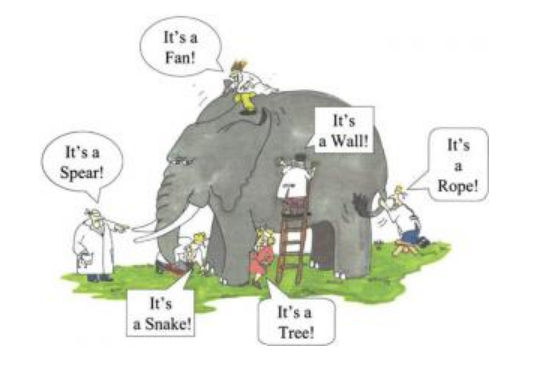

.jpg)