Management Effectiveness Has More Than Doubled in the Last 50 Years!!!!

https://www.gm.com/heritage/collection/chevrolet/1976-chevrolet-chevette

The Chevy Chevette was the best product of the largest and most successful corporation in 1976. [WOWSER] It was marginally better than the Corvair or the Vega. Major US corporations had taken advantage of the post-WWII opportunity to produce for the world and perfected minor changes each year to further stimulate consumer demand. Functional roles in corporations were largely unchanged since the 1920’s. Japanese competition in the auto and consumer electronics industries in the 1970’s caused American corporations to eventually reinvent themselves and move into a world of perpetual change management.

It’s difficult to describe the size and impact of these changes. They were like a compounded series of paradigm shifts. I worked with many organizations from 1975-1989: Koppers, Avery Label, Sherwin-Williams, multiple S&L’s, United Telephone, AmeriTrust, E&Y, Tandy Radio Shack, EDS, IBM, Microsoft, GM, NASA, Zenith, Allison Transmission, City of Cleveland, McCormick Convention Center, Amway, US Navy, US Health & Human Services, Lorain Community College, Baldwin-Wallace University and the University of South Florida.

I completed a finance MBA at Case Western Reserve University in 1984. I joined Ernst & Young as a junior management consultant and learned from Dr. E. Leonard Arnoff, one of the founders of the discipline of operations research.

https://www.informs.org/Explore/History-of-O.R.-Excellence/Biographical-Profiles/Arnoff-E.-Leonard

FEW of the most important concepts and skills of my 35-year professional career existed or were rarely applied in 1984. The smartest academic and business leaders were aware of some of the changes that would shape the next 50 years, but the typical 1984 manager was still working from a 1930’s view of business.

I’ll group the more than 100 HUGE advances into 6 categories.

Strategy

  1. Strategy really matters. A strategy function is needed.
  2. Competitive advantage is critical (Michael Porter).
  3. Companies cannot be all things to all people.
  4. Strategy is a process to focus and facilitate thinking, not a mainly a means of control.
  5. Market leaders have a better chance of winning. Better to be a leader in a small market segment than a follower in a large one. Long-tail opportunities.
  6. In many markets, leading market share (1, 2 or 3) is essential.
  7. Product differentiation is required to avoid commodity pricing.
  8. Universal customer needs of quality, speed, flexibility, value (price and function), information/transaction costs and personal relations/risk management can all be used for product differentiation. A customer centric strategic view is necessary.
  9. SWOT analysis is essential. Strengths, weaknesses, opportunities and threats.
  10. Mission, vision and values must be articulated. Begin with the end in mind.
  11. Firms must choose between equity alone and multiple stakeholder priorities.
  12. Modelling and simulation tools can be used to identify, understand and prioritize the critical dimensions of every firm.
  13. International and startup competition must always be considered.
  14. Professional functions within each firm are increasingly essential.
  15. A 3-way strategic choice must be considered: low cost, product differentiation or customer intimacy.
  16. Successful firms clearly articulate abstract ends and flex the means of attainment (Collins).
  17. The customer and retail interface may have more power than the manufacturer/service provider.
  18. Smaller firms are available to be purchased in a roll-up strategy.
  19. In the end, dynamic, sustainable [moats] strategies have the greatest value.
  20. China matters.
  21. As firms become more strategically driven, the fixed costs of SG&A rose, requiring firms to prioritize growth and market share.
  22. Intangible assets may be more important than tangible assets.

Marketing

  1. Market size is essential. Market share is next.
  2. Marketing research of customer preferences matters.
  3. Branding is vital.
  4. Focus groups can provide separate insights and validate numbers.
  5. The marketing function exists to create value, not just sell things.
  6. Targeted marketing is essential. Products must match differentiated markets.
  7. Some customers value quality and reliability.
  8. Some customers value timely delivery.
  9. Digital marketing channels supplement analog channels.
  10. In the digital world, search engine optimization [SEO] matters.
  11. E-commerce is a competitor to analog delivery.
  12. Internet promotion is a competitor of traditional media.
  13. Individuals’ identity and social interests can be targeted.
  14. Some customers are better targeted by 2-way communications or influencers.
  15. Politicians, regulators and courts increasingly matter, and firms must invest accordingly.
  16. Tariffs matter. Firms must invest to manage them.

Finance

  1. Access to debt, equity and start-up financing is much easier.
  2. Access to global investors is possible.
  3. More efficient markets through mutual funds, ETF’s, derivatives, and efficient trading markets matter.
  4. Portfolio management applies to investments, projects, product lines, channels and new product development.
  5. Marginal costs/benefits apply to every activity and project.
  6. Cash and management accounting perspectives are best used for making decisions, separated from accrual and financial accounting measures.
  7. Price discrimination is a major opportunity in every market.
  8. The formal discounted cash flow analyses apply to many situations.
  9. Activity based costing helps to identify necessary costs at 4 levels.
  10. Corporate and product level costs are subject to cost reduction just like plant/facility and production costs.
  11. The balanced scoreboard system ensures that all levels of economic activity are planned, measured and managed.

Human Resources

  1. Human resources are productive assets; they are not simply “personnel”. They should be managed accordingly.
  2. Required staff skills must be defined, measured and enhanced.
  3. Clerical support skills must be cost-justified.
  4. Analytical skills can be captured in separate positions.
  5. The general concept of meritocracy matters. Exceptions must be justified.
  6. COO’s and CFO’s are not alone. IT, marketing, risk, merchandise and people managers are equally important.
  7. Legal compliance matters.
  8. The role of “managers” is essential. Managing people, tasks and processes. Developing talents.
  9. Highly skilled MBA’s have important roles to play.
  10. Organizational development is a value added function.
  11. Matrix (cross-functional) management is just as important as functional management.
  12. Project teams play a critical role.
  13. Firms cannot cost-justify employing thought leaders in every function. Management consultants can fill in.
  14. Employees can be outsourced.
  15. HR information systems (HRIS) are essential.
  16. Centralized professional services functions are typically more cost effective.
  17. Corporate culture is a strategic asset.
  18. Clearly defining role requirements, recruiting, hiring and performance evaluation greatly improve performance.
  19. Human beings have personalities, habits, talents and motivations that can be leveraged and improved.
  20. Diversity, equity, and inclusion is a worthy investment today.
  21. Workplace flexibility is highly valued by employees.

Information Technology

  1. Basic financial and operations systems can be automated.
  2. Detailed transactional processes can be automated, controlled and improved.
  3. Processes can be documented, standardized and enforced.
  4. Relational database logic can greatly reduce work and errors.
  5. Detailed functional IT subsystems can be developed to improve operations and feed the financial systems. Warehouse Management Systems (WMS), as one example.
  6. Enterprise Resource Planning (ERP) systems can be used to leverage the universal core processes of firms while customizing the details and integrating functional subsystems.
  7. Critical data can be stored in data warehouses for analysis. Big Data comes later.
  8. Reduced IT costs improve access to various tools and systems.
  9. Staff can effectively use personal productivity tools: word processing, spreadsheets, graphs, graphics, email, databases, queries, report writing.
  10. Personal computers allow local use.
  11. The ongoing reduction of computer costs makes them more effective for more employees.
  12. The internet provides access to information, teams, suppliers, customers, markets and others.
  13. Internet search tools provide smart access to information.
  14. Crowdsourced applications provide zero cost tools.
  15. Social media apps provide the opportunity to connect with others effectively.
  16. Smartphones further reduce the cost and limits of accessing all data, functionality and people.
  17. Artificial intelligence provides tools to greatly leverage personal skills.

Operations

  1. Forecasting and statistical techniques refined and easily applied using personal computers.
  2. Complex, multi-level operations planning models widely used.
  3. Supply chain management using daily or real-time information from suppliers, internal operations and customers optimized.
  4. Long-term supplier partner strategies adopted, reducing sales, purchasing, legal and disruption costs.
  5. Professional logistics profession developed, applying the best options for all types of cargo.
  6. Manufacturing outsourced routinely to lowest total costs sources worldwide.
  7. Distribution, logistics, IT, HR, R&D, product development and all functions outsourced (sometimes globally) to leverage specialized skills and focus internal operations.
  8. Operations research tools routinely applied for optimization problems, especially critical paths.
  9. All fixed-cost capacities set at lower percentages, with secondary capacity options, in order to optimize profits, especially in low and high demand situations.
  10. All processes defined, standardized, refined and optimized in order to apply IT and process engineering.
  11. Multiple feedback loops routinely used to improve processes through time.
  12. Lower communications and transportation costs further increased outsourcing activities.
  13. The value of time to customers was identified and turned into a competitive advantage, from 6-weeks mail order to same day to same hour delivery.
  14. Just-in-time production philosophies implemented, and inventories slashed towards zero intentionally to force improvements.
  15. Production processes re-engineered according to process and final goal needs, displacing functional and “like kind” groupings.
  16. Continuous improvement, kaizen quick fixes and full process re-engineering take advantage of global best practices.
  17. Project management discipline created and refined. Agile project management used. Project management offices created to manage portfolios of projects, project managers and subject matter experts from inside, suppliers, customers and consultants.
  18. New product development managed as a portfolio of projects, each within a standard process framework. Firms adopt the “layer cake” view of value as the sum of annuity returns from a series of new products.
  19. Basic insights of modern Total Quality Management or Lean Six Sigma adopted, focused on activity and process variability with unexpectedly large results. Relentless elimination of waste.
  20. The Quality paradigm shift places the process view on par with the finance view.
  21. The variability of actions within a sequence of events [Goldratt] is seen as the critical driver of final results. Processes, measurements, goals, investments, staffing, operations planning and outsourcing are adjusted for dynamic effectiveness.

Summary

Modern firms have cumulatively adopted and leveraged these interrelated capabilities to become strategically driven, self-aware, well-managed and improving through time. The marginal finance/portfolio view together with the process view allow firms to identify, deliver and monetize customer needs while outsourcing functions that are not deemed strategically essential. Firms generally invest more resources in planning, optimization, new product development and risk management today.

The application of these principles has varied by industry. Government, not-for-profit and health care have great improvement opportunities remaining.

Firms may invest in Joseph Schumpeter’s “creative destruction” or they may optimize within existing market structures if they see higher returns from internal process improvements, incremental product development, supplier squeezing, price discrimination, targeted marketing or regulatory capture. In other words, the capabilities for ongoing world-changing improvements exist but may not be applied for the greater good.

Addressing the “Threat” of Immigration

https://www.wsj.com/articles/trump-ties-mexico-tariff-threats-to-hefty-immigration-demands-11559332126

Immigration has become a strong winning issue for right-wing parties around the world and an organizing issue for extreme right-wing parties. Why? What should centrist and left-wing parties do?

Accelerants

There are more immigrants. Economic, religious, social and political immigrants. More international conflicts, civil wars and gang violence. Continued huge gaps in living standards between countries. Global communications and transportation networks that make migration possible. The demand for in-migration to developed countries is very high.

In a world of rapid change, slowing growth and religious doubt, citizens of advanced nations are insecure.

Politicians have learned that a simplistic polarization of left versus right is much easier to manage than “solving problems” and have increasingly framed all politics as “us versus them”.

In a world of skepticism and loss of certainty caused by the undermining of religion, progress, science, socialism, fascism, or nationalism as a definite answer we increasingly turn to “identity” as our rock. Blame Rene Descartes’ “I think, therefore I am” insight or Martin Luther’s religious individualism or libertarian economic individualism or countercultural social individualism or the “therapeutic society” triggered by Sigmund Freud.

We all need a basis for our cognitive consistency. Today, our personal identity is raised as a mini-God of great importance. We merge political, cultural and personal identities. We look to national, cultural, racial, class, professional, fraternal, social, alumni or corporate identities for meaning. Identity is MUCH more important today. It is subject to political and media influence and manipulation.

Moral Foundations Framework

Jonathan Haidt and his colleagues sought to define the core, inherent, inherited moral, political and religious frameworks that we all have. They contrasted traditional and modern moral beliefs. They noted that “modern” beliefs are extraordinary and WEIRD: Western, Educated, Industrialized, Rich and Democratic. They combined social science testing, statistics and evolutionary psychology to determine 5-8 widely held moral beliefs that “make sense” based on their interpretation of human and cultural evolution. They noted that liberals emphasize just the two values of care and fairness, while conservatives add the values of loyalty, authority, purity/sanctity, proportionality, ownership and liberty.

Immigration is a Huge Threat to Many

I’m insecure, framing politics in simple left versus right, “us versus them” terms and insecure in my identity. I’m sensitive to all of the moral flavors, including loyalty, authority and purity. Immigration is increasing. Illegal immigration is uncontrolled.

What do I see?

Economic threats to jobs, assets and privilege.

Unfair claims on public welfare programs.

Risk of increased crime, disease, drugs and social dysfunction.

Further dilution of and threats against traditional culture by unfamiliar “others”. Different birthplace, nationality, race, religion, class, language and expectations.

Opposition to the “rule of law”, unfairly proposing amnesty for illegal immigrants.

A feeling of personal and social violation or invasion by “others”. A loss of control.

A threat to the symbolic nation and national security.

Reasonable people take this perspective. They look at “liberals” who emphasize “immigrant rights” above this reality as insane.

Academic research generally supports the “Moral Foundations Theory” view.

https://econtent.hogrefe.com/doi/10.1027/1864-9335/a000447

https://www.sciencedirect.com/science/article/abs/pii/S0147176724001251

https://www.mdpi.com/2313-5778/7/3/65

https://journals.sagepub.com/doi/10.1177/19485506231162161

Centrist Political Response

  1. Acknowledge those who feel this threat. Don’t dismiss, discount, demonize or rationalize them or the politicians that support them. Recognize their legitimate concerns.
  2. Focus on the issue of illegal immigration. Solve it. Invest in border controls.
  3. Implement a national ID system that prevents illegal employment.
  4. Enhance the agricultural guest worker program.
  5. Focus on the issue of unlimited asylum seekers. Solve it. Revise standards to be reasonable. Resolve cases within a year. Set a limit. Find ways to “share the love” with other countries.
  6. Support a “points system” that prioritizes “value added” immigrants.
  7. Propose a way like Reagan’s “path to citizenship” for existing illegal immigrants.
  8. Support expulsion of all convicted felony criminals.
  9. Ignore the extremist rhetoric about illegal immigrants.
  10. Highlight Trump’s unwillingness to even discuss a bipartisan solution.
  1. Highlight the much greater importance of national economic success, affordable prices, the rule of law, sustainable democracy and American global interests.
  2. Highlight a political platform of personal and economic opportunity rather than individual “rights”.
  3. Promote immigrant success stories at the working, middle, professional and upper-class levels. Leverage visible sports, arts, media and political figures.
  4. Highlight diverse successful assimilation communities across the United States.
  5. Fine-tune welfare programs to clearly exclude illegal immigrants.

Summary

Leftists often believe that their views are obvious, logical and historically “true”. Caring and Fairness are clearly the ultimate values in modern times. The other values are seen as remnants of the unenlightened past. I believe that the moral values of loyalty, authority and purity are also valid. Principled conservatism is a valid perspective.

It is easy to take an enlightened, universal, abstract, economically disinterested view when someone has the assets and talents valued by our society (standing “privilege” on its head). When an individual is unsure of his prospects (standing John Rawls on his head) in the real world, he is rooted in the familiar world of family, caste, class, neighborhood, culture, social groups and self-interest. Insecurity and threats matter. Politicians in a democratic system should listen and respond.

Immigration is a real threat to a majority of our citizens. We should manage it accordingly.

Only by managing the threat can we invest in the proper care for immigrants as a society.

I addressed this topic 4 years ago. I was less willing to fully accept the right-wing perspective.

Trump is Not Mr. Affordable

I wrote many posts during the Biden administration to counteract the recurring false claims about “runaway inflation”. Biden was certainly guilty of spending too much taxpayers’ money for economic recovery, infrastructure, green projects and student loan forgiveness. This aggravated the inflation rate, made it slower to fall and established expectations of higher long-term inflation. However, the primary drivers of inflation were the pandemic driven demand for physical goods after factories closed, loose monetary policy and bipartisan government spending to offset the pandemic. We all enjoyed 20 years of price stability before this. A little bumpiness after a pandemic driven global shutdown was not surprising.

Current Inflation Rate

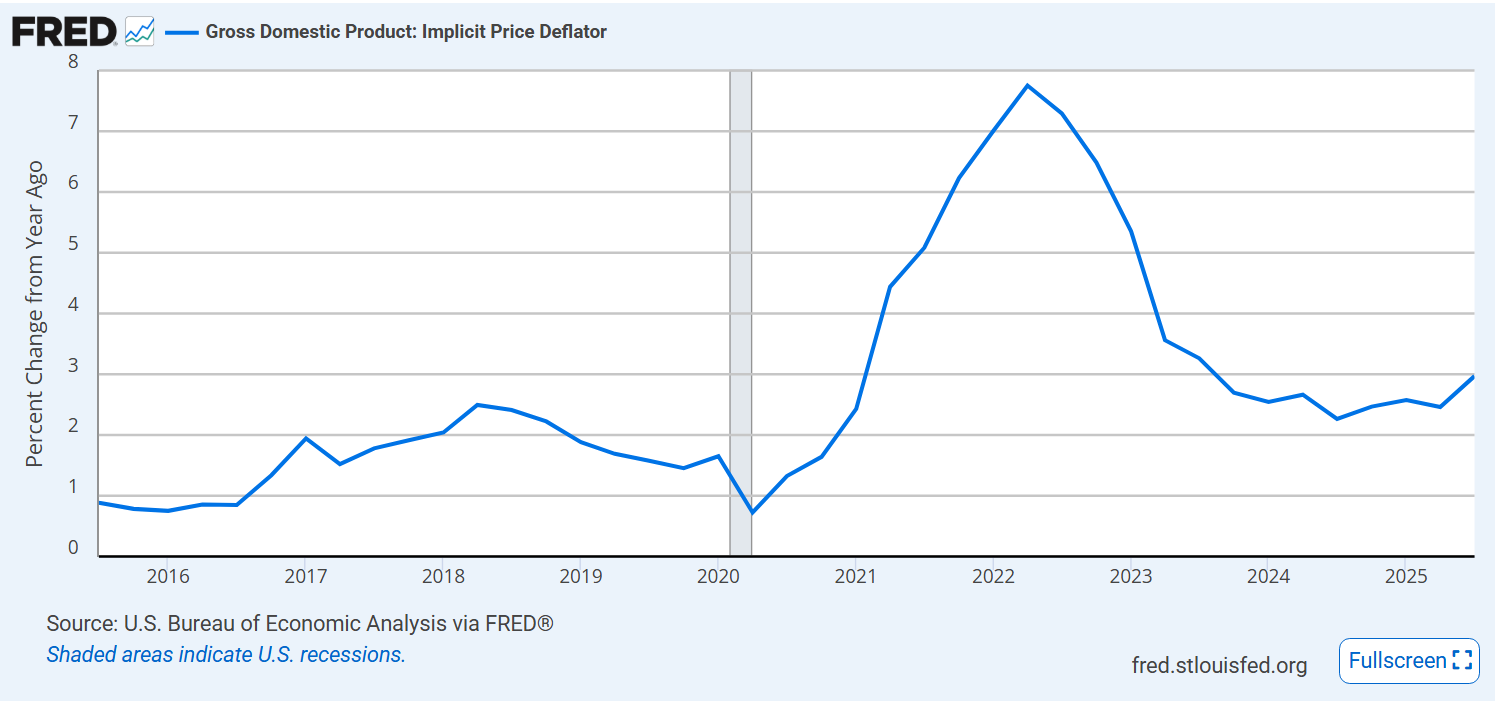
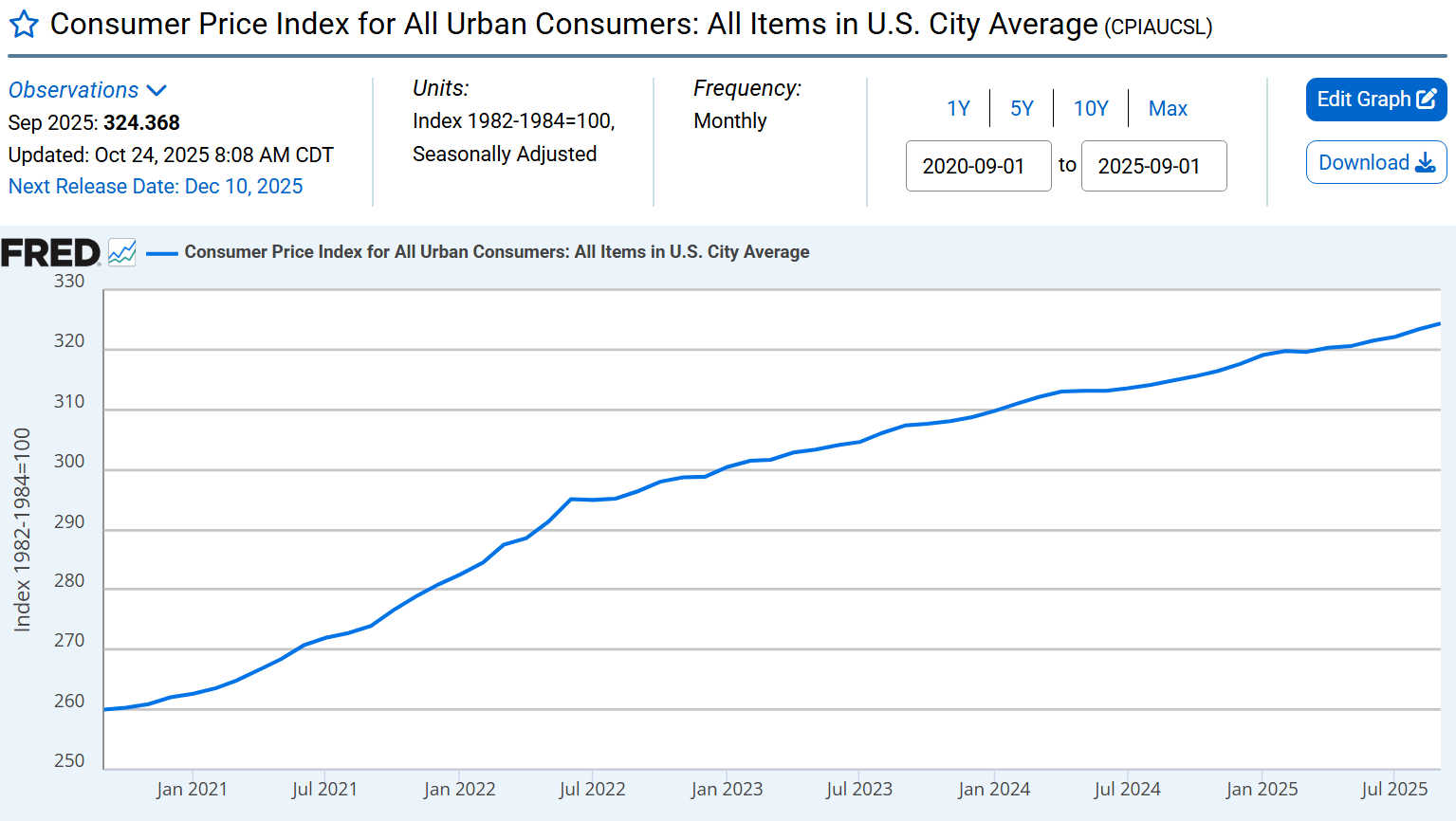
The climbing inflation rate broke in June, 2022 more than 3 years ago. It has not slowed under Trump’s stewardship.

The inflation rate has been in the 3% +/- range for the last 2 years. That means that prices, on average, continue to increase each year. 2% inflation was the normal rate for the prior 20 years. It (3%) seems to be a rate that is “non-accelerating”. Economic agents, including consumers, are able to ignore 2% inflation. It is immaterial, too small to really notice. 3% inflation is on the border of being “concerning”. Inflation can more easily accelerate from 3% to a concerning 5% or higher. President Trump can claim that he has maintained the Biden inflation reduction from 9% to 3% but he cannot claim that he has reduced prices, reduced inflation or made the cost of living more affordable.

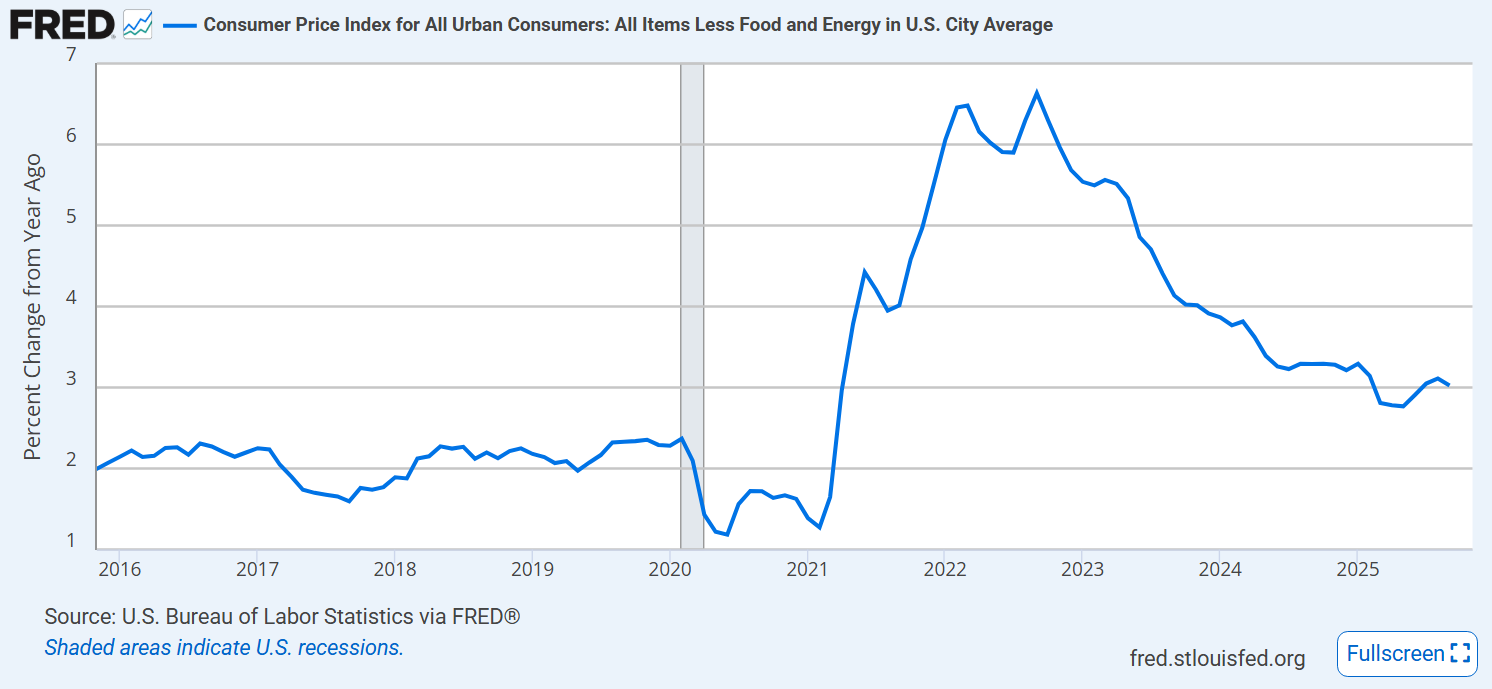
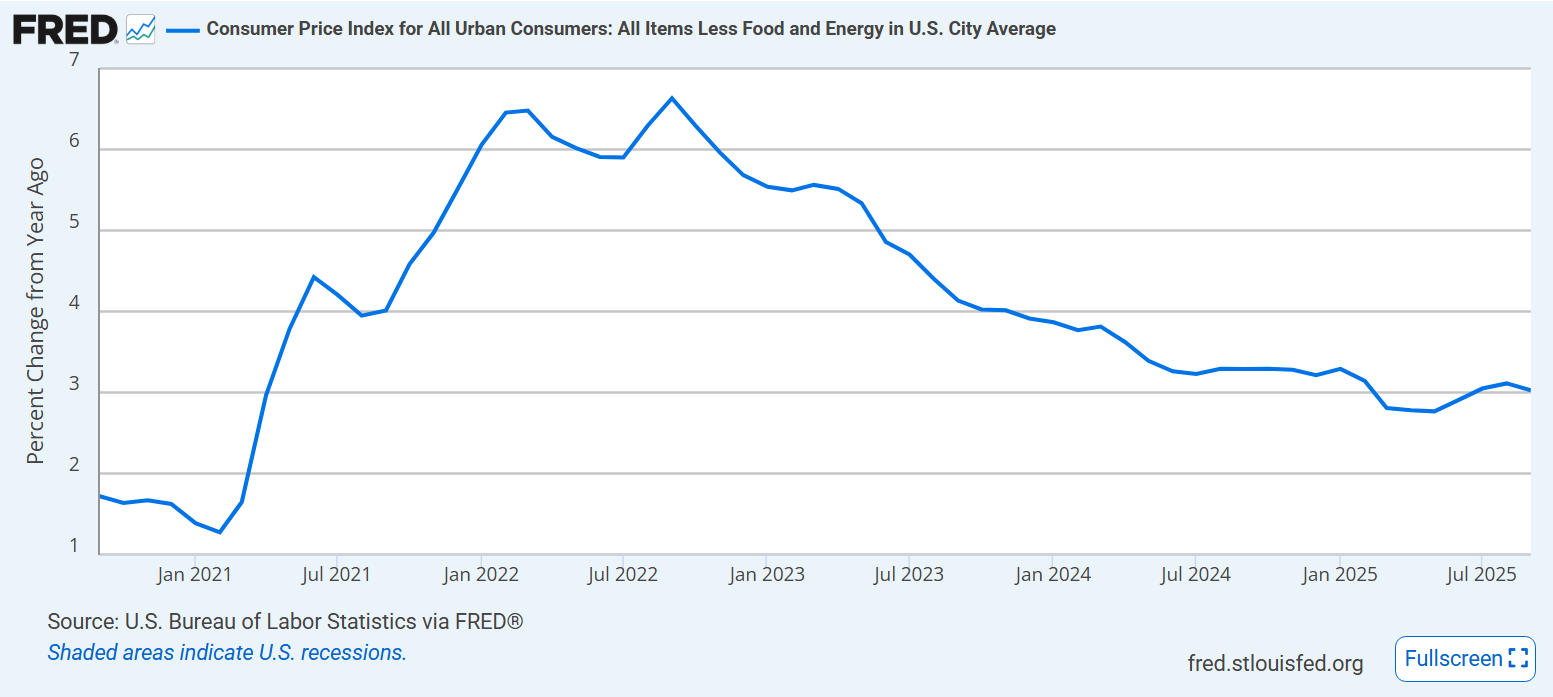
The core inflation rate, excluding the more volatile food and energy prices, has shown the same pattern. It peaked at 6.5% and declined to “about 3%” by June, 2024. It has moved down by one-quarter percent since then. Unfortunately, it seems to be flat. Trump has not moved it down.

Smaller Policy Options

President Trump has pursued 2 of these 12 areas but worked in the opposite way to increase inflation on most. He has pressured drug prices down. He has encouraged increased supply of traditional fossil fuels energy.

Fiscal Policy

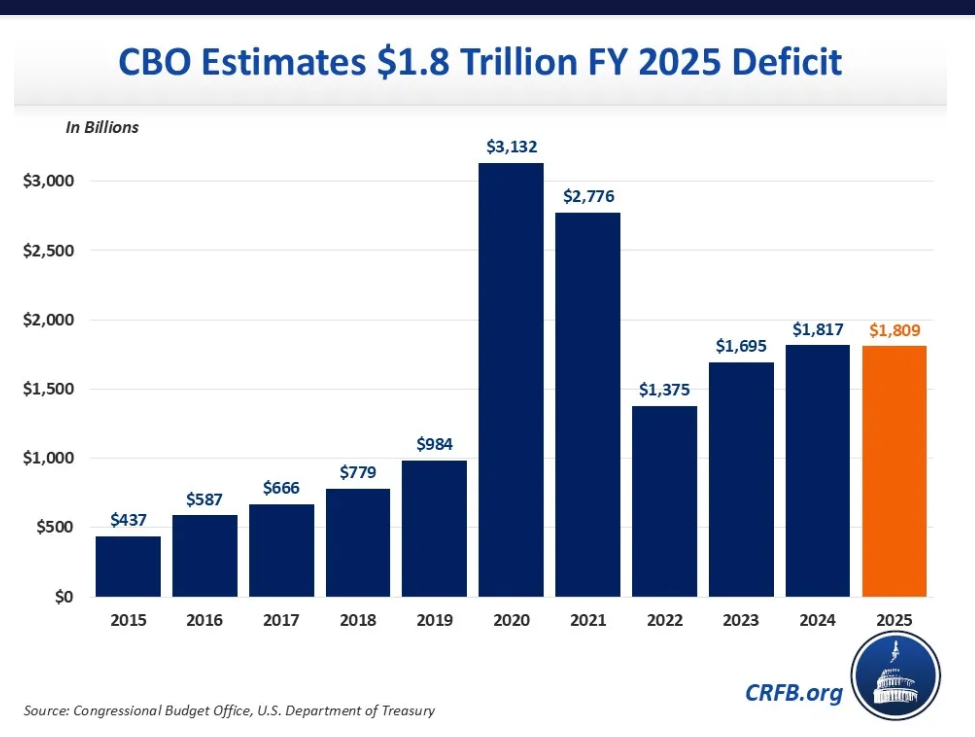
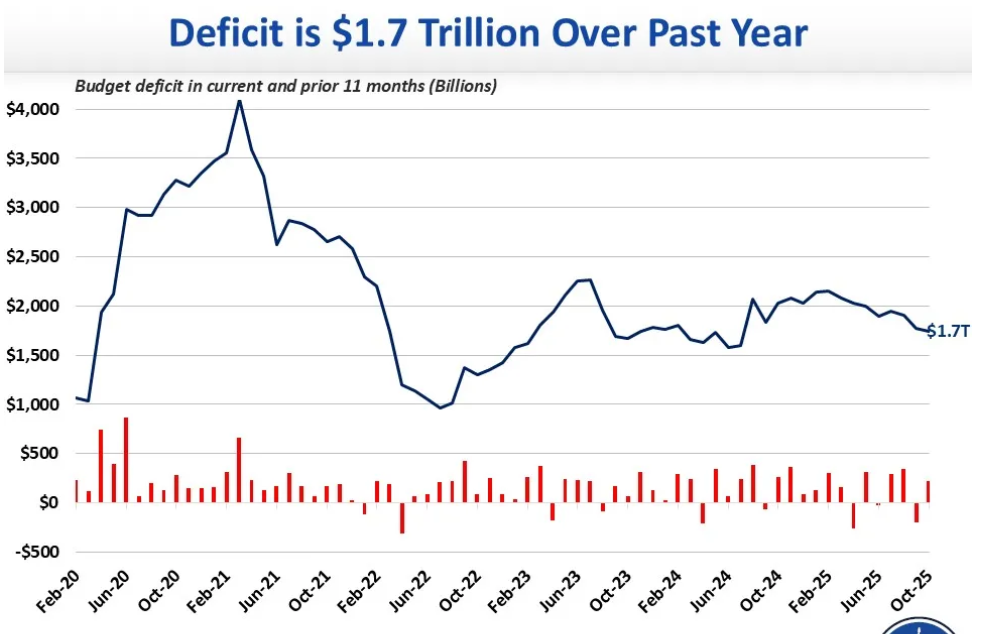
Federal budget deficit remains at an unsustainable $1.7T per year. Too much demand, not enough supply.

Monetary Policy

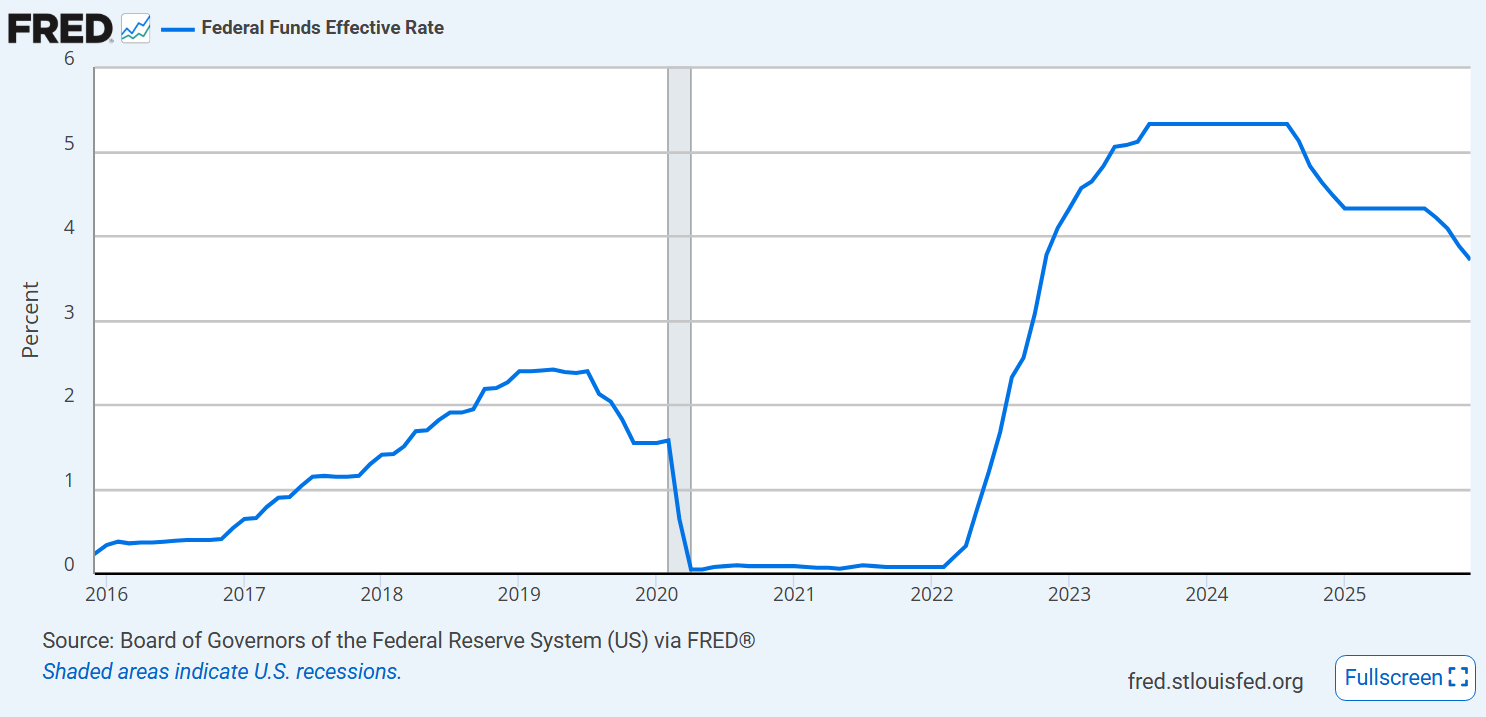
President Trump has been harassing Fed Chair Jerome Powell (who he appointed) to cut interest rates. The real, inflation adjusted, interest rate is currently 1%. Monetary policy is neutral or a little tight. President Trump encourages looser monetary policy which increases inflation. Not an inflation fighter.

US Dollar

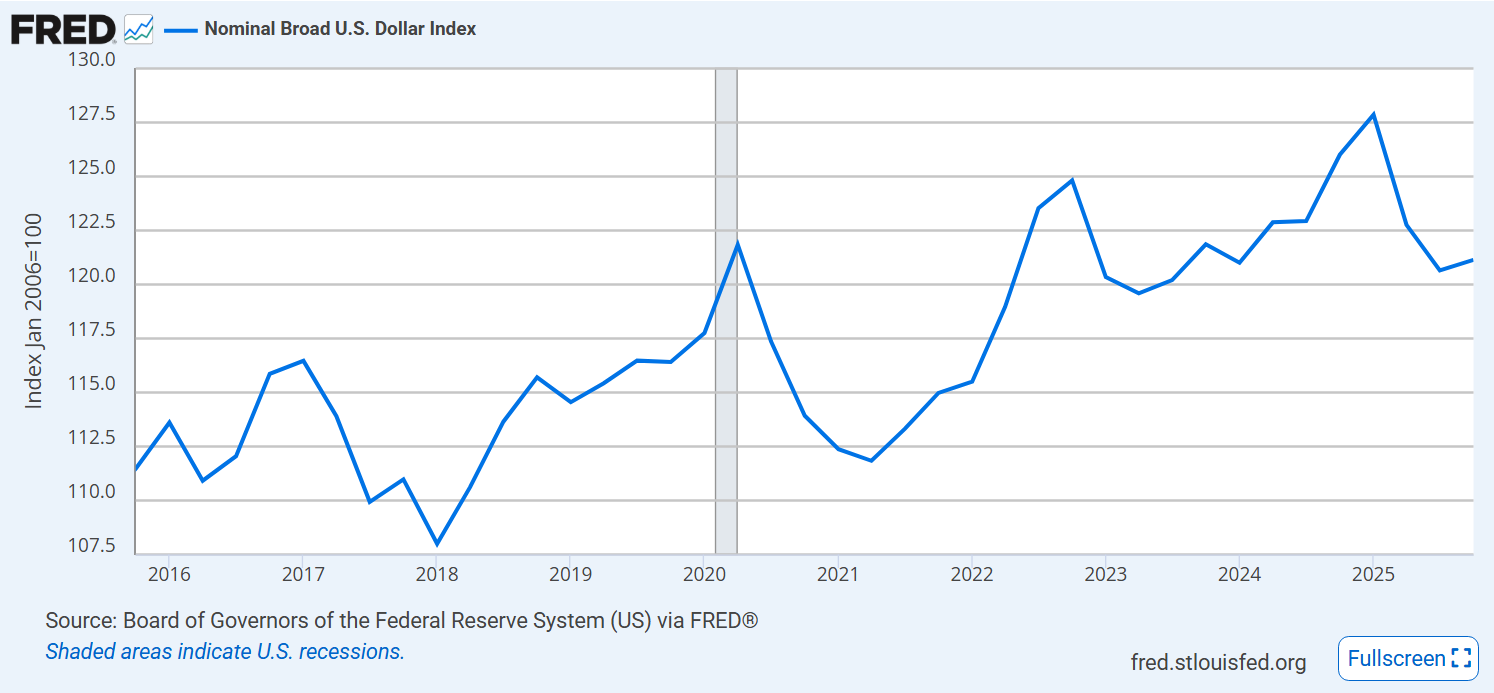
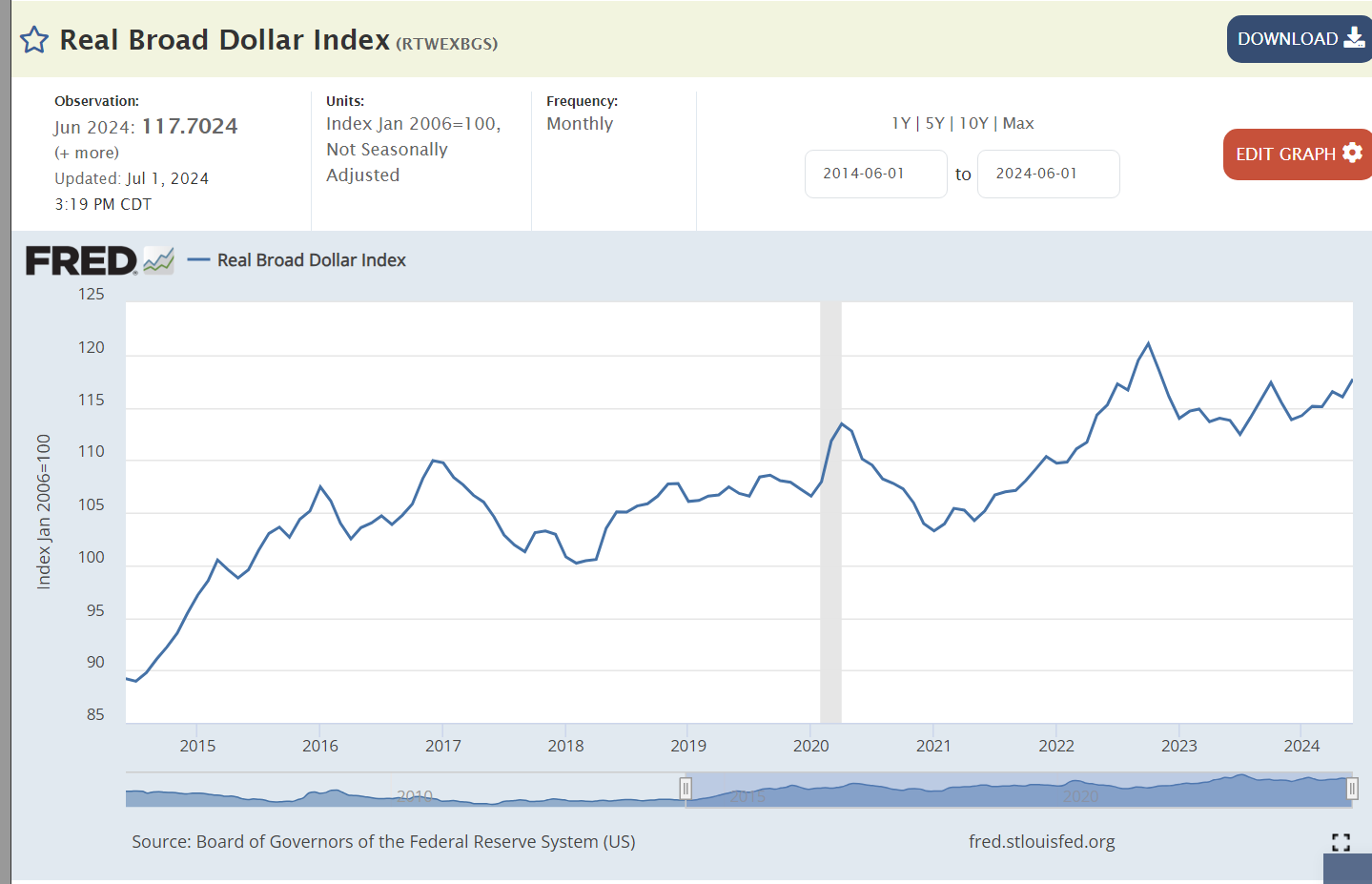
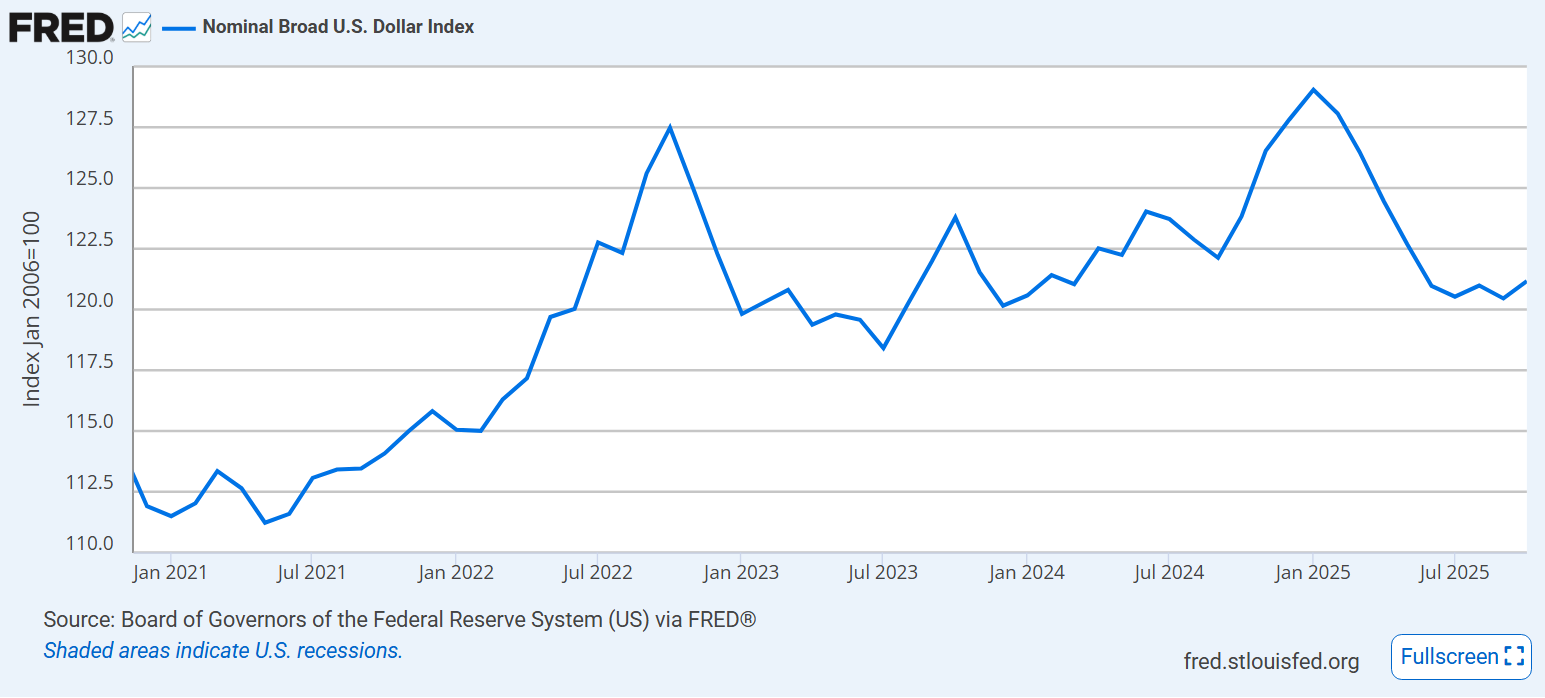
The US dollar has declined in value since Trump took office, making foreign purchases more expensive.

Housing Costs

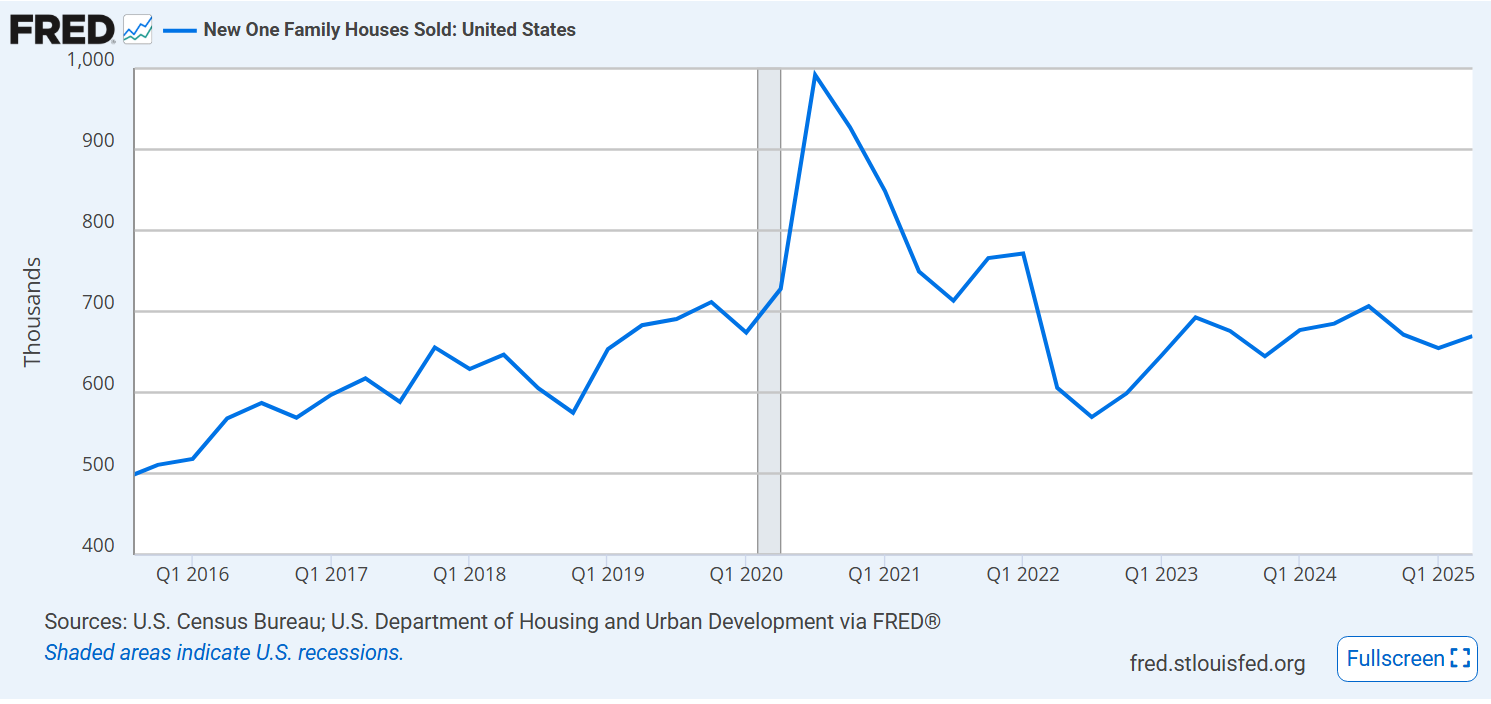
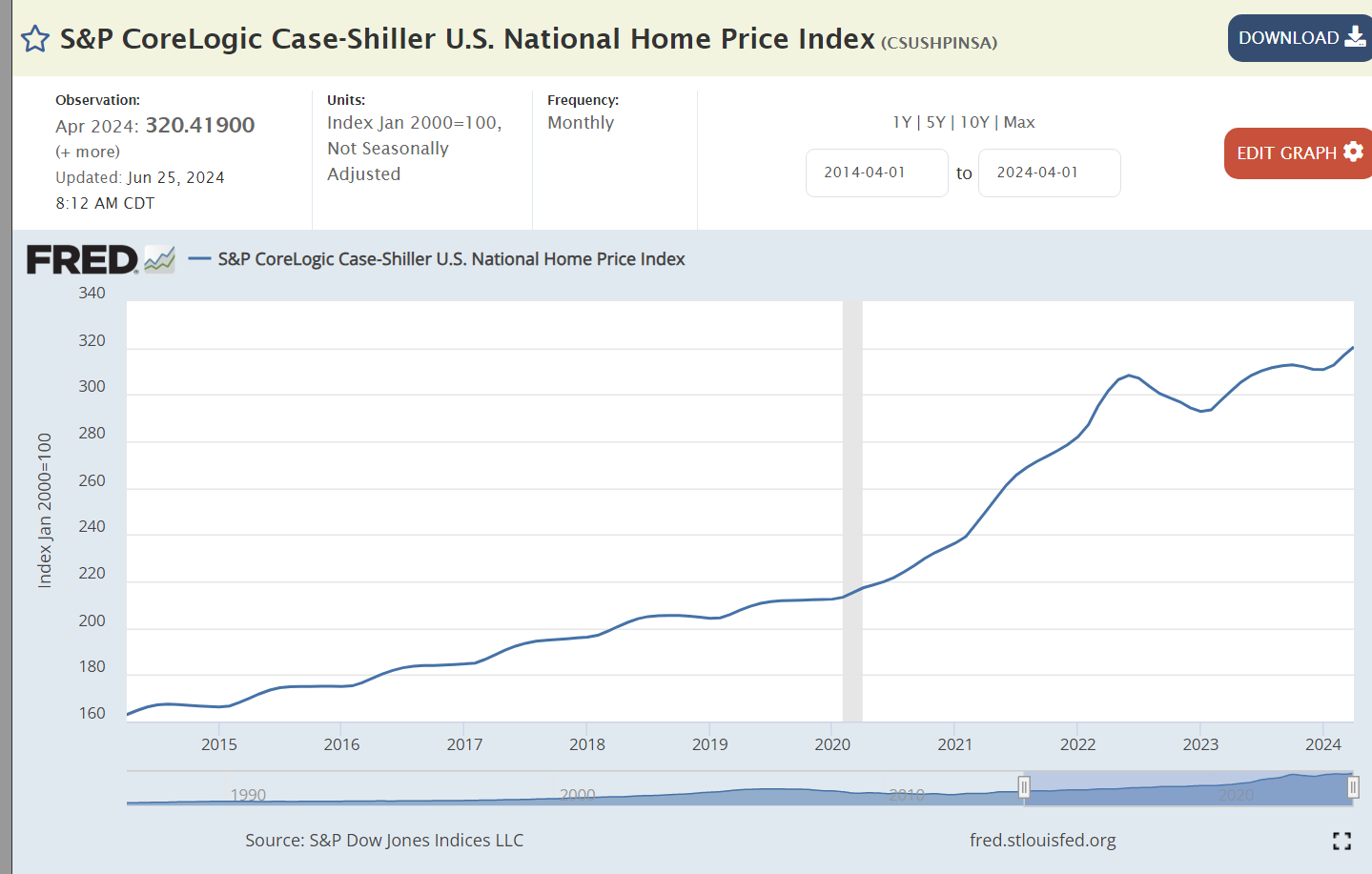
Housing prices peaked in 2022, drifted down by 5% in 2022 and have remained flat for the last two and a half years. Trump policies have no impact here.

Health Care

3% medical inflation continues despite efforts to reduce drug prices.

https://www.cnn.com/2025/08/11/business/prescription-drug-prices-trump

Food

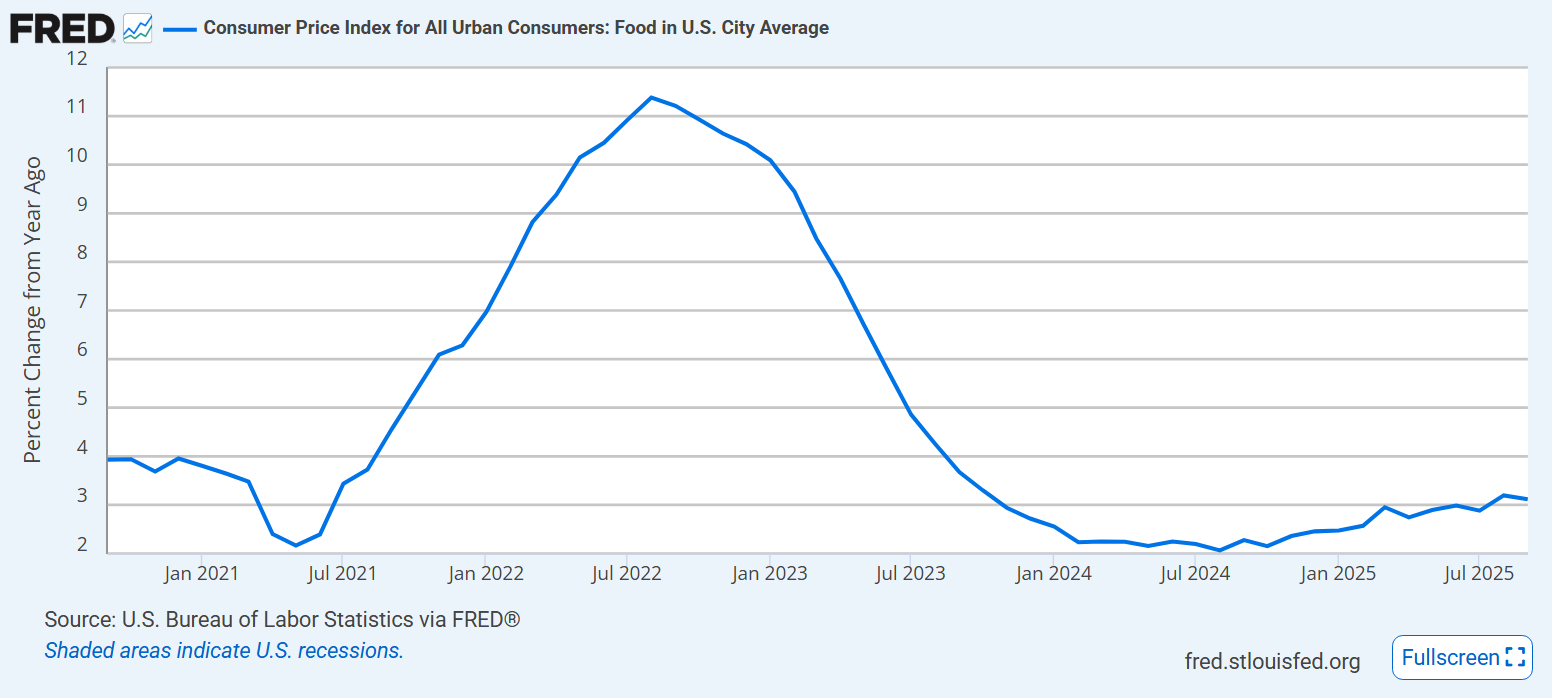
Food prices are more volatile than most. Inflation reached 11% in 2022. It approached 2% in 2024 but has since increased to 3% annually.

Energy

Energy prices jumped in the first 2 years of recovery from the pandemic. They have been flat since then. Trump has cancelled $8B worth of previously authorized energy projects.

https://www.pbs.org/newshour/politics/white-house-cancels-nearly-8b-in-clean-energy-projects-in-blue-states

Gas prices averaged $2.50/gallon before the pandemic, spiked up to $4.50/gallon during the recovery and settled back to $3.00/gallon for the last 3 years.

Tariffs

US consumers enjoyed immaterial average import tariff rates for the last 50 years. Trump has levied an 18% tax on imports, increasing costs for American consumers of the 14% of their consumption that is imported. The inflationary impact of the Trump tariffs has not yet been passed along to consumers. The frequent changes in tariff rates have led businesses to absorb costs in the short run. This will not continue.

Tax Collections

https://www.nysscpa.org/news/publications/the-trusted-professional/article/irs-budget-to-decrease-37-in-2026-from-2025-proposes-a-decrease-in-employees-061125#:~:text=The%20last%20time%20the%20number,filing%20season%2C%20the%20Treasury%20stated.

Trump invests fewer resources in collecting taxes, reducing budget deficits and reducing inflation.

Labor Unions as a Force to Increase Wages

https://www.epi.org/blog/trump-is-the-biggest-union-buster-in-u-s-history-more-than-1-million-federal-workers-collective-bargaining-rights-are-at-risk/

No support from Trump for increased labor union power.

Improve Government Efficiency

https://en.wikipedia.org/wiki/Department_of_Government_Efficiency

https://www.cbsnews.com/news/trump-firings-watchdogs-inspectors-general-60-minutes/

Marginal results from the highly publicized DOGE efforts, despite very large opportunities for improvement.

Government Shutdown Waste

A $10 billion-dollar permanent loss of output.

https://www.politifact.com/article/2025/oct/31/federal-shutdown-cost-economy-trump/

No Tax on Tips

This recent tax change benefits individuals with enough income to pay federal income taxes, so improves affordability for an estimated 4 million people.

https://bipartisanpolicy.org/explainer/how-does-no-tax-on-tips-work-in-the-one-big-beautiful-bill/

No Tax on Overtime [Premium Pay]

This recent tax change exempts the overtime premium from federal taxation, so promotes affordability for hourly wage earners.

Extra Senior Federal Tax Deduction

This provision of OBBA benefits low to moderate income households aged 65 and older. Many experts criticize its structure, but it clearly makes life more affordable for those who benefit from the change.

.https://taxfoundation.org/blog/obbba-senior-deduction-tax-relief/

Higher Limit for State and Local Tax (SALT) Deductions

Higher income taxpayers who itemize deductions received a significant federal tax reduction. This change does not benefit most low to moderate income households.

https://www.fidelity.com/learning-center/personal-finance/SALT-deduction-increase

Increased Cost and Reduced Availability of Child Care

The OBBBA increased tax credits to partially offset childcare costs. Critics considered these changes to be inadequate, noting that a “pro-family” political party should do better.

https://www.pewresearch.org/short-reads/2024/10/25/5-facts-about-child-care-costs-in-the-us/

https://www.usatoday.com/story/money/2025/07/12/trump-child-care-tax-credit-changes-details/84505810007/

https://tcf.org/content/commentary/the-top-five-trump-attacks-exacerbating-the-child-care-crisis/

Real Dollar Hourly Compensation

Real, inflation adjusted, compensation is slowly recovering towards its pre-pandemic level.

Tight Immigration Policies

Greatly reduced net immigration will tighten the labor supply in some industries, leading to higher compensation for some workers and higher prices for consumers. Economists have not reached a consensus on the net impact to the typical American.

Fires Bureau of Labor Statistics Chief

https://www.cbsnews.com/news/trump-firings-watchdogs-inspectors-general-60-minutes/

Summary

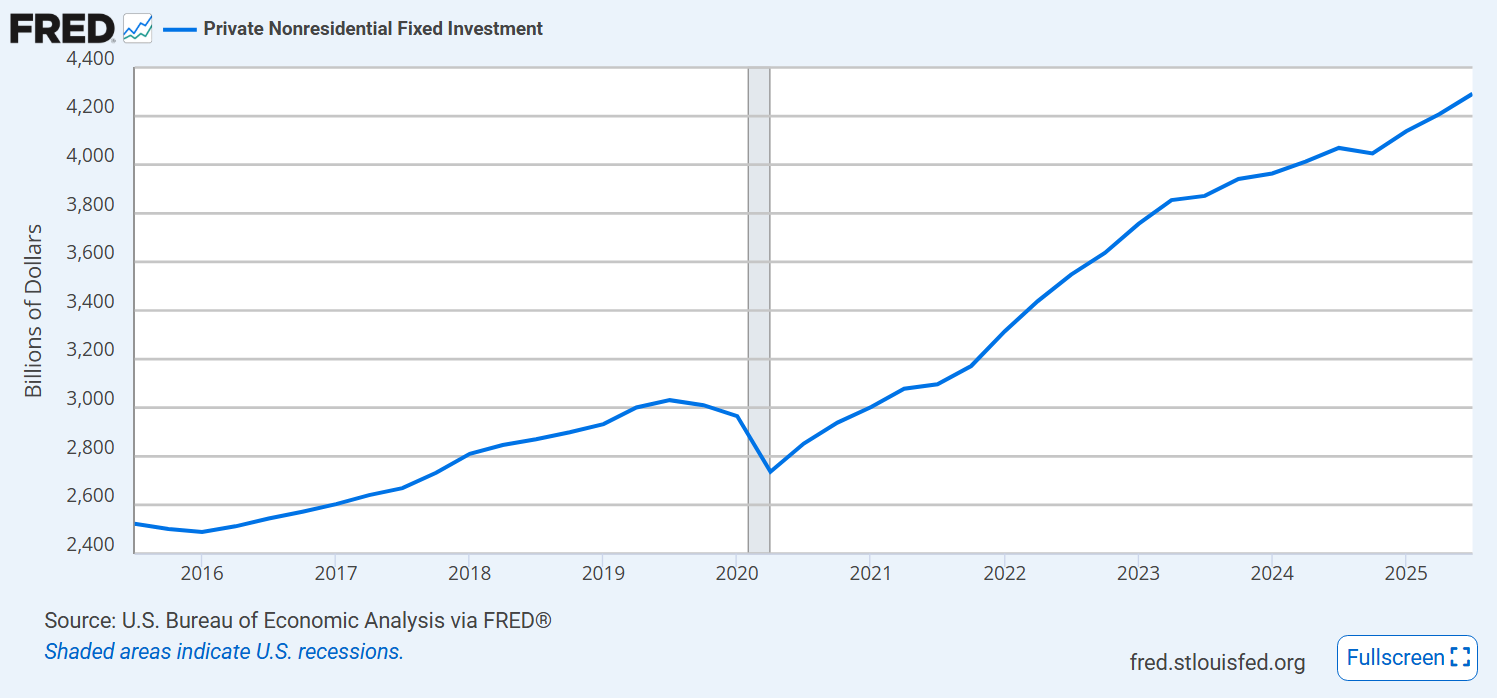
Inflation continues at 3% annually. Real wages are keeping up with inflation. The memory of large price increases in 2022 that were never reversed seems to have reset inflation expectations from 1-2% to 3-4% per year. Some tax law changes in the One Big Beautiful Bill meaningfully cut taxes. Fiscal policy remains very loose and drives inflation. Monetary policy is considered neutral by most economists, but Trump is trying to loosen it, which risks further inflation. Trump’s “on/off” tariff negotiations have not yet driven large consumer price increases but have slowed business investments. Trump’s claims to have improved “affordability” rest on his specific actions that point in that direction, not on the economy wide statistics or large-scale policies that might significantly improve affordability for the “average” family.

Good News: The Business Cycle is Done

https://www.yourobserver.com/news/2023/dec/01/construction-begins-legacy-trail-overpasses/

From 1945 through 1985 the US economy regularly accelerated its growth, reached a peak, fell back and then recovered. Businesses, economists, politicians and the public expected that this 3-5 year business cycle would continue forever.

Looking back, it seems like the business cycle was broken by 1985. All of the subsequent downturns have been prompted by extraneous, outside of the system, shocks. In 1990 a second global oil shortage shock.

https://en.wikipedia.org/wiki/Early_1990s_recession_in_the_United_States

In 2000-2001, a stock market bubble popped.

https://en.wikipedia.org/wiki/Early_2000s_recession#:~:text=A%20combination%20of%20the%20Dot,Inverted%20yields%20in%20early%202001.

In 2007, a mortgage lending bubble popped.

https://en.wikipedia.org/wiki/Great_Recession

In 2020, a pandemic driven recession, followed by a very unexpected rapid recovery.

https://en.wikipedia.org/wiki/COVID-19_recession

40 years without a classic business cycle recession is long enough to claim victory.

How could this happen? The independent Federal Reserve Bank has maintained a neutral monetary policy. We have not “shot ourselves in the foot” and we have implemented reasonable policies to offset external shocks. The federal government budget deficit has generally returned towards zero following depression periods. Automatic stabilizers and congressional action have addressed recessionary periods with enough stimulus to stop economic decline and restart recovery.

More importantly, the structure of the US economy has changed. The share of high fixed cost manufacturing has declined as “services” has increased as a share of the total economy. The share of international trade (imports and exports) less directly connected to the domestic economy alone, has increased. The power of labor (unionized or not) has fallen, allowing firms to reduce hours and real wages during a downturn. In most recent times, firms better recognize the cost of attracting and developing highly skilled labor in a complex production world, so they retain key staff even during downturns. Vertical integration has been reduced, allowing firms to respond to minor demand changes more effectively. Based upon the quality revolution, major firms have reset their capacity utilization targets to 80% rather than 95%, providing firms with greater flexibility in managing variable demand and not reaching the point where internal costs increase and the need to increase prices occurs.

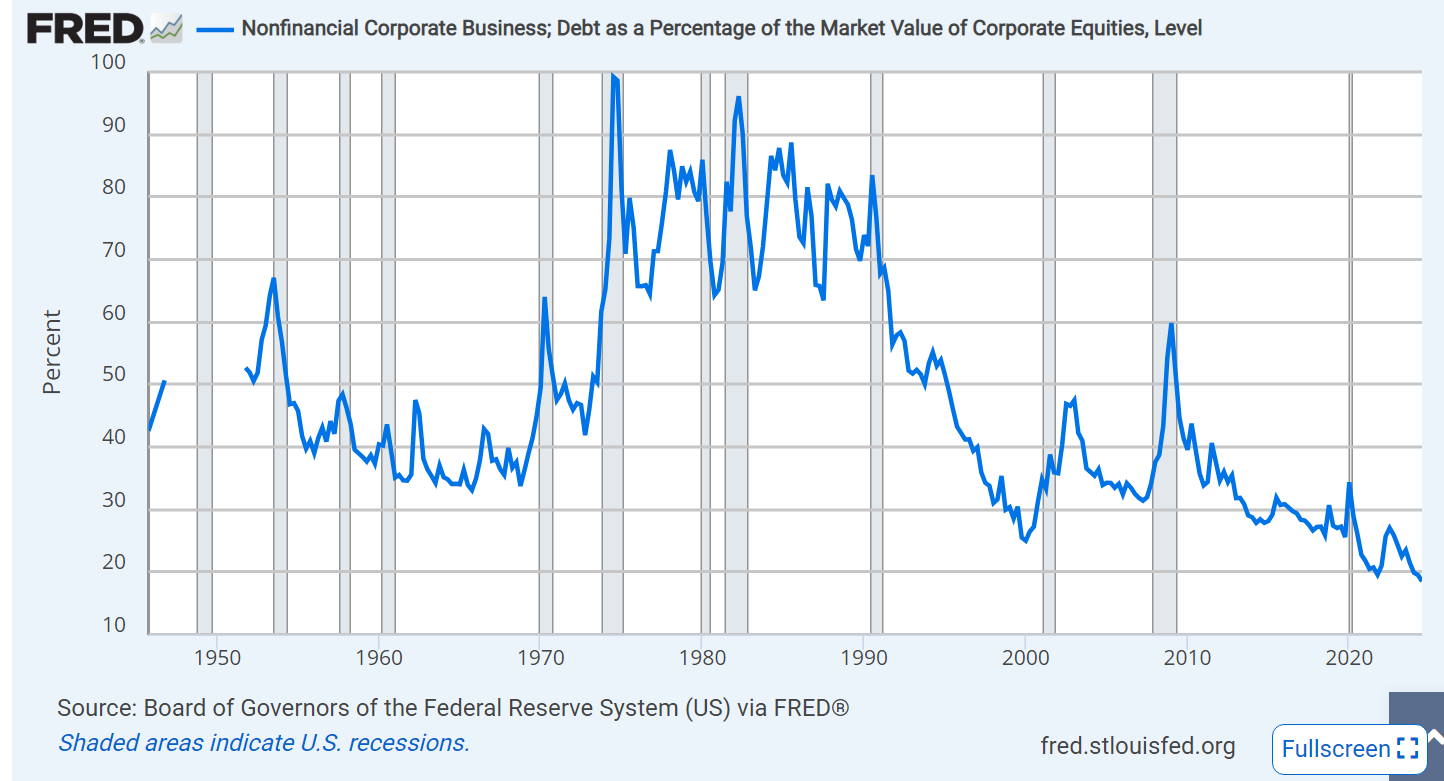
Financial leverage has also decreased. US firms have access to deep bond markets so are they able to incur only necessary levels of indebtedness.

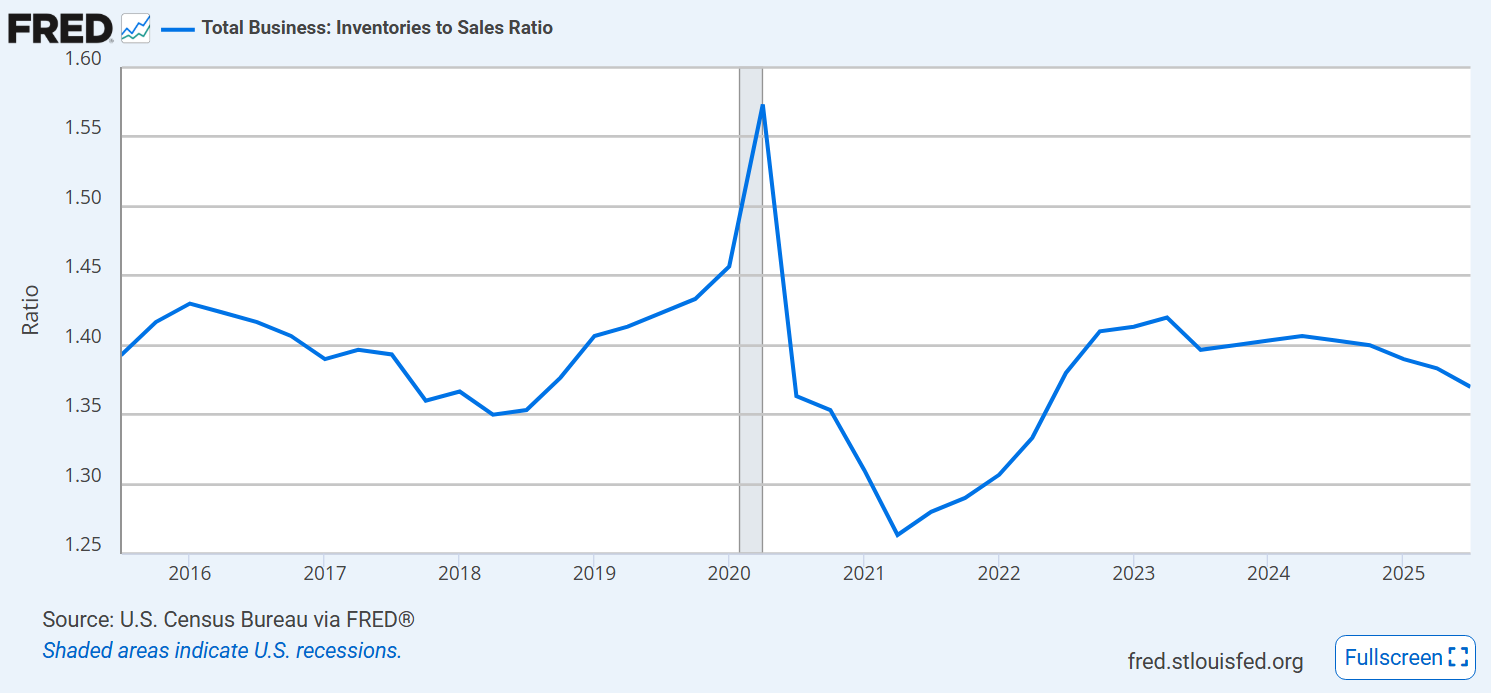
Even with a much greater level of imported goods, retailers hold lower levels of inventory, allowing them to not overreact to changes in demand. Firms have more effective supply chain management processes.

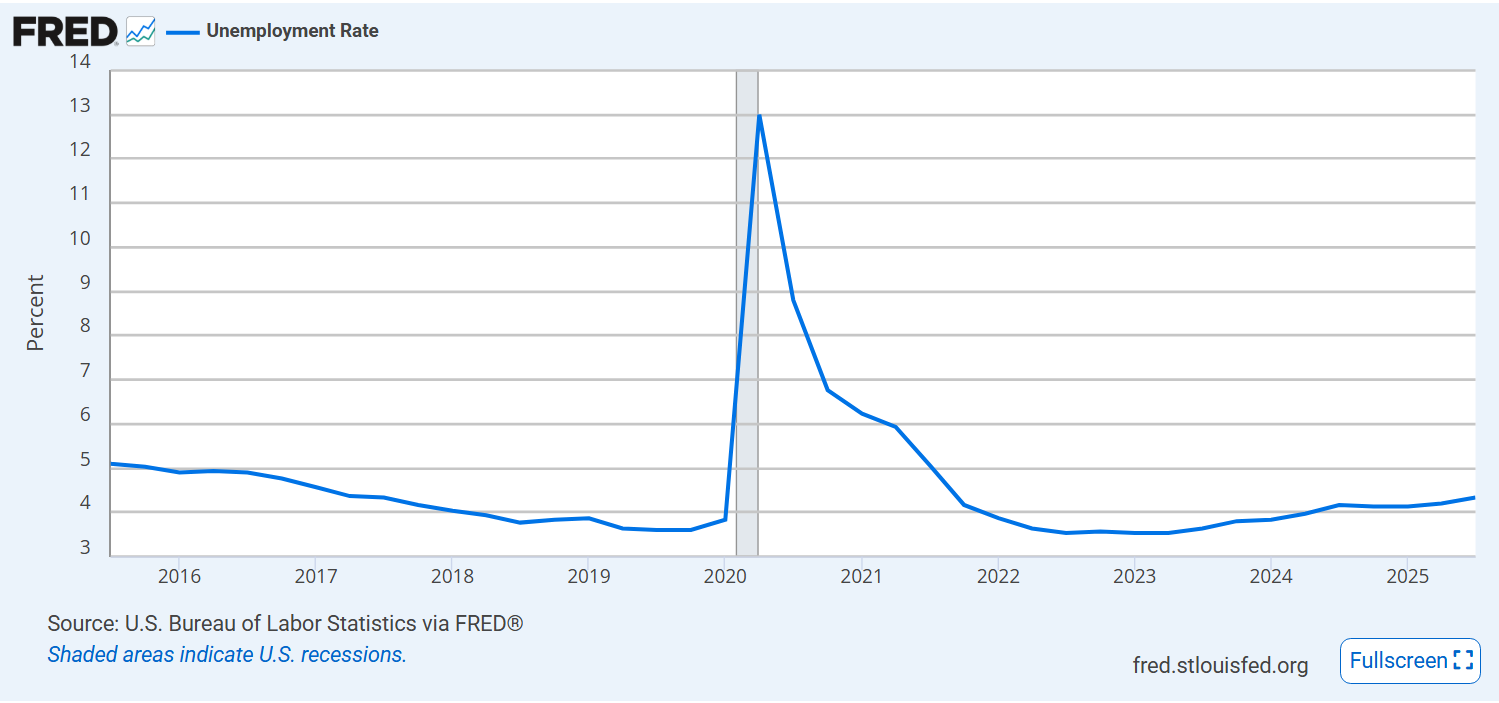
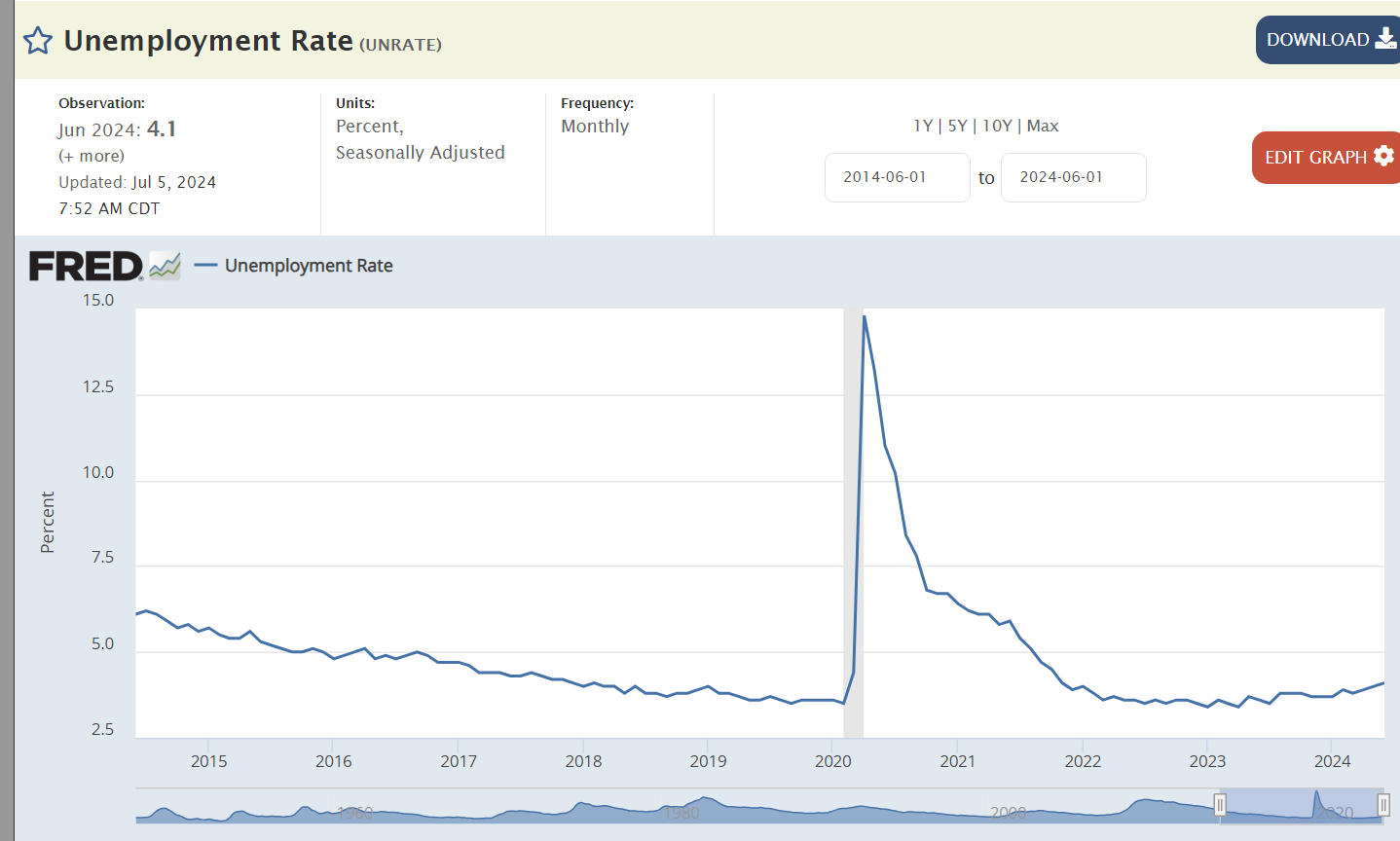
The unemployment rate also shows this structural change. When it was pushed below 5% in the 1960’s, inflation increased and was not permanently checked for 20 years. By 2000 the economy was able to expand and keep unemployment below 5% for extended periods of time without triggering “cost-push” inflation. Unemployment still increases during an economic downturn, but low unemployment does not seem to trigger a recession.

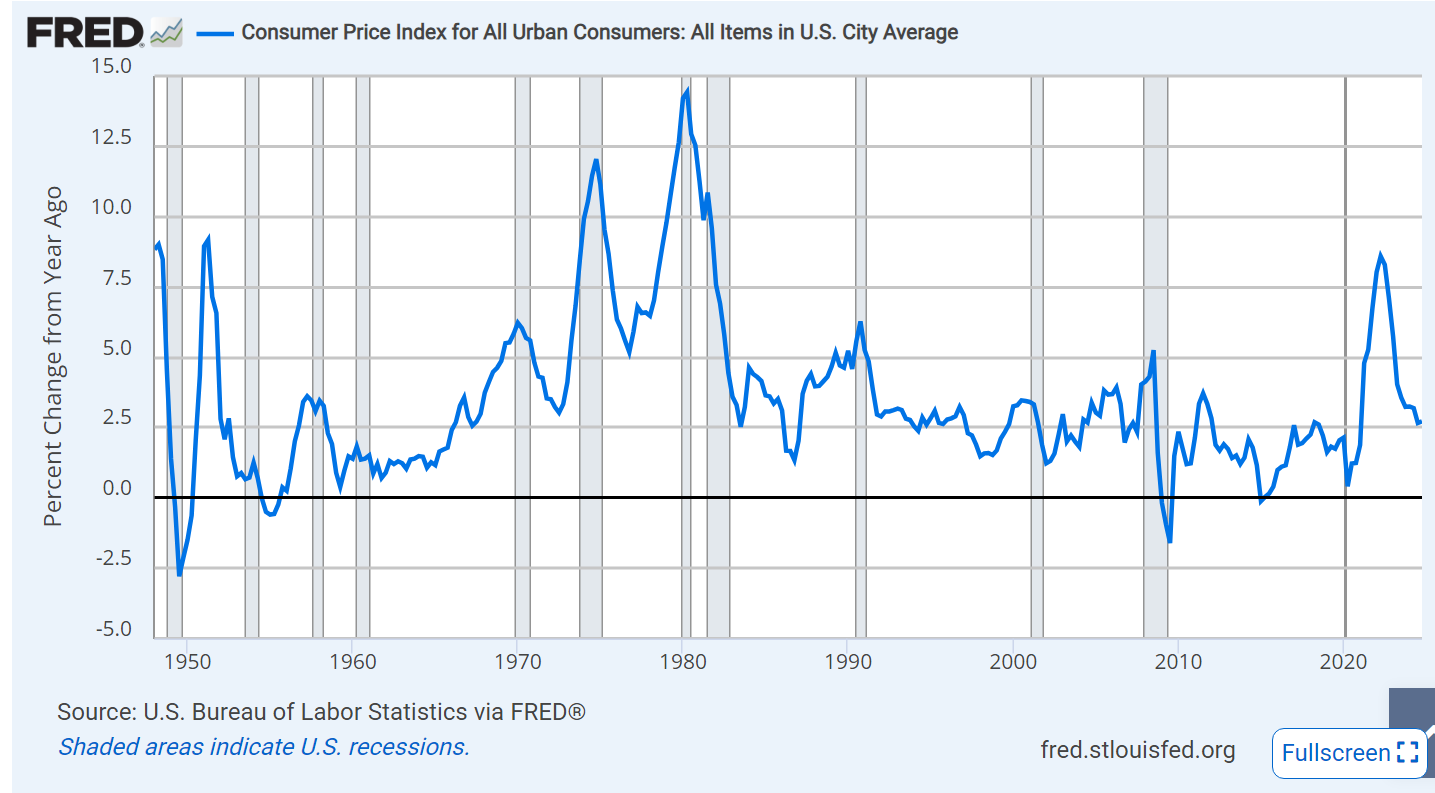
From the 1950’s through the 1980’s inflation tended to increase as the economy overheated before a reduction in credit availability would slow the overall economy. Aside from the Covid pandemic shortages, we no longer see major inflation increases.

Impact

The business cycle caused firms to underinvest because the best available forecast was always that the boom period would be interrupted in 1-5 years. Sales, margins and profits could not be assumed to increase forever.

The business cycle caused firms to follow a stop-start pattern for capital investment projects, process improvement, research & development, new product introduction, new markets, new channels and mergers & acquisitions. Seeing a downturn, firms would cancel existing initiatives, even at a significant cost, in order to conserve cash and signal to stakeholders that management was actively managing the business. Projects would slowly resume after it was clear that the business cycle recovery was under way 2 years later.

For individuals, the “last hired, first fired” cycle applied. Firms froze open position hiring. They released interns and summer workers. They prohibited overtime. They cancel contracts with temporary labor firms. Less experienced workers and minority groups suffered. Labor intensive industries, especially construction, were hard hit. Smaller firms closed. The hiring cycle would resume 2 years later.

Historically, stock market values also followed the pattern of the business cycle closely. Stock market declines were seen as an “early warning” indicator by forecasters. Since stock market values are theoretically determined by a risk-adjusted discount rate, the reduction of business cycle variability allows investors to use a lower interest/discount rate and value future earnings at a higher net present value.

Summary

The business cycle appears to be gone. The modern economy does not have the same high fixed costs it once had. Firms are able to increase their sales, profits and capacities in tandem without greatly overshooting the mark. Our national institutions help to keep growth at a sustainable level. Workers, firms, investors and society all benefit from this great advance, even if it is not publicly celebrated.

The US Economy is Already Great: No Tariffs Required

https://www.wkar.org/arts-culture/2014-05-12/oh-say-can-you-see-we-stand-on-guard-for-thee-exploring-a-hypothetical-us-canada-merger

The president-elect’s tariff threats are rejected by all professional economists and almost all business leaders. They are mistakenly intended to provide international relations negotiating leverage, force firms to build US factories, and increase domestic manufacturing employment employment. They are based upon the misguided belief that the US economy is broken. It is ironic that Democrats and liberal have trumpet the amazing condition of the US economy.

2 Million Obsolete Jobs Eliminated

45 Million Highly Skilled Jobs Added

13 Million Health Care Jobs Added

Labor Productivity More than Doubled

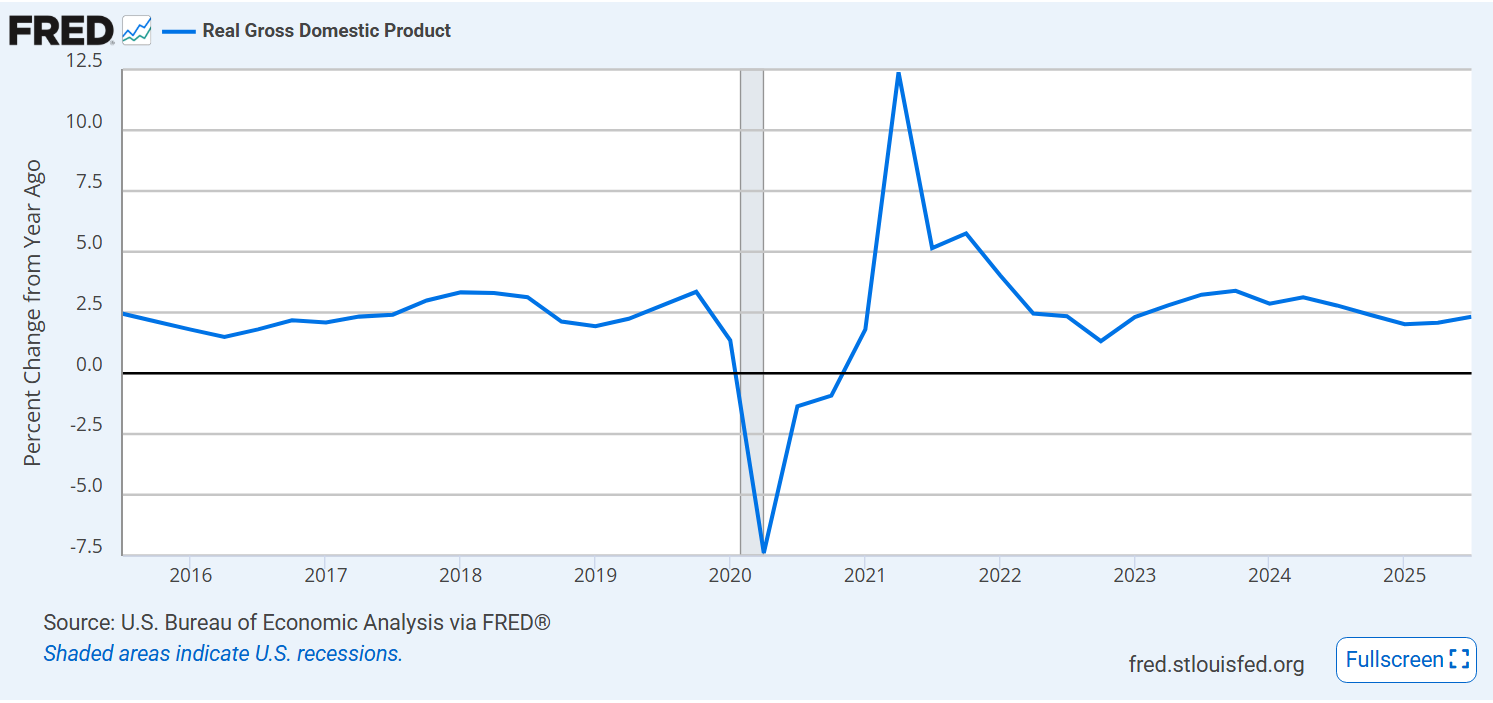
Real GDP Up 7X, As Manufacturing Share Cut in Half

Manufacturing Output Up by One-Third in Last Decade

US Still Produces 10 Million Vehicles Per Year

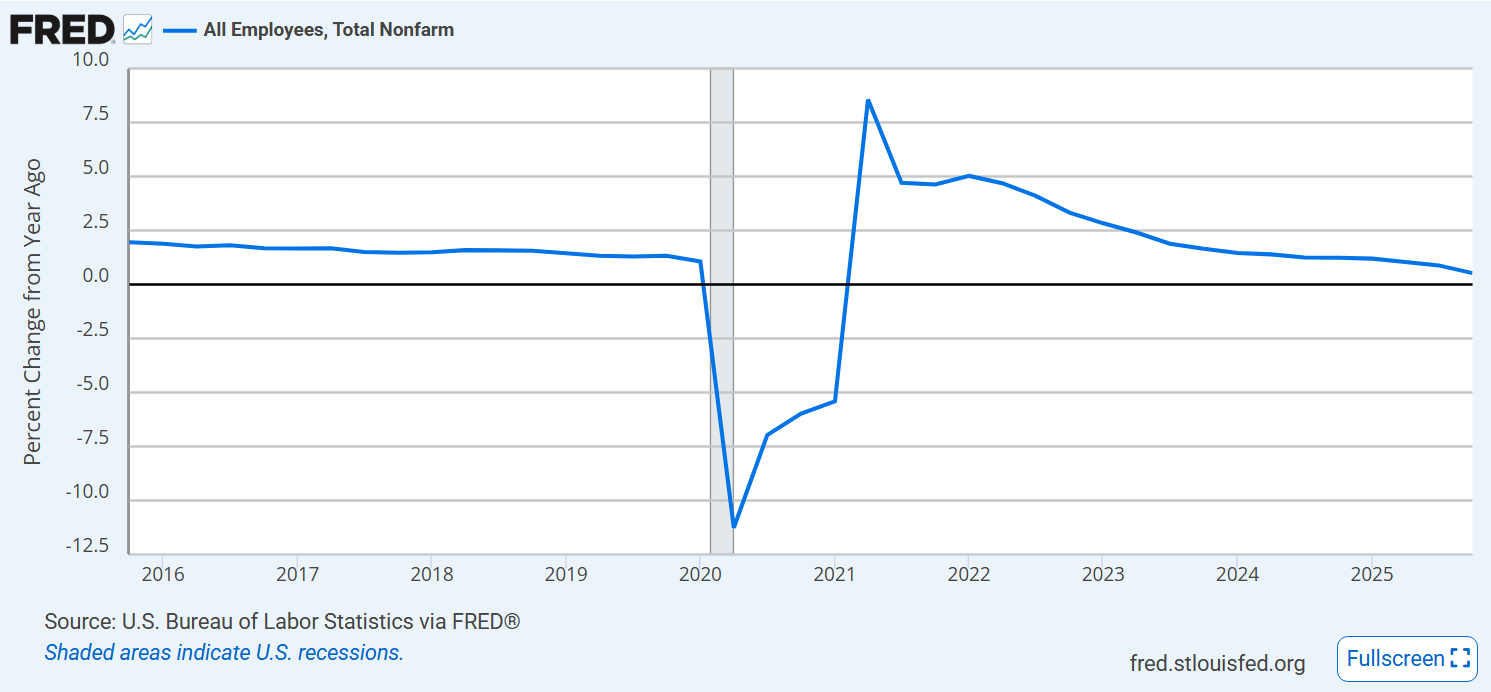
25 Million Jobs Added Since Great Recession

1 Million Available Manufacturing Jobs

US Economy Creates 2 Million Net New Jobs Year after Year

New Business Creation At 25 Year High

Biden versus Trump Economies

The US economy continues its evolution from agriculture to manufacturing to services to information. President Trump was responsible for the US economy from February, 2017 through January, 2020. President Biden assumed responsibility in February, 2020. In order to compare the two presidents, let’s look at Trump for the 3 years of sustained growth deep in the business cycle before the pandemic. For Biden, let’s look at a comparable 3-year period from June 2021 through June 2024, after the post-Covid rebound. Trump benefitted from an 8-year long business cycle expansion. Biden had to deal with a once in a century pandemic driven economic depression.

Inflation: Advantage Trump

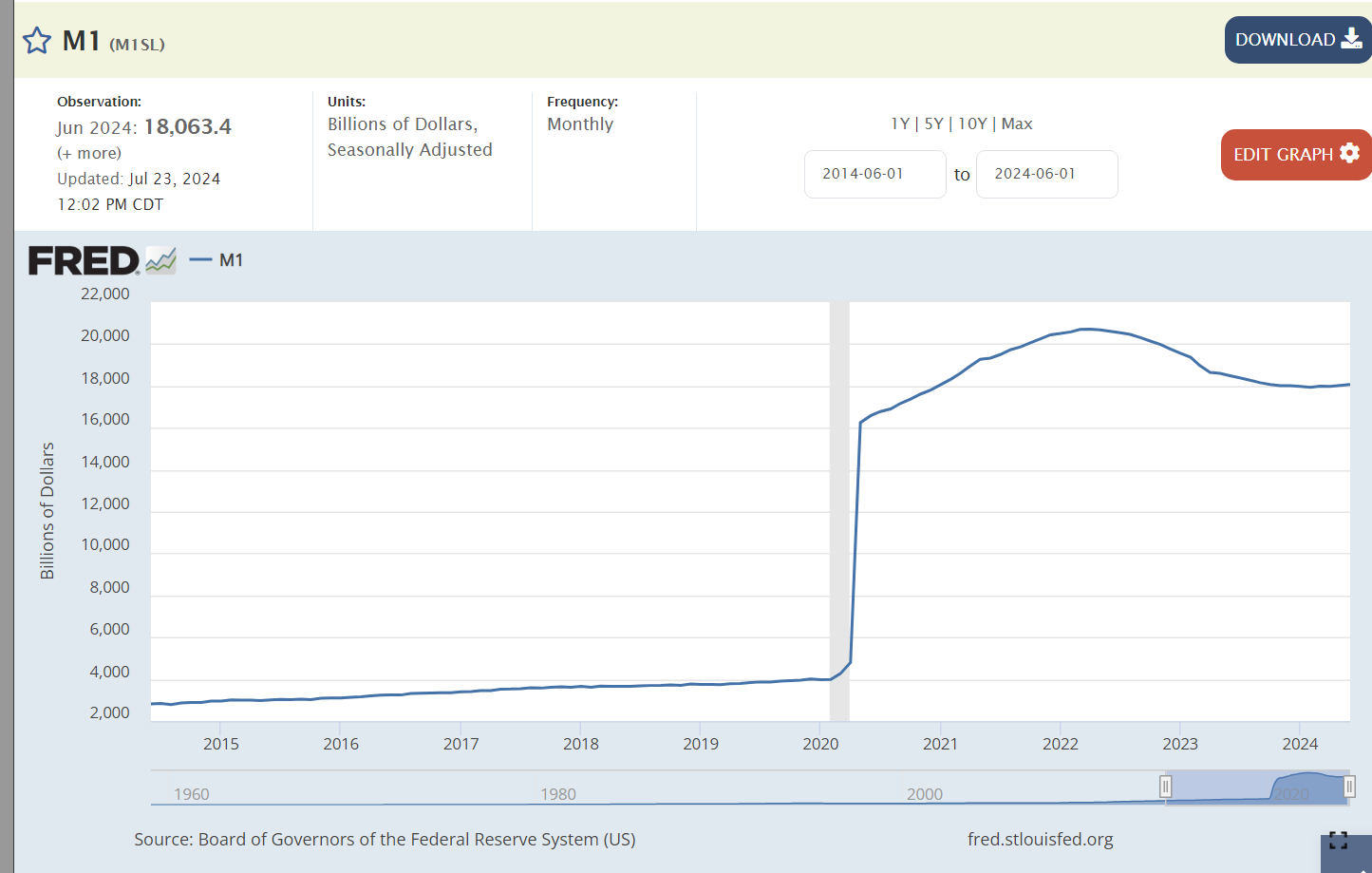
The independent Federal Reserve Board responded to the pandemic by greatly increasing the money supply to ensure that profitable, well-run financial institutions would be able to survive the temporary disruptions in the real economy. The Fed increased the money supply by 4-5 times its prior level to ensure the economy did not collapse! The extra money supply had to end up somewhere. It drove up consumer prices and increased asset values in the stock market and for home prices.

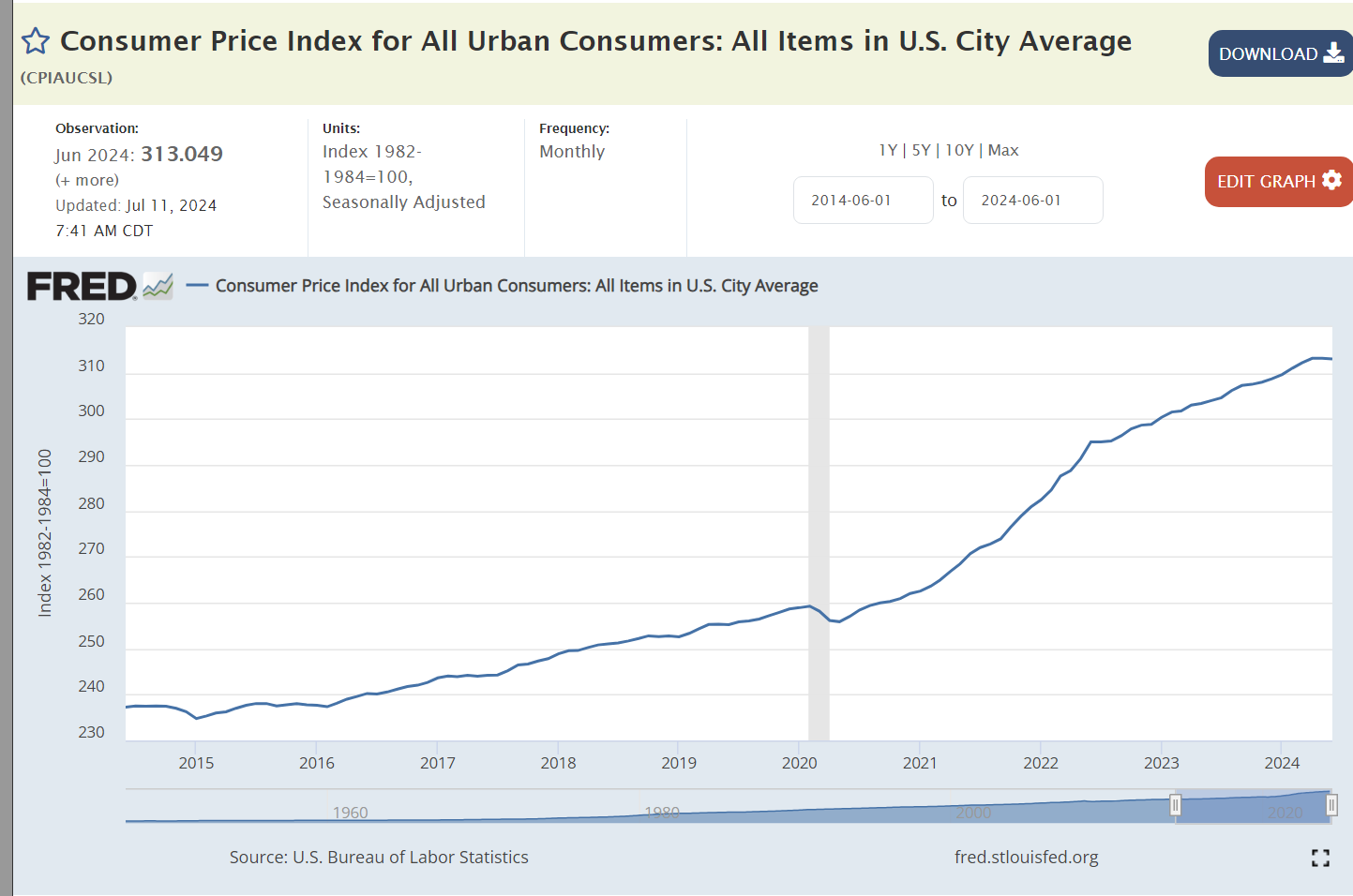
Inflation grew by 2% per year with Trump. It grew by 5% per year, on average, with Biden. Overall prices are 9% higher with Biden. Trump’s economic policies extended the Obama recovery for 3 years without triggering an increase in inflation, despite a low unemployment labor market.

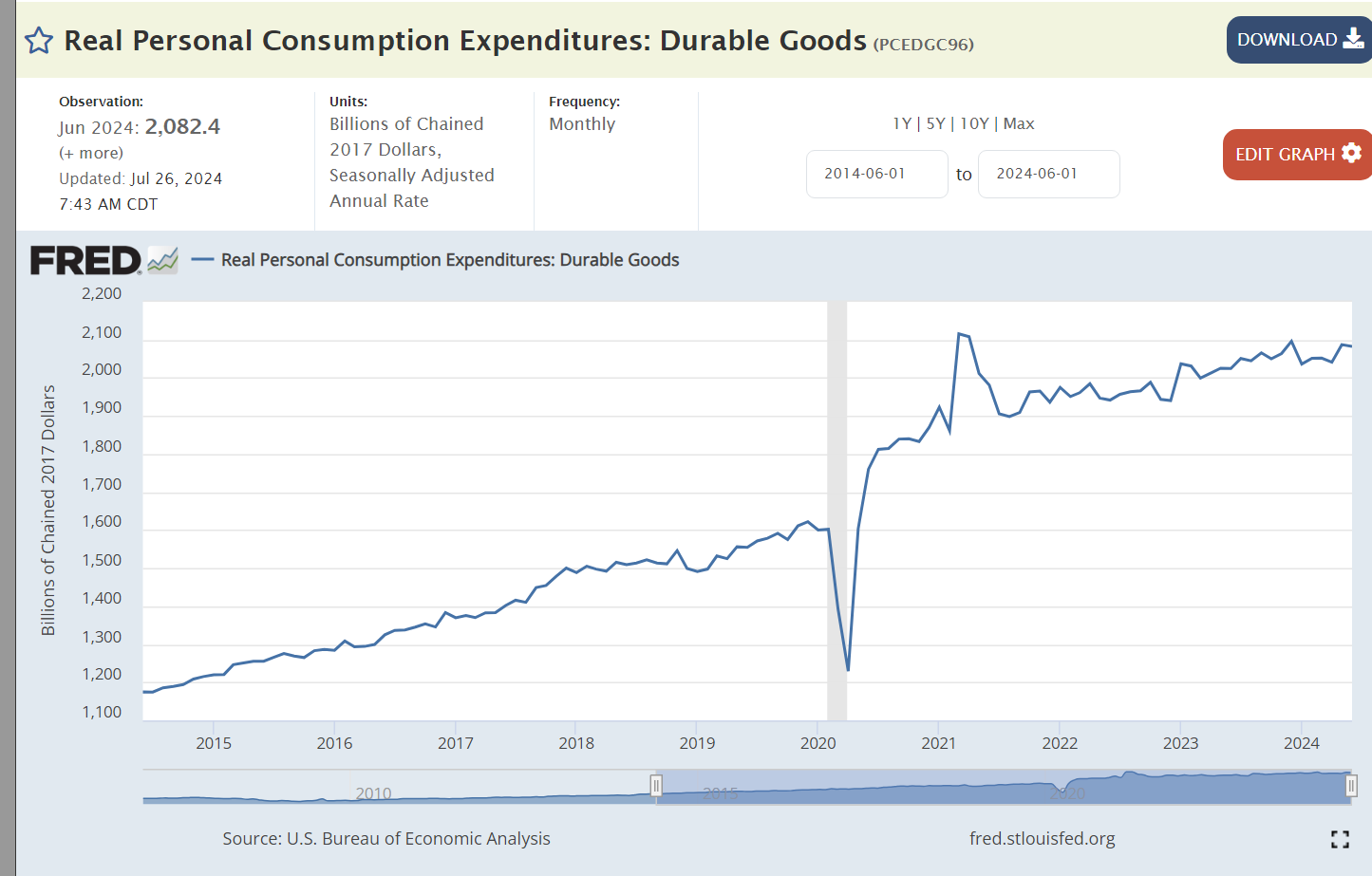
The largest cause of higher than usual inflation in Biden’s term was the 20% spike in US and global demand for durable goods. Factories shut down during the pandemic. Demand rebounded within 6 months as consumers chose to spend money on goods rather than in-person services. Consumer demand at the end of the Biden period is 50% higher than at the start of Trump’s term in office.

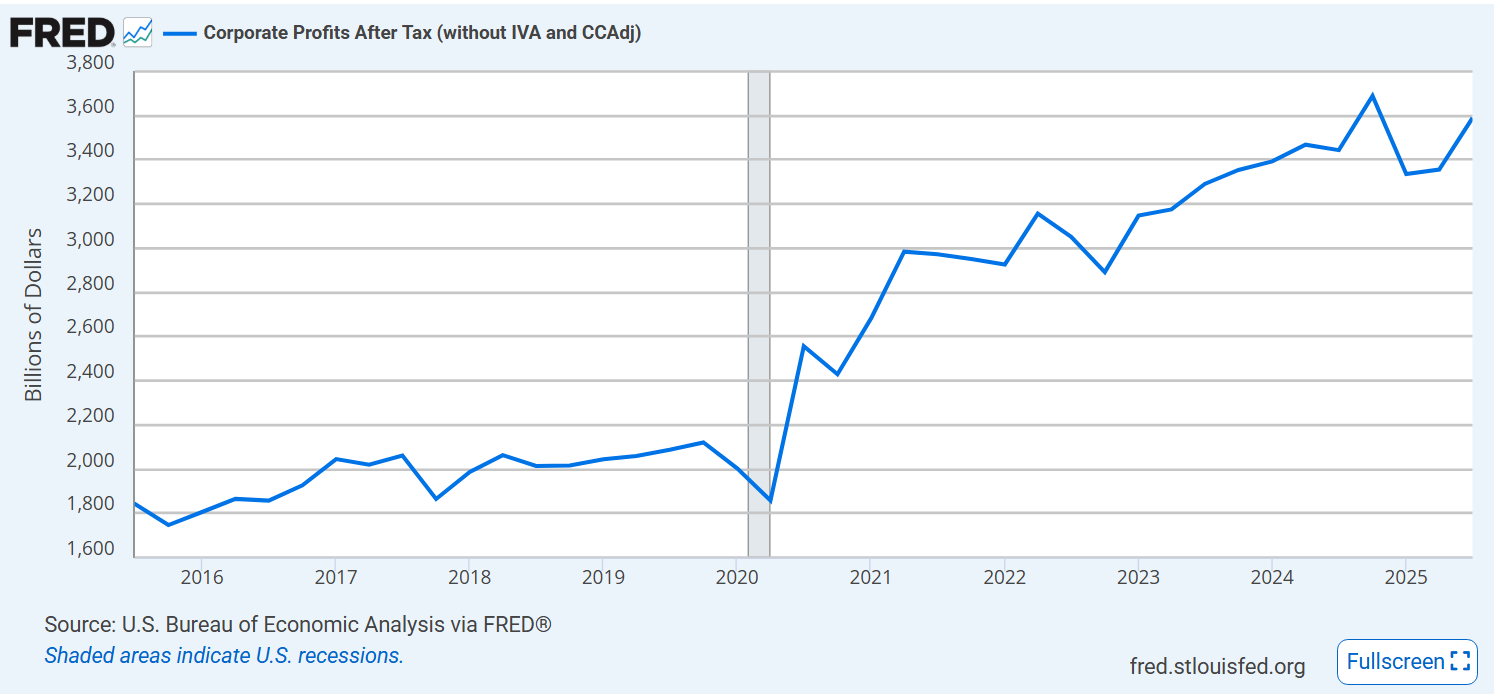
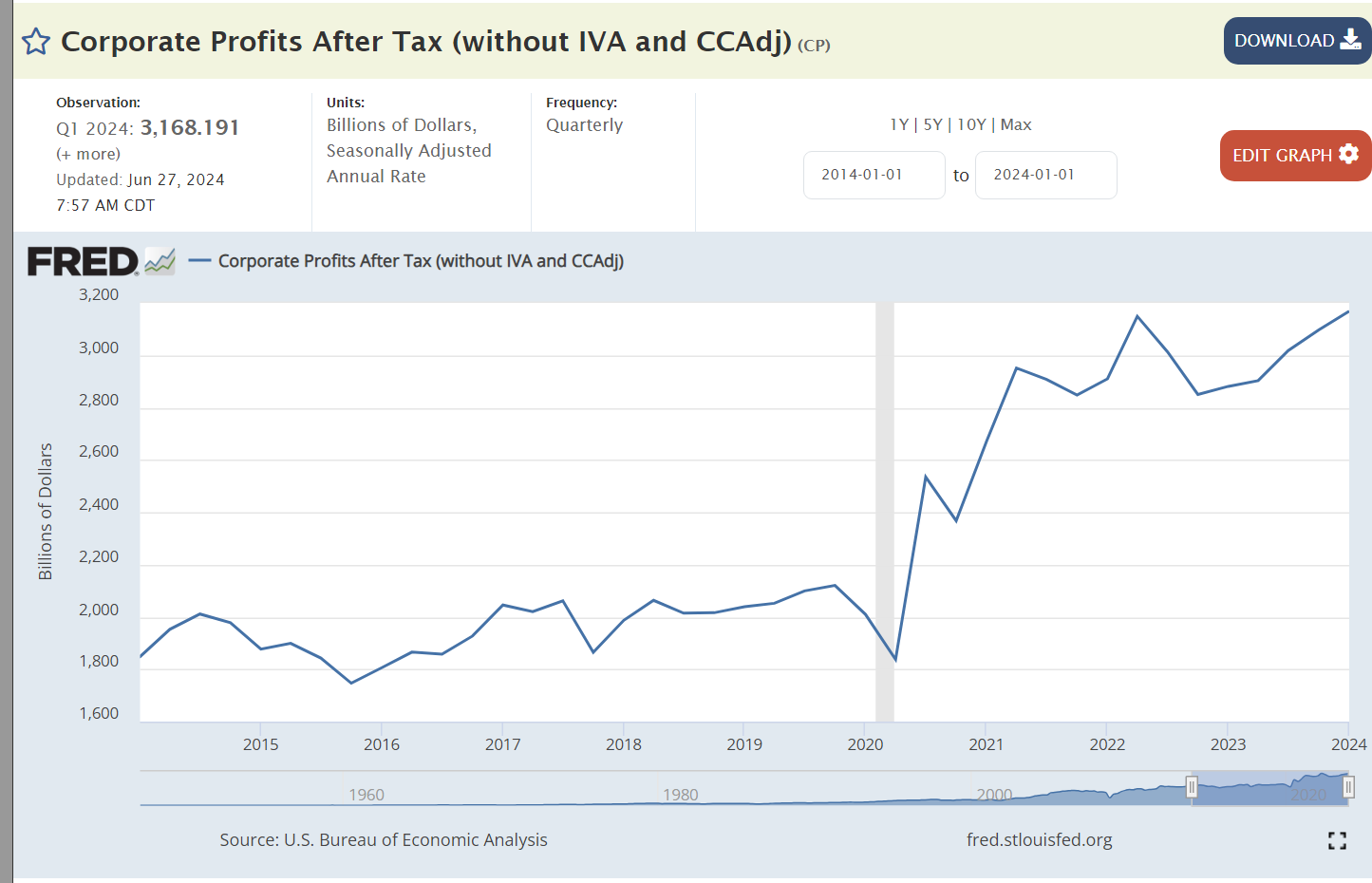
Corporations were able to capture and maintain a 50% profit increases due to market disruptions of the pandemic. Experts mostly reject Biden’s claims that corporate profits were the main driver of inflation, but they clearly aggravated the impact of the supply chain disruptions.

Obama was able to reduce federal budget deficits by two-thirds by the end of his presidency. Deficits doubled on Trump’s watch before the pandemic arrived. Biden cut deficits from their record highs during the pandemic, but they have been 50% higher than the pre-pandemic Trump era. Most economists consider the budget deficits to be the main cause of the continued higher than typical rates of inflation, accounting for 3%, 2% and 1% extra inflation in the 3-year Biden time we’re considering.

High profile gas prices remined flat during Trump’s period. Global supply and demand caused prices to increase from $2.50 per gallon to $3.50/gallon where they have remained for the last 3 years.

Trump enjoyed historically low 4% mortgage interest rates, a thin 2% above the inflation rate. The expansion of the money supply drive rates down to 3% during 2020 and 2021. They rose to 7% as inflation rose sharply and has stayed there. Inflation has fallen but markets typically require years of data to reset expectations of long-term inflation which drive mortgage rates. The Federal Reserve Bank has hesitated to cut its benchmark interest rates until inflation is clearly approaching its 2% target.

Labor Market: Advantage Biden

Trump reduced unemployment by 1%. Biden reduced it by 2%. Both presided over best in 50 years overall labor markets.

Layoffs have remained at historic lows, with Biden enjoying slightly lower rates.

Job openings in the Biden market have been 50% higher than the Trump market, reflecting a strong economy with growing labor demand, despite the impact of the pandemic.

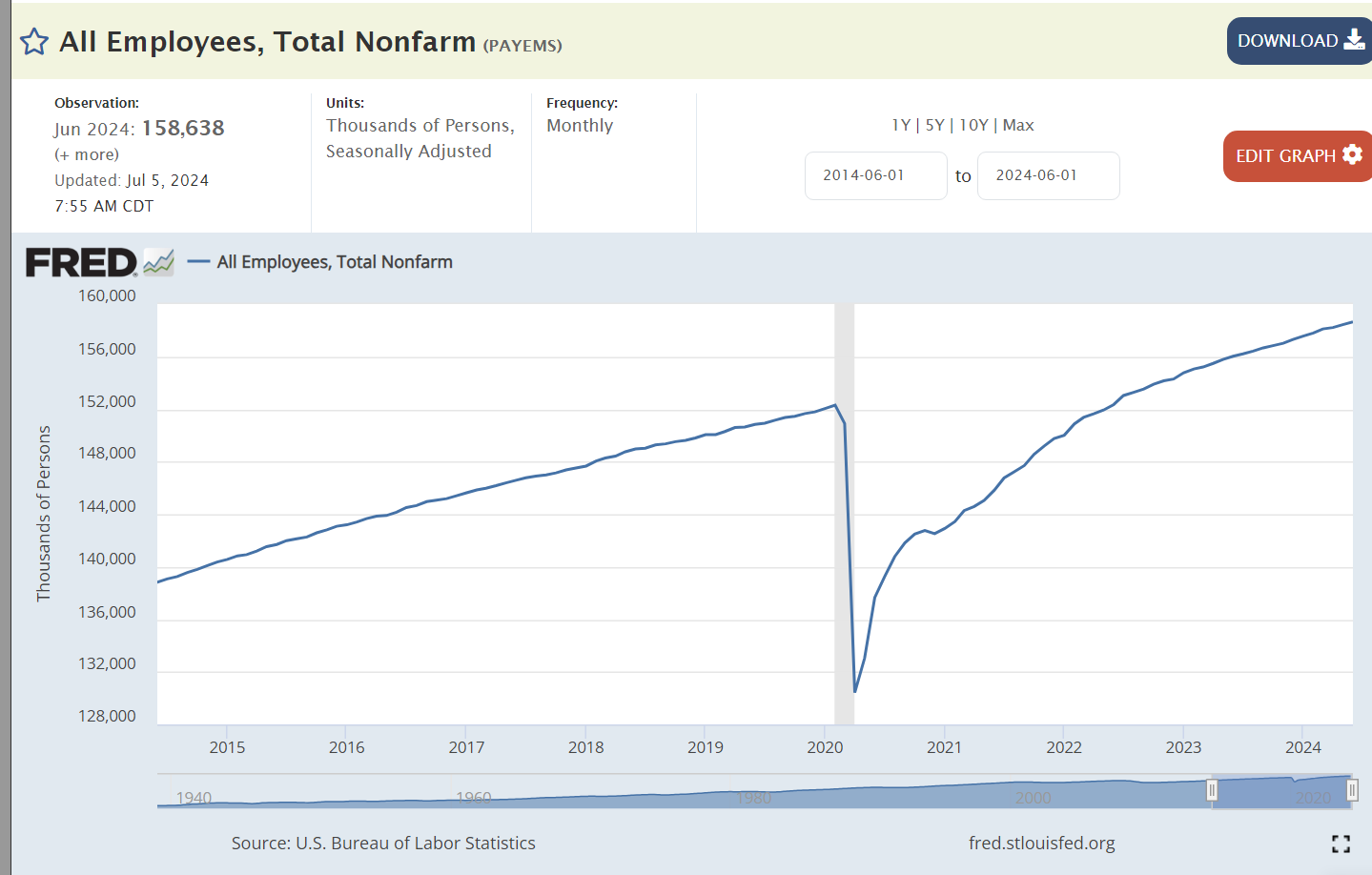
The Biden economy recovered all 20 million jobs lost in the pandemic within 2 years, much faster than expected. Total employment has continued to grow at the trend rate to a record 159 million.

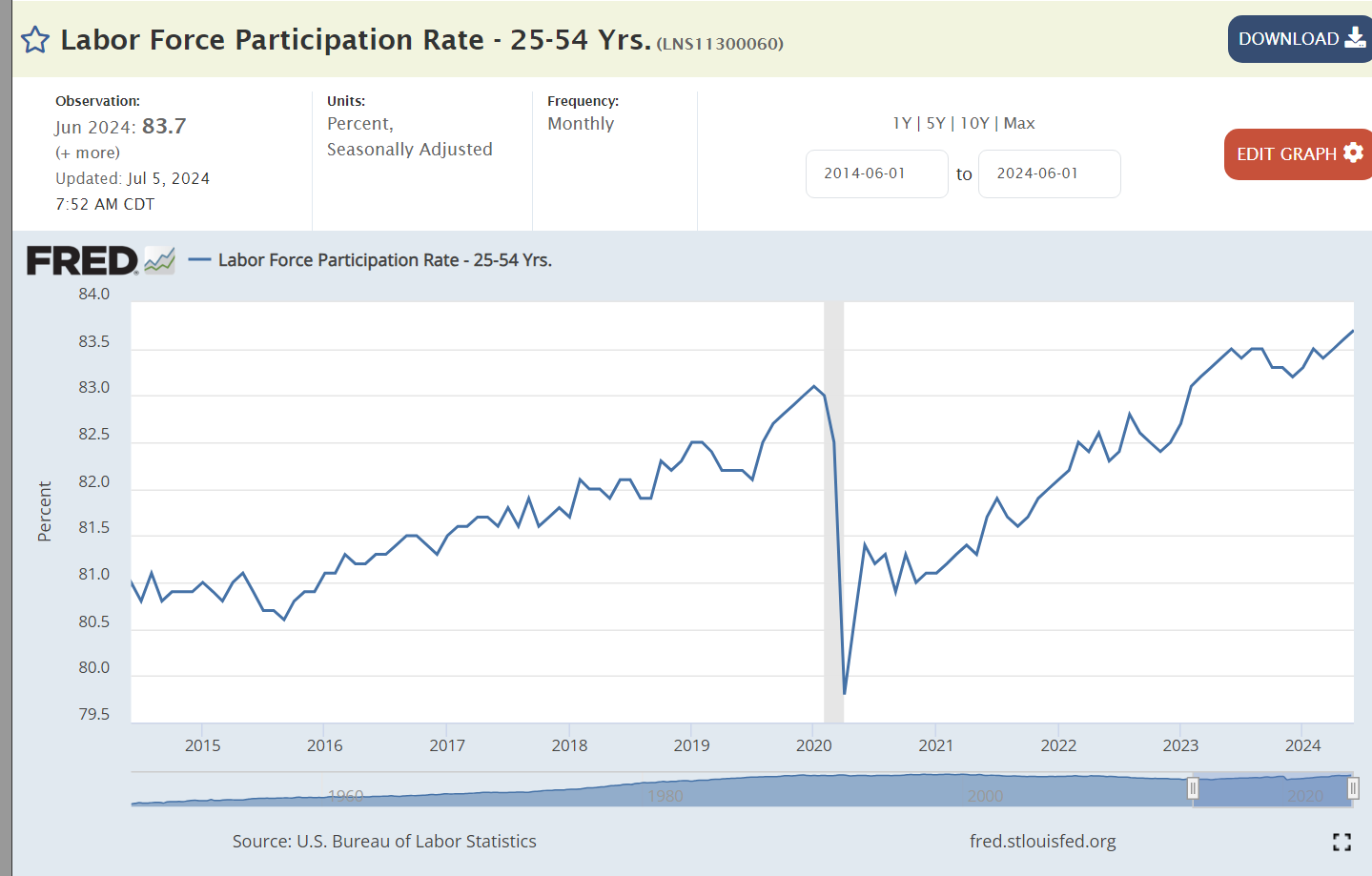
Core labor force participation is 1% higher with Biden than Trump. The current participation rate was last achieved in 2001.

Median real wages have been slightly higher during Biden’s tenure.

Asset Values: Advantage Biden

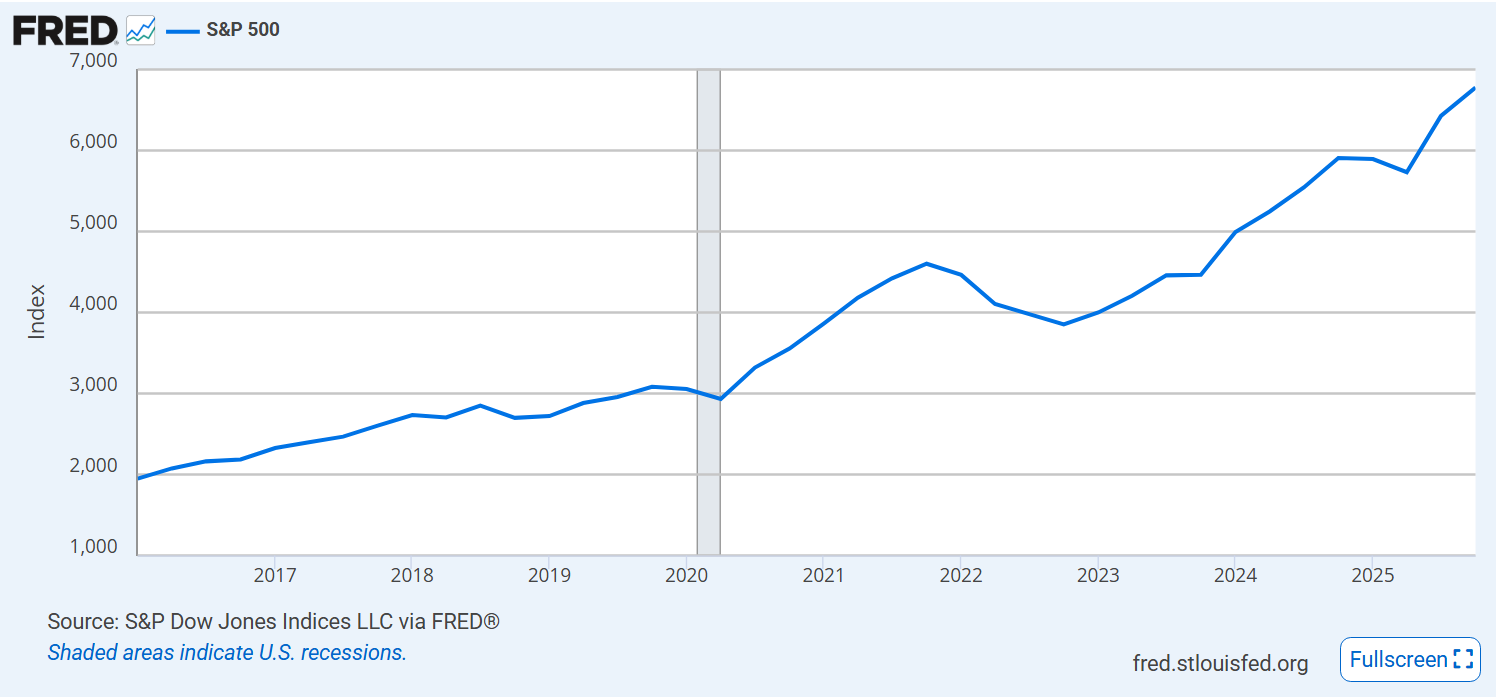
Despite the pandemic disruptions and losses, US firms are worth 70% more today than before the pandemic. This reflects the 50% profits increase and continued positive future prospects.

Home prices have nearly doubled since before the pandemic, reflecting the post Great Recession decline in home building, construction issues during the pandemic and general asset inflation caused by the rapid expansion of the money supply.

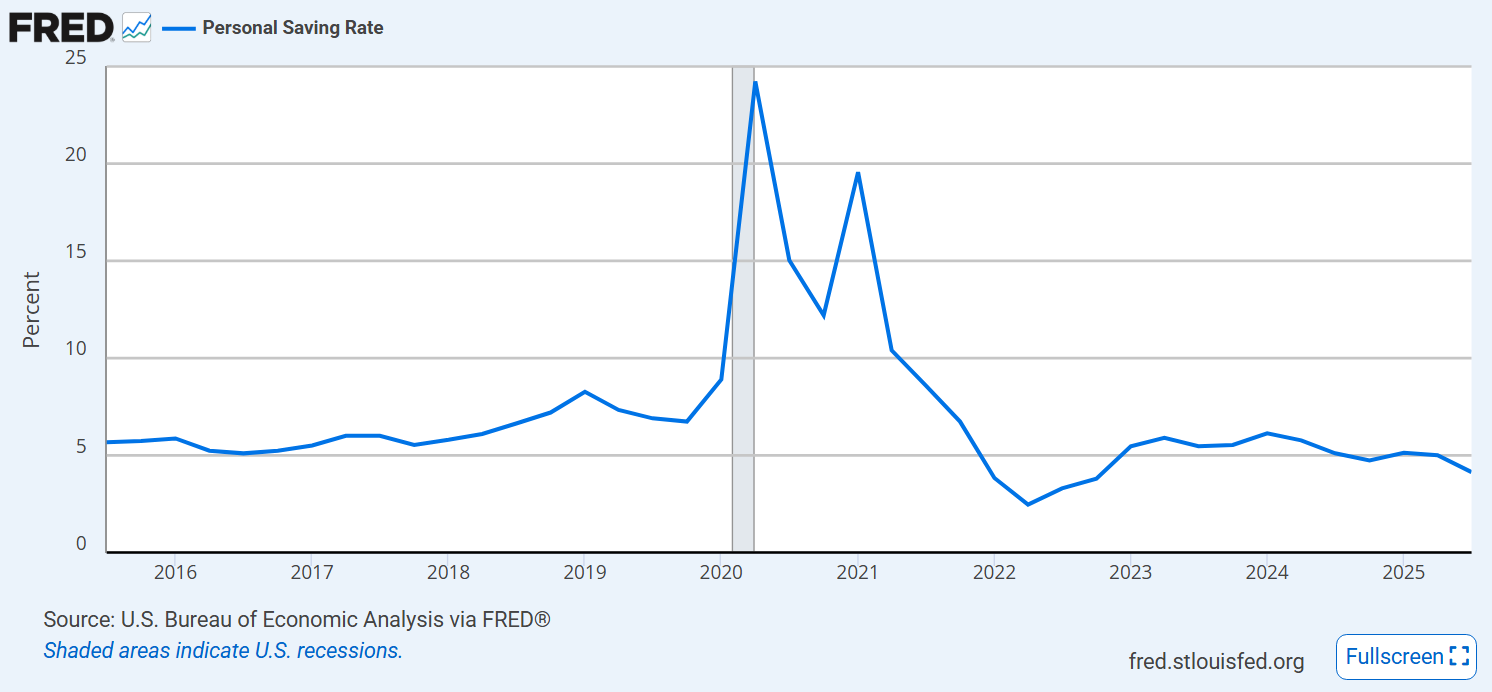
The US enjoyed a solid 7% savings rate before the pandemic, an extraordinary high 10% after the pandemic, falling to just 4% for the last 3 years.

https://educationdata.org/number-of-college-graduates

Human assets increased during Trump’s presidency and resumed growth after the pandemic. As college graduation rates have increased throughout the post WWII years, the cumulative number of college educated individuals continues to rise each year. The growth in masters and professional degrees is noteworthy.

The Economy – Advantage Biden

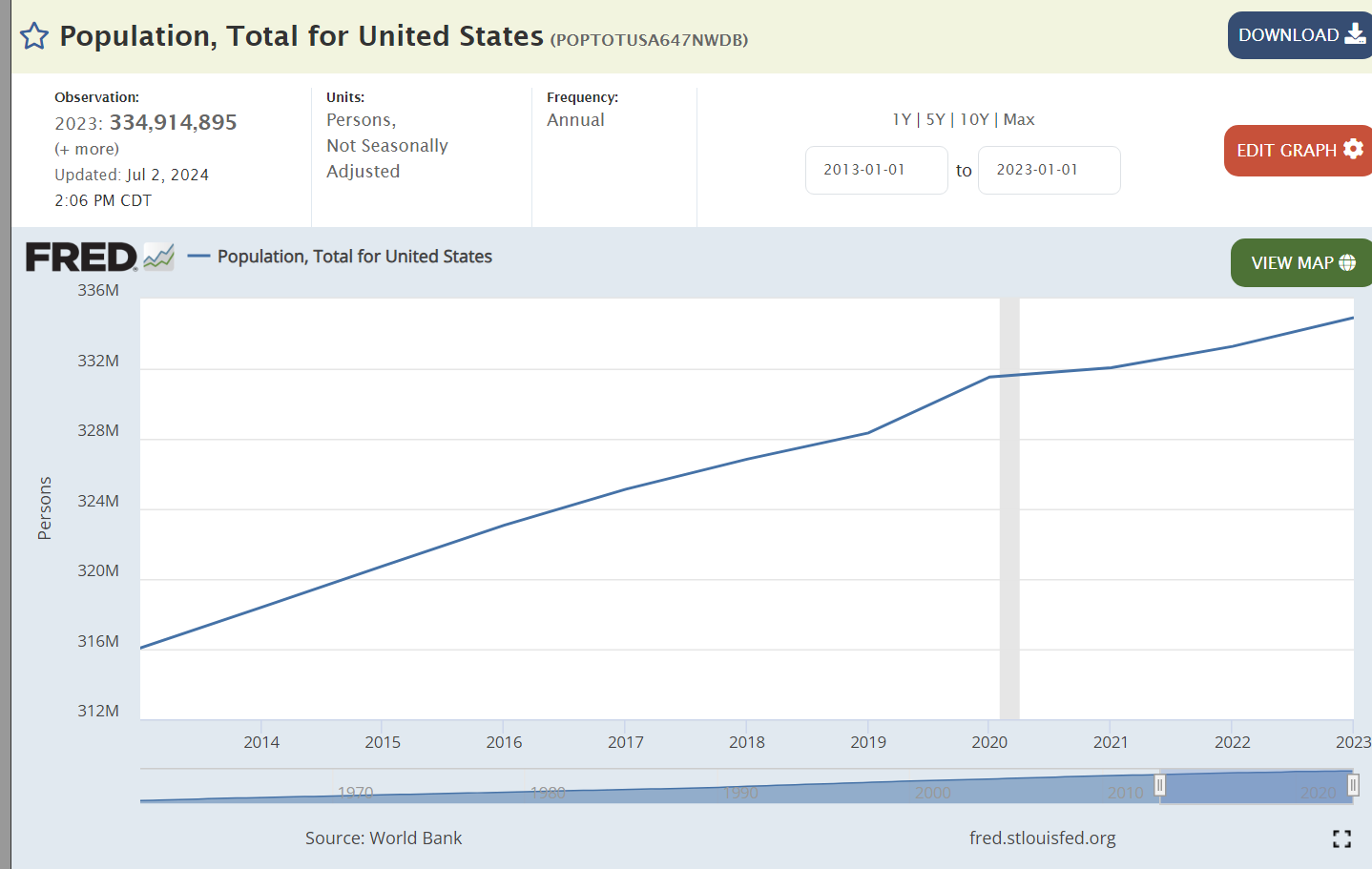
Population growth has resumed after the pandemic.

The healthy US economy is able to support 3 million more retirees after the pandemic.

Real dollar GDP is 2 trillion dollars larger than before the pandemic disruption. That increase is the same size as the total GDP of Russia, Canada or Mexico. We added the Canada economy during Trump’s time and the Mexican economy during Biden’s time.
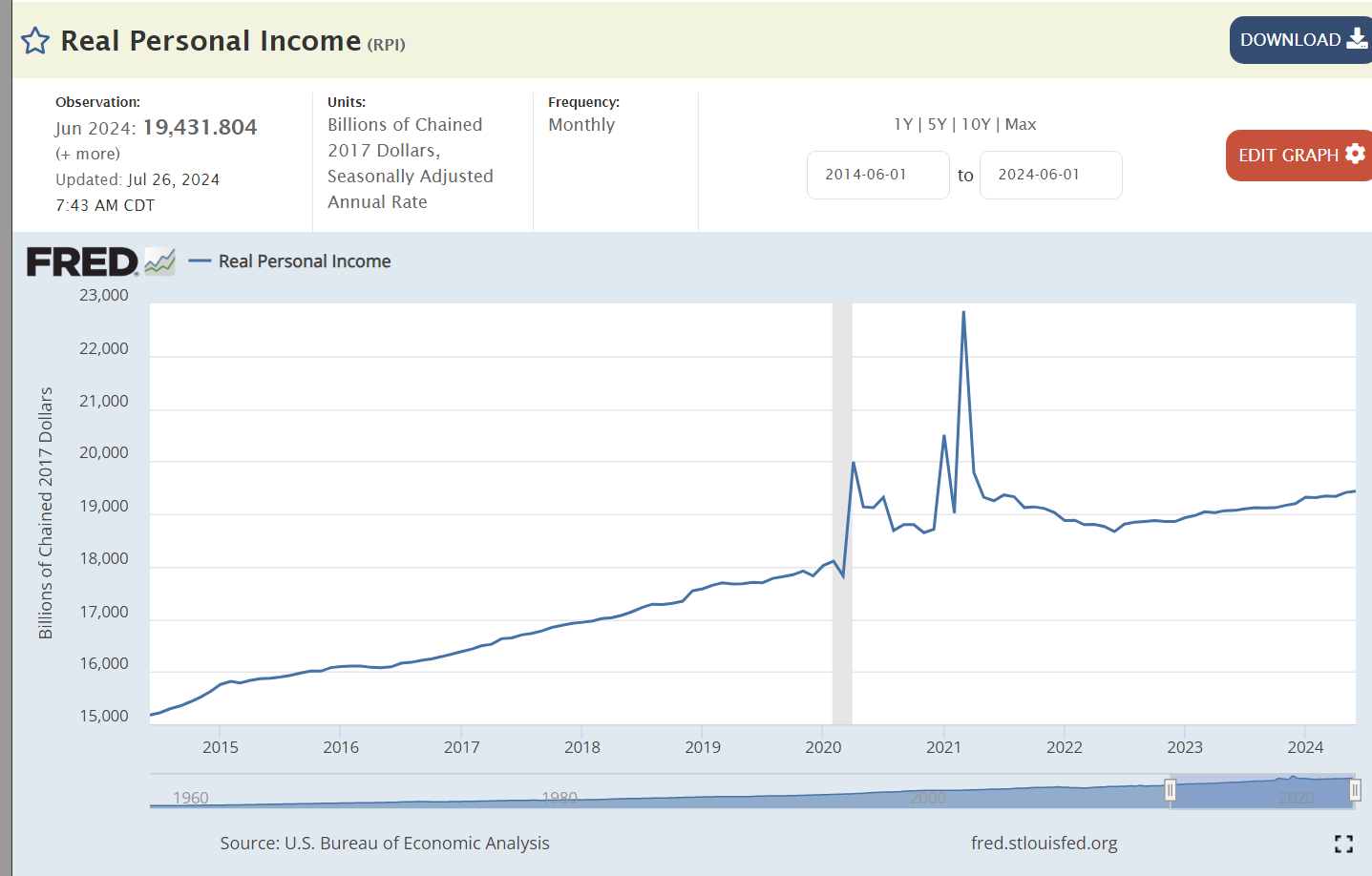
Real personal income grew a little bit faster during Trump’s time and more smoothly. Personal incomes jumped up during the pandemic but have been flat since that time with corporations capturing a greater share of the economy’s returns.

Workers have been 8-10% more productive in the Biden economy.

Farm income has doubled in the Biden economy.

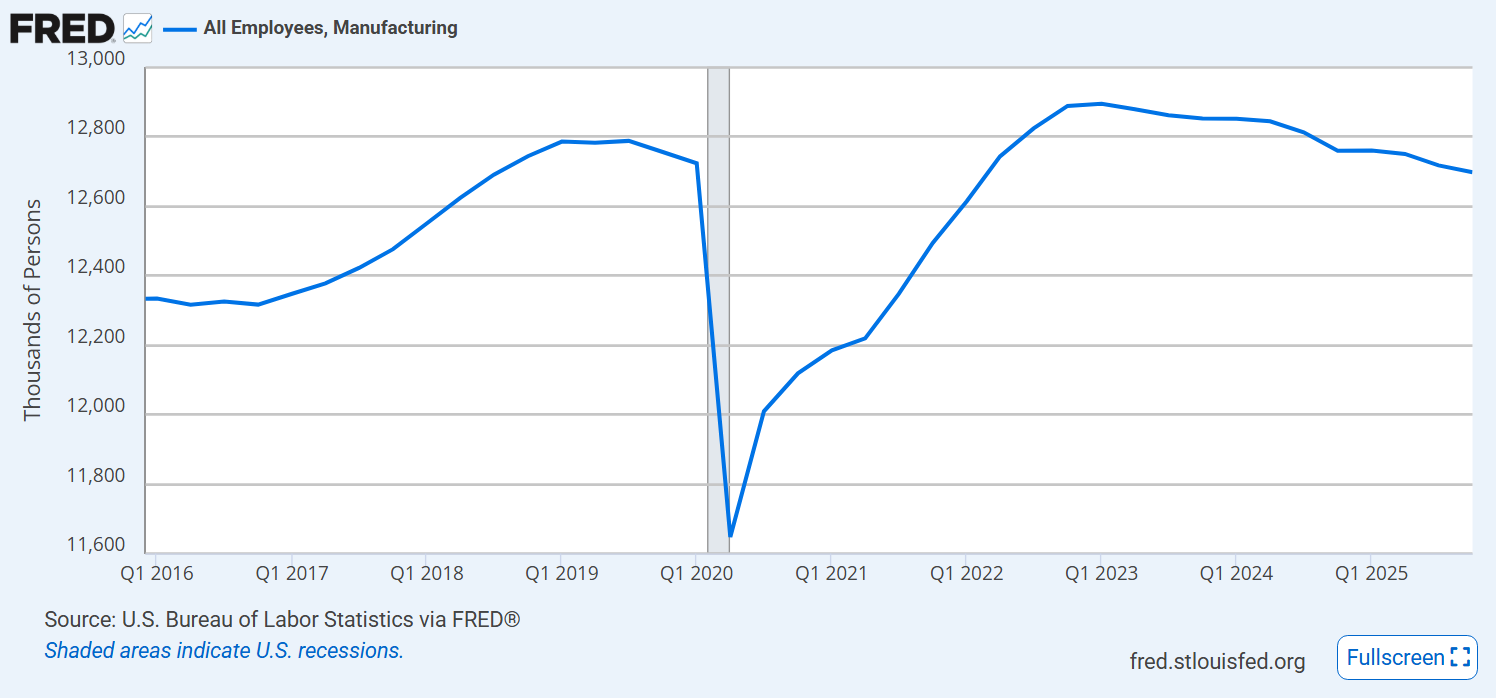
Manufacturing employment grew by a surprising 3% in Trump’s term. It is slightly higher in the Biden era.

Real dollar exports increased during the Trump presidency and then again during Biden’s time despite a greatly stronger US dollar which hampers exports.

The world is willing to pay 10% more to hold US dollars in the Biden period, reflecting strong economic realities and prospects despite the risks of higher US inflation and budget deficits.

Summary

The US economy is very strong. Trump was able to extend the Obama recovery for longer than most expected, keeping inflation, interest rates and unemployment at low levels. Biden managed the recovery from the pandemic induced recession better than expected. The economy, asset prices and labor market have recovered very nicely. Inflation has remained the weak part of the Biden economy. It is lower than in comparable global economies and trending towards the 2% target in 2025. Critics point to excess government spending as an avoidable source of high inflation.

The Trump economy built upon the success of his predecessor. The Biden economy overcame the disruption of the pandemic to produce equal or greater results. Both presidents delivered solid results.

Record US New Firm Creation in a Resilient Economy

https://www.eso.org/public/news/eso1225/

I encourage us to always “look at the big picture”: across time, nations, industries, occupations, institutions and political views when considering the “state of the economy”.

Recent surveys indicate that many (partisan) Americans believe that the economy is in recession, the stock market is down, and unemployment is up (false). The US economy continues to lead the world out of the pandemic driven recession. I’ve documented the tremendous strength of the US economy in GDP growth, job creation, wage growth, profit growth and wealth creation. Today I’d like to focus on entrepreneurship and new firm creation, where the US once again leads the world.
The US economy led the world in creativity, technology, job growth and firm creation in the 1990’s as it recovered from the global economic challenges of the late post-war era. The deregulation and technology driven changes produced benefits into the “oughts”, the first decade of the new century. Unfortunately, the dynamic pace of new firm creation based on economic, trade, relocation and technological changes did not strongly continue in the first 20 years of 21st century. New firm creation lagged. Larger firms held onto jobs as they consolidated industries and protected their positions. Venture capital firms facilitated the most successful new companies to quickly expand market share and vanquish weaker competitors. Many Schumpeter disciples worried that the engines of “creative destruction” had lost their momentum and effectiveness.

The Great Recession of 2007-10 destroyed wealth, slowed economic growth, job creation and new firm starts. The Obama-Trump expansion was longer than expected by historical standards, but slower growing. Many critics and commentators concluded that the US had “lost its entrepreneurial spirit”.

https://hbr.org/2024/01/how-the-pandemic-rebooted-entrepreneurship-in-the-u-s

New firm creation since the pandemic has basically been 50% higher than before the pandemic.

This is an AMAZING and unexpected result for the US. During the pandemic, economic activity ground to a halt. Supply chains stopped functioning. People stayed home. 20 million jobs were lost. 1 million lives were lost in the US. Many firms closed. Global trade and military tensions increased. Trust in governments, corporations and other institutions was damaged. In 2020, there was no reason to believe that the pandemic would be medically controlled soon, or that economic growth would quickly rebound and resume its trend growth rate. But it did!

https://www.census.gov/econ/bfs/current/index.html

The IRS tracks new firm tax license applications. Most firms never really do business, but the ratio of initial applications to real firm creations has been stable through history. The Census Bureau has determined which subset of IRS license applications leads to real new firm creations. Both measures show the tremendous 50% increase between the pre-pandemic and post-pandemic eras.

As Wendy’s Clara spokeswoman exclaimed long ago, “show me the beef”. Did the increased rate of tax applications during 2021-22-23-24 result in new firm creation?

Firms less than one year old are up 16%, not 50%, still a significant increase.

https://www.whitehouse.gov/cea/written-materials/2024/01/11/new-business-surge-unveiling-the-business-application-boom-through-an-analysis-of-administrative-data/

New firms are up by about one-third by this measure.

https://www.bls.gov/news.release/cewbd.t08.htm

The growth rate of private industry establishments has accelerated.

https://www.whitehouse.gov/cea/written-materials/2024/01/11/new-business-surge-unveiling-the-business-application-boom-through-an-analysis-of-administrative-data/

Three measures reinforce the growth of new firms.

Overall, small businesses have prospered following the pandemic.

The growth in new business formation is real, solid and sustained. Who benefitted?

An unusual cluster of SE and SW US showed the highest percentage growth rate.

Once again, a very broad set of states adding new businesses.

The southeast is winning, but growth is widespread.

Nine out of 15 industries saw very strong growth out of the pandemic.

https://www.uschamber.com/small-business/new-business-applications-a-state-by-state-view

The initial surge in new businesses did NOT include the IT or manufacturing sectors which look ready to benefit from AI and government investment policies. Firm creation should continue at its record pace for the next 2-3 years.

https://www.economist.com/finance-and-economics/2024/05/12/america-is-in-the-midst-of-an-extraordinary-startup-boom

https://hbr.org/2024/01/how-the-pandemic-rebooted-entrepreneurship-in-the-u-s

Why/how did this happen? US economy did not see wealth destruction during the pandemic as occurred in the Great Recession. Bipartisan government funding during the pandemic protected small businesses and individuals. The US labor market was strong before the pandemic and recovered very quickly to full employment with high quit rates, high job openings, low layoffs, wage growth, high labor force participation, and new immigrants included. There was no “credit crunch” destroying businesses. Venture capital firms were flush with capital, able to invest in the very best prospects. The US economy was mature as an “information age” economy, identifying opportunities. The virtual economy was mature, allowing individuals with minimal technical skills to easily create new businesses, market their services, and engage skilled resources. Individuals experienced being out of work and at home and determined that they could create new firms from home.
The Biden administration claims that its various public policies have leveraged the “natural” rebound.

https://www.sba.gov/article/2024/01/11/new-business-applications-reach-record-16-million-under-biden-harris-administration

https://www.whitehouse.gov/briefing-room/statements-releases/2023/11/21/fact-sheet-ahead-of-small-business-saturday-biden-harris-administration-announces-latest-steps-to-support-small-businesses/

https://www.whitehouse.gov/cea/written-materials/2024/01/11/new-business-surge-unveiling-the-business-application-boom-through-an-analysis-of-administrative-data/

https://www.sba.gov/article/2024/04/11/new-small-business-applications-soar-over-17-million-under-biden-harris-administration

Various moderate to conservative sources have documented this positive result.

https://www.uschamber.com/small-business/new-business-applications-a-state-by-state-view

https://www.inc.com/melissa-angell/new-small-business-applications-surged-55m-in-2023-marking-yet-another-record.html

https://ny1.com/nyc/all-boroughs/news/2024/06/12/biden-touts-18-million-new-business-applications-since-he-took-office

https://www.forbes.com/sites/rhettbuttle/2024/01/12/three-year-small-business-boom-is-unprecedented/

https://www.entrepreneur.com/business-news/why-are-new-business-applications-at-all-time-high/474614

The US Economy Leads the World

https://www.nrel.gov/computational-science/artificial-intelligence.html

The US economy became the largest in the world in 1890. It still leads the world today 134 years later.

https://en.wikipedia.org/wiki/Economy_of_the_United_States#:~:text=Many%20workers%20shared%20the%20success,of%20GDP%20since%20around%201890.

Of 10 largest economies in the world, the US has the 3rd highest GDP growth rate at 3.0%. Less developed China (5%) and India (8%) lead the way. The median growth rate is 1.2%. The UK and Germany have negative annual growth rates (recession)! The US has the second lowest unemployment rate at 3.8%, only bettered by Japan at 2.6%. The median is between China at 5.2% and Canada at 6.1%. France and Italy record 7.5% while Brazil and India trail at 8%.

https://www.economist.com/economic-and-financial-indicators/2024/05/02/economic-data-commodities-and-markets

The US economy is as large as China, Germany and Japan combined or as large as the 3rd through 10th largest economies combined.

https://www.usnews.com/news/best-countries/articles/the-top-10-economies-in-the-world

The US dollar is worth 10% more than before the pandemic, reflecting its above average recovery.

https://www.goldmansachs.com/intelligence/pages/how-to-diversify-as-stock-markets-concentrated.html#:~:text=The%20US%20stock%20market%20has,with%20about%2030%25%20in%202009.

The US stock market has overperformed for 15 years, growing from 30% to 45% of global stock market value.

https://www.goldmansachs.com/intelligence/pages/how-to-diversify-as-stock-markets-concentrated.html#:~:text=The%20US%20stock%20market%20has,with%20about%2030%25%20in%202009.

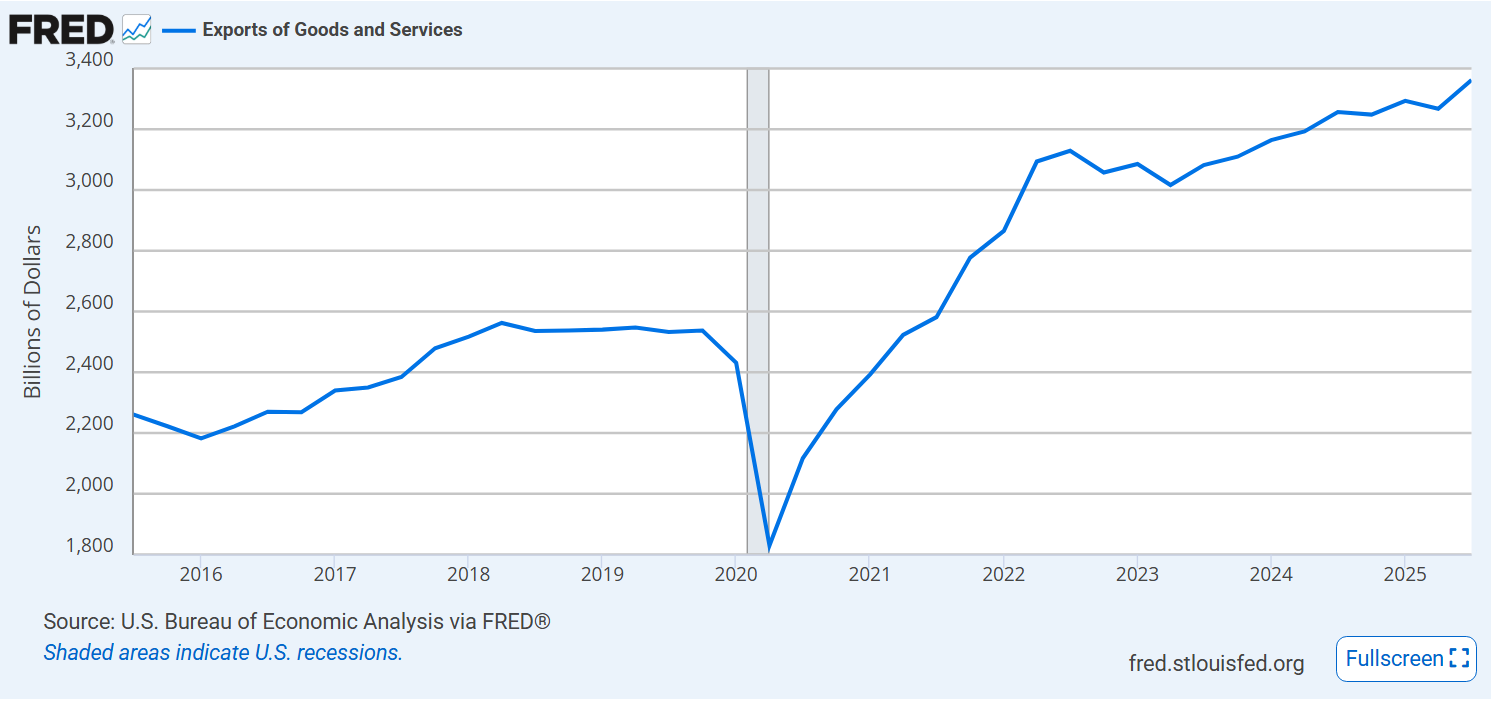
Despite its high wages, high standard of living and highly valued currency, real dollar US exports exceed the pre-pandemic level.

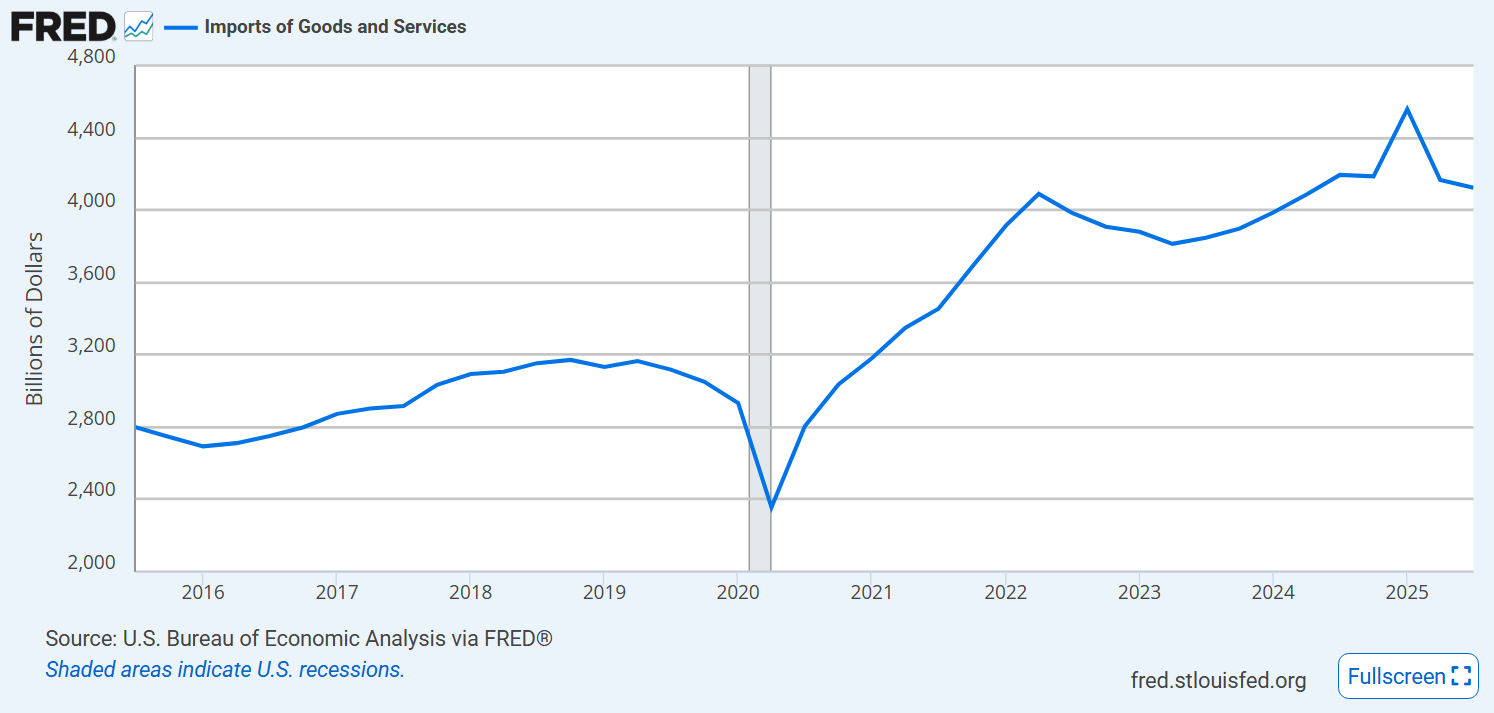
Real dollar imports have returned to their growth trend level, allowing US consumers to take advantage of the differentiated global economy’s strengths.

https://www.axios.com/2023/12/21/misery-index-economy

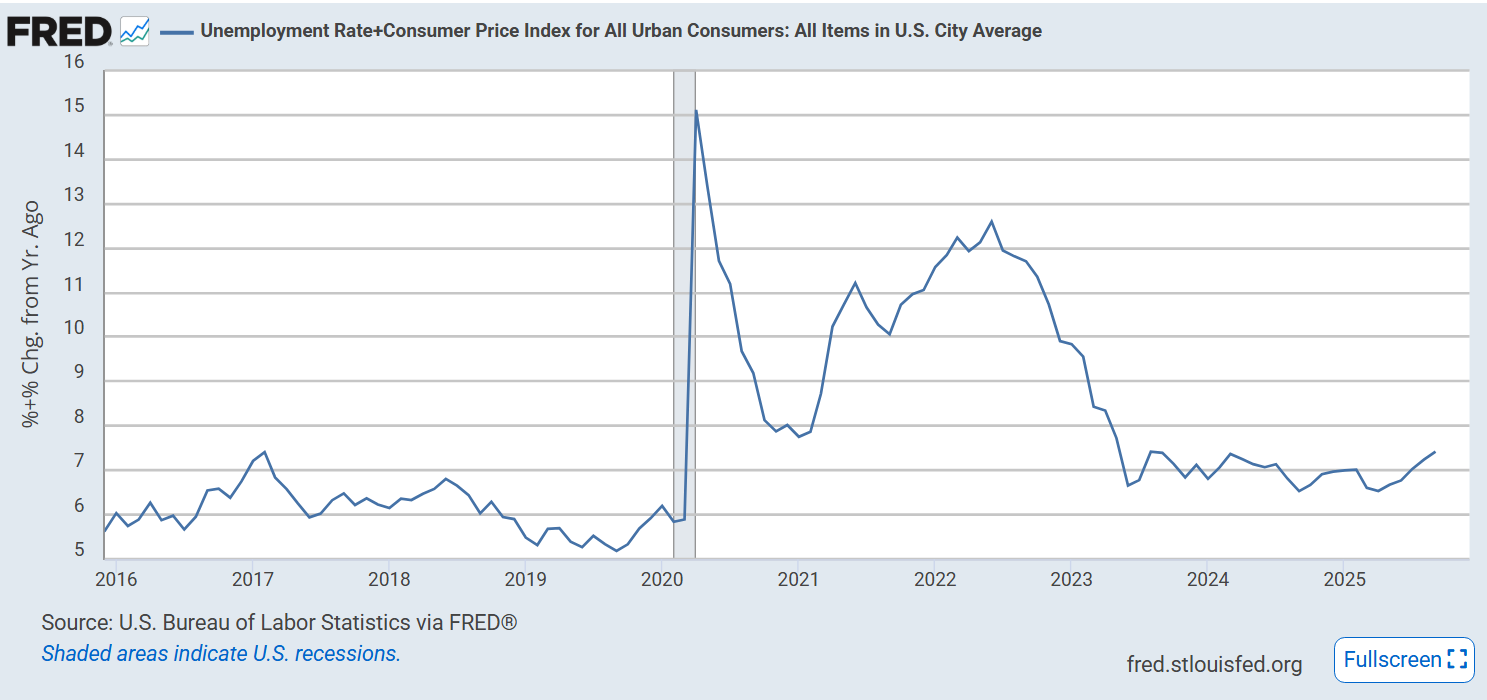
The misery index, the sum of the inflation and unemployment rates, is down to 7% and trending lower, materially below the 8% average of this century.

US inflation reached 8-9% in 2022 and has fallen to 3%. The “stickiness” is half caused by the lag in housing and rental prices in the index and half due to the continued high 6% federal government budget deficit as a percent of GDP.

https://bipartisanpolicy.org/report/deficit-tracker/

There is nominal inflation or actual deflation in most sectors of the US economy today!!!!

On average, the US economy has been adding 2 million new jobs per year for 14 years. 28 million jobs. This is an amazing result.

During the same period, 12 million more people have retired.

The unemployment rate is at a 50-year low. When I was studying economics in 1974-78, there was a big debate about 5% becoming the lowest possible “structural” unemployment rate possible without escalating inflation. 1997-2007 established that a 4.5% to 5.0% unemployment rate was possible. We raced back up to 9% during the Great Recession. The 35-year average was 6.5%. We experienced 3 years of sub-4% in 2017-19 as economists claimed that this was simply impossible. Unemployment rates are still below 4%.

The Black unemployment rate has been chopped in half, from 11% to 5.5%.

The demand for labor remains high. Job openings peaked at 7.5 million before the pandemic. Job openings remain 20% higher at 9 million 5 years later.

The core labor force participation rate has rebounded from the pandemic reaching a level last seen in 2008.

10% fewer black men participated in the labor force between 1973 and 2013. Participation is now solidly increasing.

Real wages stagnated from 2000-14. They have increased by 10% since then.

Real GDP per capita continues to grow.

If you’re a homeowner, the recent one-third increase in home values is a windfall. If you’re a prospective buyer, housing is much less affordable.

US stock market values are up 50% in 5 years.

Coincidentally (?), corporate profits are up 50% in 5 years.

New business creation increased after the pandemic surpassing the pre-pandemic level and exceeding the pre-Great Recession level. Start-ups typically account for all job creation and ensure competition in product and service markets.

Overall productivity growth in the last 5 years has been the same as in 1973-1990 and 2007-19. In recent quarters productivity has begun to increase at a higher rate and many commentators believe that AI will drive productivity at a higher rate for the next 20 years.

The US has achieved energy independence, doubling its production of natural gas in 20 years.

https://www.eia.gov/todayinenergy/detail.php?id=61242

Renewable energy accounts for 22% of US energy generation.

US manufacturing employment has increased by 15% since the Great Recession. It is higher than before the pandemic despite the increase in real median wages and the increase in the value of the US dollar.

Net farm income has doubled since before the pandemic.

We have one-third more voluntary retirees in 2024 versus 2014.

Those retirees are receiving significantly higher incomes.

Retirement assets have increased by 50% in the last 10 years.

https://www.census.gov/library/stories/2023/09/income-inequality.html#:~:text=The%20ratio%20of%20the%2090th,a%206.7%25%20decrease%20from%202021.

Income inequality has finally peaked in the last 5 years.

The poverty rate has declined by one-third in the last 10 years.

https://www.economist.com/finance-and-economics/2024/04/16/generation-z-is-unprecedentedly-rich

Each generation earns higher incomes in the productive US economy. My first post college job paid $800 per month, $9,600 per year in 1978.

US citizens pay very low taxes compared with their developed nation peers.

Summary

The US economy recovered from the uncertain pandemic period faster than other countries due to the combination of very loose fiscal and monetary policy. The fiscal policy boost was bipartisan. The monetary policy boost was nonpartisan. As the strength of the US recovery became apparent by the end of 2021, both Congress and the Federal Reserve Board should have reduced their stimulus levels. The FRB adapted slowly and increased rates. Congress and President Biden have not adapted.

The US economy is experiencing an extra year of excess inflation due to these actions.

It is important to look at the long-run trends and many indicators of economic health. Monetary policy in an independent Fed is effective. Fiscal policy is ineffective. Inflation is higher than ideal.

Let’s list the positive economic indicators. GDP growth, US dollar value, stock market value, exports, employment, retirees and incomes, unemployment, job openings, labor force participation, home values, corporate profits, startups, productivity, energy independence, green energy, manufacturing employment, farm incomes, income equality, poverty, generational progress, and tax burden.

The US economy continues to deliver very positive outcomes for our country. President Biden could do better on reducing the federal budget deficit by increasing taxes or reducing expenditures. Overall, his policies have allowed the economy to continue to deliver benefits.

2.0% Inflation: Not in 2024

Last July, I predicted that inflation would be “near 2% by the middle of 2024”. That is not going to happen. Let’s look at the components to assess the last year and the likely future.

Year over year inflation rate peaked at 8.6% in 2nd quarter of 2022. It was more than cut in half at 4.0% a year later in the 2nd quarter of 2023. The last 2 quarters have been 3.25%. The “easy work” is complete. The “hard work” remains.

More volatile Food and Energy prices do not explain the continuing 3%+ inflation rate.

We have enjoyed energy price deflation for 3 quarters.

Food consumed at home prices have been nearly flat for the last 2 quarters after the 12-13% inflation during 2022.

The price of food consumed away from home continues to rise at 4-5% annually. A tight labor market has increased staffing costs for restaurants. High food input costs taught them to better manage their menu prices. Many restaurants went out of business during the pandemic. Restaurants, large and small, lost money during the pandemic and are fighting hard to recover these losses. Following the lean pandemic years consumers have largely returned to their habits of eating out. This is a business sector where high aggregate demand driven by government deficit spending is creating inflation. It is not the “wage-price spiral” of the 1970’s in a manufacturing intensive economy but it is a similar situation in our retail-intensive economy.

We have enjoyed deflation in durable goods prices for 5 quarters as US and global manufacturers realigned their supply chains with more predictable demand patterns.

Nondurable goods inflation has been below the 2% benchmark for 4 quarters.

The broadly defined “services” sector at 5-6% inflation remains a stubborn problem area. It contains a number of sub-sectors with very different market conditions.

Medical care inflation above the overall inflation rate has been an issue for decades, but it has averaged just 1% for the last 5 quarters.

Transportation services prices have increased by 10% annually. This includes public and private transportation. Public sector transportation is attempting to recover from the pandemic driven decline in ridership. Private rail and truck carriers were disrupted by the pandemic as goods movements plummeted. The prospect of driverless trucks kept freight firms and drivers from returning. Transportation drivers are on the low end of wages. The overall increase in real wages at the low end of the labor market has made these physically demanding, away from home, jobs less attractive. This inflation is part long-term structural adjustment and part short-term recovery of freight flows in the economy. Transportation services is 5% of the CPI, material, but not large enough to drive the total.

The education and communications pair of service sectors has low inflation. Education is higher. Communications is lower.

Housing is one-third of the total CPI. It is a very technical, wonky area. It combines a blend of actual rental charges and the estimated rental value of owned homes. Increases in home prices are smoothed out and their impact on the CPI tends to lag by 2-8 quarters. Housing inflation has fallen from 8% to 5%.

Housing sales prices have declined for 4 quarters. This will increasingly blend into the housing CPI, soon producing deflation rather than 4-5% inflation.

https://www.nerdwallet.com/article/finance/rental-market-trends

Market rent inflation remains in the 3-3.5% range based on the cumulative lack of US housing construction since the Great Recession of 2007-9. Combined with falling housing sales prices the combined housing CPI should decline to 2% by the fourth quarter of 2024.

Dreaded “cost-push” inflation is not a major factor for the US economy. A tight labor market has delivered 1% annual real wage increases for the last 5 quarters. This is a factor in inflation but not a driver or barrier to reaching 2% overall.

https://bipartisanpolicy.org/report/deficit-tracker

2024 looks like 2023, a very high budget deficit for a full-employment economy. In classical Keynesian economic terms, the aggregate demand pressure indicates continued 3% inflation.

An overheated economy typically shows a strong increase in imports as demand reaches out globally. This is not the situation in the US this year.

The money supply has a long-term impact on the economy, prices and inflation. The Federal Reserve Bank has been shrinking the “money supply” by 10% annually.

Commodities are the most volatile element of the global economy. Prices jumped by 20% with the unanticipated quick recovery from the pandemic. The last year has delivered commodities price deflation.

Changes in relative market power can drive inflation. Corporations increased profits by 50% in the first year of the pandemic. Profits have been relatively flat since then.

Summary

A dozen sectors point towards 2% inflation by year end. Energy, food at home, durable goods, nondurable goods, medical care, education/communication, housing prices, real wages, imports, money supply, commodity prices and profits.

Four sectors indicate concerns. Food away from home continues to drive high inflation.

https://www.axios.com/2024/02/13/cpi-food-inflation-dining-out

Public and private transportation services have not yet reached equilibrium. This pressure may continue for another 4 quarters but should not be a long-term inflation driver.

https://www.census.gov/construction/nrc/current/index.html

The “Great Recession” destroyed the construction industry. It has slowly recovered. Total construction has increased, perhaps not enough to bring housing supply into balance with demand 15 years later. Rental inflation at 3% is likely to continue.

The federal budget deficit is the greatest concern. 6% of GDP is a huge deficit.

Net, net, I predict that the Urban Consumer CPI increase in the fourth quarter of 2024 versus the fourth quarter of 2023 will be 2.25%. The federal government spending deficit will directly and indirectly boost inflation.

US Economy Consistently Exceeds Expectations (Index)

https://www.artnews.com/art-news/news/wall-street-bull-sculptor-arturo-di-modica-dies-digital-animation-sells-morning-links-1234584300/