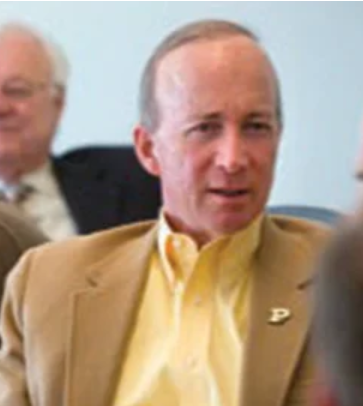
Former Indiana governor and Purdue University president Mitch Daniels provides us with a model of civility in his public life, as we have seen from many American political leaders.
The practice of civility is declining. But we must be hopeful! The grass roots counter-revolution to rebuild Civility has begun. We must not be discouraged. The United States started 250 years ago as an experiment in representative democracy based on universal ideals. It has succeeded against long odds. At the 1787 constitutional convention, Ben Franklin was asked what form of government was being formed. He replied, “a republic, if you can keep it”. In 1852 as the nation battled over slavery and “states’ rights”, Wendell Phillips noted that “eternal vigilance is the price of liberty”.
The US was formed after religious wars had ripped Europe apart and the central rule of kings, landed wealth, nobles and state churches proved inadequate to the challenges and aspirations of modern men and women. It was founded on new principles of individual rights and limited central power. It was not based on history, religion, military power, race, soil, elites, class or wealth. This abstract foundation has been a great asset through time, but it requires citizens to understand and fill their key roles.
Christianity, western culture, New England myths, cultural and educational institutions, patriotism, American exceptionalism, local governments, inertia, mass media and public intellectuals all encouraged Americans to fulfill their citizenship duties: to vote, monitor politics, set and enforce candidate expectations, uphold the constitution and rule of law, obey the laws, pay taxes, serve in the military, sacrifice for the nation, serve on juries, and conduct themselves in a Civil manner.
The cultural revolution of the 1960’s and the Reagan revolution of the 1980’s undercut these forces. Each individual was encouraged to think and act for himself. Individuals welcomed the new freedom to “express yourself”. Civic duties and civility declined through time. Left and right argued about the causes of the very apparent decay of civilization but no new solutions or Civility norms emerged.
Cole Porter’s 1934 “Anything Goes” viewpoint ruled. If we couldn’t agree on political issues, then we could at least agree to be tolerant of all different viewpoints. This was the modern way. Liberals elevated “tolerance” to become a supreme virtue. Liberal intellectuals confirmed that no central values, virtues, character or opinions were needed to support the political state. The fear of conservative, religious, or wealthy domination of culture, economics and politics reinforced this position. Main Street and Wall Street conservatives accepted the more socially moderate/liberal positions of the modern world. They celebrated economic growth, capitalism and the consumer society.
Philosophical and religious conservatives disagreed. The perceived slide towards tolerance, radical subjectivity and atheism was unacceptable. Social and religious conservatives doubled down on traditional views. They became more radical and non-tolerant. They embraced and then captured the Republican party. Small town, rural, working class, economically at-risk Americans saw a meritocratic, global, elitist nation that conspired against their interests. They also embraced the Republican party as the Democratic party proclaimed universal values and prioritized new special interests.
In 1990 Newt Gingrich demonstrated that polarized politics was very effective in the modern age. Bill Clinton and Barrack Obama tried to find a “third way” to triangulate and recapture the center but while they could win elections, they could not really change the polarized culture. Donald Trump embraced the polarized model with great success. The need for “Civility” was not part of his world view. Many in this newly defined party agreed with his win/lose, realpolitik, scorched earth view of politics.
Despite this political situation, most Americans continue to believe in civility. The threats to our system have prompted many people to become more active in politics and to support the core values and behaviors of Civility.
Inspired Civility
The counter-revolution to restore Civility as a core American value and set of behaviors is now well under way. Will it work? Why will it work?
Civility is a set of behaviors that recognizes differences and builds mutual respect. Civility is based upon the 7 commonly held values of human dignity, respect, accepting others, responsibility, public spirit, intentionality and constructiveness.
Civility is a social norm that influences behavior. It is a set of practices, skills, habits and behaviors. Civility requires self-awareness, self-management, social awareness and relationship management skills. It also requires communications, personal growth and problem-solving skills. This is a very heavy package of skills requiring a lifetime of personal investments. Yet, it is required for our representative democracy. Why would any individual choose to make this investment?
Passionate Humans
1 Corinthians 13. If I speak in tongues of men or angels, but do not have love, I am only a resounding gong or a clanging symbol.
Civility as a purely abstract, technical, secular, efficient, professional, dry, thin concept cannot win in the modern world. Civility must spring from the hearts of men and women. The values, education, steps, content and behavior of Civility alone are simply not enough. What will attract and engage modern individuals into making Civility a passionate priority? Why will the Civility counter-revolution win?
Humans are motivated by self-interest and specific situations but mainly by a passionate sense of duty.
Self-interest
In modern America, self-interest may be first!
Personal benefits
Practicing Civility provides 15 benefits, primarily improved communications and conflict resolution skills, better personal and professional relations and personal well-being.
2. Personal growth. Civility’s focus on self-awareness, self-management, social awareness, relationship management, communications, growth and problem-solving drives personal growth. It is a great fit for the implicit modern philosophy of self-expression and Maslow’s top-level goal of self-actualization.
3.Local environment. Civility values and behaviors can help individuals to make their local environments more productive, effective and Civil. One individual can use these tools to improve their local environment.
4. Benevolent self-interest. Civility has inherent spillover or externality effects. Individuals who invest in civility sometimes aim to influence others and local communities to become more Civil for the good of the community. Individuals feel good about promoting these changes.
Situation
Sometimes the situation alone calls for an obvious response. We have such a situation today. Our society is at risk, and we fear the consequences of a downward spiral. We have the tools, knowledge and agency to prevent this. We must respond.
Opportunity. Civility tools are widely accessible. The cognitive and behavioral sciences have grown tremendously in the last half century. Individuals learn and apply various Civility tools at all stages of their lives.
2. Consequence of Failure. Americans know about the “Decline and Fall of Rome”. They witnessed two world wars, a nuclear cold war and its end. They learned that Francis Fukayama’s proclamation of the end of history in 1992 was premature. Civilization is a precious thing. It faces many threats today. Combatting the possible failure of Western civilization is a worthwhile endeavor.
3. Generational Responsibility. “The Greatest Generation” has earned its rest. The “Baby Boomers” have dominated the last 75 years. We received “Western Civilization”, won the “cold war”, embraced individualism and expanded rights and freedoms. But we abandoned the cultural norms of civility. We have an opportunity to restore them in a better form with greater effectiveness without restricting individual freedoms.
4. Agency. We inhabit a “mass society” where global trade, banking systems, the United Nations, judges, lobbyists, politicians, the media, advertising, corporations, lawyers, banks, insurance companies, universities, computers, systems, processes and artificial intelligence seem to rule. Yet, we prize our individuality, independence, freedom, agency, identities and souls. Civility can be practiced and improved by each individual. No permission is required. We can teach others through our own actions and through education and changes to small communities like families, book clubs, prayer groups and work units. Small changes can have large impacts.
Duty
Civility rests upon 7 values. Human dignity, respect, acceptance and responsibility are broadly supported. Public spirit, intentionality and constructiveness attract less interest from some comprehensive value systems. People embrace, apply and grow such values when they feel a sense of duty., which can come from a variety of sources. Fortunately, Civility can be supported from any of 7 sources of duty.
Our society doesn’t require everyone to have the same religious or political beliefs. It doesn’t require everyone to actively practice Civility. It requires a “critical mass” of individuals who actively practice, improve themselves and promote Civility. We live in a time when we need to be very intentional about growing Civility.
Civic Duty – Many citizens deeply understand the benefits of living in a democratic society. They support Civility because they understand it is necessary. Civility enables constructive dialogue, supports self-governance, builds trust and social cohesion, promotes effective governance and manages conflicts peacefully.
Patriotic Duty – Americans are proud of their country’s history of establishing and maintaining a representative democracy as an example for the world. They practice civility to preserve democracy, uphold its founding principles, ensure social stability, and foster national unity and trust.
Cultural Duty – Individuals live in communities and follow the norms of those communities. The history of Civility sets expectations for continuing to act in a Civil manner. Even in highly individualistic communities, we accept that informal norms, expectations and manners are required to avoid stronger laws, administration and enforcement that would reduce our freedoms. Most individuals are proud of their cultural history and happy to comply. Conservatives naturally honor such history. Many American liberals are also quite proud of the achievements of our society.
Religious Duty – Many religions support at least some of the 7 Civility core values. Those who believe humans are created in God’s image emphasize human dignity, respect and acceptance. Many religious and ethical traditions teach the “Golden Rule”—to treat others as one wishes to be treated. This principle serves as a direct guide for civil behavior, encouraging empathy, courtesy, and kindness in all interactions. Many religions ask members to “love your neighbor”, and support the welfare of others, including strangers and those who are different. Religious texts and teachings often provide a moral framework that promotes virtues like patience, kindness, generosity, gentleness, self-control, and humility. Cultivating these virtues is considered part of a faithful life, which naturally leads to more civil interactions. A sense of humility, derived from the belief that only God can make the final judgment, encourages individuals to tolerate differing views and avoid a condescending attitude toward others.
Philosophical Duty – Philosophers have always address the core challenge of forming community and governing even though individuals have different views, needs and interests. Hence, they outline governance structures that work to bridge that gap, often overlapping with the values of Civility. Humanism, secular humanism and philosophies of personal growth and expression emphasize the importance of human dignity, the need to give and receive respect and the importance of accepting or celebrating differences. Many philosophies are compatible with the “golden rule” which emphasizes the mutual respect and forbearance required for a healthy society.
Personality. Individuals with a strong preference for “feeling” versus “thinking” behaviors naturally embrace the Civility values. This can be combined with either a “perceiving”/flexible or “judging”/inflexible approach to the world. Some individuals naturally prioritize responsibility/intentionality or positivity/constructiveness or public spiritedness/belonging.
7. Personal Identity. Many individuals today want to find, define, develop and refine their personal identities. They wish to consciously optimize their human potential. This includes being self-aware, managing themselves, being socially aware and managing relationships, the first 4 Civility behaviors. Individuals who build a secure personal identity are able to interact with others and accept their differences without feeling threatened or the need to resolve such differences. Individuals who have consciously made life choices and experienced personal growth understand that there are different options and views to be considered.
Summary
The practice of Civility is based upon core values like human dignity, respect, acceptance and responsibility. These values are supported by our worldviews. Civility is consistent with the 9 sources of strongly held beliefs. Each can actively and passionately support Civility. We need to rebuild the skills, habits and expectations of Civility. We can confidently look to self-interest, our current situation and the call of duty to make this happen.
Cultures exist because individuals need to be combined into communities. Without cultural norms, expectations, education, rewards, penalties and taboos there wouldn’t be any culture, community or civilization. Modern “civility” is a set of values, skills and behaviors required to hold together a diverse, multicultural society like the United States. With the growing breakdown of historic western Christian culture, the US needs to actively embrace the values subset of “civility” in order to make our political, social and economic worlds function effectively. This requires society – and its leaders and influencers – to clearly define select important aspirational values AND to define what is TABOO, poison, shunned, beyond the pale, unacceptable, and rejected by all. We focus on the 8 civility values.
MODERN TABOOS FOR EVERYONE
Angry outbursts and yelling.
Attacking ideas, opinions and proposals without reason.
Raising personal opinions, values or interests above professional responsibility.
Ignoring uncivil actions.
Allowing high value-added performers to ignore civility standards.
Ignoring or neglecting others; individuals or local groups.
Addressing individuals with disrespect.
Treating individuals as a means, a class member, rather than a human being, an infinitely valuable end [Immanuel Kant].
Gaslighting.
Ignoring questions of race, nationality, gender, sexuality, disabilities or mental health.
Arbitrarily rejecting personal choices about personal fashion, modesty or body image.
Arbitrarily rejecting proposed reparations for historical group damages.
Failing to recognize that policies that benefit minorities might unfairly harm majorities.
Embracing victimhood.
Abdicating responsibility for making personal choices.
Failing to use logic to make choices; following will, desire or emotion alone.
Failing to define and pursue personal goals.
Failing to consider the consequences of one’s personal actions.
Allowing others to strictly determine one’s choices (family, groups, ideologies, professionals, experts, science, leaders, political parties, public opinion).
Blaming others, making excuses, hiding mistakes.
Avoiding personal responsibility by distracting others.
Lying, being dishonest.
Betraying a group that you should be loyal to.
Supporting an individual or group whose legitimacy you question.
Strictly promoting personal self-interest above the needs of the community.
Ignoring civic participation duties.
Failing to trust others and groups after they have trusted you.
Ignoring community interests.
Allowing others to transgress shared community norms.
Ignoring others on a day to day basis.
Not listening; interrupting, undermining.
Failing to participate in group activities.
Ignoring, discounting or undermining others’ attempts to contribute to group decision making.
Dominating conversations, especially after being placed on notice.
Constant negativity, challenges and skepticism.
Summary
Taboos are a critical dimension of a deeply held moral framework. Civility is based upon society agreeing that some values and their implications are “rock solid”. A few of the taboos above are mainly embraced by the left, but ALL 45 (!!!!!!) are embraced by a supermajority of citizens.
The “liberal” virtue of tolerance can be interpreted as THE value, an allegedly supreme value more important than all/any others. It must not be elevated to this dominant role. Tolerance is important but it is not controlling.
Hence, the underlying civility values of human dignity, respect, acceptance, responsibility, public spiritedness, intentionality, interaction and positivity combine to form a successful common framework for all.
Taboos provide the negative (unacceptable) side of values. Civil people, irrespective of their political opinions, must reject these beliefs, opinions, actions and communications. TRUTH is the ultimate standard. We must all reject beliefs that conflict with the truth.
Avoiding/rejecting these taboos is not easy. We humans are still imperfect. We have to work and work and work to reach for the positive dimensions of the proposed subset of civility virtues, and avoid the taboos.
As Civility begins to be embraced as a vital answer to our challenges, we’re starting to hear from the skeptics, the professional critics, the haters, the perpetually ironic, special interests, politicians, media interests, fundraisers, political consultants, the powerful, influencers, extremists, technologists, literalists, nativists, nationalists, environmentalists, talking heads, artists, postmodernists, materialists, therapists and humanists. Some struggle with Civility’s claim to represent everyone in addressing core human challenges. Instead, they say that the modern Civility project is really for elites only, too soft and emotional, too far left, too righteous, too far right, too simple/surface or too impractical/abstract.
Civility attempts to define a set of values, skills and behaviors that are “fully adequate” to support the required economic, social, religious and political needs of our society. Civility addresses the eternal conflict between the individual and “the other”; between the individual and communities considering the “common good”. It provides a subset of moral values adequate to support these dimensions of life while allowing individuals and groups to debate and negotiate the remaining political, social, personal, religious and economic options. As such, it is a “classical liberal” approach, embracing individual freedom while necessarily tolerating others and their opinions.
Just for Elites?
Civility has a long history in America of being embraced by all. City and country. North and South. East and West. Religious diversity was a key driver historically. The Catholic versus Protestant wars in Europe were seen as ridiculous for modern people. The great diversity of Protestant denominations promoted religious tolerance.
Civility applies to all domains. Family, neighbors, unions, civic clubs, not-for-profits, schools, universities, professions, religious organizations, interest groups, small businesses, big businesses, cooperatives, political parties, candidates and community groups. There is no “elite” preference here.
Civility begins at the local level. Family, neighbors, friends, local commerce, HOA’s, block watches, parishes, local schools, local sports, civic organizations, libraries, community centers, social welfare services, third meeting places, pubs, porching, volunteering, block parties, volunteer fire fighters and emergency services. Rural, agricultural, expanding America was founded on these voluntary organizations. It was re-founded around 1900 with political reforms, social services, scouts, civic organizations, YMCA’s, Chautauqua institutes, civil rights, labor unions, temperance, public libraries, public secondary education, etc.
Civility is an eternal challenge. The individual faces other individuals and other groups, communities and society. We’re each wired to be fully individual oriented. “It takes a village” to civilize us and make us productive members of society. Civility applies to all social classes and geographies.
Civility focuses on human dignity, respect and empathy. These are universal human values and experiences. They represent a radical view of human equality, indifferent to rank. These values are anti-elite and countercultural. They support the needs of all and constrain the [alleged] tendency of elites to construct exploitative structures and philosophies.
Civility focuses on practical skills for interacting with others, communicating and making good decisions. It is applicable for everyone.
The Civility Project is purposely taking a “bottoms up” approach to recapturing our institutions as responsible to the people.
The current social, political and economic institutions [often] primarily serve the interests of the privileged (the 1% and the 20% professional classes). The “tea party” was founded to challenge this situation. This wise populist insight has been captured by one political party for its sole benefit. Civility attempts to make clear the benefits to any political group of effective institutional structures.
Civility’s focus on human dignity ensures that individual freedom will be preserved. It is a “classical liberal” approach that recognizes that humans are imperfect and that many will attempt to capture political, social and economic institutions for strictly personal benefits. [In modern America, this is considered a “conservative” insight]. It accepts that some constraints must be placed upon individual “rights” to preserve the “common good”. There is often no obvious solution to these competing interests. Every society must find “reasonable” ways to protect both individual rights AND the common good, while allowing representative democracy to wrestle with the issues in the middle. We’re stuck with an uncomfortable “both/and” rather than a more satisfying “either/or”.
Civility is a “public good” which benefits everyone. The more that civility is practiced, the more that everyone benefits. Non-elites, who have lesser assets, benefit disproportionately from increased civility.
Investments in improving civility create a “virtuous cycle” which benefits everyone.
Elites have a much greater share of assets, so they have a greater interest in establishing and maintaining civility in any society. They need a supermajority of society to buy into “the rules of the game”. They could once rely upon ideas like divine providence, tradition, kings’ rights, land rights, the ancient regime, property rights, class rights, papal infallibility, social Darwinism, eugenics, racial supremacy, national rights, etc. Modern history and communications undermine these crude approaches. Elites need Civility to underpin support for representative democracy, regulated capitalism and international trade.
Too Soft?
Critics argue that “Civility” is based solely on feelings, weakness and conflict avoidance.
Civility encourages individuals to be “dead serious” about their political and religious views. It does not take a position. It encourages individuals to engage in the political process and to develop deeply felt religious beliefs and practices [without becoming righteous and rejecting others’ rights].
Civility requires the “hard” virtues of respect and responsibility.
Civility requires the development of mature character in adults.
Civility promotes positive and constructive approaches to interpersonal relations and problem solving.
Civility is focused on results, not just ideas.
Project Civility is focused on actionable steps, not just a belief system.
Too Left?
Civility embraces the “little platoons” of classic and modern conservative thought. High commitment local organizations are essential for social life and forming moral character.
Civility is actively non-partisan. It requires no position on the historical debates. Central/decentral. Tradition/innovation. Risk/safety. Religious/secular. Individual/community.
Civility requires a limited moral foundation to support society. It rejects a purely individualistic basis for society. It rejects a purely community, organic, spiritual, religious basis for society.
Civility embraces the role of institutions, trust, productivity and growth in society.
The 8 civility values are nonpartisan. Respect, acceptance, public spiritedness and interactive lean left. Responsibility, intentionality and constructiveness lean right. Human dignity is equally left and right.
Too Right?
Human dignity is a radical idea opposed to domination by elites and structures.
Civility is inherently open, liberal and tolerant.
Civility does not embrace any dominant religious or cultural view.
Civility embraces positivity. It does not prioritize “no”.
Civility acknowledges conflict as an inherent part of life and embraces modern technologies.
Civility acknowledges power as a real force in life. It believes that personal and community beliefs are equally important.
Too Righteous?
Civility attempts to find the “common ground” of political debate. It tries to find the “least common denominator” or values, practices, beliefs and habits necessary for society to succeed, or at least muddle through.
Like all political, social, religious or philosophical belief systems, it tries to find the essence, the most important beliefs or assumptions needed for success.
It focuses on communications and interpersonal skills that are neutral.
It focuses on conflict resolution skills.
It promotes organizations like the “braver angels” that encourage interaction between individuals with different views.
It embraces the problem solving and personal growth results of cognitive behavioral therapy and modern organizational development.
Civility promoters believe that tolerance is essential.
Too Simple?
Critics say that civility is too simple, too surface, too obvious. Civility is an approach based upon 500 years of the Western modern era.
Civility accepts the complex validity of modern politics and religion.
Civility embraces a required subset of values in the Western religious, philosophical, economic and social traditions. It requires respect, human dignity, acceptance, responsibility, public spirit, intention, interactivity and constructiveness.
Civility requires thinking, feeling and doing.
Civility accepts that individuals have deeply felt individual perspectives that do not align easily.
Civility promotes the development of individual character based upon philosophical, religious and political perspectives.
Civility combines a set of values with a set of practical skills to be applied in all domains of life.
Civility actively rejects oversimplified versions that are just politeness, magic wands to end disagreement, purely emotional, utopian, partisan, overreaching or merely supporting the status quo.
Too Impractical?
One definition is that “civility is a set of behaviors that recognize differences and build mutual respect.”
Behaviors are the primary focus, even though they are based upon widely agreed-upon values.
Individuals recognize differences between individuals and groups, and seek to understand and bridge them. This is a level-headed approach to recognizing and managing reality.
Individuals constructively take actions to build mutual respect. They work in the right direction, even though the steps don’t always work to resolve differences, solve problems or build relationships. They take steps forward because this is hard, necessary work, not because it is destined to succeed.
The communications, problem-solving, interpersonal, change and personal management tools used in implementing civility are practical insights, techniques and habits that can be taught to everyone.
The Civility Project roll-out strategy is “bottoms-up”, relying upon a broad cross-section of our nation learning, perfecting, applying and sharing these tools and values.
The Civility Project emphasizes actionable steps: education, interactions, commitments, teaching, porching, greeting, encouraging, joining, volunteering and engaging politically.
Civility offers personal benefits such as conflict management, stress reduction, self-management, better relationships, improved image, influence, acceptance and productivity.
Civility undermines the attraction of extreme individualism by emphasizing the shared humanity of all individuals and the necessity of constructive interactions. It helps individuals to find a balanced perspective that includes others, communities and values as complements to the individual alone.
Civility is similar to approaches like the “golden mean” and the “golden rule”. It attempts to combine a small number of values and skills into a practical tool kit that can be used and improved.
Summary
Civility is easy to caricature and dismiss. Simplistic “straw man” versions are easy to attack. They are inadequate to be helpful or embraced as a shared community asset. But Civility defined as a set of behaviors that combines values and tools and strives to both build relationships and manage differences is not simplistic or ineffective. It is a critical set of habits needed to promote effective interactions, engagement, trust and results in a complex society.
It is a moderate and moderating approach, so some might call it conservative. It values interactions, feedback, process, learning and growth, so some might label it liberal. We think that the Civility values are nonpartisan and that the tools are clearly neutral ones that can be used to be more effective in all walks of life, irrespective of politics or values.
Civility can overpromise and become righteous. We think that these values and tools are a solid combination for delivering personal, interpersonal, process and community results. But they don’t work miracles. We have different sets of values, perspectives, experiences, habits, talents, personalities and expectations. We can learn to listen, empathize, seek the common good and compromise effectively. This will help, but it won’t make any of us perfect people or negotiators.
Our goal in the Civility Project is to re-establish community expectations that promote these kinds of interactions and personal growth. We are confident that creating new norms of expected and taboo behaviors will help individual lives and our communities. In the modern world of complexity, uncertainty, insecurity and skepticism we need some help. Civility offers a nonpartisan common framework to rebuild a constructive, trusting, productive background for all of our interactions. Imperfect, but very powerful.
Our preferred definition of Civility is “a common values-based problem-solving process to make group decisions when individuals have differences”. A review of 5 dimensions indicates that Civility has no bias towards or against the left or the right.
Philosophically
Conservatism “conserves” history, culture, religion, norms, land, assets, classes, privileges, religion, power and institutions. It opposes risk-taking, conflict, rapid change and revolution. Civility is rooted in human dignity and concern for the “public good”.
Liberalism elevates the individual, rationality, progress, liberty, science and rights. It opposes unjustified power, wealth and cultural claims on the individual. Liberal political systems seek to balance individual rights with the “public good”.
Technically
Civility based problem-solving and relationship management emphasize the use of modern business, education and counseling techniques such as active listening, dialogue, objective evidence, separation of facts and values, common interests, devil’s advocate, process review, independent facilitators, strategic planning, values clarification, I/you statements, cognitive behavioral therapy, crucial conversations, shared accountability, win/win options, disclosed preferences, long-term perspective, walk-away option, rational incentives, aligned incentives, multiple rounds of negotiation, I’m OK/You’re OK, brainstorming, multiple intelligences, 6 thinking hats, supplier partnerships, shared administrative services, outsourced services, specific corporate culture, mission, vision and values. Corporate, not-for-profit, educational, counselling, government, religious and privately owned organizations have adopted these social science techniques because they are effective tools for translating resources into outputs in support of goals.
Different organizations emphasize different tools that best match their values, history and objectives. There is no clear left versus right emphasis. Solid tools help organizations manage their planning, workforce, resources, suppliers, customers and beneficiaries.
Values
Respecting each other and our views. Respect for position and roles is a core conservative principle. Respect for individual freedom and agency has been a core conservative principle since the American Revolution. Liberals emphasize human rights, caring and fairness. Respect for each individual is central.
Human dignity. Christian theology emphasizes the value of each person created by God in his image and called by name. Secular humanist philosophy takes a similarly very high view of the importance of each individual.
Being open to understanding differences. Liberals have emphasized human rights, equality, care, progress and “others”. Religious conservatives embrace the Judeo-Christian call to protect the poor, the widow, the orphan and the alien. Most Americans support the American political system that limits centralized power and protects minority rights. Many conservatives recognize the diversity of religious denominations. Most Americans have learned to accept the legal and social rights of different groups, including many that were not accepted before. We have arguments about DEI today because it can be used as a political tool by the far left, even though large corporations have effectively used the nonpartisan core of DEI to be more effective firms for 25 years.
Each individual’s choices matter. Liberals and conservatives in individualist America agree.
We’re responsible for our choices and interactions. Conservatives emphasize responsibility, including responsibility to social groups and the state. Liberals focus on the individual, per se, and highlight their responsibility to society as essential for the public good determined by the political process.
We consider the public good in our choices. Liberals tend to take the broader perspective today, sometimes to a fault. Classical conservatives naturally focus on the overall public good as the end goal of society, perhaps emphasizing the existing interests. As representatives of the wealthier and more powerful groups, conservatives look to the overall health of society, politics and the economy as vital.
We share responsibility for our choices. Conservatives naturally see an organic society, based on tradition, norms, institutions and trust. Although elites influence decisions, true support from all of society is essential. All sectors must support the legitimacy of big choices. Liberals promote shared power as the fair way, in principle. They sometimes criticize decisions and processes when they don’t win.
We think and act constructively. Liberals embrace modernity, science, progress, education and rationality. Conservatives embrace hard choices, reality, real politic, trade-offs, common sense, business methods, and balanced budgets.
Issues
19 issues have appeared in the “top 10” most important issues lists since 1948. Civility can be neutral on all of these issues.
Care. Primary liberal value. Conservatives rate it highly too.
Fairness. Primary liberal value, focusing on results. Conservatives emphasize process fairness.
Loyalty. Conservative priority. Secondary liberal value. Civility emphasizes loyalty to society, the political system and the common good.
Authority. Conservative priority. Liberals accept “legitimate” authority. Civility emphasizes the importance of each individual.
Purity. Conservative priority supporting traditional values. Liberals emphasize different dimensions emphasizing individual rights.
Equality. Equal treatment of individuals. Left and right agree.
Proportionality. Conservatives emphasize proper rewards for efforts and results. Liberals accept this principle but give it lesser emphasis. Civility does not take a stance.
Civility is supported by left and right in America’s political history. Modern techniques for most effective group interactions and negotiations are neutral. The values that support Civility are neutral. Civility takes no stand on modern political issues. The latest attempt to define the “righteous” bases for politics provides no dimension opposed to civility. Civility can be used as a bipartisan base for our democracy and our day-to-day interactions.
Political polarization is one of the main causes of the decline in civility. There are structural and historical causes for the tremendous decline in civility from 1960 to 2025.
High Level Changes
The Civil Rights Act of 1964 obliterated the Democratic party and provided the Republican party with a growth strategy.
The “cultural revolution” of the 1960’s contrasted traditional social practices with a tolerance or embrace of “anything goes” behavior. Politicians have continued to exploit these deeply felt divisions.
Political parties embraced a single, simple right versus left, conservative versus liberal, framework as Ronald Reagan skillfully knit together the various “conservative” factions between 1968 and 1980. Republicans began to embrace the virtues of a “big tent” through the end of the century.
The Republican party embraced fundamentalist Christians, and religion was merged with politics. Democrats increasingly became home for the secular, agnostic and “none of the above” religious affiliations.
Ideology based parties are inherently more righteous, adopting right/wrong, good/evil views of the world.
The American economy has continued to grow throughout the post WWII era, greatly increasing the value of politics for those with economic interests to protect.
Americans have increasingly sorted by “rural versus urban” and “left versus right” residences. The rural counties are right, the urban counties are left, the suburban counties are mixed.
The rise of individual expression as the premier life goal highlight’s individual identity. Political views reflect a person’s identity. There is pressure to “be” left or right.
Structural changes like gerrymandering or restrictive changes in voting rules are used to control political power at the state level.
Political parties have lost power. Historically, they were able to filter out extreme or risky candidates or issues. Voters, candidates and special interest groups have more power today.
Our two-party system incentivizes extreme candidates, supporters and views on issues. This is a self-reinforcing tendency.
Once individuals see the world as political, in a single ideological dimension, as right versus wrong, human nature reinforces the polarized views. Dislike of the other party becomes highly motivating. In-group biases grow. Fear of the “other” grows. Perceived harmful, unfair, disloyal, unspeakable, sacrilegious actions by the “other” party assume mythic evil status. This is also a self-reinforcing tendency.
Experience with civil, constructive, problem-solving politicians and parties has declined, lowering expectations. This is also a self-reinforcing tendency.
Polarization is in the interests of some politicians and the industries supported by political spending. It acts as an ethical and communications skills barrier to entry.
Media Changes
Technological changes allowed journalism and opinion expression to be economically viable at the part-time individual level, down from financially stable organizations of at least 100 people.
The “Fairness Doctrine” of 1949 was effectively ended in 1987, allowing political media to flourish.
The merger of individual identity with politics and religion with politics created greater demand for political journalism.
With television, perceptions of “presidential”, powerful, honest, effective, charismatic, leadership, common sense, relatability, etc. made media image more important than content, knowledge, experience or character.
The internet allowed previously fringe groups to effectively organize and communicate.
Cable TV and the internet created hundreds and thousands of broadcasting options, encouraging individuals to find exactly the content that they desire.
Highly partisan commentators/entertainers began to provide the people with what they want. A simple reinforcement of their existing beliefs.
The internet and social media provided the tools for content providers to find and feed their customers, even at very small scales.
The loss of classified ads to the internet undermined local newspapers and radio. They lost their ability to effectively cover local news. This reinforced the trend to embracing partisan sources for all news and opinion.
The growth of effective communications sources allowed national politicians to move the “center of gravity” in politics from “state and local” to the national level. All issues are now seen through the lens of ideological national politics.
The increased number of channels on cable TV provided room for outlets that appealed to small fractions of the viewing audience. There was room for partisanship. There was room for sensationalism.
Television and radio networks found ways to attract, reinforce and monetize polarization.
In a world of hundreds or thousands of news and opinion sources, clear, consistent, emotional, effective branding became necessary for survival. Everyone is competing for clicks and eyeballs. Only the winners survive. Sources increasingly cater to the “least common denominator” of human interests.
The internet and social media provide confidential cover for individuals to share their most negative thoughts without fear of being held accountable.
The internet and social media avoid any filters for accuracy or legitimacy. Fake news spreads quickly.
The “viral” nature of the internet and social media undercut traditional sources and views of objective, scientific, professional, mainstream legitimacy. Every fact becomes an opinion.
Trust in objective journalism is undermined by the politically informed options, even as bias evaluators improve their effectiveness.
The repeated claim of “fake news” undermines trust in any objective journalism.
In a highly competitive media market, sensationalism wins. In-depth stories, human interest stories, good news, analysis and education lose.
Reagan provided “conservative” as a respectable term for a variety of political subgroups, ranging from moderate to extreme.
Fundamentalist Christians, southerners and rural residents joined the party, angry about social and cultural changes.
Buckley and Goldwater legitimized philosophical conservatives, including the extreme versions.
Economic libertarians found a home in the party, as Austrian and supply side economics were adopted. Innovations like the Laffer Curve, monetarism and “rational expectations” were digested.
“Free market” economics, descended from laissez faire, is intrinsically extreme, elevating markets as morally “good” and any opposition as “bad”. Analysis, judgment and compromise are discouraged.
Economic growth is good. “Small is beautiful” is mere virtue signalling.
Taxation is theft. Drown the government in a bathtub.
Gun rights, taking your guns, weak on crime.
Woke mob, cancel culture, fake news.
Global warming is “fake news”; drill baby, drill.
Communist, pink, socialist agenda, radical left.
Christian nationalism; not separation of church and state.
Anti-race, nationality, immigrant, religion, sexual orientation.
Gingrich strategy of polarization, extreme positioning, framing, ends justifies the means.
Patriotism, national purity, open borders, rapists and muggers, terrorists.
RINO’s ejected from the party.
Funding for more “conservative” candidates to challenge incumbents in primaries.
Acceptance of extremist, militant, subversive, racist, conspiracist, radical supporters.
The Democratic Party Responded and Became Righteous
Per Johnathan Haidt, only care and fairness matter to Democratic politicians. They disregard or criticize loyalty, authority, purity and liberty. Ouch.
Western culture is imperfect, maybe oppressive. Pure secularism is best.
Religion is the opiate of the masses. Religious organizations are politically suspect.
Affirmative action is more important than individual rights.
Abortion rights are basic; no limits or compromises.
Sexual orientation is personally defined aside from biological or cultural influences.
Free speech is not as important as protecting feelings. Cancel culture.
Environmental goals and policies disregard cost/benefit analyses.
“Defund the police” because they are an illegitimate institution.
Government employees, teachers, professors, media and artists leaned further left and lost the ability and interest to transmit neutral, broadly held social values.
Extreme positions on free speech, assembly, press, religion, human rights and globalism.
Oppressed group interests are primary. Not equal opportunity, safety net, fair taxes.
Complete individual choice in consumption, production, expression, and relations.
Opposition to school vouchers as an inherently unfair threat to public education.
Reparations for historical injustices.
Strictly global solutions without respect for national interests.
Global warming is an immediate threat to the survival of humanity.
Disregard of the “deplorables”.
Loyalty oaths to institutional values.
Virtue signaling as an art form.
Postmodernist elevation of “powerful oppressors” as the only framework.
Pure, certain support of John Rawls’ theory of justice, economic redistribution.
Library rights to all books and programs for all ages.
Superiority of abstract, global principles versus local interests.
Individual creative expression as the supreme value; and tolerance; except for some views!
Superiority of coastal culture, economics and politics versus sunbelt or “flyover country”.
Protection of upper middle-class housing, education, safety, travel, professional, tax, networking, investment, trust, and administrative interests.
Welcoming socialists, globalists, and intolerant interest groups in the party.
The centrist pragmatism of FDR, Truman, Kennedy, LBJ, Clinton and Obama are dominated by the “far left” in the Democratic Party at the national level today. Partly by party programs and presidential positions (Biden), but mostly by “safe seat” politicians and the university, media and cultural influencers and thought leaders.
These extreme left positions serve some Democratic politicians, their Republican opponents, and the globally dominant metro areas.
Even though a majority of Democrats and Democratic leaning independents don’t support these “far left” positions or the caricatures wisely promoted by Republicans, the support by some Democrats and clever Republicans helps to position the Democratic party as much further left in the public mind. This reinforces the idea of a single ideological dimension for all issues and polarized yes/no, right/wrong. good/evil, win/loss positions by both parties.
The lack of highly effective Democratic national leadership for 50 years has encouraged leftward leaning Gen X, millennials and Gen Z to adopt further left positions because the center-left version is apparently ineffective..
Summary
A single ideological “left versus right” politics frame emerged after 1964.
In 1995 Gingrich demonstrated that polarization is effective and good for incumbent politicians.
Polarization is a self-reinforcing process. Consider the Irish Troubles or the Middle East.
Politics, media and society also interact to grow polarization.
Religion and identity have merged with politics, making it more ideological and polarized.
The historical countervailing forces of the mainstream media, self-interested political parties, regional elites, the responsibility of noblesse oblige, business elites, religious elites, intellectuals, thought leaders, university presidents, military leaders, state leaders, global leaders, local politicians, civic group leaders, teachers’ unions, League of Women Voters, ABA and scouts have not found their moderating voice in the current media environment.
The media facilitates polarization for profit.
The Republican party moved right and then further right.
The Democratic party “occupied the center” with Clinton and Obama, but this did not satisfy its further left supporters, and it convinced many Republicans that all Democrats are really “radical socialists”. The party has not found a new framework to effectively compete with Trump’s hybrid conservative/populist frame and policies.
A wide variety of groups have attempted to reframe the center as a good political place to live. None have yet succeeded. Perhaps the Carmel civility project will win. https://www.projectcivility.com/






 Good News