1637 – The world can be described mathematically, in 3 clear dimensions. We can convert geometry into algebra. We can “know” everything. And in my spare time I will revolutionize philosophy too.
1654 – We can use algebra to fully describe uncertain, probable events. In my spare time, I will contribute to mathematics, physics, chemistry, theology and the scientific method.
1673 – The world can be understood. Calculus, philosophy, politics, law, library science, music, biology. Newton was greater. Leibniz gets second billing then and now.
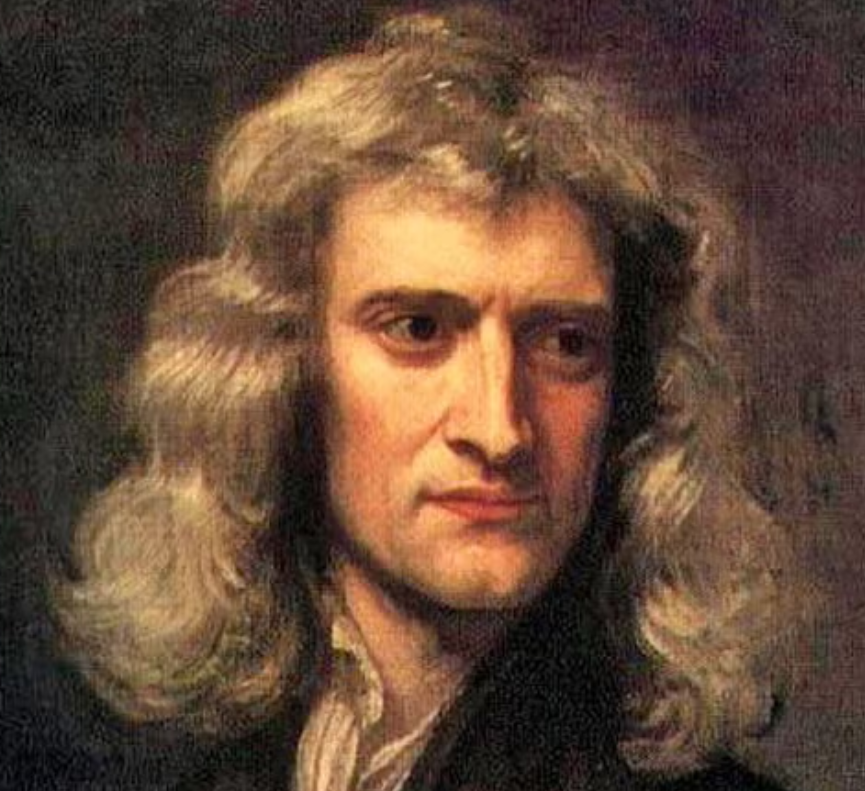
1687 – The world can be understood. Calculus, physics, astronomy, theology, optics, scientific method, alchemy. The reduction of physical forces to a simple equation is the highlight of all science. His legacy is largely misunderstood. He remained religious. He was a mystic and an alchemist. Describing events mathematically did not “explain” them. Aristotle’s emphasis on “final” causes still mattered.
1734 – The world is dynamic and complex. Yet, we can still describe it mathematically. Let’s describe sets of differential equations. Defining several fields of mathematics. Showing how math can be applied to physics. Perhaps the greatest mathematician of all time.
1821 – Carl Gauss competes for the greatest mathematician of all time. Algebra, geometry, connections between subfields, many challenges solved, analysis, topology, non-Euclidean geometry, astronomy, calendars, advances in probability theory, maps, magnetism, optics and mechanics.
1862 – Electricity and magnetism can be described by a set of equations, more complex, but similar to those of Newton describing gravity. We barely understand these phenomena, but the equations can predict how they function. Math and physics.
1895 – We can describe an abstract mathematics called “set theory” which describes how individual components relate to the whole. This approach can describe all formal logic. It can potentially serve as the basis for all of mathematics. It begins to fully address the idea of infinity.
1895 – The world is mainly comprised of waves of various lengths. Some wave lengths can be used to “see” within physical objects. We’ll call them X-rays.
1911 – The atom is much more complicated than we thought. It has a center of protons and neutrons. It has multiple shells of probabilistically present tiny electrons. Atomic particles “disappear” as radioactive decay based on probabilities.
1915 – Everything you thought you knew about the world is false! The speed of light is fixed. There is no physical background space “ether”. Speed of light is a rare constant. Energy and matter are interchangeable. Time and space interact. Time is relative. Space is warped by matter (gravity). In essence, several dimensions of reality cluster, pull, interact, interrelate together in mathematically describable ways. Everything is very connected. I worked the rest of my life to combine the laws of physics, but they did not comply.
1925 – We’ve digested all of the new theories and experimental results. Everything in the universe is unavoidably probabilistic. Light is wave and particle. Space is relative. Electrons are probably in SPDF circuits. Particles are probably there! Measurements impact reality. Schrodinger’s cat can be dead or live. Spooky action at a distance. We can never really know “for sure”. This is before the exploration of sub-atomic particles which raises many more very difficult questions.
1931 – We cannot reduce any “robust” mathematics to simple formal logic or set theory. Infinity and other non-reductionist components stand in the way.
Our universe has a well-defined structure. Observer perspective really matters. Mathematical equations are amazingly powerful. There is no simple deterministic universe. It is probabilistic “turtles all the way down”. Perspective is relative. New mathematical perspectives are impossible to predict and difficult to comprehend.
1984 – Eli Goldratt offers a “theory of constraints” as a way to understand and manage complex systems effectively, leading to true “lean manufacturing” and “lean operations”.
Process standardization. Financial innovation. Highly focused strategies. New business forms. Markets and international trade deliver desired products, lower prices and competition. A role for government regulation remains. The macroeconomy can be managed to reduce the impact of business cycles and shocks.
Colonization and de-colonization. Opening of Asia. World Wars. Nuclear threats. International integration. Economic progress. Bipolar, superpower, multipolar world.
1880 – Community organizations of many kinds are created to manage immigrants, urbanization, industrialization, growth, mobility, diversity, poverty and public health.
1936 – Self-help books, seminars, programs and counseling blossom, providing an individual, transactional, psychological, positive alternative to religion.
The movement from one Church to many Christian denominations to “A Secular Age” is the largest change. The growth of the US from a small colony to a world power and then to an economic, military and cultural superpower is of equal magnitude. Migration westward, northward, inward and to the cities has reshaped American culture. Individualism has grown to become the dominant cultural perspective. The role of laws and social norms in shaping personal behavior has dropped.
Americans have been extraordinarily mobile, joiners, religious, productive, creative, patriotic, pragmatic, skeptical and independent. The country has succeeded as a multi-cultural nation and been a successful exporter of its culture around the world.
1789 – “The people” can overthrow the ancient regime. Governing is a bigger challenge. The “nation” and ideals (liberty, equality, fraternity) are very, very powerful tools.
1848 – Utilitarian emphasis on pain and pleasure. Liberty as the supreme value. Yet, government actions to reach valuable ends, including redistribution, are also needed.
1913 – All of mathematics can be reduced to formal symbolic logic. Everything is logically consistent. All of science and politics and philosophy might also be so structured.
1948 – All humans are “born free and equal in dignity and rights” regardless of “nationality, place of residence, sex, national or ethnic origin, colour, religion, language, or any other status”.
1961 – Power is the ultimate guide to understanding the world. The powerful exploit others. Opposing this exploitation is the duty of those who understand.
1974 – A US president was forced out of office for his criminal activities. The transfer of power worked. Confidence in government and institutions was shaken.
1980 – A pro-market, socially conservative political party was elected by reframing the terms of the debate away from economic security and inequality.
2017 – The Republican Party increasingly appealed to a coalition of economic winners, social conservatives, libertarians and populists, embracing a transactional, common-sense patriotic nationalism.
“Practical men who believe themselves to be quite exempt from any intellectual influence, are usually the slaves of some defunct economist. Madmen in authority, who hear voices in the air, are distilling their frenzy from some academic scribbler of a few years back” – John Maynard Keynes
Bacon and Descartes provided early alternatives to the prevailing integrated religious worldview. Locke and others outlined the individual based “social contract” theory that provided a basis for the American and French revolutions. The American model continued to inspire while the French model both inspired and frightened. The rational Enlightenment view led to utilitarianism, pragmatism and progressivism plus the reactions of Romanticism, Marx and Nietzsche. Conservative reactions of Burke, Social Darwinism and Fascism also occurred. “Big government” was adopted as a potential positive force by the left as well. Individual rights were increasingly recognized in theory and practice. Post-war existentialism and postmodernism replaced discredited Marxism on the left. The Reagan/Thatcher revolution re-established pro-market and traditional social conservatism as a dominant force. Trump capitalized on the populist themes and media tools of the skeptical post-Watergate era.
Science versus religion. Church and state. Individual and community. Rich and poor. Liberty versus justice. Liberal versus conservative. Populists and elites. State and international politics. What should we do? Who should decide? What is the best structure? How do we protect minority rights? Protect the goose that lays the golden eggs.
The U.S. and Western system of government regulated capitalism, relatively free trade and democratically elected limited government dominated the second half of the twentieth century. In 1992 Francis Fukuyama proclaimed, “The End of History”. This “Western consensus” view is increasingly challenged today.
‘Many forms of Government have been tried and will be tried in this world of sin and woe. No one pretends that democracy is perfect or all-wise. Indeed, it has been said that democracy is the worst form of Government except for all those other forms that have been tried from time to time.…’ – Winston Churchill
Palantir was founded in 2003. It has 4,000 employees and $3B of revenues using technology to make the military more effective. It is valued at more than $300B, the 30th most valuable company in the world! Yes, 100X revenues (not 8X or 25X) and $75M per employee (not $3M-10M). The founder, Alexander Karp, has written a book about what’s wrong with the US and what to do about it, in his spare time. The book jacket says he earned his doctorate in “social theory” from Goethe University in Frankfurt.
The 218-page book is rambling, with an extra 66 note pages. The bottom line is that everyone should be like the author, a hard charging owner engineer, focused on technical results AND deeply interested in the social, political and economic success of the nation. Hence, it crosses political boundaries!!!! A majority of the book castigates “the left”. About a quarter criticizes the shallow market right. However, the author raises great questions about what is required for success by the US that should not be discounted by either side of the political spectrum, IMO.
On specific policy questions, the author wants freedom for his firm to grow and succeed. Define some guardrails for AI. Don’t worry about personal freedom versus facial recognition. Invest in science. Prioritize science and technology. Honor leaders and leadership. Support the founder and ownership culture. Value science above finance and consulting. Adopt hard power, hawkish, deterrence foreign policies. Prioritize economic growth. Embrace best business practices. Validate rational trade-offs.
Skeptical, opposing any beliefs, deconstructing all.
Opposing any national, community or political identity!
Uninterested in defining “the good life”.
Opposing the use of technology in support of the goals of the state or society.
Opposing the legitimization of the state via economic growth.
Uninterested in using the capabilities of technology for key industries.
Promoting neutral, rudderless values in the nation’s elites.
Prioritizing “woke” AI controls.
Restricting free speech.
Complacent about international threats.
Seduced by the lure of global peace, values and organizations.
Overly idealistic, unable to consider pragmatic trade-offs.
Unwilling to hold allies accountable.
Enamored with the role of trade alone in preventing national disputes.
Lost in the controlling ideology of “the oppressor vs. oppressed”.
Bereft of core values.
Vindictive, punishing opponents.
Unwisely emphasizing the pure moral character and actions of public office holders.
Ignorant of the role of culture in managing society.
Prioritizing individual rights at the expense of community.
Anti-Western culture and civilization.
Anti-community, of any kind.
Anti-shared, objective values or morality, especially by society’s elites.
Universalist, idealist, cosmopolitan opposed to practical and local values.
Anti-religious.
Unworried that the “separation of church and state” undermines belief.
Promoting tolerance and pluralism in order to undermine any objective truth.
Highlighting legal compliance and individual rights at the expense of “the good” and true justice.
Defining a realm of acceptable “liberal” values and prohibiting other values.
Opposing any benefits from historical civilizations.
Mostly interested in reviewing the oppressive roles of colonial empires.
Uninterested in objective physical or moral truths.
Uninterested in problem solving.
Certain of its moral superiority versus political and class opponents.
Opposed to conventional, objective, scientific knowledge.
OK with a “thin” moral world of market efficiency and legal freedoms.
Mostly interested in “performative discourse” instead of critical thinking.
Committed to a martyr’s idealism in political performance.
Opposed to recognizing the key role of great leaders.
Uninterested in the moral dimension of life.
Actively opposed to the moral and practical advances of Western Civilization.
Ambivalent regarding any objective notion of objective truth or beauty.
Opposed to the “great man” concept of history, replacing it with social pressures alone.
Committed to the self-evident progress of man through science, alone.
The extreme claims are mostly self-refuted by any neutral reader. Karp inappropriately commingles postmodernism, classical liberalism, liberal institutions, interest groups, the Democratic Party and its supporters. It is unclear whether he is an advocate employing the strawman technique or really doesn’t understand the differences between the many groups in the leftist coalition. He generally defines the most extreme, exaggerated, indefensible examples for criticism. He ignores the differences between philosophers and real people. He does quite a bit of name calling. He portrays his opponents as simpletons, unaware of tradeoffs. He generalizes leftists as pure feeling, intuitive beings rather than mixed constructive thinkers. He fails to recognize any of Jonathan Haidt’s morality flavors as being essentially important to left and right.
The Right is Not Blameless
The market pays finance/consulting folks more than engineers.
In the end, idealism is more important than pragmatism!
The neoliberal philosophy that elevates the market above religion is clearly wrong.
The pure market, pragmatic philosophy undermines any ultimate ends.
The commercial world is uninterested in “the good life”.
Criticism of “the state” undermines its valid role and what technology can do.
The state must be perceived as legitimate. An extreme distribution of wealth and income must be addressed in the political process.
A meritocratic, secular world alone cannot generate consensus values.
Growing international trade alone is not enough to avoid conflicts.
A commercial society does not require its managerial elites to engage in the political process.
The “productization” of life, the rise of instrumental logic, places humanity at risk and threatens any sense of cultural community or values.
The default hierarchical structure of large bureaucratic organizations is inherently less efficient and effective in the long run.
The most valuable, effective employees require freedom from rules and obedience.
Key government roles are valuable and should be compensated accordingly.
Inclusivity is required for firm effectiveness.
Firms are artificial entities. Like citizens, they should be obligated to support the nation.
Real Problems/Challenges/Opportunities
As a nation, we don’t have generally agreed upon priorities, values, and ideals.
Since we don’t have priorities, we don’t effectively apply our rich resources as a nation.
We don’t have a consensus that other values trump market values.
We don’t appreciate the critical role of the nation. We have lost our patriotism.
We don’t have a dream, story, history, myth, image of a great nation. Without some constructive narrative we won’t have a civilization.
Lacking a national identity, we are rootless, anxious, listless, worried, adrift.
Nationalism is replaced by globalism or secularism as an organizing structure.
In post-Vietnam, Watergate, 1960’s world, skepticism is the default world view, undercutting the development, acquisition, promotion or application of any serious moral, social, cultural, religious or political belief.
Skepticism is a self-reinforcing worldview. The lack of “belief” undermines interpersonal trust, institutions, community, politics and patriotism.
Skepticism undermines belief in objective moral, physical and aesthetic truths. A relativist, subjective philosophy elevates tolerance, social distance, safety, and conflict avoidance as leading social values.
The neo-liberal market philosophy has resulted in economic efficiency, market values and instrumental logic quietly dominating moral, social, cultural, religious and political views for many. Results matter but can be overdone.
Criticism of government roles and performance has undermined the core expectation and demand that government deliver results, respond to citizens and operate effectively and efficiently. Government and science are not enemies. Government and industry are not enemies.
We observe the positive results that can be delivered by entrepreneurial, founder, owner, responsible organizations but have not found solid ways to ensure that this approach impacts all industries, especially the government sector. Results matter but can be overdone.
The neoliberal “free market” political philosophy of Milton Friedman justifies corporations to ignore the nation or community as a valid stakeholder. It encourages corporations to treat all decisions as opportunities to maximize economic returns, undermining other valid political, social and moral responsibilities. Results matter but can be overdone.
Effective organizations relentlessly focus on final results, structuring their plans, systems, and resources with reinforcing feedback loops and expectations. Less effective organizations and industries waste resources. Global or local market competition, anti-trust regulation, tax structures, industrial policy, education, effectiveness audits, best practices sharing, outsourcing, benchmarking, etc. can be used to improve. Results matter but can be overdone.
All industries contribute to a healthy economy and society. None should be allowed to be ineffective.
Lacking a national culture, mass media, effective political parties, or shared religious views, the socialization of students and young adults is critical. Education matters. In a meritocracy, the role of suburban high schools and leading universities is essential.
Solid and exceptional talents and leadership matter to organizations and nations. Our political systems mostly fail to use these capabilities. We apply idealistic “oughts” to our political processes rather than reasonable incentives for participation and results.
We apply unrealistic ideals to political candidates instead of evaluating their effectiveness. This attracts “talking heads” and repels effective candidates. We should judge politicians as we judge other professionals, managers and leaders. Politics and governing are messy businesses, like sales, purchasing, negotiations, mergers and acquisitions in business. We need to set proper expectations and ignore how the sausage is made.
Cultural and social expectations matter. They should not be set by politicians. Historically, social, economic, intellectual and leadership elites informally shaped, refined and enforced these commonly held views. In our radically individualistic culture, we have not found an effective replacement for the old approaches.
In national and international politics, we need to evaluate both hard and soft power approaches. We need to consider ideals and pragmatic factors. Trade-offs are often required.
Leadership matters. In a complex world, firm and political leaders require great skills to be effective.
Karp’s Solutions
A stronger central government to make better choices.
Industrial policies and government funding.
Overhaul political incentive systems to get better candidates.
Revise laws to align corporations with national priorities.
Provide incentives to better use the founder/ownership model for firms.
Fund scientific research.
Defeat the “far left” views and policies of “progressive”, new left, postmodernist Democrats.
Elevate the nation as the primary social/community vehicle for society.
Promote the Teddy Roosevelt “man in the arena” view of society, politics, institutions and leadership.
Promote the Teddy Roosevelt “speak softly and carry a big stick” view of international relations. Increase hard power, especially for technological areas.
Use the resources of science, technology, IT and business to improve society.
Summary
Karp argues that “the technological republic” can address the problems he has identified. His primary solutions are technocratic ones. I think that the “neutral” problems he has identified are important. I don’t think his “solutions” really fix them. The solutions are mainly focused on using firms and talents like his in supporting the government’s military capabilities.
Greater nationalism is one approach to the core problems, but strong nationalism has a mixed history and may not be a widely supported solution in the modern or postmodern world. Individualism is too strong. Religious and political views are diverse. Racial, ethnic, regional and class groups are diverse.







 Good News