
Civility and Politics: Index
https://www.cml.org/home/topics-key-issues/civility-starts-here
The practice of civility is declining. But we must be hopeful! The grass roots counter-revolution to rebuild Civility has begun. We must not be discouraged. The United States started 250 years ago as an experiment in representative democracy based on universal ideals. It has succeeded against long odds. At the 1787 constitutional convention, Ben Franklin was asked what form of government was being formed. He replied, “a republic, if you can keep it”. In 1852 as the nation battled over slavery and “states’ rights”, Wendell Phillips noted that “eternal vigilance is the price of liberty”.
The US was formed after religious wars had ripped Europe apart and the central rule of kings, landed wealth, nobles and state churches proved inadequate to the challenges and aspirations of modern men and women. It was founded on new principles of individual rights and limited central power. It was not based on history, religion, military power, race, soil, elites, class or wealth. This abstract foundation has been a great asset through time, but it requires citizens to understand and fill their key roles.
Christianity, western culture, New England myths, cultural and educational institutions, patriotism, American exceptionalism, local governments, inertia, mass media and public intellectuals all encouraged Americans to fulfill their citizenship duties: to vote, monitor politics, set and enforce candidate expectations, uphold the constitution and rule of law, obey the laws, pay taxes, serve in the military, sacrifice for the nation, serve on juries, and conduct themselves in a Civil manner.
The cultural revolution of the 1960’s and the Reagan revolution of the 1980’s undercut these forces. Each individual was encouraged to think and act for himself. Individuals welcomed the new freedom to “express yourself”. Civic duties and civility declined through time. Left and right argued about the causes of the very apparent decay of civilization but no new solutions or Civility norms emerged.
Cole Porter’s 1934 “Anything Goes” viewpoint ruled. If we couldn’t agree on political issues, then we could at least agree to be tolerant of all different viewpoints. This was the modern way. Liberals elevated “tolerance” to become a supreme virtue. Liberal intellectuals confirmed that no central values, virtues, character or opinions were needed to support the political state. The fear of conservative, religious, or wealthy domination of culture, economics and politics reinforced this position. Main Street and Wall Street conservatives accepted the more socially moderate/liberal positions of the modern world. They celebrated economic growth, capitalism and the consumer society.
Philosophical and religious conservatives disagreed. The perceived slide towards tolerance, radical subjectivity and atheism was unacceptable. Social and religious conservatives doubled down on traditional views. They became more radical and non-tolerant. They embraced and then captured the Republican party. Small town, rural, working class, economically at-risk Americans saw a meritocratic, global, elitist nation that conspired against their interests. They also embraced the Republican party as the Democratic party proclaimed universal values and prioritized new special interests.
In 1990 Newt Gingrich demonstrated that polarized politics was very effective in the modern age. Bill Clinton and Barrack Obama tried to find a “third way” to triangulate and recapture the center but while they could win elections, they could not really change the polarized culture. Donald Trump embraced the polarized model with great success. The need for “Civility” was not part of his world view. Many in this newly defined party agreed with his win/lose, realpolitik, scorched earth view of politics.
Despite this political situation, most Americans continue to believe in civility. The threats to our system have prompted many people to become more active in politics and to support the core values and behaviors of Civility.
The counter-revolution to restore Civility as a core American value and set of behaviors is now well under way. Will it work? Why will it work?
Civility is a set of behaviors that recognizes differences and builds mutual respect. Civility is based upon the 7 commonly held values of human dignity, respect, accepting others, responsibility, public spirit, intentionality and constructiveness.
Civility is a social norm that influences behavior. It is a set of practices, skills, habits and behaviors. Civility requires self-awareness, self-management, social awareness and relationship management skills. It also requires communications, personal growth and problem-solving skills. This is a very heavy package of skills requiring a lifetime of personal investments. Yet, it is required for our representative democracy. Why would any individual choose to make this investment?
1 Corinthians 13. If I speak in tongues of men or angels, but do not have love, I am only a resounding gong or a clanging symbol.
Civility as a purely abstract, technical, secular, efficient, professional, dry, thin concept cannot win in the modern world. Civility must spring from the hearts of men and women. The values, education, steps, content and behavior of Civility alone are simply not enough. What will attract and engage modern individuals into making Civility a passionate priority? Why will the Civility counter-revolution win?
Humans are motivated by self-interest and specific situations but mainly by a passionate sense of duty.
In modern America, self-interest may be first!
Practicing Civility provides 15 benefits, primarily improved communications and conflict resolution skills, better personal and professional relations and personal well-being.
2. Personal growth. Civility’s focus on self-awareness, self-management, social awareness, relationship management, communications, growth and problem-solving drives personal growth. It is a great fit for the implicit modern philosophy of self-expression and Maslow’s top-level goal of self-actualization.
3.Local environment. Civility values and behaviors can help individuals to make their local environments more productive, effective and Civil. One individual can use these tools to improve their local environment.
4. Benevolent self-interest. Civility has inherent spillover or externality effects. Individuals who invest in civility sometimes aim to influence others and local communities to become more Civil for the good of the community. Individuals feel good about promoting these changes.
Sometimes the situation alone calls for an obvious response. We have such a situation today. Our society is at risk, and we fear the consequences of a downward spiral. We have the tools, knowledge and agency to prevent this. We must respond.
2. Consequence of Failure. Americans know about the “Decline and Fall of Rome”. They witnessed two world wars, a nuclear cold war and its end. They learned that Francis Fukayama’s proclamation of the end of history in 1992 was premature. Civilization is a precious thing. It faces many threats today. Combatting the possible failure of Western civilization is a worthwhile endeavor.
https://en.wikipedia.org/wiki/The_History_of_the_Decline_and_Fall_of_the_Roman_Empire
https://en.wikipedia.org/wiki/The_End_of_History_and_the_Last_Man
3. Generational Responsibility. “The Greatest Generation” has earned its rest. The “Baby Boomers” have dominated the last 75 years. We received “Western Civilization”, won the “cold war”, embraced individualism and expanded rights and freedoms. But we abandoned the cultural norms of civility. We have an opportunity to restore them in a better form with greater effectiveness without restricting individual freedoms.
4. Agency. We inhabit a “mass society” where global trade, banking systems, the United Nations, judges, lobbyists, politicians, the media, advertising, corporations, lawyers, banks, insurance companies, universities, computers, systems, processes and artificial intelligence seem to rule. Yet, we prize our individuality, independence, freedom, agency, identities and souls. Civility can be practiced and improved by each individual. No permission is required. We can teach others through our own actions and through education and changes to small communities like families, book clubs, prayer groups and work units. Small changes can have large impacts.
Civility rests upon 7 values. Human dignity, respect, acceptance and responsibility are broadly supported. Public spirit, intentionality and constructiveness attract less interest from some comprehensive value systems. People embrace, apply and grow such values when they feel a sense of duty., which can come from a variety of sources. Fortunately, Civility can be supported from any of 7 sources of duty.
Our society doesn’t require everyone to have the same religious or political beliefs. It doesn’t require everyone to actively practice Civility. It requires a “critical mass” of individuals who actively practice, improve themselves and promote Civility. We live in a time when we need to be very intentional about growing Civility.
7. Personal Identity. Many individuals today want to find, define, develop and refine their personal identities. They wish to consciously optimize their human potential. This includes being self-aware, managing themselves, being socially aware and managing relationships, the first 4 Civility behaviors. Individuals who build a secure personal identity are able to interact with others and accept their differences without feeling threatened or the need to resolve such differences. Individuals who have consciously made life choices and experienced personal growth understand that there are different options and views to be considered.
The practice of Civility is based upon core values like human dignity, respect, acceptance and responsibility. These values are supported by our worldviews. Civility is consistent with the 9 sources of strongly held beliefs. Each can actively and passionately support Civility. We need to rebuild the skills, habits and expectations of Civility. We can confidently look to self-interest, our current situation and the call of duty to make this happen.

https://www.goarmy.com/careers-and-jobs/specialty-careers/special-ops/civil-affairs
Google AI offers this interesting summary. The “world” is predisposed to see “civility” as a “soft” subject. Proponents of civility must work to overcome this preconception while leveraging the insights, commitment and support of those who “naturally” know that civility is needed for all.
The personality types most passionate about civility, politeness, and social harmony tend to be those with strong Extroverted Feeling (Fe) or Introverted Feeling (Fi) functions, which guide them to prioritize others’ emotions, social order, and strong moral values.
Key types that embody this passion include:
ESFJ (Consul/The Most Polite): Considered the most polite personality type, ESFJs highly value good manners, tradition, and maintaining social balance and harmony. They are warm, welcoming, and deeply care about the emotional well-being of those around them, actively working to create harmonious situations and avoiding conflict.
ISFJ (Defender/The Nurturer): ISFJs are driven by a strong sense of duty, integrity, and honesty, conducting themselves with the utmost decency. They value cooperation and consensus, and are often very sensitive to other people’s feelings, finding it frustrating when people engage in needless debate.
ENFJ (Protagonist/The Giver): Known for their optimism and ethical nature, ENFJs are highly aware of the needs of others and are naturally polite. They are motivated by helping people and communities meet their potential and strive to make a positive impact, often acting as “moral guidance”.
INFJ (Advocate): Thanks to their ability to intuit others’ emotions, INFJs are usually very polite and sensitive, with a strong focus on fairness and justice. They are often moved by social problems affecting society and work to address the suffering of others by focusing on authenticity and personal growth.
INFP (Mediator): As compassionate and caring types, INFPs are sensitive to the feelings of others and careful with their wording. They have a strong internal moral compass and are typically nonjudgmental when approaching someone in need, focusing on emotional comfort and inspiration.
In contrast, other types might prioritize efficiency, logic, or directness over social pleasantries, which can sometimes come across as less “civil” in the traditional sense, though they are not necessarily impolite deliberately.
https://www.16personalities.com/articles/16-compassionate-personality-types

https://civilitypartners.com/navigating-the-era-of-quiet-dei/
Civil rights.
Affirmative action.
Corporate training, legal, initiatives.
Reactions after George Floyd.
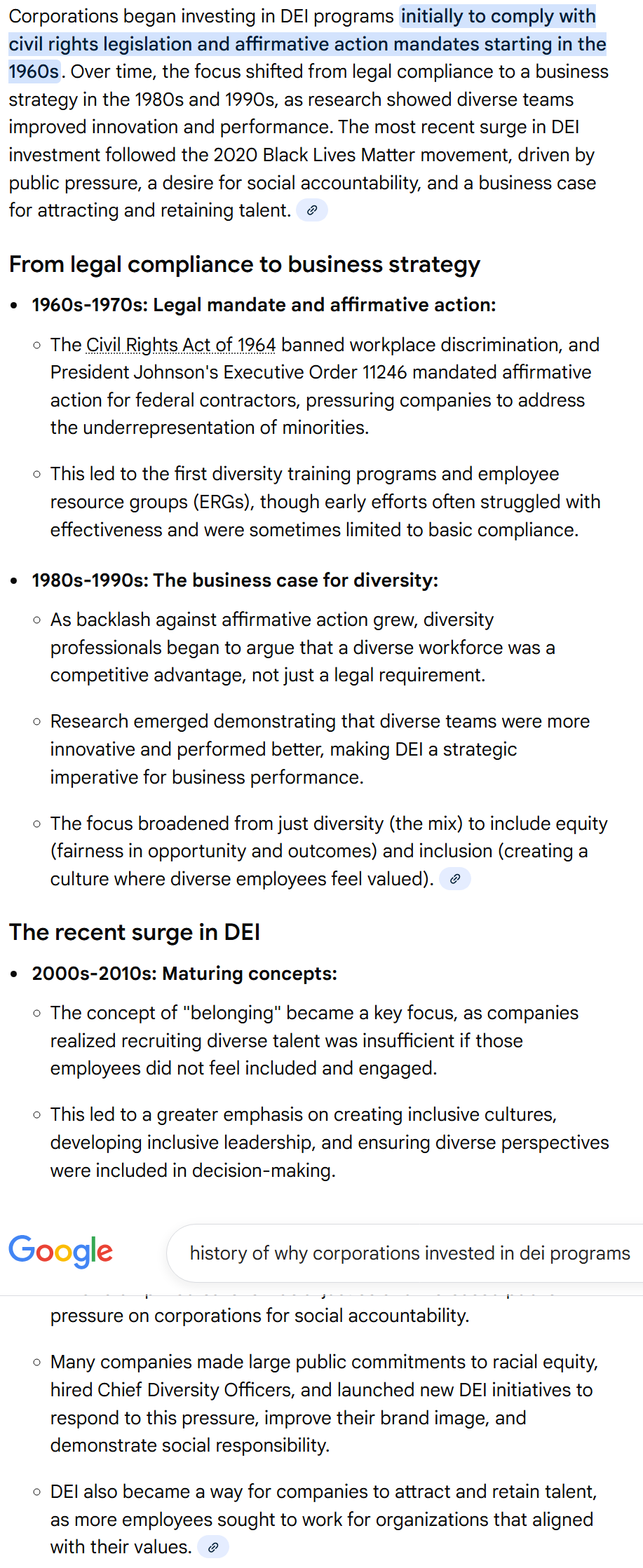

.https://urbanandracialequity.org/deitimeline/
As DEI programs grew in number, intensity, claims and impact, some individuals identified and objected to their perceived political agendas.
https://www.cnn.com/2025/01/22/us/dei-diversity-equity-inclusion-explained

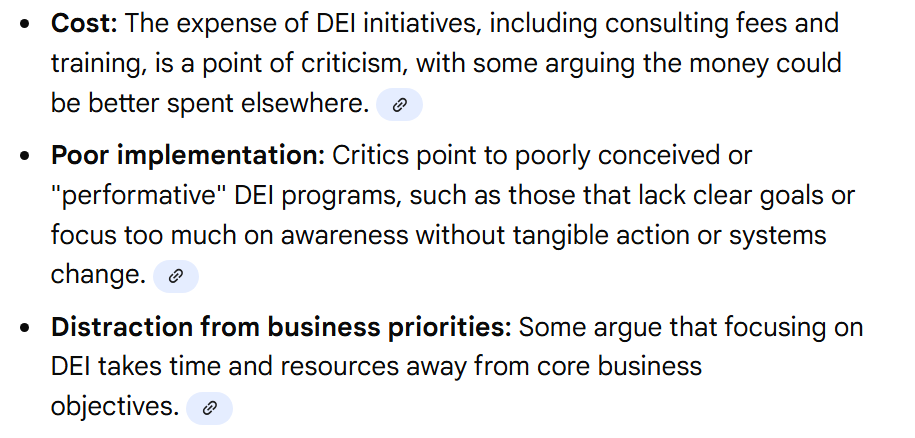
https://www.linkedin.com/pulse/most-common-arguments-against-dei-how-respond-felicity-menzies-ehwcc/
The common criticisms are not overly persuasive. The real issue is that this became part of the “culture wars”. Corporations didn’t invest in DEI because they suddenly became “woke”, they did so because DEI was beneficial for recruiting, retention and marketing. We live in a diverse world. Commercial enterprises recognized this and adjusted their activities accordingly.
Affirmative action is a step beyond “equal opportunity”. It says that our society systematically discriminates against minority groups and individuals and that we should take steps to offset this. This is a political issue that “Civility” chooses to not address in order to be actively nonpartisan.
Also missing above is the claim by postmodernists, professors, influencers, politicians and many progressives that society is inherently unfair, dominated by incumbent powerful forces, requiring revolutionary insight and reaction to overcome their power. Critics say that DEI is used as a political tool. Many disagree with the critics. “Civility” does not take a stance on this dispute. It is “above our paygrade”.
The presence of differences within a group, which can include race, gender, ethnicity, age, sexual orientation, religion, physical ability, and other aspects of social identity.
Embracing the differences everyone brings to the table, while acknowledging the benefit of the multiple perspectives, ideas, and solutions provided when individuals with different backgrounds, identities, and views collaborate and are heard.
The presence and participation of individuals with varying backgrounds and perspectives, including those who have been traditionally underrepresented.
Embracing the differences everyone brings to the table, whether those are someone’s race, age, ethnicity, religion, gender, sexual orientation, physical ability or other aspects of social identity.
Diversity ensures that a variety of perspectives are represented, whether they come from different races, genders, ages, sexual orientations, or cultural backgrounds.
https://www.cnn.com/2025/01/22/us/dei-diversity-equity-inclusion-explained

Creating an environment where people of all backgrounds can thrive and contribute to their fullest potential.
A sense of belonging in an environment where all feel welcomed, accepted, and respected.
Respecting everyone’s voice and creating a culture in which people from all backgrounds feel encouraged to express their ideas and perspectives.


Diversity and inclusion fit into the Civility value labelled “accepting” or “acceptance”. They are clear priority components of Civility.
Treating everyone fairly and providing opportunities for everyone to succeed, considering their traits, including resources, support, and potential accommodations to help those with disabilities thrive in the workplace.
Equal access to opportunities and fair, just, and impartial treatment.
Treating everyone fairly and providing equal opportunities.
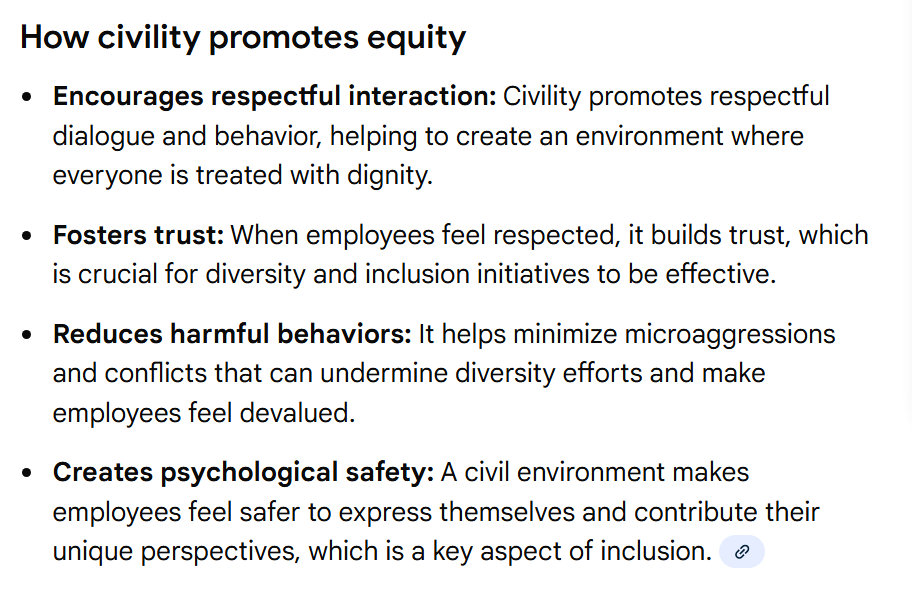
Equity is not exactly one of the 8 core values of Civility. Civility is based upon human dignity, respect for each other, responsibility, public-spiritedness, acceptance, intentionality, interactivity and constructiveness. Equity is a form of the value “fairness”. According to Jonathan Haidt, fairness is a widely held political value, but it is described in different ways by different people and considered much more important by liberals than by conservatives. “Civility” is not opposed to “equity”, but “equity” is not essential for the practice of “Civility”.
The highly influential human resources professional society SHRM removed “equity” from their historical support of DEI programming. Many opposed this change, arguing that equity is an essential component of DEI.
.https://www.inclusiongeeks.com/the-unexpected-consequence-of-workplace-civility/
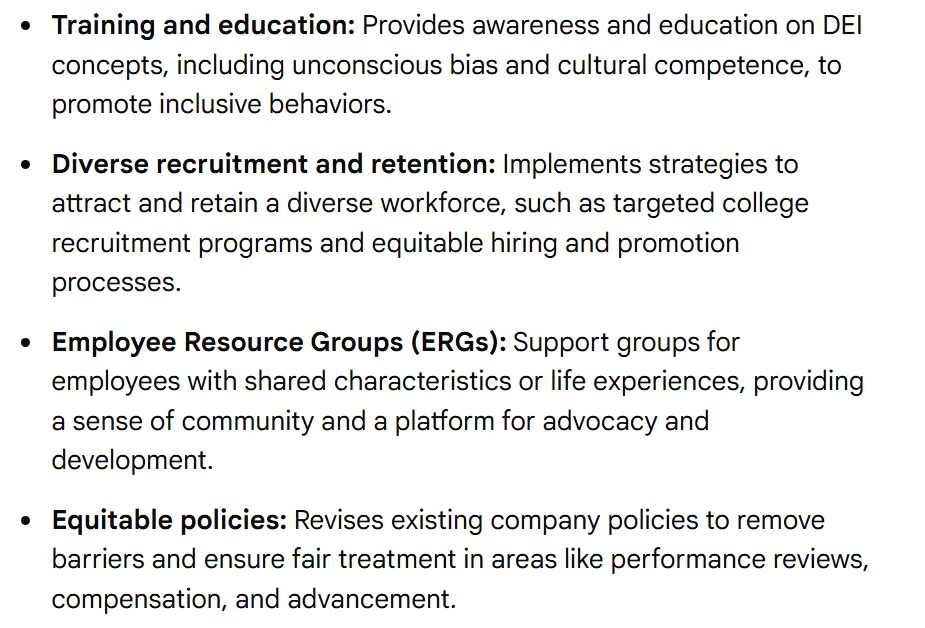

“Typical” DEI programs lean left. Civility, per se, does not support the more partisan views. “Unconscious bias” may be important, but it is not a civility value, behavior or skill. Civility does not take a stance on activist “equitable” HR processes. Every person has human dignity and is worthy of respect, check. Extra investment in mentorship and sponsorship of “underrepresented” employees is also optional from a Civility perspective.
https://www.shrm.org/executive-network/insights/impact-of-civility-on-organizational-success
Diversity and inclusion are part of the key Civility value of acceptance. Each person has human dignity and should be respected and accepted by others in their individuality. Civility is based upon commonly held values and promotes personal development and responsibility for being a good person, interacting with others and considering community needs. Like DEI, it promotes a subset of values to make our lives together safer, more pleasant and more effective. It focuses on how we interact with each other constructively, despite our differences.
Civility’s nonpartisan stance takes no position on the stronger claims of DEI providers or their critics. Civility recommends that they both engage in meaningful dialogue to better understand where they can work together and where they must accept that they have different social, political and moral perspectives that cannot be reconciled today. Civility actively opposes the angry outbursts, attacks, emotional appeals, insults, blaming, bullying, shaming, disrespect, blind loyalty, ignorance, prejudging, stonewalling and demonization sometimes seen in these interactions.

I wrote many posts during the Biden administration to counteract the recurring false claims about “runaway inflation”. Biden was certainly guilty of spending too much taxpayers’ money for economic recovery, infrastructure, green projects and student loan forgiveness. This aggravated the inflation rate, made it slower to fall and established expectations of higher long-term inflation. However, the primary drivers of inflation were the pandemic driven demand for physical goods after factories closed, loose monetary policy and bipartisan government spending to offset the pandemic. We all enjoyed 20 years of price stability before this. A little bumpiness after a pandemic driven global shutdown was not surprising.
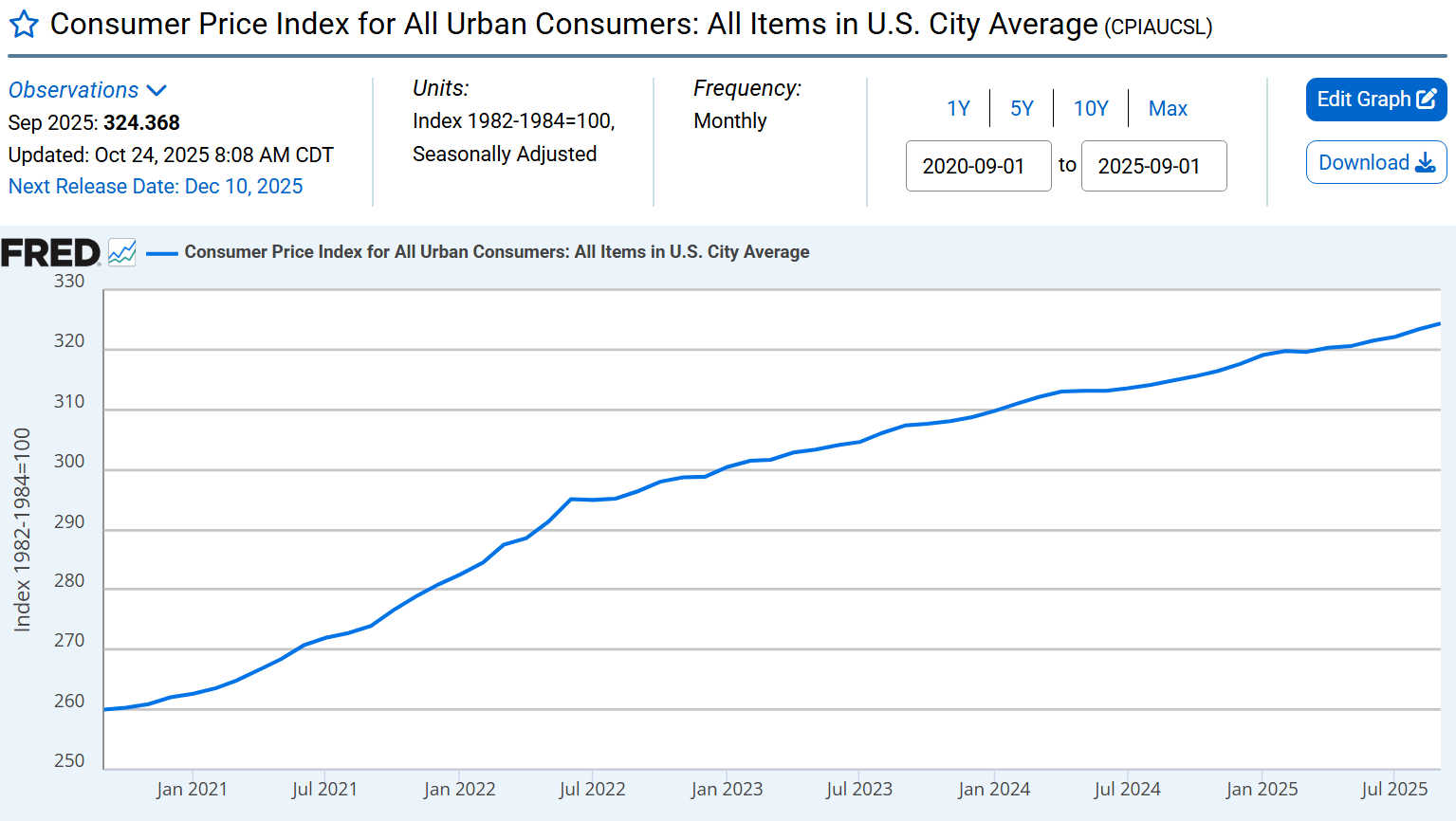
The climbing inflation rate broke in June, 2022 more than 3 years ago. It has not slowed under Trump’s stewardship.

The inflation rate has been in the 3% +/- range for the last 2 years. That means that prices, on average, continue to increase each year. 2% inflation was the normal rate for the prior 20 years. It (3%) seems to be a rate that is “non-accelerating”. Economic agents, including consumers, are able to ignore 2% inflation. It is immaterial, too small to really notice. 3% inflation is on the border of being “concerning”. Inflation can more easily accelerate from 3% to a concerning 5% or higher. President Trump can claim that he has maintained the Biden inflation reduction from 9% to 3% but he cannot claim that he has reduced prices, reduced inflation or made the cost of living more affordable.
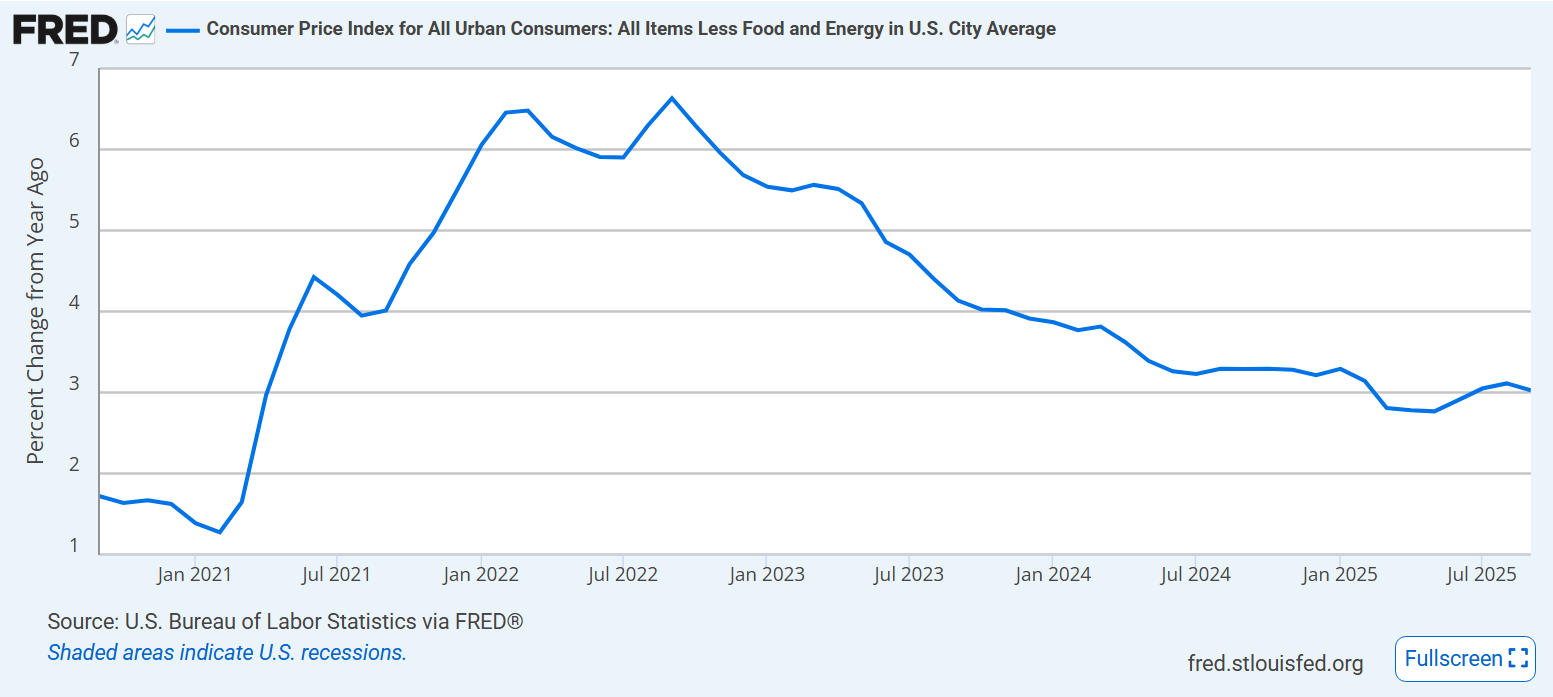
The core inflation rate, excluding the more volatile food and energy prices, has shown the same pattern. It peaked at 6.5% and declined to “about 3%” by June, 2024. It has moved down by one-quarter percent since then. Unfortunately, it seems to be flat. Trump has not moved it down.
President Trump has pursued 2 of these 12 areas but worked in the opposite way to increase inflation on most. He has pressured drug prices down. He has encouraged increased supply of traditional fossil fuels energy.
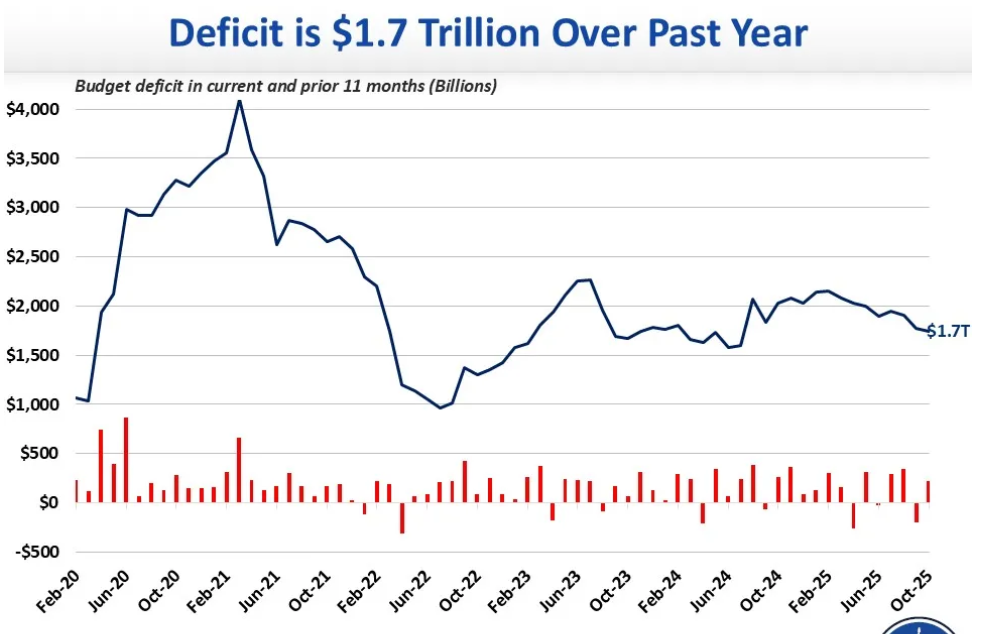
Federal budget deficit remains at an unsustainable $1.7T per year. Too much demand, not enough supply.

President Trump has been harassing Fed Chair Jerome Powell (who he appointed) to cut interest rates. The real, inflation adjusted, interest rate is currently 1%. Monetary policy is neutral or a little tight. President Trump encourages looser monetary policy which increases inflation. Not an inflation fighter.
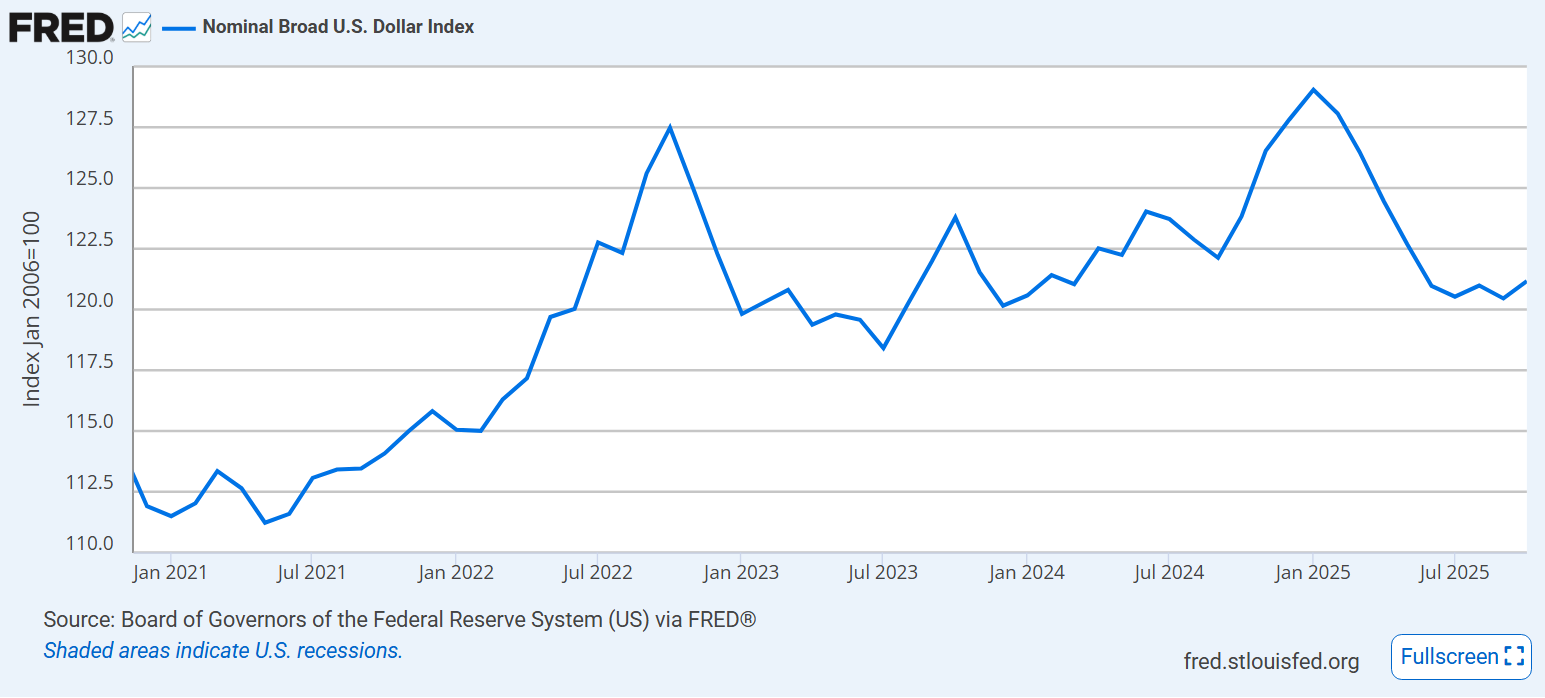
The US dollar has declined in value since Trump took office, making foreign purchases more expensive.

Housing prices peaked in 2022, drifted down by 5% in 2022 and have remained flat for the last two and a half years. Trump policies have no impact here.

3% medical inflation continues despite efforts to reduce drug prices.
https://www.cnn.com/2025/08/11/business/prescription-drug-prices-trump
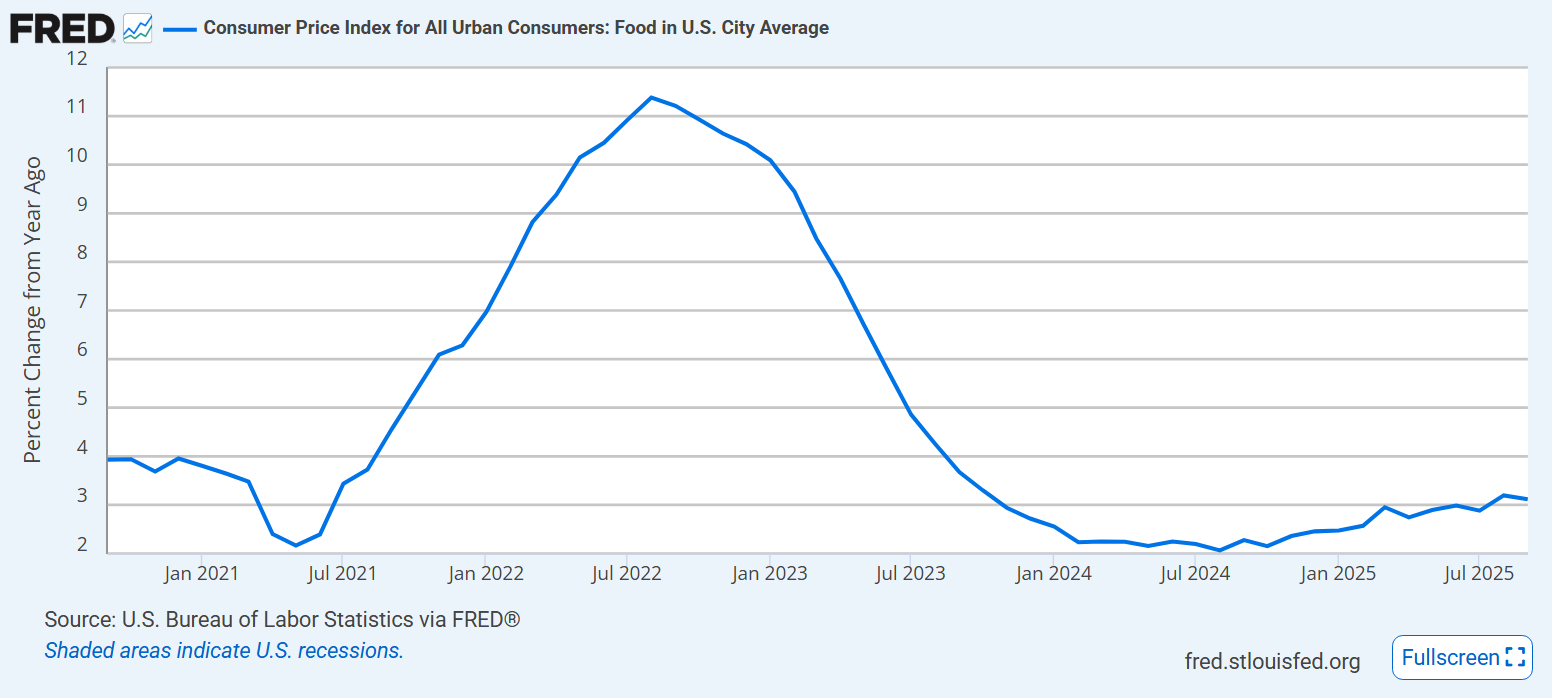
Food prices are more volatile than most. Inflation reached 11% in 2022. It approached 2% in 2024 but has since increased to 3% annually.

Energy prices jumped in the first 2 years of recovery from the pandemic. They have been flat since then. Trump has cancelled $8B worth of previously authorized energy projects.

Gas prices averaged $2.50/gallon before the pandemic, spiked up to $4.50/gallon during the recovery and settled back to $3.00/gallon for the last 3 years.


US consumers enjoyed immaterial average import tariff rates for the last 50 years. Trump has levied an 18% tax on imports, increasing costs for American consumers of the 14% of their consumption that is imported. The inflationary impact of the Trump tariffs has not yet been passed along to consumers. The frequent changes in tariff rates have led businesses to absorb costs in the short run. This will not continue.
Trump invests fewer resources in collecting taxes, reducing budget deficits and reducing inflation.
No support from Trump for increased labor union power.
https://en.wikipedia.org/wiki/Department_of_Government_Efficiency
https://www.cbsnews.com/news/trump-firings-watchdogs-inspectors-general-60-minutes/
Marginal results from the highly publicized DOGE efforts, despite very large opportunities for improvement.
A $10 billion-dollar permanent loss of output.
https://www.politifact.com/article/2025/oct/31/federal-shutdown-cost-economy-trump/
This recent tax change benefits individuals with enough income to pay federal income taxes, so improves affordability for an estimated 4 million people.
https://bipartisanpolicy.org/explainer/how-does-no-tax-on-tips-work-in-the-one-big-beautiful-bill/
This recent tax change exempts the overtime premium from federal taxation, so promotes affordability for hourly wage earners.
This provision of OBBA benefits low to moderate income households aged 65 and older. Many experts criticize its structure, but it clearly makes life more affordable for those who benefit from the change.
.https://taxfoundation.org/blog/obbba-senior-deduction-tax-relief/
Higher income taxpayers who itemize deductions received a significant federal tax reduction. This change does not benefit most low to moderate income households.
https://www.fidelity.com/learning-center/personal-finance/SALT-deduction-increase
The OBBBA increased tax credits to partially offset childcare costs. Critics considered these changes to be inadequate, noting that a “pro-family” political party should do better.
https://www.pewresearch.org/short-reads/2024/10/25/5-facts-about-child-care-costs-in-the-us/
https://tcf.org/content/commentary/the-top-five-trump-attacks-exacerbating-the-child-care-crisis/

Real, inflation adjusted, compensation is slowly recovering towards its pre-pandemic level.
Greatly reduced net immigration will tighten the labor supply in some industries, leading to higher compensation for some workers and higher prices for consumers. Economists have not reached a consensus on the net impact to the typical American.
https://www.cbsnews.com/news/trump-firings-watchdogs-inspectors-general-60-minutes/
Inflation continues at 3% annually. Real wages are keeping up with inflation. The memory of large price increases in 2022 that were never reversed seems to have reset inflation expectations from 1-2% to 3-4% per year. Some tax law changes in the One Big Beautiful Bill meaningfully cut taxes. Fiscal policy remains very loose and drives inflation. Monetary policy is considered neutral by most economists, but Trump is trying to loosen it, which risks further inflation. Trump’s “on/off” tariff negotiations have not yet driven large consumer price increases but have slowed business investments. Trump’s claims to have improved “affordability” rest on his specific actions that point in that direction, not on the economy wide statistics or large-scale policies that might significantly improve affordability for the “average” family.
Cultures exist because individuals need to be combined into communities. Without cultural norms, expectations, education, rewards, penalties and taboos there wouldn’t be any culture, community or civilization. Modern “Civility” is a set of values, skills and behaviors required to hold together a diverse, multicultural society like the United States. With the growing breakdown of historic western Christian culture, the US needs to actively embrace the values subset of “Civility” in order to make our political, social and economic worlds function effectively. This requires society – and its leaders and influencers – to clearly define select important aspirational values AND to define what is TABOO, poison, shunned, beyond the pale, unacceptable, and rejected by all. We focus on the Civility values.
Taboos are a critical dimension of a deeply held moral framework. Civility is based upon society agreeing that some values and their implications are “rock solid”. A few of the taboos above are mainly embraced by the left, but ALL 45 (!!!!!!) are embraced by a supermajority of citizens.
The “liberal” virtue of tolerance can be interpreted as THE value, an allegedly supreme value more important than all/any others. It must NOT be elevated to this dominant role. Tolerance is important but it is not controlling.
Hence, the underlying Civility values of human dignity, respect, acceptance, responsibility, public spiritedness, intentionality, interaction and positivity combine to form a successful common framework for all.
Taboos provide the negative (unacceptable) side of values. Civil people, irrespective of their political opinions, must reject these beliefs, opinions, actions and communications. TRUTH is the ultimate standard. We must all reject beliefs that conflict with the truth.
Avoiding/rejecting these taboos is not easy. We humans are still imperfect. We have to work and work and work to reach for the positive dimensions of the proposed subset of civility virtues, and avoid the taboos.

It’s difficult to describe the complete revolution in the behavioral sciences that occurred around 1956 as practitioners began to experience a “paradigm shift” 6 years before Thomas Kuhn’s wildly influential “philosophy of science” description of this phenomenon.
https://en.wikipedia.org/wiki/Paradigm_shift
Psychology was dominated by the behaviorist approach of BF Skinner. Only observable scientific results mattered. In second place were Freud’s insights into the differences between the conscious mind and the unconscious struggles between the id, ego and superego. Psychologists, social psychologists, communications theorists, philosophers, linguists, and computer scientists rejected BOTH the philosophy-free behaviorist approach and the philosophy-entangled Freudian approaches. The “cognitive scientists” recognized that the mind, mental, consciousness, rationality, perception, memory, attention, will, drives, social influences, choice, morality, feelings, fears, instincts and many other constructs were “real” in some sense. Non-material concepts and structures were important complements to the material and observable world.
They embraced the scientific method to investigate these concepts. They began to combine experimental psychology, information theory and biology. Their work led to many breakthroughs in theory and in practical advice for how humans behave, where they fail/struggle and what they can do to improve. These scientifically based theories have accumulated to the great benefit of mankind in the last 70 years.
I want to highlight the key cognitive science / behavioral science breakthroughs that are relevant to practicing civility. I will limit references to a single work for each category.
https://en.wikipedia.org/wiki/Cognitive_revolution
This above list only scratches the surface. Consider corporate organizational development, counseling, cognitive behavioral theory, college residential life, community development, neutral DEI programs, listening, peer counseling, couples counseling, co-dependency, adult children of alcoholics, anxiety, negotiating, facilitation skills, strategic planning, game theory, risk management, project management, influence, thinking hats, personality styles, talents, etc. The list is almost endless.
We now understand how humans behave. We are imperfect and amazing. We have the ability to balance the individual and the other, the individual and the community, the individual and spirit/God.
Civility is based upon the human dignity of each individual. The modern “cognitive science” approach embraces this insight. It offers tools to make our lives more effective, meaningful and satisfying. Civil individuals should invest time to master these subjects.

https://www.reaganfoundation.org/civility-and-democracy
https://www.bushcenter.org/publications/civility-is-our-eternal-project
https://www.projectcivility.com/
https://greatlakescivilityproject.com/the-civility-project/
https://livingroomconversations.org/
Political polarization, impact of media changes, declining trust in people and institutions, lower community and civic participation and a president who promotes a purely transactional world that ignores Civility. People are worried about democracy, progress, relations and the future. They sense that the decline in Civility is one of the problems and that restoring Civility might be an answer.
While journalists focus on politics and the media, others are focusing squarely on day-to-day Civility in our interactions with each other. People are frustrated with political and institutional leaders’ seeming inability to guide us to a better world. Like the little girl in “the Tale of the Starfish” they refuse to accept a declining world and commit to taking small, personal actions in the face of great challenges, exclaiming “Well, I made a difference for that one”!
https://www.thestarfishchange.org/starfish-tale
These individuals and groups are focusing on improving personal Civility in all walks of life, leaving politics and the media for later action. They believe that improved behavior alone has the potential to “move the needle”. So, they are improving their own Civil behavior, promoting, teaching, sharing and encouraging others. They are organizing and holding meetings to find partners. They are developing curriculum to share the core values of Civility that can be embraced without diving into politics or religion. They are highlighting the many existing tools for better communications, interpersonal relations, problem solving and personal growth available to those who wish to be more effective in using and modeling Civility. They are using the interactions of thinking, feeling and doing to create better enduring habits.
Civility has been caught up in the political and religious wars. It is often misunderstood as just politeness, overpromising an end to disagreements, soft, emotional, utopian, relabeled liberalism, a new righteousness or an apology for the status quo and vested interests. The new Civility proponents have much work to do in order to clearly communicate its core content AND what it is not.
The power of Civility lies in its networking effects. Individuals who develop Civility skills in parenting can use them at work. People who build Civility skills to be better political advocates can use them in their volunteer roles. Individuals who demonstrate Civility in any arena influence others, even if they don’t notice. People tend to mirror the behavior that they experience. Other individuals behave better, and a virtuous cycle continues. Our problem for the last 20-50 years is that we have been in a vicious cycle of less and less Civil behavior becoming more and more accepted.
We live in an age of radical individualism. We naturally first evaluate ideas and options from only our personal perspective. Civility provides many personal benefits. It provides even more important community benefits. Because it is about public behavior that influences others it is often about both the individual and others or the individual and the community. Civility depends on the values of human dignity, respect, acceptance, responsibility, intentionality, interactions, constructiveness and public spirit. Hence, it claims many positive results for the individual and the community.
Practicing Civility will improve your health, effectiveness, sense of belonging, personal growth and leadership skills.
Civility is founded on human dignity, respect and empathy. Differences are expected. Individuals seek to understand others. They focus on people, process, interactions and results, not just winning. They employ tools to find acceptable solutions. They refuse to personalize differences. This approach reduces the chance of differences or disagreements escalating to become conflicts or crises. The habit of resolving or accepting differences creates an atmosphere that expects reasonable interactions and results.
Civility reduces the frequency and intensity of conflict. It minimizes the direct and indirect experience of personal attacks. Individuals are affirmed by each other, feeling respect and developing a stronger self-image. Others have higher morale, so they are less likely to fall “below the line” in their behaviors. Social norms guide positive behavior. Individuals expect that people, process and results will be good, or at least acceptable. They learn to depersonalize interactions, reframe conversations to avoid righteous religious or political issues and build upon their positive experiences.
Positive experiences and expectations reduce stress, tension, fear, anger and anxiety. They encourage engagement and issue resolution. They reduce the risk of burnout.
People in civil environments experience respect, acceptance, belonging, positivity, trust and good relationships. Civility leads to high achievement by developing communications, problem solving, relationship and influence skills. By applying the values of responsibility and intentionality, individuals improve their decision-making skills, especially those that require interaction, creativity and wisdom to manage complexity, uncertainty and differences. These experiences help people to become centered and composed.
The process emphasis of Civility supports personal growth. Individuals define goals, separate means and ends, welcome feedback, bridge differences and expect to change when they learn. Personal growth can cause anxiety at first, but extended experience provides a way to embrace change and expect positive personal and process results. Finally, Civility requires individuals to make choices about upholding values like human dignity, respect, responsibility, leadership and the public good. Individuals who define and strive to consistently live by moral values build justifiable self-assurance (#10).
When you demonstrate communications, problem solving, interpersonal, personal and change management skills, others notice. When you apply the virtues of respect and acceptance, responsibility and intentionality, positivity and interaction, others notice. They notice your personal, work and civic realms. Your personal brand value grows. They trust, respect and like you. They expect you to work well with others and to keep your commitments. They provide professional and leadership opportunities because you are effective in the modern complex, team environment.
Those who practice respect, acceptance and interactive problem-solving prime others to consider their views. Self-confident, centered, composed, responsible, intentional people are seen as natural leaders. Individuals who have solid interpersonal and communications skills, especially active listening, encourage others to work with them. The experience of mutual respect and creative problem resolution in difficult situations leads others to prefer to work with their highly Civil colleagues.
Civility makes building relationships a top priority. People, process and results. Civil people demonstrate empathy and self-regulation. They have good communications and interpersonal skills. They value respect and acceptance, responsibility and intentionality, positivity and interactions. Experiencing the give and take of shared decision-making or problem-solving benefits all parties.
The Civility values of interaction/dialogue, mutual respect and public spiritedness combine to create and enhance communities. They create shared purposes, meanings, interests, history and the experience of managing difficult decisions. Belonging improves with this stronger sense of community.
The Civility values of human dignity, respect and acceptance together with empathetic behavior contribute to forming and sustaining a kind, compassionate community. Individuals are affirmed, feel safe and belong.
When Civility is actively thriving, the overall environment is Civil or harmonious. Morale, well-being and relationships improve. Belonging flourishes.
The same forces that create belonging, apply to inclusion. True belonging, based on acceptance and human dignity, is for everyone, despite whatever differences they may have. A “big tent” welcomes all. The underlying values also make individuals feel respected, valued and affirmed even when they are different or hold different views.
Interacting with mutual respect using modern behavioral science tools leads to understanding differences of interests, perspectives, goals, beliefs, preferences and values. Understanding helps to avoid conflicts. It allows us to disagree without being disagreeable. It encourages us to find creative, compromise solutions. It helps us to identity where we do have shared views. By truly accepting differences we include others.
Civil people expect to encounter and manage differences. They willingly engage in group decision-making and problem-solving processes. They respect and empathize with others. They depersonalize crucial conversations. They identify common interests. They learn that they can discuss, trade, negotiate, advocate and influence civilly even when the stakes are high. They learn to accept and embrace compromise and avoid polarizing arguments about political and religious topics.
Civil people are supported by a civil environment of belonging and inclusion where others are mostly stable too. They practice the values of responsibility and intentionality. They know that they must make choices. They learn that some differences cannot be resolved and that they have personal growth opportunities. There is a virtuous cycle of self-control, with the experience of building greater confidence and reserves.
Anyone who has achieved 3 Happiness, built a 4 Good Reputation, become 5 Influential, created 6 Better Relationships and become 9 Emotionally Composed should be satisfied with life. If they are also succeeding in life and career based on developing and applying the key behavioral skills, they are further blessed. If they have been able to consistently follow their values, including public-spiritedness, they should be proud. If they have participated in group problem-solving and decision-making to shape their communities at any level, they know they have achieved something important.
Three of the five key Civility behaviors apply: empathizing with others, building relationships and self-regulation. The individual is required to interact with others, so he or she might as well be good at it. Self-knowledge is required for interacting effectively with others. Radical selfishness is simply not an option.
Personal management and interpersonal skills help people to insightfully look inward and outward to balance both worlds.
Six of the Civility values apply: recognizing the human dignity of others, respecting others, accepting others, interacting with others, being constructive in spite of others and considering the common good with others.
Civility does not elevate “others” or communities above the individual, but it recognizes them as valid agents in life’s drama. They are worthy of serious, intentional, responsible consideration. Civil individuals happily move beyond a state of self-absorption to engage with life’s full possibilities.
Civility begins with the insight that we each share a common human dignity. We each have equal worth. This is an essential view of reality and human potential. It cannot be disputed. The Civility values, behaviors and skills are derived from this base.
It means that we each have an infinite worth and value. We have humanity in common and the “common good”, relationships and community truly matter. The views and interests of others matter and must be considered. Individuals have inalienable rights of protection from others, groups, governments and society. Minority interests should be considered and protected. Individuals must be treated as “ends”, never just as means to ends per Immanuel Kant. Groups and ideologies must never be more important than actual people. Civility processes protect these individual rights while respecting the need for groups, communities, governments and societies to make imperfect decisions for the common good.
When individuals practice the Civility values, they are signaling that they trust others. Displaying respect and acceptance indicates trust in another person. Investing in intentional, responsible, interactive and constructive actions says that an individual believes that the others are worthy of investment and implicitly trustworthy. Considering the common good or public interest also shows a belief that others should generally be trusted.
Trust is often given altruistically, at least at first. Modern game theory says this is the optimal first step in typical two player games. It is also offered with an expectation that it will be reciprocated. Trusters hope and expect that they will be trusted back.
Trusters also believe that they will indirectly benefit from nudging others into creating more effective teams, groups and communities. These groups are more effective due to collaboration and deliver better results. They reduce the costs and risks of making decisions. They create a positive environment of lower stress and conflict.
Civility embraces positivity and a constructive approach to conflict management, negotiations, problem-solving, decision-making and politics. This value is supported ethically, tactically and strategically; NOT naively.
Responsibility and intentionality are adopted with the expectation that they will be at least partially reciprocated by others. Using a constructive approach to interactions helps to influence others to mirror this good behavior and engage positively.
Civility values an interactive and mutually respectful approach to the broad topic of problem-solving. Faith in interaction is based on the values of human dignity and respect. It is helped by empathetic behaviors. It is greatly facilitated by positive and constructive attitudes, thoughts and actions. This another area where a value (constructiveness) is first offered altruistically with the hope and expectation that it will be partially reciprocated.
Civiliteers hope that civil discourse will arise and become the norm. They hope that a positive environment will result with less stress and conflict. They expect better decision-making, especially when treating complex issues with real differences of views and interests. They believe that better decisions will arise from the recognition of differences, identification of the common good, creative solutions and constructive compromises that are “good enough”.
Civility promotes 9 values. It is an ethical system that is not dependent upon any specific philosophy, religion or political viewpoint. It is consistent with “classical liberalism” that was developed in the 1700’s in England, Europe and the United States.
It is a subset of a complete moral framework. It is fully adequate to support our day-to-day lives together at work, at play and in government. It attempts to balance the inherent conflicts between the self-aware individual and others and communities.
Individuals commit to this set of values because they believe they are in some sense “true”, morally right, adequate and necessary for society and politics. They hope that their imperfect application of these values will trigger others to make the same commitment. They understand that all humans are imperfect and that the serious pursuit of 9 values is much better than no pursuit at all. They adopt these values and invest in learning behavioral science skills and building habits because they want to do the right thing for future generations and ultimate values.
Civility offers direct and indirect benefits to individuals. In the end, it is both a practical and a moral choice. We live in a “secular age” where the received religious views can be challenged by well-meaning people. My belief is that our “classical liberal” democracy requires the support of a Civility subset of values. I also believe that our secular society requires this same subset of values to facilitate the interactions and transactions of modern life. I believe that almost all individuals can justify Civility values, behaviors and skill development on a practical basis alone. I hope that the 15 benefits described above will help everyone to make the right choice.


