This leading mainline protestant denomination lost one-half of its membership between 2000 and 2022 following a slightly smaller decline in the previous 20 years.
The university, media, entertainment elite followed the “new left” political views from existentialism to postmodernism, making nonbelief a socially acceptable or even preferred position for the growing college educated professional class.
The mainline seminaries generally embraced the individualism, idealism, social justice, subjectivism, ecumenicism, personal growth, literary criticism, logical positivism and other trends of the post-WW II era.
Prosperity, social security, and longer lives combined to make people more self-sufficient, able to (temporarily) ignore the usual claims of mortality.
Expanded government services replaced the role of the church in education, health care, counselling, youth activities and social services.
The “Reagan Revolution” and neo-liberalism rebuilt a rationale for unfettered “laissez faire” capitalism and undercut the moral authority of the liberal church and liberal politics. Radical individualism, commercialism and libertarianism reestablished their credibility in a tolerant world.
The “liberal” positions on civil rights, women’s rights, social security/welfare, gender identity, differently abled, immigrants, ecumenism, globalism, and environmentalism prevailed. Presbyterian churches generally supported these social changes. These cultural changes generated a backlash with polarizing political consequences. Congregations lost members because they were either “too liberal” or “too conservative”.
Alternatives to mainline Protestant creedal denominations grew. Southern, rural and northern reactions to racial integration, busing and affirmative action generated white, socially traditional churches and schools.
Non-denominational, non-creedal churches built upon racial, cultural and political factors, including fundamentalism and the prosperity gospel.
The Roman Catholic church became more liberal intellectually, allowing some individuals to join or retain their membership even when they had significant disagreements.
Entrepreneurial megachurches evolved to provide “full services” to a transactional culture without the constraints of denominational creeds, seminaries or hierarchies. They leveraged technology, marketing, evangelizing, contemporary music, culture, individualism and economies of scale very effectively while mainline churches disdainfully called them merely “attractional”.
Previously “alternative” religions such as Pentecostalism, Mormonism and Asian religions became familiar and real options.
The polarization of religious and political views deepened beginning with the 1973 “Roe vs. Wade” Supreme Court abortion ruling and accelerated with Newt Gingrich’s leadership of the Republican Party in 1992. Individuals moved left or right, leaving the conservative theology plus liberal social justice combination in many Presbyterian churches as a strange combination, a duckbilled platypus option.
Like most mainline churches, PCUSA congregations mostly “doubled down” on their historical success and turned inward in the face of adversity. They reinforced their decisions on worship, social issues, congregational care, mission, and outreach. They did more of the same.
PCUSA churches turned to their historical strengths in thinking, theology, rational steps as the world discounted this dimension and increasingly turned towards feelings and action.
PCUSA churches doubled down on the “field of dreams” strategy. Build it and they will come. Preach it … Market it … Program it … Modernize it … Serve it … Outreach it … Church planting had some success, but existing churches, aside from a minority of very large ones, found that economically rational investments were inadequate or insufficient to stem the tide of the “megatrends” changing society, especially among the younger generations.
PCUSA churches invested in contemporary worship services, modernized and inspirational youth programs, partnerships, service projects, retreats, and mission strategies without major gains in membership or active church participation.
PCUSA churches maintained their commitments to national and international mission projects, social justice and missionaries, including a commitment to mission programs as a significant part of the church budget.
PCUSA churches maintained their collaborative governance model where congregational elders share power with the senior pastor and the Presbytery. This provided an inherent status quo bias to decision-making, preserving historical programs, retaining donors and limiting any major changes or experimentation.
After the 1960’s, the US continued to move towards a radical individualism with less community participation and trust in institutions.
The growing partnership between evangelical, fundamentalist Christian churches and the Republican Party further aligned the political and religious dimensions of life. Young adults increasingly bought into a “left versus right” perspective on political and religious views.
PCUSA churches, national leadership and seminaries embraced ecumenicism within Christianity and across faith communities, softening the distinctions between denominations in an increasingly brand sensitive world.
PCUSA churches, national leadership and seminaries failed to address the threats of existentialism, new left, postmodernism, skepticism, subjectivism, relativism, scientism, atheism, agnosticism, libertarianism, commercialism, secularism, scientism, logical positivism, utopianism, and radical environmentalism. A faith in “progress” remained.
PCUSA churches remained focused on their middle class and professional class congregations. Sometimes partnering with inner city churches and neighborhoods or immigrants. Sometimes sponsoring and supporting new ethnic churches.
PCUSA churches and national leadership generally took modestly “liberal” positions on cultural issues. Human rights, civil/racial rights, LGBTQ rights, women’s rights, abortion choice, gay marriage. Conservative members left.
PCUSA churches preserved membership numbers by not requiring financial, worship, volunteer, service, participation or other active engagement.
PCUSA churches have continued to discount the value of marketing, branding, strategy, stewardship, technology, business, process, administration as inherently less valuable than the ordained ministry program functions.
Recovery Strategies
Remain welcoming and open to former members or others who have a limited social need to be affiliated with a church for key life moments.
Develop and promote a “Christian Social Teaching” in parallel with “Catholic Social Teaching” to address the core issues of capitalism and power.
Invest in organizational “best practices” for strategy, marketing, technology, human resources, stewardship, finance and administration.
Outline key functional areas. Prioritize investments based upon expected cost/benefit ratios. Triage. Eliminate non-value-added programs and initiatives. Measure results. Hold staff, elders and volunteers accountable for results.
Invest in marketing directly and indirectly through service and outreach activities.
Consider minimal sustainable program sizes and economies of scale. Eliminate unsustainable programs. Partner with other churches.
Take clear moderate positions on social issues and communicate them. Welcome diverse opinions on issues that are not essential faith issues.
Clarify the role of individual creeds as definitive/determining or inspirational. Invest in deep understanding and commitment to the essential ones.
Reconsider historical distinctions within Christianity. Evaluate doctrinal precision/scholasticism versus effectiveness in attracting, retaining and engaging church members. What do Catholicism/liturgical, Pentecostal/spiritual and Fundamentalist/practical/local have to offer?
Strategically prioritize the resource investments in worship, spiritual growth, mission/service, outreach/evangelism, congregational care and stewardship.
Actively invest in programs and missions to oppose atheism.
Promote representative democracy and civility.
Actively create and promote Christian church partnerships
Outline and communicate the concept, benefits and requirements of the “missional church”.
Offer programs, small groups and pastoral care to emphasize the critical role of discipleship for supporting the church, it’s members and missions.
Reach out to struggling churches to provide services and transition assistance.
Ruthlessly review all communications to make them accessible and welcoming to individuals with no church background.
Review and revise all programs and ministries to first meet the needs of young adults.
Review and revise all programs and ministries to ensure they meet the needs of all other diversity dimensions.
Invest in outreach forums that allow individuals to learn about the church in a neutral environment.
Actively address the shortcomings of radical individualism in worship, activities and communications.
Review and adjust governance structures to ensure that strategies and programs can be defined, and their success measured.
Consider the impact on worship, growth, care, service, outreach and stewardship for each decision.
Communicate God’s eternal purpose and promise for men in terms that all can understand.
Emphasize the collective, community nature of the congregation as the only way to prepare for heaven.
Invest in Christian apologetics in “A Secular Age”. The alternate world view is now much clearer. Hold it accountable.
Invest in strategic planning facilitation, including the translation of mission, vision and values into strategic priorities and programs amongst worship, care, service, spiritual growth, outreach and stewardship.
Invest in program and project planning.
Invest in measurement systems to evaluate performance.
James K.A. Smith, Calvin College philosopher outlines and interprets Oxford and McGill University philosopher Charles Taylor’s 2007 award winning 900-page thriller “A Secular Age”.
We all live within a paradigm, story, framework, worldview, roadmap, myth, blueprint, theology, philosophy, expectations, language, culture and beliefs. This is an unavoidable human condition. We are all shaped by a story. Some are aware of parts of their story, most are not. Some investigate, challenge, wrestle with and shape their story, most do not. Most people today hold a fundamentalist religious (right), a fundamentalist atheist, materialist, naturalist, post-modernist (left) or an agnostic, skeptical, secular (middle) world view. Taylor argues that the “Secular Age” is here and shapes everything, like it or not. We are all skeptical about belief. We all, at least vaguely, grasp for transcendence. Some look to transcendence of their own making in creativity, authenticity and personal development (be the best that you can be). Others turn outward towards spirituality in its many forms. We are inevitably squeezed between doubt and belief.
Taylor outlines how we have moved from 1500 when a “certain” belief in God was universal to 2000 when a similarly grounded “certain” belief in God is almost unimaginable for an educated citizen. He argues that we ought to become familiar with the underlying assumptions of “A Secular Age”, including its propositions that make it attractive and insightful. He argues, within the framework of “A Secular Age”, that belief in God in the Christian format can be even more attractive today for those who understand our human nature and our human condition (in society). A true, flourishing, meaningful life remains our birth right, but we need to understand our situation to take advantage of it.
Preface
Taylor is a cultural anthropologist. What does this culture believe, even if it does not consciously know what it believes or where the beliefs came from? For Christians, this is mission work just as challenging as in the nineteenth century. The natives are not looking for answers to questions about God or heaven. They are very busy creating their own lives of “significance”. The religious questions, creeds and wars of the past are irrelevant, nearly inconceivable. And yet … the natives report an emptiness, a flatness, a sameness, a treadmill, anxiety, a lack of fulfilment. They report glimpses of satisfaction, comfort, adequacy, beauty, love, eternity, nature, meaning, purpose, community and wish they had more. The existentialists pointed to dread, angst, ennui and emptiness as characteristics of post-modernity. Taylor speaks of a “malaise”. Some find satisfactions, in spite of the lack of a solid story with breadth and depth. The “Secular Age” story is inadequate. Something is missing. We feel it, sense it, intuit it, dream it, seek it. [I’m purposely including run-on sentences, and “stream of consciousness” language in an attempt to communicate religious and philosophical insights without trying to be precise and formal. I’m an amateur. This is my best approach].
The “Secular Age” precludes questions about the divine, eternal, universal, deeply meaningful and transcendent. It supports a life of activities, growth, process, expression, action, technique, skills, technology, experience and consuming. This world is still “haunted” by the human desire for connection with something larger and the occasional (undesired) intrusion of that “something larger” into our daily life.
Taylor calls this world view “exclusive humanism”. Smith’s glossary defines it as “a worldview or social imaginary that is able to account for meaning and significance without any appeal to the divine or transcendence.”
We mostly live in an “immanent frame”: “a constructed social space that frames our lives entirely within a natural (rather than supernatural) order. It is the circumscribed space of the modern social imaginary that precludes transcendence.”
We are all influenced by the largely unspoken cultural norms and beliefs that shape our views. We need to understand them and where they came from. We need to understand them, their implications and their limits. We need philosophers to help us! This applies to individuals and to the church, which has also been shaped by its cultural context for 500 years.
Smith, like Taylor, postmodernists and romantics, points to artists as being the most helpful in describing our situation in ways that fully capture our difficult situation. We have lost our certainty about any beliefs, principles or institutions. We try to work with the materials that remain. We get frustrated. We try again. We get anxious. We have some success. But even our “success” is not deeply satisfying. We want a deeply satisfying life. We’re willing to learn, invest, practice, experiment, partner, do whatever it takes. We’re seekers. But the seeking gets old when it does not deliver. Many artists of the last century offer this portrait of our situation. The best artists honestly communicate the difficulty of modern and postmodern life. Some conclude with despair. Others offer glimpses of hope.
Introduction: Inhabiting a Cross-Pressured Secular Age
Taylor and Smith dispense with the fundamentalisms of the right and left. Each embraces an all-encompassing, bullet proof certainty that is difficult to imagine or support for anyone who has lived in the emerging, global, changing, reversing, subjective, relative, skeptical world of the last 2 centuries. Hegel argued that “God is dead” in 1882. Kierkegaard outlined the necessity of a “leap of faith” in 1846. Taylor and Smith discount the aggressive atheists’ confidence and philosophical naivete: Dawkins, Dennet, Harris and Hitchens. “Chronological snobbery and epistemological confidence”. [“epistemological” means “theory of knowledge”. How do we know what we know? Philosophers love this stuff. Much of their work is incomprehensible. They have reached few firm conclusions. Nonetheless, epistemology really matters. How do we “know” that something is “true”? It’s not a trivial topic.]
That leaves us in the center, sort of. We cannot be fully certain. We know that simplistic, magical solutions are suspect. We doubt everything. We see many conflicting “answers”. This further undermines our confidence in any one answer and the pursuit of an answer. “Faith is fraught; confession is haunted by an inescapable sense of contestability. We don’t believe in doubting; we believe while doubting. We’re all Thomas now”.
We want certainty. We cannot have the old kind of certainty. Atomism, no. Euclidean geometry, no. Mathematical certainty, Godel says no. Light is a wave, light is a particle, light is both. An atom is clearly defined, no, quantum uncertainty. We cannot measure precisely at this level (Heisenberg). An atom is the smallest thing. Protons, neutrons and electrons. Subatomic particles. String theory. Fixed space, time and background ether, no. Science advances relentlessly, culture does not. Culture, society, civilization, civics, economics, trade, human rights and globalism advance continuously; sorry. Philosophy advances to “scientific” logical positivism, so called analytical philosophy and then discards it. The universe is eternal; well, perhaps created. The universe is expanding or collapsing. The universe is fully observable, or mostly dark matter and dark energy. Utopian socialism, Marxism, national socialism, fascism, totalitarianism, liberal democracy; all are imperfect.
Smith notes that “secular” novelists focus on our encounters with death and mortality. “Questions in the orbit of death and extinction inevitably raise questions about eternity and the afterlife, till pretty soon you find yourself bumping up against questions about God and divinity.” Many do not write stories with simple endings about miraculous conversions or mystical encounters with “spirituality”. They face the challenges of belief, doubt and finding a religion that addresses the situation. “What’s the point of faith unless you and it are serious – seriously serious – unless your religion fills, directs, stains and sustains your life?” “There seems little point in a religion which is merely a weekly social event .., as opposed to one which tells you exactly how to live”. Authenticity matters. Simplistic “either/or” is replaced with complex “both/and”. Some questions are not easily or perfectly answered. The existential philosophers’ focus on the unavoidable challenges of postmodern life are addressed, imperfectly, but seriously.
These novelists recount how individuals in “A Secular Age” bump into transcendence. Religious art, paintings and music, often touch something inside of people, even if they have no religious background. Many religious stories effectively communicate morality and timeless truths without being necessarily grounded in religion. Their characters often reject dogmatism in religion, science and atheism while embracing the natural human desire to explain their world, give it purpose, define actions that build community or address needs.
On the other hand, “believers” in “A Secular Age” must always wrestle with doubt. Rival stories exist. Non-belief is possible. My story does not address all questions perfectly so maybe it is wrong. Human minds cannot capture everything (or much) about an awesome God who creates, shares and illuminates transcendence. Fundamentalists on both sides have supported an “either/or” “science versus religion” story that undercuts any blended or imperfect understanding from the middle. Is my belief justified or is this another “God of the gaps” answer that will be undermined some day? The growth of religious denominations, the politicization of churches, and in person familiarity with many different religious views reinforces the old argument “and tell me again why your religion is the one right one and all others are wrong”. Now that cultures, nations, families and classes no longer make religious choices for us, each individual is forced to make his or her own choices within a context of so many life choices, which also seem to have “no right answer”. Evolutionary psychology offers a “scientific” way to explain away religion as an accidental byproduct of evolution. Expressive individualism celebrates the individual and undermines both community and transcendence.
“Emerging from the Romantic expressivism of the late eighteenth century, it is an understanding ‘that each of us has his/her own way of realizing our humanity,’ and that we are called to live that out (‘express it’) rather than conform to models imposed by others (especially institutions).”
Once the background story of “A Secular Age” arrives, doubt and skepticism remain. Individuals must deal with the uncertainty undercurrent throughout their lives. This becomes a “given” in modern/postmodern life.
Taylor and Smith argue that everyone in “A Secular Age” is weighted by doubts about the validity or certainty of ANY religious or philosophical world view AND subject to internal feelings and experiences that point towards some universal form of transcendence. There is something else beyond the self-contemplating self and the material environment. Exactly what is unclear. Human descriptions, theories, institutions and practices are not “fully adequate”. They may even be worthless. How do I manage this question? How do I start? How will I know what is a good path and conclusion? Who do I turn to for help? Is this a priority given all of the other challenges in life? If I ignore it, will it go away? What’s the worst thing that could happen if I ignore it?
“Why was it virtually impossible not to believe in God in, say, 1500 in our Western society, while in 2000 many of us find this not only easy, but even inescapable?”
“Taylor is concerned with the ‘conditions of belief’ – a shift in the plausibility conditions that make something believable or unbelievable … these questions are not concerned with what people believe as much as with what is believable.”
Taylor does not indulge in the mixed statistical support for the “secularization theory” that predicts that there is always a decline in religious belief and participation as societies become more modern, with higher incomes, technology, education and secular experiences.
Secular1 distinguishes between sacred and non-sacred/secular vocations.
Secular2 contrasts a nonsectarian, neutral, areligious space for secular institutions with that offered by specifically religious institutions. “Secularization theory” predicts that the experience of secular institutions in modern societies eliminates the demand for religious institutions. Secularism is a political belief that political spaces ought to be conducted on the basis of universal, neutral rationality and exclude any religious elements.
Secular3 refers to a society where religious belief in God is merely one option among many. This the “secular age” in the title. We live in “A Secular Age”. Religious belief is an option. No religious belief is an option. Atheism and agnosticism are options. Primitive, personal and esoteric faiths are options. A Secular3 world allows “exclusive humanism” to be an option. The individual can be truly alone, without any necessary connection with society, nature or supernature. “no final goals beyond human flourishing, nor any allegiance to anything else beyond this flourishing.” A radical individualism has become normalized and accepted as a life option.
In “A Secular Age”, we have moved beyond the tight logical proofs of scholasticism. Philosophers and theologians have rejected this approach as an overly narrow one, possibly appropriate for a pre-modern age, misapplied during the modern age of the enlightenment and the scientific revolution and irrelevant today. Taylor welcomes this advance and change in how we consider “truth”. Like many apologists today, he embraces the “best available theory” or “best available evidence” standards for evaluating “truth claims”. He argues that “stories” are just as valuable as logical arguments.
Taylor disputes the “subtraction story” that enlightenment, progress and maturity automatically lead to a rational, neutral, scientific secular world which allows religion to be removed. The “progress” of science in “explaining” the world reduces the scope for religion and points to a time where science explains all and there is no need for religion. Every advance in natural explanation reduces the need for supernatural explanation. This is faulty logic, but an effective story. Scientists are the heroes. Religion is the villain. We can see how the story will end.
Taylor debunks this story. Then he invests time in explaining how the positive attractiveness of the “exclusive humanism” story has developed. It wins as religion is discredited. But it fills some of the human needs for a “theory of life”. Taylor helps the reader to understand and feel what it is like to live in “A Secular Age”. The possibilities, attractions, doubts, anxieties and unmet needs. He is not an old-fashioned critic of modernity or post-modernity, longing to return to an earlier era of certainty and bliss. He seeks to describe where we really are, as an effective cultural anthropologist. It is only from this position of understanding that religious views can be explained, justified and promoted effectively. He will use logic to analyze, debunk and promote. He will also use narratives or stories to knit together components so that various alternatives can really be considered. The default stories of “A Secular Age” assume away any possibility of a supernatural or transcendent dimension, aspect or experience in life. We need to use both logic and stories to communicate and evaluate the options.
Reforming Belief: The Secular as Modern Accomplishment
Contrast the assumed worlds of 1500 and 2000. What are the critical assumptions underlying each one? Not issues, policies and philosophies that are actively debated. Try to imagine the “felt life” as it is lived each day. The background of 1500 made atheism unthinkable. The background in 2000 makes “certain” belief in God, Christ, miracles and the supernatural very unusual for an educated adult. In 2000, a self-contained “expressive individualism”, an exclusive humanism, that attempts to provide meaning and a guide for life is possible.
Three interlocking concepts or underlying beliefs in 1500 made unbelief rare. The natural world was seen as something that pointed beyond itself to its creator. It was not self-sufficiently operating by itself. The “cosmos” was naturally integrated and interactive. Nature and supernature were intimately connected through creation and ultimate purpose.
Society was viewed as a whole. The parts (religion, society, politics, economics, technology) fit together and reinforced a sense of an organic whole, something that had been created with a purpose. That creation and continuity was self-evident. Individuals filled social roles. An individual outside of society was inconceivable.
Connections between individuals and society, between nature and heaven, between people and things, between the living and the dead, between past and present were real, dense, intense, impactful. This “organic” sense of life, alive and haunted, was behind all thoughts, feelings, dreams and action.
Taylor outlines 5 sets of changes that challenged these views, and when challenged eventually resulted in new assumptions in the opposite direction. Nature stands alone. The individual is the basis of society. Connections are transactional, not mysterious.
The first change is a deeper philosophical change. Meaning no longer comes from ideals, universals, things, revelation, history, nature, beauty – things outside of the mind, but really only from the individual mind. Meaning is perceived by individual agents. It is created. The external world may be a catalyst, a trigger, evidence, insights, or ingredients, but meaning is somehow essentially shaped by the individual human mind.
In the Middle Ages and premodern world, things were part of God’s created world, so in some sense alive and similar to man. All things had an ultimate purpose. They were material and spiritual, purposeful, and alive. Saints, devils, witches, alchemy, astrology, forest spirits, ancestor spirits; Catholic and pagan sources. The analog world was possessed, not atomistic, materialistic. It had “being”, life, substance. All of it. The “magic” of agriculture was pervasive. “Spontaneous generation” was a reasonable account. Good and bad humors. Fevers, humors, swamp vapors. Cumulatively, collectively this perception shaped how everyone understood their world.
“Things” had power. They could influence other things, the weather, crops, people and communities. Individuals were densely connected to the world in all dimensions. They lived in a “thick” world. So many connections. The true causes of things were unclear and multiple. People accepted that they would not fully comprehend everything. That was how the world was. It was OK to accept mysteries, to go with the flow, to fear the unknown, to work with the world without any hope of controlling it. This meant that people were always vulnerable to the acts and influences of God and nature. They had to be “outward directed”. They could have a “self”, but it was not a safe, separate, independent self. “To be human is to be essentially open to an outside (whether benevolent or malevolent), open to blessing or curse, possession of grace.”
In a modern or postmodern disenchanted world, things are different. The individual can imagine or assume that he is truly independent, original, primary, and deeply safe. “I think, therefor (I think) I am.” Again, there is some deep philosophy involved, but also a simple intuition of “how do I see myself; how do I see the world?” Taylor says that modern man has a “buffered self” rather than a “porous self”. He can and does stand alone. He can now conceive of himself alone, apart, separate from the many things and forces that affect him. Taylor argues that a premodern, porous self, cannot imagine true separation from God and nature. The web or network of an integrated lived experience is so thick. If an individual somehow tries to imagine full separation, this is contradicted in dozens of dimensions and a lifetime of experience. Being separate is the same as nonexistence. This is a self-reinforcing, self-sustaining system.
In premodern times, the individual could not be isolated from nature. Nor could he be isolated from the community. The scale was smaller. Interactions were frequent. Travel was limited. “Everybody knows your name”. The social, religious, political, economic and technical worlds largely overlapped. Community just “was”. Like the air you breathe. Again, this made for a denser, thicker world of interactions. The community was more real than the individual. The collective good was tangible. Community bonds were sacred. Community power was centralized and actively used to socialize and enforce obedience to norms. Community was religiously founded and of eternal, universal value, not merely transactional. Communities protected themselves from the outside and rebellion on the inside. In this world, disbelief had huge negative consequences as a threat to the community. In the modern world, the individual can be and is imagined as separate from the community. The atomistic view prevails. Social contract theory was invented and refined. A world that starts and ends with the individual can be conceived.
The third dimension is quite different. Individuals want to live a good life, maybe even a great life. In premodern days, they had to consider both earthly and heavenly lives. God, purpose, heaven and the supernatural were as real as nature. The culture and religion taught that the eternal life was most important and that nothing less than perfection was the goal. Being human, people struggled to become saints and devote every minute to their future life, no matter how well imagined or motivated. Taylor argues that the church helped individuals to find a “middle way” by outsourcing the pursuit of perfection to the clergy and religious vocations. Regular people could support these groups financially, through prayers, indulgences and leading their children to enroll. Collectively the communities could make a praiseworthy effort towards this ultimate goal while attending to the challenges of domestic life. The church calendar, saints’ days, festivals, carnivals, no meat on Friday, Lent, the rhythm of the seasons merging church, farm and social dimensions, combined to engage everyone in the collective great adventure of moving the church congregation as a whole forward, year after year. The community did enough together in pursuit of eternal salvation.
In the modern world, the individual becomes much more important. The individual relation with God and understanding of religion. The individual’s choices of what he does, through works, accepting grace or responding to grace. The individual’s choices of how he participates in and contributes to the community. The young Luther was nearly crushed by the pressure to find a sure path to salvation. “Grace alone, faith alone, scripture alone” provided a new solution to the question of “how do I address this call for individual responsibility and perfection”? Calvin wrestled with this, outlining all of the logical implications. He was “dead serious”, and his Puritan successors were even more serious.
The individual, standing alone, is called to respond with everything. Some are able to take this path, with the help of their communities. Most find this too difficult. We look for ways that are “good enough”. Find a legalistic compliance answer. Use confession and penance. Comply with social norms for engagement and behavior. Live parallel “normal” and religious lives. Interpret the call in “practical” terms.
Taylor argues that the individual-centric world leads to (1) serious pursuit of perfection, (2) compromises or (3) rejection of the call towards perfection and union with God. If the demand is too great, dispense with the demand. Embrace a world that does not have supernatural demands for perfection.
Fourth, the modern world embraces the regularity of measured time. Life is lived according to universal laws that reinforce the “tick, tick, tick” of a clockwork, mechanical world. Life is lived on the surface. It is always the same. In premodern days, the idea of time as part of the cosmos, something created, something that links today with the past, a river of meaning, a qualitatively different dimension from space was basic. Like the links with things and community, individuals were connected with history and the cosmos. They lived in a richer world that expected there to be many forces that shape everyday life. In the modern world, clockwork time points to a “thin” world of the individual lived in space, alone.
Fifth, the premodern world was a “cosmos”. Everything was related to everything else in a complex, dynamic, meaningful way. The pieces could not be disaggregated or pulled apart and viewed as independent components. Nature was an integral part of the universe, different from the supernatural, but not isolated. The universe was created by God and subject to his will. In the modern world, nature is subject to laws, nature’s laws, apart from God or eternal purpose. Nature can stand alone. Man is within a standalone nature. He can look for meaning from within nature, even from within himself.
Taylor says that these 5 changes followed from “Reform”, the Protestant Reformation and other actions of the same period that wrestled with the challenges of a single, church-influenced reality as the world experienced changes in travel, trade, technology, universities, scholasticism, Roman/Greek influences, geographic discovery, politics, foreign cultures, art and administration. He points to the 3rd item above as critical. Individuals were wealthier, better educated, communicating with others, seeing inconsistencies, struggling with the church’s social answer to the tension between earthly and heavenly lives. The church’s hierarchical and certain position regarding changes or questions inevitably led to conflicts.
The two-tiered system led to higher expectations about the church and the holy orders, which were not satisfied. It also led to lowered moral expectations for the people. Reform responded. “At its heart, Reform becomes ‘a drive to make over the whole society, to higher standards, rooted in the conviction that ‘God is sanctifying us everywhere’. Together these commitments begin to propel a kind of perfectionism about society that wouldn’t have been imagined earlier. Any gap between the ideal and the real is going to be less and less tolerated.”
Reform leads to a more serious and thoroughgoing faith and life. The priests and ministers can preach but they cannot collectively earn, guide or receive salvation for the people. The individual must engage with the Bible in the local language and hear its call to full engagement. Compliance is inadequate. Ironically, Luther’s sensitive nature and struggle with God’s demands are shifted onto everyone. The reformers provide ways to engage with God, but they require everyone to step up their engagement and responses. The church helps people to see the “holy” within their common vocations, how their lives, even simple lives, can honor God. This helps many to orient their lives towards God individually and collectively. But Luther’s nagging concern of “how will I know I am saved, doing enough, worthy?” remains for many people. The emphasis on perfection and certainty, together with the consequences of shortfalls as shared by their preachers, led many to despair about their inadequacies. Taylor argues that this common sense of disappointment prepared the way for individuals to seek a new standard that could be achieved in secular humanism.
Protestant reformers did not specifically seek to replace the complex, cosmos, historical, institutional, community-based experience of the medieval church with a cleaner, simpler, more logical structure, but this did occur. Removing the mystery of transubstantiation from communion reinforced the rational, literal, analog, materialist, separated view of nature. This helped to undercut the sense of a “living” nature. If the church does not contain this magic, then such supernatural forces must be bad or nonexistent. The “nature alone” flywheel begins to spin.
“Once the world is disenchanted …we are then free to reorder it as seems best … rejection of sacramentalism is the beginning of naturalism … [and] evacuation of the sacred as a presence in the world … Social and political arrangements are no longer enchanted givens … there is no enchanted social order. If the world is going to be ordered, we need to do it”. In other words, there is a massive paradigm shift from God is in charge to man is in charge.
Taylor emphasizes that there are many changes that have led to a disenchanted, “thin” worldview that eventually make secular humanism or expressive individualism possible. He is not supporting a “subtraction” worldview that claims that the march of progress takes place simply by eliminating religious elements. He highlights the philosophical shift which rejects Aristotle’s notion of “final causes” as being equally important. In a premodern cosmology, this sense of purpose knits everything together. The whole is more than the sum of its parts in a satisfying way. The wholesale rejection of “final causes” as a meaningful way to look at the world greatly changes all of our thinking. We don’t look first to God, purpose and the “nature” of each thing. We look to “efficient causes”, assuming an underlying materialistic, reductionistic, eternal and universal law-based world that stands on its own. BOOM!
In a world of existential religious conflict, “civility” became a “neutral” attempt to help individuals get along. Thinkers and leaders pointed back to the Greek and Roman ideals of citizenship. Conflict was natural but individuals could resolve their differences. As citizens, individuals had a responsibility to embrace this principle and develop the skills and self-discipline to apply this to interactions with others. Civility “accepts” that there are differences between people. We live in a world where there is not a clear single social and religious solution. It accepts that there is not always an objective good or truth position for every question. It promotes the consideration of subjectivity and relativity. It begins to raise the “secular” up as an authority on par with the church or even above it, for some matters.
Taylor addresses this possibility of rationality “gone wild” in “The Ethics of Authenticity”. Rationality today claims for itself a dominant position in thought, culture and religion. It evolves from being a tool to becoming a substitute god. This is not inherent in logic, but the growth of “instrumental reason” in science, business, politics, communications, and law helps to promote it as the “default mode” of thinking and then the “best mode” and then the “only mode”. The use of “civility” to undercut religious belief is another example of “unintended consequences”.
Taylor notes that the “rational” nature of Protestant religion served to undercut the organic, integrated, essential, multidimensional reality of the historical church as an idea and an institution. Smith suggests this may reflect his Catholic bias. The idea of a “holy place” for worship is diminished with the emphasis on “the word” and the rejection of “idols”. The complex imagery, liturgy, traditions, roles and art of the mass support the cosmos view. The “cleaner” Protestant approach removes much of the “mysterious” context, leaving the congregation with a sense of a simple, linear man to God connection. He points to an intellectualization of grace and agape as also undermining a more complex relation between man and God. He notes that individual choice of denominations and congregations also reinforces an “individual only” world view.
Taylor is not blaming. He is trying to outline the many implications of Reform and how they play out in the default, subconscious perceptions of modern and postmodern man. As with “rationality” they are not logical implications, just historical tendencies. Nonetheless, they shape the “social imaginary” held by people today. He is not saying that Protestant religious positions caused the possibility of unbelief then or now. He is highlighting how the public, conscious review and debate provided options that could not be considered before this time. Once the philosophical and religious questions and options could be considered, they were normalized and made possible for future consideration [Overton window]. A purely natural, logical, self-contained world could now be imagined. A “buffered” individual outside of the context of community or religion could be imagined. “This disembedded, buffered, individualist view of the self seeps into our social imaginary — into the very way we imagine the world, well before we even think reflectively about it.”
The Religious Path to Exclusive Humanism
In chapter 1, Taylor outlined key features of the default worldview of 1500 and how the initial Reforms began to create an individual separated from things, society, purpose and an integrated cosmos. The individual starts to live in a world of numerical time and faces the increased demands to live a great life on earth and prepare for heaven. The “buffered” individual is being created, unintentionally.
In chapter 2, Taylor describes the next act of modern history. Science and political economy raise the status of “rationality”. The supernatural, mysterious, awesome, personal, specific, historic, purposive, saving, transformational, miraculous, vital, community, irrational elements are challenged against the standard of universal, self-evident rationality. The medieval church had refined the use of logic in scholasticism. Church theologians and apologists were confident that they could meet the new challenges using their own tools and standards.
Smith opens the chapter reminding us that this is not “the subtraction story” of superstition being slowly identified and removed, leaving us with an inevitable exclusive secular humanism. The breakdown of the old order is one thing. Building a new worldview that provides meaning in the absence of God is another. Taylor argues that the apologetic response to religious debates in the 1600’s led to deism, with a depersonalized, universal, watchmaker God in charge. Once deism was legitimized as a “possible” answer, secular humanism could reapply some of the attractive features of historical Christianity to create a new, logical, internally consistent, self-sufficient alternative that reflects human desires, unfettered by religious or philosophical factors. Secular humanism is not a “natural” result, it is a created worldview.
Immanentization – “The process whereby meaning, significance and ‘fullness’ are sought within an enclosed, self-sufficient, naturalistic universe without any reference to transcendence. A kind of ‘enclosure’.” The transcendent dimension of life has been removed. People still (for some reason!) seek meaning, connection and understanding of the universal and eternal. They now seek it in the natural world, blocked off from anything outside or infinite. This is the current predicament. Stating this clearly is enough to demonstrate that it is intrinsically unattainable. The finite cannot reach the infinite solely through finite steps in a finite world. Yet, here we are.
Taylor describes four steps that moved the source of meaning from “outside” to “inside”.
Aristotle and Thomas Aquinas’ notion of a world organized around “final causes” is lost in the 16th and 17th centuries. The priority of “God’s will” is lost. We are focused on salvation as the highest goal with Luther and Calvin, but it loses ground in the “lived experience” of the emerging modern world. Taylor points to the philosophies of John Locke and Adam Smith who employ logic to describe how the political and economic worlds operate in purely secular terms. These secular organizing principles appear to be “good enough” to organize society and deliver secular goods. Human benefit replaces salvation as the primary goal of society. Nature is orderly. The economy is also orderly. Divine providence offers this gift to man.
Once again, we have unintended consequences. By demonstrating that there appears to be some kind of system operating, the door is opened to examining the system, without God’s assistance. Just like the watchmaker deist God of creation. God graciously provided social systems for our apparent benefit. He left us alone to use them, improve them, and pursue our goals. The change in assumptions, ownership and goals is rapid. God plays a smaller role. Man is elevated. Rationality is more important. This world is more important. Today is more important. This change effects merchants, professionals, the common man and religious organizations. The garden of Eden story is replayed. Man has the opportunity to eat from the tree of knowledge and he does so with gusto. Another self-reinforcing system. Man learns, applies and improves the secular system to meet his goals. God’s goals, role, influence and presence are reduced.
Taylor highlights the reasonableness and attractiveness of this change. The world is well-ordered on many levels. We were made to understand this and operate the system. The world is harmonious. The systems help to remove conflicts while offering prosperity and security. On the other hand, mankind’s participation in God’s work of transforming humans from broken to “sons of God” is lost.
The 1600 “modern world” is exploding in religion, travel, trade, science, logic, universals, proofs, war, politics and art. The defenders of religion fell into the “rationalist” trap. “the great apologetic effort called forth … narrowed its focus so drastically …It barely invoked the saving action of Christ, nor did it dwell on the life of devotion and prayer … arguments turned exclusively on demonstrating God as creator, and showing his ‘providence” … God is reduced to a Creator and religion is reduced to morality … the particularities of specifically Christian belief are diminished to try to secure a more generic deity.”
The essential characteristics of a practiced religion were lost. The worship of God, building a relationship and knowledge through actions, was minimized. Reason and consistency were raised. The practice of religion was replaced by the purely rational dimension. The apologists believed that they could see the world from a “God’s eye” perspective and describe everything in rational terms. Religion was inherently orderly, reasonable, consistent, and understandable. The gap between man and God was forgotten. Man could understand and describe religion in purely rational terms. All issues could be addressed by a rational religion. No mysteries or dilemmas could remain. We don’t need help from God for this task.
“The scaled down God and preshrunk religion defended by the apologists turned out to be insignificant enough to reject without consequence … God’s role is diminished to that of deistic agent … the gig is pretty much up”. Once religion is defined as a fixed system, it becomes possible to think of it as a system created by man, without any need for God.
Once the system is separated from God, from any definite religious doctrines and commands, it becomes possible to have a secular political, social and economic system. This streamlined, rational, universal religious and social system can provide the basis for everyone to “get along”. After decades of religious conflict and political conflict, this was an appealing prospect. The idea of a “civil religion” could take hold. Originally, the social systems were grounded in the context of the broader historical religious framework. There were differences but they were not too broad to find ways to “get along”. This system naturally reinforced its own features, benefits and goals while diminishing God’s original or continuing role. It celebrates the progress made by man using and improving the system for man’s secular purposes. It reinforced the primacy of the individual buffered self. Liberal democracy and capitalism were compatible with Christianity for centuries. Now that Christianity has been minimized, we wonder how to keep them functioning effectively.
Taylor notes that a widespread social system that facilitates modern commercial life and economic progress has negative consequences for religion, but it does not automatically create a new worldview that provides meaning, moral fulness, purpose, deep satisfaction, motivation, inspiration and understanding. As we have heard from the existentialists for a century, there may simply be “nothing”.
“Taylor … argues that … exclusive humanism was only possible having come through Christianity … the order of mutual benefit is a kind of secularization of Christian universalism – the call to love the neighbor, even the enemy … exclusive humanism … takes … self-sufficient human capability … We ought to be concerned with others, we ought to be altruistic and we have the capacity to achieve this ideal …drawing on the forms of Christian faith … active re-ordering, instrumental rationality, universalism and benevolence”. In other words, Christianity provided a package of religious elements that could be appropriated into a self-consistent package without God. Exclusive humanism is an “achieved” world view.
What did secular humanism/deism remove? Ties to the historical church. Specific claims. God as Jesus. Enthusiasm. Miracles. Mysticism. Special knowledge. A personal God, acting in history or connecting with individuals. A spirit, perhaps. A creator, perhaps. A final judge, unlikely. Popular piety. Specific saints. Intercession. Effective prayer.
The notion of true “community” was lost. Man and God. Man and man. Men collectively in a local church. Congregations collectively in the universal church. Communion as more than a symbolic connection. All the trappings of historical religious practice. Merely superstitions or tools to control the peasants. The notion of the body surviving death and being transformed. Taylor calls this “excarnation” in contrast with the Christian claim of the incarnation of God into nature. The new world view is purified, logical, spiritual, limited, shorn of rituals, disembodied, without communion, abstracted from religious practice.
The appeal of reason, logic, order, progress, harmony, reasonableness, simplicity was strong in the 16th and 17th centuries as the world digested qualitative changes in every dimension. The unifying appeal of “reason” had a disproportionate impact on religious beliefs, institutions and apologetics. This application of “reason” by deeply religious individuals resulted in changes that progressively undermined religious belief, practice and influence. Unbelief became possible. The “half-religion” of deism trimmed the active, eternal, profound, and miraculous from Christianity. It set a pattern of accommodating modernity that has continued. It provided the components to build a secular worldview that addresses some of man’s needs.
Malaise: The Feel of a Secular Age
In this chapter Taylor continues his anthropological work, describing how the default view slowly changed. He then describes the primary effect of this change.
Men have an unconscious worldview. It guides their thinking and intuitions. It makes life meaningful and livable. It allows them to live in the “here and now”, undisturbed by proofs, options and threats. It provides comfort and certainty. It is created slowly, from many sources, ideas, experiences, interactions, dreams and thoughts. It answers philosophical questions even if they have never been formally asked. A great worldview provides great answers to all questions without effort. The interrelations make sense. The worldview is supported by experience, history and culture.
As described in the prior chapters, the common 1500 worldview was challenged in many ways. Science, politics, economics and religion all contributed to questions about the existing worldview. They raised questions that had not been raised for a millennium. They undermined gut level certainty. But most social institutions did not change so much that people were forced to confront the challenges. The accumulation of diverse scientific, religious, political, economic and cultural views slowly threatened the stability of the integrated, organic whole of the background paradigm.
The pressures continued. The secular political and economic spheres grew and became more important. The Church became less important. Democracy and individual rights grew. Republican governments were adopted. Nation states were built. The role of science and technology grew. Wars, disease and natural disasters continued despite the sense of progress. New skeptical, secular philosophies were considered. Some, like utilitarianism, had widespread impacts on envisioning a purely secular basis for personal and political decisions. Deism had its century of impact and then declined but left the influential watchmaker God image. New religious denominations arose. Interactions with different cultures and their religions increased. Comparative religion, historical and textual analysis, study of language, sociology, anthropology and psychology added more secular perspectives. The challenges of laissez faire capitalism, global trade, colonialism and industry created a real sense of man-driven change beyond any providential order. All before the Civil War, Marx, Darwin, Freud and Nietzsche.
By 1850 the intellectual world was far removed from “Christendom”. Culture, churches, institutions and the default worldview changed more slowly. The relentless, cumulative, ongoing, unstoppable changes of human experience in so many dimensions eventually undermined the organic, self-reinforcing whole of the western religious background. So many ideas that had been held as certainly true were overturned or at least discounted or undermined. The idea of “certainty” was threatened. An ideal, certain, objective, purposeful, meaningful, integrated, obvious, universal, single all encompassing “theory of everything” became unlikely. Even if likely, what was it? So many deeply held, intuitive, reinforcing ideas had changed. When would the change stop? How could the pieces be reassembled to preserve the core? Who would provide that leadership? The age of ideology was coming. More answers would be offered.
Taylor portrays the rise of deism as a “scientific” version of religion as perhaps the most important of all changes. It dispensed with the personal God, miracles and purpose. It provided the watchmaker God and the attendant “argument from design” as a comfort for those 3 big losses. The rise of secular options in so many dimensions was self-reinforcing. More secular experience and answers. Much less room for religious experience and answers. At an unconscious worldview level, the individual was increasingly surrounded by secular experience, reinforcing the naturalist, materialist underpinnings.
Taylor describes the “romantic” period as a reaction to the disenchantment of life. Poets, historians, writers, artists, church leaders, political leaders and common people felt that the pendulum had swung too far towards a purely rational world. They proposed to rebalance by emphasizing the opposites: awesome nature, natural experience, feeling, crafts, music, stories, myths, fables, transformational art, spirits, souls, national natures, mystical experiences, dance, celebration of local language and culture.
Taylor’s model of Secular3 experience from 1850 forward is simple. At the center is the “buffered self”, an individual who is really independent of the other dimensions, self-sufficient, primary, responsible, free, protected from external demands and threats. The Christian view of a God-created world is merely an option. The individual is attracted to an “immanent” world where everything is logically explained by science, and he is free to flourish. Yet, the transcendent dimension never disappears. Humans experience awe, think about eternity, purpose, meaning, universals and ideals. They experience life at different levels of meaning and have a sense that “still there’s more”.
The world is mostly disenchanted. Active forces, souls, spirits, ghosts, saints, visions, voices and mystical experiences are less common. They are not “discussed in polite company”. Yet, individuals live real lives with a conscience (voice). They experience miracles and unlikely coincidences. They pray. They speak with the dead and those far away. Many have a sense of God’s presence. They experience art, beauty, creativity, writing, inventions, sixth senses, intuitions, and healing. Formally disenchanted, but lived with enchantment.
Taylor describes this as feeling “cross-pressures”. They apply to everyone in the 1850 modern, postmodern, secular3 age. Atheists, agnostics, Marxists, secular humanists, expressive individualists, postmodernists, existentialists, skeptics and “floaters”/”nones” are not immune from the pressures. The call of transcendence and enchantment cannot be extinguished. It seems to be part of man’s nature. Religious fundamentalists, evangelists, Pentecostals, Methodists, Baptists, and mystics are squeezed on both dimensions. The possibility of immanence and disenchantment remains. It provides doubts.
For everyone, there is a sense of loss or malaise. We want certainty. Science and progress reinforce this desire and our belief that it is or should be possible. We are aware of a past when individuals could reach a sense of security and wholeness. We see integration in our understanding of ecology, ecumenical religious efforts, business processes, English as a global language, global organizations, global trade, student exchanges, better science, better social science, better psychology, medicine, and large organizations. Sociologists, anthropologists and Marxists have highlighted the importance of integration and community from a secular perspective. Yet, we now have a disintegrated, partial, tentative, fragmented, less convincing, pluralistic set of competing worldviews among our neighbors. We want to be meaningfully connected with the transcendent world, forces or source.
Taylor argues that the “buffered self” makes things worse. Because we see and feel ourselves as fundamentally separate from nature, others and God, we “know” that we are separated from transcendence and enchantment, even as we are attracted to them. Because we are separated, we turn inward and try to find transcendence in the immanent/nature only world. We seek self-created enchantment as well, with limited success.
Taylor describes the “slippery slope” from an unconscious Christendom to an unconscious secular humanism. There are attacks on received beliefs in each dimension. We embrace scientific views of the cosmos and feel very small. We feel a loss as the personal God retreats. We prioritize economic success, consumption and material wellbeing without becoming fulfilled. We consider all of the changes in science and conclude that science is perfectly progressing to total understanding, excluding anything else. We highlight the need for a common, thin support of liberal democracy and conclude that no common culture or morality is required or possible. We eliminate “ultimate purpose” as a primary mode of insight and conclude that there are no purposes. We dimly understand probability, skepticism and relativity described by scientists and philosophers and conclude that all is subjective. We learn about the scientific method and the doubts about absolute scientific certainty, and we lose faith in the concept of objective laws, logic, reality, morality, philosophy or religion. These kinds of “conclusions” are reached by individuals at all intellectual and self-awareness levels.
The trend is towards a general kind of uncertainty, complexity, change, confusion, inconsistency, loss of control and true cognitive consistency. We seem to be built to need a consistent, confident background understanding of life. With all of our apparent advances, we have an intuition of loss, loss of control. Malaise, indeed.
Once individuals begin to look to the immanent, natural world alone for explanations, many of the ideas, explanations and challenges of religious belief and practice become more contestable. The challenges of evil and suffering, in a purely secular context, undermine the idea of a perfect God. A perfect God would not allow evil or suffering. Once an individual breaks from transcendence and turns solely to the immanent/natural world of self, there can be a new sense of freedom. It’s me and the world. I’ll do OK in spite of my ridiculous, existential position.
The desire for connections with the transcendent emerges in many places and times. In despair, pain, depression and recovery. Around death. In marriage. At birth. Transitioning to adulthood. In nature and travel. In achievement and accomplishment. In thought. In dance. In love. In art, music and beauty. In dreams. Individuals try to find ways to reach the transcendent within the default nonreligious framework. Seekers develop many new quasi-religious solutions.
Smith emphasizes that Taylor is focused on feelings, senses, subconscious thoughts. We talk about theories, science, history, philosophy and religion because changes take place here and they help us (the interpreters) to make sense of the changes. The changes and the sense-making percolate into the shared experience of a culture. Each individual has some kind of mental construct that weaves together these beliefs. It focuses attention. It filters out inconsistent experiences. It motivates responses (Haidt’s “rider and the elephant”). It creates urges and discomfort. It shapes the imagination of what can and cannot be. These beliefs are a significant part of “the self”.
Taylor returns to the distinction between an integrated, purpose infused cosmos of God and nature versus a material, meaningless universe. Once the possibility of the latter arises, many experiences and evidence can support it and cause the contrary factors to be disregarded. The Western Christian worldview lasted for 2 millennia because it knit together a set of beliefs that were self-reinforcing. Hence, any breakdown was slow to gain intellectual or intuitive support, but the accumulation of contrary experiences finally assumed momentum of its own. He reminds us of the Christian apologists assuming the rationalist worldview which lead to deism and further criticisms. He notes the “scientific” basis of many religious and philosophical debates today, including those of fundamentalists.
Taylor narrates the emergence of modern art as a response to the cross-pressured situation. Artists are sensitive to the call of transcendence. They found an immanent solution in personal creativity. A creativity that focuses on the artist, processes, dimensions, philosophic expression, invention, symbols, emergence, subconscious, conflict, color, form – anything but the object and appearance. This is a different kind of art.
Taylor highlights the Renaissance and romantic periods because the usual story of human progress, science versus religion, is one of subtraction. Progress is linear. Science eliminates the myths and superstitions one by one. In the natural sciences, then biology and geology, then philosophy, the social sciences, culture, language, and religion. One, two, three. Unavoidable progress. It’s only a matter of time. The apologists cling to “design” and “God of the gaps” arguments, but they will be destroyed. These two contrary periods clearly demonstrate the complexity of important issues and the tensions that struggle to be resolved.
He returns to scientism’s real case for scientism versus religion. Scientists are the heroes that destroy the backward-looking defenders of religion. They were the ones courageous enough to engage and overcome the powerful interests in all dimensions historically. They relied upon reason alone in pursuit of absolute truth. When they saw that “God is dead”, they simply noted the fact. With Nietzsche, they face the reality of a meaningless universe and absolute death bravely. It is this myth, rather than scientific evidence or metaphysical insights, which drives many nonbelievers. This myth trickles down to the background understanding.
Smith and Taylor conclude this section emphasizing that a secular3 world cannot return to a secular2 world. Absolute certainty on a secular, rational basis seems to be impossible. Once individuals understand this they cannot go back and ignore what they have learned. Taylor does not bemoan this state of affairs. Like theologians before him, he is confident that God does not provide us with conflicting experiences that cannot be reconciled. They all reflect his creation. Taylor says that we must learn to live in a secular3 world. We must analyze and highlight the conflicts of secular humanism or expressive individualism as formal or implicit worldviews. We must formulate the Christian message and story in terms that connect with human experience, doubt, desires, logic, trust, and capacity.
Contesting the Secularization2 Thesis
The prior chapters have outlined the historical path from an integrated civilization to one with many independent dimensions and options. The important changes to make unbelief possible have all happened by 1850. It takes time for them to be digested into the unconscious “social imaginary”. Taylor’s analysis of the modern/postmodern situation begins. He emphasizes that the decoupling of religion from broader society and its institutions is a critical feature. When they were integrated, debates or divisions in one sector were contained. A disturbing insight, event or conflict, skeptical or inconsistent results, new possibilities and theories, disappointments, dark evil and suffering, collective experiences, and changing expectations could cause leaders, participants and followers to re-evaluate their thoughts, feelings and behaviors in a single realm, but it tended to not quickly challenge other realms or lead to reconsidering the whole worldview. As religion was divorced from politics, culture, economics, travel, education, and law, the pace of innovation quickened and religion, history and tradition lost some of their influence. The “stickiness” of social views and practices declined.
Taylor reiterates the lack of support for the subtraction story of religious decline. He argues that the diffusion theory of smart elites first rejecting superstitious religious claims and then those ideas rippling into the population is inadequate. He argues that no one dimension of modernity (urbanization, industrialization, democracy, education) is clearly tied to the decline of institutional religion’s influence.
Taylor looks for the background assumptions that underpin secularization theory. These are described as unthoughts, feelings, senses, intuitions, sensibilities, orientations, tempers or outlooks. Cultures have underlying world views. Political and intellectual world views have underlying sensibilities. Taylor makes clear that he himself operates with the same multi-level “thinking”, it is normal and unavoidable. Instead of identifying the background drivers and destroying them with rational, scholastic arguments, he argues that they should be described in their best lights, examined and subject to tests of internal consistency and fitness for purpose. They are still “analyzed” but qualitatively according to the logic of “best explanation or evidence” rather than formal proof. This seems a bit like the fuzzier thinking of the romantics and “liberals” throughout Christian history, but Taylor is adapting to current reality without giving up his core beliefs or those of moderate Christianity.
Taylor claims that secularization theorists are driven by 3 beliefs. Religion is clearly false and proven so by science. Science and technological progress address all of civilization’s needs, making religion irrelevant. Individual rights are the most important value, and they are inconsistent with the control, authority and history of religion which acts on behalf of powerful interests. All 3 are contestable in many ways, but they are “plausible” and interconnect well to create the simple “march of progress” story where “individuals” rather than institutions and culture play the leading role. They complement a reductionist materialism where religion cannot be imagined as anything real, valid, useful or believable.
Taylor says his unthoughts matter too. He knows, deep down, that religion is a genuine motivator for human life. It cannot be explained away. He understands religion as more than logical belief. It contains thoughts, feelings and practices. It is a way of life. It contains a “transformational perspective” that links individuals to things beyond themselves. It is more than thought, emotional feelings and practices. It contains hope, spiritual feelings that cannot be rationally analyzed, a sense of connection, motivations, sharpened moral sense, increased self-awareness and external awareness. It provides a sense of fullness, weight, meaning, density, purpose, centeredness, and calm. Taylor has these experiences and sees them throughout humanity and history. There is “something” that “religion” cultivates, not “no-thing”. As outlined in the prior chapter, this non-material experience is undeniable for those who have experienced it. There is still a loud call of transcendence in an immanent, purely natural world. The immanent world does not easily address it, so individuals feel unmoored, rootless, at sea, anxious, loose.
Taylor encourages us to look at the historical facts of secularization, the underlying causes/beliefs and the implications. He concurs with the decline of traditional institutions. He describes it as a decline of “transformational perspective”. Real, heartfelt, impacting religious belief and experience is less common. Spiritual and semi-spiritual pursuits of matters of “ultimate concern” have filled part of the gap. Belief in the supernatural is less common because the underlying influence of scientism is so strong. “Pursuing a life that values something beyond human flourishing becomes unimaginable.”
Taylor outlines the migration from possible “unbelief” in a small elite in 1750 to mass agreement in 1950 (Europe). Despite the many disruptions between 1500 and 1750, the ancient regime was still in place, in power and influential across Europe. Church membership was universal, rooted in local congregations and tied to the political and social systems. The decentralizing forces impacted elites first and they created new forms of institutions to manage the challenges of the day, leaving the church less central. The fully integrated nature of God to king to nobility, church and man was lost. New governmental and political forms were created to manage society within the general background of God’s creation but separate. The moral order could be preserved but it was not tightly integrated with the Church.
Taylor describes our post-1960 world as the “Age of Authenticity“. The individual reigns supreme, completely unconstrained by social institutions. He describes “expressive individualism” as the primary driving force. Linked back to Rousseau, each individual is socialized to find and express his personal nature, which is assumed to be naturally good, capable of self-generation as long as the negative constraints of social organizations are not allowed to interfere. This is a human development story that builds upon the positive Christian insights of “created in Gods image” and “known by name” but rejecting any of the “original sin” limits. Life, agency and the good are shaped by this underlying world view. Individual choice is the only or most important value. Authenticity, being true to your own self, nature, destiny and creative expression is linked to choice. Tolerance is the last remaining virtue. If self-expression is most important, we must collectively support it and not allow intolerance. Changes in the relative importance of values had occurred throughout the last 500 years, with the individual/collective balance changing, but other times had maintained a balance and a portfolio of values that recognized the historical components of society. This cluster, child of the Enlightenment and the Romantic reaction, was precisely focused, logical, dynamic and emotional.
Taylor points to post WWII prosperity, consumer demands and commercial influences as the drivers of this rapid revolution in perspectives and values. He attempts to maintain a neutral evaluation of the real world he sees as a cultural anthropologist describing things as they are. He highlights personal fashion as increasingly important and necessary for “expressing” each person’s individuality. This is a purely self-driven activity, highlighting the individual rather than expressing any collectivity. He calls this a space of “mutual display” without meaningful interaction or connection. He sees this facilitated by commercial enterprises. The consumer culture is self-reinforcing. “We all behave now like thirteen-year-old girls.” The individual resonates. The collective is neglected, and it withers. One flywheel accelerates, the other slows. Family, neighbors, friends, colleagues, teammates, lodge and union brothers are less important as is the “parish church”.
The role of religion changes during these two-plus centuries. Religion, God and the state were tightly knit together in the eighteenth century. During the transitional period and the emergence of separate political entities, religious denominations flourished. Denominations may have been formally or informally linked to the state. The individual “chose” a denomination and engaged in a community. In the “Age of Authenticity”, the individual chooses a religious stance based on how it fits with their conception of their evolving life. How does it benefit their personal growth, creativity, image, expression, results? What version of faith or combination of new creation best meets my needs and desires? It is a one-sided conversation, unlinked to community, society, history, God, eternity, or abstract moral values. The individual is not unaware of these dimensions, but they rotate around the personal sun. The immanent frame makes spiritual belief, abstract God, the supernatural, transformation, a vocation or calling much less likely, though not impossible.
Spirituality becomes a quest. How do I find the best version for me? How do I express my journey through this experience or organization? The institution must meet my needs. Meeting me halfway is not enough. In modern business terms, the seeker wants a personalized product. Mass production is incompatible with my personal identity and path. (Taylor notes that many individuals are fooled by commercial products positioned to flatter the self-expressive mind). Taylor warns religions to not simply reject this individualism and subjectivism as beyond reach. Modern missionaries must meet humans where they live. Individual choice becomes its own God. However, this seeking and questing path does leave open the potential for developing a balance between the self and community, a sense of objective reality and values, a portfolio of moral values, pursuit of answers to the call of transcendence, creation of a better, self-aware person, exploration and evaluation of religious options, etc. A growing person can grow in classical terms. Taylor does not recommend a return to the ancient regime and its integrated world of religion and other institutions.
How (Not) to Live in a Secular Age
In chapter 5, Taylor moves from context, vocabulary, history and analysis to apologetics. He introduces 2 new models. The first is a 2×2 consultants’ grid. The most important question for men, philosophers and the background belief systems is whether they are open to transcendence. Is there something beyond materialist nature, or not? Is this something worthy of consideration even in the absence of “logical proof” or “compelling evidence”? Religions and many philosophers say “yes”, it could be. Others are certain or pretty certain that this is impossible, really just a glitch in the human wiring. Second, holders of these views are either certain they are right, and the other view is wrong, or they are willing to entertain the possibility it is possible, valid, coexisting or right! Taylor labels this positional certainty a “spin”. Those who are certain are engaged in “spin”, winning their arguments as good sophists. Taylor says that religious fundamentalists are sure that transcendence is real and obvious, just as atheists, followers of scientism and most of the “academy” are sure that there is no real transcendent reality, even if individuals vaguely encounter experiences interpreted this way. Taylor says that he and other “open minded” apologists feel and find much evidence for transcendence as an experienced reality but cannot prove it and can imagine a world where true transcendence is not found, even if people seek and feel it. Finally, there are individuals who have concluded that establishing and experiencing transcendence is very likely. There is significant evidence and theories to support an immanent worldview, but they are not willing to rule out transcendence. The difference is between the Platonic neutral quest for truth and awareness of human limitations versus the Sophist emphasis on winning the argument. Taylor is encouraging the reader, his peers, intellectual leaders (especially in the academy), journalists, blog posters, and laymen like me to make the discussion public and address the evidence in terms of “most probable evidence”. He believes that transcendence has solid support in theory and in practice. He thinks that Immanence does have support but contains critical shortcomings.
The second model outlines three positions that can be taken in response to the “end of the Enlightenment”. Once upon a time there was intellectual and elite confidence that the principles and institutions of the Enlightenment (science, logic, checks and balances, utility, Deism, markets) would progressively deliver a world of peace, prosperity, knowledge, and moral goodness. The accumulation, deepening and sharing of knowledge would win over ignorance, evil and selfishness. The experienced world did not cooperate. Progress has been made, overall, but confidence in these structures delivering perfect results has been lost. In the intellectual world, confidence in formal logic, mathematics and science has been shaken by philosophical and scientific developments which undermine any serious belief in “absolute certainty”. Science cannot replace revelation as an authority. Belief in a single religious viewpoint being “correct” is undermined by the ongoing religious and philosophical differences.
Taylor outlines 3 post-Enlightenment approaches. First, the successors to Christianity, broadly termed the acknowledgers of transcendence. They “know” there is “a beyond”. This includes various religions, mystical views, spiritual views, many scientists, artists and seekers. There is no “self-contained”, logically comprehensive worldview that can be deducted from “first principles”, but that doesn’t eliminate the human need for some form of religious view that incorporates transcendence.
Second, the “exclusive humanists” reject a transcendent realm but find other means to address the desire for a transcendent experience and understanding. In our Secular3 world, this is the default position. Expressive individualism is the most common form. There is no purely materialistic, mechanical, reductionistic, immanent, nature only world. There is something. Humans exist. They experience their existence. They live their lives. They create. The soft, romantic, personal, relational, emerging, creative dimension existence exists although it is not driven by God or supernatural agents or forces.
Third, the “neo-Nietzschean anti-humanists” reject the optimistic, heart-warming claims of the other two groups. “God is dead”. There is no meaning or ideals. There is only existence. Individuals need to face up to this reality and live their lives accordingly. Courage and strength are the real virtues. Embrace “the will to power”. Don’t be distracted by the “slave religion” or the subsequent secular version of it. There is no transcendence and following a fable of “good men”, “good communities”, obvious common morality, good will, universal human rights, etc. is just another distraction from the real situation. For a common man, this all sounds very abstract, obscure and intuitively irrelevant. Taylor encourages us to consider these 3 options as we consider our response to the end of the Enlightenment, the end of God and life within a Secular3 age where anything is possible.
Taylor uses these models to encourage us to consider and adopt his transcendent view, specifically Christianity, leaning towards Catholicism and more serious Protestant views. He also highlights the challenges of the immanent worldview, exclusive humanism and expressive individualism.
Taylor reiterates that our underlying feelings and intuitions are the main drivers of our beliefs on these topics. Life Jonathan Haidt’s “rider and elephant” model, we form beliefs as we live life and then use our logical minds to defend them, reinforce them, oppose others, etc. That is the human condition. The purely logical debates of scholasticism and the enlightenment are conceptual possibilities and tools for recording and debate, but don’t describe how we really operate. If we “know” that we operate this way, we should at least question the certainty of our views. How do we know we are “right”? We’re built to rationalize and miss conflicting evidence. We begin with assumed foundations. We mingle reason, evidence, belief and moral sensibilities. Taylor argues that we must be aware of this reality. We must still seek truth, reality and goodness, but we should do so tentatively, carefully, openly, with humility, considering the limits to our logic, insights, evidence, concepts, proofs, conversations, language, understandings, levels of meaning, history, faults, errors, and blind spots. Given all of the shortcomings, it’s a miracle that we can think, communicate and make progress. A “both/and” belief. We seek universal, eternal, objective ends even though we are skeptical about our process abilities to pursue them and our ability to recognize them even if we found them. A semi-deep skepticism attached to a passionate, constructive pursuit of an ideal.
Much of the philosophical banter in this chapter is “insider baseball”. It seems to me that the bottom line is that modern analytical philosophy “assumes away” transcendence and the supernatural in its own implicit assumptions. “the shift to a modern, foundationalist epistemology … operates as a “closed world structure” because of how it structures knowledge; beginning with the certainty of my representations, there is a kind of concentric circle of certitude. ‘this can operate as a closed world structure because it is obvious that the inference to the transcendent is at the extreme and most fragile end of a chain of inferences, it is the most epistemologically questionable.’ The “logical” philosophers prioritize “logic” as the most important or only important dimension of philosophy or life. Their “reasoning” tends to exclude, minimize or deny other sources: experience, evidence, history, concepts, intuitions, desires, will, purpose, the whole history of metaphysics. These other dimensions of philosophy have never really delivered a logical, proven, scientific, determinate result so they can and should be abandoned. Analytical philosophy looks “pretty good” to the analytical philosophers even though others find it empty, irrelevant and unproven!
Taylor goes further in his attack on the academy, the confident purveyors of expressive individualism and the “age of authenticity”. “What happened is that experience was carved into shape by a powerful theory which posited the primacy of the individual, the neutral, the intra-mental as the locus of certainty.” This theory of knowledge is based upon a moral evaluation. “There is an ethic here, of independence, self-control, self-responsibility, of a disengagement which brings control … So the theory is value-laden and parades itself as ‘a stance which requires courage, the refusal of the easy comforts of conformity to authority, of the consolations of an enchanted world, of the surrender to the promptings of the senses.” In other words, the heroic story of how the intellectual elite is saving mankind from itself, once again. The subtraction story does not fit with the facts, it is a self-congratulatory story based on a professional class and moral values. “a coming-of-age metaphor of adulthood, having the courage to resist the comforting enchantments of childhood. In short, to just ‘see’ the closedness of the immanent frame is to be a grown-up. Secular spin … is associated with adulthood.”
Taylor next argues that the 1880 forward “death of God” is driven by an interconnected set of stories. “conditions have arisen in the modern world in which it is no longer possible, honestly, rationally, without confusions or fudging, or mental reservation, to believe in God.” The progress and dominance of science points to materialism as a possible explanation for everything. Smart people learn this possibility and bravely embrace it despite the loss of God. The logical, lived, historical experience of God is dropped. Belief is redefined as lack of understanding, gullibility, weakness. Believers cannot be pursuing truth and reality, they have been conned. Taylor argues that this new view is simply the insertion of a powerful story, not a conclusion based upon evidence. The appealing story is adopted. It grows in popularity. It is shared. It becomes the norm in some groups. It becomes more influential for social rather than evidential reasons. The confident new believers build an “either/or” framework. Science or religion. Taylor retorts “Christian humanism or exclusive humanism”.
“This is primarily a subtraction story whereby ‘the transition to modernity comes about through a loss of traditional beliefs and allegiances … We discover that we are alone in the universe, and if there’s going to be any meaning, we have to make it. But again, this story of unveiling and discovery and ‘facing up to reality’ masks the fundamental invention of modernity.”
“But in a way, the ‘master narrative’ of exclusive humanity has no room to be merely a take. Instead it is ‘a story of great moral enthusiasm at a discovery, a liberation from a narrower world of closer, claustrophobic relations, involving excessive control and invidious distinctions.’ “In other words, sophomore year writ large!”
In an immanent world, the individual is free to make his own meaning. Quite attractive for some. It can also be terrifying. Me? If we choose to choose, we can build a better humanism as the existentialists and postmodernists attempt, or we can take Nietzche’s path and throw out the soft moralism of the humanists and fully install each individual as the potential ruler of the world.
Taylor returns to the felt cross-pressures of Transcendence versus Immanence and notes that much of the squeeze is felt because of the “spin” from religious fundamentalists and the academy that proclaim that “my view is right and the opposite view is wrong”, childish, illogical, mean-spirited, foisted upon the ignorant, etc. Yet, most people are not fully convinced. They encounter the transcendent, they feel a void, they are unsatisfied with a flat life. We feel that we have agency, spiritual/ethical motives and an appreciation of nature, art and beauty. In the 1980 film Elephant Man: “I am not an animal. I am a human being. I am a man!” On the other hand, they see the progress of science, the effectiveness of logical decision-making, the variety of religious and cultural beliefs, the complexity of the world, the difficulties of communications. Exact certainty from either perspective is suspect. The full variety of human experience must be addressed rather than ignored or shamed.
Taylor turns to the goals of modernity. It seeks wholeness, authenticity, affirmation of ordinary life and the body (human nature). Humanism claims to address these goals. Its defenders argue that Christianity’s doctrines of original sin and a supernatural God undercut the possibility of wholeness. Taylor highlights Christian views that support wholeness but accepts that there are tensions in Christianity between earthly and heavenly life, between “created in God’s image” and “original sin”. He says this is a feature, not a bug. The human condition is to be pulled between two worlds and a pair of drives. This cannot be denied. Religion provides insights and support to best manage this experience.
Taylor contrasts “sickness” in the therapeutic view with “sin” in the religious view. The counselor views problems as illnesses imposed on the person by experience and institutions. The person can be cured medically or through counseling to change views or habits. Society, parents and the counselor are responsible. The patient has a minor role to play, he is in some sense an unfair victim, not responsible for fighting against a “sinful nature” or temptation. He relies upon the counselor to shape his perceptions, response and recovery. Taylor challenges the humanists to demonstrate how this view is superior to the religious view of developing and exercising personal responsibility and character. Christianity does not promise to resolve the tensions, only to provide tools to engage them.
Taylor describes an inherent challenge for religious systems. If they prioritize the transcendent realm, they implicitly undermine possibilities in the earthly one. If they urge or require perfect moral behavior, they require people to oppose their “human natures”. The maximal demand: “how to define our highest spiritual path or moral aspirations for human beings, while showing a path to the transformation involved which doesn’t crush, mutilate or deny what is essential to our humanity.” He is taking humanism seriously. Wouldn’t it be great to support that individual journey to maximal self-expression, using all of our potential, authentically reflecting who we are in all respects? Taylor views this as an unavoidable conflict. Either we are already fully aligned with the transcendent or there are gaps, differences, misalignments, shortcomings, misunderstandings. If there are gaps, then the transcendent must be defined and positioned in a way to enlighten us, attract us, motivate us. This definition must highlight the gaps between our “ideal” and our received selves and positions. Experiencing those gaps can be a negative experience, especially when personal responsibility is emphasized. Taylor notes that there are more and less constructive approaches to managing this process in different religious denominations.
Taylor argues that expressive individualism faces the same challenge if it raises up any common values that the emerging individual is expected to embrace. There will be gaps. The culture must communicate the ideals and offer feedback. The experience of being out of alignment will be uncomfortable. It is only a true believer in Rousseau’s naive philosophy of man and human development who will deny that personal growth requires contrasts between ideals and realities followed by (painful) adjustments.
Smith recaps some of Taylor’s “deep dives” regarding the possible response to this criticism. Christianity that is purely abstract (Platonic) might find an answer, but without the incarnation, is it really Christianity? Likewise, a form like deism or Unitarianism loses much of the threat to human nature. Modern Christian forms that celebrate only the “good news”, happiness, prosperity and personal growth might also address both claims, but few mainstream Christian leaders or thinkers consider their theology authentic! Taylor summarizes a weakly liberal modern theology with less Hell, atonement, divine violence or retribution and more human flourishing. Smith believes this is just a more sophisticated version of deism.
Taylor explains the essentially human drives of desire, sexuality and violence as being part of our animal nature. He does not portray them as inherent sin or depravity. He argues that humans are also guided by God to manage them. Not to mutilate them, but to work with the given body, to transform the person in his earthly life as preparation for a future eternal life. Again, Smith comments that this argument is adequate and too close to deism and humanism. He reiterates that humanism faces the same challenge of “explaining” the obvious imperfect real-world behavior of mankind. Nietzsche can simply embrace the less socially acceptable side of man.
Taylor finally turns to “the meaning of meaning”. Even in a Secular3 world, individuals are driven by “purpose”, they yearn for a larger meaning, they ignore it but the curiosity, feeling, recurring questions, glimpses of answers or agency recur. Taylor argues that this is not a deeply abstract quest for the ultimate meaning, it must be targeted to something more focused, something that human beings can partially imagine, broadly applicable and forceful, implicitly real. In the Immanent world, the response to this “itch” for meaning can either be a denial or an embrace. The stoic philosopher can adopt a heroic stance and live without the assurances of an ideal force beyond the individual. Not a global answer.
The common approach is to recognize the shortcomings of experience, evil and suffering, and to respond to this apparent universal need as a way to build purpose. Taylor describes and criticizes the roots, effectiveness and sustainability of 3 strategies. Act compassionately, but with limits. “Have your cake and eat it too” is merely a veiled form of denial. Elevate this to the primary social/governmental goal and empower the state to make it happen. Totalitarian approaches can be “effective” but they oppress “human flourishing”. Define a Manichean “victim” world of good and bad, oppressed and oppressors. Join the good team. This Marxist and Postmodernist approach has a poor history and poor contemporary results. It demonizes most of the population. These approaches are not effective. They ignore the widespread and persistent weak or bad behavior of people in all known cultures.
Taylor cannot resist taking some shots at the secular humanist answers. Relying on the goodness of human nature simply begs the question. Attempts to create a secular shared community and meaning around class, race, gender, politics, utopian enlightenment, nation, or commune have not worked. The world has moved in the direction of democracy and human rights, offering some benefits to civilization. However, the commitment to solidarity and benevolence required to transform society into some solidly improve pattern of belief and behavior is very high. The state and culture can pass laws and try to enforce social norms, but can this transform individuals into “true believers”, patriots, zealots? Taylor doubts this is possible. He argues that even those who are able to “lift themselves up by the bootstraps” to engage in heroic social behavior, fully addressing needs irrespective of the moral qualities of their peers will be fatigued by the lack of results, participation and appreciation. When on the upswing they will be proud of themselves. Later, they will give up and be demoralized. There will be a constant churn of engaged, performing, disengaged and never engaged. This is not a sustainable approach, although “they say I’m a dreamer, but I’m not the only one”.
Within this section Taylor opens the door for the Christian answer. Only with the help of a religious community, supported by transcendent beliefs and actions, can mere humans overcome their shortcomings and work together to serve their neighbors while at the same time building the transcendent experience. “if you think a loving response to others as the image of God is really possible – if you think there is (or just might be) a God – then your entire picture of our ethical predicament has to be different … ‘I think this can be real for us, but only to the extent that we open ourselves to God, which means in fact, overstepping the limits set in theory by exclusive humanism’.” A pure thinking approach is insufficient. Belief leading to action creates the opening for an interaction, a dance between man and the transcendent God, that identifies, engages, builds and crystallizes meaning in service to God and neighbors.
Taylor continues his polemics. The Immanent answers call for a high commitment from individuals to a shared moral code. But their implementation focuses on the legal, descriptive, transactional motivational and compliance dimensions. Taylor says this is inadequate. A deep, sustained, life altering moral commitment must spring from a deep source. Common humanity, global brotherhood, health, war and climate experiences seem to be inadequate.
Taylor returns to “the specter of meaninglessness”. He argues that pervasive linear time in the modern world aggravates meaninglessness. The steady drumbeat is relentless. Schedules, calendars, meetings, appointments, measurements, productivity, 24×7 access, project management, critical paths. The time for rest, cycles, narratives, performance, listening, resonance, participation, ritual, dance and spontaneity is crowded out. The modern experience is all disintegrating with no time for wholeness, recovery, and connection. The absence of meaning increases our desire for fullness and a meaningful whole.
The fear and experience of death also triggers our search for more. They can be ignored for long stretches of time but not avoided. Something needs to help us cope to make sense of the human situation.
Conversions
Taylor takes one last shot at the Immanent fortress. The pressures of modernity lead some highly experienced and committed nonbelievers to find belief, in spite of their unbelief. Taylor emphasizes the abrupt change in worldview that is possible. Once the unbelievable becomes believable, it can quickly make sense. There is a temptation to embrace nostalgia, back to the solidity of the ancient regime. Christendom continues to echo through Western culture.
Taylor notes that the convert is likely to have negative emotions towards the ideology of his former unbelievers. He may see through the assumptions, mixed logic, and unfulfilled promises and be bitter. The convert has a need to rationalize his past position and make sense of it. It may be easiest to just walk away from the challenges of the Secular3 world. Taylor warns against this. The gap between the ideals of the “city of God” and the reality of the “city of man” is unavoidably wide despite our attempts for 500 years to close it.
Taylor highlights the possibility for poetry to truly create something more than a reductionist world through the use of language to go beyond formally rational logic and constructs. It may not create meaning or deliver transcendence, but it can sharpen our awareness of the possibility of engaging with a transcendent dimension.
Taylor ends by summarizing the interconnections of lived worldviews. There are assumptions, logic, history, predictions, expectations, promotions, defenses, feelings and intuitions combined. There are connections between philosophers, history, technology, commerce, media, institutions and men. There is an essential, organic “feltness” to life that is indescribable. Inductive and deductive logic, memory, subconscious, drives, desires, feelings, perceptions, and intuitions. We somehow combine all of this to lead our lives. We have experienced 500 years of the triumph of logic, evidence, rational thought, science, computers and instrumental reason. The purely reductionist program has failed to satisfy. We are “better off” medically, commercially and individually. Few would say that we are happier, morally better, progressing, elevating to a higher level, accumulating reserves of individual character and social capital, guaranteeing a better future, finding and implementing great processes for personal growth and community engagement. There is progress in society but at a deep level it seems like we have fallen backward.
There is a great risk that the decline will continue or accelerate. Some will “double down” on traditional religion, culture and institutions. Others will reject the “false gods” of modernity and become “seekers” who will consider religious options. Some will just “check out”. Some will react and fight violently.
Taylor hopes that his framework can help believers and unbelievers to understand the situation we find ourselves in. True formal logical certainty is unattainable in science or religion. The specter of ultimate meaningless haunts us. Transcendence calls to us. The “certain” conclusions of left and right offer no real solutions. Their conclusions are entailed in their assumptions. Reality is more complex. We want crystal clear certainty, meaning, understanding, freedom, authenticity, possibilities and affirmation. The world does not deliver this. How do we respond? Taylor encourages us to honestly consider religious options.
The US economy continues its evolution from agriculture to manufacturing to services to information. President Trump was responsible for the US economy from February, 2017 through January, 2020. President Biden assumed responsibility in February, 2020. In order to compare the two presidents, let’s look at Trump for the 3 years of sustained growth deep in the business cycle before the pandemic. For Biden, let’s look at a comparable 3-year period from June 2021 through June 2024, after the post-Covid rebound. Trump benefitted from an 8-year long business cycle expansion. Biden had to deal with a once in a century pandemic driven economic depression.
Inflation: Advantage Trump
The independent Federal Reserve Board responded to the pandemic by greatly increasing the money supply to ensure that profitable, well-run financial institutions would be able to survive the temporary disruptions in the real economy. The Fed increased the money supply by 4-5 times its prior level to ensure the economy did not collapse! The extra money supply had to end up somewhere. It drove up consumer prices and increased asset values in the stock market and for home prices.
Inflation grew by 2% per year with Trump. It grew by 5% per year, on average, with Biden. Overall prices are 9% higher with Biden. Trump’s economic policies extended the Obama recovery for 3 years without triggering an increase in inflation, despite a low unemployment labor market.
The largest cause of higher than usual inflation in Biden’s term was the 20% spike in US and global demand for durable goods. Factories shut down during the pandemic. Demand rebounded within 6 months as consumers chose to spend money on goods rather than in-person services. Consumer demand at the end of the Biden period is 50% higher than at the start of Trump’s term in office.
Corporations were able to capture and maintain a 50% profit increases due to market disruptions of the pandemic. Experts mostly reject Biden’s claims that corporate profits were the main driver of inflation, but they clearly aggravated the impact of the supply chain disruptions.
Obama was able to reduce federal budget deficits by two-thirds by the end of his presidency. Deficits doubled on Trump’s watch before the pandemic arrived. Biden cut deficits from their record highs during the pandemic, but they have been 50% higher than the pre-pandemic Trump era. Most economists consider the budget deficits to be the main cause of the continued higher than typical rates of inflation, accounting for 3%, 2% and 1% extra inflation in the 3-year Biden time we’re considering.
High profile gas prices remined flat during Trump’s period. Global supply and demand caused prices to increase from $2.50 per gallon to $3.50/gallon where they have remained for the last 3 years.
Trump enjoyed historically low 4% mortgage interest rates, a thin 2% above the inflation rate. The expansion of the money supply drive rates down to 3% during 2020 and 2021. They rose to 7% as inflation rose sharply and has stayed there. Inflation has fallen but markets typically require years of data to reset expectations of long-term inflation which drive mortgage rates. The Federal Reserve Bank has hesitated to cut its benchmark interest rates until inflation is clearly approaching its 2% target.
Labor Market: Advantage Biden
Trump reduced unemployment by 1%. Biden reduced it by 2%. Both presided over best in 50 years overall labor markets.
Layoffs have remained at historic lows, with Biden enjoying slightly lower rates.
Job openings in the Biden market have been 50% higher than the Trump market, reflecting a strong economy with growing labor demand, despite the impact of the pandemic.
The Biden economy recovered all 20 million jobs lost in the pandemic within 2 years, much faster than expected. Total employment has continued to grow at the trend rate to a record 159 million.
Core labor force participation is 1% higher with Biden than Trump. The current participation rate was last achieved in 2001.
Median real wages have been slightly higher during Biden’s tenure.
Asset Values: Advantage Biden
Despite the pandemic disruptions and losses, US firms are worth 70% more today than before the pandemic. This reflects the 50% profits increase and continued positive future prospects.
Home prices have nearly doubled since before the pandemic, reflecting the post Great Recession decline in home building, construction issues during the pandemic and general asset inflation caused by the rapid expansion of the money supply.
The US enjoyed a solid 7% savings rate before the pandemic, an extraordinary high 10% after the pandemic, falling to just 4% for the last 3 years.
Human assets increased during Trump’s presidency and resumed growth after the pandemic. As college graduation rates have increased throughout the post WWII years, the cumulative number of college educated individuals continues to rise each year. The growth in masters and professional degrees is noteworthy.
The Economy – Advantage Biden
Population growth has resumed after the pandemic.
The healthy US economy is able to support 3 million more retirees after the pandemic.
Real dollar GDP is 2 trillion dollars larger than before the pandemic disruption. That increase is the same size as the total GDP of Russia, Canada or Mexico. We added the Canada economy during Trump’s time and the Mexican economy during Biden’s time.
Real personal income grew a little bit faster during Trump’s time and more smoothly. Personal incomes jumped up during the pandemic but have been flat since that time with corporations capturing a greater share of the economy’s returns.
Workers have been 8-10% more productive in the Biden economy.
Farm income has doubled in the Biden economy.
Manufacturing employment grew by a surprising 3% in Trump’s term. It is slightly higher in the Biden era.
Real dollar exports increased during the Trump presidency and then again during Biden’s time despite a greatly stronger US dollar which hampers exports.
The world is willing to pay 10% more to hold US dollars in the Biden period, reflecting strong economic realities and prospects despite the risks of higher US inflation and budget deficits.
Summary
The US economy is very strong. Trump was able to extend the Obama recovery for longer than most expected, keeping inflation, interest rates and unemployment at low levels. Biden managed the recovery from the pandemic induced recession better than expected. The economy, asset prices and labor market have recovered very nicely. Inflation has remained the weak part of the Biden economy. It is lower than in comparable global economies and trending towards the 2% target in 2025. Critics point to excess government spending as an avoidable source of high inflation.
The Trump economy built upon the success of his predecessor. The Biden economy overcame the disruption of the pandemic to produce equal or greater results. Both presidents delivered solid results.
In an increasingly partisan world, I look for people, processes, incentives and institutions that can build trust, respect, constructive conversation and an emphasis on our shared interests. For most of the twentieth century, the League of Women voters served this role. In the last 20 years, the league has adopted positions that take sides in “the culture wars” so has lost its treasured status as a neutral collector and sharer of political candidates’ views. This is a true loss for our society.
Inflation is dropping nicely but won’t reach 2% this year. Technical issues in calculation of housing costs which drives inflation a year later than reality. Government spending / budget deficit in a full-employment economy pushes inflation. Physical goods prices are declining. Services prices are stickier, with a smaller wage-price spiral effect. Global economy is weaker than the US, which is helping. Independent Federal Reserve is holding interest rates high longer than required, making up for its prior slow increase in interest rates.
Fiscal and monetary policy matter. Other industry level policies can greatly reduce inflation. The president and congress have not responded to my early 2022 advice!
November, 2022. Inflation fears are high. The data is positive, but mixed and not enduring enough to be confident that inflation is falling, not accelerating.
Corporations took advantage of supply chain disruptions and shortages to increase prices quite dramatically. Prices had been smooth for a decade. Firms increased them quickly. Prices have NOT continued to increase. They have dropped a bit, especially for goods.
I participate in our political, economic, social, and spiritual communities.
I respect the innate human dignity and rights of my neighbors.
I accept that we each think, feel, and act differently.
I work to improve my participation, compliance and civility skills and encourage others.
Candidate Pledge
In Carmel, we seek to promote an environment of civility defined as the disposition to respect every human being we interact with as our moral equal and worthy of respect. Therefore, we encourage any candidate seeking public office and asking the citizens of Carmel for their vote, to agree to the following tenets of civility.
The Carmel Civility Project: Candidates Pledge
As a candidate for public office in Carmel, I hereby commit to the following five essential tenets of campaign conduct:
1. Civility and Respect: I will maintain a respectful demeanor towards everyone, regardless of our differences, and foster an environment of open-minded dialogue.
2. Integrity and Truthfulness: I promise to uphold truth and transparency in my campaign rhetoric and actions, swiftly correcting any mistakes should they arise.
3. Positive Focus: My campaign will highlight my vision and policies, eschewing negative attacks on my opponents’ character or record.
4. Informed Discourse: I pledge to inform citizens accurately about my platform and engage in constructive discussions to promote understanding and educated voting.
5. Democratic Process and Accountability: I vow to respect the democratic process, accept its outcomes, and encourage my supporters to engage in campaigns with integrity and decency in support of these principles.
By taking this pledge, I affirm a dedication to dignified campaigning not just out of respect for each resident of Carmel, but also in admiration for the institutions we cherish in our community.
I encourage us to always “look at the big picture”: across time, nations, industries, occupations, institutions and political views when considering the “state of the economy”.
Recent surveys indicate that many (partisan) Americans believe that the economy is in recession, the stock market is down, and unemployment is up (false). The US economy continues to lead the world out of the pandemic driven recession. I’ve documented the tremendous strength of the US economy in GDP growth, job creation, wage growth, profit growth and wealth creation. Today I’d like to focus on entrepreneurship and new firm creation, where the US once again leads the world.
The US economy led the world in creativity, technology, job growth and firm creation in the 1990’s as it recovered from the global economic challenges of the late post-war era. The deregulation and technology driven changes produced benefits into the “oughts”, the first decade of the new century. Unfortunately, the dynamic pace of new firm creation based on economic, trade, relocation and technological changes did not strongly continue in the first 20 years of 21st century. New firm creation lagged. Larger firms held onto jobs as they consolidated industries and protected their positions. Venture capital firms facilitated the most successful new companies to quickly expand market share and vanquish weaker competitors. Many Schumpeter disciples worried that the engines of “creative destruction” had lost their momentum and effectiveness.
The Great Recession of 2007-10 destroyed wealth, slowed economic growth, job creation and new firm starts. The Obama-Trump expansion was longer than expected by historical standards, but slower growing. Many critics and commentators concluded that the US had “lost its entrepreneurial spirit”.
New firm creation since the pandemic has basically been 50% higher than before the pandemic.
This is an AMAZING and unexpected result for the US. During the pandemic, economic activity ground to a halt. Supply chains stopped functioning. People stayed home. 20 million jobs were lost. 1 million lives were lost in the US. Many firms closed. Global trade and military tensions increased. Trust in governments, corporations and other institutions was damaged. In 2020, there was no reason to believe that the pandemic would be medically controlled soon, or that economic growth would quickly rebound and resume its trend growth rate. But it did!
The IRS tracks new firm tax license applications. Most firms never really do business, but the ratio of initial applications to real firm creations has been stable through history. The Census Bureau has determined which subset of IRS license applications leads to real new firm creations. Both measures show the tremendous 50% increase between the pre-pandemic and post-pandemic eras.
As Wendy’s Clara spokeswoman exclaimed long ago, “show me the beef”. Did the increased rate of tax applications during 2021-22-23-24 result in new firm creation?
The initial surge in new businesses did NOT include the IT or manufacturing sectors which look ready to benefit from AI and government investment policies. Firm creation should continue at its record pace for the next 2-3 years.
Why/how did this happen? US economy did not see wealth destruction during the pandemic as occurred in the Great Recession. Bipartisan government funding during the pandemic protected small businesses and individuals. The US labor market was strong before the pandemic and recovered very quickly to full employment with high quit rates, high job openings, low layoffs, wage growth, high labor force participation, and new immigrants included. There was no “credit crunch” destroying businesses. Venture capital firms were flush with capital, able to invest in the very best prospects. The US economy was mature as an “information age” economy, identifying opportunities. The virtual economy was mature, allowing individuals with minimal technical skills to easily create new businesses, market their services, and engage skilled resources. Individuals experienced being out of work and at home and determined that they could create new firms from home.
The Biden administration claims that its various public policies have leveraged the “natural” rebound.
Despite doomsayer predictions for the last 20 years, the USA remains the world’s largest economy. China’s population, productivity, property, politics, energy, trade, innovation and middle-income transition challenges have undercut past predictions of its inevitable world economic leadership.
One way to get a tangible sense of the USA’s economic size and dynamism is to compare individual states with other countries. Most of us have read articles highlighting the size of California, Texas, New York, Florida or Illinois as standalone economies. They would currently rank globally as economies numbered 9, 14, 16, 25 and 30, lining up with France, Spain, Saudia Arabia, Vietnam and Argentina in the pecking order. Their men’s soccer teams are ranked 2, 8, 53, 115 and 1 in the world. The US soccer team is ranked 11th and after its recent 5-1 pasting from 12th ranked Colombia it is sure to fall several places.
The real economic strength of the US is shown by the next 27 states. Collectively their GDP is as large as India. These 27 states match up one by one with the next 36 states in the global rankings. The 27 matched countries are each proud nations. There are surprises throughout this listing. UAE 33rd largest country? Romania 34th largest? Morocco 56th largest? Qatar 60th largest? Dominican Republic 62nd largest? New Zealand 63rd largest?
Even bigger surprises arise from the pairing of US states to their global equivalents. Raise your hand if you predicted that these US states are the economic equals of their global nation partners: Georgia and Switzerland, Massachusetts and Sweden, Virginia and Ireland, Maryland and Ukraine, Arizona and Portugal, Indiana and Denmark, Minnesota and Norway, Missouri and Greece, New Jersey and Singapore, Alabama and New Zealand.
The remaining 18 US states are not so large. Their combined GDP is about the same as our neighbor Canada, which ranks 15th overall by GDP, about the same size as Spain or Texas.
On the other hand, the US soccer team was ranked 11th globally. Three of the top 5 matching countries of Argentina, France and Spain deliver 1st, 2nd and 8th FIFA ratings. The middle 27 states matching nations provide another 8 world-class soccer teams in Belgium (3), Portugal (6), Morocco (13), Switzerland (19), Denmark (21), Ukraine (22), Austria (25) and Sweden (27).
The US is an economic colossus that continues to grow faster than the rest of the “developed countries” and maintains its global economic lead. We don’t normally think of Tennessee, Colorado, Michigan, Arizona, Indiana, Minnesota, Maryland and Missouri as global economic powerhouses, but they would EACH rank in the top 55 countries of the world as standalone economies.
Of 10 largest economies in the world, the US has the 3rd highest GDP growth rate at 3.0%. Less developed China (5%) and India (8%) lead the way. The median growth rate is 1.2%. The UK and Germany have negative annual growth rates (recession)! The US has the second lowest unemployment rate at 3.8%, only bettered by Japan at 2.6%. The median is between China at 5.2% and Canada at 6.1%. France and Italy record 7.5% while Brazil and India trail at 8%.
Despite its high wages, high standard of living and highly valued currency, real dollar US exports exceed the pre-pandemic level.
Real dollar imports have returned to their growth trend level, allowing US consumers to take advantage of the differentiated global economy’s strengths.
The misery index, the sum of the inflation and unemployment rates, is down to 7% and trending lower, materially below the 8% average of this century.
US inflation reached 8-9% in 2022 and has fallen to 3%. The “stickiness” is half caused by the lag in housing and rental prices in the index and half due to the continued high 6% federal government budget deficit as a percent of GDP.
There is nominal inflation or actual deflation in most sectors of the US economy today!!!!
On average, the US economy has been adding 2 million new jobs per year for 14 years. 28 million jobs. This is an amazing result.
During the same period, 12 million more people have retired.
The unemployment rate is at a 50-year low. When I was studying economics in 1974-78, there was a big debate about 5% becoming the lowest possible “structural” unemployment rate possible without escalating inflation. 1997-2007 established that a 4.5% to 5.0% unemployment rate was possible. We raced back up to 9% during the Great Recession. The 35-year average was 6.5%. We experienced 3 years of sub-4% in 2017-19 as economists claimed that this was simply impossible. Unemployment rates are still below 4%.
The Black unemployment rate has been chopped in half, from 11% to 5.5%.
The demand for labor remains high. Job openings peaked at 7.5 million before the pandemic. Job openings remain 20% higher at 9 million 5 years later.
The core labor force participation rate has rebounded from the pandemic reaching a level last seen in 2008.
10% fewer black men participated in the labor force between 1973 and 2013. Participation is now solidly increasing.
Real wages stagnated from 2000-14. They have increased by 10% since then.
Real GDP per capita continues to grow.
If you’re a homeowner, the recent one-third increase in home values is a windfall. If you’re a prospective buyer, housing is much less affordable.
US stock market values are up 50% in 5 years.
Coincidentally (?), corporate profits are up 50% in 5 years.
New business creation increased after the pandemic surpassing the pre-pandemic level and exceeding the pre-Great Recession level. Start-ups typically account for all job creation and ensure competition in product and service markets.
Overall productivity growth in the last 5 years has been the same as in 1973-1990 and 2007-19. In recent quarters productivity has begun to increase at a higher rate and many commentators believe that AI will drive productivity at a higher rate for the next 20 years.
The US has achieved energy independence, doubling its production of natural gas in 20 years.
Renewable energy accounts for 22% of US energy generation.
US manufacturing employment has increased by 15% since the Great Recession. It is higher than before the pandemic despite the increase in real median wages and the increase in the value of the US dollar.
Net farm income has doubled since before the pandemic.
We have one-third more voluntary retirees in 2024 versus 2014.
Those retirees are receiving significantly higher incomes.
Retirement assets have increased by 50% in the last 10 years.
US citizens pay very low taxes compared with their developed nation peers.
Summary
The US economy recovered from the uncertain pandemic period faster than other countries due to the combination of very loose fiscal and monetary policy. The fiscal policy boost was bipartisan. The monetary policy boost was nonpartisan. As the strength of the US recovery became apparent by the end of 2021, both Congress and the Federal Reserve Board should have reduced their stimulus levels. The FRB adapted slowly and increased rates. Congress and President Biden have not adapted.
The US economy is experiencing an extra year of excess inflation due to these actions.
It is important to look at the long-run trends and many indicators of economic health. Monetary policy in an independent Fed is effective. Fiscal policy is ineffective. Inflation is higher than ideal.
Let’s list the positive economic indicators. GDP growth, US dollar value, stock market value, exports, employment, retirees and incomes, unemployment, job openings, labor force participation, home values, corporate profits, startups, productivity, energy independence, green energy, manufacturing employment, farm incomes, income equality, poverty, generational progress, and tax burden.
The US economy continues to deliver very positive outcomes for our country. President Biden could do better on reducing the federal budget deficit by increasing taxes or reducing expenditures. Overall, his policies have allowed the economy to continue to deliver benefits.

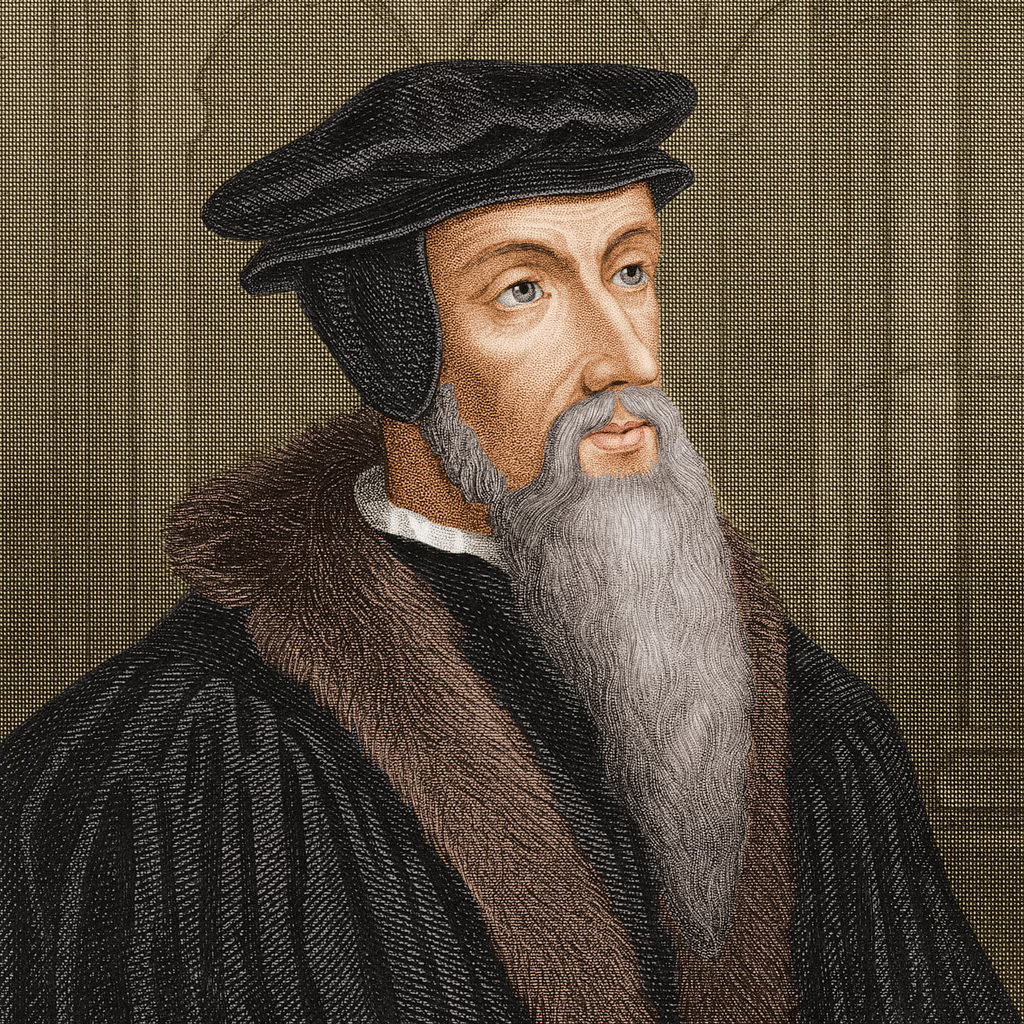






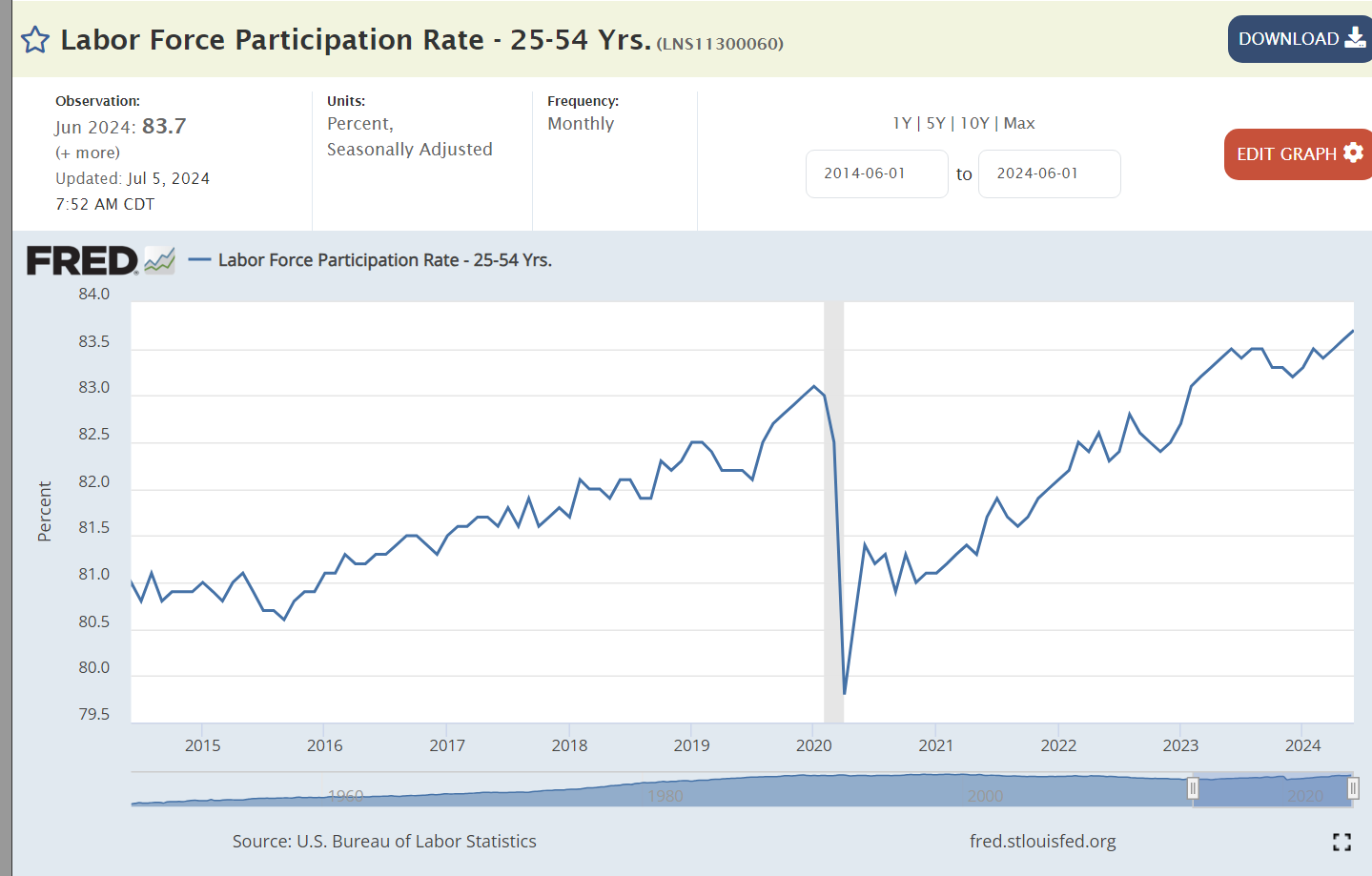


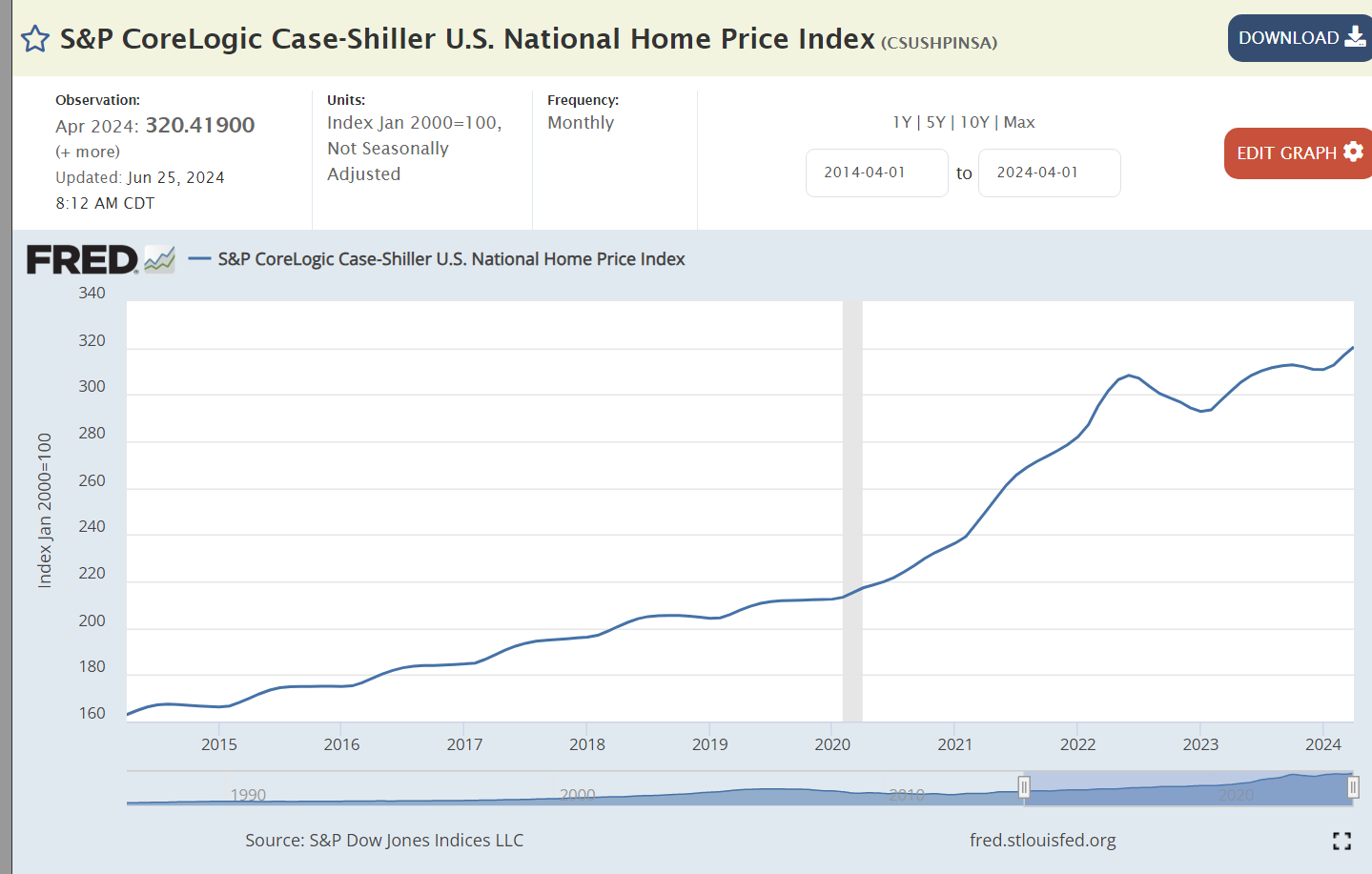





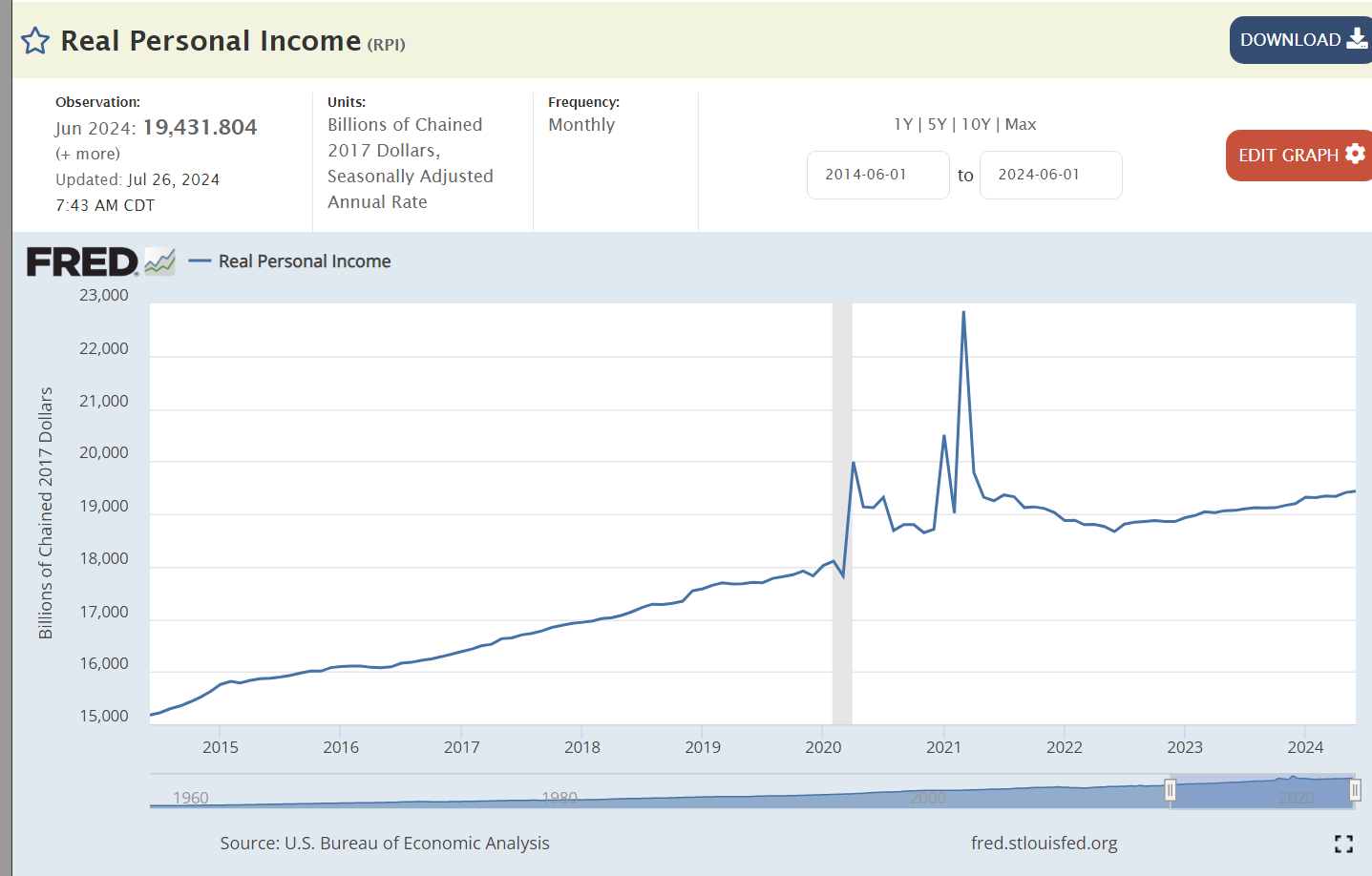


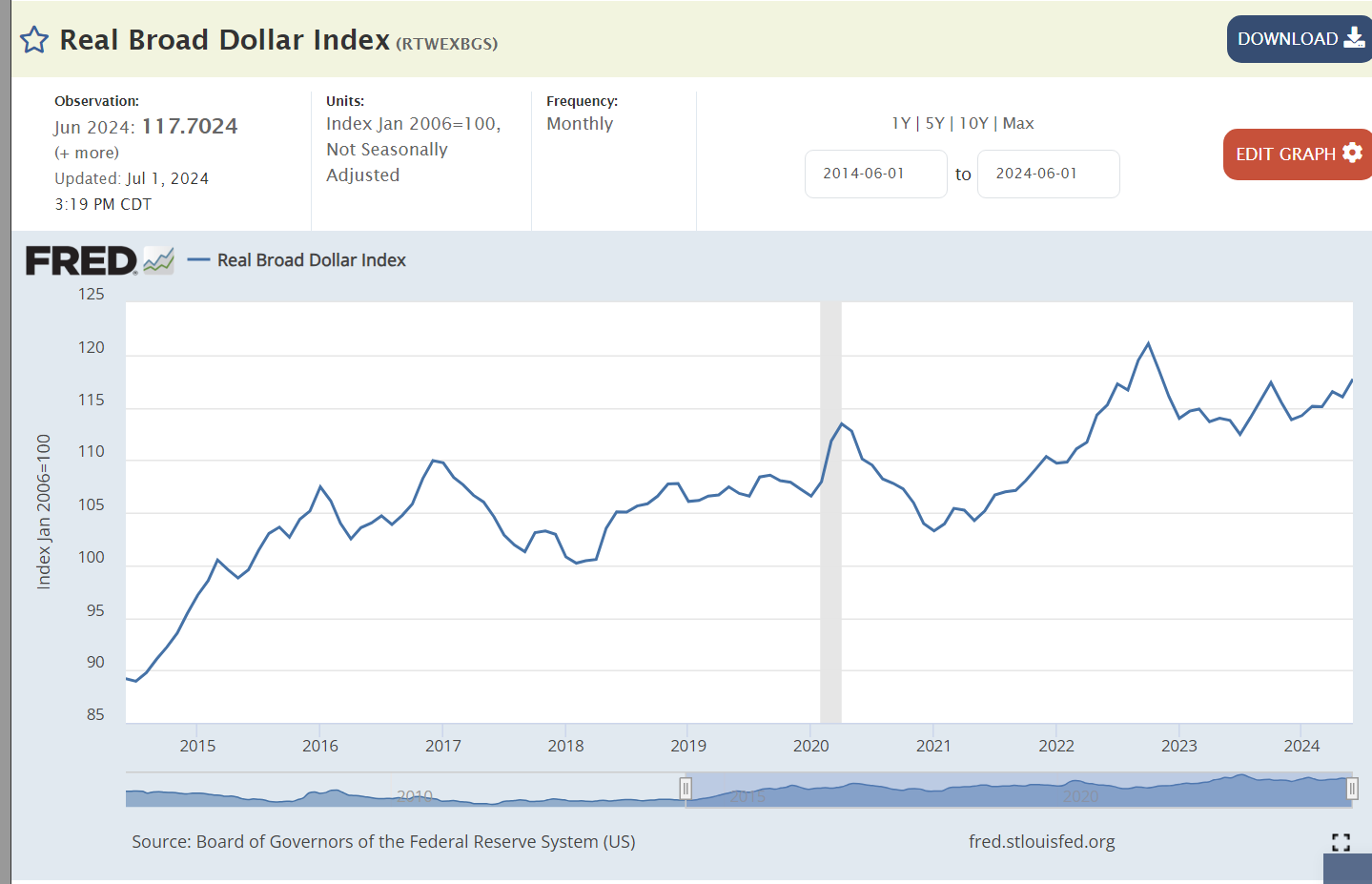



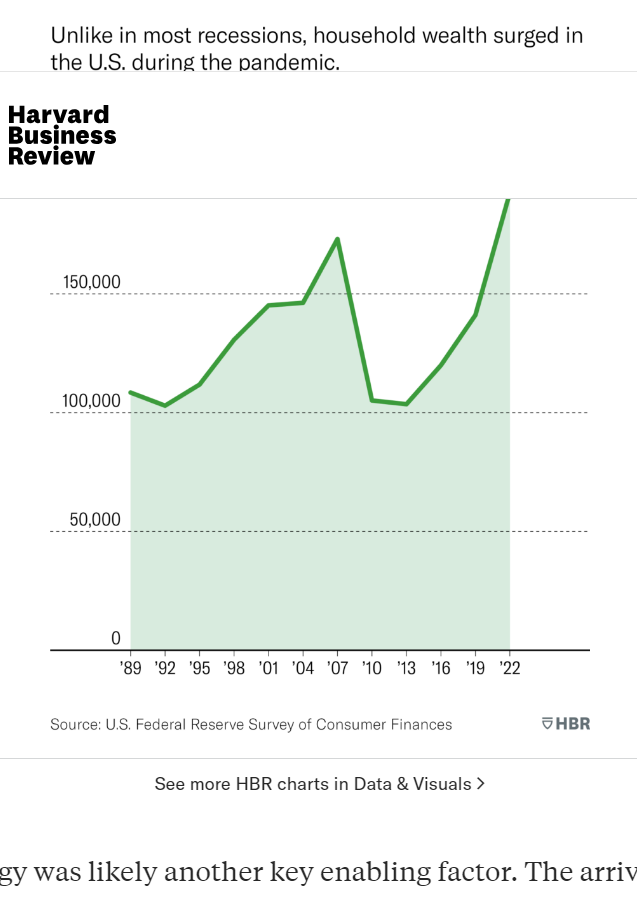



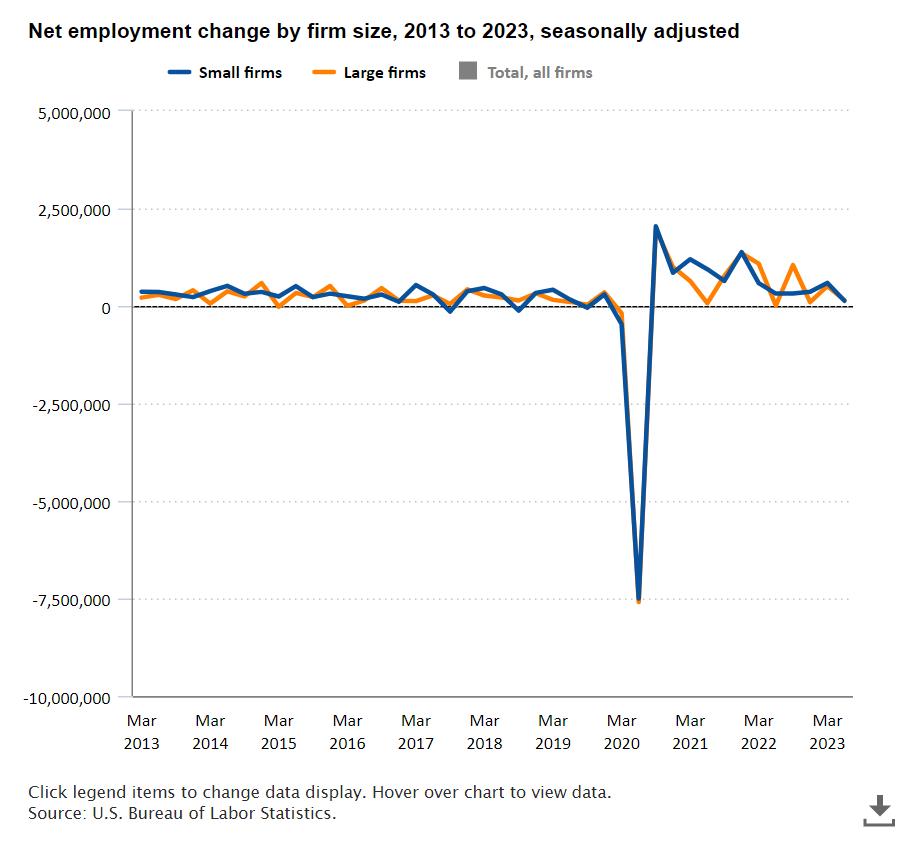

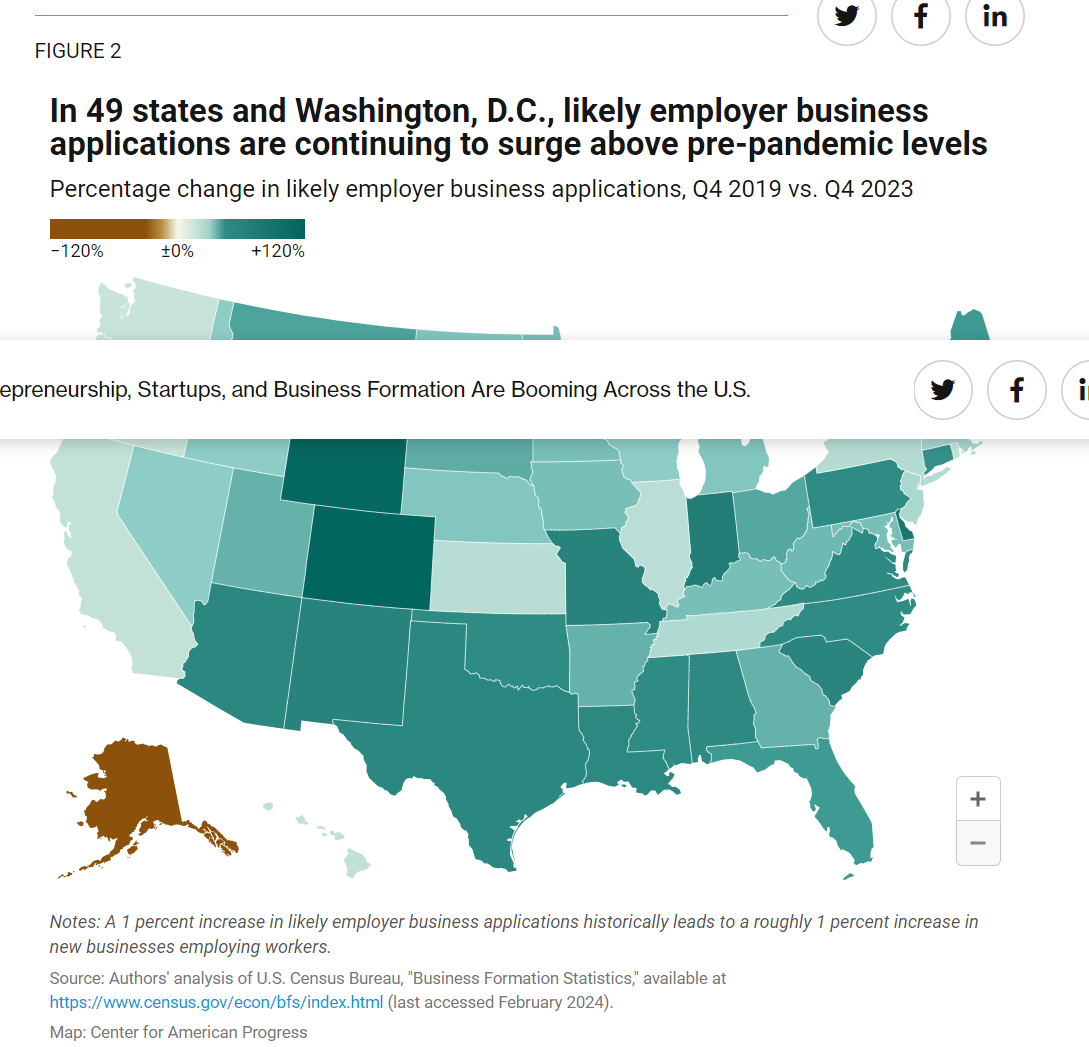
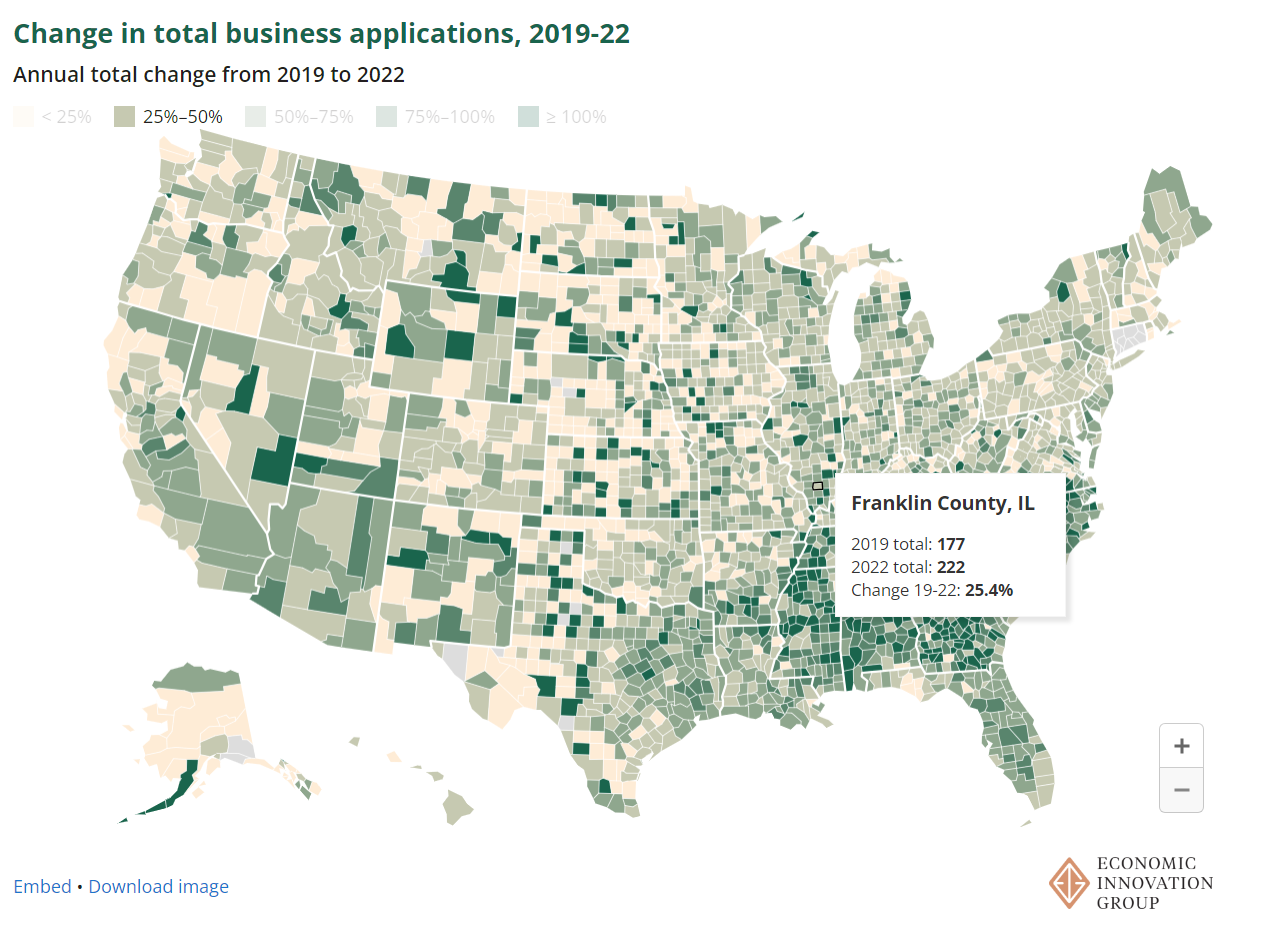






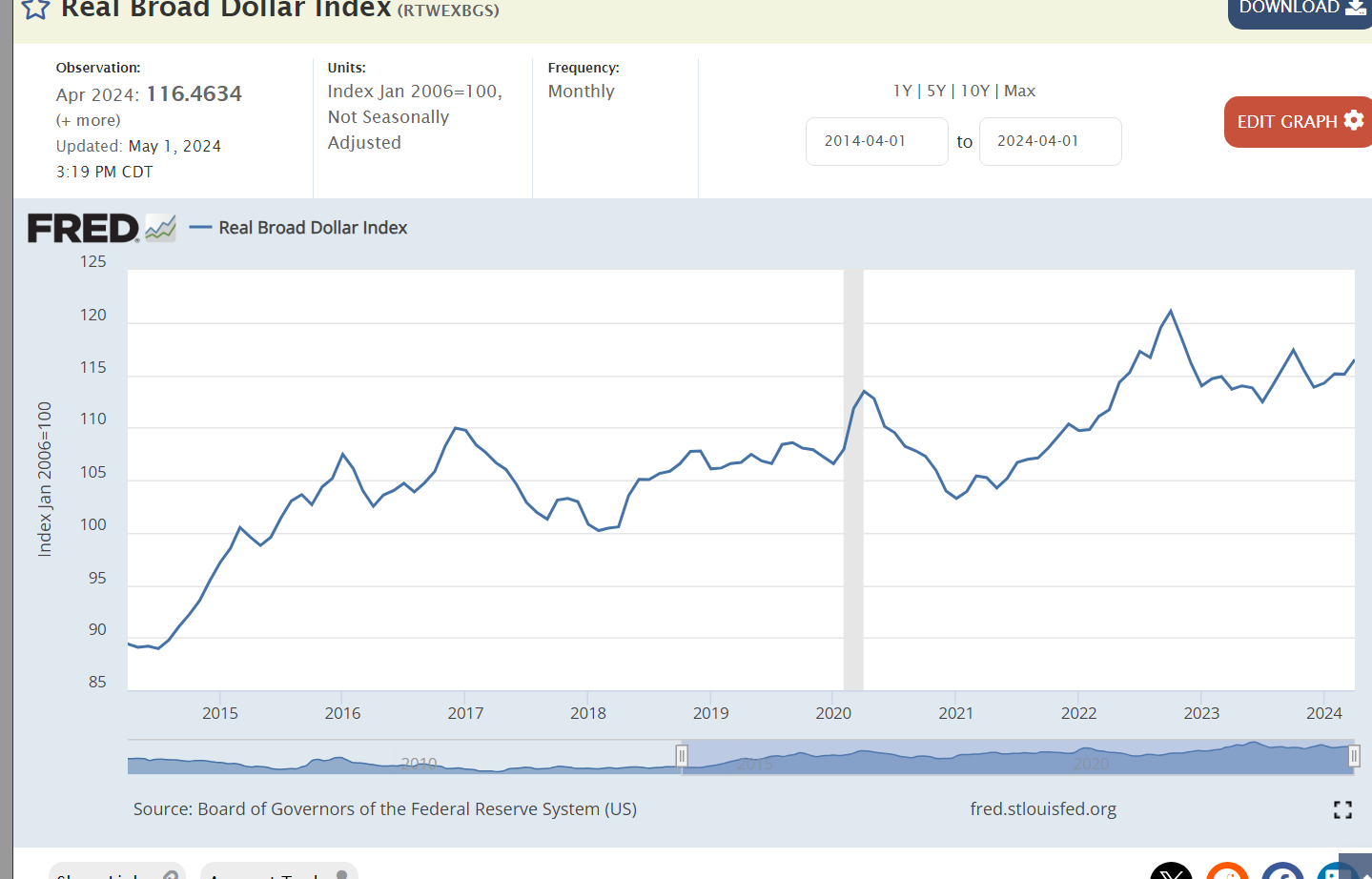
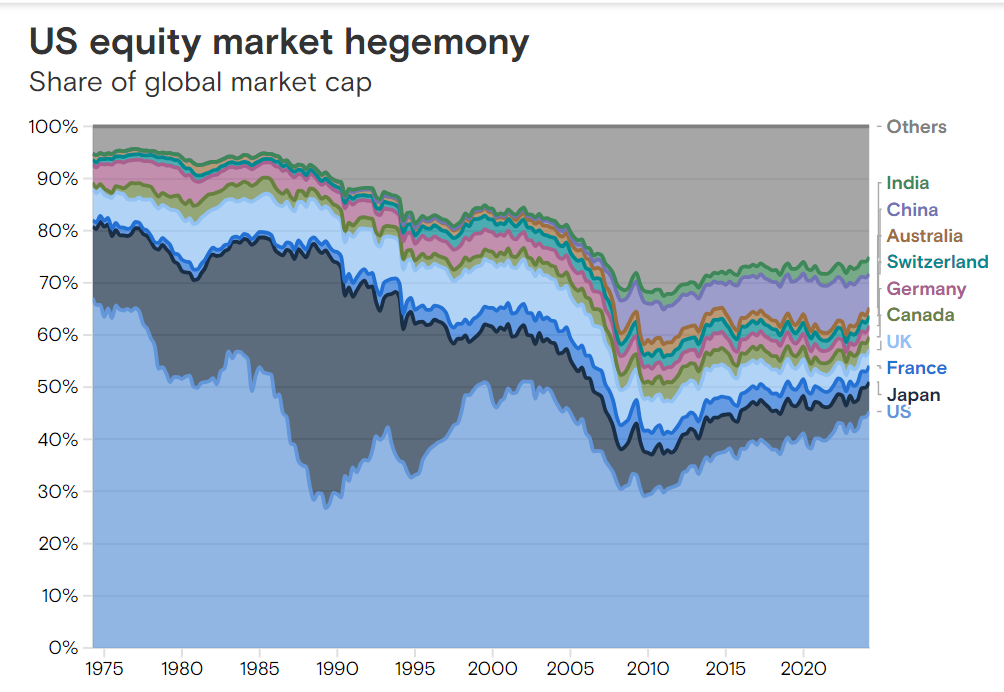


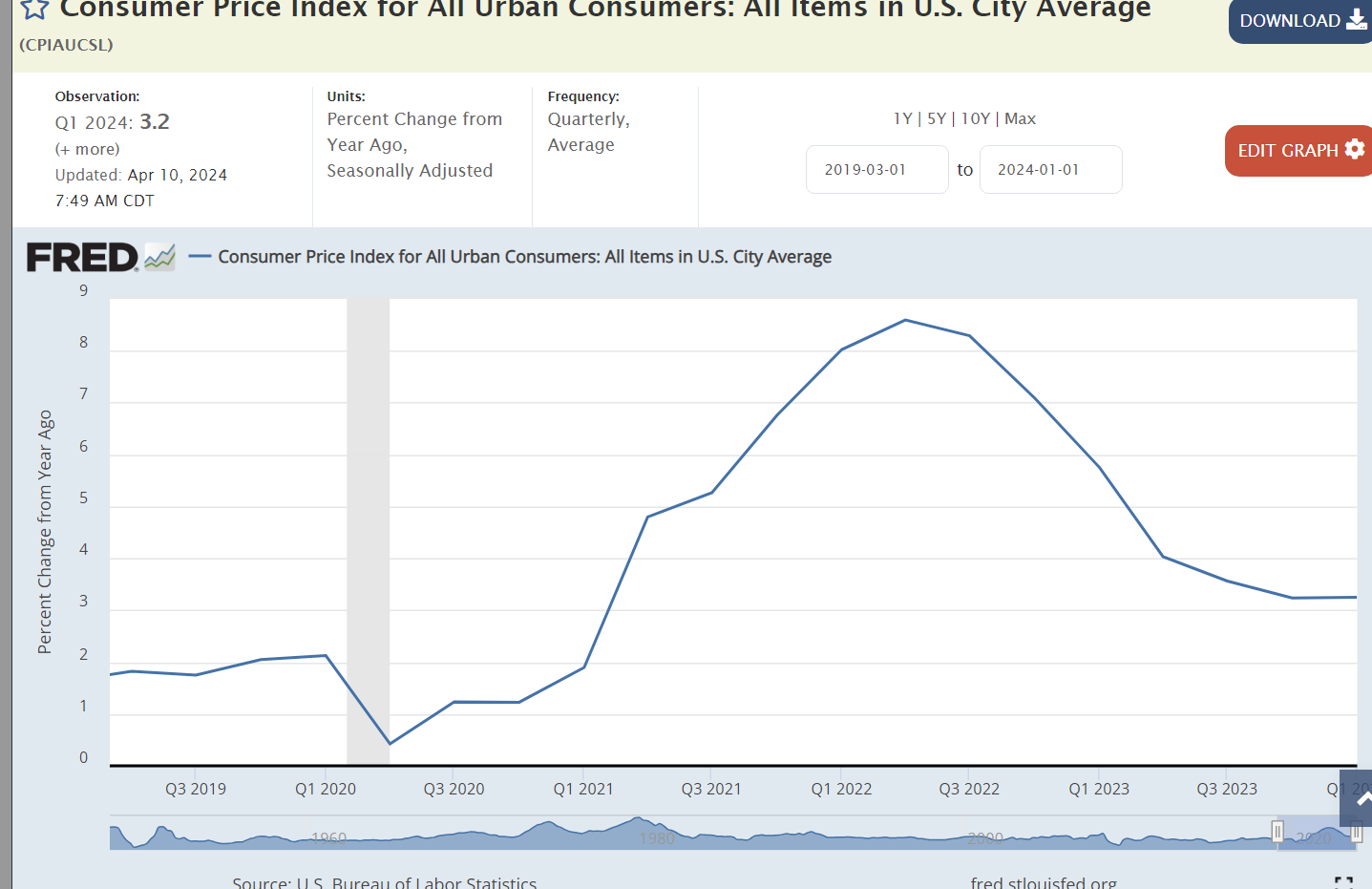
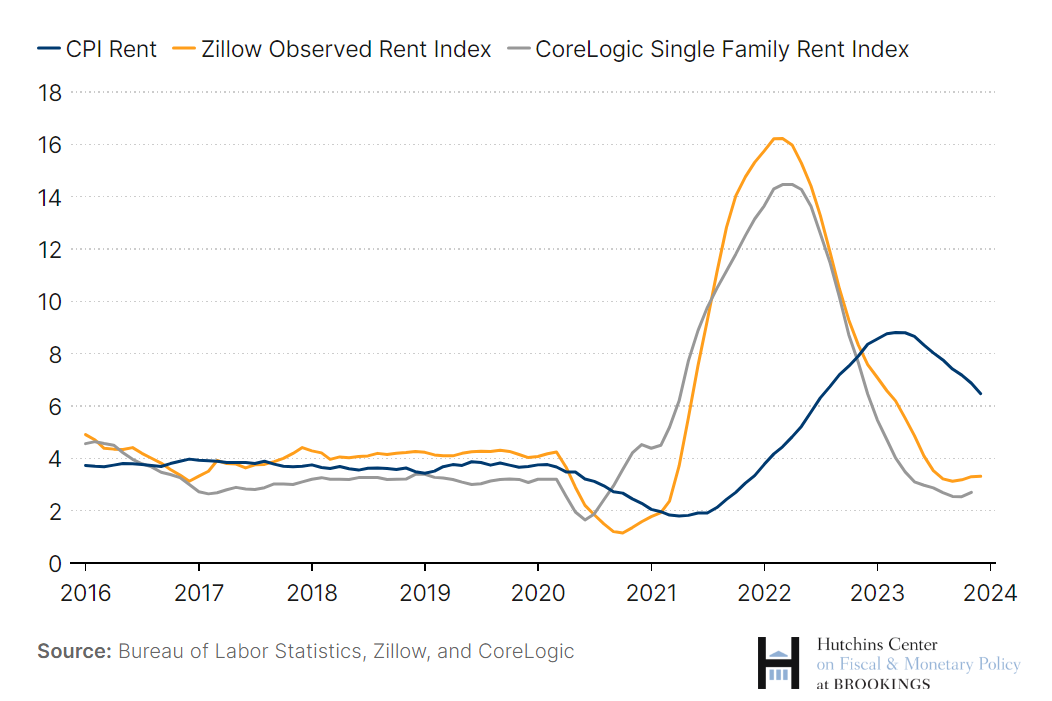


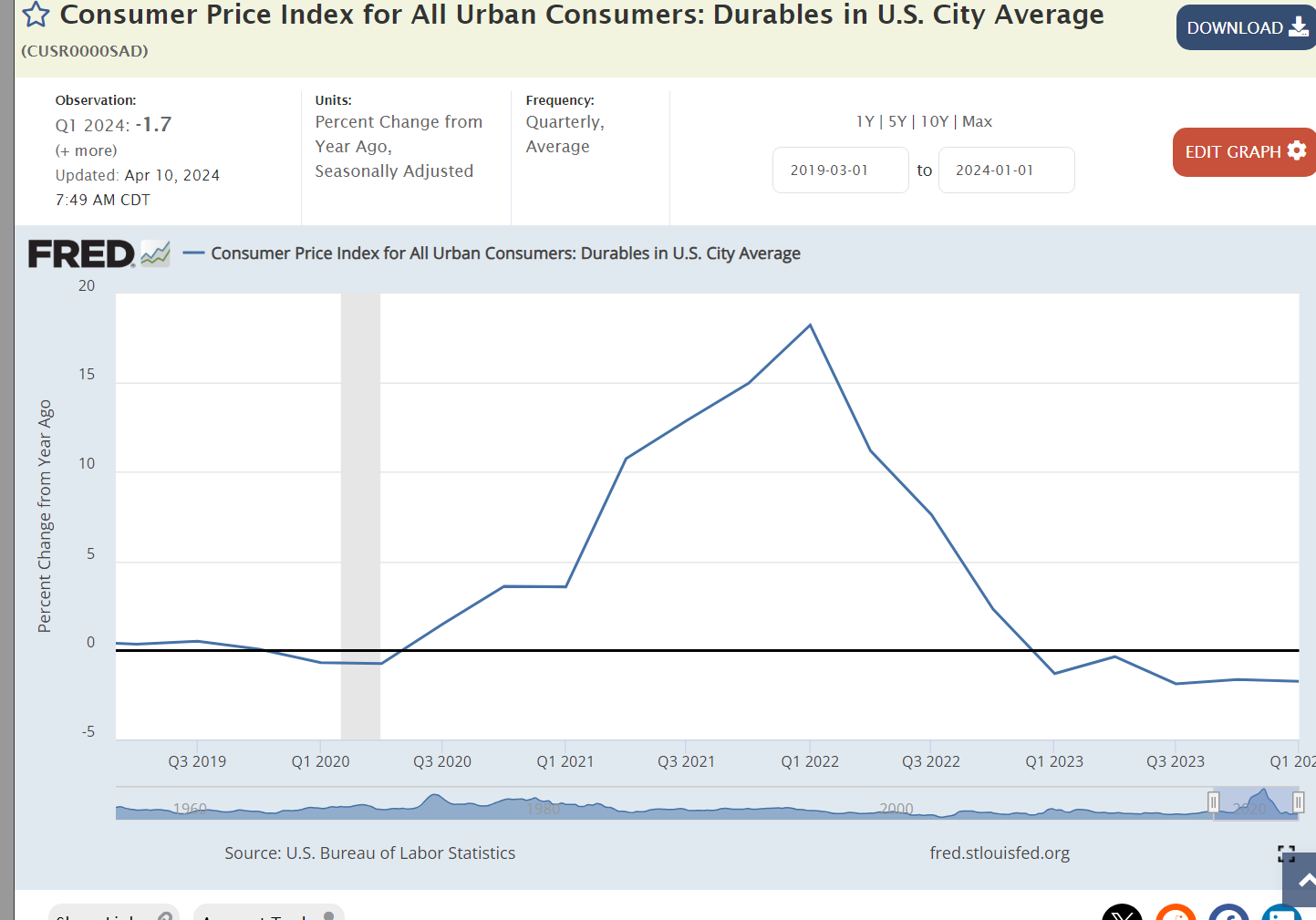



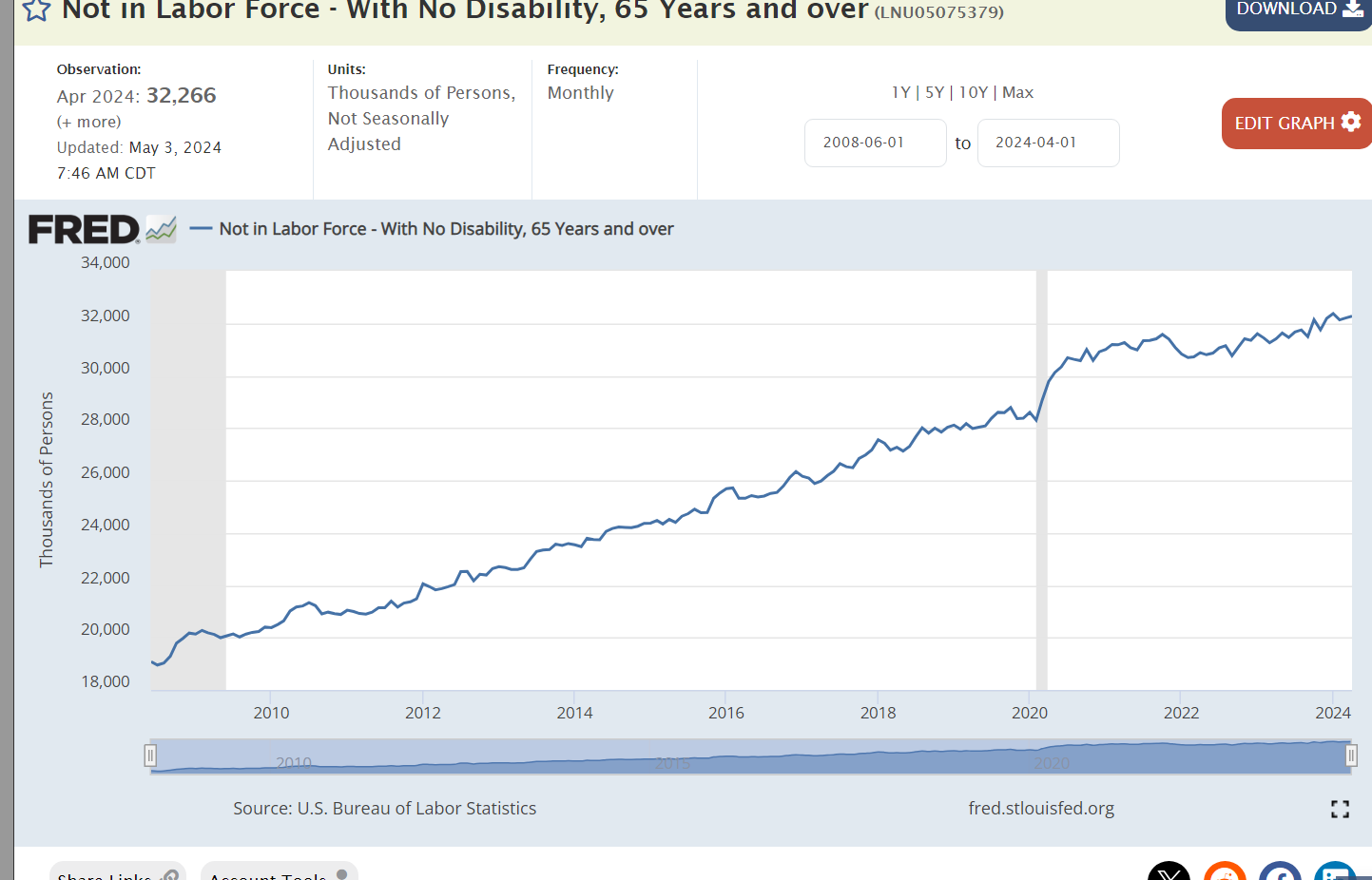
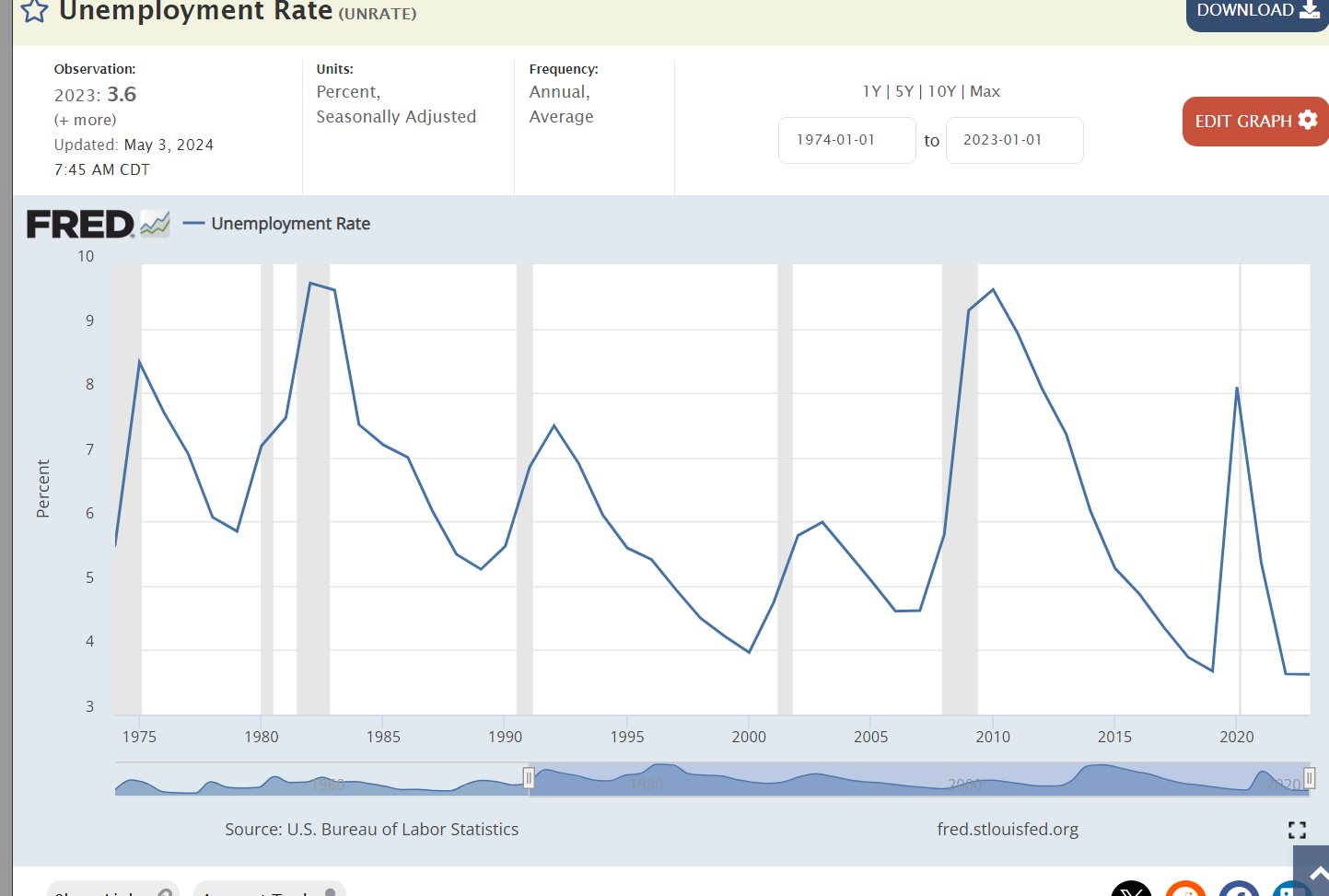

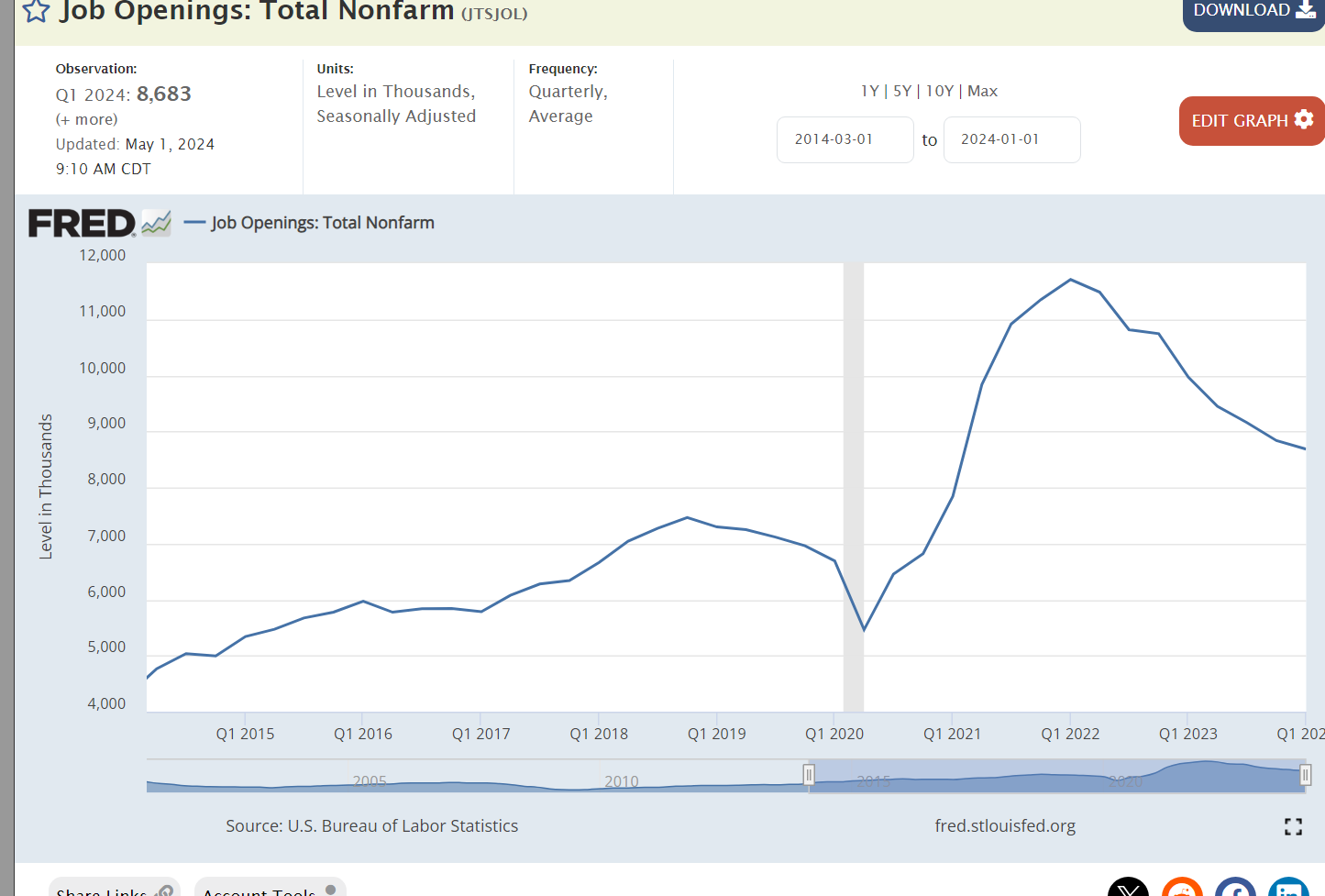


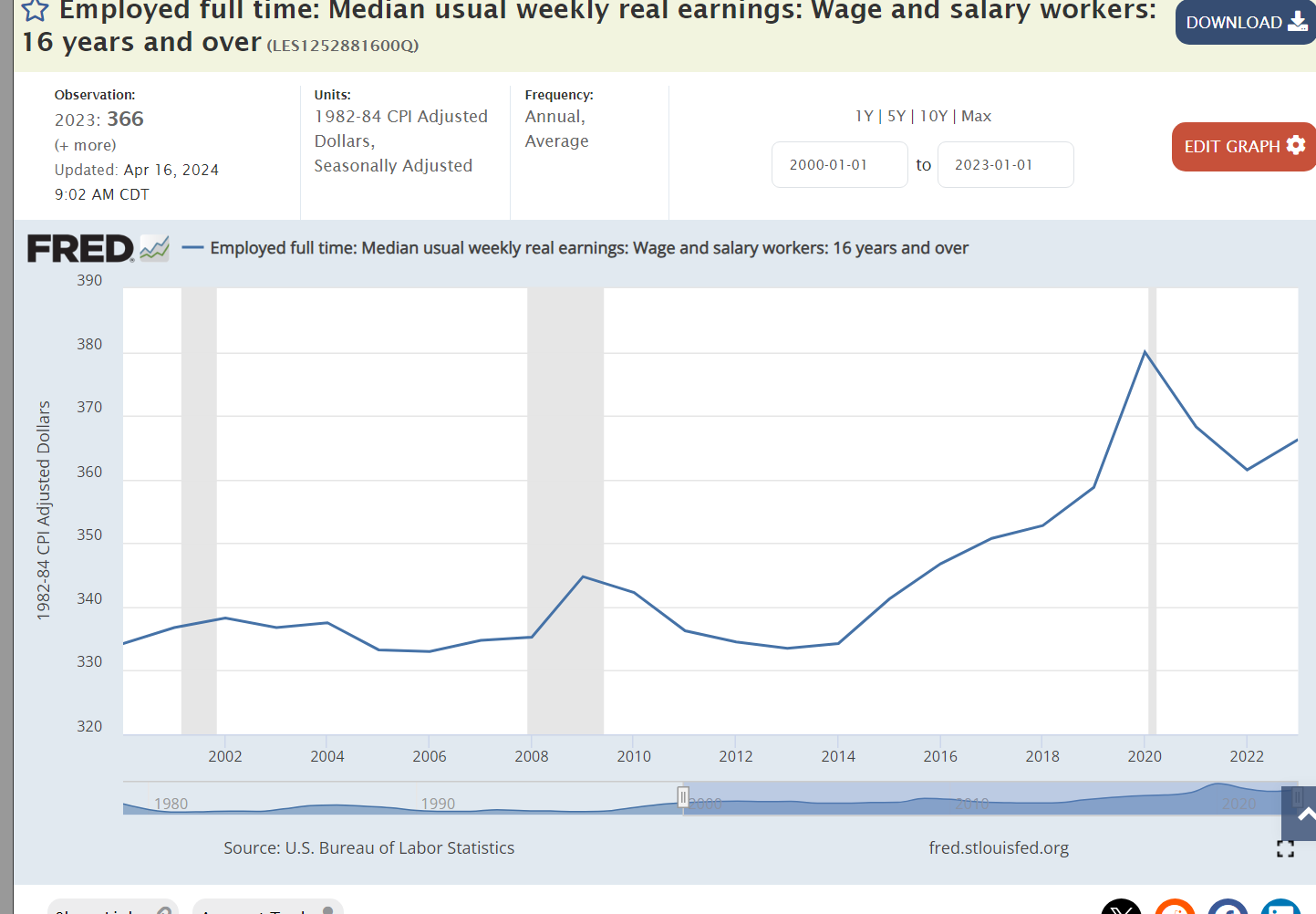
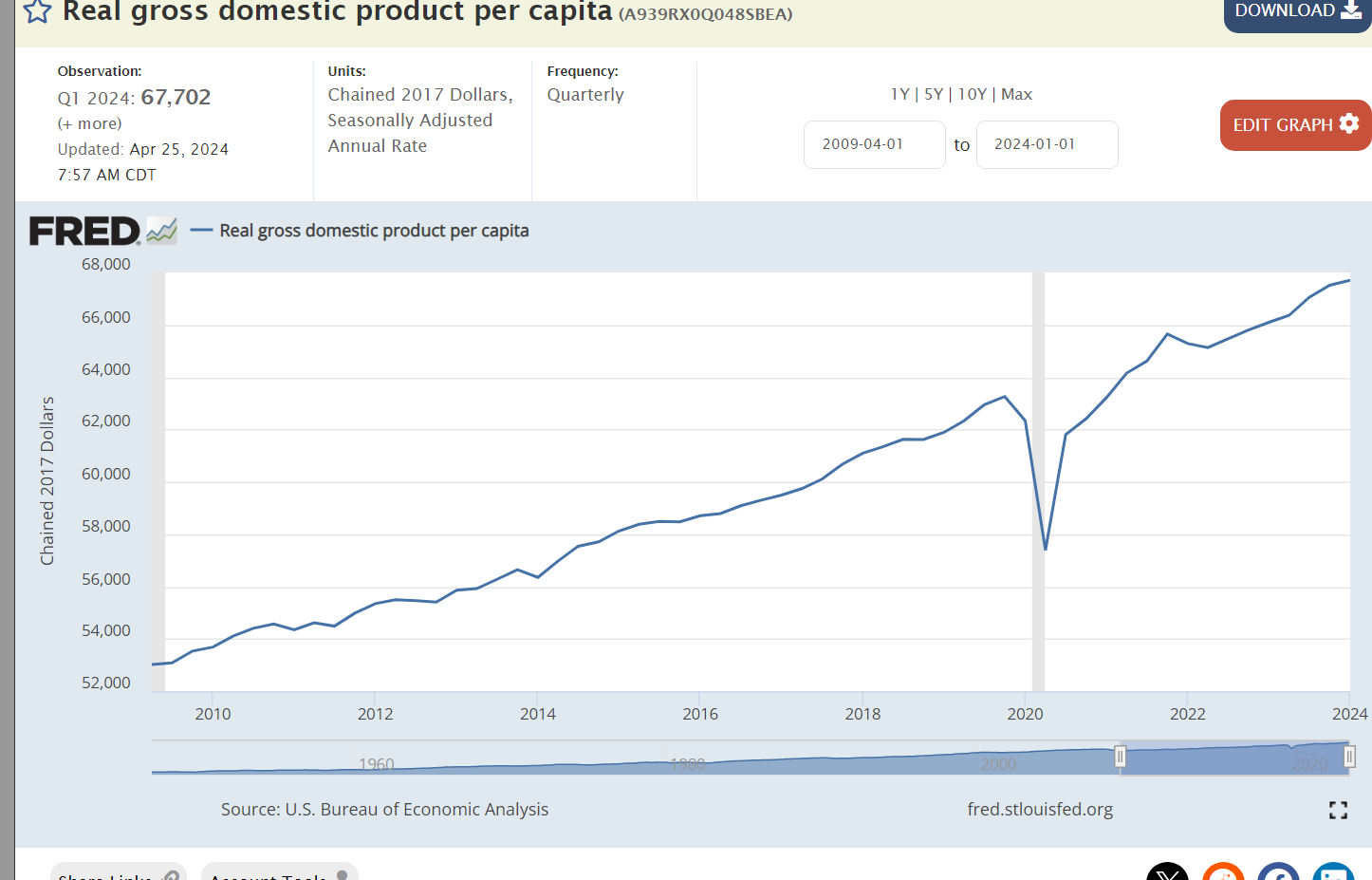

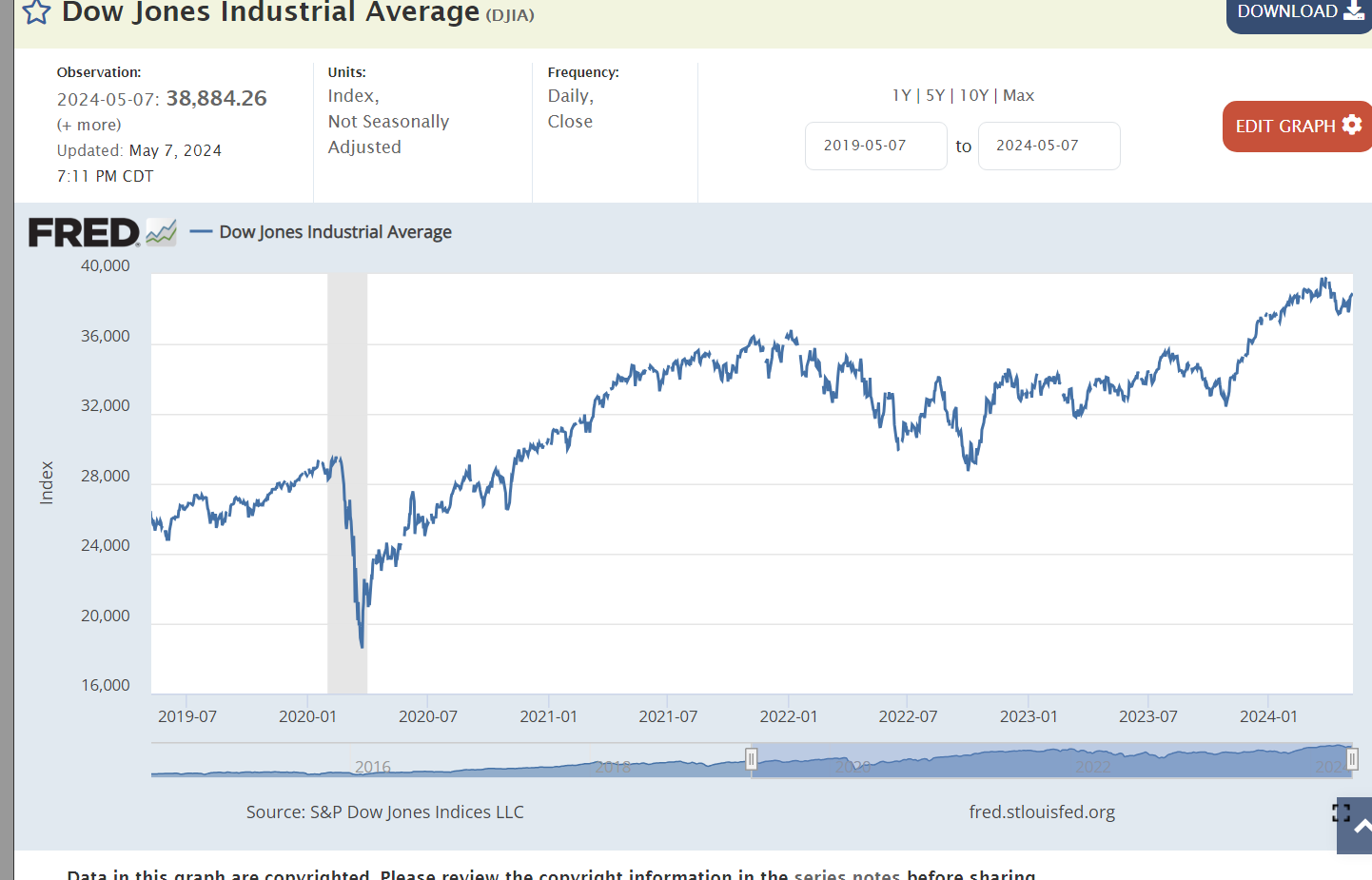
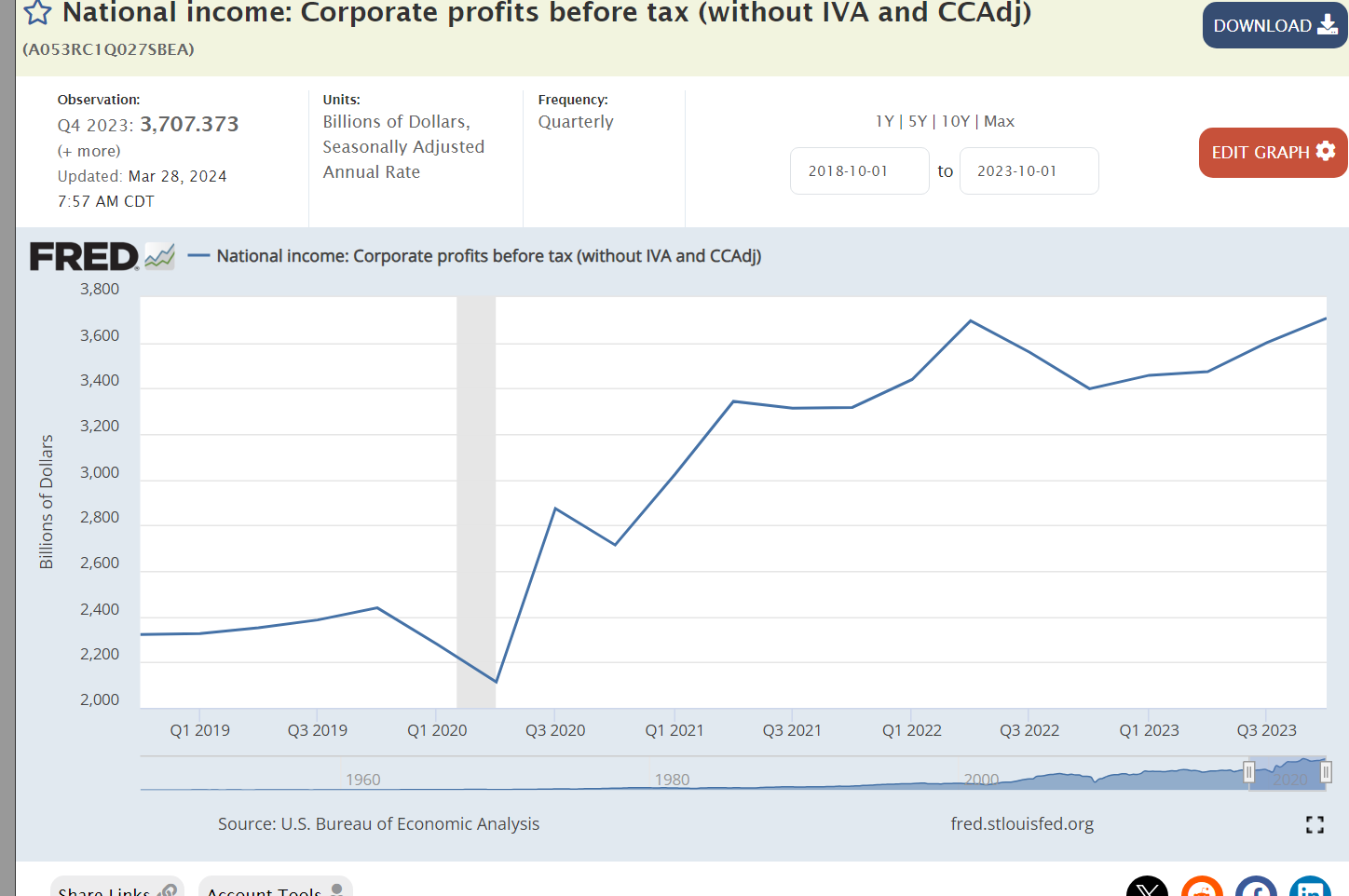
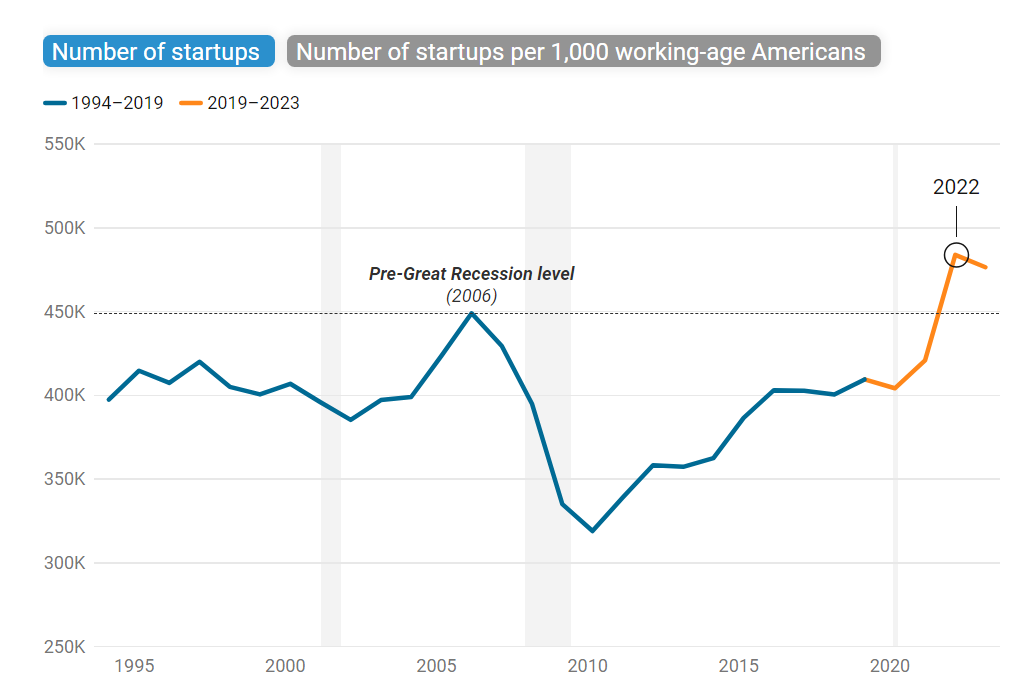
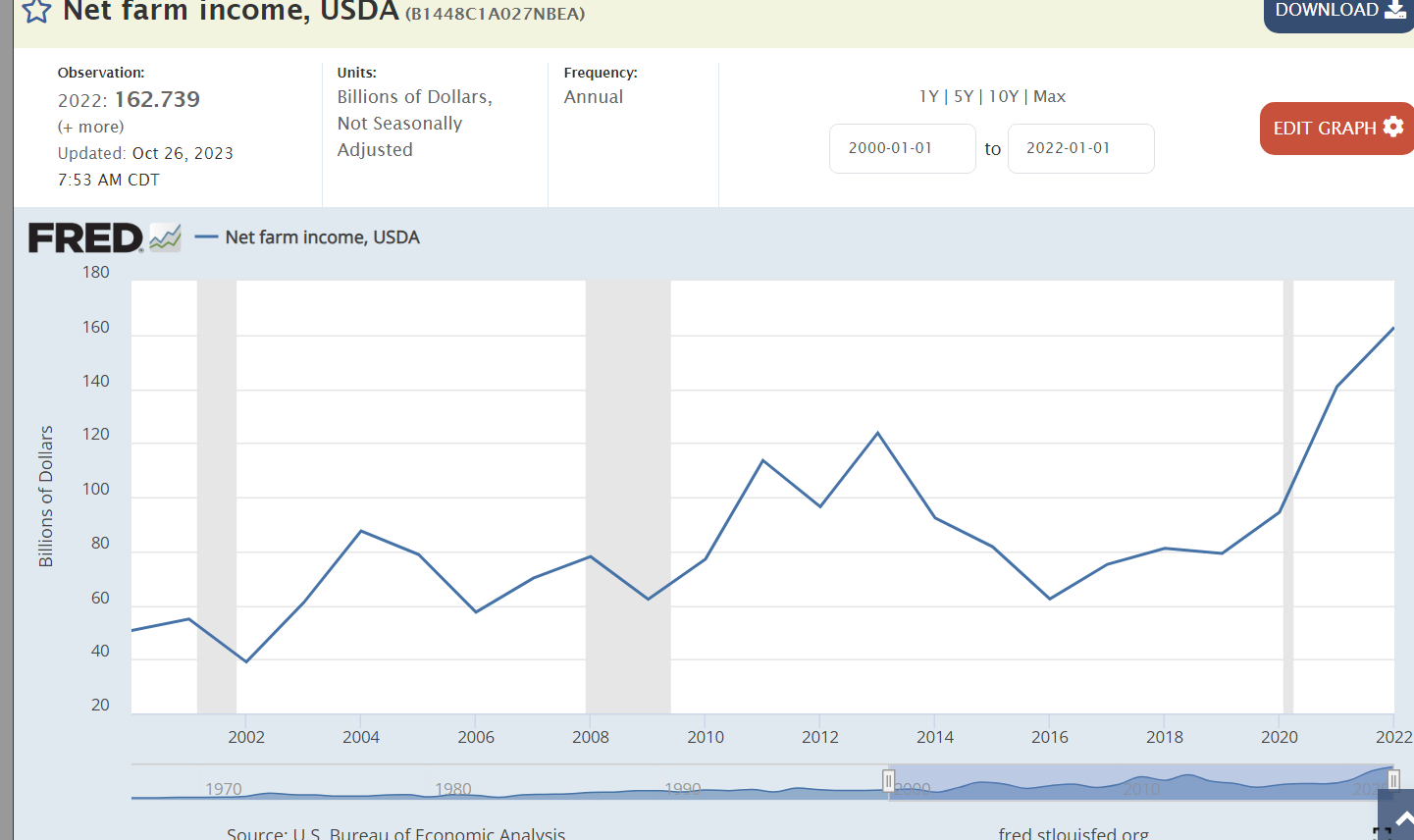
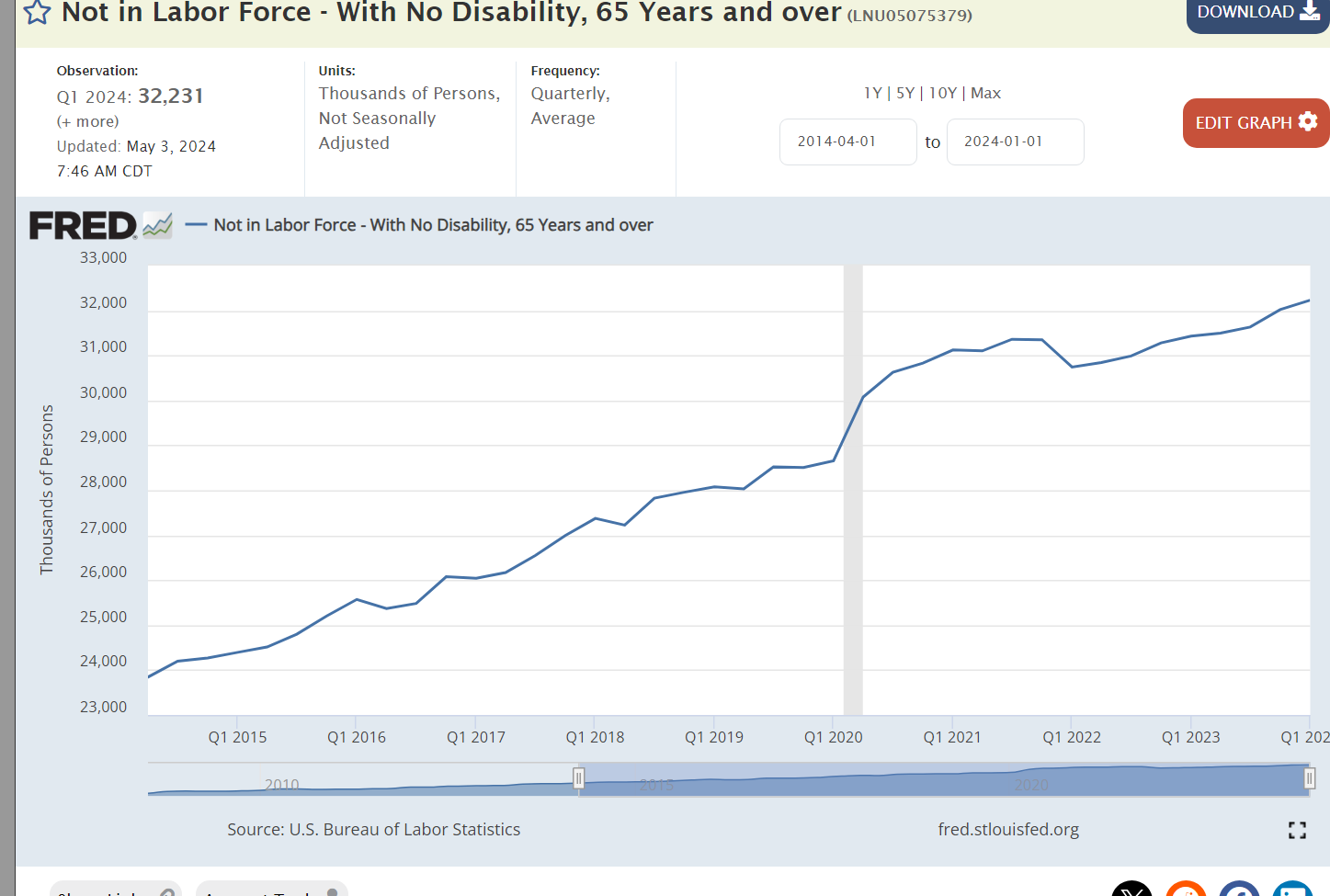
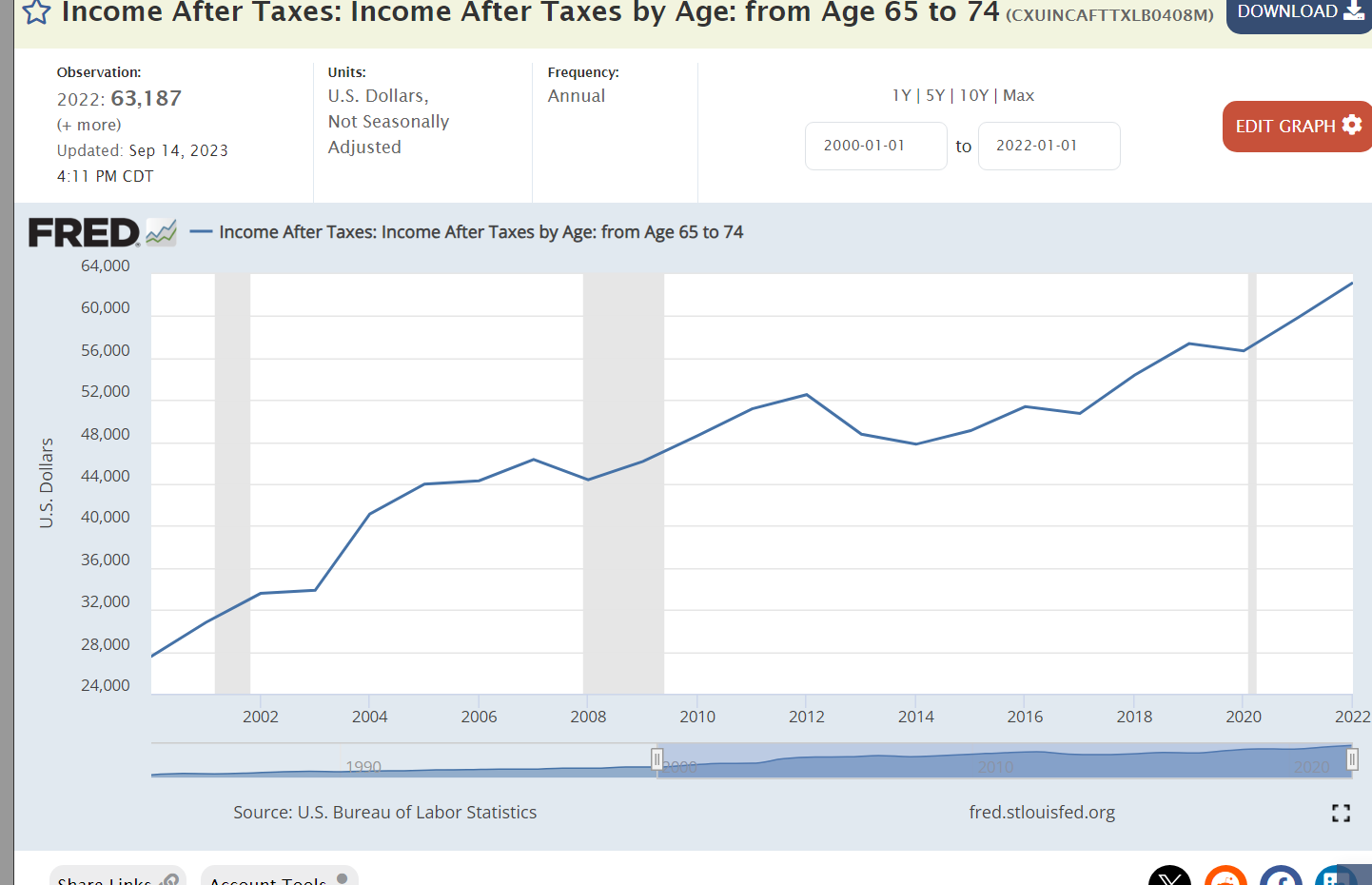

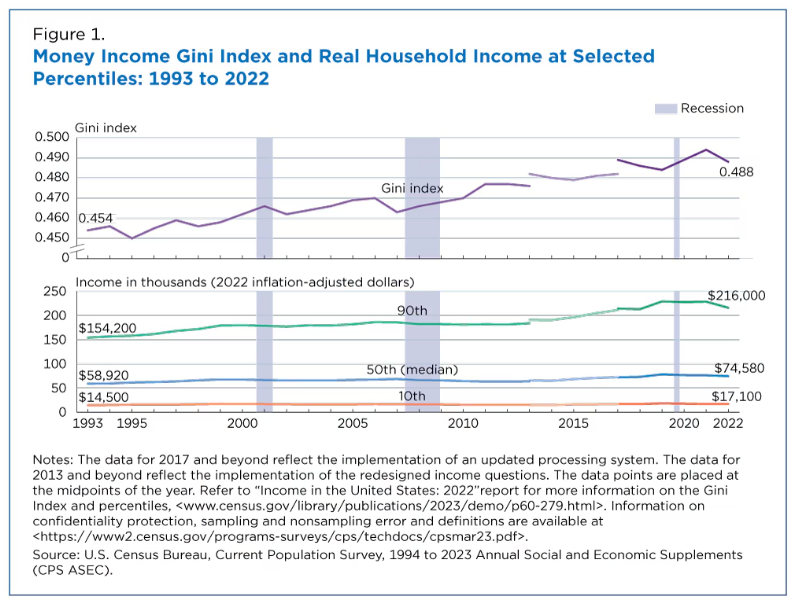



 Good News