
The 7 Habits of Highly Effective People – Leader In Me
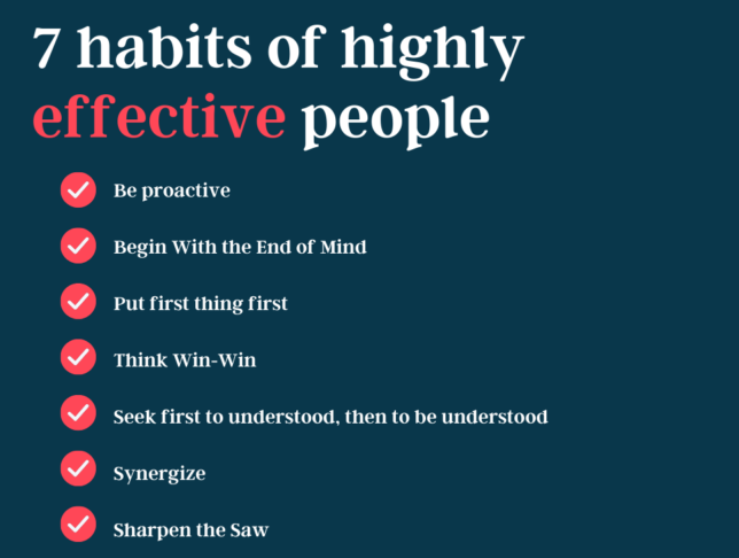
Stephen Covey’s 1989 book invented the personal development industry for modern employers and employees. It has sold more than 20 million copies and helped millions of people become “more effective”.
I’ll connect the “7 habits” to the very independently derived 7 values and 7 skills/behaviors of Civility.
The 7 Habits of Highly Effective People – Wikipedia
Civility is Really About 7 Behaviors – Good News
Civility Resources (5): Action – Good News
Civility Resources (4): Values – Good News
Covey’s book is principle centered, focused on character development and the importance of managing perceptions.
Civility is “principle centered”, based on the 7 nonpartisan values of human dignity, respect, acceptance, responsibility, constructiveness, intentionality and public spiritedness.
Civility is based upon 7 skills/behaviors of self-awareness, self-management, social awareness, relationship management, communications, growth and problem-solving that also acknowledge the importance of a lifetime of personal development. The 6th behavior outlines how the practice of Civility leads to personal growth.
Civility emphasizes the crucial role of identifying, understanding and shaping personal perspectives, insights and world views. The 4 values of respect, acceptance, responsibility and public spiritedness require the individual to work on refining their world views. Similarly, the self-awareness and social awareness behaviors emphasize the need to clearly define and sometimes challenge real views as part of social discourse or civil dialogue.
1. Be Proactive (Google AI)
Stephen Covey’s Habit 1: “Be Proactive” relates to civility by placing the responsibility for respectful behavior on the individual rather than on external circumstances or other people’s actions. Being proactive means choosing to respond with values—such as kindness and respect—rather than reacting based on feelings, which fosters a more civil, constructive, and collaborative environment.
Choice of Response vs. Reaction: Covey argues that between a stimulus (e.g., someone being rude) and the response, there is a space to choose. Proactive individuals use this space to choose a civil, value-based response, rather than blindly reacting with anger or sarcasm, which would diminish civility.
Owning One’s Behavior: Proactive people do not blame their behavior on others or their environment (“he makes me so mad”). Instead, they act with accountability, knowing that their own conduct is a result of their own decisions.
Focus on the Circle of Influence: Proactive people focus on what they can control—their own attitude, language, and behavior. They understand that while they cannot control another person’s rudeness, they can control their own polite response, which can often improve the situation.
Proactive Language: Proactive people use language that implies choice, such as “I can,” “I will,” or “I choose”. This language is inherently more empowering and respectful than the reactive language of blame (“He makes me…”, “I have to…”).
Acting with Intention: Proactive individuals create a climate of respect, rather than waiting for others to do so. They take the initiative to communicate clearly, apologize for mistakes, and behave with kindness, which acts as a proactive driver of civility in professional and personal relationships.
By taking ownership of their behavior, proactive individuals stop blaming “out there” for their issues, thereby reducing conflict and increasing respectful interaction.
TK Summary: Strong overlap with Civility values of responsibility and intentionality, overlap with respect and constructiveness. Strong overlap with Civility behavior self-management, overlap with communication, self-awareness and social awareness. Civility is not about politeness, surface level choices, weakness or moderation. It focuses on making great choices and deeply owning those choices.
2. Begin With the End in Mind (Google AI)
Stephen Covey‘s second habit, Begin with the End in Mind, relates to civility by framing daily interactions as steps toward a long-term legacy of character and relationship quality. Instead of reacting to immediate frustrations, this principle encourages individuals to act according to their core values and the “end” they want to achieve in their personal and professional lives.
In the context of civility, this habit manifests in several ways:
Relationship Preservation as the “End”: In conflict resolution, beginning with the end in mind means visualizing a successful outcome where the relationship is preserved or strengthened, rather than just “winning” an argument.
The Eulogy Exercise: Covey famously asks people to visualize their own funeral and consider what they want friends, family, and colleagues to say about their character. If you want to be remembered as kind, respectful, and fair, you must practice those civil behaviors in the present to make that “end” a reality.
Principle-Centered Living: By centering one’s life on unchanging principles like trust and honesty, an individual can maintain civil behavior even in the face of adversity, rather than being swayed by temporary emotions or external circumstances.
Intentional Communication: This habit encourages visualizing the desired atmosphere of a conversation or meeting before it begins. This mental “first creation” allows for more deliberate, empathetic, and respectful communication.
Living by Design, Not Default: Without a clear vision of who you want to be, you may fall into reactive, uncivil patterns dictated by pre-existing habits or others’ behaviors. Intentionally choosing your “end” goal empowers you to respond with civility by design.
TK Summary: The Civility values of respect and intentionality stand out, followed by human dignity and responsibility. The Civility behaviors of relationship management and self-management are essential here, also using self-awareness and problem-solving to create this habit.
3. Put First Things First (Google AI)
Stephen Covey’s “Put First Things First” habit relates to civility by prioritizing long-term relationship building, respect, and ethical behavior over reactive, urgent, but unimportant demands. It emphasizes investing time in people and principles, ensuring that how we treat others remains a top priority rather than an afterthought sacrificed for immediate, urgent tasks.
Key connections include:
Prioritizing Relationships: By focusing on Quadrant II (important but not urgent) activities, such as relationship building and proactive communication, people cultivate a respectful and supportive environment, rather than treating interactions as interruptions.
Proactive Self-Management: It requires managing oneself to live according to values, which prevents rushing, stress-induced rudeness, and, instead, fosters a calm, thoughtful approach to interactions.
Valuing People Over Tasks: It emphasizes that people and their well-being are paramount, ensuring that interacting with others is treated as a priority rather than a “low-priority” task compared to other work.
Preventing Ethical Crises: By acting on principles before they become urgent problems, individuals are more likely to behave with integrity and maintain professional civility.
TK Summary: Here, Covey focuses on the Civility values of human dignity and acceptance, supported by respect. He emphasizes the Civility behaviors of relationship management and self-management, supported by communications and personal growth.
4. Think Win-Win (Google AI)
Stephen Covey’s “Think Win-Win” habit (Habit 4) is directly related to civility by serving as a character-based code for interaction that requires mutual respect, emotional maturity, and the balance of courage and consideration. It builds a culture of trust and collaboration, replacing competitive “win-lose” mentalities with cooperative, respectful, and mutually beneficial relationships.
Key relationships between “Think Win-Win” and civility include:
Mutual Respect and Consideration: Win-win requires valuing other people’s needs as much as your own, which is the foundation of respectful communication.
Emotional Maturity: It requires the “courage” to express your own needs and the “consideration” to listen to others, forming the basis of mature, civil dialogue.
Abundance Mentality: It assumes there is enough for everyone, promoting a cooperative mindset over scarcity-driven competition, fostering generosity rather than selfishness.
Trust Building: By aiming for solutions where everyone feels satisfied, this habit builds long-term trust, which is the cornerstone of civil interaction.
Think Win-Win isn’t simply about being “nice”; it is a framework for ensuring that interactions are respectful, fair, and beneficial for all stakeholders.
TK Summary: The Civility value of true respect is first, augmented by acceptance, responsibility, intentionality and public-spiritedness. Self-management is the primary Civility behavior, accompanied by social awareness, relationship management, communications and problem-solving.
5. Seek First to Understand, Then Be Understood (Google AI)
Stephen Covey’s habit of “Seek First to Understand, Then to Be Understood” (Habit 5) is foundational to civility because it replaces judgmental listening with empathic listening, cultivating respect and validation in interactions. By prioritizing understanding over simply being right, it promotes patience, reduces conflict, and fosters deeper human connections.
Promotes Empathy & Respect: Instead of listening to respond or judge, this habit encourages listening with the intent to truly understand another person’s perspective and emotions.
Suspends Judgment: It fosters a mindset of pausing and suspending judgment, which is essential for treating others with dignity.
Builds Trust Through Validation: When others feel heard and understood, it gives them “psychological air,” encouraging a safe, collaborative environment rather than a combative one.
Combats Dehumanization: It forces one to see the person behind an argument or avatar, preventing the rush to judgment often found in poor, uncivil discourse.
Balance of Courage and Consideration: This habit teaches that true influence is built by combining kindness (seeking to understand) with courage (being understood), facilitating Win/Win outcomes.
TK Summary: Covey highlights the first 3 Civility values of human dignity, respect and acceptance. “Others” really, really matter. He then elevates the Civility behaviors of self-management and communications (active listening), complemented by social awareness and relationship management.
6. Synergize (Google AI)
Stephen Covey’s habit of Synergize (Habit 6) relates to Civility by fostering creative cooperation through valuing differences, empathetic listening, and seeking “third alternatives” (Win/Win) rather than conflict. It transforms respectful, polite communication into synergistic collaboration, treating diverse viewpoints as assets, not threats.
Key connections between synergy and civility include:
Valuing Differences: Synergy goes beyond mere tolerance (politeness) to truly valuing mental, emotional, and psychological differences, which is the foundation of a civil, inclusive society.
Empathetic Communication: Synergizing requires seeking first to understand others, creating a safe, respectful environment where individuals feel valued.
Moving Beyond Defensiveness: It replaces defensive, protective, or legalistic communication with open and honest dialogue.
Co-creation of Solutions: It actively seeks a “third way” that is better than either party’s original idea, promoting partnership rather than win-lose confrontations.
TK Summary: The Civility values of respect and acceptance are critical supports for synergy: a belief in interactive teamwork. The Civility behaviors of modern “best practices” communications and problem solving are required for synergy to deliver the goods.
7. Sharpen the Saw (Google AI)
Stephen Covey‘s 7th Habit, Sharpen the Saw, relates to civility by focusing on the social and emotional renewal required to interact with others respectfully and effectively. This habit emphasizes that a depleted or “dull” individual is more likely to be reactive, impatient, and ineffective in their relationships.
The relationship between “Sharpening the Saw” and civility manifests in several key ways:
Emotional Regulation and Reduced Reactivity
Preventing Burnout: Without regular renewal, emotions become “raw” and the spirit becomes insensitive.
Interpersonal Resilience: Leaders who prioritize physical and emotional self-care are less reactive and better prepared to handle interpersonal challenges with composure.
The “Private Victory”: Covey argues that personal renewal (the private victory) must precede successful public interactions (the public victory). Civility is difficult to maintain when one is operating from a state of exhaustion or stress.
Social and Emotional Renewal
Empathetic Connection: Sharpening the “social saw” involves cultivating empathy and emotional intelligence, which are foundational to civil behavior.
Building the “Emotional Bank Account”: This habit encourages making “deposits” into others’ emotional bank accounts through courtesy, kindness, and honesty.
Interdependent Habits: Habit 7 makes Habits 4, 5, and 6 (Think Win-Win, Seek First to Understand, and Synergize) possible. These habits represent the core of civil and cooperative social interaction.
Principled Character Development
Alignment with Values: Renewal in the spiritual dimension involves committing to a value system that often includes integrity, kindness, and human dignity.
Civic Responsibility: By focusing on self-improvement, individuals increase their capacity to contribute positively to their community and maintain a “minimal model of a civic citizen”.
TK Summary: Covey calls out the Civility value of human dignity as essential to living a great life, followed by the importance of respect for others. This habit matches up directly with the Civility behavior of personal growth and notes the importance of self-management and social awareness in living a sustainable good life in the modern world.
Summary
Many of us lived through the “malaise” of the 1970’s and 1980’s as the US tried to digest the cultural revolution of the 1960’s, the political disappointments of Vietnam and Watergate, and the global economic revolution of the 1970’s and 1980’s. The US was no longer invincible. It was threatened on all sides. Covey’s book was a clarion call to refocus on “character”. Yet, it was not about a soft, countercultural “greening of America” or a naive return to 1950’s cultural certainties. It was about the tools required for individuals to survive and thrive in a complex, global, secular world. It was not a politically partisan approach.
His “7 habits” have stood the test of time. The crosswalk with Civility is very dense. He is focused on the individual looking for habits of successful personal development. Civility is focused on the minimal values and behaviors required to maintain Civil discourse at all levels of an interdependent society.
He strongly agrees that human dignity, respect and acceptance are required for every individual. Responsibility and intentionality are very important. Constructiveness and public-spiritedness matter.
Self-management, relationship management and effective communication skills are essential. Moderate self-awareness and social awareness are needed for success. Personal growth and problem-solving skills are also required.
We collectively have an obligation to define, teach and build Civility skills/behaviors and values for the benefit of our fellow citizens and society. The overlap with Stephen Covey’s highly successful “7 habits” tells me we’re on the right path.
The Ethics of Authenticity / The Malaise of Modernity (1991) – Charles Taylor – Good News
 Good News
[…] Covey’s “7 Habits” and Civility – Good News […]
[…] Covey’s “7 Habits” and Civility – Good News […]