Hamilton County moved from a 30,000 vote Republican advantage in the 2016 presidential election to just 13,000 votes in 2020. Political gurus near and far watched the 2024 race closely to see if the squeeze would continue. It did not. Trump won Hamilton County by 12,000 votes in 2024, just a statistically insignificant shade below 2020.
The long-run trend indicates very competitive political races for the next 3 presidential election cycles.
Journalists, artists, pundits, entertainers and politicians all scheme for our attention. Once upon a time … we briefly thought that the internet and social media might usher in a new age of information, selection, objectivity, useful filtering, wisdom and cooperation!!!! Unfortunately, we are now deluged by “least common denominator” communications skillfully targeted to lure us into a non-stop cycle of clicking on marketable links. These communications very effectively use every trick and technique to appeal to our emotions, prejudices, weak attention, surface thinking, fears, hopes, exaggerations, etc.
Politicians of all flavors have conspired to convince us that the whole world is comprised of “good versus evil” people, politicians, parties, religions, states, policies and institutions. Everything is “win/lose”. Disagreement is motivated by bad ideas and motives rather than differences of opinion or interests. Compromise is a sign of weakness. Every political actor is purely motivated by self-interest.
We each have a moral, political, social, religious and personal responsibility to evaluate these “conclusions”. Let’s start with overturning the idea that we have nothing in common, that we must rely upon politicians to define opposing policies, parties and philosophies and fight to the death for one or the other to finally win.
Human Nature
Biologically we are all the same.
We intuitively and rationally combine thinking, feeling and doing; conscious and unconscious drives.
We each think that we are “right”. As in Lake Wobegon, we are all “above average”. We struggle to maintain self-awareness, to consider the needs of others, to even pursue our own goals consistently and effectively. We are functionally and morally imperfect.
We have a variety of needs and desires that cannot be fully met. Safety, acceptance, achievement, agency, transcendence, control, familiarity, influence, consistency, love, health, growth, expression, authenticity, loyalty.
We are primarily “analog” beings.
Human Experience
We face death, evil, suffering, disappointments, violations, violence and pain. Random, irrational, unavoidable experiences. We often respond with fear, anxiety, cautiousness, anger and victimhood. We search for ways to “manage”.
We experience life through time, learning, relationships, lessons, goals, planning, dreams, hope, commitments, doing, feeling, thinking, feedback, taking risks, managing risks and opportunities, engaging, disengaging, focusing, relaxing, looking outward, looking inward. The journey is complex and the perspective changes.
We balance and prioritize. Limited resources. Unlimited desires. Personal, family, social, community, religious, financial, and health dimensions compete. At best, we fight the many demands to a “draw”.
We struggle to keep up in a world that becomes more complex every decade: personal choices, goods and services available, information available, technical complexity, political complexity, social choices, religious choices, communications options, philosophical choices, scientific results, business complexity, international options, cultural options. More options, more choices, greater expectations.
We live in a culture that prioritizes the economic dimension of production and consumption. We have embraced a meritocracy that offers great rewards to the winners and a modest “safety net” to those who are not winning. Economic and status anxiety are very high in the most economically successful nation in history. We promote an extreme personal responsibility that undermines those who don’t always achieve and sustain their highest goals.
We live in a world that has been labelled the “therapeutic society” or the world of “expressive individualism”, summarized by the US Army slogan of “Be all that you can be”. The individual is responsible for living and achieving a great life of personal expression reflecting their talents and possibilities. The individual has many coaches, advisors, mentors and therapists, but is alone in choosing their “destiny”. They cannot rely upon tradition, religion, culture, nation, village, parents, personality profiles, or skills assessments. This radical secular humanism view places the responsibility for identifying and achieving a “world changing” destiny upon each person. Wise individuals find some way to “balance” this personal responsibility with other influences, refusing to adopt a godlike stance. They avoid becoming like Icarus and flying too close to the sun.
We live in a world that highlights the individual above nature, community, culture or religion. Complete individual liberty, freedom and opportunity are desired. No trade-offs with the other dimensions of life. “Natural consequences” frustrate those who embrace this libertarian ideal.
Life is hard. So many advances in society, business, education and technology. The challenges to “living a good life” are greater than ever. The progressive promise is undermined. All individuals must now make choices that were once reserved for kings, priests, princes, monks, scientists, philosophers, artists, governors, generals, financiers, industrialists, explorers, entrepreneurs, and presidents.
Culture
We digest the beliefs, norms and values of our culture subconsciously. The legacy of Christian Western Civilization continues. The legacy of secular humanism continues. We live in a “secular age” where deep faith and unskeptical religious commitment is unusual for the highly educated one-third. We’re “neither fish nor fowl”. Culture really matters but is today a blend of two streams like “oil and vinegar”. There is much in common. There are some big differences. We generally share the political, economic, social, religious, scientific and literary history of Western Europe, even though parts of the intellectual community have promoted disturbing alternate views for almost 200 years.
Despite living in a “secular age” and an “individualistic age”, we all need to be connected to various communities. Although community participation frequency, manner and depth vary greatly across the decades, humans always need to be connected.
We share a legacy and currency of art, media, design, architecture, music and entertainment. High-brow and low-brow. Mass market and specialized. Push versus pull connectivity. We are connected.
The US remains an unusual Western society where the not-for-profit, religious, social, volunteer world performs major social welfare functions. We share our experiences of funding, volunteering, leading and consuming from these organizations. The individual and community experience of managing these organizations shapes our world view. Our individualistic bias combines with our social/religious obligations to create and support these organizations.
We share our experiences in pre-K, elementary, high school and college education. Mainly public schools. The content shapes our perspectives.
We have moved from 6 to 4 to 3 to 2 to 1.X children per family. We invest like never before in the growth, education, experiences, guidance, mentoring, support and direction of our children. Helicopter parents. Summer programs. Internships. International experiences. The youth orientation reigns supreme.
We continue to value the “social esteem” provided by others. We comply with social norms in every dimension of life. We seek approval. We consume good and services to signal our social status. We achieve, perform and consume based on social influences.
We adopt “tolerance” as a supreme moral value. We don’t advise, influence or interfere with others, even when we strongly disagree.
We continue to struggle with the idea of a “class structure” in America despite the obvious growth in economic, social and political influence of the wealthy (top 1%) and the professional class (top 10%).
Communications
We share the American “English language”. It dominates the whole world.
We share the mass media, local newspapers, industry and professional journals, scientific and academic journals, the entertainment industry, social media platforms, community forums and the internet.
We share modern communications and information technology. A “smart-phone” is in every pocket, instantly accessing the cumulative knowledge and information of mankind.
Religion
Americans are much more “religious” than “Europeans”. We mostly believe in God and spirituality and Christianity. We have seen that shared cultural/religious beliefs can be maintained in a religiously pluralistic society. We believe in objective “right and wrong”. We intuitively accept “the golden rule”. We see “America” as part of God’s plan and history. A place for the pilgrims. A land of religious diversity. The overturning of slavery. American victories in the 2 world wars and the cold war. The moral dimension of life matters.
Economy
We still live in the world that Adam Smith described in 1776. The degree of specialization is only limited by the extent of the market. Our world is extremely specialized. A bewildering variety of products are available. Outsourcing of many functions. Regional, national and international sourcing.
We all specialize in our most productive functions today. Profession, sub-profession and industry. We all have talents. There are most highly rewarded in their professional roles.
We are producers and consumers, investors and suppliers, professionals and managers, entrepreneurs and directors. We are deeply engaged in the financial system, markets for labor, money, trade, property, goods and services. We sometimes elevate this role to be “everything”, to our detriment.
We are interdependent. We rely upon “essential workers”, universities, governments, builders, contractors, consultants, bankers, utilities, media, lobbyists, politicians, unions, secondary markets, employment firms, lawyers, engineers, IT and communications folks, etc.
We rely upon the US macroeconomy. Budget deficits. Fiscal policy. The Federal Reserve Bank. Monetary policy. Federal banking and industry regulators. The bond markets. The credit rating agencies. Animal spirits. Wall Street. Mutual funds. Municipal bonds. Mortgage bonds.
We rely upon our commitment to the capitalist, free market, free enterprise system. Laissez faire. Limited government regulation. There are specific situations and metrics that warrant government intervention, but we lean towards allowing the natural incentives of the market to police the behavior of great firms.
We believe that economic growth provides the opportunity for the political system to effectively “redistribute income”, ensuring that the economic value added by scientific and business innovation through time does not all accrue to the owners.
Globe
The benefits from international trade are well understood and have been demonstrated for 75 years.
There are opportunities to engage all nations to manage diseases, food supplies, hunger, human rights, refugees, public health, travel, immigrants, trade, communications, and ocean resources.
There are global threats that must be managed: climate change, nuclear war, chemical and biological weapons, computer hacking, artificial intelligence, species loss, food production, energy production.
Philosophy
An objective physical reality exists. An objective moral reality exists.
The individual really, really matters. Human rights.
The scientific method applied to technical issues is great. It is not everything.
Instrumental logic is a tremendous asset for science, business and life.
Pragmatism is always worth considering. “Show me the money”. Does this theory produce measurable results?
We reject anarchy, atheism, pure commercialism, communism, fascism, necessary progress, libertarianism, national socialism, racism, sexism, totalitarianism, utopian socialism, white nationalism, Christian nationalism. In essence, we reject extreme views. We’re comfortable with a “checks and balances” political system that slows changes until they’re embraced by a solid majority.
Politics
The US is a world of skeptical politics. Less is more. Trust no one. Engage the local community to find a solution. Accept the individual bias in economic and social laws. America is a special place, worthy of patriotic respect.
Political participation is a sacred duty.
Despite the structural constraints on change, the US has generally been a positive, constructive, progressive supporter of political changes through time.
Americans are willing to sacrifice for the good of the nation.
The US constitution is framed by the rationalist enlightenment. We deeply believe in “the rule of law”.
Differences can be resolved, technically, rationally, politically.
We are comfortable with “suboptimal” results from our political system. We accept that the federal, bicameral, functionally divided system is designed to prevent the “worst case” outcomes of raw democracy or concentrated power.
In general, we strongly support our government institutions, especially at the state and local levels. Judges do their jobs. Political parties hold each other accountable. Citizens participate in the democratic process as voters, poll workers, jurors, donors, and volunteers.
Summary
We live as individuals in a complex, interdependent world. We have more opportunities but less authoritative guidance for our lives. We worry about our freedom and liberty. We make many choices. We do the best that we can. We agree on many things yet disagree on many others.
Today, we understand the world better than ever. We also understand ourselves better, our strengths and weaknesses, our possibilities and limits. We manage complex technology and institutions very effectively. We know that some political and economic options don’t work or pose unacceptable risks or threats. The U.S. and Europe developed “limited government” systems apart from religious authority because disagreements were inevitable. We need to relearn those lessons today. We’re going to have a “mixed” capitalist/government economic system. We’re not going to empower any religious denomination or secular group to impose its views on society. We can delegate issues to the states and learn from their experiences. We can compromise. We can “agree to disagree”. Ideally, we can accept that there are some intractable political differences in our society and focus on those areas where we can find agreement.
The Roman Catholic church dominated western civilization for nearly 2 centuries. It was allied with the powers of civilization for most of that period and used that influence to preserve its institutional power. As the most successful organization in history, it was conservative, preserving its power. When “modernity” arrived circa 1500, it opposed the threats to its power and its opponents did their best to undermine the Church in every possible way. The Manichean story of “the bad Church and the good scientists” arose. Modern historians, philosophers, sociologists and specialists reject this story. However, this story has a strong hold on the modern imagination supporting a “materialist” view of reality. Let’s look at the 25 greatest scientific discoveries to see what they really say about the conflicts between a purely materialistic philosophy versus one that accepts that some form of supernatural or transcendent dimension of life is possible or likely.
There are many lists of the “greatest scientific discoveries”. I’m working from a nice summary of those lists.
Electricity and magnetism are two dimensions of a single immaterial, abstract, unobserved force. They can be measured and described by laws and equations that require advanced calculus. Non-material forces are essential to life. They could not be imagined by anyone prior to 1700. Advantage “immaterial forces”. Our modern economy is based upon this non-material dimension.
2. Laws of Gravity/Classical Mechanics
Nature is logical and can be described by equations! Newton created the possibility that everything can be described by mathematical laws. This undermined the prevailing Middle Ages view that embraced many active roles for the supernatural in daily life. This was a HUGE change in world views. Newton remained a Christian believer. He admitted that he had no idea how gravity worked across time and space or why it worked. Advantage materialism.
3. DNA as the Basis for Heredity
The chemical basis of life provided support to Mendelian genetics and Darwinian evolution. Life is based on chemicals. The reductionist view celebrated. Scientists offered lightning based chemical reactions that could have created the key amino acids naturally. The parallel with the newly evolving computer science world was truly amazing. Religious organizations mostly stopped opposing Darwinian evolution. Subsequent work challenged the idea that complex molecules like DNA could have evolved naturally. MIXED.
4. Heliocentric Model of the Solar System
The church opposed these innovative views. Opposed to common sense, without scientific evidence, a threat to theology, against some specific texts in scripture. The Church flubbed this one but eventually agreed that the details of astronomy are not an essential part of religious belief. Essential to consider the holistic, integrated nature of 1500 world views. Everything fit together nicely. Advantage materialism.
5. Periodic Table
All matter is based on a structure. Matter can be reduced to chemical atoms. The individual elements obey laws. God created the universe and declared that it was good. MIXED.
6. Evolution Based on Natural Selection
All of history COULD be based upon random variations. Darwin provided great evidence for instances where this had occurred. Professional biologists waited for 90 years to fully agree. Some religions embraced God as the designer of evolution or select changes like the emergence of men. Others opposed evolution completely. Advantage materialism.
7. X-Rays
Seeing through physical reality. Like magic. Advantage supernaturalism.
8. Relativity
Euclidean geometry and Cartesian coordinates are not exactly correct. Energy and matter are somehow deeply connected. Advantage supernaturalism.
9. Geology
The earth is much older than expected. It is subject to the laws of physics. Fossils support evolution, mostly, except for the bunching of new species. Advantage materialism.
10. Modern Drugs Like Penicillin
Science delivers results. Advantage materialism.
11. Circulatory System
MIXED.
12. Oxygen
Key individual elements can be isolated. Oxygen is the breath of life. MIXED.
13. Vaccinations
Power of biology. Materialism.
14. Radioactivity
Many elements are unstable! This can be described by probability functions. Advantage Supernaturalism.
15. Quantum Theory
The deep structure of reality is probabilistic. It is truly not “rational”. Advantage Supernaturalism.
16. Struture of the Atom
Protons, neutrons and electrons. Charged particles. A mini-solar system. SPDF levels for electrons. Probabilistic chances for positions of electrons. Supernatural.
17. Big Bang/Expanding Universe
Not a fixed, eternal structure. A beginning and possibly an end. Supernatural.
18. Microorganisms/Germ Theory
Life thrives at the microscopic level. MIXED.
19. Mendelian Genetics/Heredity
Mixed. Supporting logic for evolution.
20. Transistors
The flow of electrons and electricity can be managed. MIXED.
21. Human Anatomy
Identifiable organs. Later, the integration of many organs and systems. MIXED.
22. Cells
First, components of life and organs. Mostly well described by bio-chemistry. Then, questions about the components of cells and their evolutionary history. MIXED.
23. Speed of Light
The speed of light is fixed. It acts as a constraint on the universe. Time is not fixed. Matter, energy and the speed of light are intertwined. Supernatural.
24. Steam Engine
Mechanical marvel. Materialism.
25. Telegraph
Electricity and information can flow everywhere, through the air. Supernaturalism.
Summary
Galileo, Newton and Darwin led the way for a simple, deterministic materialism that rules out anything else. 7 of our 25 big discoveries mostly support this view. 9 have mixed evidence for a purely materialistic view versus one that allows for a transcendental dimension. 9 clearly point towards a supernatural dimension of some sort being very important. Electromagnetism, force fields. See-through X-Rays. Relativity of time, space, matter, light and forces. Probabilistic radioactivity. Spooky action at a distance of quantum mechanics. Light is both a wave and a particle? Atoms are not material; they are composed of subatomic particles that we cannot practically describe. Heisenberg uncertainty principle limits our knowledge at smaller scales. The universe appears to have a fixed beginning. The speed of light is fixed. Light is a wave and a particle. The universe is a crazy quilt of forces, particles, quantum pairs, subatomic particles, dark matter, dark energy, matter, energy and probability. Waves are everywhere. Lakes, radioactivity, electromagnetism, light.
We live life mostly as analog beings. We intuitively understand classical mechanics much better than modern physics, chemistry and biology. The many advances of physics in the last century are all quite distinct from a simple materialistic view of the world. The world is, perhaps, mainly immaterial, dynamic, probabilistic and unknown.
This does not provide strong evidence for a specific religious world view. It only shows that a purely reductionist, materialist world view is very unlikely to fully describe reality.
Our political party-based election system fails to qualify candidates based on their character. Historically effective groups like the League of Women Voters and the bar association have lost support from the public. A self-appointed nonpartisan grass-roots organization in each of America’s 3,000 counties could re-establish this core function for the benefit of both parties and our country.
Proposal
Create a county level “Candidate Appraisal Board” as an independent not-for-profit organization. Nonpartisan. 100 members. 4-year terms. 2 groups of 50 join every other year.
Evaluate primary and general election candidates. Not issues, party convention delegates or judges.
Focus on character, constructiveness, community and service as qualifiers for the honor and duty of holding office as a representative of the people. Not evaluating political views. Not evaluating professional qualifications. Seeking to qualify candidates. Multiple qualified candidates per office is possible and expected. Not discounting candidates based upon their personalities, strong views, extreme views, communications styles or strategies.
Board member candidates randomly selected from November registered voters list. Maximum 55% from any one sex. Maximum 40% from one party that voted in the previous primary election. Maximum 25% from any single municipality or township. Rolling nomination and acceptance rounds until seats are filled.
For the first group of 50 board members, ask 5 local Rotary clubs to nominate 10 politically diverse founding members each.
Candidates are deemed “qualified” if they get positive votes from at least two-thirds of the voters with a minimum quorum of 80 voters. Positive qualification votes require “yes” answers on all four dimensions of the evaluation form.
The independent organization seeks small dollar donations from citizens and community groups. It does not accept support from commercial organizations, interest groups, candidates or their families.
The organization defines its own procedures and elects its own officers: president, vice president, secretary and treasurer.
Evaluation Form
Is candidate John Q. Smith fully qualified to hold public office and serve our community?
This candidate displays high character in speech and deed
Personal integrity, trustworthy, responsible, reliable, diligent
Honest, transparent, forthcoming
Respectful, trusting, patient, courteous
Emotionally stable, mature, wise
Uses power responsibly and fairly
Acts and communicates ethically
Honors truthful communications; not stretched, shaded, misleading, false or fake claims
This candidate values our community
Supports our democratic system, including its election laws and processes
Upholds the “rule of law” for all citizens
Obeys laws, regulations, administrative and judicial rulings
Thinks, acts and speaks in terms of “the common good”
Pursues actions that are supported by a large majority of citizens
Respects the equal rights and interests of all citizens and minority groups
Represents all citizens
Considers moral standards such as “the golden rule” when making political choices
Puts the public interest ahead of self-interest and supporters when required
Daniel Bell was a sociologist and public intellectual throughout the post WW II era. His views on the emergence of the “Radical Right” as exemplified by Joseph McCarthy’s unexpected influence and impact are worth quoting extensively. Their pointed relevance to recent history is apparent. The quotes are from chapter 6 of “The End of Ideology”, 1960 which republished the first chapter of the earlier book.
America in mid-century is in many respects a turbulent country. Oddly enough, it is a turbulence born, not of depression, but of prosperity. … brings in its wake new anxieties, new strains, new urgencies.
One important reason is the restraining role of the electoral system. These factors of rigid electoral structure have set definite limits on the role of protest movements, left and right, in American life. [until the Tea Party]
The “common man” is the source of ultimate appeal if not authority. Harrison won [in 1840], and the lesson was clear. Politics as a skill in manipulating the masses became the established feature of political life. The upper classes withdrew from direct participation in politics. The lawyer, the journalist, the drifter, finding politics an open ladder for advancement, came bounding up from the lower middle classes.
But while sectional politics has somewhat diminished, class politics has not taken its place. Instead, there has been the spectacular rise of pressure groups and lobbies. The multiplication of interests and the fractioning of groups … make it difficult to locate the sources of political power in the United States. … Does not mean, however, that all interests have equal power. This is a business society.
These lines of thought do not help us … to explain the emergence of the new American right wing, the group that S. M. Lipset has dubbed the “radical right” — radical because it opposes traditional conservatism, with its respect for individual rights, and because it sought to impose new patterns in American life. All this is dramatized by the issue of McCarthy and the communists. … It is difficult to explain the unchallenged position so long held by Senator McCarthy. It still fails to take into account the extensive damage to the democratic fabric that McCarthy and others were able to cause. … Reckless methods disproportionate to the problem. … compulsive Americanism … loyalty oaths … wild headlines … the suspicion and miasma of fear that played so large a role in American politics.
Calling him a demagogue explains little. McCarthy’s targets were intellectuals, especially Harvard men, Anglophiles, internationalists, the Army. Important clues to the right-wing support … a strange melange … soured patricians … whose emotional stake lay in a vanishing image of a muscular America defying a decadent Europe … the “new rich” — the automobile dealers, real estate manipulators, oil wildcatters — who needed the psychological assurance that they … had earned their own wealth, rather than (as in fact) through government aid, and who feared that “taxes” would rob them of that wealth … the rising middle class strata of various ethnic groups.
The central idea of the status politics conception is that groups that are advancing in wealth and social position are often as anxious and politically feverish as groups that have become declasse. … Seek more violently than ever to impose on all groups the older values of a society which they once represented. This rise takes place in periods of prosperity. These political forces, by their very nature, are unstable.
There are several consequences to the changed political temper in American life, most notably the introduction on a large scale of “moral issues” into political debate. By and large, this is new. Throughout their history, Americans have had an extraordinary talent for compromise in politics and extremism in morality. In matters of manners, morals and conduct – particularly in the small towns – there has been a ferocity of blue-nose attitudes unmatched by other countries. The sources of the moralism are varied. There has been a middle class culture. Moral indignation … characteristic of religions that have abandoned otherworldly preoccupations and concentrate on thisworldly concerns. Piety gives way to moralism.
This moralism, itself not unique to America, is linked to an evangelicalism that is unique. … the peculiar evangelicalism of Methodism and Baptism, with its high emotionalism, its fervor, enthusiasm, and excitement, its revivalism, its excesses of sinning and high-voltage confessing, has played a much more important role. The revivalist spirit was egalitarian and anti-intellectual. The evangelical churches wanted to “improve” man, whereas the liberals wanted to reform institutions. This moralism … would be imposed with vehemence in areas of culture and conduct – in the censorship of books, attacks on “immoral art”, etc., and in the realm of private habits; yet it was rarely heard regarding the depredations of business or the corruption of politics.
The moralizing temper had another consequence: the reinforcement of the “populist” character of American society. While in American culture the small town has been “defeated”, in American politics it has still held sway. So long as world experiences could be assimilated into the perceptions of the small town … the dichotomy of politics and moralism could prevail. But with the growth of international ideologies, the breakdown of market mechanisms, the bewildering complexities of economic decisions … the anxieties of decision-making became overwhelming.
Americans, in their extraordinary optimism, find it hard to stand defeat. The cry of betrayal and charge of conspiracy is an old one in American politics. These men were “terrible simplifiers”. All politics was a conspiracy, and at the center of the web were the “international bankers” and “the money changers”.
An unsettled society is always an anxious one and nowhere has this been truer than in the United States. In an egalitarian society, where status is not fixed … the acquisition of status becomes all important, and the threats to one’ status anxiety provoking. The socio-psychological attitude that [Gunnar] Myrdal discerned in the South has been equally characteristic of the immigrant pattern in American life. As each successive wave of people came over, they grouped together and viewed the next wave with hostility and fear. In the 1890’s …there was an effort to create a ‘high society’ with its own protocol and conventions.
But the fact that the arena of politics [1950’s] was now foreign policy allowed the moralistic strains to come to the fore. While domestic issues have been argued in hard-headed, practical terms … foreign policy has always been phrased in moralistic terms.
Political debate, therefore, moves from specific clashes of interest, in which issues can be identified and possibly compromised, to ideologically tinged conflicts which polarize the various groups and divide society. The tendency to convert concrete issues into ideological problems, to invest them with emotional color and high emotional charge, is to invite conflicts which can only damage a society. It has been one of the glories of the United States that politics has been a pragmatic give-and-take rather than a series of wars-to-the-death.
Democratic politics means bargaining between legitimate groups and the search for consensus. This is so because the historic contribution of liberalism was to separate law from morality.
1955 Recap
American politics between 1870 and 1950 mostly focused on classic economic interests and ideologies. Mainly conservative dominance in the 19th century, interrupted by some “progressive” reforms at the turn of the century, a return to business rule and then two decades of FDR’s “New Deal”. Americans embraced democracy and modestly regulated capitalism, rejecting socialism/communism and totalitarianism/fascism. Bell argued in the 1950’s that we had reach the “end of ideology”, much like Fukuyama argued we had reached “the end of history” 40 years later. The Soviet communist option had been discredited in many ways. Politics and intellectuals would adapt to find new dimensions of differences. The “radical right” was one option that Bell described as new, different than the core conservative politics of the last 75 years but clearly leveraging existing factors in American politics.
Bell’s key insight as a sociologist is that groups of people have social, political and economic interests and pursue them. Marx’s simplistic economic determinism had proven to be unfounded, and his solutions had been disasters. Yet … individuals and groups of individuals are often driven by “status” first, not power or wealth. He highlighted the role of groups with new, unstable, threatened or declining status as very important.
The international economic competition revolution of the 1970’s and the “greed is good” cultural revolution of the 1980’s reflect the transformation of America into a meritocracy. Firms and organizations felt great pressure to perform so they did a much better job of defining needs, recruiting, socializing, retaining and compensating those who add the most value. They also gave up on their paternalistic roles and embraced the need to make economically rational decisions even when they conflicted with other factors and stakeholders. These changes obviously effected blue collar workers, but they also challenged supervisors, professionals, managers and executives. Job security and status security were shredded.
We now have a much, much more anxious society. This is obvious in rural America, the rust belt, and “fly over” country. But it is nearly as important on the coasts, in the growing Sunbelt cities and in the suburbs. The relative winners are preserving their gains. The modest middle-class winners are very insecure. The bottom one-third have largely lost hope, are angry and easily prodded to take a “victim” perspective.
Bell says that unstable groups can be manipulated by politicians. He describes the playbook. Populism, emotions, morality, religion, polarization, targets, anti-elites, anti-intellectuals. He notes that these factors apply to individuals at all economic levels of society. Individuals want to have a solid social status so that they can enjoy their wealth, power and lives. Trump’s offer to “make America great again” is a promise to provide this security against the various threats. Bell doesn’t think this approach is effective in the long run because mere promises will not deliver the promised results.
Big Picture Thoughts
Individuals require an ideology or a religious belief in order to be relatively secure within a true meritocracy. A revival of mainstream religious belief and participation is overdue in America. A purely secular worldview that provided security from pursuing one’s talents and rejecting economic and status goals might help some individuals.
The Trump coalition of bottom two-thirds social concerns with top 5% economic concerns is unstable in the long-run. “We won’t get fooled again”. “Meet the new boss, same as the old boss”. There are inherent, deep divisions between these two groups. The top 5% can thrive in a world with very limited public services, the bottom two-thirds cannot. The top 5% cannot allow the extreme Trump policies which threaten their wealth and status (anti-trade, lost allies, anti-universities, anti-media, irrational immigration policies, deficit spending/inflation, huge industrial policy investments, imperial president, undermined rule of law). They support human rights, globalism, DEI, minority interests, global health, global environment, global finance. Trump has managed to combine judge appointments, deregulation and tax cuts to maintain his minority coalition. It is only the weakness and strategic incoherence of the Democratic Party’s policies that has allowed this to succeed.
America has continued to grow wealthier. Its economy continues to be the envy of the world. The pie may be large enough to promise the 5% that they can keep their share while also promising the bottom two-thirds that we can run a society with a true safety net and some sharing of incremental income and wealth.
Americans may be ready to “take back” their government. Require civility. Prioritize real issues. Neutralize election policies. Set minimum character standards. Reward compromise and results. Require real majorities
1981 Oldsmobile 98. The “Main Street” Republican party of 1981. Practical, shiny, powerful, white walls, chrome trim, leather interior, accessible, landau roof, 4 doors, large, American, fender skirts, superior, a known and consistent item.
The 2024 Trump organization has few remaining connections to the 1981 Reagan Republican Party, or that of Eisenhower in the 50’s, Nixon in the 70’s or the Bushes in the 90’s or 00’s. Let’s highlight some of the big differences.
Fiscal conservatism. Balanced budget. No debt. Trump used debt throughout his career, ran record deficits during his presidency and is now trying to eliminate the debt ceiling.
World-class agriculture exports. Trump accepts that US agriculture might take some hits from his “trade wars” approach. He uses various subsidies to partially offset the damages.
Industrial policy. Trump has an activist approach, promoting individual industries and firms that support him and penalizing those who oppose him. Republicans have historically concluded that the market alone is best positioned to invest for growth and the national government role should be minimal, preserving the institutional context.
Competition policy. The Republican party has supported a “hands off” approach. Trump prefers to intervene in the media, high technology, electronics, manufacturing, energy and banking industries. Manufacturing and extractive energy are preferred industries!
Rule of law. Republican investors and owners have relied upon a stable legal environment. Trump asserts that all laws and regulations are subject to his review and interpretation.
Imperial presidency. Republicans pushed to restrain presidential power during decades of liberal activism. Trump has permanently expanded the “rights” and powers of the presidency. Hayek’s “Road to Serfdom” was an early warning.
Fair play. Republicans traditionally sought to build citizen support for core institutions. Trump undermines the FBI, DOJ and IRS.
Free trade. Republicans supported free trade for 70 years as a way to benefit American multinational corporations and citizens. Trump takes a 1920 mercantilist approach to trade, believing that individual country trade deficits are harmful to the US. He believes that the “wins” from individual negotiations are greater than the net benefits of a free trade system for America’s strong world leading economy.
Military strength. Republicans have typically been hawks. Trump views defense spending as an optional investment which should be minimized as possible. He believes that a “strong enough” military and economy, combined with strong deal making and threats is “strong enough”.
Limit military strength. Republicans supported the WWII agreements that limited the military strength of Germany and Japan. Trump sees no reason to limit their military strength.
Alliances. Republicans have supported American alliances with Europe, Japan and other supporters of the “American Way”. Trump views these alliances as “welfare” for other countries. The U.S. is providing military, economic and institutional support without extracting tributes from the allies.
NATO. Republicans have always supported this counterweight to threats from Russia. Trump sees Russia as a “reasonable” adversary which is not interested in threatening the US. Europe should protect itself from Russia.
Global international order. Republicans have generally supported the various global organizations supporting the Western-defined economic and political systems following WWII. UN, associated organizations, WTO, IMF, World Bank. Trump views these organizations as an extra investment for the US and a threat to US interests. He prefers one-to-one negotiations rather than this universal approach to defining and enforcing US interests.
Institutions. Republicans have supported the main US institutions which have supported the American way. Trump questions all government departments, public education, universities, the mainstream media, journalists, and Hollywood.
Science. Republicans have historically supported American science and scientists, based on military, social and economic results. They have believed in professionals and objective reality. Trump believes that many scientific views are really political views, subject to political control. The contrast in medicine/public health is greatest.
Conservative philosophy. Starting with William F. Buckley, conservatives developed a consistent “conservative” world view that linked together social, political, military and economic dimensions. Trump has no conservative philosophy. He is purely transactional.
National Leaders. The Republican Party was based in the Northeast and Midwest. It dominated the country from 1860-1930 and again in the 1950-80’s. Traditional large metro areas provided intellectual and political leaders. Trump has abandoned the east and west coasts.
Conventional. Republicans embraced the preservation of history and convention. Trump is a revolutionary, seeking to overturn the “modern” FDR, LBJ “new deal” consensus on economic, social and political issues that he opposes. Judicial overturn of abortion rulings is “exhibit one”.
States rights. Republicans have supported “states’ rights” to preserve conservative social positions. Trump seeks to enforce national decisions.
Separation of Church and State. Republicans quietly accepted the need to preserve religious rights and allow the state to be “neutral”. Trump and religious conservatives question this solution. They worry that secular interests are indoctrinating students.
Anti-communist, anti-fascist, anti-totalitarian. Republicans generally embraced the “American Way” and opposed alternate views. Trump is purely transactional.
Western culture. Republicans believed that the post-war consensus of democracy, human rights, mixed market capitalism and international order was effective and right. Trump does not believe that the US should promote its ideals. All international relations are purely transactional.
Fixed monetary policy. Republicans have pushed for a “rules based” monetary policy to limit the risks of an “active” monetary policy. Trump wants to control the Federal Reserve Board to promote low interest rates.
Character. Republicans have highlighted “character” as an essential trait of any national leader. Trump dismisses “character” as irrelevant.
Russia. Republicans fought the cold war against Russia. Trump sees Russia and Putin as just another global competitor, no better or worse than many others.
Special relations. Republicans have supported historical US relations and agreements. Trumps sees everyone as transactional. NATO, Japan, Korea, Australia, Canada, Mexico, UK, France, Germany.
Summary
Republicans, like all political parties, have shuffled their coalition partners through time. The Reagan coalition was not the Eisenhower coalition, but the differences were minor. The Bushes generally embraced the broad “conservative” Reagan tent. Trump is clearly not a “philosophical” conservative. He is not trying to conserve a culture and its main institutions. He believes in a radical individualism closer to libertarianism and realpolitik. The world is dangerous. It is only win/lose. Only great deal makers can deliver results. The whole is the sum of the parts. “Trial and error” is an essential approach. There are very clear differences between the historical Republican Party and Trump’s views. I think they will become more apparent as Trump tries to implement his views.
Trump’s 2017 inauguration crowd was only one-third the size of Obama’s in 2009. I was there in 2009. The wind chill was around 10 degrees. Trump’s REAL and deep foreign policy support among Republicans is similarly quite small.
Trade wars, attacking allies and driving an active industrial policy all undermine the US economy, resulting in lower GDP, lower tax revenues, higher spending, a greater budget deficit and higher inflation. Fiscal conservativism was recently the hallmark of the Republican party. It helped to unify the various flavors of conservatism. Everyone could agree on a balanced budget amendment, no trade-offs of higher taxes for increased spending, and threatening a government shutdown and possible debt default in order to force congress and the president to address the budget deficit and the growing federal debt. The real situation is worse today, with larger debt as a share of GDP, a forecast increase and a large annual budget deficit during a time of 4% unemployment. Trump’s headline foreign policies threaten the economy. Despite the Federal Reserve Bank’s reduction to the benchmark federal funds rate, long-term interest rates have drifted upwards. Will a Paul Ryan re-emerge?
(2) Corporate America
US based multinational corporations have thrived in the 75-year post-war era. They benefit greatly from the opportunities that free trade provides. Tariffs, trade wars, restrictions, industrial policy and presidential interference all reduce profits and increase risks. Trump may reduce corporate taxes and regulations, but international tariffs and regulations will hurt corporate bottom lines. The net benefits may quiet some corporate leaders. Others will incur greater harm and work to protect their interests.
(3) Agriculture/Rural America
American agriculture is a world class exporter. It thrives under consistent patterns of free trade. Trade retaliation is a big threat to agricultural revenues, profits and land values. Production agriculture is just 1% of US GDP, but it exceeds 5% of GDP in 1,130 American counties, averaging 14.11% of the value of production in this one-third of America geographically. In the other two-thirds of the country, agriculture accounts for just 0.36% of GDP, so it’s politically irrelevant. American agriculture has always been disproportionately effective in politics. Trade wars may soon have one-third of American counties up in arms.
(4) Philosophical Conservatives
Proven cultural and institutional frameworks are best. If it ain’t broke, don’t fix it. Support countries with similar cultural institutions and values. Protect the interests of the wealthy and powerful against the claims of the fringe interests. Isolationism, protectionism, and “do it yourself” foreign policy are unproven and risky strategies. The philosophical conservatives enjoyed a nice run from William Buckley’s 1950’s through the rise of the “tea party” in response to the Great Recession. They were amongst the first and strongest opponents of Trump’s views and have led the “never Trump” movement. They were never a large share of the party, but they provided a mental framework that allowed the components to work together and the conservative think tanks and media to earn a degree of respectability in the court of intellectual public opinion. Trump’s character challenges and blatant transactionalism and individualism cannot be reconciled with their views.
(5) Wall Street/Banking
America dominates international finance and banking. Raising capital, making markets, advising firms, and making risky investments. The global financial system works for Wall Street. Rapid and unpredictable changes to the “rules of the game” increases risk levels and makes global investments harder to plan, finance and execute.
(6) Hawks/Neoconservatives
Might makes right. Don’t fall for ideals. This group agrees with Trump on basic principles but can’t understand why anyone would undermine the highly valuable postwar alliances that the US has developed with NATO and individual countries because “they don’t pay enough” or “they win too much in trade”.
(7) Economic Free Marketers
True believers in capitalism and free markets see it as the best way to create and preserve value with the added side bonus of protecting individual liberty. Tariffs and active industrial policy are the traps that idealistic Democrats fall into. Republicans know that only the market, in the end, will deliver prosperity and liberty. Trump’s preference for a very active foreign economic policy and a relatively active and intrusive domestic economic policy does not match this group. They can embrace his general low tax, low regulation, only results matter views.
(8) Libertarians
Same as above on economic policy issues. There is a huge risk of the empowered centralized state, stripped of checks and balances, turning around and threatening individual liberties. A centralized totalitarian or fascist state is a huge threat that must be avoided at all costs. Trump has a libertarian streak, but he does not embrace libertarian principles.
(9) Main Street Republicans/Professional Class
This group wants to ensure that the hard-working professionals, managers and small business owners that add value for Americans overall continue to receive their fair share of the rewards. Trump’s “activist” foreign policy puts these rewards at risk. Firms and investors, large and small, will win or lose based upon imposed tariffs, regulations and industrial policies. The economic churn will be much faster, greater and random. A significant number of previously secure upper middle-class professionals will incur significant losses in a much more dynamic Schumpeterian age of creative destruction. The general demonizing of the elites, bureaucrats, experts, intellectuals, scientists, universities, teachers, media, economists, military leaders, pundits, market researchers, pollsters, high-tech leaders, foreign policy community, NGO’s, public health, etc. is a big negative for this group which naturally found a home in the Republican party in the post-war era. Trump’s belief in the “great man” theory of history is at odds with the mildly progressive culture of suburban, upper middle-class America.
(10) American Patriots/Neoconservatives
The US fought the “cold war” against communism for 50 years. Trump thinks that Putin is just another global competitor. Trump’s claim that “Putin’s actions are no better or worse than America’s historically” sounds like something Bernie Sanders might claim! He’s not worried about the communist views of China, North Korea or Vietnam. He’s ready to negotiate. He opposes the “communist” dictators in Cuba and Venezuela. There is no defense of the American values of democracy, equality, free markets or human rights in Trump’s approach. It’s simply America versus all other nations. Tactically and politically, Trump has repositioned China as the new great enemy. Historically, Americans fought the world wars, and the cold war based on the principles of democracy, liberty, freedom, individual values, capitalism and human rights. Trump wants to disengage from Europe and the Middle East while increasing assets to address China, just like Obama. Some patriots just need an enemy, others want to defend principles.
Many cultural conservatives have deep, fundamentalist religious beliefs. Their views are “right” and other views are “wrong”. Trump’s foreign policy is purely transactional. It doesn’t assert that the western or Christian world view is better, preferred or right. He’s not following Bush, Jr. to provide the world with the benefits of American political, economic and cultural systems. He just says that the American people, perhaps with their Christian/western opinions, are worth defending aggressively. It defends some dictators in Russia, Turkey and Hungary who do not share historical American values. Trump’s overall pragmatic, transactional, economics first views don’t square well with cultural conservatives who place moral and religious values first. Trump is delivering a set of Supreme Court and federal justices willing to overturn activist liberal judge rulings and to support legislation passed by culturally conservative states and the US Congress. He’s willing to poke at other cultures, races and nationalities as being “others”, not as good as the true Americans. Younger evangelicals seem less willing than their parents, who have been fighting the “culture wars” for 50 years, to embrace Trump at a transactional level and give up their ideals. Trump’s anti-immigrant posture, protecting America from the threat of the “others” does resonate with some cultural conservatives. Net, net, Trump is not losing support from this group due to his international policies.
(12) Victims of Economic and Social Change
This group clearly supports Trump’s populist diagnosis and prescriptions. The loss/decline of American industry was due to international traitors and coconspirators who undercut the owners and workers. It was all avoidable. Economic, banking, university, media and political elites conspired to undermine the domestic virtuous workers and owners in order to benefit “others”: other countries, religions, races, cultures, classes and interests. The story is just like Hitler’s description of the Weimar Republic leaders. The country was sabotaged by traitors. This is a very powerful story. Many Americans today buy this story. For how long?
Summary
Politics is all about telling a story and managing coalitions. Ronald Reagan told a very attractive story that wove together the various strands of conservatism into a coherent narrative. This story reframed American politics. Presidents Clinton and Obama confirmed the core conservative story, just like Eisenhower and Nixon confirmed the core New Deal story earlier. Newt Gingrich triggered both parties to adopt a polarized world view.
Trump leveraged this situation to attract economically and culturally disadvantaged individuals to embrace a greatly reformulated conservative, Republican, red, populist world view. Trump’s international relations policies don’t really fit well with the historical views of the Republican party. It remains to be seen if these mental conflicts will undermine his political support as he is able to implement them and deliver results. He is “riding on the coat tails” of broad popular support for “conservative” solutions to our many challenges.
International affairs have been secondary priorities for the last 50 years. They were top priority in the quarter century after WWII. Trump’s emphasis may make them top priority once again!
The world faces five issues that require global solutions.
Risk of global war, including nuclear war
Risk of a pandemic that kills billions of people
Risk of global warming accelerating out of control
Risk of China and the US unintentionally destabilizing all global systems
Risk of the international economic order breaking down, impoverishing billions
The world has found a variety forums, agreements, institutions, relationships, indirect promises, incentives and threats that have “managed” such risks for 80 years. Unilateral bargaining has not been the best solution.
Some Trump Approaches to Consider
International relations, economics, military and migration are very important and should be treated as top priority by the USA.
The US has a variety of power bases that could be more actively used. Military power, nuclear power, dollar as the reserve currency, tariffs and trade restrictions, soft cultural powers, SWIFT currency system, immigration laws and enforcement, educational systems, regulation of major global corporations, treaties, global military bases, market size to allow protectionist policies/threats, leading universities, intellectual property, strategic asset reserves, technology leadership, flexible/dynamic economy, small expected role for government, low tax rates, trusted economic institutions, support for the rule of law, independent and effective central bank, extended track record of innovation and economic growth, younger population, global economic and cultural connections, multi-cultural, multi-racial, multi-religious society. Trump emphasizes some advantages more than others, but the basic point that the US has the resources to pursue a more “active” set of foreign policies and negotiations is clear and worthy of consideration.
Pragmatic, transactional, realpolitik approaches should be balanced against idealistic, principled approaches. Win/lose and win/win frameworks should both always be considered and re-assessed based on the current situation in each area of application.
Making automatic value judgements about dictators, authoritarians, fascists, socialists, cultures, races, religions, human rights, capitalism, free trade, globalism, isolationists, and globalists is not the best approach. Countries and leaders resent this presumptuous approach. They oppose the inevitable shortcomings, inconsistencies and self-dealing of the winning post-war coalition. East vs. West. North vs. South. Emerging markets. BRICS. Everyone thinks that they are “right”. Relating at a neutral level has many advantages.
Some situations can be addressed on a purely transactional level without making them more complicated by considering all of the potential issues between the parties.
The US has leverage in specific one-on-one situations where it holds the overall advantage or a single trump card.
Other countries have internal political situations which can be exploited.
Single country deals are easier to reach than regional or global deals.
The views of America’s foreign policy elites, including the military, are relatively similar. They and we could benefit by considering alternative approaches in many situations.
Some degree of inconsistency, deception, changes, flexibility, bluffing, fakes, misdirection, multiple paths, opportunism, threats, espionage, bribes, breaking the rules, etc. are valid components of making and breaking deals.
Less powerful states should not automatically be elevated to “most favored nation” or “sovereign equality” status.
The economic, diplomatic, military, communications and polemical responsibility for maintaining the “global economic order” must be shared by all of those who benefit and not upwardly delegated to the US.
Where Trump Goes Too Far
Soft power is quite valuable for the US. Don’t undermine it on principle.
Alliances multiply the power of the US. Don’t discount or undermine them.
Global bodies and principles can support US interests.
The US is a smaller share of global population, cultural, military and economic power. Going it alone is a risky strategy.
There are very significant advantages of global free trade, especially for the most competitive US based multinational corporations.
Direct pursuit of pure power politics is not supported by many Americans.
The US benefits greatly from maintaining the existing international system of trade and finances.
Sovereign nations and politicians do not automatically respond rationally. They are willing to take “irrational” steps to protect and promote their sovereignty.
There is a value with allies and opponents of maintaining some belief or trust that the US will uphold its commitments, even in the face of adversity or opportunities.
Some results (nuclear annihilation) are so bad that they must be avoided at all costs.
Maintaining long-term allies is quite valuable.
Public criticism of allies undermines their incentive to cooperate.
Trade deficits “come and go”, no real reason to oppose them on a country-to-country basis.
Very successful countries incur trade deficits without harm for many decades.
Embracing or engaging with authoritarian leaders undermines the support of traditional liberal leaders of allied countries.
A consistently transactional approach undermines the expectation that a nation will do “whatever it takes” to pursue its big picture goals and ideals.
There are significant long-term benefits from developing and maintaining allies.
Trade wars are inherently unpredictable, but historically they have devolved into a race to the bottom, greatly reducing valuable trade.
Summary
Trump overemphasizes a win/lose perspective, leverage and direct negotiations. Individuals, firms and countries since WWII have learned that there are win/win strategies and tactics to be considered even when the stakes are highest. Actors have used these strategies because they deliver sustainable results. The best negotiators use all of the tools which are available. They don’t use a hammer as their only tool.
This 2017 bestseller was applauded by the WSJ, The Economist, Harvard sociologist Robert Putnam, JD Vance (as a complement to Hillbilly Elegy) and Barrack Obama. It tells the story of Janesville, Wisconsin as a General Motors assembly plant with 3,000 workers was permanently closed in the turmoil of the Great Recession. It focuses on the impact on real people and the community’s response. The author concludes that neither the liberal response of job training nor the conservative response of economic redevelopment incentives was adequate to meet the community’s needs. What could work?
The Core Issue
The US economic and legal system protects the property rights of investors, corporations, and banks. It doesn’t protect or promote the property rights of the other actors in society quite so well: workers, suppliers, local governments, charities, retirees, and children. It is the fundamental discrepancy between different groups that is highlighted in this book, catalyzing the last 15 year’s populist reaction against our system, and begging for a practical solution.
The Core Challenge
Financial interests are flexible. They can be bought, sold and mortgaged. They are geographically mobile. Money and financial instruments are fungible. They can be exchanged with zero to small loss of value.
Other interests are much less flexible and mobile. Labor assets are tied to an individual. Individual labor assets may be tied to a specific situation OR broadly applicable. Real property is tied to a local and regional location. Local governments and charities are tied to a geography. Families are emotionally tied to a location.
The historical political conflict was between the wealthy and the non-wealthy. Landed aristocracy and peasants. Capitalists and workers.
Wealth still matters. The advantages of financial wealth have multiplied in the modern world. Financial rates of return are higher. International opportunities exist. Financial markets are effective and efficient. Risk can be managed through portfolios and derivatives. The shear amount of wealth, and wealth per person, is large enough to be scientifically managed. Generational wealth is preserved. Wealthy interests have effectively “captured” the political system to ensure they are not over-taxed or over-regulated. Network effects from neighborhoods and elite colleges accumulate. The network effects from large metropolitan areas accumulate.
As the advantages of financial wealth have compounded in our society, the distribution of income and wealth has become more and more unequal. For the good of our whole society, it’s time to take some steps to “level the playing field”. This is not strictly about protecting the poor or “fairly” taxing the rich. It is about providing “roughly” equal protection to the various property interests in our society.
The Pinches
In a meritocratic, capitalist society, there will be an unequal distribution of income and wealth. It is difficult to find an obvious “rule of thumb” to limit this dispersion. The higher income and wealth individuals are sure that they have “earned” their returns. Many libertarians and conservatives believe that the “job creators” and “value creators” in society are under rewarded, even before progressive taxation claims a greater share. Most working, middle and professional class earners are sure that they are underpaid compared to their value-added and that the tax system is designed to benefit “others”. Many vote for the conservative political party because they accept this as unavoidable, see disincentives and unintended consequences from attempts to change this, or aspire to become one of the winners. Economists and psychologists report that individuals are much more motivated by economic losses, taxes, risks or takeaways than gains. Hence, any kind of straightforward income or wealth redistribution system is difficult to achieve or maintain. The incentives to pull towards one end or the other are very strong. The philosopher John Rawls’ argument that everyone can, should, will agree to a set of reasonable policies pointing towards limiting income and wealth inequality has been applauded by the left, criticized by the right and ignored by most everyone. We need to find a different framework aside from the “tug of war”.
A dynamic capitalist economic system will include Schumpeterian “creative destruction”. There is enough new wealth to be made and captured that competitors will disrupt and compete with existing leaders in all markets. Firms will grow and die. New firms will be founded. Some will succeed. The real and financial capital within some firms at some times will be destroyed. For some firms this will be part of the portfolio of growing, stable and dying components. For some firms, this will be death. Capitalists will focus on the core goals of value creation, value capture and value preservation. They will do whatever is required to meet these goals. As Milton Friedman argued, at the extreme times they will not look out for the interests of other stakeholders. In good times, perhaps, a little. Based on social pressures, in good times, perhaps, a little. We need to clearly separate “what is” from “what should be”.
Financial investors do not have geographical responsibilities. They have financial responsibilities to owners and lenders. They have secondary interests in maintaining positive relations with suppliers, customers, key employees, key executives and regulators. Large organizations will close low performing assets as required, be they small stores or 3,000 employee factories. New and existing businesses locate plants, offices and distribution centers based on expected costs and benefits, risks and rewards. They are also guided by the convenience and views of their senior executives who generally prefer to live in cosmopolitan surroundings. Firms will decentralize and decentralize to meet various needs. For most firms, local economic incentives are a very minor factor.
Employees, suppliers, governments and charities are fundamentally local. They live real lives with a small number of interactions. They stay in place and appreciate the familiarity of their home, church, school and community. They might move when they finish college or before they have children in school or to meet an extreme need. The move from the east coast to the Midwest to the west took centuries. The move from the farms to the cities has continued for more than a century. The consolidation of the population into less than 100 metro areas has accelerated in the last 75 years. The move from the Midwest, northeast and Middle-Atlantic states to the sunbelt has continued for 75 years. Individuals move based on circumstances and incentives. A fair society provides support for individuals who do not wish to move because economic situations have changed.
The Solution: Protected Assets for All
Individuals who honestly review the growth of incomes, wealth and standards of living in the US for the last 75 years must celebrate the amazing 6-fold increase in real per capita Gross Domestic Product (GDP). Labor productivity and overall productivity have improved similarly. Median incomes rose with GDP and productivity until 1975, stalled for 25 years and have since slowly resumed their climb. Quality of life, including health, economic choices, economic security, leisure, safety, product quality, entertainment, and product choices has continued to improve, even when income growth lagged behind output growth. The US economic system produces great wealth and benefits. There is an inherent tendency for the owners of financial wealth to capture an increasing share. We need to find a balanced solution, not undermine the economic system through misguided taxation or regulation.
Health Assets
The US is an outlier in the developed world in not managing health care as a public good. Liberals see health care as a human right. A majority of Americans disagree. We will not soon adopt “socialized health care”. We can work together to adopt policies that reduce the total cost of health care, and which prevent health care costs from bankrupting our fellow citizens.
Provide catastrophic health care coverage for all, covering single event expenses exceeding $25,000.
Provide payroll contribution funded ($200,000 max) annual income catastrophic family medical insurance (>$100,000/year) to all citizens. (alternative to $25K government provided fund)
Invest in nominal co-pay front-line mental health screening, intervention, listening, training, group sessions and counseling services for less critical conditions.
Allow any group of 10 states to create a “medicare for all” health care program as a substitute for the Affordable Care Act.
Allow any group of 10 states to create a private insurance-based (qualify in 2 states, qualifies for all states to ensure competition) health care program as a substitute for the Affordable Care Act.
Pay-off all student loan debt for professional degree medical professionals serving 5 years in non-metropolitan county or metropolitan county with less than 300,000 population.
Require states to provide tuition free medical care and residency spots for one doctor per 10,000 citizens each year.
Reduce medical school preparation requirement to 3 years.
Offer reciprocal medical licensing arrangements with 30 leading countries and expedited review and specific qualifications training and experience requirement defined for all others within 90 days of application.
Family Assets
Provide an annual $10,000 childcare funding source for up to 4 children aged 0-6.
Provide home childcare volunteer refundable tax credit up to $100 per week.
Offer a supplemental 5% Earned Income Tax Credit for two-income families with combined family income below $60,000, phased out to zero at $90,000.
Exclude the first $100K of owned homestead property from taxation and prohibit property taxes on first $250,000 for those aged 70 or above.
Community Assets
We live in a society that prefers to support communities locally and not rely upon government support. We can fine-tune our laws to encourage local support.
Provide a $15/hour volunteer hour tax credit for up to 200 hours annually, including service with religious organizations.
Remove the limits on charitable donation tax deductions for gifts made to public charities and local governments (not private foundations).
Allow large employers to setup new employees with default 1% contribution to local United Way/Community Chest umbrella funding services.
Determine paternity for all births, set and enforce child support agreements, provide basic level support from the state as required.
Subsidize high-speed internet for rural counties.
Offer 10 year T-bill interest rate financing for qualified “low cost” retailers to build stores more than 15 miles away from any existing qualified store.
Levy a $500 per employee annual “closing costs” fee on large employers (250+) for a maximum 20 years to fund local redevelopment programs starting with $5,000 per discontinued employee.
Levy a 0.5% of annual rentals fee on landlords to fund local redevelopment of abandoned properties and areas.
Limit state and local economic development incentives to no more than $10 million per project or location.
Offer a 50% federal tax credit for first $10,000 of cross-state moving expenses.
Offer workers up to $5,000 for relocation or temporary housing as an alternative to up to 2 years of unemployment benefits. (alternative to tax credit for moving expenses)
Restrict issuance of new building permits in counties that do not have one-third of affordable housing permits proposed for units below the existing median unit property value.
Greatly expand availability of 1-2 year National Service programs for young adults and senior citizens.
Invest in prison to work transition programs.
Increase the minimum foundation endowment spending from 5% to 6% to provide more current social benefits and limit the accumulation of assets by universities and other not for profits with $100 million plus of invested assets. Provide an option to pay a 0.5% of assets annual fee to keep 5% or a 1% fee to only spend 4%.
Financial Assets
In our modern world we have to ensure that all individuals are financially prepared for 30 years of retirement. Early and constant savings. Wise investments. Good advisors. For everyone.
Provide a 50% federal 401(k) match on the first $5,000 of savings. Offer a federally backed guaranteed return fund for 401(k) accounts with an after-inflation return of 3%.
Make social security employee tax payments optional after age 62.
Remove social security payment offsets from earned income after age 65.
Auction to private firms the right to offer standard 401(k) financial advisory services for 0.5% of asset value with 100% federal match below $50,000 and 50% federal match below $100,000.
Create voluntary 5% of income home down payment savings program that accumulates to $50,000 after 10 years of full-time employment contributions.
Financial Security
Lifetime employment is gone. Fixed benefits pensions are gone. We live 20 years longer. We need a more robust unemployment insurance system. Individuals may secure a position that pays 25% – 33% – 50% more than their “second best” alternatives. When individuals lose their jobs, we need to buffer their losses and nudge them towards their “next best” options in a timely manner.
Reform unemployment insurance to provide 75% of historical income for 6 months and 50% of income for 12 months. Limit coverage to $60,000 of base income.
Provide a 50% “bridging subsidy” for individuals whose income has dropped by more than 25% for up to 3 years. This would handle the effects of international trade and firm bankruptcies.
Overhaul the “welfare system” to combine various programs into a single program combining a universal basic income (UBI) and the earned income tax credit (EITC).
Create a self-funded unemployment lump-sum payment system based on prior 5 years earnings. 4 months award available after 10 years. 6 months after 15 years. 8 months after 20 years. (Alternative to higher benefits and bridging option)
Maintain a present value of future social security benefits asset balance for each participant. After age 35, allow once per decade 10-year term loan at 10-year T-bill plus 2% for up to 20% of balance, maximum of $50,000 loan balance. Repayment through social security system earnings.
Set a $15/hour adult minimum wage, indexed to 70% of the median income.
Consumer Assets
In the modern world, consumers face sophisticated marketers and professional services firms. They can benefit from centralized support.
Set all import tariffs at zero percent, eliminating the effective tax on purchases.
Eliminate all specific import tariffs but levy a 3% tariff on all goods to “protect” domestic producers and help fund government programs. (alternative to 0%)
Set maximum prices per service and per hour for home and auto repair firms.
States contract for metro and area multiple listing services and limit total real estate commissions to 4% of transaction value.
Require financial advisors to meet the fiduciary standard of professional care, putting the client’s interests first.
Certify public advisors to provide general advice on consumer economics, budgeting, banking, investing, real estate, insurance and health insurance for $100/hour to citizens, with a $50/hour, 8-hour maximum annual refundable tax credit.
Staff state professional licensing boards with a minority of regulated active professionals. Reduce licensing requirements to meet public safety standards.
Set a national cap on individual and class-action lawsuits at $2 million per person, adjusted for inflation.
Auction regional licenses for private firms or states to offer low annual milage limit used car leases to low to medium credit score individuals using federal funding for the inventory.
Education/Human Capital Assets
It looks like our economic system is going to require one-thirds college educated and two-thirds less than college degreed adults. Economically and socially, we need to support all individuals to serve in their roles and for all of us to support the various roles. Think “essential workers” during the pandemic.
Offer $10,000 for 2 years for high school graduates for their education and training, including “career and technical” training.
Create German-style public-private partnerships for broad range of vocational training opportunities.
Offer career and technical training grants for up to 2 years equal to state subsidy of college education.
Provide alternate sets of courses and experience to meet minimum requirements for standard level high school diploma, rather than requiring gateway courses like Algebra II.
Offer an all-industries state administered “career skills” certification program that can be earned in 3 years of employment and classes, including some classes for academic credit in high school.
Require governments and large employers to justify any strict “BA needed” job requirements versus “education and experience” options.
Tax university tuition income above $15,000 at 25% rate to fund public colleges.
Expand veterans hiring preferences to state and local governments, government suppliers and large employers.
Increase the minimum foundation endowment spending from 5% to 6% to provide more current social benefits and limit the accumulation of assets by universities and other not for profits with $100 million plus of invested assets. Provide an option to pay a 0.5% of assets annual fee to keep 5% or a 1% fee to only spend 4%.
Government Services Assets
The corporate world reduces costs and improves valued results by 1-2% year after year after year. We need to set the same expectations for local, state and federal governments.
Sunset laws requiring reapproval of substantive changes after the first 10 years.
Bipartisan staff recommended simplification and clean-up laws, one functional area per year, package approval, no amendments.
Independent staff recommendation of lowest 10% benefit/cost ratios for regulations by agency every 10 years, package approval, no amendments.
Implement balanced budget across the business cycle law that considers unemployment rate and debt to GDP levels.
Require offsetting spending cuts or funding sources for new spending programs.
Require federal programs to have a minimum 20-year payback from investments.
Migrate to minimum 80% federal funding of all federal programs assigned to states.
Outsource the USPS by region, maintaining 3 day per week delivery minimums.
Tax Fairness
Set a separate 10% income tax rate on hourly earned overtime income, excluding it from regular “adjusted gross income”.
Limit corporate type taxation to 10% for revenues below $1 million and 20% for revenues below $5 million.
Limit combined state and local sales taxes to 5% of purchase values.
Revise the “independent contractors” social security law to require the 12.4% self-employed contribution to be identified and deposited for all income.
Eliminate the “carried interest” loophole benefit for investors.
Limit the reduction of “capital gains” taxes versus labor income to a maximum of 20%. Increase the minimum period for long-term capital gains to 3 years. Provide a 50% of annual inflation above 4% credit in the detailed calculation.
Require income earners to pay social security taxes on $1 million annually.
Eliminate the mortgage interest deduction on second homes.
Increase the IRS audit budget by 50%.
Levy a 20% tax on inherited assets above $5 million, allowing a 10-year tax payment plan.
Funding Sources for “Everyone Has Assets”
Levy an annual 0.25% of assets tax on banks and financial institutions.
Levy a 0.25% financial transactions tax on stock and bond investors and traders.
Set a 10% “luxury tax” on all transportation asset transactions worth $1 million or more.
Set a 0.25% annual federal “luxury” real estate tax on all residences worth more than $2 million.
Levy a 0.25% of deal value fee on all “mergers and acquisitions” transactions of $100 million or more.
Levy a 0.25% excess profits tax on earnings above a 5% real, inflation adjusted return on assets (ROA) for firms with revenues of $100 million or more.
Reduce the depletion allowance base on mineral assets by 10% of the acquisition cost.
Starting with the 35% tax bracket ($462,501 married filing jointly), reduce allowable itemized tax deductions to 0 at $2 million of income.
Add a 40% tax bracket at $2 million of income.
Levy a 5% of excess price paid on personal vehicles sold for more than $50,000, boats for more than $100,000 and recreational vehicles for more than $100,000. (alternative to 10% above $1M)
Add a 10% surcharge to property tax rates for residential properties larger than 5,000 square feet. (alternative to surtax above $2 million)
Setting Firm Limits on Taxes
I have separately proposed a set of constitutional amendments that limit taxation of the wealthy, allowing them to support steps like those above without fear of being fleeced.
Our society hasn’t found a clear organizing principle to guide it between the claims of the people and its leaders. We tend to lean towards the individual, liberty and freedom. This has led to a large number of modest initiatives. We have an opportunity to help our community embrace and support the political steps required to achieve our goals.
On a personal note, I grew up in Fairport Harbor, Ohio, a small village of 3-4,000 people. The Diamond Alkali chemical plant once employed 5,000 people. It shut down in 1976. My dad was a pipefitter and union leader. My uncle Joe was also an employee and a union and political leader. The negative community impact was very large. The negative impacts described by Amy Goldstein in Janesville were exactly the same in Painesville 40 years earlier.
The president-elect’s tariff threats are rejected by all professional economists and almost all business leaders. They are mistakenly intended to provide international relations negotiating leverage, force firms to build US factories, and increase domestic manufacturing employment employment. They are based upon the misguided belief that the US economy is broken. It is ironic that Democrats and liberal have trumpet the amazing condition of the US economy.


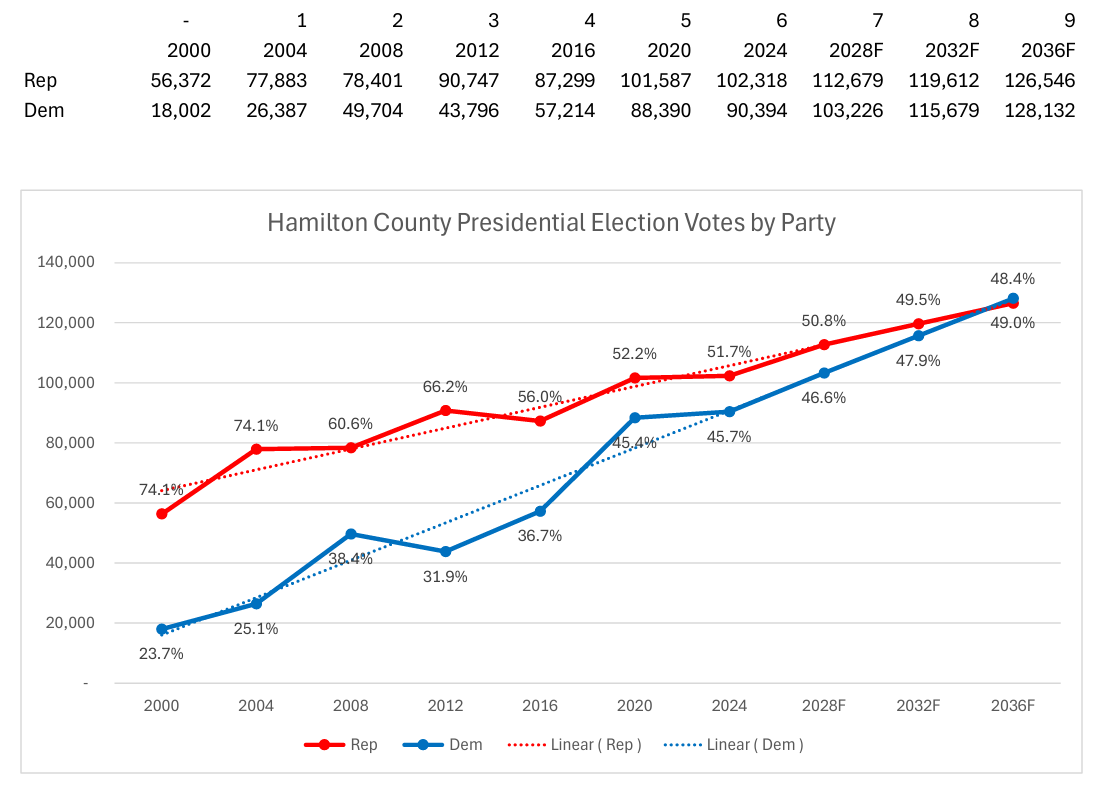




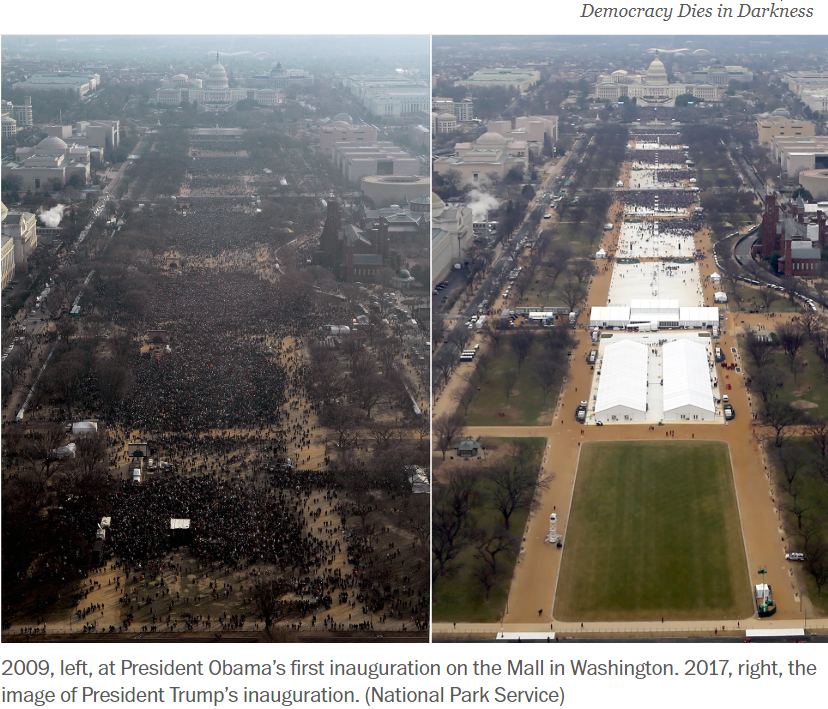




 Good News