Good News: Living (Much) Longer

https://pubmed.ncbi.nlm.nih.gov/7565998/#:~:text=The%20average%20life%20expectancy%20in,France%2C%20England%2C%20and%20Japan.

https://www.populationpyramid.net/united-states-of-america/1950/

https://www.infoplease.com/us/health-statistics/life-expectancy-age-1850-2011

https://knoema.com/atlas/United-States-of-America/topics/Demographics/Age/Life-expectancy-at-age-80-years

https://www.ssa.gov/history/lifeexpect.html

https://www.ncbi.nlm.nih.gov/pmc/articles/PMC4861644/

https://www.infoplease.com/us/health-statistics/life-expectancy-age-1850-2011

It’s not all “good news”. Recent data indicates that life expectancy varies greatly between US states, counties, cities and census tracts. My hometown’s life expectancy is just 73.6 years, about 5% (3.7 years) less than the national average of 77.3 years. My suburban Indianapolis home for the last 30 years shows an 81.6 year life expectancy, about 5% (4.3 years) higher. That’s an 8 year (10%) difference between two midwestern cities.

https://www.rwjf.org/en/library/interactives/whereyouliveaffectshowlongyoulive.html

Latest Good News

Twice as many passport holders

American eagles recover from extinction threat

More voting in recent elections

Stable US steel production

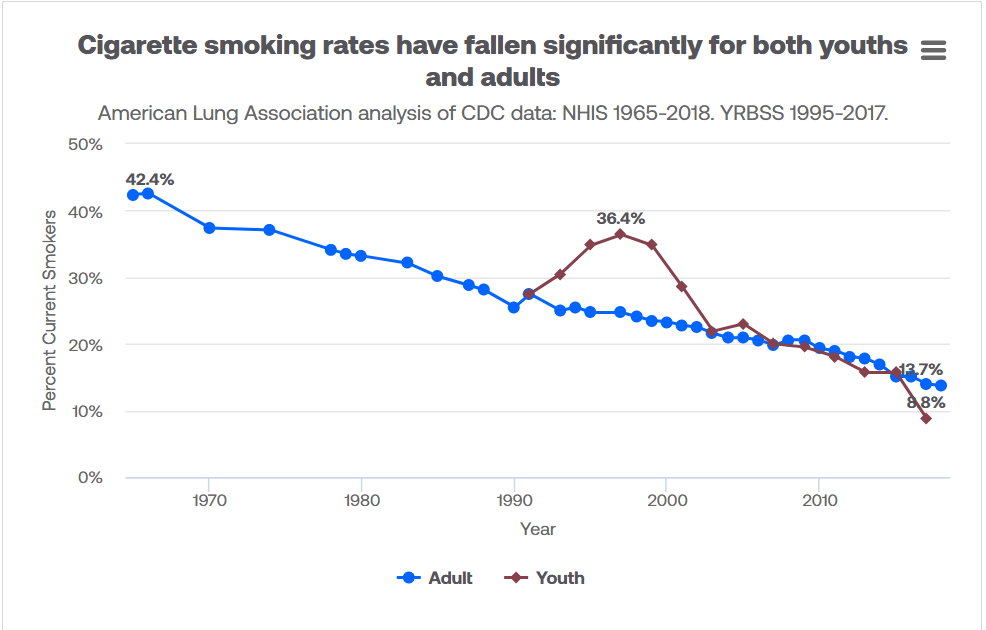
Less smoking.

Record low unemployment

US universities lead global rankings

US is Energy Self-Sufficient

Flat real gas prices

Less oil/energy intensive economy

Results of State Covid Strategies

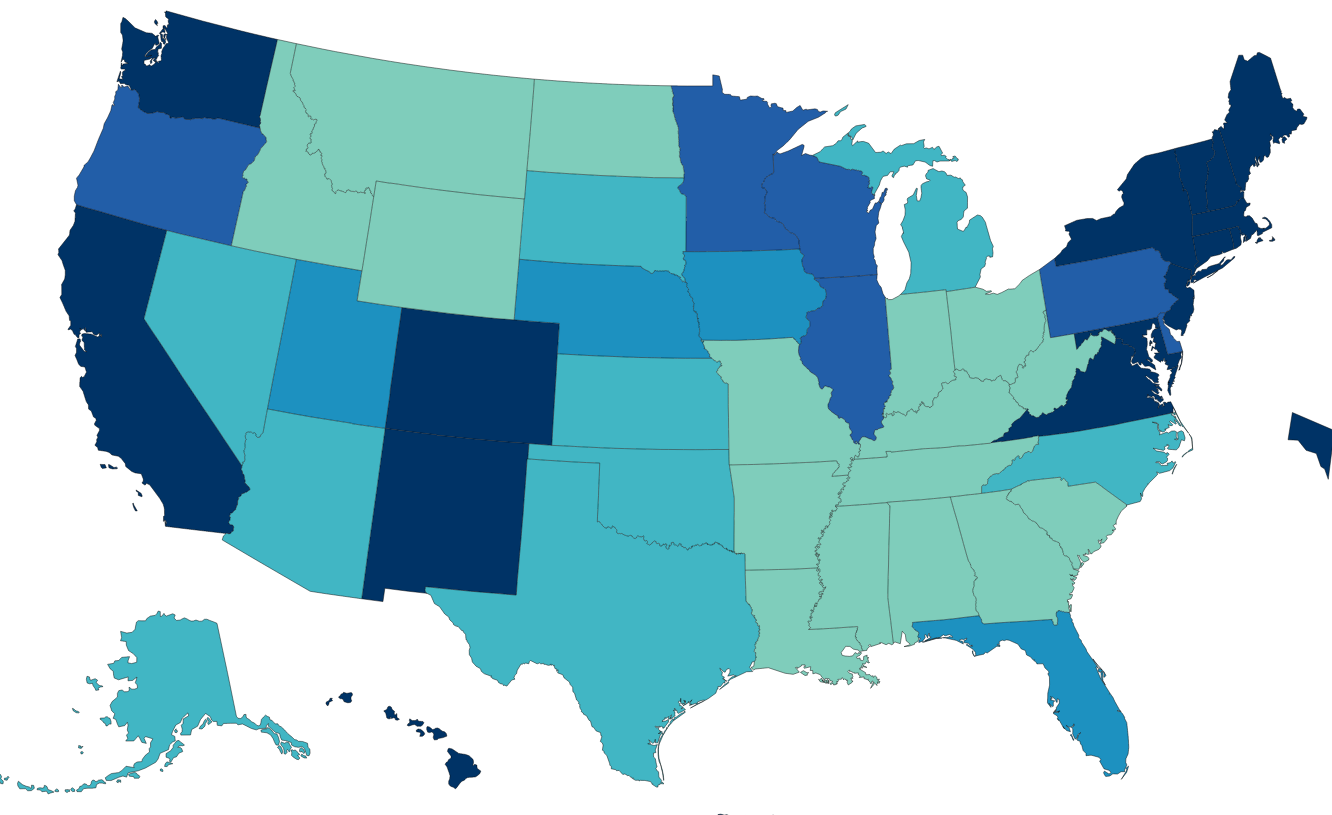
Many states have legislatures and governors from the same party and voted for this party in both the 2016 and 2020 presidential elections. These states have adopted quite different Covid management strategies. There are 14 solidly Democratic states and 21 solidly Republican states, leaving 15 states with some level of “mixed” political control and influence.

https://ballotpedia.org/Partisan_composition_of_state_legislatures

https://www.ncsl.org/research/about-state-legislatures/partisan-composition.aspx#

https://www.cnn.com/election/2020/results/president

https://www.politico.com/2016-election/results/map/president/

https://en.wikipedia.org/wiki/List_of_U.S._states_and_territories_by_population

Fully Vaccinated, Age 18+

Democratic states average 80%, Republican states 66% and Mixed states 73%. The national average is 72%. Nevada (69%) is the only Blue state below 75%. Alabama, Wyoming and Mississippi have the lowest scores for the GOP at 59-60%. Florida has the highest rate at 75%. The split in world views is confirmed by this measure. The mixed group ranges from Louisiana and Georgia at 63% to Massachusetts (85%) and Vermont (86%).

https://covid.cdc.gov/covid-data-tracker/#vaccinations_vacc-total-admin-rate-pop18

Cumulative Death Rate / 100,000 Population

The overall death rate for the country is 256. The mixed states are similar at 265. The Democratic states average 221 deaths per 100K people. The Republican states average 282 deaths per 100K people. If the Republican states had the same rate as the Democratic states, they would have 59 fewer deaths per 100K people, for a cumulative total of 70,000. Economists use $10M as the value of a life in many cost-benefit calculations, so one measure of the difference is $700B.

California (196) and New York (227) drive the lower D result, but the Dems include higher fatality states such as Rhode Island (305) and New Jersey (344). The mixed states include some relatively high death rates in Michigan (315), Louisiana (329) and Arizona (350). The Republican group includes 3 states below the D average in Utah, Alaska and Nebraska, but 7 states at 300 or higher: Oklahoma, Indiana, West Virginia, Arkansas, Tennessee, Alabama and Mississippi.

https://covid.cdc.gov/covid-data-tracker/#cases_deathsper100k

As the median age for Covid deaths is 75, an argument could be made that the $10M economic value of a human life is too high in this analysis.

https://www.cdc.gov/nchs/nvss/vsrr/covid_weekly/index.htm#SexAndAge

Population density and the percentage of population aged 65+ did not have statistically material impacts on the pattern by political party control.

https://www.census.gov/data/tables/time-series/dec/density-data-text.html

Nonfarm Employment Recovery: Nov 2021 vs. Feb 2020

Overall employment is within 2% of the February, 2020 peak for the country as a whole. The “mixed” states have recovered to within 2.3% of the peak. The Democratic states are only at 96.4% of the peak, while the Republican states, on average, are just below breakeven at 99.9%. If the D states had the same level of recovery, there would be 1.8M jobs added in the recovery to date. At the recent median $1,000 per week wage, this would generate $94 billion of income annually.

https://www.bls.gov/news.release/laus.t03.htm#

https://view.officeapps.live.com/op/view.aspx?src=https%3A%2F%2Fwww.bls.gov%2Fsae%2Ftables%2Fannual-average%2Ftable-1-employees-on-nonfarm-payrolls-in-states-and-selected-areas-by-major-industry.xlsx&wdOrigin=BROWSELINK

I used the Feb 2015 to Feb 2020 period to generate a pre-Covid trend growth rate. This was 6.4% for the country, 5.4% for the mixed states, 7.0% for the D states and 6.7% for the R states. This indicates that the Republican faster recovery is not due to prior momentum. I used the 2020/2015 growth rate to create a solid estimate of the 2021/2020 recovery rate for each state (r = 0.63). It confirmed the 3%+ gap between the 2 parties was not due to prior trends. I also checked the percentage of 2019 employment in the leisure and hospitality sector, to see if this was driving the difference, but it did not have a material effect.

Mixed Political Control States

State% Vaccinated 18+Deaths/100KJob Recovery
AZ69350103
GA63304100
KS7025198
KY6628398
LA6332993
MD8221597
MA8531097
MI6731596
MN7720097
NH7715797
NC68192100
PA7530796
VT867893
VA8018698
WI7320597

Democratic Party States

State% Vaccinated 18+Deaths/100KJob Recovery
CA7919697
CO78187100
CT8627496
DE7625297
HA867988
IL7526396
ME8612696
NV6928397
NJ8334497
NM7929896
NY8422793
OR7714098
RI8730596
WA80136101

Republican States

State% Vaccinated 18+Deaths/100KJob Recovery
AL5934399
AK7013994
AR62314100
FL75296101
ID63241105
IN6430898
IA7126397
MS6036099
MO6427799
MT64278101
NE73184100
ND6527196
OH6627396
OK6630097
SC6529399
SD7129499
TN63322100
TX70264102
UT74125106
WV6531296
WY6027695

Good News: US Air Pollution Declines

Long-term Trends

The EPA provides consistent raw data from 1980 to 2020 showing very rapid improvements from 1980-2000 and continued, but slower improvements in the last 20 years on 7 measures of air quality. For each item, reductions from 1980-2020 and from 2010-2020 are listed.

Carbon monoxide: -81%, -12%

Lead: N/A, -86%

NO2: -64%, -21%

Ozone: -33%, -10%

Particulate Matter 10 (medium): -26% since 1990, +9%

PM 2.5 (fine): -41% since 2000, -18%

Sulphur Dioxide: -94%, -74%.

More details at this website:

National Air Quality: Status and Trends of Key Air Pollutants | US EPA

Decade by decade data.

Air Quality – National Summary | National Air Quality: Status and Trends of Key Air Pollutants | US EPA

The EPA publishes an annual report/web page to summarize results. In addition to the colorful graphs, its shows sources of pollution and describes the effects of individual pollutants. It provides statistics that normalize pollution measures against GDP which has grown greatly across 40 years, highlighting the even greater achievements by that measure. It shows pollution by city. It details EPA program areas and improvements. It notes that measures of more than 100 “toxic” air pollutants are down (but not zero). It shows that annual “unhealthy days” in the nation’s 35 largest cities have fallen by two-thirds, from 2,100 to 700/year between 2000 and 2015. It shows that “visibility” in scenic areas continues to improve. This report provides significant extra detail in an easy to drill down format.

Our Nation’s Air 2021 (epa.gov)

Our Nation’s Air – Air Quality Improves as America Grows (epa.gov)

Comparisons

Based on the fine particulate measure, the US ranks 84th best of 106 countries (top 20%).

World’s Most Polluted Countries in 2020 – PM2.5 Ranking | AirVisual (iqair.com)

US state measures vary quite widely. Indiana ranks 45th, 46th and 48th by 3 measures.

State Pollution Rankings | US News Best States

Air Quality By State 2021 (worldpopulationreview.com)

see national air pollution tab.

Explore Air Pollution in the United States | 2020 Annual Report | AHR (americashealthrankings.org)

Recent Concerns

The particulate matter measures have historically had the slowest reductions of the 7 measures. The medium particle (10 microns or less) rate increased between 2010 and 2020. The fine particles measure stopped falling at the end of the decade.

w26381.pdf (nber.org)

Bad Air Quality Plagues California, Washington, Oregon Cities : NPR

The Trump administration has loosened regulations, reduced funding and attempted to limit the ability of states to set tougher standards than those at the federal level.

What is the Trump administration’s track record on the environment? (brookings.edu)

NACAA2021PresidentialTransitionDocument-01152021.pdf (4cleanair.org)

Opportunities for Improvement

Interest groups, like the American Lung Association, portray the data to show that the glass is half-empty. The ALA focuses on the two weakest measures (fine particles and ozone). They drill down to daily peak events rather than average annual rates. They drill down to the city or county level to highlight the lower performers. They take the national quality standards and construct a “grading system”, so that the worst “F” cities and their scores can be emphasized. They use these results to show how many people are negatively effected by poor air quality. They emphasize that most of these cities are in the west and southwest. They point out that minority groups are disproportionately impacted by pollution. They link extreme heat and wildfires as causes of recent pauses in progress, noting that global warming is the underlying driver.

Key Findings | State of the Air | American Lung Association

Air quality in US dramatically worse, says new ‘State of the Air’ report – CNN

A recent United Nations article evaluates the last 50 years in the US, highlighting the improvements summarized above. The article emphasizes the health costs of poor air quality and the economic benefits of improved air quality. The “tone” and the “title” are negative. The report highlights the recent uptick in particle measures. It points to the lack of a decrease in CO2/greenhouse gases. It notes that the US is one of the top 10 worst air polluters ranked by number of deaths (not per capita). Finally, it says that the US EPA also agrees that there are major problems.

The United States Clean Air Act turns 50: is the air any better half a century later? (unep.org)

Overview of Greenhouse Gases | Greenhouse Gas (GHG) Emissions | US EPA

Pollution and Health Metrics: Pollution by country data and rankings (gahp.net)

The EPA website lists 4 challenges.

  1. Meeting increased science/health based standards.
  2. Climate change
  3. Reducing toxic pollutants
  4. Protecting the ozone layer

Air Pollution: Current and Future Challenges | Overview of the Clean Air Act and Air Pollution | US EPA

Summary

Like many public policy issues, especially environmental issues, there are competing ways to assess the current situation. The big picture data clearly shows ongoing improvements across 40 years. The fine particulate matter measure stands out as one that may be threatened by climate and fire issues. Federal, state and local regulators, together with businesses, governments, not-for-profits and individuals have taken steps to improve air quality and appear likely to continue in this direction.

On the other hand, air pollution above certain levels, in specific locations, especially for toxic substances, even for short periods of time, does have negative health and economic impacts. There are opportunities for improvement. The U.S. measures are just average compared with similar highly developed economies.

The world, including the US, has made great strides in reducing the emission of gases that threaten the ozone layer. However, CO2 levels in the US in 2020 are the same as in 1990. While US GDP has increased significantly since 1990, so we are more environmentally “efficient”, that does not matter when trying to globally reduce “greenhouse gases”.

US Infant Mortality Rate: It’s Complicated

The good news is that infant mortality rates (deaths/1,000 live births in 1st year) declined by 80% between 1950 and 2000, from 35 to just 7 and have declined an additional 14% to a little less than 6 by 2018.

• United States: infant mortality rate 1935-2020 | Statista

Infant Mortality Rate for the United States (SPDYNIMRTINUSA) | FRED | St. Louis Fed (stlouisfed.org)

The main CDC page highlights the 5 main causes of death, the significant state differences (higher rates in the south central states, Ohio and WV, and differences by race. Black infant mortality rates (IMR) remain more than twice as high as non-Hispanic Whites. Asians have lower rates than Whites. Hispanic White infant mortality rates are “close” to the White rates.

Infant Mortality | Maternal and Infant Health | Reproductive Health | CDC

The Petersen-KFF website provides clear summaries of the main dimensions of this public health area. About 2/3rds of deaths occur in the first month and are termed neonatal. The remainder in the first year of life are termed postnatal. Both neonatal and postnatal death rates have declined in the last 20 years.

Petersen provides more details on state level death rates, showing that the Great Lakes states have high rates similar to the southern states (7), while much of the country has much lower rates (5).

Births for mothers under 20 show death rates almost twice as high as those in their twenties and thirties.

Ten factors account for two-thirds of deaths, lead by congenital defects and early delivery/low birth weight which account for one-third.

The US mortality rate (5.8) is 75% higher than other countries with similar income levels (3.5). The world-class results in Japan and Finland come in at 2. Details in the way the US reports its figures may account for one-third of the difference versus comparable countries. While the US rate has declined from 7 to 5.8 in the last 20 years, the comparable group reduced its rate from 4.6 to 3.3. Various sources propose that socioeconomic inequality, racial differences and health care system differences account for the US’s poor performance.

What do we know about infant mortality in the U.S. and comparable countries? – Peterson-KFF Health System Tracker

Health status – Infant mortality rates – OECD Data

The racial disparities in infant mortality rates are addressed in various ways.

The very different rates by state seem to show that differing health care policies matter greatly.

Regional variation in Black infant mortality: The contribution of contextual factors (plos.org)

Socioeconomic and racial differences at the county level can be clearly seen in Indiana.

Infant mortality in Indiana | County Health Rankings & Roadmaps

The US Health & Human Services website highlights black-white differences in birth weights, SIDS occurrence, early births/low birth rates and causes of death.

Infant Mortality and African Americans – The Office of Minority Health (hhs.gov)

The statistical analyses to disentangle socioeconomic status and race are very complicated. Most show that socioeconomic status accounts for half of differences, but not nearly 100%. This study found that maternal education, maternal marital status and maternal age “explained” much of the racial differences. Of course, the authors then point to poverty and income differences as underlying factors.

Racial and Ethnic Infant Mortality Gaps and the Role of Socio-Economic Status (nih.gov)

Several more recent studies point to systematic racism working through a large number of lifetime events which impact the mother’s health as the primary cause of racial differences in infant mortality rates.

Exploring African Americans’ High Maternal and Infant Death Rates – Center for American Progress

Eliminating Racial Disparities in Maternal and Infant Mortality – Center for American Progress

One study of Florida births indicated that having a black doctor reduced deaths by 40% for black infant births. White infant mortality was not effected by the race of the doctor.

Black newborns 3 times more likely to die when looked after by White doctors – CNN

In summary, great progress has been made since WW II and continues to be made in the US. However, the reduction in death rates has slowed down. The US death rates are much higher than in other higher income nations and death rates in Europe and Japan have declined faster than in the US. US state death rates range widely, from 4 to 8. Black death rates are twice as high as white death rates.

There remains room for significant progress. World class 2 deaths per 1,000 versus 4.7 for American whites, 11 for American blacks, 4.2 for Californians, 4.6 for New Yorkers, 6.1 for Illinoisans and Floridians, 7.2 for Buckeyes, Hoosiers and Georgians, more than 8 for Mississippians and Arkansans.

US Life Expectancy

Historically, this was one of the “good news” items. It went up and up and up.

The results in the last 3 years have not been so positive.

Vital Statistics Rapid Release, Number 010 (February 2021) (cdc.gov)

Life expectancy has dropped by more than one year. The recent COVID effect is overshadowing the role of “deaths of despair”: opioids, alcoholism and suicide.

U.S. Life Expectancy Dropped In First Half Of 2020 : NPR

U.S. life expectancy plummets amid pandemic – POLITICO

The US life expectancy rate is much lower than countries at the same level of economic development. The US suffers from the negative impact of smoking, obesity, homicides, suicides, traffic fatalities, infant mortality and unequal health care access.

Why is life expectancy in the US lower than in other rich countries? – Our World in Data

How does U.S. life expectancy compare to other countries? – Peterson-KFF Health System Tracker

The difference in expected lifetimes by zip codes (income/wealth) has recently been highlighted, indicating a difference of as much as 30 years between the poorest and wealthiest locations.

ZIP Code Effect: Neighborhood Can Affect Life Expectancy by 30 Years – Blue Zones

Life expectancy in the United States, mapped by neighborhood — Quartz (qz.com)

US Abortion Rates

US abortion rates have declined significantly for nearly 40 years. Reported abortions increased from near zero through 1967 to 1.5M in 1979 and a peak of 1.6M in 1990, before declining to one-third of that level by 2018. The abortion rate per 1,000 child-bearing women reached 16.3 in 1973 when the US Supreme Court issued its Roe vs. Wade ruling. The rate peaked at nearly twice as high in 1981 at 29.3. The rate fell back to the 1973 level by 2012 and has fallen 20% further in recent years to 13.5.

Historical abortion statistics, United States (johnstonsarchive.net)

Abortion Rate In U.S. Falls To Lowest Level Since Roe v. Wade : The Two-Way : NPR

6 Charts Show How US Abortion Rate Reached Lowest Level Since 1973 (businessinsider.com)

U.S. Abortion Rate Continues to Decline, Reaching Historic Low in 2017 | Guttmacher Institute

• Chart: U.S. Abortion Rate Falls to Lowest Level Since Roe v. Wade | Statista

CDCs Abortion Surveillance System FAQs | CDC

Abortion statistics in the United States – Wikipedia