Our current challenging social and political situation is driven by the root causes of individualism, skepticism secularism, inadequate myths, human nature and insecurity. In a word: negativity. Civility embraces constructiveness, intentionality and public-spiritedness as clearly “positive” values. It is also based upon the “positive” values of human dignity, respect and acceptance. Is it reasonable to be so positive in a time of negativity driven by politicians, the media and our fellow citizens? The answer is “yes”. We have chosen to emphasize our challenges rather than our accomplishments. Those who pursue Civility need to be aware of the reality of modern progress, conditions in all areas of life and realistic opportunities for change.
Overall Good News
Improvements in all areas of life since the 1976 bicentennial are amazing!
Rose Colored Glasses; Man Bites Dog; If it Bleeds it Leads.
Politicians, journalists and influencers of all stripes emphasize the bad, the emotional and the unusual. This burdens us and our society. Allegedly, “it’s bad now, and it was MUCH better in the past”. This eternal NOSTALGIA is a big problem for our society today, leading many people to turn to populists, idealists, authoritarians and charlatans for salvation.
I will outline how much better the United States of America is TODAY than it was in the mid-1970’s. I graduated from high school with the class of 1974. I watched the emotionally mixed American bicentennial celebrations in 1976. I remember Jimmy Carter’s 1979 “malaise” speech in which he said that we, the people, needed to face our challenges directly, especially at a moral level. He was briefly cheered but then criticized for being too negative and pessimistic; an uninspiring leader!
Modern life in the USA is immeasurably better than it was in the 1970’s. It is certainly not perfect. The country has not achieved all that it could have or should have in the last half century. It still faces large global and moral challenges and wonders where it can possibly find the leadership, consensus and engagement to resolve them.
The sheer magnitude of changes in daily life across 50 years is difficult to describe but I hope that my outline will collectively communicate the great scale of improvements we have experienced and the resulting hope and expectation that the next 50 years will deliver the same kinds of positive growth. When we consider the last 50, 100 or 150 years of American life, we should be very optimistic.
Global Threats and Opportunities
The Cold War ended in 1989, relieving the pressure of 4 decades of imminent nuclear destruction. This was a miracle. No war. No revolution. No territories seized. No leaders executed. A quiet end to the threat. The US managed the threat of nuclear terrorism. West Germany embraced East Germany. The European Union welcomed new members. The global economy thrived.
The US established relations with China in 1979, beginning the country’s path to economic prosperity, trade and global influence. The growing trade between China and the world has acted to reduce the threat of conflicts while reducing the cost of goods for all.
The US welcomed the growth of Japan plus the “four tigers” of Hong Kong, Singapore, South Korea, Taiwan, as Asian nations embraced the “Western consensus” of mixed market capitalism, global trade and liberal democracy.
European nations also left behind histories of authoritarian governments or too much socialism to embrace the “Western consensus” and thicken ties through the European Union. Francis Fukuyama prematurely declared “the end of history” but the attractiveness of these successful choices was clear.
The US joined international efforts to reduce tariffs and increase trade leading to a doubling of imports and exports as a share of GDP.
The US adopted a less internationalist position after 9/11/2001, declaring a war on terror, defining the axis of evil, revoking treaty commitments, justifying preemptive war and invading Iraq without UN support. Even with this change, the US largely avoided major military conflicts and losses.
Total immigration to the US grew during this period from 2.3% to 2.9% of the population per decade. Many immigrant groups successfully joined American society.
The US welcomed foreign students to its universities. International tourists increased from 15 to 75 million per year.
The US attempted to resolve the Middle East conflicts with some success, avoiding large scale wars.
The US participated in talks to define and address the threat and impact of global warming. It has taken steps to reduce US carbon emissions.
Politics
Presidents Ford and Carter helped to rebuild confidence in the government after Vietnam and Watergate.
Ronald Reagan established “Conservatism” as a broad political philosophy for the Republican party.
Bill Clinton repositioned Democrats more to the center on economics with his “third way” approach.
Both parties increasingly used wedge issues and either/or choices to polarize parties and choices; although the share of independent voters has grown from 30 to 45%, with the rest evenly split between the two dominant parties.
Perot, Buchannon, Palin and Trump provided social and economic populists with a choice.
The country increasingly accepted racial minorities, women, gays, religious minorities, and immigrants; but the conflict between traditional and modern views was politicized as some could not tolerate the changes and others sought to embed the changes as universal human and legal rights accompanied by social pressures to comply with the dominant “tolerant” view.
Federal government employment was reduced from 5 to 4 million in 50 years, while the population grew by 50%. After Reagan, “government” solutions were inherently suspect. Even Bill Clinton declared “the era of big government” is over.
Total federal, state and local government activities grew a little faster than the economy, with the ratio of tax receipts to GDP inching up from 29% to 32%. The ongoing pressure to “cut spending, taxes and regulations” could not defeat the pressures to address social, political and economic issues and interests.
The top marginal income tax rate was reduced from 70% in 1982 and has remained just under 40% since 1987. Neither party has proposed widespread tax increases.
The Affordable Care Act was enacted in 2010, helping to bring the share of Americans without health insurance down from 20% in 1975 to 8% today.
The US safety net/welfare system has remained intact during this period driving the supplemental poverty rate down from 20% to 15%, while the official poverty rate has declined by just 1%. The share of the elderly (65+) in poverty has fallen from 16% to 8%.
The Economy
Real dollar GDP is 4 times larger at $24 trillion.
US real per capita GDP has remained the highest of all major countries for a century. Continued leadership reflects a dynamically successful economy.
Real per capita GDP has increased by 250% to $70,000.
US fiscal and monetary policy has repeatedly been effective in taming the business cycle and recovering from shocks like the housing crisis and the pandemic.
Industrial production, including energy, is up by 250%.
The number of business establishments has doubled to 8.6M, providing ownership and employment opportunities in a more specialized, globally traded world.
The number of franchise businesses has grown from 375,000 to 800,000+, employing more than 10 million people.
The rate of new business formation and success increased throughout the period, with a new boost after the pandemic.
Businesses responded to the 1970’s “Japanese invasion” and became strategically more focused, measured more effectively, focused on cost reduction, invested in R&D, and applied information technology and process improvement tools. Foreign and domestic competition led businesses to be more cost effective, improve product quality and offer products better tailored to diverse customer wants and needs.
Firms experimented with factory robots by 1975. They now use 380,000 robots, adding 10% more annually.
Auto production in the US has increased from 8 to 10 million units per year.
Farms produce twice as much using 20% less land and 40% less labor.
Businesses adapted to the world of greater international trade by growing or shrinking facilities, markets, products and product lines. They adapted to the new power of consumers and retailers and reduced power of manufacturers. They divested units and rejected the conglomerate model. They rejected vertical integration, learning to outsource all functions where they did not have a competitive advantage.
Firms embraced more effective banking, equity and bond markets to fund their activities. They tapped global sources and private equity. They learned by use financial leverage to increase net earnings and acquire other less dynamic competitors.
Firms changed organizational structures to have fewer layers, less positional power, more staff experts and the ability to use cross-functional (matrix) approaches to core operations, projects and joint ventures.
Education
Preschool/Kindergarten enrollment up from 5 to 9 million. Nearly all part-time in 1975 and mostly full-time in 2025.
High school graduation rate is up from 75% to 85%.
Intelligence test scores have increased by more than 10 points.
Share of young adults who have earned college degrees has doubled from 20% to 40%.
Share of adults with college degrees has more than tripled from 12% to 38%.
Share of young women with a college degree is up from 17% to 45%; shares for men up from 27% to 37%.
Share of degrees in STEM disciplines has grown from 11% to 19%.
Number of college students studying abroad is up by 5 times.
Law school first-year enrollment remains at 40,000, while the population has grown by 50%.
US holds 18 of top 30 global university spots.
The number of annually earned doctorates has doubled.
US accounts for 50% of Nobel prize winners, up from 40% in 1975.
Transportation
22% of new cars are electric. Self-driving cars are widely deployed.
Fuel milage has doubled from 13 to 27 miles per gallon.
New car defects have dropped by two-thirds.
Air travel miles are up by 5 times.
FedEx 2-pound overnight service was introduced in 1975 for $75. Service is widespread today at $55.
Same day and next day delivery services are available today, making Amazon.com, grocery and restaurant deliveries common. Catalog mail order lead times were 6-8 weeks in 1975.
Energy
The US faced energy crises in 1973 and 1979 that disrupted businesses, emptied filling stations and led to recessions.
The US imported 35% of its petroleum products in the 1970’s. It is a net exporter today.
Energy intensity, the ratio of energy used to GDP, has fallen by 60% since the 1970’s.
LED bulbs last 10 times longer. Lithium-ion batteries last 4 times longer.
Wind power is 10% of electricity generation. Solar is 10% of electricity generation. Solar is the lowest cost source today, accounting for two-thirds of new generating capacity added.
Coal production is the same today as in 1975, down 50% from its 2007 peak. It is declining rapidly.
Environment
Toxic air pollution measures are lower by 65-90%.
The world resolved the threat to the ozone layer.
Percentage of US homes in communities with treated wastewater has increased from 50% to 80%.
State parks acreage has doubled. Federal parks acreage has tripled. Land trust additions are equal to the state parks area.
Total US forest land area has increased from 750 to 800 million acres, while the US population has grown by 50%.
Nesting pairs of American bald eagles have grown 100-fold, from 700 to 70,000.
US (1976) and global (2014) birth rates are half of historical levels, reducing environmental demands.
US is on track to reach 50% reduction in greenhouse gas emissions by 2030.
Health
Life expectancy has increased from 73 to 78 years.
Infant mortality rate has dropped by two-thirds.
Smallpox has been eradicated. Polio remains eliminated. Other diseases close to zero.
Smoking rate is two-thirds lower, down from 37% to 12% of adults.
Death rates down: Strokes 67%. Cancer 25%. Flu/pneumonia 67%. Heart disease 50%+. Liver disease 25%.
US governments, medical industry, businesses and people responded to the Covid-19 pandemic resulting in a death rate that was half of the 1917 Spanish flu. Novel vaccine development and flexible delivery resources limited the death toll.
Abortion rates have fallen by 50% since 1980.
Medical research continues to develop new science and solutions. Cloning and human genome mapping.
In vitro fertilization births have grown from 0 to 100,000 per year.
Modern anti-depression drugs (SSRI-Prozac) are much safer and more effective than their predecessors.
Kidney dialysis extends lives for 550,000 today versus 25,000 in 1975.
Americans have 40 million MRI scans done on 13,000 machines, up from zero.
Laser eyer surgery has grown from an experimental procedure to 800,000 annually.
50,000 organs are transplanted each year, up from just a few experiments.
Safety
Property crime rate is down by more than 50%. Violent crime rate is one-third lower.
Both the workplace fatality and injury rates are down by two-thirds.
Traffic fatalities per driven mile are three-fourths lower.
Fire incidents have been cut in half while the population grew by half.
Emergency medical services have grown from 2% to 90% of counties; employing 300,000 people, 50,000 ambulances and 1,300 helicopters.
Consumer
Firms have offered consumers much wider options for products in all industries. A typical Walmart Supercenter has 125,000 different SKU’s.
We enjoy year-round availability of most fruits and vegetables today rather than shopping by season.
Clothing and durable goods prices have been cut by half.
The average automobile is 13 years old versus 6, reflecting massive quality improvements.
Car buyers can choose from 15 major manufacturers instead of just 4.
Appliances in more homes: Washing machines (70-85%), dryers (45-82%), dish washers (28-54%), microwave ovens (4-95%). Refrigerators are 25% larger, half price and 75% more energy efficient.
Median new home square footage has increased by half, from 1,500 to 2,200 square feet.
Mortgage loan rates have declined from 8-14% to 4-7%. Real rates are just 2% today.
Total debt service payments (home, car, credit card, student loan) as a percentage of disposable income have declined from 11% to 10%.
Air-conditioned homes have grown from a hot 55% to a cool 95%.
Away from home food spending has more than doubled from 28% to 59% of total food spending.
Household consumption is up from 87% to 92% of disposable income. Savings is down from 13% to 8%.
Leisure
Many television program options. Top 4 network share down from 90% to 30%. Recording and streaming options exist today.
Cable or satellite TV access has grown from 14% to 100%.
The number of feature films released each year has bloomed from 100 to 700.
Music singles are effectively free today. They cost $7.50 each in current dollars in 1975. The transistor radio has been replaced with portable, wearable devices served by playlists, suggestions and feeds.
Real consumer electronics prices have declined by 80-95%. A 21-25 inch color console was $2-3,000 in 1975 in current dollars. A 50-inch tv is available for $500 today.
A 1982 IBM PC cost $10,000 in current dollars. For $2-3,000 today you get 1,000 times the processor speed, 10,000 times the memory and 100,000 times the storage space.
Video rentals boomed in the 1980’s and 1990’s growing into a digital $100 billion industry.
The $5 billion pinball machine sector evolved into the $50 billion handheld and online gaming industry.
Virtual reality equipment is increasingly popular.
Passports are held by half of US citizens, up from 5% in 1975.
Following deregulation, the real price of air travel per mile has glided down by 40-60%.
Hotel room capacity has doubled from 2.4 to 5.3 million.
Pet food consumption has tripled.
American wine production has increased from 250 to 700 million gallons, along with quality.
American brewery count has increased from 150 to 7,000, along with quality.
Wealth
Mutual funds, index funds and 401K’s offer investing to everyone. Percentage of stockholders has grown from 12% to 60%.
The number of retirement plan participants has grown by 250%.
Real dollar retirement plan assets have grown thirty-fold, from $1.6 to $48 trillion.
Homeownership rate increased from 64% to peak of 69% before falling back to 66%.
Family wealth more than doubled for those in the 1st-25th, 26th-50th, and 51st-90th percentiles between 1989 and 2022. Summary data for 1975 to 1989 is not readily available. Real home prices increased by 20% and the real dollar S&P 500 increased by 75% during this period, overall.
Labor
Compounded labor productivity has increased by 150%, more than 2% per year!
Manufacturing, administrative and farm jobs were reduced by 20% of the total during these 50 years. They were replaced by STEM/analysis, management and health care jobs.
Prime age labor force participation increased from 74% to 84%.
Typical unemployment rate declined from 6.5% to 5%.
Share of self-employed workers increased from 9% to 11%.
According to the Gallup Organization, the share of “engaged” workers has increased greatly in the last 20 years.
Real median family income increased by 40% from 1984 to 2024.
There are dozens of expert calculations of real incomes, adjusted for taxes, government benefits, charity, fringe benefits, hours, etc. Most show that 1975-1990 was flat and that 2000-20 showed modest increases.
Society
The US continues to lead the world in charitable giving as a percentage of income, double the nearest country, Canada.
US migration and population growth in the “Sunbelt” impacted local and national economies, politics and society. Texas (13-31M), California (21-39M) and Florida (8-23M) showed the greatest growth and national influence.
Share of adults cohabiting has increased from 1% to 13%.
Teen pregnancy rate has been cut in half.
The share of married couples has declined from 83% to 67% of households.
Parents now invest 20 hours per week caring for children, up from 12 hours in 1975.
Same sex marriage was legalized by the US Supreme Court in 2015.
Female labor force participation rate has increased from 46% to 57%.
The female to male wage discount has been reduced from 35% to 10%.
The number of congresswomen increased from 19 to 155 (7X).
Women today have access to credit and credit cards in their own names.
Black unemployment declined from 15% to 7%, with the excess above whites falling from 7% to 2%.
Black poverty rate has declined from 30% to 18%.
The Black to White income ratio has improved from 60% to 67%.
The share of interracial marriages has increased from less than 1% to 10%.
Percentage of Americans moving per year has declined from 20% to 12%. Interstate moves have declined from 3% to 2%.
Robert Putnam’s “Bowling Alone” shows a 40% decrease in social participation during this time.
Awareness, tolerance and support for “differences” is higher by an order of magnitude: races, nationality, immigration status, physical or mental disability, gender identity, mental health, autism, obesity, and personality.
Hispanic Americans have increased from 6% to 20% of the population.
The percentage of non-Christians, including religiously unaffiliated, has increased from 12% to 35% of the population.
The share of 40-year-olds never married has increased from 6% to 25%.
Computers
Personal computer software and phone apps provide tools for email, calendars, word processing and spreadsheets to everyone today.
Personal computers are in 95% of homes versus 0% in 1975.
More than 90% of jobs today require computer skills.
Home internet access is 92%.
Digital cameras, music, videos, sound and storage make everything portable.
Voice controlled devices and instant language translation.
Today’s 10-day weather forecasts are as reliable as next day forecasts in 1975.
Google search and artificial intelligence provide access to all of man’s writings and promise thought, itself.
Communications
Internet structure and web browser provide access to everything and everyone.
Smartphones integrate computing and communications. 90% ownership rate. Provides photo, filming and navigating capabilities.
Mobile/cellular phone networks and wifi routers offer universal access to the internet and phones.
Social media networks combine the input of many to build and use networks.
Internet allows for open-source software and information creation.
Video conferencing and internet enabled phone/video calls are common.
Voice mail, answering machines, caller ID and 911 were invented.
Digital books have grown to 25% market share.
Annual first class mail per person increased from 240 to a peak of 360 in 2000 before falling to 130 today.
Daily newspaper subscriptions have plunged from 60 to 20 million.
Share of homes with landlines has fallen from 90% to 30%.
A 3-minute long distance call in 1975 cost $8.70 in current dollars. An international Skye call today is 77 cents.
Summary
The world is a better, richer and safer place. Politics has evolved. The economy is 4 times larger. Businesses and education are more effective. Energy is cheaper. Transportation is better. The environment is much better. Health is much better. Safety is much better. The consumer is king. Leisure options and quality can’t even be compared with 1975. Wealth is up. Incomes are up. Society is digesting many large changes. The computer and communications revolutions have delivered miracles and promise more.
We face social, political and environmental challenges. We have more resources than ever before. Based on American history we should be very confident about solving our challenges.
1 Reduced quarterly inflation rate (CPI) from peak 8.6% in 2Q, 2022 to 2.7% in 4Q, 2024. 2 Doubled the federal budget deficit from $0.75T to $1.5T per year. 3 Inflation grew to 9%, partly reflecting excess government spending initiated by the president. 4 Added 15M jobs; added jobs every month!!!!!!! 5 Cut the Black unemployment rate from 10.0% to 6.1%. Cut the Hispanic unemployment rate from 9.3% to 5.1%. 6 Increased per capita real disposable income by 5.6%. 7 Increased prime age labor force participation to near record 83.9%, last seen in 2001. 8 Reached pre-Covid employment in 28 months. Great Recession recovery took 3 times as long (77 months). 9 Real wages grew significantly in each year. 10 Record low unemployment rates quickly achieved and maintained after pandemic. 11 Reduced unemployment rate from starting 6.7% to 3.7% average for 2022-24. Pre-Covid 2017-19 was 4.0%. 12 Increased real GDP by $2.8T, 13.1% total, 3.2% annual. Trump pre-Covid gain was $1.7T, 2.8% annual. 13 Bloomberg reported a 26% increase in net household wealth between December 2020 and 2024. 14 Increased household wealth by 20%. 15 Recorded 24% increase in median home sales price from December 2020 to 2024. 16 Stockmarket value increased by 50% from December 2020 to 2024, building upon 50%+ rise in prior 4 years.
Outstanding economic results. The majority of inflation was due to pandemic and supply chain issues. Nonetheless, the growing budget deficits were an “own goal” that should have been avoided for economic and political reasons.
Governing
17 Appointed record number of federal judges, including record share of women and minority judges. 18 Postal Service Reform Act – reset reasonable debts, compensation and service levels. 19 Misevaluated and misresponded to declining personal health risks. 20 Democratic party exceeded expectations in 2022 midterm elections. 21 Negotiated spending limits in order to increase debt ceiling and avoid government shutdown. 22 Failed to overhaul Democratic party position as leaders of states and cities. 23 Failed to take advantage of the January 6, 2021 insurrection to remove Trump from politics. 24 Oversaw continued weakening of Democratic Party appeal to working class, minorities, men and independents. 25 Oversaw continued weakening of Democratic Party power, brand and results. 26 Promised to govern for all of the people but slipped into anti-MAGA politics. 27 Ran for second term and failed to withdraw in time for the party to field an effective platform and candidate. 28 Republicans were able to make DEI and wokeness a winning issue at all levels, without counter-leadership. 29 Unable to offer a new framework to reset politics outside of the win/lose polarization approach. 30 Increased IRS budget to reduce tax evasion and increase revenues. 31 Inflation Reduction Act – set minimum 15% corporate tax rate. 32 Electoral Count Reform Act – clarify presidential election processes. 33 Speech and legislation on threats to democracy, voting rights. 34 Support Voting Rights and Freedom to Vote legislation, enforced laws, opposed new state restrictions. 35 President and Democrats were unable to make progress on voting reforms despite opportunities. 36 American Rescue Plan – extra funding to cut child poverty in half. 37 Increased Pell Grant funding for lower income college attendees. 38 PACT Act – covers veterans exposure to toxic chemicals. 39 Provided new or lower cost internet access to 5M. 40 Provided student loan debt relief to 5 million borrowers. 41 American Rescue Plan – reduced medical insurance premiums
Some “good government” initiatives and results. Biden was unable to address the basic challenges of polarization, skepticism, social media, rule of law and personal integrity. He was elected as a “placeholder” to avoid Trump in 2020 and filled the “placeholder” role. He was unable to reframe the debates.
Public Health
42 Inflation Reduction Act – allows Medicare to negotiate top 10 drug prices, 43 Inflation Reduction Act – capped annual drug costs, reduces insurance costs 44 Negotiated agreement with pharmaceutical companies to reduce drug prices. 45 Doubled number enrolled in Affordable Health Care from 12M to 25M. 8% uninsured is record low. 46 Inflation Reduction Act – increases Affordable Care Act access to medical insurance. 47 American Rescue Plan – 500M covid vaccinations 48 American Rescue Plan – funding for individuals, businesses, governments and NFPs to survive pandemic. 49 Management of Covid-19 pandemic health care, communications and economic recovery strategy. 50 Failed to capitalize on his pandemic recovery and economic successes in the public eye. 51 Some pandemic decisions were overly restrictive, not based upon science, cost/benefit or value of freedoms. 52 Legislative, funding and regulatory changes to energize the Cancer Moonshot initiatives. 53 Rejoined the World Health Organization.
The pandemic mitigation and recovery should have been celebrated as a once in a century victory for the American people, science, business and government. And for the world! The results were amazing, if imperfect. Biden’s team was unable to stake out the high ground and frame the real results in this manner, allowing partisan politics to infect and undermine even this situation.
International Relations
54 Created QUAD security relations with Australia, India and Japan. 55 Facilitated improved relations between Japan and South Korea. 56 Increased support from citizens and leaders in NATO nations to the US. 57 Recommitted the US to NATO, encouraged defense investments, welcomed Finland and Sweden. 58 Signed AUKUS deal with the United Kingdom and Australia for Indo-Pacific security. 59 Unable to renegotiate new bargain with allies to pay for US defense, police, trade, shipping, legal umbrella. 60 Was unable to delivered principle leadership for the liberal international model on trade and global affairs. 61 Failed to reset US-China relations despite shared interests in global commerce, climate, security and health. 62 Supported Trump’s anti-free trade and anti-China actions without proposing effective alternatives. 63 Reduced US reliance of Chinese imports by 10%, increased US exports to China by 15%. 64 US dollar increased in value by 15%. 65 US inbound foreign investment averaged twice as high from 2021-24 versus 2020. 66 US outperformed other nations in achieiving pre-Covid levels of GDP and employment. 67 US stocks increased in value by 50%, more than in other markets. 68 Supported the bipartisan 2024 immigration reform bill that was rejected by candidate Trump and Republicans 69 Failed to take emergency action to secure the US-Mexico border, protect and process immigrants. 70 Responsible for 3 years of 175,000 monthly migrant apprehensions versus 25,000 baseline. 71 Ended Afghanistan war within negotiated plan. 72 Protected the US from terrorist attacks, authorized surgical anti-terrorist attacks. 73 Recorded zero domestic deaths from international terrorist activities during 2021-24. 74 Support for Israel after Hamas attack, ceasefires, prisoner exchanges and hostage releases. 75 Afghanistan withdrawal was poorly planned and executed, costing lives, equipment and US stature. 76 Hamas attacked Israel, killing 1,200 citizens and taking 300 hostages, confident of Israel/US limits. 77 Israel invasion of Gaza has continued without resolution, highlighting the US’s lack of influence/leadership. 78 Economic, intelligence and military support to Ukraine, which has stopped Russia’s invasion progress. 79 US and allies imposed sanctions on Russia for Ukraine war. 80 Russia invaded Ukraine, confident that the US and allies would not respond effectively. 81 Russia’s invasion of Ukraine has continued, without effective opposition or a negotiated solution.
Biden was able to mend relations with our allies and improve the strength of these alliances and the global power of the US economy. His team fumbled the Afghanistan withdrawal, failed to prevent the Russian and Hamas invasions and was unable to drive these situations to better solutions. US power has been undermined by these failures. The spike in illegal immigrants also portrayed the US and the Biden administration as a weak protector of our essential interests.
Resources
82 Inflation Reduction Act – $369B clean/green energy investment incentives. 83 Invested in wind, solar, battery and electical vehicle technologies. 84 US increased position as world’s largest oil producer and LNG exporter. 85 Expanded the US portfolio of national monuments. 86 Invested $4B in superfund environmental cleanup. 87 Rejoined Paris Agreement to address climate change. 88 Infrastructure Investment and Jobs Act – $1.2T. 89 New investments in domestic manufacturing, adding 750,000 jobs. 90 CHIPS and Science Act – incentives for domestic semi-conductor production. 91 Executive order on Artificial Intelligence outlines potential risks.
Big wins in managing energy, infrastructure and the environment.
Social Issues
92 20% reduction in violent crime rate after pandemic increases. 93 Renewed the Violence Against Women Act. 94 Repositioned marijuana classified substance rating, reduced federal criminal enforcement. 95 Respect for Marriage Act – required states to recognize the decisions of other states. 96 Responded to Supreme Court reversal of Roe v. Wade with Executive Orders on reproductive health services. 97 Revised asylum seeker options, added green card options for spouses of US citizens. 98 Safer Communities Act – gun controls, screenings, red flags.
Some small wins for the left.
Wins and Pinches
3 wins for every pinch! A decent number of achievements for a one-term president in a very polarized age.
Overall
Public Health A
Economy A-
Resources B+
International C+
Social Issues C
Govern/Politics C-
Biden did an outstanding job on the “blocking and tackling” in a very difficult situation. He “treaded water” in the international arena. He did not advance liberal social causes effectively. He failed to effectively address the Trump/populist threat to our democracy. For this, the overall grade is a D. 😦
Left, Right and Center
Biden was a moderate. He only tilted far left on 4 of the 98 items. Student loan relief was for the university crowd. The failure to address border security administratively was due to minority and progressive politics. Doubling the budget deficit undercut 30 years of Democratic Party “fiscal discipline” following Clinton’s “third way”. Not trying to reposition Democratic politics as centrist, moderate, adult, opportunity, American, scientific, effective, growing, universal, creative, tolerant, professional, metropolitan, ecumenical, big tent, majority, community, emerging, aspirational, progressive, etc. for fear of displeasing the postmodernist crowd and/or special interests was a huge lost opportunity in a time that called for leadership.
His greatest success was in managing the pandemic threat and growing the economy. He managed crime and terrorists. He enhanced American global power. He was a moderate president, just like Obama and Clinton.
Trump
I’m not a fan of Trump. His first term delivered more results than expected, but his existential threat to our system was already very clear.
Hamilton County is in the middle of the Wisconsin glaciated till plains region. The nearby landscape is relatively flat and contains a limited number of state parks, forests or nature preserves. Yet, for the weekend hiker willing to drive 1-3 hours away, the hiking options are unlimited. The 3-hour radius extends far into Ohio, Michigan, Illinois and Kentucky. Think of Chicago, Bloomington, IL, Champaign-Urbana, IL, Vandalia, IL, Terre Haute, Evansville, Owensboro, KY, Louisville, Elizabethtown, KY, Frakfort, Lexington, Cincinnati, Hillsboro, OH, Columbus, Dayton, Fort Wayne, Findlay, OH, Toledo, Coldwater, MI, Kalamazoo, South Bend, and South Haven, MI.
A 3-hour driving radius covers 100,000 square miles and 200 counties. Indiana is the 38th largest state with 36,000 square miles, so we cover almost 3 Indiana’s. This is equal to the combined land area of Michigan and Ohio or the combined land area of Illinois and Kentucky! Indianapolis is deemed the “Crossroads of America” due to its central location and direct access to national highways in all 8 directions away from the city. Chicago, Peoria, St. Louis, Evansville, Louisville, Cincinnati, Columbus and Lansing. US 31 provides a ninth limited access highway north to South Bend and Grand Rapids. The abundance of highways offers 3-hour access up to 210 miles away.
During the pandemic I hiked in all 200 counties within 3 hours of Hamilton County. I summarized the top 40 hikes in 3 blog posts based upon distance away and an extra one for honorable mentions. Let’s organize them below based upon their primary attraction for hikers.
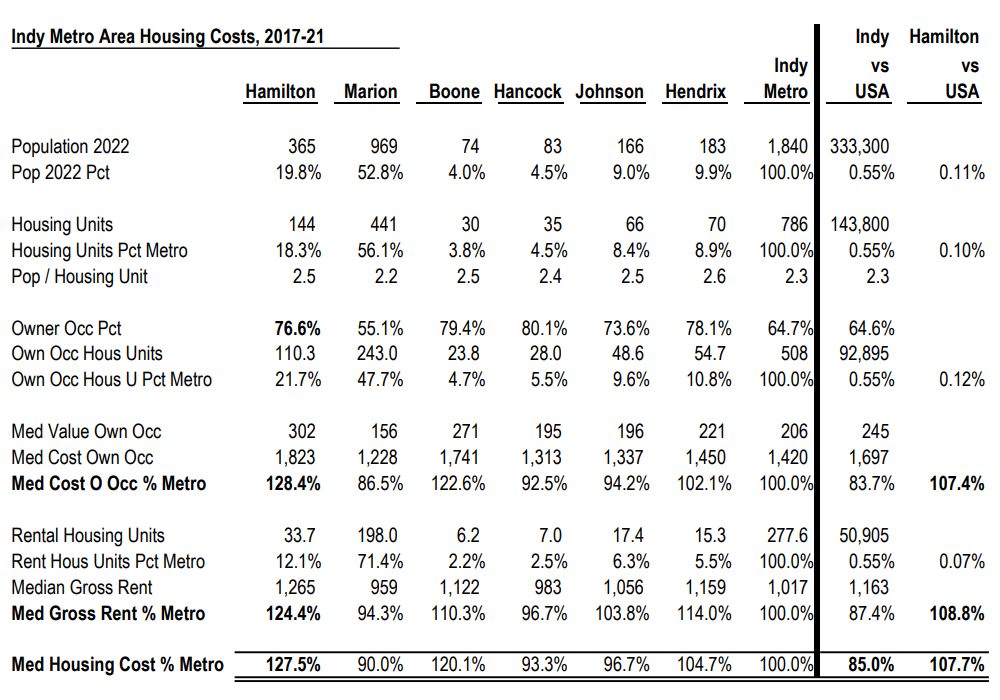
In general, Hamilton County’s costs are similar to those of the Indy metro area. It’s 357,000 residents account for just 17% (1 in 6) of the formal Indy metro area’s 2,075,000.
Solid county level data is not available for all areas, but limited comparisons helped to identify goods and services that might differ between Hamilton County and the Indy average.
Hamilton County’s housing is 8% more expensive than the national average rather than 15-17% lower as seen in metro Indianapolis. The housing stock is also newer, larger and higher quality. The full housing price difference would increase the total cost of living measure by 7%. Considering one-half being due to age/quality and one-half due to prices adds 3.5% to 93.1% to yield a revised 96.6% cost of living ratio.
Indiana local taxes average 9.3% of income versus 10.2% nationally. This 10% savings on a 10% cost factor reduces the overall cost of living measure back down to 95.6%. State sales and income taxes do not vary by county. Hamilton County’s property and income taxes are lower than its large population peer group in Indiana.
Food Prices
Historically, Indianapolis has been a competitive grocery market. Kroger has a leading market share. Cub Foods and Marsh have left the market, but Meijer’s, Trader Joe’s, Whole Foods, Fresh Thyme, Fresh Market and Market District now compete with the others.
Hamilton County’s retail sales per capita figure is 14% above the national average, despite the very high concentration of retail stores in Marion County along 82nd/86th Street. The county is well served by retailers of all kinds.
Food away from home makes up almost 5% of the consumer price index. No restaurant food index is publicly available. However, the Big Mac price in Hamilton County is $4.59 versus the $4.39 national average price, a 5% premium. If this applied to all restaurant prices, the overall cost of living index would be 0.3 higher, 95.9. The average Indiana Big Mac price was just $4.11.
The Economic Policy Institute provides “modest income” food prices that are 19% higher in Hamilton County than in Marion County. Given the proximity of the counties and the long-standing coverage of “food deserts” in Indianapolis contrasted with nearly none in Hamilton County, this indicator is suspect.
Hamilton County has 1.8 hospital beds compared with the national average of 1.9 and the Indiana average of 3.3. It has 1.5 primary care physicians versus 1.0 nationally and 1.3 in Indiana. 10% of Hamilton County households have medical bills in collections compared with 17% nationally and 19% in Indiana. Access to health care is adequate.
The Best Places website uses a simple index of a standard hospital bed night, a doctor’s visit and a dentist’s visit indicating that Hamilton County health care costs are equal to the national average (100).
A Rand Corporation study indicates that Indy metro hospital rates are 25% higher than the national average. This is driving Indiana statehouse political battles with claims and counterclaims. Professional services fees were 25% below the national average.
Although health care is as much as 18% of GDP in the US, the share in the consumer price index is only 5%. If Hamilton County consumer costs are the same as the nation, this would increase the cost-of-living index by 0.6 points to 96.5.
Utilities
Best Places pegs Hamilton County’s utility costs at 93 rather than 107.
Indiana natural gas prices are more than 20% below the 50 state median.
Local utilities are probably at least 10% lower than in the summary statistics, so the COL index should be reduced by 0.9 points based on their share of spending, reducing the index to 95.6.
Transportation
Indiana used car prices are the lowest in the nation, 11% below the average.
The Economic Policy Institute and Indiana Family and Social Services Administration indicate that Hamilton County childcare costs are 13% higher than in Marion. Because childcare accounts for just 0.6% of spending, no adjustment is indicated.
Summary: Hamilton County Costs are 4% Lower than the National Average
County level housing, health care and grocery costs added more than 4% while lower taxes and utility costs subtracted almost 2% for a final score of 95.6, more than 4% below the national average.
For each measure, we’ll list the Hamilton County rate, the Indiana rate and a letter grade primarily comparing Hamilton County with the Indiana average but also considering the national average.
Annual flu vaccinations: 64% vs 54%, A.
Infants with recommended immunizations: 66% vs 67%, C.
Mothers receiving pre-natal care in first trimester: 84% vs 72%, A.
Mammography screenings: 47% vs 39%, A.
Adults with recent preventive care visit: 78% vs 75%, B.
Adults reporting excessive drinking: 18% vs 18%, C.
Alcohol impaired driving deaths: 24% vs 19% (US avg is 27%), C.
Adult smoking: 11% vs 20% (US avg is 16%), A.
Preventable hospital stays (by outpatient services) per 100K Medicare enrollees: 1,850 vs 3,174, A.
Adults without leisure-time physical activity: 17% vs 26% (US avg is 22%), A.
Adult obesity: 29% vs 37% (US avg is 32%), B.
Adult diabetes rate: 8% vs 11% (US avg is 9%), B.
Diabetes deaths per 100K: 12 vs 30, A.
Heart disease prevalence: 4.4% vs 6.0%, A.
Heart disease hospitalizations per 1K Medicare beneficiaries: 48 vs 62 (US avg is 57), A.
Sexually transmitted disease (chlamydia) cases per 100K: 216 vs 480, A.
Existing HIV cases per 100K: 82 vs 193, A.
Some medical experts dispute classifying measures (above and below) as being strongly related to individual behaviors or as social indicators. They are grouped as conventionally done by others reporting on public health.
Social Indicators
Emergency room injury visits per 10K: 532 vs 850, A.
Injury deaths per 100K: 43 vs 85 (US avg is 76), A.
Drug overdose deaths per 100K: 12 vs 28 (US avg is 23), A.
Opioid ER visits per 100K: 31 vs 75, A.
Deaths of despair per 100K: 31 vs 53, A.
Teen births per 1K females: 4 vs 17, A.
Births, mother smoked during pregnancy: 1% vs 11%, A.
Infant deaths per 1K live births: 4.7 vs 6.7 (US avg is 5.4), B.
Deaths per 100K under age 18: 30 vs 60 (US avg is 50), A.
Children in single parent households: 13% vs 25%, A.
Disconnected ages 16-19, not working or in school: 5% vs 6% (US avg is 7%), B.
Juvenile arrests per 1K: 8 vs 19, A.
Summary
Hamilton County earns summary A grades for both behaviors and social indicators. US News & World Report rates Hamilton County as 8th best nationally of the counties it tracks. County Health Rankings lists it as the healthiest county in Indiana.
For each measure, we’ll list the Hamilton County rate, the Indiana rate and a letter grade primarily comparing Hamilton County with the Indiana average but also considering the national average.
Primary care physicians per 100K: 140 vs 67, A+.
Hospital beds per 1,000: 1.8 vs 3.3, (US avg is 1.9), B.
Population per “other” (nurse practitioner) primary care providers: 920 vs 830, C-.
Population per mental health care provider: 580 vs 530 (US avg is 340): D.
Population per dentist: 1,350 vs 1,700 (US avg is 1,380), B.
Access to park or physical recreation facilities: 90% vs 77%, A-.
Uninsured adults: 5% vs 10%, A+.
Food insecurity: 7% vs 11%, A.
Limited access to healthy foods: 5% vs 9% (US avg is 6%), B.
Health Outcomes
Life expectancy: 81.6 vs 76.5 (US avg is 78.5), A.
Deaths per 100K: 710 vs 965, A+.
Premature deaths per 100K: 215 vs 420, A+.
Reporting poor or fair health: 9% vs 15%, A.
Poor physical health days per month: 2.5 vs 3.3 (US avg is 3.0), B.
Poor physical health one-half of the time: 7% vs 10%, A.
Low birth weight: 7% vs 8%, B.
Arthritis hospitalizations per 10K: 33 vs 33, C.
Hip fractures per 10K aged 65+: 56 vs 62, B.
New lung cancer cases per 100K: 46 vs 72, A+.
Total cancer rate per 100K: 442 vs 457, C+.
Total cancer death rate per 100K: 126 vs 163 (US avg is 144), A-.
Mental Health
Poor mental health days per month: 3.9 vs 4.9, A.
Frequent mental distress: 13% vs 16%, B+.
Medicare beneficiaries with depression: 20% vs 21% (US avg is 18%), C-.
Insufficient sleep: 27% vs 36%, A.
Suicide deaths per 100K: 9 vs 15, A+.
Summary
Subjectively, health resources combine for a solid B+ or A-. Health outcomes are clearly rated A. Mental health is A. US News & World Report rates Hamilton County as 8th best nationally of the counties it tracks. County Health Rankings lists it as the healthiest county in Indiana. Hamilton County operates Riverview Health. Its health department effectively managed several rounds of covid vaccines.
Real, after inflation, Gross Domestic Product is up by one-third, despite the pandemic. That’s 2% annually, despite the Great Recession and the pandemic. The US economy is very solid.
A 21% increase in per capita income during this time. Quite solid and constant growth.
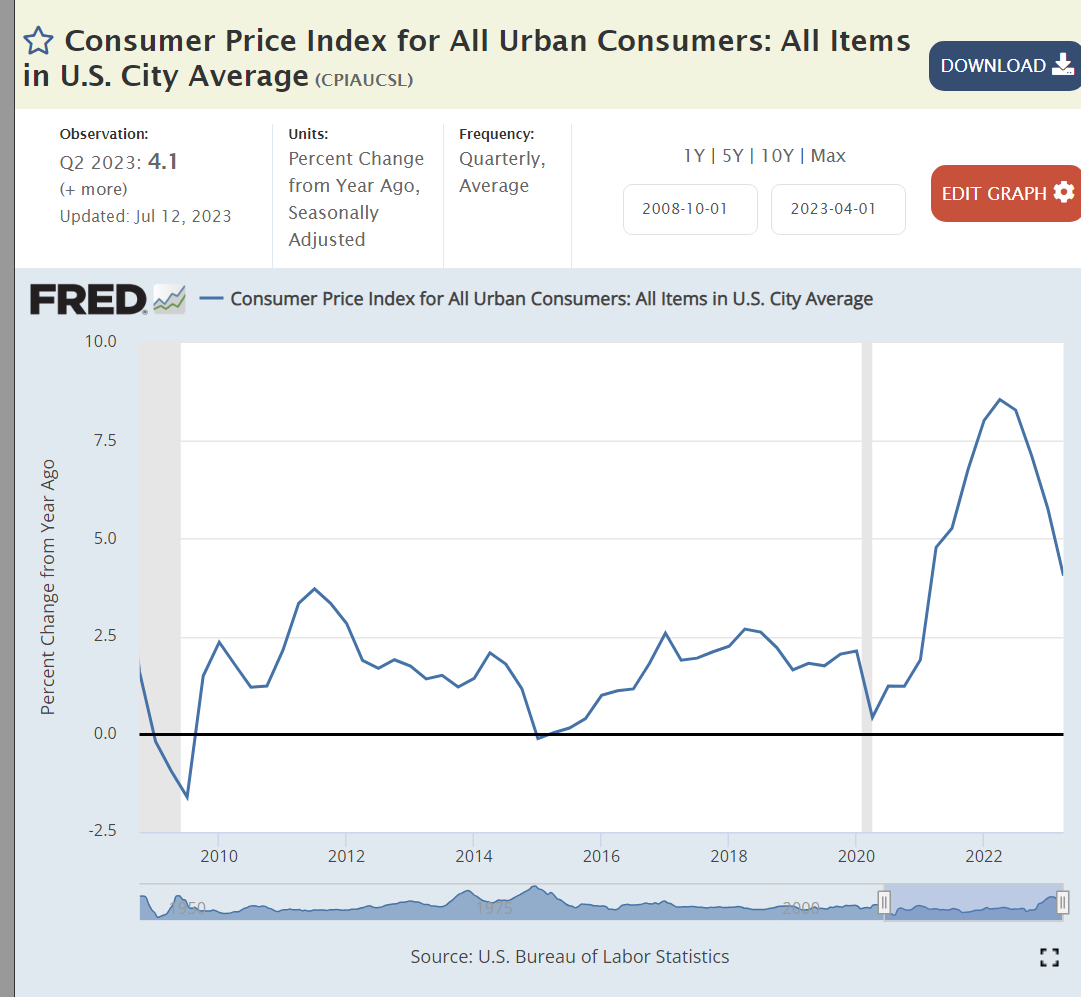
Inflation averaged a bit less than 2% before the pandemic, spiked to 8%, and has since declined to 4%. Experts disagree on whether it will return to 2% soon.
Gas prices are the most obvious component of inflation. They are largely driven by global supply and demand. Prices today are the same as in 2011-14, despite the general inflation increase of more than 20% since then.
Despite the pandemic, US unemployment is at a 50 year low!
Job seekers today encounter 3 times as many job openings.
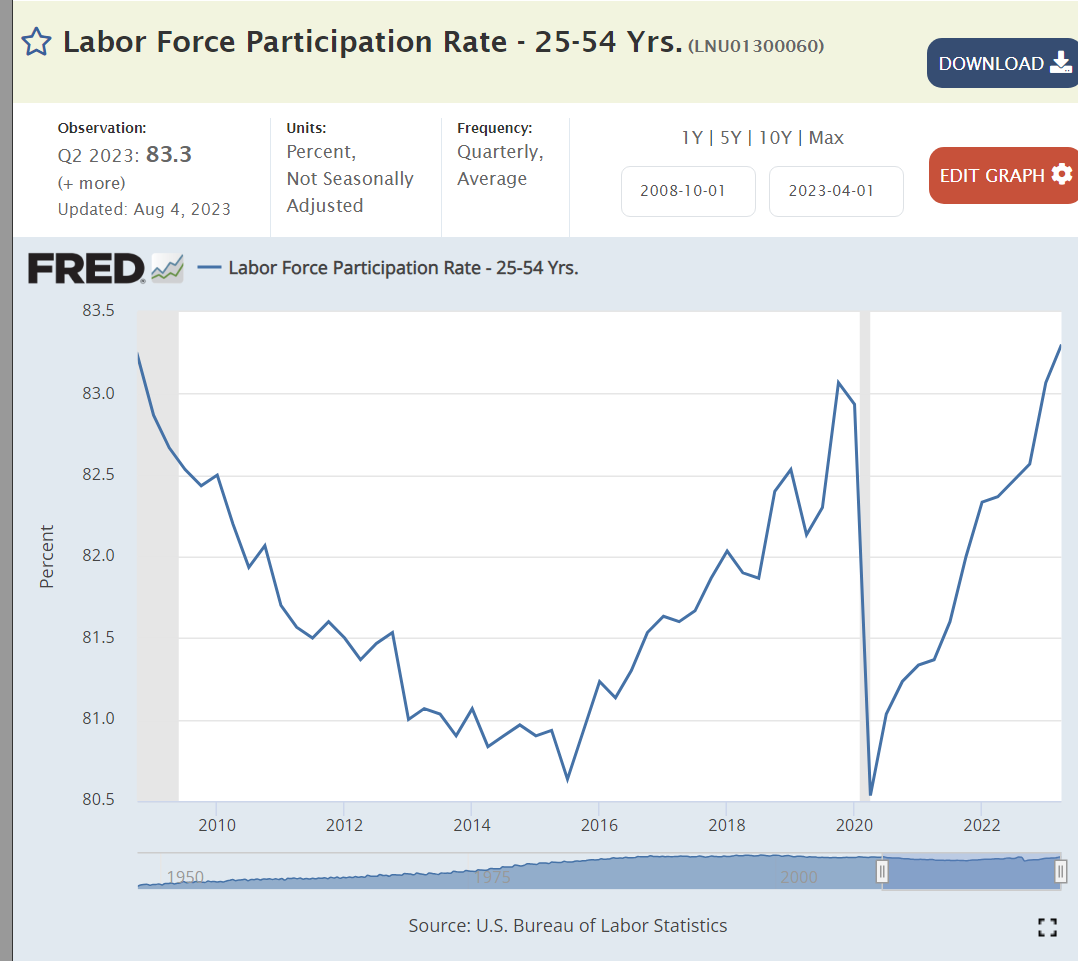
Core age labor force participation has snapped back after the pandemic.
Investment values have doubled.
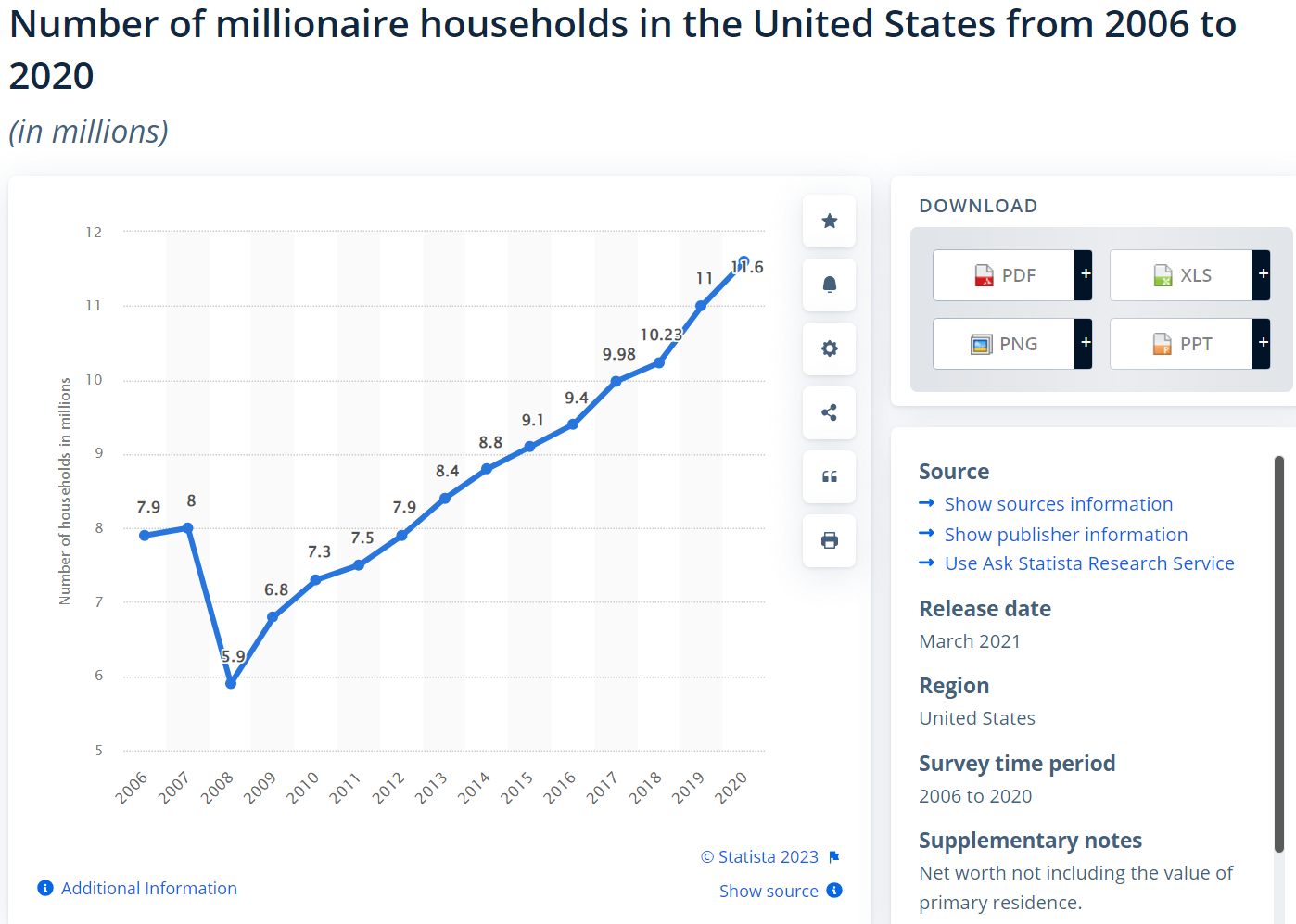
The number of millionaires and billionaires in the US has continued to increase.
Personal savings rates rose from 6% to 9% before the pandemic, shot up and fell back down to just 4% recently.
Housing values have doubled since the Great Recession.
Mortgage rates averaged 4% after the Great Recession, dropped to 3% and then increased to 6%+ as the Federal Reserve raised interest rates.
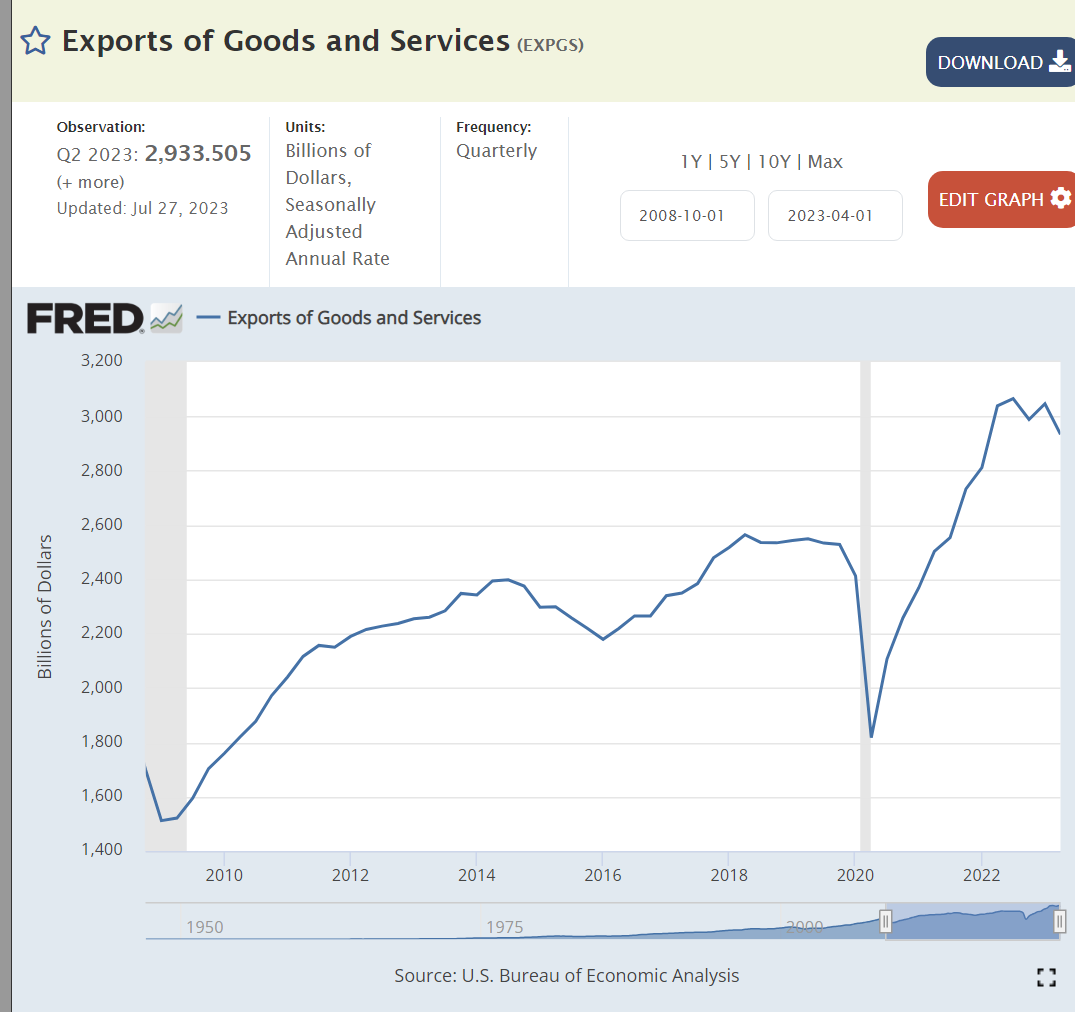
US exports have nearly doubled in 14 years.
Despite the Trump tariffs, which Biden has maintained, imports have also nearly doubled.
Despite historically slower growth rates, higher budget deficits and looser monetary policies, the US dollar is more highly valued today than in 2008.
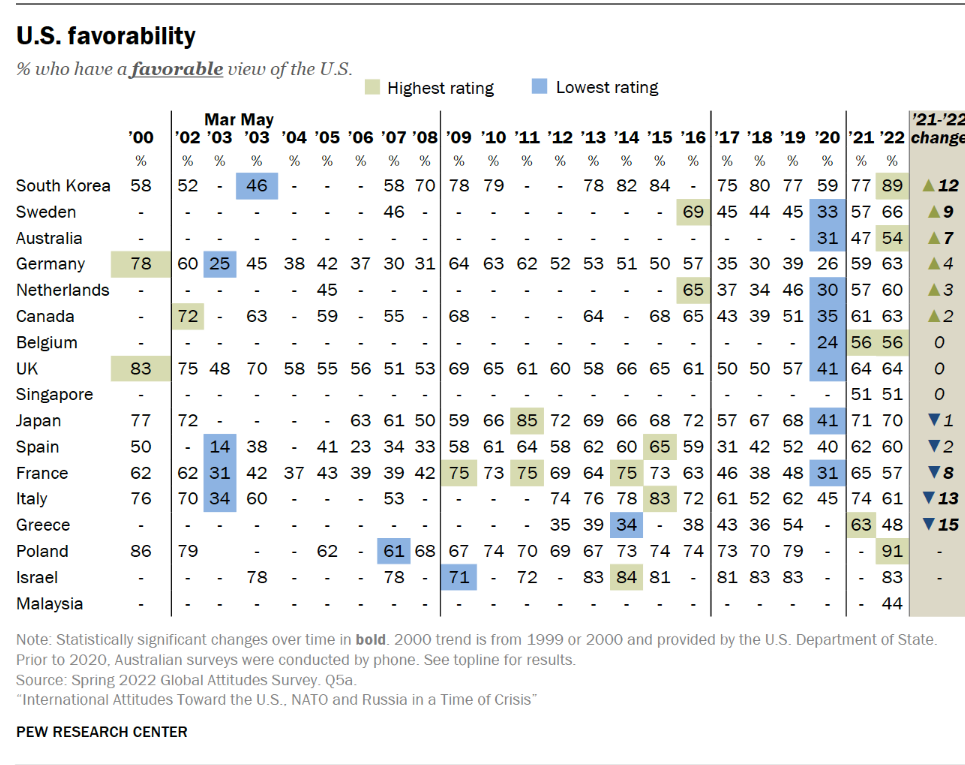
Foreign countries still see the US as a positive ally, despite their concerns during the Trump era.
Obama returned the budget deficit to a “reasonable” 3% by 2016. Trump expanded it to 5% and then 15% as the pandemic struck. Biden drove some recovery to 5% by 2022, but has not driven further reductions.
US coal production is in a long-term decline.
Natural gas production has nearly doubled in 14 years.
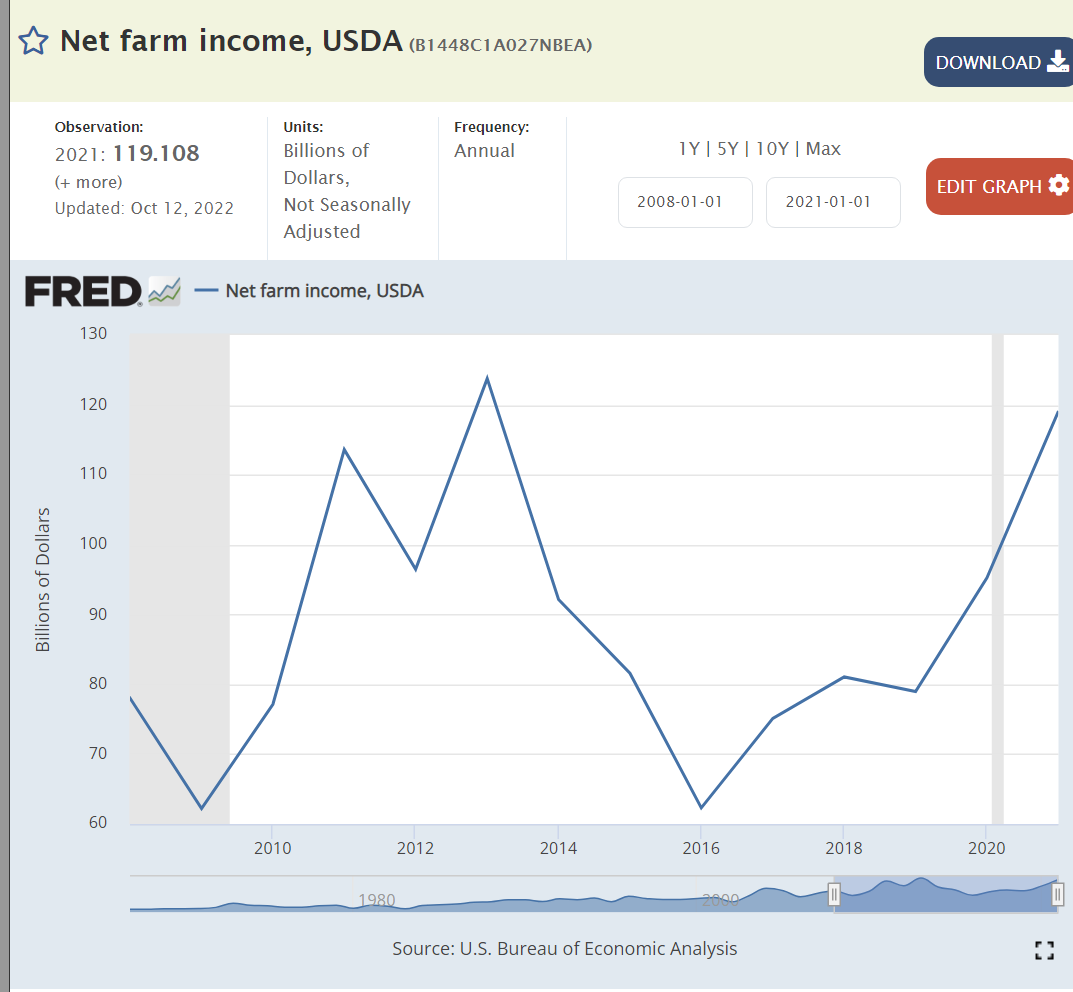
Net farm income has been significantly above the base for 6 of the last 14 years, despite lavish Trump farm subsidies.
Manufacturing employment has continued to rise slowly in the last 14 years against the headwinds of international competition.
It’s difficult to put the pandemic in perspective, but here we see a 2-year reduction in expected lifespans. Opioid deaths and so-called “deaths of despair”, alcohol, drugs, suicide, also play a role.
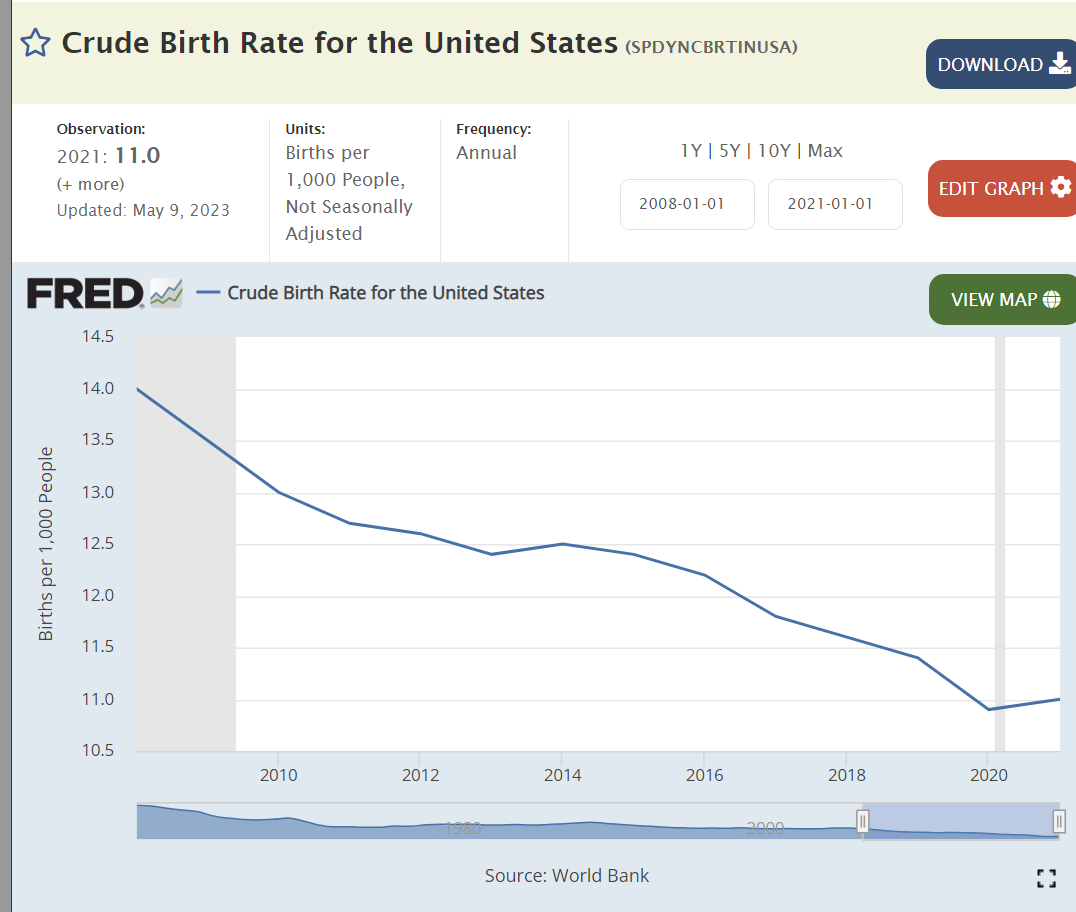
Birth rates continue to drift lower as seen in all regions of the world.
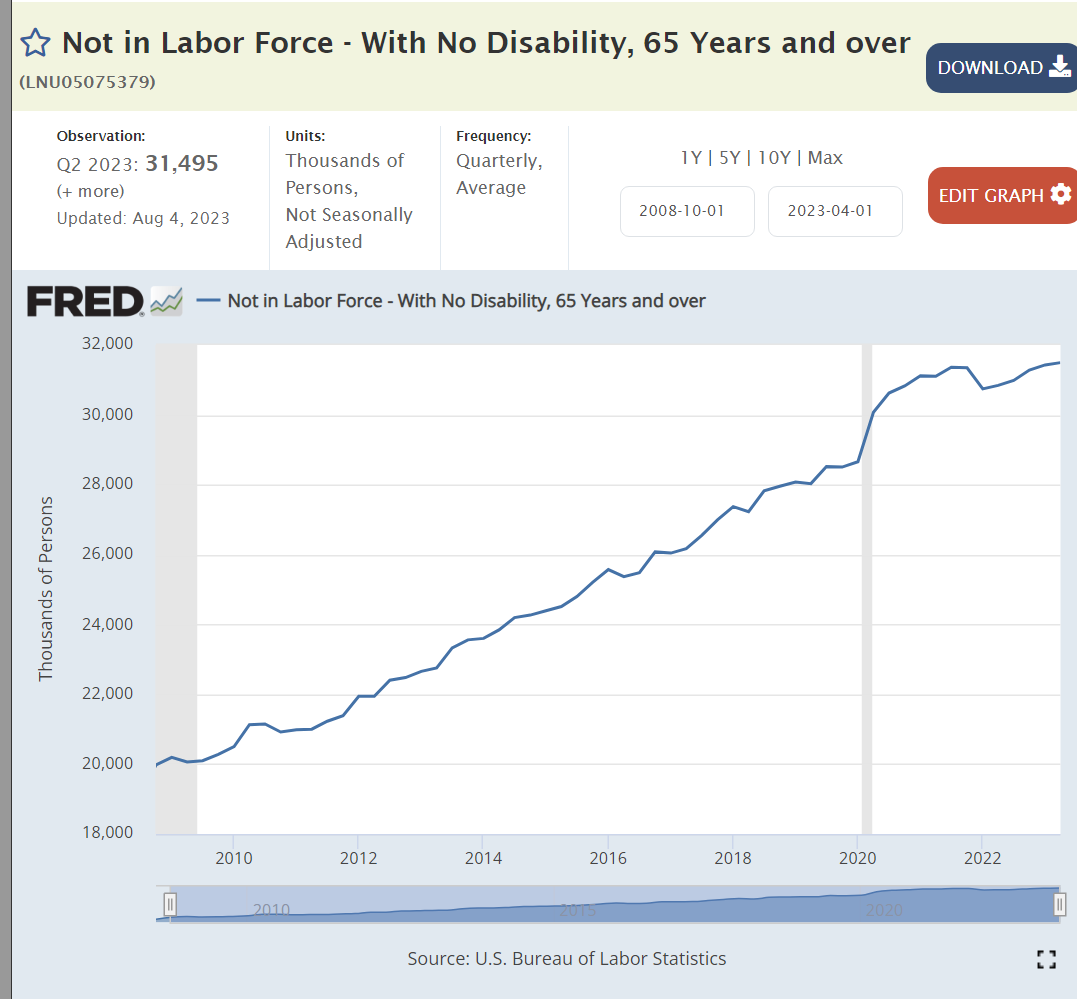
The number of retirees has increased by more than 50%.
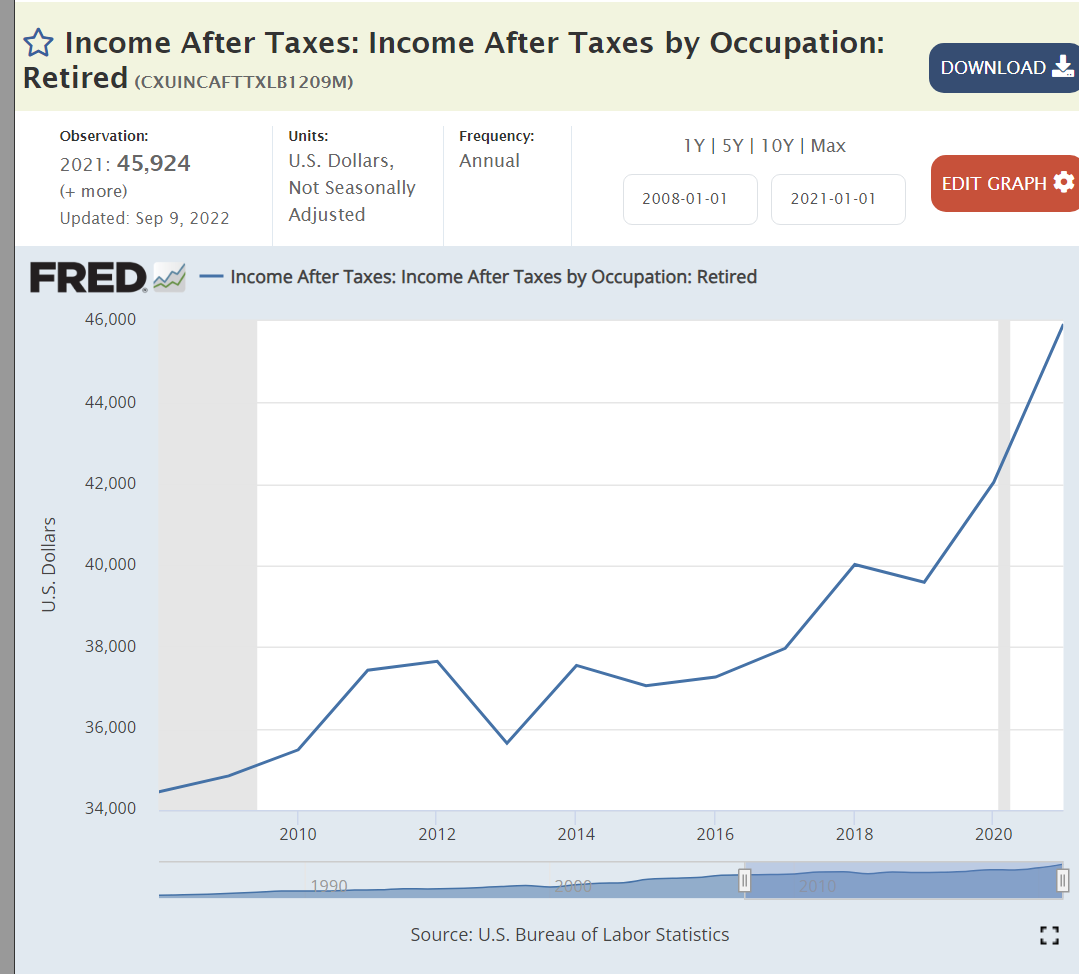
Retiree incomes are up by one-third, matching inflation.
Prospective retirees have doubled their cumulative savings.
The abortion rate has continued to fall in the last 30 years.
Church attendance has dropped from 40% to 30%.
Summary
The US economy recovered slowly after the Great Recession and then very quickly after the pandemic. Real, after inflation, output and per capita output increased. The labor market became very tight. Asset prices (investments and housing) rose for intrinsic and monetary reasons. The US remained a competitive international producer. The federal budget deficit was better at the end of the Obama period but worse for Trump and Biden. The pandemic reduced life expectancy and households had fewer children. Successful retirements grew and will grow. Social trends continue, uninterrupted by political positioning and policies.
Perceptions of the country and the economy are increasingly shaped by partisan political party views. Nonetheless, the US economy continues to grow and thrive.


























 Good News