Politics Ain’t Beanbag: Diagnosing the 2024 Presidential Election

https://www.csmonitor.com/USA/Politics/Politics-Voices/2014/1114/Politics-ain-t-beanbag

Wake Up Democratic Party; Don’t be a Victim

Donald Trump won. He improved in many demographic segments. The Republican Party won. The Democratic policies, politicians and messages lost. Democrats seems to be in denial.

Most are blaming someone or something: Biden’s late withdrawal, Kamala’s tight link with unpopular Joe, American sexism, Trump’s magnetic hold on the country, the media’s unwillingness to hold Trump and Republicans accountable for lies, plainly inaccurate or misleading claims, an uninspiring centrist platform, too many far-left positions that can be exploited by the opposition, billionaire dark money, Trump’s undermining of any normal frame of reference for character or policies through his years of speaking and acting that would have never been accepted before him, the thumb of the Supreme Court on political activities that benefit Republicans, Trump’s reassembly of the Republican Party into a personality cult where no opposition exists to provide options, discussion or pressures, the Republican news media’s amazing power to shape beliefs of Republicans, independents and Democrats, the undercutting of all institutional frames of reference (media, universities, FBI, DOJ, courts, churches, intellectuals, movies, civic organizations, business, schools, government), Republican manipulation of the state election systems to create a built-in advantages, the lack of a charismatic Democratic leader, polarized politics turns out politicians and their party every 4 years, a lack of belief in any politician or political party, a “what have you done for me lately” transactional politics from many voting blocs, the transition of minority groups from being solidly Democratic to better reflecting a normal distribution of left to right views, the global embrace of populism in a post Western, capitalist, democratic, human rights, global trade and development consensus, the inherent disadvantage of progressive parties who must deliver on their promises rather than oppose and check the misguided, unrealistic opposition. The list is unlimited.

There may be important content in many of these explanations. But, overall, they fail to focus on the two core issues. What policies, politicians and messages COULD be attractive to persuadable voters, either from the base or the middle? How does the Democratic Party reestablish itself as a credible voice to be considered?

The Center or the Edge?

This election once again confirmed that the US is an individualistic, capitalist, local, independent, freedom loving, patriotic, culturally moderate society. Economics and culture both matter. A supermajority of Americans wants moderate policies. They don’t really want revolution. This is a real problem for the idealistic wing of the Democratic Party which has grown from 5% to 20% of the country and 10% to 35% of the party. The national American electorate does not support policies that can be framed or challenged as extreme, costly, risky, uncertain, elite, cosmopolitan, global, socialist, irrational, idealist, utopian, etc. Whenever these more progressive policy options are promoted, the Republican Party wins at the national level. To have a chance of winning, the Democratic Party needs to have the discipline to frame policy options that deflect Republican counterattacks yet motivate the base to support the party goals. This is difficult, requiring creative development and communications.

Politics is the “Art of the Possible”

First, take a firm stand as a center-left party and consistently reject “far left”, “new left”, “socialist”, “green”, and “postmodernist” policies that are so easily defeated. Second, focus on pragmatic policies that clearly benefit middle Americans economically. Focus on equal opportunity, rather than redistribution. Focus on basic economic fairness rather than demonizing the rich, the billionaires, the bankers, Wall Street, the 1%. See my RESPECT proposals. Focus on the middle class, not “the poor”. This strategy maximizes consideration from the persuadable voters at all income levels, in all locations.

What Do Citizens Really Expect from Politicians? Not Much.

There was a time when Americans required presidential candidates to meet high standards. Goldwater was thrashed because he was considered unstable by many. McGovern could not recover from his association with “acid, amnesty and abortion”. His running mate Eagleton’s mental health history was a big issue. Muskie could not recover from his public crying about one of Nixon’s dirty tricks and withdrew from the campaign. Bush Sr’s broken “no taxes” promise was fatal. Dukakis could not overcome the “Willy Horton” released prisoner crimes or the comic picture of him in a tank as a military leader. Kerry could not overcome the “swift boat” attack on his military career. Most importantly, Bill Clinton was elected because he convinced Americans that “I feel your pain”. His impeachment raised questions about presidential character that still resonate today. Democrats argued that personal matters are not all that important. This opened the door for Newt Gingrich and a purely “ends justify the means” approach to politics.

In a “postmodern” world, we’ve lost objective knowledge, truth or morality. We are wrestling with the loss of this agreed upon reality among our citizens and leaders. The 1960’s opened the door for a radically “relative” world view. The shift was jarring. As commentators noted about the Clinton campaigns in 1992, 1996 and 2016 we were still arguing about the 1960’s cultural revolution and the politics of the Vietnam War. The bottom line is that many citizens, left, right and center, no longer believe in a fixed, objective world defined by science, religion or natural law.

Hence, our expectations of politicians are very low. Solid truth, honesty, and objectivity are no longer required. I think what we see from Trump is that “authenticity” has been elevated to become the premier value. “I don’t agree with him but at least he is authentic. He does what he says. He is not a phony”.

What Should Citizens Expect from Politicians?

We may be at a place where all we can expect is for them to keep “most” of their “largest” promises.

Political Grey Zone

We have a complicated situation regarding political ethics. We either believe there are core objective ethical values or not. In general, I see most Democrats of both left and center perspectives as ethical idealists. There is an ethical standard. We know what it is. We ought to follow it. I agree with respect to personal decisions. I’m not sure this is the best practical rule for politicians and political parties. I think that there is an element of “the end justifies the means” that applies to real world politics. We see the same tension between idealistic and pragmatic politics at the international level (real politic). I think that pragmatism must compete with idealism in real world politics.

One Very Important Hillary Clinton Debate Question

I’ll never forget when Hillary Clinton was asked what was either a “softball” or a “gotcha” question in a 2016 debate. “As president or secretary of state, are there times when you must lie or ‘manage the truth’?” Hillary gave the George Washington response, “I can never tell a lie”. I screamed at the television. Really? As Secretary of State? Our chief international negotiator? As a leader? As a motivator? As a communicator? As a politician? Trying to appeal to diverse coalition partners? As a presidential candidate, trying to engage both the base and the undecideds? As president, trying to lead the whole country? I think that my “in-authenticity” button was pressed.

I thought about salespeople, negotiators, purchasers, supply chain managers, account managers, marketers, persuaders, speakers …. The whole capitalist system is driven by these kinds of communications that blend facts, history, relations, cultures, promises, implied threats, incentives, short-term and long-term, risks and rewards, opportunities, possibilities. It’s complicated. That’s why we collectively invest so much in managing these relationships.

Politics is the same. International politics is the same. Why do we want to claim that our politics are perfect, pure, above board? They are not. They cannot be. They should not be. When political leaders pretend to be “holier than thou”, they lose credibility with a majority of the electorate.

We’re stuck in a moral grey area. We want to think of ourselves as ethical. But, to achieve our desired ends for society we cannot be perfectly ethical. I don’t have an answer as to where the line is, or the exact tradeoffs, or a perfect example of what to do. I am sure that there is a need to consider ethical ideals and political reality when making political decisions.

Don’t Compromise on Core Values

Don’t hold the country hostage to approve an increase in the deficit ceiling.

Don’t manipulate the election process to win.

Don’t embrace special interest groups to attract funding and votes.

Don’t use the judicial and administrative regimes to win political battles.

A party that can establish credibility here will possess a major asset.

Political Parties Must Deliver on Their Promises

LBJ as senator and president is exhibit #1. Whatever it takes.

Laws are like sausages, it is better not to see how they are made.

https://www.brainyquote.com/quotes/otto_von_bismarck_161318

Ideals are “nice”, but I elected you to deliver. In a pragmatic, transactional world, results matter more than ever.

Some “Delivering Results” Examples

Inflation was growing rapidly in 2021. Biden needed to address it. Lower government spending. Pressure the Federal Reserve Board to raise interest rates. Apply “bully pulpit” pressure on corporations to not raise prices. Implement excess prices or excess profits controls under emergency presidential authority.

Immigrant volumes increased after Biden took office. Engage the military and national guard to “secure the borders”. Reallocate federal appropriations to “solve the problem”. Use the finances and political power of the US to intercept immigrants at the southern Mexican border.

Aggressive antitrust reviews and enforcement, given expressed Republican support.

Consolidate all welfare spending into a single bill to increase benefits while “solving” the problems of earned benefits and equity. Invest in “welfare fraud” investigators together with IRS agent funding.

Make a $15/hour minimum wage bill a top priority. Organize strikes to support it. Engage corporate supporters. Fine-tune the details to deal with teenager and agriculture exceptions.

Israeli PM Netanyahu wishes to wage war in Gaza and expand West Bank settlements. Provide a clear set of support and limits. Enforce the limits up to complete withdrawal of military support.

Create a “blue ribbon commission” on Social Security funding structured to ensure that the compromise recommendations will be approved.

Engage with Republicans to support policy proposals that benefit middle Americans.

Biden followed this “deliver results” strategy to cancel many varieties of student loan debt. A majority of Americans opposed this. it is only effective if most Americans agree. Delivering for the base or individual constituencies is inherently suspect.

Rapidly deliver visible “pilot project” results from the 2 large infrastructure bills that were passed.

Resolve the “temporary” status of the 2 federal home mortgage guarantee agencies.

Determine a long-term solution for the US Postal Service that provides some local mail delivery and reduced costs and employment.

The key to providing credibility is proactively finding solutions that meet the needs of the general public even when party supporters must incur some of the costs or risks of the solutions.

Summary

Democrats need to take a hard look in the mirror. They have lost the support of the American people. To recover, they need to refocus their policies on the economic opportunity needs of “middle America”. They must convince “middle America” that they have no extreme economic or cultural policy agendas. They need to deliver results that match their promises. There are no “moral victories” in politics. Parties must win elections in order to deliver results. When in power they must use all of the levers of power. Pragmatic means for progressive ends.


The Paradox of Great Wealth in a Democracy

https://www.cnbc.com/2019/02/13/billionaire-warren-buffett-says-this-is-the-only-measure-of-success-that-matters.html

The Conventional Wisdom

According to some on the left (and some on the right), the “wealthy, capitalists, billionaires or 1%” are evil, irredeemable, “vampire squids” only interested in making, keeping and growing wealth, power and influence. They say that the only solutions to this situation are to tax, regulate and publicize their finances and influence. Any number of laws should be enacted to fight against this force against the public good.

History shows …

The wealthy and powerful actively invest to protect and expand their wealth. In the United States, they have repeatedly “captured” the political system with two interludes of effective opposition during the progressive era and the New Deal from FDR to LBJ. Their tools include political contributions, network influence, legal actions, administrative agency capture, media control, social influence, lobbying, contracting, funding political parties and thought influencers. They can easily hire the most effective professionals to pursue their goals in all areas.

Wealth Will Find a Political Way

The American political system generally undermines centralized governmental power. [Although the imperial presidency under Trump with possible Supreme Court support will be a big test]. Federal agencies, the Senate, Congress, the President and the courts jockey for federal power and compete with state and local governments. Focused investments by a relatively small group of wealthy individuals have a strong chance of finding the weakest spots in “the government of the people, by the people and for the people”. If this group makes good choices in setting goals, investing in politics, selecting strategies and showing that they are willing to do “whatever it takes” to win, they attract political supporters and greatly leverage their relatively small investments and very small voting numbers.

Repeated Failures of Their Opponents

Progressives have tried to legislate their way to victory. The wealthy have fought back and reversed many of the gains in limiting their power to pursue greater wealth without limits placed upon them by other stakeholders: labor, consumers, investors, nations, nature, religion, or local communities. There have been some permanent gains in labor conditions/rights, consumer safety, environmental protection, progressive taxation, public education, public infrastructure, monopoly regulation, anti-discrimination, etc. There are some real changes between 1850 and 2020. No one wants to turn back the hands of time.

Yet, on the enduring core political issues, the wealthy have successfully pursued counter-offensives. Lower taxes of all kinds. Undermined support for government and government services. Judicial challenges and rulings. Weakened regulations.

They have maintained effective control of the Republican party for 175 years. They have partnered with middle America, urban elites, WASP America, industry, corporate America and small business/entrepreneurial America, mainstream and fundamentalist religion, anti-slavery and states’ rights groups, Main street America, rural America, southern America, sunbelt America, isolationists and pro-traders, anti-communist hawks and America firsters, assertive neo-conservative foreign policy wonks and inherently defensive thinkers, promoters of American power through international relations and doubters, international free traders and mercantilist tariff warriors, libertarians, the professional class and the working class, skeptical protestants and conservative true believers, farmers and bankers, philosophical conservatives and political pragmatists, fiscal conservatives and political idealogues, preserving and restoring American culture, separation of church and state versus promoting one religious group, liberal and conservative social policies, the mainstream media is authoritative or fake. The end justifies the means. Some coalition of voters and interests can always be assembled to support their core financial interests.

The defenders of wealth have effectively shaped political debates by prioritizing issues, framing positions and policies to be considered, crafting favorable and unfavorable language and stories, shaping debates against extreme strawman positions, and polarizing positions. Democrats have attempted to use the same techniques but have been much less effective. Democrats have also shifted their positions on issues and reassembled their coalitions through time but been unable to secure a solid base of support in the last 50 years. They repeatedly point to a demographic “emerging majority” and the “rightness” of their causes and hope for more success soon.

Root Cause Analysis

Why does a small group of wealthy individuals consistently capture one political party and oppose efforts to reduce their wealth and power? Are they unusually evil? Is there a “class interest”? Don’t they care about our country and those less fortunate? I think there are two key factors. First, we have lived in an individualistic, relatively equal opportunity, relatively meritocratic economy for two centuries in the US. The economic winners can honestly look in the mirror and say, “I earned this”. [note the Obama buzzsaw around “you didn’t build this”]. Like each of us, they exaggerate their own merits and discount chance, privilege, inherited assets, opportunities, and ethical choices. Second, they have such great assets that they must protect them. The scale of accumulated wealth in the US is almost [or actually] beyond comprehension. Current GDP is nearing $23.4 Trillion, up 10 times in real terms from $2.2 Trillion in 1947. Stop for a minute to let this sink in. The US was truly the savior of the world in 1947. We now have 10 times as much wealth, resources, assets, power. Real $ GDP in 1850 was only $62 Billion. Real GDP increased 35 times in that century, perhaps the most amazing century of growth in world history, despite the Great Recession and WW II.

https://fred.stlouisfed.org/series/GDPC1

https://www.measuringworth.com/graphs/graph_1.php

America has grown its population, its productivity/per capita GDP, and its corporate profits by at least 350 times in the last 175 years. A million here and a million there, and pretty soon you have real money. This is the power of compound interest. Wealth begets wealth. This is Thomas Piketty’s point.

https://en.wikipedia.org/wiki/Thomas_Piketty

A well invested portfolio provides 3-5% real returns per year. It accumulates to infinity sooner than you might imagine.

So … America has 350 times more annual economic output than in 1850. The wealthy have captured more than an equal share, so their wealth per person has grown 500-fold. Digest this ratio. There are more wealthy individuals. The winnings are divided across a larger population. Wealthy individuals control 500 times more assets per person than they did in 1850.

Average incomes have also increased. The reported $144/month for farmhands with board in 1850 becomes $5,800 today with 40X inflation. The current median income is $37,600, so the “typical” worker is 6.5 times better off today than in 1850.

https://www.officialdata.org/us/inflation/1850#:~:text=The%20dollar%20had%20an%20average,Labor%20Statistics%20consumer%20price%20index.

The bottom line is that wealthy individuals or families have tremendous wealth to “manage” or protect. Some will highly value the other factors that produced their wealth and their obligations to society. Others will discount them and be the leading investors in political actors to preserve their wealth even though they too will face the “free rider” dilemma. Why should I invest to protect my wealth if others will do so for my benefit? As wealth has grown, a greater share of wealthy individuals has rationally invested in the political system to protect their wealth.

What is the Greatest Risk?

Wealthy individuals and families have much to worry about. If you have a billion dollars of assets, there are many risks and obligations, duties and responsibilities, social obligations, political interests, generational interests, black swan risks, portfolio effects, opportunities, and legacies. I would argue that the greatest risk is posed by democracy. Plato, Socrates and Aristotle all pointed to pure democracy as a threat to the wealth of the ruling class. This was clear when extreme wealth was a mere 1/1,000th of the level today. The individuals with the lowest incomes and wealth could use the power of the state to capture a greater share. Everyone thinks that they deserve more. This is human nature. The many outnumber the few. In a pure democracy they will “take from the rich”. They might reduce the top quintile by 20% to benefit the bottom 3 quintiles. They might flatten incomes. They might confiscate wealth. They might confiscate ALL wealth. This is the greatest fear of the economic winners in our society. The political system might “take” more than half of their income and all of their wealth. Wealthy individuals are “highly motivated” to prevent these outcomes. This is not spoken of “in polite company”.

Removing the Greatest Risks

Although most Democrats, liberals, leftists and progressives have an intuitive sense that they must fight wealth and power because it is right and fair, I argue that we ought to agree to permanently remove the risk of significant confiscation of wealth and income from the economic winners in our society. As those who claim to look at the big picture and the long run, we should set limits on how much income and wealth redistribution is required to meet our goals of a fair and prosperous society.

We should agree to set permanent structural limits on these areas. Enact constitutional amendments to clarify the redistribution limits of our society. We are so much wealthier today as a society.

https://www.amazon.com/The-Affluent-Society-audiobook/dp/B0030HF9EC/ref=sr_1_1?crid=2CVXM0L3C09SG&dib=eyJ2IjoiMSJ9.8Unkiguo082D6kkTojJvrp5ab5dLWVF2YVnZVhTV3yZ-qywQIfAS4b3Ppr5GD9X-ohNEDNBhJp3gnTVwd6fyLvSarBvY4bAPu3HlmogLld469lRlv_I9Ss-SsB3IwsCrGy5bo00QUKLRmlW6lHJOohJOykHO2Dni8sL5rozLNFgpPHMNEm1rkG-ZMOUKnS1a4gsYfBtDkzp90Ljpmd4h6SdOW8diiSvWSiJe6iMqo_w.ukRfiFO5lYgBRfHSI-A6QaYyP3nrK6nNQg3ZUAutJ6Y&dib_tag=se&keywords=the+affluent+society&qid=1731895850&s=books&sprefix=the+affluent+society%2Cstripbooks%2C128&sr=1-1

JK Galbraith in 1958 was way ahead of the people in 1958 with his Affluent Society argument.

The wealthy can “make do” with a lesser share of our continually growing wealth. But no one wants to lose or give up what they have. This is human nature. I think the time has arrived to stop fighting the economic redistribution war that has never been won and find a solution that can gain support from a majority of wealthy individuals.

  1. Federal marginal income tax rate shall not exceed 50%.
  2. Combined wealth or property taxes shall not exceed 3% of value per year. Zero tax rate on the first $50 million of assets.
  3. Any inheritance tax rate shall not exceed 15% of net assets received. First $5 million of assets is tax free. 10-year interest free period provided to pay inheritance taxes in excess of $100,000.
  4. The tax rate on long-term capital gains shall not exceed 75% of the tax rate on earned income. Any long-term capital gains tax must include a deduction for at least 50% of the inflation rate during the asset holding period.
  5. Any tax on financial transactions shall not exceed 0.5% of the transaction amount.
  6. Fix the independence of Federal Reserve Board to pursue its joint goals of minimizing inflation and unemployment.
  7. Limit the federal workforce to no more than 1% of the US population.
  8. Require Congress to pass a budget each year that reduces any prior year budget deficit by one-third whenever the unemployment rate is 5% or lower.
  9. Require the Treasury to pay any legally incurred debts of the government in a timely manner (no government shutdown crisis risk).
  10. Limit federal government net spending to no more than 25% of prior year GDP, which restriction may be waived by the President with concurrence of at least 50% of the Senate in times of war or national emergency.
  11. No limit on charitable deductions for donations to governments as an offset to earned income for federal taxation purposes.
  12. Maximum corporate income tax rate of 30%.
  13. Corporations are not considered persons. They do not have “free speech” rights with respect to political contributions.
  14. State and federal election campaign communications shall be funded solely by the government and the active period of campaigning and voting shall be limited to 6 months or less.
  15. If citizens do not agree with 100% government funding of political campaign communications, then individual or corporate contributions to any political organization shall be publicly reported each quarter.

Summary

Wealthy individuals and families have great wealth to protect. As a nation and society, we have an obligation to eliminate this concern from being a primary role in our political decisions. We can set reasonable limits on the maximum contributions required from prosperous individuals in our society. Many left-leaning individuals are focused on increasing the share of taxes paid by wealthy individuals on an equity basis. I argue that the nation would be best served by setting maximum taxation limits. Wealthy individuals might prefer lower tax rates, but they will be able to relax knowing that there is a limit on what political groups might choose to extract. Fewer would be highly motivated to invest extraordinary amounts in our political system if their greatest risks were already protected.

https://www.amazon.com/Richistan-Robert-Frank-audiobook/dp/B000R34YSO/ref=sr_1_1?crid=2INNKRMI0TEU4&dib=eyJ2IjoiMSJ9.aNOJUvLmezOotxvfWAdjOSlnHoeDXJociA4EYgQw2QR8qCUVsHZyNI25skO4Ed_1Czu_GmgYywgTjf71cJZ6Xg.2n2b0Qd8W-ce0pBz_ro3kvrZAHXtdHawuV8bpITzwa0&dib_tag=se&keywords=richistan&qid=1731895103&s=books&sprefix=richistan%2Cstripbooks%2C106&sr=1-1

Serve the American People

I encourage national Democratic Party leaders to quickly acknowledge that the American people have chosen to support candidate Trump’s policy proposals. They need to find areas of agreement and work quickly with the new president and his party to support and implement policies where agreements can be found. Democrats ought to fight against other proposals that they cannot support.

Support proposals that help the working class and middle class.

  1. Eliminate taxes on tips income.
  2. Eliminate taxes on social security income.
  3. Increase the child tax credit from $2,000 to $5,000.
  4. Eliminate taxes on overtime pay premiums.
  5. Cap credit card interest rates at 10% – 15%.

Fix an earlier attack on states’ rights.

6. Eliminate the $10,000 federal tax limit of state and local income tax (SALT) deduction.

Take reasonable steps to pursue American foreign policy goals.

7. Negotiate a settlement to Russia’s invasion of Ukraine.

8. Negotiate a settlement to Israel’s response to being attacked. Leverage world opinion to impose a settlement that creates a Palestinian state that is better for everyone.

9. Negotiate a trade deal with China that promotes “fair trade”, environmental equity, labor equity, and protects American intellectual property.

10. Pressure NATO allies to commit to 3% of GDP commitment to national defense spending by 2030.

Protect American borders.

11. Pass the compromise border security bill negotiated in 2024.

Control government spending.

12. Appoint a “blue ribbon commission” to identify systematic ways to reduce federal government spending. Include Democratic members.

13. Support a “balanced budget” constitutional amendment. Find language that forces Congress to reduce spending or increase taxes when material % of GDP budget deficits exist in a “full employment” economy. For example, “When Federal Budget deficit exceeds 2% of GDP and unemployment is less than 5%, Congress shall reduce the deficit by at least 33% in the next year”.

Address the Social Security funding situation.

14. Appoint a “blue ribbon commission” to recommend a combination of tax increases, benefits limits, inflation measures and age qualifying rates that ensures promised social security benefits will be paid for the next 50 years.

Address Health Care Costs

15. Appoint a “blue ribbon commission” to recommend methods to systematically reduce total health care costs as a percentage of GDP by 5% by 2035.

Summary

Democrats and Republicans need to look out for the interests of all Americans. There are big issues where compromise solutions must be found. Democrats should step forward and provide a list of areas where they are willing to work with the new president to serve the American people.

https://www.cnn.com/interactive/2024/04/politics/trump-campaign-promises-dg/

Critical Role for Community in American History

The Community and the Individual

America is often described as an “individualistic” society.  Sometimes as a compliment.  More often as a criticism. 

The positive reviewers note that it incorporated John Locke’s individualistic principles to form the first “classic liberal” democracy which has endured for more than two centuries of geographical expansion, rapid population growth, technological and social changes and foreign challenges.  They argue that it demonstrates that a federal system of checks and balances, limited government and preservation of individual liberties can be economically and socially successful.  Such a government can be effective even with diverse racial, ethnic, class, political and religious interests. 

Only the Individual

The critics say that the society has always balanced individual and community interests, that the government system relies upon a strong culture of shared values and that “rugged individualism” is a myth that has been used to provide political support for laissez faire capitalism.

The heroic, self-sufficient individual has been promoted throughout American history.  Washington and the founding fathers were memorialized.  Jefferson’s ideal of the independent citizen farmer still resonates.  Jackson further elevated the importance of the common man as central to American success.  The explorer, pioneer, frontiersman, Lewis & Clark, Daniel Boone, and the self-made man were celebrated.  The citizens and leaders who spread the new American individual rights across the continent were hailed for bringing about a new society, an example for the world to follow. 

Americans embraced Thoreau’s retreat, Emerson’s “self-reliance”, Franklin’s “common sense”, Horatio Alger, cowboys, private detectives, military, political and superheroes.  Proponents of laissez faire capitalism contrasted natural property and individual rights against unnatural government interference during the Gilded Age.  Carnegie, Ford and Hoover promoted the same ends at the turn of the century highlighting the progress driven by individual inventors and owners.  Hayek, Rand, Goldwater and Reagan argued that FDR style government was illegitimate and threatened the liberty and security of the nation, while praising job creation, technical innovation and entrepreneurs. 

The Reagan revolution re-established the intellectual and popular legitimacy of holding conservative social and economic philosophies.  Some successors pressed the arguments further, equating taxation with theft, comparing job creators and job killers, questioning the motives and results of government departments and employees, and promising no new taxes under any situation.  “The self-sufficient individual is great, government is bad”, they said.

Community Plays a Supporting Role; Not a Leading Role

The role of community tends to get lost in the shadow of the great liberal versus conservative battle over the role of the state in “regulating” the economy and society.  Most historians, political scientists and commentators agree that the American political system was constructed upon the assumption that citizens would share a common Christian culture with objective virtues complementing the God-given rights and responsibilities of citizens.  The authors of the Federalist Papers, the Constitution and the Bill of Rights understood that this social glue was needed to support a democratic system of checks and balances, especially as the young nation expanded its small population across the Appalachian Mountains.  They promoted “freedom of religion” but also relied upon enduring religious belief and participation.  The founders held classic conservative ideas about the necessity of individuals to possess a sense of civic duty to participate in government, willingness to sacrifice for the common good and a commitment to the institutions of collective self-government.

Community is eclipsed by individualism in the public’s mind for many reasons.  The promotion of liberty-loving and economically productive individuals who require only minimal government.  The ease of highlighting outstanding individuals and individual types in the arts, journalism, history and marketing.  The complexity, abstractness, variety and organic nature of community functions.  The overlap of community and government when contrasted with “rugged” individualism.  The soft, feeling, unmeasurable nature of community.  The supporting rather than leading nature of community.  The limited visibility of many community functions. 

Community relations and results are exhibited throughout society.  First, in the relations between citizens and their government.  In the many voluntary associations that diverse citizens create and join in a nation with limited government and services.  In local residential communities.  In business, trade and agriculture.  In the arts, travel and entertainment.  In government organizations.  In the country as a whole. 

Community Is Essential for Democratic Government

The American government plan is based upon a relationship between the citizens and government.  The citizens/individuals exist first and create the government.  At the same time, they commit to fulfilling their duties as informed voters, candidates, soldiers, jurors, parents and supporters of the government and its institutional parts.  Although the architects of the government warned against it, people soon clustered into political parties, movements and special interest groups to represent their interests.  These parties have supported individual human, social and economic rights and the collective interests of classes, geographic areas, professions, industries, religions, ethnicities, sexes and races.  Self-government requires a balance between the community and the individual.

The framers of the US Constitution were looking to the future.  The US population was less than 3M in 1776, reaching 5M in 1800 and almost 10M in 1820.  In today’s terms that’s the same as the states of Mississippi, South Carolina and Michigan or the metro areas of Charlotte, Phoenix and Chicago.  This was a collection of 13 small states making sure that the central government would not become a tyrant.  In 1780 the UK had 10M people, Spain 14M, Italy 16M, Germany 23M and France 28M.  The US was about the same size as Sweden, Netherlands, Switzerland, Portugal and Belgium.

Community Through Voluntary Associations

The large role of voluntary associations in filling the services gap between citizens and limited government was a distinct feature of the early USA, described by Tocqueville in his famous 1835 “Democracy in America”.  He noted that class was absent, no religion denomination was dominant, people were preoccupied with economic affairs and the government’s role was small.  Religion actively shaped lives.  Citizens created voluntary organizations to fill every need: universities, fraternities, sororities, professional associations, libraries, fire companies, hospitals, seminaries, prisons, missionaries and schools.  In a sparsely populated new world composed of immigrants or their descendants the “rugged” individualism required for survival was paired with a deep commitment to community based upon necessity, civil and religious beliefs. 

America experienced an explosion of new associations between 1880-1920 in response to the challenges of urbanization, immigration and industrialization.  YMCA, civic organizations, social organizations, scouts, Chautauqua institute, women’s movement, professional organizations, conservation organizations, mutual aid associations, settlement houses, service clubs, prohibition clubs, cooperatives, social gospel services, community funds, credit unions and unions.

Community Through Religion

America was a very religious place from the start.  The Puritans, Quakers and other Christian denominations practiced their faith in congregations, even if sin and being saved were deemed individual matters.  Religious groups impacted civil society.  The Great Awakenings were communal events leading to the modern era crusades of Billy Sunday and Billy Graham.  Colleges and universities were mainly founded by religious denominations with religious influence extending into the late 20th century.  US religious membership and participation declined 50 years after such changes in Europe. 

Residential Community

The New England township model of direct democracy and the Northwest Territory same-day horse ride county government model that followed encouraged participation in local government.  This engagement together with funding and delivering government services created a deep sense of local community even as the model spread across the Great Plains to the Rocky Mountains.  We still see the county seat, county square, county courthouse model.  This local community model continued in urban neighborhoods, suburbs and housing developments with HOA boards and services.  Urban machine politics were based on the local precincts.  Urban immigrants clustered in ethnic neighborhoods with familiar faces, languages, customs and churches.  Conservative philosopher Edmund Burke praised the “little platoons” of family, kinship and neighborhood as the basis for teaching social skills and holding the larger community together.  The individual was complemented by a meaningful local social and political community for most Americans through time.

Community at Work

America began as a farming nation with a few urban traders.  Jefferson emphasized the importance of maintaining a high proportion of land-owning farmers who would be incentivized to take care of their families and participate in managing the shared resources of the community.  Land was inexpensive, so agriculture was able to expand for more than a century. 

Even agriculture was never solely about the individual.  Family farms, shared harvest time, barn raising, going into town.  Land grant universities developed agricultural science and local extension agents shared their knowledge.  Grange organizations.  Coops.  Farmer-labor populist political parties.  Farm banks.  Political influence and programs.  Rural electric coops. 

Business and manufacturing were small scale originally.  With access to natural resources and transportation, American manufacturing grew rapidly starting in the 1840’s.  Many inventors and capitalists.  Much wealth was created in the 19th century. 

Manufacturing grew and organizations developed more effective administration.  The railroads, steel, coal and limestone required social organization on a larger scale.  The automobile and electricity spawned even greater innovations including vertical integration and the assembly line.  Unions formed to balance the owners’ power.  Industrial and trades unions viewed themselves as brotherhoods.  Large economic organizations became the daytime home for most workers.  Professional and industry associations grew to serve the needs of their members.  New community ties were formed.

Further corporate growth through 1930 and then another boom after WWII.  “The business of America is business”.  “What’s good for GM is good for America”.  Although it is rarely recognized today, the development of effective businesses that employed thousands and even a million people was and remains an historic social achievement, overcoming the different interests of those individuals.  Corporations also developed social innovations such as R&D teams, joint ventures, outsourcing, project management, functional departments, divisions, cross-functional and lean teams to balance individual and collective interests.

Community in Leisure

Americans were always sensitive about being less cultured than their European peers.   They invested in seminaries, universities, libraries, printing presses and theatres.  They applauded American writers and artists.  Itinerant preachers shared news and thoughts.  Public lectures, pamphlets and news editorials were consumed.  Theatre and orchestras expanded in the cities.  Leisure time brought sports.  Magazines boomed and circulated.  Circuses and lecturers visited.  Universities offered public lectures.  Radio and movies greatly increased the consumption of high and popular culture.  Orchestras and big bands entertained.  Movie stars and lead singers gained fame.  American jazz, swing, blues and rock and roll grew.  Large attendance concerts began.  Community was built and reinforced.

Community in Government

US government organizations were quite small historically.  Mostly import tax collectors and judges.  The government’s role grew with Hamilton’s national bank.  The government began to invest in infrastructure like roads, ports, canals and railroads.  The military grew and established forts to protect the settlers.  It developed its own strong collective culture.  Land grant universities and the continental railroad started in Lincoln’s time. The post office and pony express grew.  Rivers were managed to provide reliable transportation, electricity and recreation.  Interstate highways and airports were built.  The government grew dramatically under FDR as a service provider, regulator, research sponsor, investor and owner.  Although the 3 million Federal government employees get the most attention today due to the impact of their work, state and local governments employ 19 million, more than 6 times as many.    Government employees are more likely to be unionized, serve long careers and view their work as serving the community.       

American Community

The idea of a distinct and important American culture dates to the country’s founding as a breakaway republic seeking to preserve “the rights of Englishmen”.  The country’s government, economy, immigrant citizens, diversity and shared war efforts shaped its self-image.  Many saw the United States as a special country created to be a positive example for the world.   “American exceptionalism” was described by both its citizens and Europeans.  The individual based political system, the role of churches in shaping daily life and the large number of voluntary associations all played a role in describing the character of everyday life, hopes and dreams.  Given its location between 2 oceans, the US mostly followed an isolationist path until WWII.  Since then, it has seen itself as a global defender of democracy against communist and totalitarian states.  The US has maintained elements of its individual, religious and associational character to this day.

The Role of Community Changes Through Time

Robert Putnam’s series on “Bowling Alone”, “Our Kids” and “The Upswing” documented how American social institutions have evolved through time to address new needs and how participation and engagement have risen and declined across long periods of time.  During the Great Depression soup kitchens, potluck suppers, community gardens, small scale retail and personal donations complemented government programs.  During WW II victory gardens, scrap collecting, bond sales, rationing, black outs, civil defense clubs and female factory workers contributed to the war effort.  The post-war era saw a boom in sports, civic, neighborhood, professional and religious participation followed by a reversal at the end of the century.  During the 2020-23 pandemic the country experienced lockdowns that highlighted our economic and social interdependence and the negative consequences of isolation.

Community is an essential and integral part of modern life.  It operates in many dimensions.  We need to recognize its critical role in complementing the individualistic view of the world.

Links

https://www.johnlocke.org/john-locke-his-american-and-carolinian-legacy/

https://en.wikipedia.org/wiki/Henry_David_Thoreau

https://en.wikipedia.org/wiki/Self-Reliance

https://en.wikipedia.org/wiki/Horatio_Alger

https://en.wikipedia.org/wiki/Sam_Spade

https://www.independent.org/publications/tir/article.asp?id=418

https://www.thehastingscenter.org/rugged-american-individualism-is-a-myth-and-its-killing-us/

https://www.uvm.edu/news/cas/myths-and-truths-individualism-america

https://rlo.acton.org/archives/124089-the-myths-of-american-individualism.html

https://www.economist.com/by-invitation/2021/03/09/scott-galloway-on-recasting-american-individualism-and-institutions

https://www.salon.com/2023/04/12/held-down-by-our-bootstraps-the-myth-of-american-individualism-is-a-poor-excuse-for-inequality_partner/

https://prospect.org/economy/myth-rugged-individual/

https://barnraisingmedia.com/american-mythologies-andrew-jackson-individualism/

https://www.heritage.org/conservatism/report/american-individualism-rightly-understood

https://veermag.com/2020/09/the-myth-of-individualism/

https://www.hoover.org/research/future-american-individualism

https://explorewhatworks.com/hope-beyond-rugged-individualism/

https://time.com/5917385/history-community-america/

https://www.nationalaffairs.com/publications/detail/the-transformation-of-american-community

https://www.nationalaffairs.com/publications/detail/the-power-of-community

https://ctb.ku.edu/en/table-of-contents/assessment/assessing-community-needs-and-resources/describe-the-community/main

https://www.masterclass.com/articles/importance-of-community

https://www.thegoodlifesv.com/story/2020/03/01/history/great-depression-brings-community-together/487.html

https://www.history.com/news/life-for-the-average-family-during-the-great-depression

https://www.iowapbs.org/iowapathways/mypath/2591/great-depression-hits-farms-and-cities-1930s

Presbyterian Church Decline and Recovery

This leading mainline protestant denomination lost one-half of its membership between 2000 and 2022 following a slightly smaller decline in the previous 20 years.

Congregational Strategy: Presbyterian Church (USA) Membership – Good News (tomkapostasy.com)

Such a large decline has many drivers.

  1. The cultural revolution of the 1960’s undermined the social benefits of membership.
  2. The ongoing transition to “A Secular Age” made nonbelief a possibility for new and old generations.

How (NOT) to be Secular: Reading Charles Taylor – Good News (tomkapostasy.com)

  • The university, media, entertainment elite followed the “new left” political views from existentialism to postmodernism, making nonbelief a socially acceptable or even preferred position for the growing college educated professional class.
  • The mainline seminaries generally embraced the individualism, idealism, social justice, subjectivism, ecumenicism, personal growth, literary criticism, logical positivism and other trends of the post-WW II era.
  • Prosperity, social security, and longer lives combined to make people more self-sufficient, able to (temporarily) ignore the usual claims of mortality.
  • Expanded government services replaced the role of the church in education, health care, counselling, youth activities and social services.
  • The “Reagan Revolution” and neo-liberalism rebuilt a rationale for unfettered “laissez faire” capitalism and undercut the moral authority of the liberal church and liberal politics.  Radical individualism, commercialism and libertarianism reestablished their credibility in a tolerant world.
  • The “liberal” positions on civil rights, women’s rights, social security/welfare, gender identity, differently abled, immigrants, ecumenism, globalism, and environmentalism prevailed.  Presbyterian churches generally supported these social changes.  These cultural changes generated a backlash with polarizing political consequences.  Congregations lost members because they were either “too liberal” or “too conservative”.
  • Alternatives to mainline Protestant creedal denominations grew.  Southern, rural and northern reactions to racial integration, busing and affirmative action generated white, socially traditional churches and schools.
  • Non-denominational, non-creedal churches built upon racial, cultural and political factors, including fundamentalism and the prosperity gospel.
  • The Roman Catholic church became more liberal intellectually, allowing some individuals to join or retain their membership even when they had significant disagreements.
  • Entrepreneurial megachurches evolved to provide “full services” to a transactional culture without the constraints of denominational creeds, seminaries or hierarchies.  They leveraged technology, marketing, evangelizing, contemporary music, culture, individualism and economies of scale very effectively while mainline churches disdainfully called them merely “attractional”.
  • Previously “alternative” religions such as Pentecostalism, Mormonism and Asian religions became familiar and real options.
  • The polarization of religious and political views deepened beginning with the 1973 “Roe vs. Wade” Supreme Court abortion ruling and accelerated with Newt Gingrich’s leadership of the Republican Party in 1992.  Individuals moved left or right, leaving the conservative theology plus liberal social justice combination in many Presbyterian churches as a strange combination, a duckbilled platypus option.

amazon.com/Red-Blue-1990s-Political-Tribalism/dp/0062439006/ref=sr_1_1?crid=SUTAGZNXUSVS&dib=eyJ2IjoiMSJ9.YhX-VhfvGdKLY9KhInYaIg.WDIf9wtr1PfuNRZW_s9QgtGzwFeRee4Ekg1FXzRXf_I&dib_tag=se&keywords=kornacki+red+and+blue&qid=1725156460&s=books&sprefix=kornacki+red+and+blue%2Cstripbooks%2C170&sr=1-1

  1. Like most mainline churches, PCUSA congregations mostly “doubled down” on their historical success and turned inward in the face of adversity.  They reinforced their decisions on worship, social issues, congregational care, mission, and outreach.  They did more of the same.
  2. PCUSA churches turned to their historical strengths in thinking, theology, rational steps as the world discounted this dimension and increasingly turned towards feelings and action.
  3. PCUSA churches doubled down on the “field of dreams” strategy.  Build it and they will come.  Preach it …  Market it …  Program it …  Modernize it …  Serve it … Outreach it …  Church planting had some success, but existing churches, aside from a minority of very large ones, found that economically rational investments were inadequate or insufficient to stem the tide of the “megatrends” changing society, especially among the younger generations.
  4. PCUSA churches invested in contemporary worship services, modernized and inspirational youth programs, partnerships, service projects, retreats, and mission strategies without major gains in membership or active church participation. 
  5. PCUSA churches maintained their commitments to national and international mission projects, social justice and missionaries, including a commitment to mission programs as a significant part of the church budget. 
  6. PCUSA churches maintained their collaborative governance model where congregational elders share power with the senior pastor and the Presbytery.  This provided an inherent status quo bias to decision-making, preserving historical programs, retaining donors and limiting any major changes or experimentation. 
  7. After the 1960’s, the US continued to move towards a radical individualism with less community participation and trust in institutions.

amazon.com/Bowling-Alone-Collapse-American-Community/dp/1982130849/ref=sr_1_1?crid=34KYO7SJ5PXHH&dib=eyJ2IjoiMSJ9.Zl-CMnNQ7B98QIx2G7PjQdieubo4gX1nJnotjGIYjMfMKXQMbWKC4qXQVcw5ag4suzs6f0SWcQvVaN0p1_8vcVSpxHmZWDy1Xhaf3er2dog-HFTt7Yfg4fXa8oiJWUNnyrSELVBy1TJbPRh880G6bY5MyTyZicvU53IcyknzwYYjMJ8p1eaW4Lfi459h5vVsCkltYV8tYAaOR9_sYm0W5w.jHJMpM2n_8Y9lIX6LTeB2HSANFwAWbxA-BsrCfOWFTY&dib_tag=se&keywords=bowling+alone&qid=1725158089&s=books&sprefix=bowling+alone%2Cstripbooks%2C112&sr=1-1

Our Kids: The American Dream in Crisis (2015) – Good News (tomkapostasy.com)

Community Attachment in Mass Society on JSTOR

  • The growing partnership between evangelical, fundamentalist Christian churches and the Republican Party further aligned the political and religious dimensions of life.  Young adults increasingly bought into a “left versus right” perspective on political and religious views.
  • PCUSA churches, national leadership and seminaries embraced ecumenicism within Christianity and across faith communities, softening the distinctions between denominations in an increasingly brand sensitive world.
  • PCUSA churches, national leadership and seminaries failed to address the threats of existentialism, new left, postmodernism, skepticism, subjectivism, relativism, scientism, atheism, agnosticism, libertarianism, commercialism, secularism, scientism, logical positivism, utopianism, and radical environmentalism.  A faith in “progress” remained.

amazon.com/Abolition-Man-Education-Develops-Morality/dp/B00U93AFPI/ref=sr_1_1?crid=3AB0DKFLP1UNO&dib=eyJ2IjoiMSJ9.W2jdngFSeLg3VinomltPJ90dRPSZ4PBOETlcQc0GUunMPLX1kHwRbtnGNiTf45VglsAGqTn1mrSEC4kY-uWK-Fi9_YAL3BqeWNyrQjJyzdQ8pKpQHAHcAqTuaRBwZA168ryycIa4RnCryrxIZ25qNldudPR_CEjC8QX7wGb0tD9UkAZ0kfOhmShGNxs9O-dbfBmUwImlyQ1oB7z0Nw8UNza1xpndiTfDkkiDBnjfJc8.fJdcXeHIm4Z2JKR0Zi49W5b9LCUI0LGXXnIQLWMTcm4&dib_tag=se&keywords=the+abolition+of+man+by+c.s.+lewis&qid=1725159389&s=books&sprefix=the+abolition+of+man%2Cstripbooks%2C98&sr=1-1

  • PCUSA churches remained focused on their middle class and professional class congregations.  Sometimes partnering with inner city churches and neighborhoods or immigrants.  Sometimes sponsoring and supporting new ethnic churches. 
  • PCUSA churches and national leadership generally took modestly “liberal” positions on cultural issues.  Human rights, civil/racial rights, LGBTQ rights, women’s rights, abortion choice, gay marriage.  Conservative members left.
  • PCUSA churches preserved membership numbers by not requiring financial, worship, volunteer, service, participation or other active engagement.
  • PCUSA churches have continued to discount the value of marketing, branding, strategy, stewardship, technology, business, process, administration as inherently less valuable than the ordained ministry program functions.

Recovery Strategies

  1. Remain welcoming and open to former members or others who have a limited social need to be affiliated with a church for key life moments.
  2. Develop and promote a “Christian Social Teaching” in parallel with “Catholic Social Teaching” to address the core issues of capitalism and power.
  3. Invest in organizational “best practices” for strategy, marketing, technology, human resources, stewardship, finance and administration.
  4. Outline key functional areas.  Prioritize investments based upon expected cost/benefit ratios. Triage.  Eliminate non-value-added programs and initiatives. Measure results.  Hold staff, elders and volunteers accountable for results.
  5. Invest in marketing directly and indirectly through service and outreach activities.
  6. Consider minimal sustainable program sizes and economies of scale.  Eliminate unsustainable programs.  Partner with other churches.
  7. Take clear moderate positions on social issues and communicate them.  Welcome diverse opinions on issues that are not essential faith issues.
  8. Clarify the role of individual creeds as definitive/determining or inspirational.  Invest in deep understanding and commitment to the essential ones.
  9. Reconsider historical distinctions within Christianity.  Evaluate doctrinal precision/scholasticism versus effectiveness in attracting, retaining and engaging church members.  What do Catholicism/liturgical, Pentecostal/spiritual and Fundamentalist/practical/local have to offer?
  10. Strategically prioritize the resource investments in worship, spiritual growth, mission/service, outreach/evangelism, congregational care and stewardship.
  11. Actively invest in programs and missions to oppose atheism.
  12. Promote representative democracy and civility.
  13. Actively create and promote Christian church partnerships
  14. Outline and communicate the concept, benefits and requirements of the “missional church”. 
  15. Offer programs, small groups and pastoral care to emphasize the critical role of discipleship for supporting the church, it’s members and missions.
  16. Reach out to struggling churches to provide services and transition assistance.
  17. Ruthlessly review all communications to make them accessible and welcoming to individuals with no church background.
  18. Review and revise all programs and ministries to first meet the needs of young adults.
  19. Review and revise all programs and ministries to ensure they meet the needs of all other diversity dimensions.
  20. Invest in outreach forums that allow individuals to learn about the church in a neutral environment.
  21. Actively address the shortcomings of radical individualism in worship, activities and communications.
  22. Review and adjust governance structures to ensure that strategies and programs can be defined, and their success measured.
  23. Consider the impact on worship, growth, care, service, outreach and stewardship for each decision. 
  24. Communicate God’s eternal purpose and promise for men in terms that all can understand.
  25. Emphasize the collective, community nature of the congregation as the only way to prepare for heaven.
  26. Invest in Christian apologetics in “A Secular Age”.  The alternate world view is now much clearer.  Hold it accountable.
  27. Invest in strategic planning facilitation, including the translation of mission, vision and values into strategic priorities and programs amongst worship, care, service, spiritual growth, outreach and stewardship. 
  28. Invest in program and project planning.
  29. Invest in measurement systems to evaluate performance.

League of Women Voters: No Longer a Neutral Platform

https://cattcenter.iastate.edu/home/about-us/carrie-chapman-catt

In an increasingly partisan world, I look for people, processes, incentives and institutions that can build trust, respect, constructive conversation and an emphasis on our shared interests. For most of the twentieth century, the League of Women voters served this role. In the last 20 years, the league has adopted positions that take sides in “the culture wars” so has lost its treasured status as a neutral collector and sharer of political candidates’ views. This is a true loss for our society.

https://en.wikipedia.org/wiki/League_of_Women_Voters

https://www.lwv.org/

https://www.lwv.org/newsroom/press-releases/celina-stewart-named-next-ceo-league-women-voters-united-states

https://www.propublica.org/article/league-of-women-voters-gop-trump

https://capitalresearch.org/article/lwv/

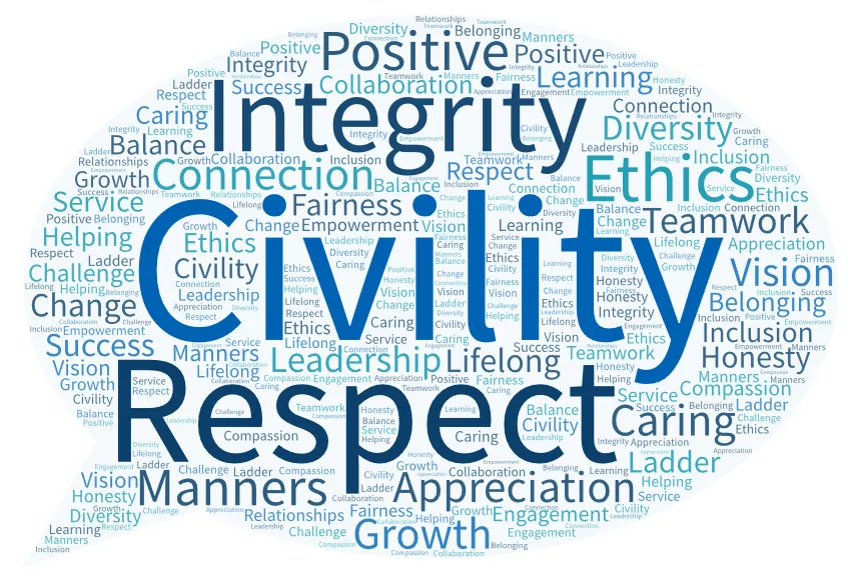
Civility Pledges

https://toddpopham.com/civility-a-matter-of-respect/

Citizen Pledge

I pledge to participate in my community.

I obey its laws.

I am civil with my fellow citizens.

I participate in our political, economic, social, and spiritual communities.

I respect the innate human dignity and rights of my neighbors.

I accept that we each think, feel, and act differently.

I work to improve my participation, compliance and civility skills and encourage others.

Candidate Pledge

In Carmel, we seek to promote an environment of civility defined as the disposition to respect every human being we interact with as our moral equal and worthy of respect.  Therefore, we encourage any candidate seeking public office and asking the citizens of Carmel for their vote, to agree to the following tenets of civility.

The Carmel Civility Project: Candidates Pledge

As a candidate for public office in Carmel, I hereby commit to the following five essential tenets of campaign conduct:

1. Civility and Respect: I will maintain a respectful demeanor towards everyone, regardless of our differences, and foster an environment of open-minded dialogue.

2. Integrity and Truthfulness: I promise to uphold truth and transparency in my campaign rhetoric and actions, swiftly correcting any mistakes should they arise.

3. Positive Focus: My campaign will highlight my vision and policies, eschewing negative attacks on my opponents’ character or record.

4. Informed Discourse: I pledge to inform citizens accurately about my platform and engage in constructive discussions to promote understanding and educated voting.

5. Democratic Process and Accountability: I vow to respect the democratic process, accept its outcomes, and encourage my supporters to engage in campaigns with integrity and decency in support of these principles.

By taking this pledge, I affirm a dedication to dignified campaigning not just out of respect for each resident of Carmel, but also in admiration for the institutions we cherish in our community.

Politics and Society

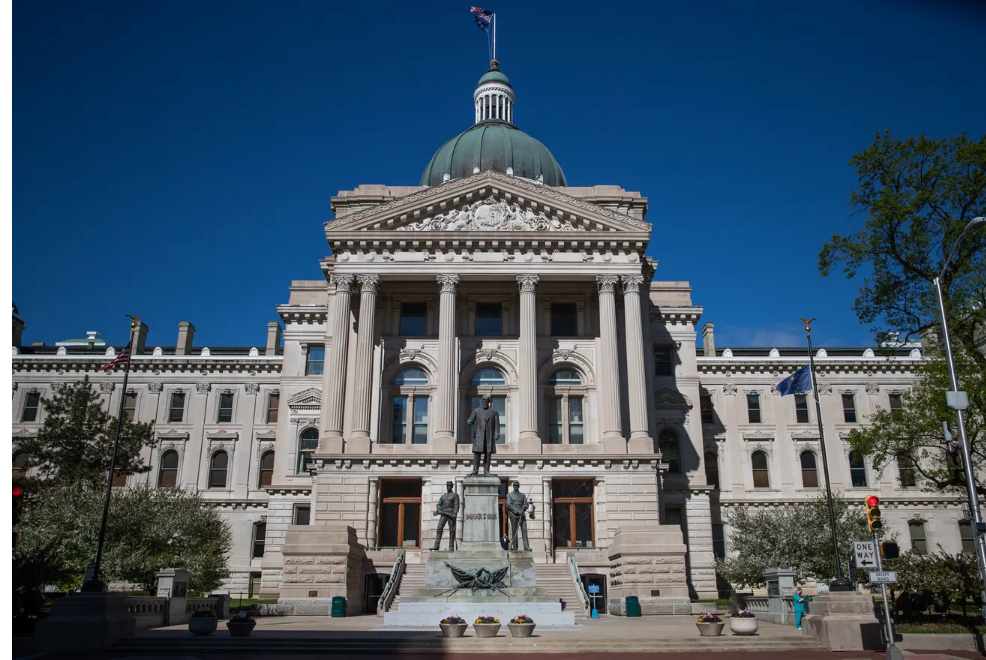
https://www.indystar.com/story/news/politics/2022/07/06/indiana-statehouse-building-history/7496187001/

R-E-S-P-E-C-T-2

I’ve read 2 books this week by conservative and progressive authors outlining the consolidation of working-class voters of all racial/ethnic groups into the modern Republican party. 

I recently outlined some steps that either party could take to address the challenges that working- and middle-class families face in a meritocratic world. 

I’ve outlined other policy steps below that might convince the two-thirds of the electorate that are working and middle class that they are the priority. My rough-cut estimate is that these changes would improve the federal budget deficit by 2% of GDP. 

Government Structure

  1. Sunset laws requiring reapproval of substantive changes after the first 10 years.
  2. Bipartisan staff recommended simplification and clean-up laws, one functional area per year, package approval, no amendments.
  3. Independent staff recommendation of lowest 10% benefit/cost ratios for regulations by agency every 10 years, package approval, no amendments.
  4. Implement balanced budget across the business cycle law that considers unemployment rate and debt to GDP levels.
  5. Require spending cuts or funding sources for new spending programs.
  6. Require federal programs to have a minimum 20-year payback from investments.
  7. Migrate to minimum 80% federal funding of all federal programs assigned to states.
  8. Outsource the USPS by region, maintaining 3 day per week delivery minimums.

Government Services

  1. Determine paternity for all births, set and enforce child support agreements, provide basic level support from the state as required.
  2. Provide home childcare volunteer refundable tax credit up to $100 per week.
  3. Greatly expand availability of 1-2 year National Service programs for young adults and senior citizens.
  4. Invest in nominal co-pay front-line mental health screening, intervention, listening, training, group sessions and counseling services for less critical conditions. 
  5. Expand veterans hiring preferences to state and local governments, government suppliers and large employers.
  6. Invest in prison to work transition programs.
  7. Allow large employers to setup new employees with default 1% contribution to local United Way/Community Chest umbrella funding services.
  8. Allow any group of 10 states to create a “medicare for all” health care program as a substitute for the Affordable Care Act.
  9. Allow any group of 10 states to create a private insurance-based (qualify in 2 states, qualifies for all states to ensure competition) health care program as a substitute for the Affordable Care Act.

Housing and Transportation

  1. Restrict issuance of new building permits in counties that do not have one-third of permits proposed for units below the existing median unit property value.
  2. Auction regional licenses for private firms or states to offer low annual milage limit used car leases low to medium credit score individuals using federal funding for the inventory.
  3. Create voluntary 5% of income home down payment savings program that accumulates to $50,000 after 10 years of full-time employment contributions.

Retirement

  1. Make social security employee tax payments optional after age 62.
  2. Remove social security payment offsets from earned income after age 65.
  3. Auction to private firms the right to offer standard 401(k) financial advisory services for 0.5% of asset value with 100% federal match below $50,000 and 50% federal match below $100,000.

Education and Labor Market

  1. Make any overtime or shift premium pay non-taxable (alternative to 10% rate in original proposal). Reduce taxable wages by 10% for hours worked between 6pm and 6a.
  2. Tax university tuition income above $15,000 at 25% rate to fund public colleges.
  3. Create German-style public-private partnerships for broad range of vocational training opportunities.
  4. Offer career and technical training grants for up to 2 years equal to state subsidy of college education.
  5. Offer workers up to $5,000 for relocation or temporary housing as an alternative to up to 2 years of unemployment benefits. (alternative to tax credit for moving expenses)
  6. Provide alternate sets of courses and experience to meet minimum requirements for standard level high school diploma, rather than requiring gateway courses like Algebra II.
  7. Offer an all-industries state administered “career skills” certification program that can be earned in 3 years of employment and classes, including some classes for academic credit in high school.
  8. Require governments and large employers to justify any strict “BA needed” job requirements versus “education and experience” options.

Safety Net

  1. Create a self-funded unemployment lump-sum payment system based on prior 5 years earnings. 4 months award available after 10 years. 6 months after 15 years. 8 months after 20 years. (Alternative to higher benefits and bridging option)
  2. Maintain a present value of future social security benefits asset balance for each participant. After age 35, allow once per decade 10-year term loan at 10-year T-bill plus 2% for up to 20% of balance, maximum of $50,000 loan balance. Repayment through social security system earnings.
  3. Provide payroll contribution funded ($200,000 max) annual income catastrophic family medical insurance (>$100,000/year) to all citizens. (alternative to $25K government provided fund)
  4. Eliminate all specific import tariffs, but levy a 3% tariff on all goods to “protect” domestic producers and help fund government programs. (alternative to 0%)
  5. Pay-off all student loan debt for professional degree medical professionals serving 5 years in non-metropolitan county or metropolitan county with less than 300,000 population.
  6. Subsidize high-speed internet for rural counties.
  7. Offer 10 year T-bill interest rate financing for qualified “low cost” retailers to build stores more than 15 miles away from any existing qualified store.
  8. Levy a $500 per employee annual “closing costs” fee on large employers (250+) for a maximum 20 years to fund local redevelopment programs starting with $5,000 per discontinued employee.
  9. Levy a 0.5% of annual rentals fee on landlords to fund local redevelopment of abandoned properties and areas.

Professions

  1. Staff state professional licensing boards with a minority of regulated active professionals. Reduce licensing requirements to meet public safety standards.
  2. Require states to provide tuition free medical care and residency spots for one doctor per 10,000 citizens each year.
  3. Reduce medical school preparation requirement to 3 years.
  4. Offer reciprocal medical licensing arrangements with 30 leading countries and expedited review and specific qualifications training and experience requirement defined for all others within 90 days of application.
  5. Set a national cap on individual and class-action lawsuits at $2 million per person, adjusted for inflation.
  6. States contract for metro and area multiple listing services and limit total real estate commissions to 4% of transaction value.
  7. Require financial advisors to meet the fiduciary standard of professional care, putting the client’s interests first.
  8. Set maximum prices per service and per hour for home and auto repair firms.
  9. Certify public advisors to provide general advice on consumer economics, budgeting, banking, investing, real estate, insurance and health insurance for $100/hour to citizens, with a $50/hour, 8-hour maximum annual refundable tax credit.

Taxes

  1. Starting with the 35% tax bracket ($462,501 married filing jointly), reduce allowable itemized tax deductions to 0 at $2 million of income.
  2. Add a 40% tax bracket at $2 million of income.
  3. Levy a 5% of excess price paid on personal vehicles sold for more than $50,000, boats for more than $100,000 and recreational vehicles for more than $100,000. (alternative to 10% above $1M)
  4. Add a 10% surcharge to tax rates for residential properties larger than 5,000 square feet. (alternative to surtax above $2 million)

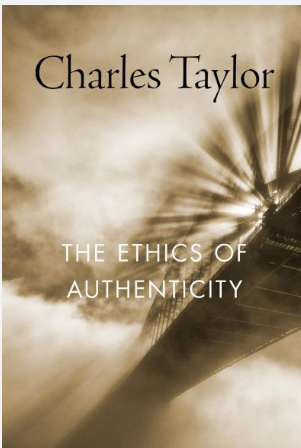
The Ethics of Authenticity / The Malaise of Modernity (1991) – Charles Taylor

https://en.wikipedia.org/wiki/Charles_Taylor_(philosopher)

Introduction

It’s 1991, heavyweight Oxford philosopher Charles Taylor is gaining popular recognition for his pathbreaking 1989 work “Sources of the Self”, a bold attempt to describe the current “self” and where it came from. He was invited to deliver the Massey Lecture in his home nation Canada, which he titled “The Malaise of Modernity”. The Berlin Wall fell at the end of 1989, ending the cold war. Ronald Reagan (1981-89) and Margaret Thatcher had abruptly ended the expansion of the state and the possibility of a counterculture; or had they?

Taylor argues that the “logic” of technology, science, economics and bureaucracy, which he terms “instrumental reason”, continues to grow in influence; larger national state or not. He argues that a historically radical “individualism” has grown throughout the post-war years, generally unexamined. Finally, he notes that these two trends combine to threaten Western representative democracy. 

At the time, popular culture, reflected in TV shows like Dallas and “Lifestyles of the Rich and Famous”, celebrated the victory of the “neo-liberal” center-right and looked forward to a glorious future. In 1992, Francis Fukuyama proclaimed “the end of history”, with Western style liberal democracy and mixed market capitalism extinguishing the threats from fascism and communism. Taylor was quite pessimistic about the cultural challenges of the present, but optimistic about the long-term possibilities.

Taylor is often grouped within the diverse “communitarian” collection of philosophers and social scientists who argue that “classical liberalism” is inherently too oriented towards the individual and neglects the community dimension of life and philosophy.

https://en.wikipedia.org/wiki/Communitarianism

I. Three Malaises

Life is good, but social critics still complain. What ails the public? What “losses” or threats are being felt by the sensitive? First, the counterculture may have been buried in 1969 or 1972 but one dimension continued to revolutionize the Western world. Individuals were not giving up on “free choice” in any dimension. Speech, career, lifestyle, college, city, religion, politics, media, language, dress, etiquette, travel, leisure, gender, marriage, and child rearing choices. Twenty years of freedom had resulted in a new cultural norm of tolerance for individual choices. Nietzsche may have declared that “God is dead” in 1882, but it took a century to percolate through to large numbers of Western citizens. The post-war period witnessed a conservative cultural and religious rebound, but it was not sustained. 

Taylor contrasts this radically new moral freedom with the prior 20 centuries. There are certainly advantages to freedom, especially removing the restraints of political, religious, social and economic institutions from individuals. Few people want to turn back the clock and re-install the static, hierarchical, controlling, prejudiced society. Yet, the individualistic transformation through the Renaissance, Enlightenment, Protestant Revolution, Scientific Revolution, American Revolution, French Revolution, and Russian Revolution had not been a uniform march of progress. Individuals had lost their well-defined place in an orderly, meaningful universe. 

The new individualism, deeply rooted in Jean-Jacques Rousseau, attempted to rebuild this secure place by returning to the allegedly positive state of man before society had corrupted the individual. The individual was invited to look within to discover their innate goodness and role in society. By 1991 the post-war “therapeutic culture” was very well advanced. Individuals had “discovered themselves” and they liked this new freedom. They looked to counselors and educators to help with their personal growth. Many critics responded to this new approach quite negatively, calling it mere self-centeredness.

The growth of size, scale, trade, complexity, science, process, dynamics, technology, computers, finance, capitalism, business, machinery, industrialization, urbanization, law, and transportation in the 20th century greatly elevated the role of “instrumental reason”. The technical control of nature. New production methods. Cost/benefit ratios. Scientific finance. Optimization. Operations research. New technologies. Processes. Systems. Re-engineering. Social sciences. Experimental psychology. Communications. Every dimension of life can be rationalized and improved. 

The scientific, urban and industrial revolutions were met by the Romantic reaction in the 19th century. Nationalism, art, music, nature, anthropology, modern poetry and literature, history, culture, language, and customs. Hegel, Marx, Freud and Jung. Methodist, Baptist and Pentecostal religious options. In the 18th century Kant asserted that man must be an end, not merely a means to an end. Humanity reacted strongly against the threats to its inherent human dignity.

Like many philosophers and social critics since 1850, Taylor worries that the market, bureaucracy and technology will become dominant over human and moral dimensions. The methodologies are highly effective and widely applied. They are continually improved. The market and bureaucracy have direct political power and influence. Mostly, Taylor worries that the ubiquitous use of these tools elevates them to become the ENDs of society. Cost/benefit. Optimized processes. GDP. GDP growth. Scientific progress. New patents. Life expectancies. Controlled risks. Optimum portfolios. He also worries that only quantitative factors that fit into the formulas will matter. Morality has to work very hard to even be considered in this world.

The widespread use of instrumental reason in markets and bureaucracies leads to a limited range of choices for individuals, employees, bureaucrats, politicians and voters. Most people can only think in terms of rational control of inputs to produce outputs. The consideration of the most valuable outputs is undermined. The scale of the political process undermines the incentives for participation. The “individualist” mindset removes citizens from political participation. Instrumental reason demonstrates effective “cause and effect”, but political participation does not produce such direct returns. Individuals lose faith in the political process. 

II. The Inarticulate Debate

In 1991, without any public debate, we now live in a world that prioritizes each individual’s search for his own unique inner purpose, meaning, ends, talents, insights, creativity, feelings, intuition, identity, possibilities, strengths, and opportunities.

Each person should be true to themselves. Per Maslow they should aim for self-actualization. This is a subjective world. Each person is empowered to pursue their own goals. Others must not interfere with this choice. Tolerance is elevated to a very important social value. 

Social scientists explain the increased individualism as part of economic, scientific, urban and industrial changes. They avoid moral discussions.

Taylor wants to elevate moral considerations. What does a radical individualism mean for morality? Is moral subjectivism valid, in any way? Can the individual be moral apart from his relations with individuals? Can the individual be moral apart from his relations with society? Truly radical individualism cannot be moral in Taylor’s view. The individual cannot make significant others merely tools, nor can he ignore the moral preferences of others.

Is moral relativism consistent with other values? Taylor says “no”. Choose any basis for a moral world view. Relativism cannot be supported. 

III. Sources of Authenticity

Rousseau is most important. The individual is inherently good. He is altered by society. He has an opportunity to become aware of the influences of society and overcome them. This is the extreme, utopian, positive individualistic view. The individual makes choices without regard to any external influence. The individual guards against the influence of external factors. 

Descartes assumed away everything except disengaged reason. No body. No society. No feelings. No actions. No relationships. No history. No art. No future. Hobbes and Locke created a world in which the individual rationally participates in the political. 

Taylor notes that the “inward turn” is not inherently solipsistic. St. Augustine described his internal turn which resulted in a connection with God and the eternal. 

Herder emphasized the original or unique dimension of each individual. 

IV. Inescapable Horizons

Taylor applies the usual logic against pure subjectivity, relativism and tolerance. You can have no true moral view unless you prioritize one view versus another or one set of values versus another. The pursuit of individual meaning and authenticity does not require that all final, considered moral views are equal. The individual’s moral views are inescapably influenced or determined by the views of others. We cannot develop moral views in isolation, we must have dialogues with others. 

There is a logical fallacy widely used. Choice is good. Diversity is good. Difference is good. Each option is good. These are merely assertions. They do not follow from any logical or values-based structure.

The individual’s process of discovery, creation and choosing is raised up to become a self-evident axiom of highest value. Taylor argues it is not self-evident and is not clearly supported by some other set of values. He says that it “could be” a highly valued part of life, but that position must be supported by some values that are defined outside the self, by the community or significant others or religion or philosophy, all outside of the narrow self.

V. The Need for Recognition

In this world of “finding yourself”, the individual also looks to others for validation and confirmation that their discovery, results, values, roles and identity are “good”. The individual cannot confirm his own journey or results but must turn to others. Self-discovery may be a highly valued good in our society, but it must be based upon something other than the self alone. The individual claims that universal human dignity supports his call for respect and affirmation. The postmodernists apply this logic to oppressed minority groups as well, claiming that they must be recognized.

Taylor dismisses the completely self-centered approach to self-discovery that rejects any need for external links to others, community, nature or God as logically incoherent. Just as Kant said that humans must be ends and not merely means, Taylor argues that external entities must also be ends and not merely instrumental means for the self.

Taylor identifies two ethical standards that are often asserted by promoters of personal growth. Each person has a right to pursue their own journey, so there is a need to limit that journey so as to not infringe upon the journeys of others. Intimate relationships are required to pursue an in-depth exploration of an individual’s inner self, capacity, resources, feelings and potential. Hence, respect for significant others is required.

Taylor returns to the “choice creates value” and “difference creates value” assertions. Some proponents of individualism argue that the fact that different people choose different “ways of being” directly makes them valuable and worthy of respect, reinforcing a universal tolerance. Taylor reminds the reader that there is no logical support for this view. Similar, some argue that men and women are equal or sexual orientations are equal because they are freely chosen. Taylor rejects this and requires that the argument return to a logical or moral basis for support. 

He extensively quotes Gail Sheehy’s “Passages” to illustrate the extreme individualistic view, “You can’t take everything with you when you leave on the midlife journey. You are moving away. Away from institutional claims and other people’s agenda. Away from external valuations and accreditations. You are moving out of the roles and into the self … For each of us there is the opportunity to emerge reborn, authentically unique, with an enlarged capacity to love ourselves and embrace others … The delights of self-discovery are always available.”

VI. The Slide to Subjectivism

Taylor admits that many pursue the narcissistic version of extreme individualism directly. They don’t need to rationalize or justify it. Self-fulfilment is a self-evident moral and ethical ideal for them. Once this version of “the good life” is seen, some will adopt it as is. This worldview makes life straightforward, no need to balance the self and others or the self and community or the self and pesky demands of external moral standards.

The more extreme versions are also promoted by social situations. The individualistic culture has many threads. The market and consumerism are individual oriented. Large organizations prioritize instrumental reasoning to reach individual goals. A market economy emphasizes transactions and contracts between individuals. Many religions have individualistic perspectives today. Science, technology and instrumental reasoning focus on spare logic and atomistic views rather than organic, natural, process, dynamic and artistic ones. Individualists treat community, friendship and religious connections as instruments of their world rather than more complex, transforming, multiway relationships. Mobility undercuts personal ties. Urban living promotes impersonal interactions. One can live a very individualistic life today.

Postmodernism, the descendant of Nietzsche, seeks to undermine or deconstruct all objective values or categories as mere tools of entrenched power groups. All values are merely created as tools. Why not create “freedom” as the main value and enjoy your role as the superman; creator of values, language and life? 

Taylor emphasizes the mixture of the Romantics and Nietzsche in the emergence of the self-creating artist as hero in the last century. This runs in parallel with the authenticity of personal self-discovery. Each person is unique. They pursue their special gifts through creativity and artistic production, experimentation, action and discovery. They do not imitate nature or copy existing models but create new languages, viewpoints, art, relationships, pottery, feelings, experiences, music, drama, travel, sport, etc. Expressive individualism is well described. Taylor supports this creative process, its outputs and the expansion of human capabilities.

He doesn’t support postmodernism when it only emphasizes the creative process but ignores any ties to moral values or philosophy based outside of the self alone. He disputes the need for the creative individual to automatically reject and fight against all existing forms of morality held by others or communities. He insists that the creative individual must be in dialogue with significant others and society in order to provide meaning and goals for the journey and to validate the journey. Taylor rejects the totally isolated individual model.

Taylor recognizes that the aesthetic perspective offers its own truth, beauty and satisfaction separate from the moral perspective. He sees this too as another opportunity for modern man to live an enriched life. He accepts that some individuals may prioritize the aesthetic perspective above the moral perspective but does not recommend it. He notes that authenticity is often proclaimed as its own goal by fiat or assumption. It is alleged to be a self-evident truth, goal and value not requiring a moral foundation, just like beauty. Authenticity and art become intertwined as forms of self-expression.

Taylor ends this chapter noting that an individual who truly buys into self-expression and self-creation can find a form of meaning and satisfaction in the journey and the sense of freedom and power which it provides. His complaint is that it logically cannot be isolated from other people and morality. When this is done there is no meaning remaining. There is only the self, an atom among an infinite and cold universe. The individual makes choice after choice after choice, but the choices have no meaning. The world becomes flat.

VII. The Struggle Continues

Taylor notes that critics such as Bloom, Bell and Lasch are correct to attack the extreme forms of egotistical self-fulfillment. He argues that attacking the overall expansion of individual self-exploration and growth is counterproductive. There can be no logically coherent merely individualistic philosophy. It must link to other individuals and some moral principles. The individualist genie cannot be put back in the bottle. Society as a whole, especially its thought leaders, must find a way to ensure that this connection of the individual to the community and logic occurs.

Taylor asserts that everyone, even the critics, must acknowledge that we live in a world where self-development, human potential and fulfilment are accepted goals and practices with value to individuals and society. The exact forms are not perfectly developed, but very few people are going to reject this approach to life.

He more positively notes that this path of development does provide opportunities for self-development and for social contributions. Individuals are encouraged to explore, create and live a fuller life. In an ironic way, the truly authentic journey requires greatly increased self-responsibility and self-control. The opportunities are so great. The responsibility to make wise choices, to interact with others, to consider moral frameworks, to link the individual and community, to combine freedom with commitment, to balance the claims on life is higher in a self-aware modern life.

The upside potential is great. The downside risk of a simple egoism is great. The tension between the higher and lower versions of this new path of life is great. Taylor argues that we are stuck with this situation, should not by gloomy, but should work to define the tensions, guide and encourage individuals on the high road.

VIII. Subtler Languages

Taylor returns to the journey of personal self-discovery and creation in parallel with the journey of the modern artist. The modern artist by 1800 had lost the common background of known and assumed literature, religion, culture and society. The artist was tasked with developing their own language, background, symbols, characters, plots and conclusions. The artist could not rely upon the reader, listener or observer to share a common understanding of the artistic background. The artist was forced to rely upon his own vision and experience, and then communicate that in precise ways so that the content and feeling would resonate with the consumer. This changed art into a very individual to individual format. The subject matter also often focused on the individual, BUT not necessarily so. Much great art continues to be about nature, the universe, community, the relation of the individual to others or the community.

The same contrast applies to the authentic journey of self-discovery. The manner of the journey is clearly subjective revolving around the individual. BUT the individual can find his relation to the community, nature, eternity, God, a larger order, neighbors, science, history, family, etc. The individual can find that the most important lessons are only secondarily about the self.

IX. An Iron Cage?

Taylor argues that instrumental reason/technology can be viewed as above. There is a long history of technology, science, economics and bureaucratic forms growing more complex, effective and controlling. They are supported because they work. The risk is that they replace the end goals of individuals, firms and society. Application of the decision-making forms becomes the end goal because they are, well, so efficient and effective. What other goal could there be?

Economic rationality, markets and bureaucracies, science and technology have become second nature, a background assumption in modern society. Individuals use their methods each day. This familiarity shapes our thinking in all realms. Yet, there has been a gut-level suspicion and opposition throughout the last 500 years. Analog, superstitious, grounded, habitual, traditional, organized, historical, religious creatures have resisted the creation of abstract forces that replace their familiar ways. The Luddites, Marxists, Utopian Socialists, Farmer-Labor party, romantics, science fiction writers and greens have all opposed the unchecked advance of technology.

Taylor outlines the extensive influence of instrumental reasoning as a background assumption in our society. He encourages us to look at the underlying moral frameworks that have supported technological progress and to consider this reasoning as merely a tool. He notes that disembodied reasoning in mathematics and computers is given a privileged place in our thinking but there is no good case for this view which was really just assumed one day by Rene Descartes.

“This is grounded in a moral ideal, that of a self-responsible, self-controlling reasoning. There is an idea of rationality here, which is at the same time an idea of freedom, of autonomous, self-generating thought”. Technology can be placed within the context of other moral principles such as benevolence and caring. The application of instrumental reasoning impacts real flesh and blood people, so this moral context matters.

X. Against Fragmentation

Radical individualism and dominating technology both threaten well-functioning democracies. The first simply ignores the need for community and political participation. The second makes impersonal forces appear so strong as to make political participation irrational. There is a vicious/virtuous cycle dimension. Lower participation results in worse results … More effective participation results in better results …

Finding a more effective middle ground of improved self-responsibility can help the individual, the community and politics. Finding a more effective middle ground regarding the unwarranted expansion of technology can help to re-establish moral and political principles as drivers of political debate and results. Taylor calls for a balance among the 5 competing areas of markets, government, social welfare, individual rights and democratic effectiveness. He argues that this is more effectively done at smaller scales, so decentralization is a key tool. He notes that success at any level can help to improve politics at other levels. Taylor is concerned that social trends can overwhelm institutions. Yet, he believes that intellectuals can help to clarify the role of ideas in shaping politics and culture. Better ideas can compete against simplistic models and slogans that don’t work for society. There is an unavoidable tension, a give and take, in society and politics. We have the ability to shape these debates for the common good.