It’s difficult to describe the complete revolution in the behavioral sciences that occurred around 1956 as practitioners began to experience a “paradigm shift” 6 years before Thomas Kuhn’s wildly influential “philosophy of science” description of this phenomenon.
Psychology was dominated by the behaviorist approach of BF Skinner. Only observable scientific results mattered. In second place were Freud’s insights into the differences between the conscious mind and the unconscious struggles between the id, ego and superego. Psychologists, social psychologists, communications theorists, philosophers, linguists, and computer scientists rejected BOTH the philosophy-free behaviorist approach and the philosophy-entangled Freudian approaches. The “cognitive scientists” recognized that the mind, mental, consciousness, rationality, perception, memory, attention, will, drives, social influences, choice, morality, feelings, fears, instincts and many other constructs were “real” in some sense. Non-material concepts and structures were important complements to the material and observable world.
They embraced the scientific method to investigate these concepts. They began to combine experimental psychology, information theory and biology. Their work led to many breakthroughs in theory and in practical advice for how humans behave, where they fail/struggle and what they can do to improve. These scientifically based theories have accumulated to the great benefit of mankind in the last 70 years.
I want to highlight the key cognitive science / behavioral science breakthroughs that are relevant to practicing civility. I will limit references to a single work for each category.
This above list only scratches the surface. Consider corporate organizational development, counseling, cognitive behavioral theory, college residential life, community development, neutral DEI programs, listening, peer counseling, couples counseling, co-dependency, adult children of alcoholics, anxiety, negotiating, facilitation skills, strategic planning, game theory, risk management, project management, influence, thinking hats, personality styles, talents, etc. The list is almost endless.
We now understand how humans behave. We are imperfect and amazing. We have the ability to balance the individual and the other, the individual and the community, the individual and spirit/God.
Civility is based upon the human dignity of each individual. The modern “cognitive science” approach embraces this insight. It offers tools to make our lives more effective, meaningful and satisfying. Civil individuals should invest time to master these subjects.
Political polarization, impact of media changes, declining trust in people and institutions, lower community and civic participation and a president who promotes a purely transactional world that ignores Civility. People are worried about democracy, progress, relations and the future. They sense that the decline in Civility is one of the problems and that restoring Civility might be an answer.
What’s New?
While journalists focus on politics and the media, others are focusing squarely on day-to-day Civility in our interactions with each other. People are frustrated with political and institutional leaders’ seeming inability to guide us to a better world. Like the little girl in “the Tale of the Starfish” they refuse to accept a declining world and commit to taking small, personal actions in the face of great challenges, exclaiming “Well, I made a difference for that one”!
These individuals and groups are focusing on improving personal Civility in all walks of life, leaving politics and the media for later action. They believe that improved behavior alone has the potential to “move the needle”. So, they are improving their own Civil behavior, promoting, teaching, sharing and encouraging others. They are organizing and holding meetings to find partners. They are developing curriculum to share the core values of Civility that can be embraced without diving into politics or religion. They are highlighting the many existing tools for better communications, interpersonal relations, problem solving and personal growth available to those who wish to be more effective in using and modeling Civility. They are using the interactions of thinking, feeling and doing to create better enduring habits.
Where’s the Rub?
Civility has been caught up in the political and religious wars. It is often misunderstood as just politeness, overpromising an end to disagreements, soft, emotional, utopian, relabeled liberalism, a new righteousness or an apology for the status quo and vested interests. The new Civility proponents have much work to do in order to clearly communicate its core content AND what it is not.
The power of Civility lies in its networking effects. Individuals who develop Civility skills in parenting can use them at work. People who build Civility skills to be better political advocates can use them in their volunteer roles. Individuals who demonstrate Civility in any arena influence others, even if they don’t notice. People tend to mirror the behavior that they experience. Other individuals behave better, and a virtuous cycle continues. Our problem for the last 20-50 years is that we have been in a vicious cycle of less and less Civil behavior becoming more and more accepted.
What’s In It for Me? (WIIFM)
We live in an age of radical individualism. We naturally first evaluate ideas and options from only our personal perspective. Civility provides many personal benefits. It provides even more important community benefits. Because it is about public behavior that influences others it is often about both the individual and others or the individual and the community. Civility depends on the values of human dignity, respect, acceptance, responsibility, intentionality, interactions, constructiveness and public spirit. Hence, it claims many positive results for the individual and the community.
Practicing Civility will improve your health, effectiveness, sense of belonging, personal growth and leadership skills.
1. Conflict Reduction
Civility is founded on human dignity, respect and empathy. Differences are expected. Individuals seek to understand others. They focus on people, process, interactions and results, not just winning. They employ tools to find acceptable solutions. They refuse to personalize differences. This approach reduces the chance of differences or disagreements escalating to become conflicts or crises. The habit of resolving or accepting differences creates an atmosphere that expects reasonable interactions and results.
2. Stress Reduction
Civility reduces the frequency and intensity of conflict. It minimizes the direct and indirect experience of personal attacks. Individuals are affirmed by each other, feeling respect and developing a stronger self-image. Others have higher morale, so they are less likely to fall “below the line” in their behaviors. Social norms guide positive behavior. Individuals expect that people, process and results will be good, or at least acceptable. They learn to depersonalize interactions, reframe conversations to avoid righteous religious or political issues and build upon their positive experiences.
Positive experiences and expectations reduce stress, tension, fear, anger and anxiety. They encourage engagement and issue resolution. They reduce the risk of burnout.
3. Happiness
People in civil environments experience respect, acceptance, belonging, positivity, trust and good relationships. Civility leads to high achievement by developing communications, problem solving, relationship and influence skills. By applying the values of responsibility and intentionality, individuals improve their decision-making skills, especially those that require interaction, creativity and wisdom to manage complexity, uncertainty and differences. These experiences help people to become centered and composed.
The process emphasis of Civility supports personal growth. Individuals define goals, separate means and ends, welcome feedback, bridge differences and expect to change when they learn. Personal growth can cause anxiety at first, but extended experience provides a way to embrace change and expect positive personal and process results. Finally, Civility requires individuals to make choices about upholding values like human dignity, respect, responsibility, leadership and the public good. Individuals who define and strive to consistently live by moral values build justifiable self-assurance (#10).
4. Good Reputation
When you demonstrate communications, problem solving, interpersonal, personal and change management skills, others notice. When you apply the virtues of respect and acceptance, responsibility and intentionality, positivity and interaction, others notice. They notice your personal, work and civic realms. Your personal brand value grows. They trust, respect and like you. They expect you to work well with others and to keep your commitments. They provide professional and leadership opportunities because you are effective in the modern complex, team environment.
5. Influence
Those who practice respect, acceptance and interactive problem-solving prime others to consider their views. Self-confident, centered, composed, responsible, intentional people are seen as natural leaders. Individuals who have solid interpersonal and communications skills, especially active listening, encourage others to work with them. The experience of mutual respect and creative problem resolution in difficult situations leads others to prefer to work with their highly Civil colleagues.
6. Better Relationships
Civility makes building relationships a top priority. People, process and results. Civil people demonstrate empathy and self-regulation. They have good communications and interpersonal skills. They value respect and acceptance, responsibility and intentionality, positivity and interactions. Experiencing the give and take of shared decision-making or problem-solving benefits all parties.
7. Belonging
The Civility values of interaction/dialogue, mutual respect and public spiritedness combine to create and enhance communities. They create shared purposes, meanings, interests, history and the experience of managing difficult decisions. Belonging improves with this stronger sense of community.
The Civility values of human dignity, respect and acceptance together with empathetic behavior contribute to forming and sustaining a kind, compassionate community. Individuals are affirmed, feel safe and belong.
When Civility is actively thriving, the overall environment is Civil or harmonious. Morale, well-being and relationships improve. Belonging flourishes.
8. Included
The same forces that create belonging, apply to inclusion. True belonging, based on acceptance and human dignity, is for everyone, despite whatever differences they may have. A “big tent” welcomes all. The underlying values also make individuals feel respected, valued and affirmed even when they are different or hold different views.
Interacting with mutual respect using modern behavioral science tools leads to understanding differences of interests, perspectives, goals, beliefs, preferences and values. Understanding helps to avoid conflicts. It allows us to disagree without being disagreeable. It encourages us to find creative, compromise solutions. It helps us to identity where we do have shared views. By truly accepting differences we include others.
9. Emotionally Composed
Civil people expect to encounter and manage differences. They willingly engage in group decision-making and problem-solving processes. They respect and empathize with others. They depersonalize crucial conversations. They identify common interests. They learn that they can discuss, trade, negotiate, advocate and influence civilly even when the stakes are high. They learn to accept and embrace compromise and avoid polarizing arguments about political and religious topics.
Civil people are supported by a civil environment of belonging and inclusion where others are mostly stable too. They practice the values of responsibility and intentionality. They know that they must make choices. They learn that some differences cannot be resolved and that they have personal growth opportunities. There is a virtuous cycle of self-control, with the experience of building greater confidence and reserves.
10. Satisfied
Anyone who has achieved 3 Happiness, built a 4 Good Reputation, become 5 Influential, created 6 Better Relationships and become 9 Emotionally Composed should be satisfied with life. If they are also succeeding in life and career based on developing and applying the key behavioral skills, they are further blessed. If they have been able to consistently follow their values, including public-spiritedness, they should be proud. If they have participated in group problem-solving and decision-making to shape their communities at any level, they know they have achieved something important.
11. Overcoming Selfishness
Three of the five key Civility behaviors apply: empathizing with others, building relationships and self-regulation. The individual is required to interact with others, so he or she might as well be good at it. Self-knowledge is required for interacting effectively with others. Radical selfishness is simply not an option.
Personal management and interpersonal skills help people to insightfully look inward and outward to balance both worlds.
Six of the Civility values apply: recognizing the human dignity of others, respecting others, accepting others, interacting with others, being constructive in spite of others and considering the common good with others.
Civility does not elevate “others” or communities above the individual, but it recognizes them as valid agents in life’s drama. They are worthy of serious, intentional, responsible consideration. Civil individuals happily move beyond a state of self-absorption to engage with life’s full possibilities.
12. Leveraging Human Dignity
Civility begins with the insight that we each share a common human dignity. We each have equal worth. This is an essential view of reality and human potential. It cannot be disputed. The Civility values, behaviors and skills are derived from this base.
It means that we each have an infinite worth and value. We have humanity in common and the “common good”, relationships and community truly matter. The views and interests of others matter and must be considered. Individuals have inalienable rights of protection from others, groups, governments and society. Minority interests should be considered and protected. Individuals must be treated as “ends”, never just as means to ends per Immanuel Kant. Groups and ideologies must never be more important than actual people. Civility processes protect these individual rights while respecting the need for groups, communities, governments and societies to make imperfect decisions for the common good.
13. Mutual Trust
When individuals practice the Civility values, they are signaling that they trust others. Displaying respect and acceptance indicates trust in another person. Investing in intentional, responsible, interactive and constructive actions says that an individual believes that the others are worthy of investment and implicitly trustworthy. Considering the common good or public interest also shows a belief that others should generally be trusted.
Trust is often given altruistically, at least at first. Modern game theory says this is the optimal first step in typical two player games. It is also offered with an expectation that it will be reciprocated. Trusters hope and expect that they will be trusted back.
Trusters also believe that they will indirectly benefit from nudging others into creating more effective teams, groups and communities. These groups are more effective due to collaboration and deliver better results. They reduce the costs and risks of making decisions. They create a positive environment of lower stress and conflict.
14. Mutually Constructive Behavior
Civility embraces positivity and a constructive approach to conflict management, negotiations, problem-solving, decision-making and politics. This value is supported ethically, tactically and strategically; NOT naively.
Responsibility and intentionality are adopted with the expectation that they will be at least partially reciprocated by others. Using a constructive approach to interactions helps to influence others to mirror this good behavior and engage positively.
Civility values an interactive and mutually respectful approach to the broad topic of problem-solving. Faith in interaction is based on the values of human dignity and respect. It is helped by empathetic behaviors. It is greatly facilitated by positive and constructive attitudes, thoughts and actions. This another area where a value (constructiveness) is first offered altruistically with the hope and expectation that it will be partially reciprocated.
Civiliteers hope that civil discourse will arise and become the norm. They hope that a positive environment will result with less stress and conflict. They expect better decision-making, especially when treating complex issues with real differences of views and interests. They believe that better decisions will arise from the recognition of differences, identification of the common good, creative solutions and constructive compromises that are “good enough”.
15. Moral Commitment
Civility promotes 9 values. It is an ethical system that is not dependent upon any specific philosophy, religion or political viewpoint. It is consistent with “classical liberalism” that was developed in the 1700’s in England, Europe and the United States.
It is a subset of a complete moral framework. It is fully adequate to support our day-to-day lives together at work, at play and in government. It attempts to balance the inherent conflicts between the self-aware individual and others and communities.
Individuals commit to this set of values because they believe they are in some sense “true”, morally right, adequate and necessary for society and politics. They hope that their imperfect application of these values will trigger others to make the same commitment. They understand that all humans are imperfect and that the serious pursuit of 9 values is much better than no pursuit at all. They adopt these values and invest in learning behavioral science skills and building habits because they want to do the right thing for future generations and ultimate values.
Summary
Civility offers direct and indirect benefits to individuals. In the end, it is both a practical and a moral choice. We live in a “secular age” where the received religious views can be challenged by well-meaning people. My belief is that our “classical liberal” democracy requires the support of a Civility subset of values. I also believe that our secular society requires this same subset of values to facilitate the interactions and transactions of modern life. I believe that almost all individuals can justify Civility values, behaviors and skill development on a practical basis alone. I hope that the 15 benefits described above will help everyone to make the right choice.
As Civility begins to be embraced as a vital answer to our challenges, we’re starting to hear from the skeptics, the professional critics, the haters, the perpetually ironic, special interests, politicians, media interests, fundraisers, political consultants, the powerful, influencers, extremists, technologists, literalists, nativists, nationalists, environmentalists, talking heads, artists, postmodernists, materialists, therapists and humanists. Some struggle with Civility’s claim to represent everyone in addressing core human challenges. Instead, they say that the modern Civility project is really for elites only, too soft and emotional, too far left, too righteous, too far right, too simple/surface or too impractical/abstract.
Civility attempts to define a set of values, skills and behaviors that are “fully adequate” to support the required economic, social, religious and political needs of our society. Civility addresses the eternal conflict between the individual and “the other”; between the individual and communities considering the “common good”. It provides a subset of moral values adequate to support these dimensions of life while allowing individuals and groups to debate and negotiate the remaining political, social, personal, religious and economic options. As such, it is a “classical liberal” approach, embracing individual freedom while necessarily tolerating others and their opinions.
Just for Elites?
Civility has a long history in America of being embraced by all. City and country. North and South. East and West. Religious diversity was a key driver historically. The Catholic versus Protestant wars in Europe were seen as ridiculous for modern people. The great diversity of Protestant denominations promoted religious tolerance.
Civility applies to all domains. Family, neighbors, unions, civic clubs, not-for-profits, schools, universities, professions, religious organizations, interest groups, small businesses, big businesses, cooperatives, political parties, candidates and community groups. There is no “elite” preference here.
Civility begins at the local level. Family, neighbors, friends, local commerce, HOA’s, block watches, parishes, local schools, local sports, civic organizations, libraries, community centers, social welfare services, third meeting places, pubs, porching, volunteering, block parties, volunteer fire fighters and emergency services. Rural, agricultural, expanding America was founded on these voluntary organizations. It was re-founded around 1900 with political reforms, social services, scouts, civic organizations, YMCA’s, Chautauqua institutes, civil rights, labor unions, temperance, public libraries, public secondary education, etc.
Civility is an eternal challenge. The individual faces other individuals and other groups, communities and society. We’re each wired to be fully individual oriented. “It takes a village” to civilize us and make us productive members of society. Civility applies to all social classes and geographies.
Civility focuses on human dignity, respect and empathy. These are universal human values and experiences. They represent a radical view of human equality, indifferent to rank. These values are anti-elite and countercultural. They support the needs of all and constrain the [alleged] tendency of elites to construct exploitative structures and philosophies.
Civility focuses on practical skills for interacting with others, communicating and making good decisions. It is applicable for everyone.
The Civility Project is purposely taking a “bottoms up” approach to recapturing our institutions as responsible to the people.
The current social, political and economic institutions [often] primarily serve the interests of the privileged (the 1% and the 20% professional classes). The “tea party” was founded to challenge this situation. This wise populist insight has been captured by one political party for its sole benefit. Civility attempts to make clear the benefits to any political group of effective institutional structures.
Civility’s focus on human dignity ensures that individual freedom will be preserved. It is a “classical liberal” approach that recognizes that humans are imperfect and that many will attempt to capture political, social and economic institutions for strictly personal benefits. [In modern America, this is considered a “conservative” insight]. It accepts that some constraints must be placed upon individual “rights” to preserve the “common good”. There is often no obvious solution to these competing interests. Every society must find “reasonable” ways to protect both individual rights AND the common good, while allowing representative democracy to wrestle with the issues in the middle. We’re stuck with an uncomfortable “both/and” rather than a more satisfying “either/or”.
Civility is a “public good” which benefits everyone. The more that civility is practiced, the more that everyone benefits. Non-elites, who have lesser assets, benefit disproportionately from increased civility.
Investments in improving civility create a “virtuous cycle” which benefits everyone.
Elites have a much greater share of assets, so they have a greater interest in establishing and maintaining civility in any society. They need a supermajority of society to buy into “the rules of the game”. They could once rely upon ideas like divine providence, tradition, kings’ rights, land rights, the ancient regime, property rights, class rights, papal infallibility, social Darwinism, eugenics, racial supremacy, national rights, etc. Modern history and communications undermine these crude approaches. Elites need Civility to underpin support for representative democracy, regulated capitalism and international trade.
Too Soft?
Critics argue that “Civility” is based solely on feelings, weakness and conflict avoidance.
Civility encourages individuals to be “dead serious” about their political and religious views. It does not take a position. It encourages individuals to engage in the political process and to develop deeply felt religious beliefs and practices [without becoming righteous and rejecting others’ rights].
Civility requires the “hard” virtues of respect and responsibility.
Civility requires the development of mature character in adults.
Civility promotes positive and constructive approaches to interpersonal relations and problem solving.
Civility is focused on results, not just ideas.
Project Civility is focused on actionable steps, not just a belief system.
Too Left?
Civility embraces the “little platoons” of classic and modern conservative thought. High commitment local organizations are essential for social life and forming moral character.
Civility is actively non-partisan. It requires no position on the historical debates. Central/decentral. Tradition/innovation. Risk/safety. Religious/secular. Individual/community.
Civility requires a limited moral foundation to support society. It rejects a purely individualistic basis for society. It rejects a purely community, organic, spiritual, religious basis for society.
Civility embraces the role of institutions, trust, productivity and growth in society.
The 8 civility values are nonpartisan. Respect, acceptance, public spiritedness and interactive lean left. Responsibility, intentionality and constructiveness lean right. Human dignity is equally left and right.
Too Right?
Human dignity is a radical idea opposed to domination by elites and structures.
Civility is inherently open, liberal and tolerant.
Civility does not embrace any dominant religious or cultural view.
Civility embraces positivity. It does not prioritize “no”.
Civility acknowledges conflict as an inherent part of life and embraces modern technologies.
Civility acknowledges power as a real force in life. It believes that personal and community beliefs are equally important.
Too Righteous?
Civility attempts to find the “common ground” of political debate. It tries to find the “least common denominator” or values, practices, beliefs and habits necessary for society to succeed, or at least muddle through.
Like all political, social, religious or philosophical belief systems, it tries to find the essence, the most important beliefs or assumptions needed for success.
It focuses on communications and interpersonal skills that are neutral.
It focuses on conflict resolution skills.
It promotes organizations like the “braver angels” that encourage interaction between individuals with different views.
It embraces the problem solving and personal growth results of cognitive behavioral therapy and modern organizational development.
Civility promoters believe that tolerance is essential.
Too Simple?
Critics say that civility is too simple, too surface, too obvious. Civility is an approach based upon 500 years of the Western modern era.
Civility accepts the complex validity of modern politics and religion.
Civility embraces a required subset of values in the Western religious, philosophical, economic and social traditions. It requires respect, human dignity, acceptance, responsibility, public spirit, intention, interactivity and constructiveness.
Civility requires thinking, feeling and doing.
Civility accepts that individuals have deeply felt individual perspectives that do not align easily.
Civility promotes the development of individual character based upon philosophical, religious and political perspectives.
Civility combines a set of values with a set of practical skills to be applied in all domains of life.
Civility actively rejects oversimplified versions that are just politeness, magic wands to end disagreement, purely emotional, utopian, partisan, overreaching or merely supporting the status quo.
Too Impractical?
One definition is that “civility is a set of behaviors that recognize differences and build mutual respect.”
Behaviors are the primary focus, even though they are based upon widely agreed-upon values.
Individuals recognize differences between individuals and groups, and seek to understand and bridge them. This is a level-headed approach to recognizing and managing reality.
Individuals constructively take actions to build mutual respect. They work in the right direction, even though the steps don’t always work to resolve differences, solve problems or build relationships. They take steps forward because this is hard, necessary work, not because it is destined to succeed.
The communications, problem-solving, interpersonal, change and personal management tools used in implementing civility are practical insights, techniques and habits that can be taught to everyone.
The Civility Project roll-out strategy is “bottoms-up”, relying upon a broad cross-section of our nation learning, perfecting, applying and sharing these tools and values.
The Civility Project emphasizes actionable steps: education, interactions, commitments, teaching, porching, greeting, encouraging, joining, volunteering and engaging politically.
Civility offers personal benefits such as conflict management, stress reduction, self-management, better relationships, improved image, influence, acceptance and productivity.
Civility undermines the attraction of extreme individualism by emphasizing the shared humanity of all individuals and the necessity of constructive interactions. It helps individuals to find a balanced perspective that includes others, communities and values as complements to the individual alone.
Civility is similar to approaches like the “golden mean” and the “golden rule”. It attempts to combine a small number of values and skills into a practical tool kit that can be used and improved.
Summary
Civility is easy to caricature and dismiss. Simplistic “straw man” versions are easy to attack. They are inadequate to be helpful or embraced as a shared community asset. But Civility defined as a set of behaviors that combines values and tools and strives to both build relationships and manage differences is not simplistic or ineffective. It is a critical set of habits needed to promote effective interactions, engagement, trust and results in a complex society.
It is a moderate and moderating approach, so some might call it conservative. It values interactions, feedback, process, learning and growth, so some might label it liberal. We think that the Civility values are nonpartisan and that the tools are clearly neutral ones that can be used to be more effective in all walks of life, irrespective of politics or values.
Civility can overpromise and become righteous. We think that these values and tools are a solid combination for delivering personal, interpersonal, process and community results. But they don’t work miracles. We have different sets of values, perspectives, experiences, habits, talents, personalities and expectations. We can learn to listen, empathize, seek the common good and compromise effectively. This will help, but it won’t make any of us perfect people or negotiators.
Our goal in the Civility Project is to re-establish community expectations that promote these kinds of interactions and personal growth. We are confident that creating new norms of expected and taboo behaviors will help individual lives and our communities. In the modern world of complexity, uncertainty, insecurity and skepticism we need some help. Civility offers a nonpartisan common framework to rebuild a constructive, trusting, productive background for all of our interactions. Imperfect, but very powerful.
1 Reduced quarterly inflation rate (CPI) from peak 8.6% in 2Q, 2022 to 2.7% in 4Q, 2024. 2 Doubled the federal budget deficit from $0.75T to $1.5T per year. 3 Inflation grew to 9%, partly reflecting excess government spending initiated by the president. 4 Added 15M jobs; added jobs every month!!!!!!! 5 Cut the Black unemployment rate from 10.0% to 6.1%. Cut the Hispanic unemployment rate from 9.3% to 5.1%. 6 Increased per capita real disposable income by 5.6%. 7 Increased prime age labor force participation to near record 83.9%, last seen in 2001. 8 Reached pre-Covid employment in 28 months. Great Recession recovery took 3 times as long (77 months). 9 Real wages grew significantly in each year. 10 Record low unemployment rates quickly achieved and maintained after pandemic. 11 Reduced unemployment rate from starting 6.7% to 3.7% average for 2022-24. Pre-Covid 2017-19 was 4.0%. 12 Increased real GDP by $2.8T, 13.1% total, 3.2% annual. Trump pre-Covid gain was $1.7T, 2.8% annual. 13 Bloomberg reported a 26% increase in net household wealth between December 2020 and 2024. 14 Increased household wealth by 20%. 15 Recorded 24% increase in median home sales price from December 2020 to 2024. 16 Stockmarket value increased by 50% from December 2020 to 2024, building upon 50%+ rise in prior 4 years.
Outstanding economic results. The majority of inflation was due to pandemic and supply chain issues. Nonetheless, the growing budget deficits were an “own goal” that should have been avoided for economic and political reasons.
Governing
17 Appointed record number of federal judges, including record share of women and minority judges. 18 Postal Service Reform Act – reset reasonable debts, compensation and service levels. 19 Misevaluated and misresponded to declining personal health risks. 20 Democratic party exceeded expectations in 2022 midterm elections. 21 Negotiated spending limits in order to increase debt ceiling and avoid government shutdown. 22 Failed to overhaul Democratic party position as leaders of states and cities. 23 Failed to take advantage of the January 6, 2021 insurrection to remove Trump from politics. 24 Oversaw continued weakening of Democratic Party appeal to working class, minorities, men and independents. 25 Oversaw continued weakening of Democratic Party power, brand and results. 26 Promised to govern for all of the people but slipped into anti-MAGA politics. 27 Ran for second term and failed to withdraw in time for the party to field an effective platform and candidate. 28 Republicans were able to make DEI and wokeness a winning issue at all levels, without counter-leadership. 29 Unable to offer a new framework to reset politics outside of the win/lose polarization approach. 30 Increased IRS budget to reduce tax evasion and increase revenues. 31 Inflation Reduction Act – set minimum 15% corporate tax rate. 32 Electoral Count Reform Act – clarify presidential election processes. 33 Speech and legislation on threats to democracy, voting rights. 34 Support Voting Rights and Freedom to Vote legislation, enforced laws, opposed new state restrictions. 35 President and Democrats were unable to make progress on voting reforms despite opportunities. 36 American Rescue Plan – extra funding to cut child poverty in half. 37 Increased Pell Grant funding for lower income college attendees. 38 PACT Act – covers veterans exposure to toxic chemicals. 39 Provided new or lower cost internet access to 5M. 40 Provided student loan debt relief to 5 million borrowers. 41 American Rescue Plan – reduced medical insurance premiums
Some “good government” initiatives and results. Biden was unable to address the basic challenges of polarization, skepticism, social media, rule of law and personal integrity. He was elected as a “placeholder” to avoid Trump in 2020 and filled the “placeholder” role. He was unable to reframe the debates.
Public Health
42 Inflation Reduction Act – allows Medicare to negotiate top 10 drug prices, 43 Inflation Reduction Act – capped annual drug costs, reduces insurance costs 44 Negotiated agreement with pharmaceutical companies to reduce drug prices. 45 Doubled number enrolled in Affordable Health Care from 12M to 25M. 8% uninsured is record low. 46 Inflation Reduction Act – increases Affordable Care Act access to medical insurance. 47 American Rescue Plan – 500M covid vaccinations 48 American Rescue Plan – funding for individuals, businesses, governments and NFPs to survive pandemic. 49 Management of Covid-19 pandemic health care, communications and economic recovery strategy. 50 Failed to capitalize on his pandemic recovery and economic successes in the public eye. 51 Some pandemic decisions were overly restrictive, not based upon science, cost/benefit or value of freedoms. 52 Legislative, funding and regulatory changes to energize the Cancer Moonshot initiatives. 53 Rejoined the World Health Organization.
The pandemic mitigation and recovery should have been celebrated as a once in a century victory for the American people, science, business and government. And for the world! The results were amazing, if imperfect. Biden’s team was unable to stake out the high ground and frame the real results in this manner, allowing partisan politics to infect and undermine even this situation.
International Relations
54 Created QUAD security relations with Australia, India and Japan. 55 Facilitated improved relations between Japan and South Korea. 56 Increased support from citizens and leaders in NATO nations to the US. 57 Recommitted the US to NATO, encouraged defense investments, welcomed Finland and Sweden. 58 Signed AUKUS deal with the United Kingdom and Australia for Indo-Pacific security. 59 Unable to renegotiate new bargain with allies to pay for US defense, police, trade, shipping, legal umbrella. 60 Was unable to delivered principle leadership for the liberal international model on trade and global affairs. 61 Failed to reset US-China relations despite shared interests in global commerce, climate, security and health. 62 Supported Trump’s anti-free trade and anti-China actions without proposing effective alternatives. 63 Reduced US reliance of Chinese imports by 10%, increased US exports to China by 15%. 64 US dollar increased in value by 15%. 65 US inbound foreign investment averaged twice as high from 2021-24 versus 2020. 66 US outperformed other nations in achieiving pre-Covid levels of GDP and employment. 67 US stocks increased in value by 50%, more than in other markets. 68 Supported the bipartisan 2024 immigration reform bill that was rejected by candidate Trump and Republicans 69 Failed to take emergency action to secure the US-Mexico border, protect and process immigrants. 70 Responsible for 3 years of 175,000 monthly migrant apprehensions versus 25,000 baseline. 71 Ended Afghanistan war within negotiated plan. 72 Protected the US from terrorist attacks, authorized surgical anti-terrorist attacks. 73 Recorded zero domestic deaths from international terrorist activities during 2021-24. 74 Support for Israel after Hamas attack, ceasefires, prisoner exchanges and hostage releases. 75 Afghanistan withdrawal was poorly planned and executed, costing lives, equipment and US stature. 76 Hamas attacked Israel, killing 1,200 citizens and taking 300 hostages, confident of Israel/US limits. 77 Israel invasion of Gaza has continued without resolution, highlighting the US’s lack of influence/leadership. 78 Economic, intelligence and military support to Ukraine, which has stopped Russia’s invasion progress. 79 US and allies imposed sanctions on Russia for Ukraine war. 80 Russia invaded Ukraine, confident that the US and allies would not respond effectively. 81 Russia’s invasion of Ukraine has continued, without effective opposition or a negotiated solution.
Biden was able to mend relations with our allies and improve the strength of these alliances and the global power of the US economy. His team fumbled the Afghanistan withdrawal, failed to prevent the Russian and Hamas invasions and was unable to drive these situations to better solutions. US power has been undermined by these failures. The spike in illegal immigrants also portrayed the US and the Biden administration as a weak protector of our essential interests.
Resources
82 Inflation Reduction Act – $369B clean/green energy investment incentives. 83 Invested in wind, solar, battery and electical vehicle technologies. 84 US increased position as world’s largest oil producer and LNG exporter. 85 Expanded the US portfolio of national monuments. 86 Invested $4B in superfund environmental cleanup. 87 Rejoined Paris Agreement to address climate change. 88 Infrastructure Investment and Jobs Act – $1.2T. 89 New investments in domestic manufacturing, adding 750,000 jobs. 90 CHIPS and Science Act – incentives for domestic semi-conductor production. 91 Executive order on Artificial Intelligence outlines potential risks.
Big wins in managing energy, infrastructure and the environment.
Social Issues
92 20% reduction in violent crime rate after pandemic increases. 93 Renewed the Violence Against Women Act. 94 Repositioned marijuana classified substance rating, reduced federal criminal enforcement. 95 Respect for Marriage Act – required states to recognize the decisions of other states. 96 Responded to Supreme Court reversal of Roe v. Wade with Executive Orders on reproductive health services. 97 Revised asylum seeker options, added green card options for spouses of US citizens. 98 Safer Communities Act – gun controls, screenings, red flags.
Some small wins for the left.
Wins and Pinches
3 wins for every pinch! A decent number of achievements for a one-term president in a very polarized age.
Overall
Public Health A
Economy A-
Resources B+
International C+
Social Issues C
Govern/Politics C-
Biden did an outstanding job on the “blocking and tackling” in a very difficult situation. He “treaded water” in the international arena. He did not advance liberal social causes effectively. He failed to effectively address the Trump/populist threat to our democracy. For this, the overall grade is a D. 😦
Left, Right and Center
Biden was a moderate. He only tilted far left on 4 of the 98 items. Student loan relief was for the university crowd. The failure to address border security administratively was due to minority and progressive politics. Doubling the budget deficit undercut 30 years of Democratic Party “fiscal discipline” following Clinton’s “third way”. Not trying to reposition Democratic politics as centrist, moderate, adult, opportunity, American, scientific, effective, growing, universal, creative, tolerant, professional, metropolitan, ecumenical, big tent, majority, community, emerging, aspirational, progressive, etc. for fear of displeasing the postmodernist crowd and/or special interests was a huge lost opportunity in a time that called for leadership.
His greatest success was in managing the pandemic threat and growing the economy. He managed crime and terrorists. He enhanced American global power. He was a moderate president, just like Obama and Clinton.
Trump
I’m not a fan of Trump. His first term delivered more results than expected, but his existential threat to our system was already very clear.
Our preferred definition of Civility is “a common values-based problem-solving process to make group decisions when individuals have differences”. A review of 5 dimensions indicates that Civility has no bias towards or against the left or the right.
Philosophically
Conservatism “conserves” history, culture, religion, norms, land, assets, classes, privileges, religion, power and institutions. It opposes risk-taking, conflict, rapid change and revolution. Civility is rooted in human dignity and concern for the “public good”.
Liberalism elevates the individual, rationality, progress, liberty, science and rights. It opposes unjustified power, wealth and cultural claims on the individual. Liberal political systems seek to balance individual rights with the “public good”.
Technically
Civility based problem-solving and relationship management emphasize the use of modern business, education and counseling techniques such as active listening, dialogue, objective evidence, separation of facts and values, common interests, devil’s advocate, process review, independent facilitators, strategic planning, values clarification, I/you statements, cognitive behavioral therapy, crucial conversations, shared accountability, win/win options, disclosed preferences, long-term perspective, walk-away option, rational incentives, aligned incentives, multiple rounds of negotiation, I’m OK/You’re OK, brainstorming, multiple intelligences, 6 thinking hats, supplier partnerships, shared administrative services, outsourced services, specific corporate culture, mission, vision and values. Corporate, not-for-profit, educational, counselling, government, religious and privately owned organizations have adopted these social science techniques because they are effective tools for translating resources into outputs in support of goals.
Different organizations emphasize different tools that best match their values, history and objectives. There is no clear left versus right emphasis. Solid tools help organizations manage their planning, workforce, resources, suppliers, customers and beneficiaries.
Values
Respecting each other and our views. Respect for position and roles is a core conservative principle. Respect for individual freedom and agency has been a core conservative principle since the American Revolution. Liberals emphasize human rights, caring and fairness. Respect for each individual is central.
Human dignity. Christian theology emphasizes the value of each person created by God in his image and called by name. Secular humanist philosophy takes a similarly very high view of the importance of each individual.
Being open to understanding differences. Liberals have emphasized human rights, equality, care, progress and “others”. Religious conservatives embrace the Judeo-Christian call to protect the poor, the widow, the orphan and the alien. Most Americans support the American political system that limits centralized power and protects minority rights. Many conservatives recognize the diversity of religious denominations. Most Americans have learned to accept the legal and social rights of different groups, including many that were not accepted before. We have arguments about DEI today because it can be used as a political tool by the far left, even though large corporations have effectively used the nonpartisan core of DEI to be more effective firms for 25 years.
Each individual’s choices matter. Liberals and conservatives in individualist America agree.
We’re responsible for our choices and interactions. Conservatives emphasize responsibility, including responsibility to social groups and the state. Liberals focus on the individual, per se, and highlight their responsibility to society as essential for the public good determined by the political process.
We consider the public good in our choices. Liberals tend to take the broader perspective today, sometimes to a fault. Classical conservatives naturally focus on the overall public good as the end goal of society, perhaps emphasizing the existing interests. As representatives of the wealthier and more powerful groups, conservatives look to the overall health of society, politics and the economy as vital.
We share responsibility for our choices. Conservatives naturally see an organic society, based on tradition, norms, institutions and trust. Although elites influence decisions, true support from all of society is essential. All sectors must support the legitimacy of big choices. Liberals promote shared power as the fair way, in principle. They sometimes criticize decisions and processes when they don’t win.
We think and act constructively. Liberals embrace modernity, science, progress, education and rationality. Conservatives embrace hard choices, reality, real politic, trade-offs, common sense, business methods, and balanced budgets.
Issues
19 issues have appeared in the “top 10” most important issues lists since 1948. Civility can be neutral on all of these issues.
Care. Primary liberal value. Conservatives rate it highly too.
Fairness. Primary liberal value, focusing on results. Conservatives emphasize process fairness.
Loyalty. Conservative priority. Secondary liberal value. Civility emphasizes loyalty to society, the political system and the common good.
Authority. Conservative priority. Liberals accept “legitimate” authority. Civility emphasizes the importance of each individual.
Purity. Conservative priority supporting traditional values. Liberals emphasize different dimensions emphasizing individual rights.
Equality. Equal treatment of individuals. Left and right agree.
Proportionality. Conservatives emphasize proper rewards for efforts and results. Liberals accept this principle but give it lesser emphasis. Civility does not take a stance.
Civility is supported by left and right in America’s political history. Modern techniques for most effective group interactions and negotiations are neutral. The values that support Civility are neutral. Civility takes no stand on modern political issues. The latest attempt to define the “righteous” bases for politics provides no dimension opposed to civility. Civility can be used as a bipartisan base for our democracy and our day-to-day interactions.
Political polarization is one of the main causes of the decline in civility. There are structural and historical causes for the tremendous decline in civility from 1960 to 2025.
High Level Changes
The Civil Rights Act of 1964 obliterated the Democratic party and provided the Republican party with a growth strategy.
The “cultural revolution” of the 1960’s contrasted traditional social practices with a tolerance or embrace of “anything goes” behavior. Politicians have continued to exploit these deeply felt divisions.
Political parties embraced a single, simple right versus left, conservative versus liberal, framework as Ronald Reagan skillfully knit together the various “conservative” factions between 1968 and 1980. Republicans began to embrace the virtues of a “big tent” through the end of the century.
The Republican party embraced fundamentalist Christians, and religion was merged with politics. Democrats increasingly became home for the secular, agnostic and “none of the above” religious affiliations.
Ideology based parties are inherently more righteous, adopting right/wrong, good/evil views of the world.
The American economy has continued to grow throughout the post WWII era, greatly increasing the value of politics for those with economic interests to protect.
Americans have increasingly sorted by “rural versus urban” and “left versus right” residences. The rural counties are right, the urban counties are left, the suburban counties are mixed.
The rise of individual expression as the premier life goal highlight’s individual identity. Political views reflect a person’s identity. There is pressure to “be” left or right.
Structural changes like gerrymandering or restrictive changes in voting rules are used to control political power at the state level.
Political parties have lost power. Historically, they were able to filter out extreme or risky candidates or issues. Voters, candidates and special interest groups have more power today.
Our two-party system incentivizes extreme candidates, supporters and views on issues. This is a self-reinforcing tendency.
Once individuals see the world as political, in a single ideological dimension, as right versus wrong, human nature reinforces the polarized views. Dislike of the other party becomes highly motivating. In-group biases grow. Fear of the “other” grows. Perceived harmful, unfair, disloyal, unspeakable, sacrilegious actions by the “other” party assume mythic evil status. This is also a self-reinforcing tendency.
Experience with civil, constructive, problem-solving politicians and parties has declined, lowering expectations. This is also a self-reinforcing tendency.
Polarization is in the interests of some politicians and the industries supported by political spending. It acts as an ethical and communications skills barrier to entry.
Media Changes
Technological changes allowed journalism and opinion expression to be economically viable at the part-time individual level, down from financially stable organizations of at least 100 people.
The “Fairness Doctrine” of 1949 was effectively ended in 1987, allowing political media to flourish.
The merger of individual identity with politics and religion with politics created greater demand for political journalism.
With television, perceptions of “presidential”, powerful, honest, effective, charismatic, leadership, common sense, relatability, etc. made media image more important than content, knowledge, experience or character.
The internet allowed previously fringe groups to effectively organize and communicate.
Cable TV and the internet created hundreds and thousands of broadcasting options, encouraging individuals to find exactly the content that they desire.
Highly partisan commentators/entertainers began to provide the people with what they want. A simple reinforcement of their existing beliefs.
The internet and social media provided the tools for content providers to find and feed their customers, even at very small scales.
The loss of classified ads to the internet undermined local newspapers and radio. They lost their ability to effectively cover local news. This reinforced the trend to embracing partisan sources for all news and opinion.
The growth of effective communications sources allowed national politicians to move the “center of gravity” in politics from “state and local” to the national level. All issues are now seen through the lens of ideological national politics.
The increased number of channels on cable TV provided room for outlets that appealed to small fractions of the viewing audience. There was room for partisanship. There was room for sensationalism.
Television and radio networks found ways to attract, reinforce and monetize polarization.
In a world of hundreds or thousands of news and opinion sources, clear, consistent, emotional, effective branding became necessary for survival. Everyone is competing for clicks and eyeballs. Only the winners survive. Sources increasingly cater to the “least common denominator” of human interests.
The internet and social media provide confidential cover for individuals to share their most negative thoughts without fear of being held accountable.
The internet and social media avoid any filters for accuracy or legitimacy. Fake news spreads quickly.
The “viral” nature of the internet and social media undercut traditional sources and views of objective, scientific, professional, mainstream legitimacy. Every fact becomes an opinion.
Trust in objective journalism is undermined by the politically informed options, even as bias evaluators improve their effectiveness.
The repeated claim of “fake news” undermines trust in any objective journalism.
In a highly competitive media market, sensationalism wins. In-depth stories, human interest stories, good news, analysis and education lose.
Reagan provided “conservative” as a respectable term for a variety of political subgroups, ranging from moderate to extreme.
Fundamentalist Christians, southerners and rural residents joined the party, angry about social and cultural changes.
Buckley and Goldwater legitimized philosophical conservatives, including the extreme versions.
Economic libertarians found a home in the party, as Austrian and supply side economics were adopted. Innovations like the Laffer Curve, monetarism and “rational expectations” were digested.
“Free market” economics, descended from laissez faire, is intrinsically extreme, elevating markets as morally “good” and any opposition as “bad”. Analysis, judgment and compromise are discouraged.
Economic growth is good. “Small is beautiful” is mere virtue signalling.
Taxation is theft. Drown the government in a bathtub.
Gun rights, taking your guns, weak on crime.
Woke mob, cancel culture, fake news.
Global warming is “fake news”; drill baby, drill.
Communist, pink, socialist agenda, radical left.
Christian nationalism; not separation of church and state.
Anti-race, nationality, immigrant, religion, sexual orientation.
Gingrich strategy of polarization, extreme positioning, framing, ends justifies the means.
Patriotism, national purity, open borders, rapists and muggers, terrorists.
RINO’s ejected from the party.
Funding for more “conservative” candidates to challenge incumbents in primaries.
Acceptance of extremist, militant, subversive, racist, conspiracist, radical supporters.
The Democratic Party Responded and Became Righteous
Per Johnathan Haidt, only care and fairness matter to Democratic politicians. They disregard or criticize loyalty, authority, purity and liberty. Ouch.
Western culture is imperfect, maybe oppressive. Pure secularism is best.
Religion is the opiate of the masses. Religious organizations are politically suspect.
Affirmative action is more important than individual rights.
Abortion rights are basic; no limits or compromises.
Sexual orientation is personally defined aside from biological or cultural influences.
Free speech is not as important as protecting feelings. Cancel culture.
Environmental goals and policies disregard cost/benefit analyses.
“Defund the police” because they are an illegitimate institution.
Government employees, teachers, professors, media and artists leaned further left and lost the ability and interest to transmit neutral, broadly held social values.
Extreme positions on free speech, assembly, press, religion, human rights and globalism.
Oppressed group interests are primary. Not equal opportunity, safety net, fair taxes.
Complete individual choice in consumption, production, expression, and relations.
Opposition to school vouchers as an inherently unfair threat to public education.
Reparations for historical injustices.
Strictly global solutions without respect for national interests.
Global warming is an immediate threat to the survival of humanity.
Disregard of the “deplorables”.
Loyalty oaths to institutional values.
Virtue signaling as an art form.
Postmodernist elevation of “powerful oppressors” as the only framework.
Pure, certain support of John Rawls’ theory of justice, economic redistribution.
Library rights to all books and programs for all ages.
Superiority of abstract, global principles versus local interests.
Individual creative expression as the supreme value; and tolerance; except for some views!
Superiority of coastal culture, economics and politics versus sunbelt or “flyover country”.
Protection of upper middle-class housing, education, safety, travel, professional, tax, networking, investment, trust, and administrative interests.
Welcoming socialists, globalists, and intolerant interest groups in the party.
The centrist pragmatism of FDR, Truman, Kennedy, LBJ, Clinton and Obama are dominated by the “far left” in the Democratic Party at the national level today. Partly by party programs and presidential positions (Biden), but mostly by “safe seat” politicians and the university, media and cultural influencers and thought leaders.
These extreme left positions serve some Democratic politicians, their Republican opponents, and the globally dominant metro areas.
Even though a majority of Democrats and Democratic leaning independents don’t support these “far left” positions or the caricatures wisely promoted by Republicans, the support by some Democrats and clever Republicans helps to position the Democratic party as much further left in the public mind. This reinforces the idea of a single ideological dimension for all issues and polarized yes/no, right/wrong. good/evil, win/loss positions by both parties.
The lack of highly effective Democratic national leadership for 50 years has encouraged leftward leaning Gen X, millennials and Gen Z to adopt further left positions because the center-left version is apparently ineffective..
Summary
A single ideological “left versus right” politics frame emerged after 1964.
In 1995 Gingrich demonstrated that polarization is effective and good for incumbent politicians.
Polarization is a self-reinforcing process. Consider the Irish Troubles or the Middle East.
Politics, media and society also interact to grow polarization.
Religion and identity have merged with politics, making it more ideological and polarized.
The historical countervailing forces of the mainstream media, self-interested political parties, regional elites, the responsibility of noblesse oblige, business elites, religious elites, intellectuals, thought leaders, university presidents, military leaders, state leaders, global leaders, local politicians, civic group leaders, teachers’ unions, League of Women Voters, ABA and scouts have not found their moderating voice in the current media environment.
The media facilitates polarization for profit.
The Republican party moved right and then further right.
The Democratic party “occupied the center” with Clinton and Obama, but this did not satisfy its further left supporters, and it convinced many Republicans that all Democrats are really “radical socialists”. The party has not found a new framework to effectively compete with Trump’s hybrid conservative/populist frame and policies.
A wide variety of groups have attempted to reframe the center as a good political place to live. None have yet succeeded. Perhaps the Carmel civility project will win. https://www.projectcivility.com/
In April, I summarized everything “I knew” about the causes of the decline in civility. Things have not improved in 4 months. I will try again.
Google AI says:
There’s a widespread belief that civility in the U.S. is declining, and several factors are frequently cited as contributing to this trend:
Social media and the internet: Many Americans point to social media and the internet as primary drivers of eroding civility. The rapid spread of information, and the anonymity afforded by online interactions, can contribute to disrespectful behavior, according to Agility PR Solutions.
Media in general: The broader media landscape, encompassing traditional and online news sources, is also often blamed for contributing to incivility.
Public officials and political leaders: The behavior of public officials and political leaders is seen by many as influencing the overall level of civility in society. Incivility among elites can potentially trickle down and impact how citizens interact with one another.
Political polarization and partisan divides: The increasing polarization of political views and the tendency to demonize opposing viewpoints can foster an environment where civility is eroded. Focusing on judgment over curiosity in discourse can be particularly harmful.
Changes in societal values: Some suggest that a shift in values, emphasizing individualism and authentic self-expression over social conventions, may contribute to a decline in traditional politeness norms.
Weakening social norms and lack of education: A lack of emphasis on teaching and upholding civility, both within families and educational institutions, might contribute to its decline.
2. Human nature is imperfect and selfish. Given anonymity, many individuals take advantage of that power to criticize others. Individuals seeking affirmation re-orient their lives to garner external praise, using all possible means. They seek groups and media to reinforce their views rather than promote true personal growth, which can be painful. Media organizations have an incentive to reinforce these behaviors in order to monetize them.
The Media’s Role in Increased Polarization: Google AI Summary
In the mid-20th century (approximately 1930s-1980s), a combination of factors encouraged media outlets, particularly newspapers and broadcast media, to adopt more centrist positions:
Professionalization of Journalism: The rise of journalism schools and the increasing emphasis on journalistic professionalism fostered a belief in objectivity and impartiality, according to In These Times. This meant a conscious effort to present news without overt partisan bias. The City University of New York notes that newspapers became gradually less partisan over this period, a trend that continued after the 1910s and through 1980.
The Fairness Doctrine: Enforced by the Federal Communications Commission (FCC) from 1949 to 1987, the Fairness Doctrine mandated that broadcast networks devote time to contrasting views on issues of public importance. Britannica adds that this required stations to provide adequate opportunities for opposing perspectives, particularly in news and public affairs programming, although it didn’t necessitate balance within individual programs. This forced broadcasters to consider a broader range of viewpoints than they might have otherwise.
Shifting Advertising Landscape and Commercial Interests: As the cost of publishing newspapers increased, they became less reliant on party subsidies and more dependent on advertising revenue, particularly from department stores and other retailers. These advertisers often preferred a less partisan approach to reach a wider audience, contributing to a move towards centrism in news coverage, according to the Center for Journalism Ethics.
Media Concentration: While media ownership consolidated during this period, particularly after World War II, the drive for broader audiences to attract advertisers also played a role in the push for more middle-of-the-road content, according to The Business History Conference.
TK: We have returned to the more normal situation with highly partisan news media and opinion sources. Combined with the internet, individuals can tailor their media consumption.
Public officials and political leaders
Political polarization and partisan divides
From 1870-1970, America was largely run by a Republican, WASP, New England, Middle Atlantic and Midwest elite. They were very confident that their views were correct: religiously, socially, politically and economically. FDR was considered “a traitor to his class”. There were populist and reformer challenges, but the leaders knew they should and would lead (Bush, Sr.). The cultural revolution of the 1960’s, the Civil Rights Act of 1964, the Vietnam War, Watergate and the economic and population explosion of the Sunbelt upended the two parties. Republicans became conservative and Democrats became liberal. In a two-party system, this resulted in a simplistic “left versus right”, “red versus blue” framing and polarization.
The challenges of minority groups, women’s rights, environmental rights, human rights, international relations, individual rights, multiculturalism, immigrants, abortion rights, gay rights, crime, secularism, atheism, students’ rights, popular music, sexual freedom, international trade, foreign languages, new religions, urbanization, radical wealth, and pleasure on demand created a social and cultural polarization that eventually became much more important than the traditional (Marxist) class/economics division. Goldwater, Agnew, Nixon and Reagan saw the opportunities for political advantage. Democrats, guided by 4 mostly winning economic decades of FDR, Truman, JFK, LBJ and Carter, were slow to adjust to this reframing of political dimensions. Even Clinton, who successfully triangulated an economic “third way”, did not fully recognize this critical shift.
Weakening social norms and lack of education
5. our secular age and 4 imperfect myths. Secularization theory asserts that as societies become more advanced economically, scientifically and educationally they will naturally become less religious and more secular. The evidence does not support this theory at the society level. Societies become less or more “religious” at quite different rates. However, as societies become wealthier, they do have influential intellectuals who conclude that science, philosophy, art, creativity, economics, business, trade, politics and culture can advance more effectively without religion. This creates our “secular age”, where religious belief is merely one option among many that are socially acceptable.
This questioning, criticism, and destruction of the received Christian and Western Civilization values came late to the US. The 1950’s and first half of the 1960’s were a period of cultural conservatism and increased religious belief and participation. The US experienced very radical change in all dimensions from 1965-1970. Social norms were disrupted or destroyed for many.
In a world of “anything goes”, individuals choose their religion. They choose which religious, cultural and political beliefs to hold. They are not philosophers or scientists, so their beliefs are often polyglot, amalgams, pluralistic, hodge podge, syncretized, and logically inconsistent. They are often “least common denominator” views asking little from the individual. Hence, the weakening of social norms leads to a wide variety of informal social beliefs.
The 1950’s, following WWII, naturally reinforced an “America is best” history in schools. History classes, western civilization and American civics were very important. These subjects lost favor in the 1970’s and forward. Schools struggled to clearly define and teach the core lessons of the American and Western experience. Social responsibilities and civility lost ground.
Classical liberals emphasize the individual above the community or society. They value logic above tradition. They emphasize individual social rights. Utilitarianism, the greatest good for the greatest number, is always nearby. Systems and structures are most important to ensuring a fair society without oppression by the powerful. John Rawls’ “A Theory of Justice” is important. It philosophically justifies a “fair” redistribution of resources. This group is deeply suspicious of the power of the wealthy to rule society. It is willing to have weaker overall results in order to minimize the chance of dominance by the ruling class or elites. Hence, the emphasis is on structures and legal rights. Not on responsibilities, opportunities, communities, or society, per se. This group values tolerance highly and is sometimes unwilling to impose its views on others. Critics argue that political structures and legal rights are not enough to support a real society. By this logic, Democrats as classical liberals simply don’t satisfy the human need for transcendence. They only offer “good enough”.
They offer only a “thin” philosophy that may be adequate for the political dimension but does not address other human claims. Professor Haidt calls this a historically unusual WEIRD view – Western, educated, industrialized, rich and democratic. He notes that liberals typically emphasize just care and fairness as moral, political, and religious values.
Modern Republicans support individual freedom in some cultural dimensions, but mostly economically. Republicans embrace the radical individualism of libertarians within their coalition. But mostly, they embrace the “free market” as a philosophical ally of their emphasis on personal liberty of commerce and the rights of property.
President Trump does not align with this tradition. He does not adopt their philosophical principles. He believes in “instrumental” negotiations, power, leverage and deals.
There is a risk that the Republican emphasis on “free markets” will result in the misapplication of economic principles to politics, ethics, commerce and society.
Daniel Bell argued in 1976 that free market extremism is inherently inconsistent with conservative cultural beliefs.
Michael Sandel offers case studies that show how “market thinking” expands into other areas where it is philosophically less relevant but still popular.
Charles Taylor argues that the “instrumental reasoning” of economics, business and science threatens to obliterate all other thinking approaches.
The Roman Catholic Church has a long history of supporting the preservation of historical powers or national leaders. It also has a history of criticizing the emerging secular options, Protestants, scientists and secularists for replacing God with some other human constructed principles. It developed liberation theology and currently advocates for democratic socialism.
Extremism
2. Human nature is simplistic. It does not support complicated win/win positions. 6. Insecurity. Fear leads to simplistic and highly righteous positions from left and right.
Constructively, modern upper middle-class society embraces secularism, stages of growth, individual growth, individual expression, self-actualization, creativity, possibilities, personal growth, arts, authenticity, depth psychology, psychoanalysis, myth, possibilities, Maslow, Montessori, Freud, Jung, Spock, Carnegie, Rogers, Rousseau, etc. The individual has unlimited potential and is encouraged to seek this potential. Philip Rieff cogently argues that man requires a connection to the transcendent to provide meaning. He says that modern secular society provides substitutes (therapists, self-help, self-expression) that simply don’t work.
Christopher Lasch says that we have lost our connection with reality. Our soul requires validation. It seeks it but does not find it. This is a very convincing description of our current situation. Google AI summary follows:
Christopher Lasch’s The Culture of Narcissism (1979) argues that American society in the latter half of the 20th century was undergoing a shift from a character emphasizing individualism and contribution, to a more self-absorbed, narcissistic personality. This shift, he argued, was driven by a complex interplay of social, economic, and psychological factors.
Key arguments and characteristics of the culture of narcissism
Reliance on external validation: The narcissistic individual, according to Lasch, craves admiration and approval from others to fuel their self-esteem, according to EBSCO. This dependence on external validation can lead to insecurity and a fear of not measuring up.
Emphasis on image and superficiality: Lasch observed a cultural preoccupation with appearances, image, and a focus on fleeting trends and celebrity, often prioritizing presentation over substance and achievement. The media plays a role in fostering this, according to Lasch, by promoting unrealistic images and fostering a desire for fame and celebrity.
Erosion of Traditional Authority Structures: Lasch argued that the decline of institutions like the family and community, coupled with the rising influence of external agencies and expert advice, weakened traditional sources of authority and guidance. This can leave individuals feeling disconnected and reliant on external sources for personal and societal guidance.
Impact of Consumer Culture: Consumerism plays a role in shaping narcissistic tendencies by creating an emphasis on instant gratification, personal desires, and the construction of identity through consumption, undermining community and social responsibility. Advertising, Lasch suggested, encourages insatiable appetites for both goods and personal fulfillment, ultimately leading to feelings of emptiness and dissatisfaction.
Decline of Political Engagement: The focus on personal fulfillment, according to Lasch, resulted in a neglect of broader social and political issues, leading to feelings of powerlessness and alienation.
Impact and significance
The Culture of Narcissism became a bestseller and has had a lasting impact on American cultural criticism, according to SuperSummary. While some found his analysis insightful, highlighting the psychological impact of consumerism and social changes, others criticized his pessimism or disagreed with his interpretation of social trends. Some critics found his use of Freudian psychoanalysis outdated and viewed his arguments as potentially promoting patriarchal values. Despite the varied reception, Lasch’s work continues to be a point of discussion and reflection on American culture.
Counterfactuals: Civility Should be Much Better Today
Many of the developments of the last 50, 100 or 500 years would lead one to predict that “civility” would be much better today than 50 years ago.
Measured IQ’s have improved by 10+ points.
Workers are 4-5 times more productive than they were in the WWII era.
Americans nearly all live in metropolitan areas where they interact with other races, ethnicities, classes, nationalities, religions and political views.
People make more choices and experience natural consequences of their decisions. Modern markets and society push individuals to interact in all dimensions of life.
More Americans work in large enterprises where they are required to interact with “others” effectively.
Human rights have been adopted for all. Nationalities, races, religions, genders, sexual preferences and abilities are protected and celebrated.
Regional, national and global trade, travel, sports teams and media are available to all.
Ecumenical religious groups thrive. Christian denominations work with each other and “world religions” in ways unimaginable in 1929.
“Tolerance” is elevated as an important cultural and moral value by liberals, Democrats, cultural elites, and business leaders.
Personality profiles, talents, multiple intelligences, gender differences, emotional intelligences, team building, toxic personalities, autism spectrum and other insights highlight the important differences between people and the need for those who wish to succeed to understand them and adapt appropriately.
The percentage of Americans who have completed a college degree has increased from 5% to 40% since WWII. The educational experience, social expectations and interactions all promote civility, seriously considered responses to life and people.
The data is sparse, but it looks like 15% of Americans today visit mental health professionals each year to deal with the challenges of life, up from 3-5% in the WWII era. Neighbors, elders, medical professionals, educators and religious leaders have always helped.
The information required to make decisions is easily available.
European nations (and Japan) were able to move past the horrors of the two world wars and establish tolerance for neighboring states as essential principles of modern democracies.
Global institutions were built from the experiences of the Great Depression and WWII. Other nations have rights, responsibilities and things to offer the world.
The colonial, imperial models were discredited along with fascism, Marxism and totalitarianism. The tolerant, “middle way” Western model of mixed capitalist economies, democracies and international trade and cooperation were validated in the 1992 “end of history” per Francis Fukuyama.
Artists and events have destroyed the notion that cultural, social, religious, political, and business leaders are somehow superior and worthy of unquestioning loyalty to single groups, institutions, parties or leaders. We are now all deeply and inherently skeptical.
These historical, social, economic, political, family, educational, and cultural forces say things should be getting better; much better. The forces against civility must be very strong. This points towards “human nature” as the most important factor.
Summary
The media is commercially incentivized to tear us apart. We are obligated to make wise choices for our media consumption. Political parties prefer to have simple, extreme contrasts. We can reject these nonproductive views. Political parties are often captured by their extreme supporters. We need to participate.
The choice of media sources for news and opinion is critical. We have an obligation to help our fellow citizens see that it is in their own best interest to separate news from opinion, to critically evaluate all messages, to value feedback and to seek personal growth.
Politics is a mess. “The inmates are running the asylum”. Individual politicians optimize their own results. Polarization. Communications. Brands. Techniques. Fundraising. Gerrymandering. We have to re-establish a level playing field, increase political participation, hold officials accountable, set character screens, etc.
Our culture is a mess. It is truly bipolar. Purely secular, scientific, utilitarian, classical liberal on one side. Fundamentalist religious and cultural certainty on the other side. Either/or. Win/lose. Political polarization has infected the culture. In a scientific, secular age we all demand certainty. Unfortunately, scientists, philosophers, political and religious leaders cannot deliver “certainty”. They can only provide useful tools, frameworks, paradigms, myths, stories, histories, prophets, songs, art, insights, components, and limits.
We deeply fear total relativism and pure subjectivity. This pushes us to “certainty” extremisms.
“Anything goes” in 1934 shocks the world. Cole Porter, Indiana legend.
Soren Kierkegaard founded existentialism in 1843 by positing the “leap of faith”. Certainty, in classical logical terms, was impossible. The big questions could not be reduced to pure logic.
In Exodus 3:14 God tells Moses: “I am who I am”. Eternity, infinity, wisdom, pure light, spirit, truth, insight, goodness, righteousness, greatness, sovereignty, combination, sets, groups, ideal types, templates, harmony, forms, abstraction. We struggle to digest this, of course.
Civility is only possible when individuals are secure in their perceived existential situation.
I’d like to focus today on US and global economic growth since 1945 guided by the new economic order of win/win free trade installed by the Bretton Woods conference.
The US economy has grown 11-fold since then in real economic terms. The US economy, which won the war, was just 9% as large as it is today! This is a little less than 3-fold population growth combined with 4-fold per capita production/income growth.
Visually, it is clear that US economic growth has been steady across these 80 years, only interrupted by a few severe recessions.
The US had already doubled its GDP between 1938 and 1945. So, the US economic growth was 22-fold from 1938 to 2025. Other leading countries showed flat total output in the war era.
This chart shows that the US reached its apex as a share of global GDP right after WWII. I think that president Trump mistakenly believes that the US could have maintained its 28% global market share forever. In more realistic terms, the US reached 19% of global GDP in 1913 and properly maintained that share in 2008.
Summary
The post-WW II global institutions drove 11-fold growth for the US and 15-fold growth for the world. The historical benchmark in 3x. The US experienced an extra doubling of its economy from 1938-1945. The mercantilist views of 1880-1920 simply cannot compete with the post-war free trade regime.
1789 – “The people” can overthrow the ancient regime. Governing is a bigger challenge. The “nation” and ideals (liberty, equality, fraternity) are very, very powerful tools.
1848 – Utilitarian emphasis on pain and pleasure. Liberty as the supreme value. Yet, government actions to reach valuable ends, including redistribution, are also needed.
1913 – All of mathematics can be reduced to formal symbolic logic. Everything is logically consistent. All of science and politics and philosophy might also be so structured.
1948 – All humans are “born free and equal in dignity and rights” regardless of “nationality, place of residence, sex, national or ethnic origin, colour, religion, language, or any other status”.
1961 – Power is the ultimate guide to understanding the world. The powerful exploit others. Opposing this exploitation is the duty of those who understand.
1974 – A US president was forced out of office for his criminal activities. The transfer of power worked. Confidence in government and institutions was shaken.
1980 – A pro-market, socially conservative political party was elected by reframing the terms of the debate away from economic security and inequality.
2017 – The Republican Party increasingly appealed to a coalition of economic winners, social conservatives, libertarians and populists, embracing a transactional, common-sense patriotic nationalism.
“Practical men who believe themselves to be quite exempt from any intellectual influence, are usually the slaves of some defunct economist. Madmen in authority, who hear voices in the air, are distilling their frenzy from some academic scribbler of a few years back” – John Maynard Keynes
Bacon and Descartes provided early alternatives to the prevailing integrated religious worldview. Locke and others outlined the individual based “social contract” theory that provided a basis for the American and French revolutions. The American model continued to inspire while the French model both inspired and frightened. The rational Enlightenment view led to utilitarianism, pragmatism and progressivism plus the reactions of Romanticism, Marx and Nietzsche. Conservative reactions of Burke, Social Darwinism and Fascism also occurred. “Big government” was adopted as a potential positive force by the left as well. Individual rights were increasingly recognized in theory and practice. Post-war existentialism and postmodernism replaced discredited Marxism on the left. The Reagan/Thatcher revolution re-established pro-market and traditional social conservatism as a dominant force. Trump capitalized on the populist themes and media tools of the skeptical post-Watergate era.
Science versus religion. Church and state. Individual and community. Rich and poor. Liberty versus justice. Liberal versus conservative. Populists and elites. State and international politics. What should we do? Who should decide? What is the best structure? How do we protect minority rights? Protect the goose that lays the golden eggs.
The U.S. and Western system of government regulated capitalism, relatively free trade and democratically elected limited government dominated the second half of the twentieth century. In 1992 Francis Fukuyama proclaimed, “The End of History”. This “Western consensus” view is increasingly challenged today.
‘Many forms of Government have been tried and will be tried in this world of sin and woe. No one pretends that democracy is perfect or all-wise. Indeed, it has been said that democracy is the worst form of Government except for all those other forms that have been tried from time to time.…’ – Winston Churchill
Palantir was founded in 2003. It has 4,000 employees and $3B of revenues using technology to make the military more effective. It is valued at more than $300B, the 30th most valuable company in the world! Yes, 100X revenues (not 8X or 25X) and $75M per employee (not $3M-10M). The founder, Alexander Karp, has written a book about what’s wrong with the US and what to do about it, in his spare time. The book jacket says he earned his doctorate in “social theory” from Goethe University in Frankfurt.
The 218-page book is rambling, with an extra 66 note pages. The bottom line is that everyone should be like the author, a hard charging owner engineer, focused on technical results AND deeply interested in the social, political and economic success of the nation. Hence, it crosses political boundaries!!!! A majority of the book castigates “the left”. About a quarter criticizes the shallow market right. However, the author raises great questions about what is required for success by the US that should not be discounted by either side of the political spectrum, IMO.
On specific policy questions, the author wants freedom for his firm to grow and succeed. Define some guardrails for AI. Don’t worry about personal freedom versus facial recognition. Invest in science. Prioritize science and technology. Honor leaders and leadership. Support the founder and ownership culture. Value science above finance and consulting. Adopt hard power, hawkish, deterrence foreign policies. Prioritize economic growth. Embrace best business practices. Validate rational trade-offs.
Skeptical, opposing any beliefs, deconstructing all.
Opposing any national, community or political identity!
Uninterested in defining “the good life”.
Opposing the use of technology in support of the goals of the state or society.
Opposing the legitimization of the state via economic growth.
Uninterested in using the capabilities of technology for key industries.
Promoting neutral, rudderless values in the nation’s elites.
Prioritizing “woke” AI controls.
Restricting free speech.
Complacent about international threats.
Seduced by the lure of global peace, values and organizations.
Overly idealistic, unable to consider pragmatic trade-offs.
Unwilling to hold allies accountable.
Enamored with the role of trade alone in preventing national disputes.
Lost in the controlling ideology of “the oppressor vs. oppressed”.
Bereft of core values.
Vindictive, punishing opponents.
Unwisely emphasizing the pure moral character and actions of public office holders.
Ignorant of the role of culture in managing society.
Prioritizing individual rights at the expense of community.
Anti-Western culture and civilization.
Anti-community, of any kind.
Anti-shared, objective values or morality, especially by society’s elites.
Universalist, idealist, cosmopolitan opposed to practical and local values.
Anti-religious.
Unworried that the “separation of church and state” undermines belief.
Promoting tolerance and pluralism in order to undermine any objective truth.
Highlighting legal compliance and individual rights at the expense of “the good” and true justice.
Defining a realm of acceptable “liberal” values and prohibiting other values.
Opposing any benefits from historical civilizations.
Mostly interested in reviewing the oppressive roles of colonial empires.
Uninterested in objective physical or moral truths.
Uninterested in problem solving.
Certain of its moral superiority versus political and class opponents.
Opposed to conventional, objective, scientific knowledge.
OK with a “thin” moral world of market efficiency and legal freedoms.
Mostly interested in “performative discourse” instead of critical thinking.
Committed to a martyr’s idealism in political performance.
Opposed to recognizing the key role of great leaders.
Uninterested in the moral dimension of life.
Actively opposed to the moral and practical advances of Western Civilization.
Ambivalent regarding any objective notion of objective truth or beauty.
Opposed to the “great man” concept of history, replacing it with social pressures alone.
Committed to the self-evident progress of man through science, alone.
The extreme claims are mostly self-refuted by any neutral reader. Karp inappropriately commingles postmodernism, classical liberalism, liberal institutions, interest groups, the Democratic Party and its supporters. It is unclear whether he is an advocate employing the strawman technique or really doesn’t understand the differences between the many groups in the leftist coalition. He generally defines the most extreme, exaggerated, indefensible examples for criticism. He ignores the differences between philosophers and real people. He does quite a bit of name calling. He portrays his opponents as simpletons, unaware of tradeoffs. He generalizes leftists as pure feeling, intuitive beings rather than mixed constructive thinkers. He fails to recognize any of Jonathan Haidt’s morality flavors as being essentially important to left and right.
The Right is Not Blameless
The market pays finance/consulting folks more than engineers.
In the end, idealism is more important than pragmatism!
The neoliberal philosophy that elevates the market above religion is clearly wrong.
The pure market, pragmatic philosophy undermines any ultimate ends.
The commercial world is uninterested in “the good life”.
Criticism of “the state” undermines its valid role and what technology can do.
The state must be perceived as legitimate. An extreme distribution of wealth and income must be addressed in the political process.
A meritocratic, secular world alone cannot generate consensus values.
Growing international trade alone is not enough to avoid conflicts.
A commercial society does not require its managerial elites to engage in the political process.
The “productization” of life, the rise of instrumental logic, places humanity at risk and threatens any sense of cultural community or values.
The default hierarchical structure of large bureaucratic organizations is inherently less efficient and effective in the long run.
The most valuable, effective employees require freedom from rules and obedience.
Key government roles are valuable and should be compensated accordingly.
Inclusivity is required for firm effectiveness.
Firms are artificial entities. Like citizens, they should be obligated to support the nation.
Real Problems/Challenges/Opportunities
As a nation, we don’t have generally agreed upon priorities, values, and ideals.
Since we don’t have priorities, we don’t effectively apply our rich resources as a nation.
We don’t have a consensus that other values trump market values.
We don’t appreciate the critical role of the nation. We have lost our patriotism.
We don’t have a dream, story, history, myth, image of a great nation. Without some constructive narrative we won’t have a civilization.
Lacking a national identity, we are rootless, anxious, listless, worried, adrift.
Nationalism is replaced by globalism or secularism as an organizing structure.
In post-Vietnam, Watergate, 1960’s world, skepticism is the default world view, undercutting the development, acquisition, promotion or application of any serious moral, social, cultural, religious or political belief.
Skepticism is a self-reinforcing worldview. The lack of “belief” undermines interpersonal trust, institutions, community, politics and patriotism.
Skepticism undermines belief in objective moral, physical and aesthetic truths. A relativist, subjective philosophy elevates tolerance, social distance, safety, and conflict avoidance as leading social values.
The neo-liberal market philosophy has resulted in economic efficiency, market values and instrumental logic quietly dominating moral, social, cultural, religious and political views for many. Results matter but can be overdone.
Criticism of government roles and performance has undermined the core expectation and demand that government deliver results, respond to citizens and operate effectively and efficiently. Government and science are not enemies. Government and industry are not enemies.
We observe the positive results that can be delivered by entrepreneurial, founder, owner, responsible organizations but have not found solid ways to ensure that this approach impacts all industries, especially the government sector. Results matter but can be overdone.
The neoliberal “free market” political philosophy of Milton Friedman justifies corporations to ignore the nation or community as a valid stakeholder. It encourages corporations to treat all decisions as opportunities to maximize economic returns, undermining other valid political, social and moral responsibilities. Results matter but can be overdone.
Effective organizations relentlessly focus on final results, structuring their plans, systems, and resources with reinforcing feedback loops and expectations. Less effective organizations and industries waste resources. Global or local market competition, anti-trust regulation, tax structures, industrial policy, education, effectiveness audits, best practices sharing, outsourcing, benchmarking, etc. can be used to improve. Results matter but can be overdone.
All industries contribute to a healthy economy and society. None should be allowed to be ineffective.
Lacking a national culture, mass media, effective political parties, or shared religious views, the socialization of students and young adults is critical. Education matters. In a meritocracy, the role of suburban high schools and leading universities is essential.
Solid and exceptional talents and leadership matter to organizations and nations. Our political systems mostly fail to use these capabilities. We apply idealistic “oughts” to our political processes rather than reasonable incentives for participation and results.
We apply unrealistic ideals to political candidates instead of evaluating their effectiveness. This attracts “talking heads” and repels effective candidates. We should judge politicians as we judge other professionals, managers and leaders. Politics and governing are messy businesses, like sales, purchasing, negotiations, mergers and acquisitions in business. We need to set proper expectations and ignore how the sausage is made.
Cultural and social expectations matter. They should not be set by politicians. Historically, social, economic, intellectual and leadership elites informally shaped, refined and enforced these commonly held views. In our radically individualistic culture, we have not found an effective replacement for the old approaches.
In national and international politics, we need to evaluate both hard and soft power approaches. We need to consider ideals and pragmatic factors. Trade-offs are often required.
Leadership matters. In a complex world, firm and political leaders require great skills to be effective.
Karp’s Solutions
A stronger central government to make better choices.
Industrial policies and government funding.
Overhaul political incentive systems to get better candidates.
Revise laws to align corporations with national priorities.
Provide incentives to better use the founder/ownership model for firms.
Fund scientific research.
Defeat the “far left” views and policies of “progressive”, new left, postmodernist Democrats.
Elevate the nation as the primary social/community vehicle for society.
Promote the Teddy Roosevelt “man in the arena” view of society, politics, institutions and leadership.
Promote the Teddy Roosevelt “speak softly and carry a big stick” view of international relations. Increase hard power, especially for technological areas.
Use the resources of science, technology, IT and business to improve society.
Summary
Karp argues that “the technological republic” can address the problems he has identified. His primary solutions are technocratic ones. I think that the “neutral” problems he has identified are important. I don’t think his “solutions” really fix them. The solutions are mainly focused on using firms and talents like his in supporting the government’s military capabilities.
Greater nationalism is one approach to the core problems, but strong nationalism has a mixed history and may not be a widely supported solution in the modern or postmodern world. Individualism is too strong. Religious and political views are diverse. Racial, ethnic, regional and class groups are diverse.






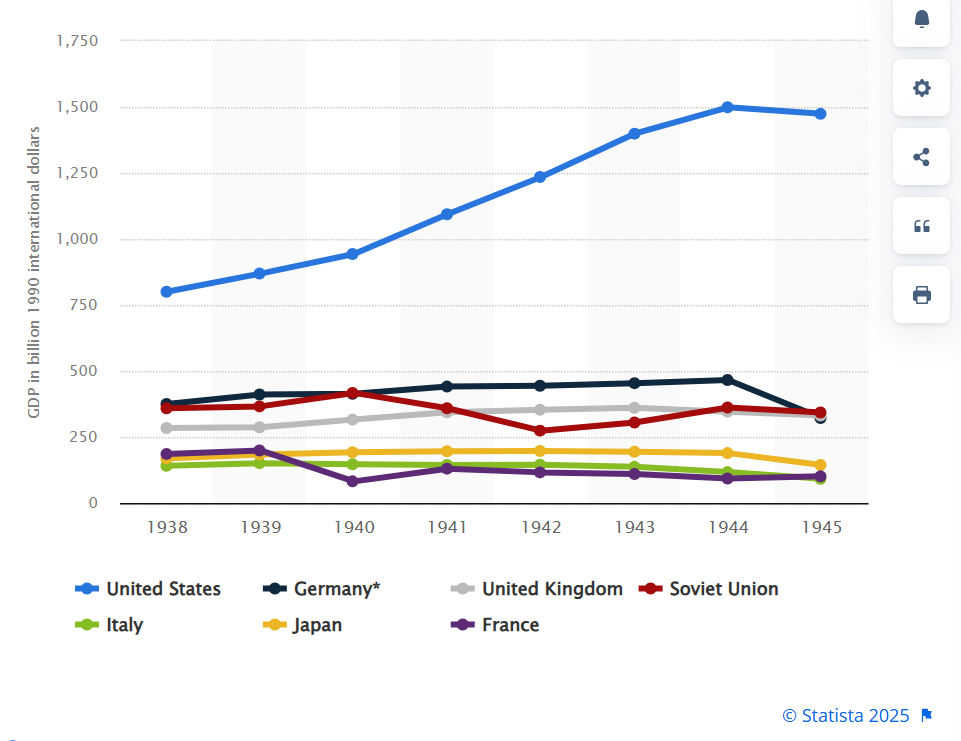
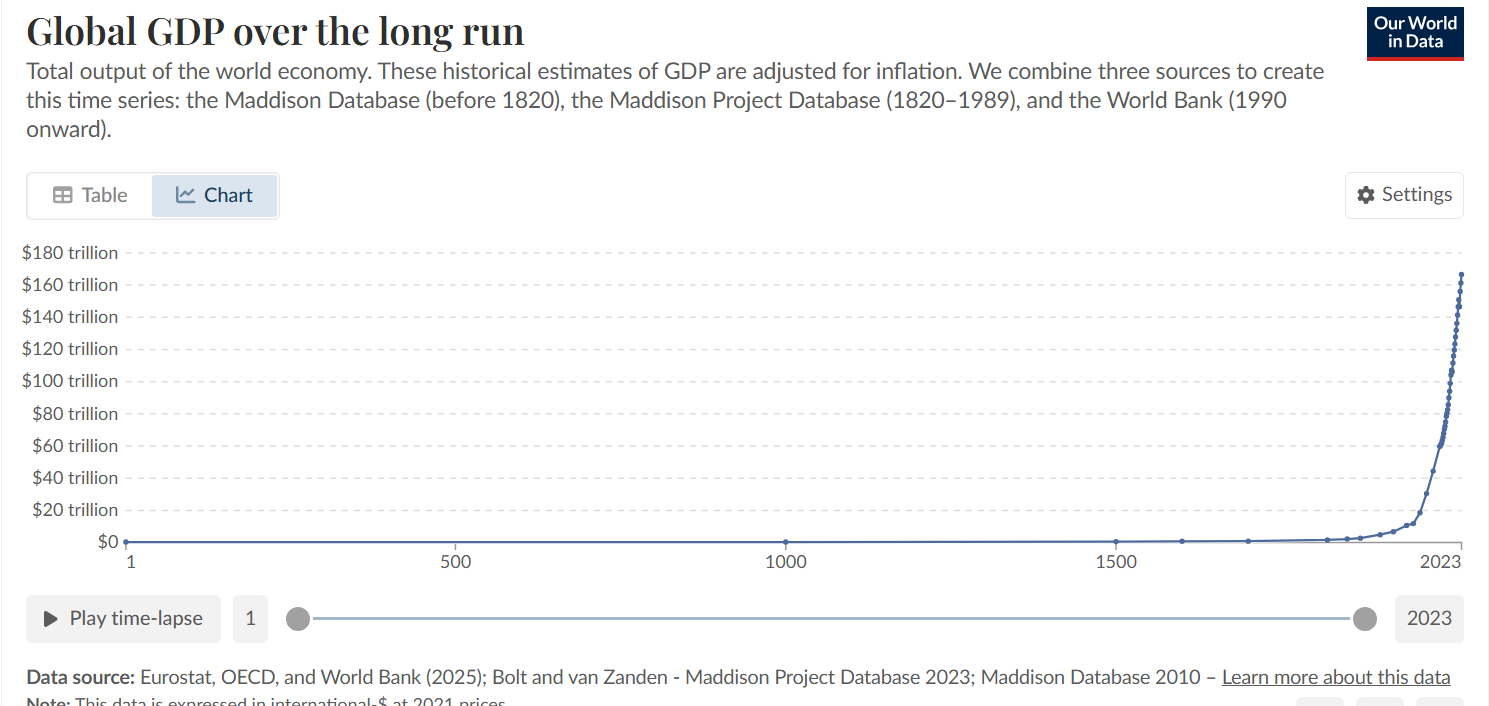


 Good News