I’ve read 2 books this week by conservative and progressive authors outlining the consolidation of working-class voters of all racial/ethnic groups into the modern Republican party.
I recently outlined some steps that either party could take to address the challenges that working- and middle-class families face in a meritocratic world.
I’ve outlined other policy steps below that might convince the two-thirds of the electorate that are working and middle class that they are the priority. My rough-cut estimate is that these changes would improve the federal budget deficit by 2% of GDP.
Government Structure
Sunset laws requiring reapproval of substantive changes after the first 10 years.
Bipartisan staff recommended simplification and clean-up laws, one functional area per year, package approval, no amendments.
Independent staff recommendation of lowest 10% benefit/cost ratios for regulations by agency every 10 years, package approval, no amendments.
Implement balanced budget across the business cycle law that considers unemployment rate and debt to GDP levels.
Require spending cuts or funding sources for new spending programs.
Require federal programs to have a minimum 20-year payback from investments.
Migrate to minimum 80% federal funding of all federal programs assigned to states.
Outsource the USPS by region, maintaining 3 day per week delivery minimums.
Government Services
Determine paternity for all births, set and enforce child support agreements, provide basic level support from the state as required.
Provide home childcare volunteer refundable tax credit up to $100 per week.
Greatly expand availability of 1-2 year National Service programs for young adults and senior citizens.
Invest in nominal co-pay front-line mental health screening, intervention, listening, training, group sessions and counseling services for less critical conditions.
Expand veterans hiring preferences to state and local governments, government suppliers and large employers.
Invest in prison to work transition programs.
Allow large employers to setup new employees with default 1% contribution to local United Way/Community Chest umbrella funding services.
Allow any group of 10 states to create a “medicare for all” health care program as a substitute for the Affordable Care Act.
Allow any group of 10 states to create a private insurance-based (qualify in 2 states, qualifies for all states to ensure competition) health care program as a substitute for the Affordable Care Act.
Housing and Transportation
Restrict issuance of new building permits in counties that do not have one-third of permits proposed for units below the existing median unit property value.
Auction regional licenses for private firms or states to offer low annual milage limit used car leases low to medium credit score individuals using federal funding for the inventory.
Create voluntary 5% of income home down payment savings program that accumulates to $50,000 after 10 years of full-time employment contributions.
Retirement
Make social security employee tax payments optional after age 62.
Remove social security payment offsets from earned income after age 65.
Auction to private firms the right to offer standard 401(k) financial advisory services for 0.5% of asset value with 100% federal match below $50,000 and 50% federal match below $100,000.
Education and Labor Market
Make any overtime or shift premium pay non-taxable (alternative to 10% rate in original proposal). Reduce taxable wages by 10% for hours worked between 6pm and 6a.
Tax university tuition income above $15,000 at 25% rate to fund public colleges.
Create German-style public-private partnerships for broad range of vocational training opportunities.
Offer career and technical training grants for up to 2 years equal to state subsidy of college education.
Offer workers up to $5,000 for relocation or temporary housing as an alternative to up to 2 years of unemployment benefits. (alternative to tax credit for moving expenses)
Provide alternate sets of courses and experience to meet minimum requirements for standard level high school diploma, rather than requiring gateway courses like Algebra II.
Offer an all-industries state administered “career skills” certification program that can be earned in 3 years of employment and classes, including some classes for academic credit in high school.
Require governments and large employers to justify any strict “BA needed” job requirements versus “education and experience” options.
Safety Net
Create a self-funded unemployment lump-sum payment system based on prior 5 years earnings. 4 months award available after 10 years. 6 months after 15 years. 8 months after 20 years. (Alternative to higher benefits and bridging option)
Maintain a present value of future social security benefits asset balance for each participant. After age 35, allow once per decade 10-year term loan at 10-year T-bill plus 2% for up to 20% of balance, maximum of $50,000 loan balance. Repayment through social security system earnings.
Provide payroll contribution funded ($200,000 max) annual income catastrophic family medical insurance (>$100,000/year) to all citizens. (alternative to $25K government provided fund)
Eliminate all specific import tariffs, but levy a 3% tariff on all goods to “protect” domestic producers and help fund government programs. (alternative to 0%)
Pay-off all student loan debt for professional degree medical professionals serving 5 years in non-metropolitan county or metropolitan county with less than 300,000 population.
Subsidize high-speed internet for rural counties.
Offer 10 year T-bill interest rate financing for qualified “low cost” retailers to build stores more than 15 miles away from any existing qualified store.
Levy a $500 per employee annual “closing costs” fee on large employers (250+) for a maximum 20 years to fund local redevelopment programs starting with $5,000 per discontinued employee.
Levy a 0.5% of annual rentals fee on landlords to fund local redevelopment of abandoned properties and areas.
Professions
Staff state professional licensing boards with a minority of regulated active professionals. Reduce licensing requirements to meet public safety standards.
Require states to provide tuition free medical care and residency spots for one doctor per 10,000 citizens each year.
Reduce medical school preparation requirement to 3 years.
Offer reciprocal medical licensing arrangements with 30 leading countries and expedited review and specific qualifications training and experience requirement defined for all others within 90 days of application.
Set a national cap on individual and class-action lawsuits at $2 million per person, adjusted for inflation.
States contract for metro and area multiple listing services and limit total real estate commissions to 4% of transaction value.
Require financial advisors to meet the fiduciary standard of professional care, putting the client’s interests first.
Set maximum prices per service and per hour for home and auto repair firms.
Certify public advisors to provide general advice on consumer economics, budgeting, banking, investing, real estate, insurance and health insurance for $100/hour to citizens, with a $50/hour, 8-hour maximum annual refundable tax credit.
Taxes
Starting with the 35% tax bracket ($462,501 married filing jointly), reduce allowable itemized tax deductions to 0 at $2 million of income.
Add a 40% tax bracket at $2 million of income.
Levy a 5% of excess price paid on personal vehicles sold for more than $50,000, boats for more than $100,000 and recreational vehicles for more than $100,000. (alternative to 10% above $1M)
Add a 10% surcharge to tax rates for residential properties larger than 5,000 square feet. (alternative to surtax above $2 million)
It’s 1991, heavyweight Oxford philosopher Charles Taylor is gaining popular recognition for his pathbreaking 1989 work “Sources of the Self”, a bold attempt to describe the current “self” and where it came from. He was invited to deliver the Massey Lecture in his home nation Canada, which he titled “The Malaise of Modernity”. The Berlin Wall fell at the end of 1989, ending the cold war. Ronald Reagan (1981-89) and Margaret Thatcher had abruptly ended the expansion of the state and the possibility of a counterculture; or had they?
Taylor argues that the “logic” of technology, science, economics and bureaucracy, which he terms “instrumental reason”, continues to grow in influence; larger national state or not. He argues that a historically radical “individualism” has grown throughout the post-war years, generally unexamined. Finally, he notes that these two trends combine to threaten Western representative democracy.
At the time, popular culture, reflected in TV shows like Dallas and “Lifestyles of the Rich and Famous”, celebrated the victory of the “neo-liberal” center-right and looked forward to a glorious future. In 1992, Francis Fukuyama proclaimed “the end of history”, with Western style liberal democracy and mixed market capitalism extinguishing the threats from fascism and communism. Taylor was quite pessimistic about the cultural challenges of the present, but optimistic about the long-term possibilities.
Taylor is often grouped within the diverse “communitarian” collection of philosophers and social scientists who argue that “classical liberalism” is inherently too oriented towards the individual and neglects the community dimension of life and philosophy.
Life is good, but social critics still complain. What ails the public? What “losses” or threats are being felt by the sensitive? First, the counterculture may have been buried in 1969 or 1972 but one dimension continued to revolutionize the Western world. Individuals were not giving up on “free choice” in any dimension. Speech, career, lifestyle, college, city, religion, politics, media, language, dress, etiquette, travel, leisure, gender, marriage, and child rearing choices. Twenty years of freedom had resulted in a new cultural norm of tolerance for individual choices. Nietzsche may have declared that “God is dead” in 1882, but it took a century to percolate through to large numbers of Western citizens. The post-war period witnessed a conservative cultural and religious rebound, but it was not sustained.
Taylor contrasts this radically new moral freedom with the prior 20 centuries. There are certainly advantages to freedom, especially removing the restraints of political, religious, social and economic institutions from individuals. Few people want to turn back the clock and re-install the static, hierarchical, controlling, prejudiced society. Yet, the individualistic transformation through the Renaissance, Enlightenment, Protestant Revolution, Scientific Revolution, American Revolution, French Revolution, and Russian Revolution had not been a uniform march of progress. Individuals had lost their well-defined place in an orderly, meaningful universe.
The new individualism, deeply rooted in Jean-Jacques Rousseau, attempted to rebuild this secure place by returning to the allegedly positive state of man before society had corrupted the individual. The individual was invited to look within to discover their innate goodness and role in society. By 1991 the post-war “therapeutic culture” was very well advanced. Individuals had “discovered themselves” and they liked this new freedom. They looked to counselors and educators to help with their personal growth. Many critics responded to this new approach quite negatively, calling it mere self-centeredness.
The growth of size, scale, trade, complexity, science, process, dynamics, technology, computers, finance, capitalism, business, machinery, industrialization, urbanization, law, and transportation in the 20th century greatly elevated the role of “instrumental reason”. The technical control of nature. New production methods. Cost/benefit ratios. Scientific finance. Optimization. Operations research. New technologies. Processes. Systems. Re-engineering. Social sciences. Experimental psychology. Communications. Every dimension of life can be rationalized and improved.
The scientific, urban and industrial revolutions were met by the Romantic reaction in the 19th century. Nationalism, art, music, nature, anthropology, modern poetry and literature, history, culture, language, and customs. Hegel, Marx, Freud and Jung. Methodist, Baptist and Pentecostal religious options. In the 18th century Kant asserted that man must be an end, not merely a means to an end. Humanity reacted strongly against the threats to its inherent human dignity.
Like many philosophers and social critics since 1850, Taylor worries that the market, bureaucracy and technology will become dominant over human and moral dimensions. The methodologies are highly effective and widely applied. They are continually improved. The market and bureaucracy have direct political power and influence. Mostly, Taylor worries that the ubiquitous use of these tools elevates them to become the ENDs of society. Cost/benefit. Optimized processes. GDP. GDP growth. Scientific progress. New patents. Life expectancies. Controlled risks. Optimum portfolios. He also worries that only quantitative factors that fit into the formulas will matter. Morality has to work very hard to even be considered in this world.
The widespread use of instrumental reason in markets and bureaucracies leads to a limited range of choices for individuals, employees, bureaucrats, politicians and voters. Most people can only think in terms of rational control of inputs to produce outputs. The consideration of the most valuable outputs is undermined. The scale of the political process undermines the incentives for participation. The “individualist” mindset removes citizens from political participation. Instrumental reason demonstrates effective “cause and effect”, but political participation does not produce such direct returns. Individuals lose faith in the political process.
II. The Inarticulate Debate
In 1991, without any public debate, we now live in a world that prioritizes each individual’s search for his own unique inner purpose, meaning, ends, talents, insights, creativity, feelings, intuition, identity, possibilities, strengths, and opportunities.
Each person should be true to themselves. Per Maslow they should aim for self-actualization. This is a subjective world. Each person is empowered to pursue their own goals. Others must not interfere with this choice. Tolerance is elevated to a very important social value.
Social scientists explain the increased individualism as part of economic, scientific, urban and industrial changes. They avoid moral discussions.
Taylor wants to elevate moral considerations. What does a radical individualism mean for morality? Is moral subjectivism valid, in any way? Can the individual be moral apart from his relations with individuals? Can the individual be moral apart from his relations with society? Truly radical individualism cannot be moral in Taylor’s view. The individual cannot make significant others merely tools, nor can he ignore the moral preferences of others.
Is moral relativism consistent with other values? Taylor says “no”. Choose any basis for a moral world view. Relativism cannot be supported.
III. Sources of Authenticity
Rousseau is most important. The individual is inherently good. He is altered by society. He has an opportunity to become aware of the influences of society and overcome them. This is the extreme, utopian, positive individualistic view. The individual makes choices without regard to any external influence. The individual guards against the influence of external factors.
Descartes assumed away everything except disengaged reason. No body. No society. No feelings. No actions. No relationships. No history. No art. No future. Hobbes and Locke created a world in which the individual rationally participates in the political.
Taylor notes that the “inward turn” is not inherently solipsistic. St. Augustine described his internal turn which resulted in a connection with God and the eternal.
Herder emphasized the original or unique dimension of each individual.
IV. Inescapable Horizons
Taylor applies the usual logic against pure subjectivity, relativism and tolerance. You can have no true moral view unless you prioritize one view versus another or one set of values versus another. The pursuit of individual meaning and authenticity does not require that all final, considered moral views are equal. The individual’s moral views are inescapably influenced or determined by the views of others. We cannot develop moral views in isolation, we must have dialogues with others.
There is a logical fallacy widely used. Choice is good. Diversity is good. Difference is good. Each option is good. These are merely assertions. They do not follow from any logical or values-based structure.
The individual’s process of discovery, creation and choosing is raised up to become a self-evident axiom of highest value. Taylor argues it is not self-evident and is not clearly supported by some other set of values. He says that it “could be” a highly valued part of life, but that position must be supported by some values that are defined outside the self, by the community or significant others or religion or philosophy, all outside of the narrow self.
V. The Need for Recognition
In this world of “finding yourself”, the individual also looks to others for validation and confirmation that their discovery, results, values, roles and identity are “good”. The individual cannot confirm his own journey or results but must turn to others. Self-discovery may be a highly valued good in our society, but it must be based upon something other than the self alone. The individual claims that universal human dignity supports his call for respect and affirmation. The postmodernists apply this logic to oppressed minority groups as well, claiming that they must be recognized.
Taylor dismisses the completely self-centered approach to self-discovery that rejects any need for external links to others, community, nature or God as logically incoherent. Just as Kant said that humans must be ends and not merely means, Taylor argues that external entities must also be ends and not merely instrumental means for the self.
Taylor identifies two ethical standards that are often asserted by promoters of personal growth. Each person has a right to pursue their own journey, so there is a need to limit that journey so as to not infringe upon the journeys of others. Intimate relationships are required to pursue an in-depth exploration of an individual’s inner self, capacity, resources, feelings and potential. Hence, respect for significant others is required.
Taylor returns to the “choice creates value” and “difference creates value” assertions. Some proponents of individualism argue that the fact that different people choose different “ways of being” directly makes them valuable and worthy of respect, reinforcing a universal tolerance. Taylor reminds the reader that there is no logical support for this view. Similar, some argue that men and women are equal or sexual orientations are equal because they are freely chosen. Taylor rejects this and requires that the argument return to a logical or moral basis for support.
He extensively quotes Gail Sheehy’s “Passages” to illustrate the extreme individualistic view, “You can’t take everything with you when you leave on the midlife journey. You are moving away. Away from institutional claims and other people’s agenda. Away from external valuations and accreditations. You are moving out of the roles and into the self … For each of us there is the opportunity to emerge reborn, authentically unique, with an enlarged capacity to love ourselves and embrace others … The delights of self-discovery are always available.”
VI. The Slide to Subjectivism
Taylor admits that many pursue the narcissistic version of extreme individualism directly. They don’t need to rationalize or justify it. Self-fulfilment is a self-evident moral and ethical ideal for them. Once this version of “the good life” is seen, some will adopt it as is. This worldview makes life straightforward, no need to balance the self and others or the self and community or the self and pesky demands of external moral standards.
The more extreme versions are also promoted by social situations. The individualistic culture has many threads. The market and consumerism are individual oriented. Large organizations prioritize instrumental reasoning to reach individual goals. A market economy emphasizes transactions and contracts between individuals. Many religions have individualistic perspectives today. Science, technology and instrumental reasoning focus on spare logic and atomistic views rather than organic, natural, process, dynamic and artistic ones. Individualists treat community, friendship and religious connections as instruments of their world rather than more complex, transforming, multiway relationships. Mobility undercuts personal ties. Urban living promotes impersonal interactions. One can live a very individualistic life today.
Postmodernism, the descendant of Nietzsche, seeks to undermine or deconstruct all objective values or categories as mere tools of entrenched power groups. All values are merely created as tools. Why not create “freedom” as the main value and enjoy your role as the superman; creator of values, language and life?
Taylor emphasizes the mixture of the Romantics and Nietzsche in the emergence of the self-creating artist as hero in the last century. This runs in parallel with the authenticity of personal self-discovery. Each person is unique. They pursue their special gifts through creativity and artistic production, experimentation, action and discovery. They do not imitate nature or copy existing models but create new languages, viewpoints, art, relationships, pottery, feelings, experiences, music, drama, travel, sport, etc. Expressive individualism is well described. Taylor supports this creative process, its outputs and the expansion of human capabilities.
He doesn’t support postmodernism when it only emphasizes the creative process but ignores any ties to moral values or philosophy based outside of the self alone. He disputes the need for the creative individual to automatically reject and fight against all existing forms of morality held by others or communities. He insists that the creative individual must be in dialogue with significant others and society in order to provide meaning and goals for the journey and to validate the journey. Taylor rejects the totally isolated individual model.
Taylor recognizes that the aesthetic perspective offers its own truth, beauty and satisfaction separate from the moral perspective. He sees this too as another opportunity for modern man to live an enriched life. He accepts that some individuals may prioritize the aesthetic perspective above the moral perspective but does not recommend it. He notes that authenticity is often proclaimed as its own goal by fiat or assumption. It is alleged to be a self-evident truth, goal and value not requiring a moral foundation, just like beauty. Authenticity and art become intertwined as forms of self-expression.
Taylor ends this chapter noting that an individual who truly buys into self-expression and self-creation can find a form of meaning and satisfaction in the journey and the sense of freedom and power which it provides. His complaint is that it logically cannot be isolated from other people and morality. When this is done there is no meaning remaining. There is only the self, an atom among an infinite and cold universe. The individual makes choice after choice after choice, but the choices have no meaning. The world becomes flat.
VII. The Struggle Continues
Taylor notes that critics such as Bloom, Bell and Lasch are correct to attack the extreme forms of egotistical self-fulfillment. He argues that attacking the overall expansion of individual self-exploration and growth is counterproductive. There can be no logically coherent merely individualistic philosophy. It must link to other individuals and some moral principles. The individualist genie cannot be put back in the bottle. Society as a whole, especially its thought leaders, must find a way to ensure that this connection of the individual to the community and logic occurs.
Taylor asserts that everyone, even the critics, must acknowledge that we live in a world where self-development, human potential and fulfilment are accepted goals and practices with value to individuals and society. The exact forms are not perfectly developed, but very few people are going to reject this approach to life.
He more positively notes that this path of development does provide opportunities for self-development and for social contributions. Individuals are encouraged to explore, create and live a fuller life. In an ironic way, the truly authentic journey requires greatly increased self-responsibility and self-control. The opportunities are so great. The responsibility to make wise choices, to interact with others, to consider moral frameworks, to link the individual and community, to combine freedom with commitment, to balance the claims on life is higher in a self-aware modern life.
The upside potential is great. The downside risk of a simple egoism is great. The tension between the higher and lower versions of this new path of life is great. Taylor argues that we are stuck with this situation, should not by gloomy, but should work to define the tensions, guide and encourage individuals on the high road.
VIII. Subtler Languages
Taylor returns to the journey of personal self-discovery and creation in parallel with the journey of the modern artist. The modern artist by 1800 had lost the common background of known and assumed literature, religion, culture and society. The artist was tasked with developing their own language, background, symbols, characters, plots and conclusions. The artist could not rely upon the reader, listener or observer to share a common understanding of the artistic background. The artist was forced to rely upon his own vision and experience, and then communicate that in precise ways so that the content and feeling would resonate with the consumer. This changed art into a very individual to individual format. The subject matter also often focused on the individual, BUT not necessarily so. Much great art continues to be about nature, the universe, community, the relation of the individual to others or the community.
The same contrast applies to the authentic journey of self-discovery. The manner of the journey is clearly subjective revolving around the individual. BUT the individual can find his relation to the community, nature, eternity, God, a larger order, neighbors, science, history, family, etc. The individual can find that the most important lessons are only secondarily about the self.
IX. An Iron Cage?
Taylor argues that instrumental reason/technology can be viewed as above. There is a long history of technology, science, economics and bureaucratic forms growing more complex, effective and controlling. They are supported because they work. The risk is that they replace the end goals of individuals, firms and society. Application of the decision-making forms becomes the end goal because they are, well, so efficient and effective. What other goal could there be?
Economic rationality, markets and bureaucracies, science and technology have become second nature, a background assumption in modern society. Individuals use their methods each day. This familiarity shapes our thinking in all realms. Yet, there has been a gut-level suspicion and opposition throughout the last 500 years. Analog, superstitious, grounded, habitual, traditional, organized, historical, religious creatures have resisted the creation of abstract forces that replace their familiar ways. The Luddites, Marxists, Utopian Socialists, Farmer-Labor party, romantics, science fiction writers and greens have all opposed the unchecked advance of technology.
Taylor outlines the extensive influence of instrumental reasoning as a background assumption in our society. He encourages us to look at the underlying moral frameworks that have supported technological progress and to consider this reasoning as merely a tool. He notes that disembodied reasoning in mathematics and computers is given a privileged place in our thinking but there is no good case for this view which was really just assumed one day by Rene Descartes.
“This is grounded in a moral ideal, that of a self-responsible, self-controlling reasoning. There is an idea of rationality here, which is at the same time an idea of freedom, of autonomous, self-generating thought”. Technology can be placed within the context of other moral principles such as benevolence and caring. The application of instrumental reasoning impacts real flesh and blood people, so this moral context matters.
X. Against Fragmentation
Radical individualism and dominating technology both threaten well-functioning democracies. The first simply ignores the need for community and political participation. The second makes impersonal forces appear so strong as to make political participation irrational. There is a vicious/virtuous cycle dimension. Lower participation results in worse results … More effective participation results in better results …
Finding a more effective middle ground of improved self-responsibility can help the individual, the community and politics. Finding a more effective middle ground regarding the unwarranted expansion of technology can help to re-establish moral and political principles as drivers of political debate and results. Taylor calls for a balance among the 5 competing areas of markets, government, social welfare, individual rights and democratic effectiveness. He argues that this is more effectively done at smaller scales, so decentralization is a key tool. He notes that success at any level can help to improve politics at other levels. Taylor is concerned that social trends can overwhelm institutions. Yet, he believes that intellectuals can help to clarify the role of ideas in shaping politics and culture. Better ideas can compete against simplistic models and slogans that don’t work for society. There is an unavoidable tension, a give and take, in society and politics. We have the ability to shape these debates for the common good.
This is a valuable book for assessing the current state of the American and Western European communities. Rabbi Sacks provides historical context of the ideas that have led to an “I” focused culture, outlines the symptoms of a weakened “We” culture, and provides some insights as to what can be done. He combines a politically and economically moderate view with a conservative social perspective. I’ve rearranged the chapters to make the summary flow better.
Introduction
The 1990 “end of history” celebrating the victory of mixed economy capitalism and liberal democracy was an illusion. Societies are based on a 3-legged stool of economic, political, and moral systems. The West’s moral system has been threatened by individualism since the Reformation and Enlightenment, but the threats accelerated and started to really bite with changes in the 1960’s. Political systems, social results, income inequality and fundamental rights of free speech, liberty and freedom are threatened today by this deterioration.
Morality: “concern for the welfare of others, an active commitment to justice and compassion, a willingness to ask not just what is good for me but what is good for ‘all of us together’.” Inner voice, conscience, superego, custom and tradition, natural law, religion. “To be a member of a society was to be socialized, to internalize the norms of those around you, to act for the good of others, not just yourself.” Morality makes politics, economics and communities work by emphasizing trust and persuasion instead of transactions and political power. As social norms are internalized, transaction costs are minimized.
“A FREE SOCIETY is a moral achievement.” Liberal democratic systems depend upon moral citizens. “If we care for the future of democracy, we must recover that sense of shared morality that binds us to one another in a bond of mutual compassion and care. There is no liberty without morality, no freedom without responsibility, no viable “I” without the sustaining ‘We’.”
Sacks argues that the movement from “We” to “I” was driven by five factors. The intellectual appeal of existentialism and emotivism that reject an objective moral order and rely instead upon subjective individual choices. Social exhaustion after the Great Depression and 2 world wars leading to the postwar counterculture, sexual revolution and therapeutic society focused on self-actualizing individuals alone. The “liberal” political decision to exclude morality, religion and social norms from legitimate political debate and laws, emphasizing only rights. The Reagan/Thatcher political/economic victory which limits state influence on the economy. Technological changes which undercut “face to face” interactions.
The social results reflect Durkheim’s concept of “anomie”: rootlessness, anxiety, uncertainty, and fear. Loss of social capital, breakdown of family and marriage, loss of trust in institutions, increased crime and drug usage and lower trust and civility. In a Western world with much higher real economic standards, individual happiness and confidence have not grown.
The loss of morality and trust has undercut political processes and people. Inequality, conflicting values, privileged elites, and poor government results have led to populist demands from left and right for strong leaders to “solve the problem”. The weakening of society level groups and growth of minority groups (and reactive native majority groups) and immigration have increased the focus on identity politics, polarizing and coarsening political debates. The loss of objective moral, scientific and communications standards has encouraged a post-truth political environment.
Income and wealth inequality continue to increase in a global economic system. With the loss of moral pressures and Milton Friedman’s view that business should only optimize profits, not address social, environmental, and other stakeholder goals, many firms have truly pursued maximum wealth without considering any other factors, relying on the government and society to underwrite their inevitable losses.
Many universities and other leading institutions have embraced postmodernism’s assertions that everything is about power and that the only moral choice is to support the exploited minority groups and oppose the powerful elites. Freedom of speech, religion, assembly, and press are merely tools of the powerful and can/should be overthrown in this view. Individuals fear expressing themselves in this intolerant atmosphere.
Sacks emphasizes the intellectual confusion of “outsourcing” which can deliver benefits for the economy and perhaps the political sector, but which does not apply to the moral, community, society dimension. The market economy offers many choices and implicitly encourages individuals to believe that they “ought” to be able to choose whatever they wish, while moral choices involve trade-offs and sometimes absolute goods and bads. The political sector is tasked with the “outsourced” consequences of bad individual, economic and political choices. It must regulate, insure, and provide services. Morality cannot be outsourced to the state, elites, religious leaders, social media influencers or other groups of “pet sitters”, “athletic trainers” or “management coaches”. It requires the “hands-on” involvement of all citizens.
He argues that these moral issues, risks, costs, and opportunities are becoming clearer to leaders and citizens. Younger citizens and language usage show an increased interest in morality. Human and natural systems can repair and improve themselves.
‘5. From “We” to “I”
Sacks outlines the “intellectual” history that has led to an overemphasis on “I” and the loss of “We”. Early steps in Greek philosophy and the Bible included increased roles for individuals. The Italian Renaissance saw greater personal self-awareness. Luther focused on the individual’s direct encounter with God, unmediated by the Church. The “absolute individual” was now considered completely outside of his social roles. The radical skeptic Rene Descartes re-established independent philosophy based on the individual and his doubts alone. “I think; therefore, I am” contrasted with God’s answer to Moses that “I am that I am”. Hobbes and other social contract theorists based a legitimate government on freely choosing citizens. Kant elevated individual reason as the basis for philosophy and serves as a transitional figure. He focused on universality, humans as ends, the golden rule, intentions, and the mind/soul but he too began with the individual and his choices rather than society, God, community, revelation, or history.
Unlike many modern commentators, Sacks skips over Jean-Jacques Rousseau and his “natural man is good” approach to government, education, and morality. He next highlights Kierkegaard’s contrast between the “aesthetic” life of the senses and the ethical life of righteousness and duty. There is no obvious basis for choosing either option, so the individual must make a “leap of faith” to embrace one or the other. Nietzsche continues the existentialist investigation of options and proclaims that “God is Dead”, biblical religion is “slave morality”, the best men need to recover their superpowers and choose their own morality, decisions, and actions, irrespective of the consequences for society. Then and now, very few really embrace Nietzsche’s extreme position, but it opened the door to considering a life based on individual choice, a romantic/nationalist perspective and a fully subjective morality, language, and power as described by some existentialists and many postmodernists. The self-aware person knows that his existence and experience are more real than any socially imposed rules or universal, ideal concepts and can either accept the external constraints in “bad faith” or face the challenges of “existence” bravely. Not a superman but a vaguely heroic honest man. The American option termed “emotivism” shares the subjective, feelings-based nature of individual choices. Authenticity or expressive individualism become the supreme virtues. The self-aware individual is everything.
Sacks shares that everyone’s favorite observer of early America, Alexis de Tocqueville, worried in 1830 that the fledgling country could be harmed by “individualism”, “a feeling which disposes each citizen to isolate himself from the mass of his fellows so that, having created a small company for its use, he willingly leaves society at large to itself”. He ends with sociologist Emile Durkheim’s 1890 emphasis on anomie, where a loss of a shared code can destroy society through suicide, deviancy, crime, and disengagement. “Anomie, it seems to me, aptly describes the state we inhabit today: a world of relativism, nonjudgmentalism, subjectivity, autonomy, individual rights and self-esteem … An individualistic universe may be free, but it is fraught with loneliness, isolation, vulnerability, and nihilism, a prevailing sense of the ultimate meaninglessness of life … Human society has evolved to a stage where the rights of the individual, particularly those with wealth, power, and status, supersede all other rights and responsibilities.”
‘9. Identity Politics
The author outlines a history of swings between individualism and “groupishness” as context for explaining and rejecting modern identity politics. We are social animals, emotionally invested in our individual and group identities, illustrated by our passion for sports teams. The individual chooses which group identities to wear or is given them in the postmodernist view. This attachment can form the basis for a moral community. Group loyalty is a powerful force, binding individuals to the group and committing them against conflicting “others”. Historically, religion, ethnicity, nation, class, income, and education/trade have all competed for group attention.
Although they were named only in the second half of the 20th century, identity and identity politics have long histories. “I am a Greek”, “I am a Roman”, “I am a Christian”, “I am a British citizen” make the point. Religion was the leading identity for most of the last 2,000 years in the West, with social, political, and economic roles bound into a single system. The protracted European religious wars made a simple return to the “ancient regime” impossible. The Enlightenment thinkers elevated rationalism and individualism to create a universalist viewpoint that tried to downplay specific group identities. Newton provided universal science. The social contract theorists offered universal political systems and principles. Descartes, Montaigne, and Kant offered universal philosophies.
These ideas changed the world and then generated a backlash. Too universal, too timeless, too abstract, too mechanical, too technical, too legal, too commercial, too heartless, too static, too disruptive, too progressive, too … Moving from an integrated social, religious, political, and economic system to something altogether different created pushback. Haidt’s WEIRD versus traditional societies is at the heart of these difficulties. Certainty is slowly eroded with more new ideas, religious denominations, political models, industries, trade, professions, science, technology, and transportation. This is discomforting, even for the “winners”. Sacks describes this rational Age as noble, utopian, and unsustainable.
We then get the Counter-Enlightenment, Romanticism, irrational forces, and new shades of religion. Nationalism becomes a newly attractive group identity, combining language, culture, geography, tradition, practically lived experience and history. Race becomes more important due to global experiences, colonialism, the end of slavery, geology, biology, social Darwinism, anthropology, and psychology. The scientific study of man leads to eugenics and Naziism. Economic class is raised up by Marx in his “scientific” and historic studies of man leading to communist regimes. “All three movements offered a strong sense of belonging in place of the abstract, identity-less, human-being-as-such that was the human person as understood by eighteenth-century rationalism … In place of the universal came a new sense of the particular … thinkers started to focus on what makes us different.” This pursuit of group identity had terrible consequences in the 20th century.
In the postwar era, we have swung back towards the individual. As described above, there was a long-term preparation for making the individual the sole focus of life, leaving behind the community, moral and cultural perspective. Science supplanted religion leading to a Secular Age, where the default worldview is mechanical and “this worldly”. The accumulated influence of the existentialist, pragmatist, analytical, skeptical, and postmodern schools of philosophy shaped the intellectual class to neglect religion, morality, and community. The Romantic Age, underpinned by Rousseau’s good person and supporting the creative artist as a model reinforced the individualistic tendencies even as it tried to define an organic alternative. The failures of nation, race and class worked against any “new” community approach. The success of religions, national patriotism, economic development, liberal democracy and professional and not for profit communities did not have a strong “public relations” department compared with the promises of their modern competitors.
Sacks criticizes the re-grounding of “liberal” democracies on the “thin” morality of Locke, “built on the premise of the individual as the bearer of rights, and of autonomy as the supreme value of the social order … key theoreticians were … John Rawls and Robert Nozick … Essentially, you could do anything you liked so long as it was legal, fair, and involved no harm to others.” He notes that communitarians like MacIntyre, Sandel, Walzer, Taylor, and Bellah provided alternatives.
Within this extreme version of “classic liberal democracy”, political groups and society were asked to be “tolerant” and not impose their views. Multiculturalism arose, especially in Europe, emphasizing differences and reducing the commitment to integrate new groups into national and local societies. Together with the “contemporary left” and postmodernism’s emphasis on oppressed minorities, modern identity politics was born. This is a new group identity, oriented towards the group rather than the individual. It encourages very strong group loyalty. Like Marxism, it believes in the eventual victory of the collection of oppressed groups.
Sacks like none of this. “There is a real danger here of the splitting of society into self-segregating, noncommunicating ghettos. One of its axioms is that ‘only a member of my group can understand my pain’ …Over three hundred years the West has, with some success, developed an ethic of tolerance and respect for difference, and in a liberal society the prejudice and discrimination that undoubtedly still exist are to be fought wherever they occur … This reaction … will end in tragedy. It turns difference into exclusion and suspicion. It builds walls, not bridges … It encourages a mindset of victimhood and oppression. It abandons the idea of the common ground and the common good.”
Community leader Sacks shares his experience with ecumenical groups to promote national British community while maintaining their distinctive approaches. He encourages us to be laser focused on the potentially cooperative, win-win society in contrast with the state where competitive power politics is unavoidable. He contrasts (good) patriotism with (bad) nationalism. He quotes Orwell’s definition of patriotism, “devotion to a particular place and a particular way of life which one believes to be the best in the world but has no wish to force on other people.” Without a shared moral community, the political and economic dimensions will fail.
’11. Post-truth
Nietzsche “set the table” back in 1870 on this issue. “When people gave up their faith in religion, it would not be religion alone that they would lose. They would lose morality, and with it a concern for truth, and then even science would lose its authority.” Nietzsche – “Nothing is needed more than truth, and in relation to it, everything else has only second-rate value”. People have always considered truth versus self-interest. If there is no objective truth, religious dogma, or social conventions, why bother with truth?
“The hermeneutics of suspicion” plays a role here. Language is used as a tool by the powerful to deceive. Always look for the real meaning. Applied radical skepticism. Marx blamed the capitalists. Nietzsche saw a conspiracy among the weak. Freud blamed subconscious drives. The postmodernists formalized this to blame the power controlling elites. Political, economic, and social systems conspire through their institutions, structures, language, and norms to preserve the standing of the elites. Objective truth, religion, morality, science, and religion are just clever tools of oppression. Global cultural awareness, a diversity of religions, scientific changes, the philosophy of science, the philosophy of religion, political tolerance, social tolerance, literary and artistic interpretations, revisionist history, geological and biological history and Einstein’s relativity all contribute to the general cultural skepticism about objective truth.
Modern social media and the internet have now provided the facts and interpretations “at a glance” to reinforce this idea of subjective truth. “Without truth, no trust; without trust, no society.”
’17. Human Dignity
The ancient Greeks defined and honored human dignity in various ways: heroes, truth and wisdom loving philosophers or simply as qualitatively superior to the animals. The Hebrew Bible describes a God who creates man in his own image for the purpose of living a moral life. Man is given “free choice” and this freedom defines his life, politics, family, community and theology. “We have dignity because we can choose. Dignity is inseparable from morality and our role as choosing, responsible, moral agents.” Kant agrees that mankind, in as much as it can make moral choices, has earned its dignity. Human dignity played a large role in Western societies for two millenia.
Yet, once again, man’s intellectual progress poses a threat to our moral civilization. This is mainly the story of “science versus religion” in the popular imagination. Copernicus removed man and earth from the center of the universe. Newton’s physical laws removed the “need” for God’s continuous support, even though Newton thought it was still required. Modern geology expanded time to make 2,000 years just a “flash” of time. Spinoza argued that as physical beings we are subject to the laws of the physical world and not free, after all. Marx claimed we are determined by economic laws of production at the Hegelian level of history. Freud claimed we are driven by subconscious drives and without true choice. Darwin made man an animal, like any other and established a mindless, probabilistic motor for history. Neo-Darwinians outlined how altruism too is just part of genetic natural selection. At a popular level, each of the pillars supporting human dignity, man as something special, was undermined. Human dignity is merely an illusion.
The author takes a few shots at the “science alone” worldview. Man in small space and time does not eliminate dignity, free will, choice, freedom, or religion. No evidence or logic forces us to embrace the skeptical worldviews, which are also based upon uncertain foundations. Science is incapable of addressing humanity’s imagination, conceptualization, deep communication, cooperation, feelings, love, awe, appreciation and creation of beauty. Science cannot evaluate the critical role of cultural limits in the form of “thou shalt not”, sacredness, justice, and judges. Science assumes away human freedom with its assumption that causality shapes everything.
In the 500 years since the Italian Renaissance, man has done tremendous things intellectually, scientifically, technically, politically, economically, and socially. Human rights and human dignity are embedded in our modern political constitutions. The “special individual” view of the world has driven a dozen modern philosophical outlooks that shape our world. However, the radical “science only” view of the world has a strong hold on the modern imagination leading to Charles Taylor’s Secular Age where we all naturally start with the assumption or worldview that excludes the transcendent dimension in all of life.
Sacks rejects the modern neuroscientists who claim that “free will” is an illusion and criticizes the “total freedom” view of the expressive individualism crowd. He argues that the “just right” middle view of man as a moral animal best describes our situation. We have self-consciousness. We can see the world as an impartial observer outside of our own personal perspective. We are aware of our own drives and desires but can override them to some extent. We have a sense of responsibility for our thoughts and deeds. We have immortal longings. We reach for the transcendent. We have religious experiences. We are essentially moral agents.
’19. Why Morality?
“A society of individualists is unsustainable. We are built for cooperation, not just competition. In the end, with the market and state but no substantive society to link us to our fellow citizens in the bonds of collective responsibility, trust and truth erode, economics becomes inequitable, and politics becomes unbearable.”
In 1831 Alexis de Tocqueville visited America to check on its progress as a democratic society. He learned that the separation of church and state had unexpectedly created robust churches despite its lack of government support and that these churches thrived in their social role of supporting families, local communities, providing education and services. Despite its support by the citizens, the churches and their pastors played minimal roles in politics. He also noted the country’s propensity for creating associations for addressing problems and opportunities aside from the market or government. Hence, the society dimension was very strong alongside the “rugged individualists”. Competition and cooperation both played important roles.
In 1831 Charles Darwin wrestled with one of the inconsistencies in his theory of natural selection. Human societies everywhere exhibited altruism. Altruistic individuals should not exist under a “survival of the fittest” model. Darwin suggested that “group selection” could explain the development and preservation of altruistic behavior. A group of loyal, supportive, cooperative members might outperform one composed of only selfish individuals. Cooperation can play an important role in a competitive process.
Subsequent research indicates that altruism has developed in 3 waves. First, various animal groups exhibit “kin selection” where close relative cooperation delivers more descendants. Group selection in human groups is based on the ability to establish trust. Game theory demonstrates that repeated opportunities to support a teammate can be enforced without a major free rider problem when individuals use the “trust but retaliate” “tit for tat” strategy. Humans had the communications, thinking and memory abilities to be more effective in cooperative small groups as large as 100-150 members.
On a larger scale, the “one on one” cooperation strategy breaks down. The incentive to cheat and free ride without being caught and punished rises. Trust between group members is disrupted. Cultural group level selection employs other tools to enforce group discipline: myths, rituals, sacred times and places, temples, and priests. Early religious communities were able to bind groups together for their common advantage. Monotheistic religions further emphasized the role of the community in preserving order and avoiding chaos or disaster.
Human societies are highly experienced in employing competition and cooperation in their proper roles. Cooperation, trust, loyalty, and morality are mutually reinforcing in civil society. They provide the basis for effective economic and political institutions. Sacks again criticizes the “liberal” shift in the 1960’s to rely solely upon a “thin” morality of a political system based upon safeguarding individual rights and showing tolerance. “Something that had never been managed successfully before: namely, sustaining a society not held together by certain predominant ideas, not bound by a shared moral code, not committed to substantive ethical ideas held in common. How can there be a society in the absence of anything to bind its members in shared moral belief?”
’21. Religion
The author quotes Washington, de Tocqueville, Kennedy, and Durant on the need for morality as the basis of society and its economic and political institutions. Religious belief and participation are falling in the West generation by generation. Community and morality can be supported by kin selection, reciprocal altruism, human empathy, and familiarity with the “Golden Rule”, but this is insufficient on a large scale due to the “free rider” problem. There is an incentive to act out of self-interest and fake participation in society.
Sacks covers again the widespread emergence of formal religious groups in human history using rituals, priests, temples, calendars, and myths to bind individuals to the group. The fear of disorder plays a role. The search for meaning plays a role. The fear of punishment from an all-knowing God plays a role. When “everyone else is doing it”, cultural norms become an unspoken background. The most effective religious societies enjoyed the best results taking advantage of cooperation, reducing inner conflicts, and defending the group against nature and enemies.
Monotheism consecrated the social structure and the individual. In the Abrahamic faiths there is an intimate relationship between God and each individual. Morality includes justice and love. These religions expect more than compliance, they require moral performance. Will and choice are elevated above fixed character and fate. The moral life is more important than the physical life. This vote of confidence in the individual’s nature, freedom and choices allows for some flexibility in social choices like the form of government and earthly political decisions. History allows for progress and regress; it is not determined or inherently cyclical.
This heritage honors history and tradition, but equally honors debate, pesky prophets, and the separation of earthly powers. Combined, many argue that this “paved the way” for our modern individual based liberal democracy and mixed capitalist systems. Religion effectively creates community within the church and by building habits in practicing members, also in adjacent and broader communities. Sacks highlights additional research that focuses on the practical effect that religions or surveillance states have when individuals believe they are being watched and will be punished for bad behavior. Religion provides a longer-term perspective that is required for making some political decisions such as those about climate change.
“Religion … builds communities. It aids law-abidingness. And it helps us to think long term. Most simply, the religious mindset awakens us to transcendence. It redeems our solitude.”
‘1. Loneliness
“Morality, at its core, is about strengthening the bonds between us, helping others, engaging in reciprocal altruism, and understanding the demands of group loyalty, which are the price of group belonging.” “Marriage, parenthood, membership in a community, or citizenship in a nation” all require this moral commitment by the individual to make a binding covenant with the group. There is a strong transactional commitment, but much more. The individual adopts the group perspective, seeks the good of the group and is personally transformed into a new “I” by the experience. The gain in the “I” perspective and the loss of the “We” perspective has had a negative synergy effect. “We” experience makes more “We” interaction easier. Its absence makes any “We” engagement more difficult.
The change in perspective can be measured and its negative impacts clearly seen. Language studies document the shift. Analysts such as Robert Putnam in Bowling Alone document the large reduction in community participation of all kinds, the reduced rate and success of marriages and the loss of shared family life. These changes make organizations and institutions less effective. They reduce trust in institutions and other people. Fewer and less positive group experiences reduce the incentive to invest in other group experiences. Once again, there is a negative “ripple effect”.
“So, individualism comes at a high cost: the breakdown of marriage, the fragility of families, the strength of communities, the sense of the identity that comes with both of these things, and the equally important sense that we are part of something that preceded us and will continue long after we are no longer here.”
Collectively this leads to physical and social isolation, loneliness, and anxiety. Relationships become increasingly transactional, we expect less from others, we give less in return, Martin Buber’s I-Thou framework is lost. The data confirms these results. Individuals feel more alone, have fewer friends, trust less and worry more. This loneliness shows up in measures of suicide, alcoholism, drug abuse and longevity.
Groups were first formed to share food, defend against enemies, and perform as groups. As the moral sense declines and mutual responsibility is experienced less often, groups become less effective. Historically, strong groups have been a mutual insurance policy against the risks of life. In a complex and challenging world, many groups are less effective in this role.
“One significant contribution of religion today is that it preserves what society as a whole has begun to lose: that strong sense of being there for one another, of being ready to exercise mutual aid, to help people in need, to comfort the distressed and bereaved, to welcome the lonely, to share in other people’s sadnesses and celebrations”.
“We can do things that our ancestors could hardly dream, but what they found simple we find extremely hard. Getting married. Staying married. Being part of a community. Having a strong sense of identity. Feeling continuity with the past before we were born and the future after we are no longer here.”
‘2. The Limits of Self-Help
Morality turns us outward. “The pursuit of the right and the good is not about the self but about the process of unselfing, of seeing the world for what it is, not for what we feel or fear it to be and responding to it appropriately. Morality is precisely un-self-help. It is about strengthening our relationships with others, responding to their needs, listening to them, not insisting they listen to us, and about being open to others.” Humans are given the ability to do second-order evaluations, stepping outside and viewing themselves as an object, considering their own thoughts and decisions in a broader framework, choosing which desires to satisfy. Morality begins with but does not end with the individual.
Morality is based on high quality relationships, not self-awareness or self-esteem. Personal growth is mostly stimulated by others who support, uplift, listen, advise, counsel, and challenge us. With high quality relationships we are open to transformation. Sacks cites literature, management guides, Viktor Frankl, Iris Murdoch, Adam Smith, and Plato in support of his view. Transformation and growth come from the outside, not from internal contemplation.
Philip Rieff’s 1966 “The Triumph of the Therapeutic” is referenced as one of the first critics of the self-help movement, observing “individuals” aided by therapists as the replacement for religion and pastors. The individual is capable, almost solely by himself, of managing his life. Rieff notes that the “therapist-patient” relationship replaced the “individual-community” relationship. Sacks notes 2 reviews of the self-help literature that concluded that the field has been a failure, delivering narcissism, self-obsession, aggression, materialism, indifference, shallow values, and anti-social attitudes. He notes that even Abraham Maslow and Carl Rogers eventually questioned self-esteem as a worthy goal to pursue.
Sacks argues that morality, purpose, and the good life are derived from relationships and community. The individual cannot reverse the sequence and individually pursue self-esteem, self-actualization, and happiness. They can only be achieved as a byproduct of morally engaging in community and pursuing a calling or vocation. Achievement can drive self-esteem, but not vice versa.
‘4. The Fragile Family
Rabbi Sacks has strong views in this chapter. He notes that civilizations have used various family structures but concludes that “The family – man, woman, and child – is not one lifestyle choice among many”. Humans are one of a few mammal species with children that require years of attention, so “pair bonding” was required for our success. Families are biologically natural. In many early human cultures polygamy developed as powerful alpha males leveraged their dominance. He quotes James Q. Wilson, “in virtually every society into which historians or anthropologists have enquired, one finds people living together on the basis of kinship ties and having responsibility for raising children”. The Hebrew culture promoted monogamy as every person had been created in the image of God and had an equal right to marriage and children.
This religion also stressed the love of God and man, man and neighbor, man and stranger, and man and wife. The relationship was a moral bond, a covenant, something more than reciprocal altruism. It is described as “faithfulness, fidelity, loyalty, steadfastness, not walking away even when the going gets tough, trusting the other, and honoring the other’s trust in us.” Sacks notes that the Jewish people have survived due to their faith, family, and community. Marriage, like faith, is a sacred moral virtue. He notes Martin Buber’s insight that “truth, beauty, goodness, and life itself do not exist in any one person or entity but in the “between”.
Marriage provides an opportunity for two equal individuals to be transformed into one and experience transcendence. This experience helps to further develop moral capabilities. It provides an opportunity for “bride and groom” love equal to “God and man” love. It gives individuals an opportunity to frequently think outside of themselves, to give and receive counsel. It provides an opportunity to manage desire and submit to a higher value. It gives the opportunity to have children, provide for them, educate them, and raise them within the community, offering an identity and transmitting culture through generations. “One of the great achievements of the West … the single most humanizing institution in history.”
Sacks decries the notion of “free love” that began in the 1960’s. It breaks apart the elements that marriage knits together. Sex from love. Love from commitment. Marriage from having children. Having children from being responsible for their care. We see sex without responsibility, fatherhood without commitment, marriage as a mere formality. The breakdown of the traditional family has been quite significant. Fewer and later marriages. More divorces. More births outside of marriage. More children living without one or both parents. The author notes that these trends have stabilized and that research by Robert Putnam in “Our Kids” shows that the top socioeconomic “one-third” of society remains committed to marriage, family, career, religion, and community. However, the bottom “one-third” has very low rates of marriage and two-parent families and most births without the benefit of married parents. This lack of investment in children has very negative consequences: poverty, health, security, safety, education, opportunity, mental health, crime, drugs, alcohol abuse, teen pregnancy, etc. Society invests in mitigating these “social ills”, but marriage and a secure family appear to be a critical base for child development that cannot be replaced by programs.
’10. Time and Consequence
The market, state and society all struggle to balance short-term and long-term costs and benefits. Each is guilty of overemphasizing short-term effects and ignoring long-term effects. Investors and financial markets roughly limit time trade-offs through interest rates and security prices even though major mispricing across time is common. Separation of powers, different legislative roles, young voters, and political party self-interest attempt to inject some balance in politics. Morality can play the key role in determining social attitudes, norms, and laws. It is the most critical factor of all.
Morality has historically played a conservative role in slowing social changes. Religions and conservative political parties emphasize relying on what has worked historically versus what might work or might fail due to the “law of unintended consequences”. Sacks points to modern chaos theory as proving that deterministic reasoning is incapable of predicting the effects of changes in complex systems like society, so it is best to be very cautious.
Sacks focuses again on the 1960’s when “classic liberal” political leaders chose to prioritize John Stuart Mill’s view that “the only purpose for which our power can be rightfully exercised over any member of the civilized community, against his will, is to prevent harm to others. His good, either physical or moral, is not a sufficient warrant”. Political and social leaders also tacitly embraced the expanded use of marijuana and drugs as part of “freedom of choice”. Sacks points to the economic, individual, spiritual, and societal costs of drug use today as proof that this was a very bad decision.
Sacks criticizes Utilitarianism, allied with classical liberalism’s optimism about rationality, education, and human progress, as being overly simplistic and inadequate for considering individual or public policy choices. How does utilitarianism manage costs, benefits and consequences that extend through time? For how long? How probable? Intended? Foreseeable? He argues that decision makers must accept that they have a limited ability to see the future and should make changes slowly, incrementally and with a concern for if they can be reversed if needed later.
Sacks is especially critical of modern society’s “rationalistic hubris” and “fatal conceit” when applied to moral norms and institutions. He argues that society has learned through time that it requires a system of deeply embedded “thou shalt not” rules to offset the weaknesses in human character. They may be religious, cultural, or secular norms, but they must be widely held, taught, and reinforced.
‘3. Unsocial Media
The author sees the proliferation of electronic communication and social media as a revolution with as large of an impact as the printing press, some good but much very bad. This seductive technology has captured 7 ½ hours per day of screen time on average. Individuals become addicted, are seldom fully present, struggle to focus, promote themselves, worry about comparisons with others, become short-term and shallow thinkers, lose sleep, become anxious and depressed, lose trust, have more contacts and fewer friends, and fail to build face to face social and moral skills.
Sacks worries most about the loss of time to build social and moral skills. He argues that impersonal electronic communication simply cannot substitute for being in the presence of another person, reading their analog verbal and non-verbal communications, listening, valuing them as people, moving back and forth, empathizing, investigating, managing the tone of a conversation, injecting humor, trying seriousness, changing subjects, summarizing, refocusing, doing the human and communications dance. He references Martin Buber’s “I-thou” relationship and Emmanuel Levinas’ encounter with the face of the other.
“Bonding, friendship, trust, discipleship: these emerge from face-to-face conversation and the subtle clues that accompany it and that shape the contours of human interaction … Morality is born when I focus on you, not me; when I discover that you, too, have emotions, desires, aspirations, and fears. I learn this by being present to you and allowing you to be present to me … [on social media] character is trivialized into personality, ‘likes’ take the place of genuine respect, and the presentation of self takes the place of engagement with others … Most fundamentally it leaves us morally underdeveloped, addicted to a search for popularity that has little to do with character, virtue, or anything else, and that is the worst possible training for resilience or happiness in the real world of real people and real relationships.”
’12. Safe Space
Professor Sacks has a very high view of the role of the university. A moral community of scholars collaborating in the pursuit of truth and managing the intellectual heritage of mankind. Historically this institution has had its own values, norms, objectives, and practices. Truth is the goal. Truth requires a community, free speech, listening, being listened to, considering diverse thoughts, criticism, civility, respect, debate, rational argument, and evidence.
Twentieth century philosophy that denies any type of objective values leads to morality as merely emotional language. Postmodernism agrees that there is no objective truth other than the domination and oppression of minority groups and the obligation to work against the powerful elites. There are only “interpretations” of morality, history, language, and institutions. Universities are not exempt from this analysis and provide an opportunity to actively pursue these ends through political means. Hence, we get the cancellation of free speech, the ambiguous concept of microaggression, safe spaces versus non-safe spaces and no-platforming to ban threatening speech.
The university migrates from being a social institution in pursuit of truth and morality into a merely market-based trainer and a ground for political action. Within this context, political activists can leverage grievances, threats, and intimidation to capture the university. The non-university doesn’t believe in truth, morality, community, or its role as a social institution. It loses free speech, listening, diversity, interaction, civility, and reasoned argument. The faculty and institution cannot advance knowledge outside of technical specialties.
Students are deprived of the active learning community that makes them life-time learners and prepared for life’s mental, social, and moral challenges. Students fail to learn critical thinking and effective psychological skills. The university becomes part of the polarized political system, actively devoted to pursuit of a single political agenda, and strongly opposed to any other. Oppressed minorities are praised, while other supposedly “privileged” groups are criticized, shunned, and attacked. The university becomes an active player in opposing any moral order other than the postmodernist order.
’15. The Return of Public Shaming
Social media has provided an opportunity for individuals who feel that they or their worldview has been wronged to immediately seek redress from perpetrators in the court of public opinion. In some cases, this has led to low power, status or resource individuals gaining support for their legitimate claims in a manner that was not available before social media times.
In other situations, it has led to “public shaming” of individuals perceived to have offended deeply held moral views of some individual or group. “Political correctness” has gained an enforcement mechanism. “The problem with vigilante justice is that it follows no legal norms. There is no due process”. It reinforces polarization. Shaming, like revenge, is a personal response to a perceived threat to the honor of a group.
Western culture has mostly adopted impersonal responses to offenses through its justice systems. Religiously, penance and retribution have been used to atone for the offenses. The individual maintains his moral agency, separated from the sin or the action. Public shaming is a non-constructive tool of justice.
’16. The Death of Civility
“Loss of shared moral community means that we find it difficult to reason together. Truth gives way to power … people start defining themselves as victims. Public shaming takes the place of judicial establishment of guilt. Civility – especially respect for people who oppose you – begins to die. The public conversation slowly gives way to a shouting match in which integrity counts for little and noise for much.”
“Civility is more than good manners. It is a recognition that violent speech leads to violent deeds; that listening respectfully to your opponents is a necessary part of politics in a free society; and that liberal democracy, predicated as it is on the dignity of diversity must keep the peace between contending groups by honoring us all equally in both our diversity and our commonalities … it is an affirmation that the problems of some are the problems of all, that a good society presupposes collective responsibility, that there is a moral dimension to being part of this nation, this people, this place.”
The “team of rivals” was “never less than respectful, they spoke about issues not personalities, and what united them was more than good manners. It was a conviction they shared about politics: that it exists to reconcile the conflicting desires and aspirations of people within a polity, and to do so without violence, through reasoned and respectful debate. Listening to, while not agreeing with, opposing views, and trying as far as possible to serve the common good.”
The loss of civility is driven by individualism overshadowing community and morality, the internet providing effective tools for consuming only one’s own viewpoints and anonymously attacking others, and the divide between the “somewhere’s” and the “anywhere’s” in a global, competitive, meritocratic society. There are large differences between the lived experiences, perspectives, and politics of the mostly highly educated, mobile, globally informed professionals and their counterparts who have less education, broad experience, income, opportunities, and options. Modern politics is adjusting to this underlying change in the human landscape. The philosophical loss of broad community, shared values and values combined with technologies that help to divide makes addressing these differences in a civil manner a large challenge.
Sacks provides three insights from the Old Testament. “For there to be justice, all sides must be heard … all truth on earth represents [one of multiple] perspectives … the alternative to argument is violence.”
‘6. Markets Without Morals
Sacks supports capitalism and global trade, noting that they have raised incomes for all, reduced poverty, engaged staff, encouraged innovation, and knit nations together to oppose war. Unfortunately, markets do not inherently deliver a “fair” distribution of wealth and income. They do not self-regulate against “bad actors”. They promote a materialist, consumerist set of values. Public morality is required to work against human greed. He cites the individual corporate failures and fraud at the turn of the century and the broader failure of the banking industry in “outsourcing risk”, ignoring long-term factors, engaging in fraud and self-enrichment leading to the Great Recession.
Adam Smith and other leaders of the Enlightenment assumed a background of shared morality as they developed economic and political institutions to replace those of kings, nobles, and bishops. The decline of that morality and the social pressures to comply, together with libertarian philosophies that justify focusing on the individual/firm alone rather than all stakeholders, has resulted in firms and individuals pursuing their self-interest using all possible means, including ethical gray areas, short-termism, and outsourcing risk to others.
The “greed is good” aura of successful business leaders and mass media coverage encourages others to pursue the paths to riches and evaluate their lives and others based upon wealth alone, discounting things like character, honesty, integrity, and service to others. Once again, the decline in shared morality has negative feedback loops that prioritize the pursuit of wealth and power while undermining morality, character and the common good.
‘7. Consuming Happiness
The Greek and Judeo-Christian traditions ideally emphasized doing good, seeking meaning, and leading the moral life as the route to happiness. Developing virtues such as nobility, courage, temperance, wisdom, justice, righteousness, harmony, balance, and alignment with God/reality would lead to a transcendent, ongoing, resilient satisfaction. Pursuing community-based joy in work (calling), family and simple pleasures was a wise and universally available approach.
During the Enlightenment a more direct route to individual happiness was proposed. The feelings associated with pain and pleasure could be managed to produce happiness in the Utilitarian view. Although some Greeks had adopted the hedonic (pleasure seeking) philosophy, this was uncommon.
In the last 500 years the West has achieved incredible standards of living, with higher wealth, comfort, security, health, choice, communications, knowledge, entertainment, and leisure. Yet, once modest standards of living were achieved, happiness did not continue to grow. Today, it is falling for many teens, and we see “deaths of despair” reducing lifespans. Unconstrained, humans appear to have no limits to the pleasures they seek from consuming goods, services, and experiences. They highly value relative wealth and consumption. Firms use targeted advertising to make sure that consumers are never satisfied. Individuals flaunt their wealth and consumption. Consumption provides fleeting rather than lasting satisfaction, so the cycle continues without producing lasting happiness. An addictive pattern and habits are established. Moral values are “crowded out”.
Sacks points to the effective role that an institution like “the Sabbath” can have in setting aside market, consumer values on a repeated basis to allow individuals to engage with moral values and community activity.
‘8. Democracy in Danger
In the West citizens are increasingly unhappy with their political representatives and systems. Trust, political participation, hope and belief in liberal democracy are down. The center-left and center-right parties face greater competition from populist parties at both ends of the political spectrum. Citizens see their representatives as unresponsive, out of touch and ineffective. Citizens are angry, increasingly willing to give up structural protections to gain results.
Sacks identifies a primary cause for this change as the slow shift from an American-style political system of limited government, individual liberty, inalienable rights, and a strong civil sector of family, community, and associations to a French-style system of centralized government, “the general will”, state provided services and minimal space for civil society to operate. He points to the 1948 UN Declaration of Human Rights as a transition point where citizens moved from protecting their inalienable rights from government to demanding that government protect their human rights and deliver services. Both systems highlight “rights and liberty”, but the definitions, philosophies, and priorities are distinct. The US style is individualistic at its core to limit the state’s role and preserve civil society, community, and morality. The French style is national/group at its core to guarantee certain individual legal rights and services.
Sacks argues that the American-style system can protect individuals from the state and preserve the community building role of families, churches, and associations at the local level. He argues that the French model overpromises. Formally, it promises to only identify the “general will” and deliver relevant protections and services, without “absolute” protections of individual rights. Individuals have different perceptions of the “general will”, so they are consistently disappointed by the results of politics which invariably do not exactly match their views. Citizens pay taxes and obey the laws. They develop a sense of entitlement to the services, programs, regulations, courts, and other state institutions. The demand for services grows while the willingness to fund programs lags. The state is an inherently impersonal actor and cannot deliver the local experience of working together to serve neighbors. Citizens are especially disappointed by the historically dominant moderate parties and turn to others for new and better solutions.
The author is no fan of populist parties which overpromise even more, sometimes addressing specific issues effectively, but being incapable of solving the inherent tension between unrealistic expectations and limited resources. They tend to become authoritarian, employ communication tricks, remove structural safeguards, buy and sell assets, mortgage the future, start wars, debase the currency, start trade wars, identify and demonize scapegoats, reinvent truth, etc. The specter of a negative feedback loop destroying civil society and the political system looms.
’13. Two Ways of Arguing
Sacks calls for a “pox on both your houses”, criticizing the woke postmodernist new left and the populist extreme right for failing to participate in the “search for truth” or to recognize their shared interests and humanity. This chapter is mostly focused on the caustic, one-sided attacks on social media by younger citizens. He quotes President Obama’s advice to work “hands-on” as an activist to persuade others and notes that successful activists offer the same advice.
Political issues are inherently complex, messy, divisive, principled, and multi-faceted. Most are not primarily matters of “right and wrong”. Practical politics is like making sausage, requiring compromises, and best done only by those with strong stomachs. Demonizing the “other” increases polarization and starts a negative feedback loop. Trade-offs are required in all negotiations and require innovative ways for all parties to believe that they have benefitted regarding their most important goals while giving up just a little. Solutions may leave some issues for the future, ambiguous or delegated to administrators.
The law of contradictions does not always apply to political or religious arguments. Two apparently opposite approaches may BOTH be right, in different times, places or situations. Universal ideals are important but very difficult to implement as laws.
Sacks points to the Old Testament and Jewish experience for advice. Arguments abound. Between scholars, prophets, schools, and sages. Between God and man. Between angels. The process of debate is deemed to be good. Dissent is constructive. Arguing for the sake of heaven, truth and healing is good. One view may be recorded as the enforceable law, but many are deemed valuable. Arguments for the sake of victory and power alone, ignoring the truth, are rejected. While Sacks holds many conservative cultural positions he is consistently in the classic liberal camp in support of the value of reasoned communications, criticism, and debate.
He encourages activists and citizens to recognize their shared situation and common interests as neighbors, coworkers, teachers, coaches, volunteers, taxpayers, consumers, sports supporters, parents, retirees, citizens, travelers, seekers, humans, believers and inheritors of history, morality, and society.
’14. Victimhood
Suffering, betrayal, injustice, oppression, inequality, and exclusion exist in all societies. Individuals who experience unfair treatment have two basic choices. They can choose to look backwards as the objects of mistreatment and embrace a sense of victimhood. Or they can look forward as free choosing moral agents and move on with their lives.
Sacks points to Abraham and holocaust survivors as positive role models who take the latter route. They look forward, take constructive steps to rebuild their lives and use their experience to teach others. They don’t relinquish choice, complain, remain angry and bitter, stew in victimhood, or seek retribution. They focus on the actions which they can control which can deliver future happiness.
The author outlines how a victimhood culture has developed in the post-war West. The “triumph of the therapeutic” described by Rieff explains how a feeling-based individualism pursuing self-esteem and self-actualization set the stage for a departure from historical norms of personal responsibility. The fight for individual rights for racial minorities and women evolved into a demand for group-based recognition, proper regard, and self-esteem. Minimal state protection of individuals became group rights to “equal” status and recognition.
This was driven by the neo-Marxist postmodernist philosophy that sees everything as a matter of power and oppression. All minority groups and intersectionalities are directly and indirectly oppressed by all the tools of the ruling society: language, politics, economics, education, entertainment, religion, and culture. As seen by the existentialists, the individual members of an oppressed group often don’t even know they are living an inauthentic life and must be liberated to see that they are victims of oppression. Conflict between groups is necessary. History must be rewritten from the victim’s correct viewpoint. Overthrowing the oppressors is an ideal, existential goal rather than just negotiable politics. The oppressor group is morally wrong (blamed) and any opposition to victory must be shamed (cancelled).
This requires the state to intervene to protect these essential “rights” of the groups and individuals. These rights become politicized rather than promoted by individuals and civil society. Political conflict is unavoidable when one group blames another group. Sacks notes the progress of Western politics and society in the last century in expanding and protecting individual rights and the ongoing responsibility of individuals and society to address all moral wrongs. He fears that making these issues purely political will not change human nature but will result in group conflict and polarization without an easy exit path.
Sacks once again contrasts Greek and Judeo-Christian cultures. The Greek culture emphasizes fate, the impersonal role of external forces, individual impotence, a tragic view of life and the need for individuals to always consider the community’s views to avoid shame, from which there is no good path of recovery. The biblical culture emphasizes the individual relationship between man and God, free will, responsibility, internal guilt in the face of an all-knowing God, a path of penitence and forgiveness and ultimate hope. He emphasizes that victimhood and shaming belong to a tragic culture, so are inconsistent with modern Western views.
Individuals who choose to adopt the “victim” perspective harm themselves. They cannot change the past, but they can recycle emotional pain and block future opportunities for personal, character, family, social and economic growth.
“Victim” groups have an even larger negative impact on society. They push individuals to assume the “victim persona”. They undercut individual and civil society steps to improve conditions for mistreated individuals and groups. They encourage a revolutionary “us” versus “them” context resulting in continued group conflict and preventing incremental political solutions. They encourage individuals to adopt unrealistically ideal views of themselves (pure) and others (bad), engage in virtue signaling and critic shaming. They fundamentally undercut the individual based rights and responsibility perspective. They replace truth with power and victory as the supreme value.
’18. Meaning
Rabbi Sacks begins with, “Philosophers have traditionally identified the search for a meaningful life with service to a moral cause, a community, a country, or God.” Unfortunately, with the shift from “We” to “I” Western citizens and students prioritize financial well-being over learning, helping, and developing a meaningful philosophy of life. The intellectual/artistic class, in the shadow of postmodernism, is left adrift, with only subjective values, unlimited freedoms, no rudder for guidance, resulting in a bleak nihilism.
Sacks considers the life and critics of David Foster Wallace as representative of the modern intellectual milieu which “favored highly intellectualized, complex and aestheticized principles instead of embracing simplicity.” Wallace suffered from mental illness and committed suicide. He produced acclaimed literary works but saw widespread cultural discontent, lostness and a lack of inherited meaningful moral values amongst his peers. Sacks dismisses easily finding adequate meaning in simplicity or mundane activities but notes that highly experienced mystics have taken this path.
The modern view that privileges the role of isolated, autonomous agents and dismisses God seems just as destined to failure today as it was in the times of radical skeptics Pascal and Nietzsche. Some say that “God is dead” while others say, “we’re not listening”. By assuming away God, objectivity and meaning we remain in a world described by the title of Sarte’s 1944 play “No Exit”. Sacks rejects the option of polytheistic pursuit of peak experiences through the arts and sports as ultimately unfulfilling distractions.
Sacks notes that meaning is defined by fate in pagan worlds, faith in Abrahamic religions and fiction by postmodernism. Moderns argue that fiction may have meaning for a single individual but cannot have ultimate meaning. Sacks contrasts science and religion and their complementary cognitive modes, embracing the integrative forces of narrative as equal to the scientific method in its truth claims. Sacks argues that the “redemption narrative” where an individual faces difficulties, suffers, but still moves forward in hope to finally reach a goal that serves others is a possible source of meaning even in a skeptical context. He does not directly tie this to Christianity, Taylor’s Secular Age, religion, or myths. He emphasizes that humans are “story telling” beings that can gain stability in the present (achieve meaning?) by considering the past and aiming towards the future.
’20. Which Morality?
We have a solid understanding of the various moralities or moral systems practiced today and in the past. Moralities start as “thick” combinations of religion, ethics, customs, rituals, taboos, manners, protocols, and etiquette based on a single time and place. They may evolve into more focused “thin” theological systems with more universal applicability. Haidt identifies avoidance of harm, justice as fairness, loyalty, reverence, and respect as common moral dimensions. Cultures can be organized around the goal of their ethics: civic/service to the local government, duty to a hierarchical system, honor in a military or courtly world, or love-based morality. Different cultures tend to produce different kinds of individuals, oriented towards tradition, inner thoughts, or external influence.
Sacks argues that our awareness, analysis, and appreciation of many cultures does not absolve us of the need to choose a culture, community, ethics, and morality. To pursue a meaningful life, we must choose a moral community and engage our thoughts, feelings, and actions.
“A mature understanding of the many ways there are of organizing a society and a life may make us more tolerant of people unlike us, but it does not preclude the knowledge that, if we are to find meaning, depth, and resonance in life, we must choose a language of deeds as we choose a language of words.”
’22. Morality Matters
Human nature is unchanged, and people wish to be moral. Telecommunications makes us more aware of the needs and sufferings of individuals and the actions that could help. We have more resources to address those needs. The latest generation shows an increased sense of moral responsibility. Since the Reagan/Thatcher period, the state has been a smaller actor in areas where civil society can address social needs. The basic moral rules are very widely held by actual communities (as opposed to philosophers): “help your family, help your group, return favors, be brave, defer to superiors, divide resources fairly, and respect other people’s property.”
The state and market cannot improve our moral situation. Individuals can change their behavior to think, decide and act better and thereby influence others to join them. Improved morality does not require an overarching plan and program. It can be built by one act of kindness at a time.
Our current situation has been driven by lower religious participation, the conflicts of multiple cultures living side by side, and philosophical ideas that prioritize the individual over the community and claim that moral judgments are often simply fronts for political power. Sacks emphasizes that the state has “crowded out” the institutions of civil society, making them less effective, removing individual morality building experiences and responsibility, inserting political considerations, and interrupting the “law of natural consequences” between bad moral decisions and personal responsibility.
“We will have to rebuild families and communities and voluntary organizations. We will come to depend more on networks of kinship and friendship. And we will rapidly discover that their very existence depends on what we give as well as what we take, on our willingness to shoulder duties, responsibilities, and commitments as well as claiming freedoms and rights.”
’23. From “I” to “We”
We have experienced a shift from “I” to “We” in the US in the 1830’s and 1930’s and in the UK in the 1850’s. Cultures can be changed through new ideas, institutions, and leadership. Humans naturally wish to “do good”. These actions provide physical and mental health benefits. In a wealthy society, incremental time and resources invested in service provide a greater return than extra consumption.
“In a covenant, two or more individuals, each respecting the dignity and integrity of the other, come together in a bond of love and trust, to share their interests, sometimes even share their lives, by pledging their faithfulness to one another, to do together what neither can do alone … A covenant is a relationship … about identity … [and transforms] … A covenant creates a moral community. It binds people together in a bond of mutual responsibility and care.”
Business leaders, economists, thought leaders and professional employees are using covenant like thinking to reform corporations to consider the interests of all stakeholders once again, leaving behind Milton Friedman’s advice to maximize profit alone.
The US Declaration of Independence established the country in covenant terms, and these were renewed by President Lincoln during the Civil War. “Covenant politics … is about ‘We, the people’, bound by a sense of shared belonging and collective responsibility, about strong local communities, active citizens, and the devolution of responsibility. It is about reminding those who have more than they need of their responsibilities to those who have less than they need. It is about ensuring that everyone has a fair chance to make the most of their capacities and their lives.”
Many Americans today cry out for “respect”. They see a social, economic and political system that does not work for them. A political party that really understands this situation would take strong action, IMHO. Some thoughts …
Reform unemployment insurance to provide 75% of historical income for 6 months and 50% of income for 12 months. Limit coverage to $60,000 of base income.
Provide a 50% “bridging subsidy” for individuals whose income has dropped by more than 25% for up to 3 years. This would handle the effects of international trade and firm bankruptcies.
Provide catastrophic health care coverage for all, covering single event expenses exceeding $25,000.
Set a $15/hour adult minimum wage, indexed to 70% of the median income.
Set a separate 10% income tax rate on hourly earned overtime income, excluding it from regular “adjusted gross income”.
Exclude the first $100K of owned homestead property from taxation and prohibit property taxes on first $250,000 for those aged 70 or above.
Offer $10,000 for 2 years for high school graduates for their education and training, including “career and technical” training.
Provide an annual $10,000 childcare funding source for up to 4 children aged 0-6.
Overhaul the “welfare system” to combine various programs into a single program combining a universal basic income (UBI) and the earned income tax credit (EITC).
Provide a $15/hour volunteer hour tax credit for up to 200 hours annually, including service with religious organizations.
Provide a government funded 100% matching for 401(k) plan contributions up to $10,000 annually.
Limit corporate type taxation to 10% for revenues below $1 million and 20% for revenues below $5 million.
Offer a 50% federal tax credit for first $10,000 of cross-state moving expenses.
Set all import tariffs at zero percent, eliminating the effective tax on purchases.
Limit combined state and local sales taxes to 5% of purchase values.
Provide a 50% federal 401(k) match on the first $5,000 of savings. Offer a federally backed guaranteed return fund for 401(k) accounts with an after-inflation return of 3%.
Revise the “independent contractors” social security law to require the 12.4% self-employed contribution to be identified and deposited for all income.
Changes like these would reduce income equality, provide income security, and better engage citizens in our economic, political and social systems. In total, they would require a 5-10% reduction in net income for the top one-third of income earners. Addressing a 40-50 year period of increased income and wealth inequality requires major changes to the system that has evolved.
How to Fund These Changes
Eliminate the “carried interest” loophole benefit for investors.
Limit the reduction of “capital gains” taxes versus labor income to a maximum of 20%. Increase the minimum period for long-term capital gains to 3 years. Provide a 50% of annual inflation above 4% credit in the detailed calculation.
Require income earners to pay social security taxes on $1 million annually.
Eliminate the mortgage interest deduction on second homes.
Levy an annual 0.25% of assets tax on banks and financial institutions.
Levy a 0.25% financial transactions tax on stock and bond investors and traders.
Levy a 20% tax on inherited assets above $5 million, allowing a 10-year tax payment plan.
Set a 10% “luxury tax” on all transportation asset transactions worth $1 million or more.
Set a 0.25% annual federal “luxury” real estate tax on all residences worth more than $2 million.
Levy a 0.25% of deal value fee on all “mergers and acquisitions” transactions of $100 million or more.
Levy a 0.25% excess profits tax on earnings above a 5% real, inflation adjusted return on assets (ROA) for firms with revenues of $100 million or more.
Reduce the depletion allowance base on mineral assets by 10% of the acquisition cost.
Increase the minimum foundation endowment spending from 5% to 6% to provide more current social benefits and limit the accumulation of assets by universities and other not for profits with $100 million plus of invested assets. Provide an option to pay a 0.5% of assets annual fee to keep 5% or a 1% fee to only spend 4%.
Increase the IRS audit budget by 50%.
Ouch, ouch, ouch! I’ve taught economics at 4 universities across the last 40 years. When we get to the “policy” weeks, I’ve always shared Ronald Reagan’s story about the disincentive effect of a 90% marginal income tax as a legitimate lesson in “toxic” income redistribution. There is certainly a limit to “progressive taxation” which undercuts the incentive of highly productive individuals to fully engage in the economy. The left is burdened with “the details”. Is a 50% income tax rate too much? 40%? 35%? 33%? 30%? I don’t think that Americans are ready, willing and able to embrace an increase in tax rates from 10-22-32-37% to 15-25-35-40%. Changes in the details of the tax code are easier to understand and support.
Analysis
Since the second world war, the US has greatly succeeded as an economic and military superpower. Productivity gains were widely shared as increased real incomes from 1945 to 1975, but not since that time. Real, inflation adjusted, gross domestic product (GDP) has increased 10-fold since 1945. The population is 2.43 times larger, up from 140 to 340 million. Real GDP per capita has increased 4-fold.
Let that sink in. The US economy is 10 times larger (in real terms) than the end of the FDR era when “the arsenal of democracy” was victorious in a truly existential conflict. 10 times as large. The population is now 2 and 1/2 times larger. In 1950 the US had just 15 metro areas with 1 million people totaling 50 million (1/3rd). Today we have 35 metro areas with at least 2 million people totaling 162 million (1/2). We are now a metropolitan society. Productivity, income and competition are much higher in the metro areas. Non-metro areas lag behind with limited hope for the future. This is the inevitable result of a capitalist, technical, global, meritocratic, neo-liberal economy.
For better or for worse, we live in a “meritocracy”. Large organizations dominate the economy. They require “talented” individuals to perform key functions. They pay a premium for “talented” individuals. The increased inequality of income and wealth is partly due to the larger, global, complex, competitive economy better compensating the college educated and partly due to the “top 1%”, “top 0.1% and “top 5%” capturing a greater share due to their powerful roles.
Average income and lower income citizens broadly understand our situation. We have moved from 60% to 90% high school graduation rates. Average measured IQs have improved by 15 points. The “bottom 2/3rds” have not shared much of the four-fold growth in real output per person, even though they have greatly invested in their human capital, become two-income earning families, engaged at work and delivered for their employers in more demanding and strictly measured roles.
We have strong “populist” pressures today because our system has not delivered economically, politically or socially for the average family in the last 50 years.
“I work hard but I never get ahead”.
The Democratic party coalition of labor, immigrants, Catholics and southerners was shattered by the Civil Rights Act of 1964, the cumulative restriction of immigrants from 1910-70, the 1960’s counterculture, and the postwar decline of manufacturing from 30% to 10% of the economy. The party reassembled a new coalition of labor, minorities, urbanites and highly educated philosophical liberals in response to Reagan’s victory in 1980. Bill Clinton triangulated a “third way” in 1992 to win the presidency and to be re-elected in 1996. Newt Gingrich orchestrated a Republican revolution in 1994-98 that blocked any rebuilding of a solid Democratic majority. Other than “Obamacare”, Democrats have delivered few program results for their constituents or the broadly defined working and middle classes. Democratic apologists argue that they tried but were stopped by the other party, yet the public always focuses on “results”.
The Republican Party went “all in” on a consistent economic, social and international conservatism with Reagan’s 1980 election win. Following the “misery index” and “malaise” of the Carter years, there was renewed economic growth during the Reagan years which accelerated in the Clinton years. “Lifestyles of the Rich and Famous”, “Dallas” and “Greed is Good” shaped public perceptions in the last 20 years of the century. Republicans very effectively sharpened their anti-tax and “government is evil” views. Social wedge issues of abortion, crime, welfare, gun rights, gays, atheists and immigrants rose in importance. Democratic overreach on affirmative action, abortion rights, gay rights and the priority of individual rights versus religious rights helped the Republicans to solidify their appeal to socially “traditional” Americans, irrespective of their economic interests.
Democrats continued to blame “big business” for the relative decline of “labor” throughout the last 50 years, but the party’s recent general support for capitalism, bankers and international trade, followed by the bank “bail-outs” of the “Great Recession” undercut its legitimacy as a spokesperson for the “working man”.
The Republican party slowly left behind it’s East Coast and Midwest Rockefeller and Hanna roots as the party of “big business”. It adopted a more extreme libertarian, wildcat natural resources, Goldwater, Friedman, technological, entrepreneurial, Western, Texan, Floridian, Southern, rural and sunbelt perspective. These groups were aligned by their commitment to individual economic rights and opposition to a central government counterweight. Bush, Sr. and Bush, Jr., supported by Dick Cheney and Donald Rumsfeld, served as transitional figures from a conventional Main Street New England to a more populist Texan Republican point of view.
The Republican Party has successfully portrayed itself as the people’s representative of the individual against the government, the regulators, the bureaucrats, the judges, the lawyers, the intellectuals, the universities, the bankers, the teachers, the internationalists, the socialists, the anarchists, the counterculture, the atheists, the communists, the globalists, the mayors, the journalists, the mass media, Hollywood, the criminals, the immigrants, the deviants, the “other”. This is a very powerful political philosophy and tactic. Hence, many working class and middle-class individuals have chosen to vote for a party that supports their individual economic and social rights.
Conclusion
The working class and middle class have been left behind in the post-WW II era. The Democrats have failed to offer an attractive center-left option such as that outlined above. Perhaps someone will lead the party to address these opportunities. The Republican party promotes radical individualism as the cure for all social needs. Many Americans want to believe in this view. They strongly want “RESPECT” for their individual selves. Democrats increasingly focus on the rights of minority and interest groups rather than individuals. STALEMATE???
This Indian story helps us to understand that the “whole” is different than the “sum of the parts”. “Everybody wants to rule the world” is another way to express this paradox. We each have a perspective. We errantly “know” that our perspective is right.
Each of the blind men mistakenly “knows” that his perspective is “right” and dominant. In society, we experience this across the various professions and industries who also “know” that they are THE “most important, valuable and insightful”.
Rulers, politicians, judges, and bureaucrats
Advisors, consultants, lawyers, and lobbyists
Entertainers, artists, media, journalists, travel and leisure
Military
Public safety, police and fire
Priests, ministers, rabbis
Intellectuals, philosophers
Educators
Engineers and scientists
Builders, architects, construction staff
Farmers, foresters, fishers, miners
Owners, capitalists, executives, bankers
Managers, administrators, business professionals
Traders, wholesalers, retailers
Skilled trades, essential workers
Health care professionals
Care givers, counselors, psychologists, and social workers
17 distinct groups by my accounting. Each group can put forth arguments for why they are the “most important”, adding the most value now and in the future, at the critical location, taking the highest view, most essential, largest, oldest, most appreciated, best paid, driven by leaders, lifesavers, building the future, leading the way, preserving and organizing society.
Historically, the rulers, advisors, priests and owners conspired to actually run society and collectively justify their leadership. In the last 500 years the historical rulers have been challenged by each of the other groups.
spin doctors, social media influencers, investment bankers
political pundits and commentators
the secretary of defense, the military-industrial complex, neo-conservatives, coups
public safety unions, associations and political influence
ecumenical associations, direct and national political influence
freedom of speech, tenure, existentialism, postmodernism, poststructuralism
unions, PACs, professional rights, the therapeutic society
STEM, analysts everywhere
infrastructure, ratings
farm bill, political influence
Davos, consolidation of income and wealth, political influence
Professional class, suburbs, UMC, elites, educated
globalization, luxury goods, Amazon, Walmart, Dollar General, Costco
unions, tea party, occupy Wall Street, pandemic support
AMA, med school enrollment limits, health care % of GDP, big pharma, big insurance, hospital system monopolies
the therapeutic society, hugs
Everybody wants to rule the world. The world is bigger. More people. More wealth. More assets. More potential. More productivity. More ideas. More perspectives. More art, entertainment and leisure. More education. More scientific understanding. More resources. More nature. More opportunities. More class perspectives. More minority groups. More voluntary associations. More nations. More globalism. More trade. More religious views. More communications and information channels.
There is no single reason why our society remains knitted together. There are many forces that drive it apart. I am hopeful that the various interest groups can perceive “the elephant”. Our political, social and economic society is the greatest ever known, but it is threatened by decay from all sides.
The individual and God. The individual and the community. The individual and nature. The individual and eternity. The individual and everything else. A component. A part. Connected. Independent. Alone. Integrated. Organic. Holistic. Mystical. In control. Suffering. Where is the individual in our universe?
Historically, nearly all cultures emphasized the group, the community and God, not the individual. Achieving “community” is a very challenging task. Individuals have always been selfish, wishing to gain the many benefits of community while not committing to, investing in, or being loyal to the community. The “free rider” problem endures into modern society and its many groups.
Our US culture is dominated by individualistic philosophies. How did we arrive at such an unbalanced result?
“The ideas of economists and political philosophers, both when they are right and when they are wrong, are more powerful than is commonly understood. Indeed, the world is ruled by little else. Practical men, who believe themselves to be quite exempt from any intellectual influences, are usually the slaves of some defunct economist. Madmen in authority, who hear voices in the air, are distilling their frenzy from some academic scribbler of a few years back …” John Maynard Keynes
Plato, Socrates and Aristotle raised up the idea of a single man, a philosopher, as worthy of praise and honor, in contrast to only the received wisdom and traditions.
The Council of Nicaea (325) consolidated early Christian thinking, defining Christ’s life as fully God/fully man and embracing the trinity of Father, Son and Holy Ghost. This conception addressed both the individual and community/God dimensions, emphasizing the “community of believers” which was to be led by the pope in Rome. This “balanced” view dominated the world for more than 1,000 years.
St. Augustine (b 354) provides a very personal, individual perspective on faith in his “Confessions”, as he embraces and the community of faith and city of God.
The Renaissance promoted the idea of individual agency through art, science, craftsmanship and politics (Machiavelli) without directly challenging the existing community and religious views. A humanistic perspective was restarted as Greek and Roman works were studied once again.
Luther (b 1483) elevated the individual above the Church for the purposes of faith, criticizing some Church decisions, but embracing the community of faith.
Edmund Burke (b 1729) outlined the rationale for a conservative, community and history based political philosophy at a time when others were promoting progressive, idealistic, individualist views.
Newton (b 1642) was perhaps the greatest thinker of all time. He emphasized universal, eternal, mathematical truths, but he was also a legendary individual figure in his time.
“Nature and nature’s laws lay hid in night: God said, Let Newton be! and all was light” – Alexander Pope
Jean-Jacques Rousseau (b. 1712) promoted the “individualist” perspective, claiming that man in his original nature was good. Society had corrupted man. Modern man needed to break free from society and find his deep, true self as the basis for a great life.
The French Revolution (1789) – Anything is possible. Individual versus the community. Tradition versus modern. Aristocrats versus the people. Idealism versus realism. Abstract versus concrete. Individual man versus history. Religion versus secular state. Hope versus fear.
Romanticism (1800-50) was a reaction against the scientific revolution, progress, technology, urbanization, trade and the emerging mechanical, commercial, rational worldview in Europe. It celebrated the heroic individual, art, nature, emotions, literature, experiences and creativity. While it elevated the individual it also pointed to those dimensions of life that are beyond reductionistic materialism, including the community, music and culture.
European Nationalism (1848 – 1917) – Individuals sought to be represented by their nations. The nations were often portrayed in the ideal forms suggested by Hegel.
Darwin (b 1809) provided an earth-shaking intellectual perspective, changing how we see history, the universe and God. The individual matters, but the forces of competitive nature are much more important.
Kierkegaard (b 1813) started the existentialist world view, challenging everything. Objective certainty was difficult to fully believe. Conventional society was unserious about eternal matters. A “leap of faith” by the individual was needed to embrace the potential certainty of God.
Charles Pierce (b 1839) and the pragmatists lost faith in an objective world view. They said, “just look at the results”. This could be viewed at a general level, but was mostly seen as an individual, skeptical philosophy.
Sigmund Freud (b 1856) developed the scientific study of psychology, creating psychoanalysis, the unconscious, the ego, id and superego. His work influenced the social sciences, philosophy and culture. His work mainly focused on the individual and secondarily on his interaction with society.
John Dewey (b 1859) guided the creation of public education in the US on a broadly pragmatic, modern, liberal basis. Society has a responsibility to shape citizens and prepare them for a commercial and productive society.
Maria Montessori (b 1870) developed a “stages” theory of child development and education programs taking advantage of individual initiative. Rousseau’s “man is naturally good” philosophy influenced public education throughout the twentieth century, underpinning the “therapeutic society”.
John-Paul Sartre (b 1905) defined and shared the ideas of existentialism with the public. The individual lives a life of “existence” rather than “idealism”. He is alone with his freedom and faces very difficult choices (suicide, despair, anxiety). He might turn to higher values such as “authenticity” for guidance. Many saw existentialism as a brutally negative worldview, unworthy of man, while others accepted at least part of the diagnosis and moved forward with life anyway.
Post WW II critics of the West. Existentialists, postmodernists, post structuralists, neo-Marxists, anti-colonialists, critical theorists and “the new left” developed philosophical, psychological, cultural, literary, educational and political works that opposed the predominant culture and institutions, beginning with an analysis of the individual’s situation, but highlighting the negative influences of society, once again reflecting Rousseau.
Post WW II supporters of Western capitalism, democracy and culture.
Joseph Schumpeter (b 1883) wrestled with the big picture dimensions of economics: macroeconomics, global trade, institutions, political choices, equilibrium, dynamic systems, change, financial systems and entrepreneurs. Although his work is solidly within the scientific study of economic systems, his greatest impact was in elevating the role of entrepreneurs and creative destruction to make capitalism actually work.
Friedrich Hayek (b 1899) was also a mainstream economist devoted to technical analysis of business cycles and complex systems but is most noted for his “Road to Serfdom” which promotes a limited state role in the economy because of the risks of the state becoming larger and more powerful, eventually eliminating the free economic and political choices of western democracies.
Milton Friedman (b 1912) developed the economic school labelled monetarism that emphasized the monetary basis of business cycles as an alternative to the Keynesian emphasis on aggregate demand and the potential role of the state to “manage” the economy. Friedman also emphasized the centrality of liberty.
Ronald Reagan (b 1911) consolidated the political strands of conservatism into a winning formula deemed neo-liberalism, ending the dominance of the center-left begun with FDR. This pro-“free market” stance is sometimes criticized for elevating economic rights above other conservative social values or for being too aligned with elite economic and political interests. Neo-liberalism emphasizes the individual’s property rights, liberty and freedom, but also supports traditional community oriented social, cultural, religious and nationalist views.
The “therapeutic society” developed in the second half of the twentieth century as Rousseau’s positive views of man and human potential became more widely accepted and integrated into education, psychology, child-rearing and self-help materials, institutions and popular thought.
Carl Rogers (b 1902) developed positive person-centered psychotherapy.
In general, we have a 500-year parade towards pure individualism.
Religion has resisted, preserving some strong communities with reformations, counter-reformations, revivals, social gospel movements, revolutionary theology, evangelism, fundamentalism, new denominations and ecumenicism.
Yet, we clearly live in “A Secular Age”, where the default assumption is that religious belief is difficult to support.
The Romantic era pushed back on the Enlightenment, rejecting mechanical, materialistic, detached life and favoring the maintenance of social ties and emphasizing non-rational aspects of life. Romanticism has a longer tail in the arts and literature than in economic, political or social life (small is beautiful, utopian socialism).
Nationalism has inspired the creation of new states, encouraged loyalty during difficult periods, but lost much of its attraction in advanced Western countries due to the mixed results of war, populism and fascism and the countervailing attractions of international and regional groups.
Hegel outlined the march of world history, providing a new basis for global community. Marx adapted this view, but the practical application in communism failed. The postmodernist perspective elevates the importance of social identity groups and the benefits from belonging.
Social conservatives, beginning with Edmund Burke, have outlined the benefits of preserving tradition, culture, history, neighborhoods, institutions, trust and social capital. These views are reflected in some national, state and local laws.
The classical sociologists and modern communitarians support this emphasis on encouraging a stronger community dimension, but the practical impact has been limited.
Robert Putnam has documented the innovative progressive era creation of new social institutions plus the post-WW II growth of participation in community organizations and its subsequent decline.
The “community” dimension of life survives in our society, but it is weaker than it has been during most of history.
The United States’ political founders understood the nature of man and the risks of direct democracy (rule of the mob). They designed a system of “checks and balances” to ensure that a system of representative government would not aggregate power at the center or allow the whims of the majority or any minority to be served.
Yet today we live in a time where the “cult of individualism” rules. Senators are directly elected, not by state legislatures. National political candidates are chosen by popular vote in primaries, with limited political party filtering or influence. Earmarks are considered “dirty business”, so they cannot be used to influence the votes of individual legislators. Representatives and candidates create individual brands and raise funds independent of political parties. A majority of political districts at the state and national levels are gerrymandered to ensure that incumbents are re-elected without credible opponents in the general election. There are effectively no limits to political fundraising by individual candidates. Only a small share of highly motivated, largely extremist individuals vote in the primaries where most elections are won.
As a result, we have either partisan monopolies or polarized governments. Almost 80% of states endure one party rule.
The Senate Does Not Advocate for the Whole or the Center Today
The US Senate was intended to play the role of offsetting or delaying the demands of popular government in the House of Representatives. The House could propose and the cozy, experienced, independent Senate could “dispose” of legislation. In our current polarized system, with disproportionate representation to rural and Republican leaning states, the Senate is as politicized as the House. Bipartisanship is rare. Seeking the public good is rare. Fighting to win for your party is the only goal.
Any number of reforms could make the Senate more effective in serving its intended function. Campaign financing reform. More senators for very high population states. Increased rules and committee power for the minority party. A 60-vote filibuster rule with time limits.
A Solution: A Council of Advisors
Congress should create a “Council of Advisors” to advocate for the country as a whole, highlighting representatives and legislation that are supported by a significant majority of the country rather than by one political party or the other.
Former governors or US Senators could choose to run in a biannual referendum where they would be required to earn 60% of the popular vote in order to be appointed to a single 10-year term as an advisor, elder or guardian. The body would have a minimum of 10 and a maximum of 30 members. The body would be qualified to offer opinions only when each of the two major parties had at least one-third of the representatives.
The Council of Advisors would have two functions. First, it would consider whether Senators who are seeking re-election have “generally acted on behalf of the American public in a bipartisan fashion during their last term of office”. Senators who earned 60% of the vote of the Council of Advisors who be designated as “approved” by the Council. Others would not have this seal of approval.
Second, the Senate could refer any single bill to this body each month and seek its approval as “generally supported by the American people as a whole” on the basis of a 60% affirmative vote.
The Council would be a solely advisory body. It would be composed of individuals who were approved by the people as representing the country as a whole. It would have moral authority to make judgments about Senators and legislation. This moral authority would help to pressure both parties to produce legislation that serves the majority of the public and that is supported by the majority of the public. In essence, it would be a counterweight to the many pressures for polarization and “winner take all” politics that is practiced today.
I believe that we have unintentionally arrived at the current state of affairs where political pandering to the lowest common denominator drives our political decisions. There ARE important political judgments that cannot be compromised in the long run. But most of our political issues do NOT require a one side wins and the other side loses result. Our elected officials are intended to represent our views and to provide results. Political results that involve creative solutions, imperfect processes and administration (sausage making), negotiations and compromise. Every for profit and not-for-profit organization lives by these same rules. They have owners, customers, employees and stakeholders with competing claims. Yet, the organization’s leaders must produce acceptable results and be held accountable. We need to have these same expectations and processes for elected officials.
Just as a president or CEO is faced with the judgment of a board of directors, our US Senators need to have a Council of Advisors review their performance.
A “centrist” organization he supports is actively working to be on the presidential ballot in all 50 states in 2024. “No Labels” has defined “centrist” political positions. It says that Democrats and Republicans have abandoned the center. It considers the Democrats and Joe Biden as extremists. It also considers the Republicans and Donald Trump as extremists and claims that it will withdraw its candidates if polling indicates that it will lead to a Trump election in 2024. It has not chosen presidential and vice-presidential candidates. Rumored candidates include Joe Manchin, Jon Huntsman, Kyrsten Sinema, Larry Hagan and Mark Cuban.
Trump and Biden are considered unattractive candidates by many due to their age and baggage. 60% of Americans hope that Trump will not run again and 70% hope that Biden will not run again. Yet, they appear to lead their parties for the nomination. One might think that now is the best time for a 3rd party candidate.
The Democrats, centrists and political analysts are all coming out against the “No Labels” third party. The congressional “problem solvers caucus” is opposed. “No Labels” co-founder Bill Galston has removed his support. The “Third Way” has blasted the movement. The “Lincoln Project” is opposed. Democrats see this as a way to elect Trump.
They argue that 3rd party candidates in the US have always failed to actually win any states since Wallace’s 1968 run. Even Ross Perot won no states. They mostly attract voters away from the incumbent party as in 68, 80, 92, 00 and 16.
Analysts (and Democrats) emphasize that true centrist, independents are less than 10% of the electorate. While self-identified “independents” are now more than 30% or the electorate, most strongly lean towards one party or the other. So-called moderates are 20-25% of the voting population. “No labels” has outlined an electoral college map in which a centrist candidate could be elected. Critics consider it wildly optimistic, with a centrist candidate winning Hawaii, Maryland, Massachusetts and Utah.
Democrats perceive this as a threat and are actively trying to undermine “No Labels” party registration.
538 argues that Democrats and Republicans are very comfortable with Biden and Trump as their candidates for 2024. Left and right leaning “independents” have similar views.
David Brooks welcomed “No Labels” in the NYTimes and then reversed his view.
The US has run a two-party system for hundreds of years. Polarization has increased. The two parties have adopted divergent policy positions. Nonetheless, there is not a clear path for a newly formed centrist party to consolidate disaffected Democrats, Republicans and moderates to win a presidential election. It may require some sort of discontinuity (another coup attempt) to prompt Americans to consider a revolutionary party with a radically nonpartisan bent to revise our political structure, supporting the existing “checks and balances” structure, making elections fairer, reducing the influence of funding sources, helping political parties to force candidates to the center, and inserting filtering mechanisms to prevent extremist politicians.
Fukuyama defends “classical liberalism” as a political structure. Not US “liberals” or UK “liberal democrats” or neo-liberals. It was born in the 18th century, child of the enlightenment and religious wars, emphasizing the individual over the group, the equality of individuals, the human species rather than any subset, and practical political structures that provide reasonable results. Individual rights, rationality, human dignity, the rule of law, institutions, compromise and tolerance. Typically connected with objectivity, the scientific method and free trade versions of capitalism. The mixed economic and political systems that he celebrated in 1992 as the “end of history” when fascism and communism were defeated.
“Classical liberalism” is threatened from the right and the left. First, from the right with Reagan/Thatcher neoliberalism which elevates economic property rights as a super-value, undercutting other political and social values. Second, from populist, authoritarian leaders who are actively “illiberal”, campaigning against “free trade”, international bodies, immigration, elites and various “others”, discounting the value of institutions and the “rule of law”. Third, from the left as the progressive, new, radical left has adopted the postmodernist views that elevate “power” as the central political value/insight and claim that powerful elites always control society unless they are opposed by “marginalized” groups to lead a revolution against the dominant groups.
Fukuyama criticizes neoliberalism for being too extreme, opposing the role of government even where it is needed per elite opinion: some regulations, public investments, income redistribution, fiscal and monetary policy, international trade and development, public utilities, environmental externalities, etc. He challenges the notion that property rights are significantly more important than other “rights”. He agrees that the intellectual foundations for “classical liberalism” tend to result in a “thin” basis for morality and community, but argues that neoliberalism makes this even worse, ignoring the moral and community dimensions. He recommends that voters and politicians focus on improving the “quality” of necessary government services.
“Classical liberalism” was developed within a Christian religious and moral worldview, which provided the required moral and community dimension for their 18th century societies. However, Luther’s Protestant Reformation was radically individualistic, downplaying the church as an institution and elevating the individual’s reading of the Bible and personal relationship with God. Philosophers like Rousseau further elevated the role of the individual and criticized the potentially corrosive role of society. Philosophers like Kant developed frameworks that were independent of history and culture, using reason alone to develop morality. Fukuyama notes that a full-fledged individualistic society really grew after WWII, in the shadow of Darwin, Freud and Marx. He notes that John Rawls’ 1971 “Theory of Justice” provides an overly abstract approach to morality and politics, further eliminating the role of “community”. Fukuyama doesn’t have a simple solution to the individualistic imbalance in society.
Fukuyama invests two chapters outlining the development of the post-modernist philosophical and political worldview. 19th century philosophers like Nietzche declared that “God is dead” and that objectivity is dead. They tried to find a “subjective” basis for philosophy, rejecting the core tenants of “classical liberalism” and prior objective, idealistic models. Objectivity, causation and the scientific method were shaky foundations. Dynamic, organic, artistic, natural, revolutionary, evolving worldviews were proposed. After WWII this coalesced into the post-modernist approach. Post-modernism provided a new home for those who supported communism. The elites and power structure oppress the marginalized communities because “they can”. The intellectuals have the role of ensuring that the oppressed understand their abused role and work to overthrow the repressors. The parallel with Marxism is strong. Fukuyama admits that “power” is really important and that powerful people and institutions have used and sometimes abused their power. Yet, he points to the progress of “classical liberal” societies in providing economic success, making life better for poor and minority communities, expanding individual rights, providing a framework for progress, a forum for participation and safeguards against extreme policies or leaders, etc. Philosophically, he cannot support the singular emphasis on power or the subjective worldview. He claims that the “burden of proof” for overthrowing the “classical liberal” model remains on the critics.
Fukuyama leaves us with 10 principles: quality of government, inequality matters, federalism can help, freedom of speech is critical, privacy matters, the scientific method and rational problem-solving work, individual rights have a solid intellectual and historical basis, while group rights do not, the individual and group/morality both matter, civic participation matters and moderation is a virtue.
Trump’s 2016 election win was unremarkable statistically. He won the usual share of Republican voters in most demographic sectors and attracted extra non-college graduate white voters. Our political system has built an increasingly polarized electorate based on appeals to identity politics (red versus blue). We vote for our team or against the “other” team, setting aside our other concerns.
Both political parties contained liberals, conservatives and moderates in the 1950’s. The Civil Rights and Voting Rights Acts of the 1960’s broke the Democrats’ grip on the “solid South”. Regional, local, character, ideology and other factors mattered more to voters, politicians and parties through the 1990’s. By 2016 even self-identified independents were polarized, views of the “other” party dropped from 45 to 29 degrees and 43% of partisans saw their opponents as a “threat to the nation’s well-being”.
Voters and political parties are increasingly aligned by a single conservative to liberal dimension, with other dimensions of identity running in parallel: race, religion, region, urban/rural, and gender. This builds on the personality trait of openness, fluidity, and tolerance of threats.
Individuals are inherently attracted to group membership, like sports teams and easily oppose other teams and seek to win. As the two major political parties began to clearly sort on the “left versus right” dimension by the 1980’s wise political actors clarified the differences between the two parties in extreme terms. Political messaging is simpler, more extreme and more effective in this environment. Group identity and membership trumps facts, science, beliefs, thinking, policies, and detailed ideologies.
Rational individuals outsource politics to parties and politicians. Individuals adjust their views to match the views of the parties and politicians. More politically engaged individuals are more easily influenced. Higher knowledge and skilled individuals use their talents to challenge the opposition but not their own party’s views.
The decline of cultural and political power held by White Christians due to demographic changes has encouraged conservatives to emphasize traditional values and liberals to emphasize diversity. President Obama’s presidency punctured the “post-racial myth”, as the country became much more divided on racial issues. The cultural power of media, university and corporate elites and institutions threatens some conservatives while increasing Republican political power and actions threaten some liberals.
Modern journalists and media compete for attention. They are biased towards “loud, outrageous, colorful, inspirational and confrontational”. They reinforce the cycles of polarization, mostly leaving behind historical norms of objectivity and balance. More information and choices have not helped media consumers to better evaluate parties, politicians, messages or issues.
Polarized voters and media outlets have combined to make elections be based on national parties and wedge issues. Political candidates focus on these issues and raise more money from small donors, independent of the wishes and interests of political parties which tend to be more moderate, optimizing their chances of winning competitive districts. Gerrymandering, rural/urban political sorting, direct primaries and fundraising have undercut the power of political parties.
A polarized country, roughly evenly split politically, leads political actors to focus more than ever on “winning”, decreasing the role of norms, tradition, civility, pragmatism, patriotism and institutional preservation. The emphasis on national issues reduces the incentive and scope for transactional, local based politics, log-rolling, earmarks, and compromise. By 2012 the radicalization of the Republican Party was complete with Democrats not far behind. Klein uses former Attorney General William Barr’s words to highlight the increasingly expressed Republican view that they are fighting a war to preserve their culture from extinction by the secular elites of the other party. He doesn’t describe the coastal Democrats complementary view of a Trump-led nation.
Solutions
Agree to move some issues beyond politics: debt ceiling approval, longer-term budget program approval. Improve political system legitimacy: cut bias of electoral college overrepresenting rural voters through changes or the Popular Vote Compact. Use independent commissions to draw election districts. Eliminate the Senate filibuster. Award DC and Puerto Rico congressional representation. Consider a multi-party-political system and multiple seat districts and ranked choice voting. Increase the size of Supreme Court and make some appointments outside of politics. Reduce the Speaker of the House’s total control of the legislative agenda. Make everyone aware of their “political identity” and how media and politicians use this to persuade or control. Proactively choose, evaluate and challenge media sources. Invest time in politics, especially state and local politics.


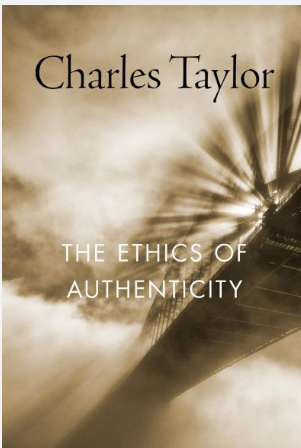


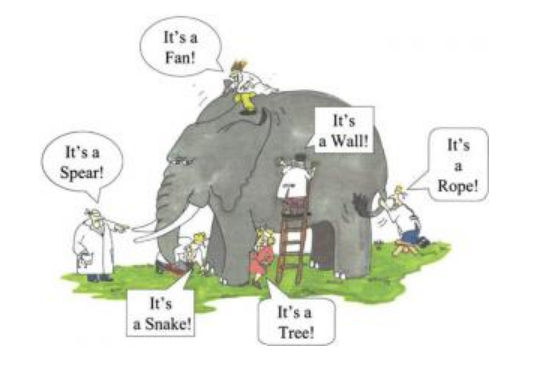

.jpg)


 Good News