Emotional Awareness – Identifying and understanding our emotions and their impact on our thoughts, behaviors, and others. Accurate Self-assessment – Clearly understanding personal strengths and limitations without self-criticism or inflated self-perception. Self-confidence – Firmly believing in one’s abilities, talents, and judgement. Self-respect – Properly regarding and caring for the dignity of one’s person and character. Authenticity – Acting in accordance with one’s true self, values and beliefs.
Self-Management
Emotional Self-control – Managing and regulating one’s emotional responses, preventing impulsive reactions. Adaptability – Flexibly and efficiently learning and applying that knowledge across situations. Achievement Motivation – Orientation towards success, mastery, and sense of purpose. Initiative – Recognizing needs, taking action, and pursuing outcomes without waiting for direction. Optimism – A mental attitude characterized by a positive outlook and expectations of favorable outcomes. Apologizing – Acknowledging errors and guilt, expressing regret, repenting, asking for forgiveness. Trustworthiness – Demonstrating credibility, reliability and intimacy buffered from self-interest. Resilience – Bouncing back from adversity with flexibility & strength, maintaining wellbeing despite challenges.
Social Awareness
Empathy – Understanding what other people feel, seeing their point of view, and imagining yourself in their place.
Organizational Awareness – Interpreting a group’s emotional state, relationship dynamics and power structures.
Service Orientation – Willingly anticipating, recognizing, and meeting others’ needs, before they are articulated.
Perspective Taking – Considering others’ thoughts, feelings, intentions, and motivations in a particular situation.
Cultural Awareness – Recognizing the different beliefs, values, and customs of someone based on their origins.
Relationship Management
Influence – Capacity to affect the character, development, or behavior of another person, group, or organization.
Conflict Management – Process by which disputes are resolved, negative results are minimized and positive results are prioritized.
Teamwork and Collaboration – Combined effort of a group of people working together towards a common goal or objective.
Inspirational Leadership – Inspiring and guiding people to get the job done, to bring out their best.
Change Management – Providing approaches, tools, and techniques to achieve a desired future state.
Collaboration Tools – Offering any technology or tool that can be used to help people to better work together.
Meeting Management – Organizing and facilitating meetings to ensure productivity and alignment.
Project Management – Planning, organizing, and executing tasks to create a tangible product, service, or deliverable.
Communications
Commonality – Finding and emphasizing common interests, perspectives and experiences.
Be Patient – Encouraging others to speak, not interrupting them.
Overall Awareness – Paying attention to non-verbal cues, overall message of speakers.
Recognize/Validate Others – Listening, remembering and using names, acknowledging others’ views and emotions.
Mirror Communications – Confirming listening by restating what you heard in your own words.
Speak Kindly – Using words that are neutral or supportive, not attacking others.
Understand – Asking questions, clarifying, seeking first to understand, not to reply.
Manage Praise – Giving and receiving praise for communications, actions, intentions and results, when appropriate.
Defend Properly – Defining boundaries, expressing views in “I” statements, not overreaching.
Solve the Problem – Focusing on issues, not people.
Electronic Communications – Effective email and social media communications.
Growth
Experiential Learning – Benefiting from the experience and natural results of participating in civil processes. Continuous Improvement – Maintaining newly developed skills and skill levels with support from civil colleagues. Embracing Feedback – Encouraging honest feedback provides opportunities for personal growth. New Perspectives – Gaining new approaches, viewpoints and paradigms from interacting with others. Higher Expectations – Improving goals and behaviors in response to the expectations/norms of others. Confidence – Using civil processes to address and resolve difficult situations builds personal and process confidence. Broadly Applying Skills – Trying, testing and using civility skills in all domains of life. Modelling Behaviors – Practicing civility skills helps to teach, influence and inspire others. Developing Others – Recognizing and nurturing potential in others through encouragement and honest feedback.
Problem-Solving
Analytical Tools – Critical thinking, decision making, game theory, finance, economics and operations management.
Creative Thinking – Thinking about a task or a problem in a new or different way, or generate new ideas.
Strategic Thinking – Intentionally and logically making organization level decisions with long-term impacts.
Organizational Design – Improving an organization’s effectiveness and performance.
Organizational Development – Structuring an organization to align with its strategic goals and objectives.
Systems Thinking – Cognitive skill and a way of understanding reality that emphasizes the whole rather than the sum of its parts.
Process Engineering – Approach to designing, analyzing, and optimizing steps to produce a consistent, repeatable outcome.
Public Administration – Coordination of government activities to ensure the effective delivery of services and the application of laws.
Healing the Heart of Democracy by Parker J. Palmer argues that democracy’s survival depends on cultivating “habits of the heart”—such as embracing togetherness, holding tension, and creating community—within our local lives. It calls for reclaiming civic life from polarization by nurturing courage, empathy, and personal agency to create a politics worthy of the human spirit. Google AI – April 8, 2026
Key concepts from the book include:
• The Heart as Democracy’s Center: Democracy starts in the human heart, where we must embrace questions about equity and generosity rather than succumbing to fear and dividing into “us vs. them”.
• Five Habits of the Heart: To restore democracy, Palmer proposes cultivating five habits in our daily lives (families, workplaces, neighborhoods):
1. We Are All in This Together: Understanding our interdependence.
2. Appreciation of “Otherness”: Valuing differences rather than fearing them.
3. Holding Tension in Life-Giving Ways: Using political conflict for creative, not destructive, purposes.
4. A Sense of Personal Voice and Agency: Believing in our capacity to make a difference.
5. A Capacity to Create Community: Working together to solve common problems.
• Reclaiming Politics: The book encourages breaking through political gridlock by focusing on personal responsibility, civil discourse, and shared values.
The book is a blend of personal reflection and political analysis, aiming to empower individuals to move beyond the “politics of rage” and build a more compassionate society.
1 Corinthians 13. If I speak in tongues of men or angels, but do not have love, I am only a resounding gong or a clanging symbol.
Civility as a purely abstract, technical, secular, efficient, professional, dry, thin concept cannot win in the modern world. Civility must spring from the hearts of men and women. The values, education, steps, content and behavior of Civility alone are simply not enough. What will attract and engage modern individuals into making Civility a passionate priority? Why will the Civility counter-revolution win?
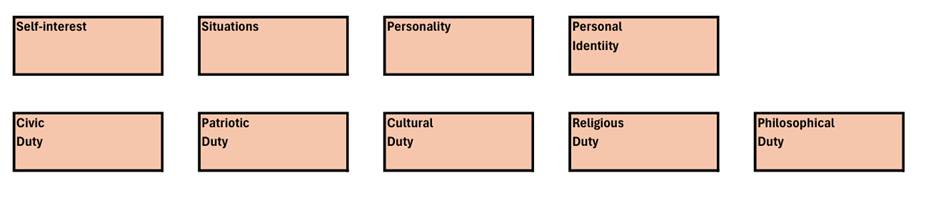
Humans are motivated by self-interest and specific situations but mainly by a passionate sense of duty.
Self-interest
In modern America, self-interest may be first!
Personal benefits
Practicing Civility provides 15 benefits, primarily improved communications and conflict resolution skills, better personal and professional relations and personal well-being.
Personal growth. Civility’s focus on self-awareness, self-management, social awareness, relationship management, communications, growth and problem-solving drives personal growth. It is a great fit for the implicit modern philosophy of self-expression and Maslow’s top-level goal of self-actualization.
3.Local environment. Civility values and behaviors can help individuals to make their local environments more productive, effective and Civil. One individual can use these tools to improve their local environment.
Benevolent self-interest. Civility has inherent spillover or externality effects. Individuals who invest in civility sometimes aim to influence others and local communities to become more Civil for the good of the community. Individuals feel good about promoting these changes.
Situation
Sometimes the situation alone calls for an obvious response. We have such a situation today. Our society is at risk, and we fear the consequences of a downward spiral. We have the tools, knowledge and agency to prevent this. We must respond.
Opportunity. Civility tools are widely accessible. The cognitive and behavioral sciences have grown tremendously in the last half century. Individuals learn and apply various Civility tools at all stages of their lives.
2. Consequence of Failure. Americans know about the “Decline and Fall of Rome”. They witnessed two world wars, a nuclear cold war and its end. They learned that Francis Fukayama’s proclamation of the end of history in 1992 was premature. Civilization is a precious thing. It faces many threats today. Combatting the possible failure of Western civilization is a worthwhile endeavor.
Generational Responsibility. “The Greatest Generation” has earned its rest. The “Baby Boomers” have dominated the last 75 years. We received “Western Civilization”, won the “cold war”, embraced individualism and expanded rights and freedoms. But we abandoned the cultural norms of civility. We have an opportunity to restore them in a better form with greater effectiveness without restricting individual freedoms.
4. Agency. We inhabit a “mass society” where global trade, banking systems, the United Nations, judges, lobbyists, politicians, the media, advertising, corporations, lawyers, banks, insurance companies, universities, computers, systems, processes and artificial intelligence seem to rule. Yet, we prize our individuality, independence, freedom, agency, identities and souls. Civility can be practiced and improved by everyone. No permission is required. We can teach others through our own actions and through education and changes to small communities like families, book clubs, prayer groups and work units. Small changes can have large impacts.
Duty
Civility rests upon 7 values. Human dignity, respect, acceptance and responsibility are broadly supported. Public spirit, intentionality and constructiveness attract less interest from some comprehensive value systems. People embrace, apply and grow such values when they feel a sense of duty, which can come from a variety of sources. Fortunately, Civility can be supported from any of 7 sources of duty.
Our society doesn’t require everyone to have the same religious or political beliefs. It doesn’t require everyone to actively practice Civility. It requires a “critical mass” of individuals who actively practice, improve themselves and promote Civility. We live in a time when we need to be very intentional about growing Civility.
Civic Duty – Many citizens deeply understand the benefits of living in a democratic society. They support Civility because they understand it is necessary. Civility enables constructive dialogue, supports self-governance, builds trust and social cohesion, promotes effective governance and manages conflicts peacefully.
Patriotic Duty – Americans are proud of their country’s history of establishing and maintaining a representative democracy as an example for the world. They practice civility to preserve democracy, uphold its founding principles, ensure social stability, and foster national unity and trust.
Cultural Duty – Individuals live in communities and follow the norms of those communities. The history of Civility sets expectations for continuing to act in a Civil manner. Even in highly individualistic communities, we accept that informal norms, expectations and manners are required to avoid stronger laws, administration and enforcement that would reduce our freedoms. Most individuals are proud of their cultural history and happy to comply. Conservatives naturally honor such history. Many American liberals are also quite proud of the achievements of our society.
Religious Duty – Many religions support at least some of the 7 Civility core values. Those who believe humans are created in God’s image emphasize human dignity, respect and acceptance. Many religious and ethical traditions teach the “Golden Rule”—to treat others as one wishes to be treated. This principle serves as a direct guide for civil behavior, encouraging empathy, courtesy, and kindness in all interactions. Many religions ask members to “love your neighbor”, and support the welfare of others, including strangers and those who are different. Religious texts and teachings often provide a moral framework that promotes virtues like patience, kindness, generosity, gentleness, self-control, and humility. Cultivating these virtues is considered part of a faithful life, which naturally leads to more civil interactions. A sense of humility, derived from the belief that only God can make the final judgment, encourages individuals to tolerate differing views and avoid a condescending attitude toward others.
Philosophical Duty – Philosophers have always addressed the core challenge of forming community and governing even though individuals have different views, needs and interests. Hence, they outline governance structures that work to bridge that gap, often overlapping with the values of Civility. Humanism, secular humanism and philosophies of personal growth and expression emphasize the importance of human dignity, the need to give and receive respect and the importance of accepting or celebrating differences. Many philosophies are compatible with the “golden rule” which emphasizes the mutual respect and forbearance required for a healthy society.
Personality. Individuals with a strong preference for “feeling” versus “thinking” behaviors naturally embrace the Civility values. This can be combined with either a “perceiving”/flexible or “judging”/inflexible approach to the world. Some individuals naturally prioritize responsibility/intentionality or positivity/constructiveness or public spiritedness/belonging.
7. Personal Identity. Many individuals today want to find, define, develop and refine their personal identities. They wish to consciously optimize their human potential. This includes being self-aware, managing themselves, being socially aware and managing relationships, the first 4 Civility behaviors. Individuals who build a secure personal identity can interact with others and accept their differences without feeling threatened or the need to resolve such differences. Individuals who have consciously made life choices and experienced personal growth understand that there are different options and views to be considered.
Practicing Civility will improve your health, effectiveness, sense of belonging, personal growth and leadership skills.
1. Conflict Reduction
Civility is founded on human dignity, respect and empathy. Differences are expected. Individuals seek to understand others. They focus on people, process, interactions and results, not just winning. They employ tools to find acceptable solutions. They refuse to personalize differences. This approach reduces the chance of differences or disagreements escalating to conflicts or crises. The habit of resolving or accepting differences creates an atmosphere that expects reasonable interactions and results.
2. Stress Reduction
Civility reduces the frequency and intensity of conflict. It minimizes the direct and indirect experience of personal attacks. Individuals are affirmed by each other, feeling respect and developing a stronger self-image. Others have higher morale, so they are less likely to fall “below the line” in their behaviors. Social norms guide positive behavior. Individuals expect that people, processes and results will be good, or at least acceptable. They learn to depersonalize interactions, reframe conversations to avoid righteous religious or political issues and build upon their positive experiences.
Positive experiences and expectations reduce stress, tension, fear, anger and anxiety. They encourage engagement and issue resolution. They reduce the risk of burnout.
3. Happiness
People in civil environments experience respect, acceptance, belonging, positivity, trust and good relationships. Civility leads to high achievement by developing communications, problem solving, relationship and influence skills. By applying the values of responsibility and intentionality, individuals improve their decision-making skills, especially those that require interaction, creativity and wisdom to manage complexity, uncertainty and differences. These experiences help people to become centered and composed.
The process emphasis of Civility supports personal growth. Individuals define goals, separate means and ends, welcome feedback, bridge differences and expect to change when they learn. Personal growth can cause anxiety at first, but extended experience provides a way to embrace change and expect positive personal and process results. Finally, Civility requires individuals to make choices about upholding values like human dignity, respect, responsibility, leadership and the public good. Individuals who define and strive to consistently live by moral values build justifiable self-assurance (#10).
4. Good Reputation
When you demonstrate communications, problem solving, interpersonal, personal and change management skills, others notice. When you apply the virtues of respect and acceptance, responsibility and intentionality, positivity and interaction, others notice. They notice your personal, work and civic realms. Your personal brand value grows. They trust, respect and like you. They expect you to work well with others and to keep your commitments. They provide professional and leadership opportunities because you are effective in the modern complex, team environment.
5. Influence
Those who practice respect, acceptance and interactive problem-solving prime others to consider their views. Self-confident, centered, composed, responsible, intentional people are seen as natural leaders. Individuals who have solid interpersonal and communications skills, especially active listening, encourage others to work with them. The experience of mutual respect and creative problem resolution in difficult situations leads others to prefer to work with their highly Civil colleagues.
6. Better Relationships
Civility makes building relationships a top priority. People, process and results. Civil people demonstrate empathy and self-regulation. They have good communications and interpersonal skills. They value respect and acceptance, responsibility and intentionality, positivity and interactions. Experiencing the give and take of shared decision-making or problem-solving benefits all parties.
7. Belonging
The Civility values of interaction/dialogue, mutual respect and public spiritedness combine to create and enhance communities. They create shared purposes, meanings, interests, history and the experience of managing difficult decisions. Belonging improves with this stronger sense of community.
The Civility values of human dignity, respect and acceptance together with empathetic behavior contribute to forming and sustaining a kind, compassionate community. Individuals are affirmed, feel safe and belong.
When Civility is actively thriving, the overall environment is Civil or harmonious. Morale, well-being and relationships improve. Belonging flourishes.
8. Included
The same forces that create belonging apply to inclusion. True belonging, based on acceptance and human dignity, is for everyone, despite whatever differences they may have. A “big tent” welcomes all. The underlying values also make individuals feel respected, valued and affirmed even when they are different or hold different views.
Interacting with mutual respect using modern behavioral science tools leads to understanding differences of interests, perspectives, goals, beliefs, preferences and values. Understanding helps to avoid conflicts. It allows us to disagree without being disagreeable. It encourages us to find creative, compromise solutions. It helps us to identify where we do have shared views. By truly accepting differences we include others.
9. Emotionally Composed
Civil people expect to encounter and manage differences. They willingly engage in group decision-making and problem-solving processes. They respect and empathize with others. They depersonalize crucial conversations. They identify common interests. They learn that they can discuss, trade, negotiate, advocate and influence civilly even when the stakes are high. They learn to accept and embrace compromise and avoid polarizing arguments about political and religious topics.
Civil people are supported by a civil environment of belonging and inclusion where others are mostly stable too. They practice the values of responsibility and intentionality. They know that they must make choices. They learn that some differences cannot be resolved and that they have personal growth opportunities. There is a virtuous cycle of self-control, with the experience of building greater confidence and reserves.
10. Satisfied
Anyone who has achieved 3 Happiness, built a 4 Good Reputation, become 5 Influential, created 6 Better Relationships and become 9 Emotionally Composed should be satisfied with life. If they are also succeeding in life and career based on developing and applying the key behavioral skills, they are further blessed. If they have been able to consistently follow their values, including public-spiritedness, they should be proud. If they have participated in group problem-solving and decision-making to shape their communities at any level, they know they have achieved something important.
11. Overcoming Selfishness
Three of the five key Civility behaviors apply: empathizing with others, building relationships and self-regulation. The individual is required to interact with others, so he or she might as well be good at it. Self-knowledge is required for interacting effectively with others. Radical selfishness is simply not an option.
Personal management and interpersonal skills help people to insightfully look inward and outward to balance both worlds.
Six of the Civility values apply: recognizing the human dignity of others, respecting others, accepting others, interacting with others, being constructive in spite of others and considering the common good with others.
Civility does not elevate “others” or communities above the individual, but it recognizes them as valid agents in life’s drama. They are worthy of serious, intentional, responsible consideration. Civil individuals happily move beyond a state of self-absorption to engage with life’s full possibilities.
12. Leveraging Human Dignity
Civility begins with the insight that we each share a common human dignity. We each have equal worth. This is an essential view of reality and human potential. It cannot be disputed. Civility values, behaviors and skills are derived from this base.
It means that we each have infinite worth and value. We have humanity in common and the “common good”, relationships and community truly matter. The views and interests of others matter and must be considered. Individuals have inalienable rights of protection from others, groups, governments and society. Minority interests should be considered and protected. Individuals must be treated as “ends”, never just as means to ends per Immanuel Kant. Groups and ideologies must never be more important than actual people. Civility processes protect these individual rights while respecting the need for groups, communities, governments and societies to make imperfect decisions for the common good.
13. Mutual Trust
When individuals practice the Civility values, they are signaling that they trust others. Displaying respect and acceptance indicates trust in another person. Investing in intentional, responsible, interactive and constructive actions says that an individual believes that the others are worthy of investment and implicitly trustworthy. Considering the common good or public interest also shows a belief that others should generally be trusted.
Trust is often given altruistically, at least at first. Modern game theory says this is the optimal first step in typical two player games. It is also offered with the expectation that it will be reciprocated. Trusters hope and expect that they will be trusted back.
Trusters also believe that they will indirectly benefit from nudging others into creating more effective teams, groups and communities. These groups are more effective due to collaboration and deliver better results. They reduce the costs and risks of making decisions. They create a positive environment of lower stress and conflict.
14. Mutually Constructive Behavior
Civility embraces positivity and a constructive approach to conflict management, negotiations, problem-solving, decision-making and politics. This value is supported ethically, tactically and strategically; NOT naively.
Responsibility and intentionality are adopted with the expectation that they will be at least partially reciprocated by others. Using a constructive approach to interactions helps to influence others to mirror this good behavior and engage positively.
Civility values an interactive and mutually respectful approach to the broad topic of problem-solving. Faith in interaction is based on the values of human dignity and respect. It is helped by empathetic behavior. It is greatly facilitated by positive and constructive attitudes, thoughts and actions. This is another area where a value (constructiveness) is first offered altruistically with the hope and expectation that it will be partially reciprocated.
Civiliteers hope that civil discourse will arise and become the norm. They hope that a positive environment will result in less stress and conflict. They expect better decision-making, especially when dealing with complex issues with real differences of views and interests. They believe that better decisions will arise from the recognition of differences, identification of the common good, creative solutions and constructive compromises that are “good enough”.
15. Moral Commitment
Civility promotes 7 values. It is an ethical system that is not dependent upon any specific philosophy, religion or political viewpoint. It is consistent with “classical liberalism” that was developed in the 1700’s in England, Europe and the United States.
It is a subset of a complete moral framework. It is fully adequate to support our day-to-day lives together at work, at play and in government. It attempts to balance the inherent conflicts between the self-aware individual and others and communities.
Individuals commit to this set of values because they believe they are in some sense “true”, morally right, adequate and necessary for society and politics. They hope that their imperfect application of these values will trigger others to make the same commitment. They understand that all humans are imperfect and that the serious pursuit of 9 values is much better than no pursuit at all. They adopt these values and invest in learning behavioral science skills and building habits because they want to do the right thing for future generations and ultimate values.
Moral values are the fundamental principles and beliefs that guide an individual’s behavior, helping them distinguish between right and wrong, good and evil. These values—such as honesty, fairness, and respect—act as a personal or societal compass that shapes character and influences decision-making, often requiring individuals to prioritize the collective good over personal gain. Google AI – April 8, 2026, for most text below.
Key aspects of moral values include:
• Guidance for Behavior: They act as an internal compass to dictate actions, choices, and interactions with others.
• Societal and Personal Origin: They can be derived from cultural norms, religious beliefs, or personal reflection, often absorbed through upbringing.
• Core Examples: Commonly held moral values include respect, compassion, responsibility, honesty, integrity, and fairness.
• Distinction from Ethics: While often used interchangeably, morals tend to be personal principles, whereas ethics are often rules prescribed by external sources (e.g., professional codes of conduct).
• Evolution: Moral values are not always fixed; they can change over time as societal norms evolve.
Essentially, moral values help people navigate complex social situations and ethical dilemmas, facilitating cooperative living within a community.
Society Requires Moral Values
Yes, a society requires a common set of moral values to maintain cohesion, stability, and trust. These shared values create a “consensus” that acts as a social glue, setting standard behaviors that guide individuals in treating each other with respect and fairness. Without this foundation, societies often face chaos, insecurity, and social division.
Key reasons for shared moral values include:
• Social Cohesion: They foster unity and prevent a community from falling apart.
• Order and Safety: A solid moral code provides a “safe track” for behavior, reducing the need for constant, forced enforcement of laws.
• Ethical Decision-Making: They provide a basis for distinguishing right from wrong, helping people make consistent choices in personal and professional lives.
• Cooperation: Shared values enable people to work together toward common goals, rather than merely surviving in small, fragmented groups.
While absolute conformity is not necessary, the general acceptance of a set of values—such as love, honesty, and fairness—is critical for the functioning of a modern, democratic society.
Liberal Democracy Requires a Set of Values (1)
Yes, liberal democracy requires a shared, foundational commitment to a core set of values, even while fostering a pluralistic society. These fundamental values, necessary for the system to function, include the rule of law, individual rights, equality, tolerance, and the legitimacy of democratic processes.
Key aspects of the requirement for shared values in liberal democracy:
• Core Principles: The system is rooted in principles of freedom, equality, and protection of rights.
• Essential Values: Key elements include the rule of law, separation of powers, and the protection of minority rights.
• Shared Beliefs: A commitment to democracy as both a governing system and a social arrangement are necessary.
• Tolerance as a Pillar: Tolerance for diverse opinions and lifestyles is a central value.
While liberal democracy allows for diverse opinions on many topics, a shared adherence to the rules of the game is essential for its stability.
Liberal Democracy Requires a Set of Values (2)
Liberal democracy does not require a uniform, comprehensive set of moral values, but it does necessitate a shared commitment to a core set of procedural, democratic values. This “overlapping consensus” includes mutual respect, tolerance, and commitment to the rule of law, allowing citizens with diverse moral or religious views to coexist peacefully.
Key aspects of shared values in a liberal democracy include:
• Procedural Norms: The focus is on shared agreement over the ground rules—such as tolerance, civic virtues, and non-violence—rather than a single moral code.
• Fundamental Principles: While pluralism is allowed, consensus exists around principles like legal equality, protection of individual rights, and freedom from coercion.
• The “Neutral” State: To remain neutral toward varying religious and moral views, liberal democracies focus on ensuring fairness for all rather than upholding a single traditional or religious morality.
• Constitutional Patriotism: Integration into liberal societies is increasingly tied to sharing constitutional and liberal-democratic values (like freedom and equality), as seen in European integration policies.
Therefore, the system thrives on moral diversity but faces instability if there is no shared commitment to the democratic process itself.
Communitarian Critique of Classical Liberal Values
Communitarians argue that classical liberal democracy overemphasizes individualism, atomistic freedom, and abstract rights, while neglecting the fundamental role of community, social responsibilities, and shared conceptions of the good life. They claim liberal democracy fails to recognize individuals are inherently embedded in, and shaped by, their communities.
Key values communitarians claim are missing from classical liberal democracy include:
• Shared Understandings of the Good: Communitarians argue that politics should not be neutral toward conceptions of a good life, but rather promote shared virtues, moral values, and community well-being.
• Social Responsibilities Over Individual Rights: They argue for a shift from a purely rights-based focus to one that emphasizes responsibilities to families, neighborhoods, and voluntary associations.
• Community Belonging and Identity: Communitarians believe that identity is formed through social context and that liberal democracy neglects the human need for strong communal bonds and collective identity.
• Common Good Over Individual Self-Interest: They believe the political order should foster public-spiritedness and focus on the common good rather than simply mediating between selfish interests.
• Social Cohesion and Stability: They contend that by focusing on individual autonomy, liberal democracy erodes the social bonds (such as in family or local communities) required for a stable society.
• Particularity Over Universality: Communitarians argue that political structures should reflect local traditions, histories, and cultural contexts, rather than relying on abstract, universal rights.
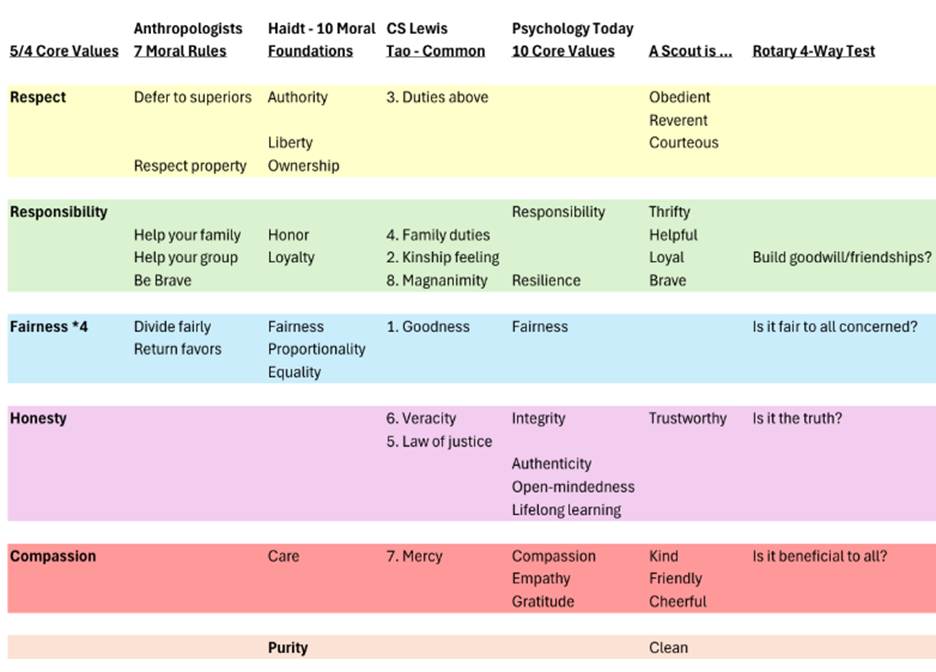
What Social Values Are Most Common? (Tom K. answer)
Respect, responsibility, fairness, honesty and compassion are the 5 most common social moral values.
Civility values are instrumental values, selected to be the smallest set that can effectively support the goal of delivering productive results through social discourse that recognizes differences and builds mutual respect. Respect and responsibility appear on the short list of common values above. Honesty is a component of Constructiveness. Human dignity is not in the top 5 values. It underlies acceptance, which is less common, and compassion which is common, especially today. Intentionality flows from responsibility but is defined as a distinct value. Public-spiritedness is partly supported by fairness listed above and human dignity, which is not.
Civility does not aim to replace any total moral, religious or political system. It aims to provide the skills, behaviors and habits that deliver Civil behavior and results in all domains of life. It seeks to become so widely accepted that it becomes a self-reinforcing norm, leveraging the virtuous cycle of social interaction.
Civility does not oppose other values that are proposed to make social interactions even better. Its “public-spiritedness” is a close cousin of the communitarians’ call (see above) for a more community-centered world, but Civility does not claim to know the right balance between the individual and the community.
Fairness, equity, equality and proportionality are not required, and their absence supports the essential nonpartisan stance of Civility
Purity is not required.
Constructiveness requires neutrality. Positivity is not required. Trust is a desired result of Civility rather than an underlying value.
Human rights are a step beyond human dignity.
Individualism, freedom, liberty and property ownership are not required and belong to political values.
Constructiveness requires some degree of creativity and hopefulness, but the values of idealism, utopianism, possibilities and righteousness are not needed.
Civility does not require, but hopes to produce the group values of cooperation, loyalty, belonging, honor and authority.
Civility’s combination of values often delivers but does not require moderation, avoidance, accommodation, restraint, indirect communication, subjectivity, tolerance, politeness and compromise.
Civility’s human dignity and respect do not require, but often deliver feelings, sensitivity, empathy, sympathy, care and forgiveness.
In similar fashion, it often delivers service, love, charity, mercy, selflessness and hospitality.
Based upon responsibility, constructiveness and intentionality, Civility requires rational thinking. It does not make rationality, common sense, transparency, practicality, objectivity, simplicity or curiosity a core value.
Our approach to Civility defines moral, religious, philosophical and political belief systems as support or motivation for embracing the Civility values and behaviors. It argues that Civility values and behaviors can be separated from other social values, behaviors and systems. It also allows Civility to be supported by personal, instrumental and secular factors without recourse to any overall moral system. This separation allows Civility to act as a neutral system that welcomes a wide variety of beliefs.
Civility does not reject the inclusion of values such as fairness, honesty, compassion, liberty, loyalty, community, empathy, love or service in any person or group’s definition of Civility. They are omitted to provide a smaller set of values that can be neutral on the political and religious dimensions.
The Civility values are strongly supported by the major world religions and secular humanism.
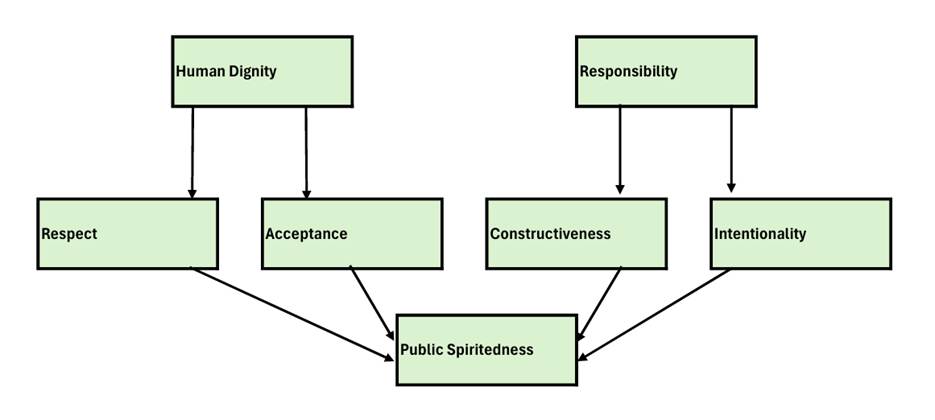
Civility is based upon 7 values: human dignity, respect, acceptance, responsibility, constructiveness, intentionality and public-spiritedness. These values have been identified as the foundation of Civility because they work together with the 7 Civility behaviors to deliver results while recognizing differences and building mutual respect through civil discourse.
Deliver results
Build relations
Adequate
Sustainable
Reduce costs
Broadly supported
Broadly applied
Support democracy
Actionable
Powerful
Civility is a set of behaviors based upon the seven commonly held values of: human dignity, respect, acceptance, intentionality, responsibility, constructiveness and public-spiritedness. A social, political and economic society must have some core beliefs, norms and behaviors. The modern renaissance of Civility attempts to define the beliefs, norms and behaviors so they can be shared and promoted. We need to be confident that we know what Civility is, how we should behave, how/why we should influence others and why the underlying principles make sense.
Human Dignity
Human dignity is the first principle or value underlying the Civility behaviors. It is a universally held value. In our skeptical, individualistic, subjective, relativistic era, it is essential for everyone to deeply understand the meaning of and broad support for this value.
Human dignity is at the heart of each worldview: image of God, gifted by God, preciousness of human birth, inherent divinity, self-so-ness, children of the kami, moral potential, shared humanity and moral agency.
Each worldview also has a complement to the solitary individual: public shaming, sanctity of life, sacredness of life, interconnectedness, one family, ancestral honor, roles, and rationality.
Human dignity is essential for any religious, political, philosophical, or social paradigm. Civility begins with “human dignity”.
Respect is an attitude or behavior of high regard, admiration or consideration toward a person, object, or entity.
We respect others, social roles, institutions, rules, laws and the boundaries of others.
Respect is shown through active listening, active engagement, conflict management, tolerance, maintaining safety, being courteous and considerate, honoring boundaries, intentionality, empathy, affirming and empowering others, equal treatment, trusting, justice and inclusion.
Human Dignity is a core Civility value. Respect is a recognition of that value through kindness, courtesy, and protecting rights.
Respect combined with the Civility value of Public-Spiritedness creates a need for social justice: protesting, correcting, and preventing actions that diminish human value.
Respect combined with the Civility values of Human Dignity and Intentionality requires us to proactively seek to understand and care for the needs, rights, and feelings of others.
Respect combined with the Civility values of Human Dignity and Acceptance requires us to acknowledge the value of all people, particularly those who face systemic disrespect.
Respect is supported by all major world religions.
World religions strongly emphasize respect as a necessary human value and practice.
They empathize that we are created in the image of God or as an intentional part of the universe. We must respect ourselves, others, God, nature and the universe.
Some describe us as “children of God” or very special beings or imbued with the divine spirit. Self-respect and respect for others follow. We have human dignity, something greater than our material existence.
Religions call for respect for God/the universe and the laws or commands which include respect for others.
We are to live in harmony with the created universe, respecting others, family, ancestors, elders and given social roles.
We are naturally created with the heart for compassion and empathy and are obligated to interact with love, accordingly.
Given our position in the universe, we are to live with humility, honoring God, nature, the universe and others.
Practicing humility, honor and respect are essential for personal growth.
Religions command us to have respectful “right relations” through our speech, actions, interactions with others, community participation and God.
Acceptance involves tolerating, respecting, and acknowledging differences. Acceptance is being open, tolerant, non-discriminating, nonjudgemental, understanding and minimizing prejudices. It is a habitual state of mind. The differences can be personal or group characteristics, beliefs, behaviors or identities.
Inclusion is acting on the value of acceptance. It includes being present, supporting others, choosing welcoming language and behaviors and preventing or reducing social exclusion.
Inclusion is primarily shown by intentionally creating positive social environments where all individuals are welcomed and feel a sense of belonging. Individuals are respected, heard, accommodated, and supported. They feel safe, trusted and free to be authentic. They are encouraged to participate, contribute and thrive.
Acceptance and inclusion help individuals to more effectively interact with others, communicate, trust, bond, listen, center, and build awareness and community.
We emphasize “acceptance” to avoid the political differences regarding “inclusion” in the DEI abbreviation. Acceptance and inclusion go “hand in hand” and are necessary foundations for embracing Civility as an idea and a set of behaviors.
The major world religions support acceptance and inclusion:
All individuals have human dignity, created by God, worthy of acceptance and inclusion.
Religion is practiced in communities where diverse individuals are brought together.
The strange, vulnerable, marginalized, foreigner, widows, prisoners, and outcasts are different and must be embraced.
Individuals are commanded to be compassionate, caring and loving to all.
The spiritual dimension of individuals in communities makes them equally worthy of acceptance.
Religious rituals emphasize the unity of individuals in community practice.
The universe is one and individuals should seek harmony with all of it despite the surface level diversity.
There are multiple, fluid paths to enlightenment or connecting with God, so diversity is natural.
Many religions specifically call out the value of diversity, differences, designs, races, other religions, non-religious sectors and viewpoints.
Some religions emphasize the inherent incompatibility of the individual with the whole, yet they are complementary despite the unbridgeable differences.
Religions note the path of personal growth and learning that is driven by interacting with diverse thoughts, experiences and individuals:
Responsibility is willingly and actively managing our “selves” in all roles to appropriate, and even heroic, legal and moral/ethical standards.
We fill our personal, professional and social roles within the context of society. We recognize our interdependence and the need for mutual consideration.
We carefully listen, engage, empathize, apply, decide, speak, impact, influence, share, consider, decide, and act.
We welcome the joy of Responsibility with a capital R!
We consider the views and interests of others, including our families, neighbors, suppliers, customers, coworkers, bosses, employees and team members.
We consider our roles as citizens, demonstrate public-spiritedness and invest our time and resources accordingly.
We do our “fair share”. When the situation calls for it, we do more than our “fair share”.
We manage our personal, professional and ethical development.
We embrace accountability for our behavior and consequences. We seek to be considered reliable and trustworthy individuals.
We embrace “shared accountability for organizational results”.
The great religions all require Responsibility as a primary virtue. They emphasize:
Duty to God and harmony with the universe.
Duty to community and nation.
Duty to nature and the environment.
Duty to family and ancestors.
Duty to self. Free choice.
Personal growth and improvement, especially spiritual/ethical growth.
Duty to the law, ethical conduct in principle.
Duty to the church, rituals, practices and purity.
Duty to roles, norms, expectations and stages of development.
Duty to others based on interdependence and mutual respect.
Compassionate duty to the poor, widows, prisoners, immigrants and vulnerable.
Constructiveness is the quality of being helpful, productive, and tending to build up or improve something, rather than destroy it, often involving positive contributions, useful suggestions, or fostering growth and development, as seen in “constructive criticism” or a “constructive attitude”.
Positivity focuses on maintaining an optimistic outlook and good feelings, while constructive thinking is about actively building solutions, using challenges as fuel for improvement, and taking practical action, contrasting with mere positive thinking that might ignore problems. The key difference is that positivity is an attitude, whereas being constructive is a process of building or fixing, often involving acknowledging negatives to create a better outcome.
Constructiveness is applied within the domain of civility to encourage individuals to be positive, interact, search for solutions and persist. It is affirmed by liberals and conservatives in different ways.
Left views on constructiveness emphasize the construction of new systems and social change, often with an emphasis on equality, progress, and reform. This approach views knowledge and social reality as a dynamic process that can be actively reshaped.
Right views on constructiveness emphasize the preservation and maintenance of existing social orders and traditions, often prioritizing authority, hierarchy, order, and stability. This view often relies on the idea of a “constrained vision” of human nature. Constructive action in this view often relies on private institutions and individual responsibility rather than expanded government intervention, and seeks to maintain founding principles or traditional values.
Constructiveness fits within the broad sweep of progress in modern society (500 years). It is an essential part of scientific, technical and commercial progress. Philosophically, it is supported by pragmatism. Constructiveness is a valuable principle because it is effective.
Constructiveness can be opposed if it is seen as a backdoor way of introducing a liberal bias into Civility. The philosophy of radical skepticism is incompatible with constructiveness. Constructiveness mistaken for utopian positivity is easily rejected. Other strongly negative experiences, philosophies or situations oppose it. The Civility value of Responsibility supports it. Constructiveness requires mental discipline, persistence, creativity, confidence and open-mindedness.
Constructiveness is supported by the Civility values of Responsibility and Intentionality which urge individuals to be fully present and own their choices and consequences in all environments. The Civility values of Human Dignity, Respect and Public-Spiritedness emphasize the need to be constructive in group environments and consider the needs and wishes of others.
Constructiveness is based on measured positivity and optimism, searching for possibilities at each stage of the decision-making or interaction process.
Constructiveness reflects a pragmatic modern belief in progress, reason and science, based on historical experience. It provides confidence and supports persistence.
Constructiveness is process-oriented, confident that varieties of the scientific method, logic, communications, group dynamics, business methods and instrumental logic can and will deliver results when applied. It recognizes the value of habits and the accumulation of skills, steps and wisdom through repeated experiences.
Constructiveness is proactive rather than passive or reactive. It focuses on delivering results or solutions aligned with shared goals rather than being critical, deconstructive, skeptical or merely ironic.
Constructiveness is both an emotional, willful commitment to engage and a confident belief in the effectiveness of modern decision-making and relationship development tools. It applies to both results and relationships.
Constructiveness leads to the consideration of diverse possibilities at every stage: resources, experts, information, frameworks, perspectives, creativity, combinations, win/win, compromise, good-enough steps, timeframes, decision-making tools, group and project management, delay, walk away, etc. It acknowledges that the real world is often “messy”.
Constructiveness focuses on improvements, changes and incremental progress rather than searching for a single, ideal, breakthrough solution. It supports multiple iterations and finds ways around roadblocks.
Having a deliberate plan or purpose before acting. An internal state of mind where an individual consciously chooses a course of action to achieve a specific outcome.
Intentionality weaves together two mental dimensions. It is purposeful, planned, logical, forward looking, rational, process-oriented, habitual, structured, informed, calculated, contextual, goal-oriented, practical, scope limited, applied and instrumental!
It is also deliberate, chosen, willful, volitional, proactive, conscious, engaged and intended.
Intentionality is a complement to responsibility, which refers to accountability for actions and consequences.
Taken together, they encourage us to be fully responsible for our choices, actions, consequences and relations. We are to consider all dimensions and make great choices. We are obligated to clearly define goals and seriously pursue them. We have human agency and a responsibility to be self-aware of our choices. We are obligated to work towards becoming mature, balanced, prudent, wise adults.
Intentionality is crucial to Civility because it:
Promotes proactivity over passivity.
Supports conscious, deliberate and purposeful commitment to treating others with respect, courtesy, and dignity.
Encourages self-awareness in decision making, including considering the impacts on others.
Challenges us to define our goals on a deep philosophical, spiritual or religious basis and seriously align our decisions and behavior with them.
Focuses on goal-oriented thinking which includes the goals of building relationships, trust and safe communities.
Emphasizes our shared responsibility for defining, supporting and reinforcing the rules of civil behavior that are mutually beneficial.
Recognizes that we are responsible for systematically evaluating, building and improving our behaviors and expectations and the norms and institutions of our communities.
The major religions offer support for being rational, considering context and consequences, being calm, balanced, focused and purposeful, but they mainly emphasize the spiritual, emotional and willful dimensions of intentionality. They encourage us to:
Begin with the end in mind (Covey). Know, follow, engage and align with God’s will or the structure of the universe. Use the power of this knowledge and connection (holy spirit) to make the best choices.
Make decisions based upon values and principles, not self-interest or practical concerns alone.
Be aware, conscious, fully present in life and making decisions. You are an agent.
Be proactive.
Be self-aware and self-disciplined.
Invest in spiritual growth to understand and connect with God/universe which will improve decision making in a self-improving cycle.
Cultivate the heart and compassion as a basis for choices.
Sincerity and proper personal intentions are critical for making choices that deliver good results and which align the person with God/universe.
An intentional person is serious about defining/prioritizing goals, making good decisions and improving themselves.
The quality of caring about community welfare. Altruism is considering the public good rather than just personal interests. A sense of duty to consider the community good. Willingness to act on behalf of the community.
Communities of all sizes require individual members to value community interests, not just personal interests. They require individuals to internalize this idea, belief and value to make it a habit. Humans have evolved to be able to take and hold this perspective.
The key is for individuals to consider the common, public or greater good, not to be completely selfless. Public spiritedness is not a partisan value. Classical, moderate and progressive liberals promote this value. Classic and modern conservatives promote this value.
Some liberals and conservatives reject this principle. They rely on purely individual self-interest or religious, state or philosophical systems that do not require individual choices. I argue that this “radical individualism” is one of the 6 root causes of our current dysfunctional cultural situation.
The universe exists. We must harmonize with the fixed, structured, unchanging, known universe.
Community precedes the individual.
We are interdependent.
Community provides context for life.
We are obligated to participate in community.
We must serve our communities.
We must build our communities.
We should worship in community.
We must be loyal to our communities.
We should love our neighbors, follow the golden rule.
We should be compassionate towards others.
We should be charitable and generous towards others.
Reason matters.
Justice and social justice are logical requirements.
Peace and nonviolence are important within and between communities.
Truth, honesty and integrity are crucial virtues.
Ethical intent and behavior matter.
Individuals have clear duties and responsibilities to principles and communities.
Individuals should invest in their personal ethical growth.
Public-spiritedness is a universal value, virtue and principle. Reasonable people can wrestle with the trade-offs of personal and community interests. They should all agree that the public interest matters and must be considered. This is a universal value that society can use its power to impose upon members of society. This is very difficult for our ultra-individualist society to accept or embrace. Nonetheless, it is required. We should not hesitate to educate our children, set and enforce standards in our organizations, and promote this value throughout our society. It is required for “society”. We must not apologize.
A single ideological “left versus right” politics frame emerged after 1964.
In 1995 Gingrich demonstrated that polarization is effective and good for incumbent politicians.
Polarization is a self-reinforcing process. Consider the Irish Troubles or the Middle East.
Politics, media and society also interact to grow polarization.
Religion and identity have merged with politics, making it more ideological and polarized.
The historical countervailing forces of the mainstream media, self-interested political parties, regional elites, the responsibility of noblesse oblige, business elites, religious elites, intellectuals, thought leaders, university presidents, military leaders, state leaders, global leaders, local politicians, civic group leaders, teachers’ unions, League of Women Voters, ABA and scouts have not found their moderating voice in the current media environment.
The media facilitates polarization for profit.
The Republican party moved right and then further right.
The Democratic party “occupied the center” with Clinton and Obama, but this did not satisfy its further left supporters, and it convinced many Republicans that all Democrats are really “radical socialists”. The party has not found a new framework to effectively compete with Trump’s hybrid conservative/populist frame and policies.
A wide variety of groups have attempted to reframe the center as a good political place to live. None have yet succeeded.
The classic liberal model of an independent government system of checks and balances, legal, based on rights alone, is inadequate as the background Western Civilization culture fades. The lack of agreement on a set of core values, morality and character undermines civic duty and Civility.
The “Therapeutic Society” of personally optimizing individuals boosts the importance of identity. Politics and religion merge making politics more divisive. Politics and identity merge, making it more important than class, section, interests, individual policies, leaders, leadership character or political results. Individuals want their identity to be affirmed. When it is not, they are upset. They are subject to political manipulation.
Some political differences are unavoidable. People are born with 9 political intuitions that develop into strong political beliefs. They tend to cluster as left versus right. This is OK. Civility does not promise agreement. It aims to help us to see the differences and make choices based on those real-world facts.
The Civility projects don’t prioritize “fixing” politics because this can undermine the whole effort. Yet, Civility is not opposed to supporting nonpartisan “solutions”.
There are many interactions between the 6 root causes of our cultural challenges and our politics. Steps that support progress on the 6 root causes will help us to improve our political participation, expectations, candidates and results. Steps to reduce skepticism and insecurity will directly improve politics. Steps to rebalance individualism and community will help us to find better political solutions to the most difficult issues.
Our political situation is not good. Polarization is strong at a time when we need to improve our abilities to identify the common good, compromise, change structures and rebuild trust in our institutions and neighbors. Civility practiced at home, church, work and play can help us to improve our political influence and reclaim our political parties from politicians and extreme elements who do not represent the common good.
Media, social media and the internet: an aggravating factor.
Political polarization and political divides: has returned to “normal”. ☹
Concentration of wealth (Robert Putnam, The Upswing): correlation is not causation.
Radical individualism replacing community: major cause driven by economics, science, philosophy, religion and both political parties. The Republican emphasis on capitalism/free market emphasizes individual consumption and production. Classical liberals emphasize a legal/human rights conception of the political system, rejecting the need for specific shared community values. Modern liberals promote the importance of individual identity, creativity, authenticity and growth.
Human nature: even with education, health and scientific insights, we are imperfect in all dimensions (especially prone to selfishness).
Skepticism: deep doubt and habits undermine beliefs, security, hope, religion and wisdom.
Our Secular Age: Science and philosophy promised proof and perfect explanations for everything. No religion or paradigm meets these criteria. We are relearning how to evaluate things “outside of science”, but we still default to the Newtonian physics standard which has been superseded in physics, chemistry, biology and mathematics.
Imperfect Myths: The non-religious, secular, scientific world views don’t answer the religious questions well enough, and religions have not adapted well to the influence of “our secular age”.
The Therapeutic Society/The Culture of Narcissism: Many individuals have adopted the personal growth solution to “living a good life”. Critics argue that it overpromotes a rootless individuality which threatens community and Civility.
Summary
Social change is undermining Western Civilization, which had a strong 500-year run. We are re-assembling a revised culture that preserves the benefits of history and science. We successfully migrated from rural to urban, farming to manufacturing, manufacturing to services, local to national, national to global, central power to democracy, do-it-yourself to trade, ignorance to knowledge, and slavery to freedom.
Not easy: balancing religious and secular, balancing the individual and the community, fine-tuning political structures and redefining essential social norms like Civility to support democracy. We believe that Civility is a magic elixir that can help with all four challenges.
This 15-minute exercise explores the evolution of automotive engineering by comparing the iconic 1957 Chevrolet Bel Air and a modern Toyota Corolla.
Part 1: Quick Specs Comparison (5 Minutes)
Review the fundamental differences in size, power, and utility.
Size & Presence: The ’57 Chevy is significantly larger, measuring roughly 508 cm in length, which is about 45 cm longer than a 2022 Corolla.
Powerhouse vs. Efficiency: The Chevy was famous for its 283-cubic-inch V8, producing up to 283 horsepower with early fuel injection. In contrast, while a modern Corolla is faster than classic models, its focus is on efficiency, often averaging 21-30+ mpg depending on driving conditions.
Technological Gap: The Chevy featured a 2-speed or 3-speed transmission, whereas the Corolla uses advanced CVTs or 6-speed manuals to optimize fuel delivery and performance.
Part 2: Safety & Engineering Deep Dive (5 Minutes)
Analyze how “solid” steel compares to modern crumple zones.
Crash Survival: A common myth is that older, heavier cars are safer. However, data shows fatal crash rates are four times higher in older vehicles.
Structural Integrity: The Chevy’s “Safety-Girder” frame was revolutionary for 1957, but modern Corollas are engineered with crumple zones designed to absorb impact energy, protecting the cabin.
Safety Features: The 1957 Chevy offered optional heaters and defrosters as high-end features. Today’s Corolla includes standard airbags, anti-lock brakes, and electronic stability control—technologies that did not exist in the 1950s.
Part 3: Cultural Legacy & Value (5 Minutes)
Discuss why people still want these cars today.
Collectability: A restored ’57 Chevy can be valued between $25,000 and $60,000. It is an American icon often featured in films and TV.
Reliability: The Corolla is a global benchmark for longevity and integrity, with many reaching high mileage through consistent engineering standards that haven’t changed in philosophy over the last 20 years.
Maintenance: The Chevy is celebrated for being easy to work on by owners, while the Corolla requires specialized tools for its advanced computer-controlled systems.
Context:
Every generation has a nostalgia bias, thinking that it lived in the “best of times”, that “kids these days are lazy” and that “society is going to hell in a handbasket”. It’s important to step back and place such things in perspective.
On the science, medicine, technology, economy, trade, communications and information fronts we’ve experienced “best ever” progress in the last 50-75 years.
On international relations, war, peace, politics, philosophy, community, religion and mental health dimensions we have a more mixed record.
The 1960’s are widely considered to be the hinge between an older more stable set of social institutions and a new set that has not yet fully settled down. The Civility project is part of this emerging redefinition of how we live good lives, together, in a much wealthier but more interdependent world.
The 1960s are considered a massive cultural shock because they marked a rapid, comprehensive rejection of traditional 1950s social norms, fueled by a booming youth population, the Vietnam War, and mass media. It shattered established authority in politics, race relations, gender roles, and lifestyle, shifting Western society toward personal liberation. Google AI – April 6, 2026.
Counterculture and Lifestyle: A youth-driven movement rejected conventional morality, embracing “free love,” casual sex, drug use, communal living, and distinct fashion changes like the miniskirt and long hair.
Civil Rights and Equality: The struggle for racial equality transformed society, punctuated by the Civil Rights Act of 1964 and Voting Rights Act of 1965, alongside the rise of second-wave feminism.
The Vietnam War and Anti-War Protests: The war, amplified by television, created a “credibility gap” between government claims and reality, sparking intense youth protest and mistrust of authority.
Technological and Social Changes: The proliferation of television created a unified media experience, while the advent of “the Pill” significantly altered sexual norms and gender dynamics.
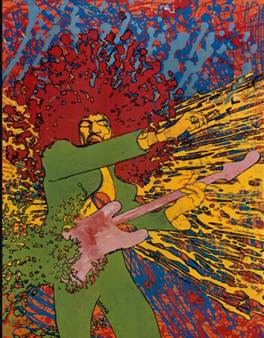
Musical and Artistic Explosion: Music, particularly rock and folk, became a vessel for social critique and the unification of a new generation (e.g., Woodstock).
A “Bridge” Decade: The 1960s acted as a transition from the conservative, black-and-white media era to the more permissive, colorful “modern” world, with technological advancements like early satellite communication and computers.
This period is unique because it forced a shift from traditional institutional authority (church, family, state) to personal authenticity, empathy, and moral sensitivity.
This 15-minute exercise, called “The Elevator Breach,” uses a “breaching experiment” format to make the invisible rules of Civility feel very real.
The Elevator Breach (15 Minutes)
Goal: To experience the internal and external pressure to conform to the social norm of “civil distance.”
1. The Setup: The “Imaginary” Elevator (3 Minutes)
Action: Ask for 3-4 volunteers to come to the front. Mark a small square on the floor with tape or just designate a “box.”
The Scenario: Tell the volunteers they are in a crowded elevator. They must act “normally.”
Observation: Almost instantly, they will perform the Norm of Civility: they’ll face the “door,” look at their phones/the ceiling, and maintain a “buffer zone” of a few inches without touching. [1]
2. The Breach: Breaking the Norm (5 Minutes)
The Twist: Instruct one volunteer (the “Breacher”) to break a subtle rule of civility. Choose one:
The Stare: Instead of looking at the floor, the Breacher stares directly into another person’s eyes and smiles slightly.
The Wrong Way: The Breacher stands with their back to the door, facing the other passengers.
The Personal Bubble: The Breacher stands unnecessarily close to someone, even if there is room to move.
Observe: Watch the other volunteers. They will likely shuffle away, look confused, or give nervous “social repairs” (like a forced laugh or checking their watch).
3. The Debrief: Why was that weird? (7 Minutes)
Ask the group these three questions to nail the concept:
To the Victims: “How did your body react when they stood too close or stared?”
Insight: Civility isn’t just a “nice idea”—it’s a physical expectation. We feel visceral discomfort when it’s broken.
To the Breacher: “How hard was it to keep standing the ‘wrong’ way?”
Insight: The internal pressure to be civil is often stronger than the external pressure. We police ourselves.
To the Class: “What would happen if the Breacher did this every day at work?”
Insight: Civility is the “social glue” that allows strangers to coexist in tight spaces without conflict. Breaking it labels you as “untrustworthy” or “unstable.”
Key Takeaway: Civility is a “silent contract.” We agree to ignore each other in specific ways (civil inattention) so that everyone feels safe and respected.
Context:
Civility is a set of skills, behaviors and habits founded on shared values. It allows us to interact in various environments, effectively communicating, solving issues and maintaining relationships. Civility is also a social norm. Society expects us to behave in certain common ways and we mostly conform. We feel odd when we don’t fit expectations. We tend to pressure others to follow the rules. Because social norms are so powerful, we need to be very careful about how they are defined, taught, enforced, reinforced, etc.
Modern Civility attempts to carefully define underlying values that can be embraced by individuals with different personalities, preferences, talents, politics, philosophies and religions. It outlines the personal behaviors and growth needed to be effective in situations that require Civility.
This exercise gives us a very brief introduction to the idea and power of a social norm.
A social norm can only work if it is widely held. Traditional Civility was strongly supported historically. As society has changed it has lost some support. Individualism and tolerance are more highly valued today. Apparently arbitrary rules of etiquette and politeness are questioned. The basic idea of Civility has strong support in many areas of our society.



 Good News