Liberal Concerns; Community Solutions

https://webcommchest.org/

Context: Individualism Drives Out Community

I believe that our society has adopted a radically individualist perspective without being aware that “it” has made these choices and transmitted its choices though our culture. Historically, conservatives have been the main promoters of the “community” complement to individualism, but I don’t see any possibility for our current conservative party to effectively fulfill this role in its populist, nationalist, xenophobic, capitalist, commercialist, elitist, authoritarian, transactional state. Liberals have not been exceptionally strong promoters of “community” or community organizations other than the central state historically, but I will argue that 6 core liberal objectives require strong communities and community organizations for success. I have broached this subject in 3 other recent articles.

(1) Abuse of Economic Power

Strong economic agents often have the ability to misuse their economic resources in all dimensions. They can shape political, governmental, judicial and administrative choices. They can use their power to obtain greater than market returns/rates from labor, suppliers, competitors, lenders, investors, partners, universities, not for profits, professional, managerial and executive staff, nations, non-governmental organizations, immigrants, children, minorities, women, disabled and other low power groups. Strong players can treat other agents purely as means and ignore their humanity. Strong players can shape products, product markets, delivery channels, advertising, marketing and communications to take advantage of human weaknesses in making economic decisions. Radical liberals argue that these abuses are inherent and extreme. Most liberals point to the evidence of historical abuses to support their concerns about concentrated power and advocate for controls, laws, checks and balances, counterweights, information, regulation, expectations, legal opportunities, etc.

Community plays a major role in politics through political parties, unions, community organizations, interest groups, industry associations, professional organizations, government employee organizations, journalist associations, media associations, universities, teachers’ organizations, PTO’s, legal associations, social services organizations, community foundations, churches, civic organizations, social organizations, veterans’ organizations, etc. Individuals who have experience as members, volunteers, funders, leaders and beneficiaries of organizations are likelier to participate in other organizations and believe that organizations make a difference in the political process at all levels.

Community organizations and select industries also play a crucial role in shaping the implicit political, economic, social and moral beliefs of our society. Capitalism, free markets, democracy, liberty, progress, America, opportunity, God, federalism, government, regulation, rule of law, entrepreneurship, free trade, unions, populism, presidential power; the list of concepts and their proper roles is long. Education, university education, churches and religion, mainstream media, other media, entertainment industry, arts, music, professions, industries, youth and college organizations, political communications, etc. The list of influencers is long. Groups, organizations and community matter.

Most importantly, community experience shapes our beliefs regarding the relationship between the individual and the community. We currently emphasize the economic, social, personal development and political rights of individuals. We de-emphasize the rights of communities and organizations and the responsibilities of individuals who “belong” to these organizations. We emphasize individual choice, tolerance, rights and “limited liability” commitments.

The modern right has embraced the “pure” capitalist system as the primary defender of all individual rights, liberties and freedoms. Natural “laissez faire”. Social Darwinism. Anti-communism. Anti-totalitarianism. Anti-government. Anti-regulation. Anti-centralization. Entrepreneurship. Road to Serfdom. Job creators. Greed is good. Wealth is good. Lives of the rich and famous. Horatio Alger. These stories, ideologies, politics, myths, principles, policies, science, and beliefs are centrally important to individuals adopting a view of the role, risks and control of economic power.

Liberals tend to point towards the universal, abstract dimension. The nation. Global humanity. The rational view points towards the highest level as the most effective way to outline or solve problems. The national community is suspect because of fascist risks. Perhaps a proper national community could be used to support liberal views. Lincoln, FDR and Kennedy embraced the nation. The global community may be useful for religious or abstract politics, but it is seen as highly important by only a very small slice of our citizens.

Communities of interest are more important. These organizations shape both political activity and the underlying views of the people.

(2) Abuse of Political or Cultural Power

“Liberals” have mostly discounted the risks of state power, even after the many examples of totalitarian atrocities on the left and right. Yet philosophically this concern was at the heart of “classical liberalism”, which created the relatively low power American national government (even on the second try). The power of the state, the military, the draft board, the DOJ, the FBI, the police, the courts, the national guard and the imperial president were major concerns for liberals in the 1960’s. The power of “the state” to monitor the activities of ordinary citizens was also an issue in the 1960’s and 1970’s as the actions of the CIA and Nixon’s government were revealed. In the second Trump administration many liberals are once again wisely worried about centralized political power.

The use of community organizations in politics is critical as noted above.

Liberals are generally much more concerned about the role that culture can play in indoctrinating individuals to support and comply with a single view of citizenship, politics, religion, culture, law and life. The 1950’s (!) and 1960’s cultural revolution or counterculture was largely about protecting the individual from the forces of conformity to the nation, big business, commercial society, small towns, and religion.

Following Rousseau, liberals believe that individuals have great potential for personal growth and creativity. This expression of individual potential holds a mystical, infinite, divine quality. Forces that constrain this journey should be opposed. Those who support the use of human possibilities must be supported.

I think this is a critical point to reconsider. Government, religion and cultural institutions do have the power to overreach in favor of the views of the powerful actors in society. They can support pure capitalism, nationalism, populism, elitism, religious conformity, commercialism, pragmatism, materialism, etc. They can also support the liberal world view: balance, true individual rights, justice, opportunity, equality, peace, diversity, global community, progress, improvement, human rights. Community, organizations and institutions are tools. They can be used by any political, moral, economic, pragmatic, interest or social group to advance their interests.

As noted in the prior section, organizations are essential to the political process. There is a risk that political and cultural organizations will align to support conservative political views, even the most extreme, fundamentalist, literalist, constraining, oppressive, unequal, static, wasteful, impersonal ones that liberals oppose.

Undermining the role of “community”, of local organizations, of communities of interest, does not help to oppose the ongoing march of conservatives towards a highly structured system that supports the rule by the successful over the rest. The existence of a wide variety of healthy organizations is essential to provide a counterbalance against a single worldview becoming dominant and oppressive.

Historically, philosophical conservatives were MOST concerned about society, the nation, God, tradition, community, family, race, history, avoiding disaster, etc. They wanted to preserve the positive aspects of the inherited society. The individualist, rationalist views of the “Enlightenment” were not embraced. … Until it became clear that the kings, church, nobility, and landed aristocracy were going to be replaced by the new elites of capitalism, trade, ownership, law, university, and denominations. Then, the conservatives “changed horses” to the new winners in modern society. The individualistic strain of economic life in capitalism became supreme. The true “community” dimension of religion, local community, guild, union, charity, service, parish, precinct, tradition, protection, festivals, saints, colleagues, heroes, handicrafts, debt forgiveness, tithes, noblesse oblige, leadership, extended family, common law, music, art, food, dress, language, etc. became much less important. Daniel Bell argued that the “cultural contradictions of capitalism” made it impossible for any society based on pure capitalism to survive or thrive.

https://www.goodreads.com/en/book/show/734077.The_Cultural_Contradictions_of_Capitalism

There is an inherent conflict between social and economic conservatism. The first elevates community. The second elevates the individual. Ronald Reagan was able to combine both strands into a single loosely defined worldview. He argued that traditional American social values are consistent with “free market” economics. Republicans through Trump have managed to maintain the same conglomeration of incompatible views.

Republicans have managed to win the political wars. Democrats have managed to win the culture wars. The Republican cultural counteroffensive is alive today. Anti-trans rights. Public choice education. Anti-mainstream media. Anti-elite. Anti-university. White nationalism. So-called Christian nationalism.

Cultural values are transmitted through communities, organizations, government, laws, businesses, work experience, political experience, family, friends, and colleagues. Democrats would be wise to invest resources in developing and communicating community supporting world views.

Liberals worry about the ability of conservatives to use “human nature” to manipulate citizens. Consider Jonathan Haidt’s moral foundations theory. Humans inherently respond to moral, political and religious calls based on loyalty, authority, purity, honor and ownership. Liberals highlight care, fairness, and equality and some degree of liberty and proportionality. They believe that Western civilization has moved beyond the other 5 values and that politicians who appeal to citizens on these dimensions are merely hucksters. They worry about the framing of issues, groupthink, victimhood, low education, low information, selfish citizens.

Liberals worry about a “least common denominator” world view, and its use by politicians. Fundamentalist, legalistic, fixed religion. Simple slogans. Survival. No change. Polarization. Unthinking either/or. Local/provincial. Commercial. Conventional. Bourgeoisie. Selfish. Self-interested. Unquestioning. Following. Cheering. Uncritical. Short-term. Blindly following “experts” or leaders. Blindly individualistic. Elevating history and personal experience. Family, clan and tribe. They believe that every individual is capable of personal growth and seeing a broader, more abstract perspective of life. Rousseau once again. Infinite possibilities for all. Individuals who do not pursue the great possibilities of life are seen as living a false consciousness. This is most explicit in Marxism and postmodernism but part of mainstream liberal thought.

Liberals tend to embrace the abstract, idealistic views of Plato, Descartes, Locke, Rousseau, Spinoza, Hegel, Marx and Kant. They believe that a single well-defined worldview must be right. They struggle with the messy applied views of Aristotle, Jesus, Hume and Dewey. Normal humans are nearly all on the applied, analog, pragmatic, complex, unfinished, uncertain end of the spectrum.

In all of these areas, culture is transmitted through community. A very small share of people study, or even sample philosophy, theology, sociology, economics or political science. Fewer yet study literature, history, art or the humanities.

“Cultural conservatives” have highlighted the importance of community organizations in transmitting culture. Now, they want to politicize previously neutral or secular institutions. Public schools, libraries, judges, FBI, DOJ, BMV, sheriffs, public health, emergency preparedness and response, private schools, election boards and officials. Moderates and liberals must evaluate and respond to these initiatives. How do we preserve important institutions as truly neutral? What political effort is needed for those that must be politicized?

Until Trump-times, liberals did not need to worry about the basic structure of the American government. The rule of law. Political norms. Objectivity. Facts. Logic. Conscience. Character. Historical traditions. Bipartisan American foreign policy. Voting rights. Civil rights. Freedom of the press. Freedom of religion. Checks and balances. Pride of the Senate. Independent judiciary. Protected federal workers. Nonpartisan military. Independent agencies like Federal Reserve Board. American commitment to allies. American commitment to treaties. In a flash, Trump has used the skepticism of Descartes, Hume, Nietzsche, the existentialists and postmodernists to propose a truly radical world of only “might makes right” without any constraints. Hegel to the infinite power. A portion of the electorate and one party and that party’s leadership and key supporters have embraced this worldview, perhaps without understanding everything that it implies.

We have important cultural beliefs to consider. Strong, dynamic, engaged, tense, battle tested, creative, robust, forward-thinking groups of citizens are needed to formulate alternative views and oppose these challenges to the progress of modernity, Western civilization and classical liberalism.

(3) A Broken Political System

Our government does not deliver its core services. Government is not efficient or effective compared with private sector firms and industries. Government fails to reflect the will of the people, even when it is strong and clear. The political system has been captured by politicians who have structured the rules to highlight politicians’ re-election and power. The political system has been captured by influential interest groups. Political competition is based on communications rather that content. The political system does not encourage or reward participation by the people. Political parties seek their own best interests rather than the nation’s best interests. The political system strongly favors the status quo. The political system strongly favors the interests of the powerful, wealthy and well organized versus the popular will. Strong forces are able to shape administrative implementation of laws.

Our two-party system is broken. Our media system is broken. Trust in the government at all levels and in all functions has been systematically undermined as a deliberate strategy by one political party.

Community institutions are required to overcome this situation. Political parties, interest groups, churches, community organizations, social welfare organizations, not for profits, professional organizations, industry organizations, states, counties, metro areas, global organizations, environmental organizations, patriotic organizations, veterans’ organizations, civil rights organizations, lifestyle organizations, local charities and United Ways, children’s organizations, youth organizations, fraternities, sororities, civic organizations …

Western civilization improved the opportunities and results for its citizens and the whole world from 1500 through 1914. The world wars, fascism, communism, totalitarianism and the great depression undermined public and intellectual confidence in “progress”. The post-WWII era recovered confidence in slow, sustained global progress based on the “western consensus” of mixed-market capitalism, democracy and international trade. The 9/11 terrorist attacks, the market failure based great recession, the rise of China’s state-oriented system, political polarization, mixed lessons from a global pandemic, rogue Russia, Iran and North Korea, global warming/climate change threats, and BREXIT withdrawal from the European dream have once again undermined our sense of progress. We face challenges, big challenges. Is our political system up to the challenge?

Historically, America has responded to global or conceptual challenges with revised political structures. We seem to be stuck in a trap. Only community organizations that aim to recover the principle of the government reflecting the general will of the people can lead the way. As Americans, we believe in manifest destiny and American exceptionalism. We can do whatever it takes to succeed. That is our history and our calling.

(4) Loss of Human Dignity

Our culture today focuses on personal growth, development, creativity and possibilities. Yet all individuals have an intense need to be validated for both their performance and their selves. Our society provides many ways to support the results of personal growth but only a few that embrace the individual directly.

A market economy requires us to fill the role of economic man as a specialized producer, employee, investor, property owner, trader and consumer. The economic value of the role is recognized. Only for those in the “creative class” is the individual even partially seen as a human being rather than merely “human capital”. Consistent compliance with the various economic roles is required, so they tend to “crowd out” other ways of thinking.

The market determines the “value” of all things in purely economic terms. The meritocracy funnels us into the highest “value added” activities which don’t often match our talents, personalities or interests. We set aside those other dimensions of ourselves. We start to view all choices as economic choices, pushing aside personal, social, political or spiritual factors.

We practice instrumental rationality in our decision making in business, science and law. We seek of optimize means for given ends. We balance costs and benefits, risks and rewards, short-term and long-term. This habitual way of thinking is reinforced through our “personal productivity” tools. We optimize our writing, data, reports, calendars, projects, processes, teams and schedules. We adopt this optimizing efficiency and effectiveness perspective. We become more like our computers and machines.

We face challenges of scale. Huge bureaucracies in business, government, and nonprofit organizations. They are large and process driven. Most have systematized, automated and optimized their “user interfaces” to the point where connecting with another human is nearly impossible. Some organizations do invest in making “self-service” easier, but the net effect is that we become “cogs in the machine” in order to transact our required daily activities. This is not new, but the pervasiveness, complexity and lack of options accumulates.

Organizations struggle to make individual choices with individual customers, employees, partners or suppliers. In general, a standard process is more effective, less risky and approved by the legal department. A decision-tree outlines all possibilities. Front-line employees, even highly paid professionals, are less empowered to make “business decisions” based upon all factors. This undercuts both the former decision makers and their partners.

Our meritocratic culture highlights the best, the winners, the exceptional, the superb, the most creative or unusual, the leaders, those who have overcome adversity. The focus is mainly on the end results of the few, rather than the common human experience of all. The demands of the meritocracy cause all human activities to be evaluated for resume and career building. No time for the person, the spirit, community, friends, art, health or fun.

We measure everything. What gets measured gets done. Helpful human measures are rare.

Our culture provides very weak philosophical answers. A secular age. Pure materialism. Skepticism, agnosticism, atheism. Pure subjectivism and radical tolerance. Utilitarian, calculating measures of pleasure and pain. Mainly scientific, instrumental, transactional psychologies. Anxiety revealing existentialism and postmodernism. Universities and public intellectuals that have undermined religion.

Our politics has devolved into simple red versus blue tribe allegiances, discouraging efforts at innovation, finding common ground, understanding, empathizing, communicating, or cooperating. Many feel their identities as men or women, whites or blacks, rich or poor as being imposed upon them rather than being chosen.

That’s pretty depressing. Fortunately, we humans are tough. We find some community and validation at home, school, work and other organizations. We use our tools. We squeeze in “real life”. We “check out” from the structures. Overall, we don’t get as much affirmation as we desire, especially in a word focused on personal growth.

There are solutions to address our situation. Legislation and social pressures for human, labor, consumer and patient rights. Traditional and experiential education on community, decision making, spirituality, consumer economics, personal finance, team building, leadership, multiple intelligences, talents, wisdom, creativity, goal setting, planning, leadership, boundaries. A more complex, structured, incentive slanted world requires individuals to understand their situation and what they can do to survive and thrive.

These are classic “liberal” priorities. Protected and well-educated individuals are best positioned to combat the intrusion of external forces that impinge on their humanity. Improved forms of community are needed to support a political party that is focused on the needs of all individuals. New forms of community education and experience are required for the “lifelong learning” needed to build so many competencies, frameworks, tools, insights and wisdom.

I believe that most demographic, class, philosophy and interest groups within the conservative tent have these same experiences with modern life. They hope for a return to an earlier age when the existing institutions were better prepared to help with this most important dimension of human life. I think most really understand that there is no “going back” to the 1950’s exactly as it was. We need to upgrade our institutions and communities to make life better. This is an area where creative bipartisan efforts can deliver great value.

(5) A Feeling of Weakened Security and Opportunity

The classical liberal emphasis on human rights, from the “bill of rights” through the recognition of minority rights in the last century is at risk. The “rule of law”, independent judiciary, political norms, civil service, career service, military, agencies, property and other structural components of our political system are at risk in a society that has lost the memory of the wars against fascism and communism. Modern “liberals” allowed “conservatives” to ensure that schools, civic clubs, youth organizations and editorialists would reinforce this critical component. Today, we need a “coalition of the willing” from both parties to protect these guardians of our security.

Post-Reagan America grudgingly accepts a government funded patchwork social safety net. Since 1981, the economy has become more dynamic, specialized, competitive and international. Employees have lost their informal “rights” to lifelong employment, fixed benefit pensions, stakeholder influence, seniority, respect for tribal knowledge, camaraderie, etc. Firms, factories, offices, roles and contracts “come and go”. Firms outsource, import and contract as required. Americans approved the “Reagan Revolution” two generations ago. The social safety net has not been adjusted to match the reality of employment insecurity today. Community organizations that once provided important parts of the “safety net” now play a much smaller part. All employees feel insecure. George W. Bush opened the door for both parties to embrace conservative means to liberal ends with the outline of “compassionate conservatism”. Liberals might find this compromise solution more effective than the current political stalemate that creates a widening gap between personal insecurity and social solutions.

Overall, our economy continues to provide opportunities for employment and ownership. Political parties argue about equal opportunity for different groups, changes in opportunities and the right degree of opportunities.

Our culture offers mixed messages about opportunity. We highlight those who succeed from all backgrounds. We celebrate innovation, creativity, output and entrepreneurship. We support change management as a required part of a dynamic economy. We celebrate American exceptionalism and the growth of opportunity, liberty, and prosperity. We tell our children that they can become anything that they want to be. We have been a confident society.

The politics of equal opportunity has highlighted the real challenges for those who possess less economic, family, neighborhood, education, language, confidence, communications or cultural assets in a competitive world. Slower economic growth for the bottom and middle thirds of the economy for 50 years has dented confidence. Polarized politics makes the economy and other national contexts more negative when the other party is in power. The replacement of a religious culture with a secular culture makes the economy the dominant or only factor in assessing the future. There is a “victimhood” strand within our culture that disconnects many fellow citizens when they experience difficult times. Our media driven world highlights the negative, simple and exceptional stories, overshadowing the long-term progress that continues to be made in most areas of life. The post-1960’s, Vietnam, Watergate mind is ironic and skeptical. We find it difficult to “believe” in progress, institutions or trust. The increased scale of society leads some individuals to doubt that they have any agency whatsoever. Some individuals find cultural, political and business support for “diversity” a threat to their personal opportunities.

Liberal leaders enjoy taking the critic’s role. In this case, we need to define, promote, communicate, implement and sustain a renewed confidence in our society, politics, economy and personal lives. Liberals need to be advocates and promoters. The message has to be based on reality and believable. We have strengths in our society and can develop new ones. This core socialization function is naturally provided through universities, opinion leaders, media, schools, civic organizations, churches, youth organizations, neighborhoods and local governments.

(6) Destroying the Great Vampire Squid of Unbridled Capitalism

The power and influence of a truly “laissez faire” capitalist system is the root cause of the 5 liberal issues above. (1) Unconstrained economic agents use and abuse their power. Competitive markets are strong forces. Large firms are stronger, smarter, more creative and enduring. (2) The individualist, commercial “free enterprise” system inherently undermines “community” as a force to conserve culture. (3) Economic interests tend to capture the political system and eventually undermine its basic operations. (4) The mature technological economic system undermines our humanity. (5) The fully empowered economic system threatens human rights, security and opportunity.

The root cause of these problems is that a pure market system, unconstrained by law, politics, regulators, religion, culture, history, options, unions, cooperatives grows too strong. There is no limit to corporate size and rewards but the incentives for growth remain. There is no limit to market share without anti-trust laws and enforcement. There are no limits to opportunities from political capture without spending and lobbying regulations. There are no limits to judicial and election manipulation. There are no limits to supplier, labor and customer squeezes. There are no feedback mechanisms to constrain the beast once it has overcome political and cultural/social limits.

There are even more negative consequences that we see today.

The economic system becomes so dominant that it simply excludes all competitors. We see a “race to the bottom” of countries, states and municipalities lining up to incentivize powerful firms to do business by cutting taxes and regulations, reducing labor and environmental burdens and offering subsidies. Employees lose union rights and then even basic employee rights as they become reclassified as contractors. Firms squeeze suppliers down to marginal cost pricing. They collect fees for the “right” to do business with them.

The large scale integrated economic system becomes so dominant that alternatives are eliminated. Everyone must use the banking system. Small scale firms must use the main economic system for supplies, services, logistics, and distribution. Only a small number of suppliers remain for each product or service. Individuals find it difficult to disconnect from the grid.

The system also comes to dominate the culture philosophically. Individualism and commercialism undermine institutions and community. Instrumental, scientific, objective cost-benefit reasoning comes to dominate thinking and become the default way of seeing the world. Utilitarianism, libertarianism, materialism, pragmatism, existentialism and atheism become attractive philosophies. Philosophical conservativism is replaced by winning.

The threat of losing in a meritocratic system with weak safety nets and the need for public affirmation of winners leads to lives devoted to economic success and the exclusion of all else.

Extreme views like “social Darwinism” return. Greed is good. A “winners are good, losers are bad and deserve to lose” view becomes socially acceptable. “Every man for himself” is considered wisdom. All relations become transactional. The pursuit of self-interest is honored. “The end justifies the means” is accepted as valid in all spheres of life. The “great man” theory of history and leadership is adopted. All relations are considered win/lose, even when win/win options are obvious. “Might makes right” is seen as self-evident in all arenas.

In 1992 Francis Fukuyama confidently proclaimed the “end of history” and the permanent victory of Western capitalism and democracy. In the last 30 years Western capitalism has continued to grow, manage technical revolutions and dominate the global economy while other nations have also grown significantly, driving the greatest reduction of poverty in human history. We have not seen the “end of history”. The powerful economic system systematically undermines those who confront it and usually wins. The results for society are mixed, unacceptable and unstable.

https://en.wikipedia.org/wiki/The_End_of_History_and_the_Last_Man

I don’t believe that the powerful interests of unchecked capitalism can be overcome by political tactics or specific reforms alone. I think that they can only be offset when a majority of Americans understand, in some fashion, the threat which this radical ideology and extreme, revolutionary political force poses to our nation and society. It requires a credible political alternative. It requires a groundswell of support for rule by the people interpreted as a solid majority of 60%. It requires idealistic liberals to embrace this centrist bias for the good of society.

We live in the greatest economic society in history. We have the ability to grow, trade, solve global problems and provide greater economic opportunities for all and a more effective safety net without reducing the incentives that drive the economic machine.

To reach these goals, we need to gain broad consensus on the need for balance in our politics. We have 6 political camps in the US: far left, center-left, center, center-right, far right and undecided. We can turn this into dozens by looking at economic, cultural, military, international and philosophical dimensions. We’re not going to get 60% to the left or to the right in the US, even by its relatively conservative political standards compared with other developed countries. We are stuck with each other. We are blessed to live in the first country that embraced the “classical liberal” political system with its “checks and balances” approach. This is an inherently cautious, socially and economically conservative system, but it allows for change when it must occur.

We are at one of those times in history. We must find another “New Deal” that preserves the economic goose that lays the golden eggs, while taming the goose so that she does not become the golden goddess. To do this, we need leadership. We need conversations and interaction. We need trust. We need “liberals” to embrace community and culture as important and valid shapers of public opinion. We need to agree on a revised political system. We need to support community institutions that shape, reinforce and reward cultural beliefs. Laws and education are not enough. Real people learn by experience, examples, stories, friends, neighbors and community leaders who they trust. There is no great leader, communications, tagline, brand, flag, music, framing, research, program or legal shortcut.

Summary

I think that radical individualism is the curse of our time. “A pox on both your houses”. Liberals have over promoted social individualism while conservatives have over promoted economic individualism. Unbridled capitalism is the root cause of many of our society’s challenges. I encourage liberals to overcome their historical suspicion of “community” as merely an agent of the Church, priests, kings, lords, landlords, capitalists and merchants. The “classic liberal” political model only supports a “thin” set of moral values promoting the state, separation of church and state and tolerance. That is not enough to offset the power of wealth in the modern capitalist economic system. The financial stakes are much too high in a $27 Trillion economy with 20 million millionaires. Large financial interests will always win and expand to infinity … unless we have some kind of broader agreed upon framework. I believe we can embrace such a framework only if we leverage communities to send, consider and support such a message.

Historically, liberals have welcomed change, considered new ideas, experimented, innovated, broken idols, destroyed sacred cows, valued reason and confidently believed in a better future. Finding a way to make “community” a central part of our politics, economics and society is a new opportunity to apply those values.

Embracing Community: Overcoming Roadblocks on the Left

https://www.coxblue.com/5-roadblocks-that-keep-people-from-opening-startups-coxnsbw/

I believe that our society has overreached on “individualism” and lost the balance required with community and spirituality/religion. Individual personal, social and economic liberty are proposed as the primary values in modern/postmodern society by both ends of the simple political spectrum. I think we need a balance, a tension, a higher level, a combination. Individualism alone is insufficient for a “great life”, just as pure “materialism” cannot possibly support a “great life”. I want to explore the reasons why left-leaning people have hesitated to support us finding a new balance.

Benefits of Community

I’ll write a separate blog post to summarize the natural alliance of left-leaning individuals and thinkers with the benefits and essential role of community for society and leading a great life.

Challenges of Community as a Liberal Political Goal

Liberals tend to embrace Care, Equality, Liberty and Proportionality as moral foundations. They are not as interested in purity, loyalty, authority, honor and ownership. At an intuitive level, liberals are more concerned with the individual than the community. This does not reject the “community”, but it requires individuals to overcome their inherent bias towards “either/or” rather than “both/and” thinking to support community as a parallel objective.

The “individual” was created in contrast with the family, clan and tribe, religion, powerful elites, society, civil society, culture, nations, and corporations. Liberals fought for 6 centuries to free the individual from the clutches of these greater groups. Yet, the goal was not to create an isolated individual, but to situate him or her within a community that recognizes their individual choices, values, creativity, worth and results.

Early liberalism embraced reality, reason, logic, experience, and materialism against the prevailing legacy of history, revelation, tradition, supernaturalism, mystery, institutions and culture. Thinking was seen as superior to feeling and the will. Community is essentially soft, floating, spiritual, indescribable, organic, dynamic. Later progressives “turned Hegel on his head”. The romantic, progressive, new left, postmodern versions of liberalism are skeptical of any kind of fixed structure. Community fits in the middle. Some structure, some connectivity.

Liberals mostly embraced increased education, knowledge and progress through history towards a rational, technical, enlightened destination. Community is an old idea and ideal, embraced by most conservatives. Liberals embrace the global, technical, university, media, elite community naturally. Historically, they embraced the community of immigrants, ethnic groups and minorities. Progress is important to liberals, but does not exclude the importance of community as a principle and lived reality.

Social libertarians have sometimes been affiliated with the left. They claim to not reject community.

Conservatives have traditionally supported historical power bases, including various communities and institutions. After Newt Gingrich we live in a polarized political world. Liberals are suspicious of anything offered by the other party. Compassionate conservatism, outsourcing and school choice must be wrong because my opponent promotes them. Liberals are justified in considering power and politics. This does not automatically discount the potential for building stronger communities together with political opponents or using effective suppliers.

Finally, liberals may reject “community” as a second order goal. There are many more important policy areas.

Summary

Liberals cling to the individual and rationality as guideposts for political decisions. We are in a time where “individualism” reigns supreme, supported by liberals socially and conservatives economically. Many dimensions of historical liberalism are opposed to or incongruent with community as a top priority political objective. Yet, liberalism aspires to the very best understanding of man, God and nature. Community is an essential part of the good life.

We live in “a secular age”. Absolute certainty is clearly an illusion. And yet, per Indy native Kurt Vonnegut, “so it goes”. I implore liberals to overcome their historical struggles with a powerful opponent. The past is gone. We face a world of great challenges. How can “community” help us all to live a great life?

Civility: Can’t We All Just Get Along?

https://www.pennlive.com/nation-world/2019/05/on-this-day-in-1992-rodney-king-asked-cant-we-all-just-get-along.html

Rodney King was an imperfect human being, just like me. His question resonates today, 30 years later. I want to argue, following Jonathan Haidt and his Moral Foundations colleagues, that we are, indeed, hard wired with various deep intuitions about morality, religion and politics. Our biological selves have inherited 9, at latest count, sets of wiring that make each of us see the world as a moral place.

Unfortunately, there are 9 different intuitions. Too many to reduce to one. Inherently in tension. We each favor a different set of moral intuitions. By age 15 we have preferences. By age 25 they are largely fixed for life. Like the Gallup Strengthsfinder “talents”. They tend to cluster into left and right, liberal and conservative frameworks.

Quick Summary of Moral Foundations Theory

Care – protection of children and the weak.

Proportionality – good behavior, effort and results should be rewarded.

Equality – all individuals should be treated equally, even those who are somewhat different.

Loyalty – members of a group are responsible to be loyal to the group and its leaders.

Authority – members of a group should respect the authority of duly positioned leaders.

Purity – individuals should reject impure things, situations, acts and people.

Liberty – Enlightenment, Protestant Reformation, American and French revolutions.

Honor – Individuals are devoted to a moral code larger than themselves and should be duty bound to enforce it at all costs.

Ownership – Property is essential. What’s mine is mine.

A Comprehensive Summary

The Inherent Conflict

Moral, religious and political views are shaped by biology, experience, history and culture. Western culture has moved from an integrated “Christendom” in 1500 to pluralism and secularism. Individuals and groups of individuals have different views about what is fundamental about life. The last 600 years are a history of these differences. We have learned to embrace a tolerant “classical liberal” view of politics, economics and culture not because we like or emotionally embrace it as an ideal, but because it is necessary to keep us from fighting with each other. Deep divisions about moral, political and religious views are the norm. They don’t go away with progress, science, modernity, trade, globalization, education, or experience. Why?

Liberals Think

Care is first. Equality (maybe equality of results, not just opportunity) is second. Liberty is third.

Proportionality is pretty logical. Some sorts of purity are important.

Not so sure about loyalty, authority, honor and ownership. Not just absent, but maybe these are not really virtues at all.

Conservatives Think

Liberty and Authority duel for first place. Ownership/Property and Loyalty are tied for third. Proportional fairness is very important. Purity and honor are sometimes very important. Basic equality and caring are also important. Everyone knows this.

Summary

We see the moral world differently. We prioritize these factors differently. There is enough consistency on the “left versus right” dimension to see individuals as one or the other, but our lived experience rejects this oversimplification. There are very different versions of liberals and conservatives. We try to simplify this as center-left versus new left or center-right versus extreme right to stay on the single simplifying dimension, but this is inadequate. There are many dimensions. Domestic versus international. Economic versus social/cultural. Universal versus local. Personal versus groups. Thinking versus feeling. Intuitive versus logical. Individual versus community. Secular versus religious.

In general, liberals are willing to take social risks, experiment, try new options. Conservatives are reluctant to take risks, preferring to stay with what is known. Liberals are optimistic and wear their feelings on their sleeves. Conservatives are careful and quietly calculate results. In general, on average, in aggregate, social scientists present data to confirm this view. But real people don’t neatly fall into the two categories. Entrepreneurs take huge risks. Many social conservatives are now radically trying to transform the US into a society that fits their views. Some liberals are trying to define what is “acceptable” and limit free speech. Many liberals now see that the preservation of their FDR era social and political institutions and norms are critical as they are threatened by a populist leader.

The US was founded with a political system that tries to moderate the extremes and find a common ground in the middle of competing political, moral and religious views. We have lost sight of this ideal, this vision, this necessary reality. We are stuck with each other. We have different versions of the perfect world. They are not going to be miraculously overturned through education or experience.

Are those who see the world differently from me Evil? Wrong? Unworthy? Shunned? Ignorant? Clueless? Selfish? Childish? Possessed? Confused? Stunted? Misguided? Immoral? Greedy? Irrational? Emotional? Small-minded? Provincial? Utopian? Idealistic? Shortsighted? Prejudiced? Reactive? Limited? Deluded? Suckers? Hubristic? Elitist?

There is a fundamental human need to organize our world into a meaningful whole, worldview, perspective, vision and reality. There is a fundamental principle of biology that embraces sexual reproduction and the diversity/variety of genes in order to “have our cake and eat it too”. We combine genes and genetic variety in order to produce individuals who are different. This provides a species level advantage. We don’t want to go “all in”. We want to have options to face a changing environment. Probabilistic beats deterministic. Period.

The Meyers-Briggs personality dimensions are good examples. We want to preserve BOTH introversion and extraversion, intuitive/abstract and specific/analog/local, thinking and feeling, judging and perceiving. As a species, we need both. We are wired to use both ends of each spectrum, but each of us tend to favor one end or the other. A very few people learn about these options and develop the skills to be equally productive on both ends of each dimension, despite their genetic wiring.

We are intrinsically different regarding moral, political and religious views. This is unavoidable. This is good. We OUGHT to recognize and embrace these differences, not demonize others. This is an inherently “liberal”, optimistic, complex, dynamic, grey, soft worldview. I understand why others may disagree.

I’m a math major, economist, finance MBA, CPA, CMA, process engineer, COO, CFO, financial analyst, statistician, supply chain manager, risk manager, cradle Catholic, adult Presbyterian, small-town child. Put me in the box. I ought to be a highly structured person that supports the philosophical conservative world view, but I don’t. Historically, I experienced the systemic challenges of poor people. Care, fairness and equality became most important for me. I also appreciate proportionality, authority, property/ownership and loyalty.

My personal journey has many influences. I see that others have varied experiences. I respect these differences even when they lead to different moral conclusions. I’m a child of the enlightenment and the Protestant Reformation. I embrace the freedom, liberty and opportunity of the free-standing individual. Yet I try not to elevate it to an extreme. I am not God, the eternal, universal, transcendent, omnipotent. I have received both “child of God” and “inherently broken” messages. Both/and. Complicated. Dynamic. Bittersweet. Sweet and salty.

We all want to believe that “we are right”. In moral, religious and political matters, we need to accept that others see the world differently. Despite these differences, we have proven that we can work together to manage our society “well enough”. This is not an obviously inspirational message, but it is very, very important. This is as good as it gets. IMHO!

All Things Shining: A Secular Age Solution?

In 2011, professors Dreyfus and Kelly responded to Charles Taylor’s 2007 claim in “A Secular Age” that the Christian world view is most convincing with a history of philosophy and a proposal to return to the Homeric Greek polytheistic view of engaging with the pantheon of the “gods”: not literally but essentially. I’ll do my best to summarize their proposal which attracted great intellectual attention.

Most Important

They don’t buy into Taylor’s view that you must have either a fully materialistic or a traditional supernaturalist system. They argue, like Taylor and his “articulator” James K. A. Smith, that receptive individuals do indeed experience some version or impression of the supernatural. We all experience situations of awe, beauty, love, meaning, purpose, divine, sacred, transcendence, and “the good”. The authors see the critical importance of these experiences for living a “good life” or for simply avoiding despair in a postmodern world after Nietzsche’s “death of God”. They don’t see these experiences automatically pointing towards a monotheistic god, universal principles, certainty or an integrated, explainable universe. These experiences are essential but should only be interpreted as the “best way” that humans can interface with the universe.

We cannot bottle or control the supernatural, divine, eternal, transcendent. We can’t really understand it. Yet, we experience it repeatedly. We approach it. It moves away. We seek it. It hides. We apply philosophy, but it fails to reduce the experience. We live a natural, analog life but also experience something more. We feel and sense “something else”. We desire to “know”. We desire to “connect”. We sense the eternal, infinite and universal. We cannot capture it outside of myths and art. Our connections are indirect, dreamlike, intuitive, speculative, indescribable, brief, fuzzy but undeniable.

Main Principles

The key to life is to engage in a “right relationship” with the world as it is experienced.

No reductionistic view of the universe can account for human experience or nature.

The inner view of the subjective individual must be balanced with his connections with external reality. Community matters.

There are multiple truths, insights, perspectives, dimensions, approaches, patterns, models, feelings, and intuitions. Light is a rainbow and white.

The world is dynamic. Everything changes, even truths and the transcendent.

Live in the present. Be present in each moment as you can. But not to a crazy extreme where you try to transform boredom into mysticism.

We can’t know “ends” with fixed certainty, so focus on optimizing the “means”.

Morality flows naturally from aligning yourself with experience. (Not Christian “natural law”, per se). It is simple, naive, pragmatic, obvious. It doesn’t require a connection with God.

Principles Rejected

Monotheism, universal, integrated, fully defined reality.

Certainty.

Simple materialism. Reductionism.

Strictly fixed scientific, religious or metaphysical views (even theirs!)

Control, self-control, possibility of control.

Technology, rationality as a guide to life and meaning.

A solely subjective, internal, individual world view.

We have a version of romanticism, organicism, dynamism, existentialism, experientialism, essentialism, pragmatism. Christian and scientific modernity don’t work. Empty postmodernism fails. Let’s try to create a romantic version of existentialism.

Goals in Life

Experience all of life, broad and deep.

Seek hope, joy and comfort.

Align with reality. Respond to reality. Honor, respect and revere reality.

Focus, prioritize life on experiencing the “best stuff”: transcendent, community, beauty, art, nature, peak experiences, excellence, perfection, insights, flow. Although we are material creatures, the immaterial, spiritual?, supernatural?, indescribable, infinite, approached but not reached, transient, ephemeral, mystery, paradoxical, organic, complex, dynamic, irreducible is the key!

Be guided by the experience of life. Focus on the relationship between the world and the subjective individual. Verbs, adverbs and adjectives, not nouns.

Respect the experience of life. It’s feedback. It’s goals. It’s beauty. Art. Align and resonate with this experienced reality.

Always seek to employ your full human capacity.

Connect with communities. Experience their ineffable essence and possible transcendence.

Morality matters. It is defined by your interactions. It is obvious. Pursue the best. Reject the opposite.

Accumulate wisdom and morality from your experiences.

Ride the waves. Reality provides fleeting opportunities. This is as good as it gets.

Best Practices

Respond, follow, resonate, hope, appreciate, revere, awe, participate, engage, interact, flow, craft, judge, sense, be aware, create, share, fullness, alive, align.

Reality is always there for you. Develop the skills, habits, sensitivities, and perspectives to extract the most possible from every situation.

Domains of Practice

Sports, work, crafts, art, production, navigation, communication, community, nature, people. The opportunity to fully, deeply and meaningfully engage is nearly unlimited once you adopt the proper perspective.

Summary

The authors severely criticize the history of individualistic, enlightened, progressive, monotheistic, scientific, technological progress as a basis for living a good life. We have reached a “dead end” from Nietzsche through existentialism to postmodernism. The historical God may be dead, but we certainly don’t want to conclude that all life is meaningless. There is clearly “something” beyond reductionism or pure materialism. It is undeniable. We should relentlessly pursue and embrace this valuable and saving “something”.

Criticism

I think the authors have described a plausible purely secular path to pursuing a good life, overcoming existentialist angst, anxiety, dread and hopelessness. There is “something”. It cannot be reduced to a religious, scientific or philosophical certainty, but I cannot deny its existence or importance. I will dance with it.

I don’t think that this approach will satisfy many people. We deeply want to know “where’s the beef?”. What is the point? What is the “end game”? “How is it we are here; on this path we walk?”. The desire to resolve “matters of ultimate concern” seems to be intrinsic to human experience. This may be an evolutionary error or bug, or it may reflect our true essence.

https://theinvisiblementor.com/you-cannot-step-into-the-same-river-twice/

Community Articles Index

https://ylcube.com/c/blogs/broadly-speaking-community-interests-vs-individuality/

Summary

I think that we have inadvertently prioritized only the individual and completely discounted the role of “community” in American life. We desperately need to rebalance.

Here you’ll find

6 “good news” posts on American trends

7 “good news” posts on Hamilton County, Indiana

2 posts on the Indianapolis metro area

3 posts on the religious dimension of community

An overview on Our American Community and links to Our Kids, Why We’re Polarized and Little Pink Houses.

Solutions such as community assets (Janesville Plan), school curriculum, civility pledges and candidate approval boards.

Historical overview of the critical role of community, how we have more in common, the role of morality and the conflict between “only the individual” and the community.

We Have More in Common Than You Think

Just Clicks and Eyeballs?

Journalists, artists, pundits, entertainers and politicians all scheme for our attention. Once upon a time … we briefly thought that the internet and social media might usher in a new age of information, selection, objectivity, useful filtering, wisdom and cooperation!!!! Unfortunately, we are now deluged by “least common denominator” communications skillfully targeted to lure us into a non-stop cycle of clicking on marketable links. These communications very effectively use every trick and technique to appeal to our emotions, prejudices, weak attention, surface thinking, fears, hopes, exaggerations, etc.

Politicians of all flavors have conspired to convince us that the whole world is comprised of “good versus evil” people, politicians, parties, religions, states, policies and institutions. Everything is “win/lose”. Disagreement is motivated by bad ideas and motives rather than differences of opinion or interests. Compromise is a sign of weakness. Every political actor is purely motivated by self-interest.

We each have a moral, political, social, religious and personal responsibility to evaluate these “conclusions”. Let’s start with overturning the idea that we have nothing in common, that we must rely upon politicians to define opposing policies, parties and philosophies and fight to the death for one or the other to finally win.

Human Nature

Biologically we are all the same.

We intuitively and rationally combine thinking, feeling and doing; conscious and unconscious drives.

We each think that we are “right”. As in Lake Wobegon, we are all “above average”. We struggle to maintain self-awareness, to consider the needs of others, to even pursue our own goals consistently and effectively. We are functionally and morally imperfect.

We have a variety of needs and desires that cannot be fully met. Safety, acceptance, achievement, agency, transcendence, control, familiarity, influence, consistency, love, health, growth, expression, authenticity, loyalty.

We are primarily “analog” beings.

Human Experience

We face death, evil, suffering, disappointments, violations, violence and pain. Random, irrational, unavoidable experiences. We often respond with fear, anxiety, cautiousness, anger and victimhood. We search for ways to “manage”.

We experience life through time, learning, relationships, lessons, goals, planning, dreams, hope, commitments, doing, feeling, thinking, feedback, taking risks, managing risks and opportunities, engaging, disengaging, focusing, relaxing, looking outward, looking inward. The journey is complex and the perspective changes.

We balance and prioritize. Limited resources. Unlimited desires. Personal, family, social, community, religious, financial, and health dimensions compete. At best, we fight the many demands to a “draw”.

We struggle to keep up in a world that becomes more complex every decade: personal choices, goods and services available, information available, technical complexity, political complexity, social choices, religious choices, communications options, philosophical choices, scientific results, business complexity, international options, cultural options. More options, more choices, greater expectations.

We live in a culture that prioritizes the economic dimension of production and consumption. We have embraced a meritocracy that offers great rewards to the winners and a modest “safety net” to those who are not winning. Economic and status anxiety are very high in the most economically successful nation in history. We promote an extreme personal responsibility that undermines those who don’t always achieve and sustain their highest goals.

We live in a world that has been labelled the “therapeutic society” or the world of “expressive individualism”, summarized by the US Army slogan of “Be all that you can be”. The individual is responsible for living and achieving a great life of personal expression reflecting their talents and possibilities. The individual has many coaches, advisors, mentors and therapists, but is alone in choosing their “destiny”. They cannot rely upon tradition, religion, culture, nation, village, parents, personality profiles, or skills assessments. This radical secular humanism view places the responsibility for identifying and achieving a “world changing” destiny upon each person. Wise individuals find some way to “balance” this personal responsibility with other influences, refusing to adopt a godlike stance. They avoid becoming like Icarus and flying too close to the sun.

We live in a world that highlights the individual above nature, community, culture or religion. Complete individual liberty, freedom and opportunity are desired. No trade-offs with the other dimensions of life. “Natural consequences” frustrate those who embrace this libertarian ideal.

Life is hard. So many advances in society, business, education and technology. The challenges to “living a good life” are greater than ever. The progressive promise is undermined. All individuals must now make choices that were once reserved for kings, priests, princes, monks, scientists, philosophers, artists, governors, generals, financiers, industrialists, explorers, entrepreneurs, and presidents.

Culture

We digest the beliefs, norms and values of our culture subconsciously. The legacy of Christian Western Civilization continues. The legacy of secular humanism continues. We live in a “secular age” where deep faith and unskeptical religious commitment is unusual for the highly educated one-third. We’re “neither fish nor fowl”. Culture really matters but is today a blend of two streams like “oil and vinegar”. There is much in common. There are some big differences. We generally share the political, economic, social, religious, scientific and literary history of Western Europe, even though parts of the intellectual community have promoted disturbing alternate views for almost 200 years.

Despite living in a “secular age” and an “individualistic age”, we all need to be connected to various communities. Although community participation frequency, manner and depth vary greatly across the decades, humans always need to be connected.

We share a legacy and currency of art, media, design, architecture, music and entertainment. High-brow and low-brow. Mass market and specialized. Push versus pull connectivity. We are connected.

The US remains an unusual Western society where the not-for-profit, religious, social, volunteer world performs major social welfare functions. We share our experiences of funding, volunteering, leading and consuming from these organizations. The individual and community experience of managing these organizations shapes our world view. Our individualistic bias combines with our social/religious obligations to create and support these organizations.

We share our experiences in pre-K, elementary, high school and college education. Mainly public schools. The content shapes our perspectives.

We have moved from 6 to 4 to 3 to 2 to 1.X children per family. We invest like never before in the growth, education, experiences, guidance, mentoring, support and direction of our children. Helicopter parents. Summer programs. Internships. International experiences. The youth orientation reigns supreme.

We continue to value the “social esteem” provided by others. We comply with social norms in every dimension of life. We seek approval. We consume good and services to signal our social status. We achieve, perform and consume based on social influences.

We adopt “tolerance” as a supreme moral value. We don’t advise, influence or interfere with others, even when we strongly disagree.

We continue to struggle with the idea of a “class structure” in America despite the obvious growth in economic, social and political influence of the wealthy (top 1%) and the professional class (top 10%).

Communications

We share the American “English language”. It dominates the whole world.

We share the mass media, local newspapers, industry and professional journals, scientific and academic journals, the entertainment industry, social media platforms, community forums and the internet.

We share modern communications and information technology. A “smart-phone” is in every pocket, instantly accessing the cumulative knowledge and information of mankind.

Religion

Americans are much more “religious” than “Europeans”. We mostly believe in God and spirituality and Christianity. We have seen that shared cultural/religious beliefs can be maintained in a religiously pluralistic society. We believe in objective “right and wrong”. We intuitively accept “the golden rule”. We see “America” as part of God’s plan and history. A place for the pilgrims. A land of religious diversity. The overturning of slavery. American victories in the 2 world wars and the cold war. The moral dimension of life matters.

Economy

We still live in the world that Adam Smith described in 1776. The degree of specialization is only limited by the extent of the market. Our world is extremely specialized. A bewildering variety of products are available. Outsourcing of many functions. Regional, national and international sourcing.

We all specialize in our most productive functions today. Profession, sub-profession and industry. We all have talents. There are most highly rewarded in their professional roles.

We are producers and consumers, investors and suppliers, professionals and managers, entrepreneurs and directors. We are deeply engaged in the financial system, markets for labor, money, trade, property, goods and services. We sometimes elevate this role to be “everything”, to our detriment.

We are interdependent. We rely upon “essential workers”, universities, governments, builders, contractors, consultants, bankers, utilities, media, lobbyists, politicians, unions, secondary markets, employment firms, lawyers, engineers, IT and communications folks, etc.

We rely upon the US macroeconomy. Budget deficits. Fiscal policy. The Federal Reserve Bank. Monetary policy. Federal banking and industry regulators. The bond markets. The credit rating agencies. Animal spirits. Wall Street. Mutual funds. Municipal bonds. Mortgage bonds.

We rely upon our commitment to the capitalist, free market, free enterprise system. Laissez faire. Limited government regulation. There are specific situations and metrics that warrant government intervention, but we lean towards allowing the natural incentives of the market to police the behavior of great firms.

We believe that economic growth provides the opportunity for the political system to effectively “redistribute income”, ensuring that the economic value added by scientific and business innovation through time does not all accrue to the owners.

Globe

The benefits from international trade are well understood and have been demonstrated for 75 years.

There are opportunities to engage all nations to manage diseases, food supplies, hunger, human rights, refugees, public health, travel, immigrants, trade, communications, and ocean resources.

There are global threats that must be managed: climate change, nuclear war, chemical and biological weapons, computer hacking, artificial intelligence, species loss, food production, energy production.

Philosophy

An objective physical reality exists. An objective moral reality exists.

The individual really, really matters. Human rights.

The scientific method applied to technical issues is great. It is not everything.

Instrumental logic is a tremendous asset for science, business and life.

Pragmatism is always worth considering. “Show me the money”. Does this theory produce measurable results?

We reject anarchy, atheism, pure commercialism, communism, fascism, necessary progress, libertarianism, national socialism, racism, sexism, totalitarianism, utopian socialism, white nationalism, Christian nationalism. In essence, we reject extreme views. We’re comfortable with a “checks and balances” political system that slows changes until they’re embraced by a solid majority.

Politics

The US is a world of skeptical politics. Less is more. Trust no one. Engage the local community to find a solution. Accept the individual bias in economic and social laws. America is a special place, worthy of patriotic respect.

Political participation is a sacred duty.

Despite the structural constraints on change, the US has generally been a positive, constructive, progressive supporter of political changes through time.

Americans are willing to sacrifice for the good of the nation.

The US constitution is framed by the rationalist enlightenment. We deeply believe in “the rule of law”.

Differences can be resolved, technically, rationally, politically.

We are comfortable with “suboptimal” results from our political system. We accept that the federal, bicameral, functionally divided system is designed to prevent the “worst case” outcomes of raw democracy or concentrated power.

In general, we strongly support our government institutions, especially at the state and local levels. Judges do their jobs. Political parties hold each other accountable. Citizens participate in the democratic process as voters, poll workers, jurors, donors, and volunteers.

Summary

We live as individuals in a complex, interdependent world. We have more opportunities but less authoritative guidance for our lives. We worry about our freedom and liberty. We make many choices. We do the best that we can. We agree on many things yet disagree on many others.

Today, we understand the world better than ever. We also understand ourselves better, our strengths and weaknesses, our possibilities and limits. We manage complex technology and institutions very effectively. We know that some political and economic options don’t work or pose unacceptable risks or threats. The U.S. and Europe developed “limited government” systems apart from religious authority because disagreements were inevitable. We need to relearn those lessons today. We’re going to have a “mixed” capitalist/government economic system. We’re not going to empower any religious denomination or secular group to impose its views on society. We can delegate issues to the states and learn from their experiences. We can compromise. We can “agree to disagree”. Ideally, we can accept that there are some intractable political differences in our society and focus on those areas where we can find agreement.

Top Scientific Discoveries: Do They Promote Science (Materialism) or Religion (Supernaturalism)?

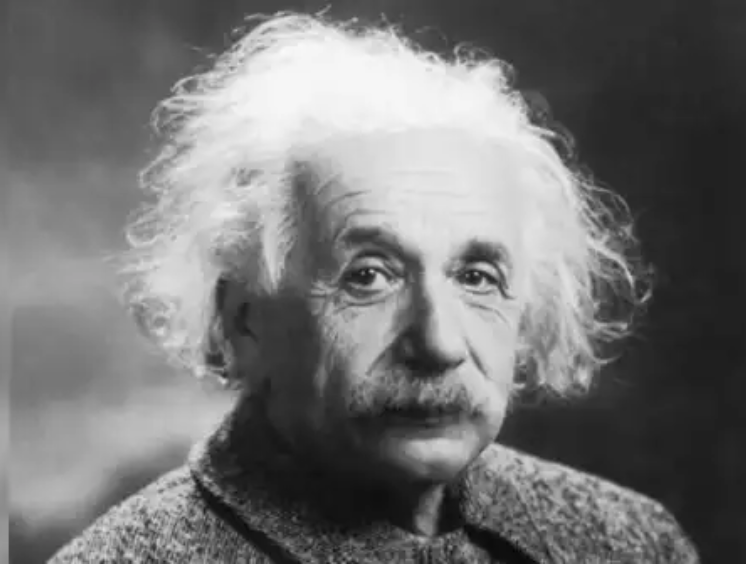
https://timesofindia.indiatimes.com/life-style/fashion/buzz/albert-einstein-style-icon-and-hair-style/happy-bday-albert-einstein-but-why-was-einsteins-hair-so-frizzy/photostory/51381109.cms

Science Versus Religion

The Roman Catholic church dominated western civilization for nearly 2 centuries. It was allied with the powers of civilization for most of that period and used that influence to preserve its institutional power. As the most successful organization in history, it was conservative, preserving its power. When “modernity” arrived circa 1500, it opposed the threats to its power and its opponents did their best to undermine the Church in every possible way. The Manichean story of “the bad Church and the good scientists” arose. Modern historians, philosophers, sociologists and specialists reject this story. However, this story has a strong hold on the modern imagination supporting a “materialist” view of reality. Let’s look at the 25 greatest scientific discoveries to see what they really say about the conflicts between a purely materialistic philosophy versus one that accepts that some form of supernatural or transcendent dimension of life is possible or likely.

There are many lists of the “greatest scientific discoveries”. I’m working from a nice summary of those lists.

1. Electromagnetism

Electricity and magnetism are two dimensions of a single immaterial, abstract, unobserved force. They can be measured and described by laws and equations that require advanced calculus. Non-material forces are essential to life. They could not be imagined by anyone prior to 1700. Advantage “immaterial forces”. Our modern economy is based upon this non-material dimension.

2. Laws of Gravity/Classical Mechanics

Nature is logical and can be described by equations! Newton created the possibility that everything can be described by mathematical laws. This undermined the prevailing Middle Ages view that embraced many active roles for the supernatural in daily life. This was a HUGE change in world views. Newton remained a Christian believer. He admitted that he had no idea how gravity worked across time and space or why it worked. Advantage materialism.

3. DNA as the Basis for Heredity

The chemical basis of life provided support to Mendelian genetics and Darwinian evolution. Life is based on chemicals. The reductionist view celebrated. Scientists offered lightning based chemical reactions that could have created the key amino acids naturally. The parallel with the newly evolving computer science world was truly amazing. Religious organizations mostly stopped opposing Darwinian evolution. Subsequent work challenged the idea that complex molecules like DNA could have evolved naturally. MIXED.

4. Heliocentric Model of the Solar System

The church opposed these innovative views. Opposed to common sense, without scientific evidence, a threat to theology, against some specific texts in scripture. The Church flubbed this one but eventually agreed that the details of astronomy are not an essential part of religious belief. Essential to consider the holistic, integrated nature of 1500 world views. Everything fit together nicely. Advantage materialism.

5. Periodic Table

All matter is based on a structure. Matter can be reduced to chemical atoms. The individual elements obey laws. God created the universe and declared that it was good. MIXED.

6. Evolution Based on Natural Selection

All of history COULD be based upon random variations. Darwin provided great evidence for instances where this had occurred. Professional biologists waited for 90 years to fully agree. Some religions embraced God as the designer of evolution or select changes like the emergence of men. Others opposed evolution completely. Advantage materialism.

7. X-Rays

Seeing through physical reality. Like magic. Advantage supernaturalism.

8. Relativity

Euclidean geometry and Cartesian coordinates are not exactly correct. Energy and matter are somehow deeply connected. Advantage supernaturalism.

9. Geology

The earth is much older than expected. It is subject to the laws of physics. Fossils support evolution, mostly, except for the bunching of new species. Advantage materialism.

10. Modern Drugs Like Penicillin

Science delivers results. Advantage materialism.

11. Circulatory System

MIXED.

12. Oxygen

Key individual elements can be isolated. Oxygen is the breath of life. MIXED.

13. Vaccinations

Power of biology. Materialism.

14. Radioactivity

Many elements are unstable! This can be described by probability functions. Advantage Supernaturalism.

15. Quantum Theory

The deep structure of reality is probabilistic. It is truly not “rational”. Advantage Supernaturalism.

16. Struture of the Atom

Protons, neutrons and electrons. Charged particles. A mini-solar system. SPDF levels for electrons. Probabilistic chances for positions of electrons. Supernatural.

17. Big Bang/Expanding Universe

Not a fixed, eternal structure. A beginning and possibly an end. Supernatural.

18. Microorganisms/Germ Theory

Life thrives at the microscopic level. MIXED.

19. Mendelian Genetics/Heredity

Mixed. Supporting logic for evolution.

20. Transistors

The flow of electrons and electricity can be managed. MIXED.

21. Human Anatomy

Identifiable organs. Later, the integration of many organs and systems. MIXED.

22. Cells

First, components of life and organs. Mostly well described by bio-chemistry. Then, questions about the components of cells and their evolutionary history. MIXED.

23. Speed of Light

The speed of light is fixed. It acts as a constraint on the universe. Time is not fixed. Matter, energy and the speed of light are intertwined. Supernatural.

24. Steam Engine

Mechanical marvel. Materialism.

25. Telegraph

Electricity and information can flow everywhere, through the air. Supernaturalism.

Summary

Galileo, Newton and Darwin led the way for a simple, deterministic materialism that rules out anything else. 7 of our 25 big discoveries mostly support this view. 9 have mixed evidence for a purely materialistic view versus one that allows for a transcendental dimension. 9 clearly point towards a supernatural dimension of some sort being very important. Electromagnetism, force fields. See-through X-Rays. Relativity of time, space, matter, light and forces. Probabilistic radioactivity. Spooky action at a distance of quantum mechanics. Light is both a wave and a particle? Atoms are not material; they are composed of subatomic particles that we cannot practically describe. Heisenberg uncertainty principle limits our knowledge at smaller scales. The universe appears to have a fixed beginning. The speed of light is fixed. Light is a wave and a particle. The universe is a crazy quilt of forces, particles, quantum pairs, subatomic particles, dark matter, dark energy, matter, energy and probability. Waves are everywhere. Lakes, radioactivity, electromagnetism, light.

We live life mostly as analog beings. We intuitively understand classical mechanics much better than modern physics, chemistry and biology. The many advances of physics in the last century are all quite distinct from a simple materialistic view of the world. The world is, perhaps, mainly immaterial, dynamic, probabilistic and unknown.

This does not provide strong evidence for a specific religious world view. It only shows that a purely reductionist, materialist world view is very unlikely to fully describe reality.

The New American Right, Daniel Bell, 1955

Daniel Bell was a sociologist and public intellectual throughout the post WW II era. His views on the emergence of the “Radical Right” as exemplified by Joseph McCarthy’s unexpected influence and impact are worth quoting extensively. Their pointed relevance to recent history is apparent. The quotes are from chapter 6 of “The End of Ideology”, 1960 which republished the first chapter of the earlier book.

https://en.wikipedia.org/wiki/Daniel_Bell

America in mid-century is in many respects a turbulent country. Oddly enough, it is a turbulence born, not of depression, but of prosperity. … brings in its wake new anxieties, new strains, new urgencies.

One important reason is the restraining role of the electoral system. These factors of rigid electoral structure have set definite limits on the role of protest movements, left and right, in American life. [until the Tea Party]

The “common man” is the source of ultimate appeal if not authority. Harrison won [in 1840], and the lesson was clear. Politics as a skill in manipulating the masses became the established feature of political life. The upper classes withdrew from direct participation in politics. The lawyer, the journalist, the drifter, finding politics an open ladder for advancement, came bounding up from the lower middle classes.

But while sectional politics has somewhat diminished, class politics has not taken its place. Instead, there has been the spectacular rise of pressure groups and lobbies. The multiplication of interests and the fractioning of groups … make it difficult to locate the sources of political power in the United States. … Does not mean, however, that all interests have equal power. This is a business society.

These lines of thought do not help us … to explain the emergence of the new American right wing, the group that S. M. Lipset has dubbed the “radical right” — radical because it opposes traditional conservatism, with its respect for individual rights, and because it sought to impose new patterns in American life. All this is dramatized by the issue of McCarthy and the communists. … It is difficult to explain the unchallenged position so long held by Senator McCarthy. It still fails to take into account the extensive damage to the democratic fabric that McCarthy and others were able to cause. … Reckless methods disproportionate to the problem. … compulsive Americanism … loyalty oaths … wild headlines … the suspicion and miasma of fear that played so large a role in American politics.

Calling him a demagogue explains little. McCarthy’s targets were intellectuals, especially Harvard men, Anglophiles, internationalists, the Army. Important clues to the right-wing support … a strange melange … soured patricians … whose emotional stake lay in a vanishing image of a muscular America defying a decadent Europe … the “new rich” — the automobile dealers, real estate manipulators, oil wildcatters — who needed the psychological assurance that they … had earned their own wealth, rather than (as in fact) through government aid, and who feared that “taxes” would rob them of that wealth … the rising middle class strata of various ethnic groups.

The central idea of the status politics conception is that groups that are advancing in wealth and social position are often as anxious and politically feverish as groups that have become declasse. … Seek more violently than ever to impose on all groups the older values of a society which they once represented. This rise takes place in periods of prosperity. These political forces, by their very nature, are unstable.

There are several consequences to the changed political temper in American life, most notably the introduction on a large scale of “moral issues” into political debate. By and large, this is new. Throughout their history, Americans have had an extraordinary talent for compromise in politics and extremism in morality. In matters of manners, morals and conduct – particularly in the small towns – there has been a ferocity of blue-nose attitudes unmatched by other countries. The sources of the moralism are varied. There has been a middle class culture. Moral indignation … characteristic of religions that have abandoned otherworldly preoccupations and concentrate on thisworldly concerns. Piety gives way to moralism.

This moralism, itself not unique to America, is linked to an evangelicalism that is unique. … the peculiar evangelicalism of Methodism and Baptism, with its high emotionalism, its fervor, enthusiasm, and excitement, its revivalism, its excesses of sinning and high-voltage confessing, has played a much more important role. The revivalist spirit was egalitarian and anti-intellectual. The evangelical churches wanted to “improve” man, whereas the liberals wanted to reform institutions. This moralism … would be imposed with vehemence in areas of culture and conduct – in the censorship of books, attacks on “immoral art”, etc., and in the realm of private habits; yet it was rarely heard regarding the depredations of business or the corruption of politics.

The moralizing temper had another consequence: the reinforcement of the “populist” character of American society. While in American culture the small town has been “defeated”, in American politics it has still held sway. So long as world experiences could be assimilated into the perceptions of the small town … the dichotomy of politics and moralism could prevail. But with the growth of international ideologies, the breakdown of market mechanisms, the bewildering complexities of economic decisions … the anxieties of decision-making became overwhelming.

Americans, in their extraordinary optimism, find it hard to stand defeat. The cry of betrayal and charge of conspiracy is an old one in American politics. These men were “terrible simplifiers”. All politics was a conspiracy, and at the center of the web were the “international bankers” and “the money changers”.

An unsettled society is always an anxious one and nowhere has this been truer than in the United States. In an egalitarian society, where status is not fixed … the acquisition of status becomes all important, and the threats to one’ status anxiety provoking. The socio-psychological attitude that [Gunnar] Myrdal discerned in the South has been equally characteristic of the immigrant pattern in American life. As each successive wave of people came over, they grouped together and viewed the next wave with hostility and fear. In the 1890’s …there was an effort to create a ‘high society’ with its own protocol and conventions.

But the fact that the arena of politics [1950’s] was now foreign policy allowed the moralistic strains to come to the fore. While domestic issues have been argued in hard-headed, practical terms … foreign policy has always been phrased in moralistic terms.

Political debate, therefore, moves from specific clashes of interest, in which issues can be identified and possibly compromised, to ideologically tinged conflicts which polarize the various groups and divide society. The tendency to convert concrete issues into ideological problems, to invest them with emotional color and high emotional charge, is to invite conflicts which can only damage a society. It has been one of the glories of the United States that politics has been a pragmatic give-and-take rather than a series of wars-to-the-death.

Democratic politics means bargaining between legitimate groups and the search for consensus. This is so because the historic contribution of liberalism was to separate law from morality.

1955 Recap

American politics between 1870 and 1950 mostly focused on classic economic interests and ideologies. Mainly conservative dominance in the 19th century, interrupted by some “progressive” reforms at the turn of the century, a return to business rule and then two decades of FDR’s “New Deal”. Americans embraced democracy and modestly regulated capitalism, rejecting socialism/communism and totalitarianism/fascism. Bell argued in the 1950’s that we had reach the “end of ideology”, much like Fukuyama argued we had reached “the end of history” 40 years later. The Soviet communist option had been discredited in many ways. Politics and intellectuals would adapt to find new dimensions of differences. The “radical right” was one option that Bell described as new, different than the core conservative politics of the last 75 years but clearly leveraging existing factors in American politics.

Today

Bell’s key insight as a sociologist is that groups of people have social, political and economic interests and pursue them. Marx’s simplistic economic determinism had proven to be unfounded, and his solutions had been disasters. Yet … individuals and groups of individuals are often driven by “status” first, not power or wealth. He highlighted the role of groups with new, unstable, threatened or declining status as very important.

The international economic competition revolution of the 1970’s and the “greed is good” cultural revolution of the 1980’s reflect the transformation of America into a meritocracy. Firms and organizations felt great pressure to perform so they did a much better job of defining needs, recruiting, socializing, retaining and compensating those who add the most value. They also gave up on their paternalistic roles and embraced the need to make economically rational decisions even when they conflicted with other factors and stakeholders. These changes obviously effected blue collar workers, but they also challenged supervisors, professionals, managers and executives. Job security and status security were shredded.

We now have a much, much more anxious society. This is obvious in rural America, the rust belt, and “fly over” country. But it is nearly as important on the coasts, in the growing Sunbelt cities and in the suburbs. The relative winners are preserving their gains. The modest middle-class winners are very insecure. The bottom one-third have largely lost hope, are angry and easily prodded to take a “victim” perspective.

Bell says that unstable groups can be manipulated by politicians. He describes the playbook. Populism, emotions, morality, religion, polarization, targets, anti-elites, anti-intellectuals. He notes that these factors apply to individuals at all economic levels of society. Individuals want to have a solid social status so that they can enjoy their wealth, power and lives. Trump’s offer to “make America great again” is a promise to provide this security against the various threats. Bell doesn’t think this approach is effective in the long run because mere promises will not deliver the promised results.

Big Picture Thoughts

Individuals require an ideology or a religious belief in order to be relatively secure within a true meritocracy. A revival of mainstream religious belief and participation is overdue in America. A purely secular worldview that provided security from pursuing one’s talents and rejecting economic and status goals might help some individuals.

The Trump coalition of bottom two-thirds social concerns with top 5% economic concerns is unstable in the long-run. “We won’t get fooled again”. “Meet the new boss, same as the old boss”. There are inherent, deep divisions between these two groups. The top 5% can thrive in a world with very limited public services, the bottom two-thirds cannot. The top 5% cannot allow the extreme Trump policies which threaten their wealth and status (anti-trade, lost allies, anti-universities, anti-media, irrational immigration policies, deficit spending/inflation, huge industrial policy investments, imperial president, undermined rule of law). They support human rights, globalism, DEI, minority interests, global health, global environment, global finance. Trump has managed to combine judge appointments, deregulation and tax cuts to maintain his minority coalition. It is only the weakness and strategic incoherence of the Democratic Party’s policies that has allowed this to succeed.

America has continued to grow wealthier. Its economy continues to be the envy of the world. The pie may be large enough to promise the 5% that they can keep their share while also promising the bottom two-thirds that we can run a society with a true safety net and some sharing of incremental income and wealth.

Americans may be ready to “take back” their government. Require civility. Prioritize real issues. Neutralize election policies. Set minimum character standards. Reward compromise and results. Require real majorities

Trump’s Tiny Tent: Foreign Policy

https://www.washingtonpost.com/news/powerpost/wp/2017/03/06/here-are-the-photos-that-show-obamas-inauguration-crowd-was-bigger-than-trumps/

Trump’s 2017 inauguration crowd was only one-third the size of Obama’s in 2009. I was there in 2009. The wind chill was around 10 degrees. Trump’s REAL and deep foreign policy support among Republicans is similarly quite small.

(1) Fiscal Conservatives, Balanced Budget Republicans

Trade wars, attacking allies and driving an active industrial policy all undermine the US economy, resulting in lower GDP, lower tax revenues, higher spending, a greater budget deficit and higher inflation. Fiscal conservativism was recently the hallmark of the Republican party. It helped to unify the various flavors of conservatism. Everyone could agree on a balanced budget amendment, no trade-offs of higher taxes for increased spending, and threatening a government shutdown and possible debt default in order to force congress and the president to address the budget deficit and the growing federal debt. The real situation is worse today, with larger debt as a share of GDP, a forecast increase and a large annual budget deficit during a time of 4% unemployment. Trump’s headline foreign policies threaten the economy. Despite the Federal Reserve Bank’s reduction to the benchmark federal funds rate, long-term interest rates have drifted upwards. Will a Paul Ryan re-emerge?

(2) Corporate America

US based multinational corporations have thrived in the 75-year post-war era. They benefit greatly from the opportunities that free trade provides. Tariffs, trade wars, restrictions, industrial policy and presidential interference all reduce profits and increase risks. Trump may reduce corporate taxes and regulations, but international tariffs and regulations will hurt corporate bottom lines. The net benefits may quiet some corporate leaders. Others will incur greater harm and work to protect their interests.

(3) Agriculture/Rural America

American agriculture is a world class exporter. It thrives under consistent patterns of free trade. Trade retaliation is a big threat to agricultural revenues, profits and land values. Production agriculture is just 1% of US GDP, but it exceeds 5% of GDP in 1,130 American counties, averaging 14.11% of the value of production in this one-third of America geographically. In the other two-thirds of the country, agriculture accounts for just 0.36% of GDP, so it’s politically irrelevant. American agriculture has always been disproportionately effective in politics. Trade wars may soon have one-third of American counties up in arms.

(4) Philosophical Conservatives

Proven cultural and institutional frameworks are best. If it ain’t broke, don’t fix it. Support countries with similar cultural institutions and values. Protect the interests of the wealthy and powerful against the claims of the fringe interests. Isolationism, protectionism, and “do it yourself” foreign policy are unproven and risky strategies. The philosophical conservatives enjoyed a nice run from William Buckley’s 1950’s through the rise of the “tea party” in response to the Great Recession. They were amongst the first and strongest opponents of Trump’s views and have led the “never Trump” movement. They were never a large share of the party, but they provided a mental framework that allowed the components to work together and the conservative think tanks and media to earn a degree of respectability in the court of intellectual public opinion. Trump’s character challenges and blatant transactionalism and individualism cannot be reconciled with their views.

(5) Wall Street/Banking

America dominates international finance and banking. Raising capital, making markets, advising firms, and making risky investments. The global financial system works for Wall Street. Rapid and unpredictable changes to the “rules of the game” increases risk levels and makes global investments harder to plan, finance and execute.

(6) Hawks/Neoconservatives

Might makes right. Don’t fall for ideals. This group agrees with Trump on basic principles but can’t understand why anyone would undermine the highly valuable postwar alliances that the US has developed with NATO and individual countries because “they don’t pay enough” or “they win too much in trade”.

(7) Economic Free Marketers

True believers in capitalism and free markets see it as the best way to create and preserve value with the added side bonus of protecting individual liberty. Tariffs and active industrial policy are the traps that idealistic Democrats fall into. Republicans know that only the market, in the end, will deliver prosperity and liberty. Trump’s preference for a very active foreign economic policy and a relatively active and intrusive domestic economic policy does not match this group. They can embrace his general low tax, low regulation, only results matter views.

(8) Libertarians

Same as above on economic policy issues. There is a huge risk of the empowered centralized state, stripped of checks and balances, turning around and threatening individual liberties. A centralized totalitarian or fascist state is a huge threat that must be avoided at all costs. Trump has a libertarian streak, but he does not embrace libertarian principles.

(9) Main Street Republicans/Professional Class

This group wants to ensure that the hard-working professionals, managers and small business owners that add value for Americans overall continue to receive their fair share of the rewards. Trump’s “activist” foreign policy puts these rewards at risk. Firms and investors, large and small, will win or lose based upon imposed tariffs, regulations and industrial policies. The economic churn will be much faster, greater and random. A significant number of previously secure upper middle-class professionals will incur significant losses in a much more dynamic Schumpeterian age of creative destruction. The general demonizing of the elites, bureaucrats, experts, intellectuals, scientists, universities, teachers, media, economists, military leaders, pundits, market researchers, pollsters, high-tech leaders, foreign policy community, NGO’s, public health, etc. is a big negative for this group which naturally found a home in the Republican party in the post-war era. Trump’s belief in the “great man” theory of history is at odds with the mildly progressive culture of suburban, upper middle-class America.

(10) American Patriots/Neoconservatives

The US fought the “cold war” against communism for 50 years. Trump thinks that Putin is just another global competitor. Trump’s claim that “Putin’s actions are no better or worse than America’s historically” sounds like something Bernie Sanders might claim! He’s not worried about the communist views of China, North Korea or Vietnam. He’s ready to negotiate. He opposes the “communist” dictators in Cuba and Venezuela. There is no defense of the American values of democracy, equality, free markets or human rights in Trump’s approach. It’s simply America versus all other nations. Tactically and politically, Trump has repositioned China as the new great enemy. Historically, Americans fought the world wars, and the cold war based on the principles of democracy, liberty, freedom, individual values, capitalism and human rights. Trump wants to disengage from Europe and the Middle East while increasing assets to address China, just like Obama. Some patriots just need an enemy, others want to defend principles.

(11) Social/Cultural/Values/Religious Conservatives

Many cultural conservatives have deep, fundamentalist religious beliefs. Their views are “right” and other views are “wrong”. Trump’s foreign policy is purely transactional. It doesn’t assert that the western or Christian world view is better, preferred or right. He’s not following Bush, Jr. to provide the world with the benefits of American political, economic and cultural systems. He just says that the American people, perhaps with their Christian/western opinions, are worth defending aggressively. It defends some dictators in Russia, Turkey and Hungary who do not share historical American values. Trump’s overall pragmatic, transactional, economics first views don’t square well with cultural conservatives who place moral and religious values first. Trump is delivering a set of Supreme Court and federal justices willing to overturn activist liberal judge rulings and to support legislation passed by culturally conservative states and the US Congress. He’s willing to poke at other cultures, races and nationalities as being “others”, not as good as the true Americans. Younger evangelicals seem less willing than their parents, who have been fighting the “culture wars” for 50 years, to embrace Trump at a transactional level and give up their ideals. Trump’s anti-immigrant posture, protecting America from the threat of the “others” does resonate with some cultural conservatives. Net, net, Trump is not losing support from this group due to his international policies.

(12) Victims of Economic and Social Change

This group clearly supports Trump’s populist diagnosis and prescriptions. The loss/decline of American industry was due to international traitors and coconspirators who undercut the owners and workers. It was all avoidable. Economic, banking, university, media and political elites conspired to undermine the domestic virtuous workers and owners in order to benefit “others”: other countries, religions, races, cultures, classes and interests. The story is just like Hitler’s description of the Weimar Republic leaders. The country was sabotaged by traitors. This is a very powerful story. Many Americans today buy this story. For how long?

Summary

Politics is all about telling a story and managing coalitions. Ronald Reagan told a very attractive story that wove together the various strands of conservatism into a coherent narrative. This story reframed American politics. Presidents Clinton and Obama confirmed the core conservative story, just like Eisenhower and Nixon confirmed the core New Deal story earlier. Newt Gingrich triggered both parties to adopt a polarized world view.

Trump leveraged this situation to attract economically and culturally disadvantaged individuals to embrace a greatly reformulated conservative, Republican, red, populist world view. Trump’s international relations policies don’t really fit well with the historical views of the Republican party. It remains to be seen if these mental conflicts will undermine his political support as he is able to implement them and deliver results. He is “riding on the coat tails” of broad popular support for “conservative” solutions to our many challenges.

International affairs have been secondary priorities for the last 50 years. They were top priority in the quarter century after WWII. Trump’s emphasis may make them top priority once again!

Mad as Hell and We’re Not Going to Take It

https://www.kent.edu/may-4-historical-accuracy

May 4, 1970. The world changed when 13 student protestors were shot and 4 killed by Ohio State National Guardsmen at Kent State University following the escalation of the “Vietnam War” into Cambodia.

Cleveland had experienced civil disorder in the hot summer of 1966 with the “Hough Riots”.

https://case.edu/ech/articles/h/hough-riots

https://en.wikipedia.org/wiki/Hough_riots#:~:text=The%20Hough%20riots%20were%20riots,and%2050%20people%20were%20injured.

In the 1968 election, George Wallace won 1/9 Ohio votes, tipping the state to Richard Nixon.

https://www.ohiosos.gov/elections/election-results-and-data/1960-1969-official-election-results/1968-general-election-overview/

In the hot summer of 1969, the Cuyahoga River “caught fire” and gained national attention.

https://www.smithsonianmag.com/history/cuyahoga-river-caught-fire-least-dozen-times-no-one-cared-until-1969-180972444/

In November, 1969, the Cleveland Plain Dealer reported the atrocities of the My Lai massacre.

https://en.wikipedia.org/wiki/My_Lai_massacre

Governor Rhodes, who oversaw the state guard actions at Kent State, served for 16 years as the governor of Ohio from 1963-71, interrupted by constitutional limits, and then from 1975-83.

https://en.wikipedia.org/wiki/Jim_Rhodes

Carl Stokes was elected as mayor of Cleveland and served from 1967-71 as the first African-American mayor of a major US city.

https://case.edu/ech/articles/s/stokes-carl-b

He was followed by Republican Ralph Perk.

https://en.wikipedia.org/wiki/Ralph_Perk

Throughout the 1950’s, 1960’s and 1970’s, Cleveland was a leading venue for the growth of “rock ‘n roll”. Counterculture, but not too much.

https://www.cleveland.com/metro/2017/01/birth_rise_of_rock_n_roll_in_c.html

https://en.wikipedia.org/wiki/Upbeat_(TV_program)

https://en.wikipedia.org/wiki/CKLW

Like most major cities, Cleveland had two major daily newspapers, many radio stations and 3 network tv stations in the post-war era. Dorothy Fuldheim was a pioneering woman journalist who served throughout this period. She challenged the Kent State shootings.

https://en.wikipedia.org/wiki/Dorothy_Fuldheim

Personal View

I grew up in a small town of 4,000 people about 30 miles east of Cleveland, dominated by the Cleveland media. As a youngster, I delivered newspapers for the 2 big Cleveland and 2 local printers. Cleveland saw itself as a very major US city. 5th largest nationally in 1920. 8th largest in 1960. Cleveland was a major industrial supplier of the WWII war effort. It’s corporations greatly benefited from the post-war global industrial expansion. They struggled to face the 1970 challenges from international (Japanese) competition, environmental regulations, labor power/regulations, technological changes (IT, process), and consumer/retailer power changes.

The Cleveland economy was stagnant in the 1960’s and declining in the 1970’s. Locals supported the civil rights movement but recoiled from the Hough riots. The world was changing faster than the local economy and thought leaders could digest in 1969. With Kent State, the population and political leaders turned inward. The students were wrong. The guard did its job. A majority agreed. A substantial minority disagreed.

As a country we remain very divided, 54 years later.

The film “Network” expressed this passionate viewpoint in 1976. Economic and cultural changes were so great that people could not digest them. The difficulties of the 1960’s revolution continue 50 years later. Left and right both struggle with our situation today.