Civility is a set of behaviors based upon the seven commonly held values of: human dignity, respect, acceptance, intentionality, responsibility, constructiveness and public-spiritedness. A social, political and economic society must have some core beliefs, norms and behaviors. The modern renaissance of Civility attempts to define the beliefs, norms and behaviors so they can be shared and promoted. We need to be confident that we know what Civility is, how we should behave, how/why we should influence others and why the underlying principles make sense.
Acceptance and Inclusion Defined
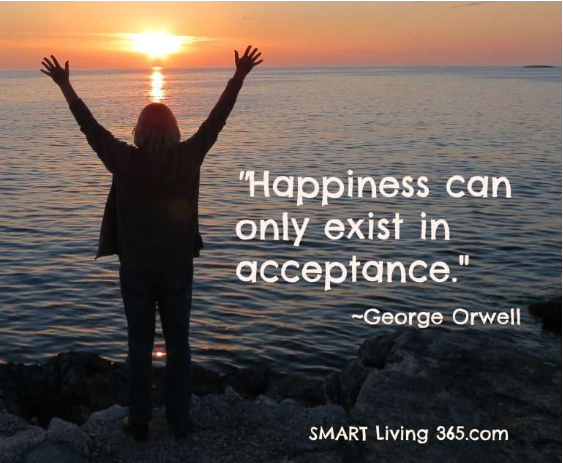
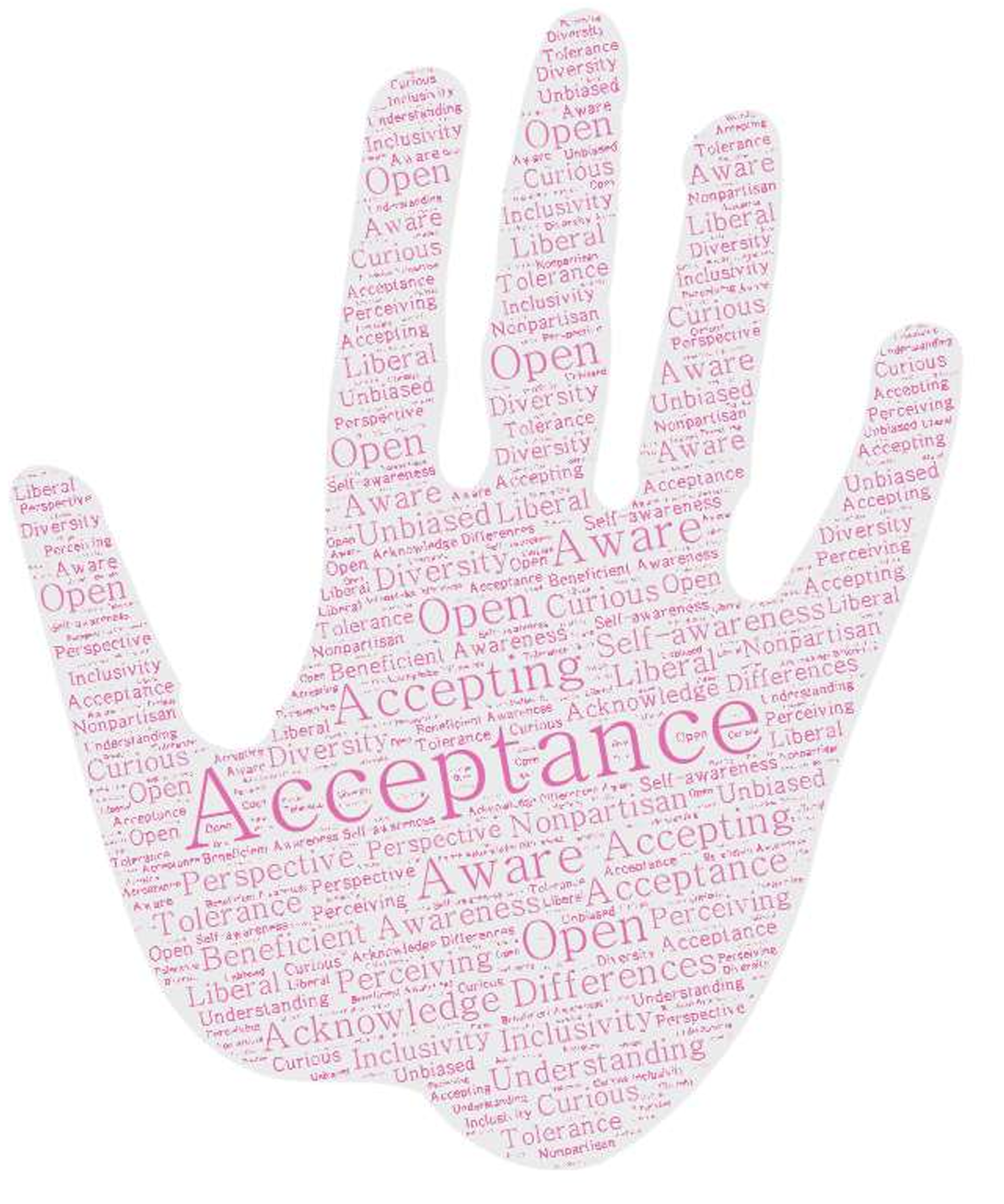
Acceptance involves tolerating, respecting, and acknowledging differences. Acceptance is being open, tolerant, non-discriminating, nonjudgemental, understanding and minimizing prejudices. It is a habitual state of mind. The differences can be personal or group characteristics, beliefs, behaviors or identities.
Inclusion is acting on the value of acceptance. It includes being present, supporting others, choosing welcoming language and behaviors and preventing or reducing social exclusion.
Inclusion is primarily shown by intentionally creating positive social environments where all individuals are welcomed and feel a sense of belonging. Individuals are respected, heard, accommodated, and supported. They feel safe, trusted and free to be authentic. They are encouraged to participate, contribute and thrive.
Acceptance and inclusion help individuals to more effectively interact with others, communicate, trust, bond, listen, center, and build awareness and community.
We emphasize “acceptance” in order to avoid the political differences regarding “inclusion” in the DEI abbreviation. Acceptance and inclusion go “hand in hand” and are necessary foundations for embracing Civility as an idea and a set of behaviors.
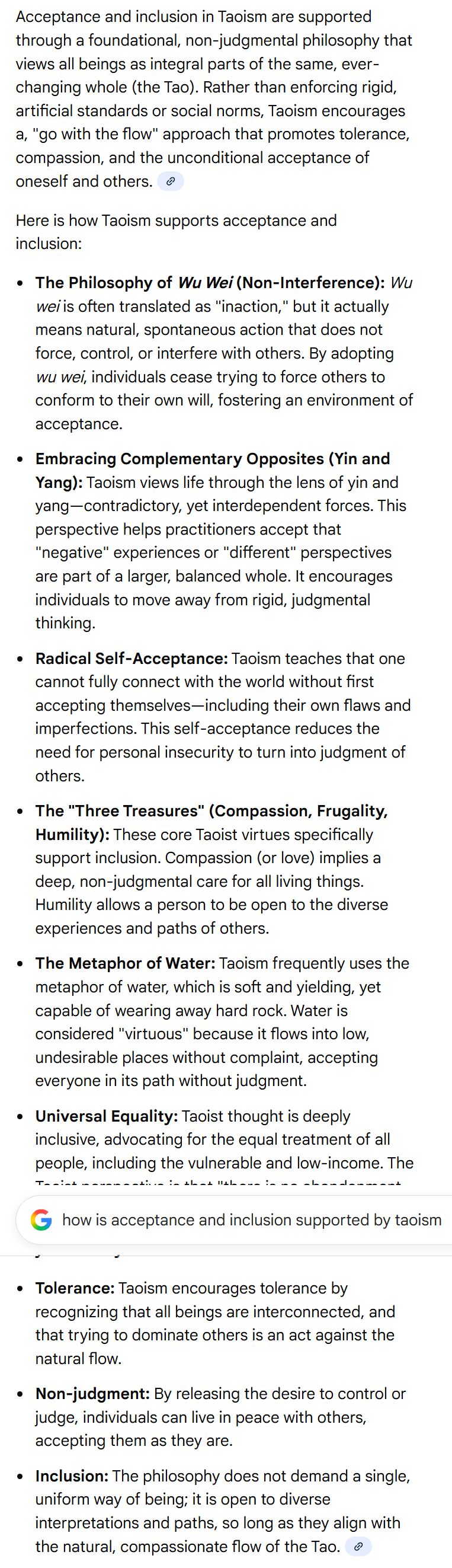
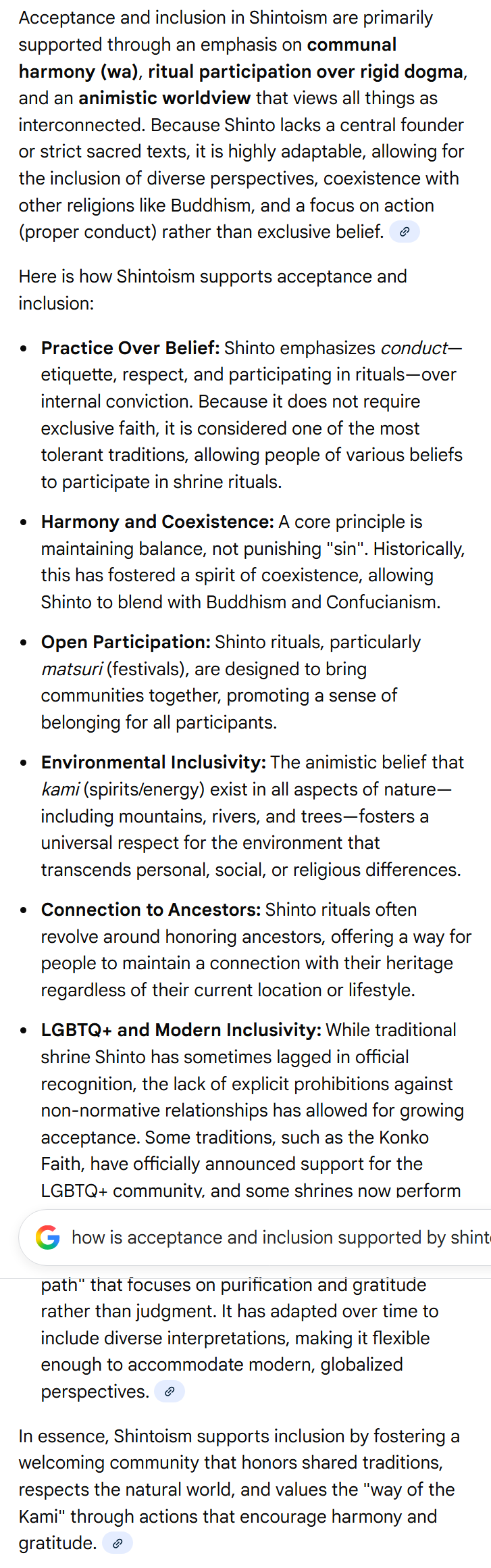
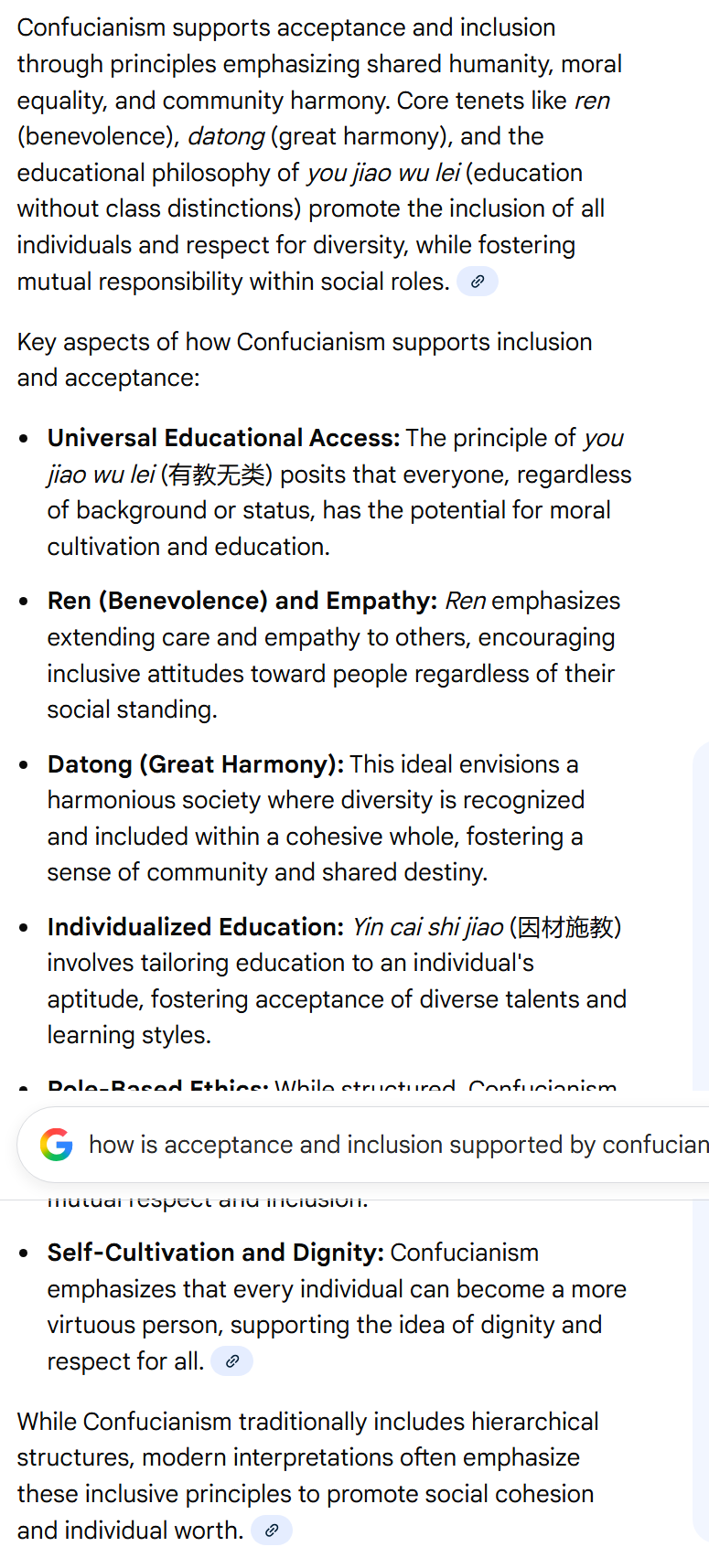
Acceptance and inclusion are supported by the major world religions.
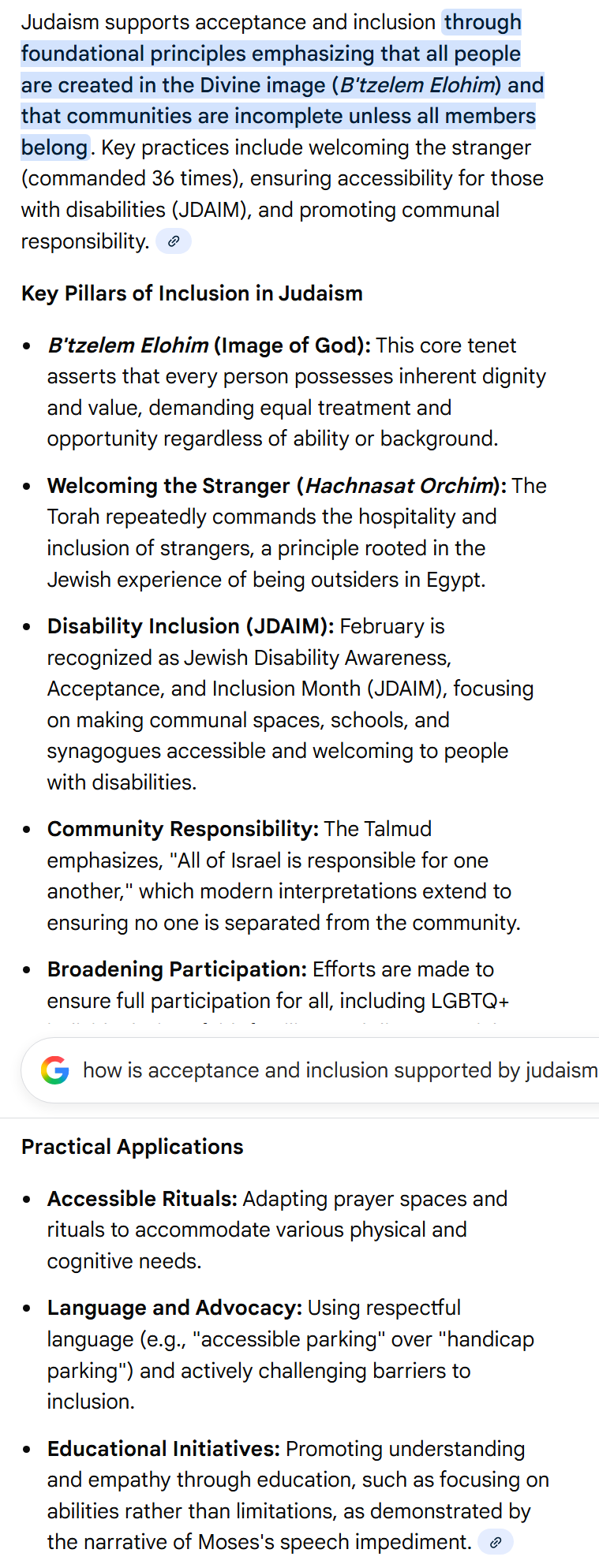
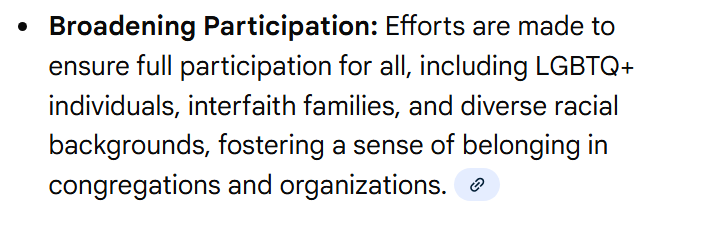
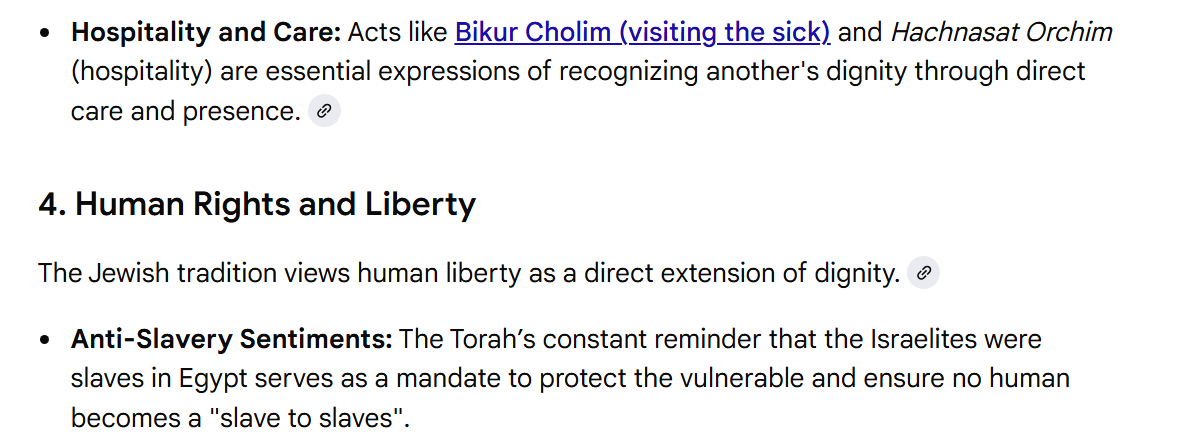
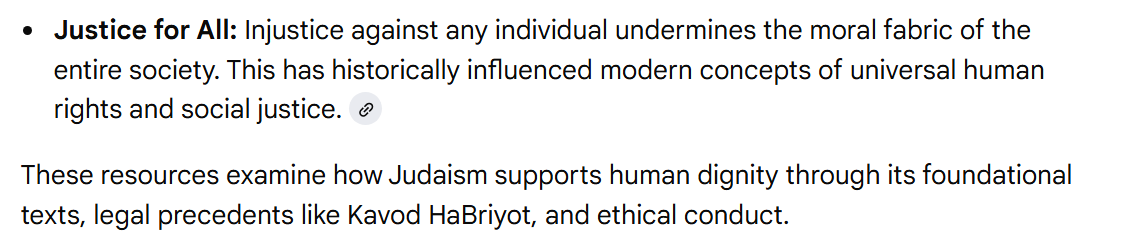
Judaism (Google AI)
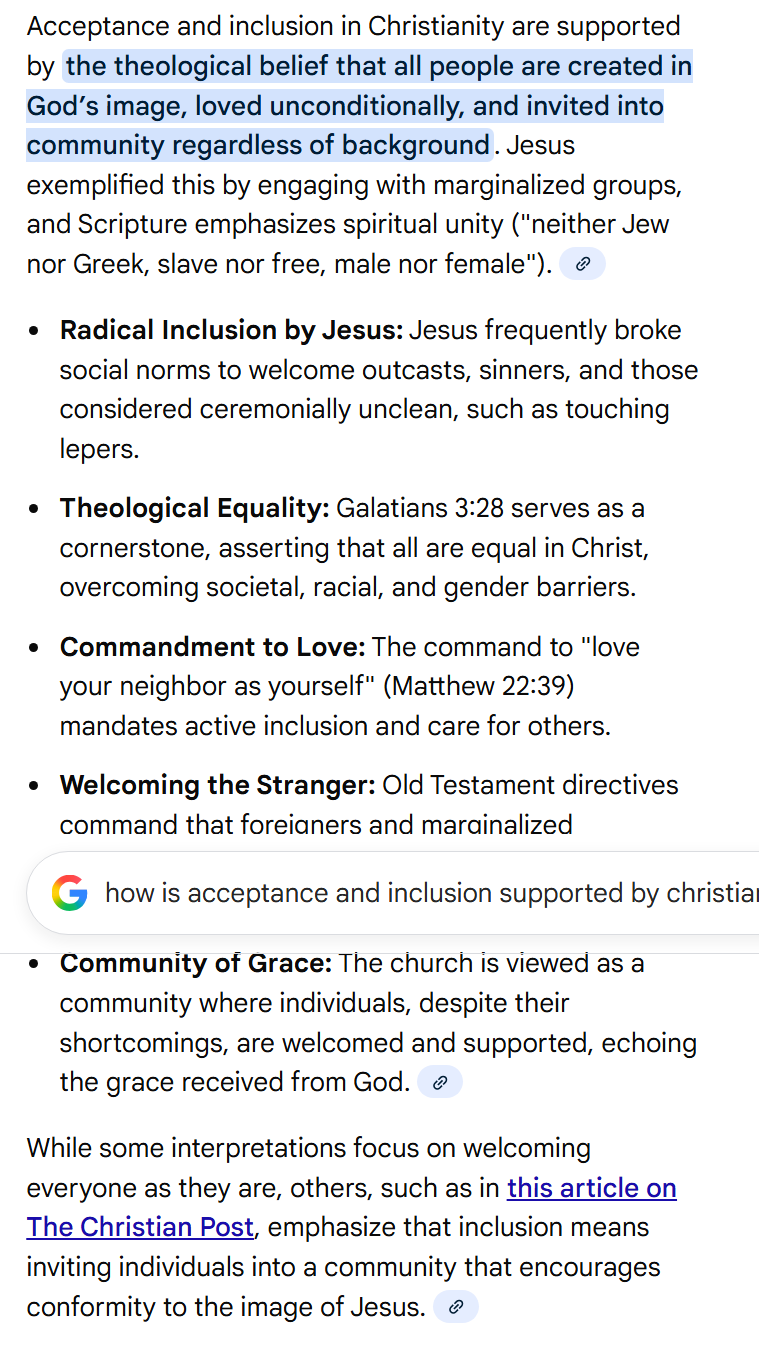
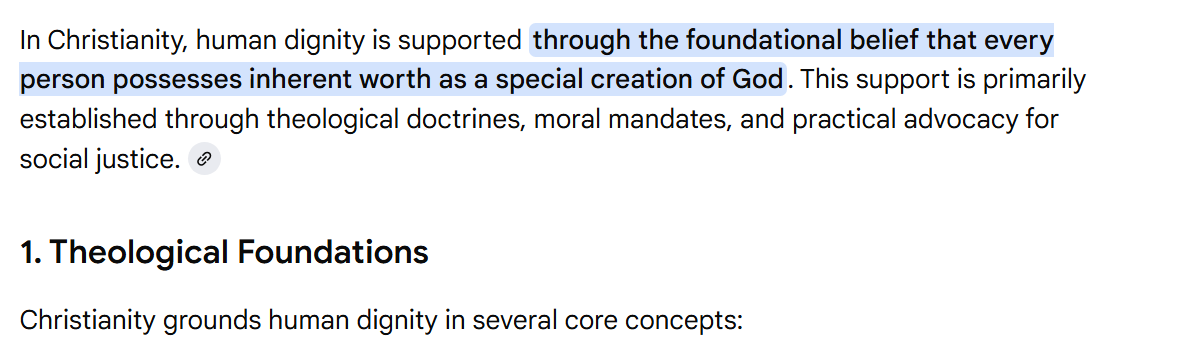
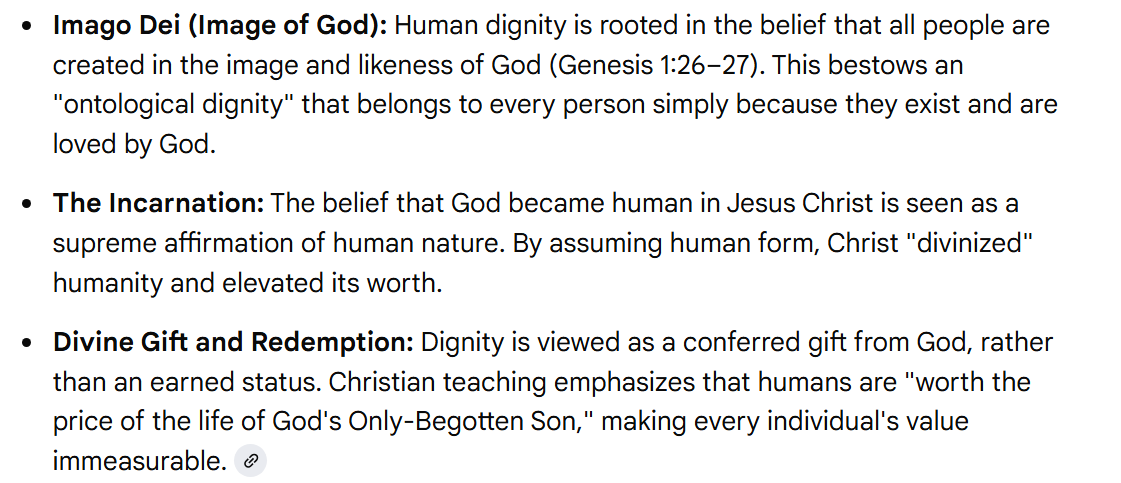
Christianity
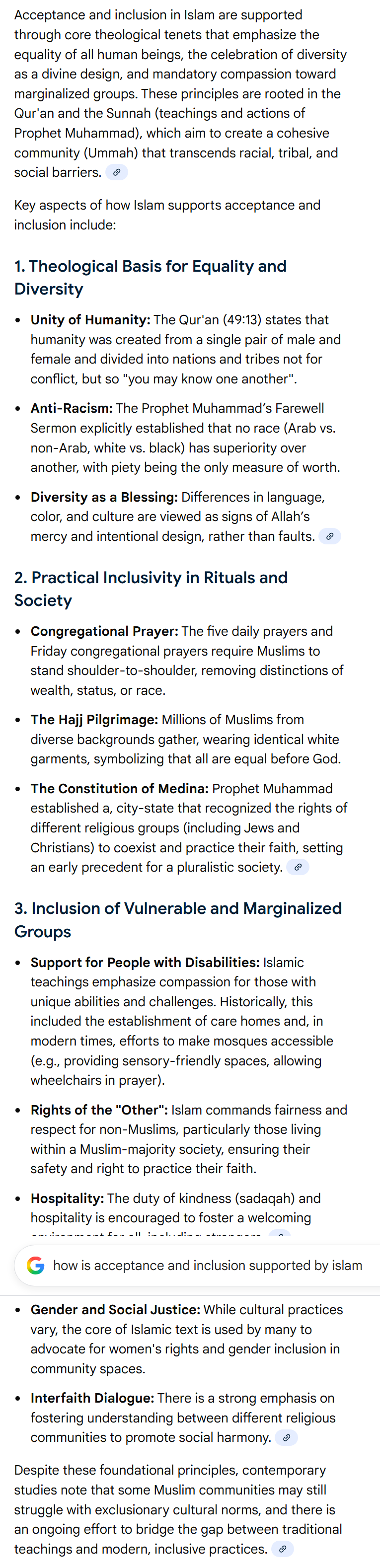
Islam
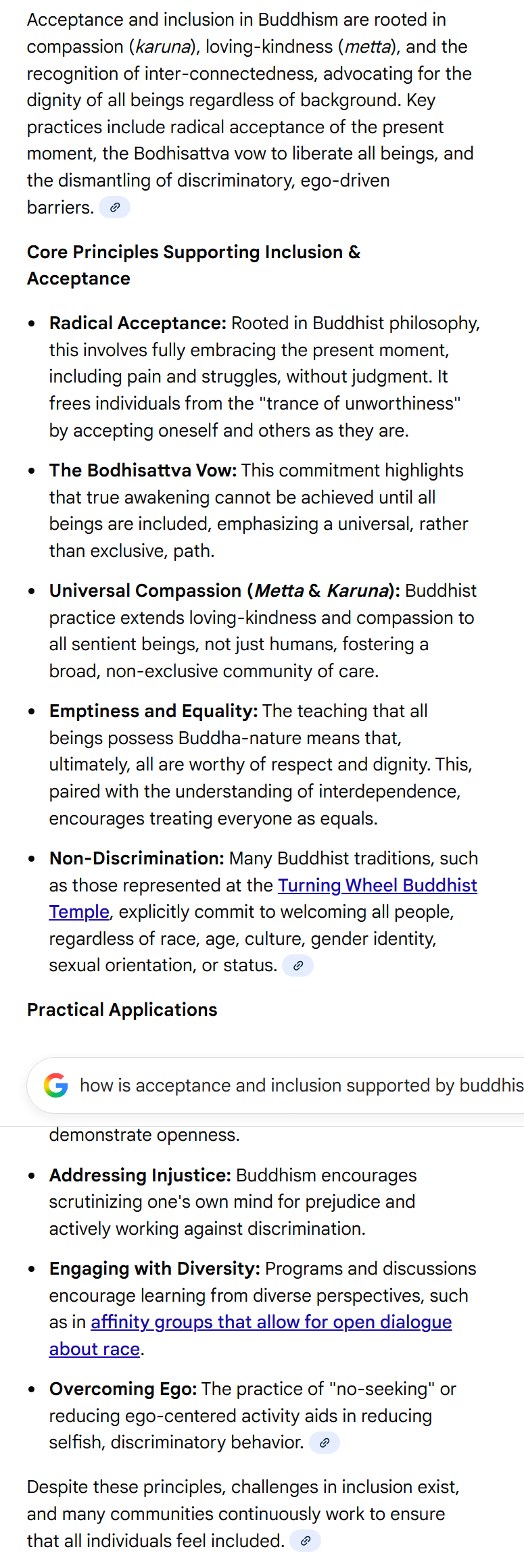
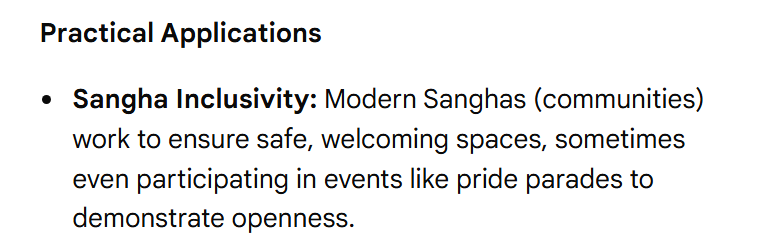
Buddhism
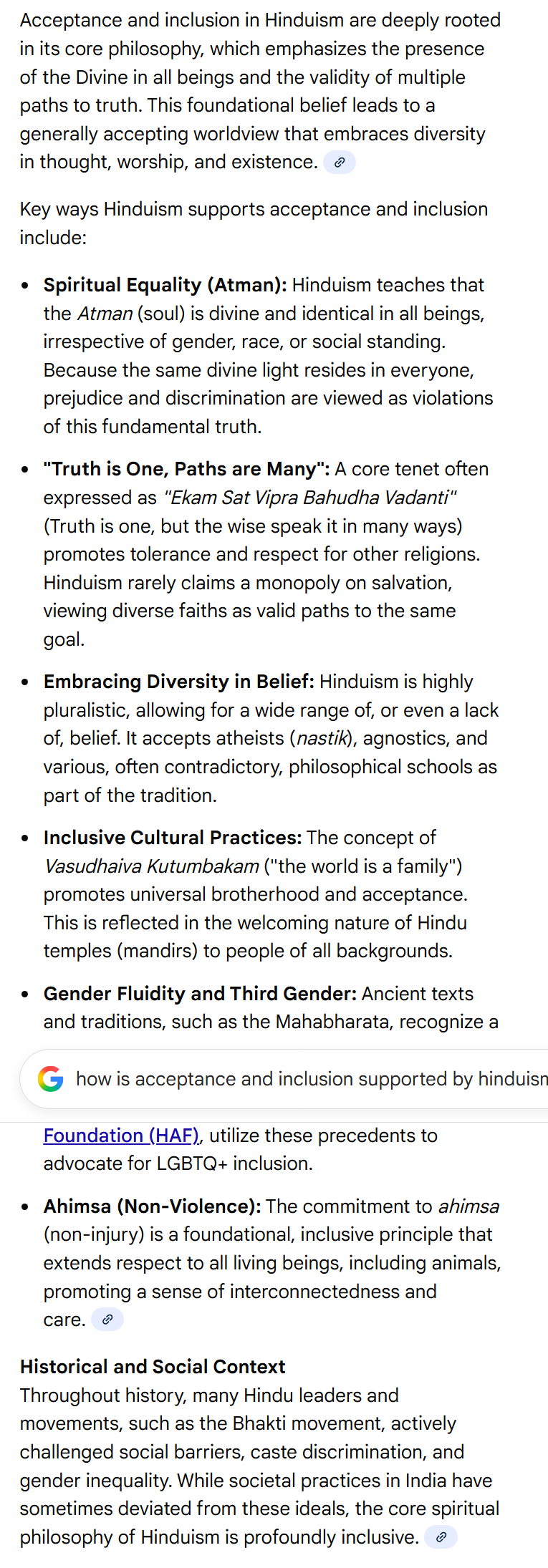
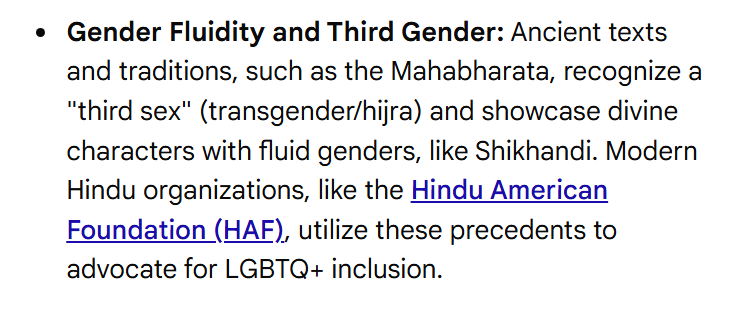
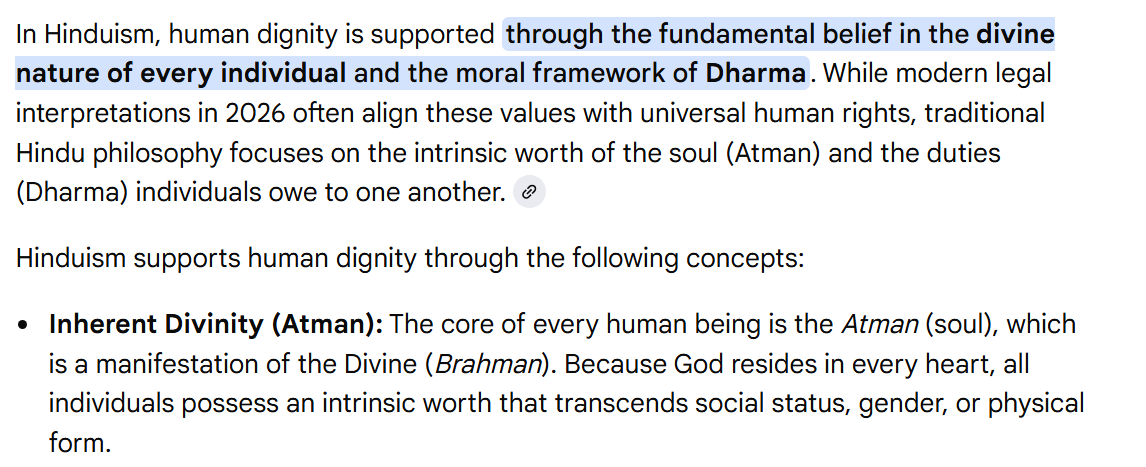
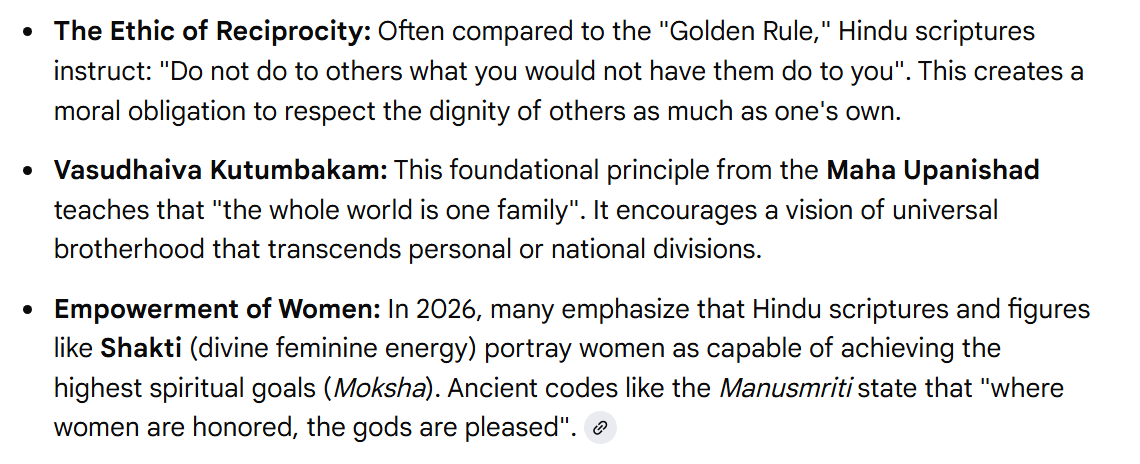
Hinduism
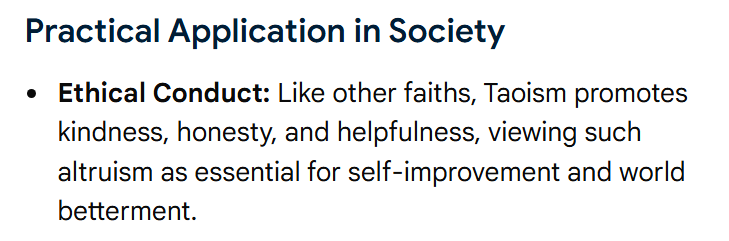
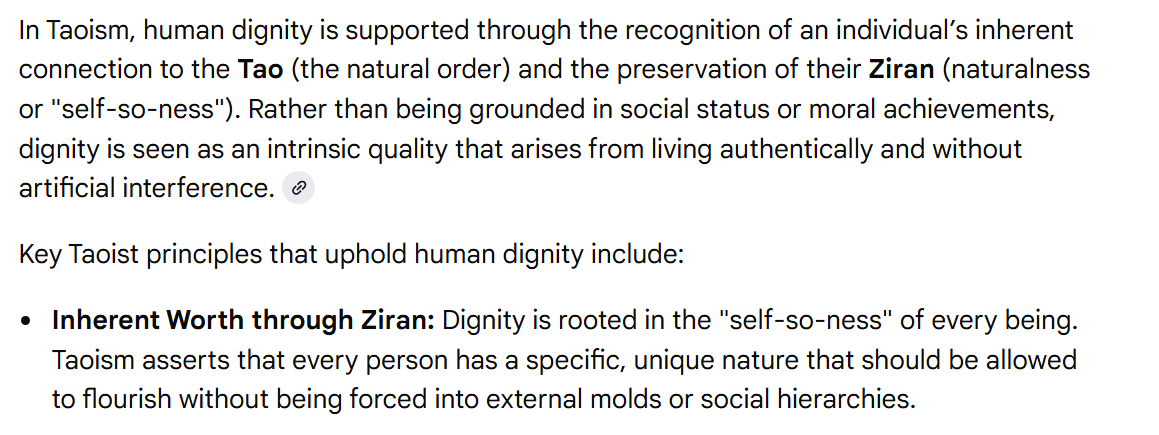
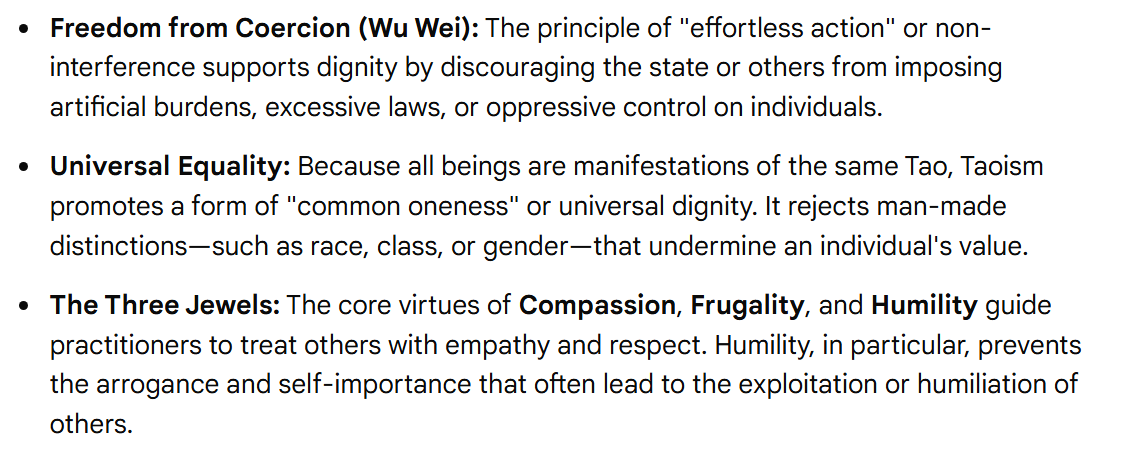
Taoism
Shintoism
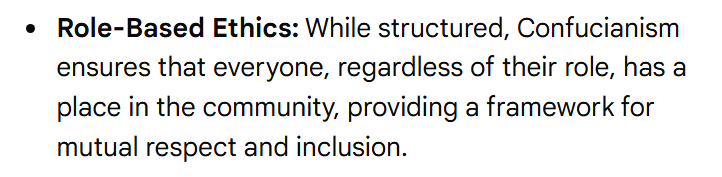
Confucianism
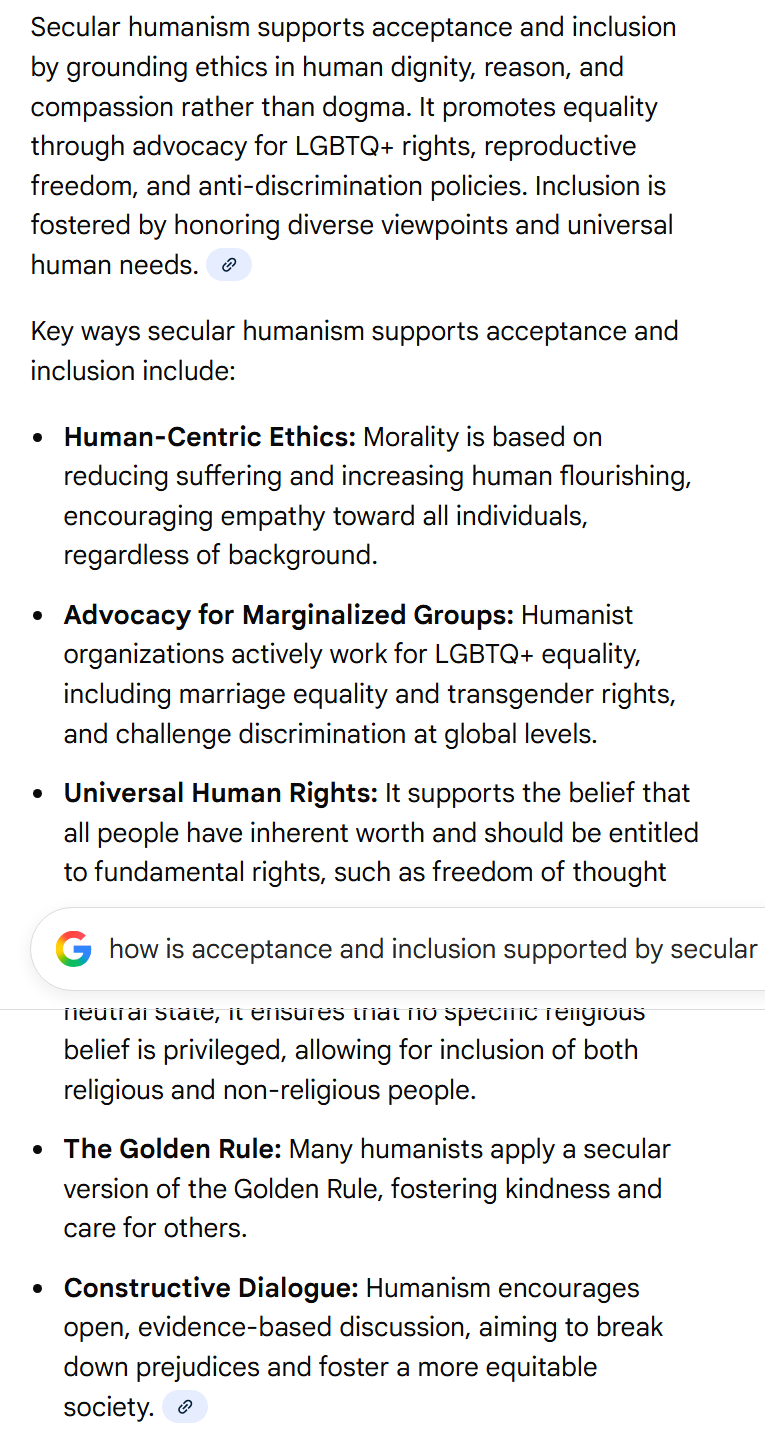
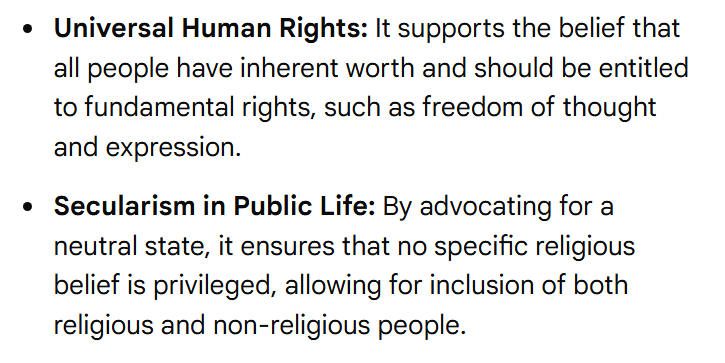
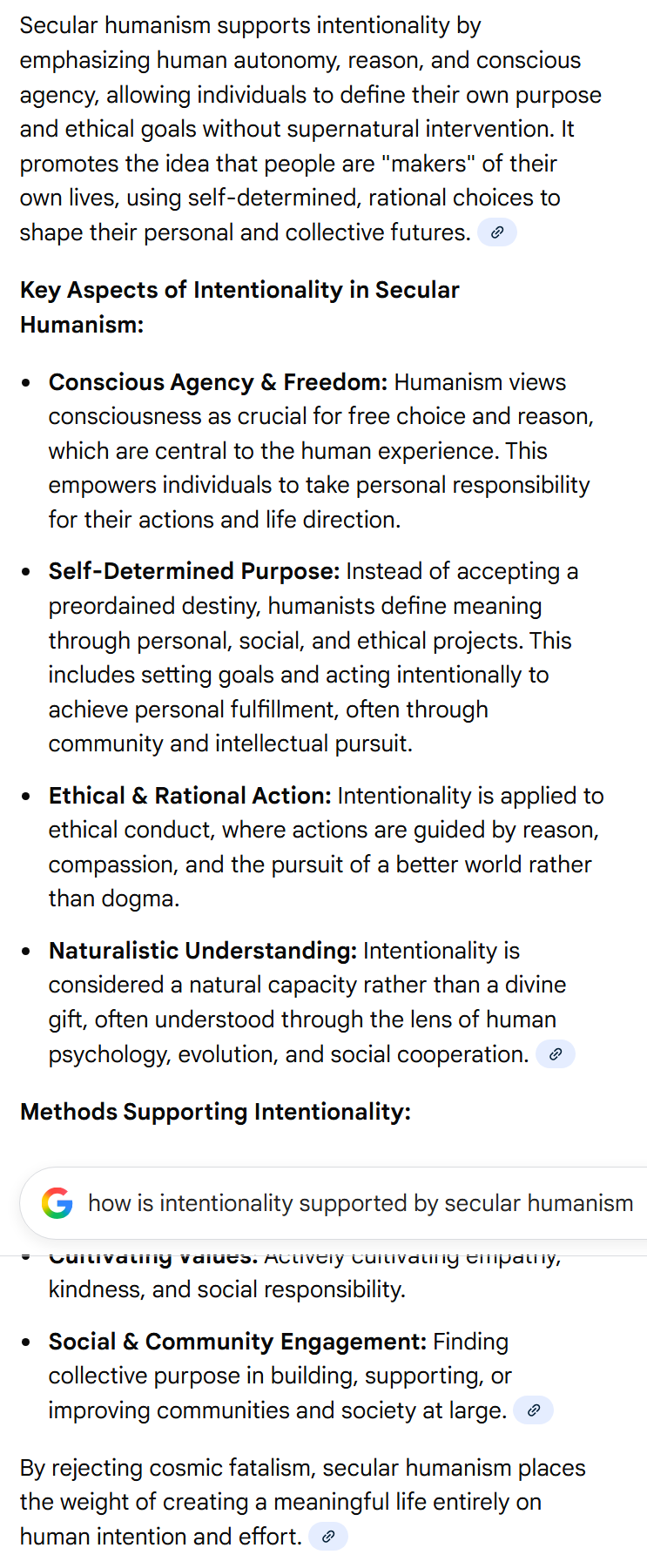
Secular Humanism
Summary
The major world religions support acceptance and inclusion:
All individuals have human dignity, created by God, worthy of acceptance and inclusion.
Religion is practiced in communities where diverse individuals are brought together.
The strange, vulnerable, marginalized, foreigner, widows, prisoners, and outcasts are different and must be embraced.
Individuals are commanded to be compassionate, caring and loving to all.
The spiritual dimension of individuals in communities makes them equally worthy of acceptance.
Religious rituals emphasize the unity of individuals in community practice.
The universe is one and individuals should seek harmony with all of it despite the surface level diversity.
There are multiple, fluid paths to enlightenment or connecting with God, so diversity is natural.
Many religions specifically call out the value of diversity, differences, designs, races,other religions, non-religious sectors and viewpoints.
Some religions emphasize the inherent incompatibility of the individual with the whole, yet they are complementary despite the unbridgeable differences.
Religions note the path of personal growth and learning that is driven by interacting with diverse thoughts, experiences and individuals.
Civility is a set of behaviors based upon the seven commonly held values of: human dignity, respect, acceptance, intentionality, responsibility, constructiveness and public-spiritedness. A social, political and economic society must have some core beliefs, norms and behaviors. The modern renaissance of Civility attempts to define the beliefs, norms and behaviors so they can be shared and promoted. We need to be confident that we know what Civility is, how we should behave, how/why we should influence others and why the underlying principles make sense.
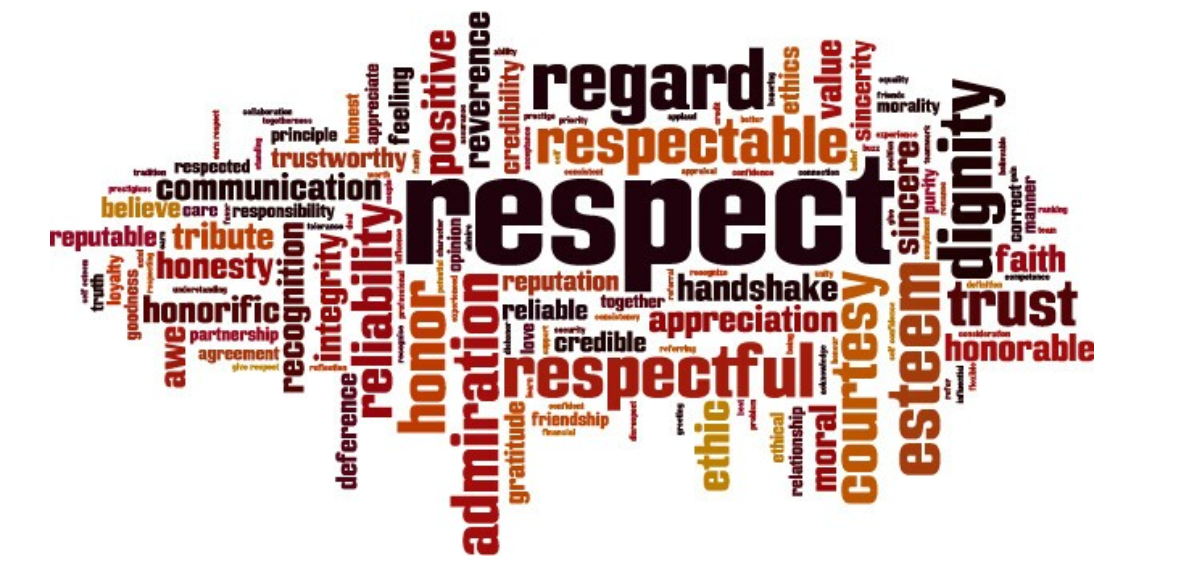
Respect Defined
Respect is an attitude or behavior of high regard, admiration or consideration toward a person, object, or entity.
We respect others, social roles, institutions, rules, laws and the boundaries of others.
Respect is shown through active listening, active engagement, conflict management, tolerance, maintaining safety, being courteous and considerate, honoring boundaries, intentionality, empathy, affirming and empowering others, equal treatment, trusting, justice and inclusion.
Human Dignity is a core Civility value. Respect is a recognition of that value through kindness, courtesy, and protecting rights.
Respect combined with the Civility value of Public-Spiritedness creates a need for social justice: protesting, correcting, and preventing actions that diminish human value.
Respect combined with the Civility values of Human Dignity and Intentionality requires us to proactively seek to understand and care for the needs, rights, and feelings of others.
Respect combined with the Civility values of Human Dignity and Acceptance requires us to acknowledge the value of all people, particularly those who face systemic disrespect.
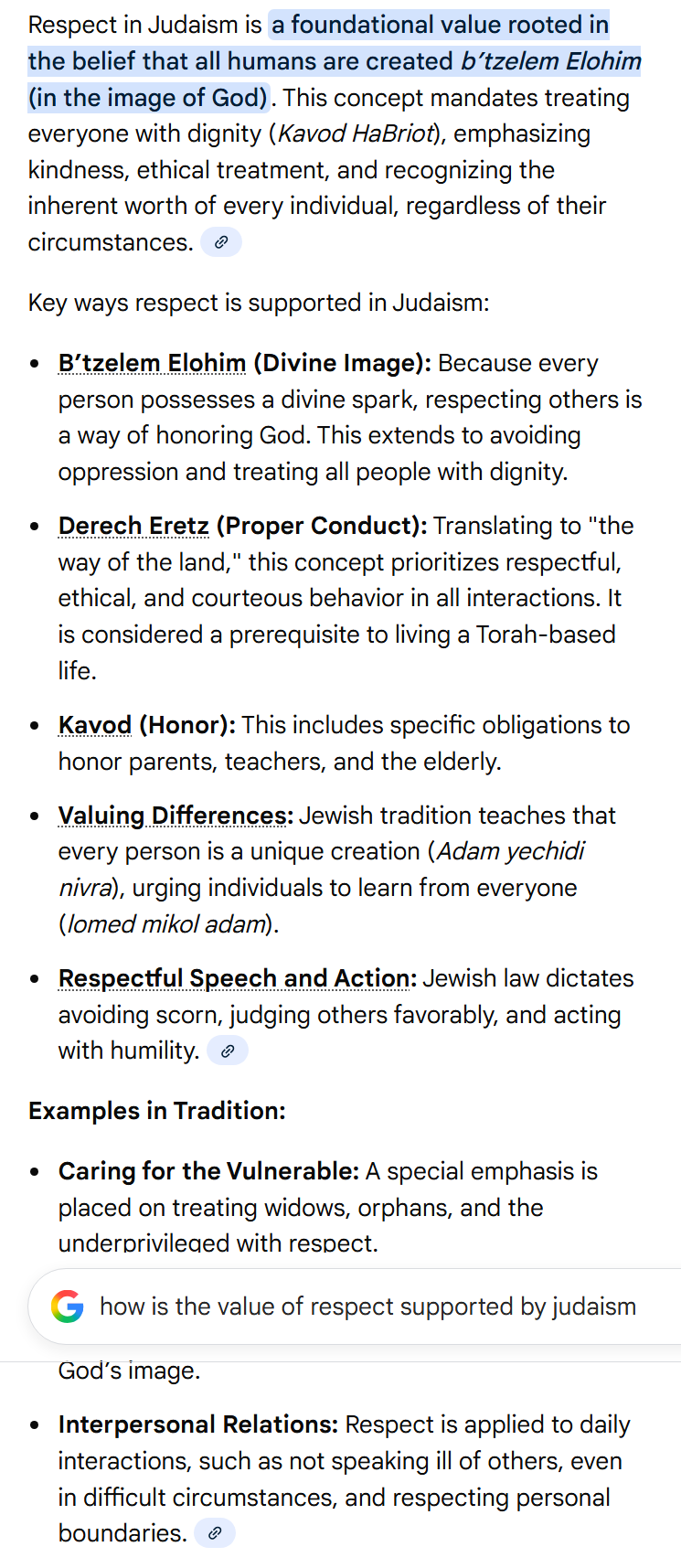
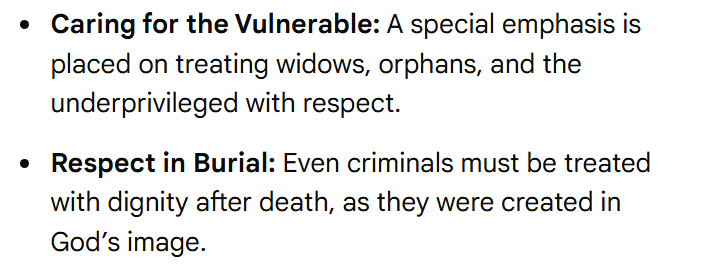
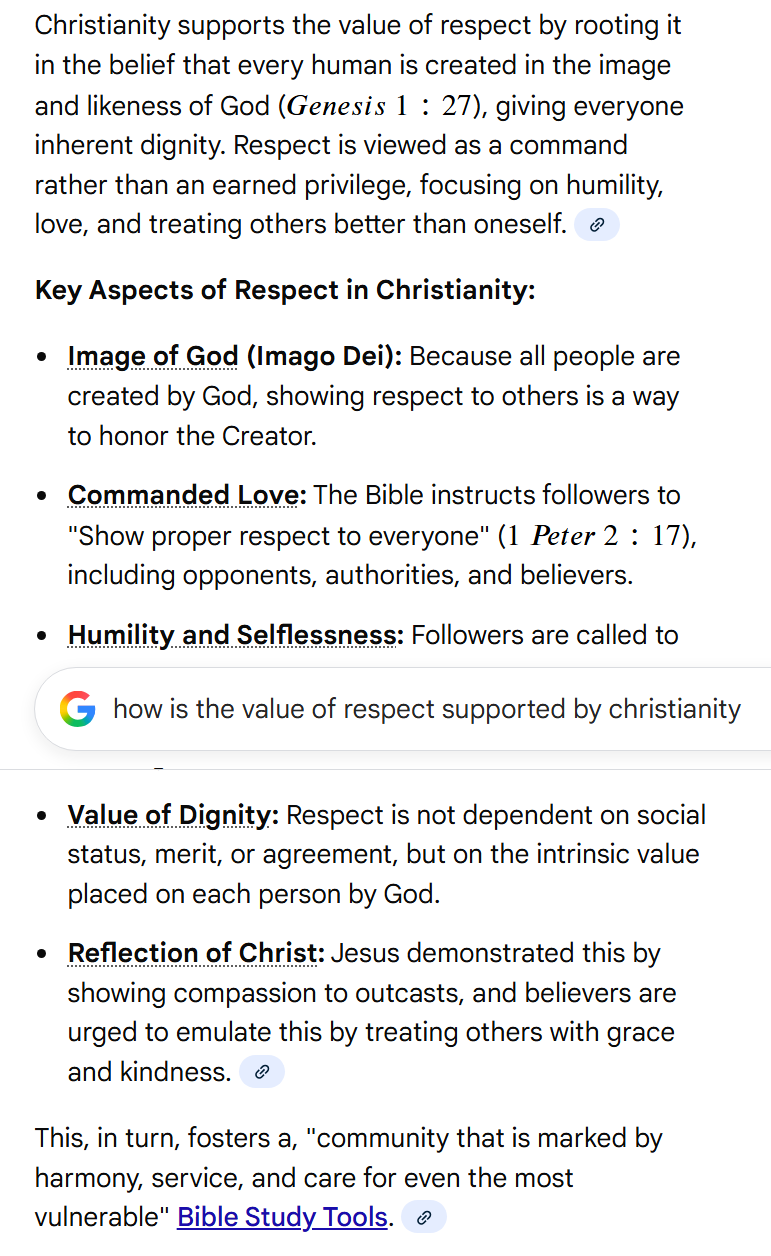
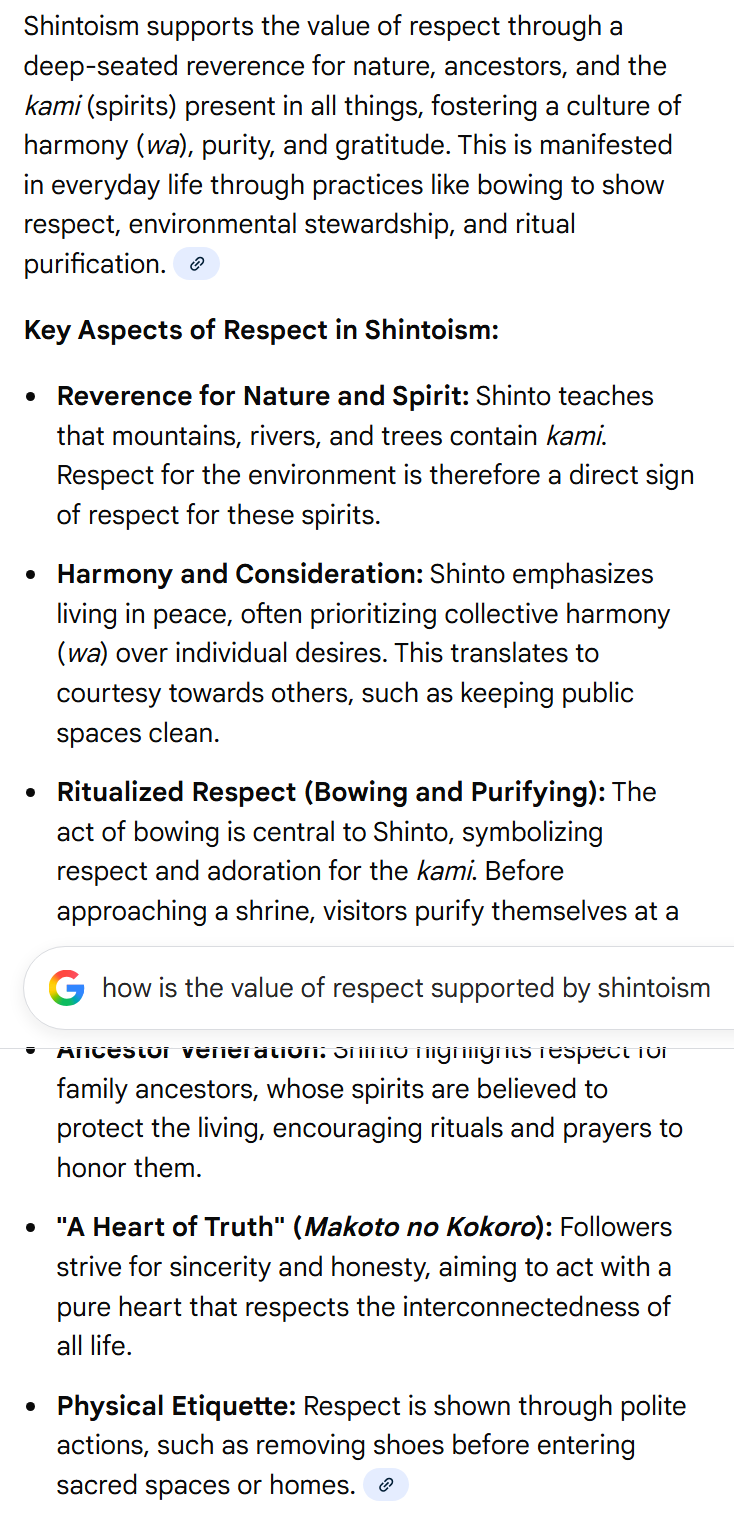
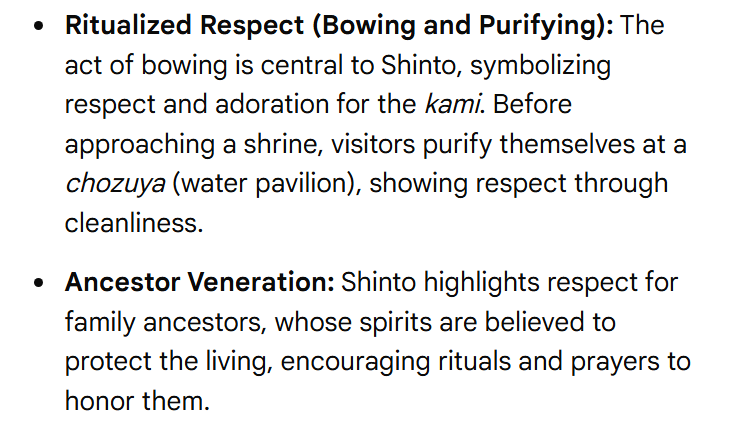
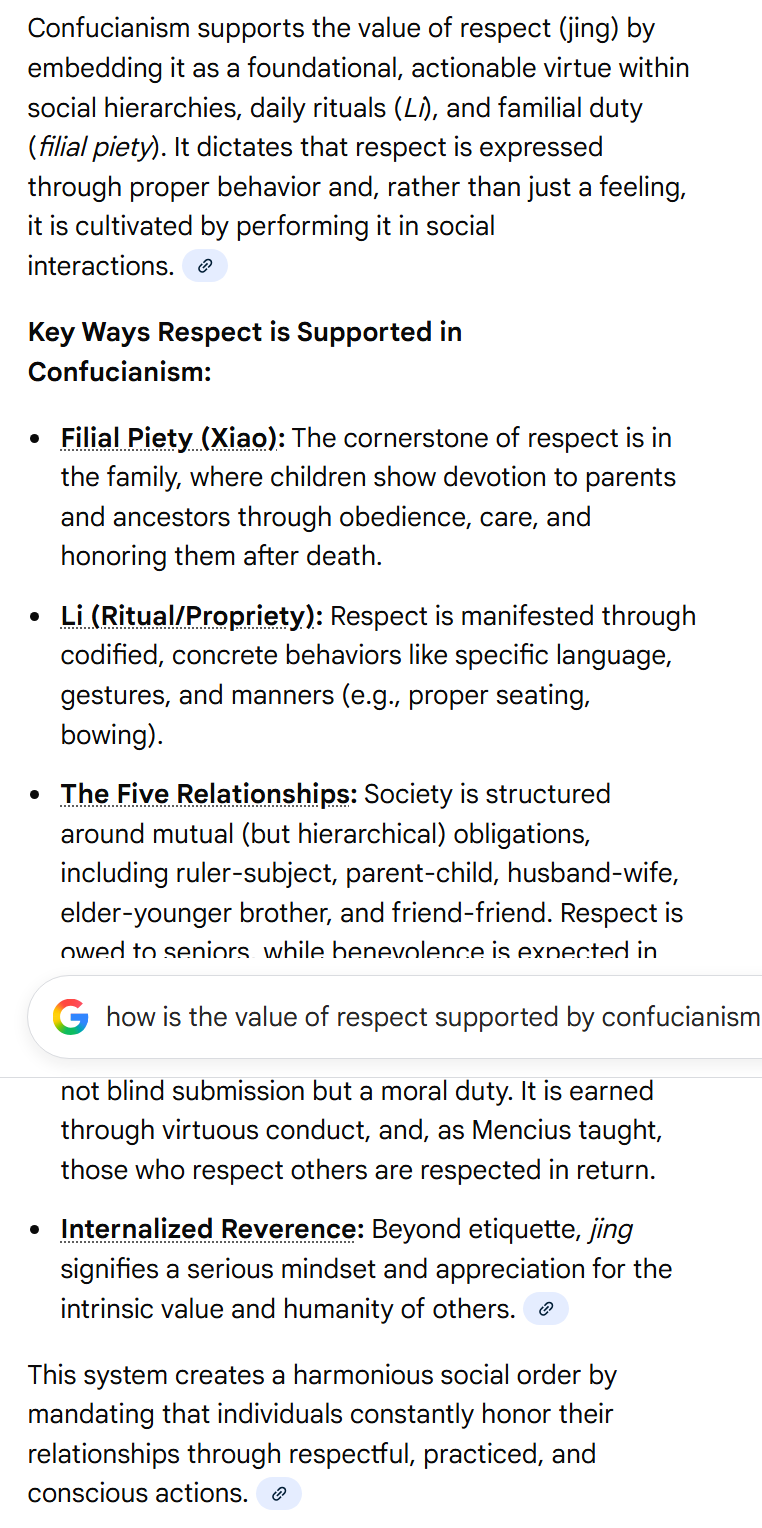
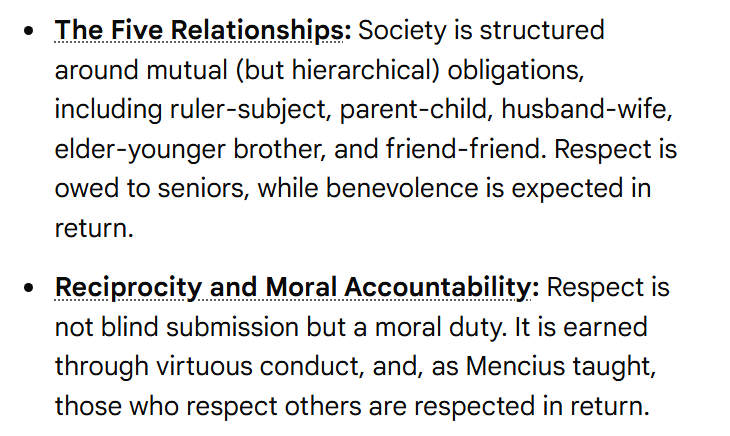
Respect is supported by all major world religions.
Judaism
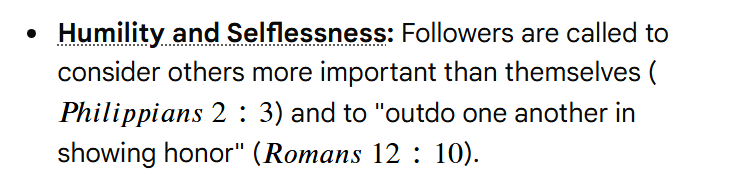
Christianity
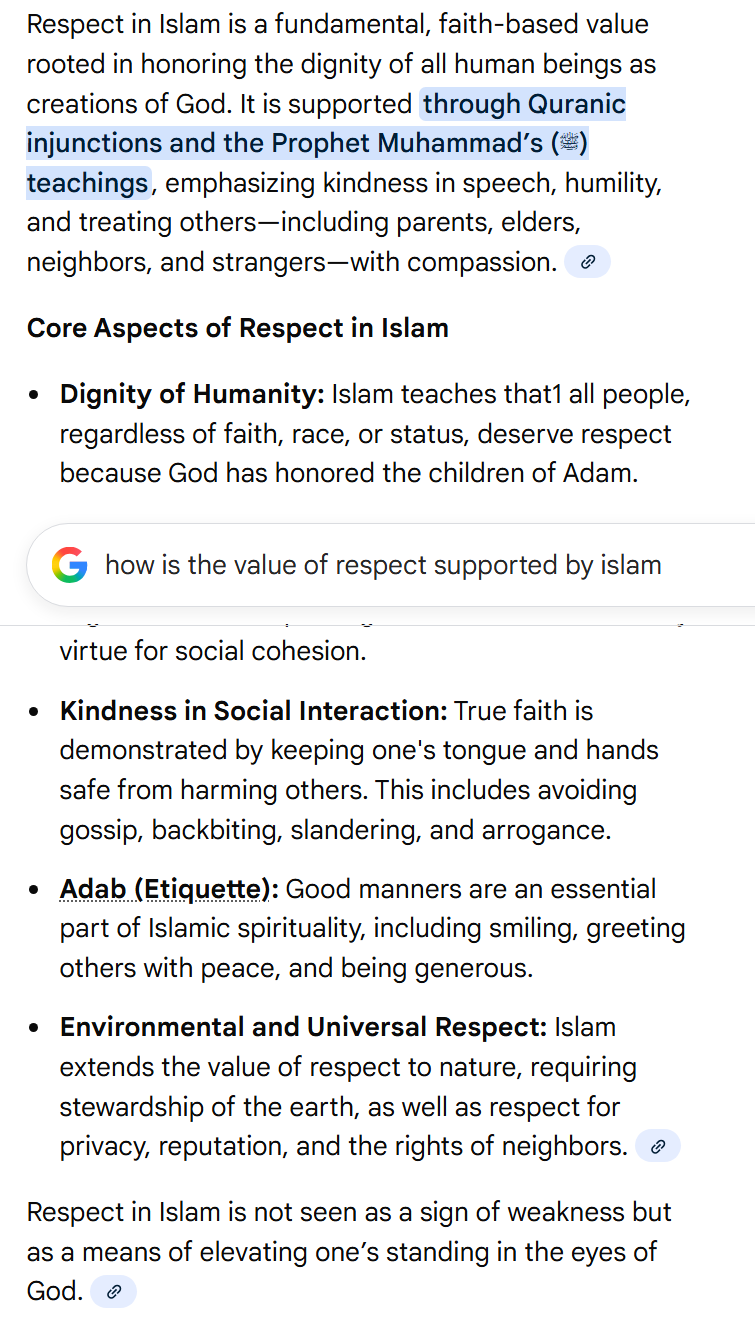
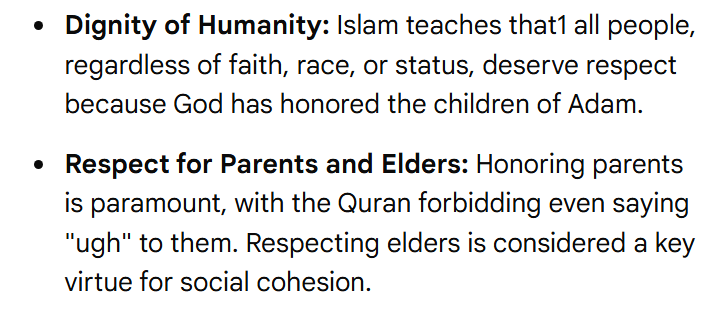
Islam
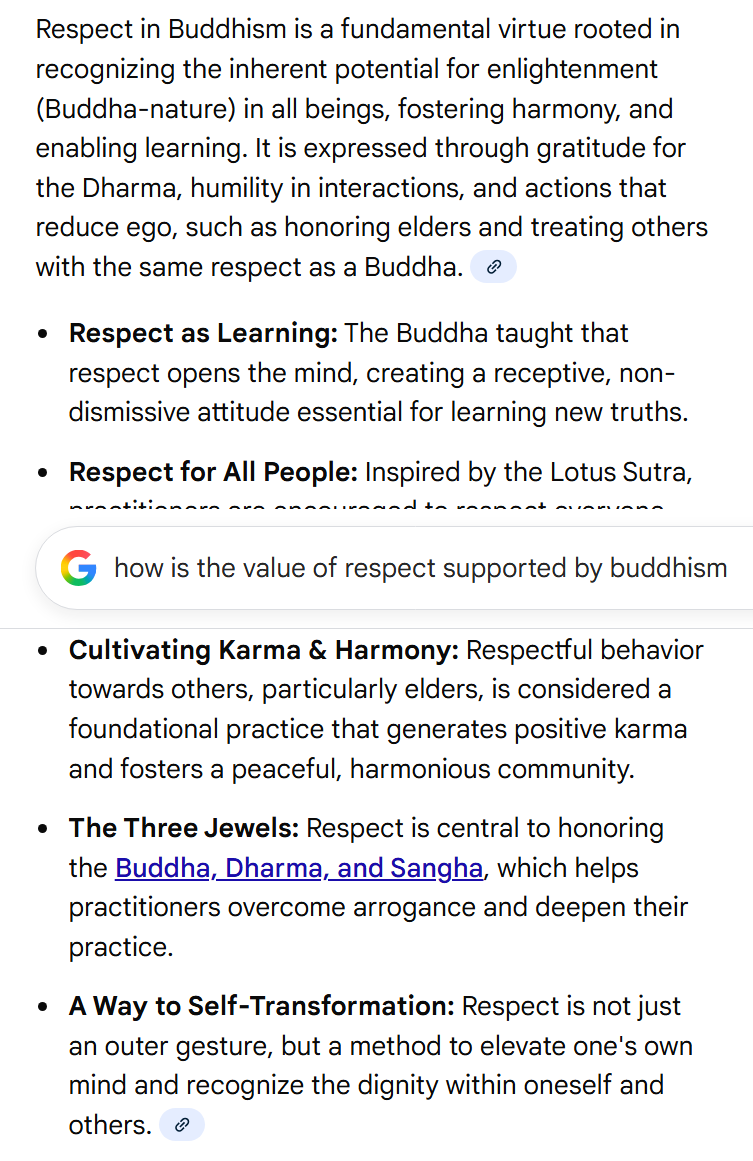
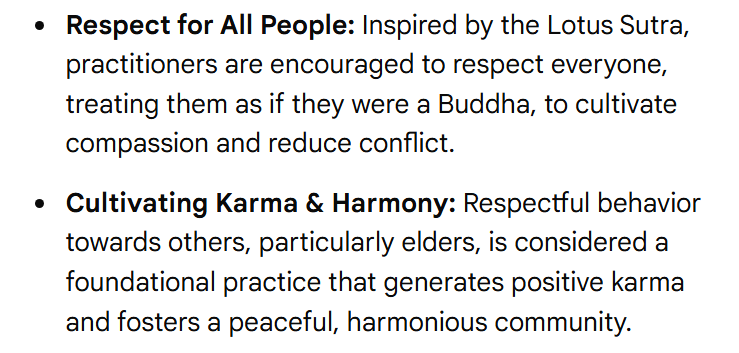
Buddhism
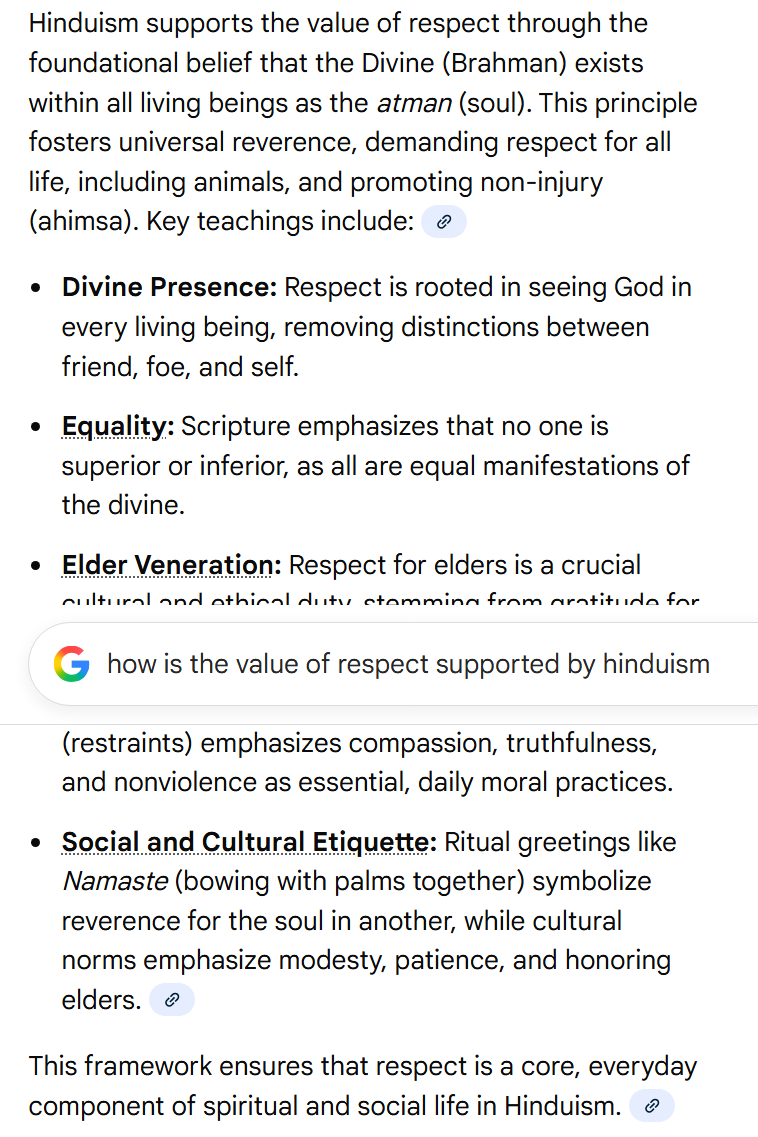
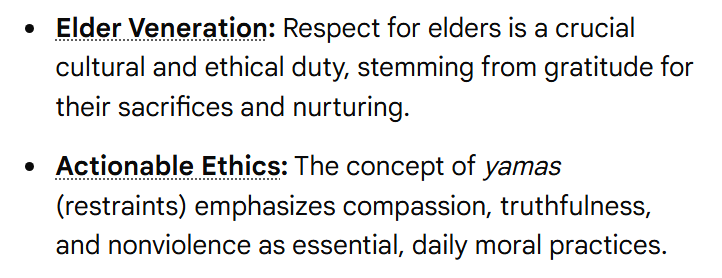
Hinduism
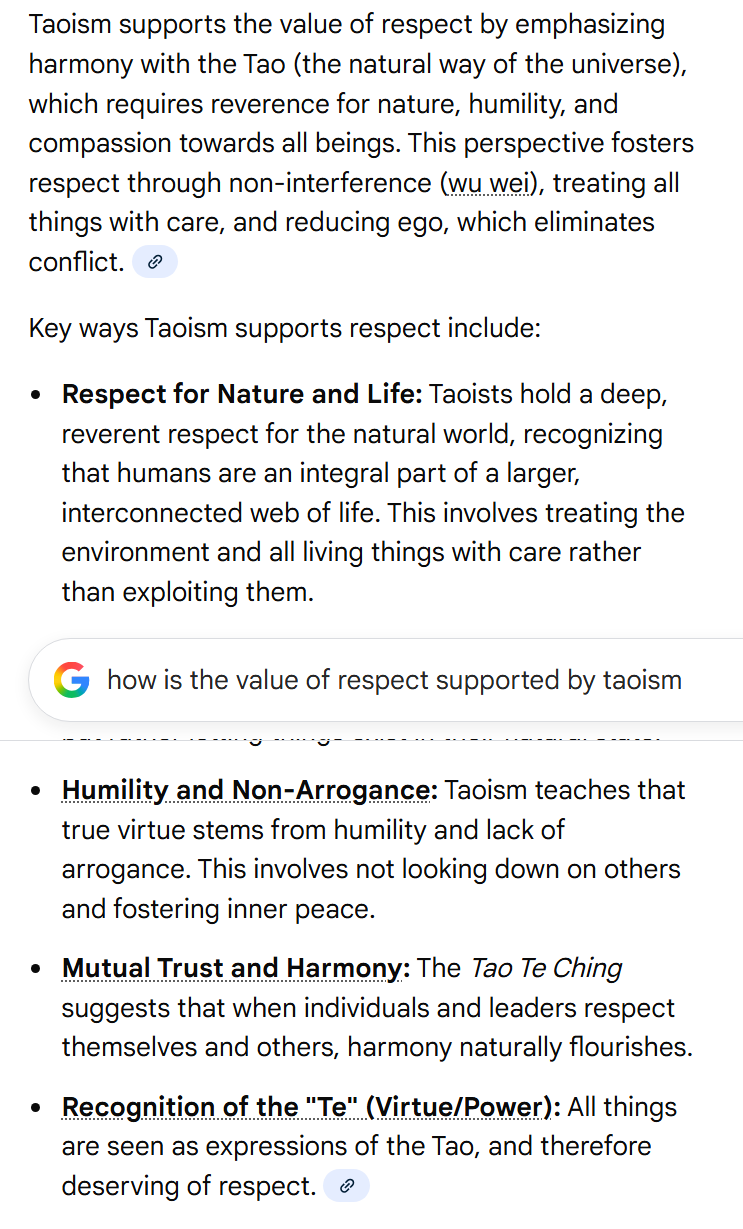
Taoism
Shintoism
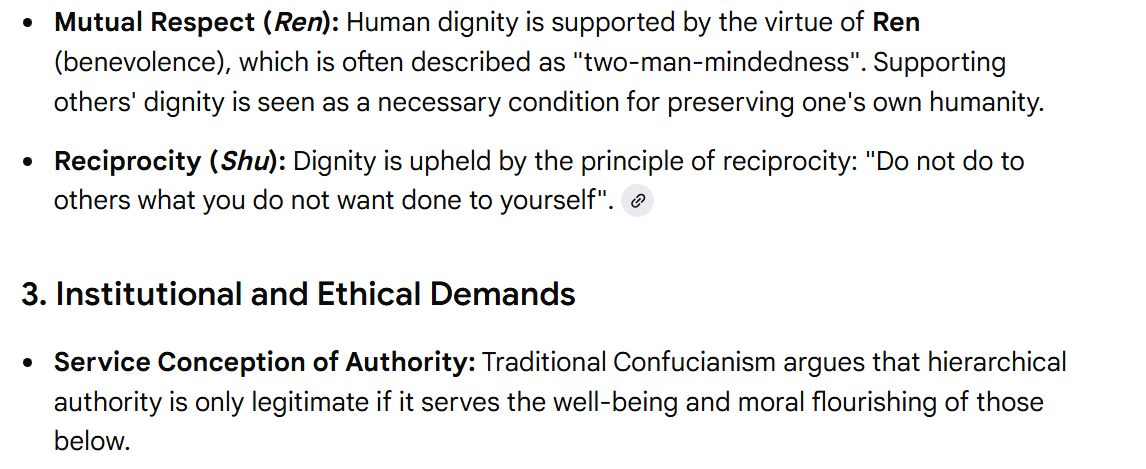
Confucianism
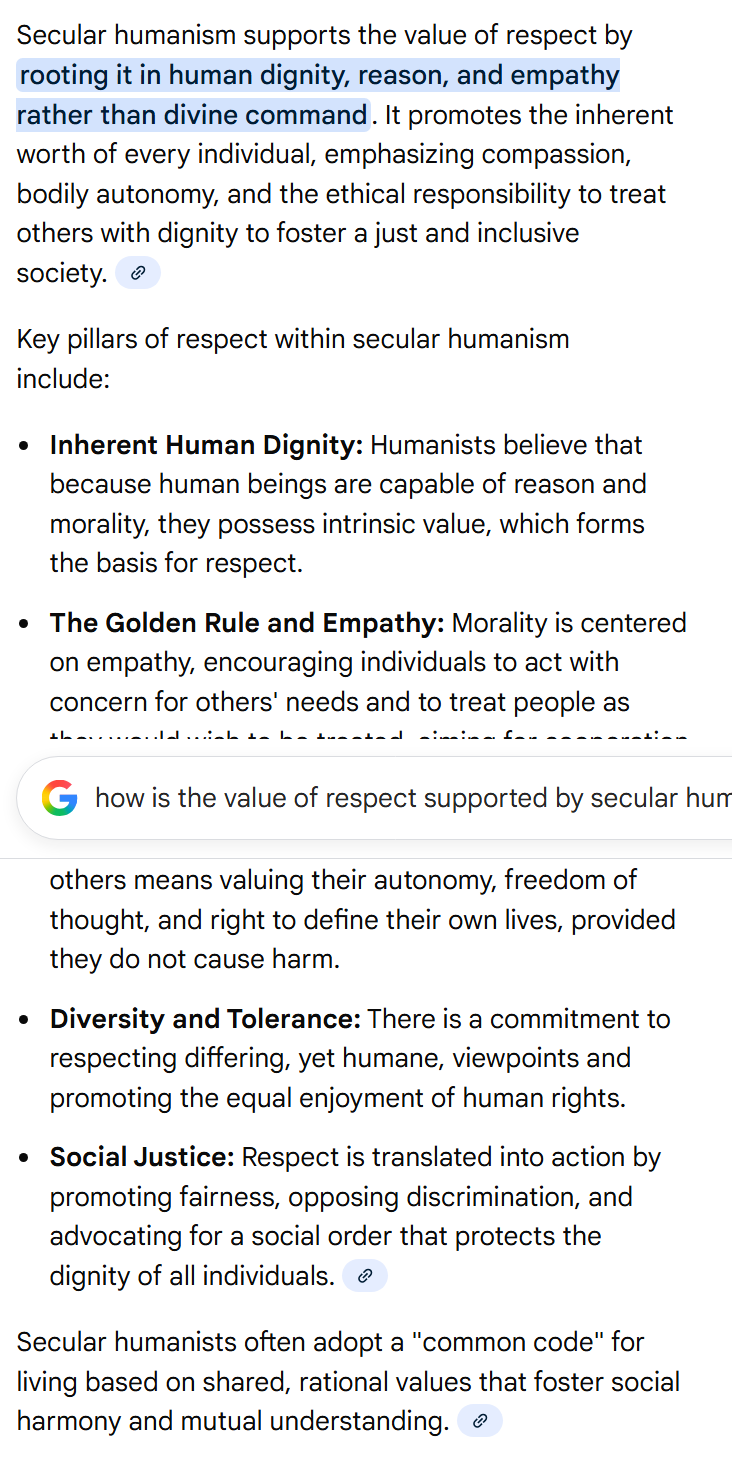
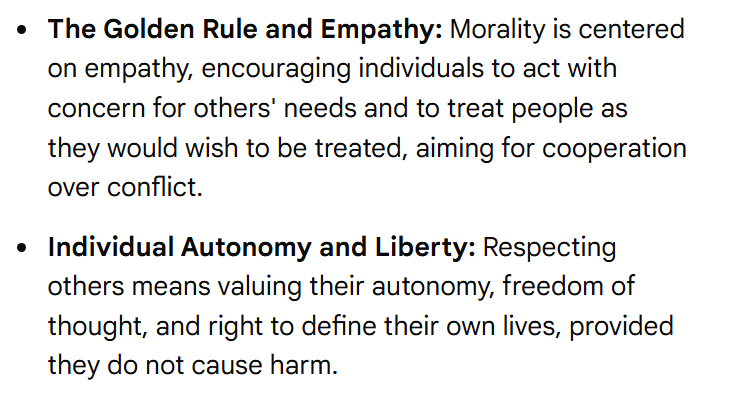
Secular Humanism
Summary
World religions strongly emphasize respect as a necessary human value and practice.
They empathize that we are created in the image of God or as an intentional part of the universe. We must respect ourselves, others, God, nature and the universe.
Some describe us as “children of God” or very special beings or imbued with the divine spirit. Self-respect and respect for others follow. We have human dignity, something greater than our material existence.
Religions call for respect for God/the universe and the laws or commands which include respect for others.
We are to live in harmony with the created universe, respecting others, family, ancestors, elders and given social roles.
We are naturally created with the heart for compassion and empathy and are obligated to interact with love, accordingly.
Given our position in the universe, we are to live with humility, honoring God, nature, the universe and others.
Practicing humility, honor and respect are essential for personal growth.
Religions command us to have respectful “right relations” through our speech, actions, interactions with others, community participation and God.
Civility is a set of behaviors based upon the seven commonly held values of: human dignity, respect, acceptance, intentionality, responsibility, constructiveness and public-spiritedness. A social, political and economic society must have some core beliefs, norms and behaviors. The modern renaissance of Civility attempts to define the beliefs, norms and behaviors so they can be shared and promoted. We need to be confident that we know what Civility is, how we should behave, how/why we should influence others and why the underlying principles make sense.
Intentionality Defined
Having a deliberate plan or purpose before acting. An internal state of mind where an individual consciously chooses a course of action to achieve a specific outcome.
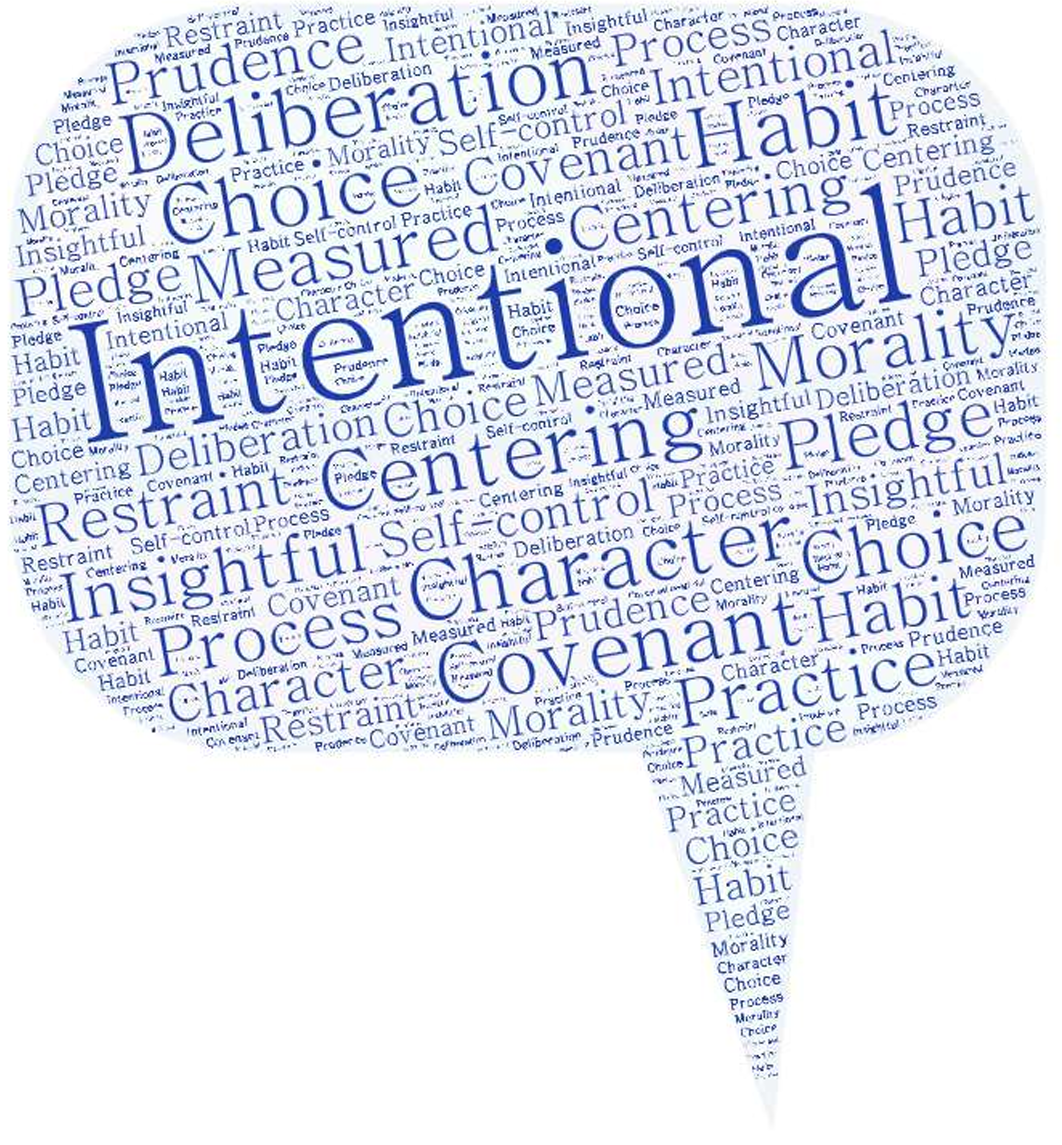
Intentionality weaves together two mental dimensions. It is purposeful, planned, logical, forward looking, rational, process-oriented, habitual, structured, informed, calculated, contextual, goal-oriented, practical, scope limited, applied and instrumental!
It is also deliberate, chosen, willful, volitional, proactive, conscious, engaged and intended.
Intentionality is a complement to responsibility, which refers to accountability for actions and consequences.
Taken together, they encourage us to be fully responsible for our choices, actions, consequences and relations. We are to consider all dimensions and make great choices. We are obligated to clearly define goals and seriously pursue them. We have human agency and a responsibility to be self-aware of our choices. We are obligated to work towards becoming mature, balanced, prudent, wise adults.
Intentionality is crucial to Civility because it:
Promotes proactivity over passivity.
Supports conscious, deliberate and purposeful commitment to treating others with respect, courtesy, and dignity.
Encourages self-awareness in decision making, including considering the impacts on others.
Challenges us to define our goals on a deep philosophical, spiritual or religious basis and seriously aligning our decisions and behavior with them.
Focuses on goal-oriented thinking which includes the goals of building relationships, trust and safe communities.
Emphasizes our shared responsibility for defining, supporting and reinforcing the rules of civil behavior that are mutually beneficial.
Recognizes that we are responsible for systematically evaluating, building and improving our behaviors and expectations and the norms and institutions of our communities.
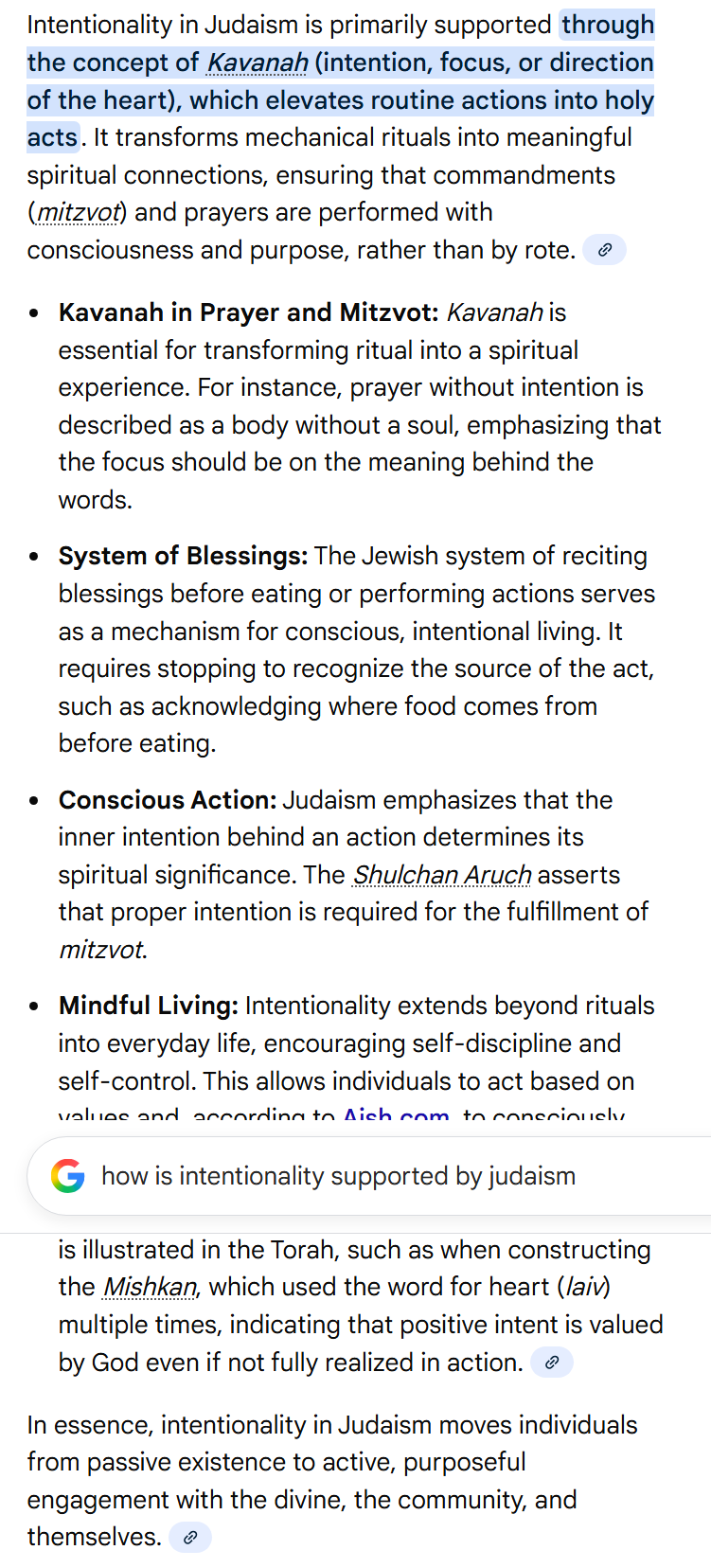
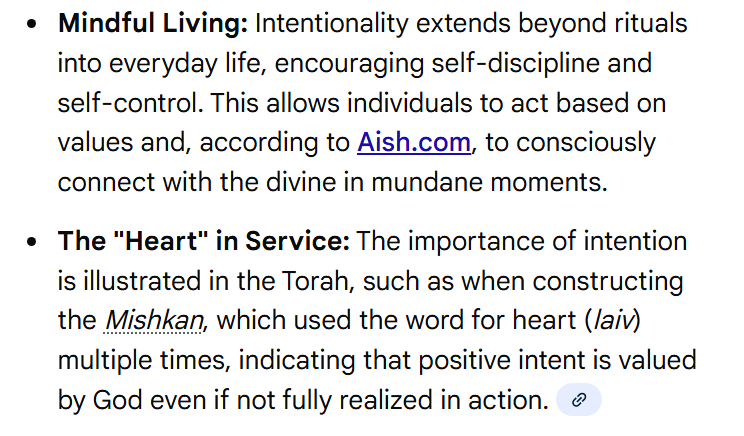
Judaism
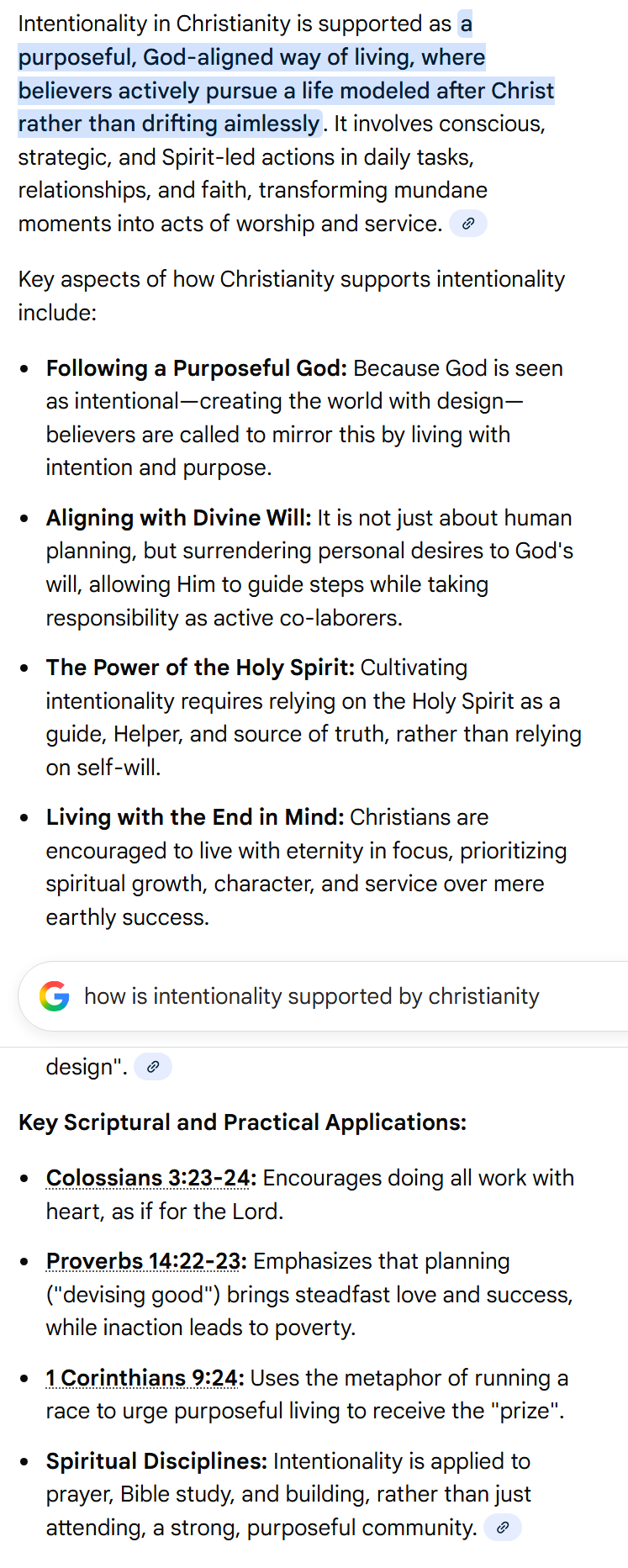
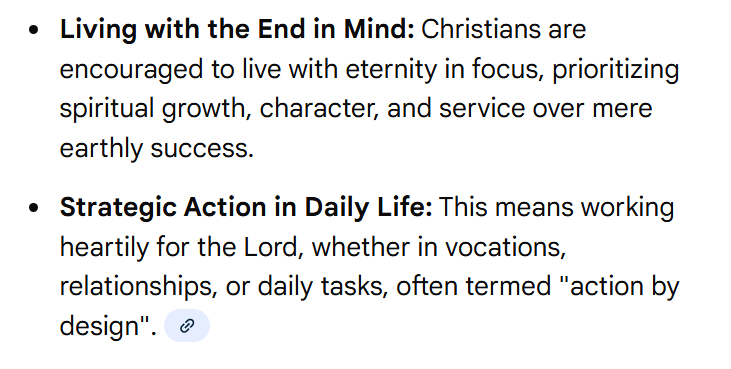
Christianity
Islam
Buddhism
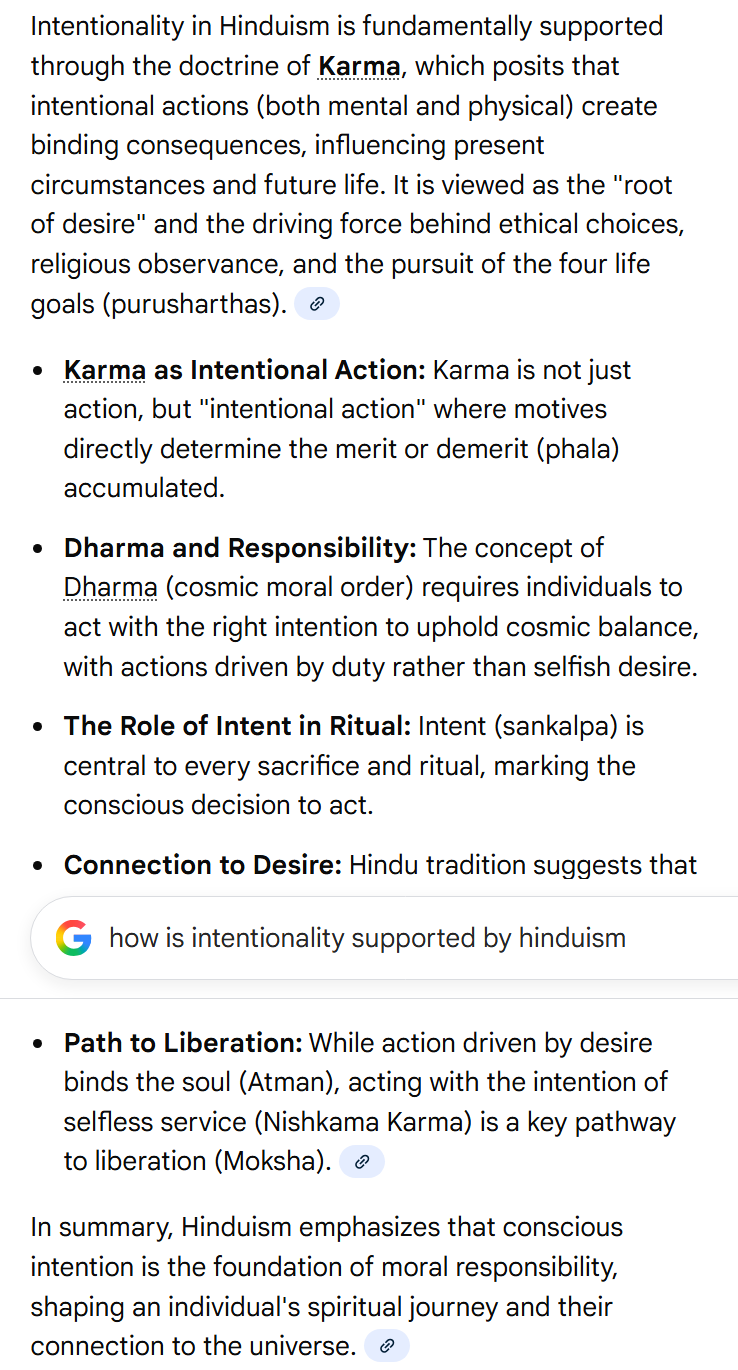
Hinduism
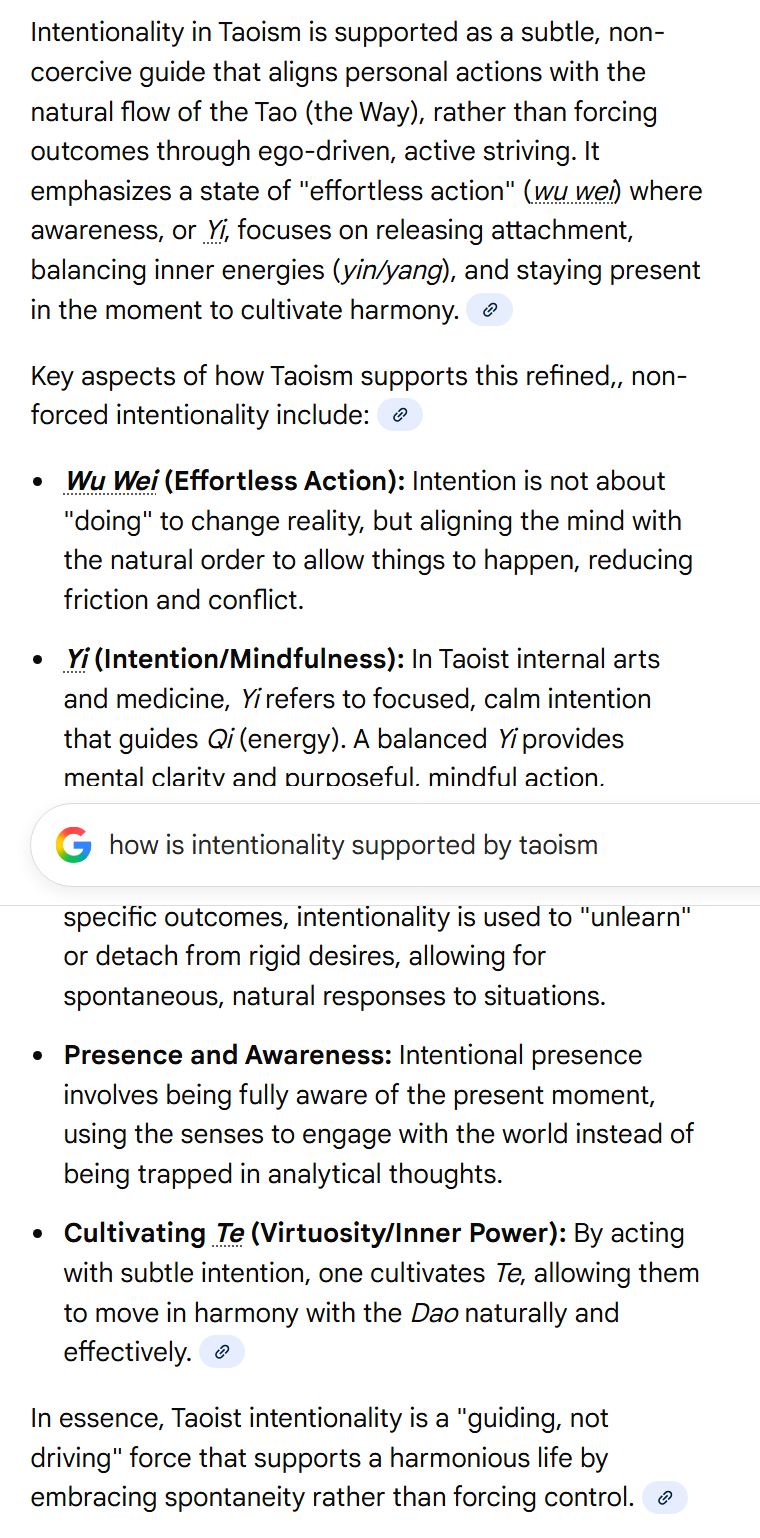
Taoism
Shintoism
Confucianism
Secular Humanism
Summary
The major religions offer support for being rational, considering context and consequences, being calm, balanced, focused and purposeful, but they mainly emphasize the spiritual, emotional and willful dimensions of intentionality. They encourage us to:
Begin with the end in mind (Covey). Know, follow, engage and align with God’s will or the structure of the universe. Use the power of this knowledge and connection (holy spirit) to make the best choices.
Make decisions based upon values and principles, not self-interest or practical concerns alone.
Be aware, conscious, fully present in life and making decisions. You are an agent.
Be proactive.
Be self-aware and self-disciplined.
Invest in spiritual growth to understand and connect with God/universe which will improve decision making in a self-improving cycle.
Cultivate the heart and compassion as a basis for choices.
Sincerity and proper personal intentions are critical for making choices that deliver good results and which align the person with God/universe.
An intentional person is serious about defining/prioritizing goals, making good decisions and improving themselves.
I sometimes think about “intentionality” as the weakest or marginal Civility value. Major religions consider it to be essential for a good life.
Civility is a set of behaviors based upon the seven commonly held values of: human dignity, respect, acceptance, intentionality, responsibility, constructiveness and public-spiritedness. A social, political and economic society must have some core beliefs, norms and behaviors. The modern renaissance of Civility attempts to define the beliefs, norms and behaviors so they can be shared and promoted. We need to be confident that we know what Civility is, how we should behave, how/why we should influence others and why the underlying principles make sense.
Responsibility Defined
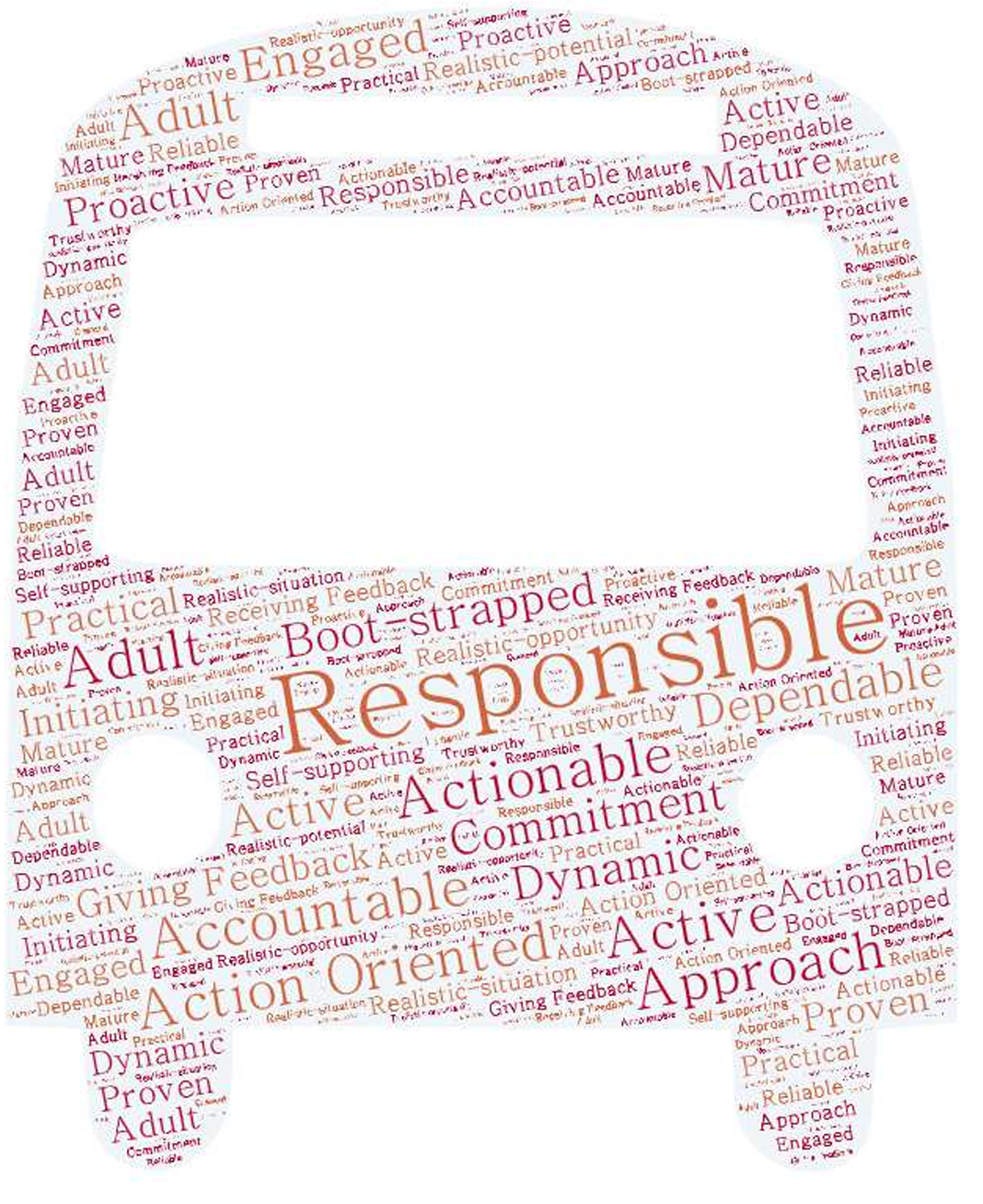
Responsibility is willingly and actively managing our “selves” in all roles to appropriate, and even heroic, legal and moral/ethical standards.
We fill our personal, professional and social roles within the context of society. We recognize our interdependence and the need for mutual consideration.
We carefully listen, engage, empathize, apply, decide, speak, impact, influence, share, consider, decide, and act.
We welcome the joy of Responsibility with a capital R!
We consider the views and interests of others, including our families, neighbors, suppliers, customers, coworkers, bosses, employees and team members.
We consider our roles as citizens, demonstrate public-spiritedness and invest our time and resources accordingly.
We do our “fair share”. When the situation calls for it, we do more than our “fair share”.
We manage our personal, professional and ethical development.
We embrace accountability for our behavior and consequences. We seek to be considered reliable and trustworthy individuals.
We embrace “shared accountability for organizational results”.
Support
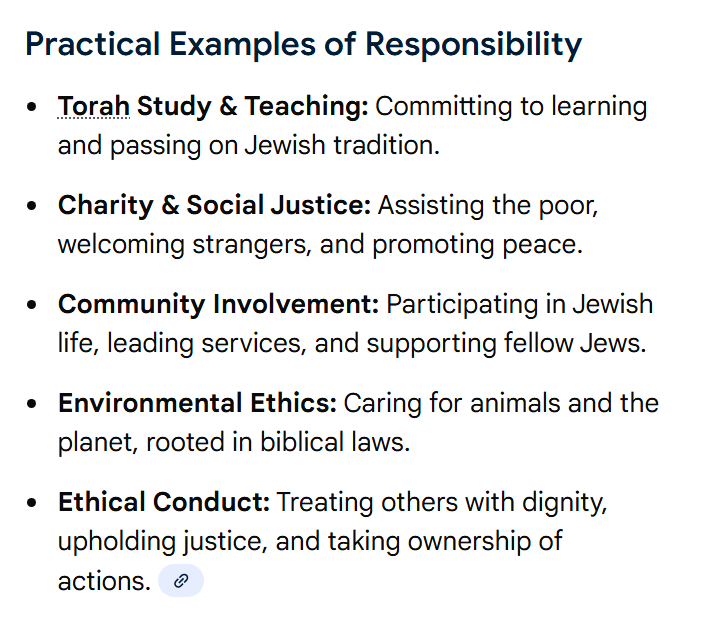
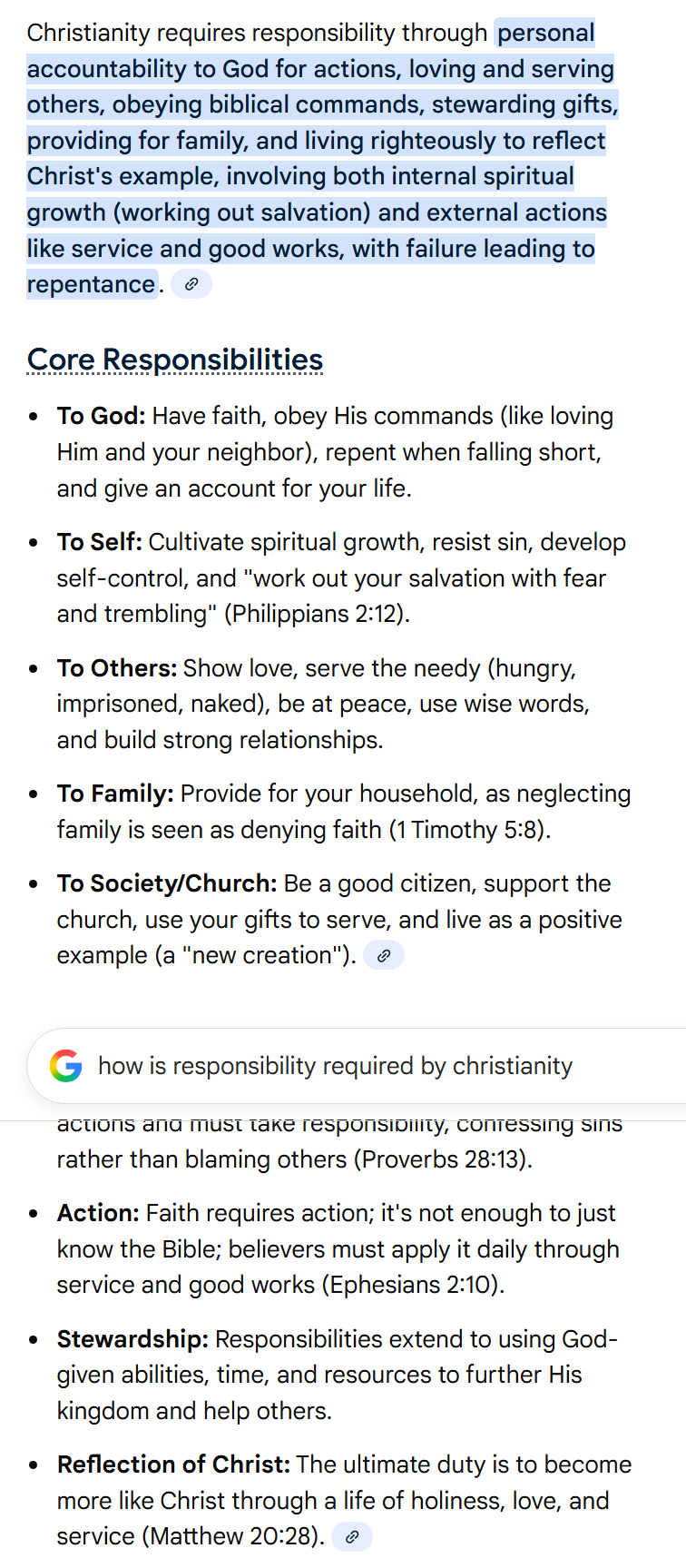
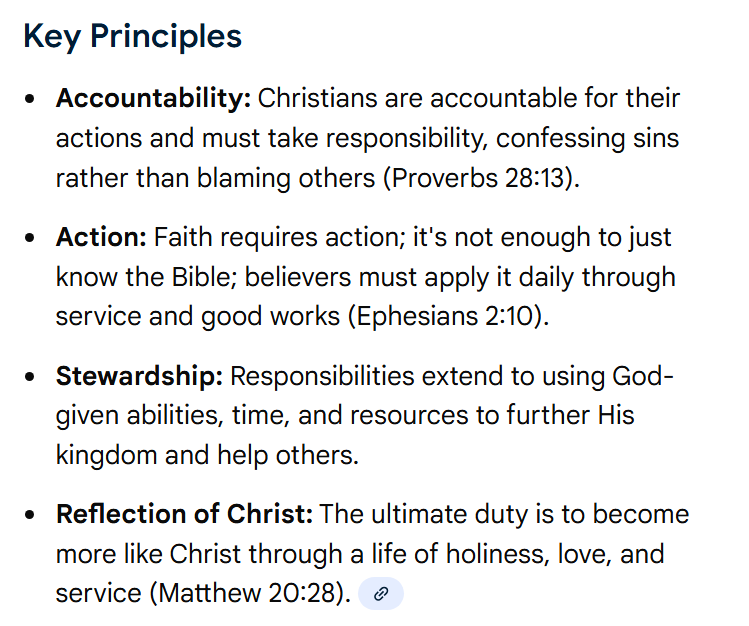
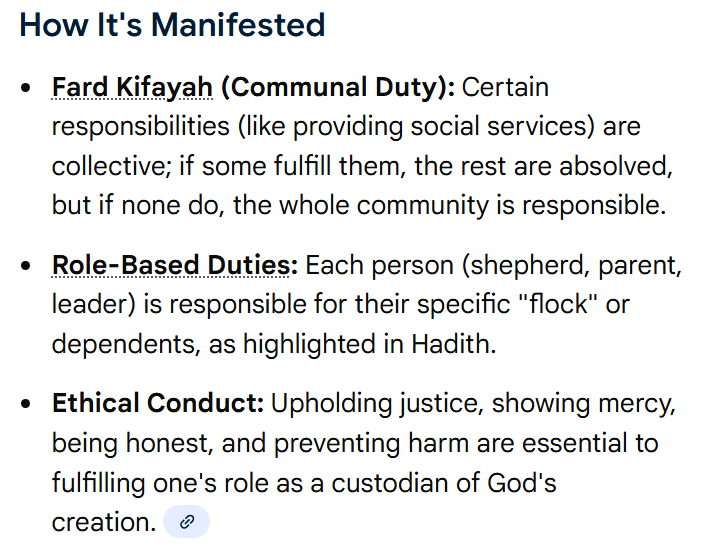
Responsibility is sometimes deemed a conservative value, but I believe that active engagement and responsibility is an independent value. Liberals and conservatives and major religions all require Responsibility for moral conduct.
Modern man struggles with Responsibility because it has often been imposed as an unavoidable duty. He has thrown off all of the constraints of the past. He is now totally free. But this is an illusion. He is unavoidably a member of many communities and subject to the influence and expectations of each. He can choose to be a radical individualist, a free rider. Or he can recognize that he is inherently a social creature who is logically, ethically and spiritually obligated to interact with others based upon their mutual dependence. Responsibility recognizes that the individual is part of many larger systems … and that this is good.
Civility is a set of behaviors based upon the seven commonly held values of: human dignity, respect, acceptance, intentionality, responsibility, constructiveness and public-spiritedness. A social, political and economic society must have some core beliefs, norms and behaviors. The modern renaissance of Civility attempts to define the beliefs, norms and behaviors so they can be shared and promoted. We need to be confident that we know what Civility is, how we should behave, how/why we should influence others and why the underlying principles make sense.
Public Spiritedness
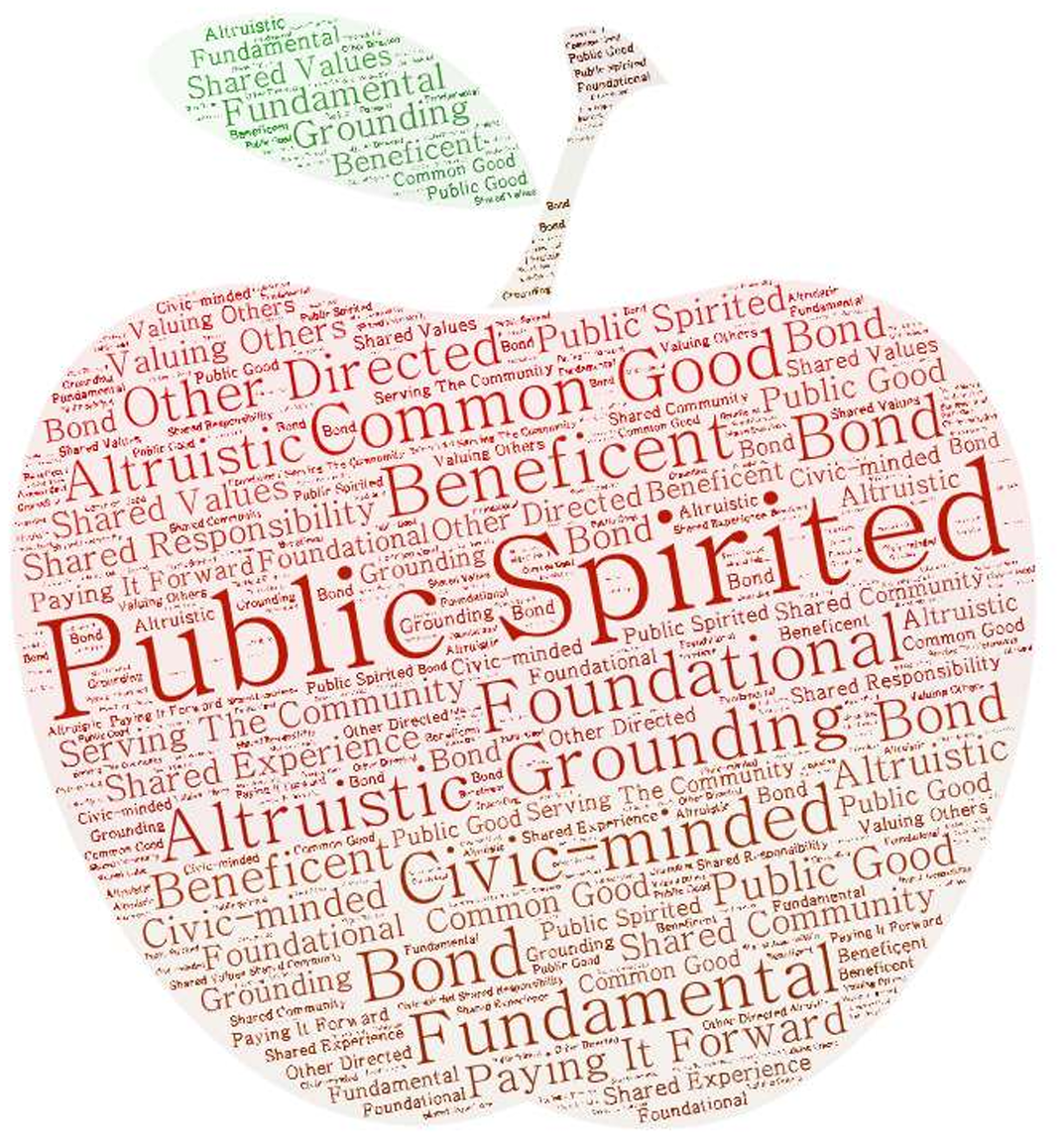
The quality of caring about community welfare. Altruism is considering the public good rather than just personal interests. A sense of duty to consider the community good. Willingness to act on behalf of the community.
Communities of all sizes require individual members to value community interests, not just personal interests. They require individuals to internalize this idea, belief and value in order to make it a habit. Humans have evolved to be able to take and hold this perspective.
The key is for individuals to consider the common, public or greater good, not to be completely selfless. Public spiritedness is not a partisan value. Classical, moderate and progressive liberals promote this value. Classic and modern conservatives promote this value.
Some liberals and conservatives reject this principle. They rely on purely individual self-interest or religious, state or philosophical systems that do not require individual choices. I argue that this “radical individualism” is one of the 6 root causes of our current dysfunctional cultural situation.
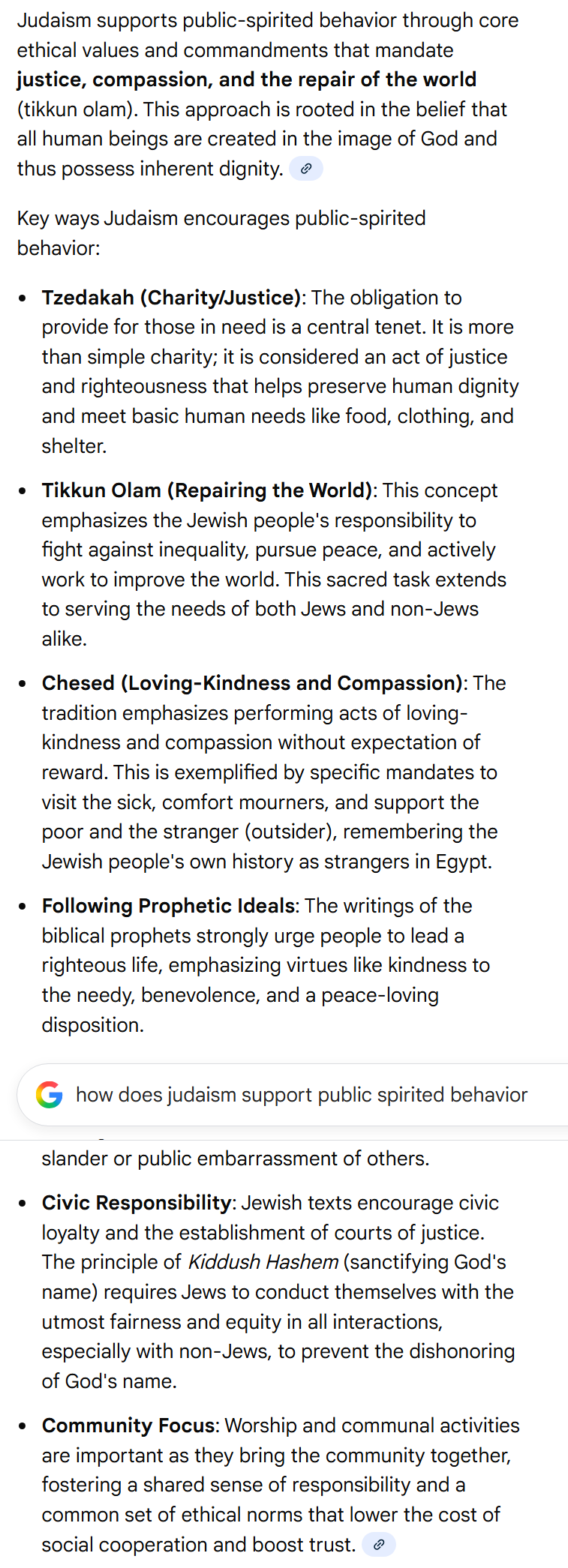
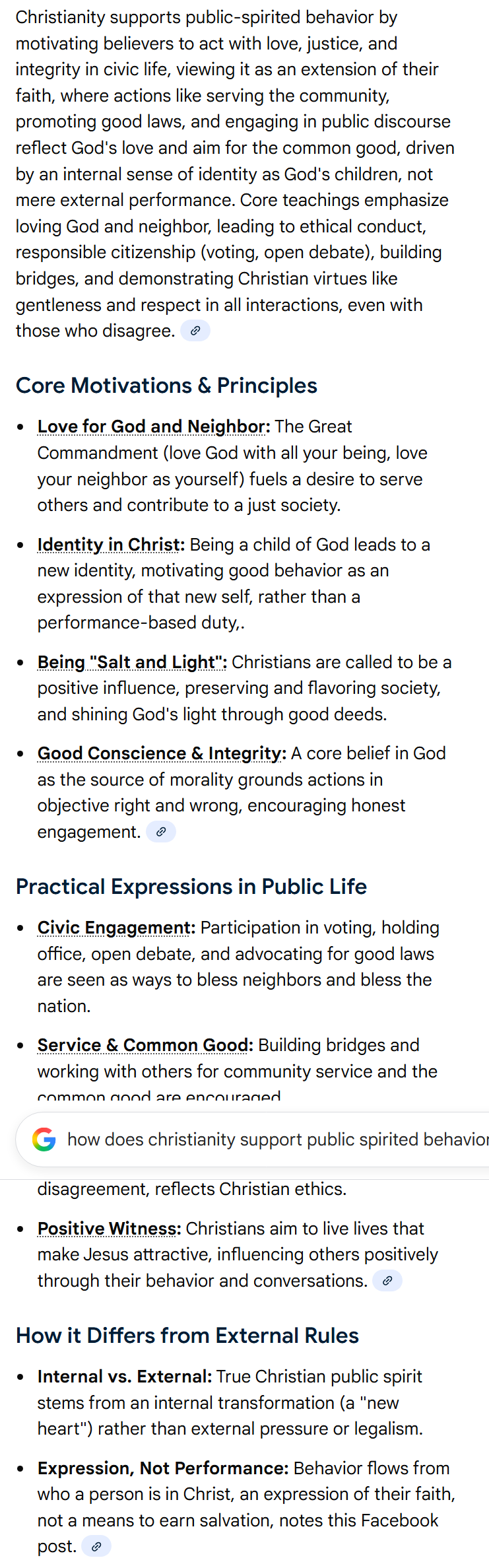
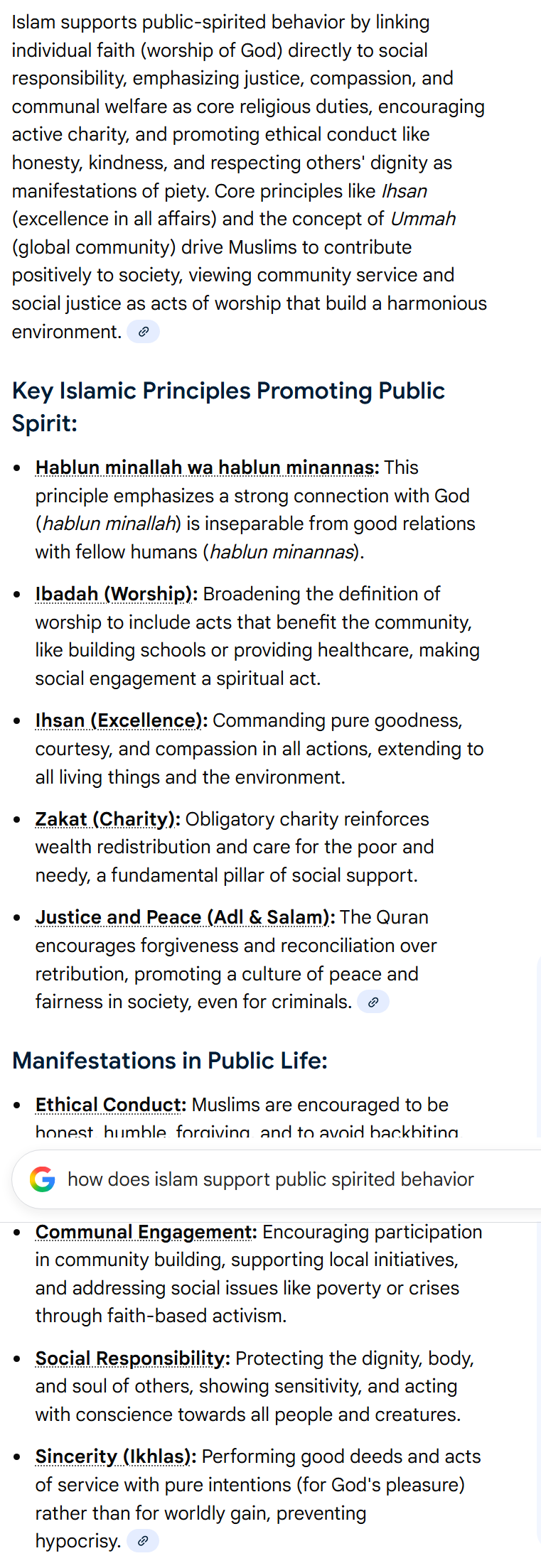
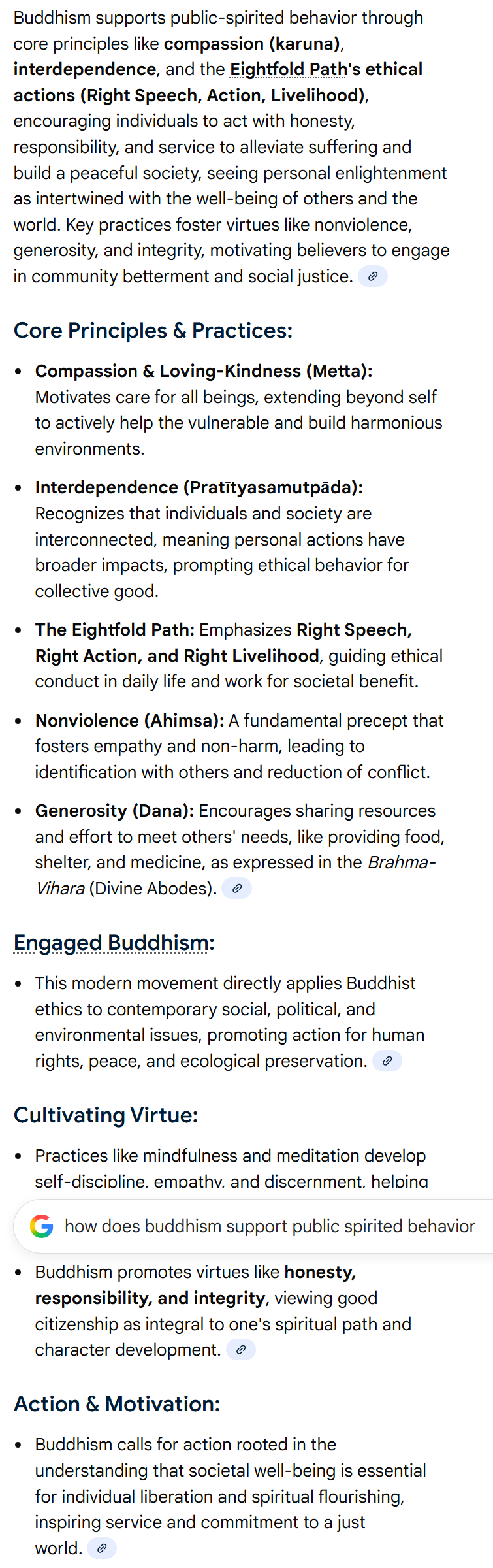
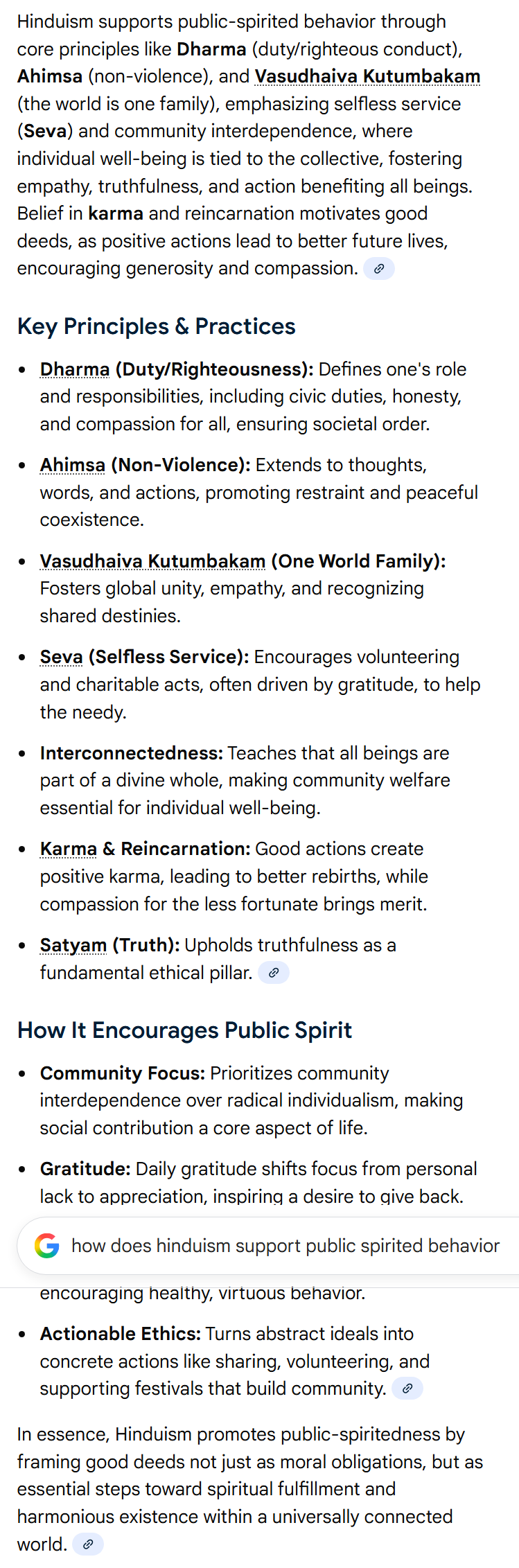
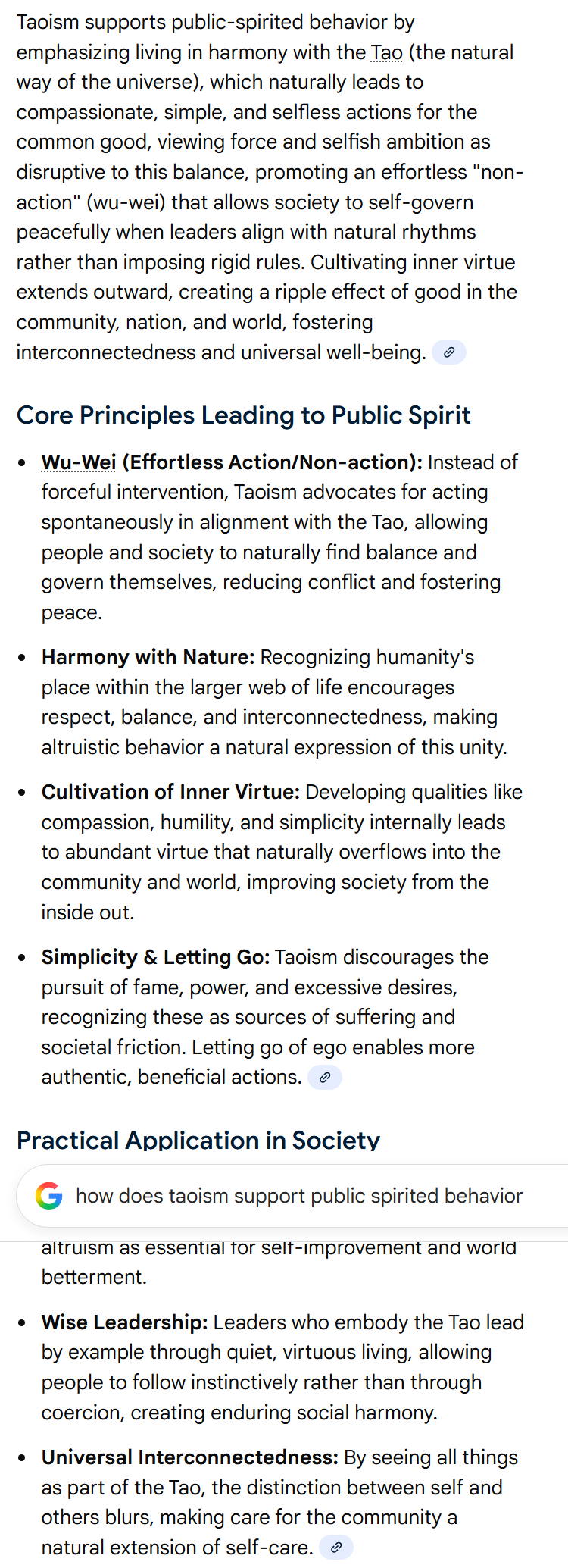
Public-spiritedness is strongly supported by all religious and philosophical systems.
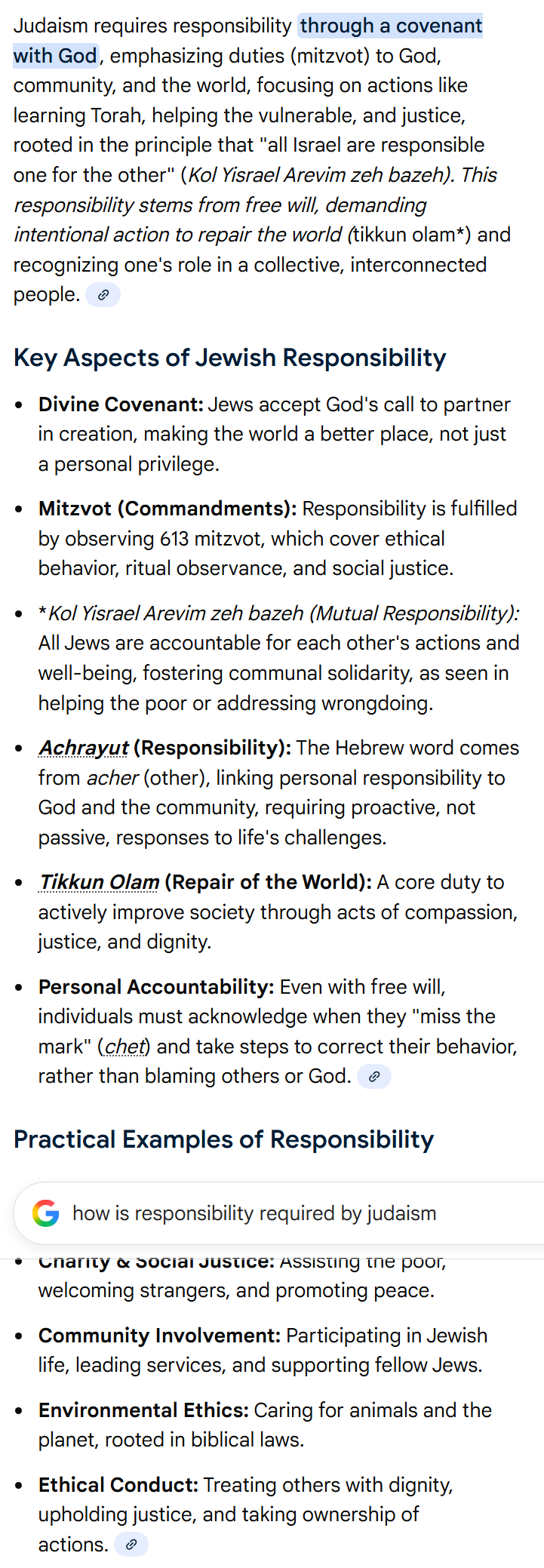
Judaism [Google AI]
Christianity
Islam
Buddhism
Hinduism
Taoism
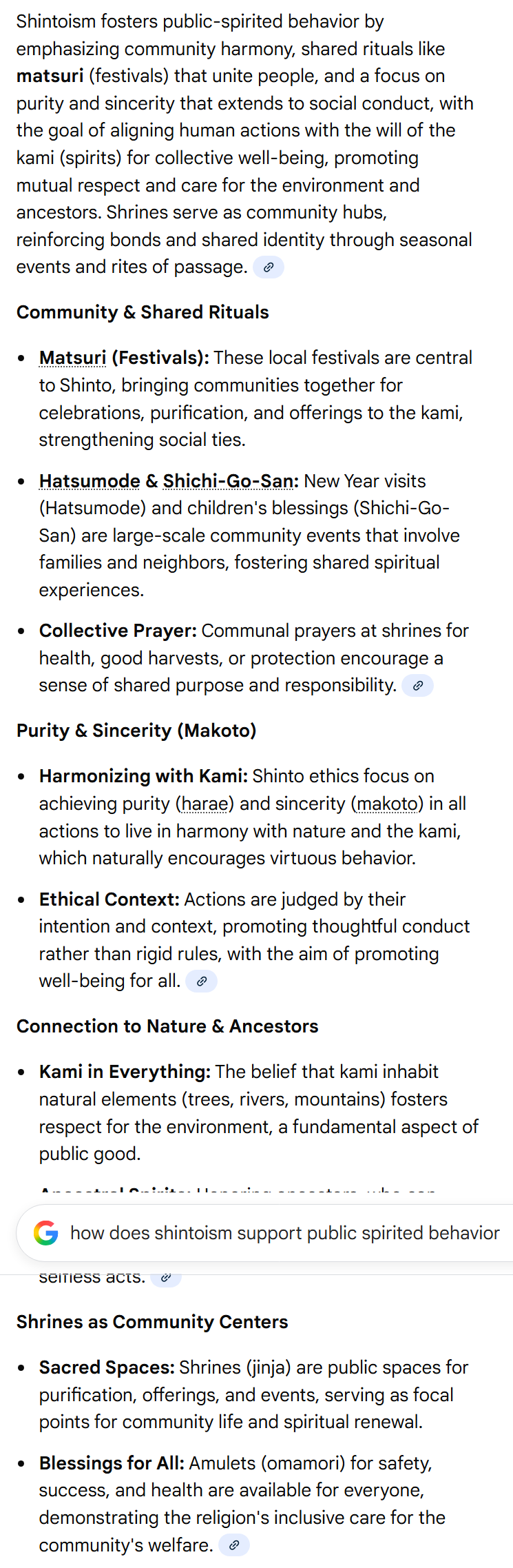
Shintoism
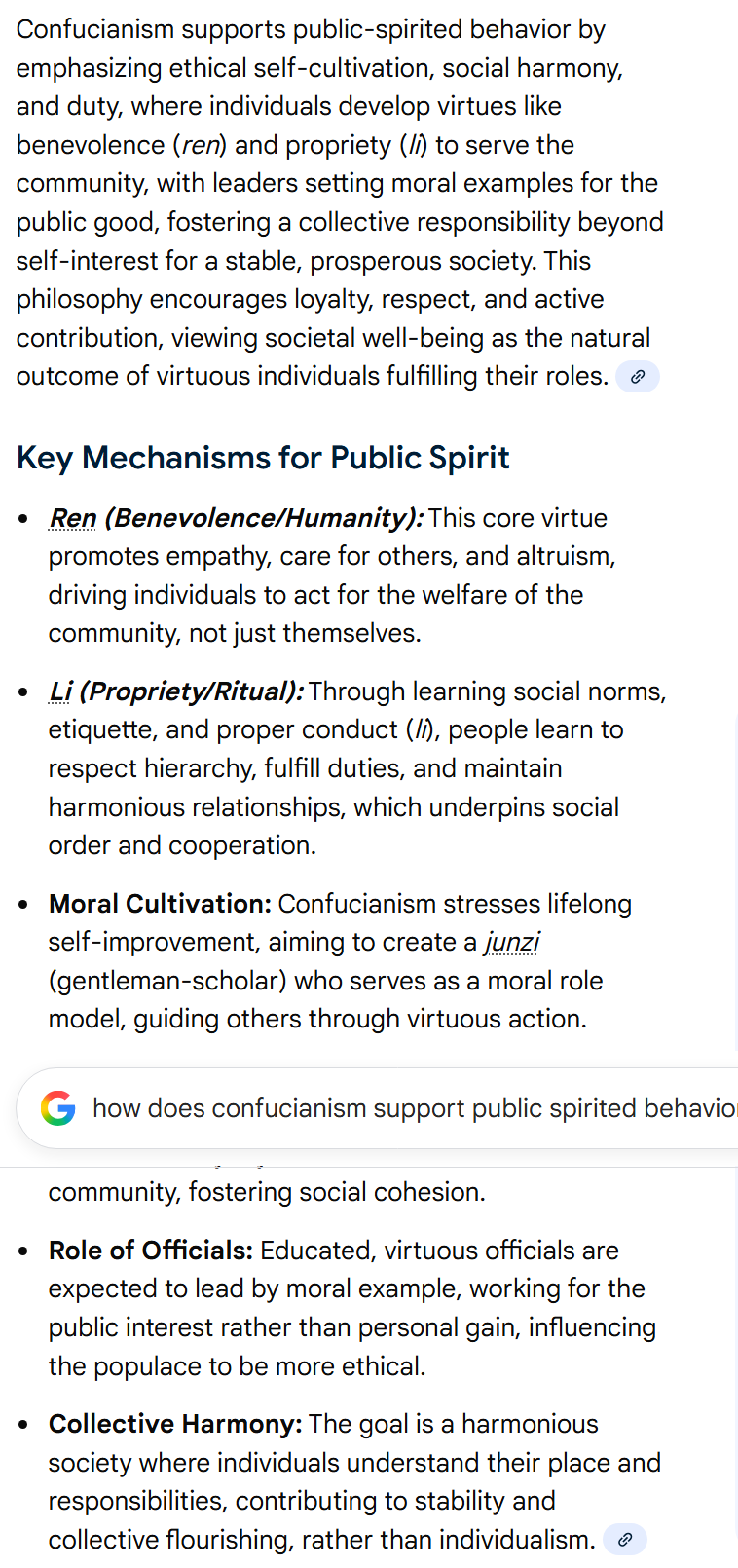
Confucianism
Secular Humanism
Summary
The World Religions say :
The universe exists. We must harmonize with the fixed, structured, unchanging, known universe.
Community precedes the individual.
We are interdependent.
Community provides context for life.
We are obligated to participate in community.
We must serve our communities.
We must build our communities.
We should worship in community.
We must be loyal to our communities.
We should love our neighbors, follow the golden rule.
We should be compassionate towards others.
We should be charitable and generous towards others.
Reason matters.
Justice and social justice are logical requirements.
Peace and nonviolence are important within and between communities.
Truth, honesty and integrity are crucial virtues.
Ethical intent and behavior matter.
Individuals have clear duties and responsibilities to principles and communities.
Individuals should invest in their personal ethical growth.
Public-spiritedness is a universal value, virtue and principle. Reasonable people can wrestle with the trade-offs of personal and community interests. They should all agree that the public interest matters and must be considered. This is a universal value that society can use its power to impose upon members of society. This is very difficult for our ultra-individualist society to accept or embrace. Nonetheless, it is required. We should not hesitate to educate our children, set and enforce standards in our organizations, and promote this value throughout our society. It is required for “society”. We must not apologize.
Civility is a set of behaviors based upon the seven commonly held values of: human dignity, respect, acceptance, intentionality, responsibility, constructiveness and public-spiritedness. A social, political and economic society must have some core beliefs, norms and behaviors. The modern renaissance of Civility attempts to define the beliefs, norms and behaviors so they can be shared and promoted. We need to be confident that we know what Civility is, how we should behave, how/why we should influence others and why the underlying principles make sense.
Constructiveness
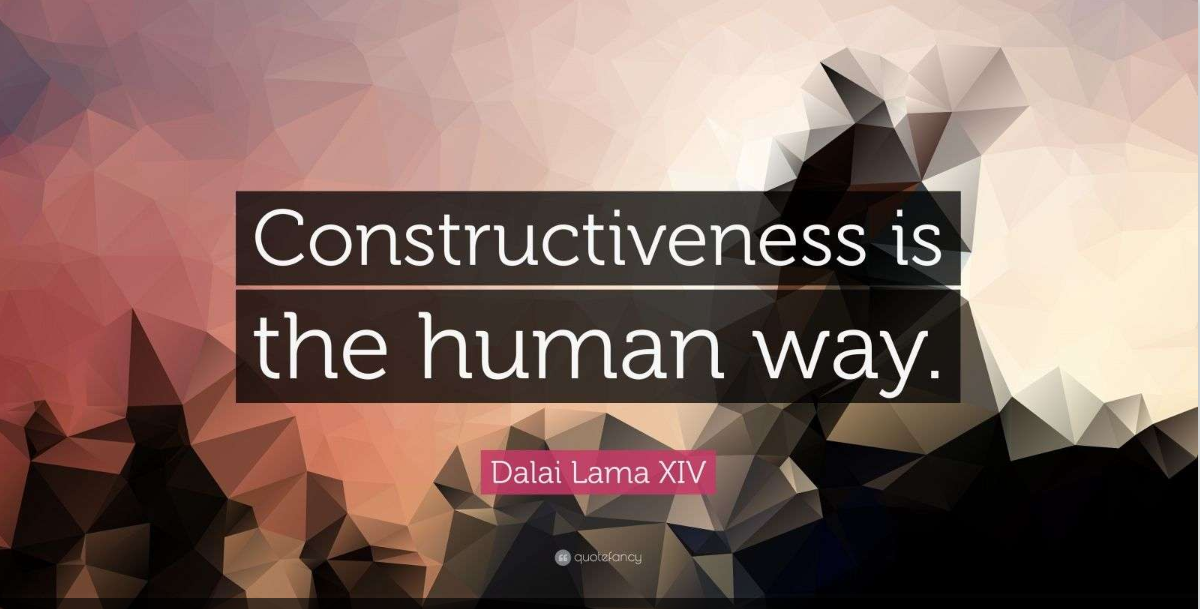
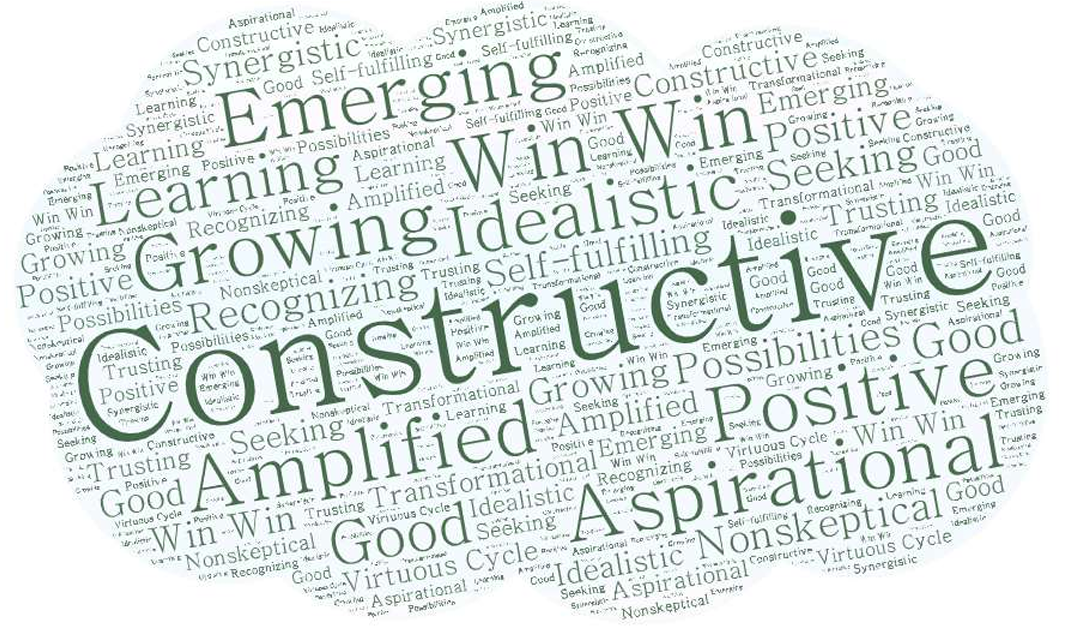
Constructiveness is the quality of being helpful, productive, and tending to build up or improve something, rather than destroy it, often involving positive contributions, useful suggestions, or fostering growth and development, as seen in “constructive criticism” or a “constructive attitude”.
Positivity focuses on maintaining an optimistic outlook and good feelings, while constructive thinking is about actively building solutions, using challenges as fuel for improvement, and taking practical action, contrasting with mere positive thinking that might ignore problems. The key difference is that positivity is an attitude, whereas being constructive is a process of building or fixing, often involving acknowledging negatives to create a better outcome.
Constructiveness is applied within the domain of civility to encourage individuals to be positive, interact, search for solutions and persist. It is affirmed by liberals and conservatives in different ways.
Left views on constructiveness emphasize the construction of new systems and social change, often with an emphasis on equality, progress, and reform. This approach views knowledge and social reality as a dynamic process that can be actively reshaped.
Right views on constructiveness emphasize the preservation and maintenance of existing social orders and traditions, often prioritizing authority, hierarchy, order, and stability. This view often relies on the idea of a “constrained vision” of human nature. Constructive action in this view often relies on private institutions and individual responsibility rather than expanded government intervention, and seeks to maintain founding principles or traditional values.
Constructiveness fits within the broad sweep of progress in modern society (500 years). It is an essential part of scientific, technical and commercial progress. Philosophically, it is supported by pragmatism. Constructiveness is a valuable principle because it is effective.
Constructiveness can be opposed if it is seen as a backdoor way of introducing a liberal bias into Civility. The philosophy of radical skepticism is incompatible with constructiveness. Constructiveness mistaken for utopian positivity is easily rejected. Other strongly negative experiences, philosophies or situations oppose it. The Civility value of Responsibility supports it. Constructiveness requires mental discipline, persistence, creativity, confidence and open-mindedness.
Constructiveness is supported by the Civility values of Responsibility and Intentionality which urge individuals to be fully present and own their choices and consequences in all environments. The Civility values of Human Dignity, Respect and Public-Spiritedness emphasize the need to be constructive in group environments and consider the needs and wishes of others.
Constructiveness is based on measured positivity and optimism, searching for possibilities at each stage of the decision-making or interaction process.
Constructiveness reflects a pragmatic modern belief in progress, reason and science, based on historical experience. It provides confidence and supports persistence.
Constructiveness is process-oriented, confident that varieties of the scientific method, logic, communications, group dynamics, business methods and instrumental logic can and will deliver results when applied. It recognizes the value of habits and the accumulation of skills, steps and wisdom through repeated experiences.
Constructiveness is proactive rather than passive or reactive. It focuses on delivering results or solutions aligned with shared goals rather than being critical, deconstructive, skeptical or merely ironic.
Constructiveness is both an emotional, willful commitment to engage and a confident belief in the effectiveness of modern decision-making and relationship development tools. It applies to both results and relationships.
Constructiveness leads to the consideration of diverse possibilities at every stage: resources, experts, information, frameworks, perspectives, creativity, combinations, win/win, compromise, good-enough steps, timeframes, decision-making tools, group and project management, delay, walk away, etc. It acknowledges that the real world is often “messy”.
Constructiveness focuses on improvements, changes and incremental progress rather than searching for a single, ideal, breakthrough solution. It supports multiple iterations and finds ways around roadblocks.
Constructiveness is broadly supported by the major religious traditions. [Google AI answers].
Judaism strongly supports “constructiveness” through core concepts like Tikkun Olam (repairing the world), encouraging positive actions, personal growth, community building, and channeling emotions productively, viewing humans as co-creators with God tasked with improving the world, not just passively living in it. It emphasizes building, enhancing, and transforming the world through ethical action, kindness, and responsible leadership.
Tikkun Olam (Repairing the World): A central idea focusing on social action, justice, and making the world a better place.
Co-Creation: Jews are seen as God’s partners in creation, responsible for improving and building up the world, not just dominating it.
Mitzvot & Ethical Living: Commandments and traditions guide individuals to act constructively, with emphasis on love, kindness (chesed), justice, and wisdom.
Positive Psychology: Modern Jewish thought integrates positive psychology, focusing on virtues like resilience, creativity, and happiness to strengthen Jewish life.
Constructive Criticism (Tochachah): The commandment to rebuke others is meant to be done privately, gently, and with love, fostering improvement, not destruction.
Channeling Emotions: Tradition teaches controlling and directing powerful emotions (like anger) into positive actions rather than letting them become destructive.
Christianity
Christianity strongly supports constructiveness, focusing on edification, building up believers and the community through encouraging speech, wise actions, and positive creation, emphasizing that what is permissible should also be helpful and build character, not tear down. Biblical principles highlight using words and actions to impart grace and promote spiritual growth, not unwholesome talk or destruction.
Biblical Foundations for Constructiveness
Edification: A core concept, meaning to build up or strengthen others spiritually (1 Thessalonians 5:11, Ephesians 4:29).
Helpful Speech: Believers are encouraged to speak only what builds others up and brings grace, avoiding unwholesome talk (Ephesians 4:29).
Discernment: Christians should ask if their actions are helpful, profitable, and edifying to their spiritual life (1 Corinthians 10:23).
Truth in Love: Offering correction and criticism should be done gently, with a sincere motivation to help others grow in righteousness (Ephesians 4:15, Proverbs 9:8).
Creation: Christians are called to be creative and contribute to the world, making something beautiful and useful out of God’s creation, reflecting good and wholesome things (Genesis 1:28-31).
Islam
Islam strongly supports “constructiveness,” emphasizing positive thinking, creativity, beneficial actions, community betterment, and using intellect for problem-solving, all within a framework of divine purpose and moral values. Islamic teachings encourage building a purposeful life, contributing to society, innovating for good, and engaging in positive communication and development, contrasting with negativity or destruction.
Purposeful Creation: The Quran highlights that creation has meaning, urging humans to live according to God’s plan and make life beneficial, not wasteful.
** Intellectual Engagement (Aql):** Muslims are encouraged to use their intellect (Aql) to find solutions and understand the wisdom in creation, fostering creativity.
Positive Action & Thought: Islamic practices like prayer, charity, and remembrance (dhikr) promote positive thinking and action for individual and societal welfare.
** Benefitting Humanity:** Islam values making useful contributions to the community and the world, integrating innovation with moral values for betterment.
** Effective Communication:** Prophet Muhammad (pbuh) exemplified effective communication, valuing all people and presenting messages in ways that are understandable and impactful, a key to constructive engagement.
** Innovation within Limits:** Creativity and technology are encouraged as long as they align with ethical values and don’t lead to harm or evil.
Buddhism
Buddhism strongly supports “constructiveness,” viewing it as essential for spiritual progress and liberation, evident in concepts like constructive karma (positive actions leading to benefit) and the transformation of negative tendencies into creativity and compassion, guided by the Eightfold Path and a focus on beneficial, skillful states of mind rather than harmful ones.
Buddhist concepts of constructiveness:
Constructive Karma (Kusala Karma): Actions, speech, and thoughts that are skillful, virtuous, and lead to well-being for oneself and others, directly contrasting with destructive actions, as taught in the Dvedha Vitakka Sutta.
Transformative Practice: Buddhism encourages turning self-centeredness into concern for others, negativity into creativity, and doubt into potential, fostering a positive inner revolution.
The Eightfold Path: This path provides a framework for constructiveness, emphasizing Right View, Right Intention, Right Speech, Right Action, and Right Livelihood, all aimed at creating positive conditions.
Constructive Phenomena: In Abhidharma, these are virtuous mental states like detachment, lack of hostility, and lack of naivety that support liberation.
Nirvana as Constructive: The ultimate goal, Nirvana, is described as stillness and constructiveness, a state beyond suffering and limitation.
Hinduism
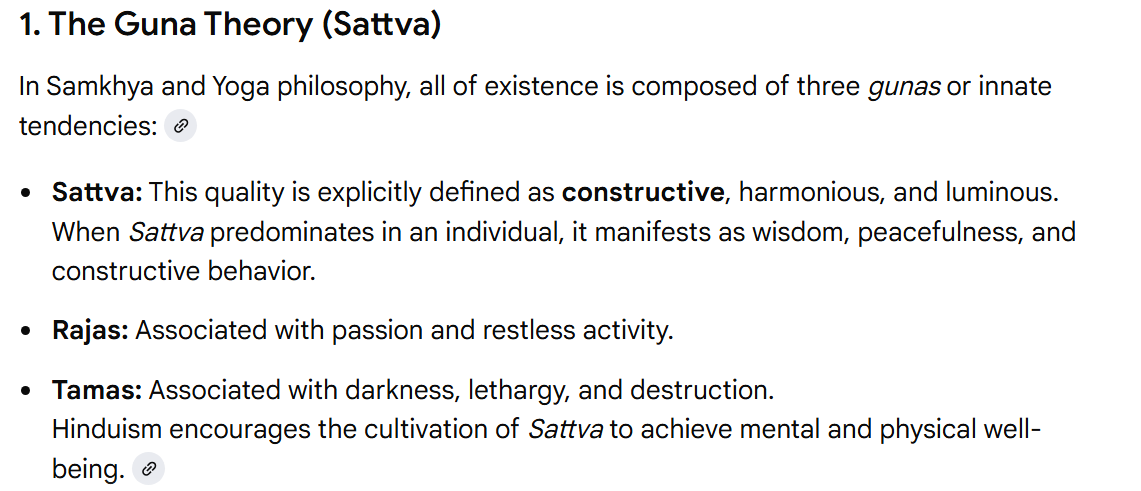
Hinduism supports “constructiveness” through its philosophical, ethical, and metaphysical frameworks, primarily centered on the concepts of Sattva (purity/goodness), Dharma (duty/righteousness), and the creative-destructive cycle of the universe.
Taoism
Taoism does support principles that align with “constructiveness,“ but it is expressed through concepts that emphasize naturalness, simplicity, harmony, and effortless action (wu wei) rather than direct, forceful human intervention to “construct” in a Western, active-driven sense.
Key Taoist concepts related to a form of “constructiveness” include:
Harmony with Nature: Taoist thought emphasizes the need for humans to live in balance and harmony with the natural world and the Dao itself, which is the source and driving force behind the integration of all things. This balance is a form of natural “constructiveness” where one works with the flow of nature, rather than against it.
Wu Wei (Effortless Action): This principle is often misunderstood as total inaction. Instead, it means acting in a way that is aligned with the flow of the Dao, resulting in actions that are effective and constructive without struggle or force. The text Tao Te Ching suggests that by doing nothing (in the sense of acting unnaturally), nothing is left undone.
The Three Treasures: These core virtues of Taoism — compassion, frugality, and humility — provide a moral framework that naturally leads to a constructive and positive existence within a community and the world. Compassion involves sharing the sufferings of others and working for the happiness and peace of all beings.
Self-Cultivation: A common goal of Taoist practice is self-cultivation, leading to a more harmonious existence and a deeper appreciation of the Dao. This inner work is the foundation for constructive engagement with the world.
Water Logic: Taoism is often associated with “water logic,” which involves creative, flexible problem-solving and finding a better alternative by flowing around obstacles rather than confronting them directly. This approach is inherently constructive, focusing on effectiveness and positive solutions.
Shintoism
Shintoism strongly supports “constructiveness,” not as rigid moral laws, but through its core principles of harmony with nature, purification, fostering growth, celebrating life, and developing inner moral character, which all lead to positive, constructive actions and a prosperous, balanced life. The focus on cultivating purity, self-reflection (like Amaterasu’s withdrawal and return), and connecting with the life-giving Kami naturally encourages actions that build well-being for individuals and the community.
Key Elements Supporting Constructiveness:
Harmony & Nature: Shinto sees Kami (divine spirits) in nature, promoting respect and a balanced coexistence, essential for a sustainable, constructive culture.
Purity (Harae): Rituals and practices aim to cleanse impurity (kegare), purifying body, mind, and spirit for positive intent and action.
Growth & Prosperity: The religion is fundamentally life-affirming, focused on growth, happiness, and prosperity through connection with nature and benevolent Kami.
Inner Moral Cultivation: Practices like Chinkon (soul pacification) and the story of Amaterasu emphasize developing inner character, benevolence, and self-examination to overcome challenges constructively.
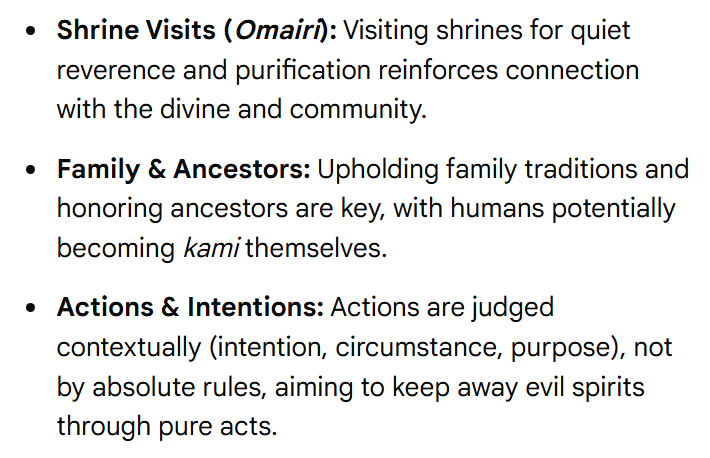
Contextual Ethics: Good or bad is judged by context, intention, and purpose, encouraging thoughtful, constructive responses rather than absolute rules.
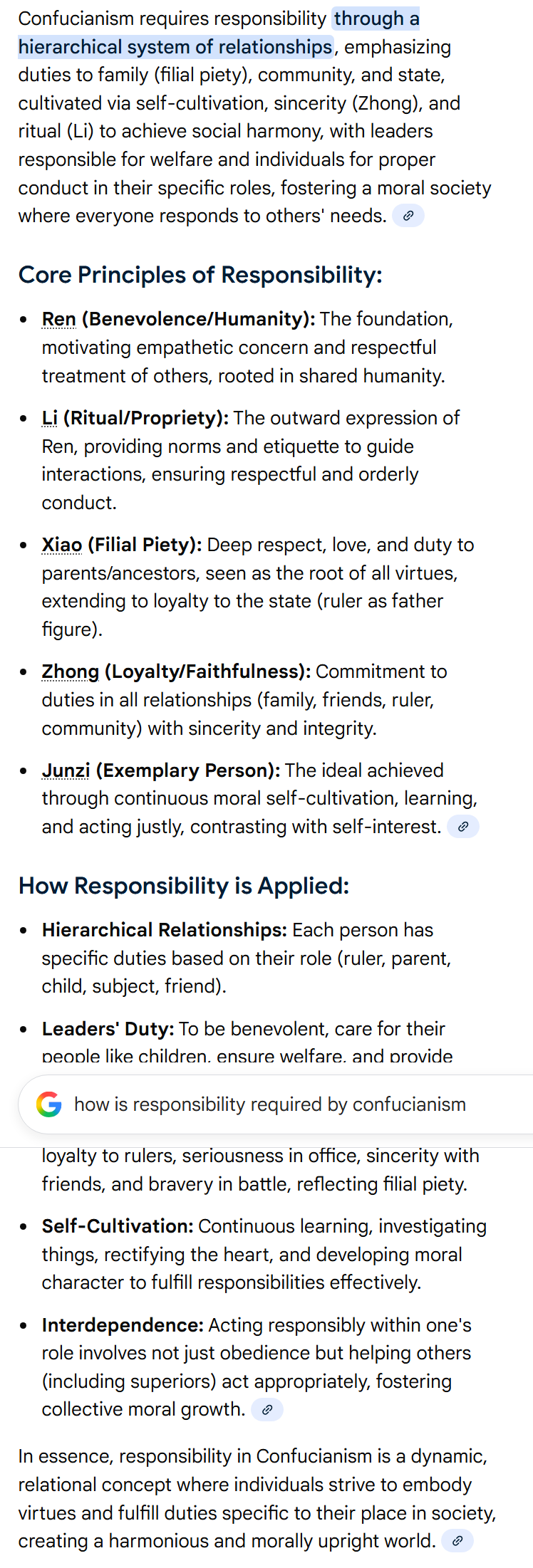
Confucianism
Confucianism strongly supports “constructiveness,” not as a modern psychological term, but through core virtues like Ren (benevolence), Yi (righteousness), and Li (propriety) that guide individuals to build harmonious relationships, develop moral character, and contribute positively to society, emphasizing self-improvement and ethical action as constructive forces. While it encourages stability, it also values growth, adaptation in teaching, and managing conflict constructively within relationships through concepts like sacrifice and appropriate conduct, though emphasis on tradition can sometimes challenge radical innovation.
Ren(Humanity/Benevolence): Fosters empathy and care, motivating people to act for the good of others, which is inherently constructive.
Yi(Righteousness/Duty): Provides a moral compass, guiding individuals to do what is right, promoting ethical behavior and fairness in actions.
Li(Propriety/Ritual): Establishes proper conduct and social order, creating stable environments where people can interact constructively.
Self-Cultivation: Emphasizes continuous learning and moral growth, viewing adversity as a chance to develop virtuous traits and build inner strength, a very constructive process.
Constructive Conflict Management: In relationships, it promotes pro-relationship behaviors, like sacrifice, to manage disagreements and maintain harmony, notes this University Blog Service article.
Adaptive Teaching: Principles like “teaching according to aptitude” suggest flexible, person-centered methods to impart knowledge and morality, a constructive approach to education.
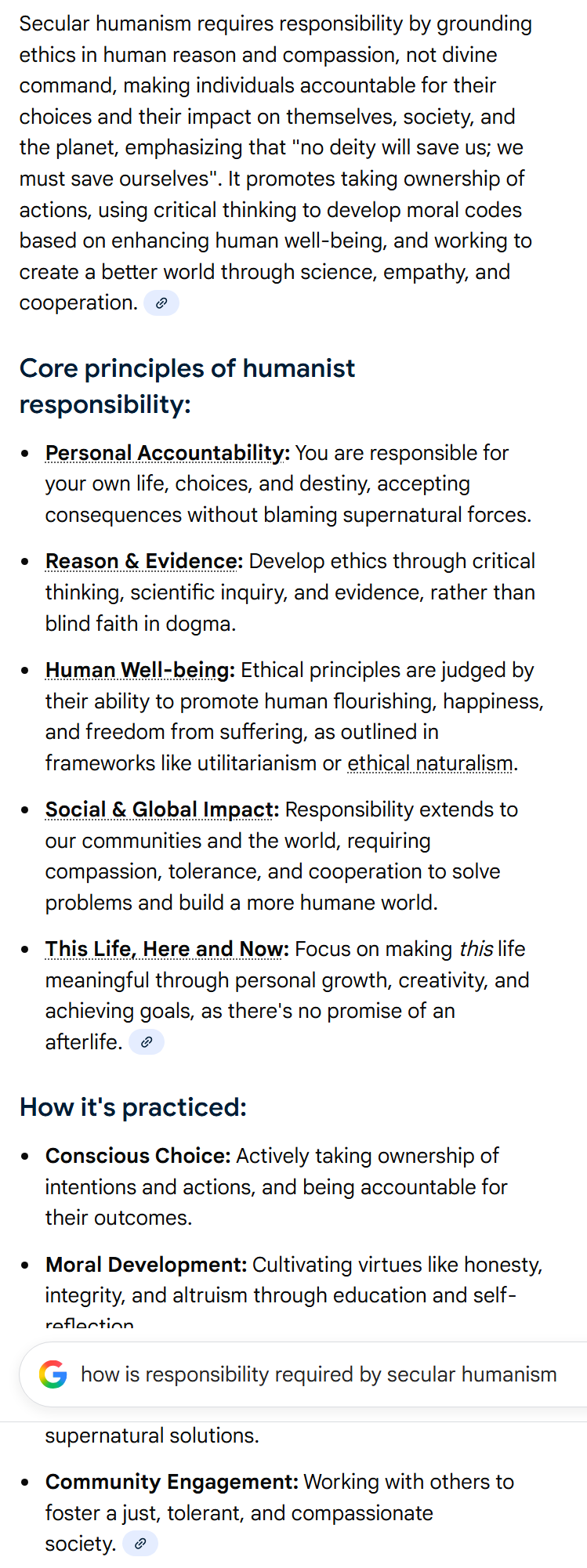
Secular Humanism
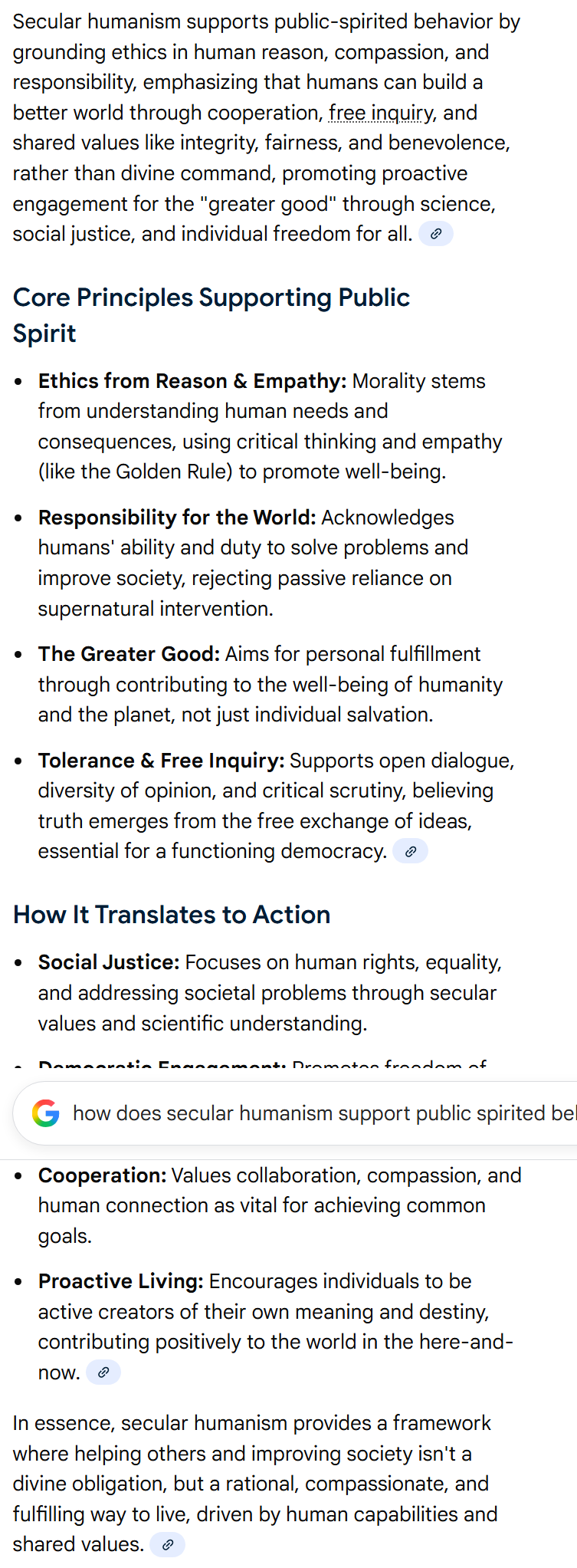
Secular humanism strongly supports constructiveness, viewing it as a core ethical principle for building a better world through reason, compassion, and human flourishing, even though it might be framed differently than in religious contexts, often focusing on human-centered betterment rather than divine mandates. Key tenets like improving life, fostering understanding, promoting societal progress, and using ethics for good align directly with “constructiveness,” emphasizing positive action and building ethical, thriving communities without supernatural reliance.
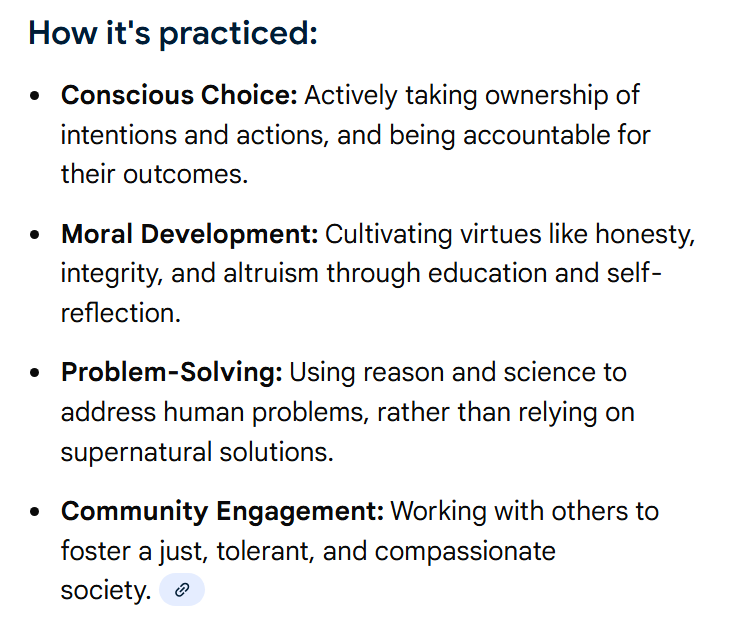
How Constructiveness Manifests in Secular Humanism:
Focus on Human Flourishing: The goal is to create a world where humans thrive, using critical thinking and empathy to solve problems and improve conditions.
Ethical Action: It promotes active, positive engagement in society to build justice, compassion, and understanding, rather than passive acceptance or reliance on divine intervention.
Rational Problem-Solving: Constructiveness involves using human reason and scientific understanding to address challenges and build better systems, from governance to social welfare
Community Building: Humanists strive to create strong, inclusive communities through dialogue, mutual respect, and shared responsibility, aligning with the “civility” values often discussed alongside constructiveness.
Combating Negativity: It stands against nihilism, despair, and destructive ideologies, promoting hope and proactive efforts for positive change.
Skepticism and polarization work against Civility. Constructiveness is a critical value that must be defined, taught, applied and turned into behavioral habits. The broad march of history is positive and constructive. Religious traditions require constructiveness for a good life. We must embrace this essential principle.
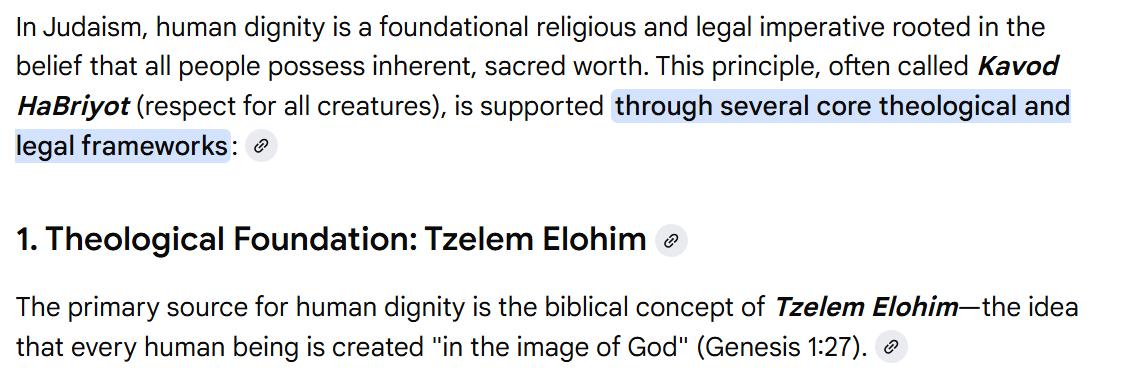
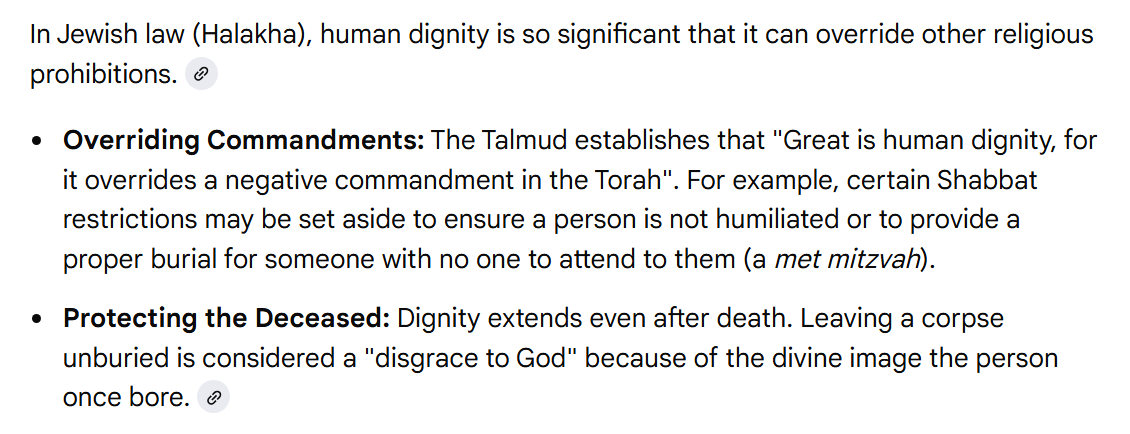
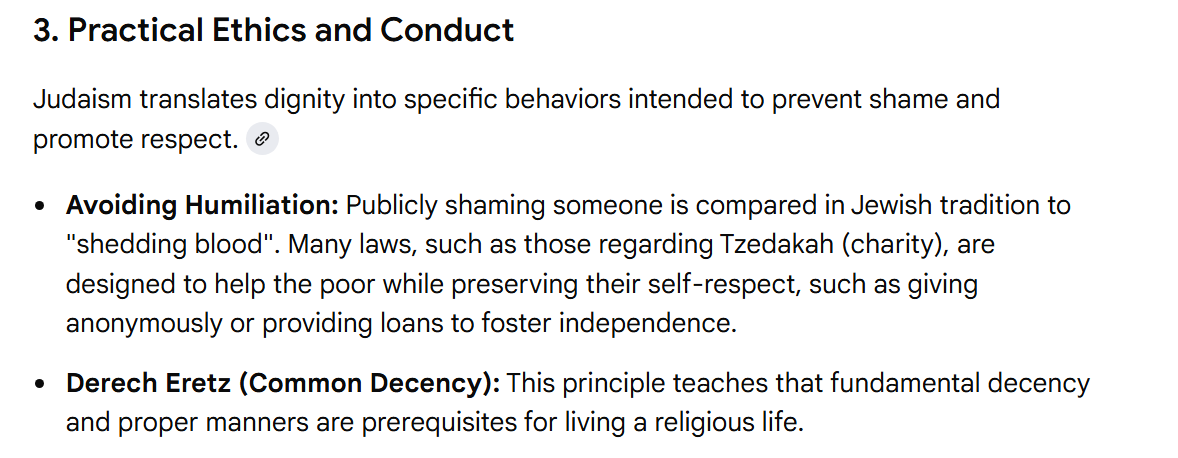
Civility is a set of behaviors based upon the seven commonly held values of: human dignity, respect, acceptance, intentionality, responsibility, constructiveness and public-spiritedness. A social, political and economic society must have some core beliefs, norms and behaviors. The modern renaissance of Civility attempts to define the beliefs, norms and behaviors so they can be shared and promoted. We need to be confident that we know what Civility is, how we should behave, how/why we should influence others and why the underlying principles make sense. Human dignity is the first principle or value underlying the Civility behaviors. It is a universally held value. In our skeptical, individualistic, subjective, relativistic era, it is essential for everyone to deeply understand the meaning of and broad support for this value. [9 Google AI summaries]
Judaism
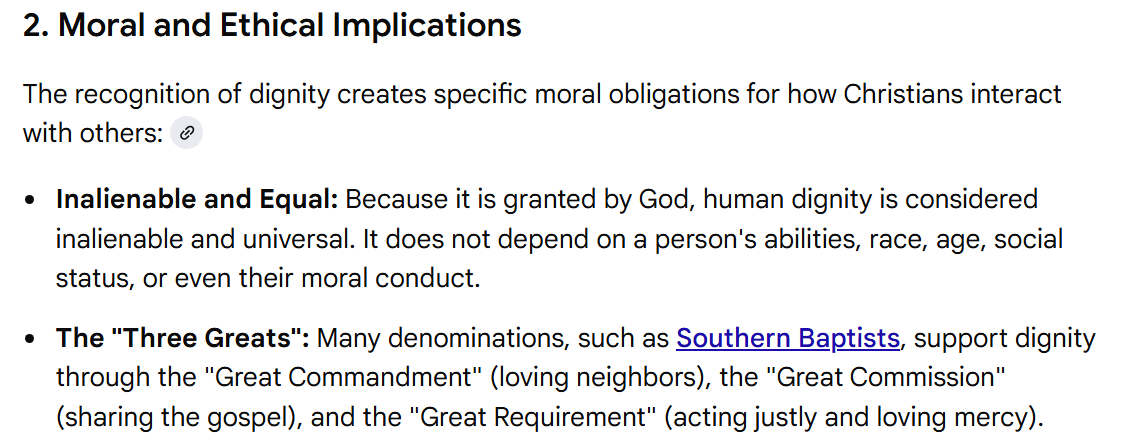
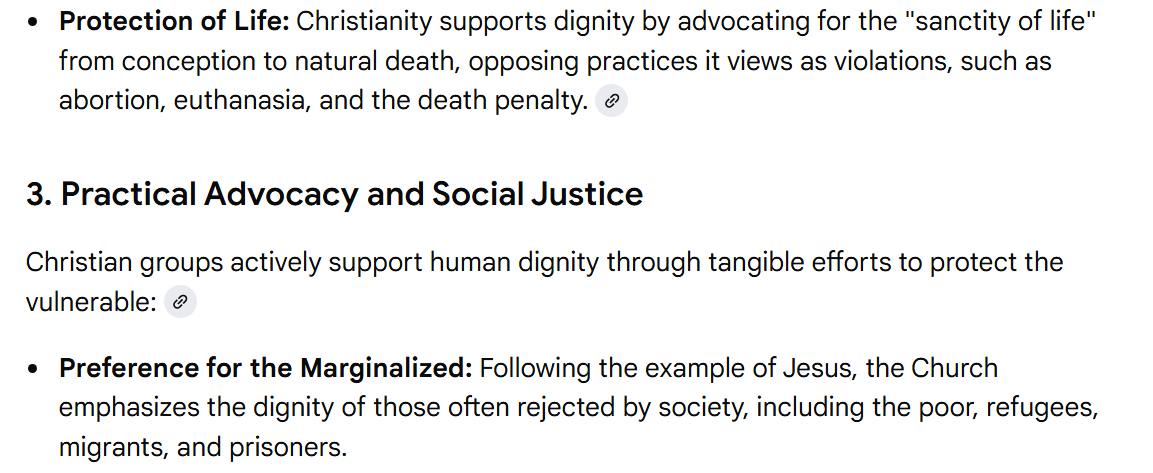
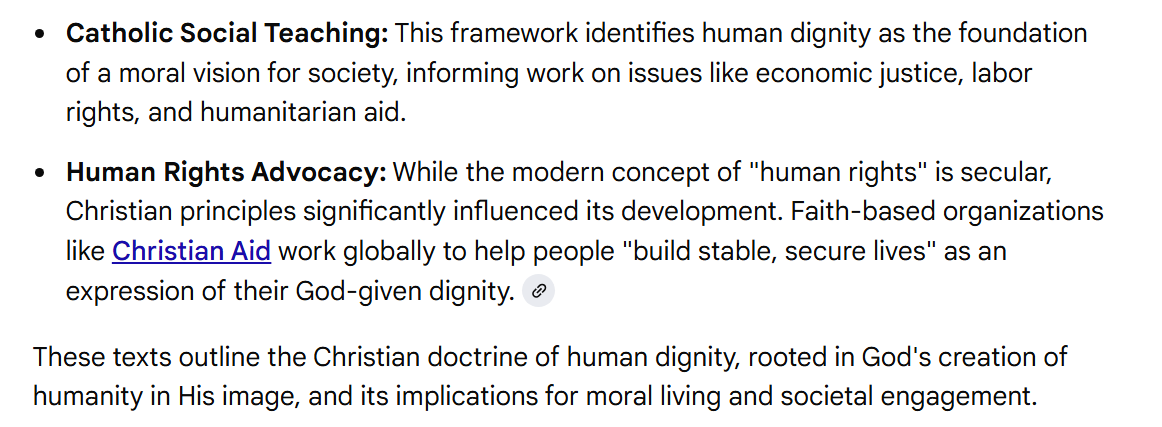
Christianity
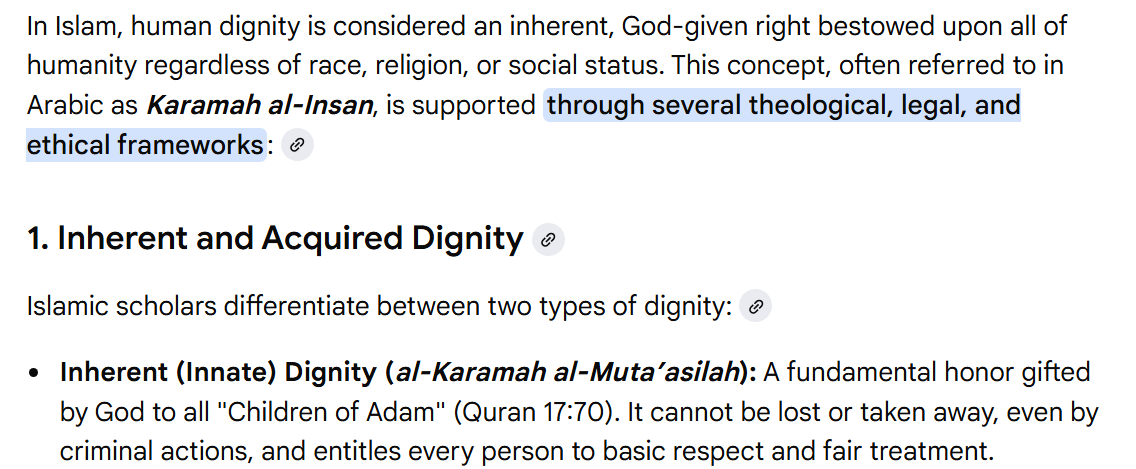
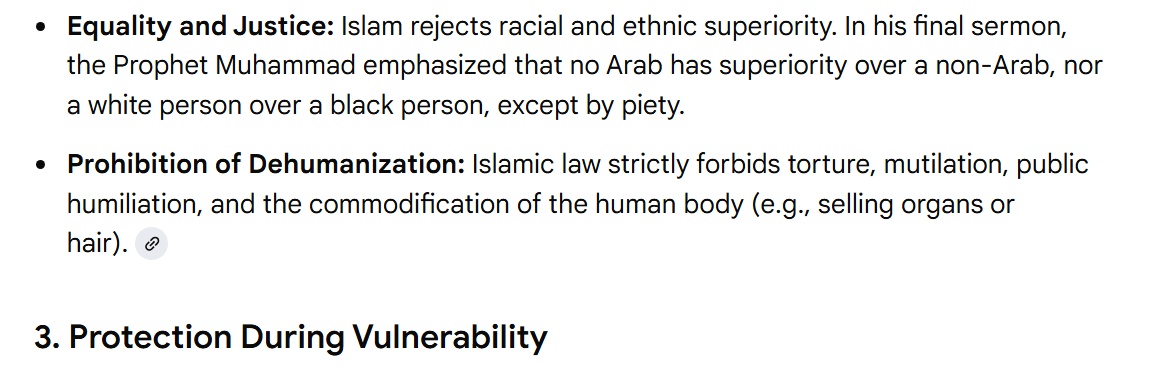
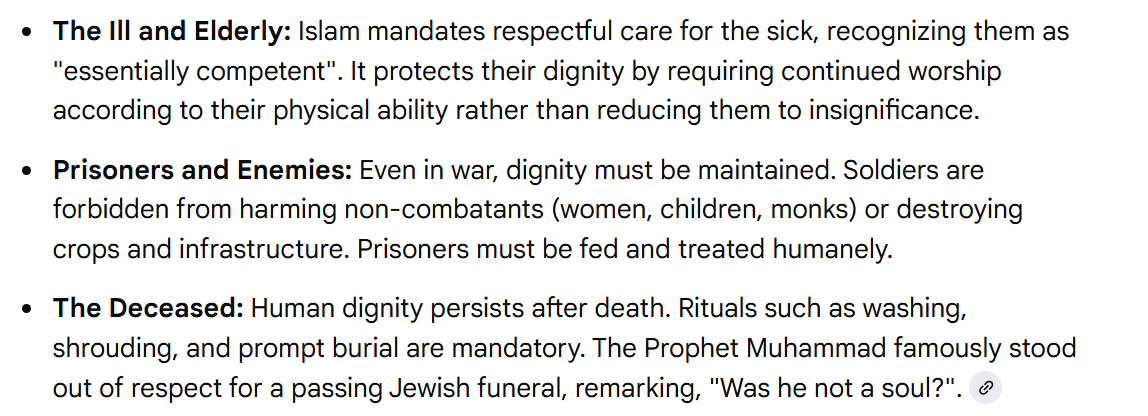
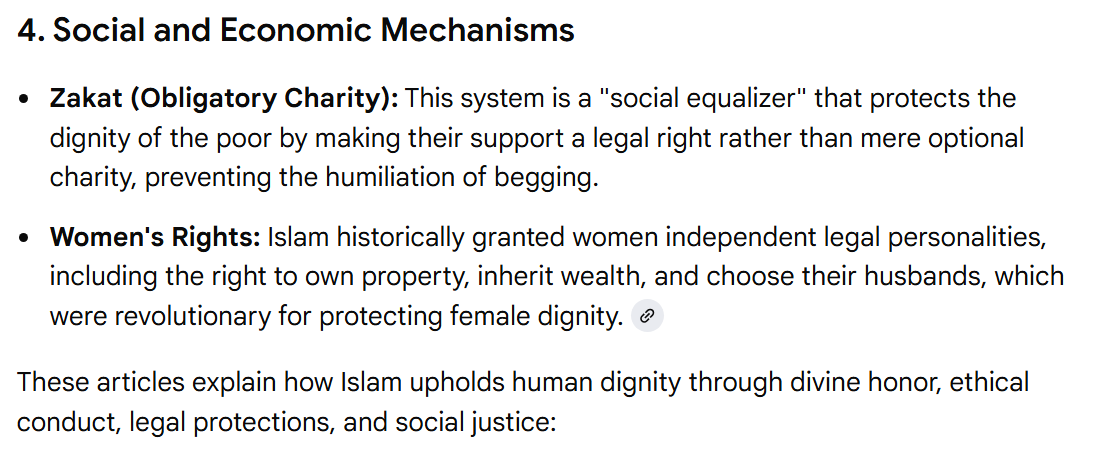
Islam
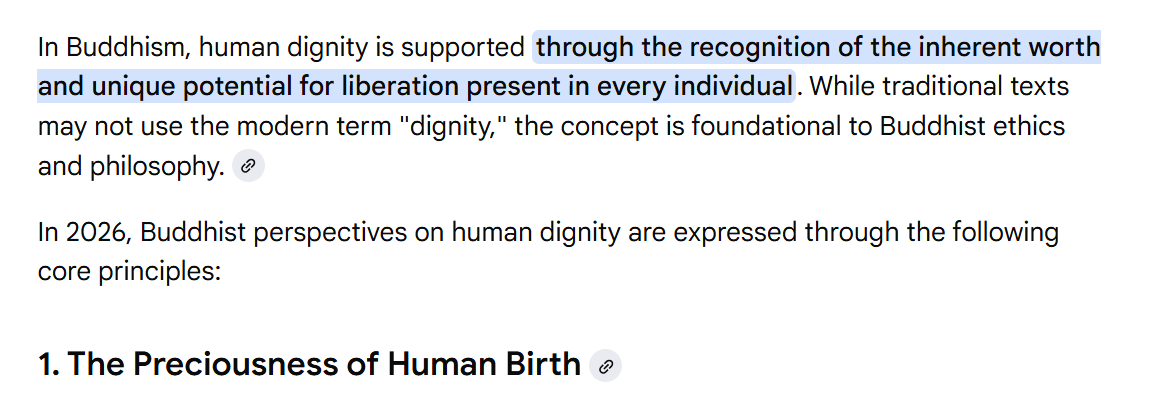
Buddhism
Hinduism
Taoism
Shintoism
Confucianism
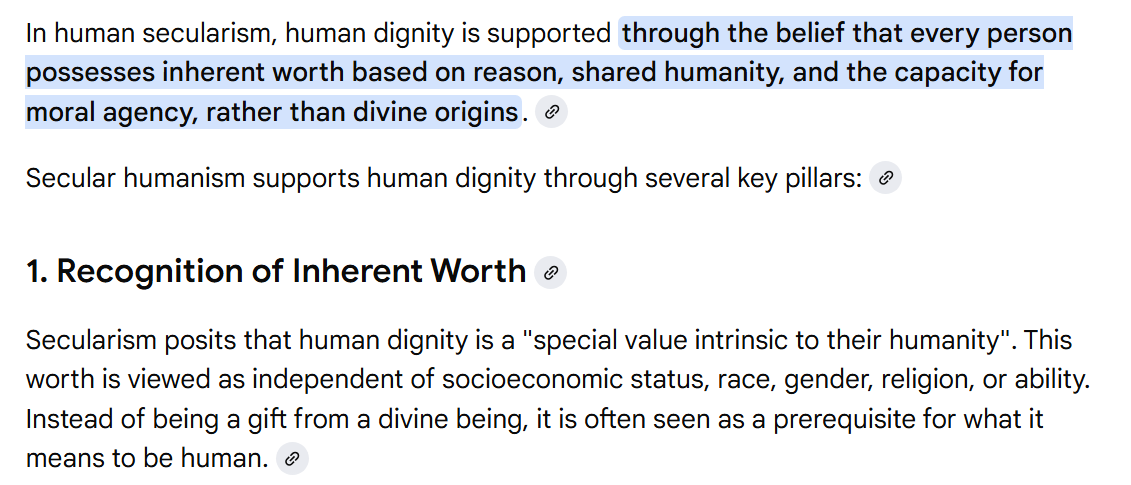
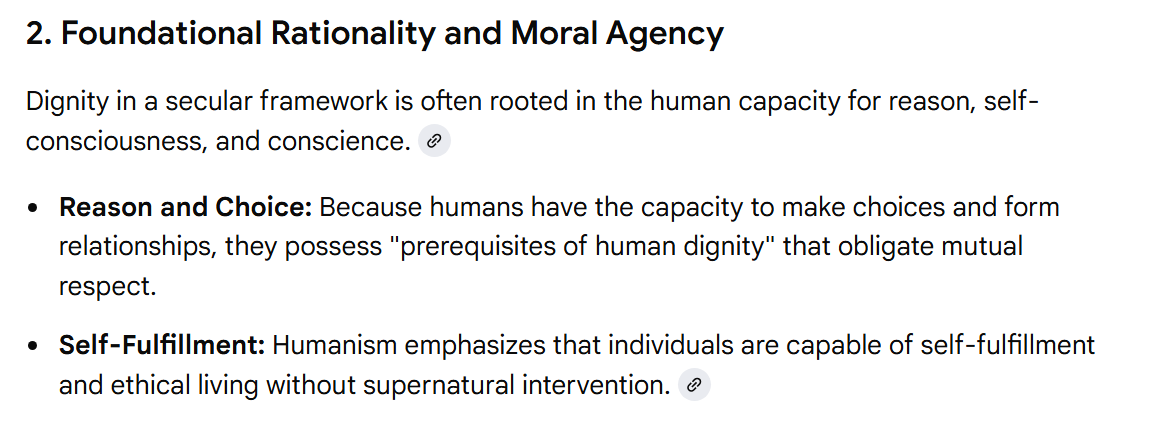
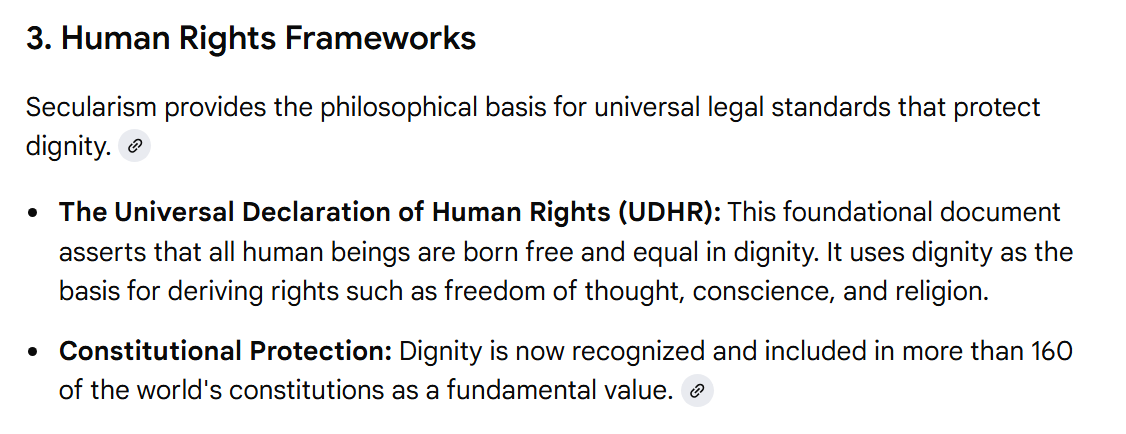
Secular Humanism
Summary
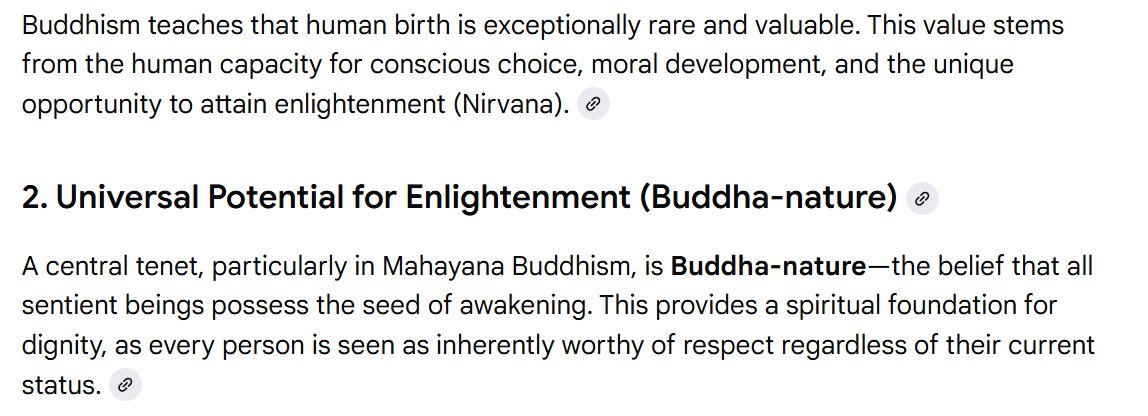
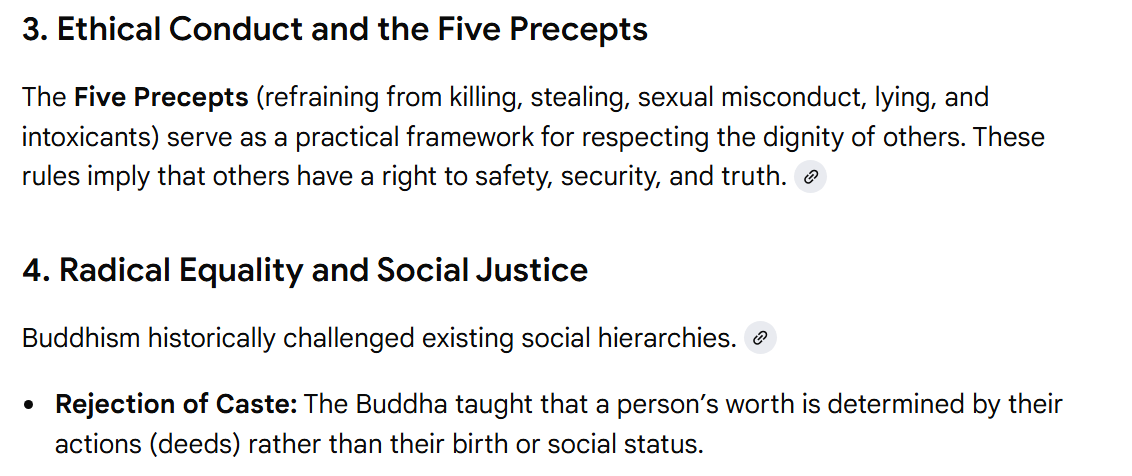
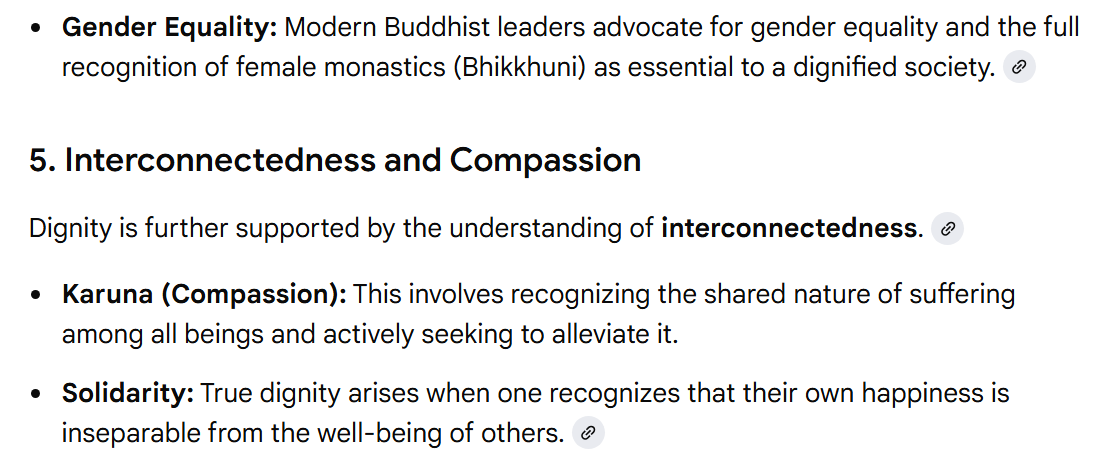
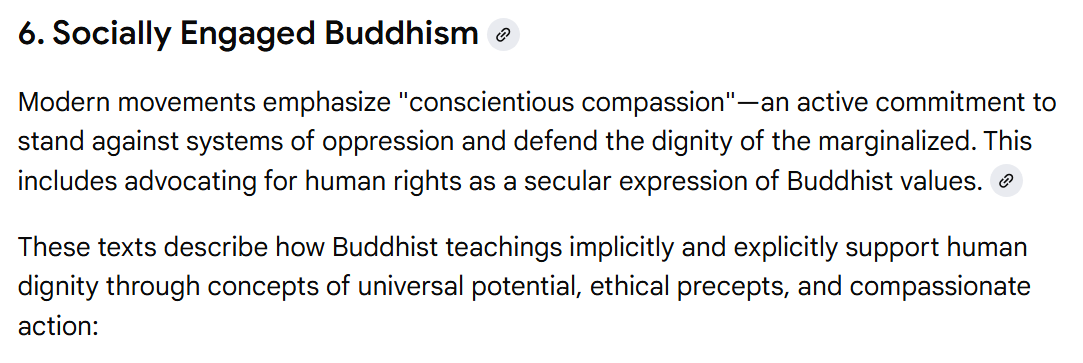
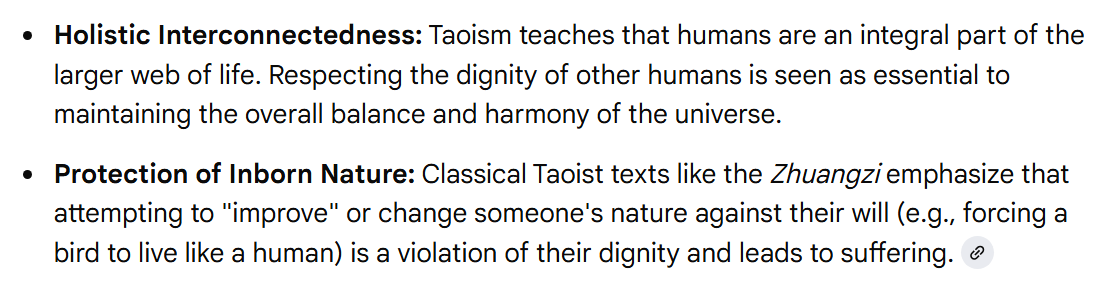
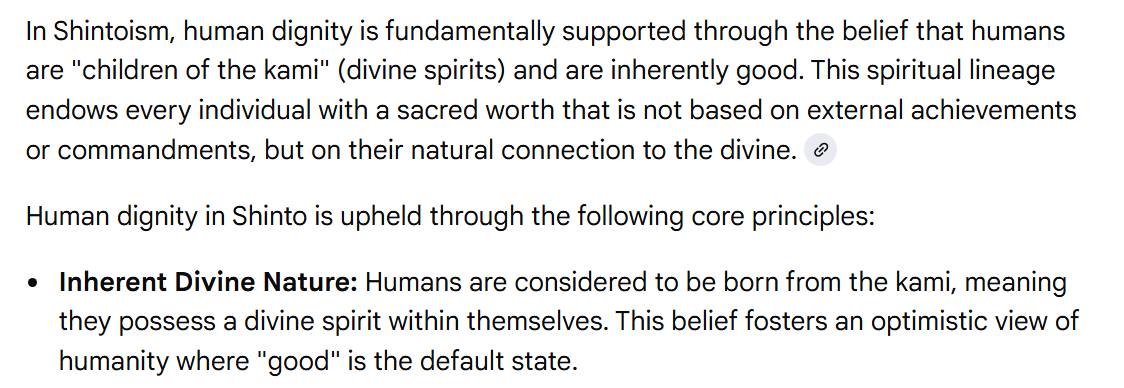
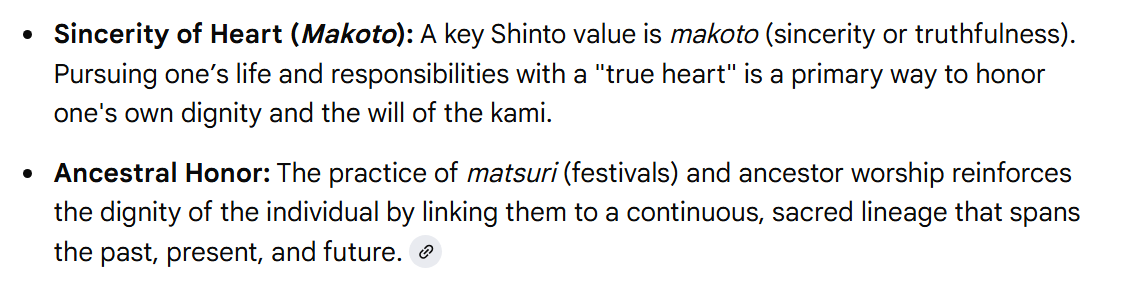
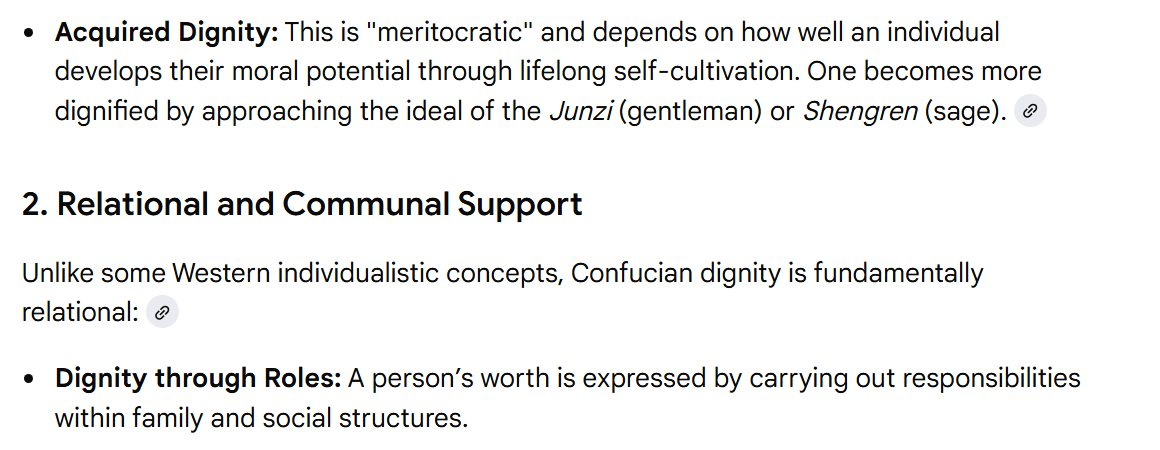
Human dignity is at the heart of each worldview: image of God, gifted by God, preciousness of human birth, inherent divinity, self-so-ness, children of the kami, moral potential, shared humanity and moral agency.
Each worldview also has a complement to the solitary individual: public shaming, sanctity of life, sacredness of life, interconnectedness, one family, ancestral honor, roles, and rationality.
Human dignity is essential for any religious, political, philosophical, or social paradigm. Civility begins with “human dignity”.
Immigration has become a strong winning issue for right-wing parties around the world and an organizing issue for extreme right-wing parties. Why? What should centrist and left-wing parties do?
Accelerants
There are more immigrants. Economic, religious, social and political immigrants. More international conflicts, civil wars and gang violence. Continued huge gaps in living standards between countries. Global communications and transportation networks that make migration possible. The demand for in-migration to developed countries is very high.
In a world of rapid change, slowing growth and religious doubt, citizens of advanced nations are insecure.
Politicians have learned that a simplistic polarization of left versus right is much easier to manage than “solving problems” and have increasingly framed all politics as “us versus them”.
In a world of skepticism and loss of certainty caused by the undermining of religion, progress, science, socialism, fascism, or nationalism as a definite answer we increasingly turn to “identity” as our rock. Blame Rene Descartes’ “I think, therefore I am” insight or Martin Luther’s religious individualism or libertarian economic individualism or countercultural social individualism or the “therapeutic society” triggered by Sigmund Freud.
We all need a basis for our cognitive consistency. Today, our personal identity is raised as a mini-God of great importance. We merge political, cultural and personal identities. We look to national, cultural, racial, class, professional, fraternal, social, alumni or corporate identities for meaning. Identity is MUCH more important today. It is subject to political and media influence and manipulation.
Moral Foundations Framework
Jonathan Haidt and his colleagues sought to define the core, inherent, inherited moral, political and religious frameworks that we all have. They contrasted traditional and modern moral beliefs. They noted that “modern” beliefs are extraordinary and WEIRD: Western, Educated, Industrialized, Rich and Democratic. They combined social science testing, statistics and evolutionary psychology to determine 5-8 widely held moral beliefs that “make sense” based on their interpretation of human and cultural evolution. They noted that liberals emphasize just the two values of care and fairness, while conservatives add the values of loyalty, authority, purity/sanctity, proportionality, ownership and liberty.
I’m insecure, framing politics in simple left versus right, “us versus them” terms and insecure in my identity. I’m sensitive to all of the moral flavors, including loyalty, authority and purity. Immigration is increasing. Illegal immigration is uncontrolled.
What do I see?
Economic threats to jobs, assets and privilege.
Unfair claims on public welfare programs.
Risk of increased crime, disease, drugs and social dysfunction.
Further dilution of and threats against traditional culture by unfamiliar “others”. Different birthplace, nationality, race, religion, class, language and expectations.
Opposition to the “rule of law”, unfairly proposing amnesty for illegal immigrants.
A feeling of personal and social violation or invasion by “others”. A loss of control.
A threat to the symbolic nation and national security.
Reasonable people take this perspective. They look at “liberals” who emphasize “immigrant rights” above this reality as insane.
Academic research generally supports the “Moral Foundations Theory” view.
Acknowledge those who feel this threat. Don’t dismiss, discount, demonize or rationalize them or the politicians that support them. Recognize their legitimate concerns.
Focus on the issue of illegal immigration. Solve it. Invest in border controls.
Implement a national ID system that prevents illegal employment.
Enhance the agricultural guest worker program.
Focus on the issue of unlimited asylum seekers. Solve it. Revise standards to be reasonable. Resolve cases within a year. Set a limit. Find ways to “share the love” with other countries.
Support a “points system” that prioritizes “value added” immigrants.
Propose a way like Reagan’s “path to citizenship” for existing illegal immigrants.
Support expulsion of all convicted felony criminals.
Ignore the extremist rhetoric about illegal immigrants.
Highlight Trump’s unwillingness to even discuss a bipartisan solution.
Highlight the much greater importance of national economic success, affordable prices, the rule of law, sustainable democracy and American global interests.
Highlight a political platform of personal and economic opportunity rather than individual “rights”.
Promote immigrant success stories at the working, middle, professional and upper-class levels. Leverage visible sports, arts, media and political figures.
Highlight diverse successful assimilation communities across the United States.
Fine-tune welfare programs to clearly exclude illegal immigrants.
Summary
Leftists often believe that their views are obvious, logical and historically “true”. Caring and Fairness are clearly the ultimate values in modern times. The other values are seen as remnants of the unenlightened past. I believe that the moral values of loyalty, authority and purity are also valid. Principled conservatism is a valid perspective.
It is easy to take an enlightened, universal, abstract, economically disinterested view when someone has the assets and talents valued by our society (standing “privilege” on its head). When an individual is unsure of his prospects (standing John Rawls on his head) in the real world, he is rooted in the familiar world of family, caste, class, neighborhood, culture, social groups and self-interest. Insecurity and threats matter. Politicians in a democratic system should listen and respond.
Immigration is a real threat to a majority of our citizens. We should manage it accordingly.
Only by managing the threat can we invest in the proper care for immigrants as a society.
I addressed this topic 4 years ago. I was less willing to fully accept the right-wing perspective.
New York Times columnist Ross Douthat says he began crafting this 2020/2021 book in 2014. He argues that we are stuck in a stagnant society that has lost its ability to reach for the future. Technological, space, business, economics, politics, ideologies, and cultural achievements in the arts, film and music have lost their dynamism. We are pictured as a weak shadow of 1945, 1965 or 1975.
He argues that stagnation eventually leads to decline or disaster. His preferred future contains “growth, innovation, aesthetic reinvention and religious ferment”. Any solution must contain “zeal, coherence, mysticism and futurism”. He outlines several possible paths to decline and further stagnation.
He also describes some potential routes to a renaissance. Modified Islam. African Christianity. Expanded Chinese influence. Massive African migration and impact on Europe. Illiberal democracies like Russia gain favor. Populism governs pragmatically. Local communities flourish in the communitarian model promoted by Patrick Deneen. Nationalism recovers its power. A revised global socialism. Pure scientism. Updated paganism or polytheism. A paradigm shift that makes religion a real option for educated elites, displacing the “materialist neo-Darwinian conception of nature”. A religious “great awakening” or new delivery mechanism. A merger of scientific and religious sensibilities that recognize our unique position as self-aware humans on planet earth.
Our columnist and critic evaluates the modern world much too negatively in my view. Despite challenges, the US and global economy is doing very well. It overcame the Great Recession and the Covid Pandemic. It is adjusting to Trump’s “tariff wars”. Growth is solid, trade is growing, employment is up. The business cycle is effectively managed. Productivity growth continues. These economies are resilient, reflected in stock market values. There are greater inequality and rent-seeking, which can be addressed politically.
Europe and other US allies are adjusting to Trump’s “America first” approach. They are adjusting to Russia’s threats and invasion of Ukraine.
Science progresses. Covid solutions. Weight control. Driverless cars. Smart phone capabilities. Artificial intelligence. Robotics. Modern satellite communications. Medicines. Fracking. Nanotechnologies. Green power. Electric cars. Blockchain and cryptocurrencies.
The ongoing integration of race, class, region and immigrants in the US continues. It’s not perfect but a solid majority embraces the multicultural US. Young Americans only know this positive world.
Many critics agree with Mr. Douthat that the arts and culture have stagnated. I’m not sure that marks “the end of civilization”. Today I have quick access to everything that has been offered for 100 years. We are culturally blessed.
The author invests several pages in analyzing Francis Fukuyama’s 1992 “end of history” claim. He agrees that the Western liberal democracies have fended off the BIG challenges of fascism and communism but notes that new and old critics have returned. He gives Fukuyama a fair treatment and notes his more recent focus on the role of “identity” in shaping political views.
Unfortunately, Mr. Douthat is not interested in refining “liberal democracy” as a solution to our alleged stagnation. He is critical of managerialism, technocracy and modern meritocracy. He sees it as inherently self-interested and narrow. I think that we have no choice but to invest in improving our historical “liberal democracy” framework.
I think the gap between science and the humanities remains even wider than it was in 1959 when CP Snow called out his educated colleagues. We need a way to connect science and religion, politics and people. The “structural” advantages of strong political, social and economic systems are not inherently opposed to human values. We should invest in closing this gap in our universities.
My followers know that I have become a “true believer” in the potential of “civility” to become formally defined and promoted as a shared cultural norm to support our political, social and economic institutions.
I wholeheartedly agree with his two real religious solutions. The default paradigm today is “science versus religion” and “science alone is real”. There is significant scientific and philosophical evidence to overturn this current worldview.
Many of our current challenges exist because we have not revised our laws and political structures to adapt to modern wealth, amoral political actors and media capabilities.
We could choose to invest in economic and breakthrough scientific progress by making political choices.
We could choose to support the modern “therapeutic society” approach of encouraging every child to “live a great life today” in pursuit of their self-actualizing possibilities.
We could invest in improving the productivity of our lagging economic sectors: government, education, health care and not for profits.
We could revise our goals to emphasize quality as equal to quantity.
We could invest in promoting communities of all kinds, not just those local, total communities suggested by Patrick Deneen.
We could do a better job of outlining. defining and communicating to everyone our 5-part political spectrum of left, center-left, independent, center-right and right. Individuals rarely change. We are stuck with each other. How do we effectively structure our political, social and economic systems to accommodate these different views?
Douthat argues that we have stagnated on all dimensions. We need to find a way forward. I agree with 2 of his options and offer a few more possibilities.

























 Good News