Modern History Index

257 items pulled from all arenas of life. Technology dominates, especially in the last century.

Grouping events into 40-year blocks shows 1940-79 as twice as dynamic as other eras.

1450 – 1779 20

1780 – 1819 12

1820 – 1859 16

1860 – 1899 31

1900 – 1939 47

1940 – 1979 99

1980 – 2025 32

Modern History: Biology and Life

1676 – Microscopic World

https://en.wikipedia.org/wiki/Antonie_van_Leeuwenhoek

1846 – Anesthesia / Modern Surgery

https://en.wikipedia.org/wiki/Anesthesia

https://en.wikipedia.org/wiki/Surgery

1859 – Darwin’s Theory of Evolution

https://en.wikipedia.org/wiki/On_the_Origin_of_Species

1865 – Germ Theory of Disease / Public Health

https://en.wikipedia.org/wiki/Germ_theory_of_disease

https://en.wikipedia.org/wiki/Louis_Pasteur

1896 – Psychoanalysis

https://en.wikipedia.org/wiki/Louis_Pasteur

1918 – Spanish Flu

https://en.wikipedia.org/wiki/Spanish_flu

1928 – Penicillin

https://en.wikipedia.org/wiki/Penicillin

1943 – Modern Drug Development

https://en.wikipedia.org/wiki/Streptomycin

1953 – Structure of DNA – Watson & Crick

https://en.wikipedia.org/wiki/History_of_molecular_biology

1956 – https://en.wikipedia.org/wiki/Chemotherapy

1959 – Horizontal Gene Transfer described as complement to evolution

https://en.wikipedia.org/wiki/Horizontal_gene_transfer

1959 – Modern Synthesis of Evolution and Genetics – Mayr

https://en.wikipedia.org/wiki/Modern_synthesis_(20th_century)

1960 – Oral Contraceptive Pill

https://en.wikipedia.org/wiki/Oral_contraceptive_pill

1961 – Antibiotic Resistant Bacteria – public health concern

https://en.wikipedia.org/wiki/Methicillin-resistant_Staphylococcus_aureus

https://en.wikipedia.org/wiki/Antimicrobial_resistance

1963 – Mood Altering Drugs (legal)

https://en.wikipedia.org/wiki/Diazepam

1965 – Medicare Program

https://en.wikipedia.org/wiki/Medicare_(United_States)

1965 – US Life Expectancy Reaches 70

https://www.ssa.gov/OACT/TR/TR02/lr5A3-h.html

1967 – Heart Transplant

https://en.wikipedia.org/wiki/Heart_transplantation

1970 – Magnetic Resonance Imaging Scanner

https://en.wikipedia.org/wiki/Magnetic_resonance_imaging

1973 – Biotechnology / Recombinant DNA

https://en.wikipedia.org/wiki/Recombinant_DNA

1978 – IVF conception

https://en.wikipedia.org/wiki/In_vitro_fertilisation

1980 – Smallpox Eradicated

https://en.wikipedia.org/wiki/Smallpox

1981 – HIV/AIDS new disease and treatments

https://en.wikipedia.org/wiki/HIV/AIDS

1996 – Cloned Mammal

https://en.wikipedia.org/wiki/Dolly_(sheep)

1997 – Global Warming

https://en.wikipedia.org/wiki/Kyoto_Protocol

2003 – Human Genome Project

https://en.wikipedia.org/wiki/Human_Genome_Project

2010 – Affordable Care Act

https://en.wikipedia.org/wiki/Affordable_Care_Act

2012 – Designer Genes Possible

https://en.wikipedia.org/wiki/CRISPR_gene_editing

2019 – Covid Pandemic

https://en.wikipedia.org/wiki/COVID-19_pandemic

Summary

Microbiology, DNA, biochemistry. Miracles.

Modern History: Math (and Physics)

1543 – The Sun is the center of the universe, sort of, not the earth.

https://en.wikipedia.org/wiki/Nicolaus_Copernicus

1611 – The Sun is the center of the universe, sort of, and I have scientific, observational proof.

https://en.wikipedia.org/wiki/Galileo_Galilei

1637 – The world can be described mathematically, in 3 clear dimensions. We can convert geometry into algebra. We can “know” everything. And in my spare time I will revolutionize philosophy too.

https://en.wikipedia.org/wiki/Ren%C3%A9_Descartes

1654 – We can use algebra to fully describe uncertain, probable events. In my spare time, I will contribute to mathematics, physics, chemistry, theology and the scientific method.

https://en.wikipedia.org/wiki/Blaise_Pascal

1673 – The world can be understood. Calculus, philosophy, politics, law, library science, music, biology. Newton was greater. Leibniz gets second billing then and now.

https://en.wikipedia.org/wiki/Gottfried_Wilhelm_Leibniz

1687 – The world can be understood. Calculus, physics, astronomy, theology, optics, scientific method, alchemy. The reduction of physical forces to a simple equation is the highlight of all science. His legacy is largely misunderstood. He remained religious. He was a mystic and an alchemist. Describing events mathematically did not “explain” them. Aristotle’s emphasis on “final” causes still mattered.

https://en.wikipedia.org/wiki/Isaac_Newton

1734 – The world is dynamic and complex. Yet, we can still describe it mathematically. Let’s describe sets of differential equations. Defining several fields of mathematics. Showing how math can be applied to physics. Perhaps the greatest mathematician of all time.

https://en.wikipedia.org/wiki/Leonhard_Euler

1821 – Carl Gauss competes for the greatest mathematician of all time. Algebra, geometry, connections between subfields, many challenges solved, analysis, topology, non-Euclidean geometry, astronomy, calendars, advances in probability theory, maps, magnetism, optics and mechanics.

https://en.wikipedia.org/wiki/Carl_Friedrich_Gauss

1830 – The earth is not fixed. It evolves through long time as shown in the geological record.

https://en.wikipedia.org/wiki/Charles_Lyell

1847 – We can formalize Aristotelian logic in algebra as ones and zeros. Look out computers.

https://en.wikipedia.org/wiki/Boolean_algebra

1854 – Geometry is an analytical discipline. It is not limited to the simple Greek solids of Euclid. It can be applied to a variety of “spaces”. OMG!

https://en.wikipedia.org/wiki/Riemannian_geometry

1862 – Electricity and magnetism can be described by a set of equations, more complex, but similar to those of Newton describing gravity. We barely understand these phenomena, but the equations can predict how they function. Math and physics.

https://en.wikipedia.org/wiki/A_Dynamical_Theory_of_the_Electromagnetic_Field

https://en.wikipedia.org/wiki/James_Clerk_Maxwell

1895 – We can describe an abstract mathematics called “set theory” which describes how individual components relate to the whole. This approach can describe all formal logic. It can potentially serve as the basis for all of mathematics. It begins to fully address the idea of infinity.

https://en.wikipedia.org/wiki/Set_theory

1895 – The world is mainly comprised of waves of various lengths. Some wave lengths can be used to “see” within physical objects. We’ll call them X-rays.

https://en.wikipedia.org/wiki/X-ray

1911 – The atom is much more complicated than we thought. It has a center of protons and neutrons. It has multiple shells of probabilistically present tiny electrons. Atomic particles “disappear” as radioactive decay based on probabilities.

https://en.wikipedia.org/wiki/Ernest_Rutherford

1915 – Everything you thought you knew about the world is false! The speed of light is fixed. There is no physical background space “ether”. Speed of light is a rare constant. Energy and matter are interchangeable. Time and space interact. Time is relative. Space is warped by matter (gravity). In essence, several dimensions of reality cluster, pull, interact, interrelate together in mathematically describable ways. Everything is very connected. I worked the rest of my life to combine the laws of physics, but they did not comply.

https://en.wikipedia.org/wiki/Albert_Einstein

1925 – We’ve digested all of the new theories and experimental results. Everything in the universe is unavoidably probabilistic. Light is wave and particle. Space is relative. Electrons are probably in SPDF circuits. Particles are probably there! Measurements impact reality. Schrodinger’s cat can be dead or live. Spooky action at a distance. We can never really know “for sure”. This is before the exploration of sub-atomic particles which raises many more very difficult questions.

https://en.wikipedia.org/wiki/Quantum_mechanics

1927 – The universe was created from a single point in time. Confirmed in 1965.

https://en.wikipedia.org/wiki/Big_Bang

https://en.wikipedia.org/wiki/Cosmic_background_radiation

1928 – Many decisions can be analyzed as games and optimal strategies defined.

https://en.wikipedia.org/wiki/Game_theory

1931 – We cannot reduce any “robust” mathematics to simple formal logic or set theory. Infinity and other non-reductionist components stand in the way.

https://en.wikipedia.org/wiki/G%C3%B6del%27s_incompleteness_theorems

1942 – Power from atomic decay is possible.

https://en.wikipedia.org/wiki/Nuclear_power

1947 – A general solution strategy is available to solve optimization problems subject to multiple constraints.

https://en.wikipedia.org/wiki/Linear_programming

1960 – We live in a special place. Several physics constants are needed to allow life to exist and evolve. This set of constants is very unlikely.

https://en.wikipedia.org/wiki/Fine-tuned_universe

1968 – Systems are everywhere. They obey certain laws.

https://en.wikipedia.org/wiki/Systems_theory

1975 – There are fractional dimensions everywhere!

https://en.wikipedia.org/wiki/Benoit_Mandelbrot

Summary

Our universe has a well-defined structure. Observer perspective really matters. Mathematical equations are amazingly powerful. There is no simple deterministic universe. It is probabilistic “turtles all the way down”. Perspective is relative. New mathematical perspectives are impossible to predict and difficult to comprehend.

Don’t Be a Political Victim (Left)

https://www.modernmindmasters.com/victim-mentality-learned-helplessness/

Politicians have learned that it is easy for them and highly effective to portray policy positions in ways that make you feel victimized by someone. You blame that someone. You catastrophize the situation. You demonize the supposed villain. You look to the politician and political party for salvation. You attack the opposition. Our political process is polarized. We lose civility. The cycle repeats.

You can choose to reject the victim framework used by many politicians. Few political issues are simply black and white with clear villains and heroes. Most ongoing political issues remain because well-meaning people hold conflicting or non-aligned views. Politicians promote the victim framework and extreme positions because they are easy to communicate, they trigger emotions, and they can be linked to form a simple political platform. Red or blue. Liberal or conservative. Republican or Democrat.

An increasing number of Americans identify as “independents”, not strongly aligned with either party. You probably have strong opinions on some issues and weaker ones on others. You probably hold some combination of liberal, conservative and moderate views on various issues. Many politicians and political parties invest in creating “victim” language for policy areas. Once you become aware of these tricks, you can better choose your own policy views, avoid the victim game and hold politicians accountable for doing their jobs: representing all of their constituents and solving problems.

  1. Populists in both parties claim that the US economy is controlled by bankers, large corporations and Wall Street. Democrats used to monopolize this view, but the rise of the Tea Party made it a Republican favorite too. There is no denying that powerful economic firms try to use their power to extract returns from customers, suppliers, employees, the government and politicians. Don’t be a victim. Economic competitors, customers, suppliers, unions, regulators, courts, financial market and politicians have countervailing powers. Be a wise consumer. Buy local. Support reasonable regulations and anti-trust results. Promote competition. Hold politicians accountable for taking practical steps to maintain a reasonable balance in this area. Consider more than just simplistic “free market” or government owned firms approaches.
  2. Politicians claim American society is intentionally dominated by a commercial mentality that elevates consumption and production above other religious or philosophical values because this is necessary for a capitalist economy. This mentality is created through advertising, education and commercial experience. It privileges a reductionist, cost-benefit decision-making mentality above all other philosophies. It highlights growth at all costs and the use of GDP alone to manage human welfare. Citizens are seen as mere cogs in the machine. Democrats, liberal Protestants and Catholics promote this view. This world view sometimes inflates valid insights and criticisms into complete opposition to commercial activity. Few Americans buy this view, using their personal experience to offset the claims.
  3. Politicians promote a “small is beautiful” green paradigm. Large firms are inherently tainted by the profit motive, bureaucracy and technology. Buy local. Make it yourself. Form a cooperative. Buy organic. Oppose high technology solutions. Support international handicrafts and local artisans. Source sustainably raised food, fiber and agriculture. Fair trade. Farmer’s markets. Low technology. Recycling and reuse. The world has been changed by these green initiatives, changing mindsets and creating economic opportunities. Critics warn that there are risks from “virtue signaling” and imposing these beliefs and choices on others.
  4. Politicians claim that “foreign competition” is unfair. Other countries abuse their labor forces, abuse their environments, steal technology, extract skills and money from firms, negotiate better deals, use non-tariff tools to cheat, etc. This is an area that was mostly argued by the Democratic party until the last decade or so. The post WWII progress on reducing tariff and non-tariff barriers was mostly achieved at the global level with strong bipartisan US support. The US did not optimize its country-to-country results because it rightly saw that it could get better overall results through global negotiations. This “free trade” approach was used to rebuild Europe and integrate the US and global economies, to reduce the risk of war and allow the US to project its hard and soft power more cheaply and effectively than by using the discredited colonial/imperial approach. Global progress remains possible if the US, EU and China choose to make it happen. When this is not politically feasible, the second-best approach is to reduce trade barriers within larger blocks of countries. The US can choose to invest more resources in negotiating better trade deals. They are not simple. The US is not a powerful enough force on the global economic stage to simply enforce its will. None of us should see the US as a victim of foreign competition. The US has thrived in a 75-year period of freer trade. In a world of services, the US is well positioned to benefit from further investments in free trade.
  5. Politicians criticize the interests of the military-industrial complex. They claim that the economy, finance and foreign policy are operated on behalf of these interests who need war, terrorism or the threat of war to maintain demand for their products. They accuse these militarists/hawks of adopting and promoting a win/lose view of the world and an “end of the world” focus to support their causes and undercut any prospects for global peace and cooperation. The military is a relatively small part of the US economy and government. It was significantly reduced after the Vietnam War and the Cold War. Its credibility has been undermined through various political and military failures. Yet, pride in the US military remains strong. The military is considered a relatively modern organization. Although local support remains high for suppliers and bases, the defense department has downsized its operations through time.
  6. Politicians and conspiracy theorists have long described a global cabal of bankers and secret societies managing the world. The Catholic church, Jews, Arabs, Muslims, bankers, traders, Masons, Jesuits, universities, defense contractors and others have been implicated at various times. This view has been promoted by politicians on both sides from time to time. There are individuals, groups and organizations with significant global economic, social, political, legal, military and religious influence. The 5-fold growth in the scale of the global economy and the change in leading nation states and alliances since WWII make these conspiracy claims even more unlikely than they were in the world war times.
  7. Politicians question the legitimacy of national patriotism compared with the alleged ideal intentions of global institutions such as the United Nations. They naturally see the world as a whole and claim that only global organizations can manage global issues like war, trade, finance, climate, transportation, public health, poverty, economic development, law, oceans, and the environment. They argue that technical expertise is the key to managing these challenging issues with national interests taking secondary positions. The US has created, shaped and modified global institutions to support its global interests. It has not given up its ability to independently manage global issues and is very unlikely to pursue this strategy.
  8. Politicians elevate nature and the environment to highest policy goals. They argue that global survival is the first human priority and must be managed as such. They promote a long-term, risk-averse, ecosystems view. They often reject cost-benefit analyses and commercial incentives as being too narrowly focused to really solve problems. They highlight worst case scenarios to warn people of the dangers of weak protections. The US does not have a 5% Green Party as in many European countries. Politicians appeal to this set of “true believers” because they do prioritize these goals and invest time and money accordingly. Voters should evaluate politicians to see if they properly weigh these goals with others or elevate them to become super goals.
  9. Politicians of both parties offer up “the deep state” as another group of traitorous individuals to be feared. They allege that small groups of career bureaucrats in key agencies such as defense, intelligence, foreign service, FBI, justice and treasury control the information, models, scenarios, options and implementation of public policy. They are alleged to be self-interested and aligned with dark forces of the left, the right, banking, corporations, commissions, churches, etc. There are career employees in key positions in the federal government, universities, churches, media and not for profits who do wield significant formal power and influence over policymaking, politicians and communications. The US federal government allows presidents and political parties to fill the top roles in all government agencies. We have alternated ruling political parties for 75 years. We maintain freedom of speech, religion and assembly.
  10. Politicians allege that the judicial and regulatory state is captured by corporate interests. They highlight the differing amounts invested in lobbying, lawyers, advertising and soft expenses in influencing the government and politicians. They argue that differing salary levels inevitably lead staff to join corporations and external law firms. They point to Supreme Court decisions that undermine the ability of regulators to do their jobs. Congress has the power to define laws and regulations that are effectively administered and to manage the federal work force. Many government employees are loyal to the government and their departmental missions. Consumer supporting special interest groups and politicians have demonstrated a strong ability to fund their causes. Effective regulation is intentionally a constant struggle.
  11. Politicians take the libertarian view that powerful organizations of all kinds are a threat to individuals. They say that the police, military, security services, law firms, corporations, consultants, FBI, CIA and judges tend to take conservative, orderly, power protecting stances and actions. They propose strong external leadership, advocates, ombudsmen and watchdogs to monitor their activities. The US legal system provides avenues for politicians, regulators and citizens to monitor and challenge the actions of such organizations. The US political system is sensitive to the need to increase or decrease the structural power of such organizations.
  12. Politicians portray their opponents as extremists, far-left, far-right, Pinkos, nut jobs, wing nuts, socialists, anarchists, liberals, reactionaries, communists, fascists, doves, racists, globalists, isolationists … This straw-man approach is used to paint them as the opposite, to avoid finding common ground, to simplify, to fear, to build emotion, to catastrophize, to demonize, to disregard, to vilify … This is a highly effective technique. Modern individuals have disagreed about politics, religion, capitalism, philosophy and other nations at all times. We hold different political and moral views. The progress of Western civilization has come from finding ways to set aside these differences in law, commerce, political structures, contracts, science and common understanding. Stand up to the political communicators. Support your political beliefs and agents. Avoid needless, senseless, harmful polarization.
  13. Politicians of both parties routinely campaign against “Washington”. The government, departments, bureaucrats, judges, institutions, lobbyists, lawyers, contractors, advisors, consultants and politicians are all tainted as part of “the system”. Washington allegedly works against the interests of the common man, the Real America, the moral majority, the people. Every nation requires a political system. Ours could certainly be more effective, less wasteful, more responsive and wiser. Running against Washington accomplishes nothing. It is an effective political tool only because we allow it to be and do not hold individual politicians accountable for their actions in making real improvements and establishing structures that hold governments and politician more accountable.
  14. Politicians elevate human rights to the highest priority level. Freedom of press, speech and assembly. Food, housing, employment, social insurance, safety. Children’s, women’s, racial minority, gender, religious. Freedom of choice. They criticize others who don’t see these as absolute rights, not subject to trade-offs. They promote the definition and enforcement of strictly defined legal rights and funding. They see these rights as moral rather than political issues. Opponents liken this to raising a specific religious belief to become the law of the state. The importance of such rights and tradeoffs has evolved. The US political and judicial system is designed to manage this kind of debate. Politicians who vilify others on these issues are being quite righteous.
  15. Politicians accuse their opponents of voting fraud. This happens through voting registration rules, voting processes, voting regulations, technology, district boundaries, voting methods, and collusion. The evidence for a significant amount of individual fraud is non-existent. Evidence for voting results being shaped by the legal voting framework is strong. An increasing number of states have turned to independent redistricting commissions, open primaries and ranked choice voting. Courts have placed some limits on politically advantageous redistricting and laws. Until voters demand a neutral framework for voting we will have biased results.
  16. Politicians claim that the economy, culture, institutions and politics are unfairly controlled by rural, local, non-cosmopolitan, less-educated, less-experienced, parochial, fly over, backward-looking interests, who do not see the big picture or the long-term. They prevent progress and try to maintain the status quo. They are not interested in developing the economy, science, technology, information and culture of the future. Progressives often look past and discount conservative interests and views. The US political system is available for politicians to actively work together to constructively consider both sets of interests.
  17. Politicians elevate public education to be a near-perfect embodiment of the American way. They praise its leadership, teachers, students, processes and results in preparing all students for life, career and civic responsibilities. They support the high professional status of teachers. They actively ensure the “separation of church and state”. They oppose vouchers and school choice as inherently undermining public schools. They accuse those who question school performance and standards or promote competition as being anti-schools and turning teachers into victims. Education is mostly a local activity. Education supporters and critics have the opportunity to work together to develop more effective policies, programs and cultures for our children.
  18. Politicians have determined that some political views are so toxic and harmful that they cannot be tolerated in public debate, especially in educational settings where students are sensitive. They argue that these views are so harmful that they offset the rights of freedom of speech, assembly and religion. The conflict between basic rights in real world application has a long history. Absolute freedom is unattainable. Universities have generally been the most open and embracing of such rights of free expression, linked to their belief that public discussion leads to the truth.
  19. Politicians promote women’s rights as absolute. They must be enforced by the force of law in all situations. A woman’s right to make health care choices is complete. Differences between men and women are considered cultural, never biological. Compensation and career differences are due to the male patriarchy which holds down women as a group and individually. Affirmative action is required to make up for historic and ongoing systemic exploitation. The postmodernist view of powerful majority groups taking advantage of minority groups is believed and shared. Women are victims of the system. This is a minority view, even among women, Democrats and Democratic women. It provides others with an extremist example to oppose and caricature. It promotes a sense of victimhood rather than constructive steps to analyze, program and improve equal rights.
  20. Politicians also promote absolute racial equality. Historical progress in majority and minority groups is discounted because legal, individual and systemic racism continues to be experienced or directed at racial minorities. Legal cases about fine distinctions are treated as right versus wrong, good versus evil. Pragmatic policies to address income and wealth inequality are considered poor substitutes for direct actions to address racial differences. The postmodernist view of powerful majority groups taking advantage of minority groups is believed and shared. Support for affirmative action is required. Politicians who are not fully aligned with interest groups are shunned. These politicians argue that racism is a clear moral ideal which cannot be negotiated, fine-tuned or compromised. Their opponents claim that they are overly righteous and misguided.
  21. Politicians proclaim equal rights for many sexual orientations. They support a rainbow coalition that says that no one’s sexual rights are safe until everyone’s rights are safe and fully supported by society. Some politicians take the position that gender identity is purely culturally and individually determined, without respect to biology. The postmodernist view of powerful majority groups taking advantage of minority groups is believed and shared. Individuals with minority identities are considered victims of the binary majority. The greatly increased legal and social acceptance or embrace of diverse identities is discounted. Historians argue that personal interactions were the key to such progress, not abstract philosophies or political actions. Some proposals to expand equal opportunity are effectively criticized by opponents.
  22. Politicians claim that the “separation of church and state” must be total. Any use of religious organizations, programs, individuals, facilities or moral thoughts is inherently infringing on “freedom of religion”. Only a fully secular state, as in France, is consistent with liberty and democracy. Church property and activities should be taxed like all others. Churches and religious thought are inherently “conservative” thereby intruding on fair politics. Most Americans hold some degree of classic religious beliefs. They don’t see churches, per se, as threats to society, science or politics. They believe that individuals are aware, independent and wise enough to incorporate religion into their lives appropriately.

Summary

Politicians create issues to effectively define their positions and beliefs. They prefer “wedge issues” because they are most effective in separating individuals into opposing groups. They prefer “victim” issues because those who feel they are victims both oppose the other party and bond with the politician and his party. These distinctive, emotional issues are the most effective tools for politicians. As citizens, we must be aware of these attempts to oversimplify, to conflate, to polarize, to misrepresent, to motivate, to distract, to anger, to demonize and ultimately to disappoint.

There are “differences of opinion” on each item above. Some are honest, perhaps irreconcilable differences. Others are merely fabricated differences. Making a mountain out of a molehill. We have a personal and civic responsibility to be engaged, thoughtful participants in politics. We have allowed politicians to take misleading, divisive short cuts for much too long.

Community Organizations

George W. Bush promoted the idea of “compassionate conservatism” to enlist local community organizations in delivering government programs. The idea didn’t go far.

https://en.wikipedia.org/wiki/Compassionate_conservatism#:~:text=Compassionate%20conservative%20philosophy%20argues%20for,poor%20countries%20around%20the%20world.

I’d like to argue that the idea still has merit. America has been a unique western democracy that has promoted “associations” and “not for profits” as a 3rd alternative to public or private delivery of services. The US has been an innovator in creating organizations that serve the public. Conservatives have often supported these organizations as an alternative to government services. Historically, liberals have also supported many of these “3rd way” options.

Community gardens, food shares, farmer cooperatives.

Small business cooperatives, chambers of commerce, local industry and professional organizations.

Local church congregations.

Book clubs, public libraries, community colleges, public schools, colleges, lifetime learning.

Mutual burial, insurance, health and aid associations. Building & loans, S&L’s, credit unions.

Community hospitals.

Craft, teachers, trades, manufacturing, performers unions.

Civic organizations, civil rights, community organizers, human rights, bar association vetting, ACLU, civil defenders, environmental and trial lawyers, neighborhood associations and local political groups.

Community events, community services, living cooperatives, Habitat for Humanity, Meals on Wheels, environmental services, family, local services, YMCA, YWCA, Salvation Army, local sports teams and leagues, outdoors clubs, cooperative preschools, seniors’ organizations, sports clubs, volunteer fire and emergency groups, women’s shelters, youth organizations

Summary

Historically and recently, left and right have argued about who should provide public services. I think we need to walk away from the philosophical politics and find solutions that work. There are many NFP organizations that effectively deliver needed services. I think that they could deliver some services currently provided by governments. I hope that my left/liberal colleagues can step beyond the title “compassionate conservatism” or the corporate origin of “outsourcing” to embrace this potential for using a more effective means to deliver important public services.

Our Hamilton County: Parks, Recreation and Outdoors

https://www.mswoods.com/geist-homes-for-sale.htm

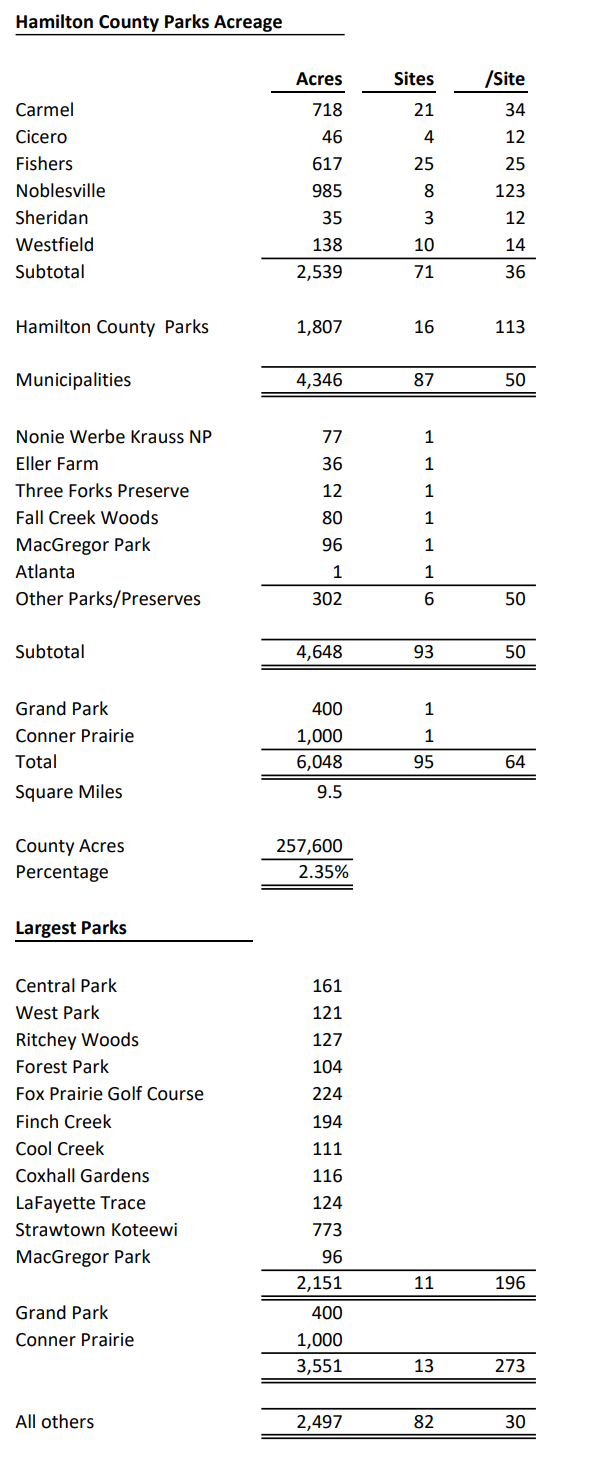
Hamilton County residents enjoy the outdoors benefits of the 2,000 acre Geist Reservoir, 1,500 acre Morse Reservoir and 25 miles along the White River.

https://www.visithamiltoncounty.com/things-to-do/outdoors/white-river/

Hamilton County has redeveloped 20 miles of rail-trails along the Monon Railroad corridor, 100 miles of dedicated trails and 500 miles of designated sidewalks/pathways for bikes and pedestrians.

https://www.bikethemonon.com/

https://www.visithamiltoncounty.com/things-to-do/outdoors/monon-trail/

Hamilton County residents enjoy easy access to nearly 10 square miles of parks and nature preserves. Conner Prairie and Grand Park stand out as national/regional assets offering 1,400 acres to youth sports participants and those interested in Midwest history.

https://www.grandpark.org/

https://www.connerprairie.org/conner-prairie-expands-and-enhances-visitor-experiences-with-announcement-of-24-million-in-new-capital-projects/#:~:text=%23%23%23-,About%20Conner%20Prairie,visitors%20of%20all%20ages%20annually.

Eleven wonderful Hamilton County parks offer large scale 100-acre levels of experiences.

https://www.carmelclayparks.com/parks/central-park/

https://www.carmelclayparks.com/monon-community-center/

https://www.carmelclayparks.com/the-waterpark/

https://www.carmelclayparks.com/parks/west-park/

https://www.playfishers.com/facilities/facility/details/Ritchey-Woods-Nature-Preserve-19

https://www.noblesvilleparks.org/Facilities/Facility/Details/Forest-Park-1

https://www.noblesvilleparks.org/Facilities/Facility/Details/Finch-Creek-Park-6

https://www.hamiltoncounty.in.gov/facilities/facility/details/cool-creek-park-12

https://www.hamiltoncounty.in.gov/facilities/facility/details/coxhall-gardens-3

https://www.hamiltoncounty.in.gov/facilities/facility/details/lafayette-trace-park-5

https://www.hamiltoncounty.in.gov/facilities/facility/details/strawtown-koteewi-park-11

https://www.westfieldwashingtontwp.us/162/MacGregor-Park

Another 11 of the 95 Hamilton County parks sites also stand out.

https://www.carmelclayparks.com/parks/flowing-well-park/

https://www.carmelclayparks.com/parks/midtown-plaza-monon-boulevard/

https://www.playfishers.com/217/Fishers-AgriPark

http://www.playfishers.com/219/Geist-Waterfront-Park

https://www.playfishers.com/Facilities/Facility/Details/Roy-G-Holland-Memorial-Park-20

http://www.playfishers.com/Facilities/Facility/Details/Flat-Fork-Creek-Park-11

https://www.noblesvilleparks.org/Facilities/Facility/Details/Dr-James-A-Dillon-Park-2

https://www.westfield.in.gov/grandjunction/

https://www.hamiltoncounty.in.gov/facilities/facility/details/potters-bridge-park-7

https://www.hamiltoncounty.in.gov/facilities/facility/details/Morse-Park-Beach-6

https://www.hamiltoncounty.in.gov/facilities/facility/details/white-river-campground-1

Summary

Hamilton County punches above its weight for outdoor amenities. Indiana is truly heartland and flatlands, but it is also blessed by water resources, woodlands and history. Waterparks, trails, woods, golf courses, creek stomping, bell towers, fishing, trails, wells, plazas, agriculture, sailing, canoeing, civic centers, wooden bridges, beaches and campgrounds. Yeah, we’ve got you covered.

Good News: US Solar Power Accelerates

https://www.jpost.com/jpost-tech/largest-solar-energy-field-in-us-to-be-built-by-israeli-company-682123

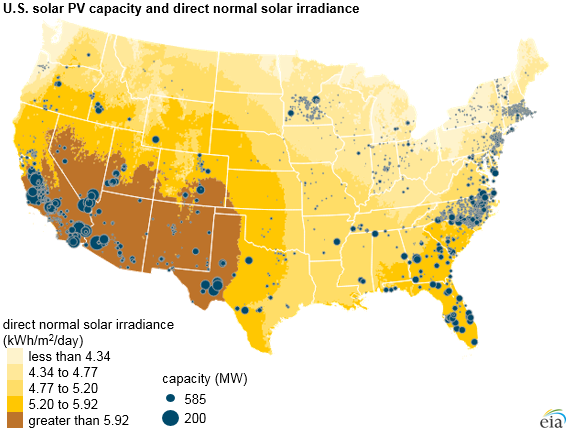
US Solar Potential is Strong

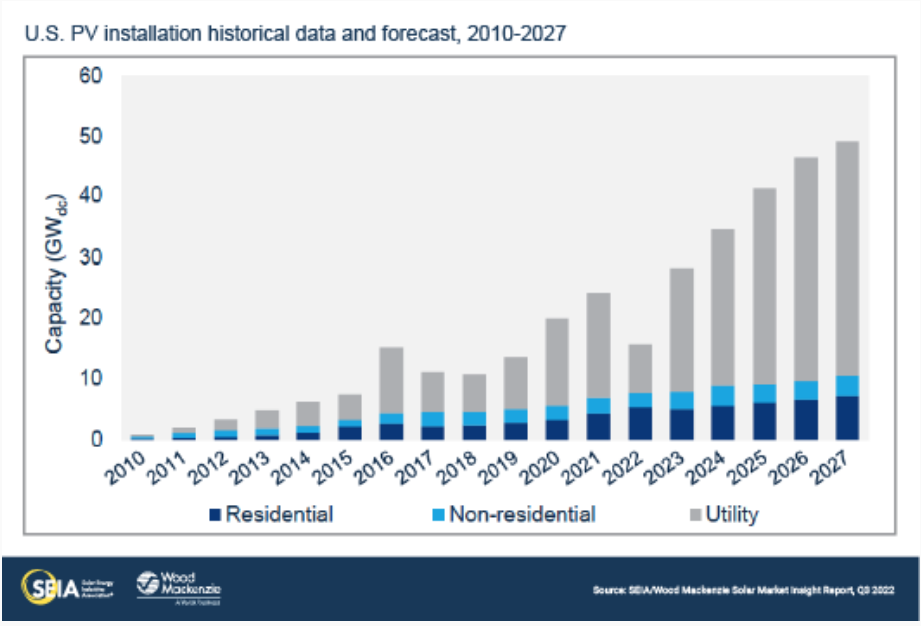
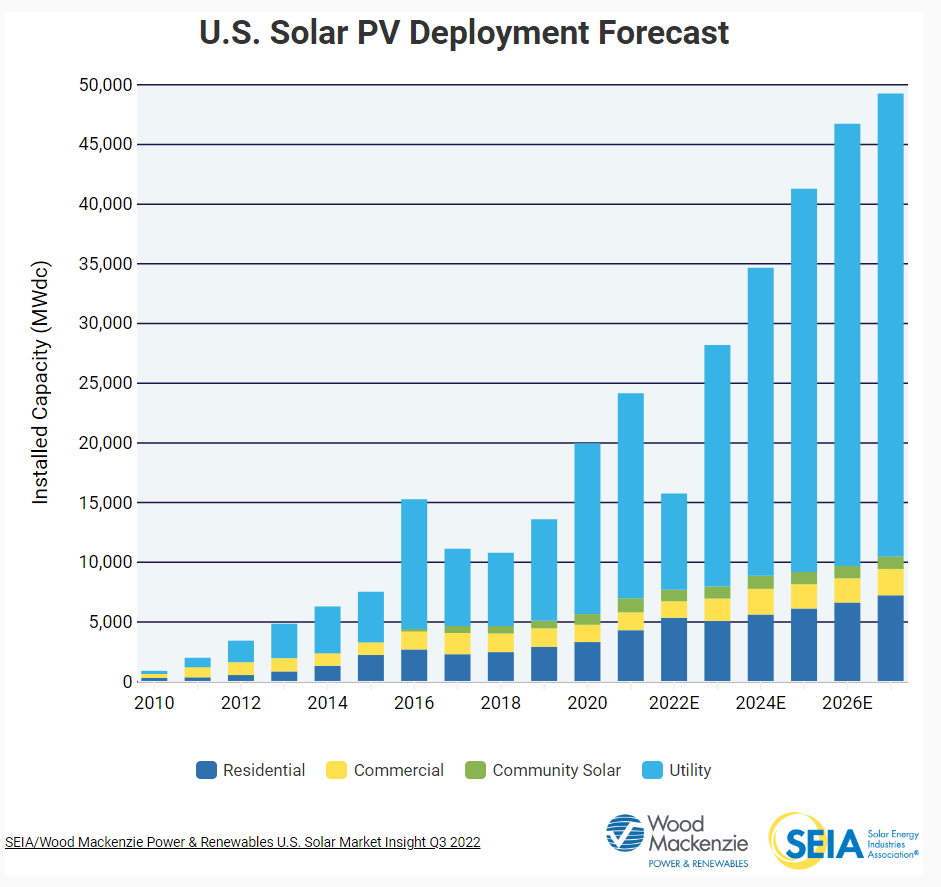
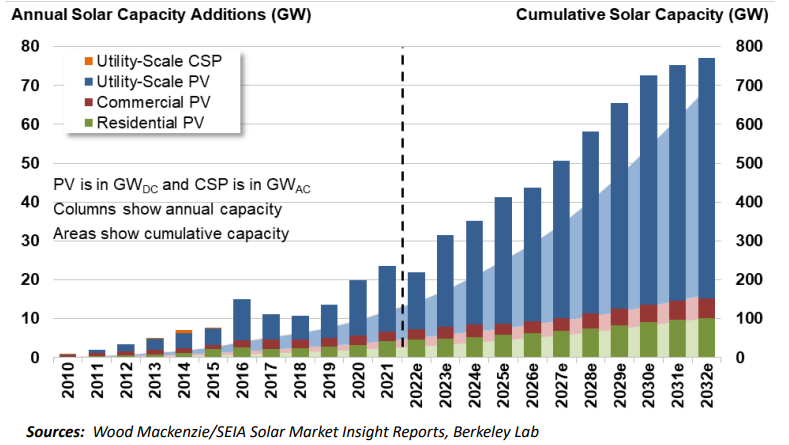
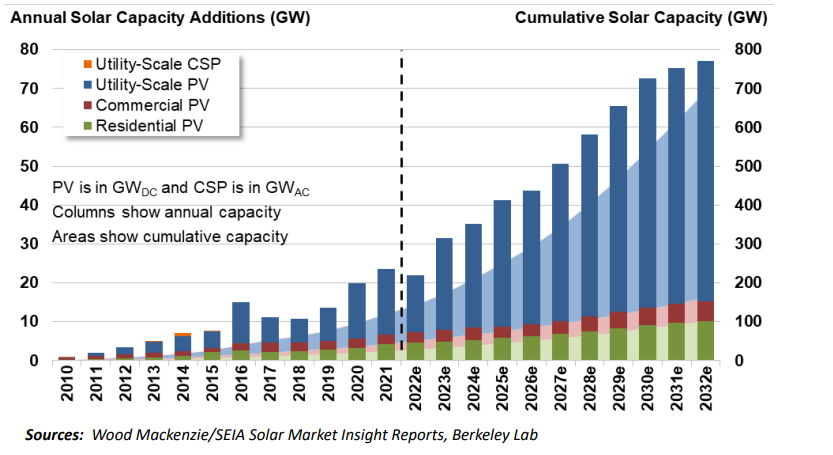
Solar Power Generating Installations are Growing Exponentially, Mainly at Utility Scale

The Total Solar Power Generating Base Grows

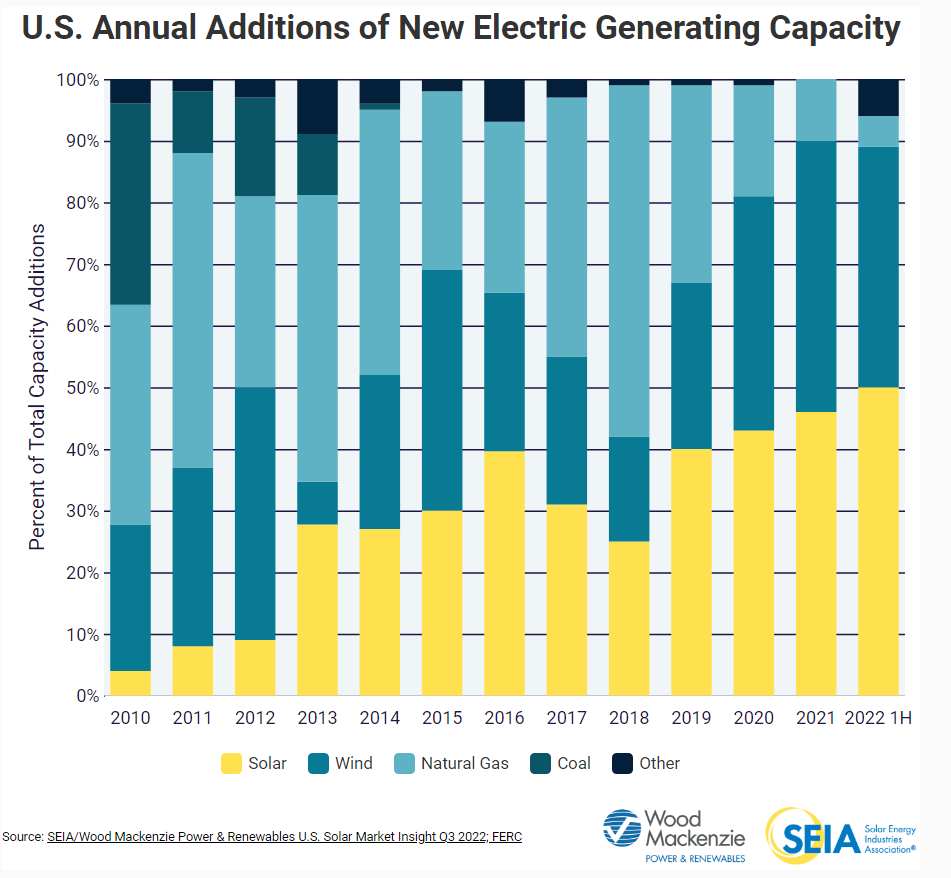
Solar Power is the Leader for New Electricity Generating Capacity

Solar Power is Now 4% of Electricity Generation

https://en.wikipedia.org/wiki/Solar_power_in_the_United_States

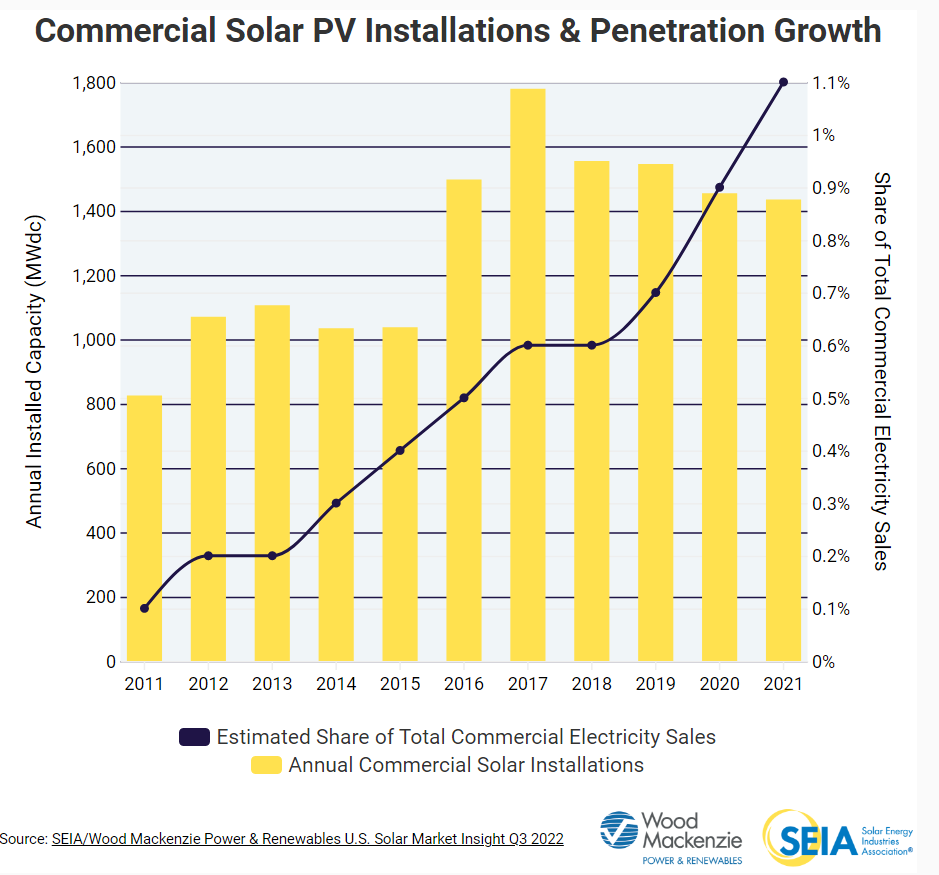
Commercial/Corporate Solar Power is Growing

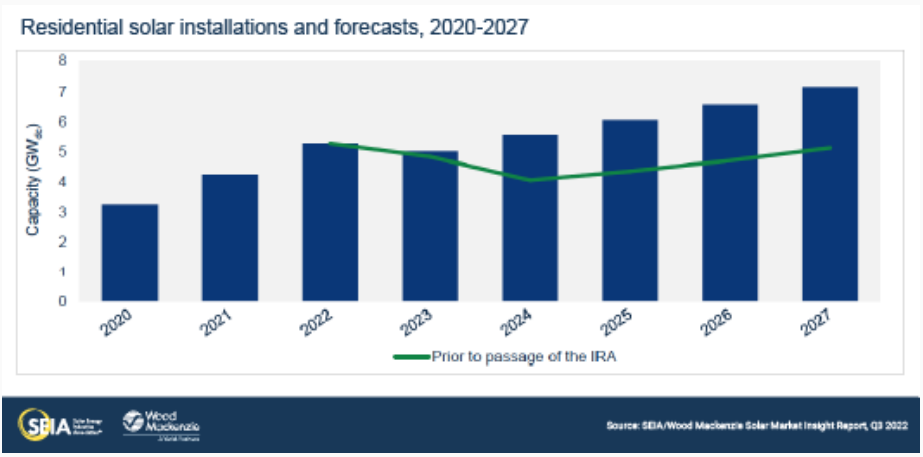
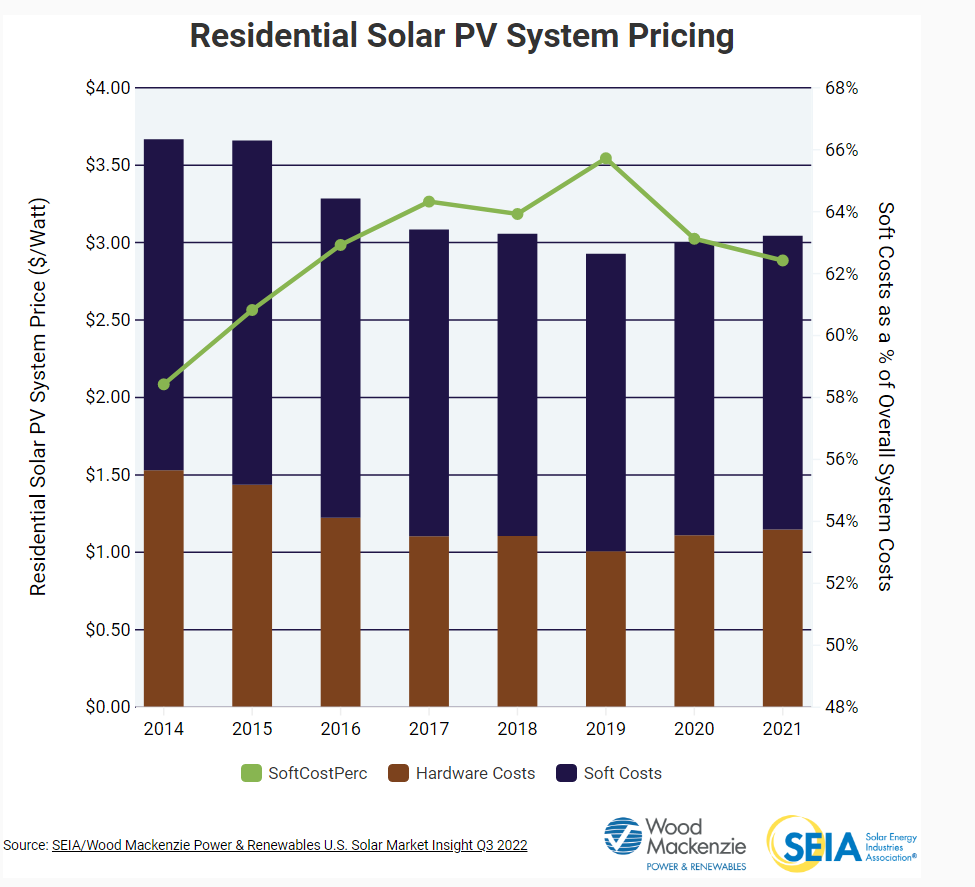
Residential Growth Continues

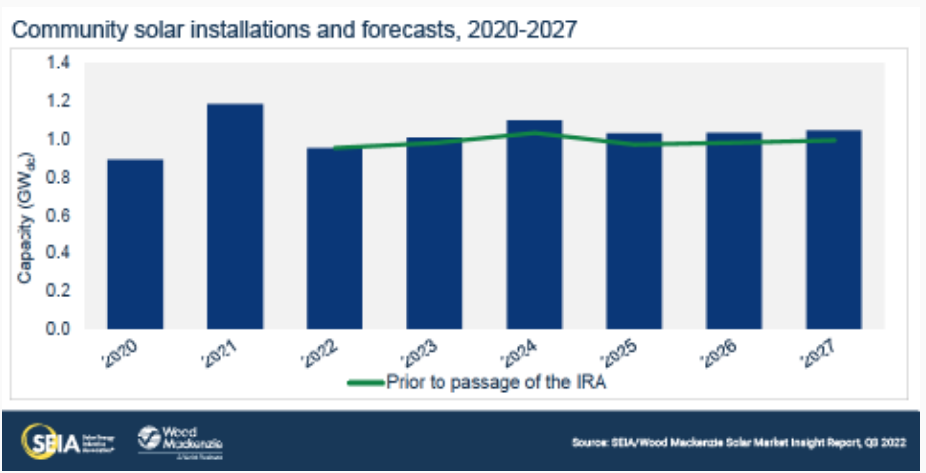
Community Solar Projects Growth Slows

Utility Scale Installations are Growing Most Rapidly

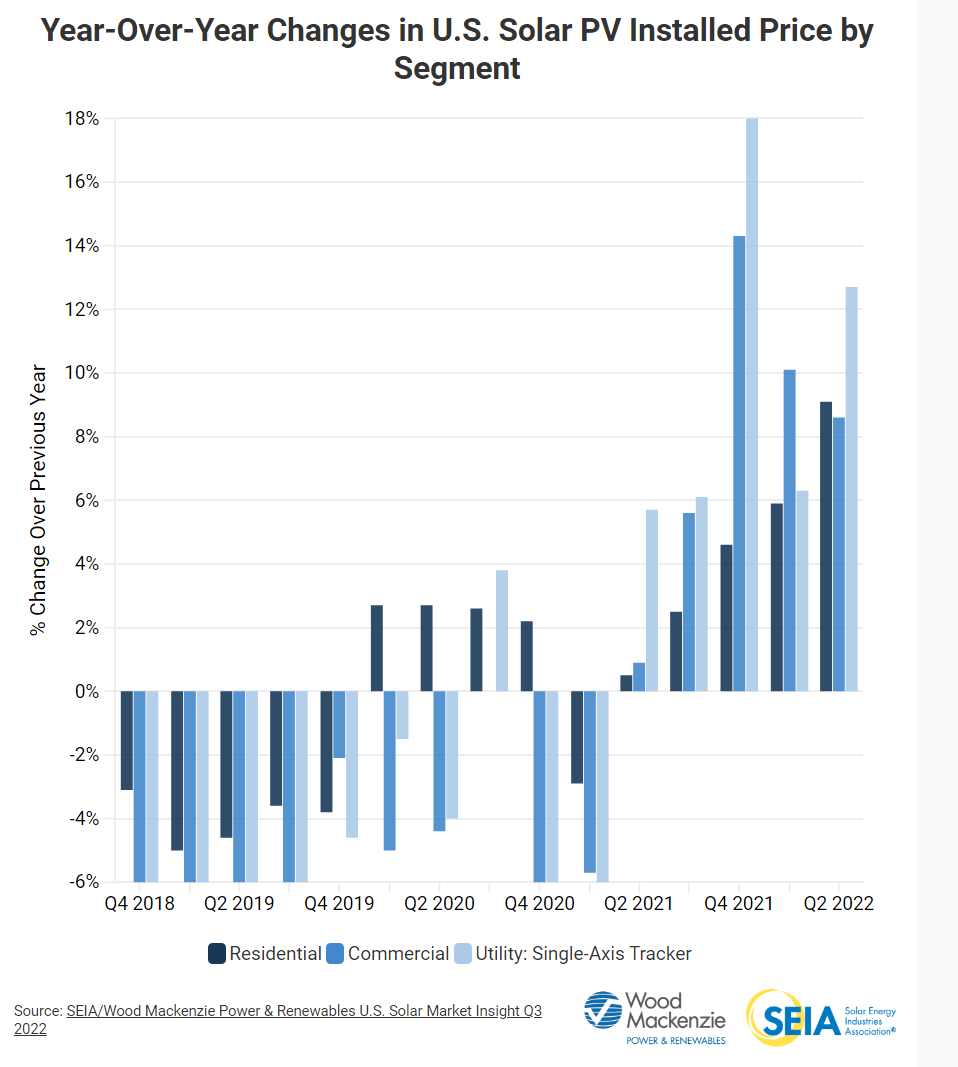
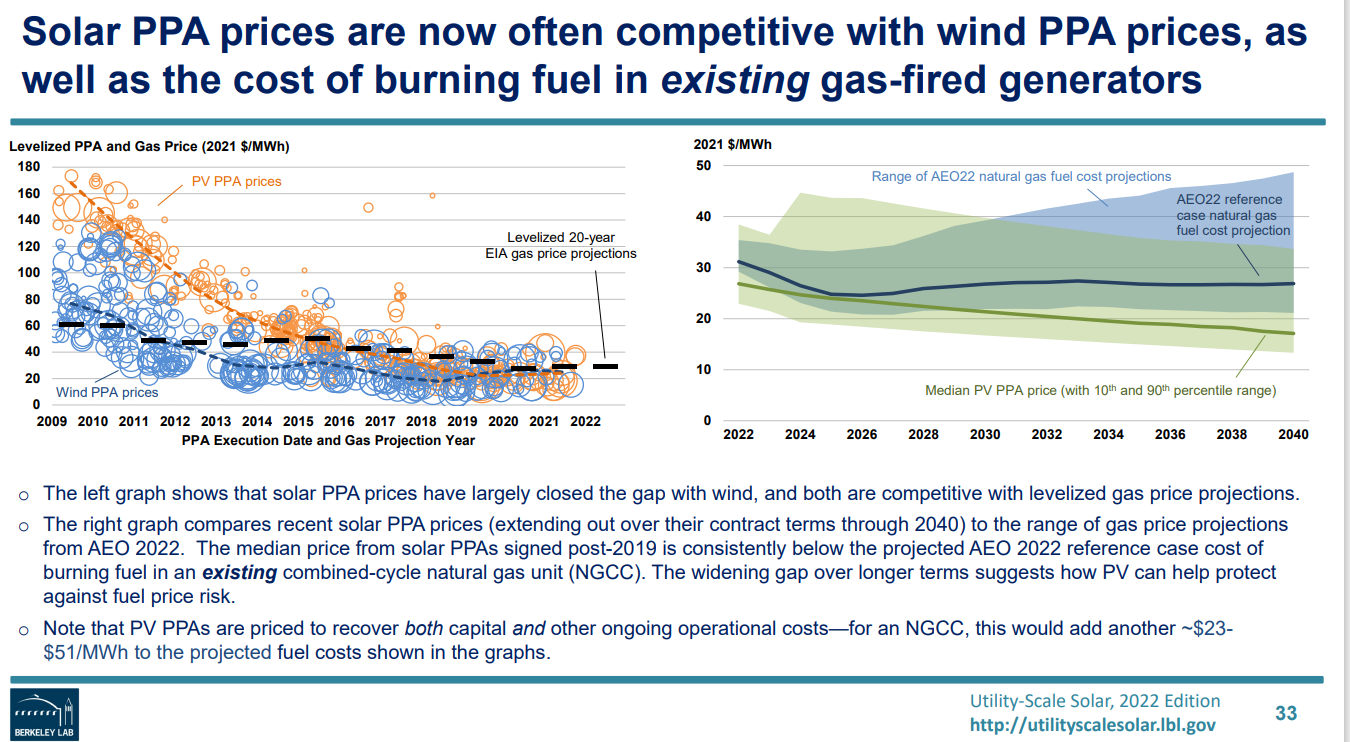
Costs Continue to Decline, Making Solar Competitive with All Other Sources

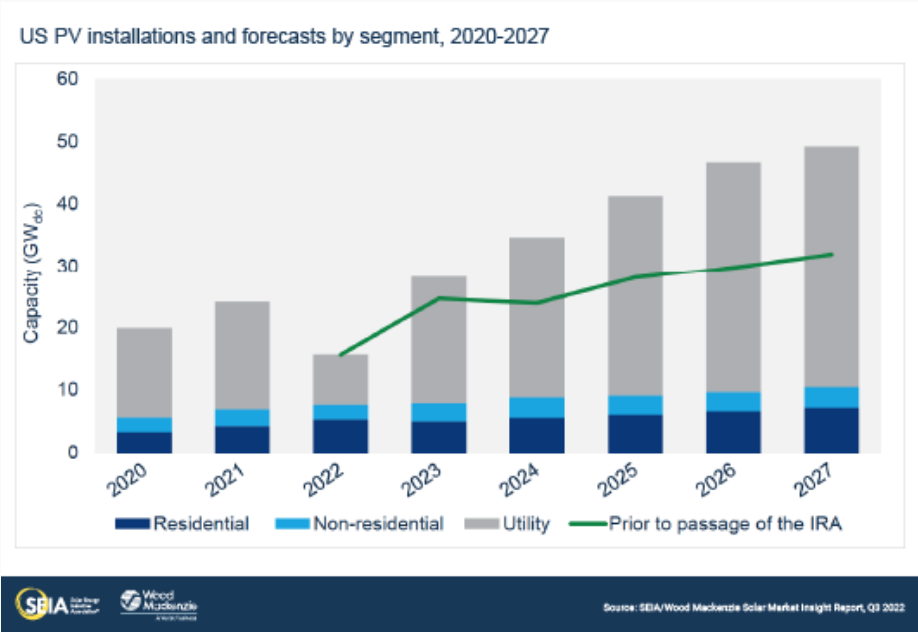
Short-term Supply Chain, Trade and Regulatory Challenges. New Government Incentives.

https://en.wikipedia.org/wiki/Solar_power_in_the_United_States

https://www.seia.org/research-resources/solar-market-insight-report-2022-q3

https://www.seia.org/news/us-solar-market-ready-rebound-after-tumultuous-first-half-2022

https://www.seia.org/solar-industry-research-data

https://cen.acs.org/energy/solar-power/US-solar-polysilicon-supply-problem/100/i33

https://www.energy.gov/eere/solar/solar-futures-study

https://www.cnbc.com/2022/09/08/solar-installations-will-nearly-triple-over-the-next-five-years-seia.html

https://arstechnica.com/science/2022/09/us-installs-record-solar-capacity-as-prices-keep-falling/

https://www.reuters.com/business/energy/developers-add-less-than-half-planned-us-solar-capacity-h1-eia-2022-08-11/

Summary

Utility scale photovoltaic solar panel energy generation is the future for the US energy market. The cost structure is already low enough to justify 30-40 year investment projects. Solar projects are 40% of new electricity generation projects, heading towards 50-60%, competing fairly with wind power. Solar power at 4% of the total electricity generating capacity is still relatively small, but the new investments will drive it to 8%, 12%, 16% and 20% in the next 20 years.

Good News: Weather Forecast Accuracy Is Much Better

Everyone complains about “the weather” and the “weather forecast”, but forecasting accuracy has improved markedly since 1980, which was already at least twice as accurate of the best (pre-computer) forecasts of the 1940’s and 1950’s.

Unfortunately, there is no really simple intuitive way to gauge the improving accuracy, but scientists have provided a variety of measures to indicate the relative improvement.

Improved Accuracy

https://www.iweathernet.com/educational/history-weather-forecasting

36 hour and 72 hour forecast accuracy doubled in the 40 years between 1975 and 2015.

https://public.wmo.int/en/bulletin/weather-and-climate-forecasting-chronicle-revolution

The same level of forecast accuracy was available 8 days out in 2010 as it was 5.5 days out in 1980.

https://dspace.mit.edu/bitstream/handle/1721.1/126785/aav7274_CombinedPDF_v1.pdf?sequenc#:~:text=leading%20numerical%20weather%20prediction%20centers,now%20reach%209%2D10%20days

The correlation between forecast and actual weather has improved consistently between 1981 and 2019 for 3-5-7-10 day forecasts. A 5-day forecast today is as accurate as a 1 day forecast in 1980. 9-10 day forecasts are useful today.

A seven-day forecast can accurately predict the weather about 80 percent of the time and a five-day forecast can accurately predict the weather approximately 90 percent of the time. However, a 10-day—or longer—forecast is only right about half the time.

https://scijinks.gov/forecast-reliability/

a five-day forecast is accurate about 80% (link resides outside ibm) of the time. A one-day temperature forecast is typically accurate within 2.5 degrees. 

https://www.ibm.com/weather/industries/broadcast-media/complete-guide-accurate-weather-forcasting

Short-term five-day forecasts are nearly as accurate as two-day projections were three decades ago. 

The forecast error rate has dropped by anywhere from about 70% (for a 24-hour forecast) to about 90% (for a 72-hour forecast) since 1970. To put that in perspective, the average error for a 72-hour forecast was about 450 miles off in 1970. Today, it’s about 50 miles off.

https://www.cnn.com/2022/06/25/health/weather-forecasting-future-scn/index.html#:~:text=The%20forecast%20error%20rate%20has,it%27s%20about%2050%20miles%20off.

History of Weather Forecasting

https://www.britannica.com/science/weather-forecasting/Long-range-forecasting

https://www.foxweather.com/earth-space/46-years-of-goes-how-a-history-of-achievements-has-changed-weather-forecasting

https://www.newyorker.com/magazine/2019/07/01/why-weather-forecasting-keeps-getting-better

https://celebrating200years.noaa.gov/foundations/numerical_wx_pred/welcome.html#intro

https://public.wmo.int/en/bulletin/weather-and-climate-forecasting-chronicle-revolution

Glorious Weather Forecasting Future

https://www.ibm.com/weather/industries/broadcast-media/complete-guide-accurate-weather-forcasting

https://www.nae.edu/244878/Future-of-Weather-Forecasting

https://celebrating200years.noaa.gov/foundations/numerical_wx_pred/welcome.html#ahead

https://www.wired.com/story/weather-forecasting-artifical-intelligence/

https://www.washington.edu/news/2020/12/15/a-i-model-shows-promise-to-generate-faster-more-accurate-weather-forecasts/

Good News: Better Refrigerator Capacity, Energy Efficiency and Real Prices

https://www.vox.com/energy-and-environment/2019/5/31/18646906/climate-change-california-energy-efficiency
https://appliance-standards.org/blog/how-your-refrigerator-has-kept-its-cool-over-40-years-efficiency-improvements

Between 1972 and 2014, the size of an average refrigerator grew by about one-fourth, adding 5 cubic feet.
From 1972 to 2010, the real, inflation adjusted, price of a refrigerator was cut in half.

From 1972 to 2010, the average annual energy use was reduced by three-fourths (75%), from 2,000 to just 500 KwH per year.

https://blog.sense.com/how-much-energy-does-your-refrigerator-really-use/

An Energy Star model in 2020 was another 30% more energy efficient than in 2010.

https://www.eia.gov/todayinenergy/detail.php?id=3030

The US consumes more than 8 million new refrigerator units each year.

https://www.eia.gov/todayinenergy/detail.php?id=3030

Refrigerators have become more reliable through time, now averaging 12 years old.

https://www.energy.gov/energysaver/shopping-appliances

https://www.eia.gov/consumption/residential/reports/2015/overview/

The share of homes with more than one refrigerator doubled between 1997 and 2015, reaching 30%.

https://www.ibisworld.com/industry-statistics/market-size/refrigerator-freezer-manufacturing-united-states/

The US market is roughly $5 billion dollars, growing slowly.

https://fred.stlouisfed.org/series/CUSR0000SAH3

The US Dept of Labor does not publish a consumer price index specifically for refrigerators, but the category it belongs in showed essentially zero nominal inflation between 1994 and 2018. The real price decline shown in the first chart probably continued through 2018.

Refrigerators and appliance prices spiked by more than 10% in 2021 as consumer demand for durable goods grew 20% during the pandemic, supported by government transfer payments.

https://www.foxbusiness.com/economy/consumers-slapped-with-home-appliance-price-hikes-as-input-costs-soar

https://www.eia.gov/todayinenergy/detail.php?id=37813#:~:text=As%20a%20group%2C%20refrigerators%20use,of%20total%20refrigeration%20consumption%20nationwide.
https://www.researchgate.net/figure/Household-Electricity-Consumption-Source-Adapted-from-EIA-2001-Figure-1_fig1_228665463

Refrigerators now account for just 7% of home electricity consumption, down from 14% in 2001.

Opinion writers differ on who gets credit for the improved price/performance results for refrigerators, but it seems clear that both energy standards and inventive firms share credit.

https://www.vox.com/energy-and-environment/2019/5/31/18646906/climate-change-california-energy-efficiency

https://appliance-standards.org/blog/how-your-refrigerator-has-kept-its-cool-over-40-years-efficiency-improvements

https://fee.org/articles/thanks-capitalism-refrigerators-are-awesome/

Good News: US Coal Usage is Falling

https://en.wikipedia.org/wiki/Coal_mining_in_the_United_States
https://www.eia.gov/todayinenergy/detail.php?id=48696
https://en.wikipedia.org/wiki/Coal_mining_in_the_United_States

Exports First Exceeded 10% of Production in 2012

https://www.eia.gov/coal/annual/pdf/acr.pdf
https://www.eia.gov/coal/annual/
https://www.eia.gov/todayinenergy/detail.php?id=38172
https://www.eia.gov/todayinenergy/detail.php?id=37692
https://www.eia.gov/todayinenergy/detail.php?id=43895

Coal Accounts for 20% of Electricity Generation

https://www.csis.org/analysis/phasing-out-coal-us-electricity-increasingly-regional-challenge

https://en.wikipedia.org/wiki/List_of_coal-fired_power_stations_in_the_United_States

30% of Coal-Fired Power Plants Closed 2010-19

https://en.wikipedia.org/wiki/List_of_coal-fired_power_stations_in_the_United_States

https://www.eia.gov/todayinenergy/detail.php?id=50658

Up to Two-thirds of 240 Remaining Coal-Fired Power Plants to Close by 2028

https://www.reuters.com/business/energy/us-coal-fired-power-plants-scheduled-shut-2021-10-28/

https://www.eia.gov/todayinenergy/detail.php?id=50658

https://abcnews.go.com/US/wireStory/coal-fired-power-plants-close-wastewater-rule-81328300

https://www.newsweek.com/26-coal-fired-power-plants-14-states-plan-stop-burning-coal-due-new-rule-1652009

Remaining Coal-Fired Power Plants are Concentrated in a Dozen States

https://pubs.usgs.gov/of/1996/of96-092/Comp/main.gif
https://www.csis.org/analysis/phasing-out-coal-us-electricity-increasingly-regional-challenge

Coal Production and Consumption Temporarily Rebounded in 2021 as the Economy Recovered from the Pandemic and the Cost of Natural Gas Increased

https://www.iea.org/news/coal-power-s-sharp-rebound-is-taking-it-to-a-new-record-in-2021-threatening-net-zero-goals

https://www.cnn.com/2021/10/18/business/coal-power-climate-crisis/index.html