Our Hamilton County: More National Merit Scholars than 13 States

Hamilton County’s 357,000 residents are a little more than 0.1% of the 332 million national citizens (1/1,000). It’s typical 80 National Merit Semifinalists are 0.5% of the 16,000 national total (1/200). It produces 5 times more than its “fair share”.

The 13 lowest population states range from 0.6 to 1.8 million citizens, averaging 1 million. Hamilton County has one-third as many citizens, on average.

Public Sheridan HS awards some NMS semifinalists. Hamilton County has a large number of students at private schools that do not report NMS semifinalists by their place of residence. University, Park Tudor, Heritage Christian, Cathedral, Roncalli and Guerin. I estimate that there are another 3-5 Hamilton County winners each year.

Hamilton County students benefit from their abilities, parental and neighbor involvement, high expectations, extracurricular opportunities and strong school systems.

Typical annual National Merit Scholarship Semifinalists:

West Virginia  63

Hawaii      60

New Hampshire  76

Maine      62

Montana     48

Rhode Island   45

Delaware     40

South Dakota   35

North Dakota   30

Alaska      35

DC       30

Vermont     35

Wyoming    20

https://www.ccs.k12.in.us/chs/about/news/default-news-page/~board/district-news/post/20-chs-students-selected-as-college-board-national-recognition-program-awardees-1663096519178

https://www.thesheridanpress.com/news/local/wright-zebrowski-shaw-selected-as-national-merit-scholarship-finalists/article_61139948-5249-11ee-8689-0363316e3943.html

https://www.statsamerica.org/sip/rank_list.aspx?rank_label=pop1

https://www.staradvertiser.com/2023/09/24/hawaii-news/57-hawaii-students-named-national-merit-scholarship-semifinalists/

https://patch.com/new-hampshire/across-nh/hundreds-nh-students-are-2023-national-merit-semifinalists
https://www.greatfallstribune.com/story/news/2018/11/15/national-merit-scholars-semi-finalists-montana/2003616002/

https://www.delawareonline.com/story/news/education/2018/09/13/19-delaware-students-name-national-merit-scholarship-semi-finalists/1289859002/

https://www.inforum.com/news/north-dakota/31-north-dakota-students-named-semifinalists-for-national-merit-scholarship-program

https://www.indystar.com/story/news/local/hamilton-county/2017/09/26/carmel-high-school-has-more-national-merit-semifinalists-than-some-states-typically-do/689820001/

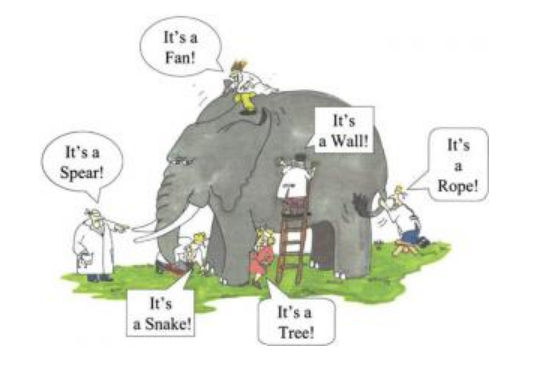
The Blind Men and the Elephant

https://www.peacecorps.gov/educators/resources/blind-men-and-elephant/story-blind-men-and-elephant/

This Indian story helps us to understand that the “whole” is different than the “sum of the parts”. “Everybody wants to rule the world” is another way to express this paradox. We each have a perspective. We errantly “know” that our perspective is right.

https://en.wikipedia.org/wiki/Everybody_Wants_to_Rule_the_World

Each of the blind men mistakenly “knows” that his perspective is “right” and dominant. In society, we experience this across the various professions and industries who also “know” that they are THE “most important, valuable and insightful”.

  1. Rulers, politicians, judges, and bureaucrats
  2. Advisors, consultants, lawyers, and lobbyists
  3. Entertainers, artists, media, journalists, travel and leisure
  4. Military
  5. Public safety, police and fire
  6. Priests, ministers, rabbis
  7. Intellectuals, philosophers
  8. Educators
  9. Engineers and scientists
  10. Builders, architects, construction staff
  11. Farmers, foresters, fishers, miners
  12. Owners, capitalists, executives, bankers
  13. Managers, administrators, business professionals
  14. Traders, wholesalers, retailers
  15. Skilled trades, essential workers
  16. Health care professionals
  17. Care givers, counselors, psychologists, and social workers

17 distinct groups by my accounting. Each group can put forth arguments for why they are the “most important”, adding the most value now and in the future, at the critical location, taking the highest view, most essential, largest, oldest, most appreciated, best paid, driven by leaders, lifesavers, building the future, leading the way, preserving and organizing society.

Historically, the rulers, advisors, priests and owners conspired to actually run society and collectively justify their leadership. In the last 500 years the historical rulers have been challenged by each of the other groups.

  1. populist leaders, Machiavelli, totalitarian justification, fascism
  2. spin doctors, social media influencers, investment bankers
  3. political pundits and commentators
  4. the secretary of defense, the military-industrial complex, neo-conservatives, coups
  5. public safety unions, associations and political influence
  6. ecumenical associations, direct and national political influence
  7. freedom of speech, tenure, existentialism, postmodernism, poststructuralism
  8. unions, PACs, professional rights, the therapeutic society
  9. STEM, analysts everywhere
  10. infrastructure, ratings
  11. farm bill, political influence
  12. Davos, consolidation of income and wealth, political influence
  13. Professional class, suburbs, UMC, elites, educated
  14. globalization, luxury goods, Amazon, Walmart, Dollar General, Costco
  15. unions, tea party, occupy Wall Street, pandemic support
  16. AMA, med school enrollment limits, health care % of GDP, big pharma, big insurance, hospital system monopolies
  17. the therapeutic society, hugs

Everybody wants to rule the world. The world is bigger. More people. More wealth. More assets. More potential. More productivity. More ideas. More perspectives. More art, entertainment and leisure. More education. More scientific understanding. More resources. More nature. More opportunities. More class perspectives. More minority groups. More voluntary associations. More nations. More globalism. More trade. More religious views. More communications and information channels.

There is no single reason why our society remains knitted together. There are many forces that drive it apart. I am hopeful that the various interest groups can perceive “the elephant”. Our political, social and economic society is the greatest ever known, but it is threatened by decay from all sides.

Our Hamilton County: Busy Public Libraries

https://carmelclaylibrary.org/main-library-project

Carmel-Clay Public Library (CCPL) was awarded the top tier rating in the Hennen’s American Public Library Ratings (HAPLR) system in each of its first 9 years, one of only 11 libraries in the country to consistently qualify among the best.

https://americanlibrariesmagazine.org/haplr-library-rankings-mark-10th-anniversary/

CCPL has also earned a “star” rating from the Library Journal for being in the top 5% of its population category.

https://www.libraryjournal.com/story/ljx211213StarsByNumbers#1M5M

The Sheridan Public Library was rated at the 87th percentile by the Library Journal in 2020.

The Westfield-Washington Public Library was ranked at the 62nd percentile.

The Hamilton North Public Library was listed at the 48th percentile.

The Hamilton East Public Library was not rated in recent years.

The state of Indiana tracks total materials circulation per population which can be used as an indicator of library activity and quality. Of the 236 Indiana library districts, CCPL ranked 3rd with 19.4 items per person in 2021. Hamilton East was close behind, ranked 5th with 16.1 items per person. Westfield-Washington was 17th with 12.3 items per person.

Combining the 5 Hamilton County public libraries yields annual circulation of 16.1 items per person, which would rank 5th out of 232 libraries if it was a single library system. (Table 7). Hamilton County checks out more than twice as many items as the state average of 7.4 per person.

https://www.in.gov/library/services-for-libraries/plstats/2021-statistics/

Modern Curriculum for Citizens

https://www.heraldtribune.com/story/opinion/columns/your-voice/2023/04/23/new-college-of-florida-needs-a-new-direction-to-become-a-top-school/70131713007/

Modern Curriculum for Citizens

Citizens today face a large, complex, dynamic environment with the requirement to make good personal, social, political, economic, and moral choices.  Citizens and society are impacted by the quality of these choices.

The American public must invest in our students and citizens to offer an educational curriculum that covers all the relevant topics with enough depth and applicability to make them lifetime tools.  Modern science has much to offer.  Advanced nations and economies have developed institutions and cultures that effectively perform the key functions of successful societies.  At the same time, the rapid technological changes, increased complexity, and huge scale of our world pose challenges.  The tension between secular and religious worldviews and across various political views is high and our skills at resolving these tensions or integrating individuals and communities have lagged behind the challenges.

A modern curriculum outlines the dimensions, structures, and challenges of our shared lives in all dimensions.  It highlights the successes that have been achieved in history and the failures.  It offers the various cultural, religious, social, political, and economic worldviews that have guided humans.  It critically assesses their strengths and weaknesses, contributions, and relevance today.

It raises the critical questions that are faced today.  It helps students understand how institutions, culture and politics all shape our world.  It outlines political and religious worldviews.  It encourages students to assume personal responsibility for their lives and participate in shaping our society at all levels.  The curriculum focuses on the role of the individual and the role of the community in each dimension of life.  An effective society requires voluntary engagement from its citizens.  This curriculum motivates individuals to participate and succeed.

These courses cover a great deal of material at a high level and provide time for an applications perspective.  They are courses for the citizen, not for those who expect to major in the relevant disciplines.

Ideally, the nation would adopt a single broad “model curriculum” outline and delegate the details of setting course content and standards to the states or regional educational accreditation agencies.

This proposal has 8 courses for high school students and 9 courses for university students.  It includes capstone courses on “My Future” and “Our Future” to integrate the courses in a meaningful way.  The university courses are designed to encourage states to offer them to all citizens at a nominal tuition rate through their state universities and community colleges.

101 American History

Full year course at the high school level.  Less biography and dates.  More about the major transformations of typical American life as the nation grew in size, expanded across the continent, invested in trade and infrastructure, transformed the land for changing waves of agriculture, adopted new technologies, embraced economic change, wrestled with manufacturing and urbanization, addressed racial, religious, ethnic and class differences, developed political parties, institutions and state versus federal roles, the role of communities and not-for-profits, the impact of religious diversity, economic theories of history, business cycles and panics, US expansion, conflicts, wars, empire, growing global role.  Major political parties and issues through time.  The role of communications technologies.  The expanded role of government.  The development of new institutions.  The expansion of individual rights and roles for women.  Government regulations.  Limits on laissez faire capitalism.  Taxation.  The self-sufficient man and the rugged individualist.  Immigrants.  Native Americans.  Relations with Mexico and Latin America.  Isolationism.  Globalism and trade.  The scale, social and economic nature of the country in 1800, 1850, 1900, 1950 and today. 

The US has a dynamic history of success in adapting its culture and institutions to meet the needs of the day.  It has a history of extending individual rights to more individuals and groups through time, despite opposition from some citizens.  Students can understand how existing beliefs, habits, laws, and institutions interact with technological, military, trade, economic, social, political, and religious innovations.  Change is slower than some desire.  Change is opposed on principle and because it has costs to some groups and individuals.  Some changes are reversed because they don’t work in practice, or they have unintended consequences.  The US has been relatively effective at maintaining individual rights and implementing changes on a decentralized basis.  This context is essential for understanding current issues and political differences.

Theories of history.  Evolution.  Adaptation.  Economic determinism.  Regional differences. Western civilization.  Land, labor, and capital.  Economic, social, and political power.  Cultural power.  Shining city on a hill.  Manifest destiny.  American exceptionalism.

102 Society / Sociology

The individual and the group, community, society.  Fundamental tensions.  Haidt and evolutionary psychology.  Empathy, language, trust, loyalty, free rider, game theory.  One on one.  Small groups. Groups of 150.  Hunter-gatherers.  Agriculture. Cities.  Leaders.  Power.  Religion.  Anthropological perspective.  Modern historical perspective.  Political theory perspective.  Contract theory. 

Roles of society.  Maslow’s hierarchy of needs.  Safety, protection.  Economic transactions.  Religion, explanation, myths, eternity.  Belonging.  Status.  Leadership.  Followership.  Law.  Compliance.  Entertainment.  Education.  Health.  Respect.  Property.  Children.  Deviants.

Interactions of power, status, wealth, and salvation/eternity.

Social capital.  Trust.  Institutions: family, neighborhoods, religious, professional, industrial, labor, intellectual, educational, economic, political, social services, libraries, ethnic.  Innovations through time.

Role of technological and economic change on social and political institutions.

Change, migration, stress, war, disruption, rootlessness, divorce, unemployment, bankruptcy, anomie.

Economic basis of power through history.  Labor theory of value.  Marx.  Existentialism.  Post-modernism.  Groups.  Class, gender, race, religion, ethnicity, nationality as potential victim groups.  Role of “others”.  Criminals and mental health. 

Functions of large organizations.  Political.  Economic.  Military.  Role of leadership.  Innovations through time.   Attraction, retention, and engagement. 

Special roles: opinion leaders, market influencers, pop culture examples, fashion influencers, media influencers, intellectual influencers, journalism and media influencers, social media influencers, literature, movie, and tv works, teachers, parents, ministers, and coaches.

Power of social norms and influence.  Desire for belonging and social acceptance.

High, medium, and low commitment communities.

Rise of nationalism.  Rise of global and supra-national groups.

How groups and communities are different from the sum of their parts.

Man is made to reside in community.

103 Economics

70% Microeconomics, 20% Macroeconomics, 10% International Economics.

Labor markets.  Product markets.  Competitive markets.  Rationale for government oversight.

Reinforce the American History overview.  Provide framework for Personal Finance, Business/Organizational Behavior and Globalization.  Outline one key model before Critical Thinking and Applied Decision Making.  Provide background for Political Thought and Shaping Our Future.

104 Civics / American Government

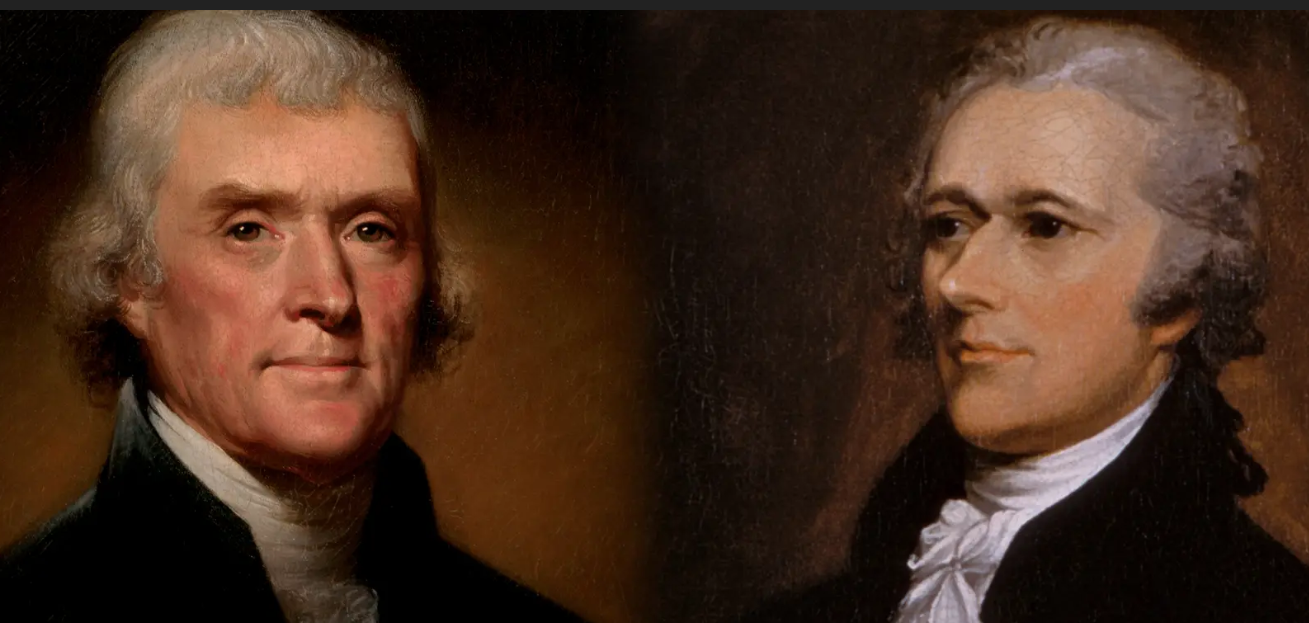
Historical and philosophical context for the US constitution.  Articles of Confederation.  Bill of Rights.  Checks and balances.  Rights of Englishmen.  Jefferson’s small farmer.  Hamilton’s trader.  The Federalist papers.  Federal and state roles through time.  US within European interests.  Supreme Court role defined.  Increasing role of government in the 19th and 20th centuries.  US and advanced economies.  Washington setting presidential roles.  Political parties.  Jefferson-Jackson support for farmers and small businesses.  Pre-civil war politics.  Civil war.  Reconstruction.  Post-reconstruction.  Isolationism.  Laissez-faire capitalism.  Political machines.  Progressivism.  Farmer-labor populism.  Nativist populism.  Socialism and radical unionism not.  Supreme Court as a conservative limit on progressive laws.  Local government reforms.  Income taxes.  Prohibition and its reversal.  New England and Middle Atlantic rule.  Midwest gains influence.  Democratic party in the South.  Southern Democrat political power in Congress.  Food safety regulation.  Regulating trusts and monopolies.  The Depression.  FDR and Democrats gain.  Reagan and the neoliberal revolution.

Political parties.  House and Senate.  Supreme Court.  Electoral College.  Legislation and budgets/funding.  Role of constitution versus congressional rules.  Presidential veto.  Line-item veto.  Independent agencies.  OMB.  Federal Reserve Bank.  International treaties.  United Nations.  Election funding.  Gerrymandering.  Lobbyists.  Military ruled by government.  DOJ.  FBI.  Rule of law.  Separation of church and state.  Filibuster.  Speaker of the House.  Majority leader of the Senate.  Voting rights, rules, and restrictions.  Presidential versus parliamentary system.  Two-party versus multi-party systems.  Simple versus ranked choice voting systems.  Third parties.  Direct election of Senators.  Direct election of presidential candidates.  Political parties as a moderating influence.  Sunset laws.  Zero-based budgeting.  Legislation versus appropriation.  Debt ceiling constraint.  Role of earmarks.  Economics of politics: public choice theory.  Role of politicians.  Representative or delegate.  Role of parties to simplify voting.  Role of character.  Recalls.  Citizen initiatives.  Role of political ideology.  Special interest groups.

105 Psychology

Standard introductory course.  Link back to evolutionary psychology in the society/sociology course.  Make clear that the simplified utilitarian model assumed by economists (maximize pleasure, minimize pain) is inadequate.  Address psychological views of religion, behavior, experience, and motivation.  Describe the overlap of social psychology with sociology and organizational behavior.  Describe the history of intelligence testing as a basis for critical thinking and multiple intelligences.  Clearly define personality profiles and talents so that these results can be used in the capstone course.  Describe the basic risk-averse nature of people that drives the risk/reward basis of financial markets.  Provide a basic outline of how experimental psychology performs experiments.  Outline the background for the fundamental challenge of organizations to align the interests of individuals and the organization. 

106 Personal Finance

Economic specialization.  Profession.  Industry.  Human capital.  Education.  Talents.  Multiple intelligences.  Income and wealth.  Retirement.  Saving.  Investing.  Risks.  Insurance.  Rent versus own.  Investing in education.  Accounting model of assets, liabilities, net equity, revenues, and expenses.  Risk versus reward.   Banks.  Checking and savings accounts.  Tax sheltered investments.  Capital gains taxes.  Strategies for saving.  Financial advisors.  Insurance agents.  Real estate choices.  Financial tracking tools.  Grocery shopping.  Clothes shopping.   Appliance shopping.  Medical services and insurance plans.  Personal services.  Home/construction services.  Car shopping.  Car buying versus leasing.  Just 15% more.  Buying status.  Using financial leverage.  Cost of borrowing: paycheck loans, credit cards, pawn shops.  Student loans and payment options.  The millionaire next door.  Negotiating employment.  Franchises.  Owning a business.  Side-gigs. 

107 Critical Thinking

General process and factors.  Individual or team.  Diverse sources, perspectives, models, contributors.  Inductive and deductive logic approaches.  Analogies.  Open-mindedness, active listening.  Identify and evaluate assumptions. Evaluate relevance and weight of evidence.  Evaluate data.  Is the goal proof, optimization, meets standards, or ranking?  Adequate research.  Meta-analysis of the decision process.  Likely errors. Lessons learned.  Devil’s advocate. Expert review.

Tools.  6 thinking hats.  Brainstorming.  Flowcharts.  Tables and graphs.  Descriptive statistics.  Hypothesis testing.  Formal logic.  Scientific method.  Math proof types.  Pattern identification.  Probabilities.  Expected value.  Legal logic.  Best practices.  Industry or discipline specific models.  Simulations.  Troubleshooting.  The rational financial decision-making model.

Pitfalls.  Probabilities, infinity, compounding, orders of magnitude, paradoxes.  Logical fallacies.  Portfolio effect; sum greater than parts.  Correlation and causation.  “Either/or” or “both/and” situation?  Is versus ought factors.  Objective and subjective factors.  Outliers.  Black swans.  Individual biases.  Thinking fast and slow.  Jump to conclusion.  Confirmation bias.  Anchoring.  Politics.  Personality.  Talents.  Experience.  False patterns.  Attribution error.  Abstract or applied.  Analog or digital.  Sales, marketing, legal and communications tricks.  Source biases.  We don’t get fooled again!

108 Shaping My Future

My personality, talents, and values.

Education, profession, industry.

Prioritizing and balancing competing claims.  Time and task management skills.

My advisors, mentors, coaches, and counselors.  Thanks for the feedback. 

My dating and relationship goals, limits, options, tactics, hopes, tools, beliefs, opportunities, advisors, and dreams.  Total commitment. 

My community and service preferences.

My religious explorations and commitments. 

Living a good life.  Building character and virtues.

Bucket list.  On my death bed.  Eulogy virtues. 

Rights and responsibilities.  Victimhood.  Choices. Investing in me. 

Setting goals.  Delivering results. 

301 World History, Cultures and Governments

Standard year-long high school or college textbook.  Some grounding in pre-historic development of humans.  Tools, iron, agriculture, leaders, religion.  Links to anthropology reinforcing the parallel development of similar social answers to universal questions.  Notion of “civilization”.  The individual and the community.  Free rider problem.  Role of language.  Central issues of cohesiveness within a society, power, and external threats.  Role of changing technologies.  Role of religion and institutions.  Role of military power.  Role of trade.  Role of changing economic assets.  Role of changing political and philosophical ideas.  Community and individual oriented societies.  Conflicts between traditional and modern views.  Nationalism, regionalism, and globalism.  Empires.  Maintaining power.  Prevalence of war and violence.  Individual rights, human rights, community rights.  The appeals of Marxism, capitalism, religion, democracy, and populism.  The tension between self-interest and larger groups at the individual, local government, organization, and nation-state level.  Religion, race, ethnicity, class, and ideals as ways to make a society cohere.

302 Applied Decision-Making

Rational financial calculation.  Cost/benefit analysis.  Strategic planning process.  Risk versus reward.  Managing a portfolio of investments or projects.  Task/project management.  Critical path.  Time management:  Getting Things Done (Allen).  Decision flow charts.  Process perspective.  Urgent versus important (Covey).  Expected value.  Financial modeling, sensitivity analysis, what if.  Simulations.  Scenario analysis.  Worst case scenario.  Committed versus flexible resources, undo.  Inquiry versus advocacy framework.  6 thinking hats (de Bono).  Brainstorming techniques.  Mission, vision, values framework.  Pareto analysis, prioritization.  Root cause analysis, 5 why’s.  Mind mapping, visualization (Buzan).  Cause and effect diagrams.  Force field analysis.  Expert Delphi groups.  T-account, “pros and cons”.  Game theory.  Mini-max.  Stable or unstable.  Data scrubbing.  Rule out some options to simplify.  Personal risk of recommendation.

Behavioral economics.  How we really decide.  Thinking, fast and slow (Kahneman).  Biases.  Satisficing versus optimizing (Simon).  Habits.  Heuristics.  Rules of thumb.  Fewer options.  First option.  Anchoring.  Framing.  Managing uncertainty.  Overconfidence.  Loss-aversion.  Mental buckets.  Nudges.  Limited information.  To a hammer every problem looks like a nail.  Follow the herd.  Social acceptance.  Confirmation bias. 

303 Business / Organizational Behavior

Standard introductory course.  Firms, capitalism, productivity, competition.  Government, industrial policy, trade policy, taxes, regulations, property, infrastructure, education, contracts, courts.  Ethics, stakeholders, social responsibility.  Comparative advantage, competitive strategy, international business, outsourcing.  Business forms, joint ventures, growth, corporations, business life cycle, creative destruction, entrepreneurs.  Returns to factors of production.  Strategy, leadership, management, specialized labor.  Departments, divisions, structures, matrix, project management, teams, agency.  Operations, quality, processes, planning.  HR, recruiting, engagement, motivation, retention, compensation, innovation, unions.  Customer wants and needs, marketing, products, product life cycle, services.  Distribution channels, physical distribution, logistics, suppliers.  Social media, e-business, IT, ERP, CRM, WMS, etc.  Accounting, planning, analysis and control systems, financing.

304 Political Thought

Standard university course often labelled “Western Political Theory”, covering both the historical and topical aspects of political, philosophical, theological, economic, and sociological views of how government level politics functions.  Greek and Roman experience, city-states, Cicero, Socrates, Plato, and Aristotle.  Christian views:  Augustine, Aquinas, Luther, and Calvin.  Pragmatism: Machiavelli, realpolitik, Nietzsche, Bismark, Kissinger.  The Individualistic Enlightenment: contract theory, Hobbes, Locke, Kant, Montesquieu, Rousseau, separation of powers, Jefferson, de Tocqueville.  Classical liberalism, utilitarianism, economics, Bentham, Mill, Smith, Spencer.  The organic state, nationalism, Hegel, Marx, Lenin, Gramsci, totalitarianism, fascism, Orwell, Arendt.  Modern liberalism, progressivism, socialism, welfare state, FDR, Dewey, Popper, Rawls.  Romanticism, historicism, utopianism, environmentalism, greens, spiritualism, art.  Conservatism, Burke, Hayek, Friedman, Rand, Nozick, Reagan, Thatcher, “neo-liberalism”.   Post-modernism, post-structuralism, existentialists, Foucault, Marcuse, new left.

Topics.  Politics, economics, culture, philosophy, and religion all shape society and compete for influence.  Integrated cultures focused on the community have strongly dominated through time.  The individualistic upheaval of the reformation, enlightenment and scientific revolution impacted political, philosophical, religious, economic, and social views.  Haidt’s 6 flavors of morality and politics remain in competition today.  Role of economic resources, systems, and theories upon politics.  Impact of religion on politics.  Separation of church and state.  Religion, community, and politics in a secular age (Taylor).  Expansion of individual and human rights.  Populism, anti-elite views in a meritocracy.  Attraction of authority figures.  Power.  The classic liberal state’s rights, Rousseau’s view of human potential and the success of mixed capitalist economies creates a very individual oriented world for politics with high expectations for respect, fulfilment, results, and identity affirmation.  Communitarian critiques of a “flat” classic liberal government model.  The scale of society and international complexity has grown, undercutting personal connections, social capital, and trust.  Rational, scientific, technical methods deliver results, but have limits for humans, politics, political structures, and organizations.  Evolution of Christian denominations, fundamentalism, and social conservativism.  Conspiracy theories.  Filtering institutions, experts, and parties in a complex world.  Centralized versus decentralized political structures.  Individuals seek a wide variety of results from political systems: identity, ideology, justice, rights, respect, opportunity, freedom, interests, wealth, status.  Citizenship duties.  International relations, trade, empires, global organizations, peace, and war.  Institutional characteristics that make governments succeed.  The End of History (Fukuyama)?  

This is a very challenging outline for “everyman”.  Yet, most thinkers’ key contributions can be summarized in a paragraph or two.  This course prepares the student for the “Religion in a Secular Age”, “Moral Lives” and “Living Our Future” courses.  Politics, philosophy, and religion overlap.  They are essential for modern citizens to understand our society and make choices.

305 Interpersonal and Communication Skills

The volume, diversity, complexity, and impact of interpersonal communications have continued to grow.  We use these skills at work, in teams, transacting, playing, influencing, negotiating, buying, selling, searching, researching, and building networks and brands.

Social psychology, talents, personalities, groups, forming, storming, norming and performing, trust, social capital. Haidt’s 6 moral flavors, free riders, game theory, exit, voice, loyalty.

Communications model, signal, noise, carrier, feedback, shared language, filtering, perceptions, framework, listening, process, nonverbals, framing.  Messages to inform, persuade, align, motivate, sell, organize, criticize, entertain.  6 thinking hats.  Attention, focus, understanding, confirmation, pauses.  Stimulus, gap, response.  Cognitive behavioral therapy.  Responsible, in control, engaged, not a victim.

Persuasion, influencing, negotiating, leading, managing, preconceptions, crucial conversations, shared goals, resources, languages, prejudices, thinking fast and slow, rider and elephant, get what you negotiate, everyone is selling, power as an asset, personality, gender, and culture differences.

Sales and marketing, universal customer wants, brands, products, win/win, features and benefits, lifestyle, identity, price, belonging, social aspects, trust, expectations, long-run, techniques, closing, disarming, overcoming objections, styles, human wants, status, power, winning, achieving, affiliation.  We won’t get fooled again.

Mass media, internet, social media, targeting, biases, economic models, personal information, cookies, search tools, trails, pausing, sites visited, demographics, click bait, different media, influencers, belonging, shared interests, identity, feelings, logic, digital assistant, effective search techniques and evaluating results.

306 Religion in a Secular Age

Religious history, anthropology, evolutionary psychology, sociology.  Integrated society, religion, economics, and politics.  Religious beliefs, drivers, varieties of religious experience, goals, benefits, purposes.  The individual and the community, nature, and God.  Thinking, feeling, and doing aspects of religion.

Scientific developments: Copernicus, Galileo, Newton, scientific method, geology, Darwin, Einstein, and quantum physics.  Church responses, new denominations, feelings, logic, liberal Protestantism, social gospel, spirit, born again, fundamentalism.

Social, political and philosophical developments:  Luther, individual religious choice, challenges to church, state and society, individual rights and political influence, classic liberal political model separates church and state, church shortcomings, religious wars, problem of evil, best of all worlds, historical criticism, Pascal’s wager, secular humanism, deism, growth of universities, Kierkegaard’s leap of faith, Nietzsche’s end of God, Marx’s opiate of the masses, Freud’s unconscious wish fulfilment, pragmatism, nationalism, world wars, welfare state, the secular age (Taylor).

Relations between science and religion.  Conflict, independence, dialogue, integration.  Only religion.  Only science.  Faith in God.  Faith in Science.  Material world.  Spiritual world.  Basis for truth.  Philosophy of science, scientific method, assumptions, simplicity, beauty, math, laws, research methods, logical limits, is/ought gap, models, paradigms, humans.  Theology, literal, principles, laws, rules, reforming, prophets, causes, moral focus, creation, nature, power, ends, methods, logic, holy scripture, priests, practices, sin, salvation, God.

Topics: big bang, creation, physics parameters, cosmology, sources of life, planets with life, quantum physics, attempts to unify physics, probability everywhere, wave/particle duality, complexity, dark matter and energy, miracles, supernatural, active God, challenges to Darwin’s evolution, intelligent design, intelligibility of nature, ecology and processes, genetics, human genome, mind, consciousness, neuroscience.

In a secular age.  Classic liberal political state leaves religion, morality, and community to individual and organizational choice.  Capitalist economy promotes worldly individualism, merit, and commercialism.  Reduced religious belief and participation.  Reduced trust and social capital.  Less social pressure for religious participation or moral judgments.  Default philosophy is now individualistic, Rousseau style” man is good” and journey of self-actualization.  Secular humanist, agnostic, naturalistic, atheistic, ecumenical and world religion options all exist.  Individual choice of religion is not required.  Individualist spirituality outside of organized religion is an option.  Religion can be a limited liability membership among others.  Religious choices are independent of other life choices and experiences.  Religious mentors are less common.  Individuals buffered from death, accidents, disease, hunger, crime, exploitation, heavy work, and family demands can live an “adequate” life without considering religious questions.

For most of human history, religion was deeply integrated into each civilization’s world view and daily life.  This began to change in Europe after 1500.  By 1900, the educated classes could consider both religious and secular options.  By 1950, the religious age was over, replaced by the secular age, where most individuals assumed away the spiritual dimension and viewed the world through a scientific, materialistic, deterministic, and commercial lens.  From practical, scientific, and philosophical perspectives this capitulation is quite suspect.

307 Globalization

Components of international economics, economic development, and “global issues” college courses.

Globalization: defined.  Economic, political, cultural, and environmental dimensions.

Goals: Economic, Happiness, Fairness, Justice, Human Rights, Equal Rights, Respect, Economic Equality, Opportunity, Liberty, Poverty, Exploitation, Security and Power.

History of ideas, institutions, policies, actions, and results for all 4 dimensions.

Economic markets, capitalism, welfare economics, government regulation, taxation, mixed economies.

International economics: absolute advantage, comparative advantage, intra-industry trade, relative resources, economies of scale, first mover advantage, regional clusters, industrial policy, rationales for trade protection, trade policies, industry transitions, middle income challenge, drivers of economic market power, barriers to entry, dynamic competitive advantage, patents, regulations, licenses, relationships, resource ownership.

Land, natural resources, commodities, energy, agriculture, resource curse.

Labor, human capital, education, migration, population supply, participation, aging, immigration, health, disease.

Capital, assets, equipment, manufacturing, processes, systems, logistics, products, brands, key assets, suppliers, distribution channels.

Technology, agriculture, science, computer, communications, artificial intelligence.

Management, organizational structures, legal structures, contracts, stakeholder relations, partners, ventures, outsourcing, crossholdings, innovation, change management, key worker appeal, entrepreneurship, risk-taking.

Financial capital, access, operating leverage, financial leverage, industry assets for lending, credit systems, insurance, leasing, legal protections, early-stage equity capital, industry variability.

Development economics: comparative advantage, industrial policy, economic institutions, taxation, regulation, financial markets, education, infrastructure, property rights, labor force participation, trade policy, labor markets, product markets, public health, fiscal policy, monetary policy, exchange rate and capital controls policy.

Political systems: nation-state, republics, democracy, individual rights, centralized power, decision-making, elections, rule of law, human rights, courts, bankruptcy.

Corruption, property rights, crime, terrorism, bureaucracies, political machines, organized crime, political spoils, good government, professional government staff, checks and balances, independent judiciary, military controlled.

Trade agreements, treaties, regional groups, trade alliances, military alliances, colonies, empires, shared currencies, travel, immigration, Bretton Woods, GATT, IMF, World Bank, UN, international law, UN agencies, NGO’s, development banks, international relations.

Policies: institutions, trade, industry, economic development, international organizations, human rights, fiscal, monetary, exchange, welfare state.

Culture: history, religion, ethnicities, language, traditions, food, institutions, ethics, trust, social capital, family structures, centralized government, individual rights, communities, education, property ownership, unions, guilds, not-for-profit organizations, clubs, entertainment, elderly, nature, arts, intellectuals, transportation, communication, media, interpersonal space, literature, myths, norms, land ownership, main industries, travel, trade, multicultural experience.  Changes, pressures, ideas, convergence, replacement from globalization.

Environmental:  resources, limits, population growth, food security, ag technology, sustainable agriculture, extraction, transportation and production, waste, pollution, water access, common resources, recycling, energy sources, chemical risks, global warming, species habitat and preservation, desertification, invasive species, labor safety, monocrops, biological diversity.

Human impact of accelerated globalization: the world is flat, abstract ideas, digital services, money, technology, markets, speed, compressed space, media volume, simultaneous communications, always on, standardization, processes, tools, language, business, production, units of measure, brands, connectedness, networks, transactions, global considerations, global markets, global sources, mobility, migration, remittances, travel, mixed global and local culture, traditional versus secular, multicultural experiences, risks, contagion, business, pandemics, war, technology, AI, climate, experts, terror, identity threatened, productive role, imposter syndrome, meritocracy, rat race, trust, social capital, change, professional insecurity, irrelevance, respect, humanness.

The “Establishment View” is that capitalism, relatively free trade, infrastructure focused development and representative democracy combine to provide an environment that drives economic growth for most countries and promotes the other goals as well.  Statistics from 1945-2020 generally support this claim.

Critics disparage this view and label it “neo-liberalism”.  The critics have become increasingly vocal and influential since 1992 when Francis Fukuyama proclaimed the victory of the establishment view and the “end of history”.

Communists criticize the capitalist base and promote the value of a single party and government ideally directing the economics, politics, culture, and environment for the common good.

Postmodernists view “neo-liberalism” as just the latest charade by the powerful to exploit the people and focus on highlighting the disenfranchised minorities.  Human rights, equality and diversity are elevated as the path to success.

While many examples of post-war economic, political, and cultural development progress can be highlighted and global growth and poverty reduction cannot be disputed, critics can still point to the inequality of results around the world.  Latin America, much of Asia, the Middle East and Africa have not benefited significantly from the overall gains.  Income and wealth inequality within nations has increased.  The “system” does not automatically serve everyone, and political leaders have not generally developed policies to better “share the wealth”.

Many traditional leftists accept the capitalist system, but struggle with the government’s inability to offset its growing powers and capture of disproportionate profits and power.  Globalization increases both the scale and “winner takes all” tendencies while reducing governments’ power to properly regulate.

Greens note the damage and risks posed by capitalist systems is expanded through international trade.  The damage is real and difficult to govern away.  They highlight the interconnectedness of natural systems and the threats posed by actors that view nature as merely a resource.  Romantic greens emphasize the inherent value of nature.  Scientific greens emphasize the detailed risks of chemicals and complex systems.

Citizens also note the “winner takes all” nature of larger economic systems.  The “global elites” who manage corporations and governments clearly win.  The meritocratic technical and managerial elite (STEM) also win.  Large corporations, their employees and owners also win.  Regular citizens will be relatively poorer and unprotected.  They see that governments have struggled to devise policies to meaningfully help those who are harmed by changes.

Citizens also see the cultural impact of accelerated globalization.  The world becomes a large, complex, uncontrollable, technical, digital, economic machine.  Individuals are cogs in the machine.  They lose their humanity.  Political and cultural leaders have not yet offered policies or solutions which truly address this threat.

Neo-liberal globalization tends to emphasize only individual and economic values.  This threatens traditional values and cultures.  Meritocracy and commercialism combine to lure citizens into a rat race.  They lose identity, community, family, balance and meaning.  Traditionalists, religious people, artists, communitarians, and sensitive people all oppose this threat.

Globalization is a major issue for our world.  Capitalist democracies and free trade have driven real progress for 75 years.  However, the progress has been uneven, and the cultural challenges have not been addressed.  Citizens have a responsibility to understand these complex issues and pressure political leaders for reasonable policies to take advantage of the opportunities of globalization while offsetting the side effects.

Globalization is a critical topic for all citizens because we live in a global world with large shares of international trade.  It is a hotly contested local topic.  Citizens need to understand the potential benefits, costs and risks of international trade policies.

308 Moral Lives

Morality, ethics, virtues, and values defined, principles, characteristics, and goals.  The essence is the relationship of the self to others.

History and current context: secular, individual, therapeutic, multicultural, meritocracy, neo-liberal, polarized (Sacks).

Many social roles, rights, duties, and responsibilities.

Society requires morality.  Individuals benefit from defining moral views and behavior.

Inherent challenges: multiple interests, priorities, application, complexity, situation dependent, conflicts, uncertainty, not derived from science, structure cannot be fully rationalized, absolute commitment.

Human nature: person, more than material, dignity, mind, consciousness, free will, nature vs. nurture, language, meaning, communication, community, religious dimension, growing, imperfect, honest, good, sinful, desires, selfish, partial control, intuitive, feeling, self-aware, analog and spiritual, abstract and concrete.  Every person thinks (knows) that they are “right” in their moral views.  Haidt’s “elephant and rider” analogy.  Moral life and material life.

Tensions of morality with the other dimensions of life.

Sources of morality: culture, history, art, science, religion, philosophy, and politics.

Science, evolutionary psychology, Haidt’s 6 moral foundations.

Philosophical insights: intent and results, duties, objective or subjective, relative or absolute, moral, immoral, skeptical, power, human rights, intuition, feeling, theology.

Ethical schools.  Stoicism, hedonism, skepticism, Plato, Aristotle, Augustine, Aquinas, scholasticism, natural law, utilitarianism, Kant, social contract, classic liberalism, pragmatism, Nietzsche, existentialism, intuitionist, Rousseau, romanticism, secular humanism, communitarian, virtue ethics.

Moral reasoning, errors, limits, decisions, truth, and knowledge.

Modern political schools, moral philosophies, and claims.  Classic liberal, conservatism, communism, socialism, labor, green, Christian Democrat, libertarianism, nationalism, populism, Christian nationalism, social conservatism, new left, postmodernism.

Religious ethics: God centered, universe and community before the individual, person as a moral agent, good versus evil, choices have consequences, alignment with reality, natural law, belief, sacred/holy, moral lives, human dignity, love, nonmaterialist/spiritual dimension exists, role of revelation, authority, tradition, holy works, all activities matter, commitments, covenants, commandments, orderly, absolute features, judging, forgiving.  Thinking, feeling, and doing as religious dimensions. 

Virtues ethics.  Aristotle.  Sample virtues and vices.  Modern virtues ethics (MacIntyre).  Risk of making a single virtue supreme.  Virtues to address our current situation.  Brooks’ “resume versus eulogy” virtues.

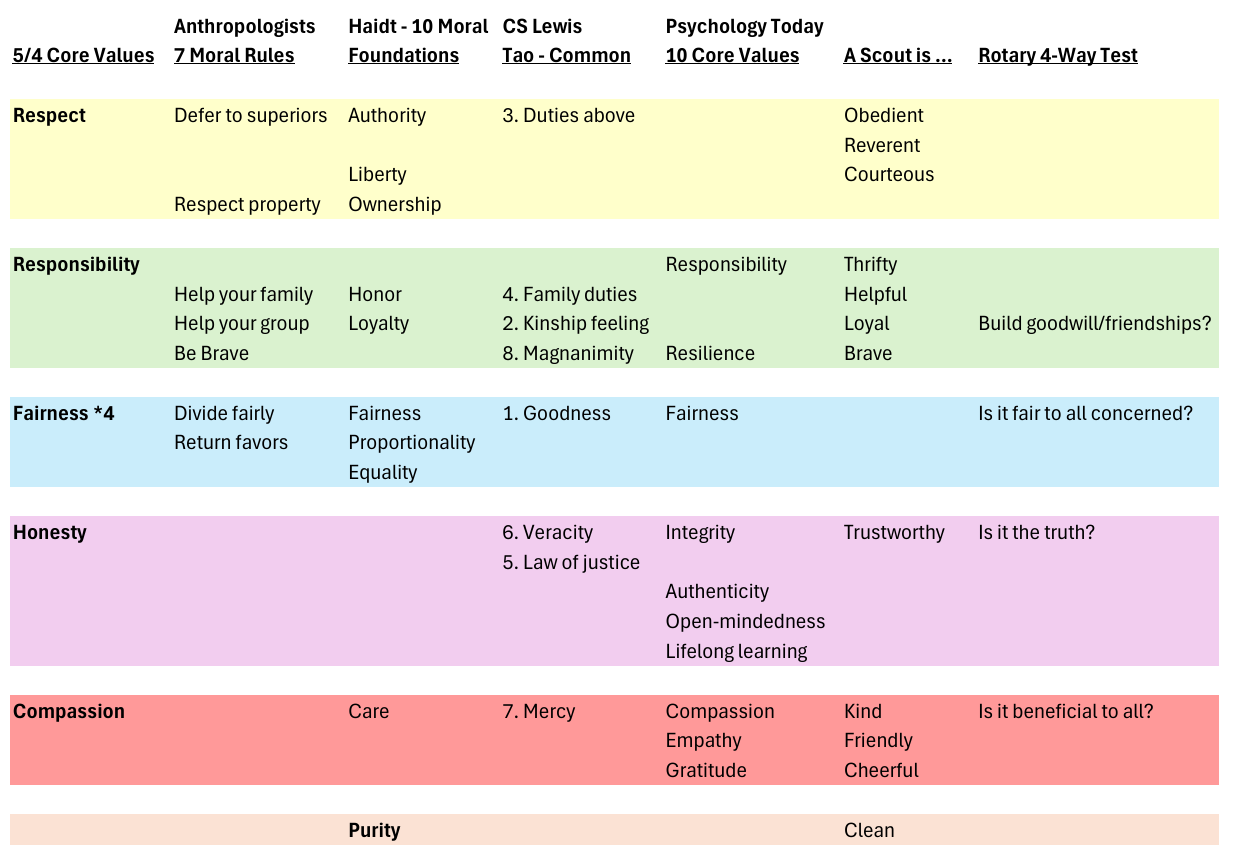
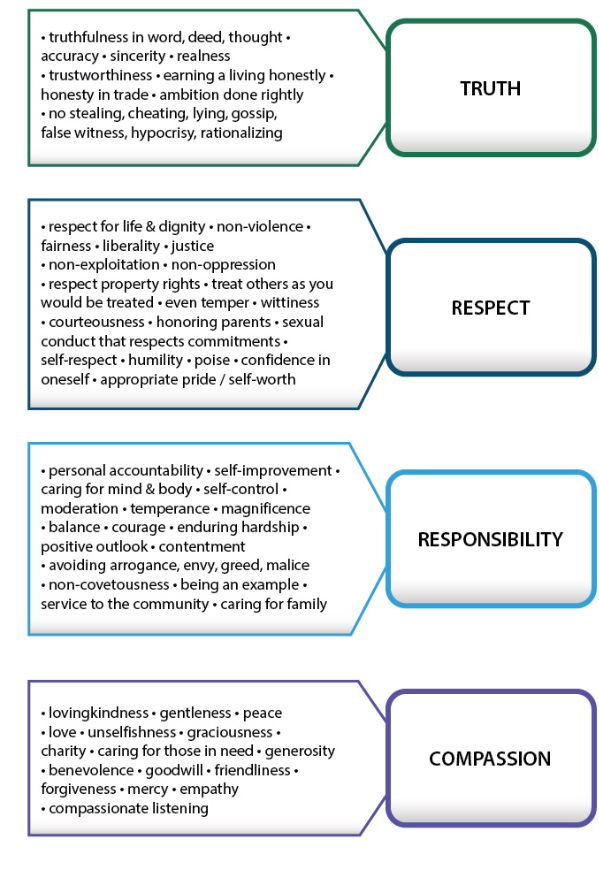
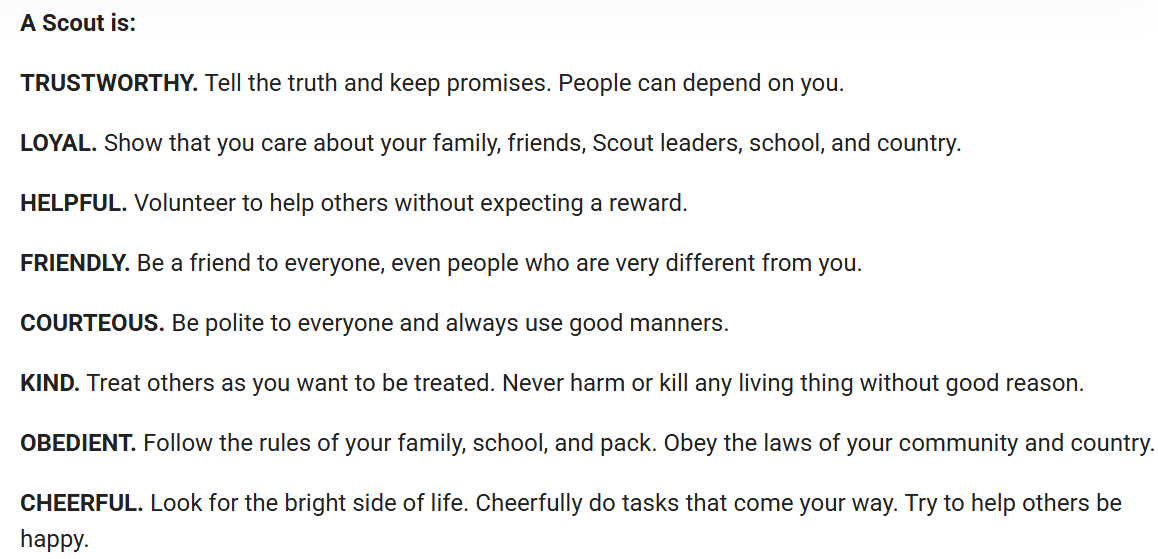
Personal ethics: adopt, DIY, or blended.  Degrees of engagement and general approaches.  Golden rule, golden mean, pay it forward, common core Tao (CS Lewis), love God and neighbor.  Moral journey: resources, organizations, practices, insights, feedback, advisors.  Interacting across differences.

Applied ethics, 4 of many topics: economic justice/equality, discrimination/equal rights, human sexuality, feminist views.

Community ethics: shaped by many sources.  Politicized today.  Role of personal identity.  Multiple cultures.  Urban/suburban/rural.  Class.  Race.  Religion.  Immigrants.  Is a common core possible? 

Not an “ethics” course for philosophy majors.  Society requires some form of shared ethical beliefs to function.  Our individualistic society and political system don’t provide answers.  Secular and religious perspectives for modern citizens.

309 Shaping Our Future

We collectively own our future.  Political, economic, social, and religious institutions are shaped by men and women. 

We live in a collective society.  Note the key role of institutions and social norms, laws, and politics.  Much greater specialization and trade.  Producing and consuming.  Benefits of living in society.  Myth of the self-made man.  Costs and risks of living in society.  Newborn individuals do not get to choose.

Responsibilities of citizenship:  voting, informed, producing, following laws and regulations, paying taxes, service, and loyalty.

Goals of government and politics:  safety, security, protect property, life, liberty, pursuit of happiness, human rights, opportunities, justice, moral laws, promote the common good, economic well-being, economic security, manage public goods, public investments, business and banking infrastructure, rights of speech, press and religion, protect minority interests, mutual insurance, avoid catastrophes, and international relations.

Six clusters of priority issues (Pew/Gallup):  Economy, inflation, jobs.  Budget, government, health care funding, social security, energy.  War, international relations, aid, terrorism, immigration.  Morality, crime, gun rights, abortion limits, education results and rights.  Education quality and access, poverty, hunger, labor, race, environment, gun control, climate change, abortion rights, human rights.  Campaign financing, election rules, rule of law, trust, polarization.

Context since WWII.  Economy.  Labor force participation.  Income and wealth inequality.  Median quality of life, after transfers, product quality, choices, and public goods.  Federal government share of economy and employment.  Budget deficits.  Business cycles.  Poverty.  Health care quality and costs.  Economic opportunities.  Social capital and trust.  Religious participation.  Crime rates.  Military costs, wars, and threats.  International trade, imports, and exports.  Technological change.  Education results.  Race, religion, ethnicity, sex, gender, disability access.  Environment.  Voting, political processes, polarization.  Global alliances, democracy, and capitalist countries.  Mostly “good news”.

The triumph of Western representative democracy and the mixed capitalist economy.  Fukuyama’s 1992 claim of the “end of history”.  Communism, fascism, totalitarianism.  The elements and benefits of a classic liberal political system.  Criticisms from neo-liberals, social conservatives, communitarians, progressive liberals.  The elements and benefits of a classic liberal economic system.  Criticisms from neo-liberals, labor, greens, mainstream Democrats, progressive liberals.  Churchill – “democracy is the worst form of government – except for all the others that have been tried”. 

Political system today.  Two parties equally matched.  Low voter participation.  Minority of motivated voters can rule.  Polarized parties.  Extreme policies, positioning, and platforms.  “Winner takes all” mentality.  Cooperation is not rewarded.  High fundraising costs to compete.  Gerrymandering.  Sorting of rural versus urban.  Polarized media options.  Special interests veto power.  Problem solving is not rewarded.  Perceived single left versus right political dimension.  Importance of political identity/team.  No limits to political tactics.  The “Rule of law” is threatened. 

Voters.  Party, character, policies, wedge issues, messages, ideology, special interests, transactions, protest.  Incentives to participate.  Limits: priorities, free rider, doesn’t matter, information costs.

Politicians.  Public choice theory, work for self-interest, respond to incentives.  Emotions, communications, simple issues, teams and brands, gerrymandering, voting rules, extreme positions, terminology, framing, blaming, attacks, straw man positions, own facts, stories, no costs or tradeoffs required, Overton window shifts, identity, exaggeration, end of universe, fear of low probability events, what people want to hear.  Great salespeople use messaging to connect buyers and sellers.

Parties.  Win elections, define issues, coordinate brand and messaging, field candidates, raise funds, allocate funds, choose candidates, build and maintain coalitions, set priorities, influence officials to support the party, define boundaries, craft legislation, manage special interests, define districts, maintain unity, manage conflicts between candidates or party wings.  Parties are weaker today due to better communications technologies, direct fundraising and “direct democracy” laws. 

Political subgroups.  Conservative, socialist, labor, green, mainline Democrat, libertarian, nationalist, populist, social conservative, Main Street Republican, business Republican, neo-liberal, progressive Democrat.  A higher share identifies as “independent” today, but a higher percentage lean left or right.  Subgroups vary in their priorities and policies for economic, traditional social, business, government, international, social justice, and environment dimensions. They vary in their participation, moral bases, and willingness to compromise.

The Civil Rights Act of 1964 realigned parties on a left versus right axis and Ronald Reagan consolidated the varieties of “conservatives” solidly into the Republican Party.  The Democrats also adapted.  Various attempts to summarize the essence of “left versus right”: sensitivity to risk/loss, nature of man good or fallen, realism versus idealism, tradition versus progress, authority versus independence, liberty versus state, proven versus progressive, local versus global, religious versus secular, Haidt’s 6 moral foundations.  Many individuals and subgroups do not align cleanly on this single dimension.  They oppose the simplistic, polarizing approach and argue that it works to prevent progress and gives undue power to extreme positions. 

Changes in political subgroups since WWII.  Southern Democrats migrated to Republican Party.  Moderate Republicans migrated to Democratic Party.  Labor, working class whites migrated to Republican Party.  Mainstream white Democrats a smaller share of Democrats.  Minorities a larger share of Democrats.  Progressives a larger share of Democrats.  International relations less important, but still Republican hawks and Democratic doves.  Social conservatives a larger share of Republicans.  Urban Democrats and rural Republicans are clustered.  Big business Republicans a smaller share of the party.  Democrats focused on the coasts and just 500 of 3,000 counties.  Republicans fill the middle and the Sunbelt.  Libertarians mostly support the Republican Party.  The young lean towards Democrats, but Republicans benefit from aging.  The Republican Party’s average income and education advantages have fallen.  Democrats once believed that demographic benefits of more minorities, urbanization, immigrants, and education would ensure a new “permanent majority”, but offsetting changes among working- and middle-class whites as well as minority voters challenge this projection.  Urban clustering, partisan gerrymandering and the constitutional rules for the Senate and electoral college provide Republicans with a 3-5% structural advantage in national politics.

Possible solutions for polarization and loss of political power by the center.  Public funding of elections, nonpartisan district drawing, political parties retain one-third of primary delegates, council of elders, ranked choice voting, new centrist party, Democrats move to center, Republican party splits and moderate Republicans attract moderate Democrats, centrist organization with approval power over candidates, compromise legislation to take wedge issues out of the mix, media legislation to separate news and opinion functions, larger Supreme Court with term/age limits and some non-political appointments, agreement among billionaires and major corporations to not fund extreme candidates, non-extremist rating by a nonpartisan group like League of Women Voters, congressional agreement to delegate more issues to the states, Congress in session 14 days on, 14 days off, return of earmarks for use in persuasion of swing representatives, fundraising limits for special interest groups, Bill of Responsibilities for citizens and representatives.

Populism.  Long history in the U.S.  Anti-banking, anti-city, anti-elites.  Farmer-labor party.  Unions within Democratic Party.  Disconnect between politicians, journalists, and intellectuals and the average person’s lived experience.  Democracy promises that “the people” will be represented.  Some political issues are abstract and remote.  Some political options contrast “lived experience” with ideas and ideals.  Economic changes, threats and disruptions can drive populism.  Social, residential, religious, and cultural changes can drive increased populist demands for solutions.  A larger, global, more complex economy undercuts security.  A meritocratic economy with greater spread of economic returns coupled with a weak “safety net” drives anxiety.  An economically focused society undercuts the non-economic tools used to ensure that all citizens feel respected and needed.  Both parties teach their children that they can achieve whatever they seek.  Working class social capital and trust are weak (Putnam).

Challenges.  Citizens/voters are imperfect, treat democracy as another consumer good rather than a duty, are suspicious of “others”, have unlimited wants and focus on most recent rewards.  Our political system requires tolerance, respect, trust, and compromise, but intolerance has grown.  The lag between decisions and results makes political feedback imperfect.  The rewards and incentives for compromise are weak.  Our political system leaves morality, values and community to individuals and organizations, yet relies upon some degree of shared commitment.  The decline in social capital, trust, and trust in institutions, especially among the working class, undermines the commitment of citizens to the system. 

Many political choices are inherently values based and contentious.  Political choices often involve limited resources and require trade-offs.  Capitalist systems drive consolidation of income and wealth.  The income and wealth in the US are so high at the top that the incentive to preserve them through politics is very high.  The ad revenue and click based media system reinforce extremist tendencies in politics.  The single left-right, red-blue team basis for politics overlaps with many dimensions of personal identity and is self-reinforcing.

Hope for the future.  The U.S. economy continues to grow, providing jobs, wages, choices, goods and services, tax revenues, low unemployment, and a weakened business cycle.  Growth buffers political conflicts and demands.  Resources address the budget deficit and allow for the investments to offset the side-effects of globalization, improve job security, offer respect to all workers and cap inequality. 

The U.S. has an encouraging history of political leadership and social progress (Meachem), innovations in social institutions and progress in science and management science, allowing organizations to better meet their needs.  The U.S. has world leading organizations that innovate to meet changing and conflicting needs.  There are thousands of great leaders in U.S. organizations.  States, government agencies, the military, universities, and large not-for-profits demonstrate winning ways for politics and program delivery.  Some states have adopted “good government” initiatives and found ways to cooperate in addressing the pandemic.  More and more countries around the world are successfully adopting the classic liberal model of representative democracy plus mixed capitalist economies, lending credibility to their overall effectiveness despite their shortcomings.

The very top economic elite have an incentive to make our political model function and maintain credibility and support despite contradictory incentives to maximize their share of income.  The US, Europe and China collectively have an incentive to define a new world order that preserves the benefits globalization, prevents war, and addresses global challenges like climate change.  The professional and managerial class in the U.S. has a strong incentive to maintain a system in which they thrive, even if they must give up some income, embrace compromises and oppose their chosen political party from time to time.

Our political system has built-in “checks and balances” and protections for self-preservation.  The failures of polarization may drive some political parties, first at the state level, to change their approaches.  Interparty conflicts may disrupt the simplistic liberal versus conservative axis and encourage individual policy voting once again.  One party or the other may lose so much from its extreme postures that it will be forced to move towards the center.

If national politics remains severely partisan and dysfunctional, a nonpartisan movement may push to restrict the scope of national politics.  Our federal system is built to delegate topics to the states.  Technocratic organizations like the OMB and Federal Reserve Board have demonstrated basic competence.  Other functions could be moved outside of direct politics.  The U.S. has a strong religion, not-for-profit and volunteer sector that could grow, especially given the number of retired people.

Generational politics is growing.  The elderly want to protect their retirement benefits and home values.  Young adults are struggling with housing costs, student loans, health costs, social security funding, budget deficits and climate change.  The cycle of new generations might produce individuals with greater interest in compromise and results.  An aging population might provide more voters with a wiser long-term perspective.  Overall, these generations could change the way we look at politics.

The newer generations might provide a greater sense of community versus individualism.  American pride might be tapped to rise above partisan differences and re-establish a government that works for the people.  A modern religious revival could promote key values, trust and community required for better politics.  The suburban professional class’s secular values could become standard for the nation, re-establishing the shared community values needed as a basis for aspirational politics.  Objective news is already available if citizens would choose it.  “Good news” sources that provide expert, historic and cross-national perspective are also available to guide well-meaning voters with open minds.  Multicultural examples of success are available in several U.S. states and provide a model for how the historically dominant culture can thrive alongside others as it loses its political advantage.

Our Hamilton County: Highly Educated

In 2022, 34% of those aged 25+ in the US had completed bachelor’s degrees. Indiana lagged the national average at 30%. Nearby Kentucky (28%), Ohio (32%), Michigan (32%) and Illinois (38%) were near the national average. Nine east coast states (VT, NJ, CT, NH, NY, VA, DC, MD and MA) plus CO and WA exceeded 44%.

https://en.wikipedia.org/wiki/List_of_U.S._states_and_territories_by_educational_attainment

The Census Bureau provided a nice interactive map to display county level data from the American Community Survey for 2015-19. They used 40% as the cut-off for the very highest educated counties.

https://www.census.gov/library/visualizations/interactive/acs-percentage-bachelors-degree-2015-2019.html

Focusing on Indiana and its 4 adjacent states, there were just 15 counties with 40%+ bachelor’s degree completion rates among the 485 counties (3%). Hamilton County was in first place at 56%, tied with suburban Detroit’s Washtenaw County. Columbus suburb Delaware County was in third place at 54%. Suburban Chicago’s DuPage County and Indy’s Boone County tied for fourth place at 49%. Detroit’s Oakland County (47%) claimed sixth place, while Indiana’s Monroe County (46%) snagged seventh place. Franklin and Warren counties in Ohio, Leelanau County in Michigan, Champaign, McLean and Lake counties in Illinois, and Oldham and Fayette counties in Kentucky earned honorable mention.

Hamilton County ranked in 16th place overall (99.5 percentile) among all 3,100 counties nationally.

https://247wallst.com/special-report/2021/09/03/most-educated-counties-in-the-united-states/

Of the top 20 counties, 5 had populations below 25,000. The greater DC/Baltimore area claimed 7 of the top spots: Arlington, Alexandria, Howard, Fairfax, Loudon, Montgomery and DC. Denver suburban Boulder and Douglas counties won two places. New York and San Francisco placed in the top 20. Marin, CA, Williamson, TN and Orange, NC claimed the other 3 top spots.

Hamilton County is in very fine company. It’s bachelor’s degree percentage increased from 56% in the 2015-19 average to 61% in the 2017-21 average.

More Conservative: New College of Florida or DeSantis?

https://www.heraldtribune.com/story/news/local/sarasota/2023/05/16/new-college-students-plan-private-alternative-graduation-ceremony/70207464007/

https://en.wikipedia.org/wiki/Conservatism#:~:text=Conservatism%20is%20a%20cultural%2C%20social,institutions%2C%20practices%2C%20and%20values.

After 1500, Western civilization experienced the Renaissance, the Enlightenment, the Reformation, the Industrial Revolution, colonialism, the new world, the counter-reformation, Islam, religious wars, world wars, the scientific revolution, Marxism, socialism, utopianism, nuclear threats, the cold war, imperialism, alliances, nationalism, regional governments, global organizations, multinational corporations, global trade, the scientific revolution, urbanization, motorized transportation, electricity, radio, telephony, motion pictures, computers, Darwin, the agricultural revolution, and the internet.

In this unique period of tremendous change what is truly “conservative”? With this much change, conservativism might best be described as a philosophy that preserves the incremental progress of society!

DeSantis wins on 2 points as being more “conservative”, preserving the institutions, practices and values of our society. He is in favor of the traditional “nuclear family” as a preferred social model. New College is clearly more LGBTQ oriented. He favors the powerful against the common man. His acolytes have decided that they can govern New College in their way “because they can”. His budding presidential campaign is focused solely on his side, and he claims that he will destroy the opposition if given the power of the presidency which he “best understands”.

DeSantis claims to represent “traditional values” and organized religion. In reality, he represents only fundamentalist Christians. He is a reactionary. Not mainline Protestants, Catholics, Jews, Unitarians, Deists, Hindus, Muslims, Confucians, or agnostics. New College has a long tradition of students exploring and practicing various religious and spiritual traditions.

DeSantis claims that he is fighting against “wokeness”, a situation where the prevailing social, cultural and political views prevents other views from being expressed. New College is NOT the home of wokeness. Students value radical individualism. Each semester they have to convince a faculty member that their “program of study” will lead to graduation with a recognized major. Students generally “lean left” but seek to discover new worlds. Socially, there certainly are pressures to adopt the prevailing political views, but the radical individual ethos of New College has always protected students from domination by any group.

Viewing New College as a “child” of the last 500 years, it is dedicated to conserving the modern world of progress!

DeSantis proposes a radical reformation of the curriculum. New College seeks to preserve its model.

DeSantis proposes to introduce sports and Greek organizations. New College advocates for the preservation of its individual choice-based situation.

DeSantis proposes enrollment growth at any cost, simply for growth’s sake. New College has a more conservative view, restricting admission only to those who would benefit from its unique offerings.

DeSantis wants to transform NC into the “Hillsdale of the South”. New College wishes to remain true to its founding principles.

DeSantis is very concerned about “unusual” students. New College is inherently dedicated to individual rights.

DeSantis envisions a utopian “Hillsdale of the South”. That matches his religious beliefs but not those of Florida and USA students. New College has a long history of realistically surviving as a small, countercultural institution committed to its mission, vision and values. New College was founded on an idealistic basis but has accepted the constraints of reality.

DeSantis proposes a traditional standard curriculum for all students to ensure that they are acquainted/indoctrinated with western civilization. New College students have thrived for 50 years without these artificial restrictions.

DeSantis proposes a more standardized curriculum. New College has promoted extensive “independent study” to ensure that every student has a broad perspective that allows him or her, conservatively, to make proper judgements.

Finally, New College is firmly based upon individual responsibility. “In the final analysis, each student is responsible for the quality of their own education”. Ironically, this is the most extreme “conservative” principle. The individual is responsible. Not the university or faculty. Not the state. Not the parents. Not social classes. Not parents. Not expectations. Not history. Not random chance. Not race, gender or nationality. Not peer pressure.

In the “final analysis”, DeSantis is no conservative. He is a reactionary willing to do whatever it takes to claim a social conservative position to the right of Trump. New College is merely a pawn in his Quixotic quest.

Our Kids: The American Dream in Crisis (2015)

Author Robert Putnam also wrote the award-winning Bowling Alone (1999) and The Upswing (2022) summarizing the mountains of social science research on American Community and related topics. The first book documented the large, steady and widespread decline in community participation in the second half of the 20th century. The second book extended the timeframe back to the 1850’s to document that community participation was very low in the post-Civil War era, but that institutional innovations plus social, economic and political changes aligned to promote greater community participation throughout the next 75 years, before declines began in the post-WW II era.

This book is also data-intensive and primarily focused on the role of “community” in driving divergent opportunities for lower socioeconomic status (SES) versus higher SES children. Five chapters focus on the American Dream, Families, Parenting, Schooling and Community before a final chapter on why we should care and what we might do. The author provides paired case studies of higher (top 1/3rd) and lower (bottom 1/3rd) SES families in his hometown of Port Clinton, Ohio (near Toledo), Bend, OR, Atlanta, Orange County, CA and Philadelphia to illustrate how the various factors interact and apply.

The author chooses to frame his story under the heading of upward mobility or equal opportunity because this is a very widely held American value with supporters in both political parties. His liberal/Democratic party bias shows in various places, but his mastery of the data, case studies and sequencing make this a powerful book describing how American communities, families, kids and neighborhoods were actually functioning in 2015 contrasted with those in 1955-75.

In summary, the reduction in community activities documented in Bowling Alone is mostly felt by the bottom half of the SES groups. Poor/poverty class, working class and middle-class families have been very negatively impacted by both lower absolute and relative economic opportunity and weaker community support, while professional, upper middle and wealthy class families have maintained economic and community resources to guide their children to positive outcomes. Upward mobility in the US has fallen as income and wealth inequality have increased, leading to greater divisions in society, lower trust, weaker institutions and polarized politics.

Putnam tries not to shout, but the clear implication is that American civilization, per se, is at risk! If one-third or one-half or two-thirds of Americans do not benefit widely from social institutions, choose to not participate in them, lose trust in their neighbors, fail to raise their children and turn to populist political candidates for solutions, The American Dream is at risk. The author does quietly note that the measurements of intergenerational mobility lag by 20 years, so what we are seeing today is somewhat based upon the social, economic, political and economic conditions of the late 1990s. The next two decades of community, institution and parent formation have already taken place and shaped childhood development.

“Sociologists”, like Dr Putnam, are often commingled with “socialists” and other leftwing political groups in the public mind; and the profession is clearly leftward leaning in universities today. However, the discipline also has an inherent rightwing slant. Sociologists devote their time to analyzing the roles of community, family, kin, religion, neighborhood, voluntary groups, institutions, unions, employers, political parties and other groups on human behavior. The focus is on the group as a counterweight to the purely individualist, commercial, scientific, rational, transactional, computing, materialist conceptions of human beings. Classical conservatives have often tried to “conserve” the delivered group history, traditions, culture, value, art and institutions (civilization) of the past against the various progressive, experimental, enlightened proposals of liberals. A successful civilization must have successful groups and institutions.

As my 1972 high school general business teacher, Mr. Dunlap, often said, “we have much, much to do today”.

The American Dream

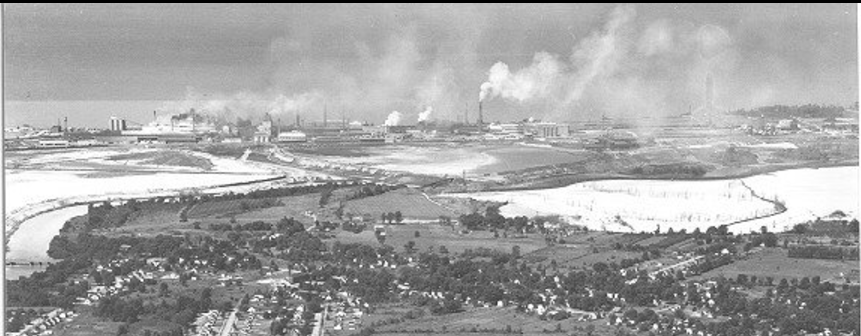
The 1950’s can be improperly idealized, but the contrast between 1950’s and 2010 Port Clinton, Ohio shows massive changes in economic opportunities and living conditions between the “haves” and the “have nots”. The author compares the top and bottom one-third of society using case studies and data. For data slices, he typically uses educational achievement, comparing high school graduates or less education groups with college degree achieved groups. His home village of 7,000 is between Toledo and Cleveland on the shores of Lake Erie, not far from the site of fictional Winesburg, Ohio. The small town thrived with manufacturing, fishing, farming, mining and government sites in the post-WW II era, but declined quickly after the 1970’s except for the addition of a string of lakeside second homes. Relatively small income and status differences, school and activity mingling between classes and widespread economic and educational advances characterized the 1950s. By the 2010’s, the poor had become poorer and the wealthy were of a different economic stratum, with less formal institutional support, class intermixing or intermarriage, informal mentoring or upward mobility.

Don 1959 – working class upbringing, dad worked 2 jobs, mom a homemaker, neither parent HS grad, top 1/4th academically, sports star, local minister guided him to liberal arts college, became a minister, married a high school teacher and his daughter became a librarian. Emphasis on economic and social stability of home life, assistance of community in upward mobility.

Frank 1959 – son of local business owner (fishing) and college educated mom from Chicago, lived 4 blocks from Don, modest school results, worked summers in family restaurant, not considered socially different even though dad was commodore at yacht club and mom “did charity work”, attended Ohio liberal arts college, played sports, worked as a journalist in Columbus for 25 years. Comparable results to Don.

1959 class – “we were poor, but we didn’t know it”. Of the parents, 5% held college degrees and one-third had not completed high school. Three-quarters of the high school graduates obtained more education than their parents. Half of the children of high school dropouts went to college. Absolute and relative upward mobility was high. On average, the children of the class of 1959 (1980s HS grads) equaled their parents in educational attainment but did not exceed them.

Libby 1959 – one of 10 children born to farmer/craftsman and homemaker without HS degrees. Parents actively involved at school. English teacher helped Libby attend U Toledo, but she dropped out of freshman year to marry hometown boy and become a homemaker. Divorced 20 years later, Libby worked as a clerk, writer and manager before winning a countywide political seat which she held for 30 years. Male and female opportunities and participation were quite similar for this cohort through joining college, but only 22% of women completed degrees versus 88% of men.

Jesse and Cheryl 1959 – only two black graduates out of 150. Families had moved from the South, dads worked in manufacturing and mining, moms worked as maids. Jesse excelled in sports, served as student council president, attended college on a sports scholarship, earned master’s degree in education and served as a high school teacher. Cheryl was hardworking, academic achiever and class officer. She also earned a master’s degree and taught high school. Both families lived in the poorest parts of town. The students interacted with their classmates, but knew that there were limits for dating, travel and recreational activities. The students were guided/assisted by local adults to attend college. While race and gender restrictions have fallen since 1959 in the US, class-based differences in opportunity have increased.

1950’s and 1960’s forward to 2010- one-half of high school grads to college and one-half to work. 1,000 employee factory trimmed jobs, then closed in 1993. Army base and gypsum mines closed. Manufacturing fell from 55% to 25% of jobs. Real wage in 2012 was 16% below that of 1970. Population had grown by 50% from 1940-70, flattened through 1990, then dropped by 17% by 2010. 2010 juvenile delinquency rates 3 times national average, up from just average in 1980’s. Net departures of 30-39 year olds doubled from 13% in 1970’s to 27% in 2000’s. Single parent households doubled, divorce rate up 5X, unwed births doubled, child poverty up 4X. At the same time, second homes now covered 20 miles of the lake shore. Small town “rust belt” story has same social impact as large city “rust belt” stories.

Chelsea 2014 – lives on the lake, dad is a national sales manager, mom has graduate degree and does part-time special education work. They own a second home. Mom is very active in shaping kids’ school life, intervening, investing and coaching. Chelsea is “most active person” at school, leading many extracurricular activities. She attends a big 10 university and plans to become a lawyer.

David 2014 – dad a HS drop out, worked periodically in odd jobs, imprisoned, angry, many women, drugs, moved from place to place. Mom moved out when David was preschooler. David has 9 step siblings. Finished HS through career classes. Juvenile detention record begins with age 13 store break-ins and continues for drug and alcohol violations. Lived with dad and grandparents at different times. Passed each grade, but never engaged in school. Worked in retail, factory and landscaping. Became a father at 18, did not marry, shares custody of child. Invests time helping his stepsiblings. Wants further education but has no plans. Bitter that community did not help him through his childhood when it was clear that his imprisoned dad and absent mom were incapable of raising him.

Equality of income and wealth is different from equality of opportunity and social mobility. The first is widely discussed in the media and rising inequality bemoaned by many. However, proposed government initiatives to address it, especially income or wealth transfers, are hotly debated by the two main political parties. While this form of inequality and changes in it clearly impacts equality of opportunity, the author focuses on the second measure.

“Do youth coming from different social and economic backgrounds in fact have roughly equal life chances, and has that changed in recent decades?” “A bedrock American principle is the idea that all individuals should have the opportunity to succeed on the basis of their own effort, skill and ingenuity” according to Fed chair Ben Bernanke. Faith in equal rights is embedded in the American founding documents and stories, American history, especially due to the growing economy of the US across more than two centuries. The Horatio Alger story of “rags to riches” has been told since formal public education began in the US in the 1840’s. Public opinion surveys from the 1940s through the 1980’s recorded an American public that believed that they and their children could pursue The American Dream with confidence.

95% of Americans repeatedly endorse equality of opportunity – “everyone in America should have an equal opportunity to get ahead”.

3 stages. 1875-1945, less inequality of wealth and income, growth of wealth and income, modest equality of opportunity for non-minority men. 1945-75, much less inequality of wealth and income, rapid economic growth, strong absolute growth of opportunities for all and very open opportunities for economic growth and social mobility. 1975-2015, intermittent periods of economic growth, increased inequality of wealth and income, limited absolute economic opportunity and sharply reduced relative economic opportunity and social mobility. The contrast between 1959 and the post-Great Recession 2010 highlights the very different economic and social environments.

Income inequality within each racial/ethnic group increased from 1967-2011.

From 1979-2005, real after-tax income for bottom 1/5th up $1,000; for middle 1/5th up $9,000; for top 1% up $750,000.

From 1980-2012, real earnings of college educated males rose 35%, while high school graduates lost 11% and high school dropouts fell 22%.

From 1992-2013, real wealth of high school graduates or less education remained in $150-175,000 range while wealth of college graduates increased from $600-700,000 range to $1.1 million range. A 3.5 to 1 ratio increased to 6 to 1 in 20 years.

Neighborhoods are more clearly sorted into high, middle and low income. Between 1970 and 2009, high-income neighborhoods doubled from 15% to 30% of the total while low-income neighborhoods increased by one-half, from 20% to 30% of the total, leaving middle-income neighborhoods to shrink from 65% to 40%.

Neighborhood segregation drives educational segregation. In large cities, “neighborhood schools” policies ensure that lower and higher income groups mix less. Within schools, top third SES students disproportionately enroll in advanced tracks and complete AP courses. These differences have even greater disproportionate effects on college attendance, college graduations and especially selective college admissions.

Clustering in neighborhoods, schools and colleges leads to “assortive mating”, with higher SES students marrying each other much more often than in the post WW II era when interactions between the classes were more common. Combining all of these factors leads to extended families and kinship networks that are largely or solely comprised of similar SES people, further reducing the interaction of Americans from different walks of life.

Putnam notes that absolute mobility, completing more education, earning more and holding higher level positions than your parents, is the primary component of “upward mobility” in history. The growth of economies, movement to new locations, development of new industries, technologies and professions does tend to benefit many across society. Relative upward mobility, with the lower classes moving ahead (education, income, jobs) faster than the upper classes, is not as a big a driver because it is less common in history, and even when it occurs it does not mean than bus drivers and surgeons change places, only that bus drivers’ daughters become transportation analysts while surgeons’ daughters become pharmacists.

The social scientist standard measure of mobility compares the income or education of a 30-40 year old with their parents at 30-40 years old, assuming that lifetime career success is largely settled at this age. Putnam asks the reader to not wait for the high school graduates of 2005 to be measured in 2020 but instead to look at their situations in 2005 and project the results, adding urgency to the time period in which absolute and relative mobility have been so much below that experienced after WW II.

2. Families

Putnam next focuses on the rapidly growing mid-sized town of Bend, Oregon, a largely white representative of prosperous western towns driven by their outdoors assets. The logging industry has been replaced by tourism, retirees and second homes. Area population is up from 30,000 to 165,000 between 1970 and 2013. Per capita income is up 50% in one decade. Usual side effects of rapid growth are seen. Wealth is made in real estate and construction. But, even in this growing environment, income inequality has widened by 75%. Poor neighborhoods are clustered on the east side of town.

Andrew – 2015. Parents from modest middle-class backgrounds near Bend. Dad Earl a fair student, graduated from state college. Married classmate Patty, who left college. Earl worked as a stockbroker, Patty as a florist’s assistant. Earl moved into construction and built a solid business worth millions. Patty left work, had 2 kids and thrived as a homemaker. Children attended a new HS with 15% drop-out rate, contrasted with east-side HS with 50% drop-out rate. Parents focused on kids, school, building their marriage. Andrew lacked for little. Parents involved in school, activities and career steps. Andrew a modest student and not driven like dad, working towards a firefighting career. Feels secure in pursuing his future.

Kayla – 2015. Parents Darleen and Joe have both lead troubled lives. Darleen raised on a small ranch a few hours from Bend. Finished HS with modest record, worked in fast food and at a fuel station. Married by 20 with 2 kids to abusive man but left him. Met Joe in new job at Pizza Hut where he was the manager. Soon pregnant with Kayla. Joe’s father was mostly in prison while growing up, mom was an alcoholic who Joe helped from an early age. Experienced some structure and care in 6 years in a foster home. Dropped out of eighth grade. Cared for mom. Married at 18, 2 kids with drug abuser. Left woman, kept kids, moved back in with his mom and mom’s latest boyfriend. Met Darleen in Bend at Pizza Hut. Joe moved from job to job, unskilled, low wage. Kayla grew up with the 4 step-siblings. Always poor, little parental support for school or extras. Mom Darleen left with a new boyfriend when Kayla was 7, living across the west and becoming homeless. Kayla mostly lived with Joe but some of the time traveled with Darleen and her friend. Kayla has essentially lived “alone” due to limited prospects and parenting skills of Darleen and Joe. Kayla drifted in school, found some support in troubled youth and job corps programs and legally finished HS. Some school administrators helped Kayla with medical, counseling and educational support. She has taken some community college classes, has a new boyfriend who lives with her at Joe’s. Kayla is depressed and worried about her future but doesn’t know what to do.

The post WW II norm was a breadwinner dad and a homemaker mom. Relative stability. Modest income or extras, but owned home and settled in a neighborhood. Working- and middle-class wages were adequate to support this model. Only 4% of births were outside of marriage due to social norms and pressured marriages of new parents to be.

Family structure changed during the 1970’s. More divorce, more women working for pay, greater cohabitation, more unwed births resulting in more kids in single parent homes. These changes accelerated for decades. Birth control, feminist views, female job opportunities, working class male job insecurity and individualist, self-fulfillment norms all contributed to these major changes in expectations and actual family structures.

In time, the bottom half of the social classes continued to shun the traditional model, but the top half maintained a high rate of marriage, modest rate of divorce, delayed first births and raised kids in stable two-parent households. These women increased their college attendance rates and worked in higher skilled jobs before and after their children’s pre-school years.

Lower educated moms’ first birth age was relatively stable at 19-20 years from 1960-2010, but higher educated moms delayed child responsibilities from age 24 to age 30, providing time for dating, prospecting and cohabitating before marriage and maturing socially, completing education and career milestones before the responsibilities of motherhood.

Births to unmarried women with college degree completion status doubled from 5% to 10% between 1977 and 2007, making it still a relatively infrequent occurrence (1 in 10). For young mothers with high school credentials or less, the 1970’s rate was already much higher at 20% (1 in 5), but has grown consistently since then to more than 60% (approaching 2 in 3). This is a revolutionary change within the high school grad population — and between them and the college educated group.

By 2010, the high school graduates’ divorced percentage reached 28% versus 14% for the college graduates. Among the one-third of high school graduates who were married when their kids were born, 28% of the families experienced divorce.

Fathers with HS credentials are four times as likely to have children that do not live with them as fathers with college degrees.

The percentage of college educated families with children under age 7 lead by a single parent doubled from 5% to 10% between the 1950’s to 1970’s period and the 1990’s to 2010’s. It was a slightly higher 12% in the late 1980’s and early 1990’s. The high school graduate lead families started at 20% in the early decades and has grown to more than 60%, the same pattern as births to unmarried women.

Lower education moms’ employment percentage grew from 18% to 32% between 1960 and 2010, a 70% increase. Higher education moms started at 20% in 1960 and rocketed up to almost 70% in the 1990’s — another gigantic change within this group and between the groups. In 1960, one in five moms worked throughout the classes. More lower education moms joined the paid work force, but more than two-thirds did not work in the 2010’s. More than two-thirds of college educated mothers rejoined the labor force, making that the usual situation for their peer group. On average, high paid college educated families have one and two-thirds earners while lower paid high school grad families have one and one-third earners, a further income difference of 20%, on average. Working moms today spend as much time with their kids as “stay at home” moms did in the 1970’s by cutting out other competing uses of time. Black Americans show this same split towards two-earner married couples at the top and single moms at the bottom. Recent immigrants and Hispanic families look more like the traditional model.

The two-tier model is driven by culture and economics. It is socially possible to have children without being, getting or remaining married. The social prohibitions against birth control, premarital relations, cohabitation and childbirth outside of marriage fell quickly and have little impact for most American today. Motherhood is open to young women irrespective of their economic, educational or social status and is considered a “good”. Young women can choose motherhood and romance over marriage and do so frequently in the lower half of society. Poor and working-class men today have relatively lower wealth, earnings, stability and prospects than their post WW II peers. Young women have greater economic resources and generally believe that marriage requires a solid economic foundation, so often choose to not make that commitment. For less well-off partners economic instability and risks prevent and threaten family stability. For fortunate partners their economic security reinforces family stability despite life’s challenges. This is an essential take-away. Economic differences are translated into social factors which magnify the different opportunities and security experienced by higher and lower income, wealth and education families.

Putnam does not believe that overly attractive welfare benefits play a major role in preventing or disrupting family formation. Technical studies show small effects. The overall change in structure is orders of magnitude larger than those effected by benefits. Welfare benefit policy changes do not correlate with the changes in family formation. Benefits do matter economically and have an impact, but this is not a primary driver of changes in family structure.

The social changes of the 1960’s and 1970’s and the overall trend towards a more secular public society and norms is correlated with the breakdown in family structure overall and for the lower SES groups. Putnam argues that correlation is not causation. The massive split between the top and bottom halves argues against this simple explanation. State and county level correlations indicate an opposite effect, with more rural and religious areas having even greater rates of family decay.

Policy choices in the 1980’s to criminalize drug infractions, increase sentences, reduce sentencing options and increase enforcement led to a five-fold incarceration rate increase between 1970 and 2000. Since young men account for 90% of offenses, this has directly removed many men from actual or prospective marriage. This is not the main driver of fragile families, but an aggravating factor.

The two-tier system has improved outcomes for the top half or two-thirds of society, with married two-income families devoting more time and money to a smaller number of children. The bottom one-quarter or one-third is increasingly comprised of single mother families with part-time, family or government support during the crucial preschool years followed by lower earnings thereafter, so their children receive less financial and social support throughout childhood and lower lifetime opportunities.

From a sociologist’s point of view, these are qualitative differences or “order of magnitude differences” not merely the “differences of degree” experienced in the post WW II period.

3. Parenting

Putnam uses metro Atlanta as the backdrop for this chapter. Fast growing, deep poverty, variety of suburbs, racially segregated, racially mixed in some suburbs, second largest number of African Americans in the US, second weakest upward mobility scores, northern transplants, income inequality within Black community, Black political power, highly educated Black population. But income/class differences have a large impact, perhaps more than race.

Simone, Carl and Desmond – 2015 – Mom Simone from New York City, upwardly mobile family, father a Merrill Lynch manager, mother a medical secretary, married 50 years, moved to New Jersey suburb. Simone earned BA industrial psychology at CUNY. Dad Carl born in Suriname to black and Dutch parents, moved to New York as a child. Dad worked for Alcoa, mom at UN. Dad built a warehousing business. Parents married 33 years. Close family, dinner table discussions, religion important, friends welcome. Simone and Carl met at CUNY, married, waited 5 years to start family per religious counselor’s advice. Simone worked as receptionist and paralegal before becoming at home mom. Carl is an IT manager, brings kids to work, shows role models, he advises them to be productive. Education a priority, in school, out of school, reading, flashcards, outings, activities, sports, music, diet choices. Parents shopped for schools, moved further out in NJ, then to Atlanta, chose HS first, then home. Chose diverse school district to prepare Desmond for world. Mom deeply involved in school activities. Sensitive and firm parenting style; claims never punished son. Dad emphasized autonomy. Religious faith, activities, interactions shaped Desmond’s friendships, activities and thinking. Family adapted to diabetes challenge. Racism acknowledged, but you “have to work a little bit harder”. Simone reflects that “you never stop parenting”. Desmond was top ranked HS student, in college, interning at CDC, moving forward on professional career path.

Stephanie, Lauren and Michelle – 2015 – Mom Stephanie a hardworking office manager in the hospitality industry, grew up in Detroit. Her alcoholic mom left her alcoholic father in Georgia, worked as an RN, lived with an alcoholic Chrysler factory worker. Stephanie grew up in middle class Detroit neighborhood but mixed with project kids, joined a gang, fought, went to juvenile detention center, suspended from school, barely completed grades, stole. Her mom died when Stephanie was 15, she moved in with an aunt who offered more structure and gained Stephanie’s respect. Left aunt and dropped out of 12th grade, moved to Atlanta, earned GED, got pregnant and married. Shared 4 children with her first husband. Caring for first child changed perspective to being responsible for her kids. Worked at fast food, supermarket, discount department store, earned promotions and living salary. Husband left, Stephanie married a forklift driver and has a good marriage with him but they keep financial responsibility for his kids and her 4 kids separate.

Stephanie has been a customer service manager for 15 years where she excels due to her social interaction skills and hard work. Her 4 kids were financially provided for. Mom tried to keep kids safe and used tough love parenting approach. You have to be hard, parents are in charge, not my children’s friend, kids need to be tough and know the world is tough, few conversations and hugs. Family moved twice to better neighborhoods to get further away from trouble. Some education support for kids in elementary and high school, financial support for community college. Eldest son is succeeding, challenging youngest son works at recycling center with his dad. Lauren is completing associates degree in counseling. Michelle dropped out of community college, had struggled with speech and reading in high school. Hopes to attend trade school and be a day care teacher. Currently at a pause in life, hanging out with HS drop out boyfriend. Stephanie claims that racism has never been an issue in her family’s life. Is proud that her kids are “respectable”.

Elijah -2015 – born in Germany to Army parents, mom left family when Elijah was 3, moved in with his grandparents in New Orleans projects. Saw and experienced violence frequently including shootings and murders. Taught by close cousin James how to be a burglar at age 7. James taught him to fight, be a thug and a bully. First re-encountered his dad at age 10, who had been in prison and fathering more children. Moved to Charleston, SC at age 10 to live with mom, then back to New Orleans for 2 years, then back to his mom, new boyfriend and year-old twins in Atlanta at 13. Elijah arrested for arson at age 14, beaten by his dad (moved to Atlanta) after he was bailed out. His father had become a “preacher” and tried to influence Elijah positively, but mom remained verbally abusive throughout his childhood. Elijah tried to reset his life several times after age 14, with limited success. He finished HS with much effort at age 19. He has lived with mom, dad or friends since high school. Worked. Stayed high. Focused on music. Stayed clean. Dreams of being a preacher or hip-hop hero. Influenced by religious teachings but still attracted to violence. Bagging groceries at Kroger, saving money for an apartment and school. Elijah is a survivor against the odds, just barely.

Child development. Experience + environment => neurological development.

Prenatal through early childhood environment => brain circuitry and capacity for empathy.

Contingent reciprocity = “serve and return” experiences matter most. Consistent and caring adult interaction. Development is a social experience.

Much early learning is preverbal but it drives later verbal and math skills.

Early learning also drives “executive functions”: concentration, impulse control, mental flexibility and working memory.

Intellectual and socioemotional development are intertwined. Soft skills may be as important as academic skills: grit, social sensitivity, optimism, self-control, conscientiousness and emotional stability.

Unstable or inconsistently responsive parenting, physical or emotional abuse, substance abuse and lack of affection produce negative neurological changes.

Individuals differ on their inherent resilience, but negative factors have negative effects on children.

Early childhood care drives cognitive and soft skills which drive school performance.

Parental income, education and class are closely correlated with healthy brain development. Differences emerge at very early ages and remain stable through life (on average), operating most strongly in the preschool years.

Dr. Spock’s “permissive parenting” has been replaced by “intensive parenting” in response to this new understanding, especially by higher income, education and social class parents. Concerted cultivation of children’s skills by both parents is the new norm replacing an earlier theory that natural growth by a child would be good enough.

High school graduates prioritize obedience above self-reliance in their children by 55% to 35%, while college graduates seek self-reliance above obedience by 55% to 25%. Upper class parents have adopted the new parenting approach faster than lower class parents.

Working class parents provide their children with a 3/2 ratio of encouragement to discouragement, while professional class parents offer 6/1 positive to negative feedback, consistent with the goal of creating autonomous young adults accustomed to making good decisions and choices. Putnam notes that these differences reflect historical parental experience and the need to help students in threatening environments survive.

Trends in the percentage of parents who say their family usually eats together also shows that college graduate parents are retaining their interactive style better than high school graduate parents, with the first group declining from 80% to 75% since the 1980’s while the second dropped from 77% to 65%. Both groups saw a decline in a busier time, but college educated parents preserved this family time better.

Personal spending on children for educational activities reflects this split as well. Families in the bottom one-third of incomes invested about $1,000 of real dollars per child annually in the 1970s through 2010. The eight decile (higher) income families increased their investment from $1,700 to $2,600 while the top decile families more than doubled their investments from $3,000 to $6,500.

High school graduate parents increased their time in developmental childcare from 35 minutes to 75 minutes per day between 1990 and 2010 while college graduate parents surged from 50 minutes to 130 minutes per day. In rough terms, both groups doubled their investment, but the lower educated parents went from a half-hour to an hour while the greater educated parents moved from an hour to two hours, further increasing the care giving gap.

For their 4-6 year old children, college educated moms chose professional day care 70% of the time versus high school educated moms who “chose” it 40% of the time. Similar differences exist for younger children and for the availability of formal pre-K education.

Parenting differs significantly between American social classes and these differences drive large differences in child development, educational results and preparation for careers and life.

4. Schooling

Putnam next focuses on Orange County, CA, once the epicenter of suburban (and Republican) America. The county kept growing from its early 1960’s rise to prominence reaching 3 million people as the sixth most populous county in the nation. Its demographics have changed. 46% speak a language other than English at home. Latino immigrants account for almost one-half of K-12 students. Within the county, incomes and demographics vary widely. The author contrasts Santa Ana at $17,000 per capita income (95% Latino) with Fullerton at $100,000 per capita income (25% Latino). He compares the school districts and shows that school resources (inputs) are similar but outputs diverge. 65% vs 20% take the SAT test and score 1917 versus 1285. Top 10% versus bottom 20% on California standardized tests. 2% versus 33% truancy rate.

Clara, Ricardo and Isabella – 2015 – mom Clara and dad Ricardo grew up in an LA ghetto in the 1970’s. Both managed to attend college and then graduate, Clara advancing through a social work and counseling career and Ricardo succeeding as an architect and project manager. Clara’s first marriage failed and she managed as a single mom of one son in her late twenties. She married Ricardo before turning 30. Clara’s Mexican parents moved to LA during WWII and settled their family in Watts. Clara and her brother recall racial strains, good family and school support. Their family moved away from the poorer parts of town twice. Clara noted “We’re pretty Mexican at home, but at work we’re totally Americanized”.

When Isabella reached school age, her family also moved further from the poor neighborhoods and cities to Fullerton, noted for its university and high school excellence. Clara researched schools in depth before their move and continued as a highly involved parent, ensuring that her daughter was always engaged in learning. Troy HS in Fullerton is a public magnet school and ranked among the 100 “best” in the US. The environment is “pressure cooker”, but the kids complement their long hours of homework with extracurricular activities. Both parents helped with homework reviews. SAT prep classes are common. Parents easily raise money to support activities. School counselors and parents guided the college application and choice process. Isabella chose to attend a California university to “save money”, while her brother attended an Ivy League school.

Lola and Sofia – 2015 – The young ladies’ birth mom was drug addicted, a gang member and prisoner, dying when they were 10 and 2 years old. Their different fathers were also drug addicts and gang members. One disappeared altogether and one lives in Orange County but played no role in their lives. They were raised by their grandmother (mom’s mom) and step-grandfather in a solid working-class neighborhood in Santa Ana. The girls claim “we had the normal suburban life”. Grandma died when they were 14 and 6. Step-grandad continued to live with them until they were 19 and 11 before moving out, but allowed them to stay in the house and supported them financially. Lola became the “mom” for her sister before starting high school. She dropped out as a junior and eventually completed her GED. She works as a clerk in a discount clothing store.

Both girls had positive stories about elementary school but horror stories about high school. Gangs, disengaged teachers, no academics, no extracurricular options except for a few “honors” students, fights and shootings. Lola persevered and moved Sofia into a remedial “continuation school” for her last two years and she flourished in this “guided” independent study program mostly done at home. Sofia passed the California graduation test and attends the local community college in a teacher-training program, but many obstacles remain to obtaining a professional position.

Putnam uses his statistical approach to answer interrelated questions about public schools. He concludes that different schools provide very different environments and results, but that the different resources, teachers and academic programs have less impact on results than the differing financial and class backgrounds of the students who attend and the support of their parents. He believes that some school changes could improve results to help less advantaged students to compete and thrive.

The achievement gap between low- and high-income students is one-third wider in 2000 than it was in 1975. This is equal to several years of extra schooling. The class gap has been growing within racial groups while it has been narrowing between racial groups. Putnam takes great steps throughout the text explaining how measuring results within racial groups to support his claims that “class” is very important in no way should be seen as saying that differences across race are unimportant or that racism does not play a role in equal opportunity or social mobility. Research finds that gaps in school achievement at age 6 are essentially the same as at age 18 when compared by the mother’s level of educational achievement. Schools don’t seem to narrow or expand these differences. Again, Dr. Putnam walks a fine line. As much as he might like to criticize lower SES schools for their “less” effective programs and results, he must recognize that schools start with students of a given level of preparation, support, habits and expectations and might not be expected to deliver greater results for lower SES kids than for their higher SES counterparts. On the other hand, given their lower academic skills at the start of any school year, it ought to be possible to help some students to learn more than the usual “one year” of progress.

Residential sorting accounts for the differential results by school. Higher and lower SES pupils increasingly live in different neighborhoods and attend different school districts and schools. Higher SES parents have the information and resources to move into the more highly rated school zones, leaving lower SES parents and their children behind. Dr. Putnam acknowledges that “school choice” can have a positive impact for lower SES students who attend higher SES schools, but notes that the evidence is weak and that lower SES parents are not as skilled at identifying the best choices. Putnam cites research that shows that poor kids achieve significantly more in high-income schools, supporting his argument that class is at least as important as income or race in determining student results.

School funding per pupil is equal or subsidizes poorer districts in most states today. Student-teacher ratios and salaries are similar. Putnam suggests that a form of “teacher sorting” explains some of the different program quality across schools and school districts, citing higher turnover rates in lower rated districts as a result of more motivated teachers leaving them and moving to higher rated districts. He recommends investing more money in better teachers to improve results in lower SES programs.

However, the main takeaway is that what students bring to school with them matters most: skills, habits, expectations, curriculum demands, English language skills, medical diagnosis and care, parenting structures, encouragement, drugs, stress, disorder, parents, support, involvement, volunteers, fundraising, networks, etc. “Whom you go to school with matters a lot”. Peer pressure from students and parents complement the efforts of teachers. The “distractions”, discipline and make-up work required in low SES schools reduces the hours teachers invest in teaching.

Assignment of students to main/advanced academic tracks is less common today. Historically, it provided some advantages to higher SES kids who disproportionately qualified for the highest track. Most remaining schools with tracks do identify “higher potential” students from lower SES backgrounds. Schools with and without tracking show insignificant differences in social mobility.

Private school attendance has declined from 10% to 8% of students in the last two generations. The gap in private school attendance between college educated (10%) and high school educated (5%) families has remained the same. Private schools disproportionately benefit higher SES children, but no more today than earlier.

Differences in extracurricular activities offered, participation and leadership roles stand out when lower- and higher-SES schools and students are compared. Research links this participation to the development of soft-skills, education and career success. Five-sixths (86%) of top-quartile SES students participate in activities while only two-thirds (66%) of lowest-quartile students do so, down from a 77% participation rate in the 1970’s and 1980’s. High-poverty schools offer half as many team sports as low-poverty schools. Average and low-income school districts increasingly require “pay to play” funding for more expensive programs while higher income districts pay the fees or convince booster clubs to raise the money for all students.

American high school graduation rates rose throughout the twentieth century from 6% to 80% in 1970. Graduation rates in 1930 and 1950 favored the financially well-to-do, but closed through time to near 100% graduation rates at the top and 75% graduation rates for the poorest quartile by the year 2000. Solid progress. However, GED’s make-up one out of eight (12%) high school credentials and are clearly not the equivalent of a traditional high school diploma. Students with GED’s have some career doors opened, but GED holders have lower career results. Some of the progress in HS completion is real while some is unclear.

Economic, education and career standards have advanced in the last century. A high school diploma is not what it once was. The college degree wage bonus was 50% in 1980, but nearly 100% in 2008.

Rates of high school completion, college application and enrollment have converged in the last half century, with 45% of lower-SES students enrolling in college versus 90% of higher-SES students. Lower-SES students disproportionately enroll in community colleges and “for-profit” schools which have very low completion rates. Lower-SES students have lower graduation rates within 4-year colleges. Their low acceptance into selective colleges is even more disproportionate.

In 2012, 45% of the lower-SES students enrolled in college but only 12% completed degrees, while 90% of higher-SES students enrolled and 58% finished. Twice as many higher-SES students started degree programs, but more than four times as many finished. About one-third of higher SES students had not yet completed degrees within 8 years, while almost three-fourths of lower SES students had not reached their goal.

The gaps in college degree completion by family income have widened throughout the period. Lower-SES students increased from a 5% to a 10% graduation rate. Lower-middle SES students increased from 10% to 16%. The above-middle group improved from 16% to 33%. Higher SES students doubled their completion rate like the others, from 40% to 80%. In ratio terms, things are the same! But 80% versus 10% is clearly a wider gap than 40% versus 5%.

A final comparison shows that test scores play a role in achievement, but less of a role than family income. For the lower-SES quartile, degree completion improves from 3% to 8% to 29% for low, middle and high-test score students. For top-SES quartile students the comparable figures are 30%, 51% and 74%. A middle test score student of low means has an 8% chance of earning a degree (1/12) while a comparable student of high financial means has 50% odds (1/2). A high-test score student of the lowest financial quartile has essentially the same odds of college graduation as a low-test score student from an advantaged family (29-30%).

5. Community

The author turns to Philadelphia, a large and historically important city for America’s upper and working classes. He selects a pair of single moms with two daughters each for his biographical sketches. Like Port Clinton, Philadelphia had a long history of stable manufacturing jobs and mixed class white neighborhoods in the post WWII era, providing opportunities for upward mobility to children in all classes. The loss of manufacturing jobs and aging of housing, infrastructure and institutions lead to a break down of the formerly stable culture after the 1970’s.

Marnie, Eleanor and Madeline – 2015 – mom Marnie was raised in Beverly Hills and lived in suburban Philadephia for most of her adult life, daughter of an alcoholic film producer and wife who divorced and remarried three times. Marnie was academically gifted and despite her home turmoil earned an economics degree and MBA from Ivy League schools. The girls’ father earned similar professional credentials, succeeded as an entrepreneur, but when his business failed a dozen years later, he became depressed, was divorced by Marnie and moved “out West” when the daughters were in middle school.

Marnie worked for a consulting firm after graduate school. She struck out as an independent consultant, after her husband melted down, in order to maintain the lifestyle to which she and her daughters had become accustomed. She succeeded financially and despite a demanding work and travel schedule was able to raise her girls with the help of several caretakers. The daughters were distraught by the divorce and loss of their dad and absence of their mom. Private schools, boarding school, tutors and counselors were used to supplement mom and the caretakers. The daughters had challenges with drugs, sex, motivation and status but were supported by mom and her network of adult friends. Eleanor is majoring in business at a Midwest university while Madeline is pursuing French and International Development concentrations at a Canadian university.

Molly, Lisa and Amy – 2015 – mom Molly has lived in the inner-city Kensington neighborhood her whole life following earlier generations of her family. After her father’s death when she was young, the nine children in her family were placed in foster homes. She was placed in an orphanage for six years. She returned to her mother’s home as a teen but basically raised herself. She became pregnant in twelfth grade and dropped out of high school. Molly married and had a second child, Lisa, but her marriage ended in a few years as dad was an alcoholic and drug addict. Molly supported her family as a waitress and a construction worker for a decade. She had Amy and another child with a man who worked as a roofer, but he too became hooked on drugs and left to become a homeless neighbor.

Molly suffered additional injuries: multiple sclerosis and a stroke, restricting her to a wheelchair. Her youngest son was autistic and required extensive medical help. She did her best to use public welfare programs to get by but suffered from depression. A local church helped her with counseling, housing and programs.

Lisa was damaged by her poverty and parents’ woes. She struggled in school and to make and keep friends. She skipped school often, drank and used drugs. She became pregnant in twelfth grade with a local drug dealer but refused to marry him. She married another boy (John) from her church and lived with his alcoholic family. The church helped John find a job and the couple find an apartment. John finished high school but dropped out of community college. Lisa did graduate from high school and attended a for profit school to earn a pharmacy technician degree but has never worked in this field despite incurring $50,000 of debt.

Amy showed early promise in music and made some solid steps forward during middle and high school. She too fell for alcohol, drugs and boys. Due to cheating and truancy, she was expelled, was home schooled and then returned to public school. She became pregnant in tenth grade. She moved to a “pregnant moms” high school and excelled academically with the extra support provided to her. She has not married. She plans to attend a college with special programs for young moms.

Both families faced challenges. Marnie had enough personal, financial and community assets to guide her daughters to success. Amy lacked these support systems but was able to leverage public school, agency and church resources to help her daughters barely survive their difficult circumstances.

“Social capital” is used to refer to an asset in parallel with financial and human capital assets. It is the social connectedness held by an individual – who they know and what help they can be as mentors, advisors, guarantors, examples, insurers, job leads, system navigators, friends, trusted people, offering a sense of belonging and community, etc. Social capital provides economic and personal benefits. Research ties it to health, happiness, educational and career success, public safety and child welfare. Sociologists have made it a primary focus of their studies for more than a century documenting how migration, urbanization, globalization, family structures, work environments, neighborhoods, social institutions, social norms, religious practices, diversity and homogeneity effect people. In general, sociologists bemoan the loss of small-scale cohesion that existed in an earlier time replaced by large scale cities, secular ethics and a materialist, transactional culture. As noted above, sociologists tend to lean leftward politically, but much of the content of their work focuses on the human dimension that many political conservatives try to preserve or revive.

More educated individuals have more close friends and more contacts. Their friends and contact networks cover a wider range of classes, industries, professions and institutions. More educated individuals are able to leverage these networks as needed and provide reciprocal help to others when approached. The advantage in close friends is only 15-20%, but the informal network advantage ranges from 25-100%. The smaller and weaker networks of less educated parents, even when there is a married couple, provide less support to children in the key high school years when they are making the transition to career training and education. The children have met fewer people, in fewer places, mostly of lower professional levels. Their parents know fewer people and their teachers and counselors are less likely to plug the gap. Formal mentoring programs can help, but their availability and duration make them partial replacements even for the students with such support. Informal mentors and contacts can also help to guide students regarding social choices – drugs, alcohol, sex, church and activities. “It takes a village to raise a child”. Higher SES kids have 50% more mentoring contacts, including almost twice as many teachers, friends of family, religious leaders and coaches.

Neighborhoods are increasingly segregated by class and the character of the neighborhood shapes daily life. Crime, poverty, health, safety, institutions, schools, norms, civic engagement, disorder, decay, trust, responsibility, collective ownership and care vary by neighborhood and shape perceptions, habits, norms and opportunities. Neighborhood differences harm lower class kids at all ages and accumulate with years in a more challenging setting. These effects can accumulate across generations. Some of the effects come from the skills, beliefs, habits, behavior and attitudes of individuals while others are transmitted through the quality of local institutions like schools, programs, libraries, parks, childcare and churches.

60% of affluent citizens say that they trust their neighbors. Only 25% of poor citizens agree. Strong social trust has fallen for top-third educated parents from 37% to 25%, a one-third decline from 1970 to 2010. It fell more sharply, from 30% to 17%, for the bottom-third educated group. Hopefulness versus hopelessness varies by class.

Church attendance and participation has been shown to have strong benefits to the participants, their neighbors and their community. Church attendance has been falling for all social classes but has dropped faster for lower education families. Top-third educated families have reduced church attendance by one-seventh (14%) between 1975 and 2010 from an average of 35 weeks per year to 30. Bottom-third educated families started at 30 weeks per year but dropped by 30% to 21 weeks per year. Given the trend to economic self-sufficiency where higher income families can support themselves (partially) while lower income families struggle, this disengagement from religious organizations is a significant loss for those with the greatest needs.

6. What is to be Done?

Growing income and wealth inequality is a problem. It is a root cause, but the book sidesteps this broad topic. Related to this issue, but slightly different, is the growth in scale and international competitiveness of the US economy that makes the gap between various economic roles much greater. Leaders, VP’s, directors and managers lead much larger firms. The complexity of modern production and commerce requires advanced STEM and other professional roles. Supervisors and technicians increasingly fill the middle jobs. Service and remaining clerical, distribution and manufacturing jobs fill the bottom. The complexity, required education, skills and experience required for higher jobs has increased much faster than that required in the lower half. Hence, the gap in “value added” between different levels is much higher. Upward economic and social mobility requires an even greater “leap forward” than it did in 1959.

The other drivers of lesser “equal opportunity” are the huge differences in family structures, parenting, schools and community support across American social classes.

As Americans, we hesitate to even use the term or concept “social class”, because our country was founded in opposition to the “social classes” of Europe and has embraced the heroic individualism of Jefferson, Jackson, Horatio Alger and the Republican Party for almost 150 years. We don’t have a king or a landed aristocracy. The typical American of either party and any income level is happy to take “pot shots” at the Rockefellers, robber barons, bankers and the corporate elite. Even with the rise of entrepreneurship, “rock star” CEO’s, and “the lifestyles of the rich and famous”, few Americans see a permanent upper class. Sociologists inevitably create social classes as tools for their work: sometimes 3 or 5 or 7, based on income, wealth, education, property, advantages, power, social standing and influence. Putnam’s statistics usually slice the country into 3 or 4 categories. As he noted at the beginning, education serves as a good proxy for class. Today we have 3 roughly equal size classes, defined by high school graduates or less (lower), college grads or more (higher) and the middle.

Putnam’s main conclusion is that social institutions and policies in the post WWII era promoted social mobility and economic opportunity by investing in the lower and middle classes, but that today we don’t make that investment. Our growing economic disparities are further leveraged into weak equality of opportunity and social mobility by our changed norms, institutions and public investments.

He notes that these differences have been felt sooner in marginal communities, especially nonwhite communities. As his Port Clinton chapter documents, I believe that they have also been seen earlier and deeper in small town America as well.

Putnam asserts that there are no “upper-class villains”. Social critics, leftists and populists might “beg to differ”. The increase in income inequality and the disproportionate value of public institutions for the “upper middle class” or the “professional class” or “suburban America” or “the boomers” makes this an increasingly controversial issue.

Putnam says we should address this challenge because of its impact on economic growth, democracy and morality. Failing to invest in lower- and middle-class students and institutions results in less development of their economic potential, lower productivity, lower output, lower earnings, lower growth and greater social costs (crime, welfare, police). Lower education and income citizens are much less engaged in the democratic processes. They have less buy-in to the system. They tend to not participate and undercut the legitimacy of government institutions and become more attracted to populist, authoritarian figures. Most religions and the US founding documents emphasize the inherent equality of individuals as human beings and the need for societies to invest in all citizens. There is an American consensus that “equal opportunity” is essential. This book documents that we clearly do not have “equal opportunity”.

The collapse of the working-class family is the central contributor to the growing opportunity gap. This should be in “ALL CAPS“. “Bowling Alone” documented the decline in community across many measures of participation in America between 1950 and 2000. “Our Kids” refines this analysis to show that the “upper middle class” is quite doing fine, thank you, on most measures of community engagement, participation and support, but that the working class has lost its historical moorings in the neighborhood, parish, ethnic group, union hall, union steward, precinct captain, extended family, social norms, religious enforcement, cooperatives, schools, social hall, VFW, township trustee, political boss, fraternal organization, social and athletic allegiances. The author accepts that these historical sources of working-class cohesion and support are mostly leaving the modern world but “hopes” that new social replacements will be found.

Putnam eliminates policy responses in several areas because they have not worked. Marriage enticements, abstinence, contraception, delayed childbirth, etc, seem to be beyond state influence. Policies that provide more cash to poor families are preferred: cash transfers, earned income tax credits, child tax credits and dollars for existing programs are suggested. Reducing incarceration could help dads to be better providers.

Putnam advocates for public support for children in the critical first 6 years of life. First year parental leave. Childcare subsidies for ages 2-4. Public funded and provided pre-K education. Parenting skills training and promotion.

Class based residential segregation drives different school results. Mixed income residential development policies could help. Invest in more guidance counselors and better teachers in low-income schools. Extend school hours and invest in extracurricular programs in poorer schools. Encourage neighborhood-based charter schools. Encourage Catholic schools to remain and grow in poor areas where they have historically been very successful. Invest in vocational education and locally controlled community colleges with vocational focuses. Eliminate “pay to play” from sports and activities. Invest in mentoring programs.

Postscript

In the last 40 years we were distracted by surface level debates about left versus right, liberal versus conservative. Republicans have clearly won the “framing” battle, contrasting the “free market” with “socialism”, “communism”, “bureaucrats”, “government”, “intellectuals”, “elites”, “planned economy”, “theft” and “taxation”. Schumpeter, Hayek, Rand and Friedman have eclipsed Keynes, Samuelson and Galbraith. The virtues of “capitalist creative destruction”, avoiding “the road to serfdom”, elevating economic results and values above all others and eliminating any national economic policy choices have captured the public imagination. The technocratic details of minimizing business cycles, managing a “mixed economy”, counterbalancing economic powers, balancing inflation and employment, managing the banking system, optimizing international trade and making real economic choices have become political “losers”.

Yet, the nation surely knows that “free market” economics is not the only solution. Real people are affected by our economic and social systems. We have a political system that is intended to manage these competing claims on society’s resources. Putnam describes this as the fundamental contrast between individual and group/community claims. American society has leaned to the individualist side historically but has often considered the community perspective as well. In the last 50 years it has leaned hard towards the individualist perspective alone.

This book shows what has happened. In 1964 with per capita GDP at $20,000, as a nation, we were able to invest in local, state and national institutions that ensured that all individuals in the bottom two-thirds could pursue upward mobility. Today at $60,000 real per capita income, we don’t have effective institutions or programs that support “our kids”. This is an economic, democratic and moral tragedy. I don’t think that politicians or citizens intended this result. I think that this is an unintended byproduct of the pendulum swing towards individual values alone.

New College of Florida Board Chair: Jenks & Harvey LLP, Power Couple

https://bizpacpbc.com/west-palm-beach-power-couple-judge-the-judges/

Debra Jenks was appointed to the New College of Florida board on January 6, 2023 by Florida Governor Ron DeSantis as part of his attempt to re-engineer the small public liberal arts honors college.

Debra is a 1980 New College grad, earning an Economics degree with a senior thesis on “Railroads”, sponsored by Dr. Dana Stevens. She earned a law degree from Lewis & Clark College and has practiced law in Florida for several decades.

Debra Jenks has been active in her local legal profession, serving as President of the North County section of the Palm Beach Bar Association in 2008.

Jenks married Robert John Harvey in 2010.

https://www.linkedin.com/in/robert-harvey-44190610/details/experience/

Robert Harvey continued with his separate legal practice after their marriage, but they worked together for 7 years from 2015-22.

Securities Attorneys

What does a “securities attorney” do? Robert and Debra were quoted as saying “For us, it means we’re either defending financial advisors and brokerage firms against lawsuits filed by customers or actions taken against them by regulators, or we’re representing customers. Firms must arbitrate disputes between each other. As a litigation firm, we defend our clients once the regulators like FINRA, the SEC (Securities and Exchange Commission), and state regulators come after them.”

https://pbcjolt.com/west-palm-beach-power-couple-judge-the-judges/?fbclid=IwAR2ksYfMk27K0HfTQ7mH96A_3LQgzueACL2PDy-iRuuZWfpISZtxtH7eN14

https://www.finra.org/arbitration-mediation

Judicial Nominating Committee (JNC) Members

Debra was first appointed to the 4th District Court of Appeals Judicial Nominating Committee in 2012 and has served as its Chairperson.

Robert was first appointed to the 15th Circuit Judicial Nominating Committee in 2015.

Political Donors

Their law firm donated $1,000 to the DeSantis campaign. (page 17)

https://www.tampabay.com/news/florida-politics/elections/2022/10/20/desantis-has-so-far-appointed-more-donors-political-posts-than-scott-did/

Federalist Society Members

https://www.facebook.com/groups/196338439232/

https://en.wikipedia.org/wiki/Federalist_Society

https://fedsoc.org/

Political Appointees of Governor DeSantis

For Debra, see the first link for her January, 2023 appointment. For Robert:

https://www.linkedin.com/in/robert-harvey-44190610/details/experience/

https://www.enterpriseflorida.com/about/efi-leadership/

What is Enterprise Florida, Inc? A separate organization used to promote Florida business. What is the Florida Opportunity Fund? A subsidiary that invests on behalf of the state of Florida.

There have been historical political battles about having a separate organization not directly accountable to the legislature and questions of spending and excessive compensation and political appointments. It appears that the governor and legislature found mutual ground in 2022 and revised the governing statute and agreed upon direct and indirect budgets.

http://www.leg.state.fl.us/statutes/index.cfm?App_mode=Display_Statute&Search_String=&URL=0200-0299/0288/Sections/0288.905.html

Employee compensation is not recorded on the state’s central website.

https://salaries.myflorida.com/

https://www.enterpriseflorida.com/about/transparency/

The governor describes this as a miraculous organization.

Enterprise Florida returns the favor, complimenting their funding from the governor and state legislature.

https://www.enterpriseflorida.com/news/enterprise-florida-applauds-governor-ron-desantis-freedom-first-budget-proposal/

https://capitalsoup.com/2023/02/06/enterprise-florida-commends-governor-ron-desantis-framework-for-freedom-budget-proposal-for-making-critical-investments-in-floridas-economic-development/

https://www.enterpriseflorida.com/about/

Summary

Debra Jenks and Robert Harvey are active political supporters of Florida Governor Ron DeSantis. Stakeholders of New College of Florida should consider this regarding her service on the Board of Trustees.

“We are a duo”.

https://www.sportsnet.ca/nhl/video/ovechkins-backstrom-star-hilarious-life-insurance-commercial/

https://pbcjolt.com/west-palm-beach-power-couple-judge-the-judges/?fbclid=IwAR2ksYfMk27K0HfTQ7mH96A_3LQgzueACL2PDy-iRuuZWfpISZtxtH7eN14

New College of Florida: Not WOKE

https://www.latimes.com/world-nation/story/2023-02-05/florida-liberal-arts-college-gov-ron-desantis-wants-to-take-over

The New College trustees could benefit from reviewing the actual current state of affairs. It’s easy to caricature New College as left and woke, indoctrinating students and not preparing them for careers. The college might take a random sample of students who graduated in 2012, 2002 and 1992 and summarize their experience, education and career results to provide some perspective.

I’ve taken my own non-random sample of 13 students from my time at New College: 6 that did a state legislature internship with me, 6 roommates/housemates and me. I’ll share their New College graduation status, major, senior thesis title, other education and quick career highlights.

Stephen Duprey. 1974. Public Policy. “The Concept of Representation”. JD, Cornell. New Hampshire State Representative. Investor. NH State Republican Party Chairperson. Advisor to many presidential candidates.

Josie Coster Martin. 1978. Political Science. “Candidates and the Mythic Presidency”. Republican New Hampshire State Representative. US House and Senate staff member. Lobbyist and communications director for a half-dozen national associations, including Pharmaceutical Research and Manufacturing of America (PhRMA). VP, Communications, Steward Health Care.

Darcy Ashman. 1978. International Relations. “Neighborhood Action”. Masters, International Relations, Fletcher/Tufts. DBA, Organizational Behavior, Boston University. Prolific author of academic papers. 30 years as project manager and consultant to international agencies. Recently, Technical Director, Management Systems International.

Betsy Crabtree. 1978. American Studies. “Split Seeds”. Recently President, SF Arts Media and Board Chair, Head-Royce School.

Janet Weisenford. 1977. Public Policy. “Things We Dreamt We Died For”. Masters, Public & International Affairs, U. Pittsburgh. 20 years Navy program manager. Senior Director, ICF Consulting.

Rick Kint. Music and IT. BM, Music, George Mason. MS, Info Systems, George Mason. Systems engineer, including a decade at Google.

Tab Uno. Political Science. BS, Political Science, Utah. MPA, Public Administration, Utah. MSW, Social Work, Utah. Therapist, licensed clinical social worker, candidate for Utah House of Representatives.

Bryan Sachse. 1979. Economics. “Inflation and Consumer Behavior”. MS, Finance, Cornell. MBA, Cornell. Vietnam Vet. Salesman.

Bridget Patton. 1978. Economics. “A Direct Test of the Tiebout Hypothesis”. law courses, CWRU.

Julia Carrasquero. 1978. Political Science. “Chief Justice Warren’s Legal and Socio-Political Theory”. Legal and post-grad studies at Sanford University. 30-year Army veteran. Training supervisor.

Glenn Hendrix. 1982. Political Science. “Islam and Politics in Egypt and Iran”. JD, Emory. Chair, Atlanta law firm Arnall, Golden Gregory.

Jane Marie Pinzino. Humanities. PhD, Religious Studies, U Pennsylvania. Humanities Librarian, Tulane U and Earlham College.

Tom Kapostasy. 1978. Economics. “Determinants of Migration”. MBA, CWRU. CPA. Executive finance and operations roles.

Summary

Some serious academic work in this sample. Ten of 13 completed New College degrees and defended their senior theses. Eleven added graduate degrees, a professional certification and other post-graduate work.

We have an arts executive, therapist, librarian and home professional, somewhat aligned with the New College stereotype. But we also have an international consultant, systems engineer, lawyer, investor, lobbyist, accountant, salesman, Navy program manager and Army trainer.

New College in the 1970’s had little “wokeness” and no “indoctrination”. Given the opportunity to focus on relevant coursework, we were highly engaged in learning and building learning skills. We argued politics. The faculty made sure that we always looked at multiple perspectives. There is always “room for improvements”, but I urge the trustees to apply their critical thinking skills to the current situation.

New College of Florida: A Matter of Perspective

https://www.foxnews.com/media/ron-desantis-shakes-liberal-university-appoints-six-new-members-new-college-florida

Florida governor and presidential aspirant Ron DeSantis decided that my alma mater, 700 student New College in Sarasota, Florida needs a makeover. He appointed 6 new trustees and expressed his desire for the publicly funded liberal arts college to be overhauled to better provide for the public good and to eliminate “woke” policies, practices and culture.

New College was founded in 1964 as an alternative private college with an innovative program of study emphasizing personal responsibility for learning using all available resources without the usual bureaucratic constraints. Private New College was folded into the University of South Florida in 1975 and eventually set up as New College of Florida, branded as “the honors college” of the Florida state university system. New College’s very low student faculty ratio (7-1 to 10-1) has made it an inherently costly investment. In 2021 Florida politicians introduced bills to fold it into some other state university. A new president was hired in 2021 to help the small college re-evaluate its academic, financial and political strategies in order to re-establish its long-term viability.

The college has continued to attract very high potential students, its graduates have a truly enviable record of graduate and professional study and fellowships, but its 5-year graduation rate is low versus comparable schools and its graduates disproportionately pursue academic, not-for-profit, small business and other non-traditional career paths so that the average measured financial success of graduates is not competitive with schools which produce students who pursue more conventional professional careers.

I hope that the 6 new trustees will invest some time to analyze the “current state” before seeking to overhaul, makeover or revolutionize the curriculum, culture, faculty and leadership. I believe that there is a large overlap between what really matters at New College historically and today and what conservative leaning Florida politicians, citizens and voters value.

The Individual Matters

New College curriculum and culture emphasize the central role of the individual in making life choices.

Personal responsibility for the student’s program of study is at the heart of the curriculum.

Freedom of thought is honored. Left, Right or Center. Various shades of left.

Freedom of expression. Academic freedom. Free discussion. Free beliefs. Changes. Exploration.

Humility. Great thinkers among classmates, professors and writers. Chances are good that your views are not “simply the best”. In a post-Freudian world we only “know” so much. Many have a “piece of the truth”. Pride is risky.

Authenticity. Consistency. Self-awareness. Embracing feedback and interaction.

Ideals Matter

Ideals matter. The unexamined life is not worth living. Politics, community, philosophy, religion and spirituality matter. Dead serious. It’s important to proactively explore options and make choices. Evaluate choices versus experience, data and new frameworks, paradigms and world views. Individuals are responsible for developing personal philosophies.

Growth and Learning Matter

College provides an opportunity for tremendous learning in many dimensions. So much to learn. Consider all possibilities. Personal quest. No limits to growth. The journey matters. There is no end to growth and learning, so develop those skills. “Still there’s more”. Embrace feedback and interaction, even when it hurts.

Community Matters

Community of learners and seekers of knowledge, wisdom, truth, beauty and meaning. Small scale community where “everybody knows your name”. Forced to interact and be authentic. Academic discipline and profession matter. Generation matters. Groups matter. Politics matters. Service matters.

Character Matters

Classical philosophy focused on “living a good life”. Authenticity. Humility. Respect for others. Openness. Personal responsibility. Tolerance/acceptance of differences. Dead serious. Excellence. Merit.

Competency Matters

Demonstrated learning. The Western Canon. Mastery. Results. Achievement. Research. Critical thinking. Written expression. Debate. Progress. Examination.

Creativity Matters

“Both/and” perspective. Multiple intelligences. Multiple perspectives. Interdisciplinary views. Paradigms. Two cultures. Theory and practice. Local and global.

Founded in 1964

The post-war economic expansion was followed by a culturally conservative 1950’s and then concerns about the role of the individual in a world where big business and big government dominated. World War I and World War II shattered simplistic modern expectations of “progress”. Romanticism and utopian socialism were in decline. Cultural critics worried about the sameness of suburbia, the organization man, the man in the grey flannel suit and “the lonely crowd”. Existentialist philosophy was very influential at the time. I think that New College’s curriculum and culture were shaped by this founding period. Existentialism focused on the individual in a different way than Ayn Rand, but clearly on the individual. The key insight was that “in spite of” the challenges provided by modern knowledge and society, an individual could move forward (maybe).

The relation between the individual and various communities was a clear focus. The contrast between existential “existence” and the historical emphasis on “essence” by philosophers and religions alike was unavoidable. The “solution” was to study, learn and grow, while accepting that final, deterministic answers were very unlikely. The best a person could do was to work through life considering the conflicting viewpoints and holding on to whatever he or she thought was best. This is a fundamentally “liberal” view, even if many/most of the implications greatly support historical conservative views that aim to preserve individual character and institutions.

Unavoidable Conflicts Between New College and Modern Conservatism (The Rub)

Rejection of civil and religious authorities. Belief that the individual must choose (and live with the consequences).

Inherently a “relativistic” perspective. There are many ways to frame situations, decisions, politics, religion, etc. No one view, perspective or paradigm is clearly correct. Individuals may embrace fixed perspectives but should accept that others might make different choices.

The classic western canon of received literature and science continues to evolve. There is value in having “everyone” share in the study of “the classics” but diverse perspectives also have an important role to play.

Individuals belong to many “communities of limited liability”. The nation or church does not automatically take dominant priority.

The global community and priorities may be as important as the national and commercial perspectives.

No one deterministic religious perspective is fully adequate.

Individual “rights” compete with the community’s rights and interests.

There is an intolerance of “intolerance” by left-leaning institutions like New College and its students, faculty and leadership.

Summary

New College was founded in the early 1960’s within a culture that raised up the individual in contrast to the conformist social norms of the state, community and businesses. Yet, it was a child of the US which embraced individualism even as it promoted patriotism. The New College curriculum and culture which I experienced in the 1970’s and which largely continues today supports this individual centered model of learning and personal growth. Most of the curriculum and culture is compatible with classic conservative views. Some of the beliefs are incompatible with more fundamentalist conservative views. New College has recently become a pawn in the national “culture wars”. I hope that the trustees will see the very positive role which New College can play in helping a small share of students to wrestle with the difficult questions posed today and contribute mightily to society.