

https://www.psychologytoday.com/us/blog/understand-other-people/201802/earning-respect
https://www.linkedin.com/pulse/respect-sean-c-barker/
Civility Values
Civility is a set of behaviors based upon the seven commonly held values of: human dignity, respect, acceptance, intentionality, responsibility, constructiveness and public-spiritedness. A social, political and economic society must have some core beliefs, norms and behaviors. The modern renaissance of Civility attempts to define the beliefs, norms and behaviors so they can be shared and promoted. We need to be confident that we know what Civility is, how we should behave, how/why we should influence others and why the underlying principles make sense.
Respect Defined
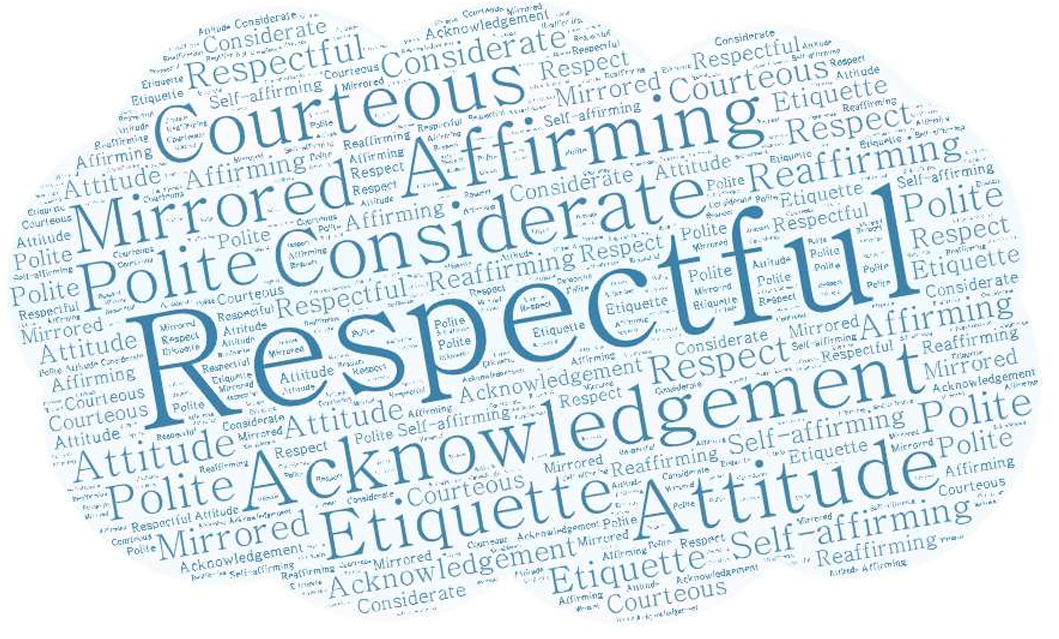
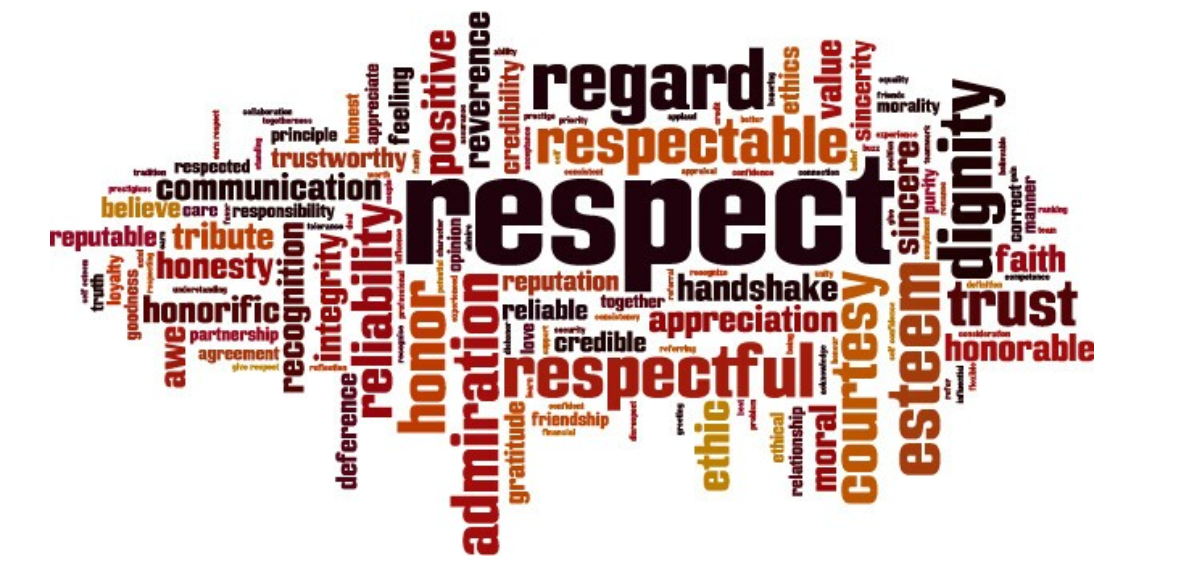
Respect is an attitude or behavior of high regard, admiration or consideration toward a person, object, or entity.
We respect others, social roles, institutions, rules, laws and the boundaries of others.
Respect is shown through active listening, active engagement, conflict management, tolerance, maintaining safety, being courteous and considerate, honoring boundaries, intentionality, empathy, affirming and empowering others, equal treatment, trusting, justice and inclusion.
Human Dignity is a core Civility value. Respect is a recognition of that value through kindness, courtesy, and protecting rights.
Respect combined with the Civility value of Public-Spiritedness creates a need for social justice: protesting, correcting, and preventing actions that diminish human value.
Respect combined with the Civility values of Human Dignity and Intentionality requires us to proactively seek to understand and care for the needs, rights, and feelings of others.
Respect combined with the Civility values of Human Dignity and Acceptance requires us to acknowledge the value of all people, particularly those who face systemic disrespect.
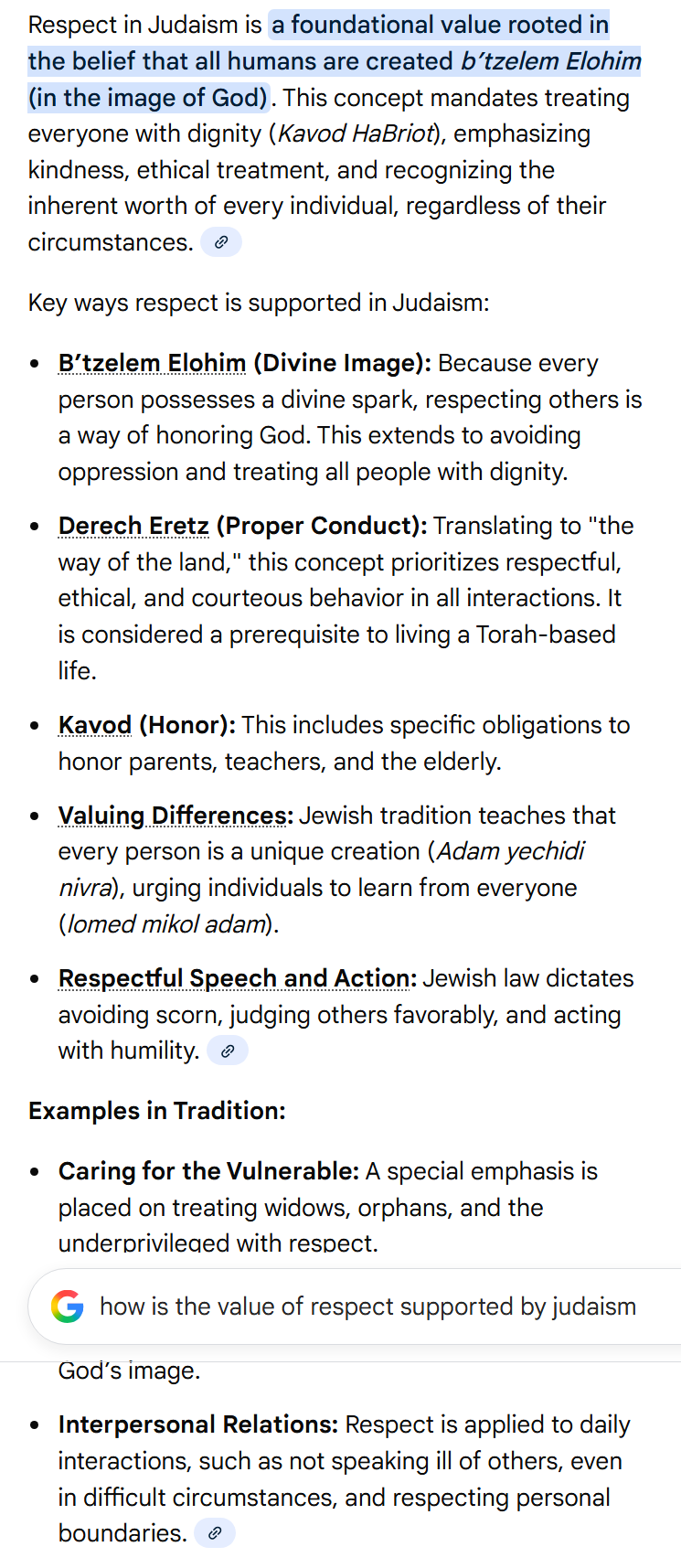
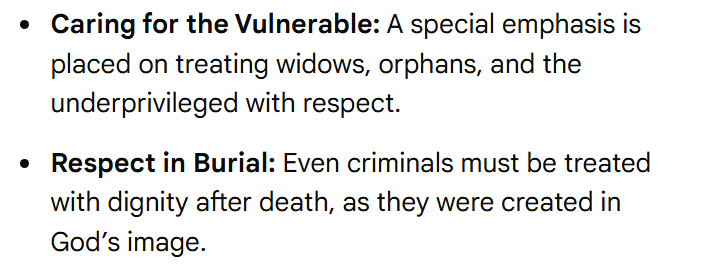
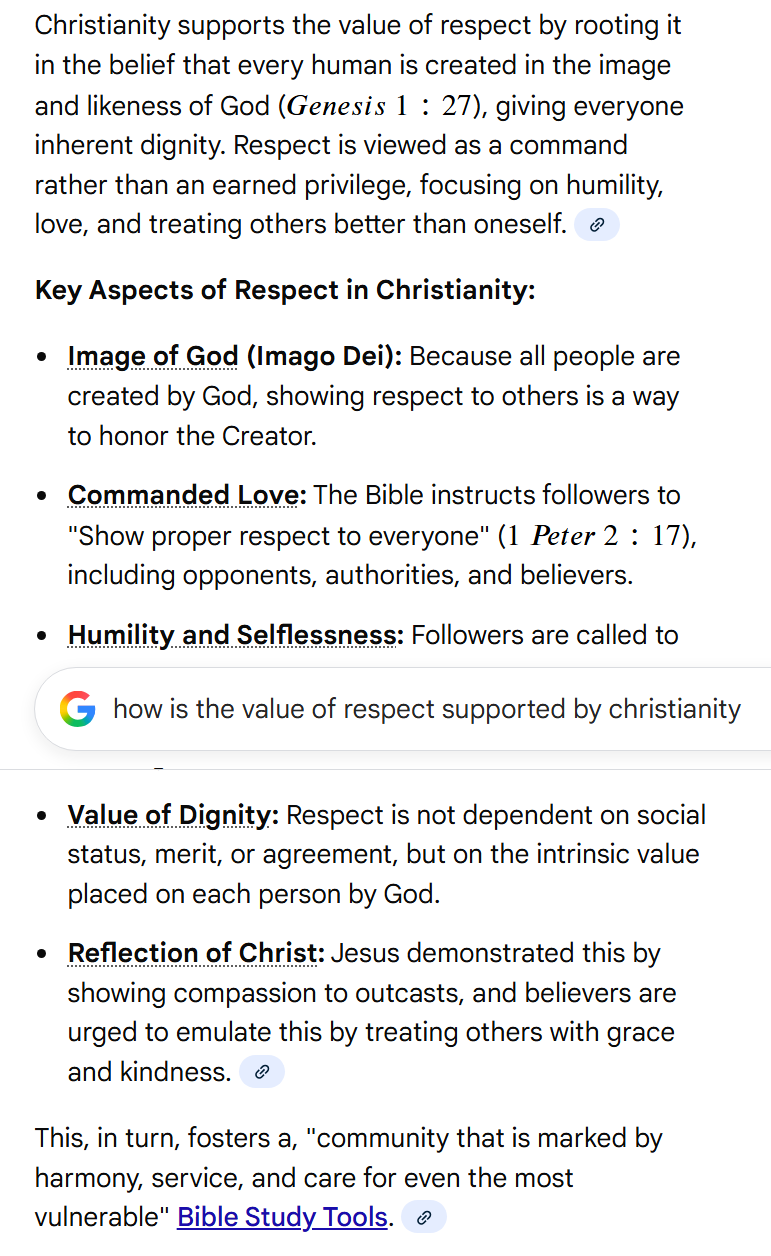
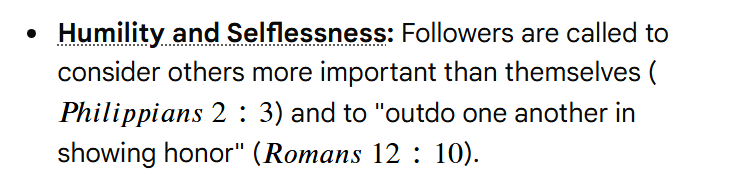
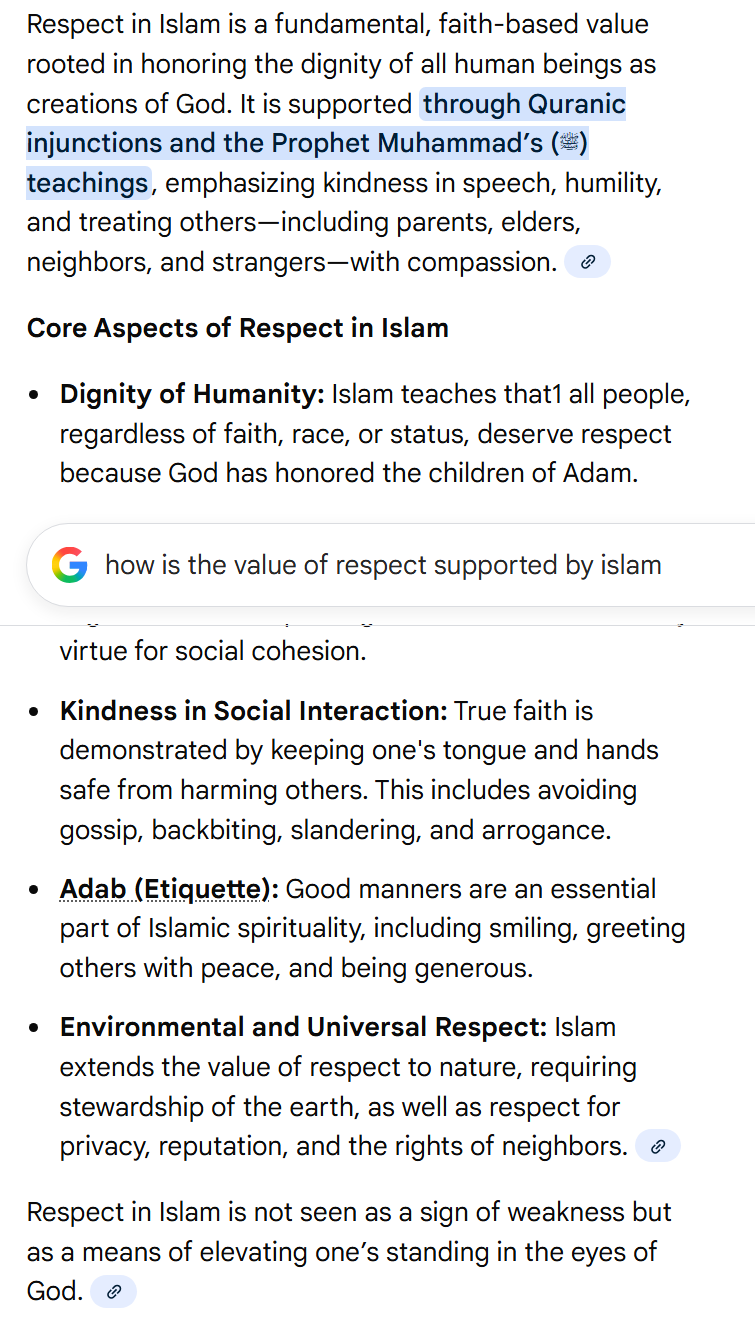
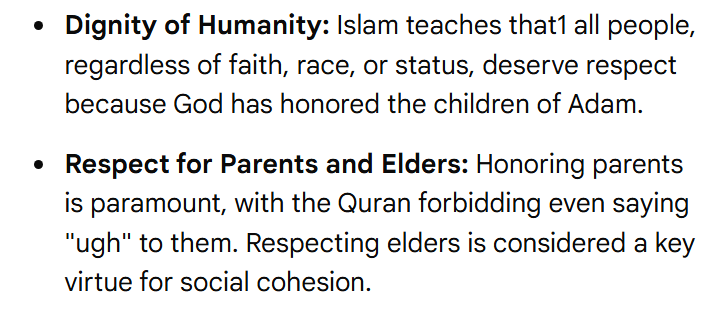
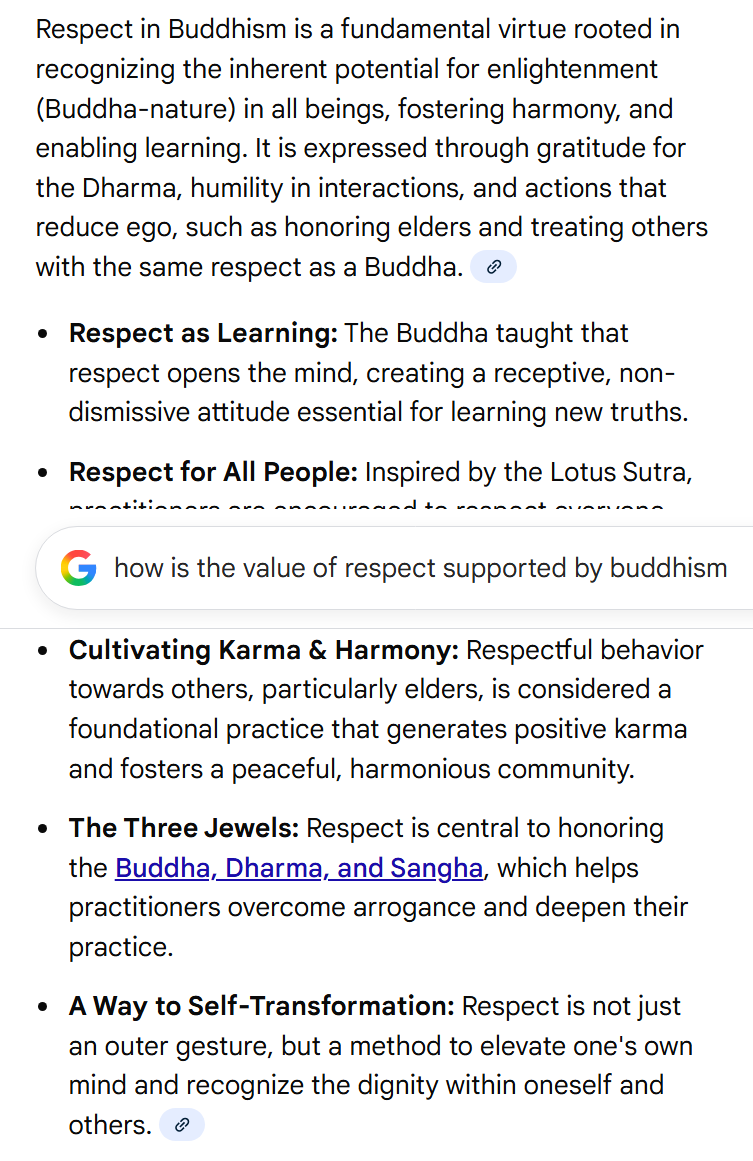
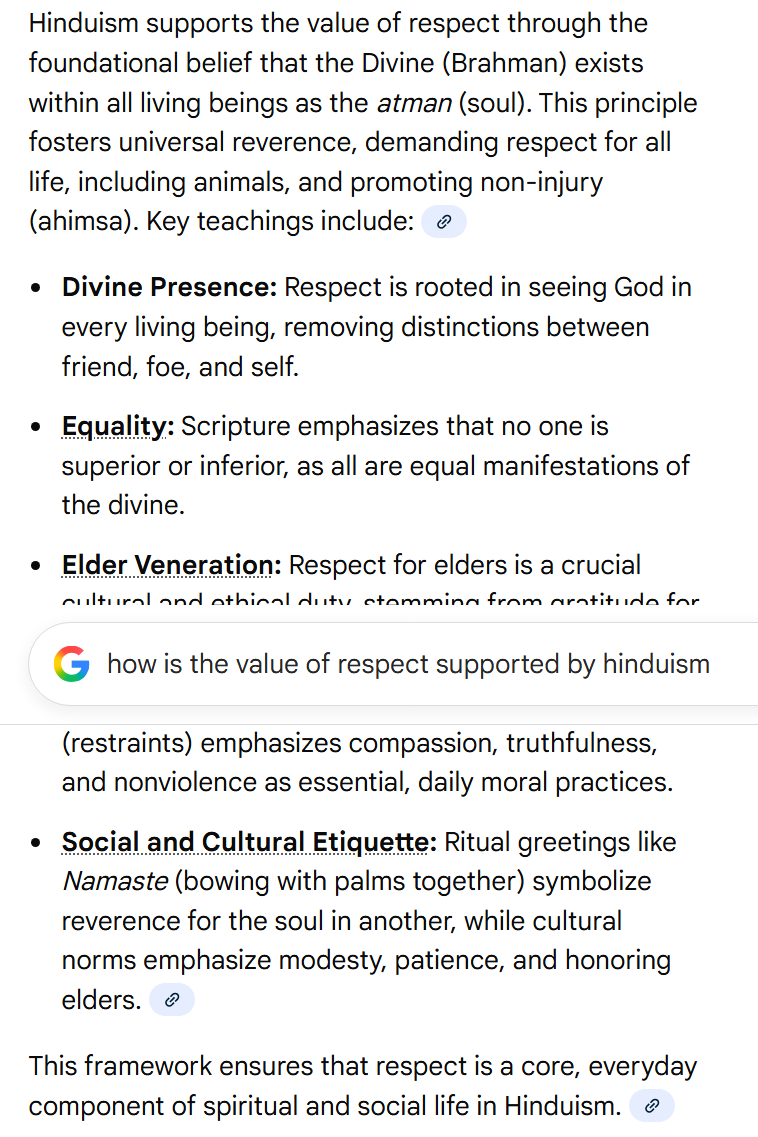
Respect is supported by all major world religions.
Judaism
Christianity
Islam
Buddhism
Hinduism
Taoism
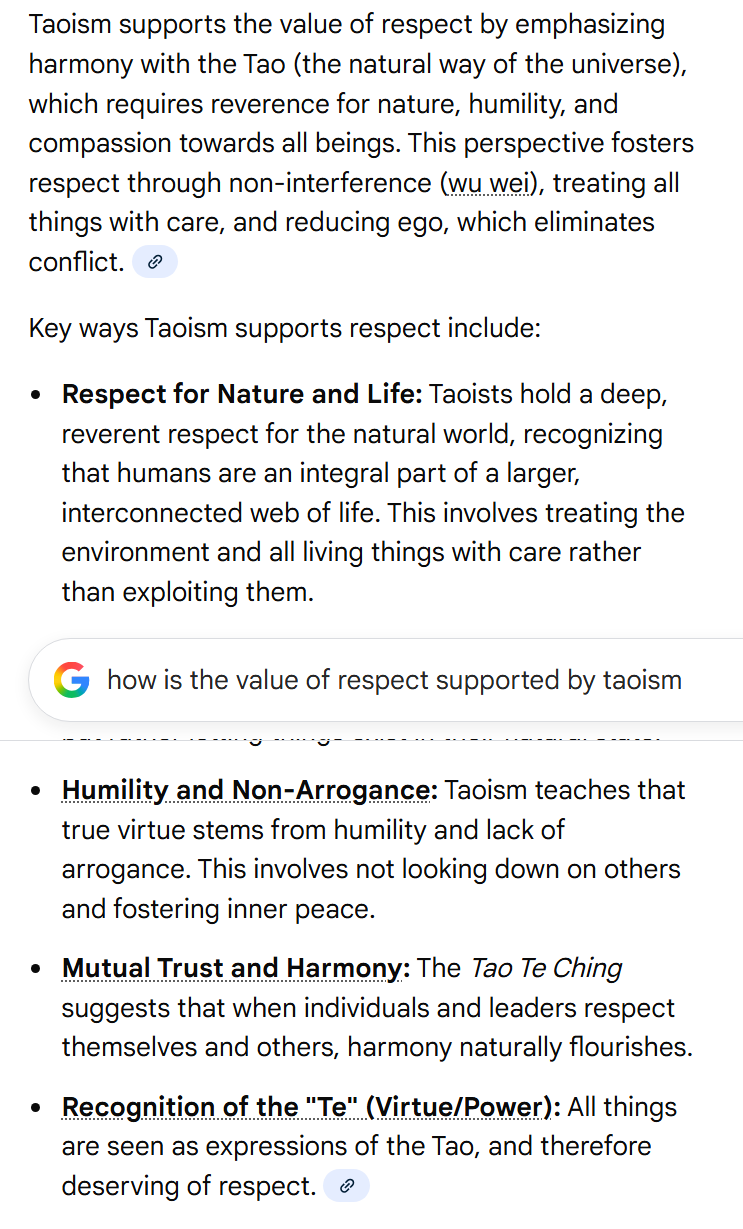

Shintoism
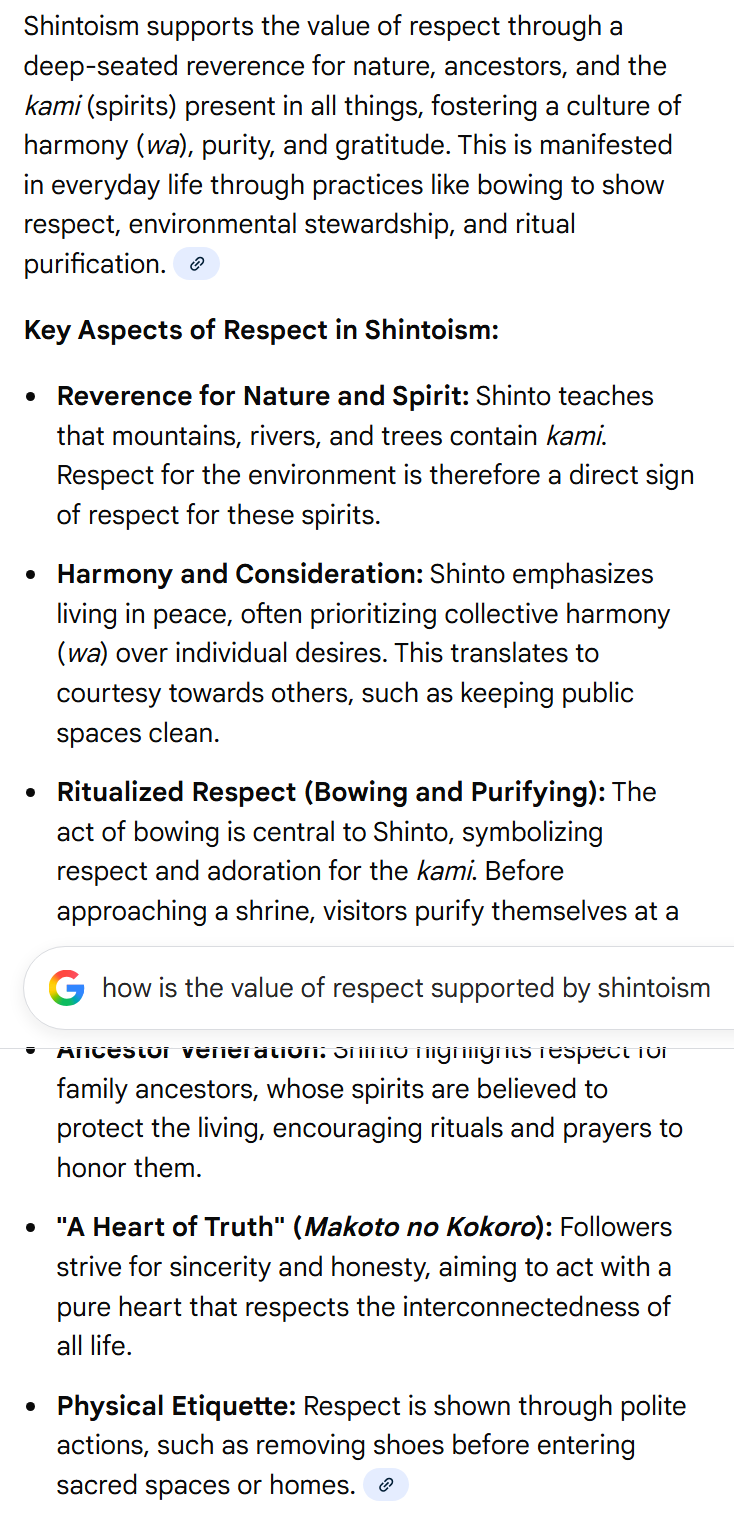
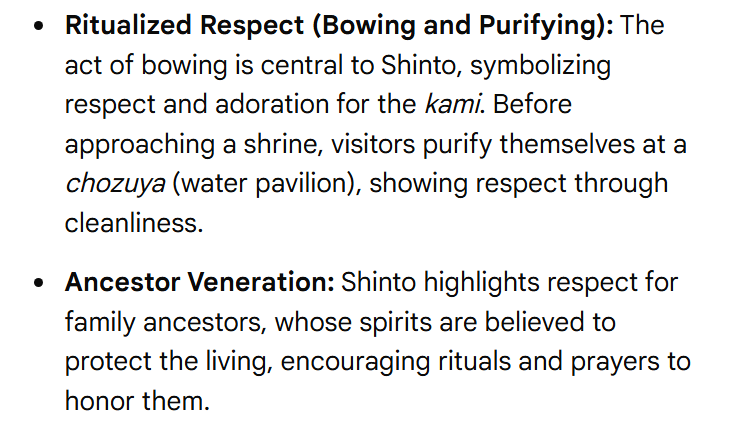
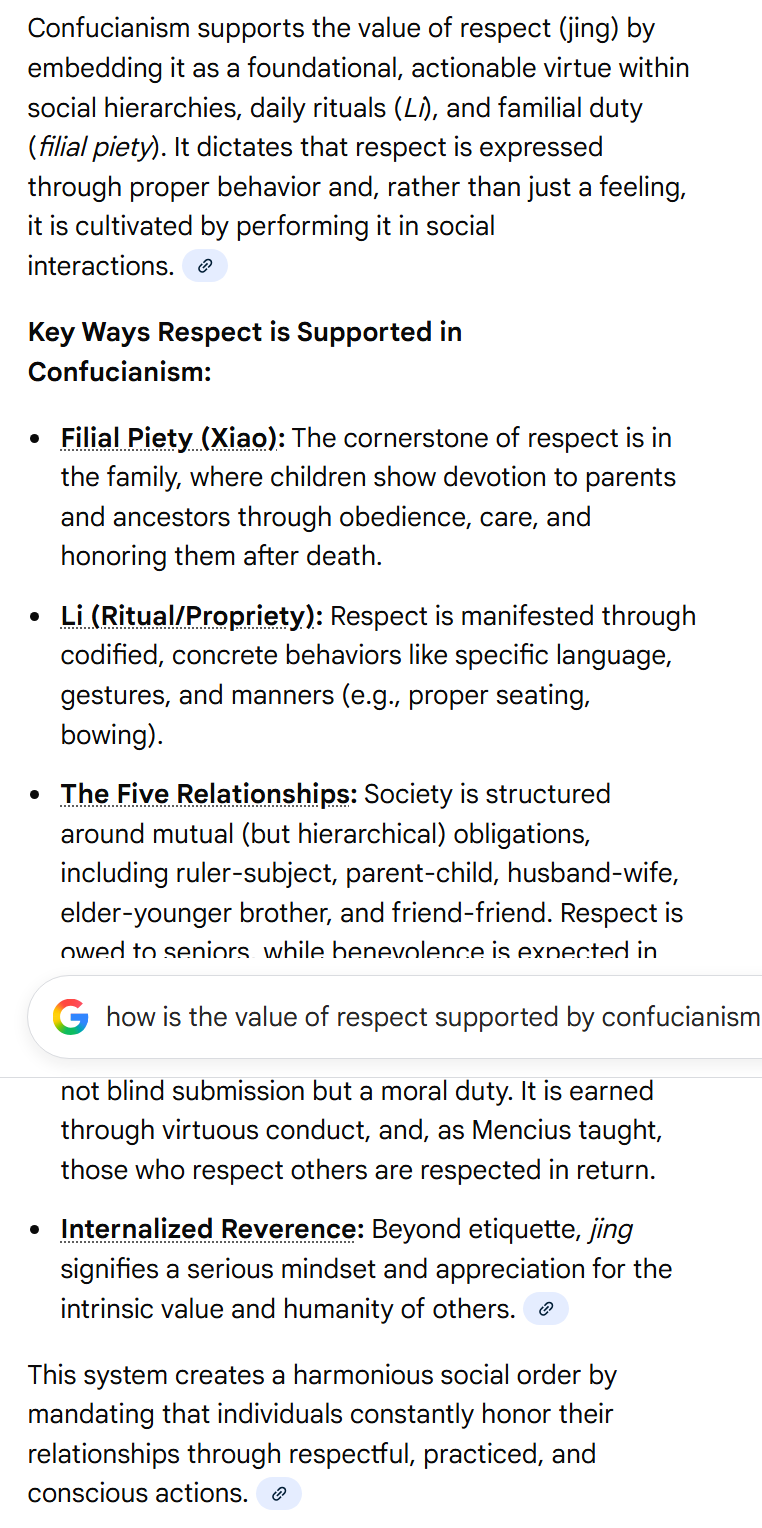
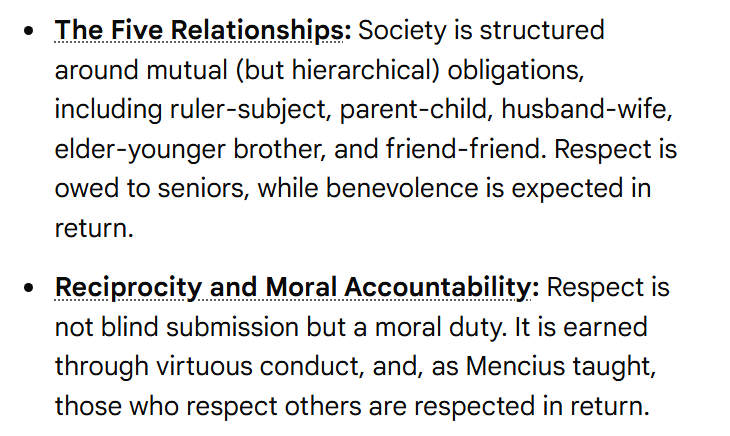
Confucianism
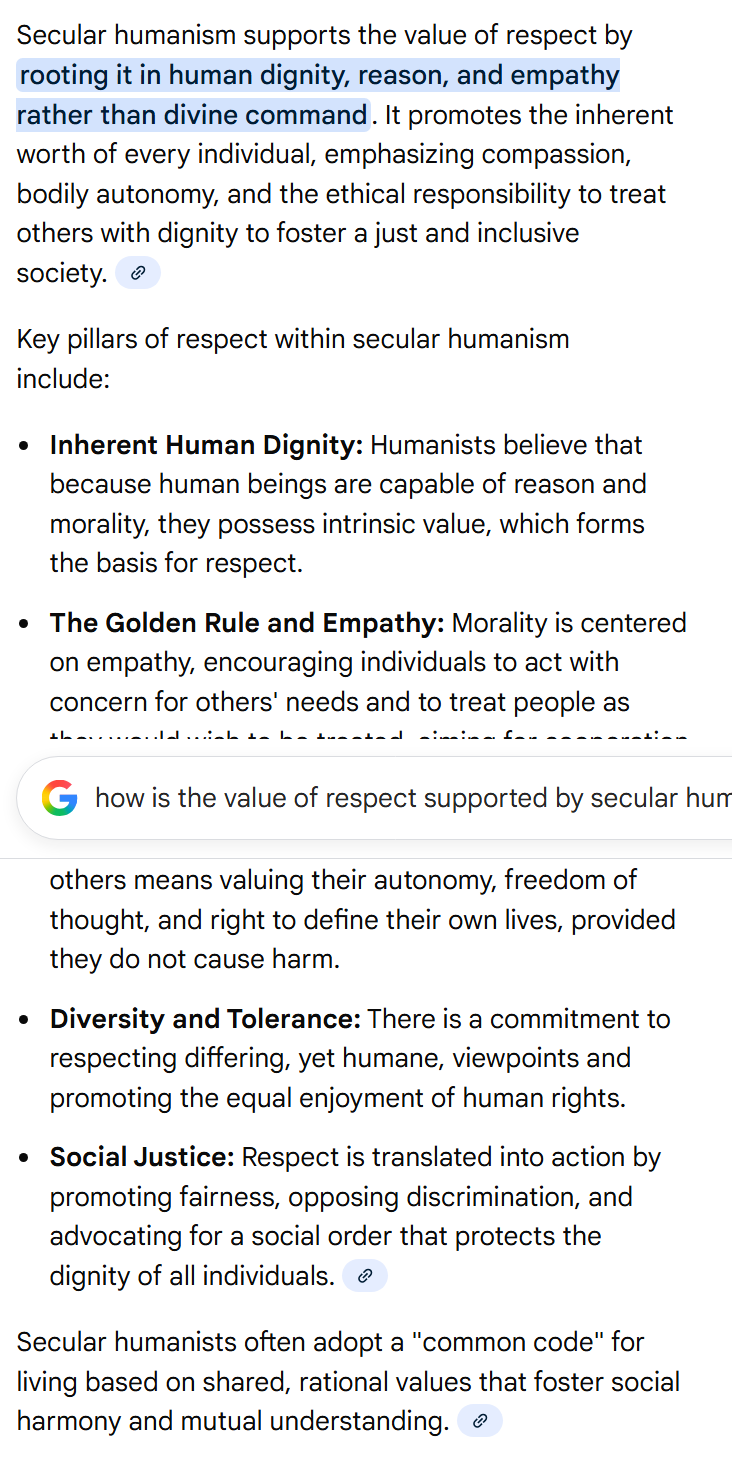
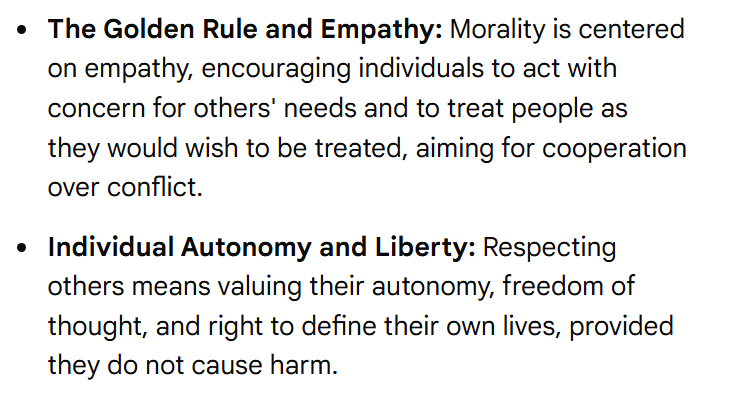
Secular Humanism
Summary
World religions strongly emphasize respect as a necessary human value and practice.
They empathize that we are created in the image of God or as an intentional part of the universe. We must respect ourselves, others, God, nature and the universe.
Some describe us as “children of God” or very special beings or imbued with the divine spirit. Self-respect and respect for others follow. We have human dignity, something greater than our material existence.
Religions call for respect for God/the universe and the laws or commands which include respect for others.
We are to live in harmony with the created universe, respecting others, family, ancestors, elders and given social roles.
We are naturally created with the heart for compassion and empathy and are obligated to interact with love, accordingly.
Given our position in the universe, we are to live with humility, honoring God, nature, the universe and others.
Practicing humility, honor and respect are essential for personal growth.
Religions command us to have respectful “right relations” through our speech, actions, interactions with others, community participation and God.
 Good News
[…] Dignity is a Universal Value Respect is a Universal Value Supporting Civility Acceptance is a Universal Value Supporting Civility Intentionality is a Universal Value […]
[…] Respect is a Universal Value Supporting Civility […]
[…] Respect is a Universal Value Supporting Civility – Good News […]