

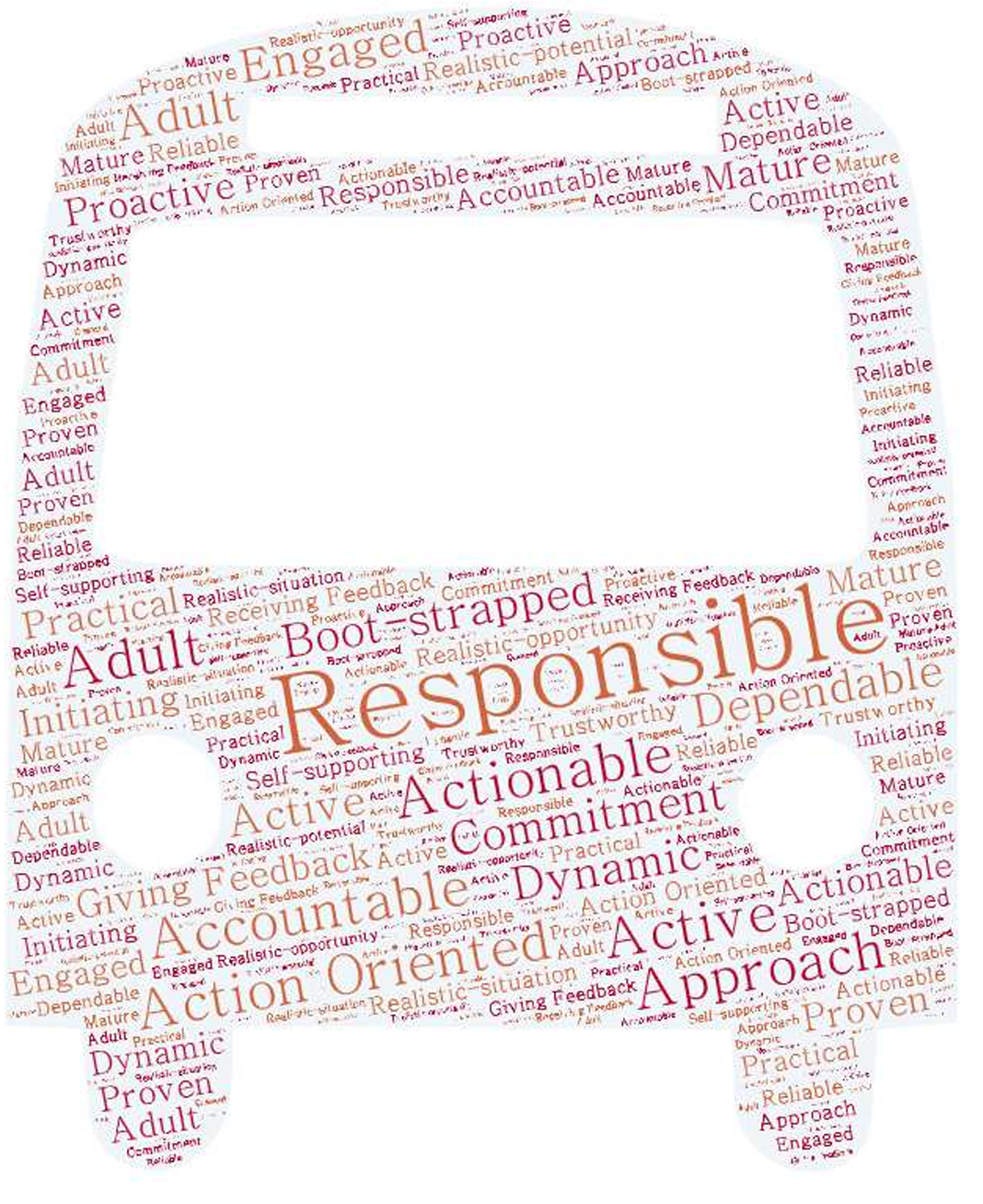
Civility Values
Civility is a set of behaviors based upon the seven commonly held values of: human dignity, respect, acceptance, intentionality, responsibility, constructiveness and public-spiritedness. A social, political and economic society must have some core beliefs, norms and behaviors. The modern renaissance of Civility attempts to define the beliefs, norms and behaviors so they can be shared and promoted. We need to be confident that we know what Civility is, how we should behave, how/why we should influence others and why the underlying principles make sense.
Responsibility Defined
Responsibility is willingly and actively managing our “selves” in all roles to appropriate, and even heroic, legal and moral/ethical standards.
We fill our personal, professional and social roles within the context of society. We recognize our interdependence and the need for mutual consideration.
We carefully listen, engage, empathize, apply, decide, speak, impact, influence, share, consider, decide, and act.
We welcome the joy of Responsibility with a capital R!
We consider the views and interests of others, including our families, neighbors, suppliers, customers, coworkers, bosses, employees and team members.
We consider our roles as citizens, demonstrate public-spiritedness and invest our time and resources accordingly.
We do our “fair share”. When the situation calls for it, we do more than our “fair share”.
We manage our personal, professional and ethical development.
We embrace accountability for our behavior and consequences. We seek to be considered reliable and trustworthy individuals.
We embrace “shared accountability for organizational results”.
Support
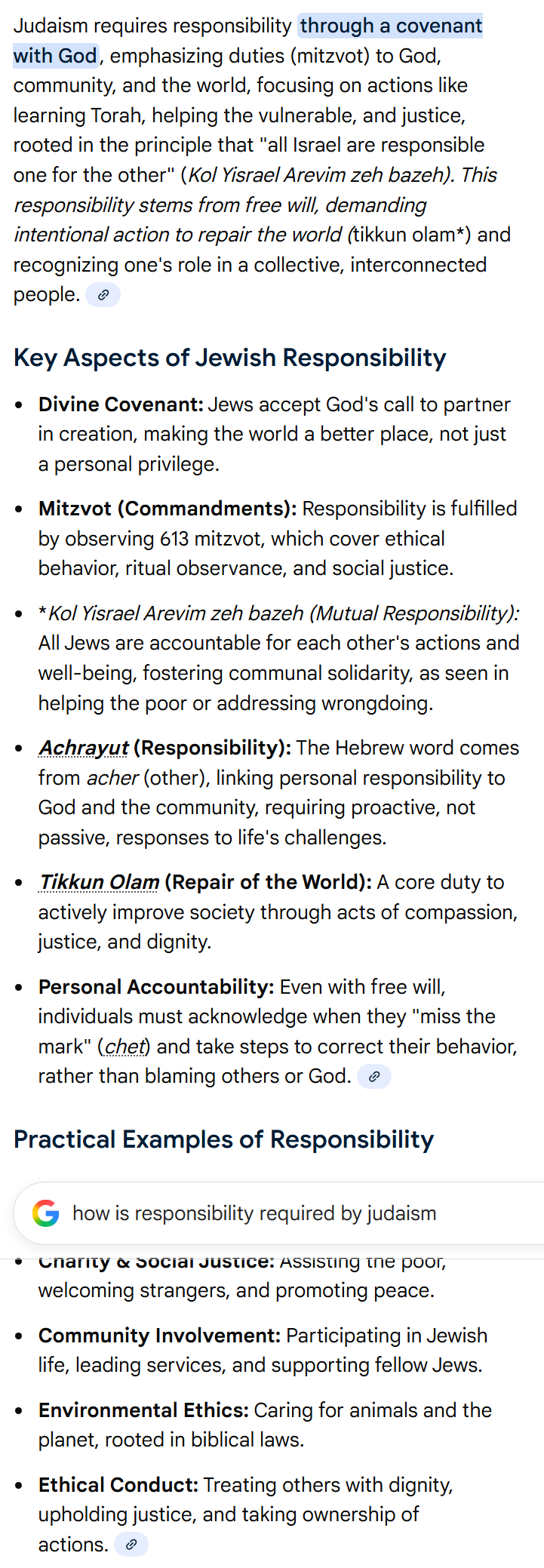
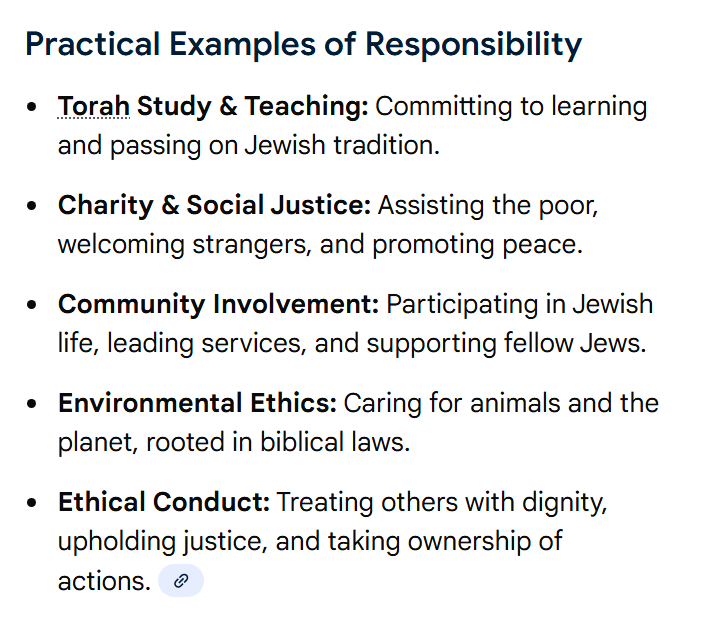
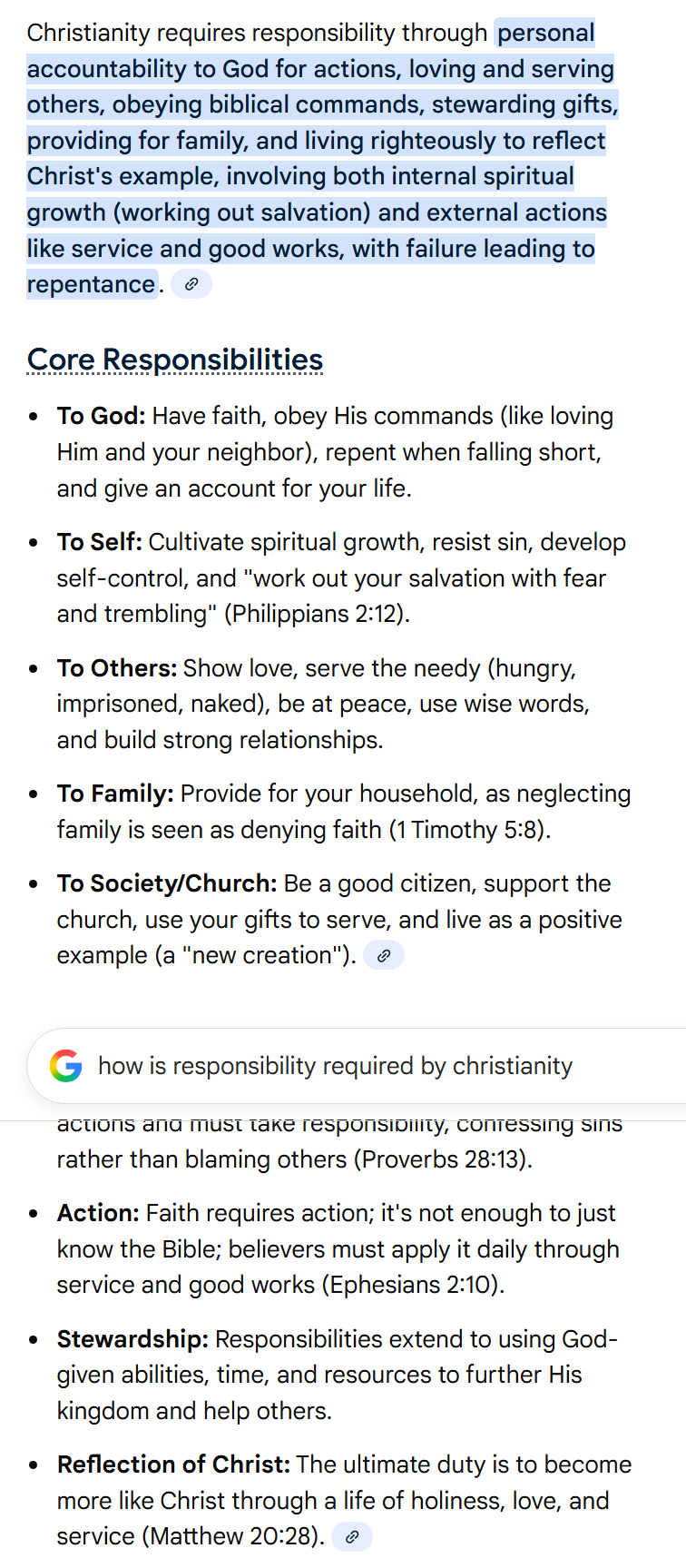
Responsibility is sometimes deemed a conservative value, but I believe that active engagement and responsibility is an independent value. Liberals and conservatives and major religions all require Responsibility for moral conduct.
Judaism [Google AI]
Christianity

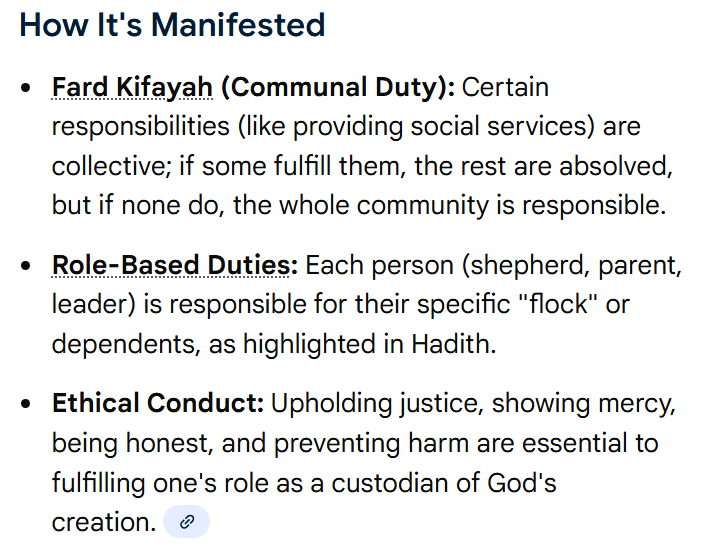
Islam

Buddhism


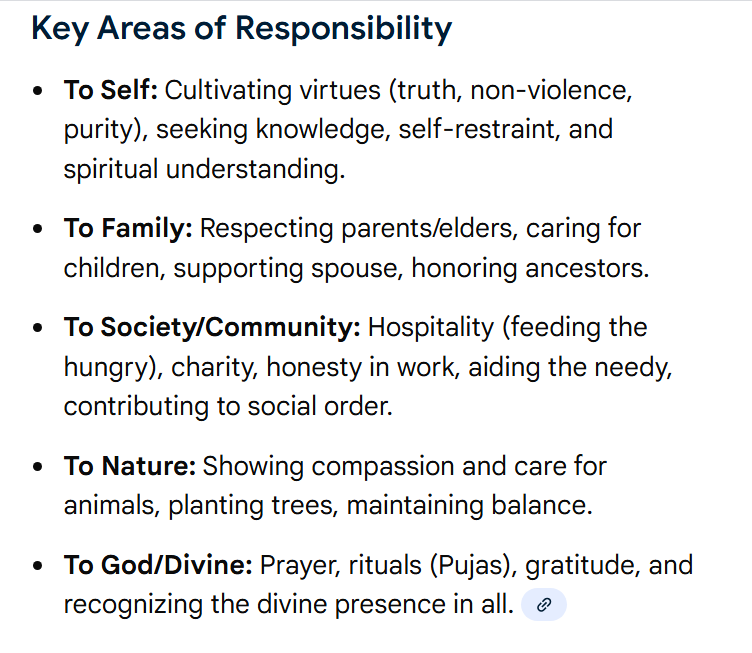
Hinduism

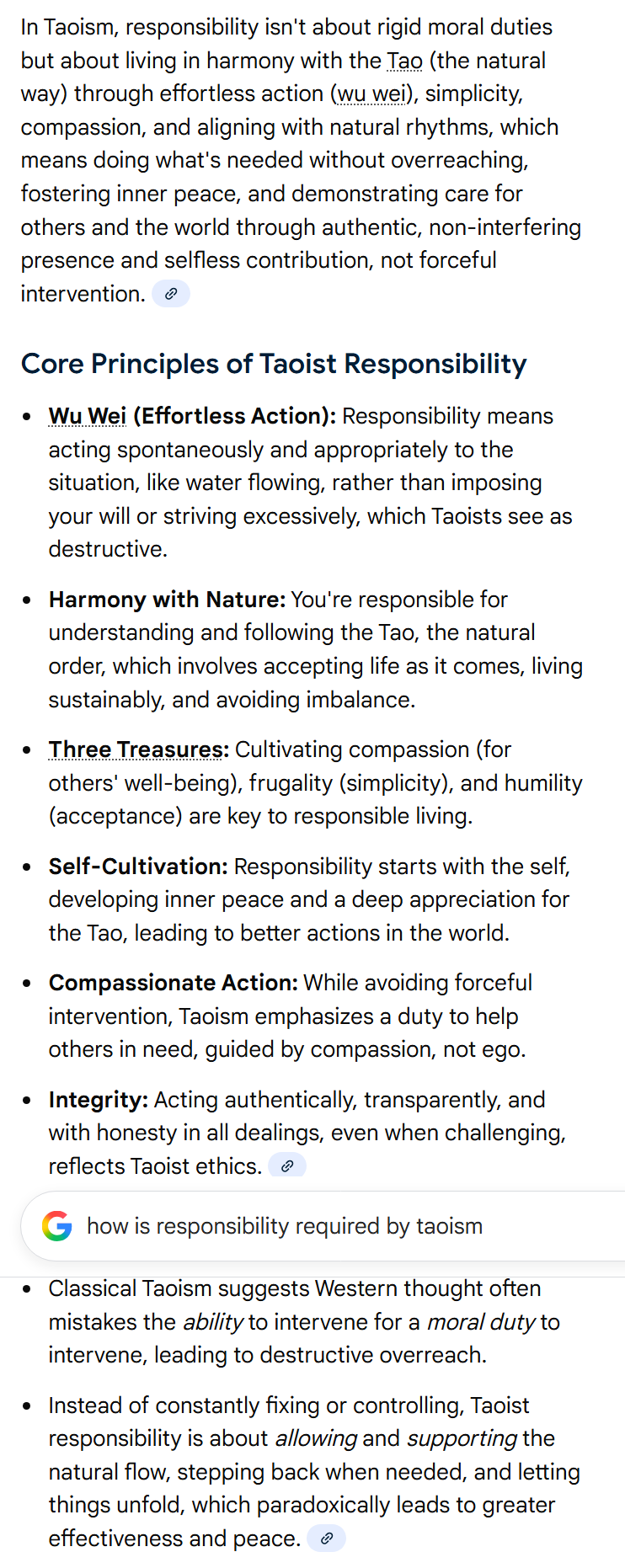
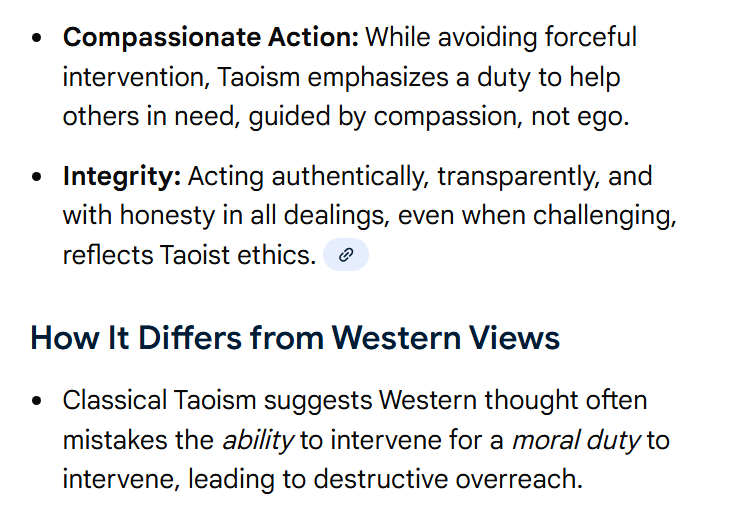
Taoism
Shintoism
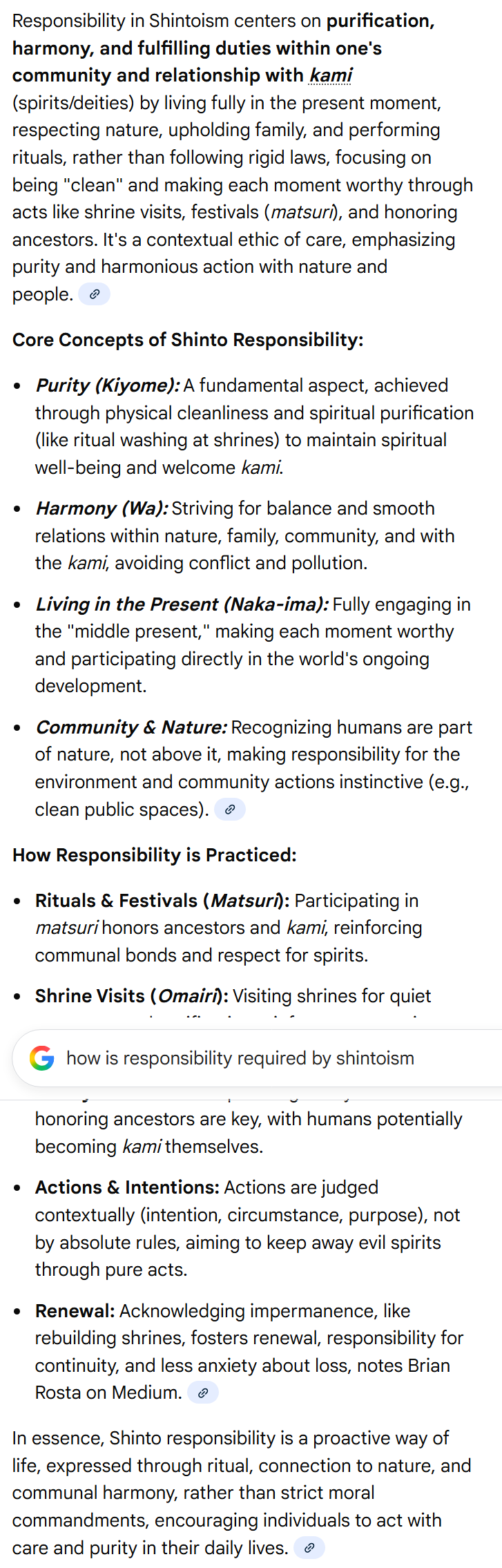

Confucianism
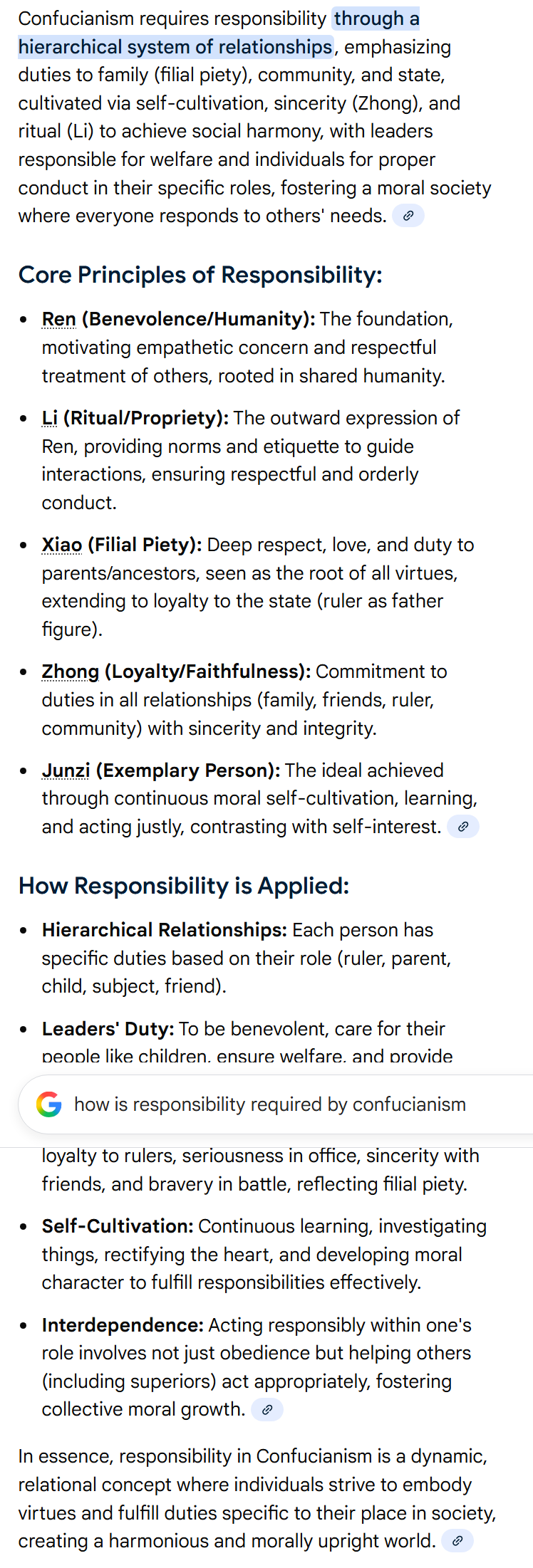

Secular Humanism
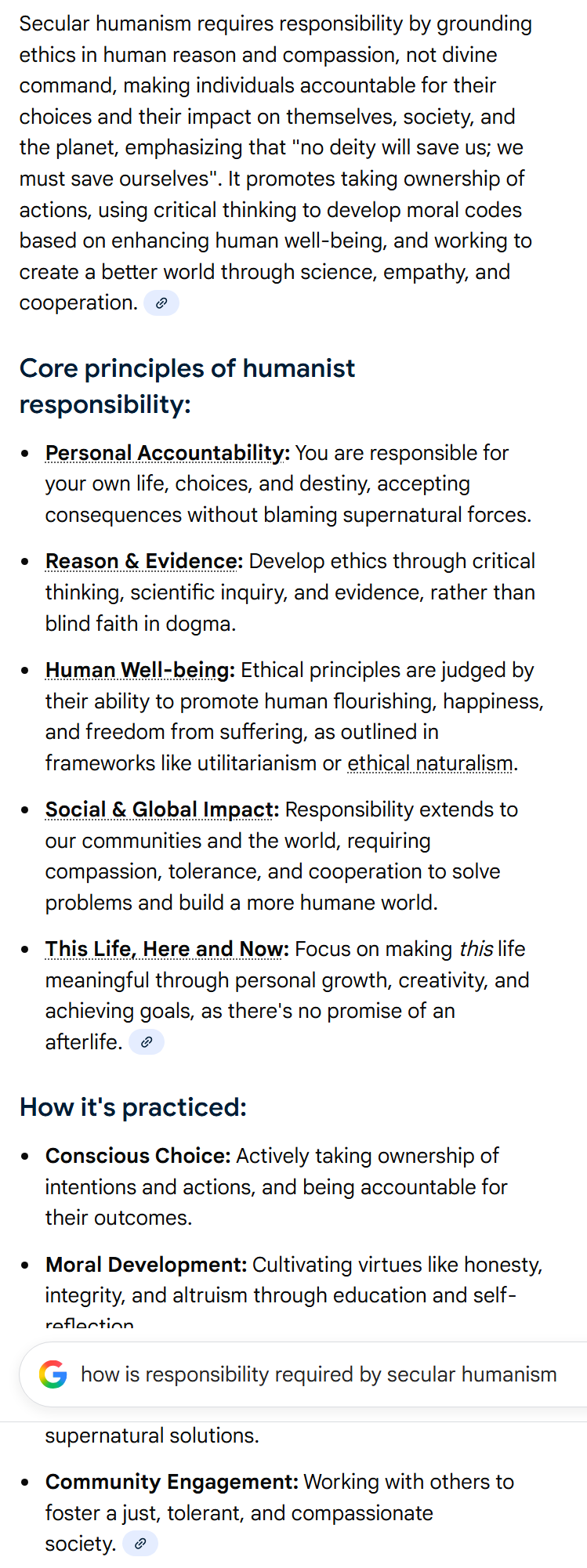
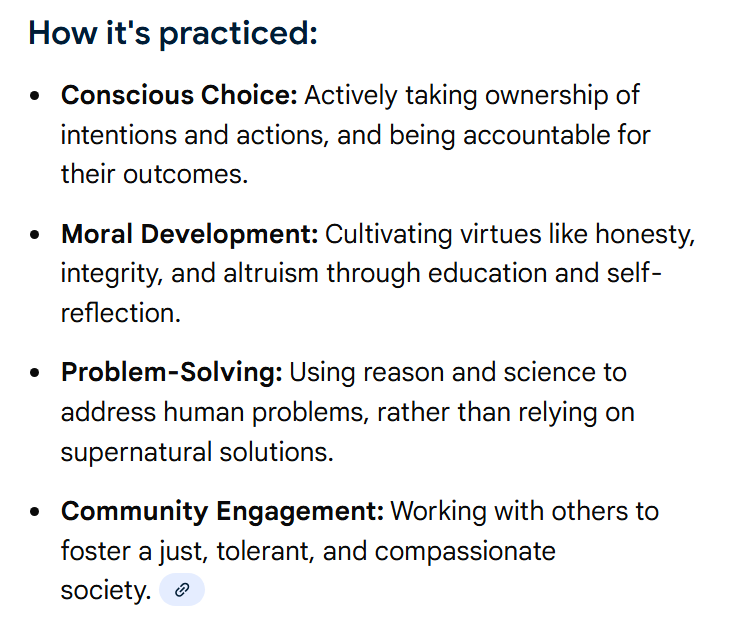
Summary
The great religions all require Responsibility as a primary virtue. They emphasize:
- Duty to God and harmony with the universe.
- Duty to community and nation.
- Duty to nature and the environment.
- Duty to family and ancestors.
- Duty to self. Free choice.
- Personal growth and improvement, especially spiritual/ethical growth.
- Duty to the law, ethical conduct in principle.
- Duty to the church, rituals, practices and purity.
- Duty to roles, norms, expectations and stages of development.
- Duty to others based on interdependence and mutual respect.
- Compassionate duty to the poor, widows, prisoners, immigrants and vulnerable.
- Proactive responsibility.
True responsibility guards against the temptations of “radical individualism”.
Modern man struggles with Responsibility because it has often been imposed as an unavoidable duty. He has thrown off all of the constraints of the past. He is now totally free. But this is an illusion. He is unavoidably a member of many communities and subject to the influence and expectations of each. He can choose to be a radical individualist, a free rider. Or he can recognize that he is inherently a social creature who is logically, ethically and spiritually obligated to interact with others based upon their mutual dependence. Responsibility recognizes that the individual is part of many larger systems … and that this is good.
 Good News
[…] Value Supporting Civility Intentionality is a Universal Value That Drives Civility Responsibility is a Universal Value That Supports Civility Constructiveness is a Widely Supported Value and Basis for Civility Public-Spiritedness […]
[…] Responsibility is a Universal Value That Supports Civility […]
[…] Responsibility is a Universal Value That Supports Civility – Good News […]