
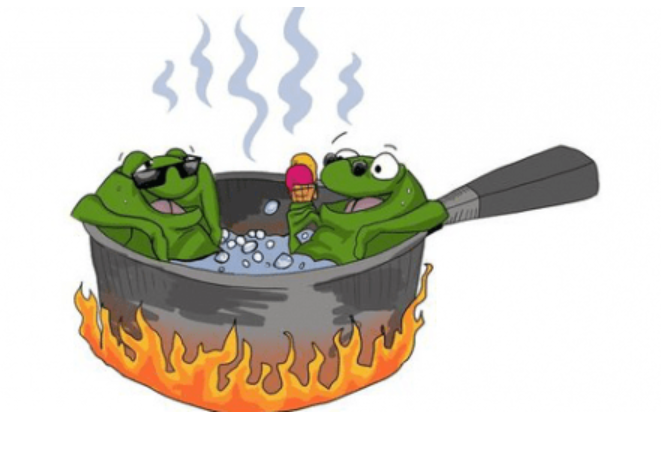
The Alarm Was Sounded in 2012
https://en.wikipedia.org/wiki/It%27s_Even_Worse_Than_It_Looks
The national Republican Party was radicalized or very extreme by 2012. It is MUCH worse today.
Barrels of ink have been spilled describing and analyzing the “Trump phenomenon”. We were collectively shocked in 2016 when he won the presidency. The changes toward extremism, radicalism and the loss of our democratic system have continued. Like the proverbial frogs, we have become accustomed to the onslaught of change. I’ll try to outline and make sense of the mind-boggling transformation of the “party of Lincoln” in my lifetime from Dwight Eisenhower, Dick Nixon, Nelson Rockefeller, Ronald Reagan and the Bushes to Newt Gingrich, Arthur Laffer, Grover Norquist, Rush Limbaugh, Jerry Falwell, Pat Robertson, Charles and David Koch, Sheldon Adelson, Steve Wynn, Rupert Murdoch, Elon Musk and Donald Trump. 😦
Context
Pundits blamed the Trump 2016 election on a variety of false or half-true causes. Trump’s brand image and magnetic personality. His direct approach and truthfulness. A victory for the “Tea Party” after the slow Obama economic recovery. Renewed racism triggered by Obama in the White House. A normal left to right political swing. Hillary Clinton’s poor campaign and connecting skills. Clinton karma. The lure of the “authoritarian personality” in American culture.
I generally agree with the 2022 authors of American Psychosis. There have always been extreme groups attracted to and allied with the Republican Party. The party tolerated them, used them and then welcomed them. Their numbers and influence grew compared with that of the Main Street, Wall Street, moderate and New England wings of the party. They completed the hostile takeover of the party with Trump in 2016. [There have also been extreme groups affiliated with the Democratic Party].
I also agree with Edmund Fawcett’s long-term analysis. Conservatism was founded as a political perspective in opposition to ALL of the changes of modernity.
1500. New religion. New economics. Urbanization. Industrialization. Trade. Property rights. Individual rights. Skepticism. Science. Change. Loss of authority. Loss of history and tradition. Cultural challenges.
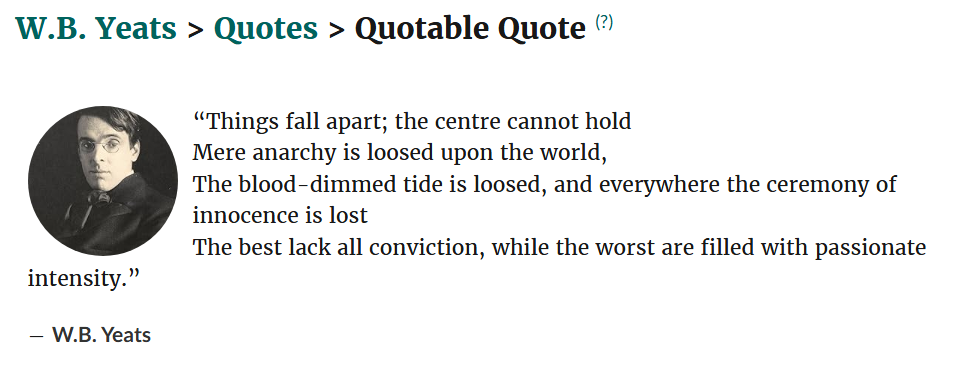
For most people, modernity was a very scary set of changes. For more than 1,000 years the rules of life were fixed. They were consistent in all dimensions. The religious, political, military, social and economic dimensions were aligned. Then changes occurred. A new paradigm called “liberalism” arose in opposition. Change is good. The individual is supreme and has rights. The dimensions of life can/must be separated. Certainty is gone. Social power is flexible. Competition and meritocracy are welcomed. Rationality and scientific proof are valued. Innovation and commercial success matter. “Anything goes”!
Conservatism emerged to provide a needed counterweight. History, tradition, community, values, virtues, nobility, safety, family, familiarity, neighbors, culture, language, experience, religion, race, stability, trust, and property.
Opposition to rapid change is a core conservative value. The emergence of a capitalist, commercial, scientific, university, secular class in competition with the landholding nobility and its religious and political allies was a founding perspective of conservatism. Today, we think of the Republican Party as the party of “big business”, capitalism, laissez faire, competition, social Darwinism, libertarianism and meritocracy. Yet, conservatism looks back to culture, community, religion, institutions, family, and morality. Economic and social conservatism are not fully or easily aligned.
The Republican Party has slowly, increasingly and then overwhelmingly become the party of social conservatism end economic populism. The trend was growing. Trump saw it and formalized it. The US experience is not unique. Other western countries have had the same recent experience. We have seen these tensions for two centuries or more.
A Slippery Slope
Many American conservatives have never truly embraced modernity, urbanization, industrialization, cosmopolitanism, equal rights, racial equality, trade, capitalism, global trade, international alliances, international treaties, religious denominations, ecumenicism, tolerance, immigration, etc. A secure life based upon familiar experience and community is great. The opportunities of progress are small, risky and filled with temptations and unintended consequences.
Successful politicians have two main talents. They deeply understand human nature, and they communicate very well. Conservative leaning politicians have mined the fear dimension of human nature for centuries. With the emergence of the mass media and modern advertising and persuasion tools circa 1920 they have become increasingly more powerful.
They set out to capitalize on the lack of deep political knowledge, skills and interests of the populace. The have moved down the slippery slope of skepticism, cynicism, fear, distrust and victimhood to hate.
They discovered that humans are naturally attracted to the Manichaean opposites of good and evil. They learned to define issues as yes and no, right and wrong, us versus them. Polarization is a very effective communications technique. Newt Gingrich demonstrated its value in 1992.
They learned to frame, highlight, emphasize and communicate effectively. Both parties’ leaders and supporters have always thought that they were morally right, and their opponents mistaken, misguided or much worse.
The Democrats have mainly been stuck in the 1800’s forward class wars occasioned by capitalism and the rise of manufacturing. Labor versus capital. Poor versus rich. Exploited versus exploiters. Rural farmers and laborers versus bankers and cities. Their issues and messaging matched.
Since 1960, the Democrats have adjusted to also become the party of “human rights” on a legal basis. Civil, women’s, disabled, LGBTQ, environmental, global, animal and earth rights on top of economic rights. The messaging has mostly remained the same, contrasting the exploited with the exploiters.
The Republican Party has offered a much more diverse, richer and expanded set of political messages. The messages are all about fear. The ideas, people and threats to fear have diversified and accelerated. THE IDEAS, PEOPLE AND THREATS TO FEAR HAVE DIVERSIFIED AND ACCELERATED. This very negatively biased view threatens our democracy.
Defense and Security
The Cold War. Reds under the bed. Pinko commies.
Korean War. “The loss of China”.
Vietnam War. The domino theory. All or nothing.
Hawks versus doves. Patriots.
Cuba.
Middle east “Arabs” versus Israel.
War on terror, Iraq, Afghanistan, Isis.
Axis of Evil.
Bomb, baby, bomb.
China.
Trump has added Venezuela, narcoterrorists, Canada, Mexico, Japan, South Korea, Greenland, Panama, Africa and Europe to those who cannot be trusted.
Eisenhower warned us about the “military-industrial complex”. It has managed to ensure that we are always at war with someone. Republicans have been the main hawks.
International Affairs
The US unilaterally defined the postwar rules at Bretton Woods, New Hampshire and joined the United Nations in San Francisco. The “America First” protectionists and unilateralists never really agreed. However, both parties supported the international system that cost-effectively protected American interests for more than 80 years.
Opposition to “foreign aid” was the first crack in the united front with politicians greatly exaggerating the amount of money invested and its ineffective usage. Foreign aid and health support levels fluctuated through time. Bush II was a proponent.
Historically, opposition to “free trade” was mostly a Democratic position. Alleged unfair power, rules, labor and environmental regulations. Republican global corporations were “all in”. Japanese, Asian, European and other third world competition offered higher quality and lower price goods to Americans who bought them in the 1970’s forward. Manufacturing job losses became a Republican issue as working-class Americans moved to the Republican Party from 1970-2020.
The US rejected the League of Nations. It tolerated the United Nations. The UN added a wide variety of international organizations. Republicans positioned the UN and these agencies as a waste of money supporting individuals, countries and organizations opposed to America. Trump defunded these organizations even as the World Health Organization played a key role in resolving the Covid pandemic.
The Paris Accords on climate change were another international agreement rejected by Trump, like the multilateral Iran nuclear proliferation limits.
NATO prospered for 70 years. Trump has questioned the rationale and his commitment to supporting our allies. He has badgered NATO and other allies to pay a greater amount for their defense. Trump renegotiated NAFTA with marginal changes. He has unilaterally applied tariffs to our neighbors and threatened to disband his own agreement.
Trump has threatened to invade Venezuela, Panama and Greenland because they allegedly threaten our security. He has removed many career foreign service staff members and politicized this vital national function.
The Economy
All politicians have criticized the opposition because inflation and unemployment are too high. Republicans claim that they are “the party of business” and more effective in managing the economy although the data says the opposite.
Republicans have claimed that Democrats wish to “socialize” the economy with the government owning and controlling all industries. No nationalization has occurred for more than a century. Deregulation of transportation in the 1970’s was a bipartisan initiative.
Republicans have exaggerated the size, scale, impact, employment and percentage of federal government activities for more than a century. Federal government activities DID increase very significantly during the Great Depression, WWII and the 1960’s Great Society initiatives. They have roughly remained at the same percentage of GDP since 1980.
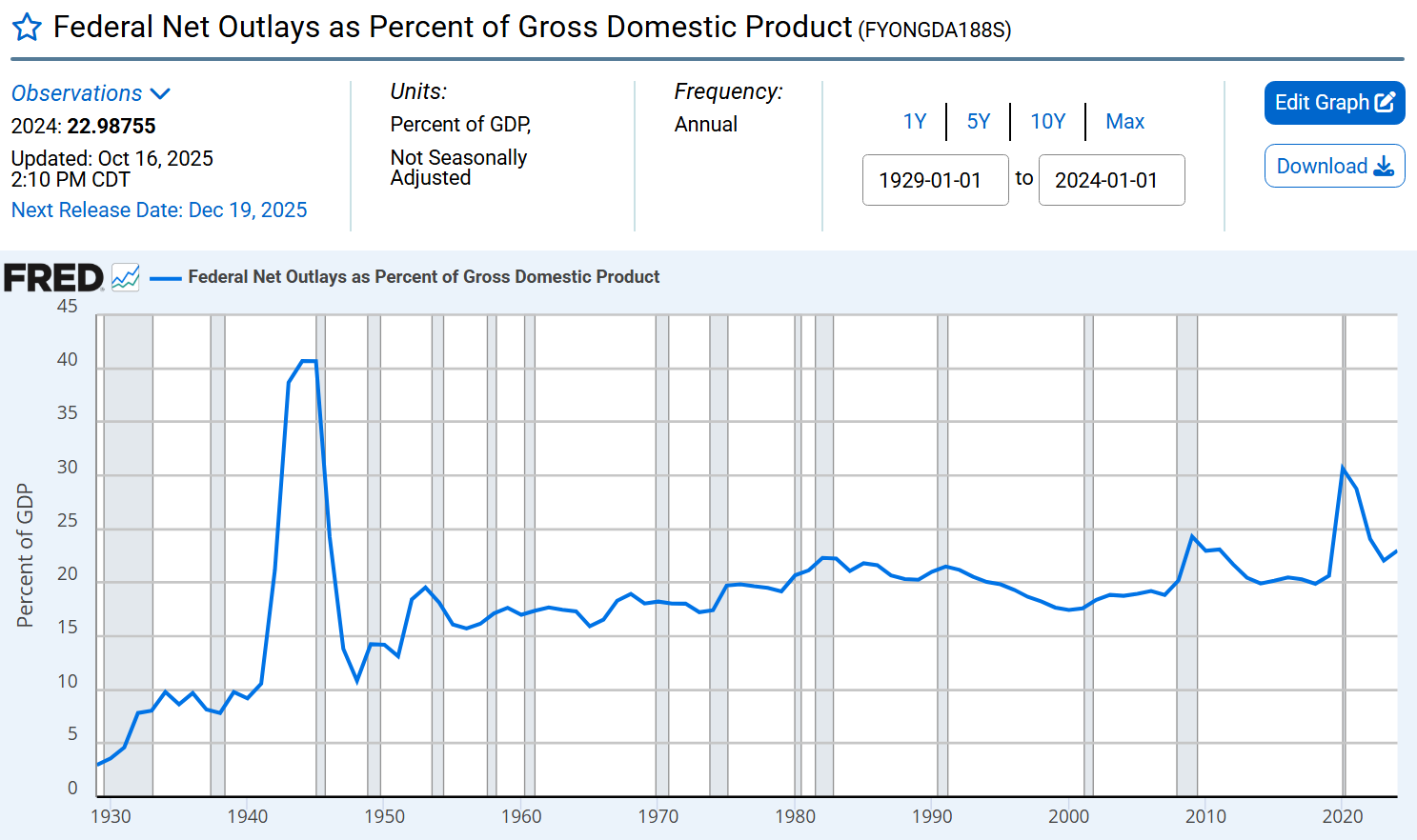
Republicans have emphasized the “common sense” need to balance the federal budget and bemoaned the growing federal debt and its impact on future generations and “crowding out” of productive borrowing and investing. Their criticism rises when Democrats control the government and quiets when Republicans are in control as we have learned that 1-2-3% budget deficits seem to have no short or long-term deleterious effects. President Trump has no problem with running record budget deficits.
Republicans claimed that tax cuts would spur economic growth to offset the loss of revenue. The theoretical “Laffer Curve” has never been demonstrated to hold for the US. Republicans claimed that very high marginal income tax rates disincentivized highly productive Americans from working. Top marginal tax rates were cut from WWII 90% to 70% in 1965. Then lowered to 50% in 1981 and 37% or lower from 1986 forward. Grover Norquist and others after 1986 tried to “drown government in the bathtub” because “taxation is theft”. Bush I lost his reelection bid because of his “read my lips” reneged promise to not raise taxes.
Republicans claim that government regulations strangle businesses, cost money, reduce employment, stifle innovation, reduce R&D, and reduce investments. This is mostly a distraction. Regulations do require compliance costs for administration and reduced commercial activities. Corporations benefit from most drafted laws which provide opportunities for evasion and negotiation rather than strict compliance. If “clean” regulations were better they would ensure they were/are enacted.
Culture Wars / Wedge Issues
Civil rights legislation was supported by Democrats and Republicans. LBJ said “we may have lost the south for a generation”. He was right. The American South struggled with the aftermath of the Civil War, reconstruction and civil rights legislation. The belief that African-Americans should not mix with Whites died very slowly. New private schools were built to “solve the problem”. Court ordered busing to ensure equal racial opportunities in northern cities antagonized other Whites. Affirmative action court rulings divided the country, moving many Democrats to the Republican side.
Republicans made crime and drugs national issues. Directly and indirectly focusing on African-American communities.
Republicans made welfare a racial issue instead of a class, age or fairness issue.
The 1965 immigration act opened the door for poor immigrants from around the world.

President Reagan and congress agreed upon an amnesty and enforcement bill in 1986.
https://en.wikipedia.org/wiki/Immigration_Reform_and_Control_Act_of_1986
Bipartisan efforts to control migration were unsuccessful for the next 30 years. Trump pressured Congress to not approve a compromise bill in 2024. Trump has made immigration the center of his politics.
Education became a national political issue after the passage of the civil rights bills. Republicans advocated for “states’ rights” and the elimination of the federal “Department of Education”. The enforcement of equal racial access to public education drove these changes. The establishment of private Christian schools and the use of vouchers to fund them became a political issue.
Institutions
Historically, Republicans controlled all of the major institutions of the US. After “Brown vs. Board of Education”, they decided that institutions were not always perfect. The move of southerners from the “solid South” of Democrats to the Republican Party was a huge swing. Federal courts might not be trusted. Federal DOE might not be trusted.
The federal government was generally viewed as a positive entity based upon its activities during the Great Depression and WWII. Post-war investments in infrastructure were welcomed. The growth of federal employment, funding and power led to opposition by Republicans, claiming waste and inefficiency. Opposition to all federal staff and functions grew during the 1970’s and 1980’s.
Reagan framed it as “I think you all know that I’ve always felt the nine most terrifying words in the English language are: I’m from the Government, and I’m here to help.” In 1996, President Clinton said “the era of big government is over”.
Support for American institutions began to decline after Nixon’s presidency. His acts showed that it was possible that previously trusted institutions were no longer definitely trustworthy.
Republicans positioned “government versus business”. Business was trustworthy, subject to the iron laws of the market. Government was subject to the incentives of politicians and bureaucrats.
Entrepreneurs were positioned as wealth and job-creators. They were crafted as makers versus takers. Obama’s claim in 2012 for an equal role for the public sector sparked much political debate.
https://en.wikipedia.org/wiki/You_didn%27t_build_that
https://en.wikipedia.org/wiki/James_M._Buchanan
Republicans applied this negative theory to everyone. Bureaucrats were subject to the incentives of lobbying, influence, bribery and career advancement. Inherently untrustworthy. Regulators were subject to regulatory capture. Teachers were self-absorbed and union captured. Same with police and fire fighters.
Spiro Agnew began the attack on the broader cultural elites as the “nattering nabobs of negativism”. The attack on the supposed cultural elites in the university, arts, media, communications and not for profit space has continued.
Trump and his acolytes have used DEI as a wedge to force organizations to comply with his political wishes.
Republicans use the term “elites” to drive fear. Political officials, bureaucrats, professors, journalists, commentators, executives, bankers, media influencers, actors, musicians, lawyers, doctors, scientists, and public health officials. Where does this end? What about the Republican elites?
Trump has undercut any faith in institutions. DOJ and FBI politicized. All federal agencies politicized.
We no longer rely upon trust or principles. Everything is based on power and transactions. The conservative economic view seems to Trump the conservative social view in the end.
Individuals
Republicans have positioned the political world to help voters see themselves as victims or potential victims of the opposition. The evil opposition is ready to take away your: guns, religion, parental rights, language, teams, history, culture, music, voting power, flag, patriotism, money, house, medical care and rights. They have demonized the opposition as “radical leftists”. Democrats have responded with the same level of name calling. Republican leaders have chased the RINOS (Republicans in Name Only) out of the party.
Summary
Republicans have increasingly chosen fear to build and maintain their political support for 70 years. It appeals to the lowest common denominator of those motivated by fear alone. It is unsustainable. We will either have a major breakdown of our society/culture or a rejection of this negative worldview very soon.
 Good News
I think your conclusions are valid. But which do you think will occur? I was betting collapse before the Epstein files came out. Now there is hope as we jail the different cabinet members that lied…at least one by one. Susan Jennings
Sent from AOL on Android
The Indiana senate rejecting gerrymandering 21-19 under very strong pressure gives me hope. It’s hard for people to realize how far removed from American values he is. As I imply, the Democrats have done a terrible job of offering compelling policies, candidates and appropriate responses to Trump’s antics. It should be very easy to oppose him. I don’t understand their ineffectiveness.
I thought about that too but if you knew nothing would pass and you couldn’t get enough votes because of the strong Republican lawmakers, I doubt i would work hard until the midterms. The fact that Gavin has jumped in to fill the void is good but I wouldn’t believe the Dems would have chosen him to lead. He is very political about how he is handling Trump. Very different from AOC and Sanders.
[…] It Gets Even Worse – Good News […]