

https://civilitypartners.com/navigating-the-era-of-quiet-dei/
DEI History (Google AI Says …)
Civil rights.
Affirmative action.
Corporate training, legal, initiatives.
Reactions after George Floyd.
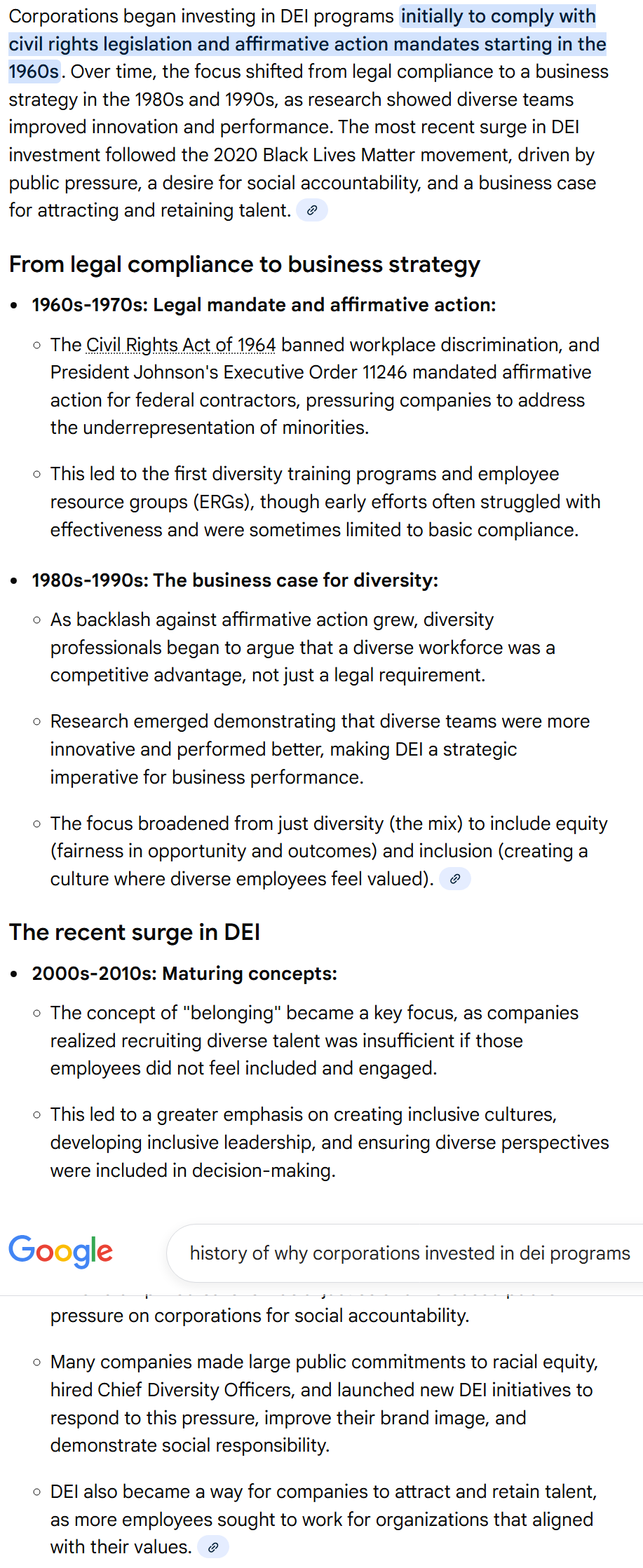

.https://urbanandracialequity.org/deitimeline/
DEI Politicized
As DEI programs grew in number, intensity, claims and impact, some individuals identified and objected to their perceived political agendas.
https://www.cnn.com/2025/01/22/us/dei-diversity-equity-inclusion-explained
DEI Criticisms

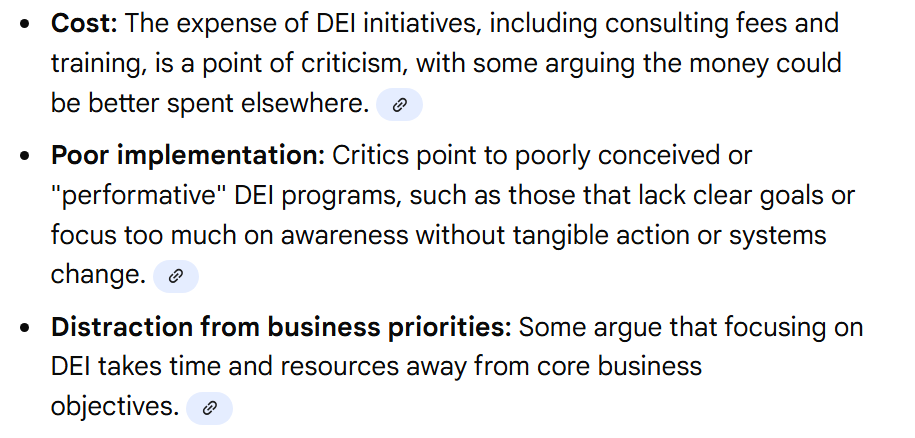
https://www.linkedin.com/pulse/most-common-arguments-against-dei-how-respond-felicity-menzies-ehwcc/
The common criticisms are not overly persuasive. The real issue is that this became part of the “culture wars”. Corporations didn’t invest in DEI because they suddenly became “woke”, they did so because DEI was beneficial for recruiting, retention and marketing. We live in a diverse world. Commercial enterprises recognized this and adjusted their activities accordingly.
Affirmative action is a step beyond “equal opportunity”. It says that our society systematically discriminates against minority groups and individuals and that we should take steps to offset this. This is a political issue that “Civility” chooses to not address in order to be actively nonpartisan.
Also missing above is the claim by postmodernists, professors, influencers, politicians and many progressives that society is inherently unfair, dominated by incumbent powerful forces, requiring revolutionary insight and reaction to overcome their power. Critics say that DEI is used as a political tool. Many disagree with the critics. “Civility” does not take a stance on this dispute. It is “above our paygrade”.
Definitions of Diversity
The presence of differences within a group, which can include race, gender, ethnicity, age, sexual orientation, religion, physical ability, and other aspects of social identity.
Embracing the differences everyone brings to the table, while acknowledging the benefit of the multiple perspectives, ideas, and solutions provided when individuals with different backgrounds, identities, and views collaborate and are heard.
The presence and participation of individuals with varying backgrounds and perspectives, including those who have been traditionally underrepresented.
Embracing the differences everyone brings to the table, whether those are someone’s race, age, ethnicity, religion, gender, sexual orientation, physical ability or other aspects of social identity.
Diversity ensures that a variety of perspectives are represented, whether they come from different races, genders, ages, sexual orientations, or cultural backgrounds.
https://www.cnn.com/2025/01/22/us/dei-diversity-equity-inclusion-explained
Civility Supports Diversity

Definitions of Inclusion
- Creating an environment where every individual feels respected, supported, and has a strong sense of belonging.
- Encouraging all people to express their ideas and perspectives freely.
Creating an environment where people of all backgrounds can thrive and contribute to their fullest potential.
A sense of belonging in an environment where all feel welcomed, accepted, and respected.
Respecting everyone’s voice and creating a culture in which people from all backgrounds feel encouraged to express their ideas and perspectives.
Civility Supports Inclusion (Acceptance)


Diversity and inclusion fit into the Civility value labelled “accepting” or “acceptance”. They are clear priority components of Civility.
Definitions of Equity
- Providing fair and just treatment to all individuals, regardless of their differences.
- Ensuring everyone has the resources and opportunities needed to succeed, rather than giving everyone the exact same thing.
Treating everyone fairly and providing opportunities for everyone to succeed, considering their traits, including resources, support, and potential accommodations to help those with disabilities thrive in the workplace.
Equal access to opportunities and fair, just, and impartial treatment.
Treating everyone fairly and providing equal opportunities.
Civility Supports Equity (Partially)
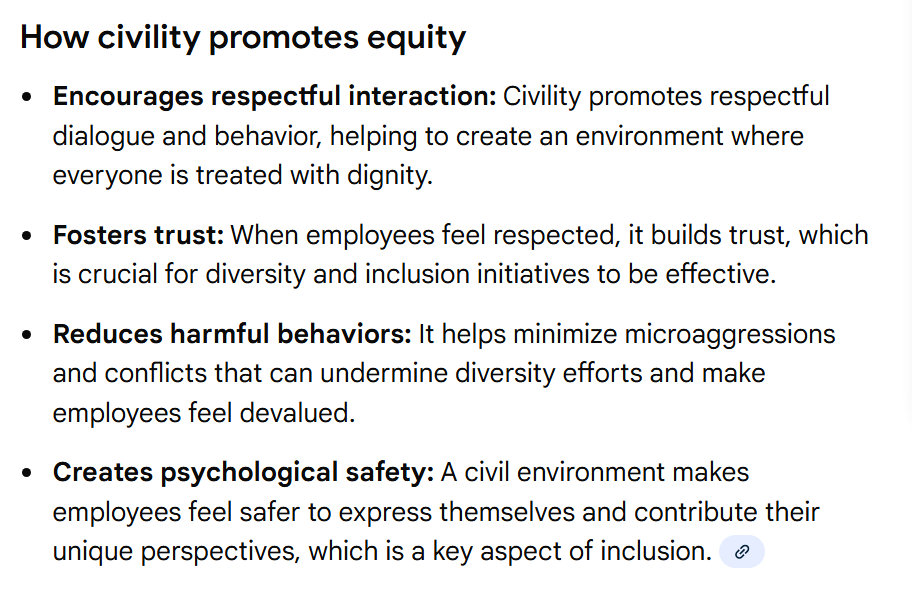
Equity is not exactly one of the 8 core values of Civility. Civility is based upon human dignity, respect for each other, responsibility, public-spiritedness, acceptance, intentionality, interactivity and constructiveness. Equity is a form of the value “fairness”. According to Jonathan Haidt, fairness is a widely held political value, but it is described in different ways by different people and considered much more important by liberals than by conservatives. “Civility” is not opposed to “equity”, but “equity” is not essential for the practice of “Civility”.
Is Equity Essential for DEI?
The highly influential human resources professional society SHRM removed “equity” from their historical support of DEI programming. Many opposed this change, arguing that equity is an essential component of DEI.
.https://www.inclusiongeeks.com/the-unexpected-consequence-of-workplace-civility/
DEI Program Components
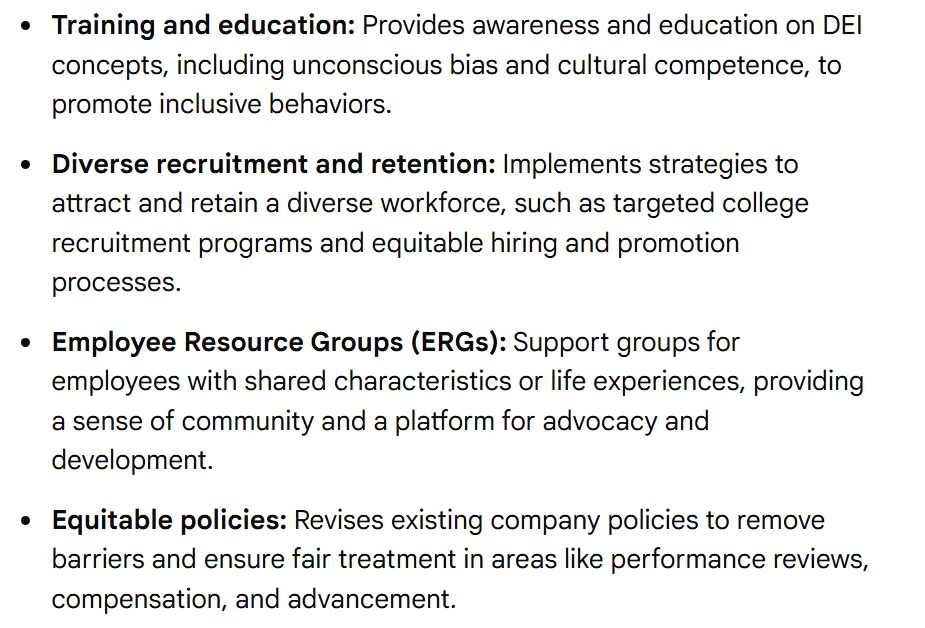

“Typical” DEI programs lean left. Civility, per se, does not support the more partisan views. “Unconscious bias” may be important, but it is not a civility value, behavior or skill. Civility does not take a stance on activist “equitable” HR processes. Every person has human dignity and is worthy of respect, check. Extra investment in mentorship and sponsorship of “underrepresented” employees is also optional from a Civility perspective.
Corporate Human Resources Professionals Generally Lean Left and Strongly Support DEI
https://www.shrm.org/executive-network/insights/impact-of-civility-on-organizational-success
Summary
Diversity and inclusion are part of the key Civility value of acceptance. Each person has human dignity and should be respected and accepted by others in their individuality. Civility is based upon commonly held values and promotes personal development and responsibility for being a good person, interacting with others and considering community needs. Like DEI, it promotes a subset of values to make our lives together safer, more pleasant and more effective. It focuses on how we interact with each other constructively, despite our differences.
Civility’s nonpartisan stance takes no position on the stronger claims of DEI providers or their critics. Civility recommends that they both engage in meaningful dialogue to better understand where they can work together and where they must accept that they have different social, political and moral perspectives that cannot be reconciled today. Civility actively opposes the angry outbursts, attacks, emotional appeals, insults, blaming, bullying, shaming, disrespect, blind loyalty, ignorance, prejudging, stonewalling and demonization sometimes seen in these interactions.
 Good News
[…] Our Political Situation: How Do You Solve a Problem Like Maria? Civility is Nonpartisan Civility and DEI Civility is […]
[…] Civility and DEI Civility is Nonpartisan What’s The Root Cause of Our Problems?: Imperfect Myths We Have More in Common Than You Think Words for Who We Are in Common Morality (2020) Jonathan Sacks Civility Today Index […]
[…] Civility and DEI […]
[…] Civility and DEI […]
[…] Civility and DEI – Good News […]