
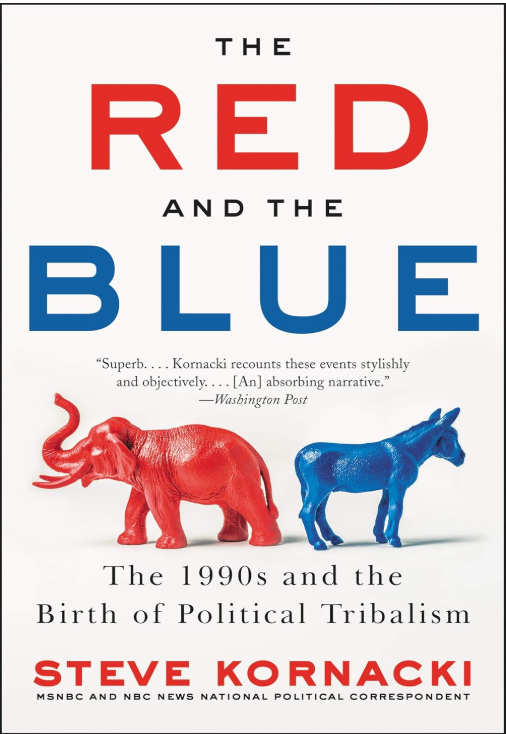
Political polarization is one of the main causes of the decline in civility. There are structural and historical causes for the tremendous decline in civility from 1960 to 2025.
High Level Changes
- The Civil Rights Act of 1964 obliterated the Democratic party and provided the Republican party with a growth strategy.
- The “cultural revolution” of the 1960’s contrasted traditional social practices with a tolerance or embrace of “anything goes” behavior. Politicians have continued to exploit these deeply felt divisions.
- Political parties embraced a single, simple right versus left, conservative versus liberal, framework as Ronald Reagan skillfully knit together the various “conservative” factions between 1968 and 1980. Republicans began to embrace the virtues of a “big tent” through the end of the century.
- The Republican party embraced fundamentalist Christians, and religion was merged with politics. Democrats increasingly became home for the secular, agnostic and “none of the above” religious affiliations.
- Ideology based parties are inherently more righteous, adopting right/wrong, good/evil views of the world.
- The American economy has continued to grow throughout the post WWII era, greatly increasing the value of politics for those with economic interests to protect.
- Americans have increasingly sorted by “rural versus urban” and “left versus right” residences. The rural counties are right, the urban counties are left, the suburban counties are mixed.
- The rise of individual expression as the premier life goal highlight’s individual identity. Political views reflect a person’s identity. There is pressure to “be” left or right.
- Structural changes like gerrymandering or restrictive changes in voting rules are used to control political power at the state level.
- Political parties have lost power. Historically, they were able to filter out extreme or risky candidates or issues. Voters, candidates and special interest groups have more power today.
- Our two-party system incentivizes extreme candidates, supporters and views on issues. This is a self-reinforcing tendency.
- Once individuals see the world as political, in a single ideological dimension, as right versus wrong, human nature reinforces the polarized views. Dislike of the other party becomes highly motivating. In-group biases grow. Fear of the “other” grows. Perceived harmful, unfair, disloyal, unspeakable, sacrilegious actions by the “other” party assume mythic evil status. This is also a self-reinforcing tendency.
- Experience with civil, constructive, problem-solving politicians and parties has declined, lowering expectations. This is also a self-reinforcing tendency.
- Polarization is in the interests of some politicians and the industries supported by political spending. It acts as an ethical and communications skills barrier to entry.
Media Changes
- Technological changes allowed journalism and opinion expression to be economically viable at the part-time individual level, down from financially stable organizations of at least 100 people.
- The “Fairness Doctrine” of 1949 was effectively ended in 1987, allowing political media to flourish.
- The merger of individual identity with politics and religion with politics created greater demand for political journalism.
- With television, perceptions of “presidential”, powerful, honest, effective, charismatic, leadership, common sense, relatability, etc. made media image more important than content, knowledge, experience or character.
- The internet allowed previously fringe groups to effectively organize and communicate.
- Cable TV and the internet created hundreds and thousands of broadcasting options, encouraging individuals to find exactly the content that they desire.
- Highly partisan commentators/entertainers began to provide the people with what they want. A simple reinforcement of their existing beliefs.
- The internet and social media provided the tools for content providers to find and feed their customers, even at very small scales.
- The loss of classified ads to the internet undermined local newspapers and radio. They lost their ability to effectively cover local news. This reinforced the trend to embracing partisan sources for all news and opinion.
- The growth of effective communications sources allowed national politicians to move the “center of gravity” in politics from “state and local” to the national level. All issues are now seen through the lens of ideological national politics.
- The increased number of channels on cable TV provided room for outlets that appealed to small fractions of the viewing audience. There was room for partisanship. There was room for sensationalism.
- Television and radio networks found ways to attract, reinforce and monetize polarization.
- In a world of hundreds or thousands of news and opinion sources, clear, consistent, emotional, effective branding became necessary for survival. Everyone is competing for clicks and eyeballs. Only the winners survive. Sources increasingly cater to the “least common denominator” of human interests.
- The internet and social media provide confidential cover for individuals to share their most negative thoughts without fear of being held accountable.
- The internet and social media avoid any filters for accuracy or legitimacy. Fake news spreads quickly.
- The “viral” nature of the internet and social media undercut traditional sources and views of objective, scientific, professional, mainstream legitimacy. Every fact becomes an opinion.
- Trust in objective journalism is undermined by the politically informed options, even as bias evaluators improve their effectiveness.
- The repeated claim of “fake news” undermines trust in any objective journalism.
- In a highly competitive media market, sensationalism wins. In-depth stories, human interest stories, good news, analysis and education lose.
- https://sites.bu.edu/pardeeatlas/research-and-policy/back2school/how-the-american-media-landscape-is-polarizing-the-country/#:~:text=The%20divisive%20tone%20of%20cable,in%20a%20less%20outrageous%20manner
- https://tomkapostasy.com/2023/07/15/one-page-why-were-polarized-klein-2020/
- https://tomkapostasy.com/2023/04/10/why-were-polarized-2020/
The Republican Party Moved Far Right
- Reagan provided “conservative” as a respectable term for a variety of political subgroups, ranging from moderate to extreme.
- Fundamentalist Christians, southerners and rural residents joined the party, angry about social and cultural changes.
- Buckley and Goldwater legitimized philosophical conservatives, including the extreme versions.
- Economic libertarians found a home in the party, as Austrian and supply side economics were adopted. Innovations like the Laffer Curve, monetarism and “rational expectations” were digested.
- “Free market” economics, descended from laissez faire, is intrinsically extreme, elevating markets as morally “good” and any opposition as “bad”. Analysis, judgment and compromise are discouraged.
- Economic growth is good. “Small is beautiful” is mere virtue signalling.
- Taxation is theft. Drown the government in a bathtub.
- Gun rights, taking your guns, weak on crime.
- Woke mob, cancel culture, fake news.
- Global warming is “fake news”; drill baby, drill.
- Communist, pink, socialist agenda, radical left.
- Christian nationalism; not separation of church and state.
- Anti-race, nationality, immigrant, religion, sexual orientation.
- Racial “dog whistles”, crime, security, welfare queens.
- Gingrich strategy of polarization, extreme positioning, framing, ends justifies the means.
- Patriotism, national purity, open borders, rapists and muggers, terrorists.
- RINO’s ejected from the party.
- Funding for more “conservative” candidates to challenge incumbents in primaries.
- Acceptance of extremist, militant, subversive, racist, conspiracist, radical supporters.
The Democratic Party Responded and Became Righteous
- Per Johnathan Haidt, only care and fairness matter to Democratic politicians. They disregard or criticize loyalty, authority, purity and liberty. Ouch.
- https://righteousmind.com/liberals-are-weirder-than-conservatives/
- Western culture is imperfect, maybe oppressive. Pure secularism is best.
- Religion is the opiate of the masses. Religious organizations are politically suspect.
- Affirmative action is more important than individual rights.
- Abortion rights are basic; no limits or compromises.
- Sexual orientation is personally defined aside from biological or cultural influences.
- Free speech is not as important as protecting feelings. Cancel culture.
- Environmental goals and policies disregard cost/benefit analyses.
- “Defund the police” because they are an illegitimate institution.
- Government employees, teachers, professors, media and artists leaned further left and lost the ability and interest to transmit neutral, broadly held social values.
- Extreme positions on free speech, assembly, press, religion, human rights and globalism.
- Oppressed group interests are primary. Not equal opportunity, safety net, fair taxes.
- Complete individual choice in consumption, production, expression, and relations.
- Opposition to school vouchers as an inherently unfair threat to public education.
- Reparations for historical injustices.
- Strictly global solutions without respect for national interests.
- Global warming is an immediate threat to the survival of humanity.
- Disregard of the “deplorables”.
- Loyalty oaths to institutional values.
- Virtue signaling as an art form.
- Postmodernist elevation of “powerful oppressors” as the only framework.
- Pure, certain support of John Rawls’ theory of justice, economic redistribution.
- Library rights to all books and programs for all ages.
- Superiority of abstract, global principles versus local interests.
- Individual creative expression as the supreme value; and tolerance; except for some views!
- Superiority of coastal culture, economics and politics versus sunbelt or “flyover country”.
- Protection of upper middle-class housing, education, safety, travel, professional, tax, networking, investment, trust, and administrative interests.
- Welcoming socialists, globalists, and intolerant interest groups in the party.
- The centrist pragmatism of FDR, Truman, Kennedy, LBJ, Clinton and Obama are dominated by the “far left” in the Democratic Party at the national level today. Partly by party programs and presidential positions (Biden), but mostly by “safe seat” politicians and the university, media and cultural influencers and thought leaders.
- These extreme left positions serve some Democratic politicians, their Republican opponents, and the globally dominant metro areas.
- Even though a majority of Democrats and Democratic leaning independents don’t support these “far left” positions or the caricatures wisely promoted by Republicans, the support by some Democrats and clever Republicans helps to position the Democratic party as much further left in the public mind. This reinforces the idea of a single ideological dimension for all issues and polarized yes/no, right/wrong. good/evil, win/loss positions by both parties.
- “The Squad” of far-left congresswomen is a convenient foil for the Republicans. https://en.wikipedia.org/wiki/Squad_(U.S._Congress)
- The lack of highly effective Democratic national leadership for 50 years has encouraged leftward leaning Gen X, millennials and Gen Z to adopt further left positions because the center-left version is apparently ineffective..
Summary
- A single ideological “left versus right” politics frame emerged after 1964.
- In 1995 Gingrich demonstrated that polarization is effective and good for incumbent politicians.
- Polarization is a self-reinforcing process. Consider the Irish Troubles or the Middle East.
- Politics, media and society also interact to grow polarization.
- Religion and identity have merged with politics, making it more ideological and polarized.
- The historical countervailing forces of the mainstream media, self-interested political parties, regional elites, the responsibility of noblesse oblige, business elites, religious elites, intellectuals, thought leaders, university presidents, military leaders, state leaders, global leaders, local politicians, civic group leaders, teachers’ unions, League of Women Voters, ABA and scouts have not found their moderating voice in the current media environment.
- The media facilitates polarization for profit.
- The Republican party moved right and then further right.
- The Democratic party “occupied the center” with Clinton and Obama, but this did not satisfy its further left supporters, and it convinced many Republicans that all Democrats are really “radical socialists”. The party has not found a new framework to effectively compete with Trump’s hybrid conservative/populist frame and policies.
- A wide variety of groups have attempted to reframe the center as a good political place to live. None have yet succeeded. Perhaps the Carmel civility project will win. https://www.projectcivility.com/
Reasons for Hope
https://www.projectcivility.com/
https://en.wikipedia.org/wiki/The_Better_Angels_of_Our_Nature
https://www.jimmycartertribute.org/index.html
https://en.wikipedia.org/wiki/Learned_optimism
 Good News
[…] Causes of Increased Political Polarization One Page: Why We’re Polarized – Klein (2020) Why We’re Polarized 2020 […]
[…] Causes of Increased Political Polarization One Page: Why We’re Polarized – Klein (2020) Why We’re Polarized 2020 […]
[…] What’s The Root Cause of Our Problems?: Skepticism Causes of Increased Political Polarization […]
[…] Causes of Increased Political Polarization – Good News […]