
Biden Presidency: Wins and Pinches

It’s time to evaluate the Biden presidency.

Economics

1 Reduced quarterly inflation rate (CPI) from peak 8.6% in 2Q, 2022 to 2.7% in 4Q, 2024.
2 Doubled the federal budget deficit from $0.75T to $1.5T per year.
3 Inflation grew to 9%, partly reflecting excess government spending initiated by the president.
4 Added 15M jobs; added jobs every month!!!!!!!
5 Cut the Black unemployment rate from 10.0% to 6.1%. Cut the Hispanic unemployment rate from 9.3% to 5.1%.
6 Increased per capita real disposable income by 5.6%.
7 Increased prime age labor force participation to near record 83.9%, last seen in 2001.
8 Reached pre-Covid employment in 28 months. Great Recession recovery took 3 times as long (77 months).
9 Real wages grew significantly in each year.
10 Record low unemployment rates quickly achieved and maintained after pandemic.
11 Reduced unemployment rate from starting 6.7% to 3.7% average for 2022-24. Pre-Covid 2017-19 was 4.0%.
12 Increased real GDP by $2.8T, 13.1% total, 3.2% annual. Trump pre-Covid gain was $1.7T, 2.8% annual.
13 Bloomberg reported a 26% increase in net household wealth between December 2020 and 2024.
14 Increased household wealth by 20%.
15 Recorded 24% increase in median home sales price from December 2020 to 2024.
16 Stockmarket value increased by 50% from December 2020 to 2024, building upon 50%+ rise in prior 4 years.

Outstanding economic results. The majority of inflation was due to pandemic and supply chain issues. Nonetheless, the growing budget deficits were an “own goal” that should have been avoided for economic and political reasons.

Governing

17 Appointed record number of federal judges, including record share of women and minority judges.
18 Postal Service Reform Act – reset reasonable debts, compensation and service levels.
19 Misevaluated and misresponded to declining personal health risks.
20 Democratic party exceeded expectations in 2022 midterm elections.
21 Negotiated spending limits in order to increase debt ceiling and avoid government shutdown.
22 Failed to overhaul Democratic party position as leaders of states and cities.
23 Failed to take advantage of the January 6, 2021 insurrection to remove Trump from politics.
24 Oversaw continued weakening of Democratic Party appeal to working class, minorities, men and independents.
25 Oversaw continued weakening of Democratic Party power, brand and results.
26 Promised to govern for all of the people but slipped into anti-MAGA politics.
27 Ran for second term and failed to withdraw in time for the party to field an effective platform and candidate.
28 Republicans were able to make DEI and wokeness a winning issue at all levels, without counter-leadership.
29 Unable to offer a new framework to reset politics outside of the win/lose polarization approach.
30 Increased IRS budget to reduce tax evasion and increase revenues.
31 Inflation Reduction Act – set minimum 15% corporate tax rate.
32 Electoral Count Reform Act – clarify presidential election processes.
33 Speech and legislation on threats to democracy, voting rights.
34 Support Voting Rights and Freedom to Vote legislation, enforced laws, opposed new state restrictions.
35 President and Democrats were unable to make progress on voting reforms despite opportunities.
36 American Rescue Plan – extra funding to cut child poverty in half.
37 Increased Pell Grant funding for lower income college attendees.
38 PACT Act – covers veterans exposure to toxic chemicals.
39 Provided new or lower cost internet access to 5M.
40 Provided student loan debt relief to 5 million borrowers.
41 American Rescue Plan – reduced medical insurance premiums

Some “good government” initiatives and results. Biden was unable to address the basic challenges of polarization, skepticism, social media, rule of law and personal integrity. He was elected as a “placeholder” to avoid Trump in 2020 and filled the “placeholder” role. He was unable to reframe the debates.

Public Health

42 Inflation Reduction Act – allows Medicare to negotiate top 10 drug prices,
43 Inflation Reduction Act – capped annual drug costs, reduces insurance costs
44 Negotiated agreement with pharmaceutical companies to reduce drug prices.
45 Doubled number enrolled in Affordable Health Care from 12M to 25M. 8% uninsured is record low.
46 Inflation Reduction Act – increases Affordable Care Act access to medical insurance.
47 American Rescue Plan – 500M covid vaccinations
48 American Rescue Plan – funding for individuals, businesses, governments and NFPs to survive pandemic.
49 Management of Covid-19 pandemic health care, communications and economic recovery strategy.
50 Failed to capitalize on his pandemic recovery and economic successes in the public eye.
51 Some pandemic decisions were overly restrictive, not based upon science, cost/benefit or value of freedoms.
52 Legislative, funding and regulatory changes to energize the Cancer Moonshot initiatives.
53 Rejoined the World Health Organization.

The pandemic mitigation and recovery should have been celebrated as a once in a century victory for the American people, science, business and government. And for the world! The results were amazing, if imperfect. Biden’s team was unable to stake out the high ground and frame the real results in this manner, allowing partisan politics to infect and undermine even this situation.

International Relations

54 Created QUAD security relations with Australia, India and Japan.
55 Facilitated improved relations between Japan and South Korea.
56 Increased support from citizens and leaders in NATO nations to the US.
57 Recommitted the US to NATO, encouraged defense investments, welcomed Finland and Sweden.
58 Signed AUKUS deal with the United Kingdom and Australia for Indo-Pacific security.
59 Unable to renegotiate new bargain with allies to pay for US defense, police, trade, shipping, legal umbrella.
60 Was unable to delivered principle leadership for the liberal international model on trade and global affairs.
61 Failed to reset US-China relations despite shared interests in global commerce, climate, security and health.
62 Supported Trump’s anti-free trade and anti-China actions without proposing effective alternatives.
63 Reduced US reliance of Chinese imports by 10%, increased US exports to China by 15%.
64 US dollar increased in value by 15%.
65 US inbound foreign investment averaged twice as high from 2021-24 versus 2020.
66 US outperformed other nations in achieiving pre-Covid levels of GDP and employment.
67 US stocks increased in value by 50%, more than in other markets.
68 Supported the bipartisan 2024 immigration reform bill that was rejected by candidate Trump and Republicans
69 Failed to take emergency action to secure the US-Mexico border, protect and process immigrants.
70 Responsible for 3 years of 175,000 monthly migrant apprehensions versus 25,000 baseline.
71 Ended Afghanistan war within negotiated plan.
72 Protected the US from terrorist attacks, authorized surgical anti-terrorist attacks.
73 Recorded zero domestic deaths from international terrorist activities during 2021-24.
74 Support for Israel after Hamas attack, ceasefires, prisoner exchanges and hostage releases.
75 Afghanistan withdrawal was poorly planned and executed, costing lives, equipment and US stature.
76 Hamas attacked Israel, killing 1,200 citizens and taking 300 hostages, confident of Israel/US limits.
77 Israel invasion of Gaza has continued without resolution, highlighting the US’s lack of influence/leadership.
78 Economic, intelligence and military support to Ukraine, which has stopped Russia’s invasion progress.
79 US and allies imposed sanctions on Russia for Ukraine war.
80 Russia invaded Ukraine, confident that the US and allies would not respond effectively.
81 Russia’s invasion of Ukraine has continued, without effective opposition or a negotiated solution.

Biden was able to mend relations with our allies and improve the strength of these alliances and the global power of the US economy. His team fumbled the Afghanistan withdrawal, failed to prevent the Russian and Hamas invasions and was unable to drive these situations to better solutions. US power has been undermined by these failures. The spike in illegal immigrants also portrayed the US and the Biden administration as a weak protector of our essential interests.

Resources

82 Inflation Reduction Act – $369B clean/green energy investment incentives.
83 Invested in wind, solar, battery and electical vehicle technologies.
84 US increased position as world’s largest oil producer and LNG exporter.
85 Expanded the US portfolio of national monuments.
86 Invested $4B in superfund environmental cleanup.
87 Rejoined Paris Agreement to address climate change.
88 Infrastructure Investment and Jobs Act – $1.2T.
89 New investments in domestic manufacturing, adding 750,000 jobs.
90 CHIPS and Science Act – incentives for domestic semi-conductor production.
91 Executive order on Artificial Intelligence outlines potential risks.

Big wins in managing energy, infrastructure and the environment.

Social Issues

92 20% reduction in violent crime rate after pandemic increases.
93 Renewed the Violence Against Women Act.
94 Repositioned marijuana classified substance rating, reduced federal criminal enforcement.
95 Respect for Marriage Act – required states to recognize the decisions of other states.
96 Responded to Supreme Court reversal of Roe v. Wade with Executive Orders on reproductive health services.
97 Revised asylum seeker options, added green card options for spouses of US citizens.
98 Safer Communities Act – gun controls, screenings, red flags.

Some small wins for the left.

Wins and Pinches

3 wins for every pinch! A decent number of achievements for a one-term president in a very polarized age.

Overall

Public Health A

Economy A-

Resources B+

International C+

Social Issues C

Govern/Politics C-

Biden did an outstanding job on the “blocking and tackling” in a very difficult situation. He “treaded water” in the international arena. He did not advance liberal social causes effectively. He failed to effectively address the Trump/populist threat to our democracy. For this, the overall grade is a D. 😦

Left, Right and Center

Biden was a moderate. He only tilted far left on 4 of the 98 items. Student loan relief was for the university crowd. The failure to address border security administratively was due to minority and progressive politics. Doubling the budget deficit undercut 30 years of Democratic Party “fiscal discipline” following Clinton’s “third way”. Not trying to reposition Democratic politics as centrist, moderate, adult, opportunity, American, scientific, effective, growing, universal, creative, tolerant, professional, metropolitan, ecumenical, big tent, majority, community, emerging, aspirational, progressive, etc. for fear of displeasing the postmodernist crowd and/or special interests was a huge lost opportunity in a time that called for leadership.

His greatest success was in managing the pandemic threat and growing the economy. He managed crime and terrorists. He enhanced American global power. He was a moderate president, just like Obama and Clinton.

Trump

I’m not a fan of Trump. His first term delivered more results than expected, but his existential threat to our system was already very clear.
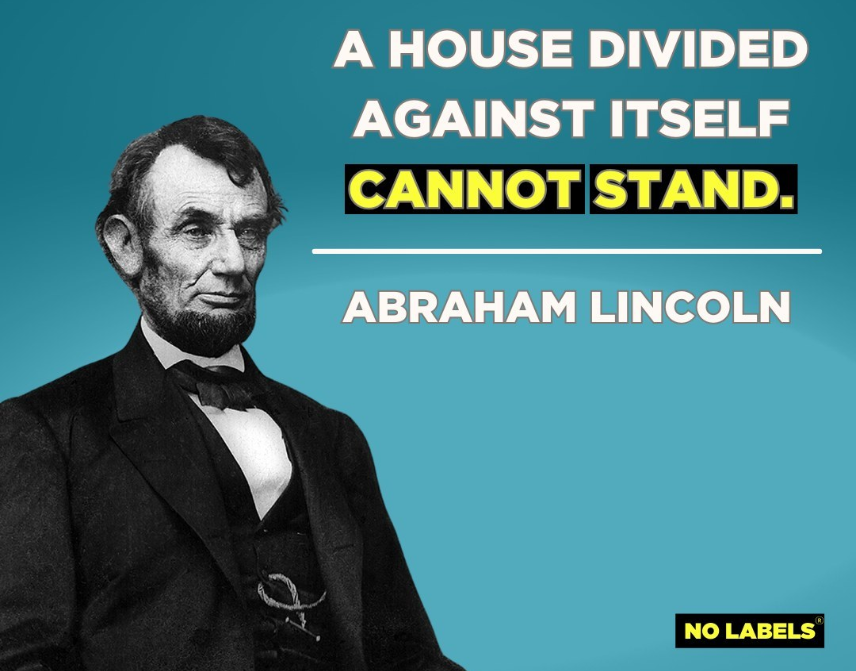
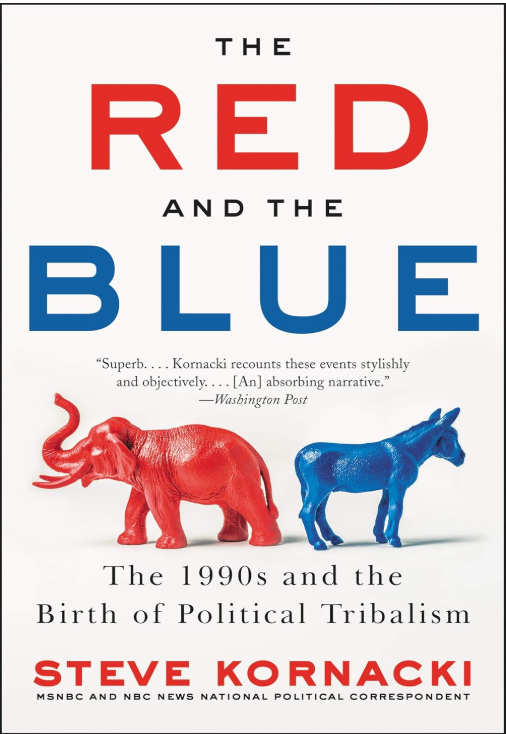
Civility is Nonpartisan

Our preferred definition of Civility is “a common values-based problem-solving process to make group decisions when individuals have differences”. A review of 5 dimensions indicates that Civility has no bias towards or against the left or the right.

Philosophically

Conservatism “conserves” history, culture, religion, norms, land, assets, classes, privileges, religion, power and institutions. It opposes risk-taking, conflict, rapid change and revolution. Civility is rooted in human dignity and concern for the “public good”.

Liberalism elevates the individual, rationality, progress, liberty, science and rights. It opposes unjustified power, wealth and cultural claims on the individual. Liberal political systems seek to balance individual rights with the “public good”.

Technically

Civility based problem-solving and relationship management emphasize the use of modern business, education and counseling techniques such as active listening, dialogue, objective evidence, separation of facts and values, common interests, devil’s advocate, process review, independent facilitators, strategic planning, values clarification, I/you statements, cognitive behavioral therapy, crucial conversations, shared accountability, win/win options, disclosed preferences, long-term perspective, walk-away option, rational incentives, aligned incentives, multiple rounds of negotiation, I’m OK/You’re OK, brainstorming, multiple intelligences, 6 thinking hats, supplier partnerships, shared administrative services, outsourced services, specific corporate culture, mission, vision and values. Corporate, not-for-profit, educational, counselling, government, religious and privately owned organizations have adopted these social science techniques because they are effective tools for translating resources into outputs in support of goals.

Different organizations emphasize different tools that best match their values, history and objectives. There is no clear left versus right emphasis. Solid tools help organizations manage their planning, workforce, resources, suppliers, customers and beneficiaries.

Values

  1. Respecting each other and our views. Respect for position and roles is a core conservative principle. Respect for individual freedom and agency has been a core conservative principle since the American Revolution. Liberals emphasize human rights, caring and fairness. Respect for each individual is central.
  2. Human dignity. Christian theology emphasizes the value of each person created by God in his image and called by name. Secular humanist philosophy takes a similarly very high view of the importance of each individual.
  3. Being open to understanding differences. Liberals have emphasized human rights, equality, care, progress and “others”. Religious conservatives embrace the Judeo-Christian call to protect the poor, the widow, the orphan and the alien. Most Americans support the American political system that limits centralized power and protects minority rights. Many conservatives recognize the diversity of religious denominations. Most Americans have learned to accept the legal and social rights of different groups, including many that were not accepted before. We have arguments about DEI today because it can be used as a political tool by the far left, even though large corporations have effectively used the nonpartisan core of DEI to be more effective firms for 25 years.
  4. Each individual’s choices matter. Liberals and conservatives in individualist America agree.
  5. We’re responsible for our choices and interactions. Conservatives emphasize responsibility, including responsibility to social groups and the state. Liberals focus on the individual, per se, and highlight their responsibility to society as essential for the public good determined by the political process.
  6. We consider the public good in our choices. Liberals tend to take the broader perspective today, sometimes to a fault. Classical conservatives naturally focus on the overall public good as the end goal of society, perhaps emphasizing the existing interests. As representatives of the wealthier and more powerful groups, conservatives look to the overall health of society, politics and the economy as vital.
  7. We share responsibility for our choices. Conservatives naturally see an organic society, based on tradition, norms, institutions and trust. Although elites influence decisions, true support from all of society is essential. All sectors must support the legitimacy of big choices. Liberals promote shared power as the fair way, in principle. They sometimes criticize decisions and processes when they don’t win.
  8. We think and act constructively. Liberals embrace modernity, science, progress, education and rationality. Conservatives embrace hard choices, reality, real politic, trade-offs, common sense, business methods, and balanced budgets.

Issues

19 issues have appeared in the “top 10” most important issues lists since 1948. Civility can be neutral on all of these issues.

  1. Inflation. Republicans emphasize this. OK.
  2. Jobs. Democrats emphasize this.
  3. Balanced budget. Republicans promote this. Democrats pursue this.
  4. The economy. Everyone favors expansion and growth.
  5. International aid/UN/global organizations. Democrats support this.
  6. Hot wars. Republicans favor more active strategies.
  7. War on terror. Republicans favor more active policies.
  8. Crime. Republicans favor greater investments.
  9. Gun rights. Republicans favor greater rights.
  10. Traditional culture. Republicans favor tradition.
  11. Drugs. Republicans favor greater enforcement and consequences.
  12. Education. Republicans favor local control and greater traditional values.
  13. Immigration. Republicans favor less legal and illegal immigration.
  14. Poverty. Democrats favor greater support.
  15. Health care. Democrats favor greater public support.
  16. Racial rights. Democrats favor greater actions for minority groups.
  17. Environment. Democrats favor greater public investment and regulation.
  18. Unifying the country/rule of law. Historically, Republicans emphasized this. In the Trump era, Democrats are more concerned.
  19. Role of government. Republicans favor less government, until recent Trump changes.

Moral Foundations Theory

  1. Care. Primary liberal value. Conservatives rate it highly too.
  2. Fairness. Primary liberal value, focusing on results. Conservatives emphasize process fairness.
  3. Loyalty. Conservative priority. Secondary liberal value. Civility emphasizes loyalty to society, the political system and the common good.
  4. Authority. Conservative priority. Liberals accept “legitimate” authority. Civility emphasizes the importance of each individual.
  5. Purity. Conservative priority supporting traditional values. Liberals emphasize different dimensions emphasizing individual rights.
  6. Equality. Equal treatment of individuals. Left and right agree.
  7. Proportionality. Conservatives emphasize proper rewards for efforts and results. Liberals accept this principle but give it lesser emphasis. Civility does not take a stance.

Summary

Civility is supported by left and right in America’s political history. Modern techniques for most effective group interactions and negotiations are neutral. The values that support Civility are neutral. Civility takes no stand on modern political issues. The latest attempt to define the “righteous” bases for politics provides no dimension opposed to civility. Civility can be used as a bipartisan base for our democracy and our day-to-day interactions.

Causes of Increased Political Polarization

Political polarization is one of the main causes of the decline in civility. There are structural and historical causes for the tremendous decline in civility from 1960 to 2025.

High Level Changes

  1. The Civil Rights Act of 1964 obliterated the Democratic party and provided the Republican party with a growth strategy.
  2. The “cultural revolution” of the 1960’s contrasted traditional social practices with a tolerance or embrace of “anything goes” behavior. Politicians have continued to exploit these deeply felt divisions.
  3. Political parties embraced a single, simple right versus left, conservative versus liberal, framework as Ronald Reagan skillfully knit together the various “conservative” factions between 1968 and 1980. Republicans began to embrace the virtues of a “big tent” through the end of the century.
  4. The Republican party embraced fundamentalist Christians, and religion was merged with politics. Democrats increasingly became home for the secular, agnostic and “none of the above” religious affiliations.
  5. Ideology based parties are inherently more righteous, adopting right/wrong, good/evil views of the world.
  6. The American economy has continued to grow throughout the post WWII era, greatly increasing the value of politics for those with economic interests to protect.
  7. Americans have increasingly sorted by “rural versus urban” and “left versus right” residences. The rural counties are right, the urban counties are left, the suburban counties are mixed.
  8. The rise of individual expression as the premier life goal highlight’s individual identity. Political views reflect a person’s identity. There is pressure to “be” left or right.
  9. Structural changes like gerrymandering or restrictive changes in voting rules are used to control political power at the state level.
  10. Political parties have lost power. Historically, they were able to filter out extreme or risky candidates or issues. Voters, candidates and special interest groups have more power today.
  11. Our two-party system incentivizes extreme candidates, supporters and views on issues. This is a self-reinforcing tendency.
  12. Once individuals see the world as political, in a single ideological dimension, as right versus wrong, human nature reinforces the polarized views. Dislike of the other party becomes highly motivating. In-group biases grow. Fear of the “other” grows. Perceived harmful, unfair, disloyal, unspeakable, sacrilegious actions by the “other” party assume mythic evil status. This is also a self-reinforcing tendency.
  13. Experience with civil, constructive, problem-solving politicians and parties has declined, lowering expectations. This is also a self-reinforcing tendency.
  14. Polarization is in the interests of some politicians and the industries supported by political spending. It acts as an ethical and communications skills barrier to entry.

Media Changes

  1. Technological changes allowed journalism and opinion expression to be economically viable at the part-time individual level, down from financially stable organizations of at least 100 people.
  2. The “Fairness Doctrine” of 1949 was effectively ended in 1987, allowing political media to flourish.
  3. The merger of individual identity with politics and religion with politics created greater demand for political journalism.
  4. With television, perceptions of “presidential”, powerful, honest, effective, charismatic, leadership, common sense, relatability, etc. made media image more important than content, knowledge, experience or character.
  5. The internet allowed previously fringe groups to effectively organize and communicate.
  6. Cable TV and the internet created hundreds and thousands of broadcasting options, encouraging individuals to find exactly the content that they desire.
  7. Highly partisan commentators/entertainers began to provide the people with what they want. A simple reinforcement of their existing beliefs.
  8. The internet and social media provided the tools for content providers to find and feed their customers, even at very small scales.
  9. The loss of classified ads to the internet undermined local newspapers and radio. They lost their ability to effectively cover local news. This reinforced the trend to embracing partisan sources for all news and opinion.
  10. The growth of effective communications sources allowed national politicians to move the “center of gravity” in politics from “state and local” to the national level. All issues are now seen through the lens of ideological national politics.
  11. The increased number of channels on cable TV provided room for outlets that appealed to small fractions of the viewing audience. There was room for partisanship. There was room for sensationalism.
  12. Television and radio networks found ways to attract, reinforce and monetize polarization.
  13. In a world of hundreds or thousands of news and opinion sources, clear, consistent, emotional, effective branding became necessary for survival. Everyone is competing for clicks and eyeballs. Only the winners survive. Sources increasingly cater to the “least common denominator” of human interests.
  14. The internet and social media provide confidential cover for individuals to share their most negative thoughts without fear of being held accountable.
  15. The internet and social media avoid any filters for accuracy or legitimacy. Fake news spreads quickly.
  16. The “viral” nature of the internet and social media undercut traditional sources and views of objective, scientific, professional, mainstream legitimacy. Every fact becomes an opinion.
  17. Trust in objective journalism is undermined by the politically informed options, even as bias evaluators improve their effectiveness.
  18. The repeated claim of “fake news” undermines trust in any objective journalism.
  19. In a highly competitive media market, sensationalism wins. In-depth stories, human interest stories, good news, analysis and education lose.
  20. https://sites.bu.edu/pardeeatlas/research-and-policy/back2school/how-the-american-media-landscape-is-polarizing-the-country/#:~:text=The%20divisive%20tone%20of%20cable,in%20a%20less%20outrageous%20manner
  21. https://tomkapostasy.com/2023/07/15/one-page-why-were-polarized-klein-2020/
  22. https://tomkapostasy.com/2023/04/10/why-were-polarized-2020/

The Republican Party Moved Far Right

  1. Reagan provided “conservative” as a respectable term for a variety of political subgroups, ranging from moderate to extreme.
  2. Fundamentalist Christians, southerners and rural residents joined the party, angry about social and cultural changes.
  3. Buckley and Goldwater legitimized philosophical conservatives, including the extreme versions.
  4. Economic libertarians found a home in the party, as Austrian and supply side economics were adopted. Innovations like the Laffer Curve, monetarism and “rational expectations” were digested.
  5. “Free market” economics, descended from laissez faire, is intrinsically extreme, elevating markets as morally “good” and any opposition as “bad”. Analysis, judgment and compromise are discouraged.
  6. Economic growth is good. “Small is beautiful” is mere virtue signalling.
  7. Taxation is theft. Drown the government in a bathtub.
  8. Gun rights, taking your guns, weak on crime.
  9. Woke mob, cancel culture, fake news.
  10. Global warming is “fake news”; drill baby, drill.
  11. Communist, pink, socialist agenda, radical left.
  12. Christian nationalism; not separation of church and state.
  13. Anti-race, nationality, immigrant, religion, sexual orientation.
  14. Racial “dog whistles”, crime, security, welfare queens.
  15. Gingrich strategy of polarization, extreme positioning, framing, ends justifies the means.
  16. Patriotism, national purity, open borders, rapists and muggers, terrorists.
  17. RINO’s ejected from the party.
  18. Funding for more “conservative” candidates to challenge incumbents in primaries.
  19. Acceptance of extremist, militant, subversive, racist, conspiracist, radical supporters.

The Democratic Party Responded and Became Righteous

  1. Per Johnathan Haidt, only care and fairness matter to Democratic politicians. They disregard or criticize loyalty, authority, purity and liberty. Ouch.
  2. https://righteousmind.com/liberals-are-weirder-than-conservatives/
  3. Western culture is imperfect, maybe oppressive. Pure secularism is best.
  4. Religion is the opiate of the masses. Religious organizations are politically suspect.
  5. Affirmative action is more important than individual rights.
  6. Abortion rights are basic; no limits or compromises.
  7. Sexual orientation is personally defined aside from biological or cultural influences.
  8. Free speech is not as important as protecting feelings. Cancel culture.
  9. Environmental goals and policies disregard cost/benefit analyses.
  10. “Defund the police” because they are an illegitimate institution.
  11. Government employees, teachers, professors, media and artists leaned further left and lost the ability and interest to transmit neutral, broadly held social values.
  12. Extreme positions on free speech, assembly, press, religion, human rights and globalism.
  13. Oppressed group interests are primary. Not equal opportunity, safety net, fair taxes.
  14. Complete individual choice in consumption, production, expression, and relations.
  15. Opposition to school vouchers as an inherently unfair threat to public education.
  16. Reparations for historical injustices.
  17. Strictly global solutions without respect for national interests.
  18. Global warming is an immediate threat to the survival of humanity.
  19. Disregard of the “deplorables”.
  20. Loyalty oaths to institutional values.
  21. Virtue signaling as an art form.
  22. Postmodernist elevation of “powerful oppressors” as the only framework.
  23. Pure, certain support of John Rawls’ theory of justice, economic redistribution.
  24. Library rights to all books and programs for all ages.
  25. Superiority of abstract, global principles versus local interests.
  26. Individual creative expression as the supreme value; and tolerance; except for some views!
  27. Superiority of coastal culture, economics and politics versus sunbelt or “flyover country”.
  28. Protection of upper middle-class housing, education, safety, travel, professional, tax, networking, investment, trust, and administrative interests.
  29. Welcoming socialists, globalists, and intolerant interest groups in the party.
  30. The centrist pragmatism of FDR, Truman, Kennedy, LBJ, Clinton and Obama are dominated by the “far left” in the Democratic Party at the national level today. Partly by party programs and presidential positions (Biden), but mostly by “safe seat” politicians and the university, media and cultural influencers and thought leaders.
  31. These extreme left positions serve some Democratic politicians, their Republican opponents, and the globally dominant metro areas.
  32. Even though a majority of Democrats and Democratic leaning independents don’t support these “far left” positions or the caricatures wisely promoted by Republicans, the support by some Democrats and clever Republicans helps to position the Democratic party as much further left in the public mind. This reinforces the idea of a single ideological dimension for all issues and polarized yes/no, right/wrong. good/evil, win/loss positions by both parties.
  33. “The Squad” of far-left congresswomen is a convenient foil for the Republicans. https://en.wikipedia.org/wiki/Squad_(U.S._Congress)
  34. The lack of highly effective Democratic national leadership for 50 years has encouraged leftward leaning Gen X, millennials and Gen Z to adopt further left positions because the center-left version is apparently ineffective..

Summary

  1. A single ideological “left versus right” politics frame emerged after 1964.
  2. In 1995 Gingrich demonstrated that polarization is effective and good for incumbent politicians.
  3. Polarization is a self-reinforcing process. Consider the Irish Troubles or the Middle East.
  4. Politics, media and society also interact to grow polarization.
  5. Religion and identity have merged with politics, making it more ideological and polarized.
  6. The historical countervailing forces of the mainstream media, self-interested political parties, regional elites, the responsibility of noblesse oblige, business elites, religious elites, intellectuals, thought leaders, university presidents, military leaders, state leaders, global leaders, local politicians, civic group leaders, teachers’ unions, League of Women Voters, ABA and scouts have not found their moderating voice in the current media environment.
  7. The media facilitates polarization for profit.
  8. The Republican party moved right and then further right.
  9. The Democratic party “occupied the center” with Clinton and Obama, but this did not satisfy its further left supporters, and it convinced many Republicans that all Democrats are really “radical socialists”. The party has not found a new framework to effectively compete with Trump’s hybrid conservative/populist frame and policies.
  10. A wide variety of groups have attempted to reframe the center as a good political place to live. None have yet succeeded. Perhaps the Carmel civility project will win. https://www.projectcivility.com/

Reasons for Hope

https://www.projectcivility.com/

https://en.wikipedia.org/wiki/The_Better_Angels_of_Our_Nature

https://www.jimmycartertribute.org/index.html

https://en.wikipedia.org/wiki/Learned_optimism

https://www.amazon.com/The-Rational-Optimist-audiobook/dp/B003MY7RGG/?encoding=UTF8&pd_rd_w=lrR8k&content-id=amzn1.sym.a7785aa2-ac28-4769-b3eb-cff7b9738627&pf_rd_p=a7785aa2-ac28-4769-b3eb-cff7b9738627&pf_rd_r=140-0488079-4728935&pd_rd_wg=wdYs0&pd_rd_r=daf5c4ba-0e70-4878-9189-99eec5a73f79&ref=aufs_ap_sc_dsk