

In April, I summarized everything “I knew” about the causes of the decline in civility. Things have not improved in 4 months. I will try again.
Google AI says:
There’s a widespread belief that civility in the U.S. is declining, and several factors are frequently cited as contributing to this trend:
Social media and the internet: Many Americans point to social media and the internet as primary drivers of eroding civility. The rapid spread of information, and the anonymity afforded by online interactions, can contribute to disrespectful behavior, according to Agility PR Solutions.
- Media in general: The broader media landscape, encompassing traditional and online news sources, is also often blamed for contributing to incivility.
- Public officials and political leaders: The behavior of public officials and political leaders is seen by many as influencing the overall level of civility in society. Incivility among elites can potentially trickle down and impact how citizens interact with one another.
- Political polarization and partisan divides: The increasing polarization of political views and the tendency to demonize opposing viewpoints can foster an environment where civility is eroded. Focusing on judgment over curiosity in discourse can be particularly harmful.
- Changes in societal values: Some suggest that a shift in values, emphasizing individualism and authentic self-expression over social conventions, may contribute to a decline in traditional politeness norms.
- Weakening social norms and lack of education: A lack of emphasis on teaching and upholding civility, both within families and educational institutions, might contribute to its decline.
Tom’s 6 Root Causes:
- Radical individualism
2. Human nature
3. Skepticism
4. Imperfect myths
5. Our secular age
6. Insecurity
Social media and the internet
2. Human nature is imperfect and selfish. Given anonymity, many individuals take advantage of that power to criticize others. Individuals seeking affirmation re-orient their lives to garner external praise, using all possible means. They seek groups and media to reinforce their views rather than promote true personal growth, which can be painful. Media organizations have an incentive to reinforce these behaviors in order to monetize them.
https://en.wikipedia.org/wiki/Ring_of_Gyges
The Media’s Role in Increased Polarization: Google AI Summary
In the mid-20th century (approximately 1930s-1980s), a combination of factors encouraged media outlets, particularly newspapers and broadcast media, to adopt more centrist positions:
- Professionalization of Journalism: The rise of journalism schools and the increasing emphasis on journalistic professionalism fostered a belief in objectivity and impartiality, according to In These Times. This meant a conscious effort to present news without overt partisan bias. The City University of New York notes that newspapers became gradually less partisan over this period, a trend that continued after the 1910s and through 1980.
- The Fairness Doctrine: Enforced by the Federal Communications Commission (FCC) from 1949 to 1987, the Fairness Doctrine mandated that broadcast networks devote time to contrasting views on issues of public importance. Britannica adds that this required stations to provide adequate opportunities for opposing perspectives, particularly in news and public affairs programming, although it didn’t necessitate balance within individual programs. This forced broadcasters to consider a broader range of viewpoints than they might have otherwise.
- Shifting Advertising Landscape and Commercial Interests: As the cost of publishing newspapers increased, they became less reliant on party subsidies and more dependent on advertising revenue, particularly from department stores and other retailers. These advertisers often preferred a less partisan approach to reach a wider audience, contributing to a move towards centrism in news coverage, according to the Center for Journalism Ethics.
Media Concentration: While media ownership consolidated during this period, particularly after World War II, the drive for broader audiences to attract advertisers also played a role in the push for more middle-of-the-road content, according to The Business History Conference.
TK: We have returned to the more normal situation with highly partisan news media and opinion sources. Combined with the internet, individuals can tailor their media consumption.
Public officials and political leaders
Political polarization and partisan divides
From 1870-1970, America was largely run by a Republican, WASP, New England, Middle Atlantic and Midwest elite. They were very confident that their views were correct: religiously, socially, politically and economically. FDR was considered “a traitor to his class”. There were populist and reformer challenges, but the leaders knew they should and would lead (Bush, Sr.). The cultural revolution of the 1960’s, the Civil Rights Act of 1964, the Vietnam War, Watergate and the economic and population explosion of the Sunbelt upended the two parties. Republicans became conservative and Democrats became liberal. In a two-party system, this resulted in a simplistic “left versus right”, “red versus blue” framing and polarization.
The challenges of minority groups, women’s rights, environmental rights, human rights, international relations, individual rights, multiculturalism, immigrants, abortion rights, gay rights, crime, secularism, atheism, students’ rights, popular music, sexual freedom, international trade, foreign languages, new religions, urbanization, radical wealth, and pleasure on demand created a social and cultural polarization that eventually became much more important than the traditional (Marxist) class/economics division. Goldwater, Agnew, Nixon and Reagan saw the opportunities for political advantage. Democrats, guided by 4 mostly winning economic decades of FDR, Truman, JFK, LBJ and Carter, were slow to adjust to this reframing of political dimensions. Even Clinton, who successfully triangulated an economic “third way”, did not fully recognize this critical shift.
Weakening social norms and lack of education
5. our secular age and 4 imperfect myths. Secularization theory asserts that as societies become more advanced economically, scientifically and educationally they will naturally become less religious and more secular. The evidence does not support this theory at the society level. Societies become less or more “religious” at quite different rates. However, as societies become wealthier, they do have influential intellectuals who conclude that science, philosophy, art, creativity, economics, business, trade, politics and culture can advance more effectively without religion. This creates our “secular age”, where religious belief is merely one option among many that are socially acceptable.
This questioning, criticism, and destruction of the received Christian and Western Civilization values came late to the US. The 1950’s and first half of the 1960’s were a period of cultural conservatism and increased religious belief and participation. The US experienced very radical change in all dimensions from 1965-1970. Social norms were disrupted or destroyed for many.
In a world of “anything goes”, individuals choose their religion. They choose which religious, cultural and political beliefs to hold. They are not philosophers or scientists, so their beliefs are often polyglot, amalgams, pluralistic, hodge podge, syncretized, and logically inconsistent. They are often “least common denominator” views asking little from the individual. Hence, the weakening of social norms leads to a wide variety of informal social beliefs.
The 1950’s, following WWII, naturally reinforced an “America is best” history in schools. History classes, western civilization and American civics were very important. These subjects lost favor in the 1970’s and forward. Schools struggled to clearly define and teach the core lessons of the American and Western experience. Social responsibilities and civility lost ground.
Changes in societal values
For me, this is the most important category.
Classic Liberal Individualism/Democrats
Classical liberals emphasize the individual above the community or society. They value logic above tradition. They emphasize individual social rights. Utilitarianism, the greatest good for the greatest number, is always nearby. Systems and structures are most important to ensuring a fair society without oppression by the powerful. John Rawls’ “A Theory of Justice” is important. It philosophically justifies a “fair” redistribution of resources. This group is deeply suspicious of the power of the wealthy to rule society. It is willing to have weaker overall results in order to minimize the chance of dominance by the ruling class or elites. Hence, the emphasis is on structures and legal rights. Not on responsibilities, opportunities, communities, or society, per se. This group values tolerance highly and is sometimes unwilling to impose its views on others. Critics argue that political structures and legal rights are not enough to support a real society. By this logic, Democrats as classical liberals simply don’t satisfy the human need for transcendence. They only offer “good enough”.
They offer only a “thin” philosophy that may be adequate for the political dimension but does not address other human claims. Professor Haidt calls this a historically unusual WEIRD view – Western, educated, industrialized, rich and democratic. He notes that liberals typically emphasize just care and fairness as moral, political, and religious values.
Conservatives/Republicans
Modern Republicans support individual freedom in some cultural dimensions, but mostly economically. Republicans embrace the radical individualism of libertarians within their coalition. But mostly, they embrace the “free market” as a philosophical ally of their emphasis on personal liberty of commerce and the rights of property.
President Trump does not align with this tradition. He does not adopt their philosophical principles. He believes in “instrumental” negotiations, power, leverage and deals.
There is a risk that the Republican emphasis on “free markets” will result in the misapplication of economic principles to politics, ethics, commerce and society.
Daniel Bell argued in 1976 that free market extremism is inherently inconsistent with conservative cultural beliefs.
Michael Sandel offers case studies that show how “market thinking” expands into other areas where it is philosophically less relevant but still popular.
Charles Taylor argues that the “instrumental reasoning” of economics, business and science threatens to obliterate all other thinking approaches.
Catholic Church
The Roman Catholic Church has a long history of supporting the preservation of historical powers or national leaders. It also has a history of criticizing the emerging secular options, Protestants, scientists and secularists for replacing God with some other human constructed principles. It developed liberation theology and currently advocates for democratic socialism.
Extremism
2. Human nature is simplistic. It does not support complicated win/win positions. 6. Insecurity. Fear leads to simplistic and highly righteous positions from left and right.
The Therapeutic Society
Constructively, modern upper middle-class society embraces secularism, stages of growth, individual growth, individual expression, self-actualization, creativity, possibilities, personal growth, arts, authenticity, depth psychology, psychoanalysis, myth, possibilities, Maslow, Montessori, Freud, Jung, Spock, Carnegie, Rogers, Rousseau, etc. The individual has unlimited potential and is encouraged to seek this potential. Philip Rieff cogently argues that man requires a connection to the transcendent to provide meaning. He says that modern secular society provides substitutes (therapists, self-help, self-expression) that simply don’t work.
The Culture of Narcissism
Christopher Lasch says that we have lost our connection with reality. Our soul requires validation. It seeks it but does not find it. This is a very convincing description of our current situation. Google AI summary follows:
Christopher Lasch’s The Culture of Narcissism (1979) argues that American society in the latter half of the 20th century was undergoing a shift from a character emphasizing individualism and contribution, to a more self-absorbed, narcissistic personality. This shift, he argued, was driven by a complex interplay of social, economic, and psychological factors.
Key arguments and characteristics of the culture of narcissism
- Reliance on external validation: The narcissistic individual, according to Lasch, craves admiration and approval from others to fuel their self-esteem, according to EBSCO. This dependence on external validation can lead to insecurity and a fear of not measuring up.
- Emphasis on image and superficiality: Lasch observed a cultural preoccupation with appearances, image, and a focus on fleeting trends and celebrity, often prioritizing presentation over substance and achievement. The media plays a role in fostering this, according to Lasch, by promoting unrealistic images and fostering a desire for fame and celebrity.
- Erosion of Traditional Authority Structures: Lasch argued that the decline of institutions like the family and community, coupled with the rising influence of external agencies and expert advice, weakened traditional sources of authority and guidance. This can leave individuals feeling disconnected and reliant on external sources for personal and societal guidance.
- Impact of Consumer Culture: Consumerism plays a role in shaping narcissistic tendencies by creating an emphasis on instant gratification, personal desires, and the construction of identity through consumption, undermining community and social responsibility. Advertising, Lasch suggested, encourages insatiable appetites for both goods and personal fulfillment, ultimately leading to feelings of emptiness and dissatisfaction.
- Decline of Political Engagement: The focus on personal fulfillment, according to Lasch, resulted in a neglect of broader social and political issues, leading to feelings of powerlessness and alienation.
Impact and significance
The Culture of Narcissism became a bestseller and has had a lasting impact on American cultural criticism, according to SuperSummary. While some found his analysis insightful, highlighting the psychological impact of consumerism and social changes, others criticized his pessimism or disagreed with his interpretation of social trends. Some critics found his use of Freudian psychoanalysis outdated and viewed his arguments as potentially promoting patriarchal values. Despite the varied reception, Lasch’s work continues to be a point of discussion and reflection on American culture.
Counterfactuals: Civility Should be Much Better Today
Many of the developments of the last 50, 100 or 500 years would lead one to predict that “civility” would be much better today than 50 years ago.
Measured IQ’s have improved by 10+ points.
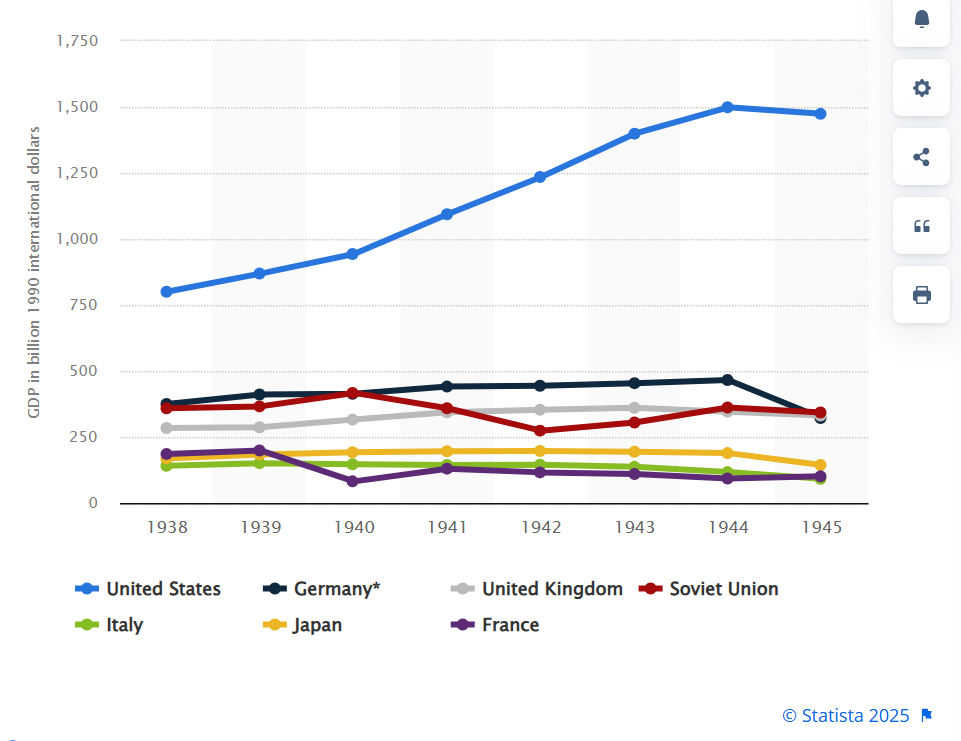
Workers are 4-5 times more productive than they were in the WWII era.
Americans nearly all live in metropolitan areas where they interact with other races, ethnicities, classes, nationalities, religions and political views.
People make more choices and experience natural consequences of their decisions. Modern markets and society push individuals to interact in all dimensions of life.
More Americans work in large enterprises where they are required to interact with “others” effectively.
Human rights have been adopted for all. Nationalities, races, religions, genders, sexual preferences and abilities are protected and celebrated.
Regional, national and global trade, travel, sports teams and media are available to all.
Ecumenical religious groups thrive. Christian denominations work with each other and “world religions” in ways unimaginable in 1929.
“Tolerance” is elevated as an important cultural and moral value by liberals, Democrats, cultural elites, and business leaders.
Personality profiles, talents, multiple intelligences, gender differences, emotional intelligences, team building, toxic personalities, autism spectrum and other insights highlight the important differences between people and the need for those who wish to succeed to understand them and adapt appropriately.
The percentage of Americans who have completed a college degree has increased from 5% to 40% since WWII. The educational experience, social expectations and interactions all promote civility, seriously considered responses to life and people.
The data is sparse, but it looks like 15% of Americans today visit mental health professionals each year to deal with the challenges of life, up from 3-5% in the WWII era. Neighbors, elders, medical professionals, educators and religious leaders have always helped.
The information required to make decisions is easily available.
European nations (and Japan) were able to move past the horrors of the two world wars and establish tolerance for neighboring states as essential principles of modern democracies.
Global institutions were built from the experiences of the Great Depression and WWII. Other nations have rights, responsibilities and things to offer the world.
The colonial, imperial models were discredited along with fascism, Marxism and totalitarianism. The tolerant, “middle way” Western model of mixed capitalist economies, democracies and international trade and cooperation were validated in the 1992 “end of history” per Francis Fukuyama.
Artists and events have destroyed the notion that cultural, social, religious, political, and business leaders are somehow superior and worthy of unquestioning loyalty to single groups, institutions, parties or leaders. We are now all deeply and inherently skeptical.
These historical, social, economic, political, family, educational, and cultural forces say things should be getting better; much better. The forces against civility must be very strong. This points towards “human nature” as the most important factor.
Summary
The media is commercially incentivized to tear us apart. We are obligated to make wise choices for our media consumption. Political parties prefer to have simple, extreme contrasts. We can reject these nonproductive views. Political parties are often captured by their extreme supporters. We need to participate.
The choice of media sources for news and opinion is critical. We have an obligation to help our fellow citizens see that it is in their own best interest to separate news from opinion, to critically evaluate all messages, to value feedback and to seek personal growth.
Politics is a mess. “The inmates are running the asylum”. Individual politicians optimize their own results. Polarization. Communications. Brands. Techniques. Fundraising. Gerrymandering. We have to re-establish a level playing field, increase political participation, hold officials accountable, set character screens, etc.
Our culture is a mess. It is truly bipolar. Purely secular, scientific, utilitarian, classical liberal on one side. Fundamentalist religious and cultural certainty on the other side. Either/or. Win/lose. Political polarization has infected the culture. In a scientific, secular age we all demand certainty. Unfortunately, scientists, philosophers, political and religious leaders cannot deliver “certainty”. They can only provide useful tools, frameworks, paradigms, myths, stories, histories, prophets, songs, art, insights, components, and limits.
We deeply fear total relativism and pure subjectivity. This pushes us to “certainty” extremisms.
“Anything goes” in 1934 shocks the world. Cole Porter, Indiana legend.
https://www.youtube.com/watch?v=r7NJ9ylAhos&list=RDr7NJ9ylAhos&start_radio=1
“is that all there is my friend, then let’s keep dancing”.
Things fall apart; the center cannot hold. A fear in all cultures. The great 1958 modern African novel.
https://en.wikipedia.org/wiki/Things_Fall_Apart
https://www.poetryfoundation.org/poems/43290/the-second-coming
The 1970 “scientist priests all think” critique.
Soren Kierkegaard founded existentialism in 1843 by positing the “leap of faith”. Certainty, in classical logical terms, was impossible. The big questions could not be reduced to pure logic.
https://en.wikipedia.org/wiki/Leap_of_faith
In Exodus 3:14 God tells Moses: “I am who I am”. Eternity, infinity, wisdom, pure light, spirit, truth, insight, goodness, righteousness, greatness, sovereignty, combination, sets, groups, ideal types, templates, harmony, forms, abstraction. We struggle to digest this, of course.
Civility is only possible when individuals are secure in their perceived existential situation.




 Good News