
1543 – The Sun is the center of the universe, sort of, not the earth.
https://en.wikipedia.org/wiki/Nicolaus_Copernicus
1611 – The Sun is the center of the universe, sort of, and I have scientific, observational proof.
https://en.wikipedia.org/wiki/Galileo_Galilei
1637 – The world can be described mathematically, in 3 clear dimensions. We can convert geometry into algebra. We can “know” everything. And in my spare time I will revolutionize philosophy too.
https://en.wikipedia.org/wiki/Ren%C3%A9_Descartes
1654 – We can use algebra to fully describe uncertain, probable events. In my spare time, I will contribute to mathematics, physics, chemistry, theology and the scientific method.
https://en.wikipedia.org/wiki/Blaise_Pascal
1673 – The world can be understood. Calculus, philosophy, politics, law, library science, music, biology. Newton was greater. Leibniz gets second billing then and now.
https://en.wikipedia.org/wiki/Gottfried_Wilhelm_Leibniz
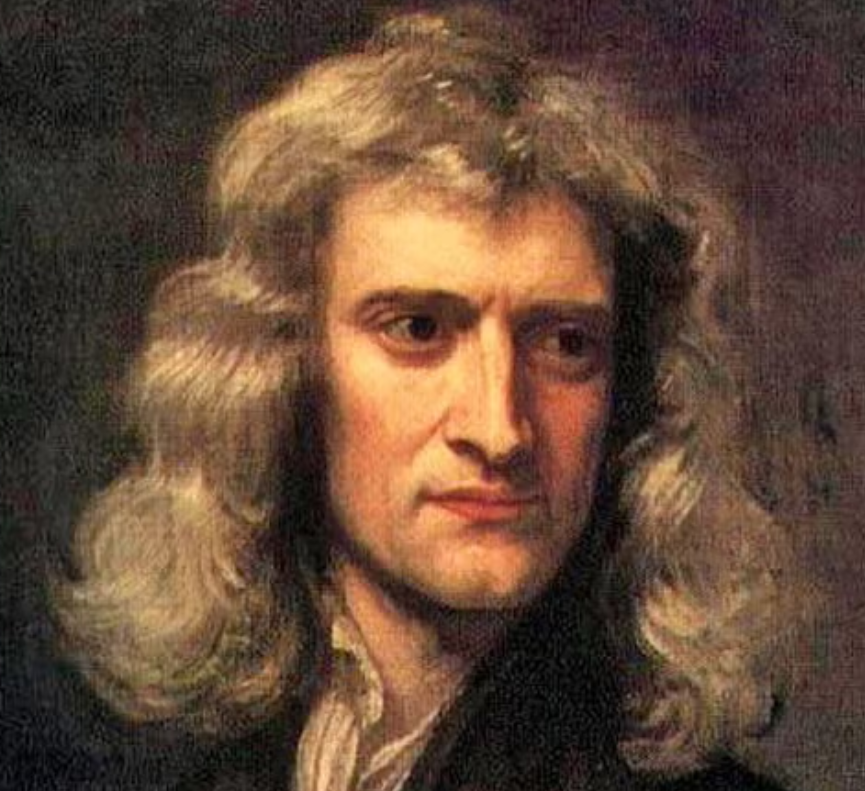
1687 – The world can be understood. Calculus, physics, astronomy, theology, optics, scientific method, alchemy. The reduction of physical forces to a simple equation is the highlight of all science. His legacy is largely misunderstood. He remained religious. He was a mystic and an alchemist. Describing events mathematically did not “explain” them. Aristotle’s emphasis on “final” causes still mattered.
https://en.wikipedia.org/wiki/Isaac_Newton
1734 – The world is dynamic and complex. Yet, we can still describe it mathematically. Let’s describe sets of differential equations. Defining several fields of mathematics. Showing how math can be applied to physics. Perhaps the greatest mathematician of all time.
https://en.wikipedia.org/wiki/Leonhard_Euler
1821 – Carl Gauss competes for the greatest mathematician of all time. Algebra, geometry, connections between subfields, many challenges solved, analysis, topology, non-Euclidean geometry, astronomy, calendars, advances in probability theory, maps, magnetism, optics and mechanics.
https://en.wikipedia.org/wiki/Carl_Friedrich_Gauss
1830 – The earth is not fixed. It evolves through long time as shown in the geological record.
https://en.wikipedia.org/wiki/Charles_Lyell
1847 – We can formalize Aristotelian logic in algebra as ones and zeros. Look out computers.
https://en.wikipedia.org/wiki/Boolean_algebra
1854 – Geometry is an analytical discipline. It is not limited to the simple Greek solids of Euclid. It can be applied to a variety of “spaces”. OMG!
https://en.wikipedia.org/wiki/Riemannian_geometry
1862 – Electricity and magnetism can be described by a set of equations, more complex, but similar to those of Newton describing gravity. We barely understand these phenomena, but the equations can predict how they function. Math and physics.
https://en.wikipedia.org/wiki/A_Dynamical_Theory_of_the_Electromagnetic_Field
https://en.wikipedia.org/wiki/James_Clerk_Maxwell
1895 – We can describe an abstract mathematics called “set theory” which describes how individual components relate to the whole. This approach can describe all formal logic. It can potentially serve as the basis for all of mathematics. It begins to fully address the idea of infinity.
https://en.wikipedia.org/wiki/Set_theory
1895 – The world is mainly comprised of waves of various lengths. Some wave lengths can be used to “see” within physical objects. We’ll call them X-rays.
https://en.wikipedia.org/wiki/X-ray
1911 – The atom is much more complicated than we thought. It has a center of protons and neutrons. It has multiple shells of probabilistically present tiny electrons. Atomic particles “disappear” as radioactive decay based on probabilities.
https://en.wikipedia.org/wiki/Ernest_Rutherford
1915 – Everything you thought you knew about the world is false! The speed of light is fixed. There is no physical background space “ether”. Speed of light is a rare constant. Energy and matter are interchangeable. Time and space interact. Time is relative. Space is warped by matter (gravity). In essence, several dimensions of reality cluster, pull, interact, interrelate together in mathematically describable ways. Everything is very connected. I worked the rest of my life to combine the laws of physics, but they did not comply.
https://en.wikipedia.org/wiki/Albert_Einstein
1925 – We’ve digested all of the new theories and experimental results. Everything in the universe is unavoidably probabilistic. Light is wave and particle. Space is relative. Electrons are probably in SPDF circuits. Particles are probably there! Measurements impact reality. Schrodinger’s cat can be dead or live. Spooky action at a distance. We can never really know “for sure”. This is before the exploration of sub-atomic particles which raises many more very difficult questions.
https://en.wikipedia.org/wiki/Quantum_mechanics
1927 – The universe was created from a single point in time. Confirmed in 1965.
https://en.wikipedia.org/wiki/Big_Bang
https://en.wikipedia.org/wiki/Cosmic_background_radiation
1928 – Many decisions can be analyzed as games and optimal strategies defined.
https://en.wikipedia.org/wiki/Game_theory
1931 – We cannot reduce any “robust” mathematics to simple formal logic or set theory. Infinity and other non-reductionist components stand in the way.
https://en.wikipedia.org/wiki/G%C3%B6del%27s_incompleteness_theorems
1942 – Power from atomic decay is possible.
https://en.wikipedia.org/wiki/Nuclear_power
1947 – A general solution strategy is available to solve optimization problems subject to multiple constraints.
https://en.wikipedia.org/wiki/Linear_programming
1960 – We live in a special place. Several physics constants are needed to allow life to exist and evolve. This set of constants is very unlikely.
https://en.wikipedia.org/wiki/Fine-tuned_universe
1968 – Systems are everywhere. They obey certain laws.
https://en.wikipedia.org/wiki/Systems_theory
1975 – There are fractional dimensions everywhere!
https://en.wikipedia.org/wiki/Benoit_Mandelbrot
Summary
Our universe has a well-defined structure. Observer perspective really matters. Mathematical equations are amazingly powerful. There is no simple deterministic universe. It is probabilistic “turtles all the way down”. Perspective is relative. New mathematical perspectives are impossible to predict and difficult to comprehend.
 Good News
[…] and Religion Modern History: International Modern History: Business & Economics Modern History: Math (and Physics) Modern History: Technology Modern History: Communications and Computers Modern History: […]
[…] Modern History: Math (and Physics) – Good News […]