
1597 – Nature, data, experiments, inductive reasoning and skepticism are good methods to find truth.
https://en.wikipedia.org/wiki/Francis_Bacon
1637 – Radical doubt. No final ends. Just me. I think, therefore I am. How much can I logically derive from a few irrefutable “first principles”?
https://en.wikipedia.org/wiki/Ren%C3%A9_Descartes
1648 – We cannot settle religious conflicts by war. We’ll let princes choose for their subjects.
https://en.wikipedia.org/wiki/Peace_of_Westphalia
1689 – The individual exists as a free self to be created. A “social contract” to form a government must respect the individual.
https://en.wikipedia.org/wiki/John_Locke
1755 – The individual is born good, subjective and feeling. Society may threaten the individual.
https://en.wikipedia.org/wiki/Jean-Jacques_Rousseau
1781 – There is a reasonable moral structure like the “golden rule”. Reason is powerful but limited.
https://en.wikipedia.org/wiki/Immanuel_Kant
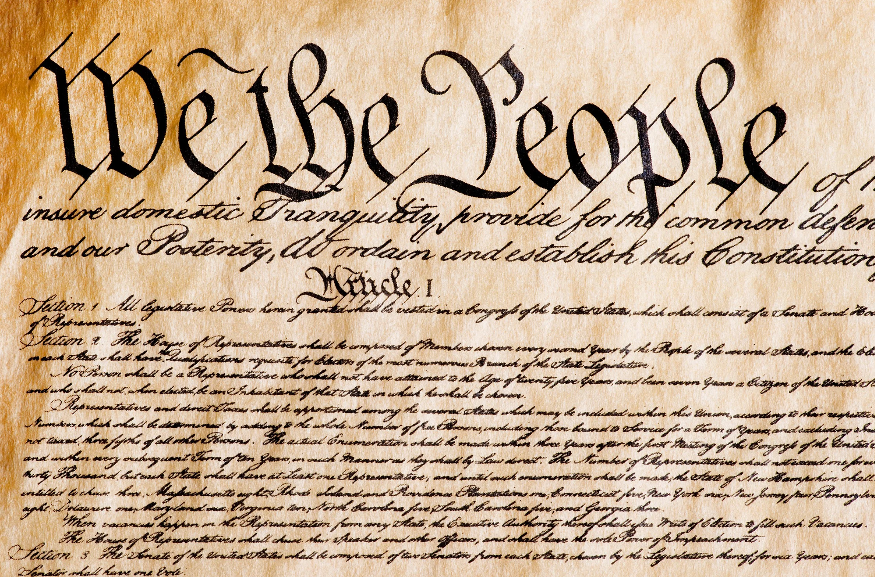
1783 – Self-government with limited power is possible and potentially effective.
https://en.wikipedia.org/wiki/American_Revolution
1789 – “The people” can overthrow the ancient regime. Governing is a bigger challenge. The “nation” and ideals (liberty, equality, fraternity) are very, very powerful tools.
https://en.wikipedia.org/wiki/French_Revolution
https://en.wikipedia.org/wiki/Anti-clericalism
1790 – The accumulation of wisdom in society’s institutions and history should not be ignored. We should wisely and cautiously conserve these assets.
https://en.wikipedia.org/wiki/Edmund_Burke
1800 – I am not a machine. Nature, feelings, imagination, creativity, art, supernatural, history, exotic, mysterious, unique, heroism, passion, intuition, chivalry, myth.
https://en.wikipedia.org/wiki/Romanticism
1807 – History is a separate world force. Thesis, antithesis and synthesis drive the world forward.
https://en.wikipedia.org/wiki/Georg_Wilhelm_Friedrich_Hegel
1843 – The modern individual living his daily life faces big existential challenges that cannot be resolved with certainty.
https://en.wikipedia.org/wiki/S%C3%B8ren_Kierkegaard
1848 – Production techniques drive economic power relations. Revolution of the working class will necessarily occur, resulting in an ideal society.
https://en.wikipedia.org/wiki/Karl_Marx
1848 – Utilitarian emphasis on pain and pleasure. Liberty as the supreme value. Yet, government actions to reach valuable ends, including redistribution, are also needed.
https://en.wikipedia.org/wiki/John_Stuart_Mill
1850 – The strong are “naturally” entitled to protect their assets against the claims of the weak.
https://en.wikipedia.org/wiki/Social_Darwinism
1878- Practical results matter. Abstract philosophical systems cannot be evaluated in other ways.
https://en.wikipedia.org/wiki/Pragmatism
1883 – God is dead. Christianity is a “slave religion”. A few can be the supermen, embracing their powers.
https://en.wikipedia.org/wiki/Friedrich_Nietzsche
1890 – Governments, institutions and rational structures can address the challenges of modern civilization.
https://en.wikipedia.org/wiki/Progressive_Era
1890 – “The people” have high expectations that their “will” will be followed.
https://en.wikipedia.org/wiki/Populism_in_the_United_States
https://en.wikipedia.org/wiki/Populism
1906 – Government regulation is needed in some situations to overcome the shortcomings of “laissez faire” capitalism.
https://en.wikipedia.org/wiki/The_Jungle
1913 – All of mathematics can be reduced to formal symbolic logic. Everything is logically consistent. All of science and politics and philosophy might also be so structured.
https://en.wikipedia.org/wiki/Principia_Mathematica
1915 – The nation is most important. Centralized power is necessary to fulfill the nation’s goals.
https://en.wikipedia.org/wiki/Fascism
1920 – Women have the same political rights as men. Perhaps similar social status.
https://en.wikipedia.org/wiki/Women%27s_suffrage
1933 – The government is ultimately responsible for the economic welfare of its people.
https://en.wikipedia.org/wiki/New_Deal
1935 – The government is responsible for insuring its citizens against poverty and disability.
https://en.wikipedia.org/wiki/Social_Security_(United_States)
1943 – Man freely exists in a universe lacking predetermined meaning. Man can define his own meaning.
https://en.wikipedia.org/wiki/Jean-Paul_Sartre
1948 – All humans are “born free and equal in dignity and rights” regardless of “nationality, place of residence, sex, national or ethnic origin, colour, religion, language, or any other status”.
https://en.wikipedia.org/wiki/Universal_Declaration_of_Human_Rights
1961 – Power is the ultimate guide to understanding the world. The powerful exploit others. Opposing this exploitation is the duty of those who understand.
https://en.wikipedia.org/wiki/Post-structuralism
1962 – Science is not inherently rational. Major paradigms are determined by groups of scientists.
https://en.wikipedia.org/wiki/The_Structure_of_Scientific_Revolutions
1963 – Socially determined roles for women prevent true happiness.
https://en.wikipedia.org/wiki/The_Feminine_Mystique
1964 – The federal government actively prohibits racial, national and sex discrimination.
https://en.wikipedia.org/wiki/Civil_Rights_Act_of_1964
1970 – The environment is recognized as a collective asset worthy of conservation.
https://en.wikipedia.org/wiki/Earth_Day
1971 – “A Theory of Justice” justifies government actions to limit unfair results. Classical liberals cheer.
https://en.wikipedia.org/wiki/John_Rawls
1974 – Only a minimal government libertarian state is justified. Touche!
https://en.wikipedia.org/wiki/Robert_Nozick
1974 – A US president was forced out of office for his criminal activities. The transfer of power worked. Confidence in government and institutions was shaken.
https://en.wikipedia.org/wiki/Impeachment_process_against_Richard_Nixon
1980 – A pro-market, socially conservative political party was elected by reframing the terms of the debate away from economic security and inequality.
https://en.wikipedia.org/wiki/Ronald_Reagan
2017 – The Republican Party increasingly appealed to a coalition of economic winners, social conservatives, libertarians and populists, embracing a transactional, common-sense patriotic nationalism.
https://en.wikipedia.org/wiki/Donald_Trump
Summary
“Practical men who believe themselves to be quite exempt from any intellectual influence, are usually the slaves of some defunct economist. Madmen in authority, who hear voices in the air, are distilling their frenzy from some academic scribbler of a few years back” – John Maynard Keynes
Bacon and Descartes provided early alternatives to the prevailing integrated religious worldview. Locke and others outlined the individual based “social contract” theory that provided a basis for the American and French revolutions. The American model continued to inspire while the French model both inspired and frightened. The rational Enlightenment view led to utilitarianism, pragmatism and progressivism plus the reactions of Romanticism, Marx and Nietzsche. Conservative reactions of Burke, Social Darwinism and Fascism also occurred. “Big government” was adopted as a potential positive force by the left as well. Individual rights were increasingly recognized in theory and practice. Post-war existentialism and postmodernism replaced discredited Marxism on the left. The Reagan/Thatcher revolution re-established pro-market and traditional social conservatism as a dominant force. Trump capitalized on the populist themes and media tools of the skeptical post-Watergate era.
Science versus religion. Church and state. Individual and community. Rich and poor. Liberty versus justice. Liberal versus conservative. Populists and elites. State and international politics. What should we do? Who should decide? What is the best structure? How do we protect minority rights? Protect the goose that lays the golden eggs.
The U.S. and Western system of government regulated capitalism, relatively free trade and democratically elected limited government dominated the second half of the twentieth century. In 1992 Francis Fukuyama proclaimed, “The End of History”. This “Western consensus” view is increasingly challenged today.
‘Many forms of Government have been tried and will be tried in this world of sin and woe. No one pretends that democracy is perfect or all-wise. Indeed, it has been said that democracy is the worst form of Government except for all those other forms that have been tried from time to time.…’ – Winston Churchill
 Good News
[…] 16, 2025 tomkapostasyLeave a comment Modern History: Philosophy and Politics Modern History: Society and Religion Modern History: International Modern History: […]
[…] Modern History: Philosophy and Politics – Good News […]