1637 – The world can be described mathematically, in 3 clear dimensions. We can convert geometry into algebra. We can “know” everything. And in my spare time I will revolutionize philosophy too.
1654 – We can use algebra to fully describe uncertain, probable events. In my spare time, I will contribute to mathematics, physics, chemistry, theology and the scientific method.
1673 – The world can be understood. Calculus, philosophy, politics, law, library science, music, biology. Newton was greater. Leibniz gets second billing then and now.
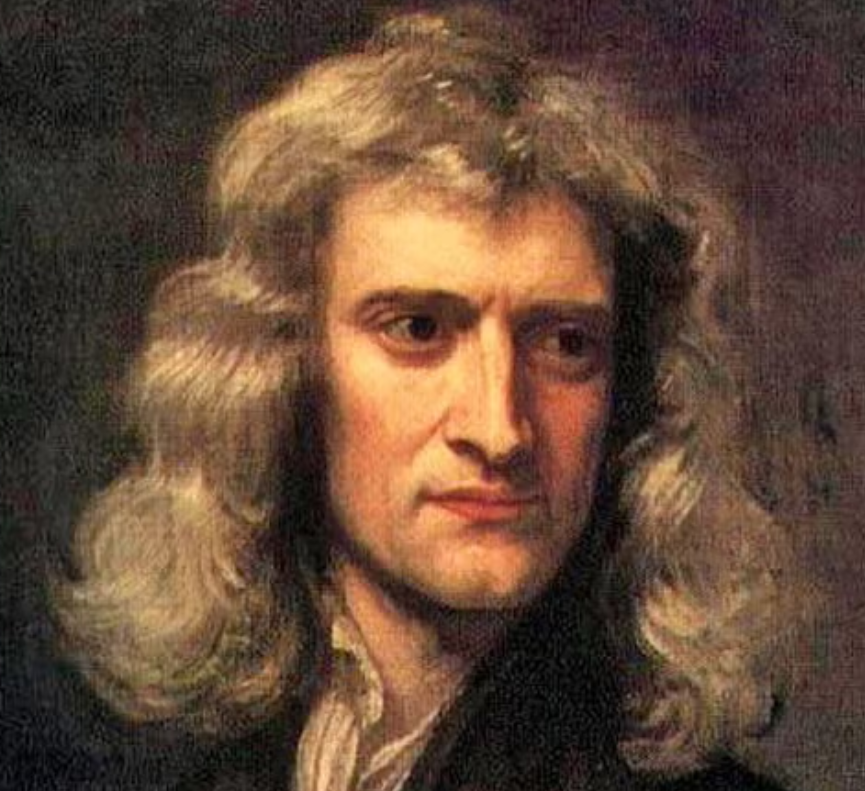
1687 – The world can be understood. Calculus, physics, astronomy, theology, optics, scientific method, alchemy. The reduction of physical forces to a simple equation is the highlight of all science. His legacy is largely misunderstood. He remained religious. He was a mystic and an alchemist. Describing events mathematically did not “explain” them. Aristotle’s emphasis on “final” causes still mattered.
1734 – The world is dynamic and complex. Yet, we can still describe it mathematically. Let’s describe sets of differential equations. Defining several fields of mathematics. Showing how math can be applied to physics. Perhaps the greatest mathematician of all time.
1821 – Carl Gauss competes for the greatest mathematician of all time. Algebra, geometry, connections between subfields, many challenges solved, analysis, topology, non-Euclidean geometry, astronomy, calendars, advances in probability theory, maps, magnetism, optics and mechanics.
1862 – Electricity and magnetism can be described by a set of equations, more complex, but similar to those of Newton describing gravity. We barely understand these phenomena, but the equations can predict how they function. Math and physics.
1895 – We can describe an abstract mathematics called “set theory” which describes how individual components relate to the whole. This approach can describe all formal logic. It can potentially serve as the basis for all of mathematics. It begins to fully address the idea of infinity.
1895 – The world is mainly comprised of waves of various lengths. Some wave lengths can be used to “see” within physical objects. We’ll call them X-rays.
1911 – The atom is much more complicated than we thought. It has a center of protons and neutrons. It has multiple shells of probabilistically present tiny electrons. Atomic particles “disappear” as radioactive decay based on probabilities.
1915 – Everything you thought you knew about the world is false! The speed of light is fixed. There is no physical background space “ether”. Speed of light is a rare constant. Energy and matter are interchangeable. Time and space interact. Time is relative. Space is warped by matter (gravity). In essence, several dimensions of reality cluster, pull, interact, interrelate together in mathematically describable ways. Everything is very connected. I worked the rest of my life to combine the laws of physics, but they did not comply.
1925 – We’ve digested all of the new theories and experimental results. Everything in the universe is unavoidably probabilistic. Light is wave and particle. Space is relative. Electrons are probably in SPDF circuits. Particles are probably there! Measurements impact reality. Schrodinger’s cat can be dead or live. Spooky action at a distance. We can never really know “for sure”. This is before the exploration of sub-atomic particles which raises many more very difficult questions.
1931 – We cannot reduce any “robust” mathematics to simple formal logic or set theory. Infinity and other non-reductionist components stand in the way.
Our universe has a well-defined structure. Observer perspective really matters. Mathematical equations are amazingly powerful. There is no simple deterministic universe. It is probabilistic “turtles all the way down”. Perspective is relative. New mathematical perspectives are impossible to predict and difficult to comprehend.
1984 – Eli Goldratt offers a “theory of constraints” as a way to understand and manage complex systems effectively, leading to true “lean manufacturing” and “lean operations”.
Process standardization. Financial innovation. Highly focused strategies. New business forms. Markets and international trade deliver desired products, lower prices and competition. A role for government regulation remains. The macroeconomy can be managed to reduce the impact of business cycles and shocks.
Colonization and de-colonization. Opening of Asia. World Wars. Nuclear threats. International integration. Economic progress. Bipolar, superpower, multipolar world.
1880 – Community organizations of many kinds are created to manage immigrants, urbanization, industrialization, growth, mobility, diversity, poverty and public health.
1936 – Self-help books, seminars, programs and counseling blossom, providing an individual, transactional, psychological, positive alternative to religion.
The movement from one Church to many Christian denominations to “A Secular Age” is the largest change. The growth of the US from a small colony to a world power and then to an economic, military and cultural superpower is of equal magnitude. Migration westward, northward, inward and to the cities has reshaped American culture. Individualism has grown to become the dominant cultural perspective. The role of laws and social norms in shaping personal behavior has dropped.
Americans have been extraordinarily mobile, joiners, religious, productive, creative, patriotic, pragmatic, skeptical and independent. The country has succeeded as a multi-cultural nation and been a successful exporter of its culture around the world.
1789 – “The people” can overthrow the ancient regime. Governing is a bigger challenge. The “nation” and ideals (liberty, equality, fraternity) are very, very powerful tools.
1848 – Utilitarian emphasis on pain and pleasure. Liberty as the supreme value. Yet, government actions to reach valuable ends, including redistribution, are also needed.
1913 – All of mathematics can be reduced to formal symbolic logic. Everything is logically consistent. All of science and politics and philosophy might also be so structured.
1948 – All humans are “born free and equal in dignity and rights” regardless of “nationality, place of residence, sex, national or ethnic origin, colour, religion, language, or any other status”.
1961 – Power is the ultimate guide to understanding the world. The powerful exploit others. Opposing this exploitation is the duty of those who understand.
1974 – A US president was forced out of office for his criminal activities. The transfer of power worked. Confidence in government and institutions was shaken.
1980 – A pro-market, socially conservative political party was elected by reframing the terms of the debate away from economic security and inequality.
2017 – The Republican Party increasingly appealed to a coalition of economic winners, social conservatives, libertarians and populists, embracing a transactional, common-sense patriotic nationalism.
“Practical men who believe themselves to be quite exempt from any intellectual influence, are usually the slaves of some defunct economist. Madmen in authority, who hear voices in the air, are distilling their frenzy from some academic scribbler of a few years back” – John Maynard Keynes
Bacon and Descartes provided early alternatives to the prevailing integrated religious worldview. Locke and others outlined the individual based “social contract” theory that provided a basis for the American and French revolutions. The American model continued to inspire while the French model both inspired and frightened. The rational Enlightenment view led to utilitarianism, pragmatism and progressivism plus the reactions of Romanticism, Marx and Nietzsche. Conservative reactions of Burke, Social Darwinism and Fascism also occurred. “Big government” was adopted as a potential positive force by the left as well. Individual rights were increasingly recognized in theory and practice. Post-war existentialism and postmodernism replaced discredited Marxism on the left. The Reagan/Thatcher revolution re-established pro-market and traditional social conservatism as a dominant force. Trump capitalized on the populist themes and media tools of the skeptical post-Watergate era.
Science versus religion. Church and state. Individual and community. Rich and poor. Liberty versus justice. Liberal versus conservative. Populists and elites. State and international politics. What should we do? Who should decide? What is the best structure? How do we protect minority rights? Protect the goose that lays the golden eggs.
The U.S. and Western system of government regulated capitalism, relatively free trade and democratically elected limited government dominated the second half of the twentieth century. In 1992 Francis Fukuyama proclaimed, “The End of History”. This “Western consensus” view is increasingly challenged today.
‘Many forms of Government have been tried and will be tried in this world of sin and woe. No one pretends that democracy is perfect or all-wise. Indeed, it has been said that democracy is the worst form of Government except for all those other forms that have been tried from time to time.…’ – Winston Churchill






 Good News