Good News: Black Labor Force Participation Exceeds National Average, First Time in 50 Years

https://www.bloomberg.com/news/articles/2022-06-03/black-americans-lead-recovery-in-may-labor-force-participation#xj4y7vzkg
https://www.brookings.edu/blog/the-avenue/2022/06/17/three-questions-for-the-labor-markets-near-future/

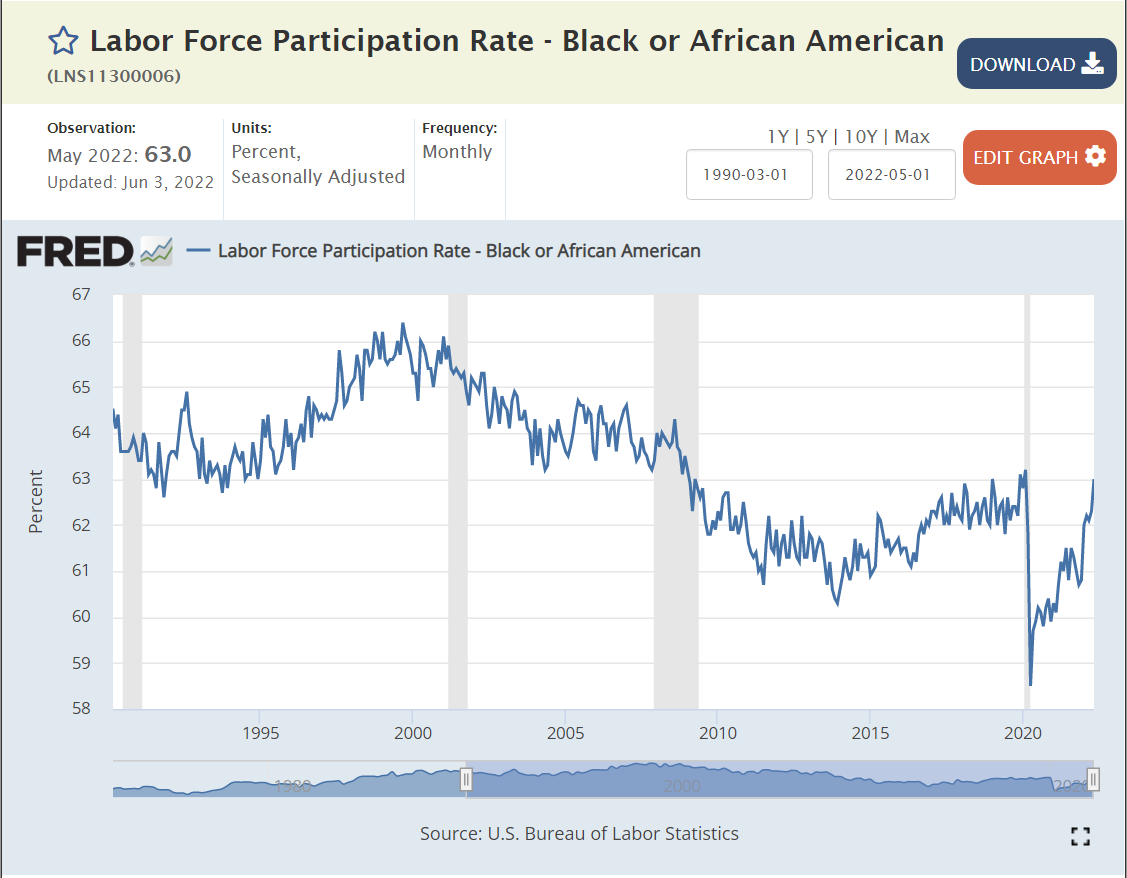
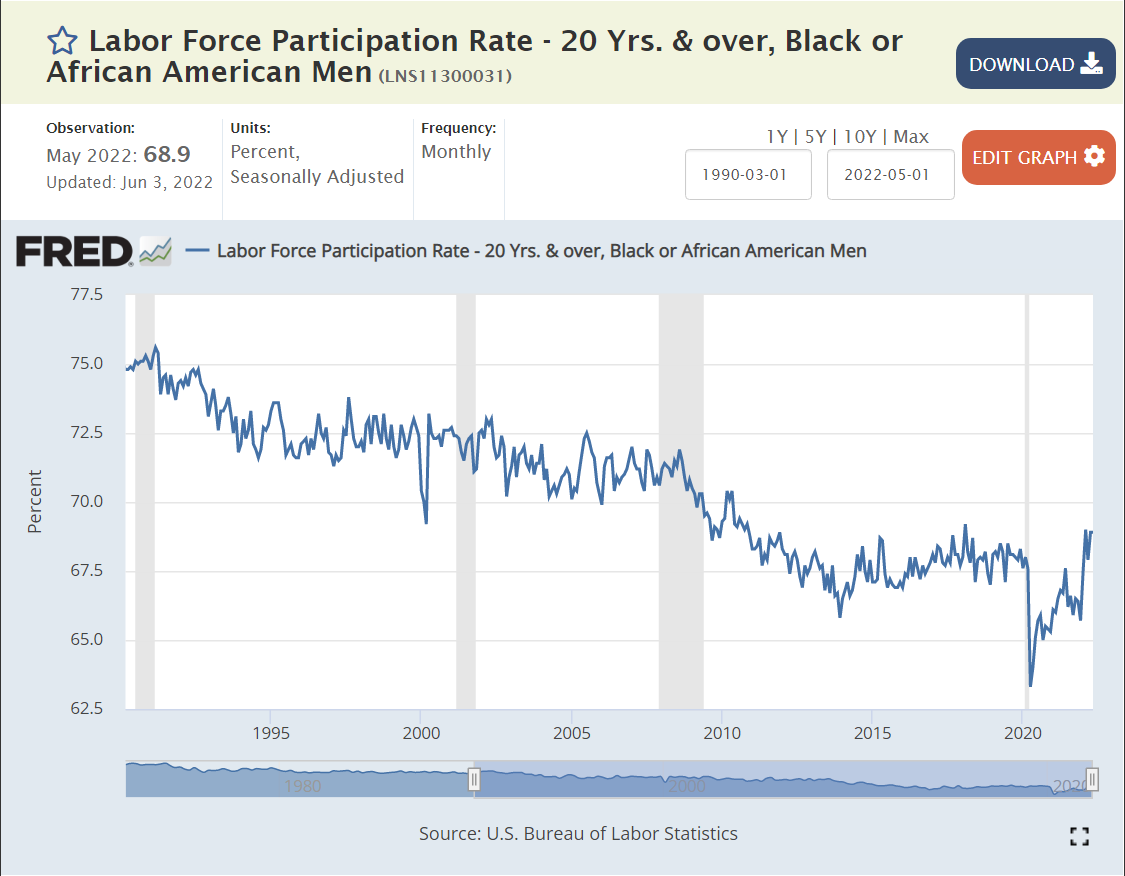
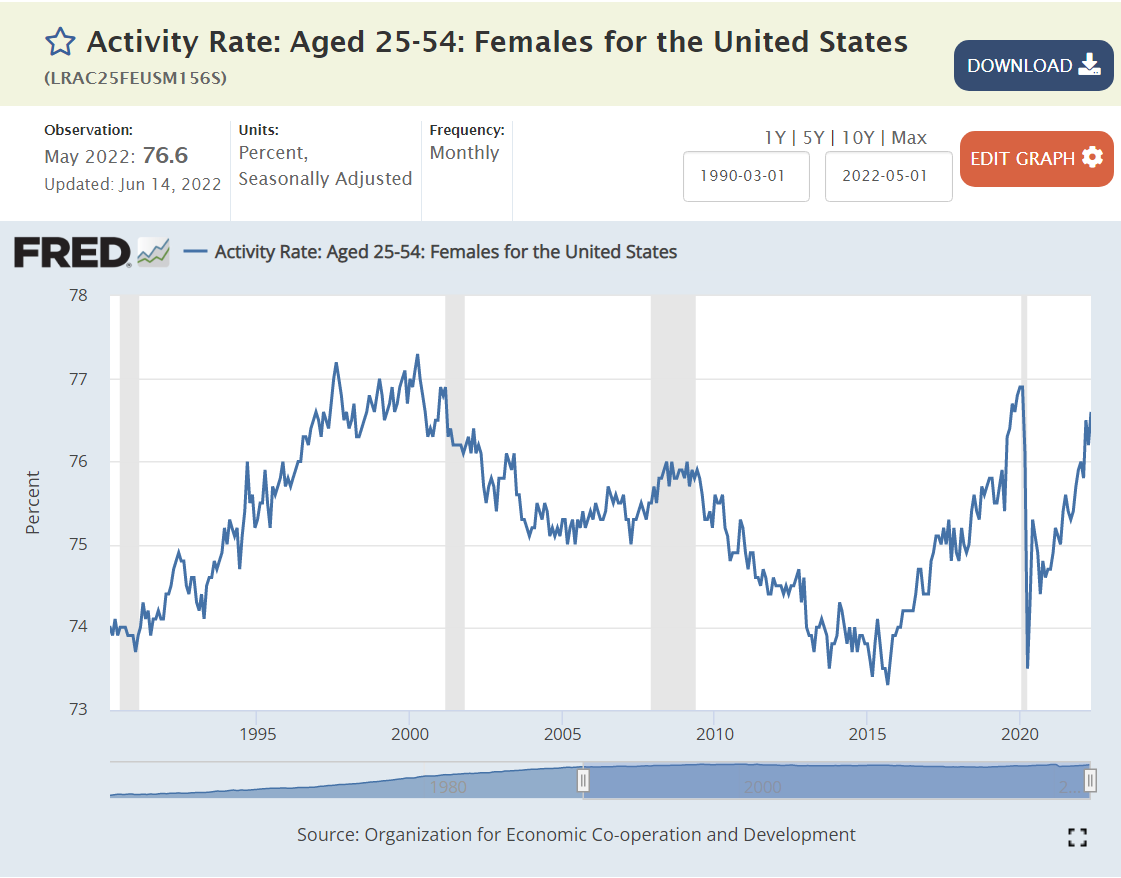
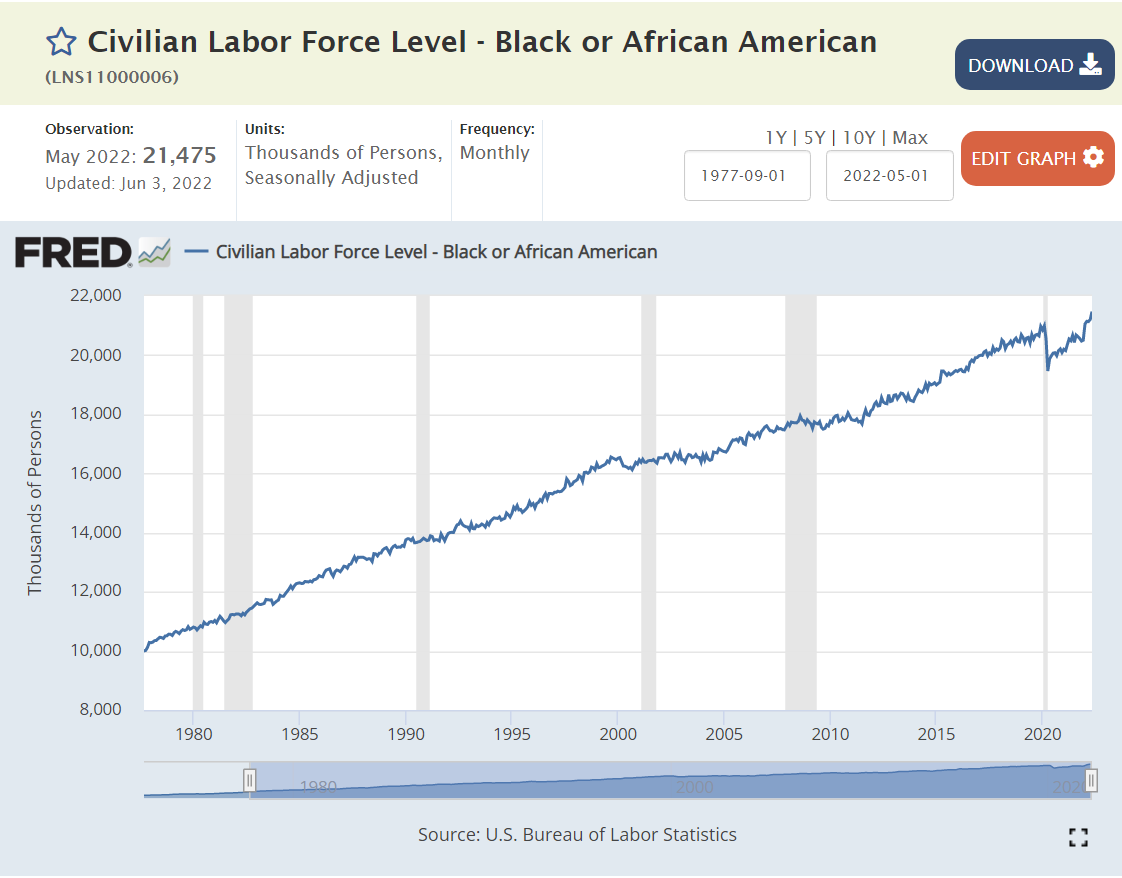
African-American men and women have increased participation rates quickly since the depths of the pandemic.

https://www.epi.org/indicators/unemployment/
https://www.bls.gov/webapps/legacy/cpsatab2.htm

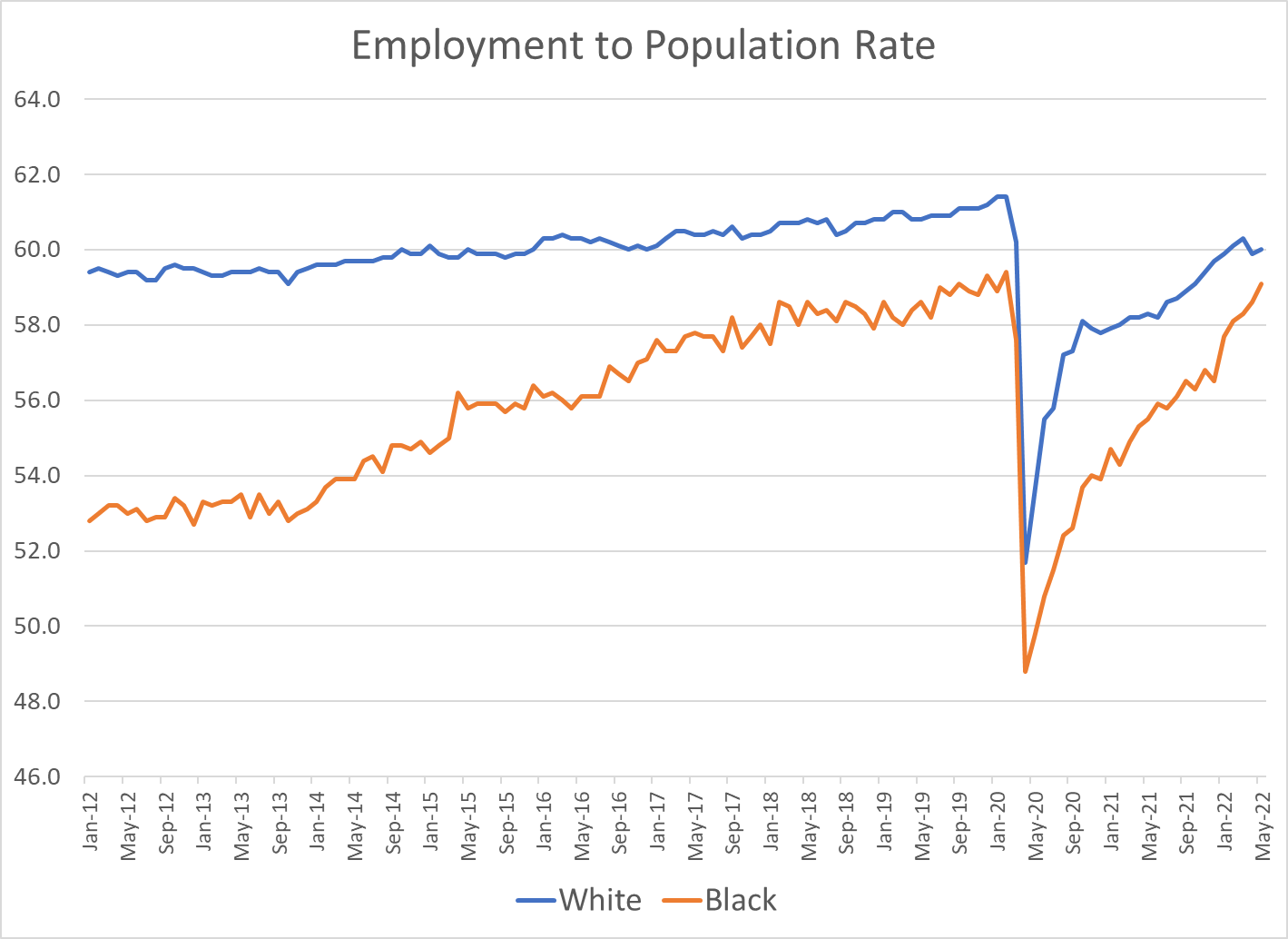
The African-American employment to population ratio has been increasing through time, closing a 5 point gap to just 2 points before the pandemic, and squeezing it to less than 1 point most recently.

Context Since March, 1990 Peak Overall Rate

4 point decline before the pandemic. 1.5% pandemic hit. Almost 50% recovery.

3 point decline for prime age workforce, but 2 point improvement at the end of the prior economic recovery period. 2 point pandemic hit. More than 3/4ths recovered.

6 point slide before pandemic. 1.5 point pandemic hit. Perhaps 1/3rd recovered.

Up 3 points. Down 3 points. Up 3 points. Down 2 points. 80% recovered.

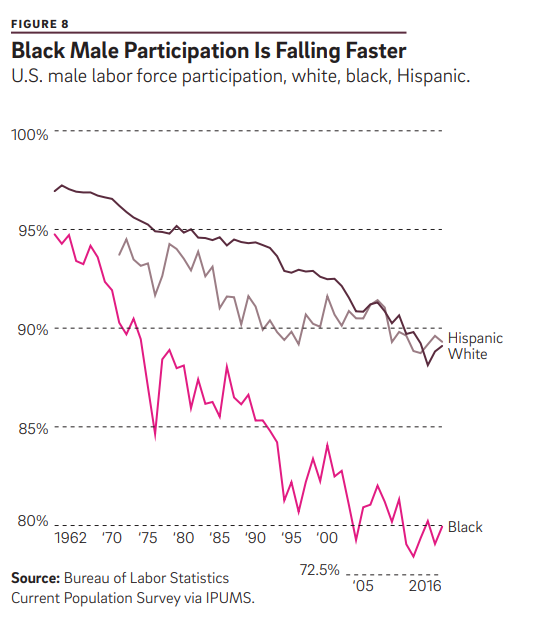
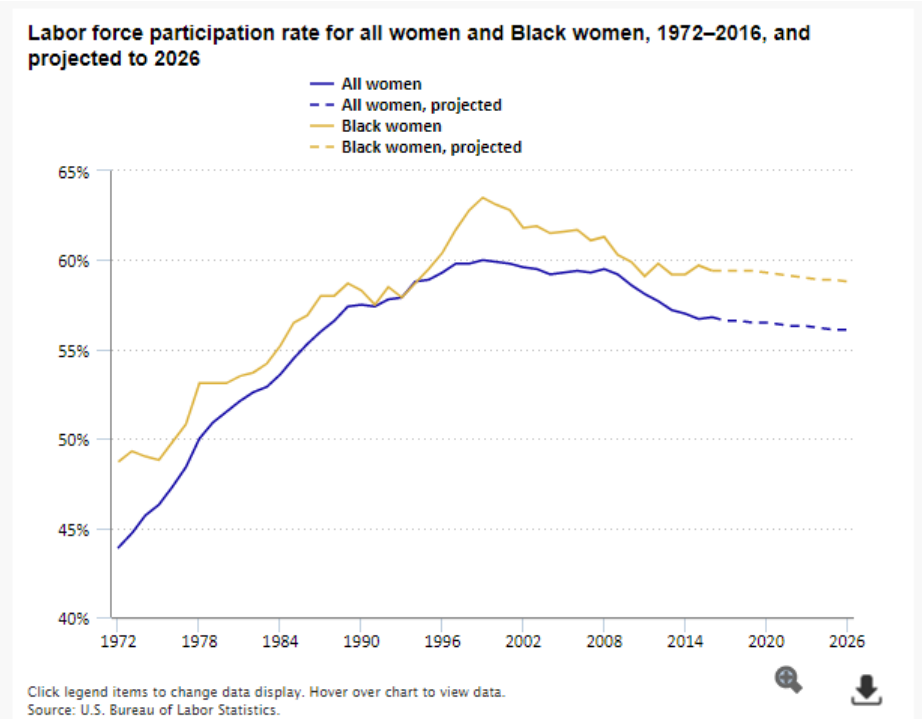
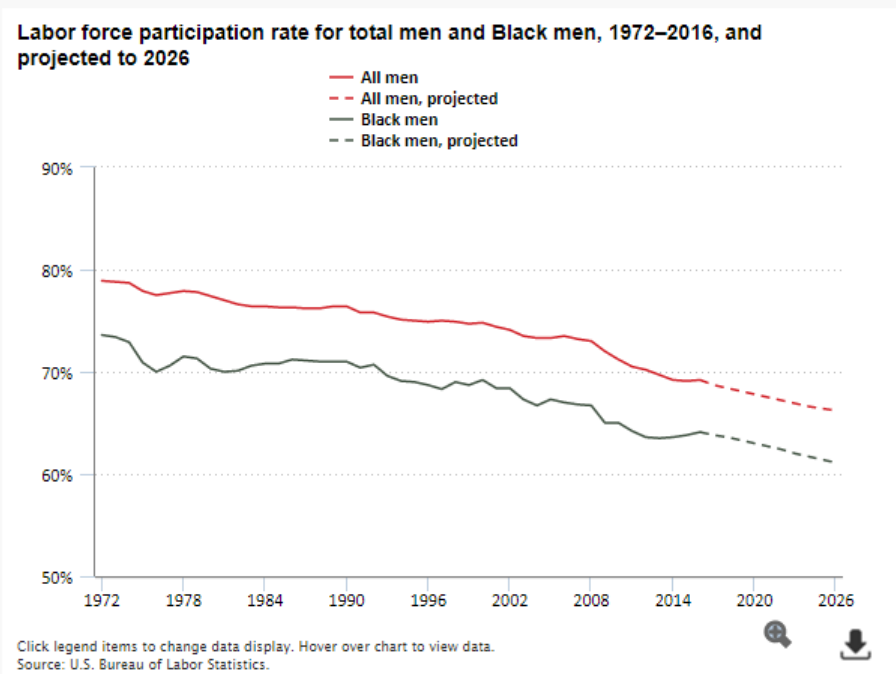
Context: History and Trends Through 2015+ Were Negative or Unclear for African-American LFP

https://www.philadelphiafed.org/-/media/frbp/assets/economy/articles/economic-insights/2017/q4/eiq417.pdf
https://www.bls.gov/spotlight/2018/blacks-in-the-labor-force/pdf/blacks-in-the-labor-force.pdf
https://www.bls.gov/spotlight/2020/african-american-history-month/pdf/african-american-history-month.pdf

Challenges Make Black LFP Rate Improvement Even Better News

https://www.clevelandfed.org/en/newsroom-and-events/publications/economic-commentary/2021-economic-commentaries/ec-202123-whats-holding-back-employment-in-the-recovery-from-the-covid19-pandemic.aspx
https://www.bls.gov/spotlight/2020/african-american-history-month/pdf/african-american-history-month.pdf
https://www.epi.org/indicators/unemployment/

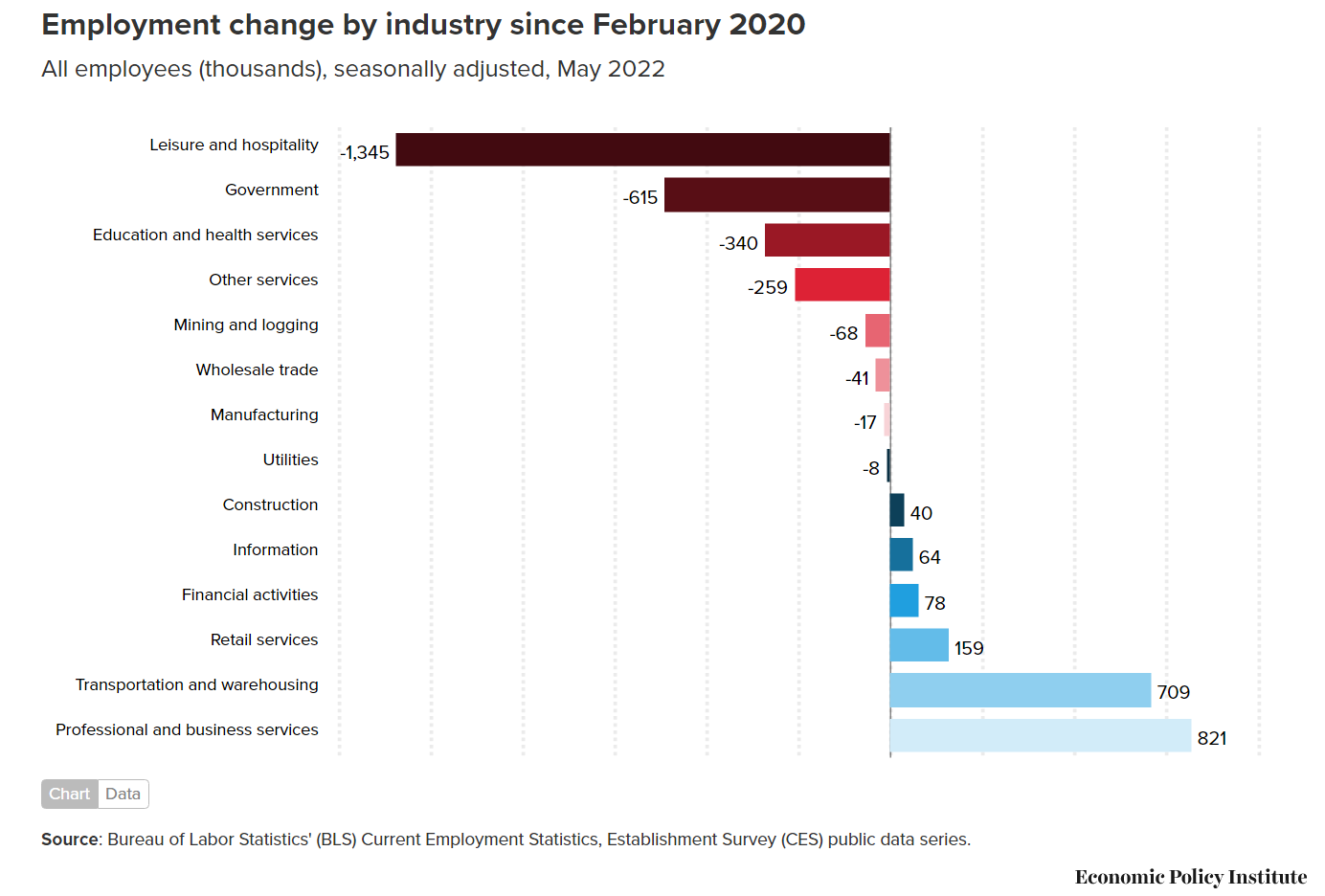
Historically high concentrations of Black workers were hard hit by the pandemic.

https://www.bls.gov/spotlight/2020/african-american-history-month/pdf/african-american-history-month.pdf
https://www.pgpf.org/chart-archive/0255_poverty_by_race

Positive Factors Supporting the Increase

https://www.bls.gov/spotlight/2018/blacks-in-the-labor-force/pdf/blacks-in-the-labor-force.pdf

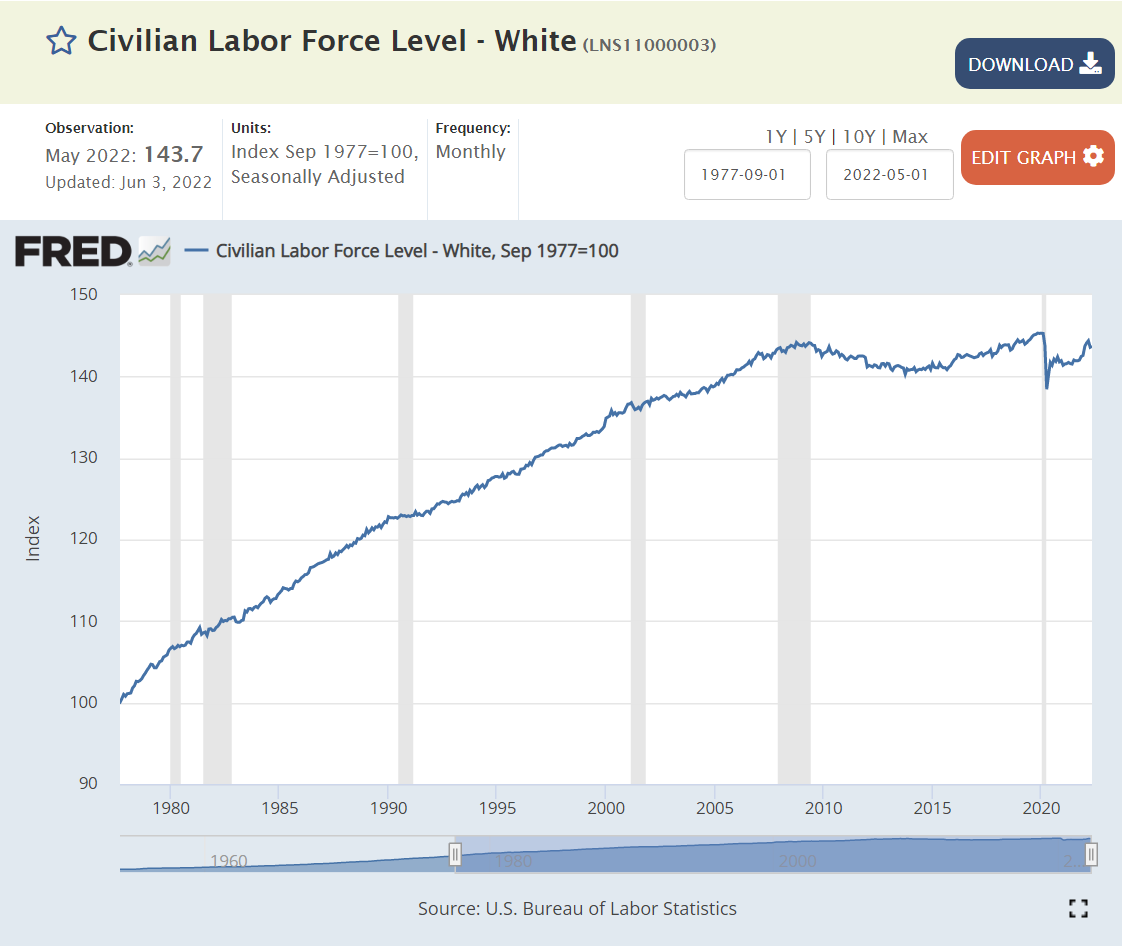
Size, growth and share all matter. Black workers may have quietly reached a “critical mass” where they face less obstacles and benefit from more positive network effects.

https://www.bls.gov/spotlight/2018/blacks-in-the-labor-force/pdf/blacks-in-the-labor-force.pdf
https://www.bls.gov/spotlight/2020/african-american-history-month/pdf/african-american-history-month.pdf

A history of higher than average labor force participation by those with some college education and a growing share of people in that category.

https://www.bls.gov/spotlight/2020/african-american-history-month/pdf/african-american-history-month.pdf

Black men have worked full-time schedules about the same as all men, while Black women have worked full-time more often than other women.

Context: The Labor Market

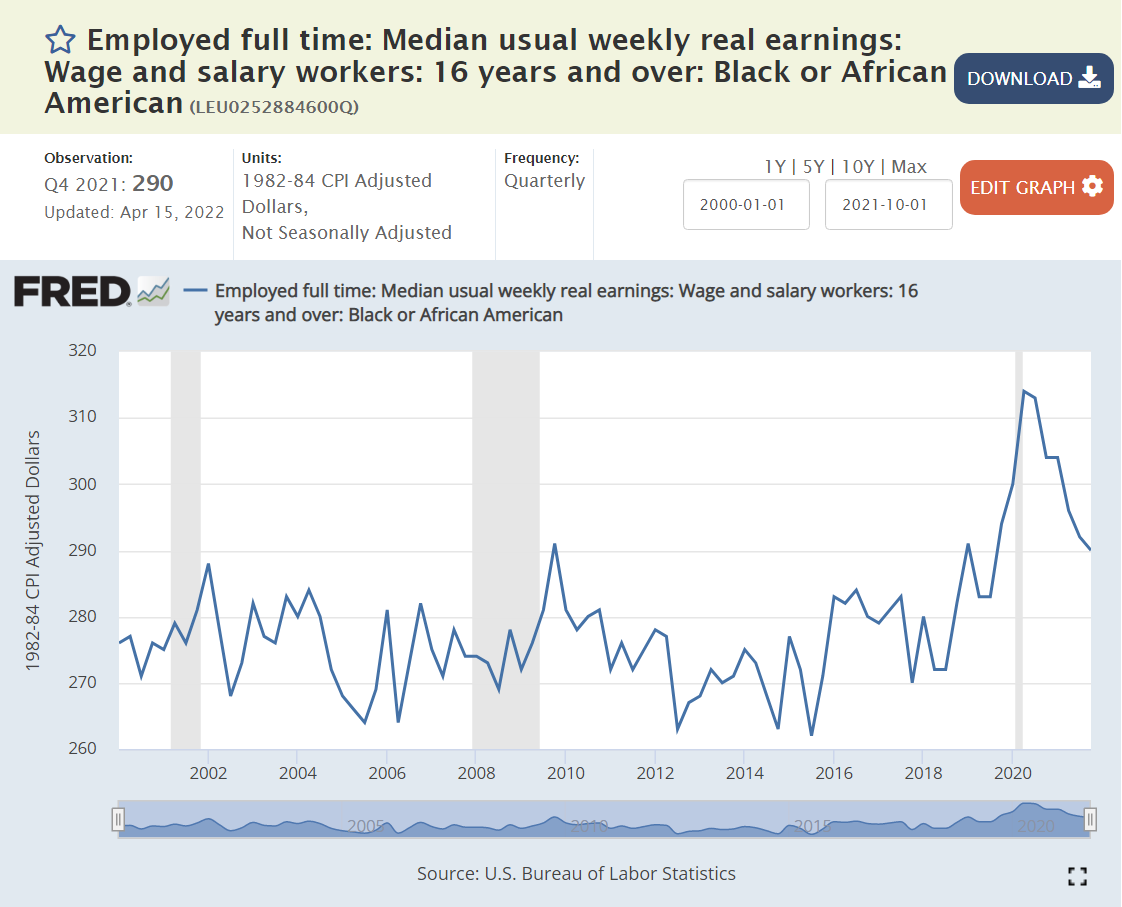
Real wages are up for African-Americans.

From 1975-97, African-American unemployment rates were 10% or higher. They briefly found the 7-8% level at the end of the Clinton presidency/expansion. They popped back up to 10% and recovered to about 8% before the “Great Recession”. They jumped up to 17% and then slowly declined to 10% by 2015. The extended recovery brought them down below 7% in 2018 and to a record low of less than 6%, briefly during 2018-19. The pandemic flirted with 17% rates once again. Instead of taking a decade to recover, unemployment rates have recovered in 2 years.

https://www.bls.gov/spotlight/2020/african-american-history-month/pdf/african-american-history-month.pdf
https://www.epi.org/indicators/unemployment/

Black unemployment continues to be higher than other groups, but the gap is smaller than it once was.

References: Many Challenges Remain for African-Americans in the US Labor Market.

https://www.clevelandfed.org/en/newsroom-and-events/publications/economic-commentary/2021-economic-commentaries/ec-202123-whats-holding-back-employment-in-the-recovery-from-the-covid19-pandemic.aspx

https://www.mckinsey.com/featured-insights/diversity-and-inclusion/race-in-the-workplace-the-black-experience-in-the-us-private-sector

One thought on “Good News: Black Labor Force Participation Exceeds National Average, First Time in 50 Years

Leave a comment